Loading
by BlastRoom
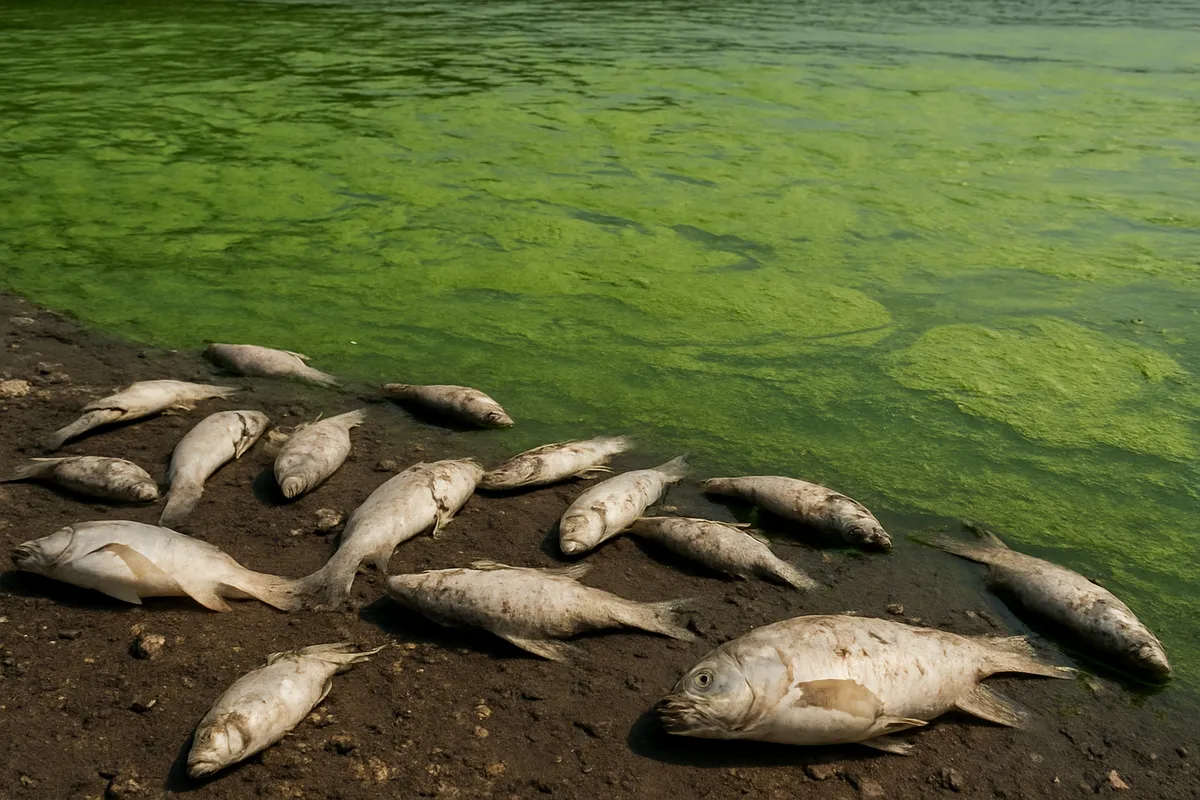
Eutrophication and Dead Zones for high school Environmental Science, on-level and AP. Covers AP Environmental Science Unit 8: Aquatic and Terrestrial Pollution.
#environmental_science
30 questions
One question set, multiple game modes. Tap any game to see it in action. Not sure which to pick?
Answer to place stones and capture territory.
Outrun the snow together.
Earn blasts, then hunt the other team.
Answer to earn energy, then climb.

The class blasts through walls together.
Bid on mystery lots. Most money wins.
Sell tours. Nice, standard, or a total scam.

Answer, restock, and serve the rush.
More correct answers pulls the rope your way.
Answer, then shoot down the alien wave.
Answer, then tap to leap the frozen ridge.
Nutrient-rich runoff enters a lake, and an algal bloom forms. After much of the algae dies, what happens next in the eutrophication sequence?
After a heavy rain washes fertilizer from fields into a pond, which event is most likely to occur first in a human-caused eutrophication sequence?
A dense algal bloom shades submerged aquatic plants. What change commonly follows before the algae die and decompose?
Dead algae settle into deeper water, where bacteria decompose them. Besides using up oxygen, what does this decomposition release into the water?
A lake's biochemical oxygen demand rises sharply after an algal bloom collapses. What stage of eutrophication does this indicate?
During a hot summer, algae in a bay die and sink to the bottom. Why does warm water make bottom-water hypoxia more likely?
Summer warming keeps a bay's surface and bottom waters from mixing. After bottom-water oxygen has fallen, what is most likely to happen next?
Which sequence correctly orders the major steps that turn agricultural nutrient runoff into a dead zone?
Submerged plants in a lake die back after an algal bloom blocks their sunlight. How does this loss affect fish and other lake animals?
A wastewater effluent raises nutrient levels, then an algal bloom forms and dies. What is the final condition if decomposition removes enough oxygen?
Which two nutrients most commonly fuel human-caused algal blooms in lakes, estuaries, and coastal waters?
Runoff from a tilled, fertilized cornfield reaches a stream after a storm. How does most of the phosphorus usually travel into the stream?
A lake is phosphorus-limited, meaning phosphorus availability controls the pace of algal production. Which added substance is most likely to intensify a bloom?
A wastewater treatment plant discharges effluent to a river that flows into a lake. Which treatment stage is designed to remove nitrogen and phosphorus before discharge?
After homeowners apply lawn fertilizer, a storm drain carries runoff to a pond. Which homeowner action would most directly reduce the nutrients reaching the pond?
A water sample from a pond shows elevated nitrate, while its other test results are normal. Which nutrient element is most directly implicated as a possible algal-bloom driver?
A city plans to fix leaking septic systems near a freshwater lake. Which nutrient usually limits algal growth in such lakes and should especially be kept out?
Bottom water in an estuary measures 1.6 mg/L dissolved oxygen for several days, and mobile fish leave the area. What condition does this measurement indicate?
A lake has unusually high chlorophyll a concentrations during summer. What does this measurement most directly indicate?
A lake turns green and its water becomes less clear as nutrient levels rise. Which simple field tool measures how deep light penetrates to track this loss of clarity?
After an algal die-off, Lake Sample A has a BOD of 3 mg/L and Sample B has a BOD of 15 mg/L. Which water is more likely to lose dissolved oxygen?
At a eutrophic pond, dissolved oxygen is highest in late afternoon and lowest just before dawn. Which process best explains the pre-dawn low reading?
Surface water in a eutrophic lake has 8 mg/L dissolved oxygen, while bottom water has 1.5 mg/L during summer stratification. Which location is hypoxic?
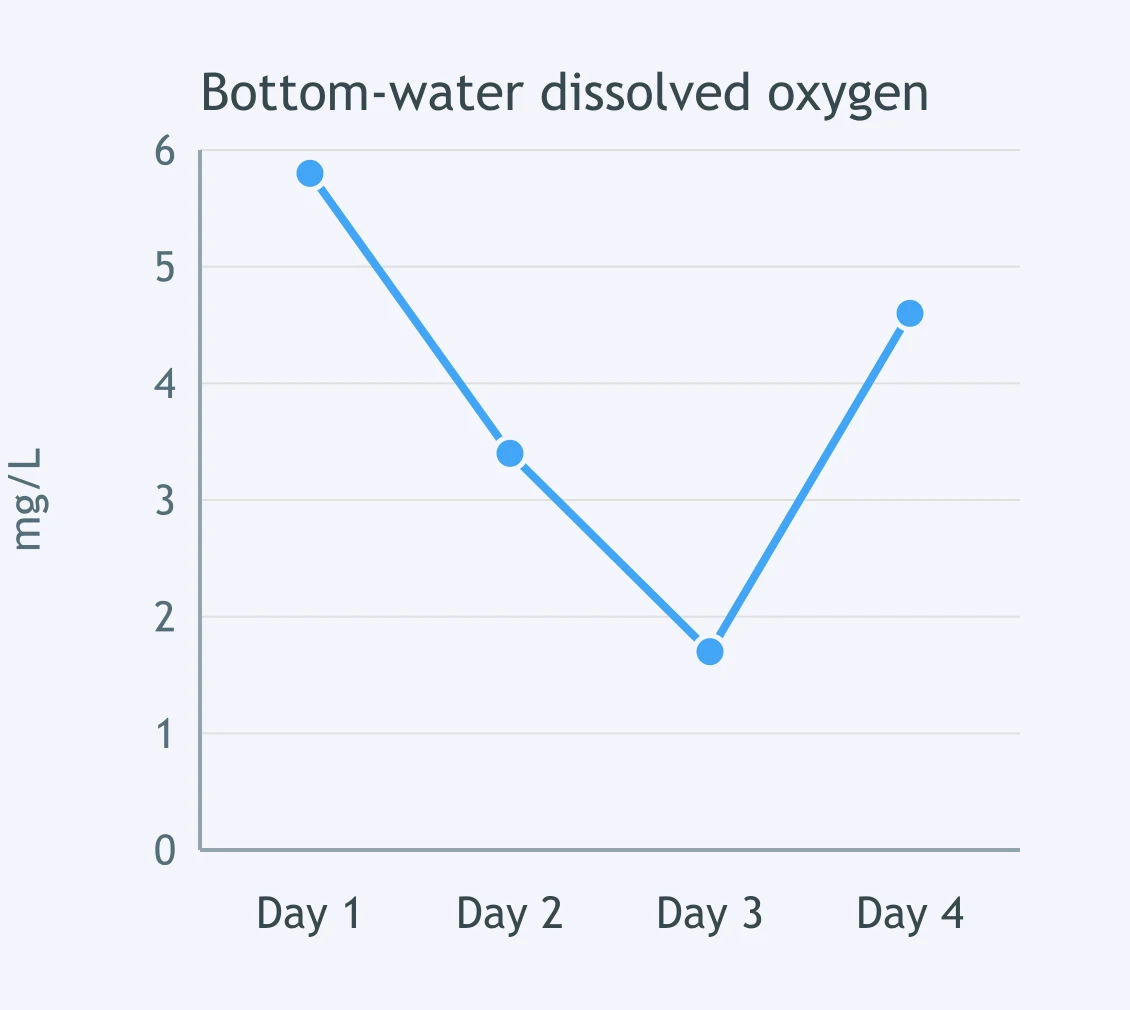
Use the graph of bottom-water dissolved oxygen. On which sampling day is hypoxia most likely?
A lake with elevated phosphorus has low transparency, abundant algae, and low dissolved oxygen. Which trophic condition best describes the lake?
A field team finds many dead clams on the bottom of a bay, where dissolved oxygen is 1.8 mg/L, but few dead fish. What best explains the difference?
Each summer, a large hypoxic zone forms in the northern Gulf of Mexico. What is the principal human-caused driver?
A watershed plan aims to shrink the northern Gulf of Mexico dead zone without changing Gulf salinity. Which action targets its cause?
A cornfield borders a stream flowing toward the Gulf of Mexico. Which practice most directly intercepts nutrient runoff before it enters the stream?
A farm in the Mississippi River Basin plants a cover crop after harvest. How can this practice help reduce the Gulf dead zone?
Crack the passcode before the zombies get in.
Answer, then swat bugs for bonus points.
Race through questions at your own speed.
Same question on every screen. Fastest wins.

Pick a tile, answer, hit bonuses and steals.
Drinking Water and Wastewater Treatment
25 questions