Loading
by BlastRoom
American painting, national meaning, and changing subjects before 1900.
#us_hs_art_history
30 questions
One question set, multiple game modes. Tap any game to see it in action. Not sure which to pick?
Answer to place stones and capture territory.
Outrun the snow together.
Earn blasts, then hunt the other team.
Answer to earn energy, then climb.

The class blasts through walls together.
Bid on mystery lots. Most money wins.
Sell tours. Nice, standard, or a total scam.

Answer, restock, and serve the rush.
More correct answers pulls the rope your way.
Answer, then shoot down the alien wave.
Answer, then tap to leap the frozen ridge.
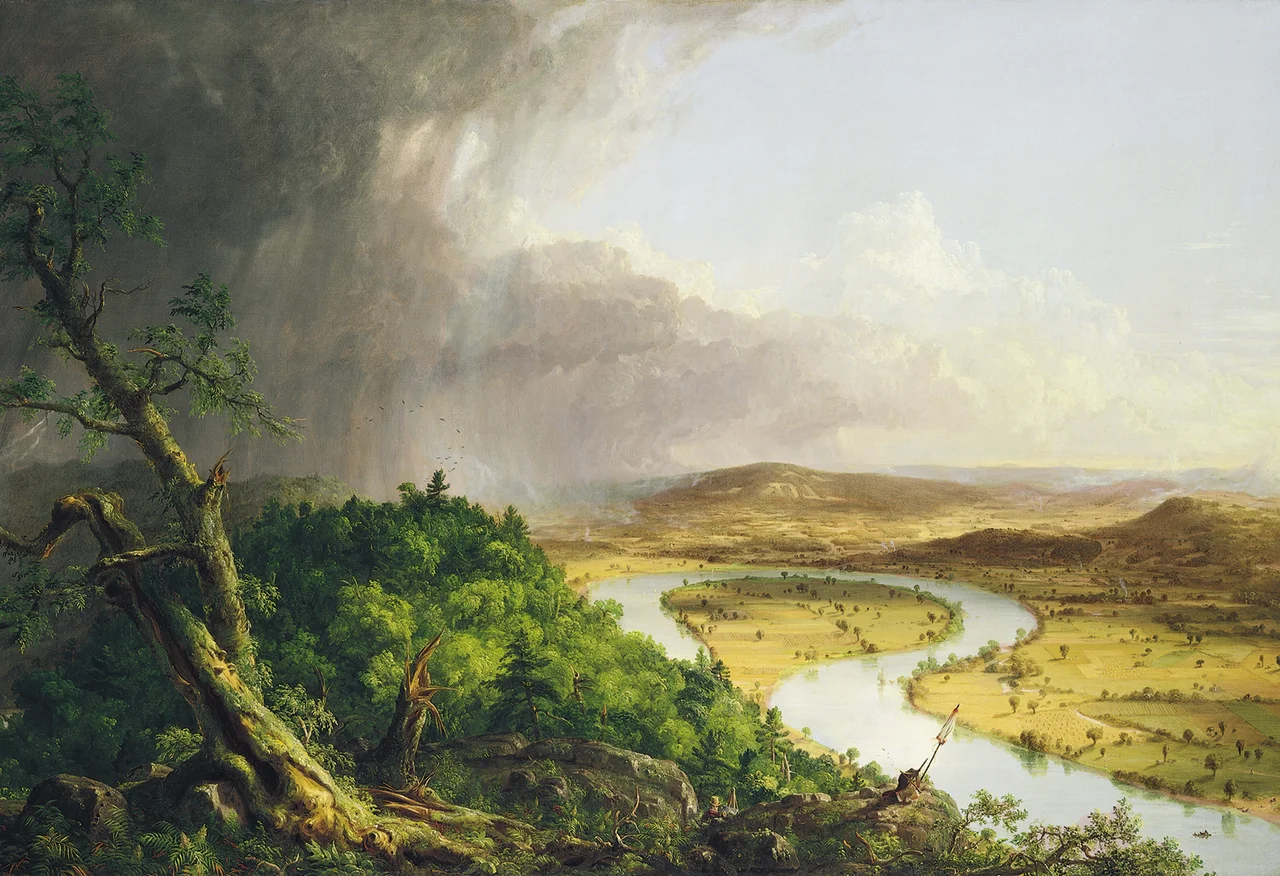
Thomas Cole splits The Oxbow between storm-dark wilderness and sunlit cultivated farmland. What national question does that contrast invite viewers to consider?
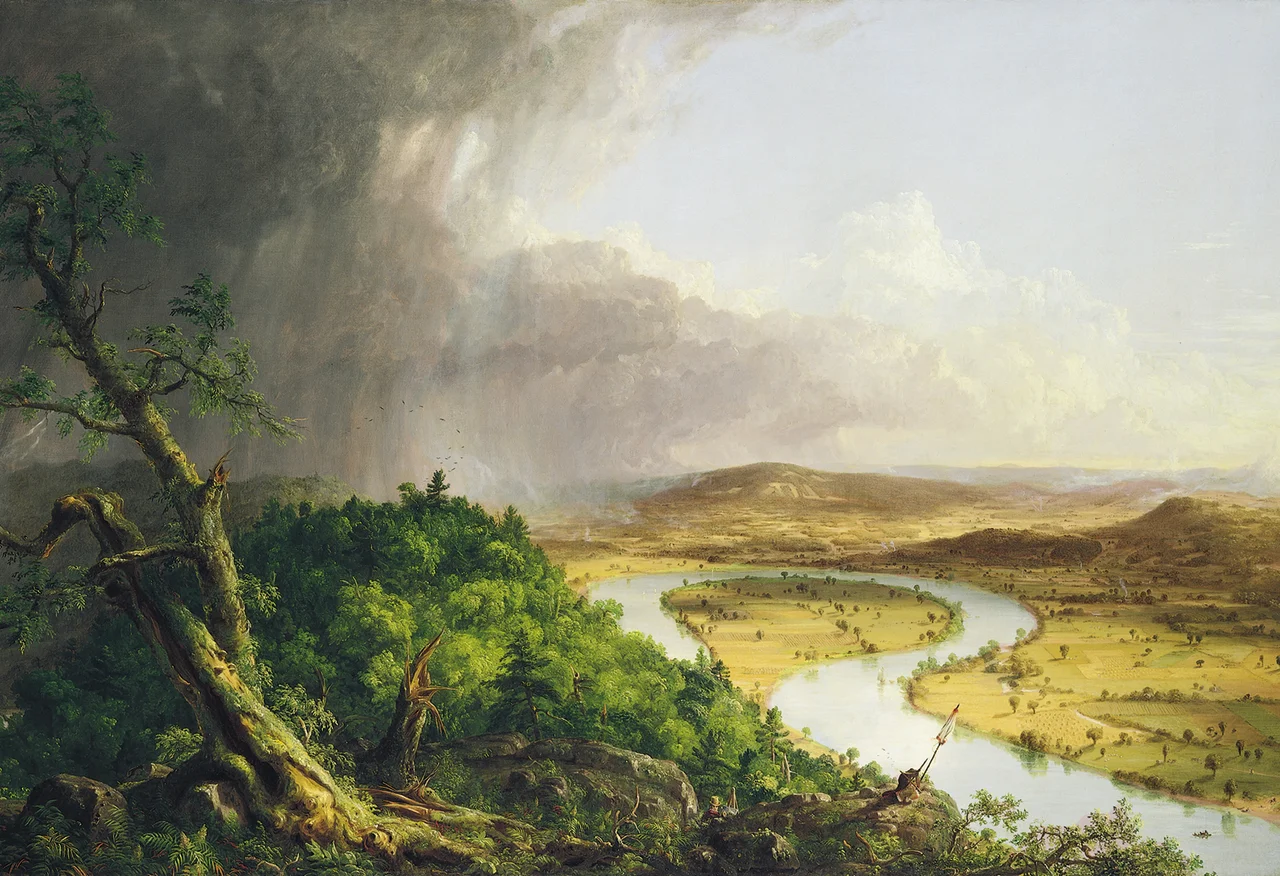
In The Oxbow, Cole paints himself as a tiny figure with painting equipment on the foreground ledge. What role does this detail give the artist?
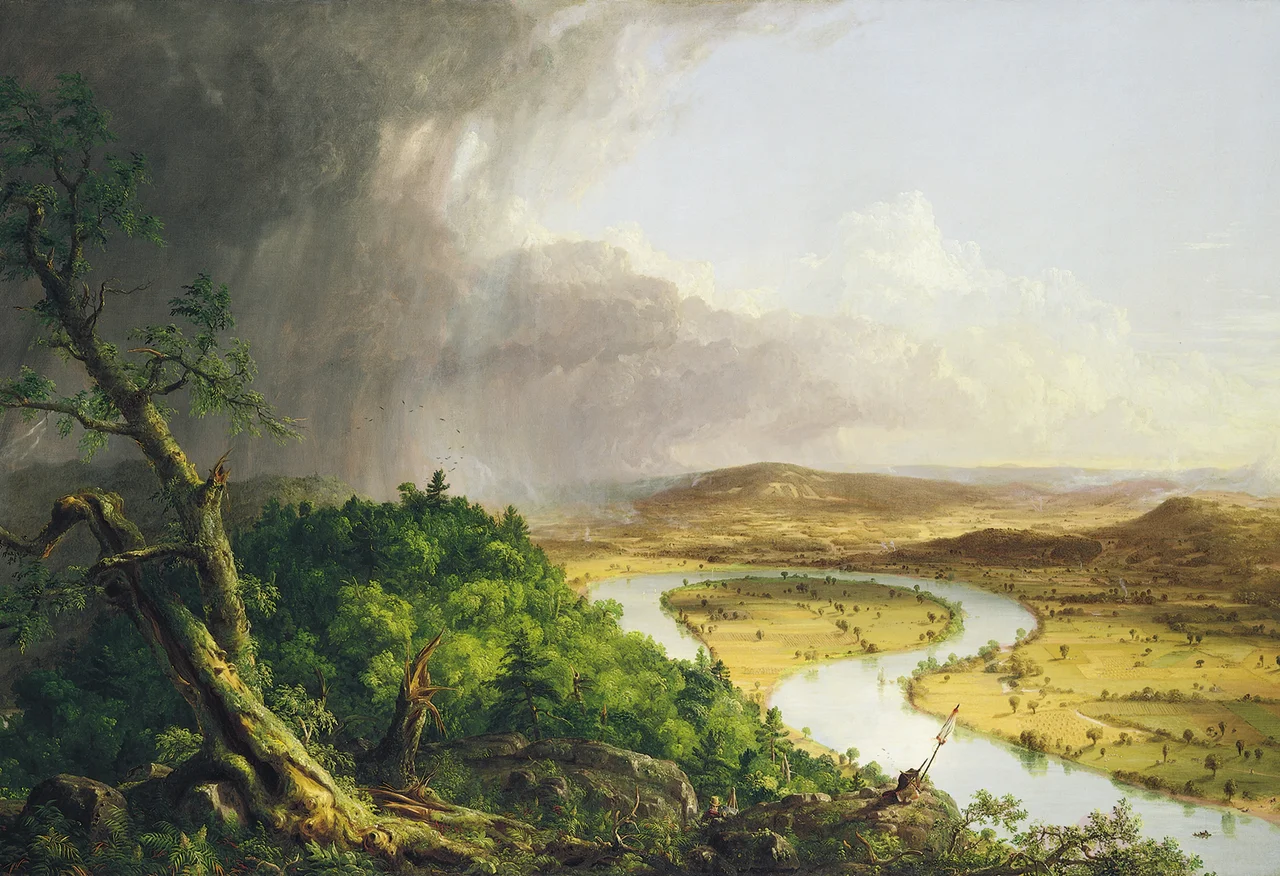
Thomas Cole's The Oxbow is most closely associated with which American landscape tradition?
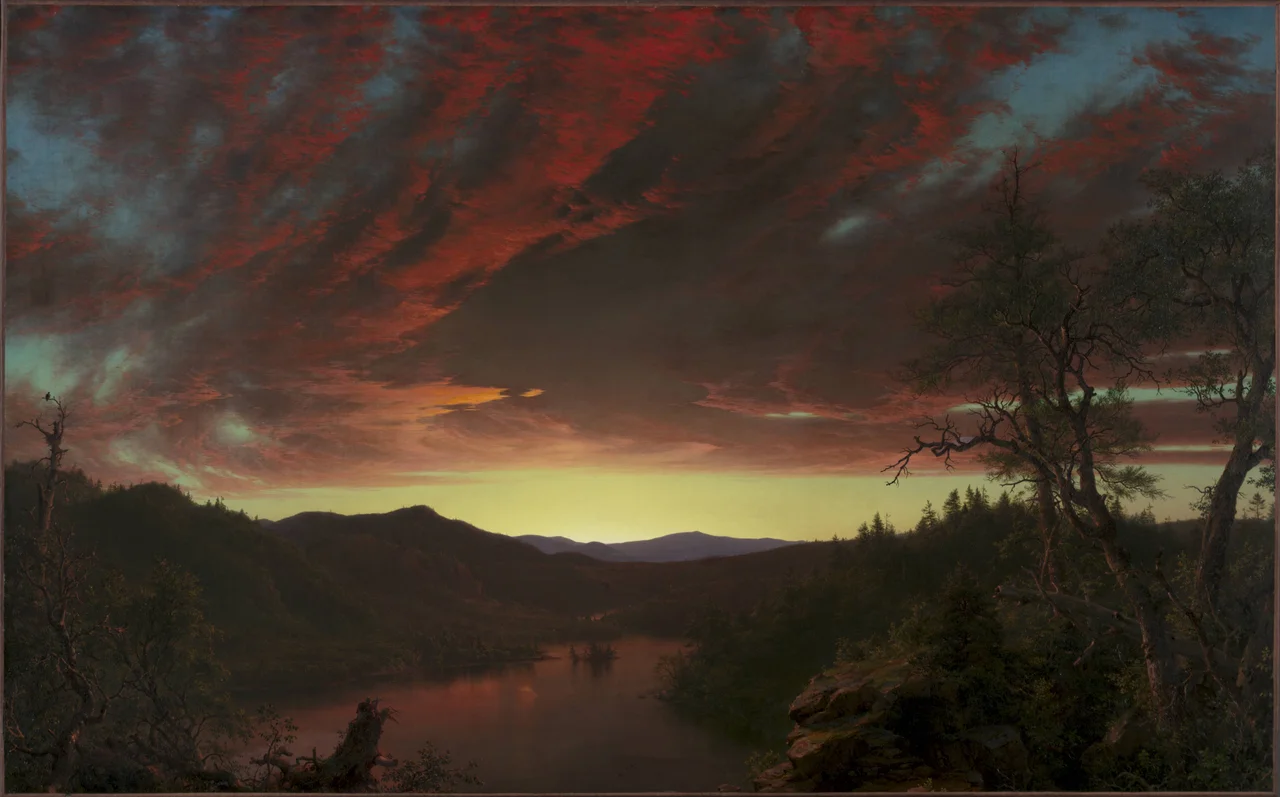
Frederic Edwin Church fills Twilight in the Wilderness with blazing clouds above a dark wilderness. Which Romantic idea is most strongly activated by this scale and intensity?
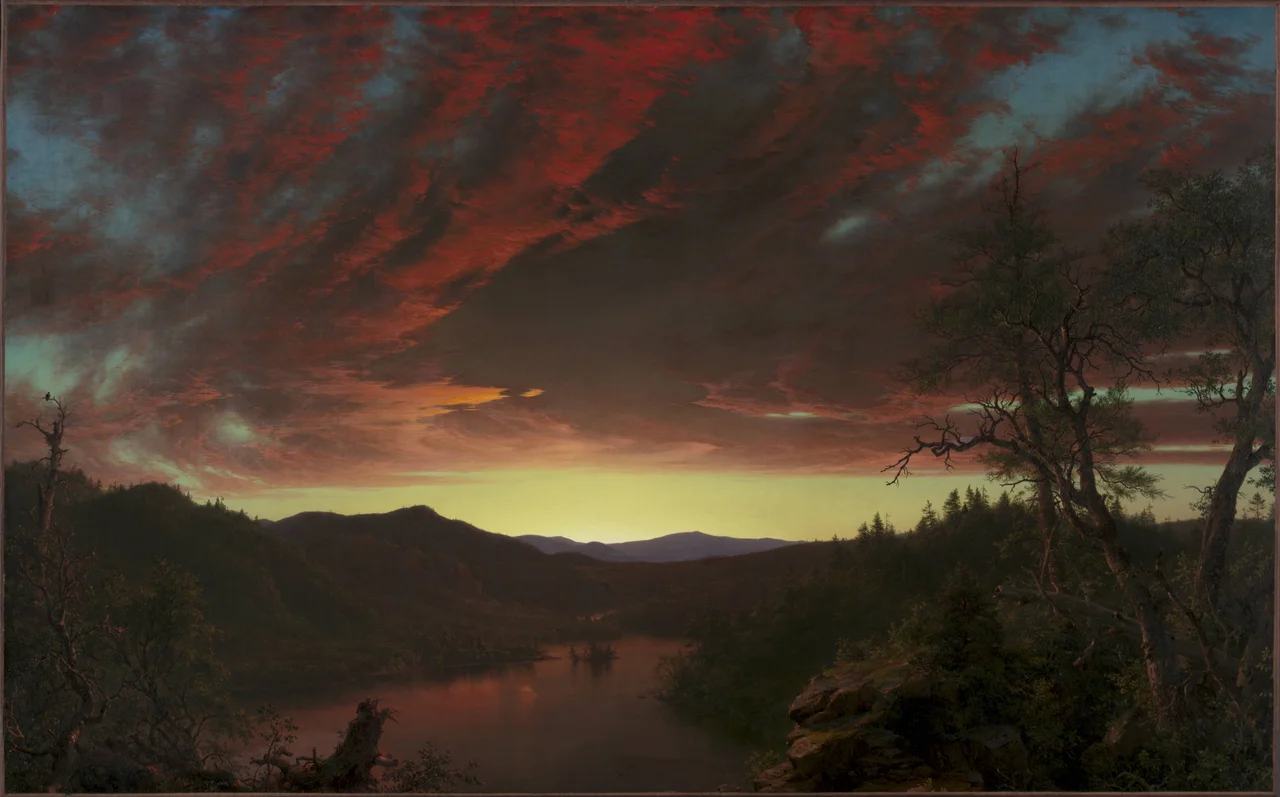
Church painted Twilight in the Wilderness in 1860, just before the Civil War. Its fiery sky and dark land can reasonably suggest what contemporary mood?
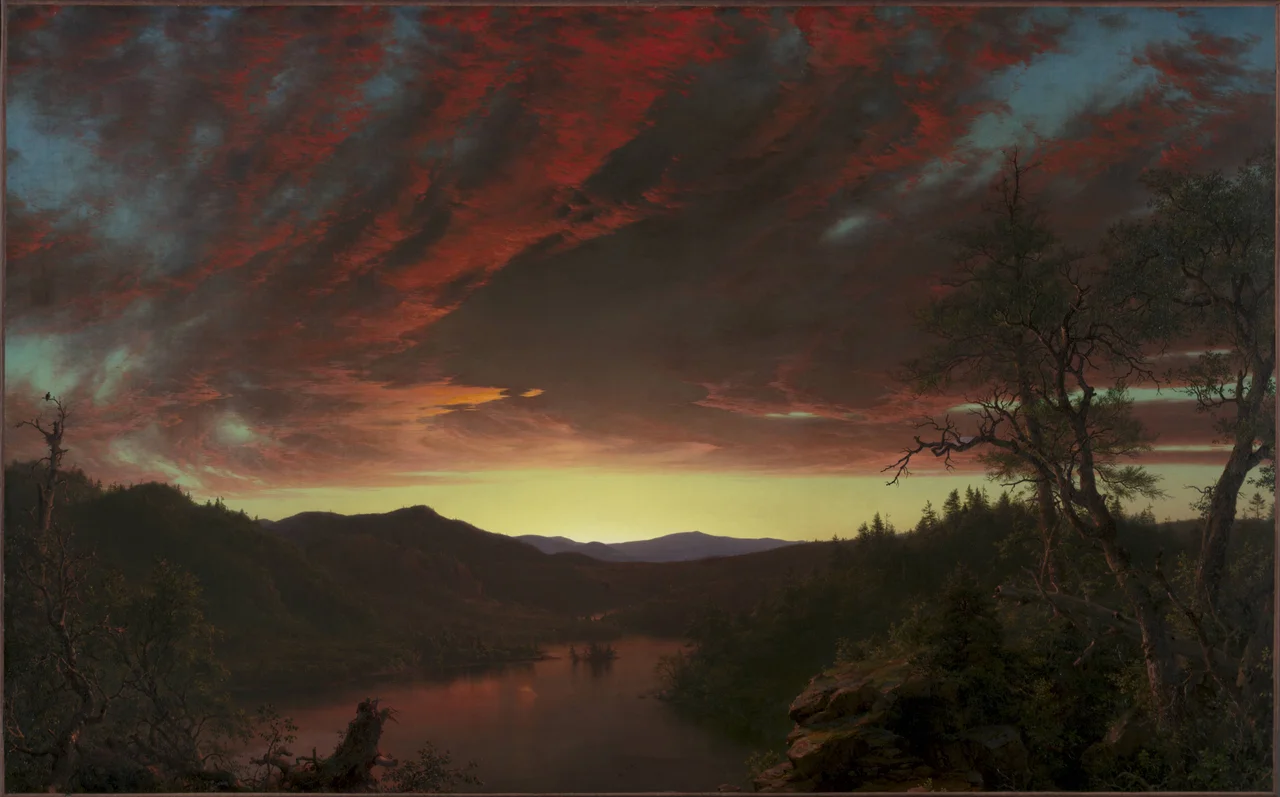
Church showed Twilight in the Wilderness by itself in a gallery rather than in a crowded annual exhibition. What did this strategy emphasize?
Many eastern ticket buyers paid to see enormous paintings of Rocky Mountain scenery. Why did these western landscapes appeal to them?
A touring canvas of a Rocky Mountain vista was much larger than a lithograph of the same region. What did the huge canvas offer that the print usually could not?
A lithograph of a western landscape could be printed in many copies. Why did that matter for national imagery?
Albert Bierstadt often made western peaks taller and the light more glowing than they were in real life. Why might a painter make these changes?
Albert Bierstadt's vast western panoramas belong most closely with which American landscape movement?
Thomas Moran's paintings of Yellowstone were shown to members of Congress in Washington. What did they help persuade Congress to do in 1872?
Copley's Watson and the Shark shows a shark attack on Brook Watson while a crowded boat attempts a rescue. What was unusual about giving this event such dramatic, large-scale treatment?
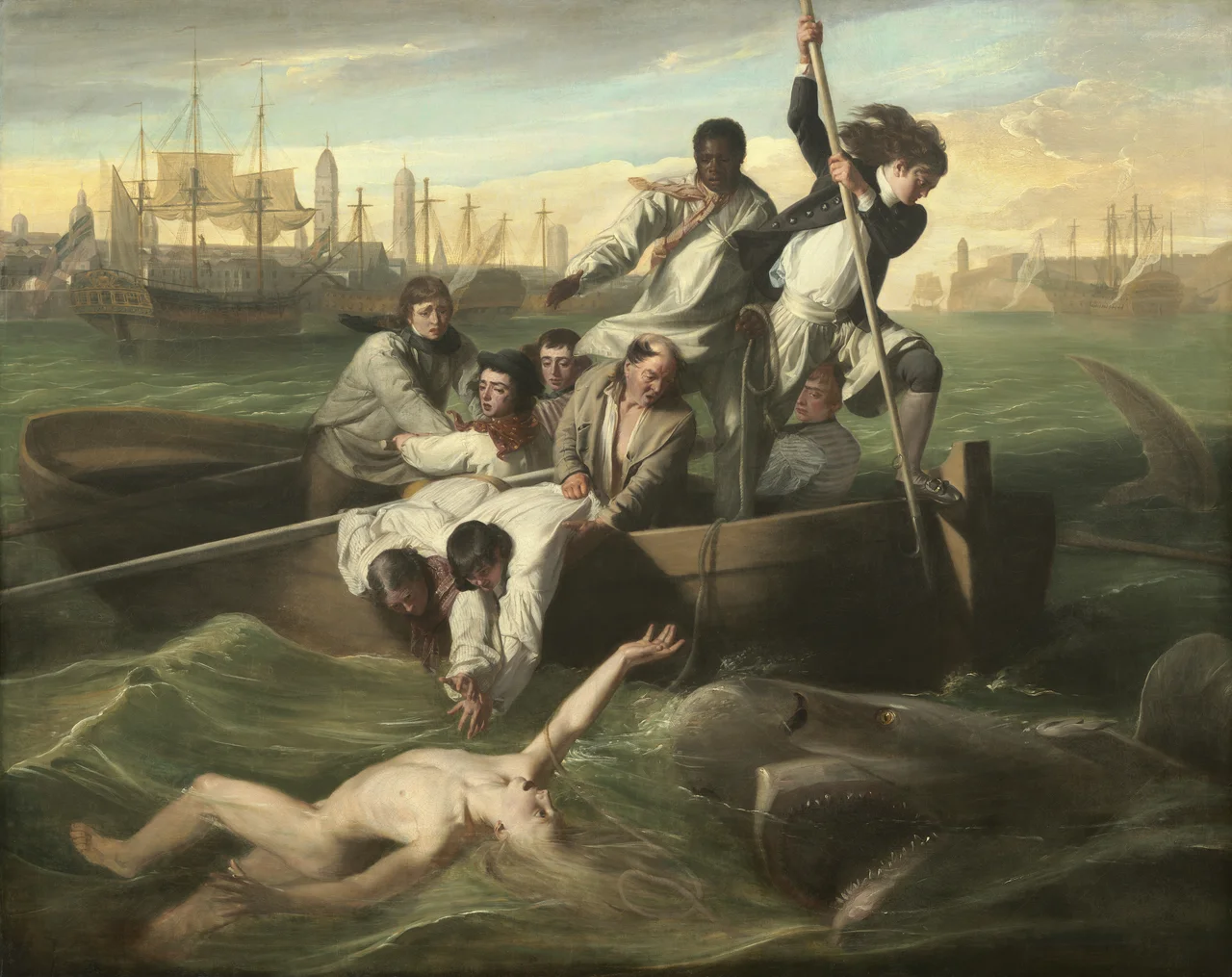
In Watson and the Shark, the Black sailor stands at the apex of the pyramidal composition. How does that placement affect the narrative?
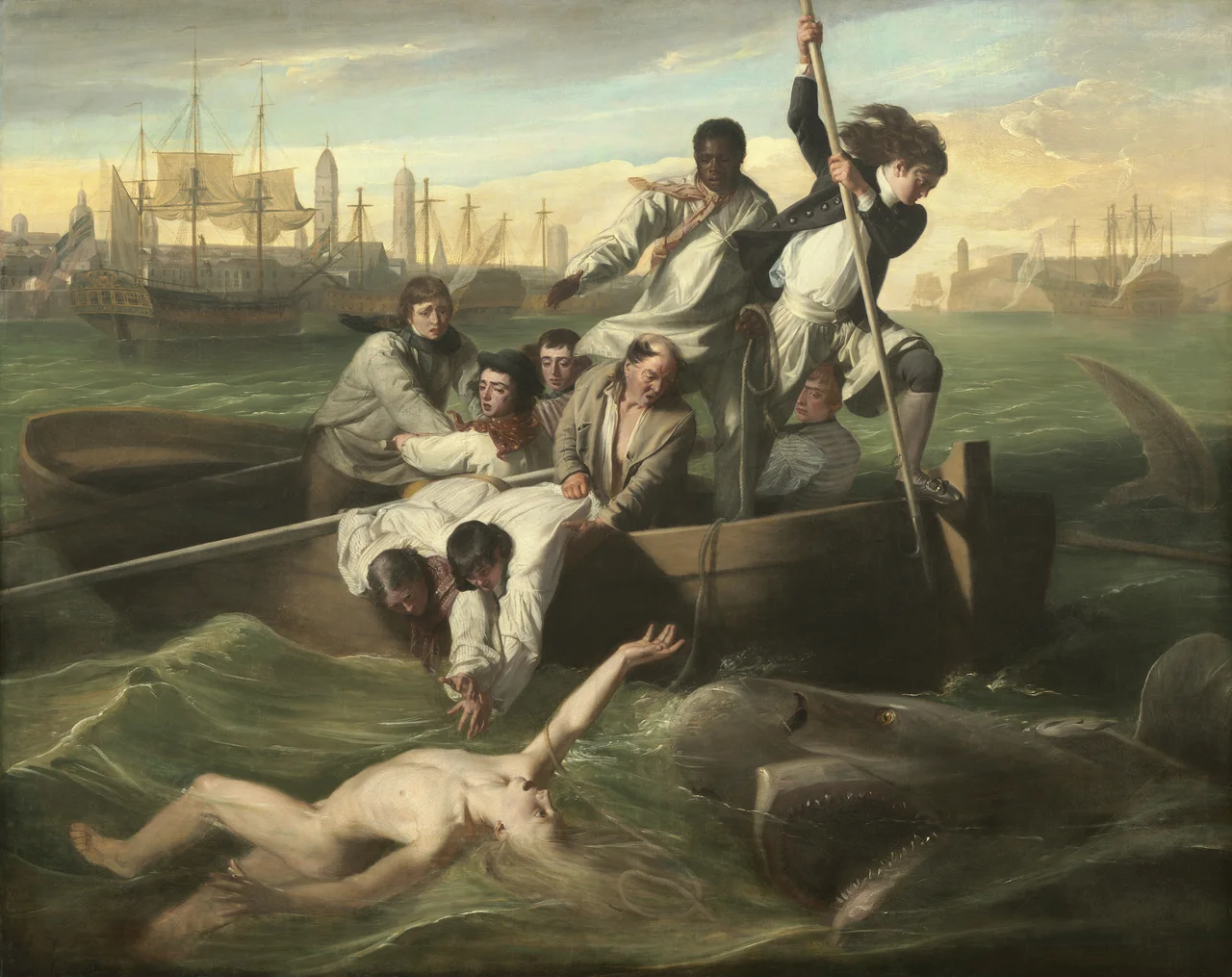
Brook Watson commissioned Copley's painting decades after surviving the 1749 shark attack. What lesson did he hope the picture would communicate?
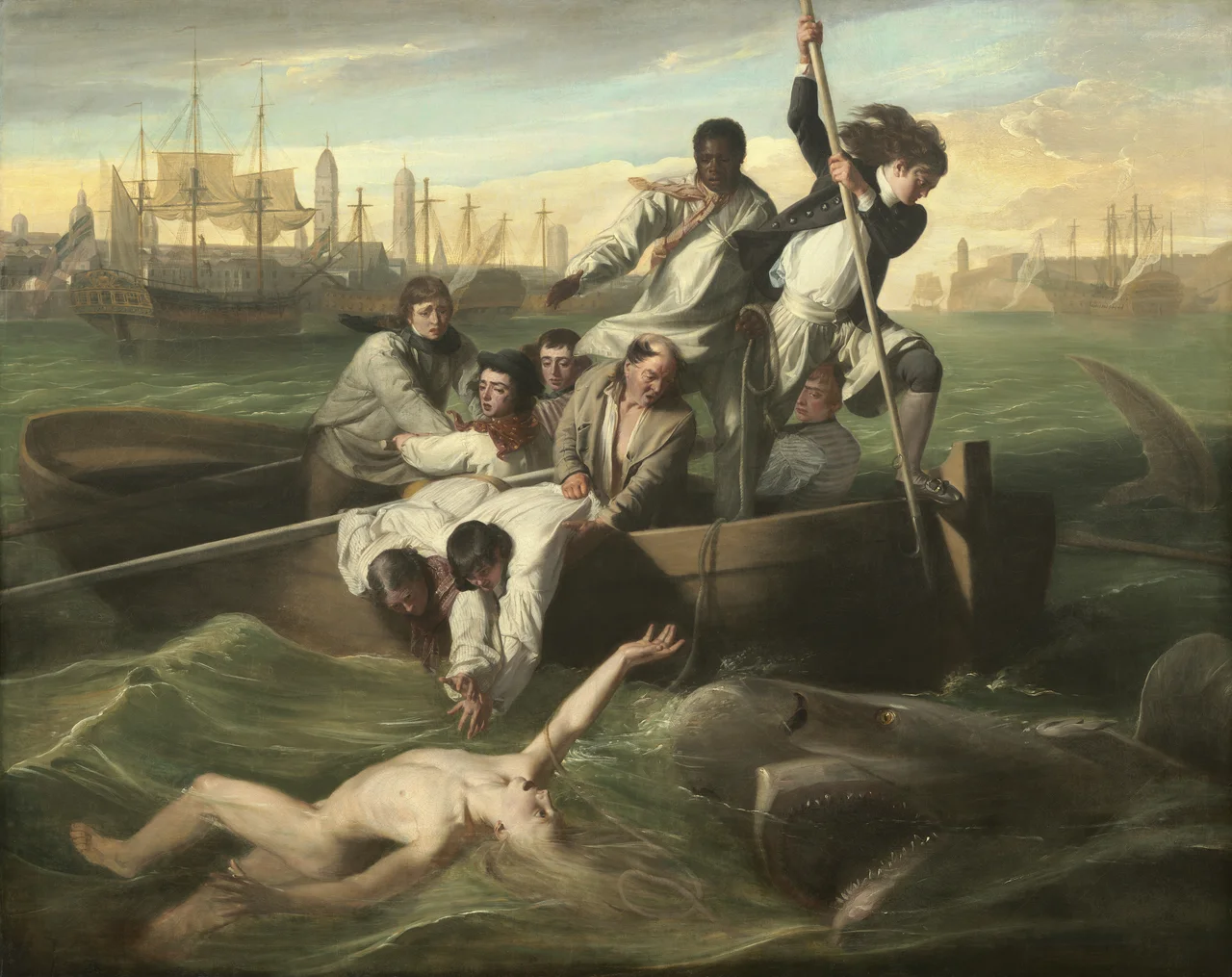
A full-length portrait uses impressive costume and attributes of rank to establish a sitter's importance. What portrait convention is this?
Why was portraiture the main form of American painting before about 1825?
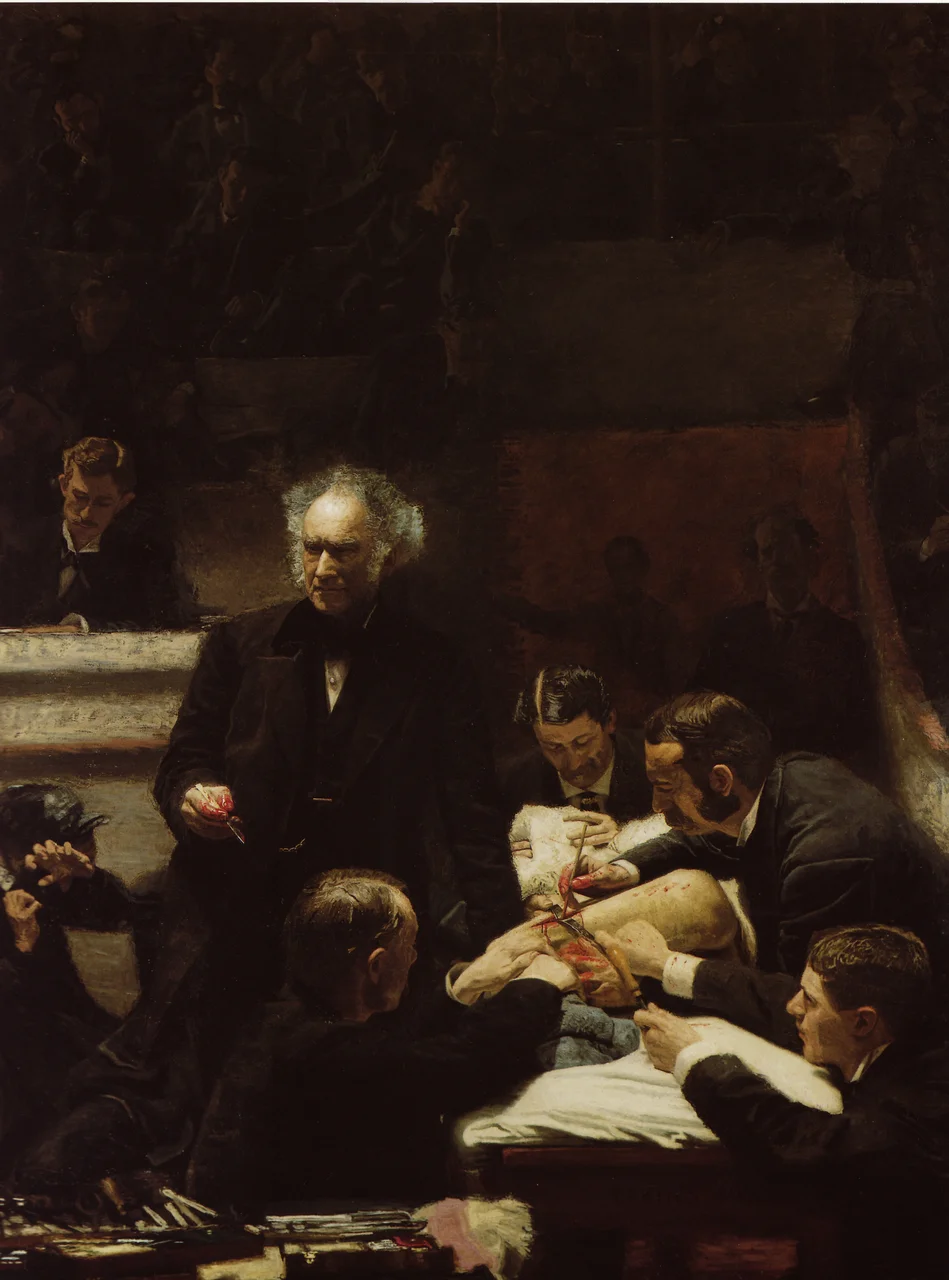
Eakins's The Gross Clinic makes what modern subject worthy of a large painting of the kind once reserved for history scenes?
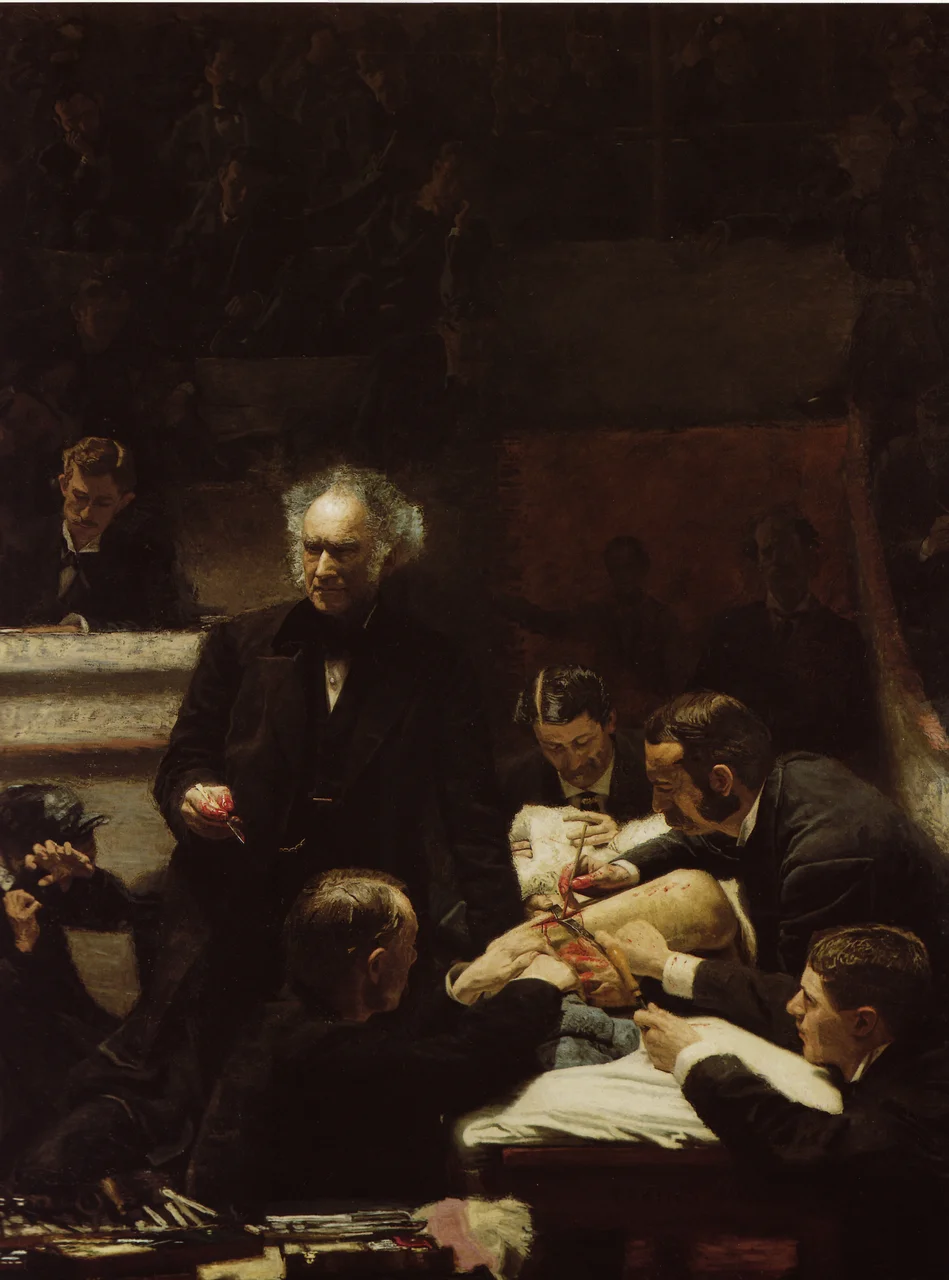
The selection committee rejected The Gross Clinic from the art display of the 1876 Centennial Exhibition. What feature most likely disturbed viewers?
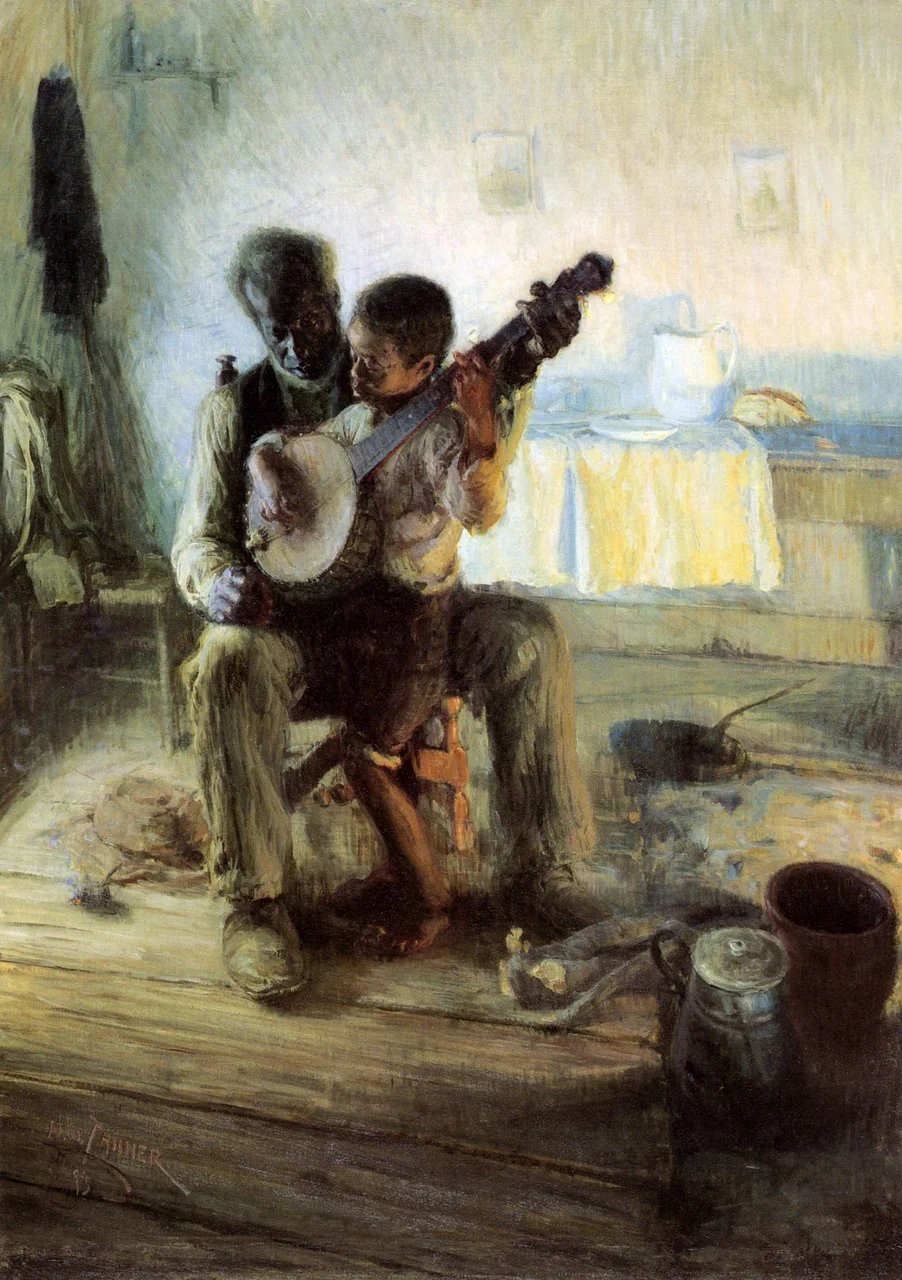
Tanner's The Banjo Lesson shows an older Black man guiding a boy's hands on a banjo in a modest interior. What does this treatment resist?
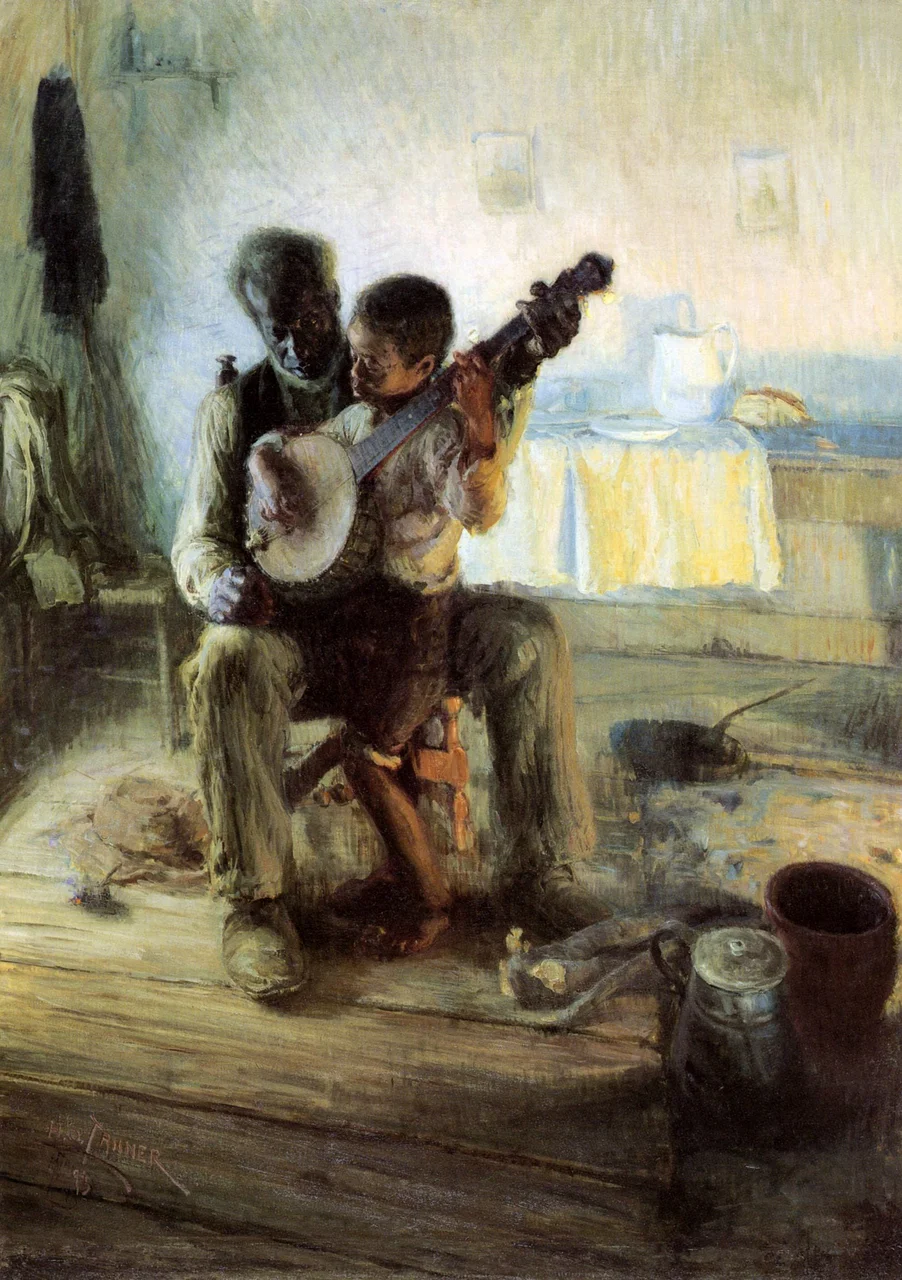
In The Banjo Lesson, Tanner lets the warmest light fall on the boy's face and his hands on the banjo. What does this emphasis most directly focus on?
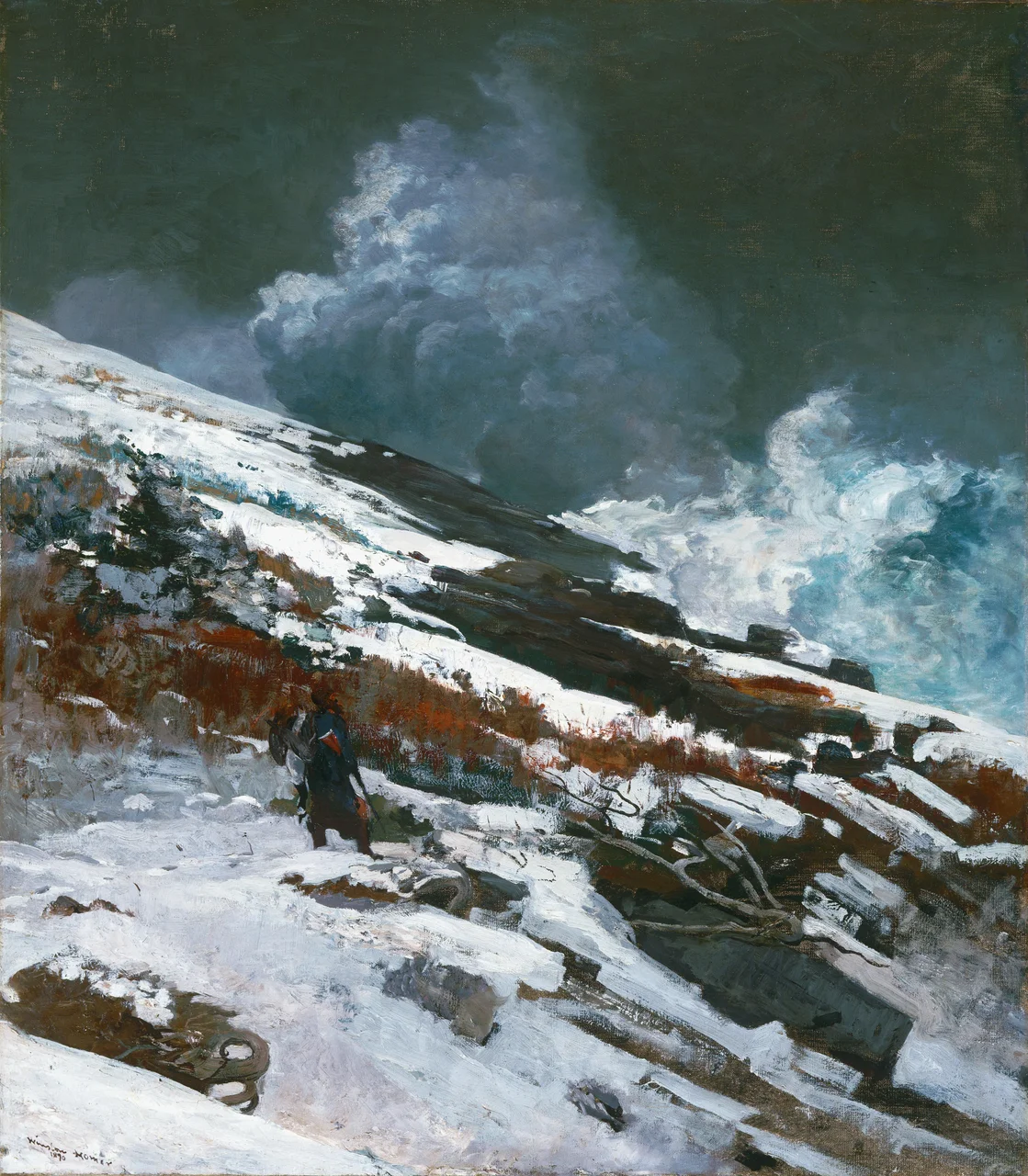
Winslow Homer's A Light on the Sea places a woman holding a fishing net on a rocky shore. Which subject joins the figure in shaping the painting's mood?
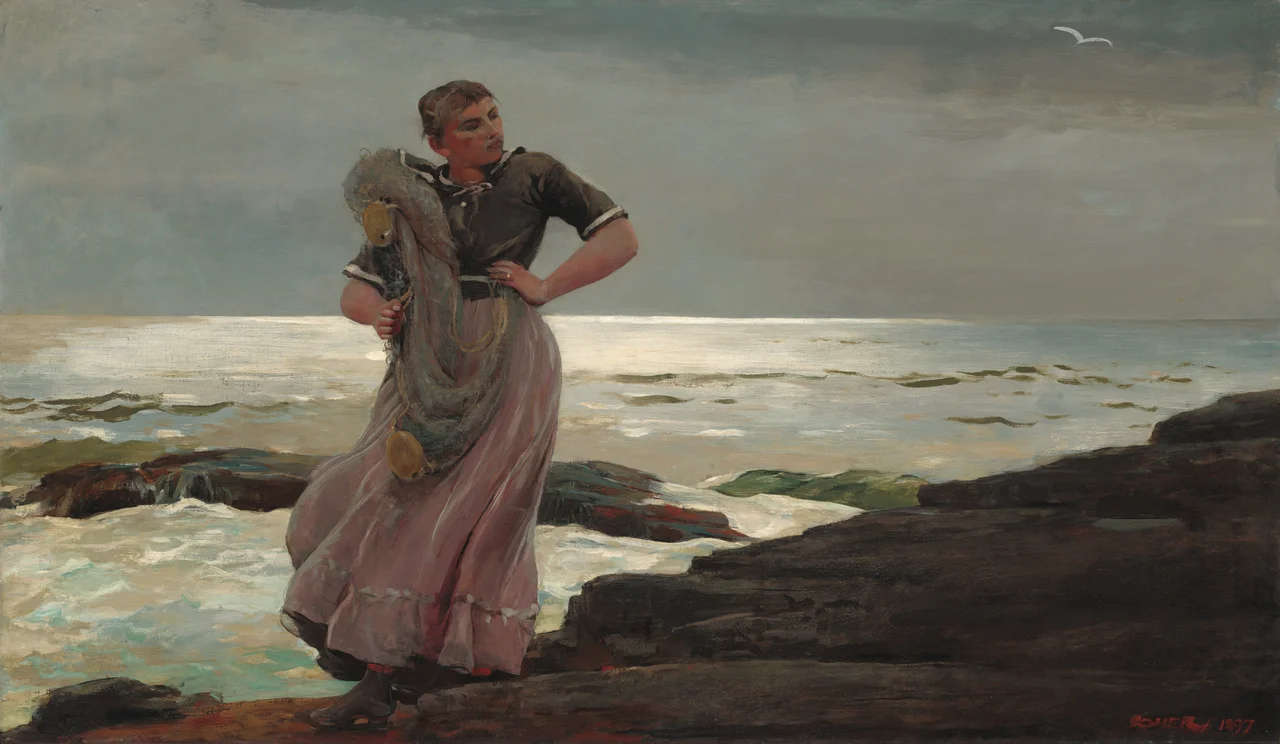
A late Homer seascape gives a lone coastal figure less visual weight than the broad water and weather. What relationship does this composition suggest?
Why did Thomas Eakins attend anatomy lectures and observe medical procedures while training as an artist?
Eakins built a camera that made multiple exposures on one plate. What artistic problem could this help him study?
Henry Ossawa Tanner studied under Thomas Eakins and later at Paris's Académie Julian. What did this combination of training connect?
Which early photographic process made a one-of-a-kind direct positive on a silver-plated copper sheet, without a negative?
Compare Cole's The Oxbow, a storm-dark wilderness beside sunlit cultivated farms, with Eakins's The Gross Clinic, set in a surgical amphitheater. What do these subjects show about the ambitions of American painting?
Compare Church's monumental wilderness sunset with Tanner's intimate banjo lesson. What contrast in national meaning do the two works make visible?
Compare Copley's desperate harbor rescue with Tanner's quiet music lesson. How do the two narratives differ most clearly?
Crack the passcode before the zombies get in.
Answer, then swat bugs for bonus points.
Race through questions at your own speed.
Same question on every screen. Fastest wins.

Pick a tile, answer, hit bonuses and steals.
Post-Impressionism
35 questions