Loading
by BlastRoom
Habitat, Range and Ecological Tolerance for high school Environmental Science, on-level and AP. Covers AP Environmental Science Units 1 and 2: The Living World.
#environmental_science
25 questions
One question set, multiple game modes. Tap any game to see it in action. Not sure which to pick?
Answer to place stones and capture territory.
Outrun the snow together.
Earn blasts, then hunt the other team.
Answer to earn energy, then climb.

The class blasts through walls together.
Bid on mystery lots. Most money wins.
Sell tours. Nice, standard, or a total scam.

Answer, restock, and serve the rush.
More correct answers pulls the rope your way.
Answer, then shoot down the alien wave.
Answer, then tap to leap the frozen ridge.
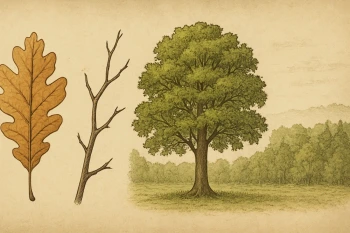
A woodpecker lives in an oak woodland, eats insects beneath bark, forages by day, and nests in tree cavities. What does the full description identify?
A developer plans to drain a salt marsh where a rail bird nests and feeds. What part of the bird's ecology would be removed first?
Gray wolves hunt elk, compete with other predators, and influence herbivore numbers in a mountain valley. These interactions are part of the wolves' what?
A restoration team wants to reintroduce a frog whose eggs and tadpoles are eaten by fish. Which site feature is most important to check?
Two warbler species live in the same forest. One feeds in the upper canopy, and the other feeds near the ground. What does this pattern show?
A squirrel lives in an oak woodland, builds nests in tree hollows, and eats acorns and fungi. What is the squirrel's habitat?
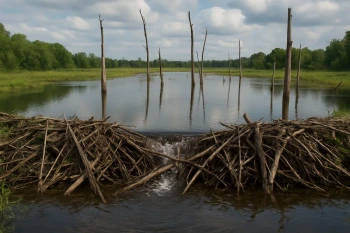
After a beaver dams a stream, the pond slows water flow and creates wetland habitat for other species. Which statement describes the beaver's niche?
A lizard and a snake both live in the same desert wash. The lizard hunts insects by day, and the snake hunts rodents at night. What do the two species share?
A fish grows fastest at 18 °C, survives poorly at 8 °C and 28 °C, and dies outside 4–32 °C. What does this pattern describe?
A mussel grows best at salinity 10 ppt, grows poorly at 4 and 18 ppt, and cannot survive below 2 or above 22 ppt. What is its salinity tolerance range?
A stream fish cannot survive above 24 °C. After riparian trees are removed, summer stream temperature reaches 27 °C. What is the most likely result?
A wetland plant produces most seeds when soil moisture is high but persists poorly during prolonged drought. Drought is acting as what for this population?
Frog eggs hatch best at pH 6.5–8.0, hatch poorly at pH 6.0–6.4, and do not hatch below pH 6.0. Acidic runoff lowers a pond to pH 5.8. What should researchers predict?
An insect is common where dissolved oxygen is 7–10 mg/L and absent below 3 mg/L. A wastewater discharge lowers a stream to 2 mg/L. Why will the insect likely disappear?
A crop grows best in soil with moderate nitrogen, but excessive fertilizer causes leaf damage and reduced yield. Which part of a tolerance range does excess nitrogen represent?
Why can a pollutant be a limiting factor even when it does not kill every organism immediately?
Grass A survives salinity from 0 to 30 ppt, while neighboring grass B survives only from 0 to 8 ppt. Road-salt runoff raises soil salinity to 15 ppt. Which grass is more likely to remain?
A rainbow trout tolerates a wide temperature range and varied diet. A cutthroat trout needs narrow cold-water conditions and mainly eats insects. As a dam raises stream temperature, which is more likely to persist?
A koala eats mainly a few eucalyptus species, while a raccoon eats fruit, eggs, fish, insects, and refuse. How do they compare?
A city replaces vacant lots with buildings, leaving only one native plant used by a rare butterfly's caterpillars. Why is the butterfly especially vulnerable?
After a wildfire, a coyote eats rodents, fruit, carrion, and insects across several habitat types. What trait most helps it persist during the disturbance?
A bee pollinates primarily one flowering plant, and the plant blooms for only two weeks each year. A shift in flowering time reduces the bee's food supply. Which term best describes the bee?
Why do habitat fragments often affect specialists more severely than generalists?
An invasive bird thrives in parking lots, farms, forests, and cities while eating seeds, insects, and discarded food. Which classification fits this bird?
A forest manager removes every tree of one species from a forest. Which population is most likely to decline?
Crack the passcode before the zombies get in.
Answer, then swat bugs for bonus points.
Race through questions at your own speed.
Same question on every screen. Fastest wins.

Pick a tile, answer, hit bonuses and steals.
Disturbance and Ecosystem Resilience
20 questions