Loading
by BlastRoom
Terrestrial Biomes and Climatograms for high school Environmental Science, on-level and AP. Covers AP Environmental Science Unit 1: The Living World, Ecosystems.
#environmental_science

40 questions
One question set, multiple game modes. Tap any game to see it in action. Not sure which to pick?
Answer to place stones and capture territory.
Outrun the snow together.
Earn blasts, then hunt the other team.
Answer to earn energy, then climb.

The class blasts through walls together.
Bid on mystery lots. Most money wins.
Sell tours. Nice, standard, or a total scam.

Answer, restock, and serve the rush.
More correct answers pulls the rope your way.
Answer, then shoot down the alien wave.
Answer, then tap to leap the frozen ridge.
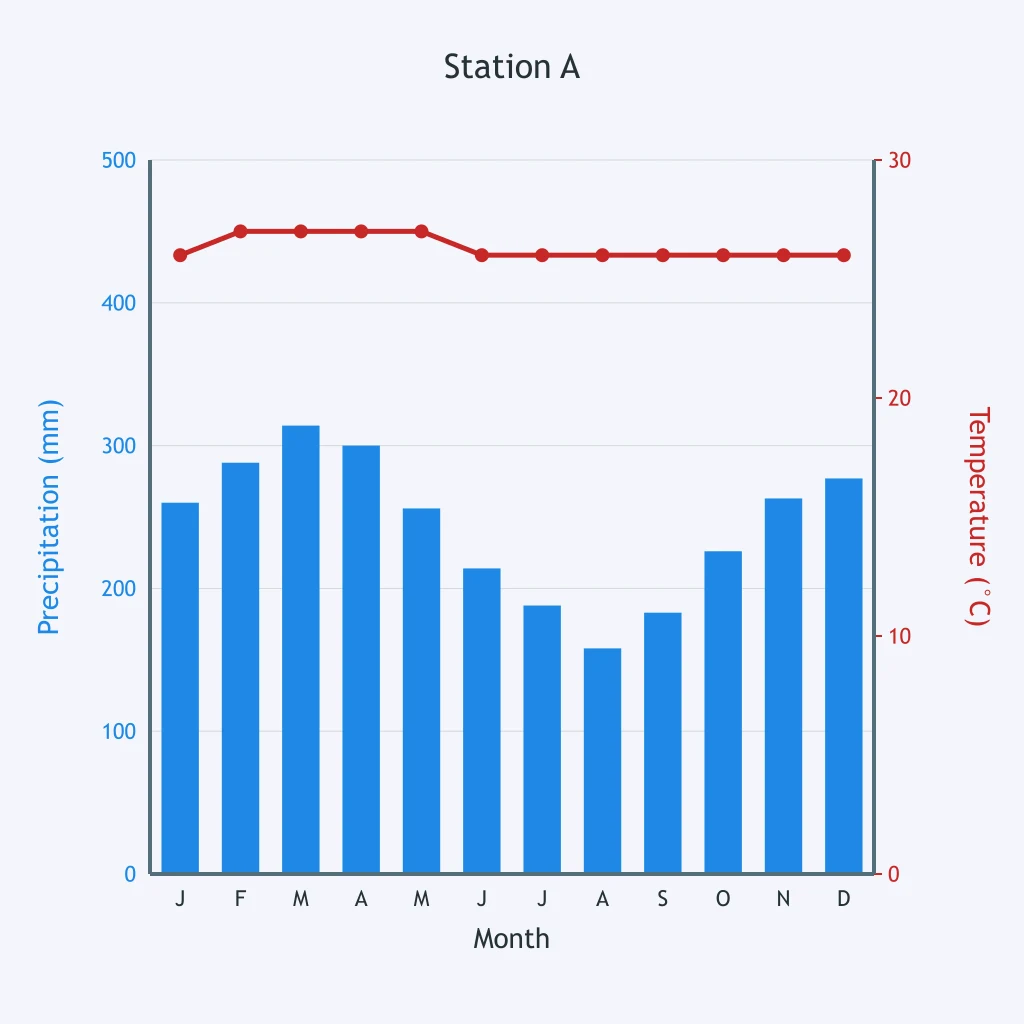
Read the climatogram for Station A. Which terrestrial biome does this climate support?
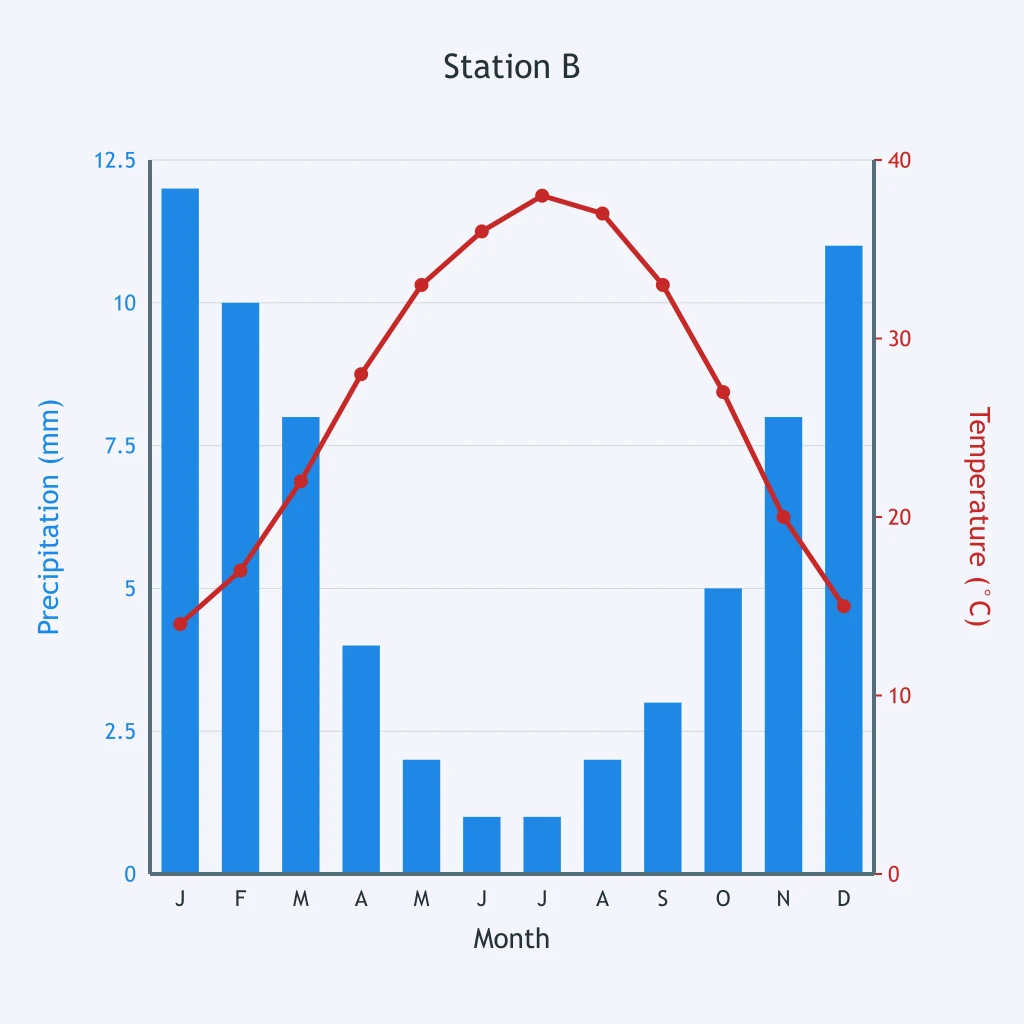
Use the climatogram for Station B. Which biome does this climate most likely support?
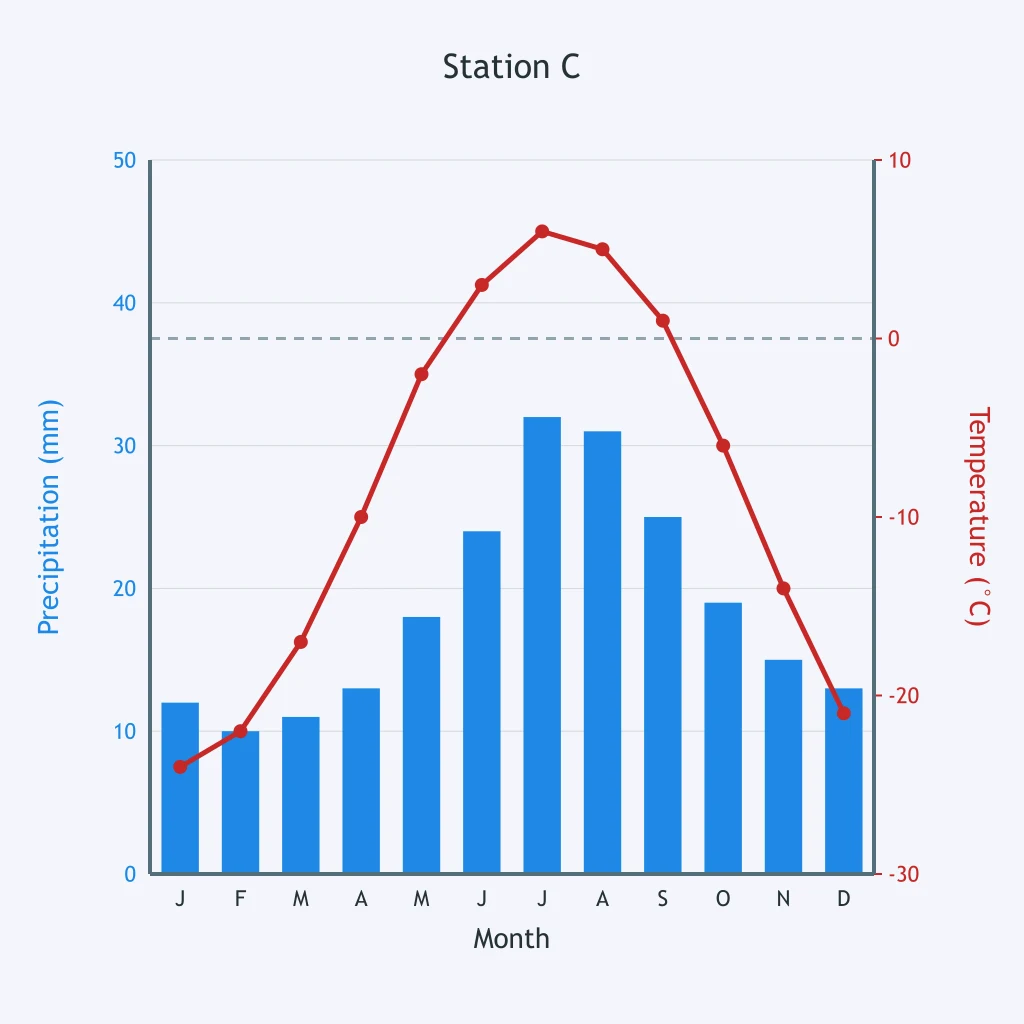
Use the climatogram for Station C. Which biome is most consistent with this climate?
Use the climatogram for Station D. Which biome is most likely?
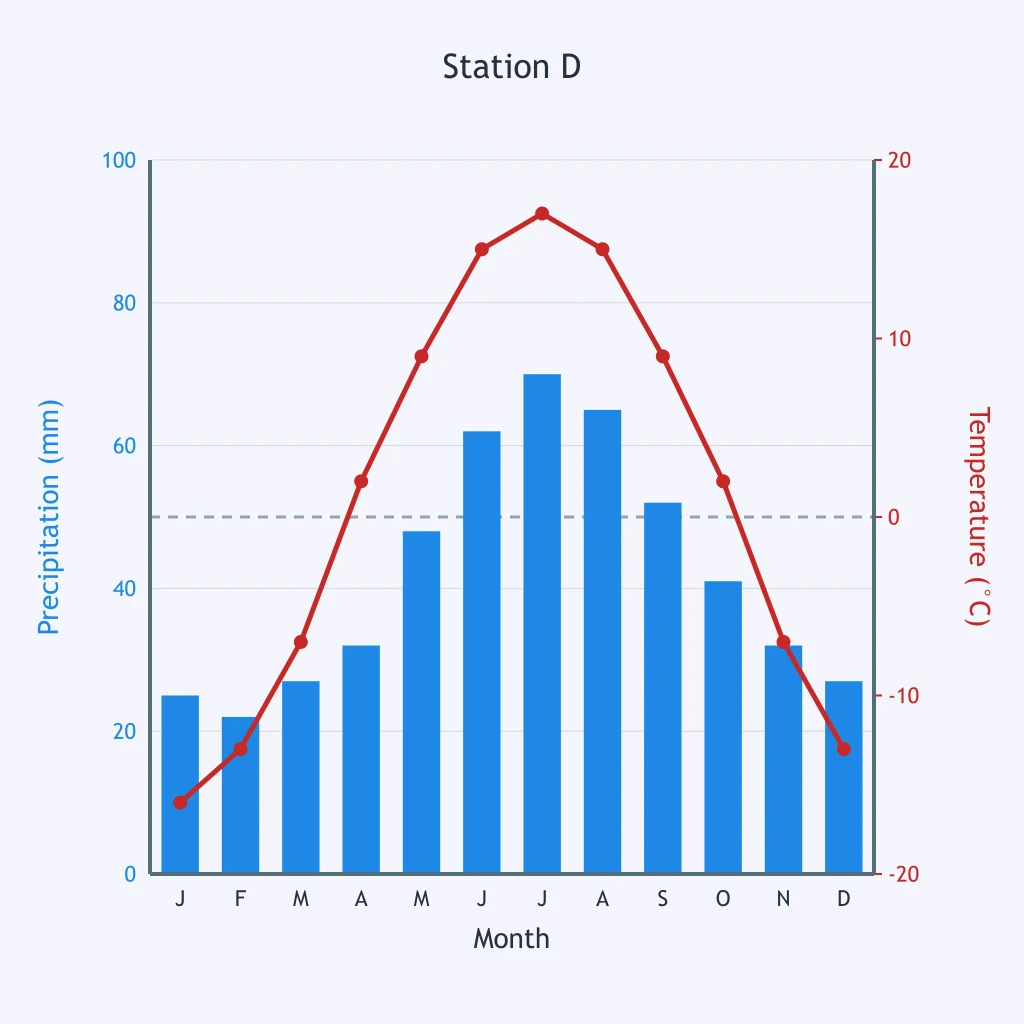
Use the climatogram for Station E. Which biome does this climate match?
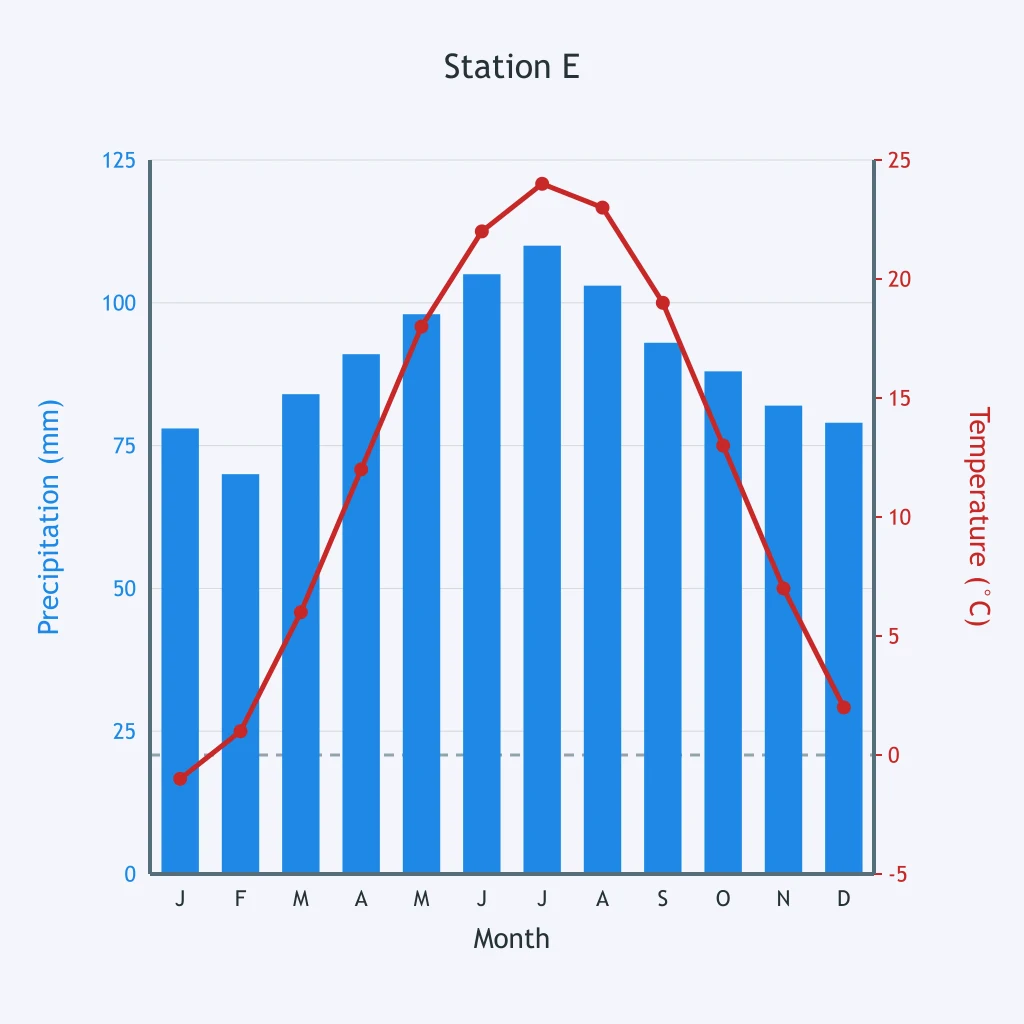
Read the climatogram for Station F. Which biome fits this climate?
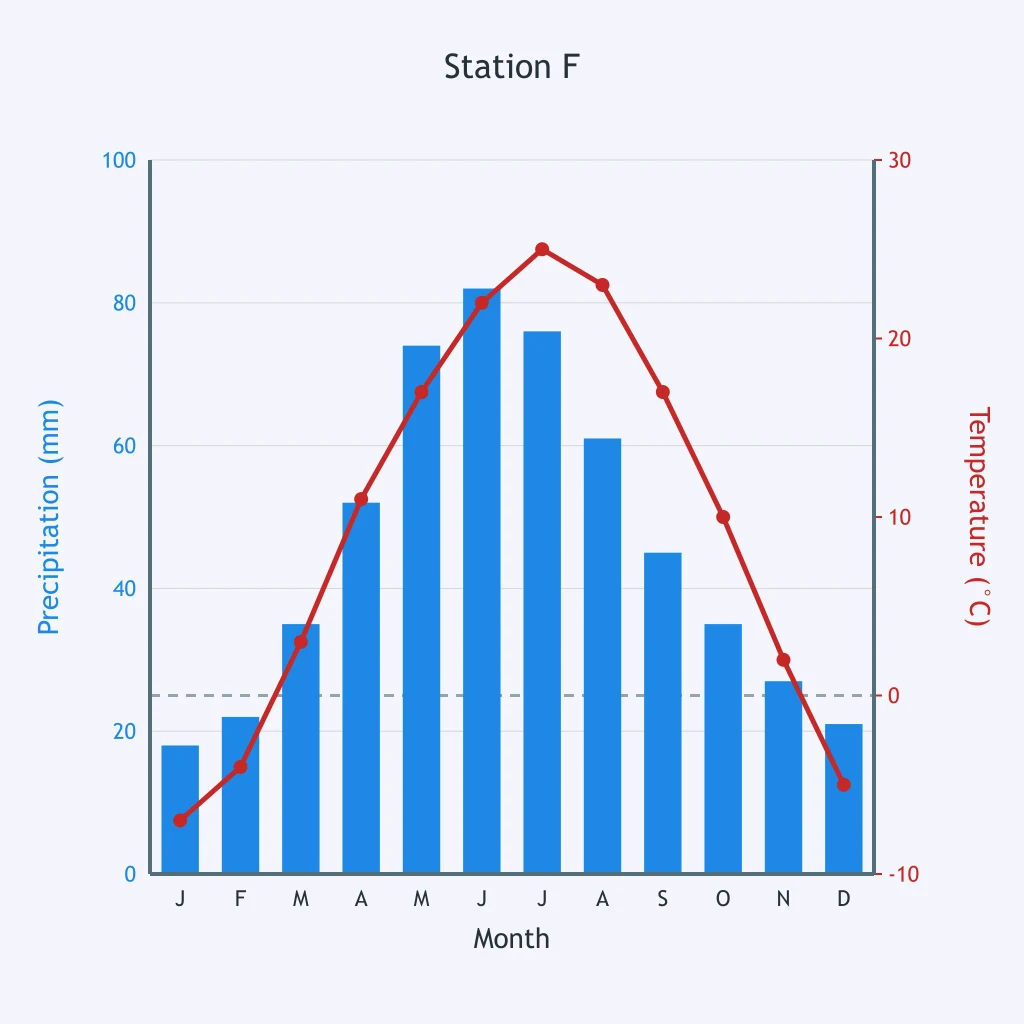
Use the climatogram for Station G. Which biome is indicated?
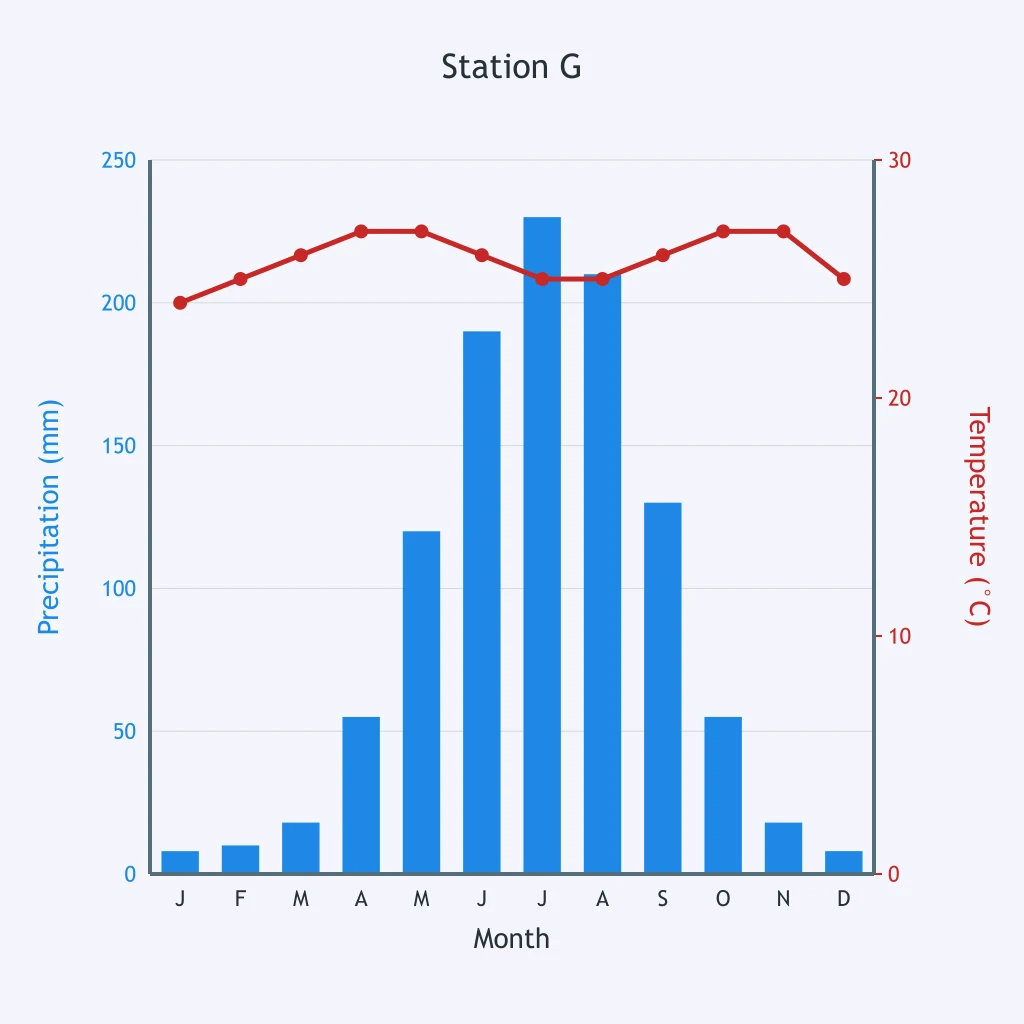
Use the climatogram for Station H. Which biome does this climate represent?
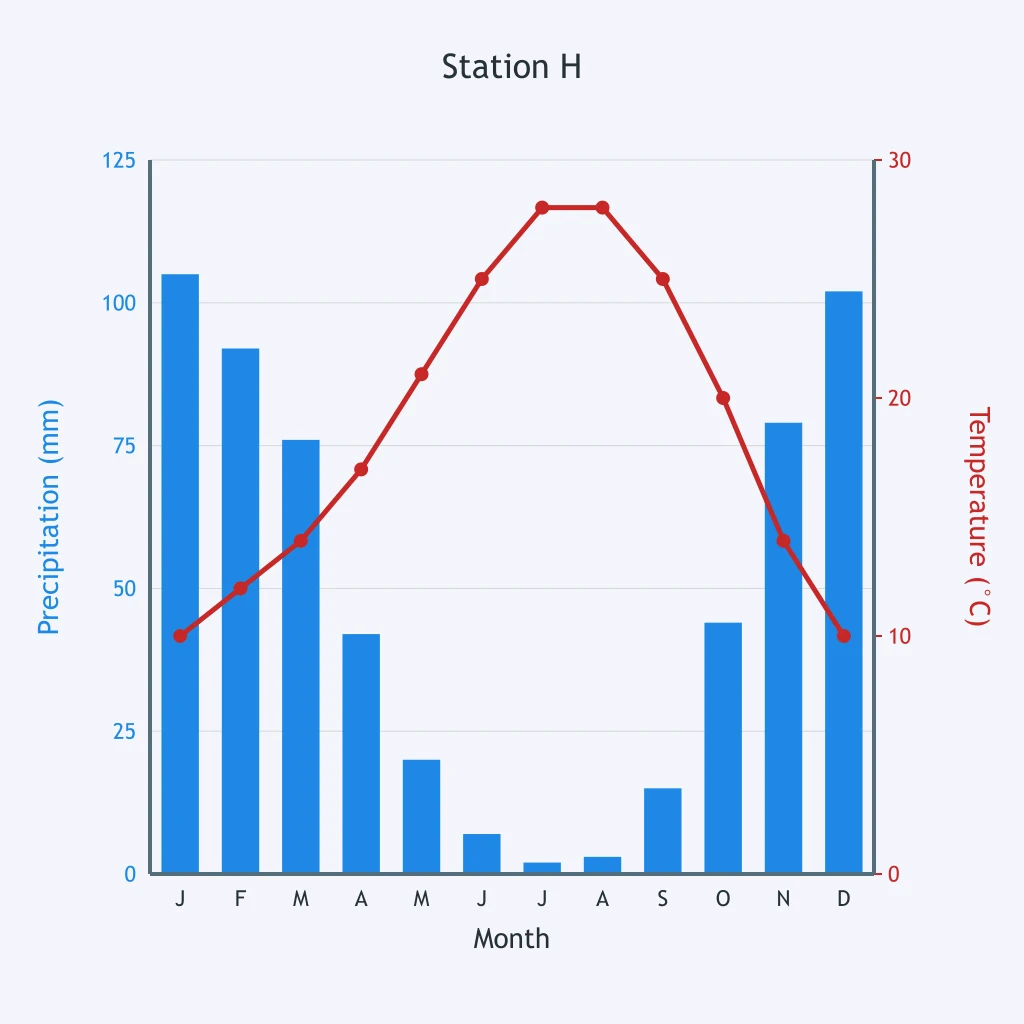
Use the climatogram for Station I. What biome is most likely?
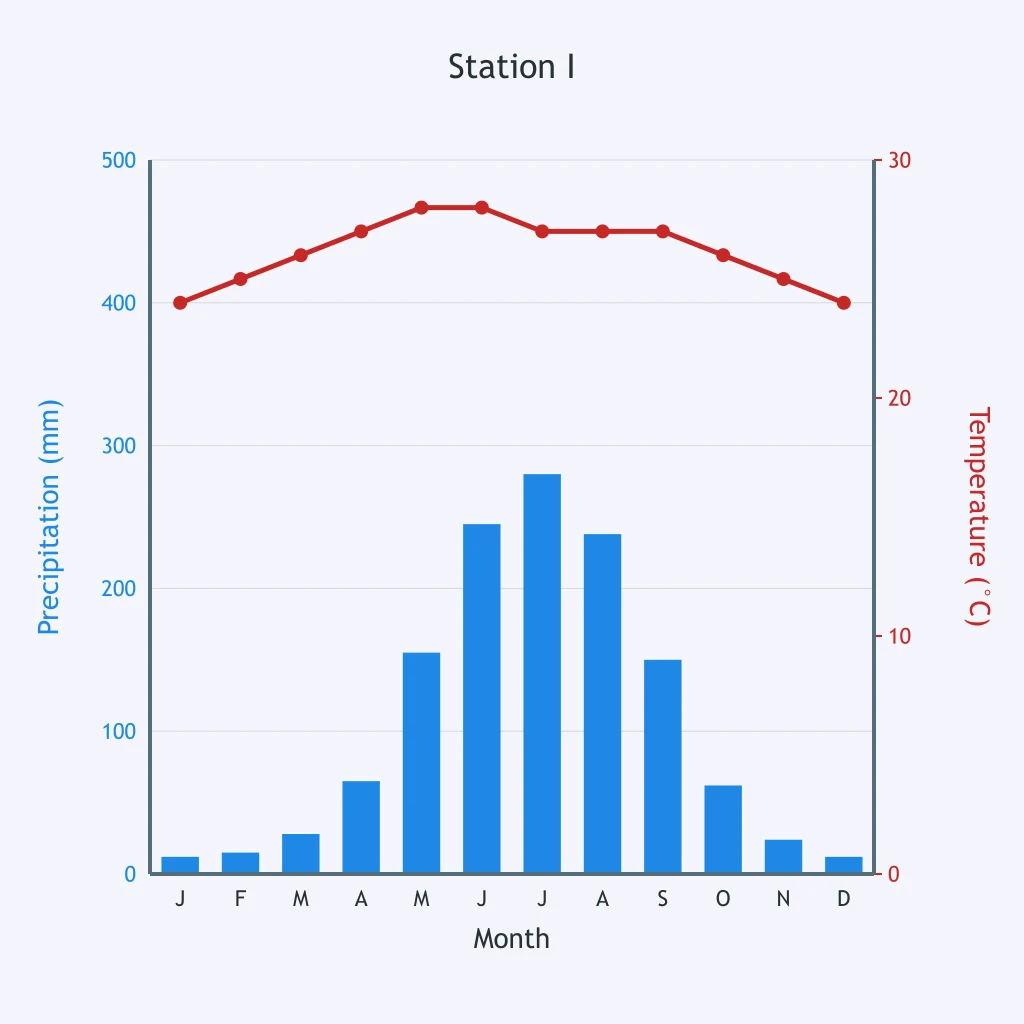
Use the climatogram for Station J. What biome best fits this climate?
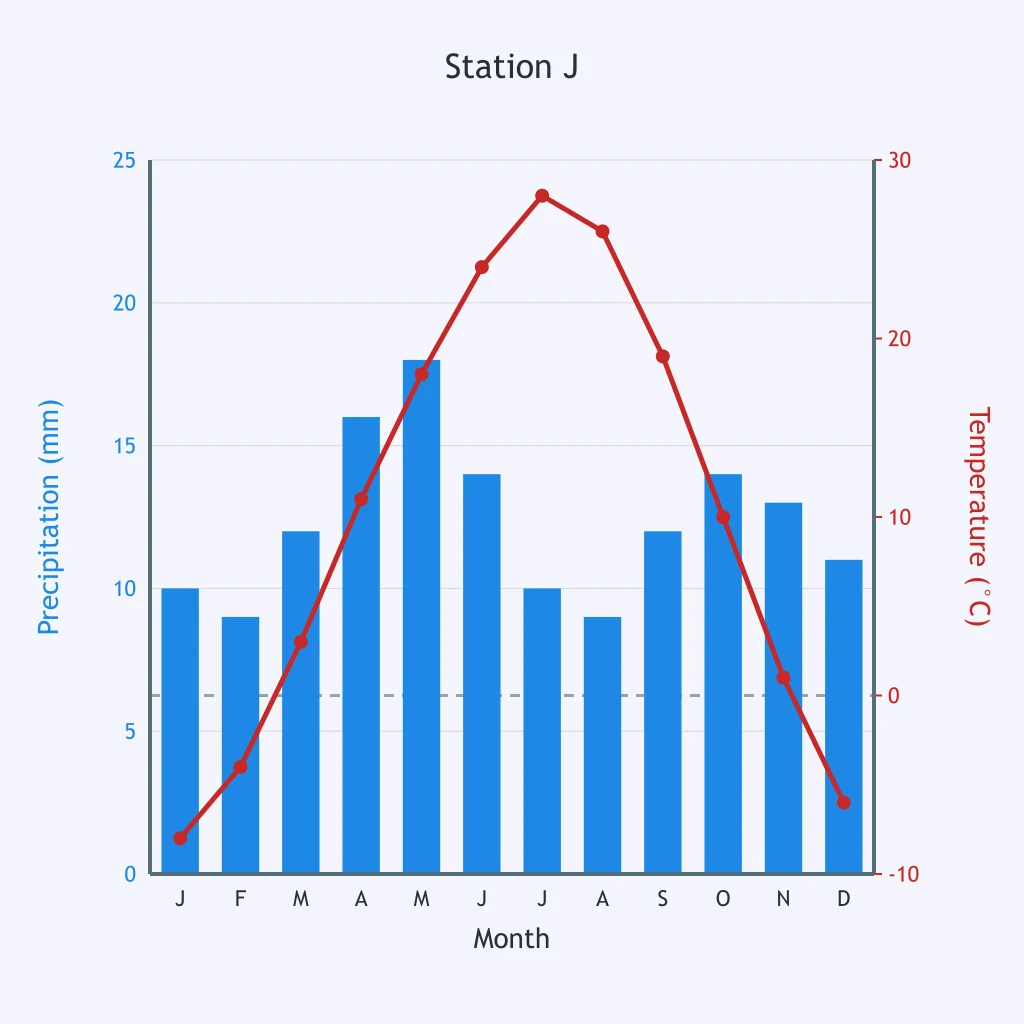
Use the climatogram for Station K. Which biome does this climate support?
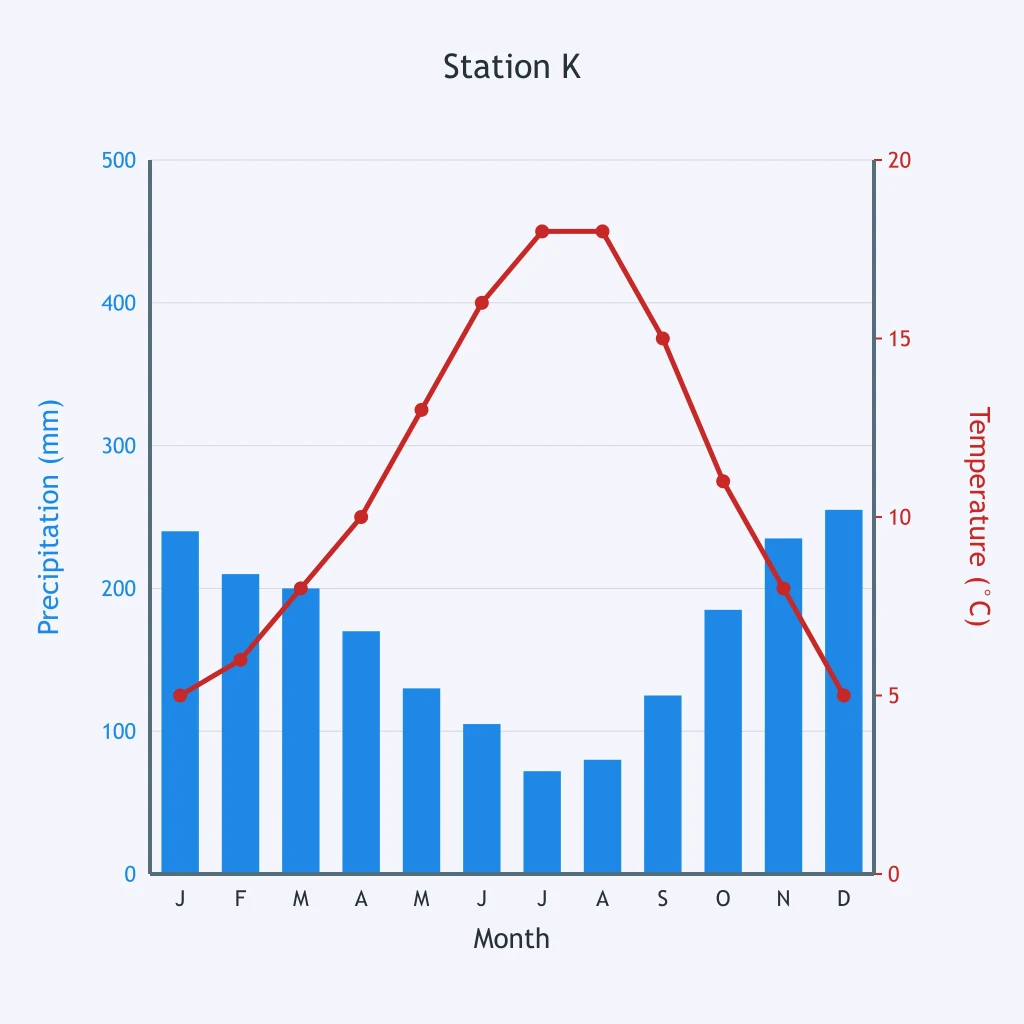
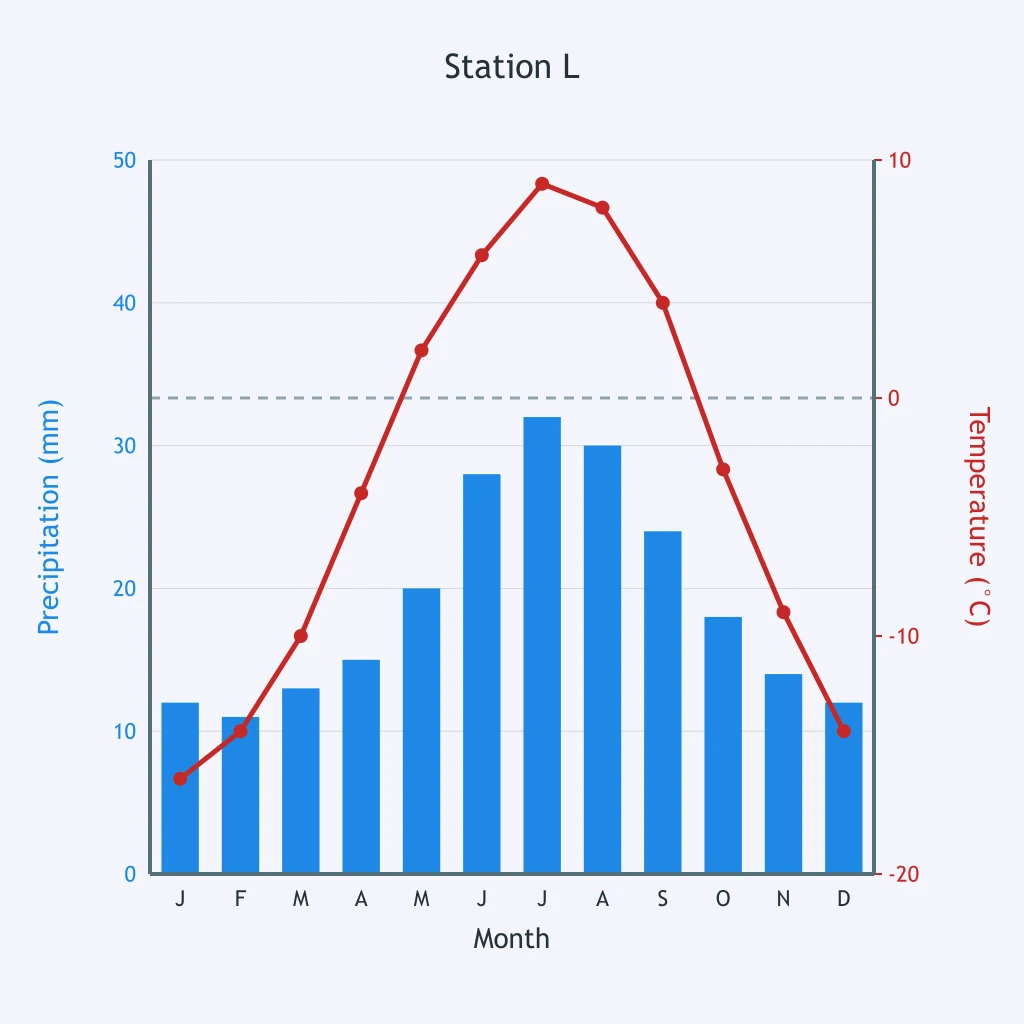
Use the climatogram for Station L. Which biome is most likely?
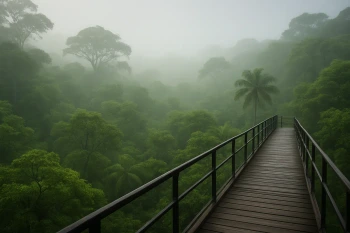
A biome is warm and rainy all year, yet its soils are thin and poor because most nutrients are held in the living plants. What biome is it?
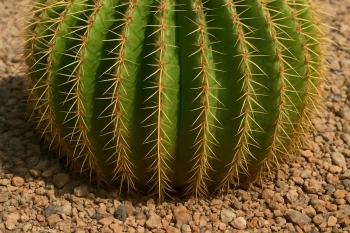
An area receives 180 mm of precipitation annually and has a wide daily temperature range. Which biome is most likely?
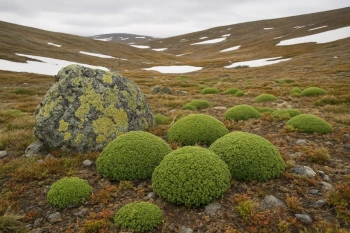
A treeless region has permanently frozen ground below the surface, and only the top layer of soil thaws in summer. Which biome best matches these conditions?
A forest dominated by spruce, fir and pine has long, cold winters and short, cool summers. Which biome is most likely?
A forest has four seasons, annual precipitation of 1,100 mm spread across the year, and winter temperatures below freezing. Identify the biome.
A region has cold winters, receives 550 mm of annual precipitation mostly in late spring and summer, and has periodic drought. Which biome is this?
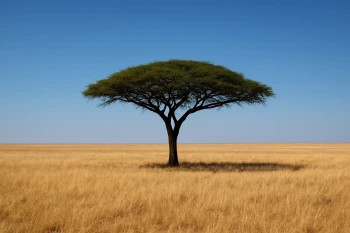
A biome that is warm all year has grasses with scattered trees, a long dry season, and frequent fires that keep a closed forest from forming. What biome is most likely?
A coastal region has rainy winters, hot dry summers, and frequent summer fires. Which biome does this climate favor?
A region stays near 26 °C all year, receives 1,300 mm annually, and has a four-month dry season. Which biome is most likely?
A coastal mountain slope receives 2,400 mm of precipitation annually and has temperatures from 5 °C to 18 °C. Which biome fits?
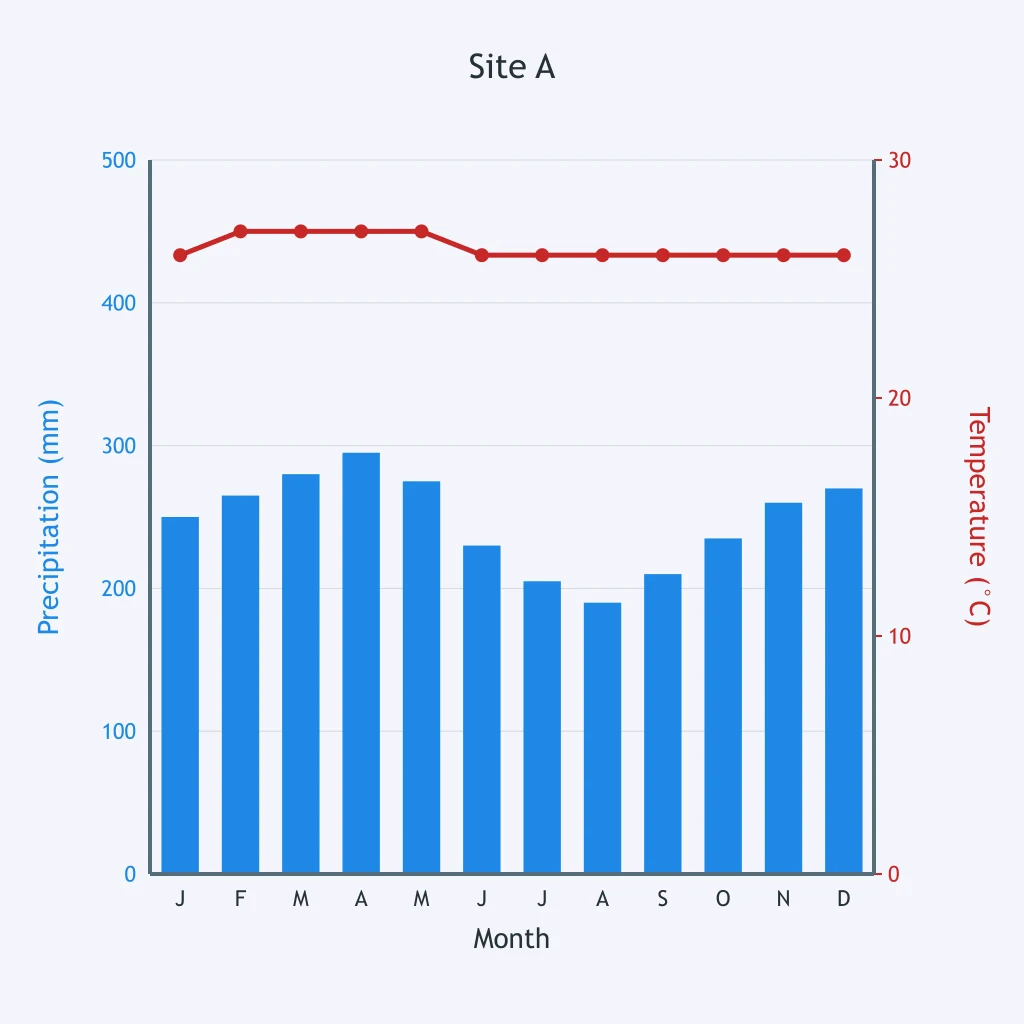
Site A is shown. Site B is equally warm year-round but receives about 1,800 mm a year, with more than 100 mm in only four of the twelve months. Which biome is more likely at Site B?
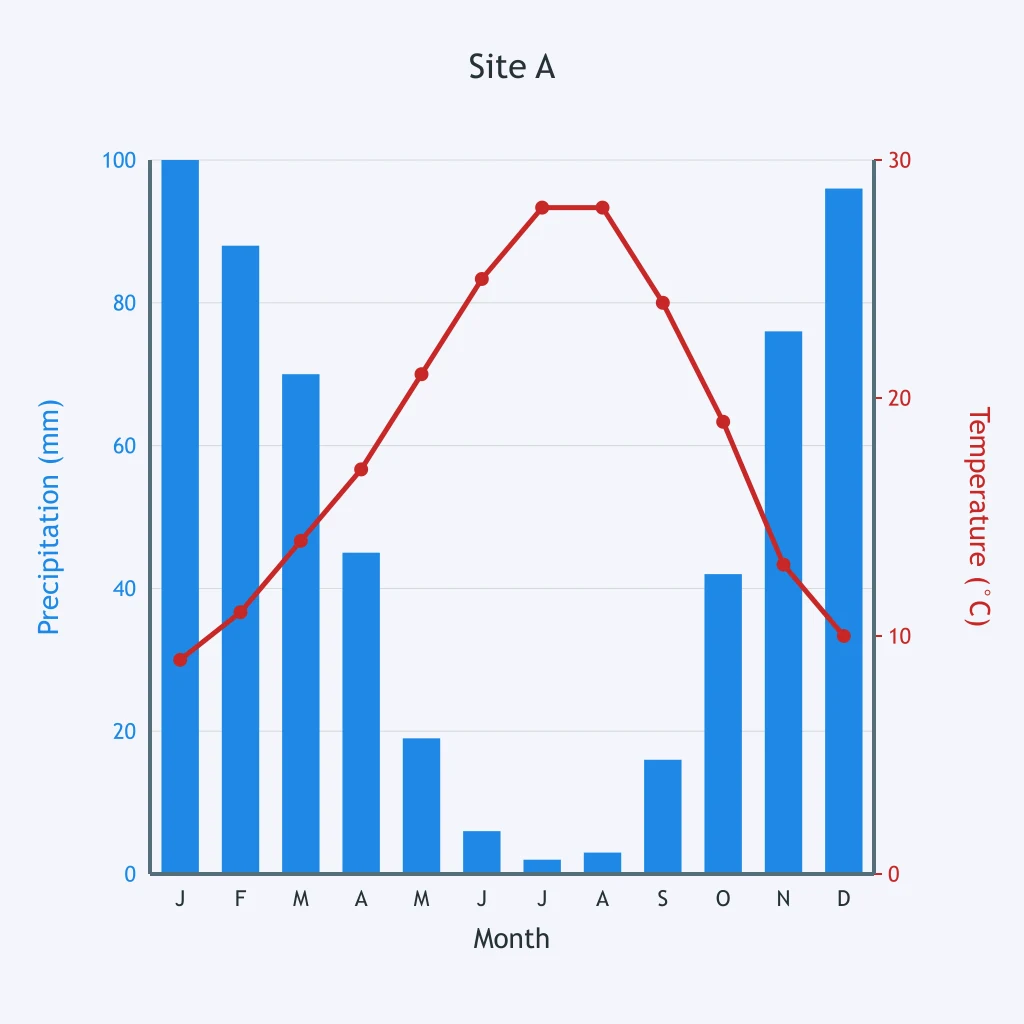
Site A has wet winters and dry summers. Site B receives a similar annual total, but rain peaks in warm summer months and winters are cold. Which biome better matches Site B?
The plotted site has a short mild summer. Site B receives similar precipitation but has six months above 10 °C and warmer summers. Which biome is more likely at Site B?
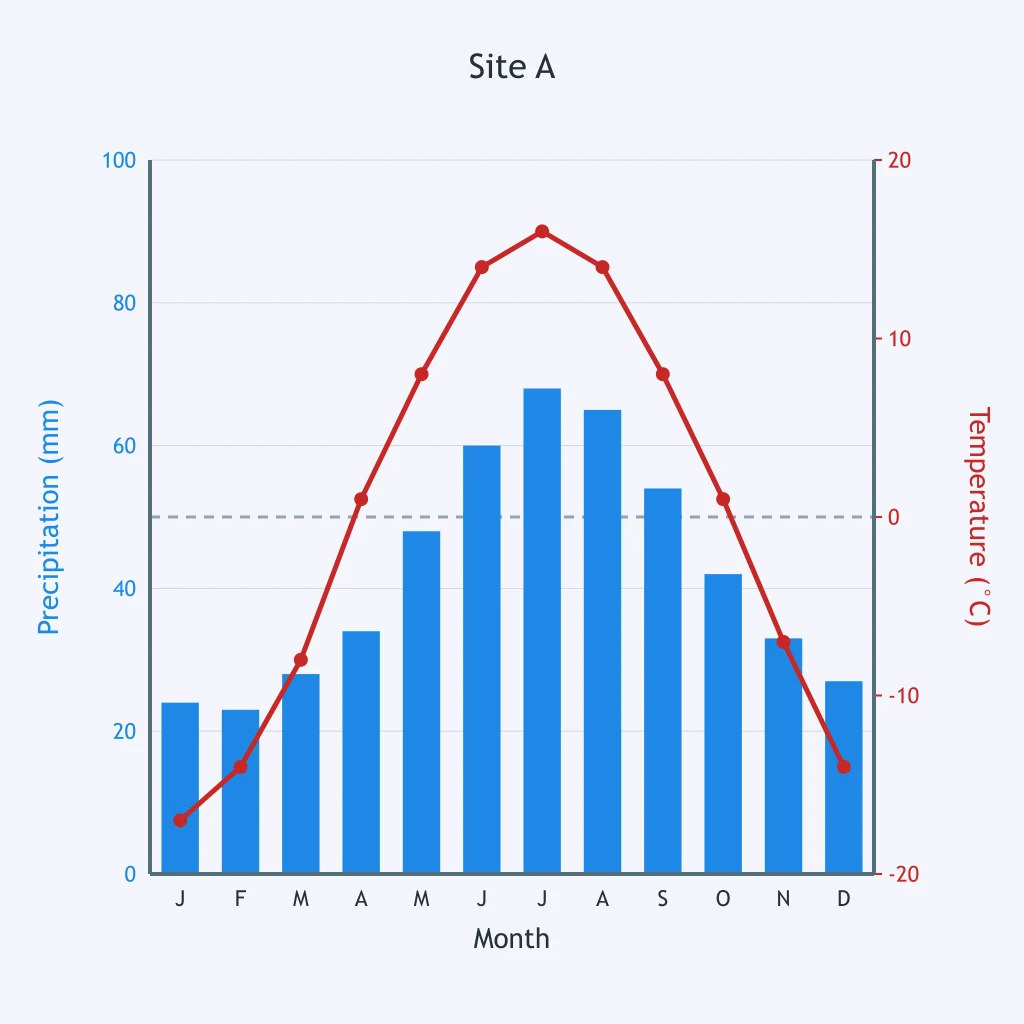
The graph shows a biome with only a brief cool summer. Site B has similar low precipitation but a warmest-month temperature of 19 °C and five months above freezing. What biome better fits Site B?
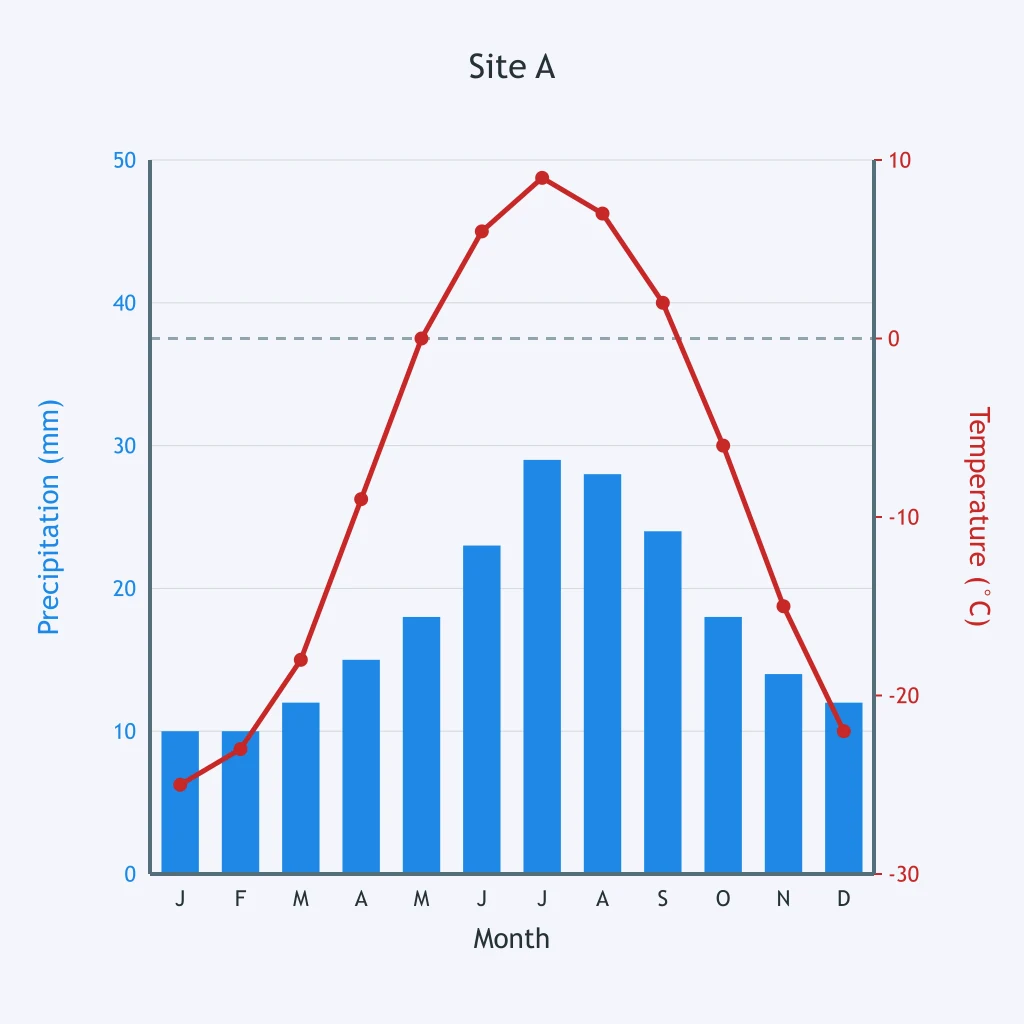
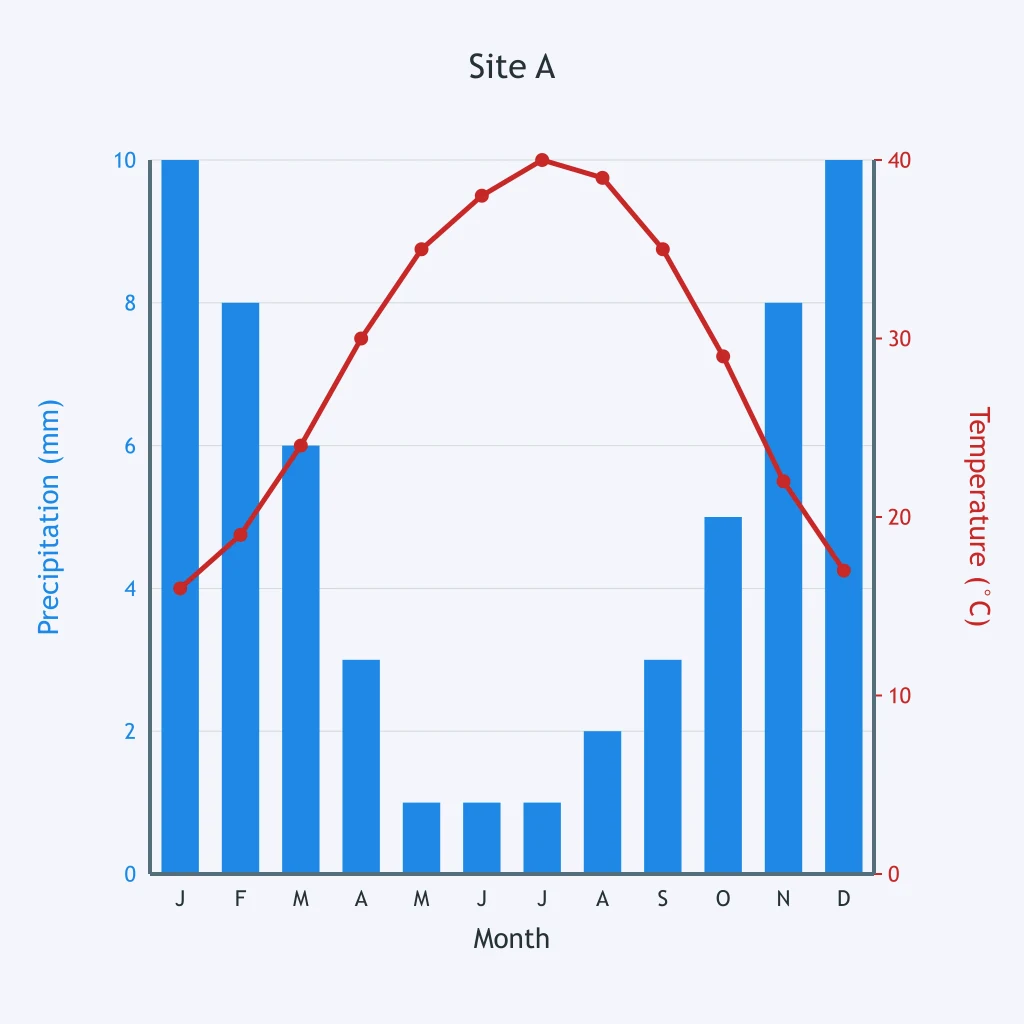
Site A is extremely dry. Site B has similarly hot temperatures but receives about 800 mm of rain concentrated in a rainy season. Which biome is more likely at Site B?
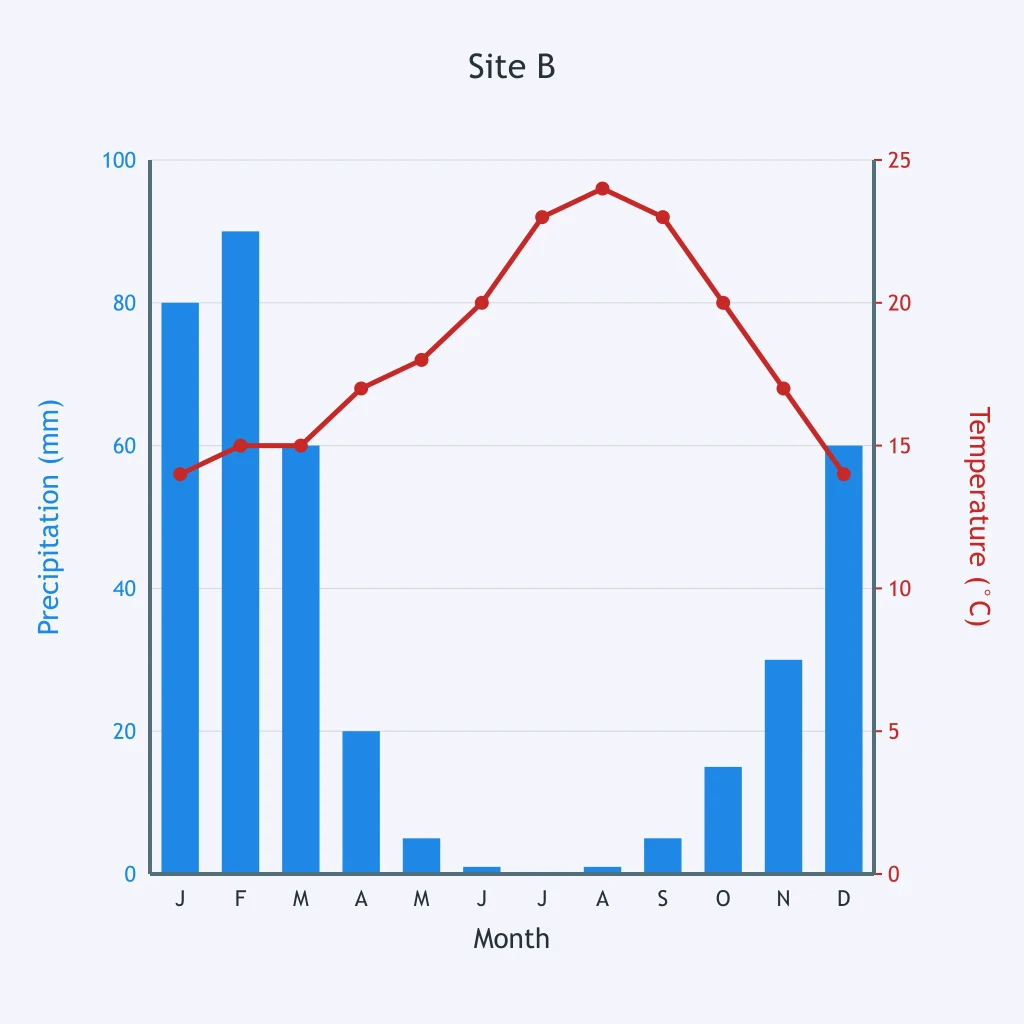
Use the climatogram for Site B. Which biome best fits this climate?
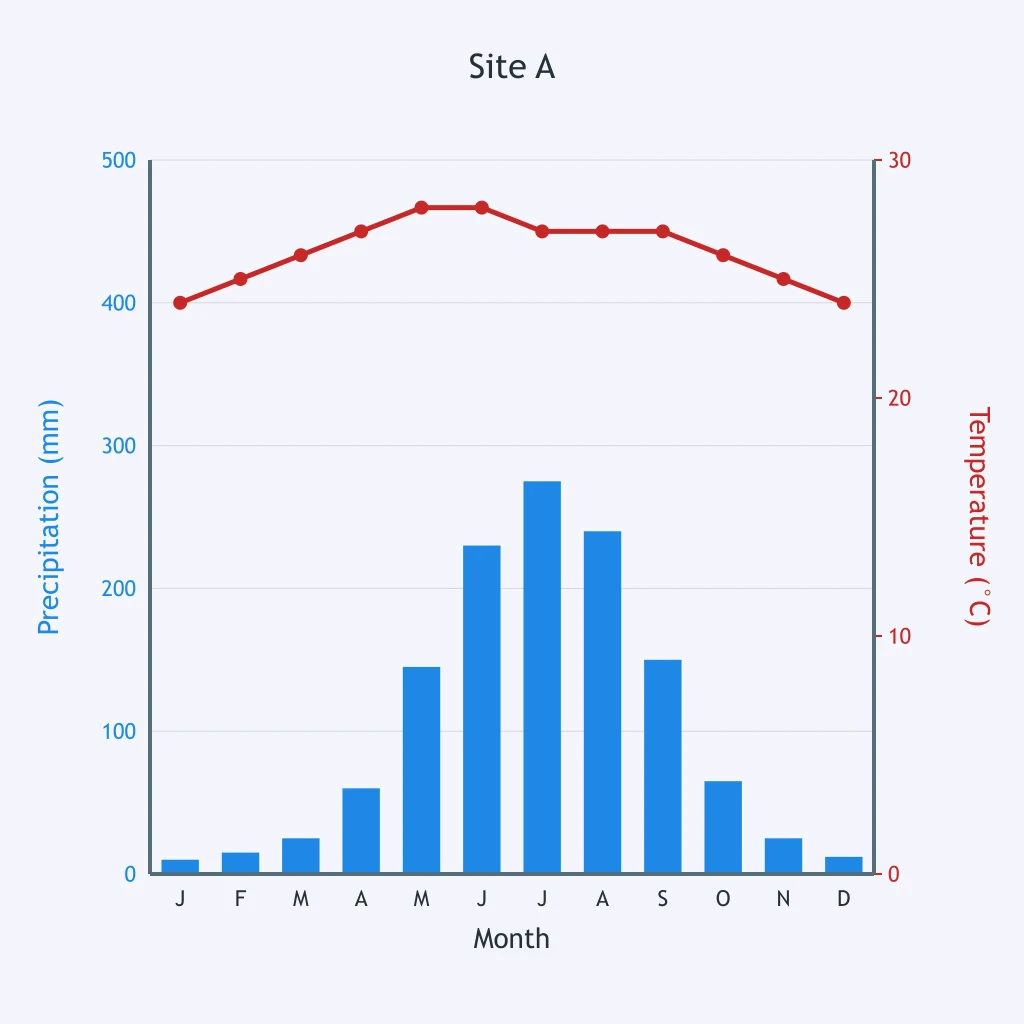
Site A has a pronounced dry season. Site B has nearly identical temperatures, but every month receives more than 200 mm of rain. What biome is more likely at Site B?
Site A has freezing winters and moderate summer rainfall. Site B has a similar annual precipitation total but remains above 18 °C every month. Which biome better matches Site B?
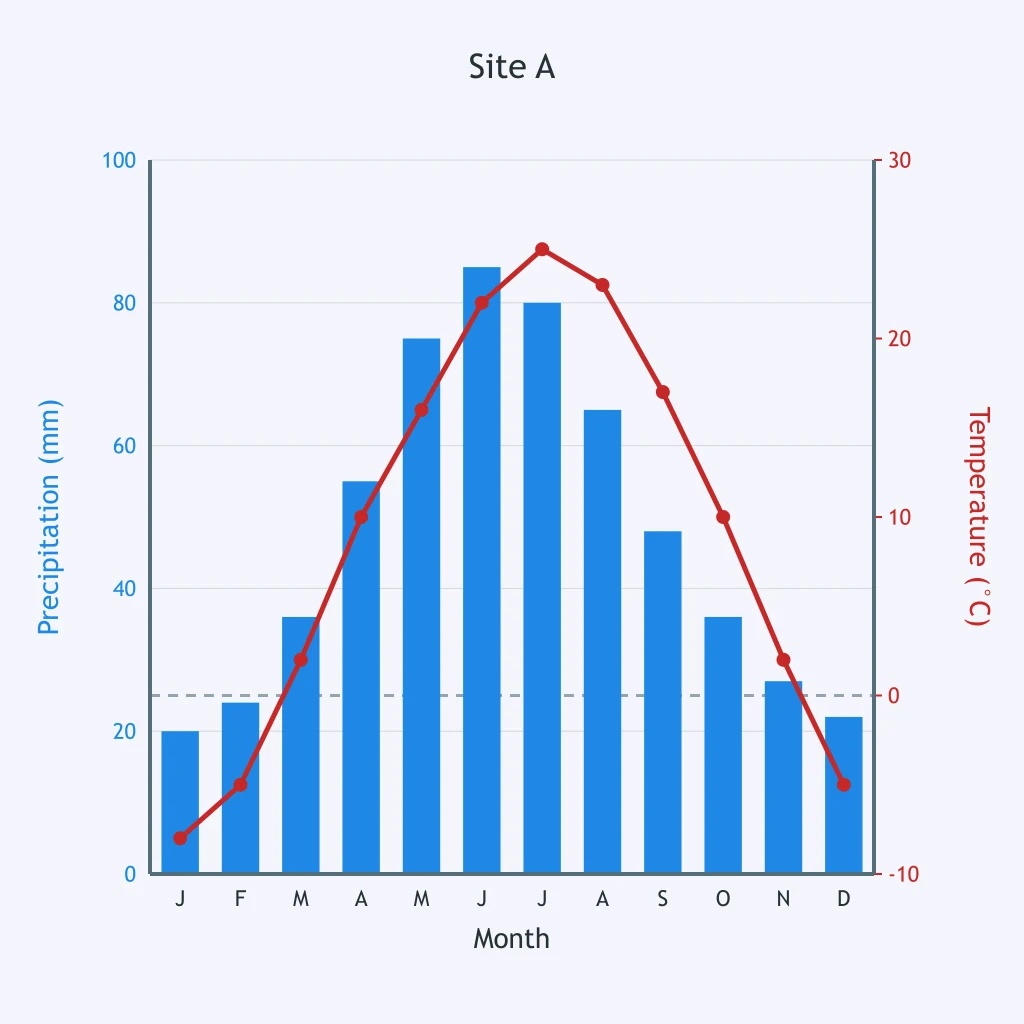
The climatogram shows a cold, dry site with a warm summer. Site B receives similarly little precipitation but has only ten weeks above freezing. Which biome is more likely at Site B?
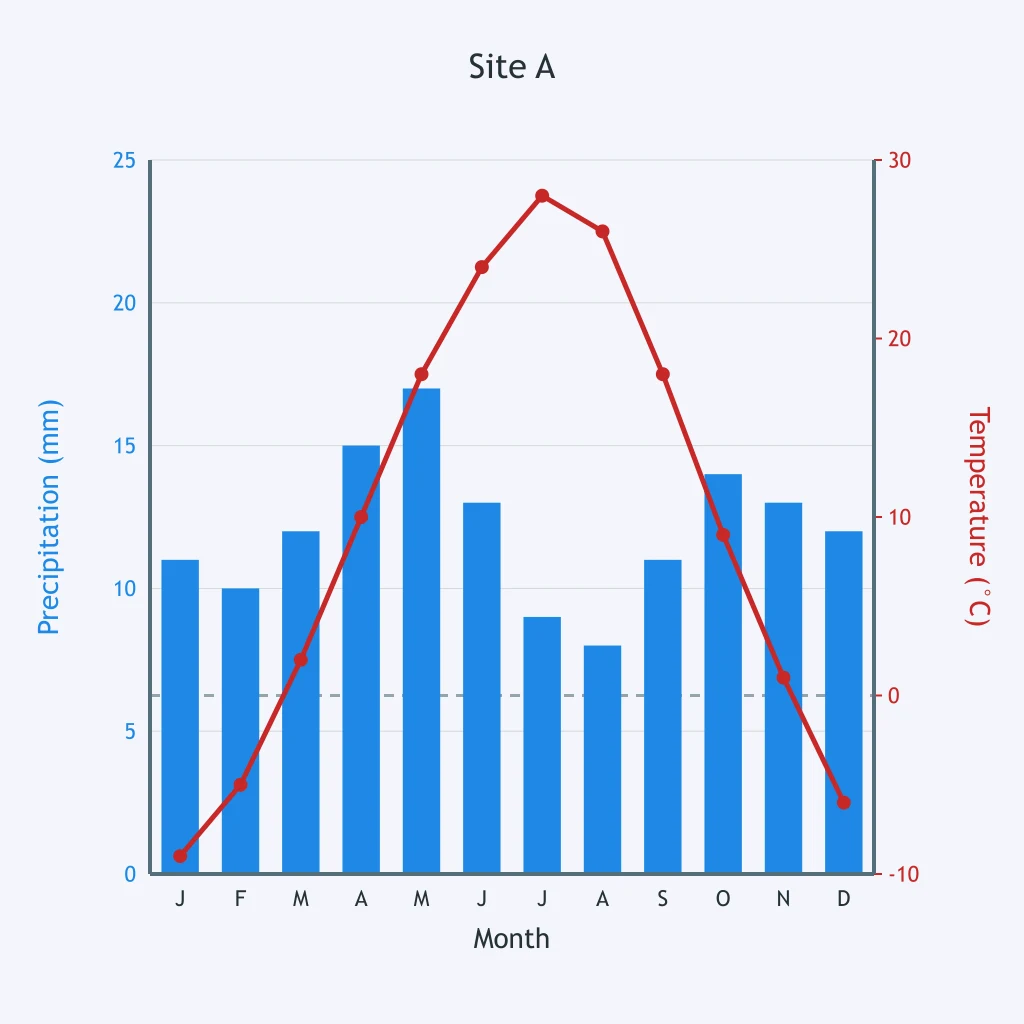
Site A has moderate precipitation and four seasons. Site B receives a similar total but has winters near −20 °C and summers near 15 °C. Which biome is more likely at Site B?
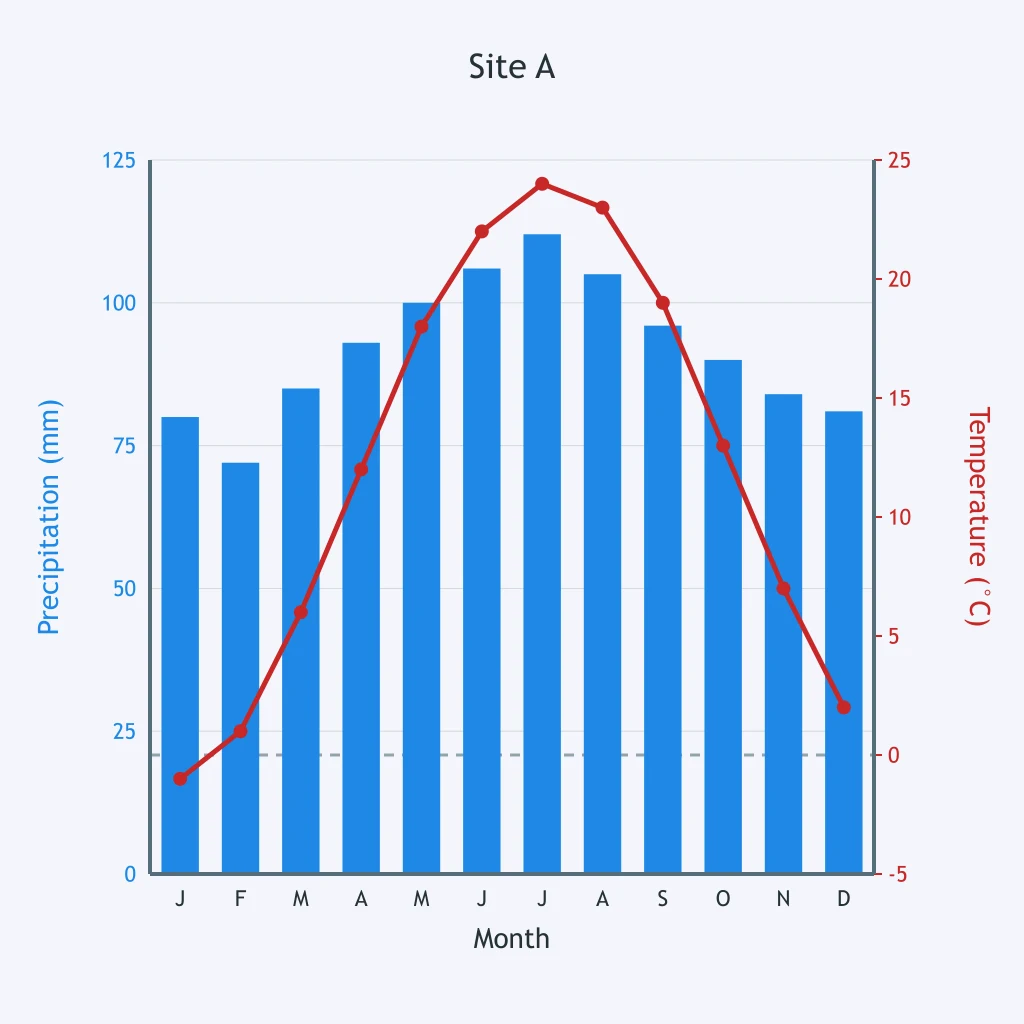
A tropical rainforest has abundant rain, warm temperatures, and a dense, many-layered canopy. What most limits understory plant growth?
A desert receives 150 mm of precipitation each year and has high potential evaporation. What climate factor most limits primary productivity?
A tundra site receives adequate summer moisture but has only eight weeks with mean temperatures above freezing. What most limits plant growth?
Chaparral shrubs receive rain in winter, but summers are hot and almost rainless. During summer, what most limits photosynthesis?
In a boreal forest, winters are long and summers are short. Which climate condition most restricts annual plant production?
A savanna receives nearly all its rainfall during one wet season. What factor most constrains plant growth during the remaining dry months?
A temperate grassland receives 450 mm of rain annually, with periodic summer drought. What climate-related condition most limits tree establishment?
A temperate deciduous forest receives ample precipitation all year. What primarily limits plant growth in winter?
Crack the passcode before the zombies get in.
Answer, then swat bugs for bonus points.
Race through questions at your own speed.
Same question on every screen. Fastest wins.

Pick a tile, answer, hit bonuses and steals.
Grassland, Savanna and Desert Biomes
30 questions