Loading
by BlastRoom
Grassland, Savanna and Desert Biomes for high school Environmental Science, on-level and AP. Covers AP Environmental Science Unit 1: The Living World, Ecosystems.
#environmental_science
30 questions
One question set, multiple game modes. Tap any game to see it in action. Not sure which to pick?
Answer to place stones and capture territory.
Outrun the snow together.
Earn blasts, then hunt the other team.
Answer to earn energy, then climb.

The class blasts through walls together.
Bid on mystery lots. Most money wins.
Sell tours. Nice, standard, or a total scam.

Answer, restock, and serve the rush.
More correct answers pulls the rope your way.
Answer, then shoot down the alien wave.
Answer, then tap to leap the frozen ridge.
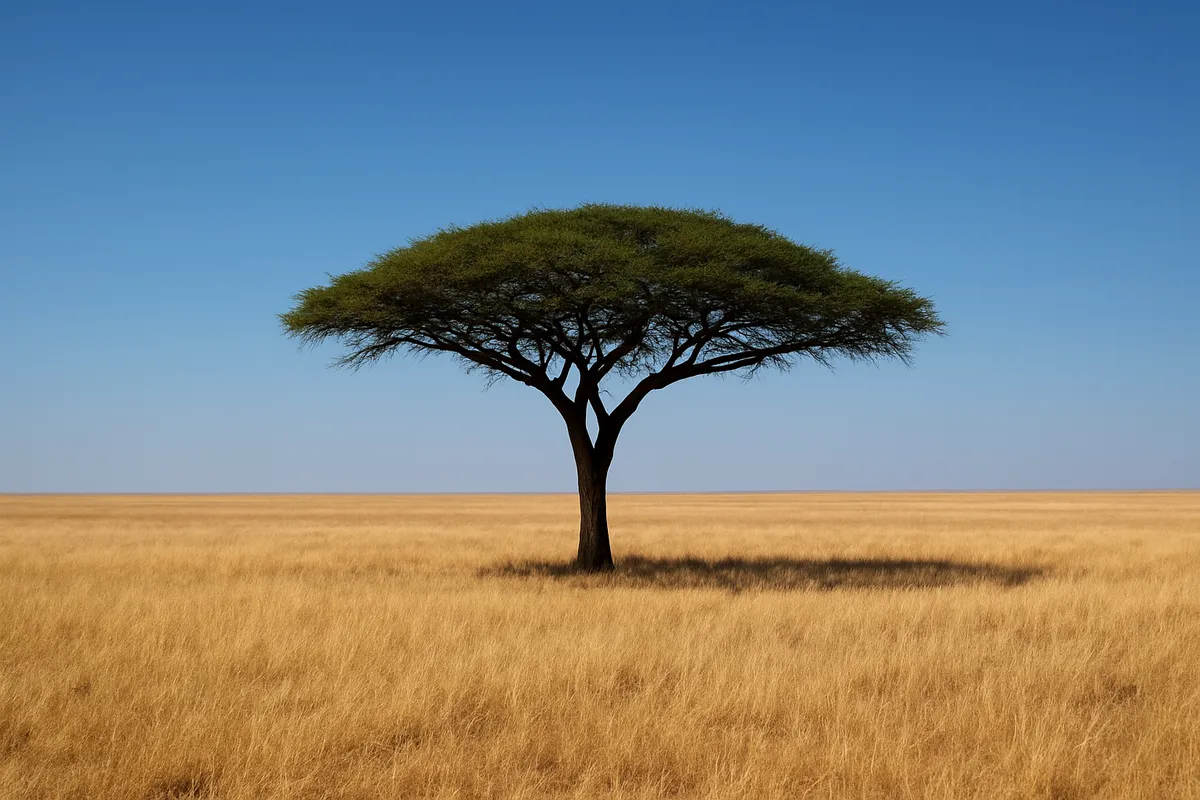
A warm landscape has grasses, scattered flat-topped trees, a long dry season, and frequent fires. What biome is it?
A region has deep, fertile soil; mostly grasses; cold winters; hot summers; and too little precipitation to support a forest. What biome is it?
An area receives less than 25 cm of precipitation annually and has widely spaced drought-tolerant plants. What biome is it?
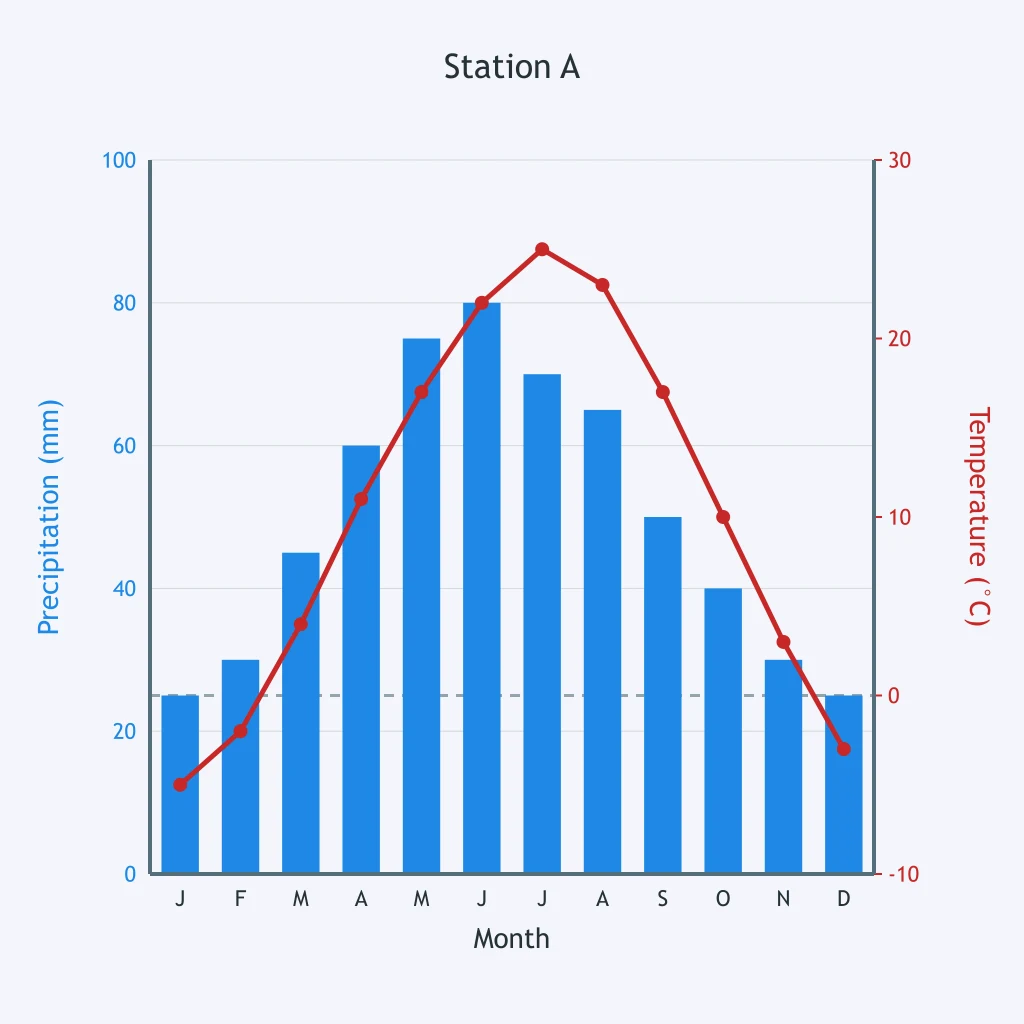
Use the climatograph to identify the biome most likely found at Station A.
A ranch lies on a broad plain dominated by grasses and herbaceous flowering plants, with very few trees. Which biome does this description identify?
A wildlife reserve has large grazing mammals, scattered acacia-like trees, and rainfall concentrated in one season. What biome surrounds the reserve?
Use the climatograph to identify the biome most likely found at Station B.
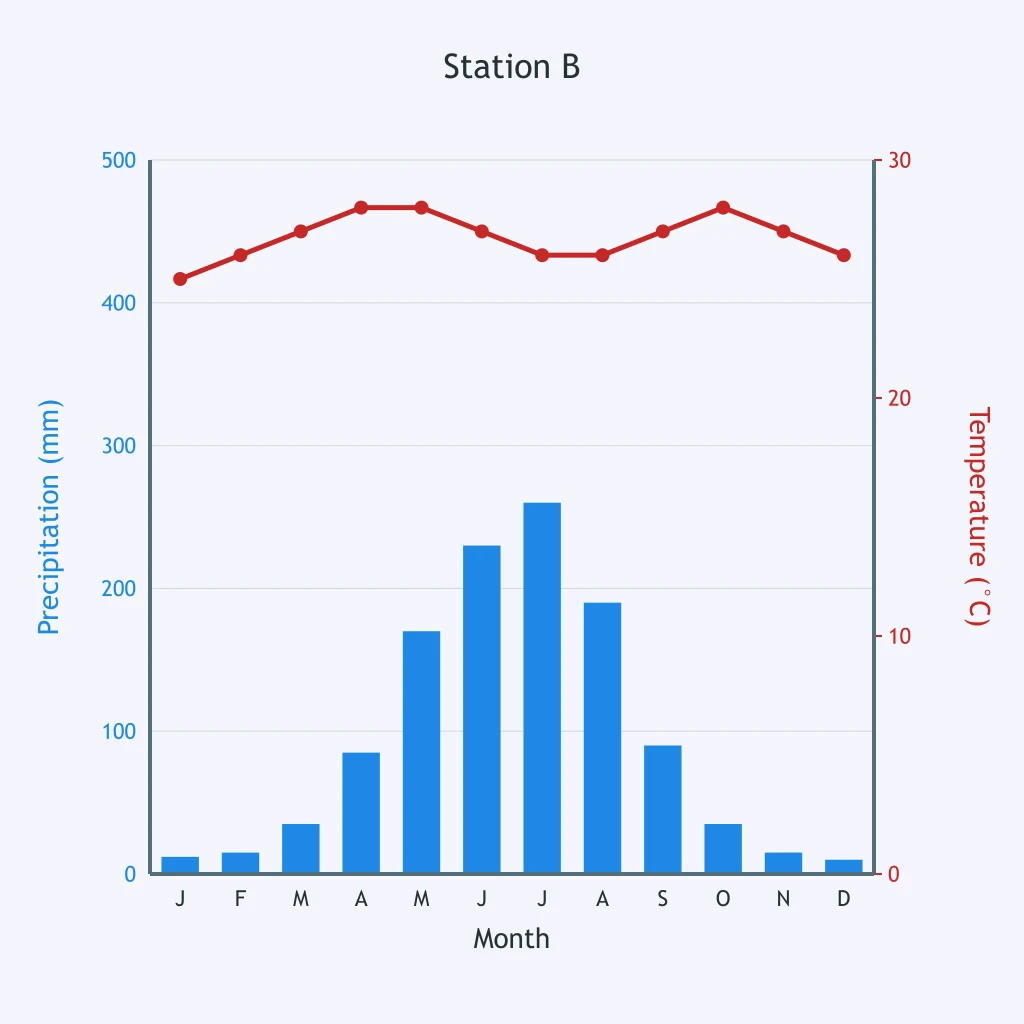
A dry region has bare ground between shrubs, large day-to-night temperature changes, and rain that may not fall for months. What biome is it?
A farmer grows wheat on land that was once dominated by tall grasses, periodic drought, and large herds of bison. Which biome was converted to cropland?
Use the climatograph to identify the biome most likely found at Station C.
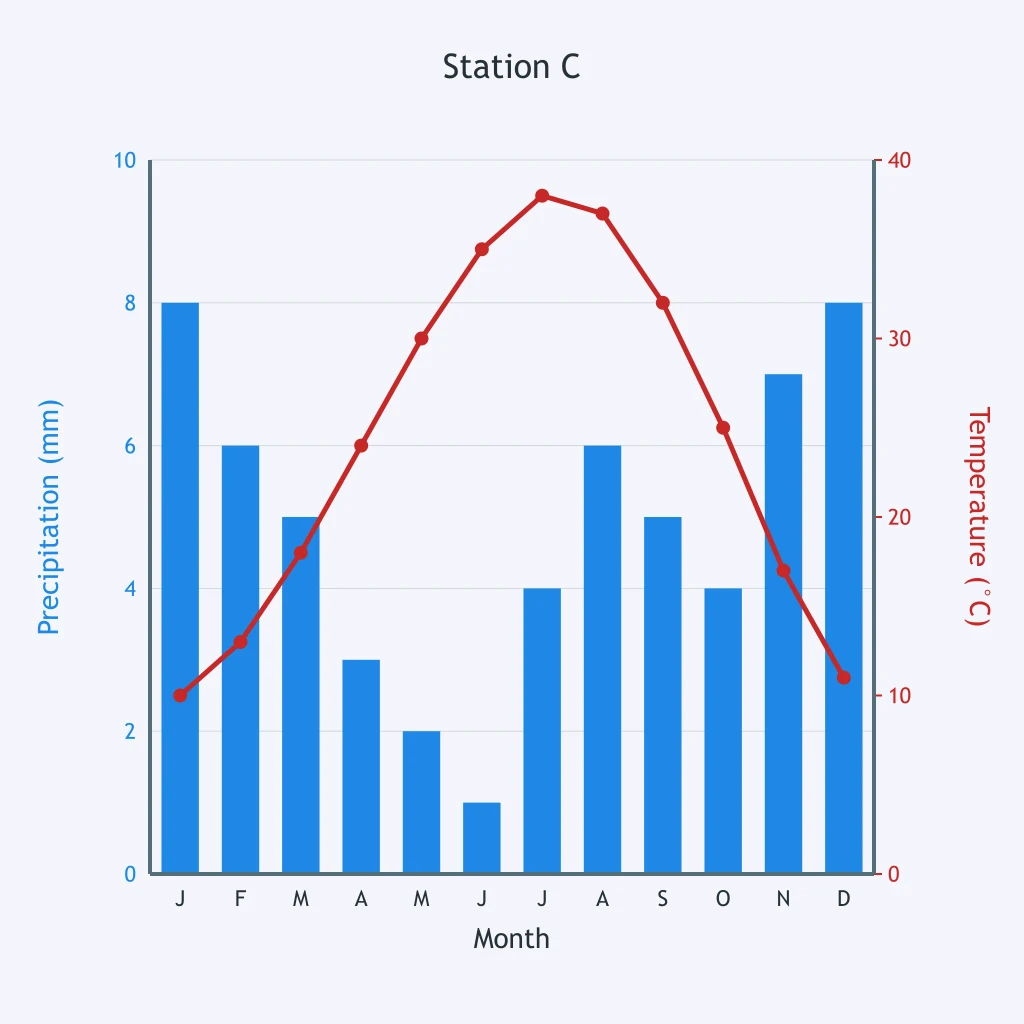
Why do temperate grasslands usually remain open rather than developing into forests?
After decades of fire suppression in a prairie preserve, shrubs and young trees become more abundant. What best explains this change?
A savanna receives enough annual precipitation for trees, yet it remains mostly grassland with scattered trees. Which process most directly maintains this pattern?
A livestock operation keeps too many cattle on a semiarid grassland during a drought. What ecosystem change is most likely?
Why can natural fires benefit many grassland ecosystems after dry vegetation accumulates?
A city expands across a former prairie, replacing native grasses with roads and buildings. During intense rain, what change is most likely downstream?
In a savanna, rainfall becomes less predictable and the dry season lengthens for several years. Which vegetation change is most likely?
What is a likely ecological effect when large native grazers are removed from a grassland reserve?
A desert community pumps groundwater faster than the aquifer is recharged. Which result is most likely for nearby desert springs?
A land manager uses prescribed burns in a fire-adapted savanna. What is the direct purpose of this practice?
A desert shrub opens its stomata mainly at night and closes them during hot daylight hours. What advantage does this adaptation provide?
Many desert plants have leaves reduced to spines. How does this adaptation help the plant?
A xerophyte has a thick, waxy cuticle covering its leaves. What water-scarcity problem does this feature address?
A desert annual produces seeds that remain dormant until substantial rain falls. What does this adaptation allow?
A desert plant has shallow roots spreading far from the stem just below the soil surface. Which resource can it capture efficiently?
A cactus has a swollen stem and few or no leaves. Which statement best describes the role of its stem?
Kangaroo rats in deserts produce very concentrated urine. What is the main benefit of this trait?
A desert lizard shelters in a burrow during the hottest part of the day. How does this behavior help it survive?
Prairie grasses often have deep, extensive root systems. During a drought, what advantage do these roots provide?
A savanna tree drops many of its leaves during the dry season. What is the primary advantage of this seasonal response?
Crack the passcode before the zombies get in.
Answer, then swat bugs for bonus points.
Race through questions at your own speed.
Same question on every screen. Fastest wins.

Pick a tile, answer, hit bonuses and steals.
Adaptations to Biomes
40 questions