Loading
by BlastRoom
Wetlands and Estuaries for high school Environmental Science, on-level and AP. Covers AP Environmental Science Unit 1: The Living World, Ecosystems.
#environmental_science
25 questions
One question set, multiple game modes. Tap any game to see it in action. Not sure which to pick?
Answer to place stones and capture territory.
Outrun the snow together.
Earn blasts, then hunt the other team.
Answer to earn energy, then climb.

The class blasts through walls together.
Bid on mystery lots. Most money wins.
Sell tours. Nice, standard, or a total scam.

Answer, restock, and serve the rush.
More correct answers pulls the rope your way.
Answer, then shoot down the alien wave.
Answer, then tap to leap the frozen ridge.
A marsh upstream of a town stores stormwater and releases it over several days. Which ecosystem service does the marsh provide?
Sediment-laden runoff enters a wetland before reaching a reservoir. What is the wetland most likely to do?
Why can a freshwater wetland help protect a nearby drinking-water source?
A developer drains a seasonal wetland that had allowed rainwater to soak into the soil. Which service is reduced?
A marsh is protected because migratory waterfowl nest and feed there. What wetland service is being maintained?
Why does conserving a peatland help limit atmospheric carbon dioxide?
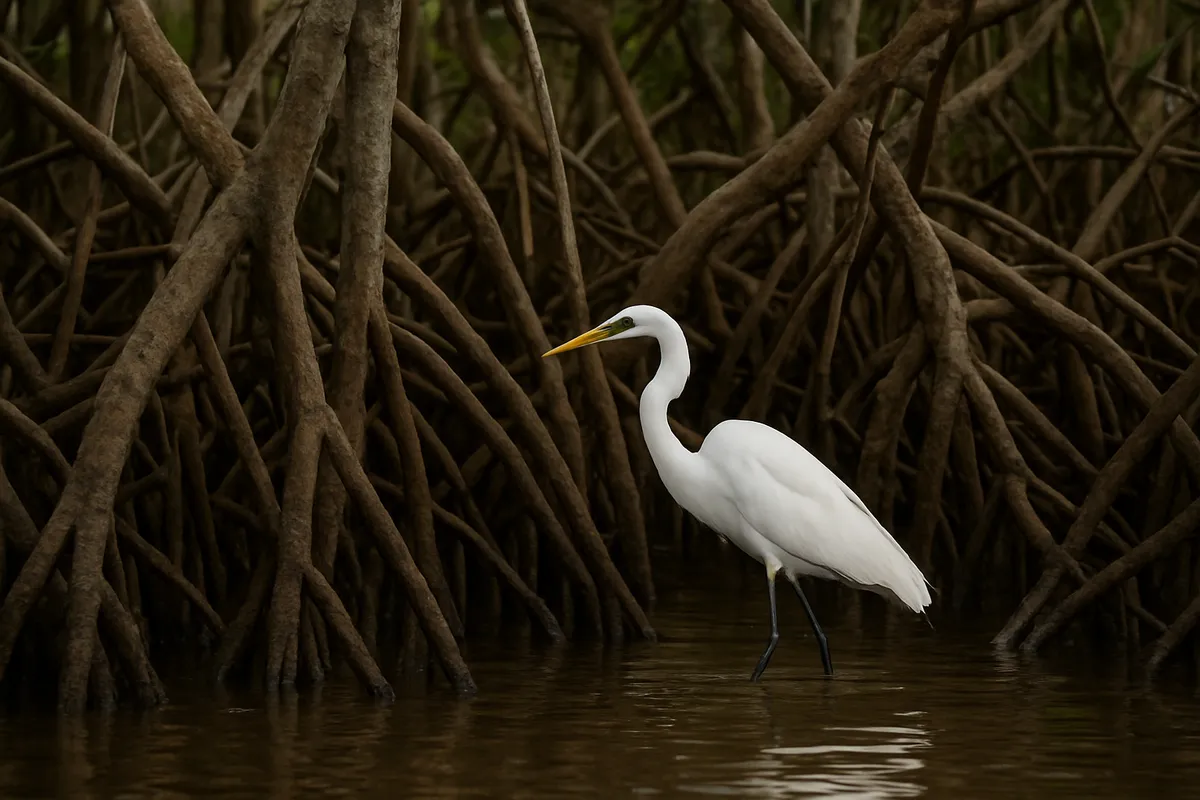
Mangrove roots along a tropical shore reduce wave energy and hold sediment in place. What service do they provide?
A constructed wetland receives nutrient-rich wastewater after conventional treatment. What additional service can the wetland provide?
Why are many wetlands highly productive ecosystems?
An estuary receives river water carrying nitrate and phosphate from its watershed. In shallow, sunlit water, these inputs can increase primary productivity because they provide what?
How does tidal mixing contribute to high productivity in many estuaries?
A salt marsh produces large amounts of plant material, much of which dies and enters the water as detritus. Why does this support a productive food web?
A shallow estuary has abundant phytoplankton, seagrass, and marsh plants. What feature lets these producers capture substantial solar energy?
Why are estuaries often important nursery grounds for fish and crustaceans?
What makes a coastal water body an estuary?
At high tide, seawater pushes farther up an estuary, and after heavy rain, river flow increases. Which condition changes in response?
A crab lives where river water and seawater mix. What physiological challenge is especially important for this organism?
True or false: Water that is saltier than river water but less salty than seawater, common in estuaries, is called brackish water.
A monitoring station records salinity of 4 ppt near a river mouth and 28 ppt near the ocean inlet on the same day. What does this pattern show?
A city fills a floodplain wetland to build parking lots. After intense rain, what change is most likely downstream?
A coastal mangrove belt is cleared for shrimp ponds before storm season. What is the likely effect on the shore behind it?
An estuarine marsh is dredged and its shallow vegetated edges are removed. What is a likely effect on nearby fish populations?
A salt marsh that filtered farm runoff is converted to commercial development. What water-quality change is most likely in the adjacent bay?
A peatland is drained for agriculture, exposing previously waterlogged organic soil to oxygen. What is likely to increase?
A developer replaces an estuarine shoreline with a bulkhead and removes the tidal marsh. Which ecological change is most likely?
Crack the passcode before the zombies get in.
Answer, then swat bugs for bonus points.
Race through questions at your own speed.
Same question on every screen. Fastest wins.

Pick a tile, answer, hit bonuses and steals.
Coral Reefs and Their Threats
25 questions