Loading
by BlastRoom
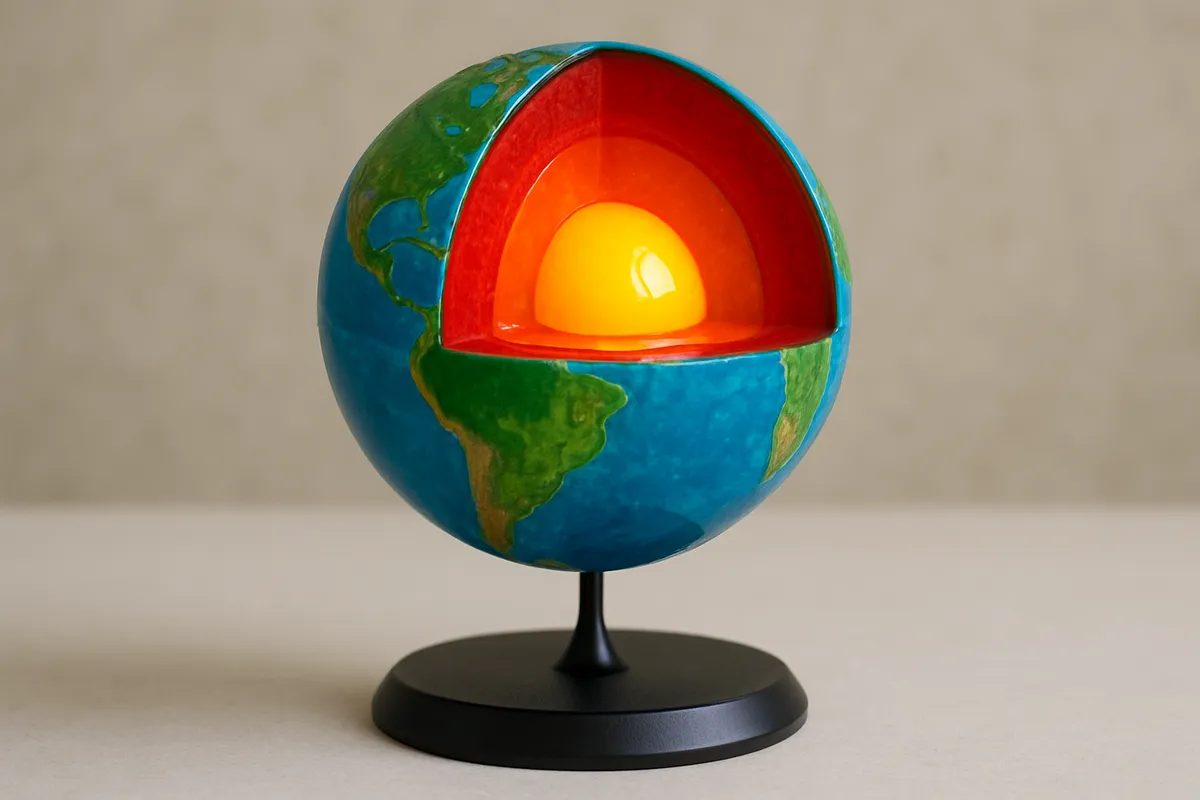
The layers of the Earth, the evidence for continental drift and what drives plate movement.
#us_hs_world_geography
30 questions
One question set, multiple game modes. Tap any game to see it in action. Not sure which to pick?
Answer to place stones and capture territory.
Outrun the snow together.
Earn blasts, then hunt the other team.
Answer to earn energy, then climb.

The class blasts through walls together.
Bid on mystery lots. Most money wins.
Sell tours. Nice, standard, or a total scam.

Answer, restock, and serve the rush.
More correct answers pulls the rope your way.
Answer, then shoot down the alien wave.
Answer, then tap to leap the frozen ridge.
Seismic S-waves stop at the top of this layer, and churning liquid metal there helps generate Earth's magnetic field. Which layer is it?
A seismic wave speeds up after crossing into a very dense solid metal sphere at Earth's center. Which layer has it entered?
Rock here is solid overall but hot and plastic enough to flow slowly beneath the lithosphere. Which layer is being described?
This rigid outer shell includes the crust and the uppermost mantle and is broken into tectonic plates. What is it called?
A drill reaches only the thin, cool, brittle rock layer that forms continents and ocean floors. Which layer is this?
Most of Earth's volume is a thick layer of hot rock between the crust and the core. Which layer is it?
Pressure keeps this central metal layer solid even though its temperature is extremely high. Which layer is it?
Earthquake waves bend and change speed as they pass from crust into a much thicker rock layer below. Which layer are they entering?
Identical Mesosaurus fossils are found in South America and Africa, but the reptile could not swim across an ocean. Which claim does this support?
Matching mountain belts continue from eastern North America into Greenland and western Europe. Which continental-drift claim does this evidence support?
Glacial scratches of the same age line up across Africa, South America, India, and Antarctica when the continents are reassembled. What claim is supported?
Coal beds in Antarctica suggest ancient swamp forests in a place that is now icy. Which continental-drift idea does this support?
The east coast of South America and the west coast of Africa look as if they could interlock. What claim did Wegener use this to support?
The same fern fossil, Glossopteris, appears in South America, Africa, India, Australia, and Antarctica. Which claim is best supported?
Rock layers of the same type and age appear on opposite sides of the Atlantic Ocean. Which claim does that evidence support?
Hot mantle rock rises under a mid-ocean ridge and spreads sideways as it cools. What does this motion do to the plates above?
A cool, dense oceanic plate sinks into the mantle at a trench. How does this affect the rest of that plate?
Mantle convection carries hot rock upward beneath a continent, stretching and thinning the lithosphere. What plate motion can result?
At a convection cell's sinking limb, cooler mantle rock descends beneath a plate edge. What surface process is most likely there?
Under two neighboring plates, mantle flow runs in opposite directions along the line where the plates meet. What motion can this help cause at their boundary?
New oceanic crust forms where mantle material melts as pressure drops below a ridge. What happens to nearby plates?
A mantle convection cell drags the base of a tectonic plate in the same direction as the flow. What is the effect on the plate?
Dense oceanic lithosphere cools, becomes heavier, and begins to sink under another plate. Which force on plate motion is described?
Oceanic crust is rarely older than about 200 million years, while some continental rock is billions of years old. Why is oceanic crust so young?
A thick, lighter-colored granitic crust sample comes from beneath a large landmass. Which type of crust is it?
At a convergent boundary, a thin basaltic plate dives beneath a thicker granitic plate. Which plate is subducting?
Two crustal blocks meet: one is denser basalt and the other is less dense granite. Which block is oceanic crust?
A plate sample is only about a few miles thick and is made mostly of basalt. What kind of crust is it most likely from?
When two continents collide, neither plate sinks easily, so mountains such as the Himalayas rise instead. Which property of continental crust explains this?
At a mid-ocean ridge, lava cools into dark basalt and adds new seafloor. What crust is being created?
Crack the passcode before the zombies get in.
Answer, then swat bugs for bonus points.
Race through questions at your own speed.
Same question on every screen. Fastest wins.

Pick a tile, answer, hit bonuses and steals.
Landforms and How to Name Them
40 questions