Loading
by BlastRoom
Twenty questions on the speaker, the walk home to Harlem and the free-verse page Hughes's student writes back to his instructor.
#literature
20 questions
One question set, multiple game modes. Tap any game to see it in action. Not sure which to pick?
Answer to place stones and capture territory.
Outrun the snow together.
Earn blasts, then hunt the other team.
Answer to earn energy, then climb.

The class blasts through walls together.
Bid on mystery lots. Most money wins.
Sell tours. Nice, standard, or a total scam.

Answer, restock, and serve the rush.
More correct answers pulls the rope your way.
Answer, then shoot down the alien wave.
Answer, then tap to leap the frozen ridge.
The speaker traces his schooling before naming where he studies now. Which city does he name between Winston-Salem and New York?
The speaker describes his walk home: down the steps from the hill, through a park, across St. Nicholas, Eighth Avenue and Seventh. Where does the walk end?
Sitting down to write, the speaker turns and speaks to the neighborhood itself. What does he say passes between Harlem and him?
The speaker lists what he likes: to eat, sleep, drink and love; to work, read, learn; a pipe; and records, Bessie, bop, or Bach. What does that mix of needs, pursuits and musical taste show about him?
The speaker calls his school 'this college on the hill above Harlem' and says the steps from the hill lead down into Harlem. What does that tell us about his daily route?
The instructor's four-line charge is set off at the start in short rhymed lines; the rest of the poem runs on in long unrhymed lines. What does that contrast do?
The poem is free verse, yet rhyme surfaces at moments, including the assignment's 'true' and the closing rhyme on 'free' and 'English B'. What does that occasional rhyme do?
The poem's last stanza is a single line: 'This is my page for English B.' What does standing it alone accomplish?
The middle of the poem runs through the walk in one unbroken movement: the steps, the park, St. Nicholas, Eighth Avenue, Seventh, the Y, the elevator, the room. What does that piled-up run do?
Late in the poem the speaker stops describing himself and begins addressing the instructor directly as 'you'. What does that turn accomplish?
The poem opens with the instructor's charge: 'Go home and write / a page tonight. / And let that page come out of you— / Then, it will be true.' What does the instructor assume?
The speaker writes, 'I am the only colored student in my class.' Why does this fact make the instructor's simple-sounding assignment harder for him?
The speaker tells the instructor he is white, 'yet a part of me, as I am a part of you,' and adds 'That's American.' What is he claiming?
The speaker grants that the instructor is older, is white, and is 'somewhat more free'. What is the word 'somewhat' doing?
The poem ends, 'This is my page for English B.' What does the word 'my' stress?
The speaker begins his page: 'I am twenty-two, colored, born in Winston-Salem.' What does packing those three facts into one line show?
Which statement about the instructor in 'Theme for English B' is NOT true?
Which statement about the form of 'Theme for English B' is NOT true?
Which statement about the speaker's walk home is NOT true?
Which statement about what the speaker says he likes is NOT true?
Crack the passcode before the zombies get in.
Answer, then swat bugs for bonus points.
Race through questions at your own speed.
Same question on every screen. Fastest wins.

Pick a tile, answer, hit bonuses and steals.
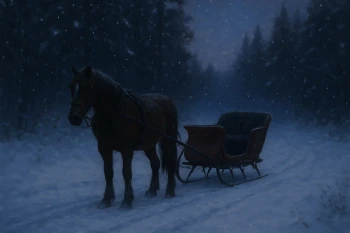
Robert Frost: Fire and Ice, Stopping by Woods
20 questions