Loading
by BlastRoom
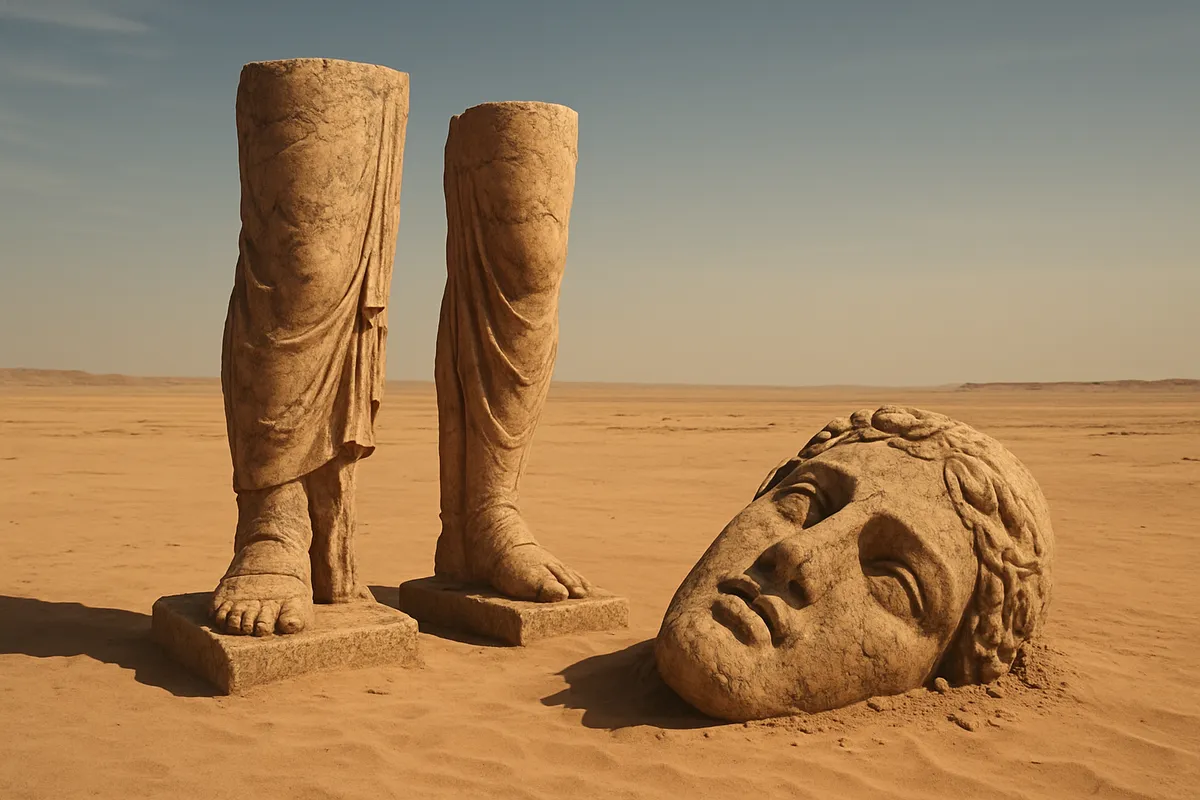
Shelley's ruined colossus in the desert, and the boast on the pedestal that time has answered.
#literature
20 questions
One question set, multiple game modes. Tap any game to see it in action. Not sure which to pick?
Answer to place stones and capture territory.
Outrun the snow together.
Earn blasts, then hunt the other team.
Answer to earn energy, then climb.

The class blasts through walls together.
Bid on mystery lots. Most money wins.
Sell tours. Nice, standard, or a total scam.

Answer, restock, and serve the rush.
More correct answers pulls the rope your way.
Answer, then shoot down the alien wave.
Answer, then tap to leap the frozen ridge.
Shelley's poem, first published in The Examiner in January 1818, runs to fourteen lines of about ten syllables each. Which poetic form is that?
The poem opens "I met a traveller from an antique land / Who said:", and inside the traveler's account comes the pedestal's own inscription. What does that layering do?
A Shakespearean sonnet closes with a rhymed couplet. This poem ends "Of that colossal wreck, boundless and bare / The lone and level sands stretch far away." What do those two lines show about its form?
Read aloud, the poem keeps a steady beat: "Look on my works, ye Mighty, and despair!" Which meter does that line follow?
In "And on the pedestal these words appear:", the words that follow are the traveler's own verdict on the king rather than the king's own inscription.
The traveler reports "Two vast and trunkless legs of stone / Stand in the desert". What does "trunkless" tell you about the statue?
The traveler says the sculptor "well those passions read / Which yet survive, stamped on these lifeless things". What does that credit the sculptor with doing?
"...stamped on these lifeless things, / The hand that mocked them, and the heart that fed:" Whose hand and whose heart does the traveler mean?
In "Half sunk, a shattered visage lies, whose frown, / And wrinkled lip, and sneer of cold command", what is being described?
The poem begins, "I met a traveller from an antique land". What does "antique land" mean here?
The traveler speaks of "that colossal wreck, boundless and bare". What is the "colossal wreck"?
The pedestal reads "Look on my works, ye Mighty, and despair!" The next sentence of the poem is "Nothing beside remains." What does that placement do to the king's command?
On the pedestal Ozymandias calls himself "king of kings". What does the condition of the statue do to that title?
Of everything Ozymandias commanded, what has actually survived in the poem?
The king meant "despair" as what rival rulers should feel before his greatness. Read against the whole poem, what does the word come to mean instead?
The face on the statue wears a "sneer of cold command", but the traveler finds it alone in the sand. Why is that detail ironic?
The poem ends, "The lone and level sands stretch far away." Which sound device runs through that line?
The poem says the statue's "frown, / And wrinkled lip, and sneer of cold command, / Tell that its sculptor well those passions read". Which device gives a broken stone face the power to tell?
Line 12 breaks in the middle of a phrase, ending "Round the decay", and the sense runs straight on into the next line. What is that technique called?
Which phrase from the poem is the clearest example of imagery, language that puts a picture in the reader's eye?
Crack the passcode before the zombies get in.
Answer, then swat bugs for bonus points.
Race through questions at your own speed.
Same question on every screen. Fastest wins.

Pick a tile, answer, hit bonuses and steals.
We Wear the Mask: Metaphor, Form and Meaning
20 questions