Loading
by BlastRoom
Every poem from the unit: form, sound, speaker, figurative language and meaning in one round.
#literature
40 questions
One question set, multiple game modes. Tap any game to see it in action. Not sure which to pick?
Answer to place stones and capture territory.
Outrun the snow together.
Earn blasts, then hunt the other team.
Answer to earn energy, then climb.

The class blasts through walls together.
Bid on mystery lots. Most money wins.
Sell tours. Nice, standard, or a total scam.

Answer, restock, and serve the rush.
More correct answers pulls the rope your way.
Answer, then shoot down the alien wave.
Answer, then tap to leap the frozen ridge.
Which poem of the unit opens with the line “We wear the mask that grins and lies,”?
“Love alters not with his brief hours and weeks, / But bears it out even to the edge of doom.” These lines close the third quatrain of which poem?
“From what I’ve tasted of desire / I hold with those who favor fire.” Which poem is this from?
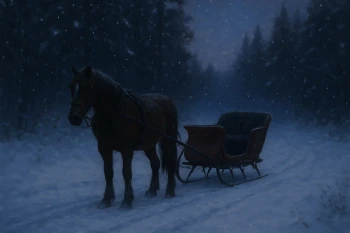
Which poem of the unit gives us “The only other sound’s the sweep / Of easy wind and downy flake.”?
The line “This debt we pay to human guile;” belongs to which poem?
A traveler reports “Two vast and trunkless legs of stone” standing in a desert. Which poem is that?
“Once upon a midnight dreary, while I pondered, weak and weary,” is the opening line of which poem?
A speaker begins his page, “I am twenty-two, colored, born in Winston-Salem.” Which poem of the unit is that?
Which poem of the unit contains the flat three-word sentence “Nothing beside remains.”?
“Hold fast to dreams / For if dreams die” opens which poem of the unit?
Which poem of the unit is a fourteen-line sonnet built as three quatrains and a closing couplet, rhyming abab cdcd efef gg?
Sonnet 116, like most of Shakespeare's sonnets, is written in iambic pentameter.
Which poem of the unit is written in free verse, with no fixed meter and no rhyme scheme apart from a few chance rhymes?
Two poems in this unit are fourteen-line sonnets. Which pair?
Which poem of the unit is built in six-line stanzas, each closing on a short line that keeps the same rhyme sound all the way through?
“Stopping by Woods on a Snowy Evening” is laid out in four stanzas of four lines each. What is a four-line stanza called?
“Dreams” and “Harlem” each give one speaker’s feeling in a handful of short lines. Which term names a short poem of that kind?
In Sonnet 116 the poem stops ruling out what love is not and declares “O, no! it is an ever-fixed mark”. What is such a turn in a sonnet called?
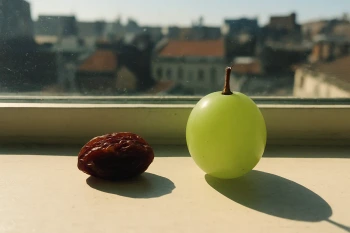
“Does it dry up / like a raisin in the sun?” Which device does Hughes use here to picture the deferred dream?
“Life is a broken-winged bird / That cannot fly.” Which device is at work in these lines of “Dreams”?
Sonnet 116 calls love “an ever-fixed mark / That looks on tempests” and then “the star to every wand’ring bark”. What is one comparison sustained across several lines called?
“Some say the world will end in fire, / Some say in ice.” What does opening both lines with “Some say” do?
“He gives his harness bells a shake / To ask if there is some mistake.” Which device lets the horse put a question to the speaker?
In “The Raven” the bird’s single word, “Nevermore,” comes back to close stanza after stanza. What is a word or line repeated in that position called?
In “Theme for English B” the speaker tells his instructor “yet a part of me, as I am a part of you.” What does the mirrored wording do?
“It hides our cheeks and shades our eyes,” — Dunbar builds the line as verb-plus-object twice over. What is that balanced construction called?
In which poem of the unit does the speaker halt his horse in falling snow, with the owner of the land a village away?
In which poem of the unit is the speaker a college student writing a page his instructor set, whom he ends up addressing directly as “you”?
In which poem of the unit does the speaker give the reader a direct command, telling the reader to hold on to something?
In which poem of the unit does the speaker spend a night in the company of a bird that answers every question with the same word?
In “Fire and Ice” the speaker holds with those who favor ice.
The speaker of Sonnet 116 never names a lover and never describes a scene. What is he doing across the whole poem instead?
In “Harlem,” how does the speaker put nearly every possible fate of the deferred dream?
“Harlem” ends with one short line standing apart from everything before it, asking whether the dream explodes. What does that ending accomplish?
“Dreams” closes its second stanza with “Life is a barren field / Frozen with snow.” What does that final image add to the broken-winged bird of the first stanza?
“Ozymandias” closes on “The lone and level sands stretch far away.” What does ending on empty desert do?
“The woods are lovely, dark and deep, / But I have promises to keep,” What does the word “But” do at this point in the poem?
In “Harlem” one possibility is not asked as a question at all: the dream may simply sag like a heavy load. What does that break in the pattern do just before the last line?
“Fire and Ice” picks fire in its fourth line, then gives its last four lines to ice, ending “Is also great / And would suffice.” What does letting ice have the final word do?
Near the end of “Theme for English B” the speaker says “I guess you learn from me— / although you’re older—and white— / and somewhat more free.” What does the “although” clause do?
Crack the passcode before the zombies get in.
Answer, then swat bugs for bonus points.
Race through questions at your own speed.
Same question on every screen. Fastest wins.

Pick a tile, answer, hit bonuses and steals.
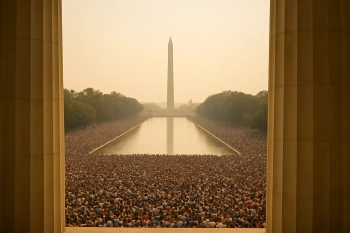
I Have a Dream: Rhetorical Devices and Appeals
25 questions