Loading
by BlastRoom
Who came in the years of mass immigration, why they left, what they met on arrival, and who tried to keep them out.
#united_states_history

30 questions
One question set, multiple game modes. Tap any game to see it in action. Not sure which to pick?
Answer to place stones and capture territory.
Outrun the snow together.
Earn blasts, then hunt the other team.
Answer to earn energy, then climb.

The class blasts through walls together.
Bid on mystery lots. Most money wins.
Sell tours. Nice, standard, or a total scam.

Answer, restock, and serve the rush.
More correct answers pulls the rope your way.
Answer, then shoot down the alien wave.
Answer, then tap to leap the frozen ridge.
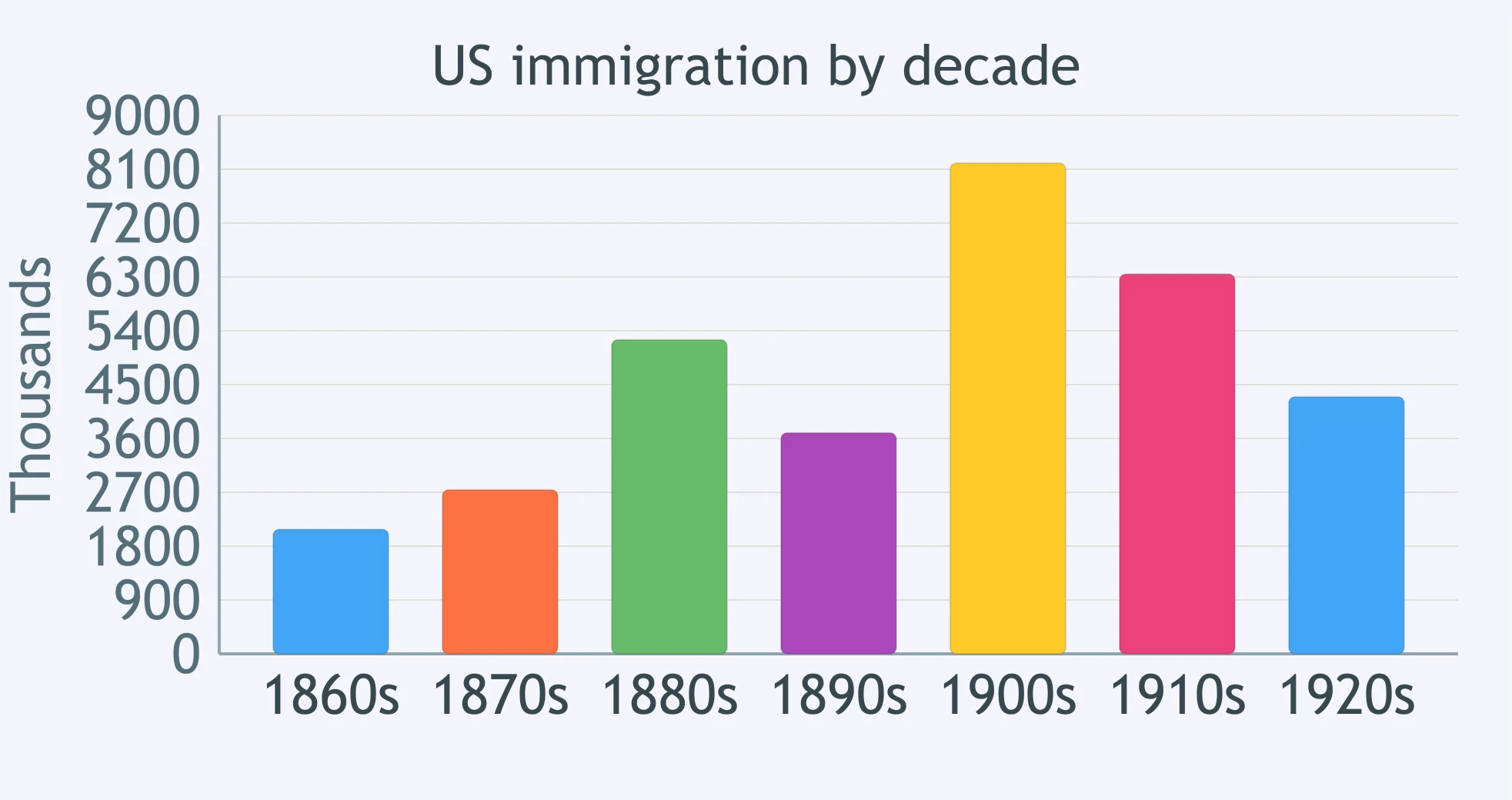
The bar graph shows immigration to the United States by decade. In which decade did the number of arrivals reach its highest point?
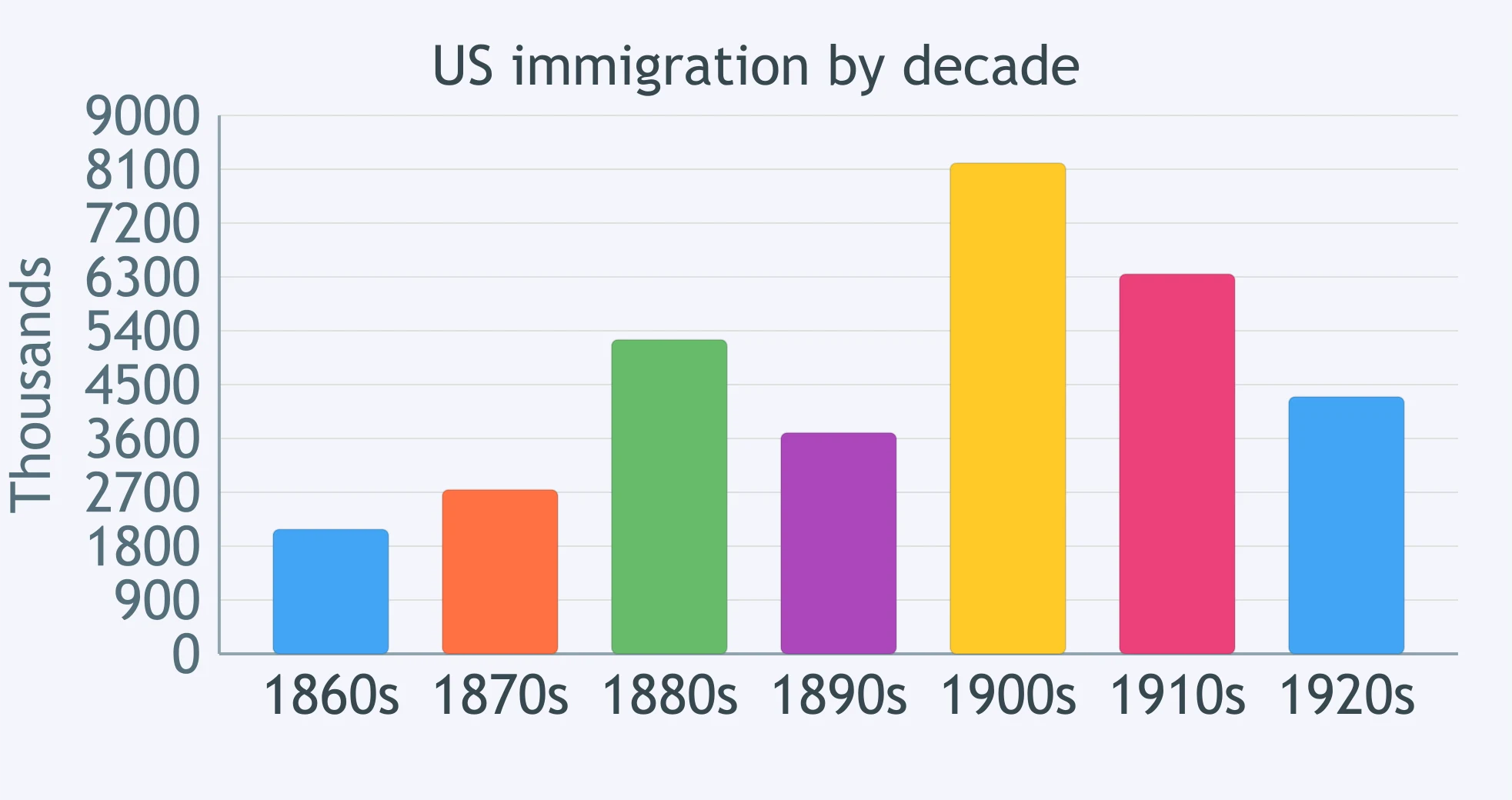
Use the bar graph. Which was the earliest decade in which arrivals passed five million?
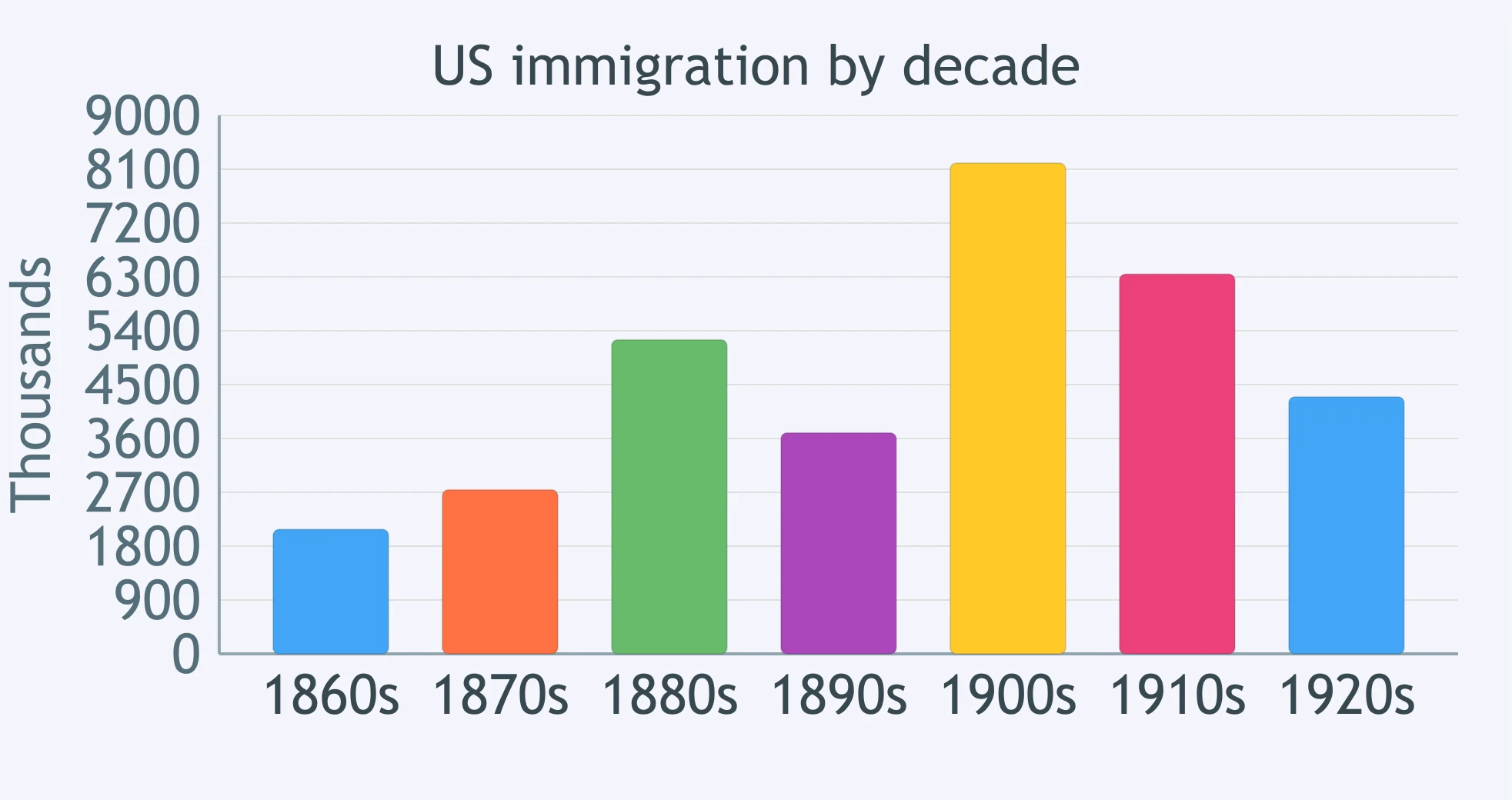
Use the bar graph. About how many people arrived in the United States during the 1910s?
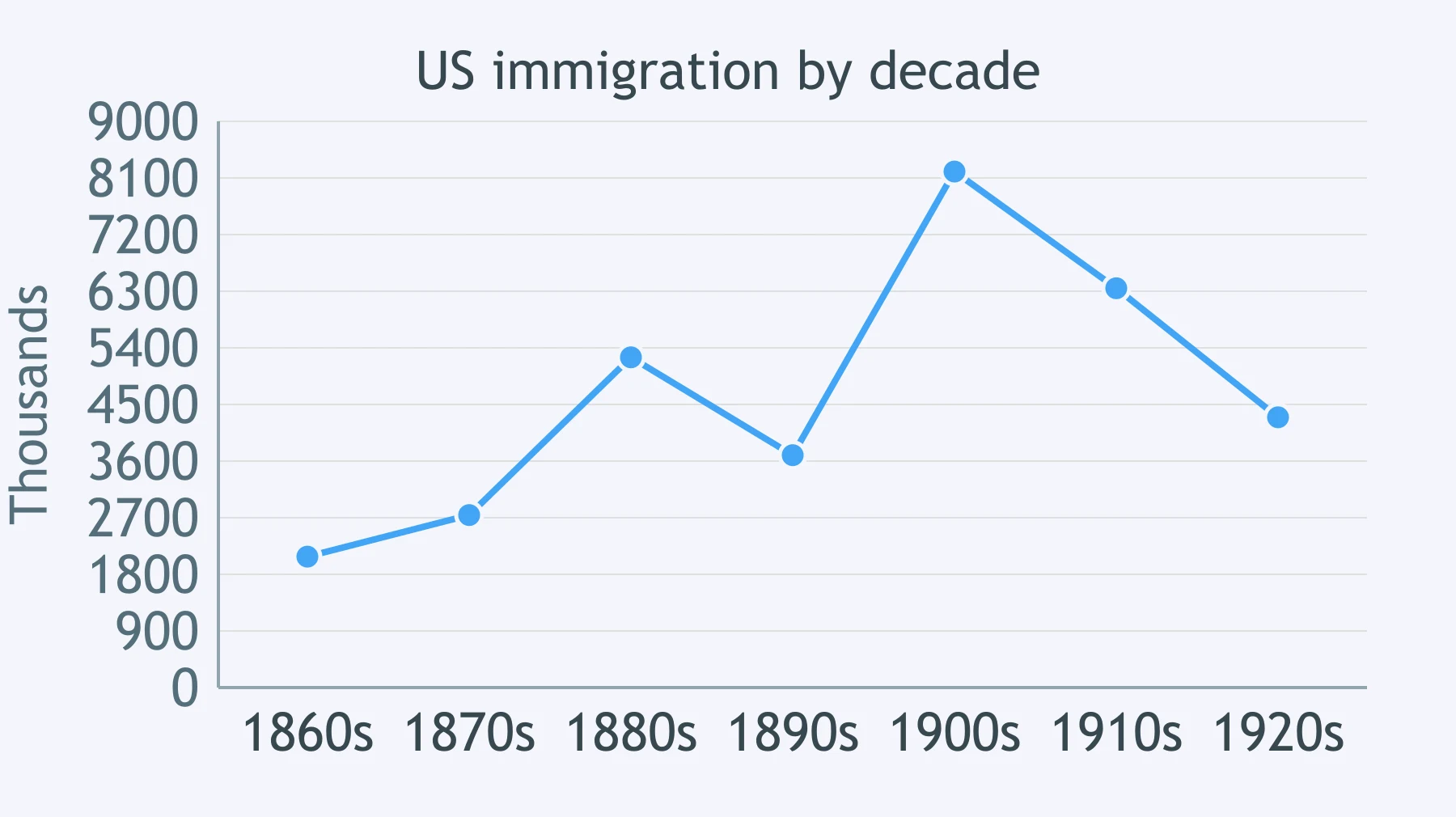
The line graph shows arrivals to the United States by decade. In which decade does the line fall for the first time?
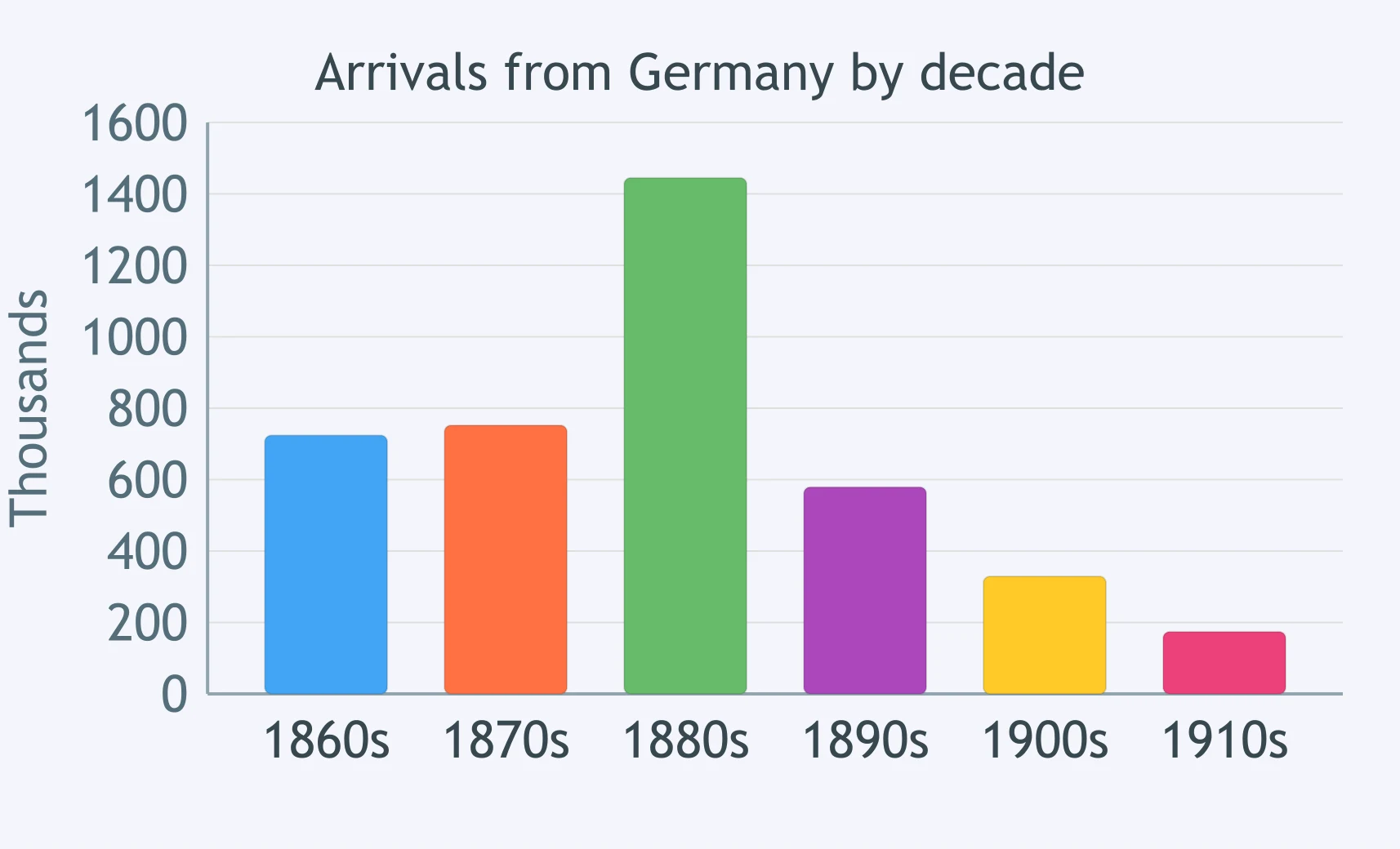
The bar graph shows arrivals from Germany by decade. In which decade did German arrivals reach their peak?
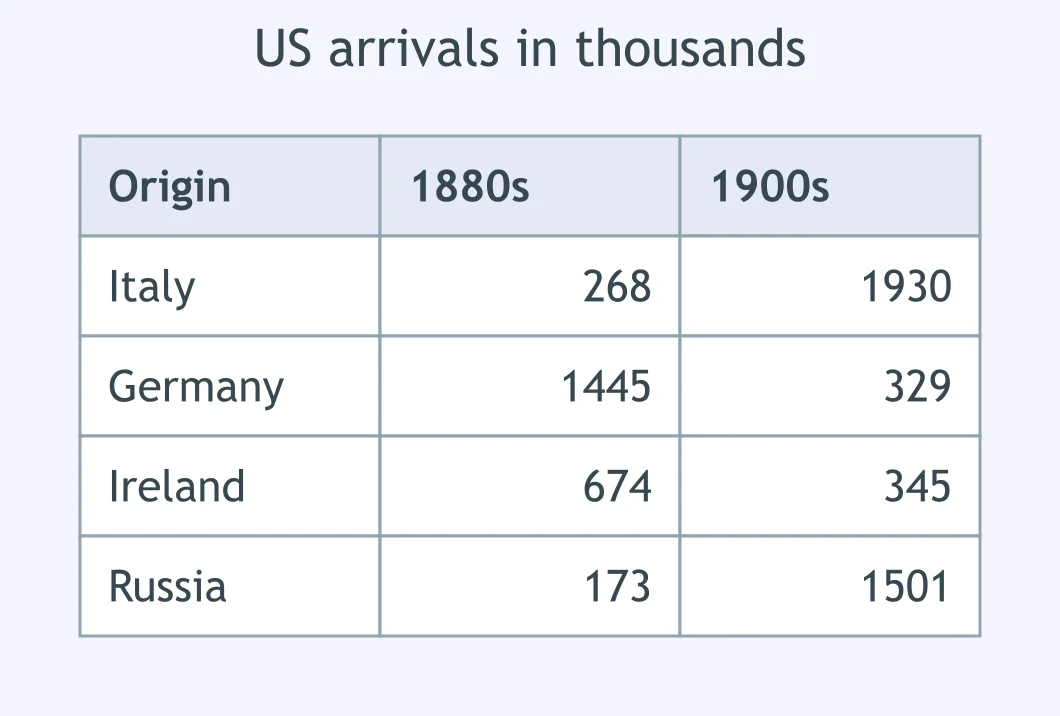
The table gives arrivals from four places of last residence in two decades. Which of them sent the most arrivals in the 1900s?
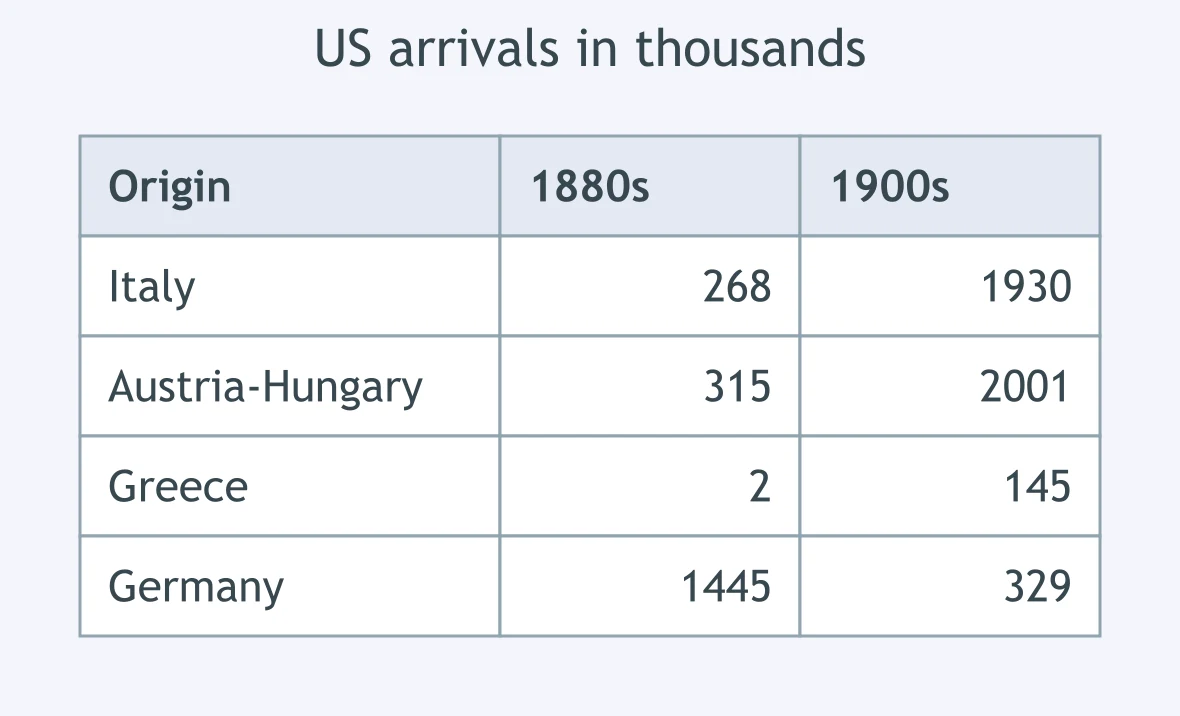
Use the table. Which place of last residence sent fewer arrivals in the 1900s than it had sent in the 1880s?
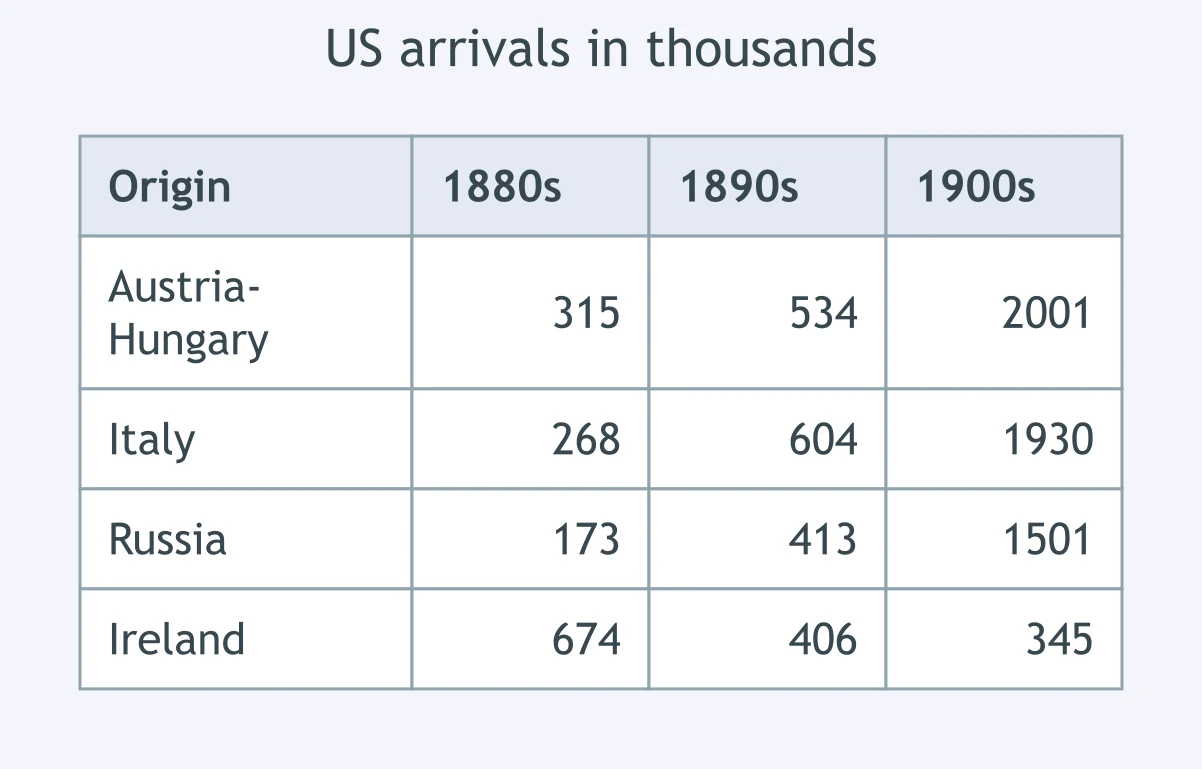
The table gives arrivals from four places over three decades. In which decade did Italy send more arrivals than Austria-Hungary?
An immigration station in San Francisco Bay opened in 1910. Arrivals from China were held there in barracks for weeks or months while officials questioned them closely about their home villages and families. Which station is described?
A secret society founded in Iowa in 1887 grew to hundreds of thousands of members, who swore neither to employ Catholics nor to vote for them. Which nativist organization is described?
College-educated Bostonians founded an organization in 1894 that spent more than twenty years lobbying Congress to require arriving immigrants to prove they could read. Which organization is described?
After the assassination of Tsar Alexander II in 1881, mobs attacked Jewish communities across the Russian Empire, and a mass emigration followed. What is the name for those violent attacks?
In many Italian districts a labor agent met newcomers at the dock, placed them in railroad or construction gangs, and kept a share of their wages. What was such an agent called?
Most people crossing the Atlantic traveled in the cheapest class of passage, packed into large open compartments below deck with shared bunks, little light and little air. What was that class called?
Some men crossed the Atlantic to work for a season or a few years, sent money home, then sailed back to their villages, and a number made the trip more than once. What were such migrants called?
At Ellis Island doctors watched each arrival climb a flight of stairs and chalked a letter on the coat of anyone who looked unwell. What was the point of that quick look?
Officials at Angel Island questioned Chinese arrivals for days about the layout of their home village and their relatives, then checked the answers against those of family members. Why were the questions so detailed?
A young man in a Sicilian village received a prepaid ticket from a brother already in New York and, on landing, moved onto his brother's block. What does that pattern show about how immigration spread?
The Yiddish daily Forverts began publishing in New York in 1897 and became the largest foreign-language newspaper in the country. What did papers like it do for their readers?
Polish arrivals in Chicago built parishes with priests who preached in Polish, and Jewish arrivals in New York founded synagogues made up of people from a single hometown. What do these show?
Large numbers of the Italian men who landed in the early 1900s sailed home again after a few years of work. What does that pattern show about why many of them came?
A crossing under sail could take more than a month, but by 1900 a steamship carried steerage passengers from Naples to New York in one to two weeks. What did that change make possible?
A Norwegian family with too little land to divide among its sons read a railroad company's pamphlet advertising cheap acres in Minnesota, and sailed. Which pair of factors moved them?
A federal law signed on May 6, 1882 suspended the immigration of Chinese laborers for ten years and barred Chinese residents already here from becoming naturalized citizens. Which law is it?
An 1892 law extended the ban on Chinese laborers for another ten years and required Chinese residents already in the country to carry a certificate of residence or face hard labor and deportation. Which law is it?
The Page Act, signed in March 1875, barred the entry of forced laborers from Asia and of women thought to be coming for prostitution. Whom did it keep out in practice?
Under an understanding reached in 1907-08, Japan stopped issuing passports to laborers bound for the mainland United States, and San Francisco dropped its order sending Japanese children to a separate school. What was it called?
In 1917 Congress passed, over President Wilson's veto, a law requiring arrivals over the age of sixteen to read a short passage in some language. Whom was the requirement expected to keep out?
A law of February 1885 made it illegal to bring workers into the country under a contract signed before they sailed, with the employer paying their passage. What practice did it target?
An 1891 law put the inspection of arriving immigrants fully in federal hands and created a Superintendent of Immigration in the Treasury Department. What changed for the states?
Crack the passcode before the zombies get in.
Answer, then swat bugs for bonus points.
Race through questions at your own speed.
Same question on every screen. Fastest wins.

Pick a tile, answer, hit bonuses and steals.
The Populist Movement
20 questions