Loading
by BlastRoom
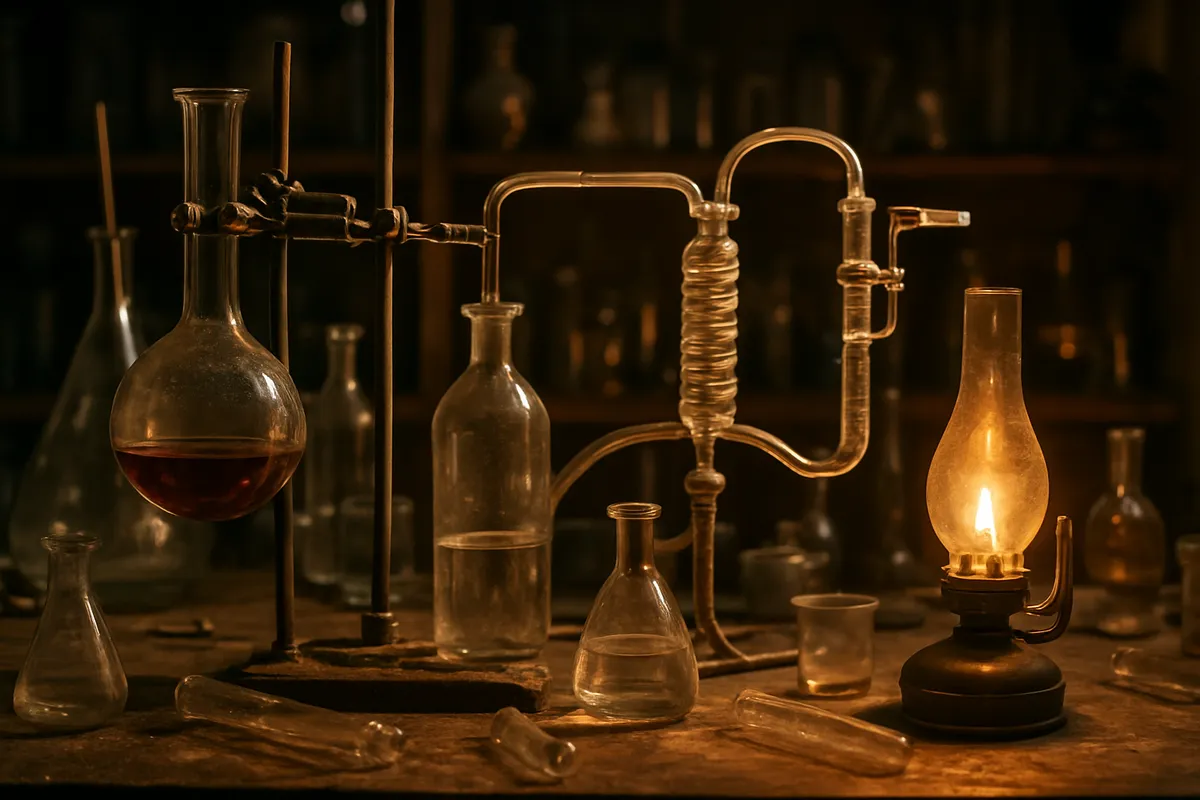
Key nineteenth-century developments in medicine, science, technology, evolution, and the arts.
#world_history
25 questions
One question set, multiple game modes. Tap any game to see it in action. Not sure which to pick?
Answer to place stones and capture territory.
Outrun the snow together.
Earn blasts, then hunt the other team.
Answer to earn energy, then climb.

The class blasts through walls together.
Bid on mystery lots. Most money wins.
Sell tours. Nice, standard, or a total scam.

Answer, restock, and serve the rush.
More correct answers pulls the rope your way.
Answer, then shoot down the alien wave.
Answer, then tap to leap the frozen ridge.
Surgeons in the 1860s still lost patients to infected wounds after operations. Which practice sharply cut those deaths once wound infection was linked to airborne microbes?
At Massachusetts General Hospital in 1846, a patient could undergo surgery without feeling the operation because an inhaled vapor made him unconscious. Which advance was this?
In 1847 James Young Simpson promoted a stronger substitute for ether, especially in surgery and childbirth. Which substance was he introducing as an anesthetic?
A Paris chemist boiled broth in swan-neck flasks; air could enter, but dust stayed trapped, and the broth remained clear. Who used this experiment against spontaneous generation?
In 1882 a Berlin physician announced that he had stained, cultured, and identified the bacterium that causes tuberculosis. Who made that discovery?
John Snow mapped cholera deaths in London in 1854 and found a cluster around one public pump. Which explanation did his evidence support?
In 1831 an experimenter found that moving a magnet through a wire coil produced an electric current, a principle later used in generators. Who reported this result?
An 1873 Treatise used mathematics to unite electricity and magnetism and helped explain light as an electromagnetic wave. Which physicist wrote it?
A chemist arranged elements by atomic weight in 1869, left gaps, and predicted properties of elements not yet found. Who was he?
A cathode-ray tube made a coated screen glow even through black covering, and later revealed bones in a hand on a photographic plate. What had been discovered?
Uranium salts fogged photographic plates in 1896 even when kept away from sunlight. Which discovery did this lead to?
A naturalist's 1859 book argued that useful inherited variations help organisms survive and reproduce over generations. Which book and process does this describe?
An 1858 essay from the Malay Archipelago pushed Darwin's friends to present a joint paper on evolution at the Linnean Society. Who sent that essay?
Which 1871 Darwin work applied evolutionary arguments to human origins and discussed selection related to sex?
After Darwin's book appeared, which role is Thomas Henry Huxley best known for in its public reception?
By 1866 a cable from Ireland to Newfoundland carried news across the Atlantic in minutes instead of by steamship. Which technology made that possible?
A patented 1876 device turned speech into changing electrical signals so people could converse over wires. Which invention was it?
A Menlo Park machine demonstrated in 1877 cut sound vibrations into tinfoil on a cylinder and then played them back. What was it?
A small 1888 camera came loaded with roll film and a processing service, making informal snapshots possible for amateurs. Which product was it?
In the late 1870s and early 1880s, Edison combined durable bulbs, wiring, generators, and a power station to light homes and streets. What was this system?
Early nineteenth-century artists and writers prized imagination, emotion, wild nature, ruins, legends, and the distant past over strict order. Which movement was this?
Courbet and Millet painted laborers and peasants at large scale, showing contemporary life without heroic polish. Which movement fit that choice of subject?
Monet, Renoir, and Pissarro used loose brushwork, bright color, outdoor scenes, and modern leisure to capture changing light. Which movement is described?
A group of painters organized an independent Paris exhibition in 1874 outside the official Salon, and Monet's harbor scene helped give the group its name. Which movement began there?
Gustave Flaubert's novel Madame Bovary (1857) gave an unsentimental, closely observed portrait of ordinary bourgeois life, breaking from elevated Romantic storytelling. Which movement did it help establish?
Crack the passcode before the zombies get in.
Answer, then swat bugs for bonus points.
Race through questions at your own speed.
Same question on every screen. Fastest wins.

Pick a tile, answer, hit bonuses and steals.
Causes and Justifications of Imperialism
25 questions