Loading
by BlastRoom
Reads the atmosphere's layers, boundaries and composition from a lettered air-column diagram and a pressure-altitude graph.
#earth_space_science
40 questions
One question set, multiple game modes. Tap any game to see it in action. Not sure which to pick?
Answer to place stones and capture territory.
Outrun the snow together.
Earn blasts, then hunt the other team.
Answer to earn energy, then climb.

The class blasts through walls together.
Bid on mystery lots. Most money wins.
Sell tours. Nice, standard, or a total scam.

Answer, restock, and serve the rush.
More correct answers pulls the rope your way.
Answer, then shoot down the alien wave.
Answer, then tap to leap the frozen ridge.
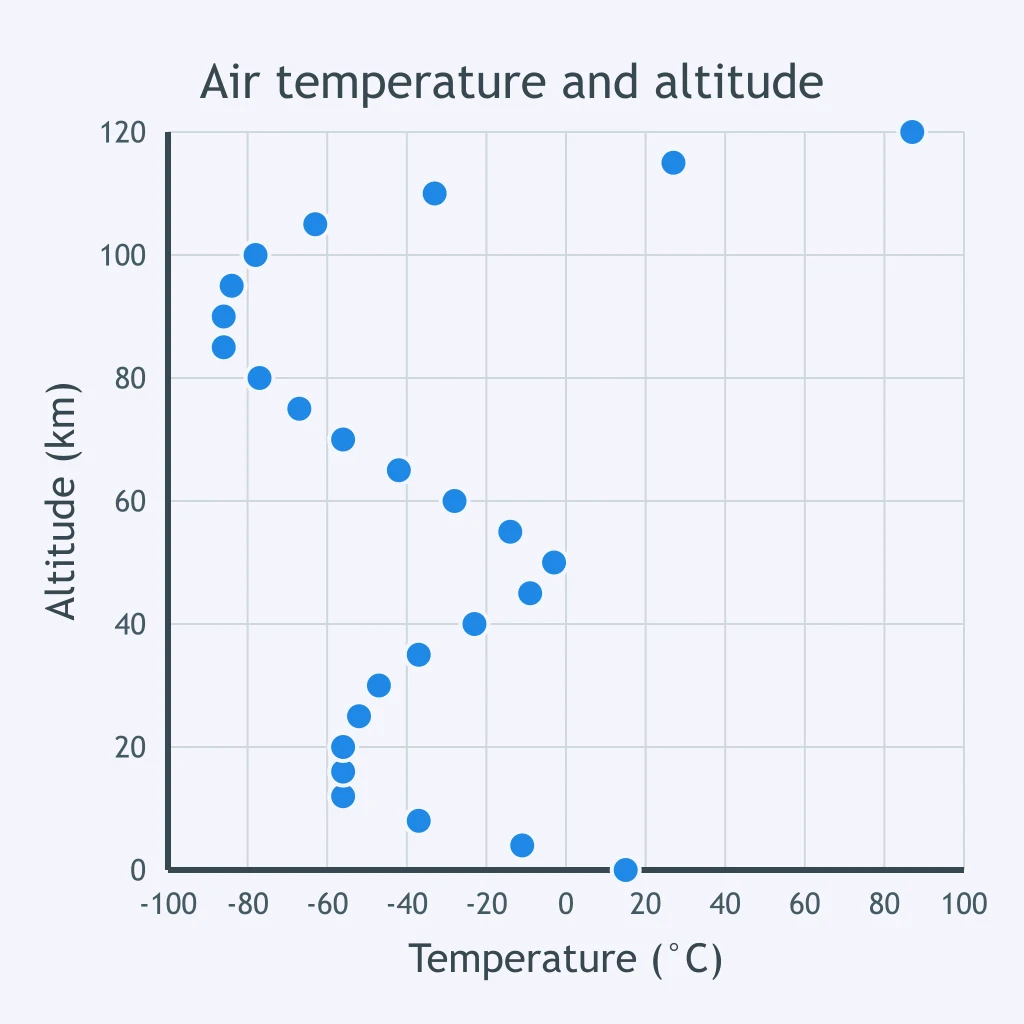
The graph shows air temperature at altitudes from the ground to 120 km. Which layer of the atmosphere spans the part of the graph from the ground to about 12 km?
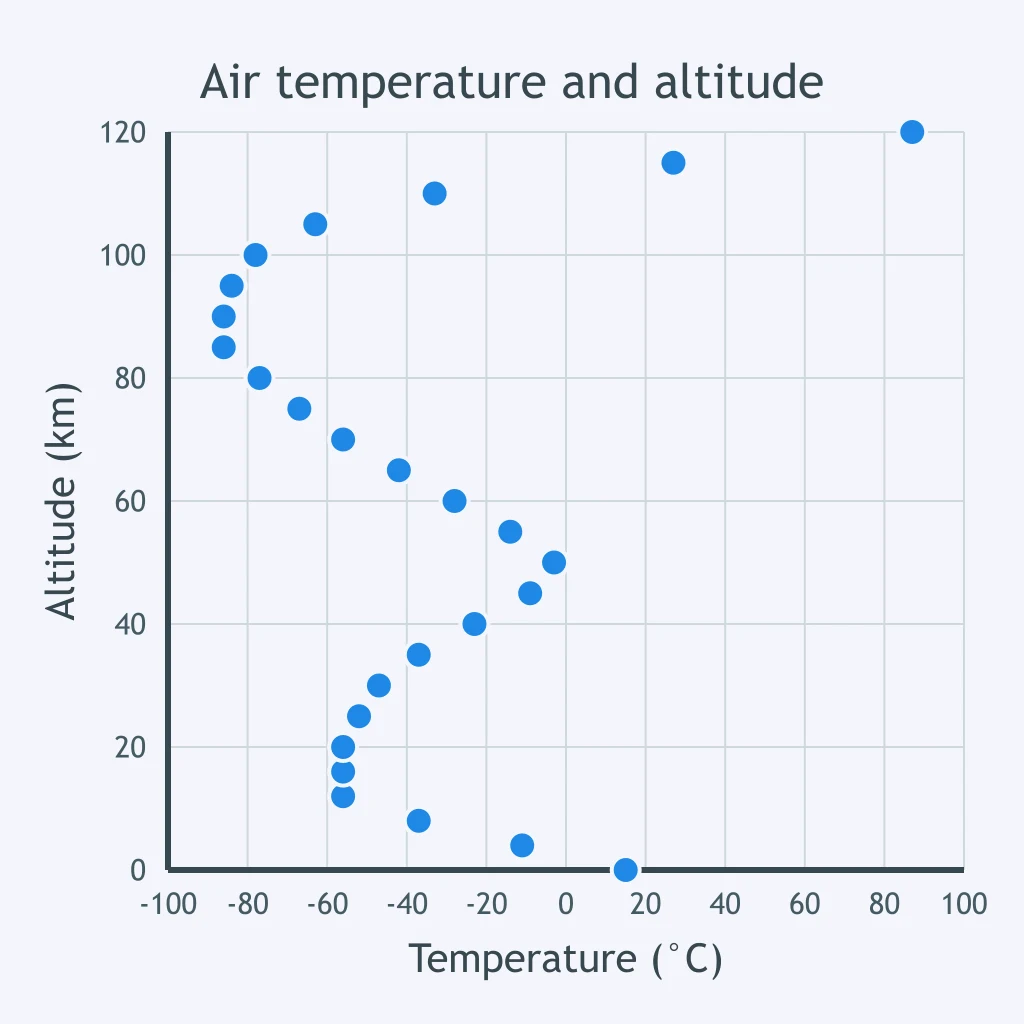
The graph shows air temperature at altitudes from the ground to 120 km. Between about 12 km and 50 km, ozone absorbs incoming ultraviolet radiation, causing the temperature change shown. Which layer of the atmosphere is this?
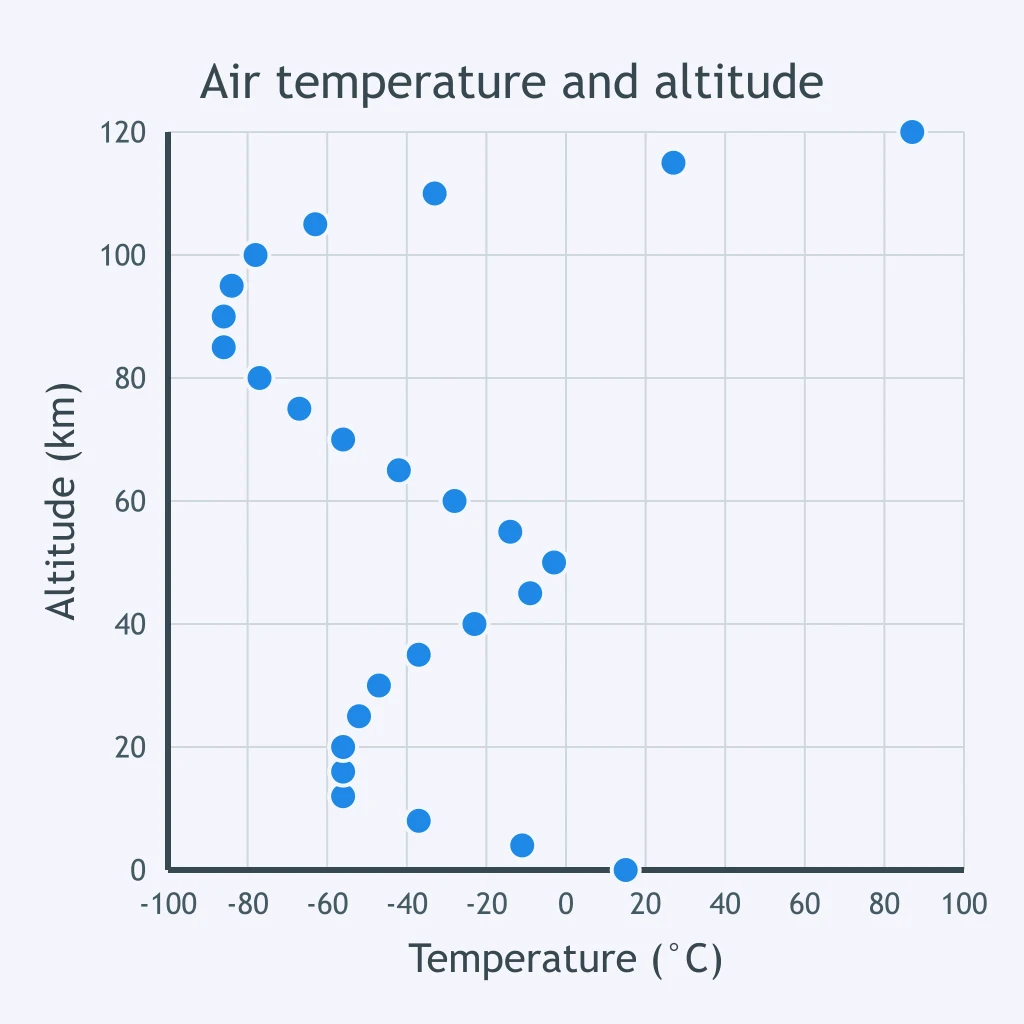
The graph shows air temperature at altitudes from the ground to 120 km. Which layer of the atmosphere lies between about 50 km and 85 km?
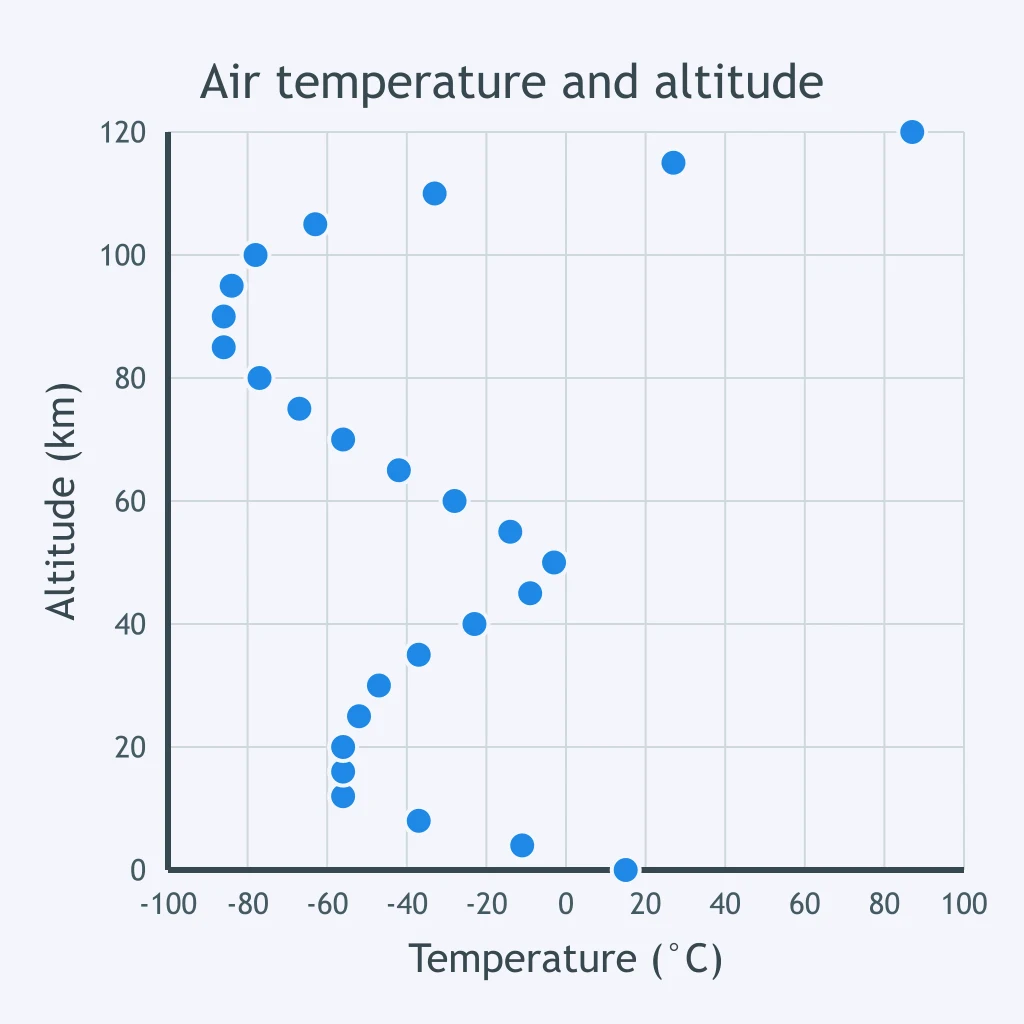
The graph shows air temperature at altitudes from the ground to 120 km. Above about 85 km, thin gas absorbs high-energy solar radiation, causing the temperature change shown. Which layer of the atmosphere is this?
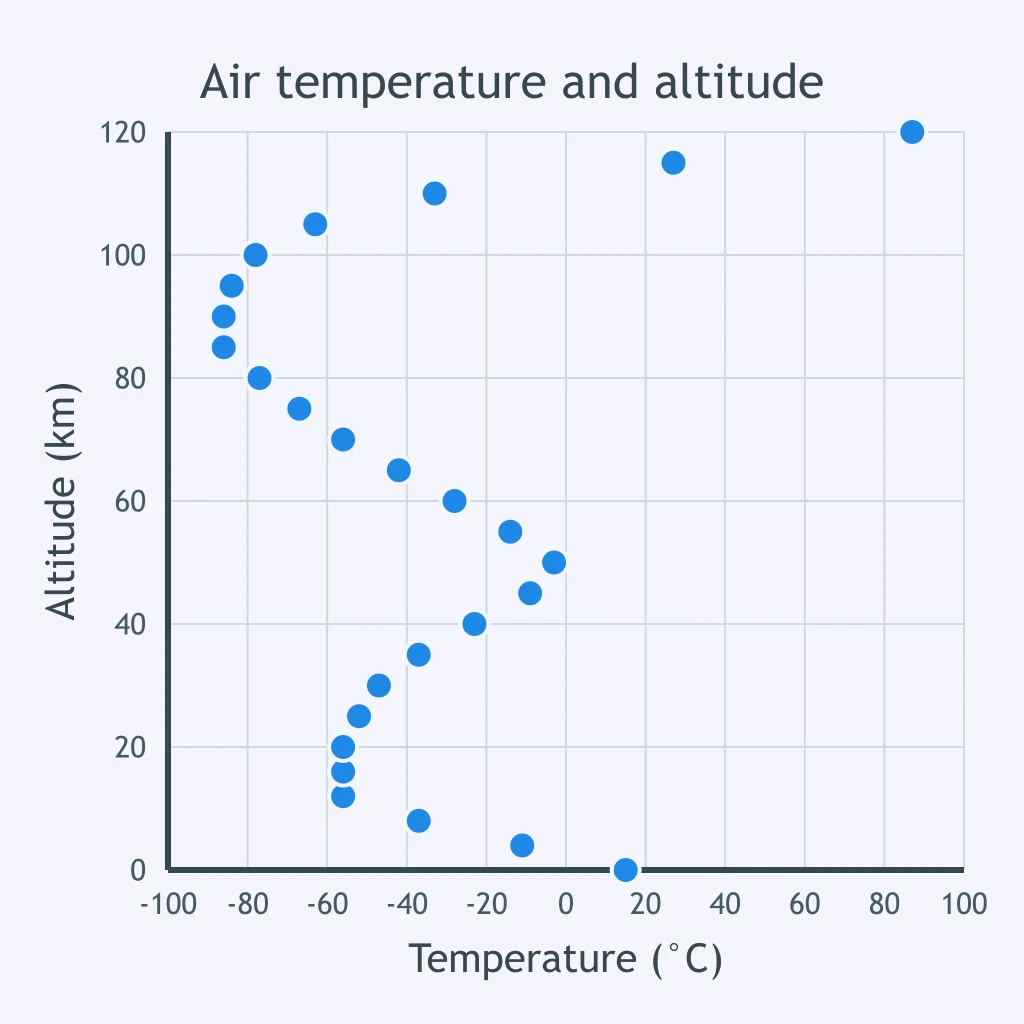
The graph shows air temperature at altitudes from the ground to 120 km. Two layers of the atmosphere get colder as altitude increases. Which of those two layers is closer to the ground?
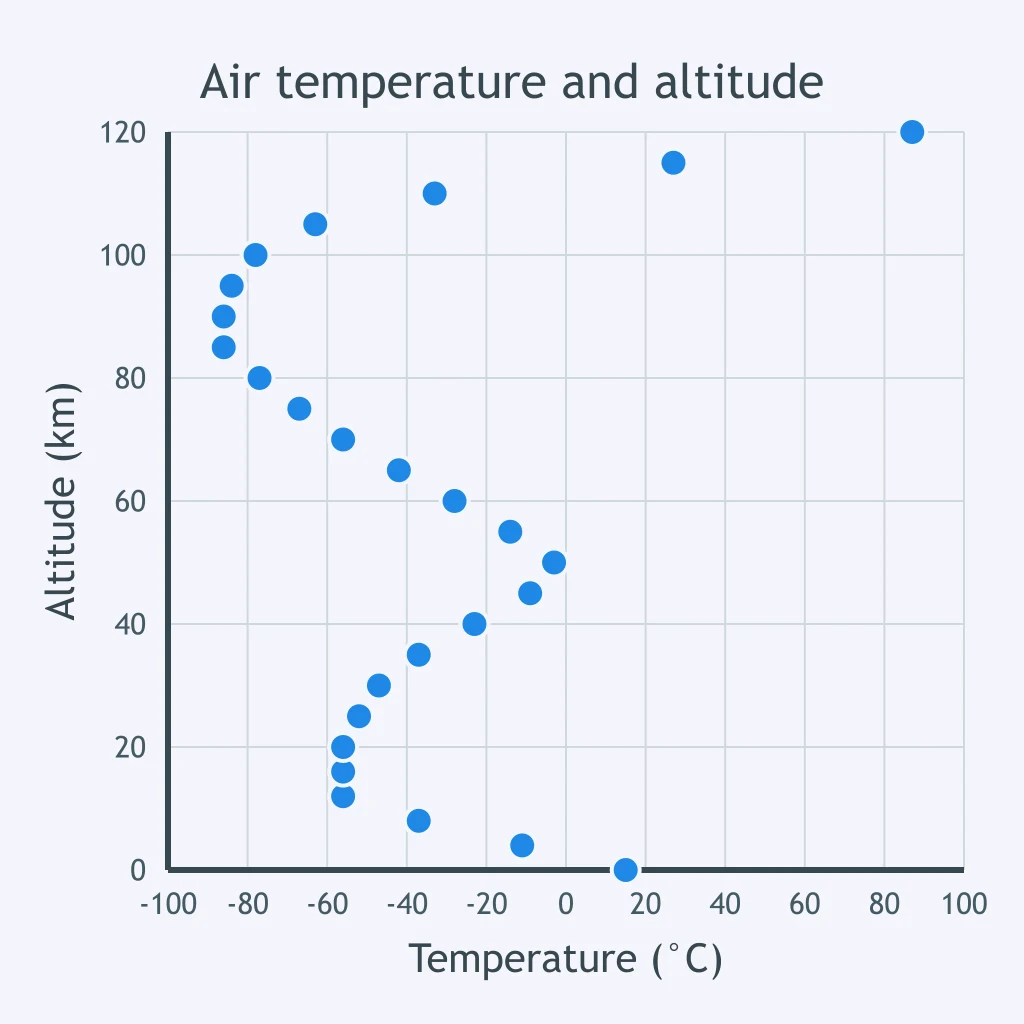
The graph shows air temperature at altitudes from the ground to 120 km. Which layer of the atmosphere lies directly below the layer where temperature rises most sharply with altitude?
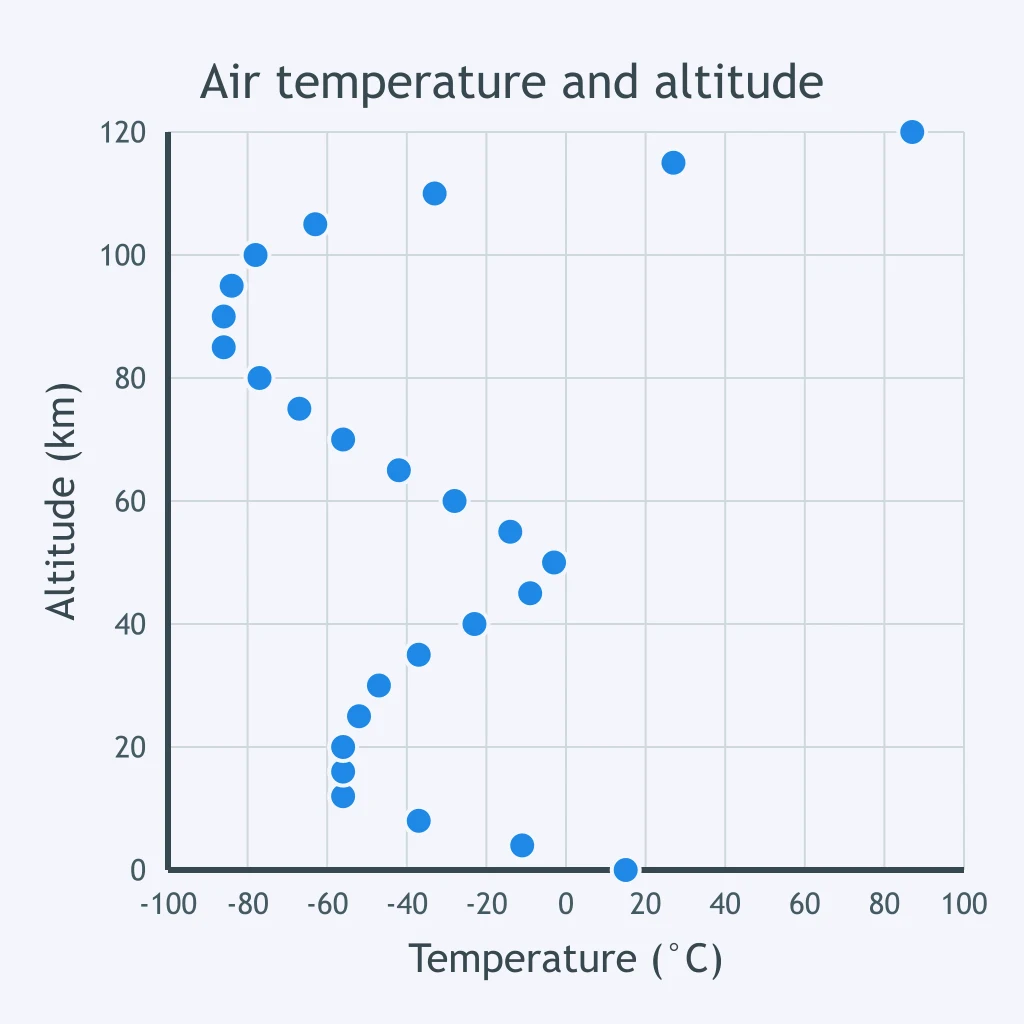
The graph shows air temperature at altitudes from the ground to 120 km. Which layer of the atmosphere lies directly between the layer where most weather happens and the layer from about 50 km to 85 km?
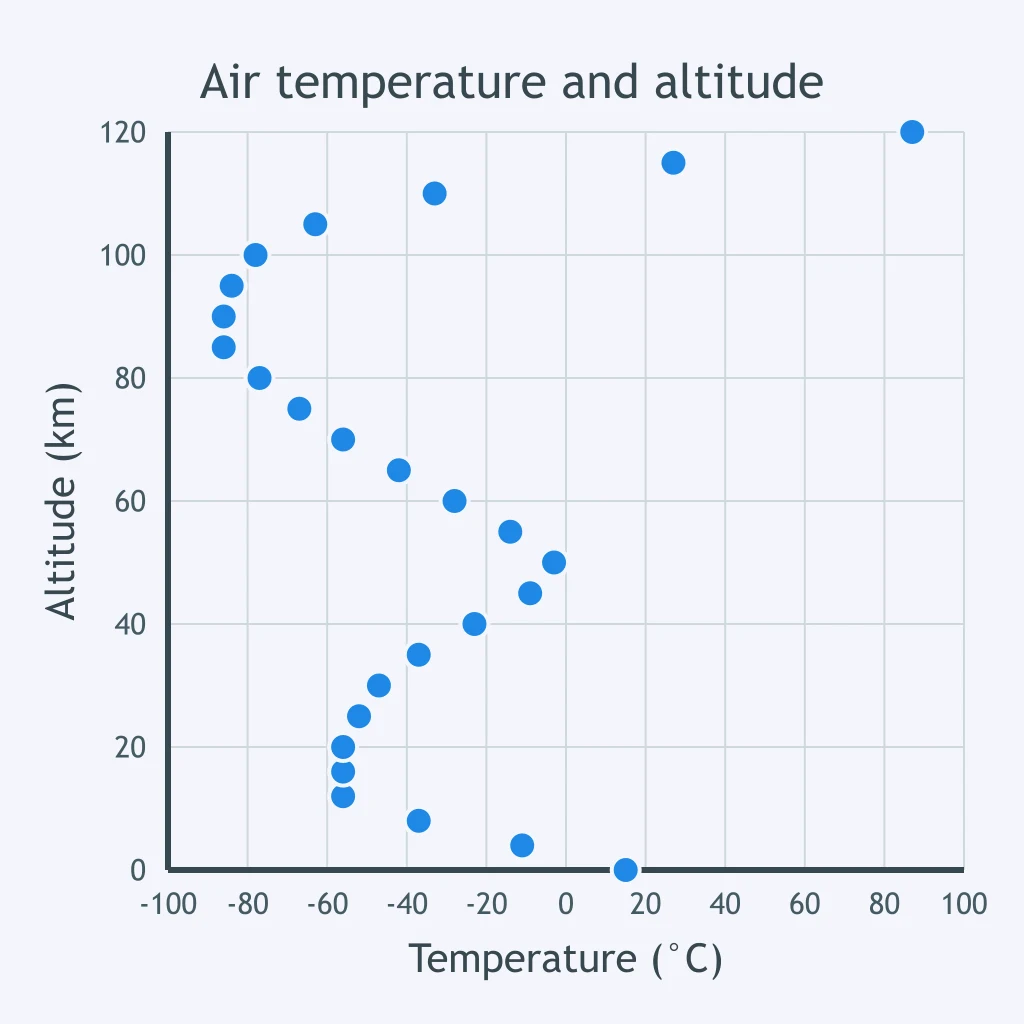
The graph shows air temperature at altitudes from the ground to 120 km. Which layer of the atmosphere is shown at the top of the graph, above about 85 km?
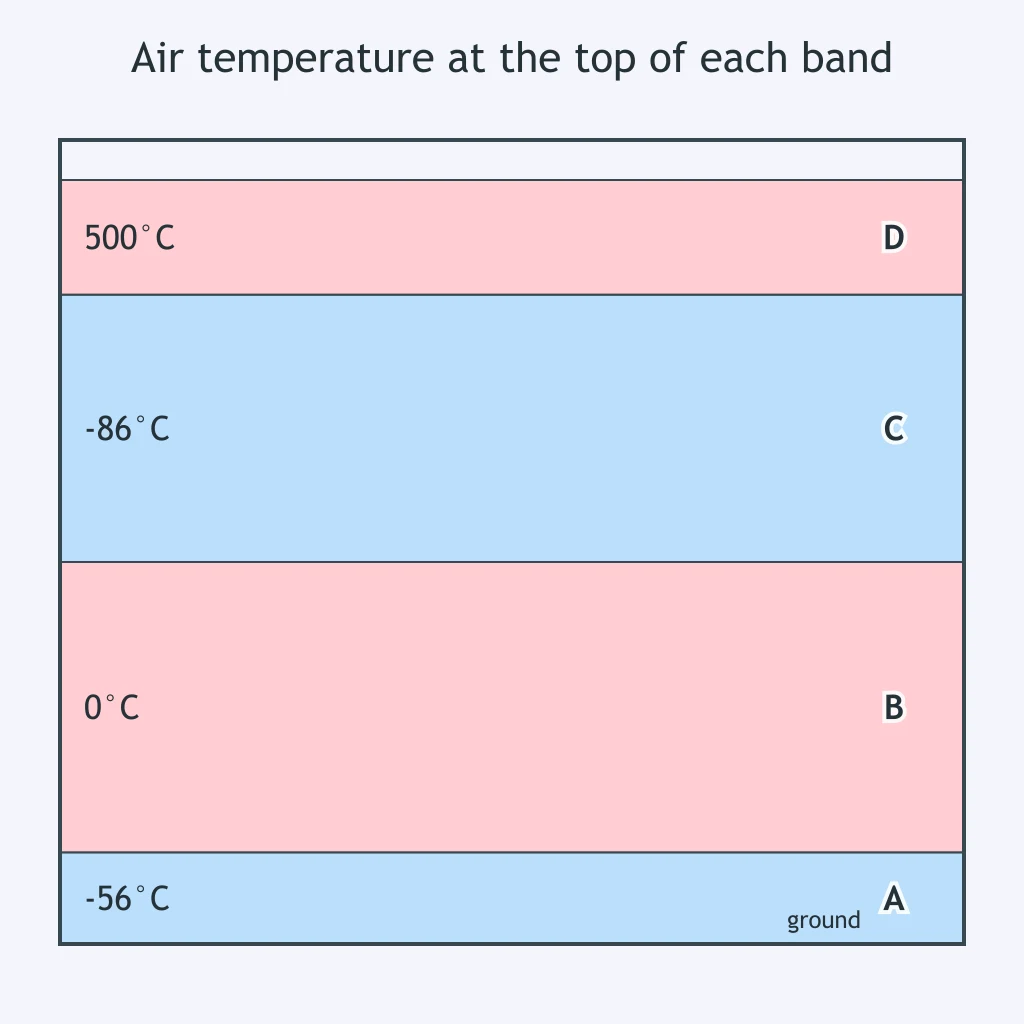
Two non-adjacent bands in the diagram both warm as altitude increases. Which is the higher of those two warming bands?
Two non-adjacent bands in the diagram both cool as altitude increases. Which is the lower of those two cooling bands?
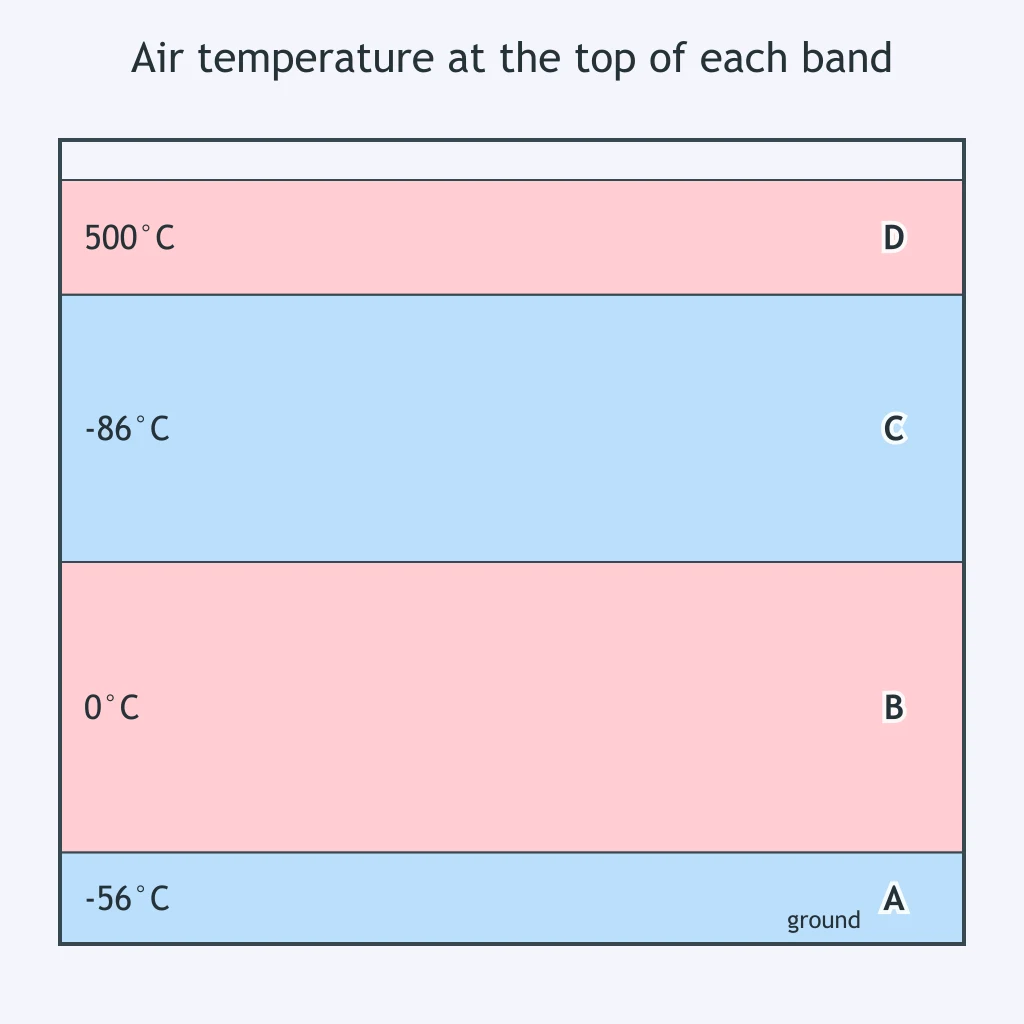
Meteoroids entering the atmosphere glow and burn up between roughly 85 and 50 kilometers above the surface, where friction with the thin air heats them. In which layer does this happen?
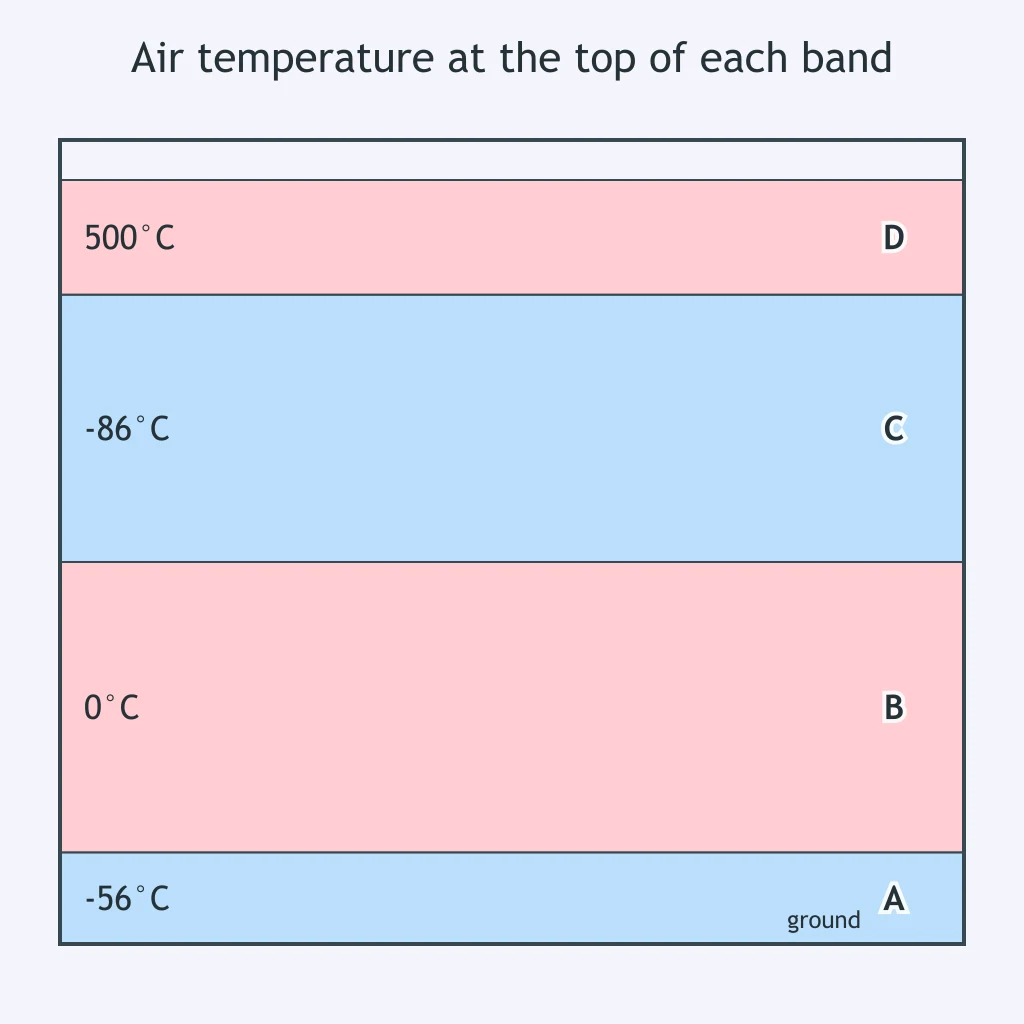
Nearly all clouds, storms and other weather form within the lowest 12 kilometers of the atmosphere. In which layer does weather occur?
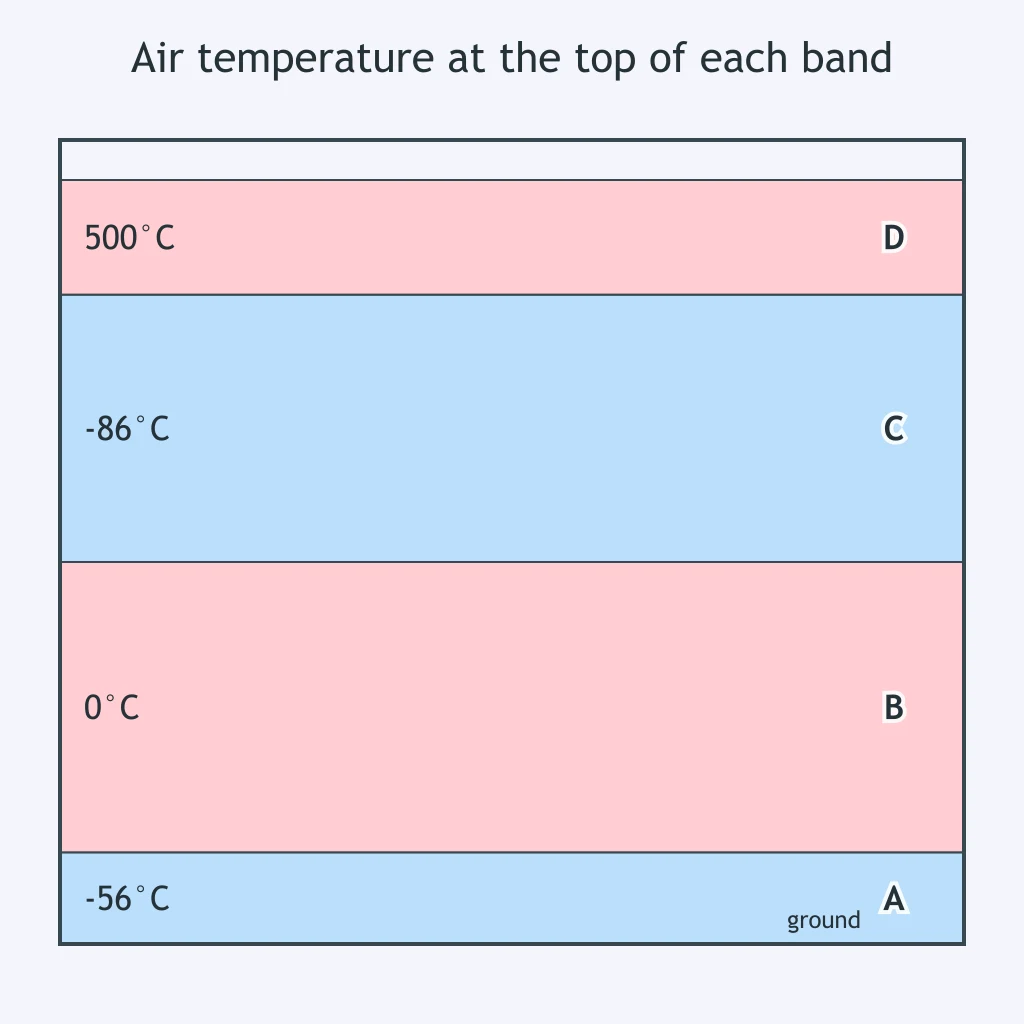
The ozone layer, which absorbs most of the Sun's harmful ultraviolet radiation, sits roughly 15 to 35 kilometers above the surface. In which layer is it found?
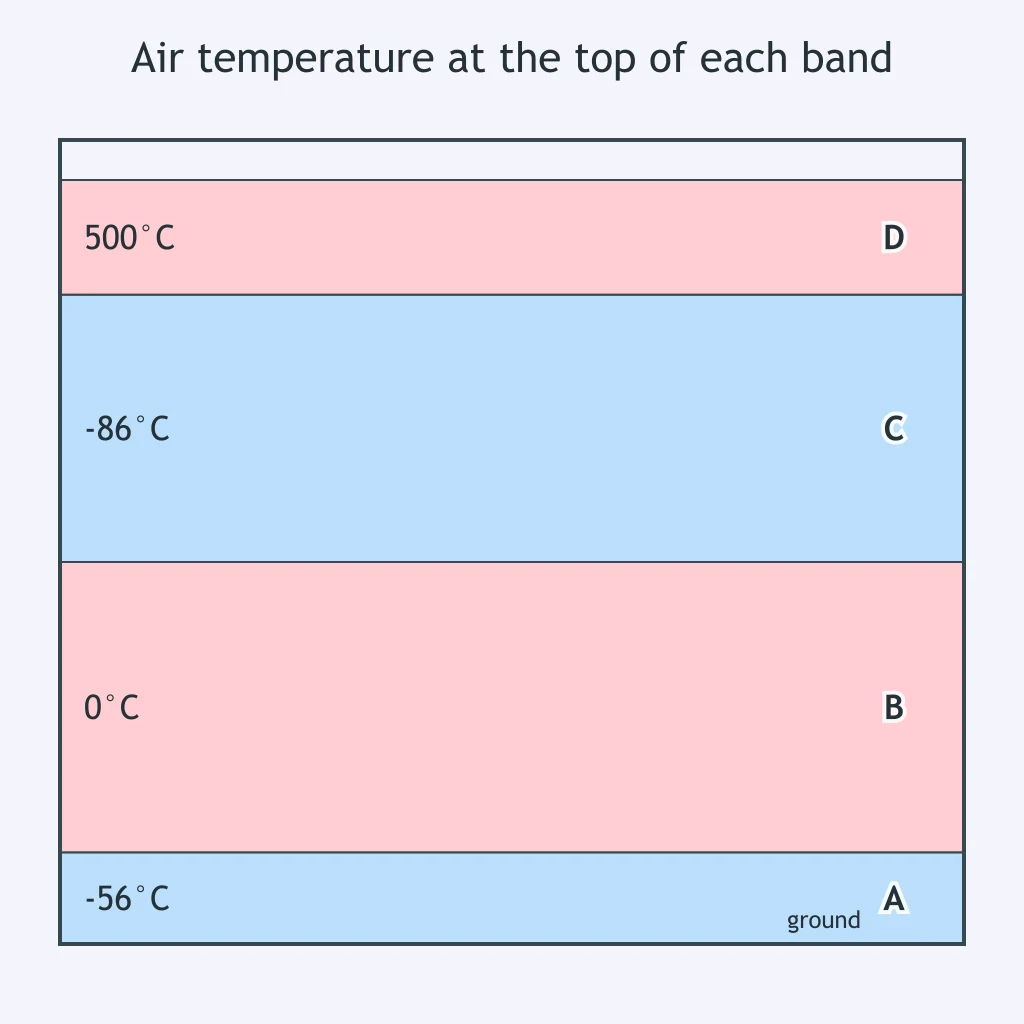
Weather balloons and nearly all commercial jets fly within the lowest layer of the atmosphere, up to about 12 kilometers. Which layer is that?
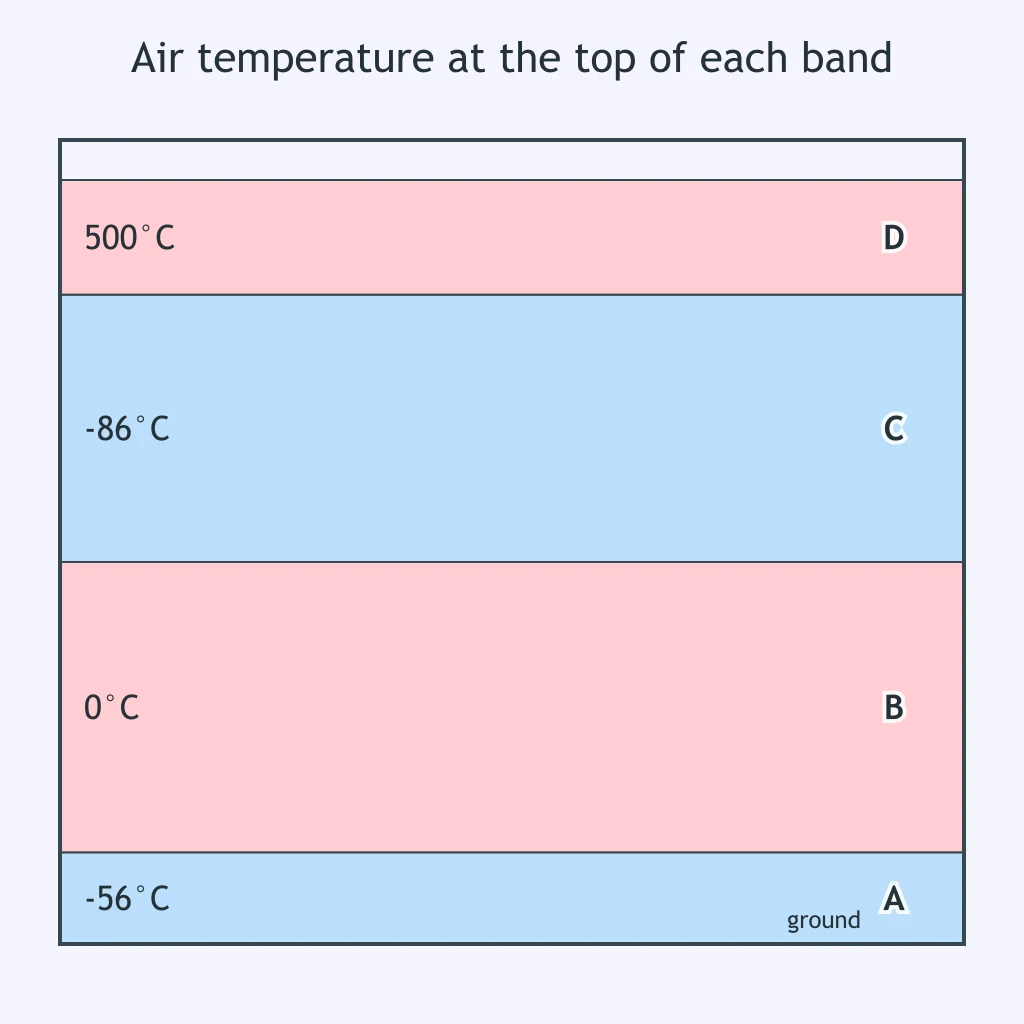
The colorful aurora forms as charged particles from the Sun strike gases roughly 100 to 300 kilometers above the surface. In which layer does the aurora form?
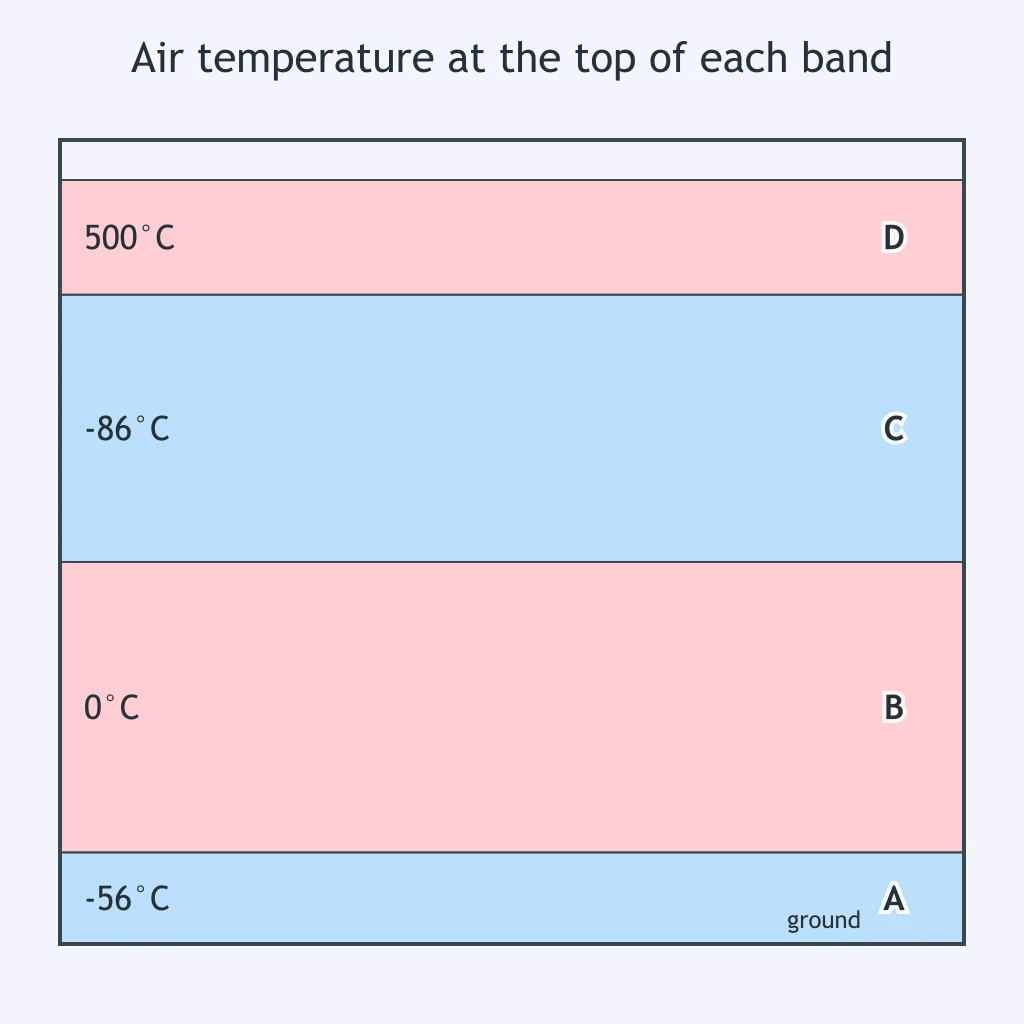
The International Space Station orbits Earth at an altitude of roughly 400 kilometers, where the air is extremely thin but still causes slow orbital drag. Which layer is it in?
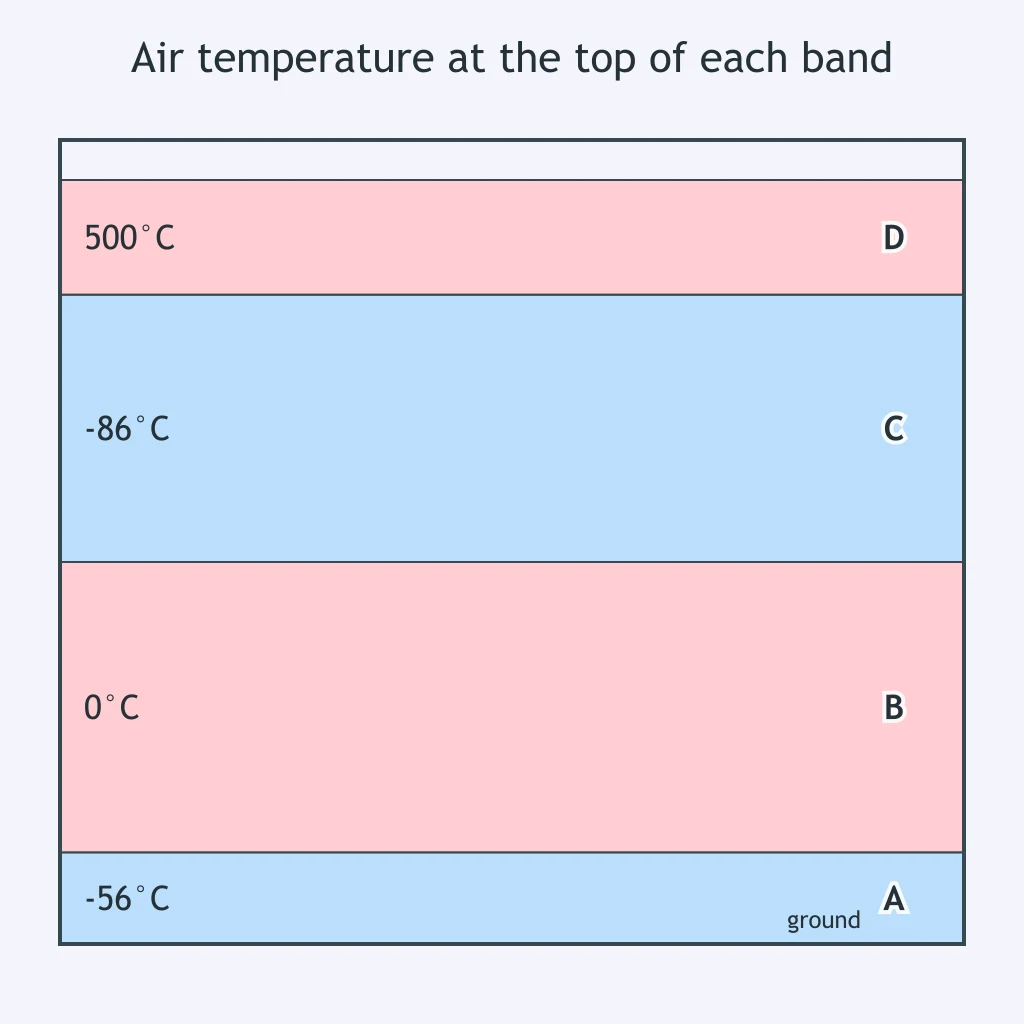
Noctilucent, or night-shining, clouds form from ice crystals near 80 kilometers up, close to the top of one layer. Which layer is that?
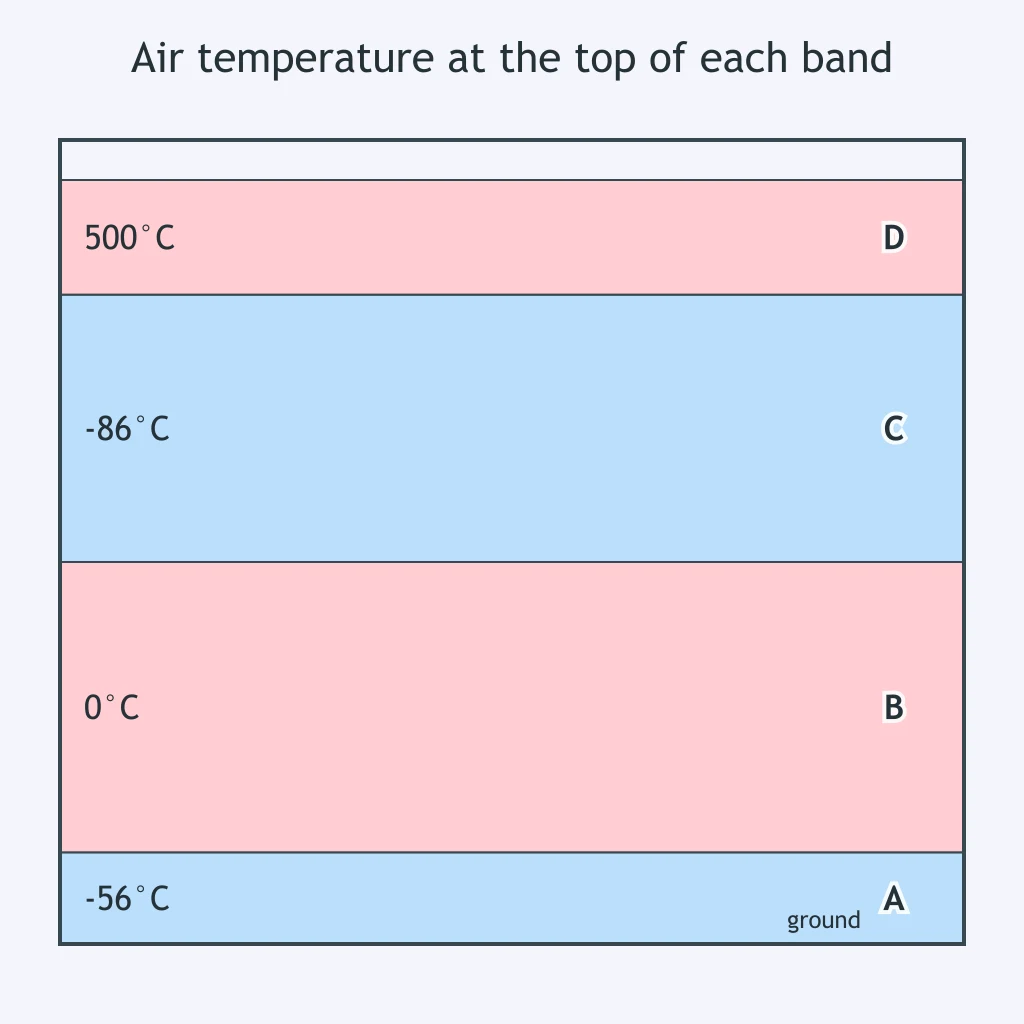
Moving upward through the air column in the diagram, air temperature stops rising and starts falling at the top of one layer. Which layer is it?
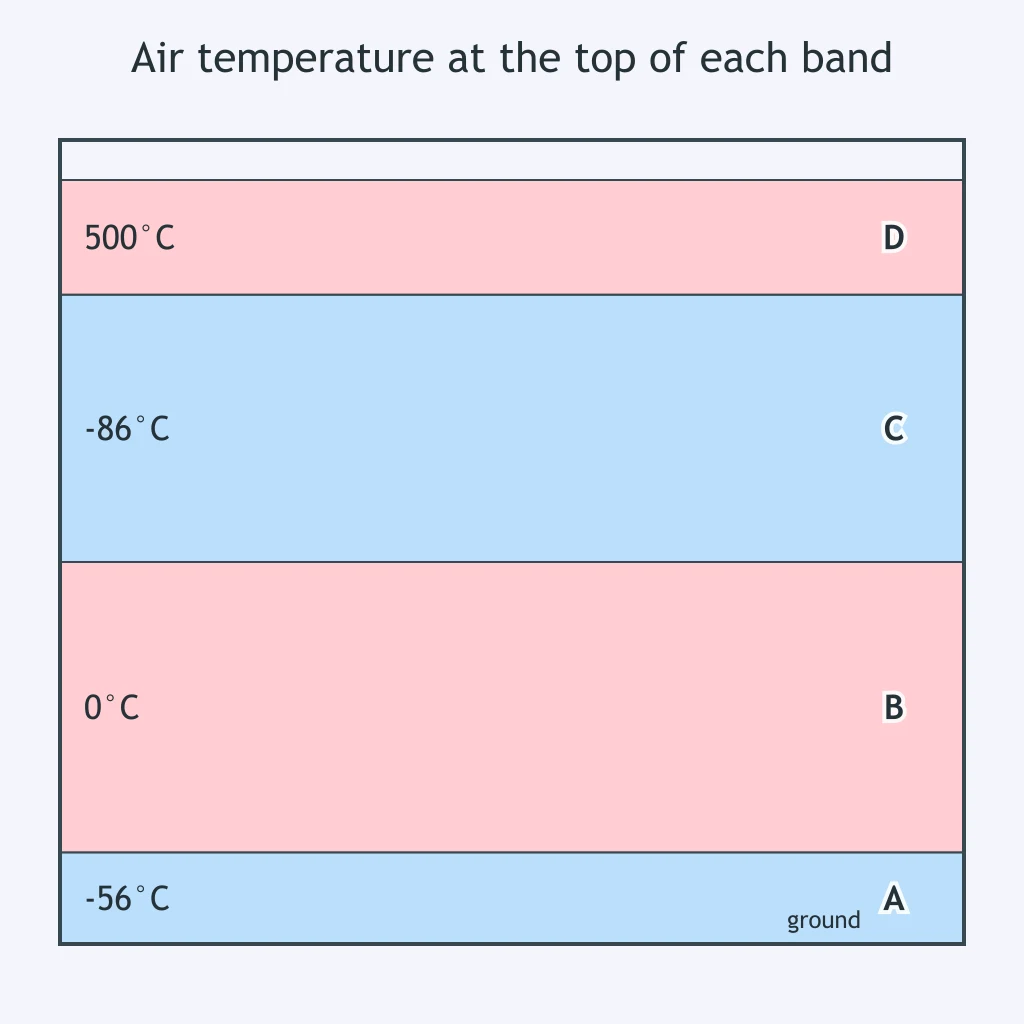
Nearly all of the atmosphere's total mass, along with virtually all of its water vapor, is packed into the lowest 12 kilometers above the surface. Which layer holds it?
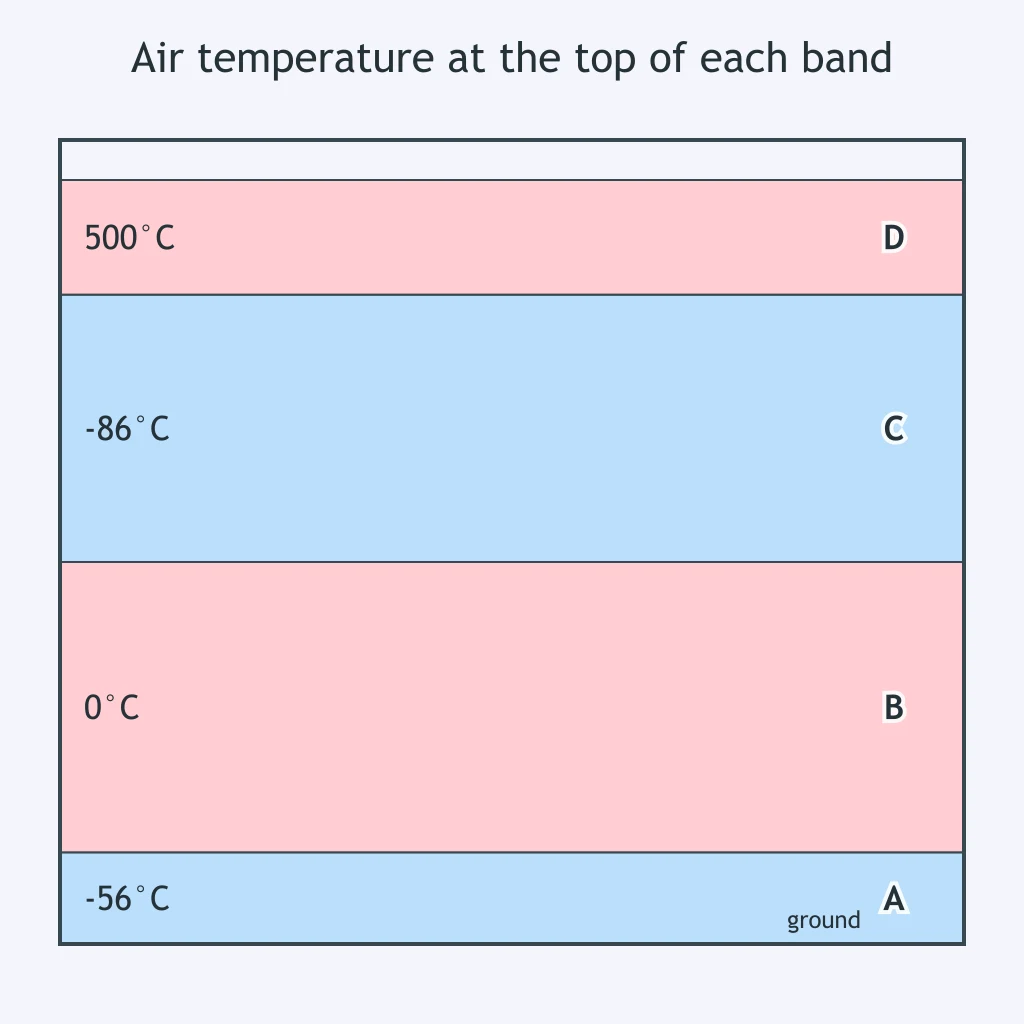
A sample of dry air is collected at sea level and separated into its component gases by volume. One single gas makes up about 78 percent of the whole sample. Which gas is it?
About 21 percent of the volume of dry air at sea level is made up of a single gas. Which gas is it?
Dry air contains several gases in small amounts. Which gas makes up only about 0.04 percent of dry air by volume?
The table lists the percent by volume of the main gases in dry air. Which two gases together account for about 99 percent of the atmosphere?
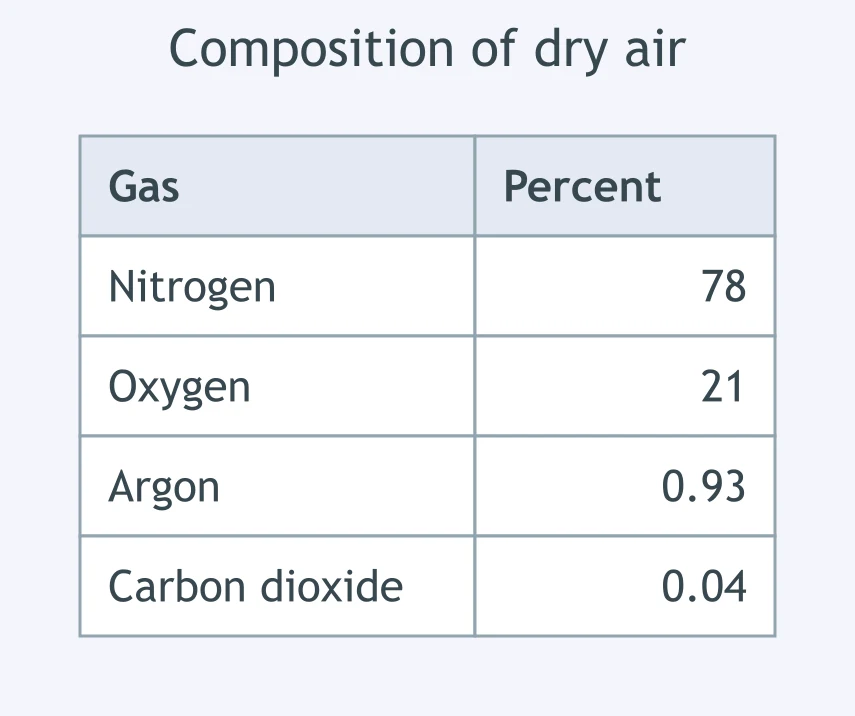
According to the table of gas percentages in dry air, which gas makes up the smallest share by volume?
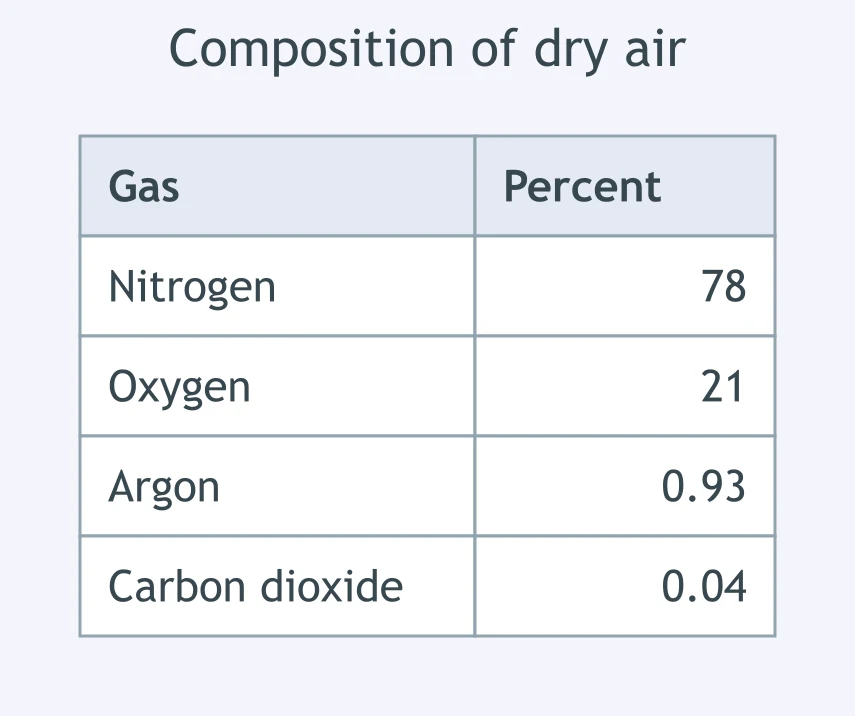
Using the table, about how many times greater is the percentage of nitrogen than the percentage of oxygen in dry air?
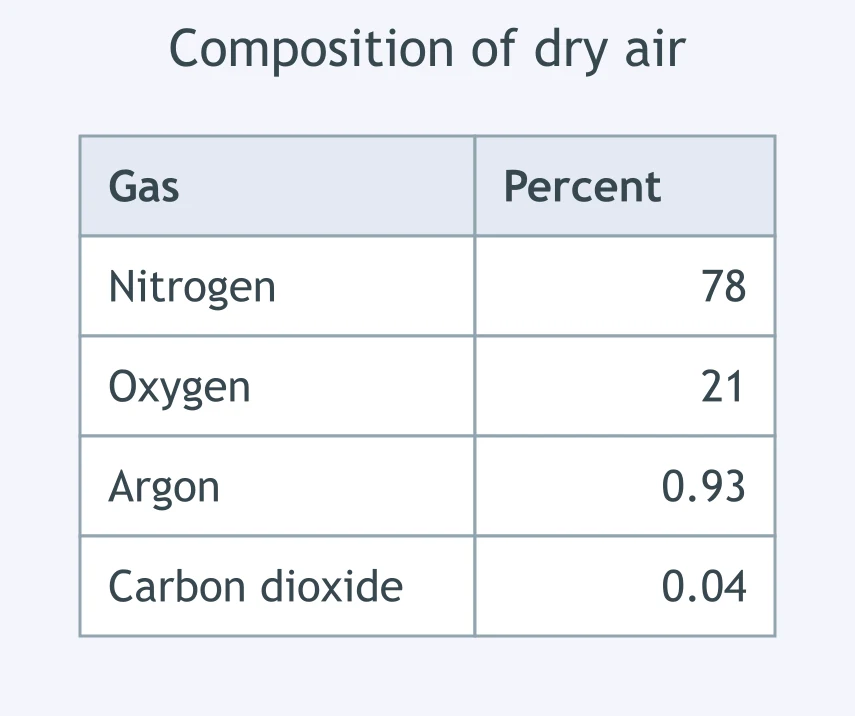
Trace gases such as carbon dioxide, neon and helium make up only a tiny fraction of dry air by volume, once nitrogen and oxygen are set aside. About what share do all trace gases combined make up?
A research balloon rises from the ground to an altitude of 60 kilometers, passing through more than one layer of the atmosphere on the way. Which boundaries does it cross, in the order it meets them?
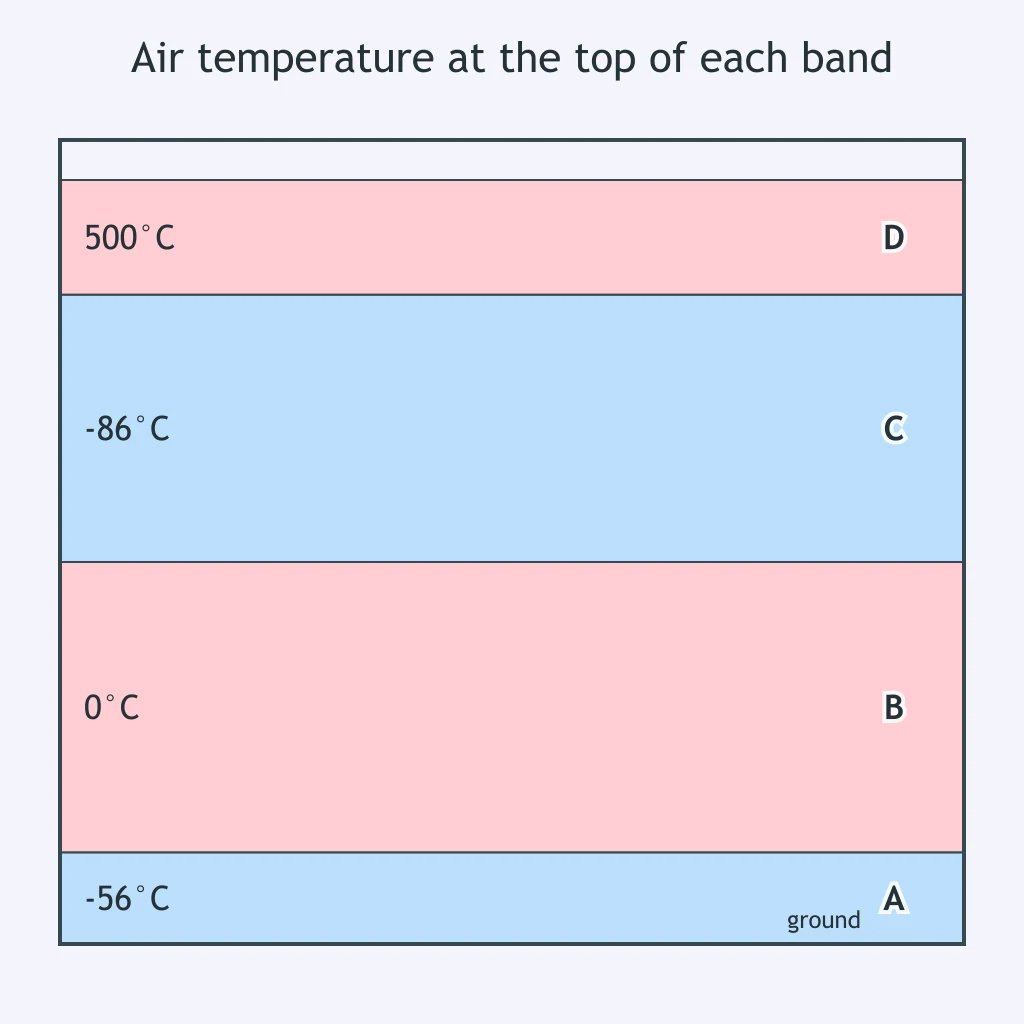
A weather balloon released at the surface bursts at an altitude of 90 kilometers. Listed from the ground up, which layers does it pass completely through before bursting?
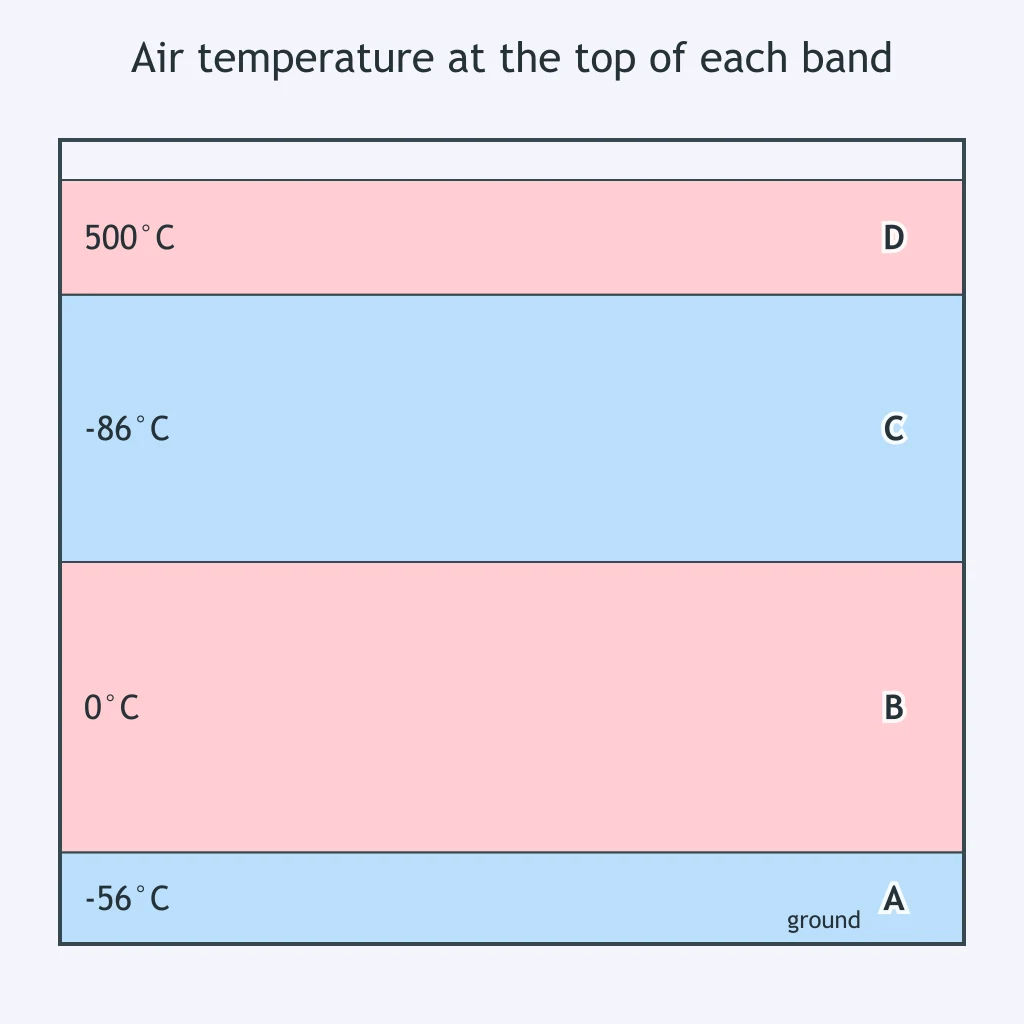
A sounding rocket launched from the ground reaches an altitude of 40 kilometers before running out of fuel. In which layer does it run out of fuel?
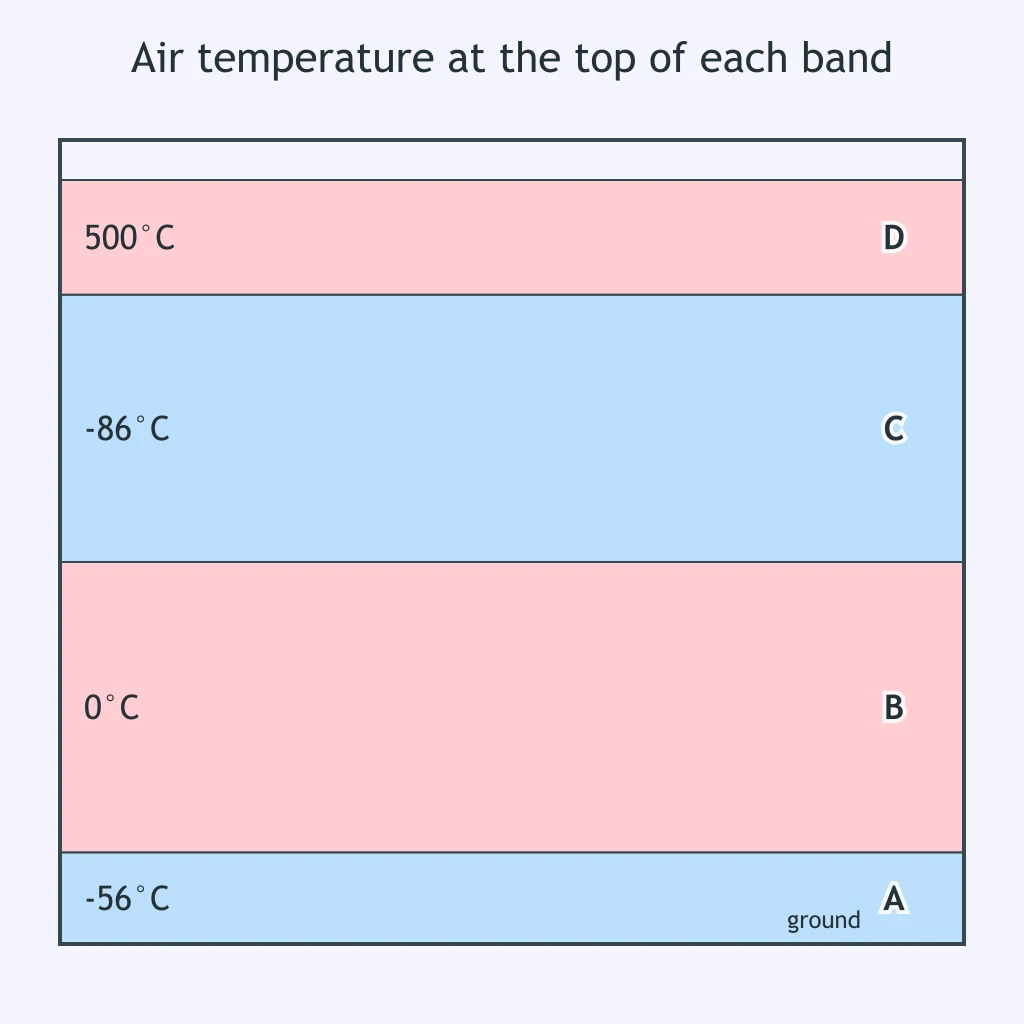
An instrument package climbs from the surface and first leaves the troposphere at an altitude of about 12 kilometers. Which boundary has it just crossed?
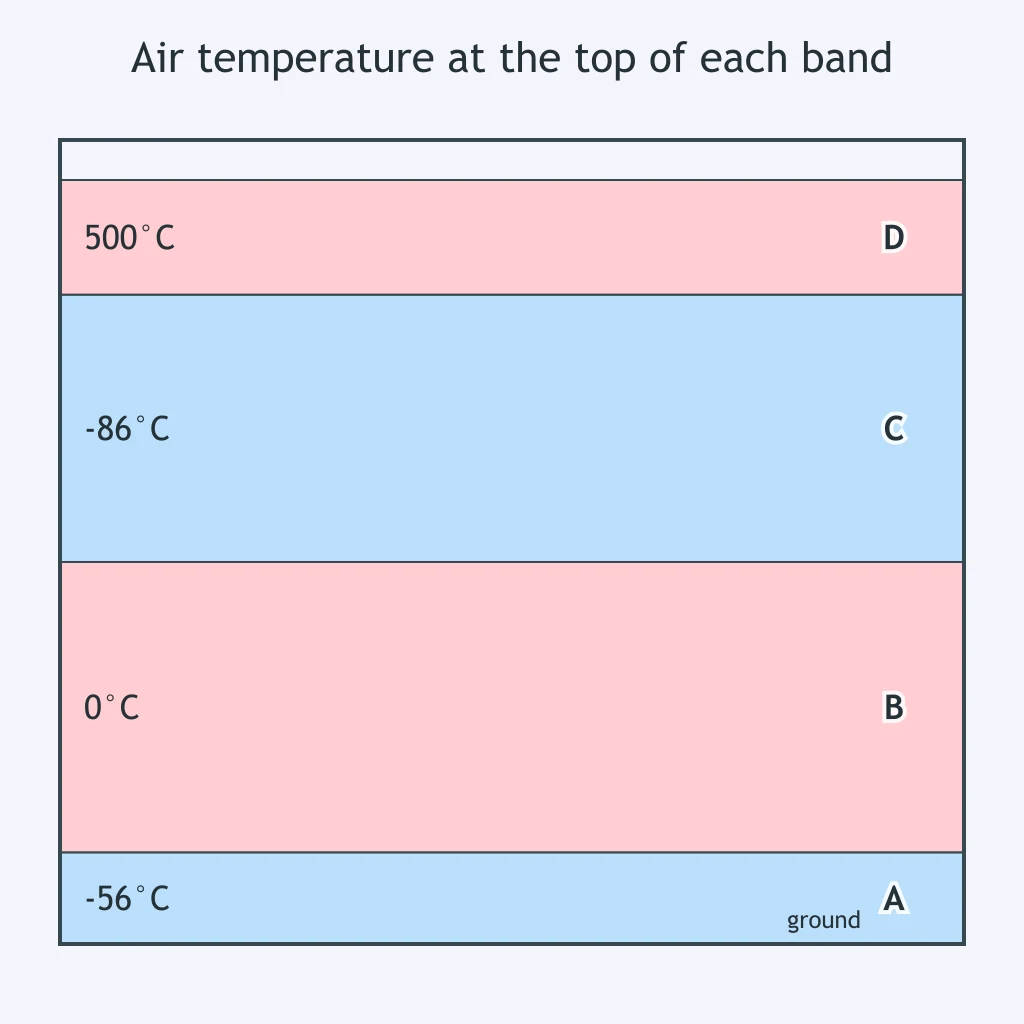
As an instrument package continues rising past an altitude of about 50 kilometers, which boundary does it cross next?
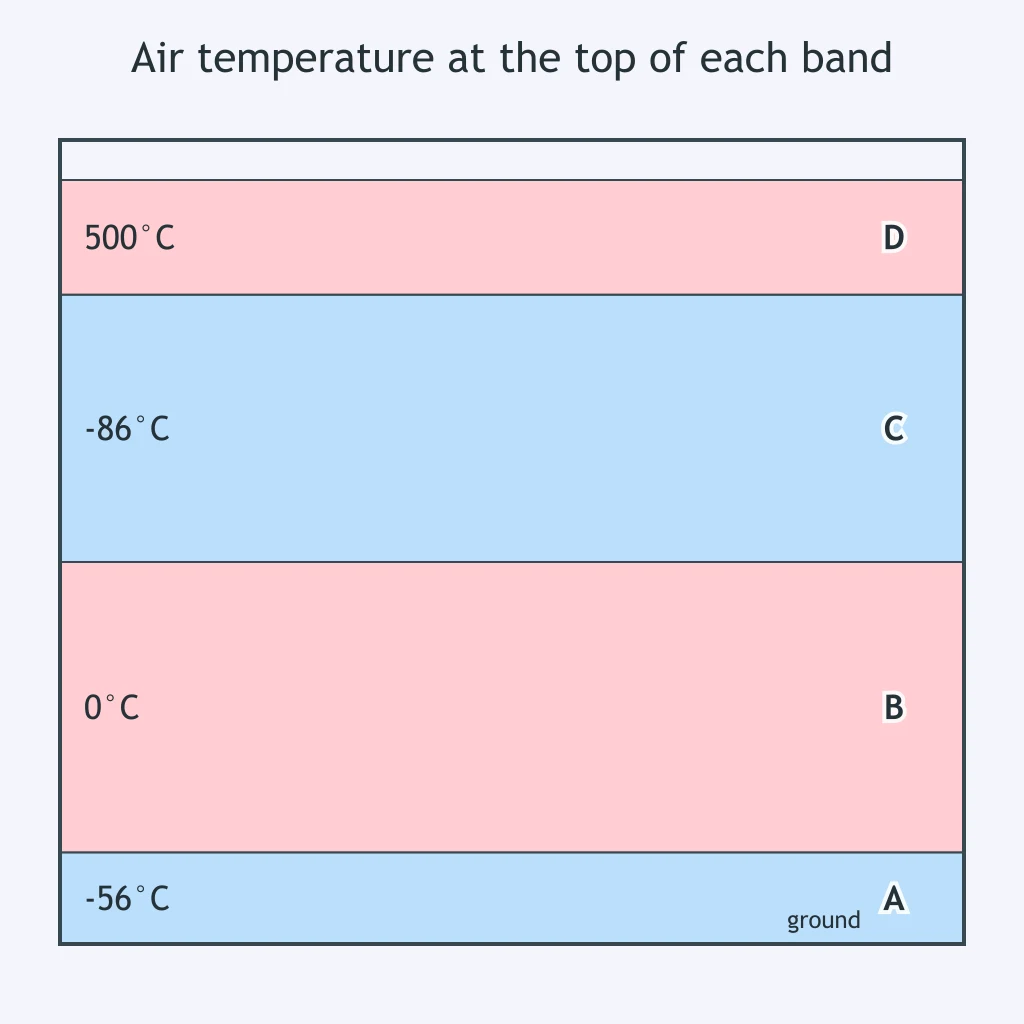
A balloon rises from the ground and reaches 85 kilometers before it is tracked no further. Listed from the ground up, which three boundaries has it crossed?
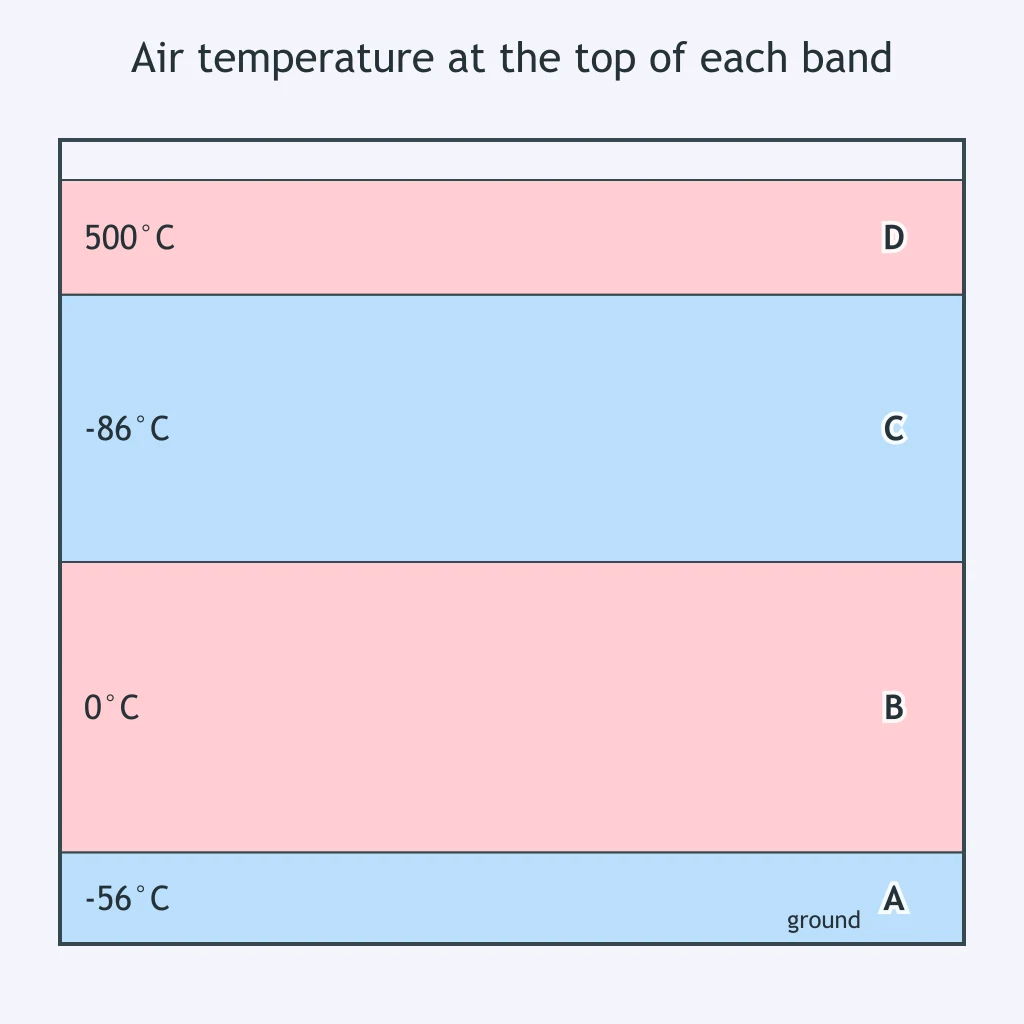
Which of the following correctly lists the four layers of Earth's atmosphere in order from the ground up?
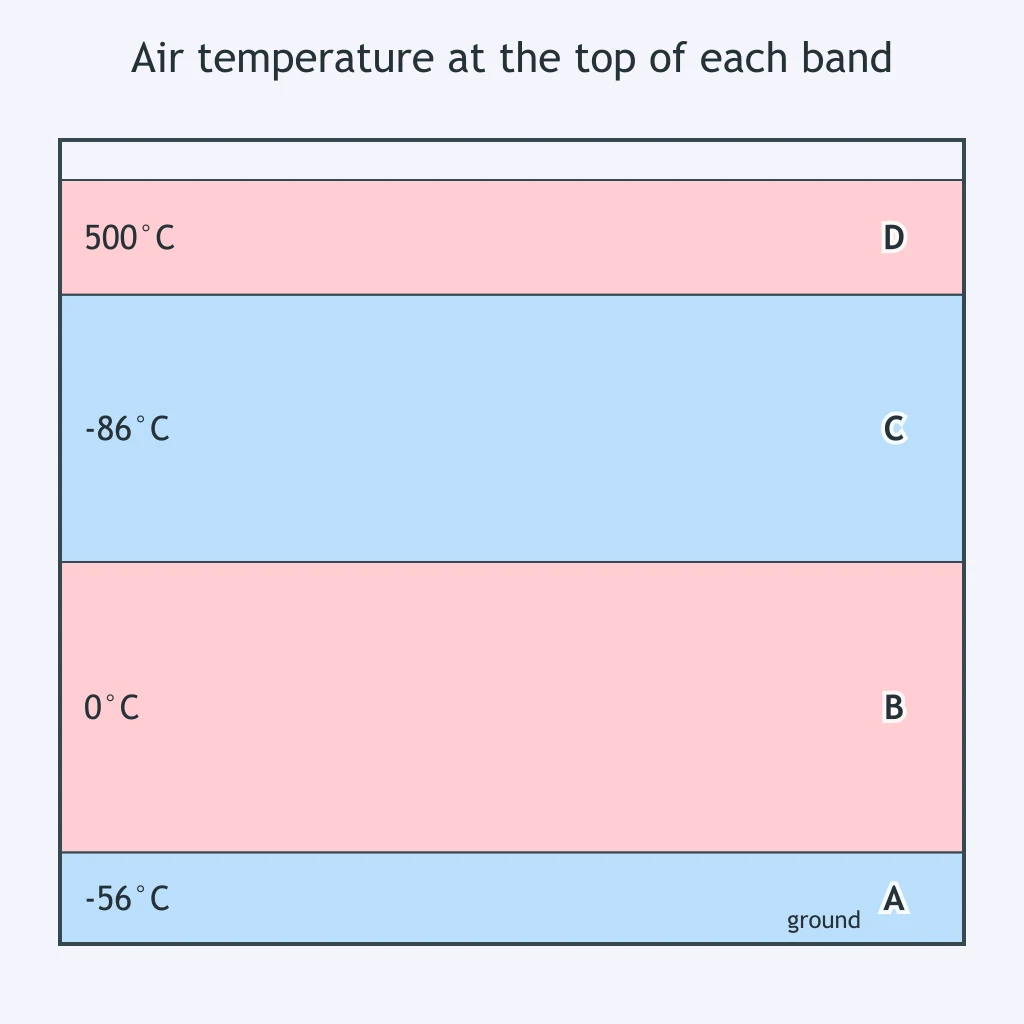
A barometer carried up a mountain reads 1,013 millibars at sea level and 840 millibars at the summit, and the climber also finds it harder to breathe at the top. What accounts for both observations?
Water boils at 100 degrees Celsius at sea level, but on top of a tall mountain it boils at a noticeably lower temperature. What best explains this?
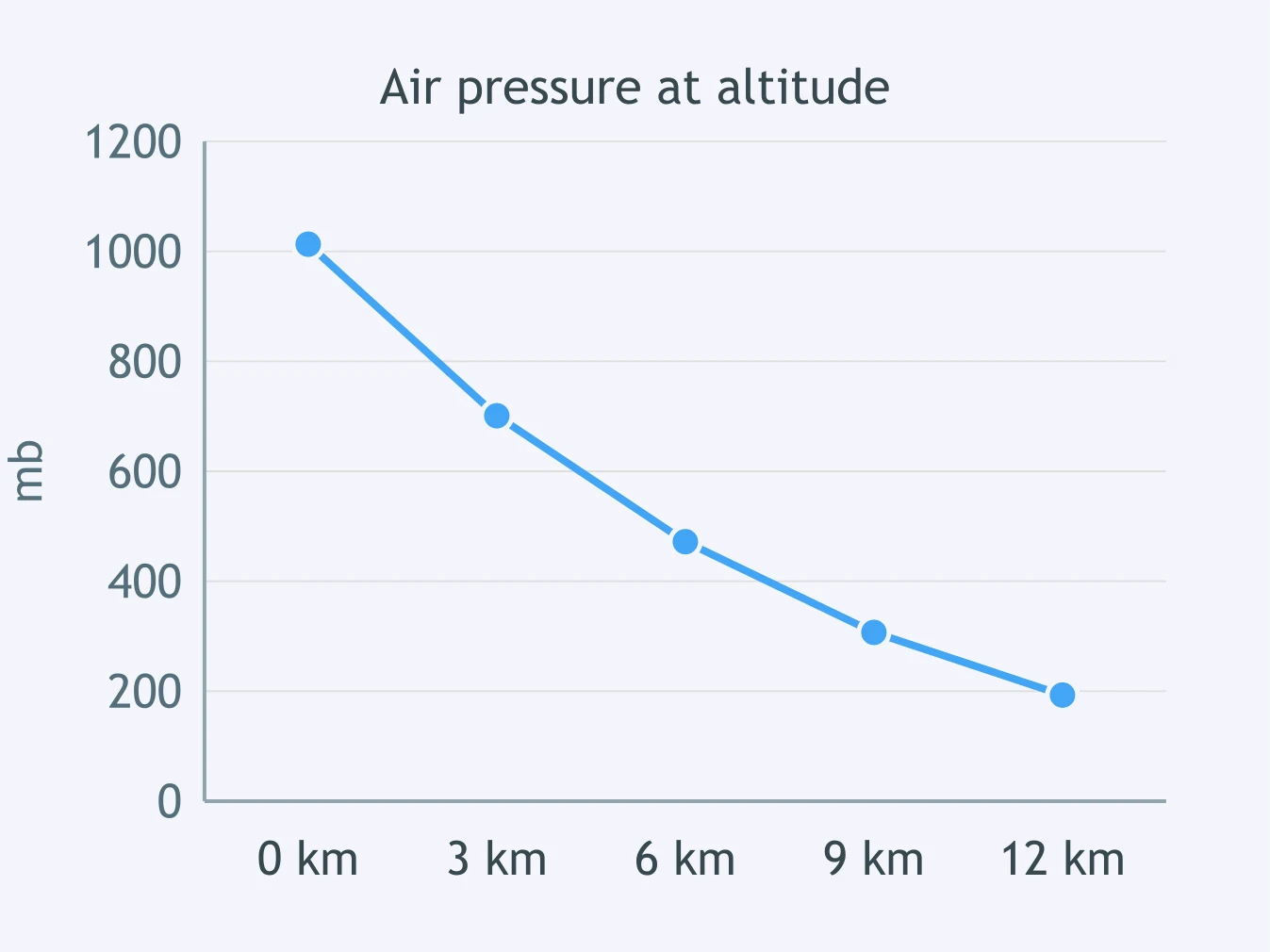
A pilot notes that air pressure drops from about 1,013 millibars at the airport to about 700 millibars once the plane reaches cruising altitude. Which statement best explains why pressure decreases with altitude?
The graph shows air pressure measured at increasing altitudes over the lowest 12 kilometers above the surface. Based on the trend in the graph, what happens to air pressure as altitude increases?
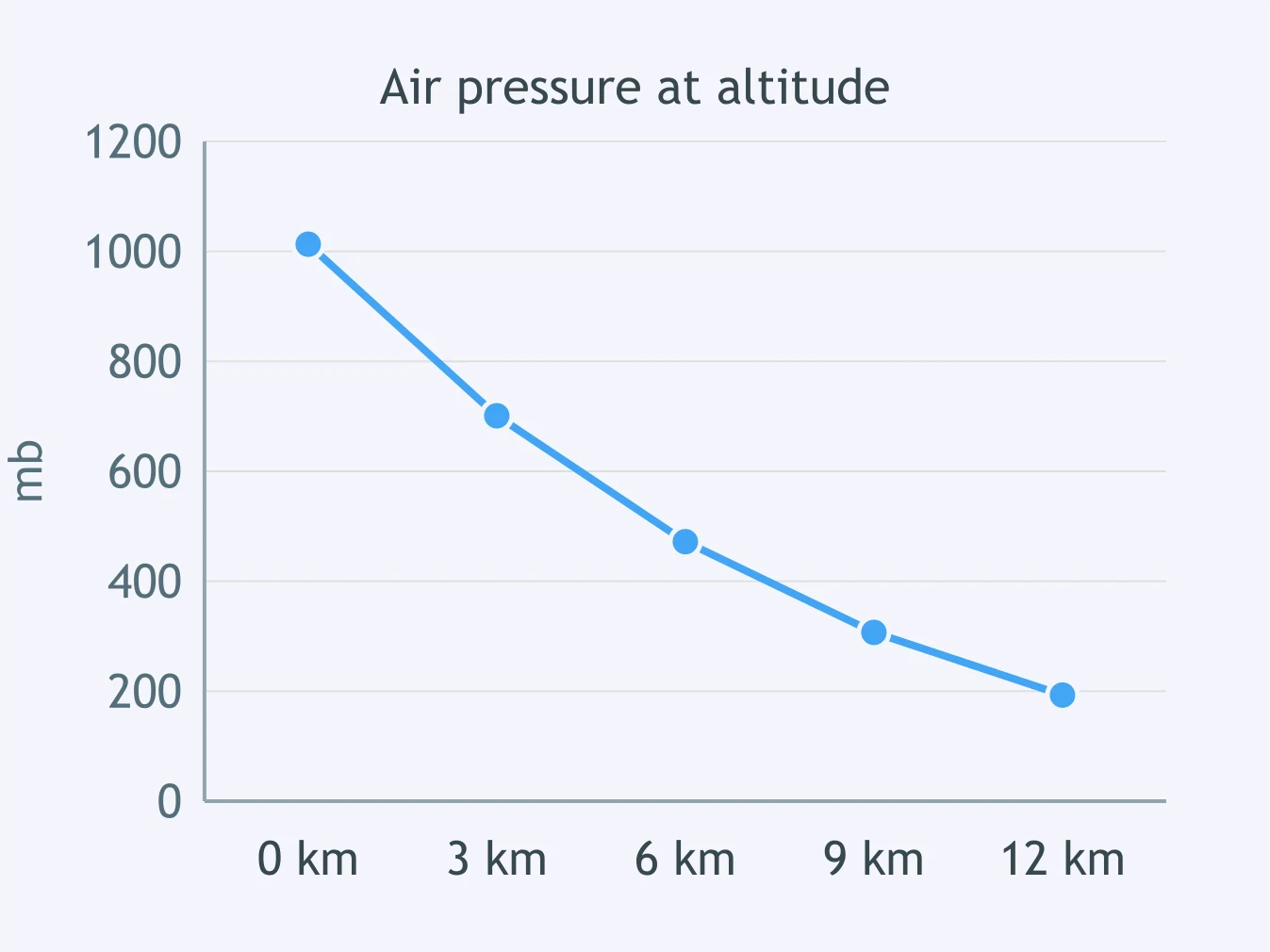
Using the graph of pressure against altitude, between which two altitudes does pressure drop by the greatest amount?
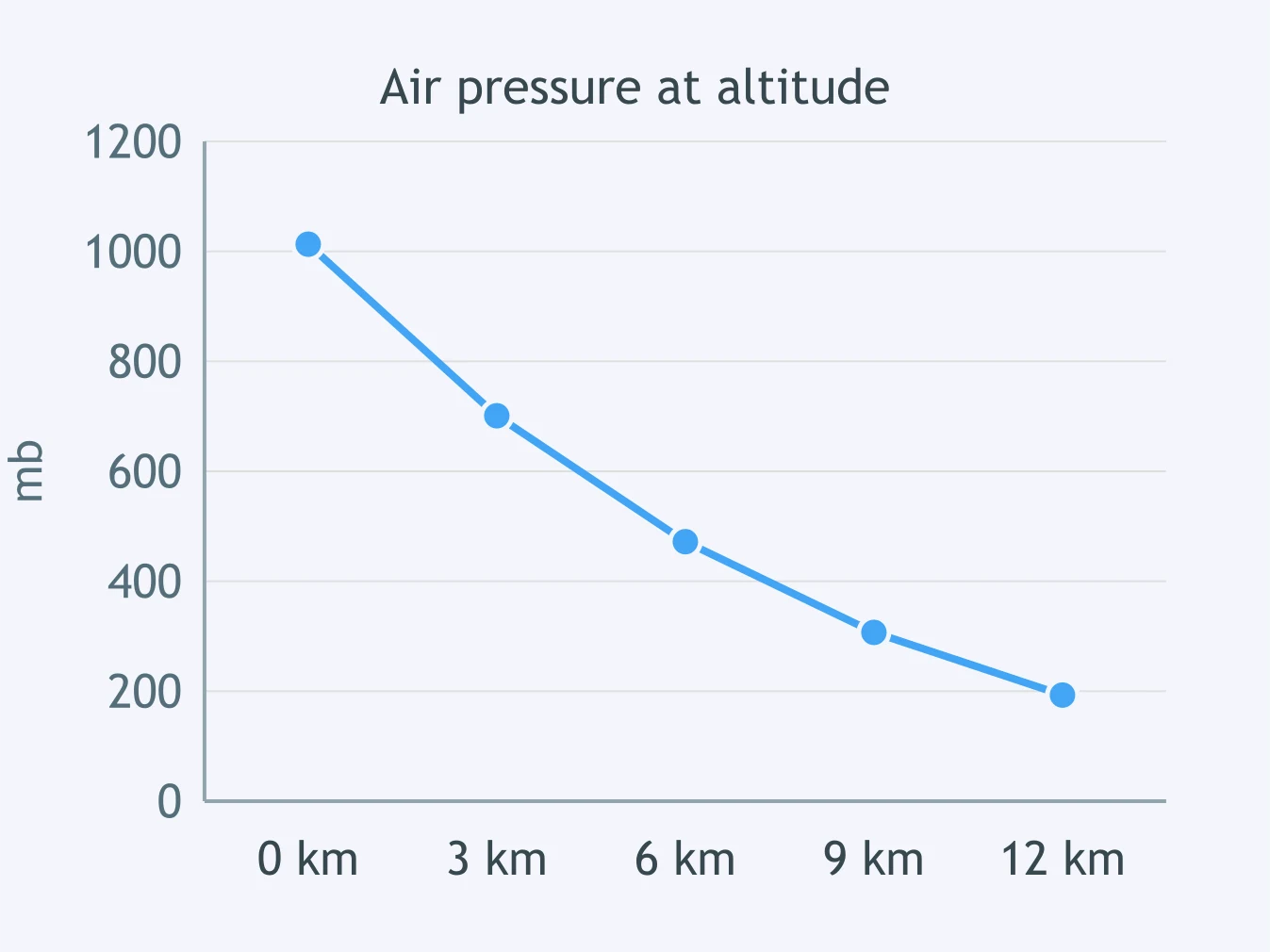
Air pressure drops steadily from the ground to 12 kilometers up, and the air also grows colder over this range. What happens to air density as altitude increases within this range?
According to the graph, at approximately what altitude does air pressure drop to about half of its sea-level value?
Crack the passcode before the zombies get in.
Answer, then swat bugs for bonus points.
Race through questions at your own speed.
Same question on every screen. Fastest wins.

Pick a tile, answer, hit bonuses and steals.
Resources and Hazards Review
40 questions