Loading
by BlastRoom
Read light, depth, salinity, temperature and oxygen data to explain where life is found in water.
#biology
20 questions
One question set, multiple game modes. Tap any game to see it in action. Not sure which to pick?
Answer to place stones and capture territory.
Outrun the snow together.
Earn blasts, then hunt the other team.
Answer to earn energy, then climb.

The class blasts through walls together.
Bid on mystery lots. Most money wins.
Sell tours. Nice, standard, or a total scam.

Answer, restock, and serve the rush.
More correct answers pulls the rope your way.
Answer, then shoot down the alien wave.
Answer, then tap to leap the frozen ridge.
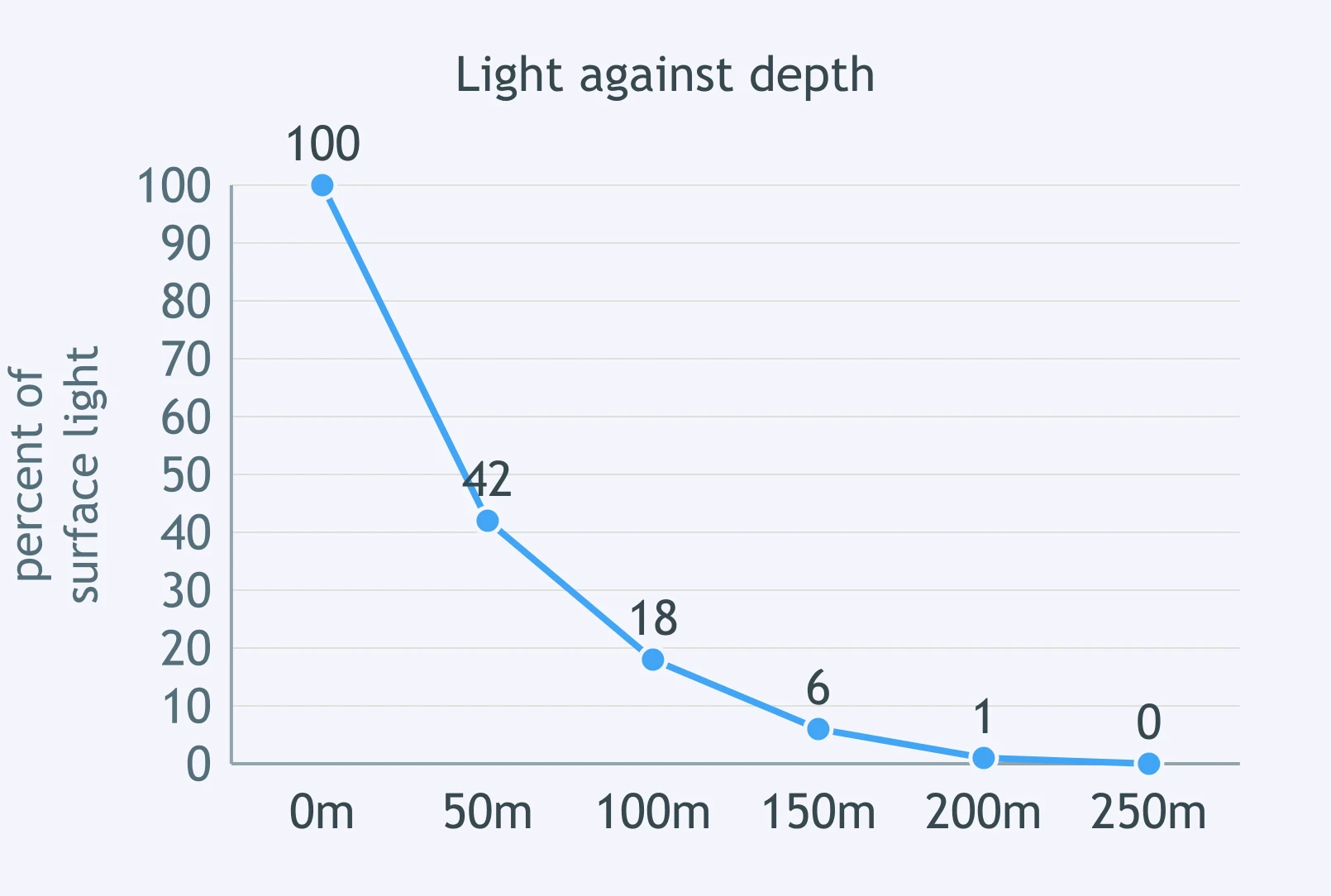
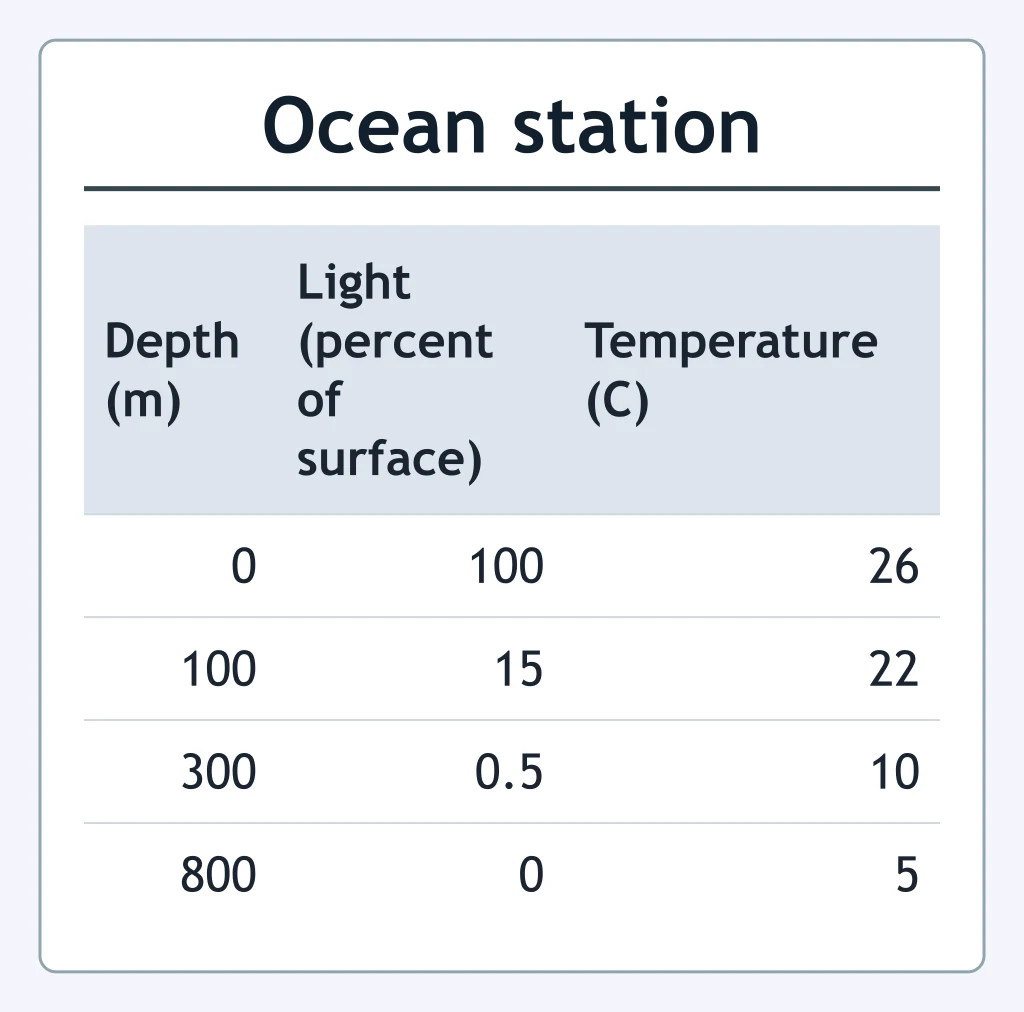
The graph shows how much surface light remains at each depth at an open-ocean station. The photic zone reaches down to about 1 percent of surface light. Which sampled depth is the deepest point still inside the photic zone?
A research crew samples the ocean station shown in the table at a depth of 800 m. Using the table, which zone did they sample?
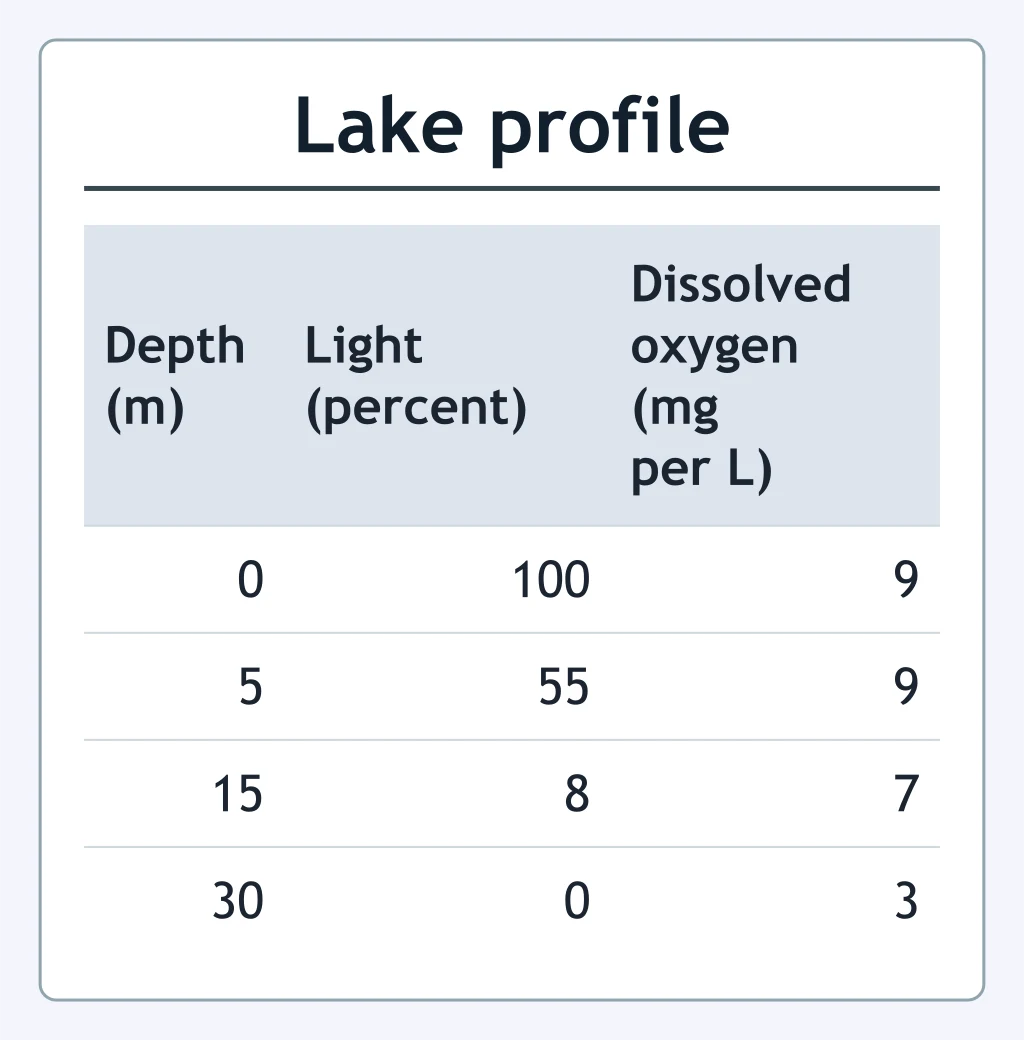
A lake is sampled at 30 m, using the profile in the table. Which statement best describes conditions at that depth?
Sunlight at an open-ocean surface is measured as 100 percent, and only 1 percent of it remains at 180 m. A biologist collects a sample at 400 m. Which organism could be living in that sample?
On a rocky shore, mussels are covered by seawater at high tide and exposed to air and sun at low tide. Which challenge do they face that mussels attached to rock 20 m below the surface do not?
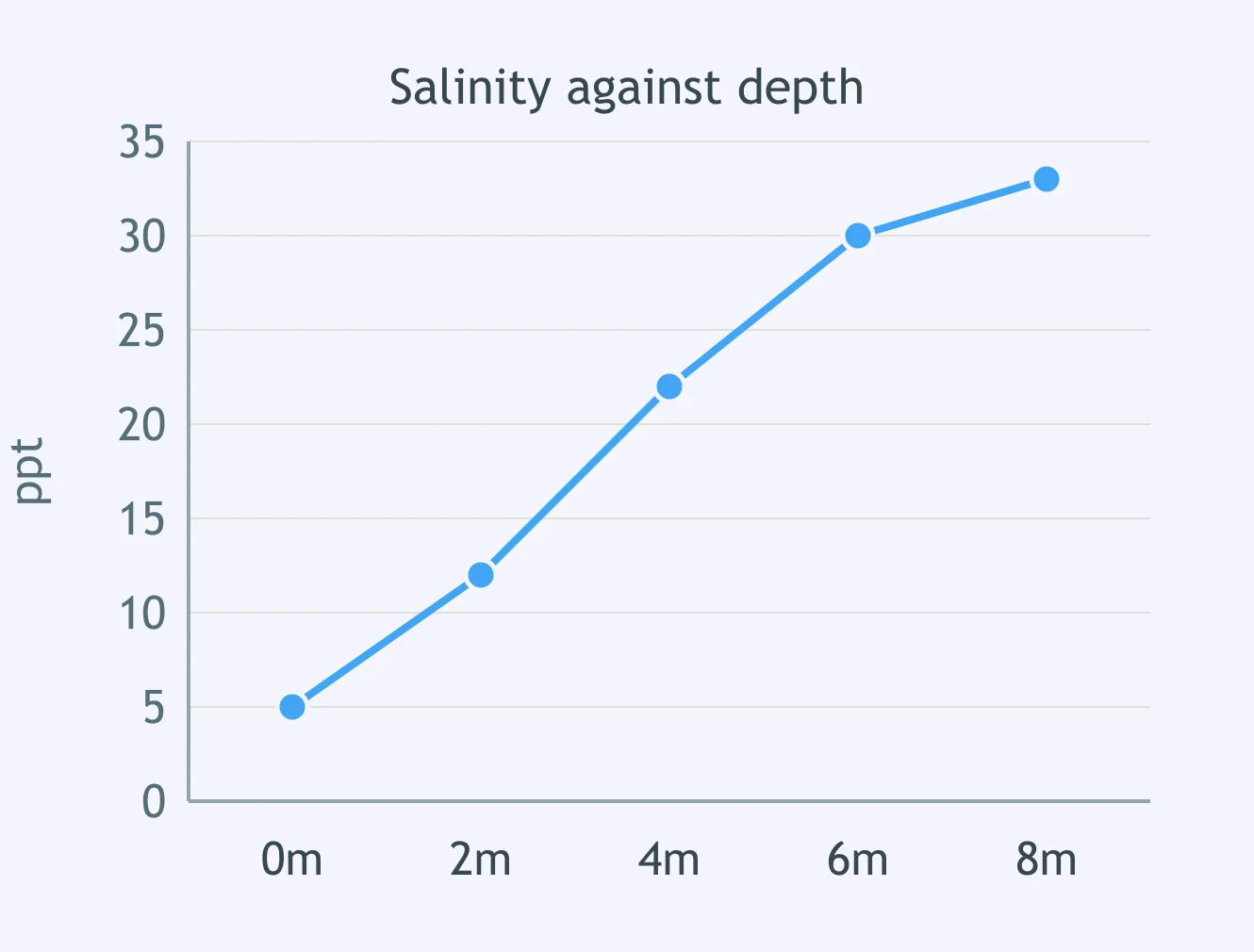
The graph shows salinity through the water column at one point where a river flows into the sea. A fish there cannot survive in water above about 15 ppt. Using the graph, where in this water column can it live?
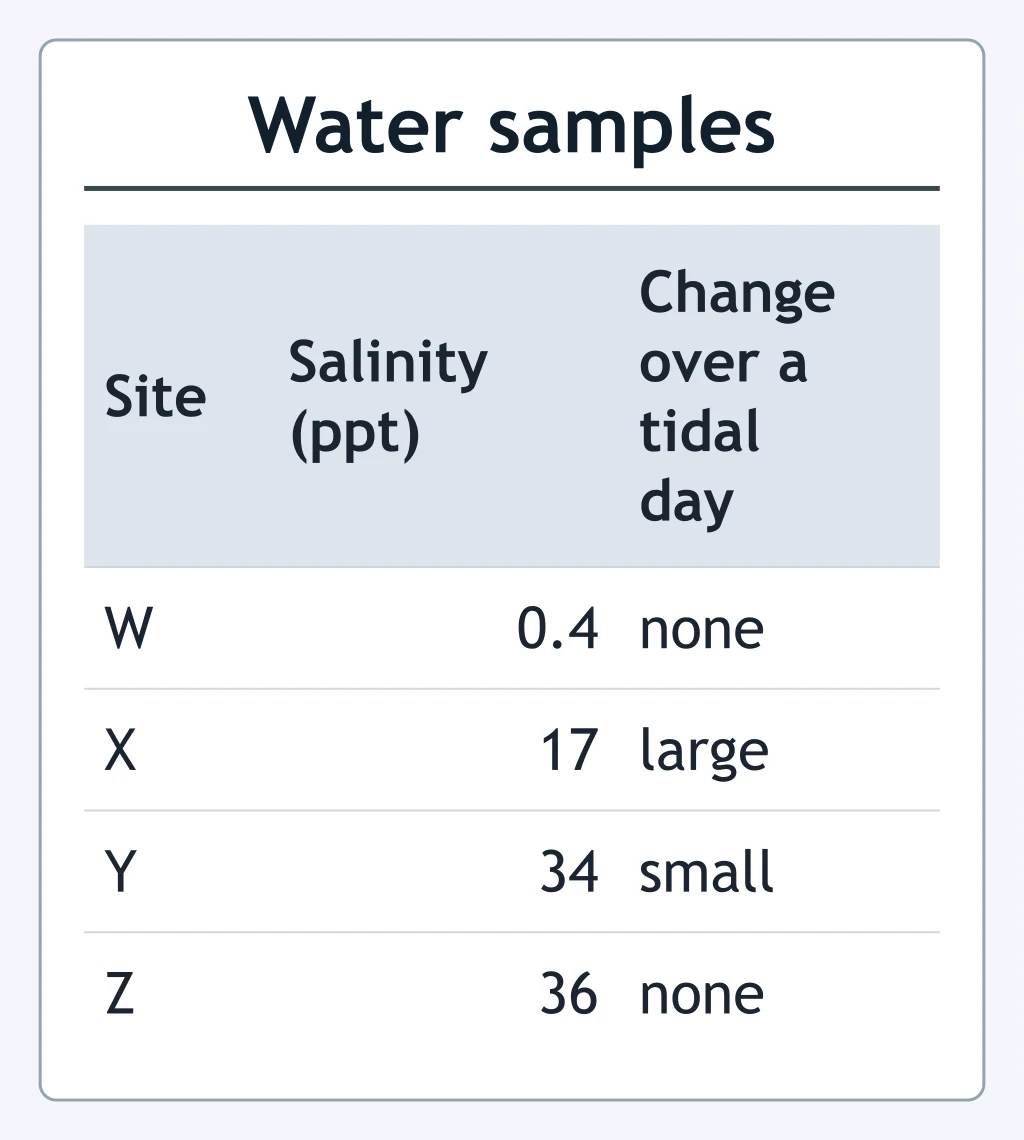
Four water samples are listed in the table. Which site is an estuary?
A salmon hatched in a river swims out into the ocean, where the salinity is about 35 ppt. What must its body do once it is in the sea?
A shallow coastal lagoon is cut off from the sea and evaporates all summer until its salinity reaches 45 ppt, higher than the ocean beside it. Which organisms are most likely to be living in it by late summer?
The table shows measurements taken through the water column of one lake. What best explains the pattern in the algae counts?
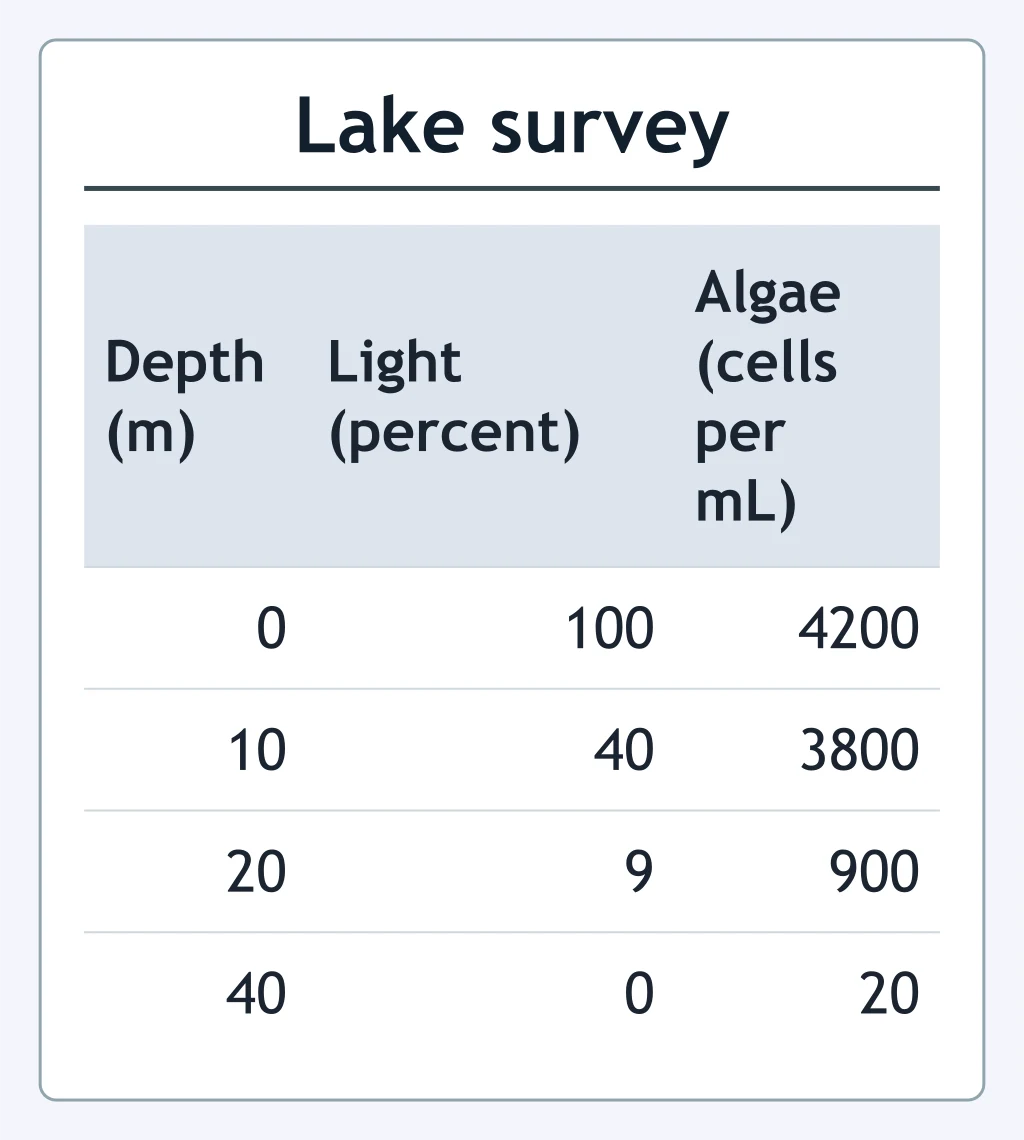
In the open ocean, photosynthetic plankton are concentrated in the upper 100 m, while the nutrients released by decomposers are richest below 500 m. Why do the producers not grow down where the nutrients are?
Giant kelp anchors itself to rock on the sea floor with a holdfast and photosynthesizes in the water above. Why are kelp forests found along coastlines rather than in the middle of the open ocean?
Reef-building corals hold photosynthetic algae inside their tissues. Which condition at 300 m in tropical water prevents a coral reef from forming there?
A snorkeler records water at 26 C, clear enough to see the bottom 8 m down, animals building hard calcium carbonate structures, and hundreds of fish species in a small area. Which system is described?
Field notes read: fresh water flowing steadily in one direction over a rocky bed, cold and well oxygenated, with animals that either cling to rocks or have streamlined bodies. Which system do these notes describe?
Which aquatic system has almost all of its producers as drifting plankton, no rooted plants anywhere in it, and a floor more than 4000 m below the surface?
The intertidal zone is defined by how deep the water above it is, rather than by the rise and fall of the tide.
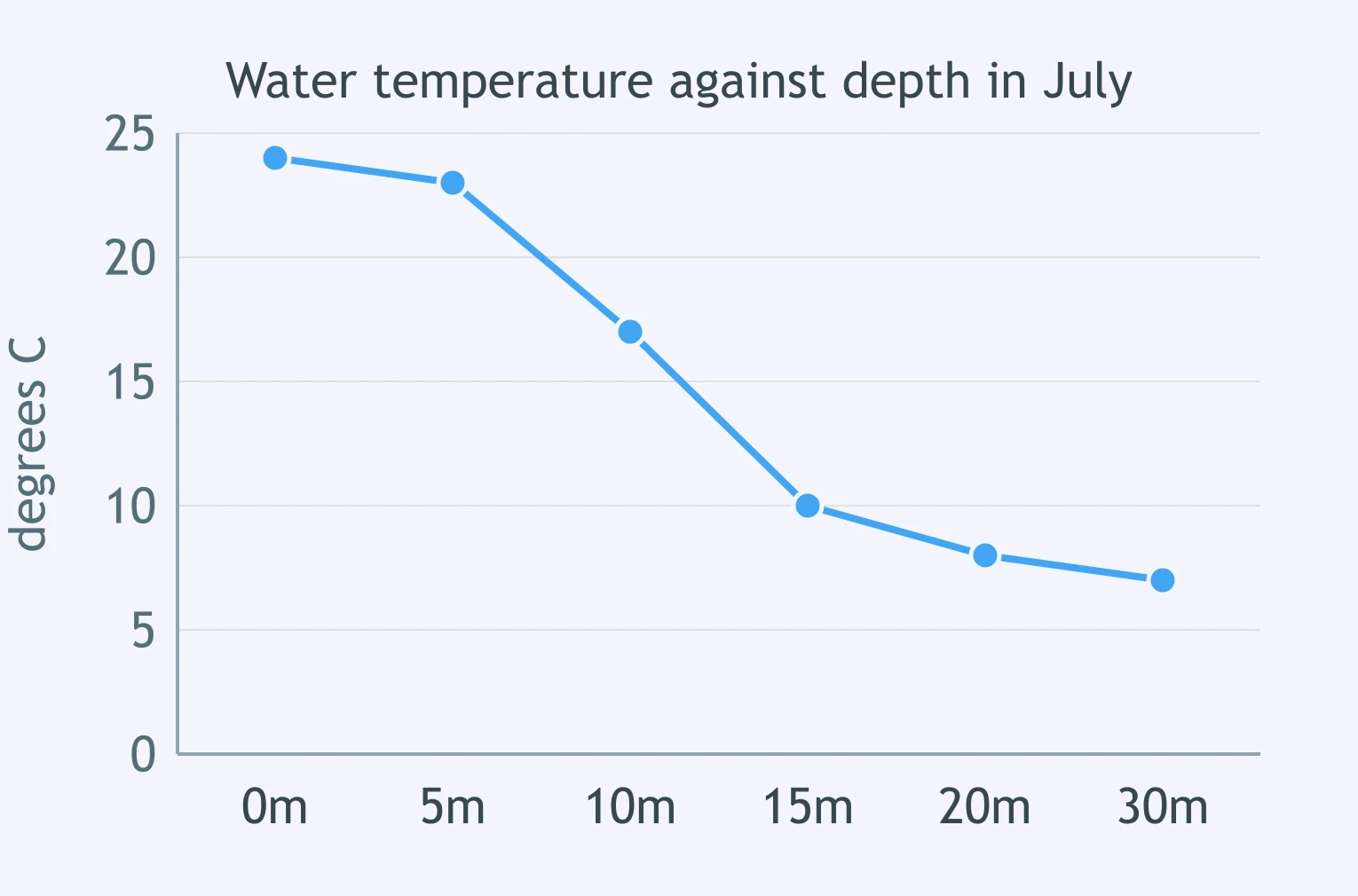
The graph shows water temperature through a lake in July. Lake trout need water colder than 12 C. Using the graph, which depths are cold enough for them?
The table shows one stream monitored through the year. Which statement about the two measurements is correct?
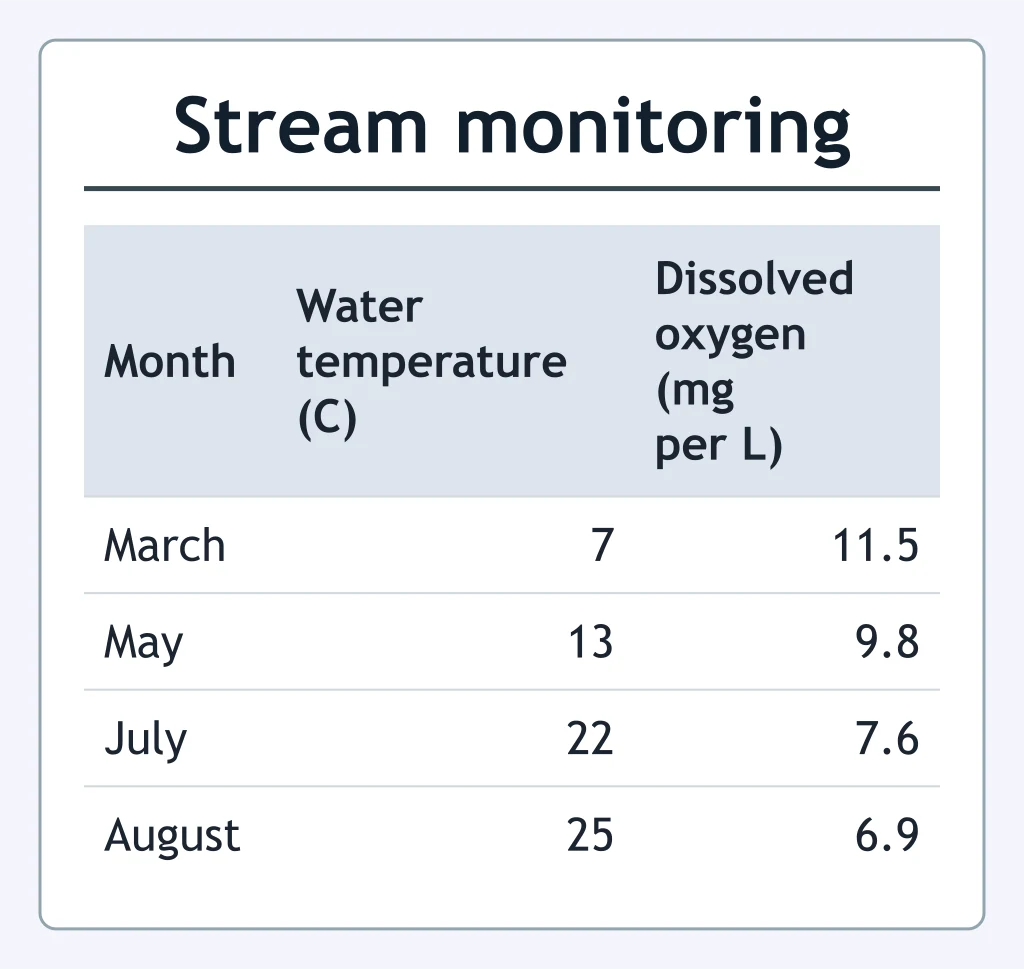
In July, a fish that needs cold, oxygen-rich water is more likely to be found in a shaded mountain stream than in a shallow sunlit pond.
Crack the passcode before the zombies get in.
Answer, then swat bugs for bonus points.
Race through questions at your own speed.
Same question on every screen. Fastest wins.

Pick a tile, answer, hit bonuses and steals.
Invasive Species
20 questions