Loading
by BlastRoom
How predator and prey numbers track each other, and what happens when two species need the same resource.
#biology
20 questions
One question set, multiple game modes. Tap any game to see it in action. Not sure which to pick?
Answer to place stones and capture territory.
Outrun the snow together.
Earn blasts, then hunt the other team.
Answer to earn energy, then climb.

The class blasts through walls together.
Bid on mystery lots. Most money wins.
Sell tours. Nice, standard, or a total scam.

Answer, restock, and serve the rush.
More correct answers pulls the rope your way.
Answer, then shoot down the alien wave.
Answer, then tap to leap the frozen ridge.
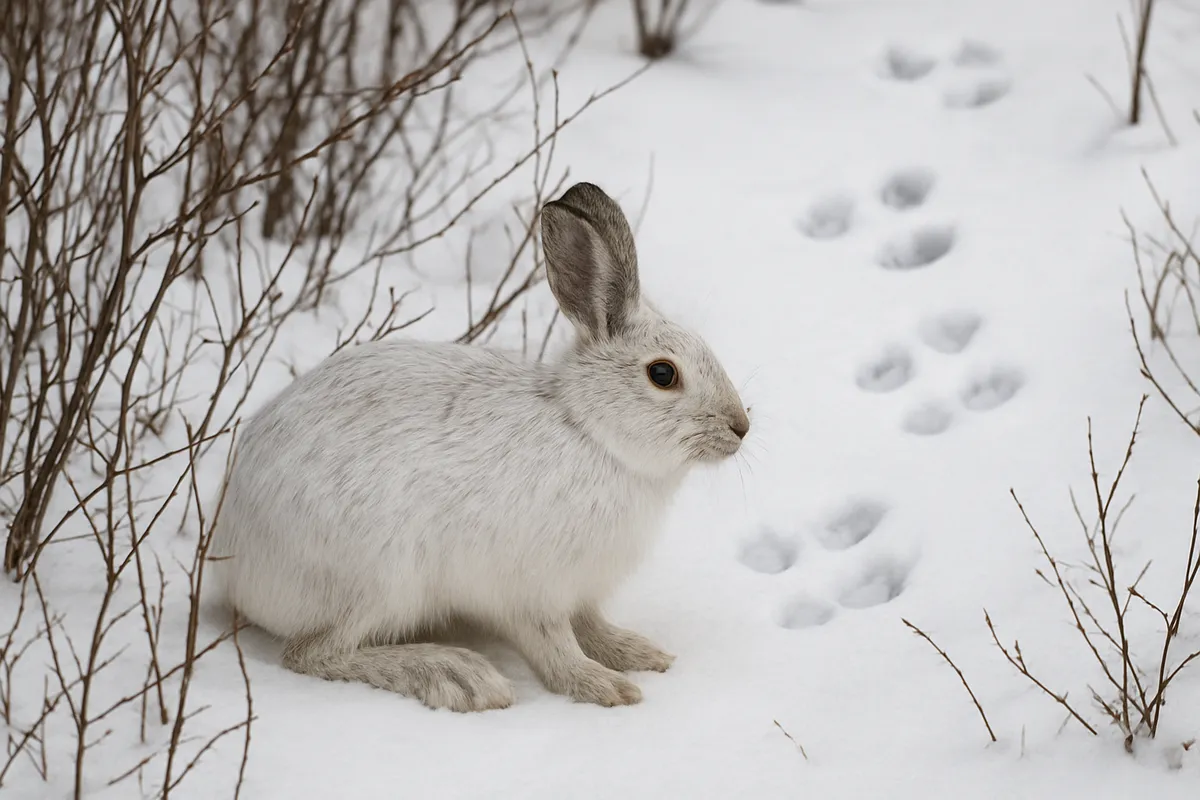
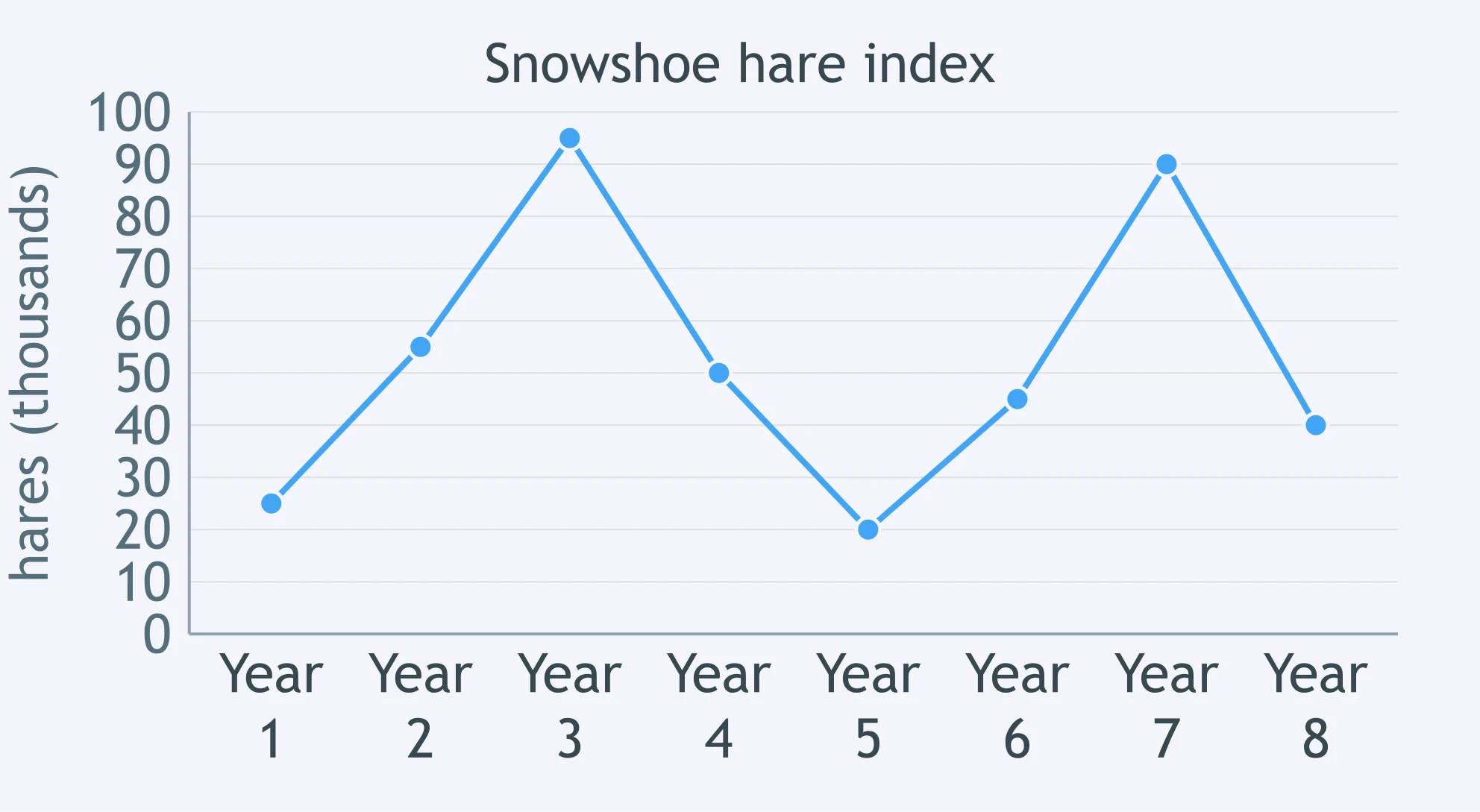
Snowshoe hares and Canada lynx live in the same forest. Lynx counts peaked in Year 4 and again in Year 8. Look at the hare graph. Which statement is best supported by the two sets of counts?
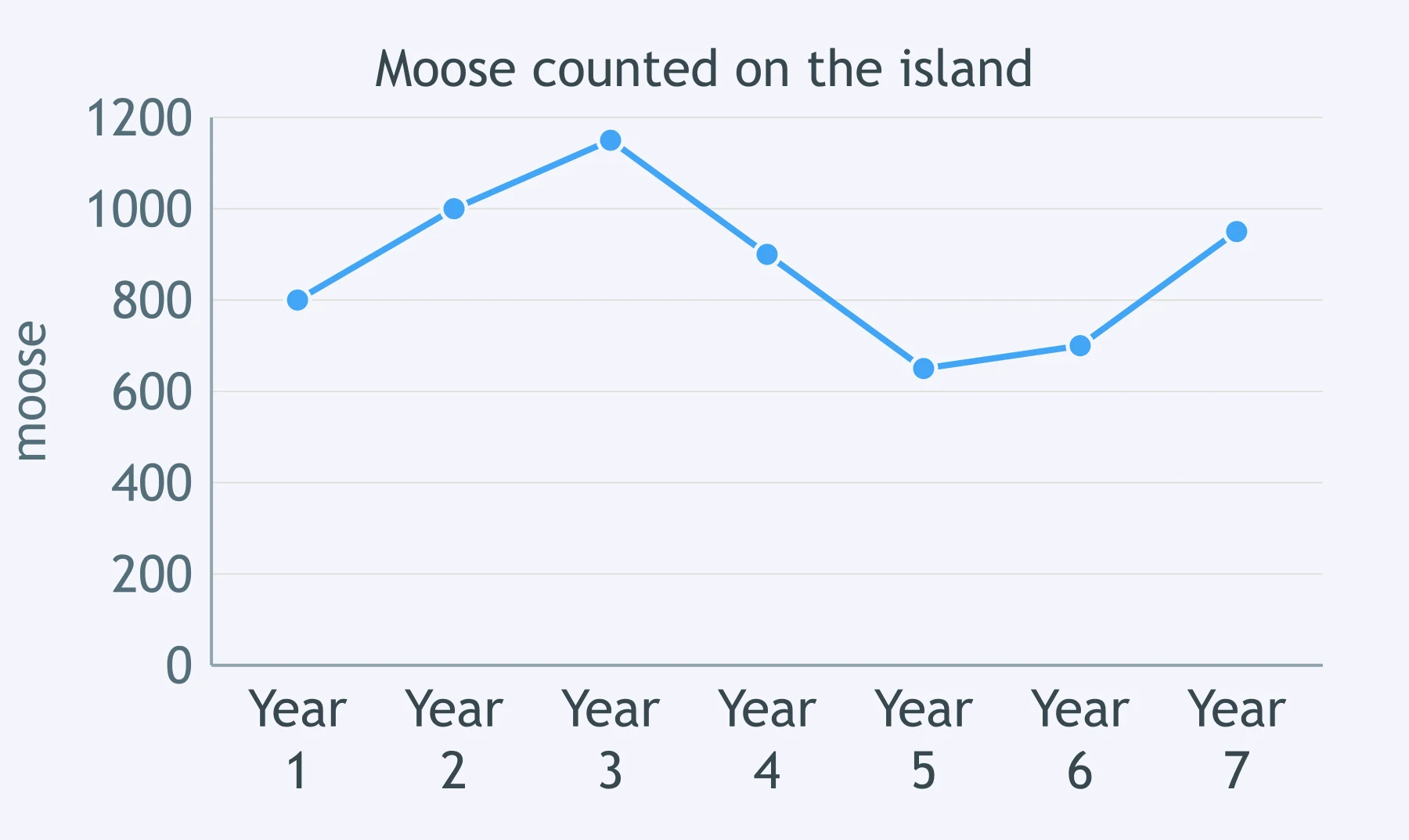
Wolves on an island rose from 20 in Year 1 to 50 in Year 4, then fell to 18 by Year 6. Moose are their only large prey. Look at the moose graph. Which statement is best supported?
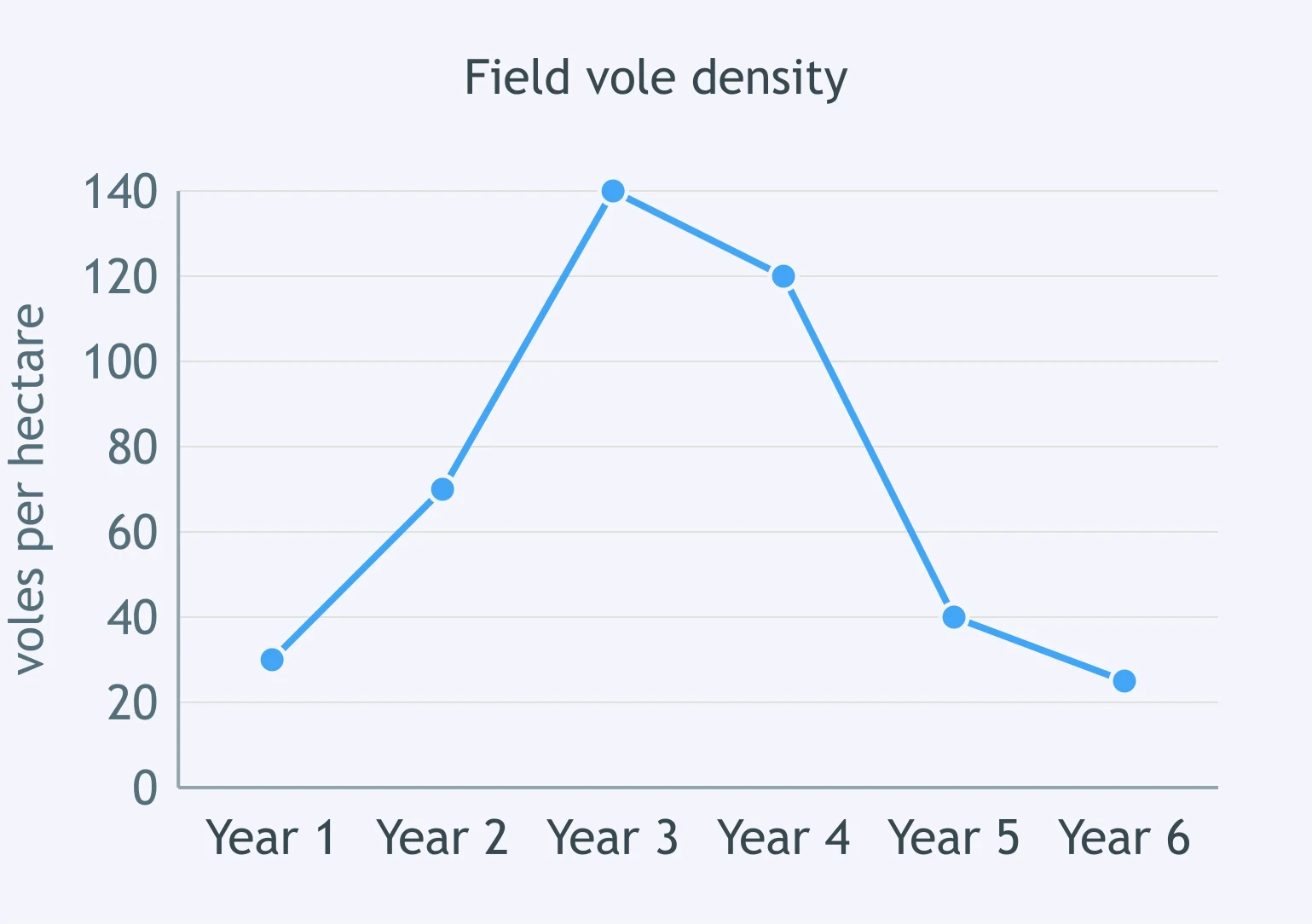
Barn owls in this grassland feed almost entirely on field voles. Look at the graph of vole density. What is most likely to happen to the barn owl population in the years just after Year 5?
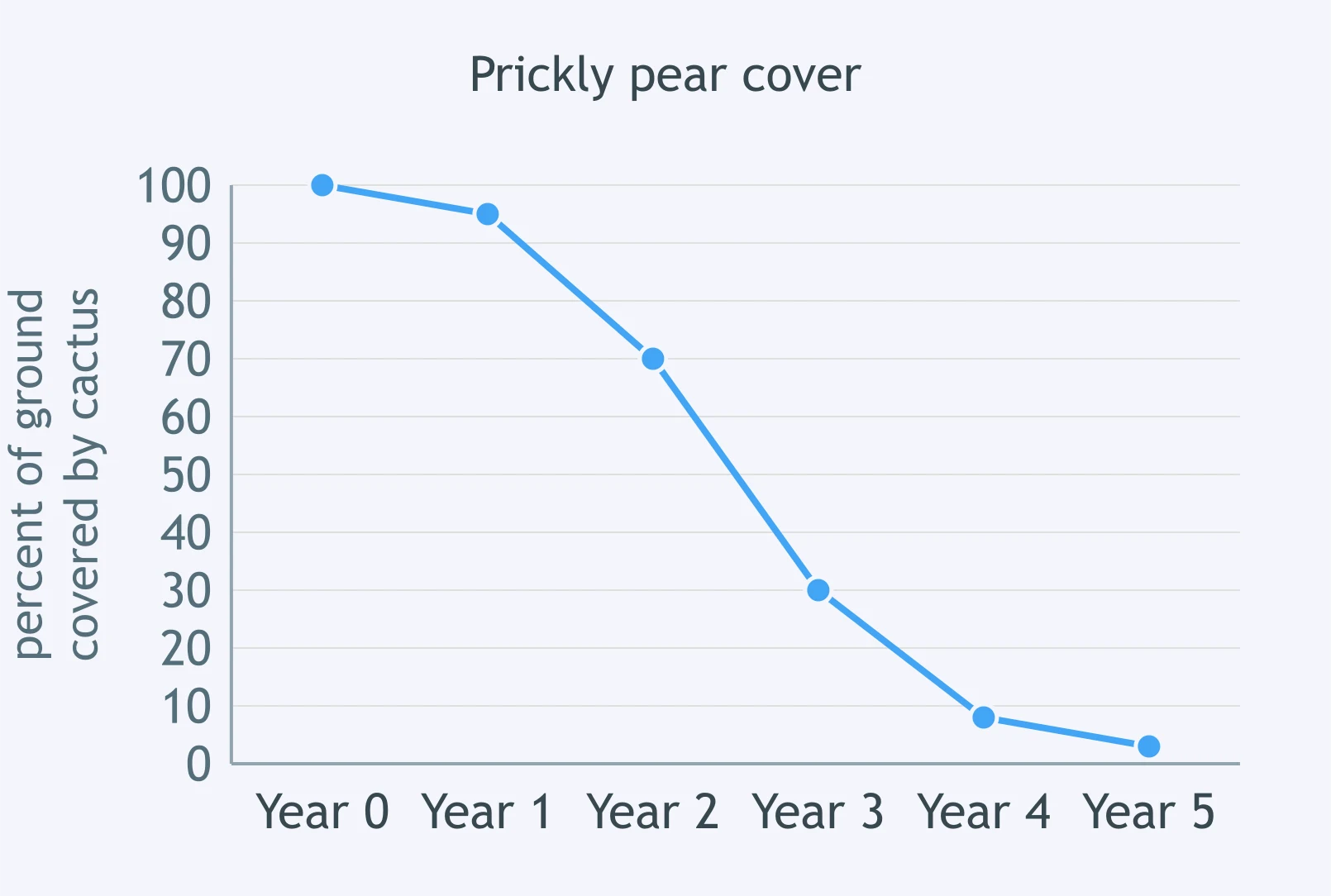
Prickly pear cactus covered huge areas of Australian rangeland. In Year 1 the cactus moth Cactoblastis cactorum, whose larvae bore into the cactus pads, was released. Look at the graph of cactus cover. What does the result show?
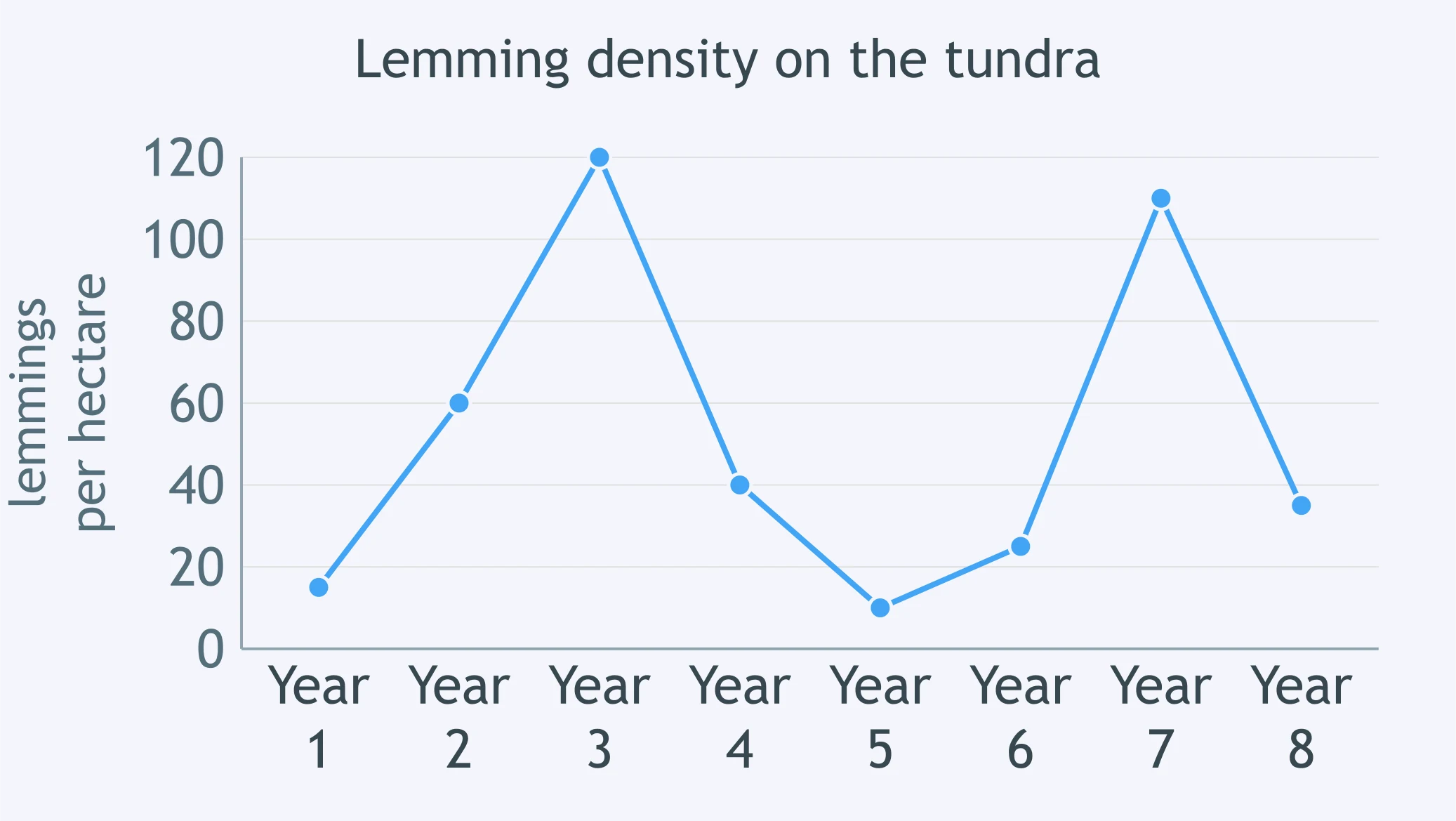
Snowy owls nest on this tundra only in years when food is abundant. Look at the graph of lemming density. In which years would you expect the largest number of snowy owl nests?
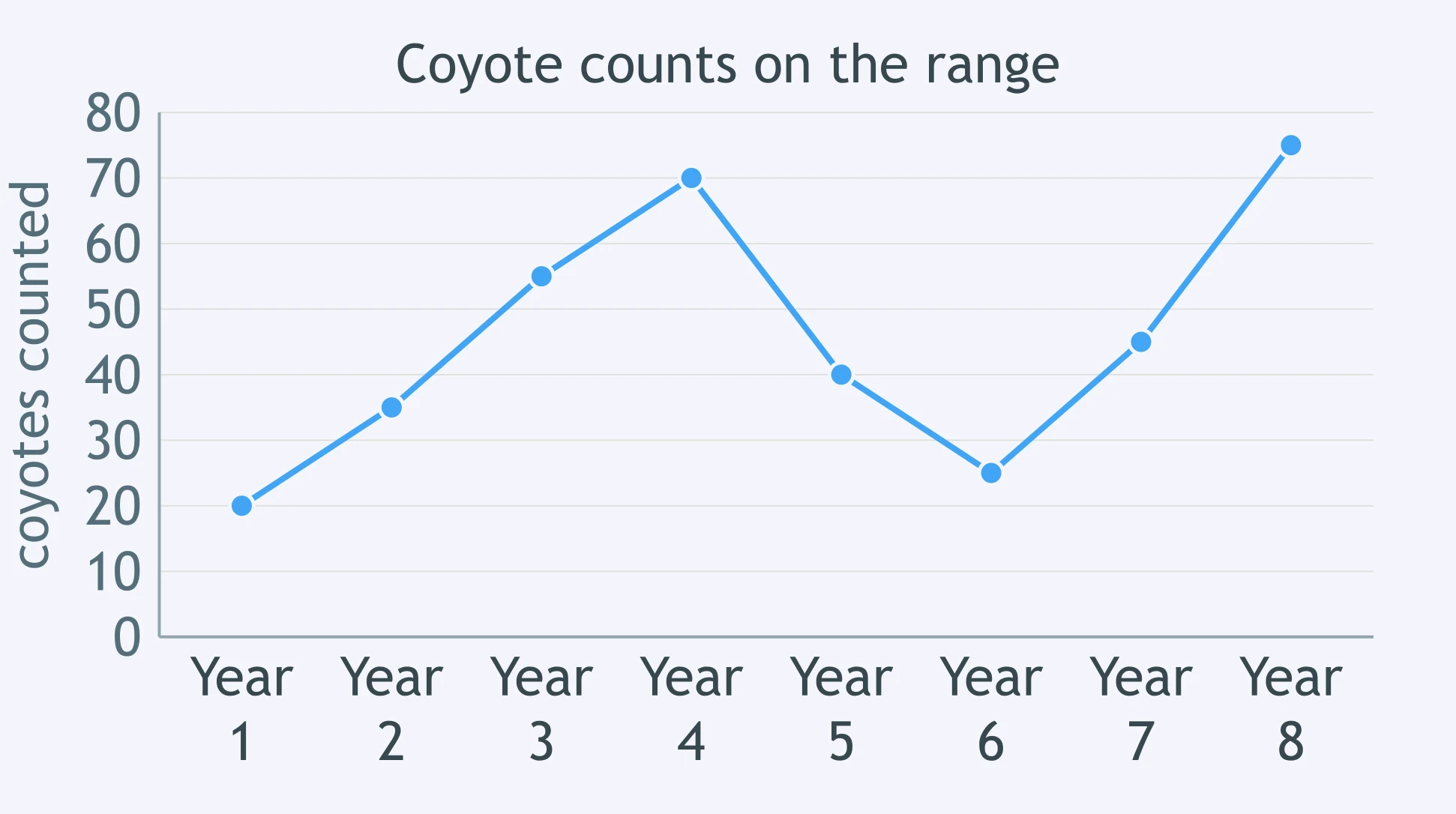
Jackrabbits on this range peaked in Year 3 and again in Year 7. A student says the coyote graph proves that coyotes alone set the jackrabbit cycle. What do the two sets of counts actually show?
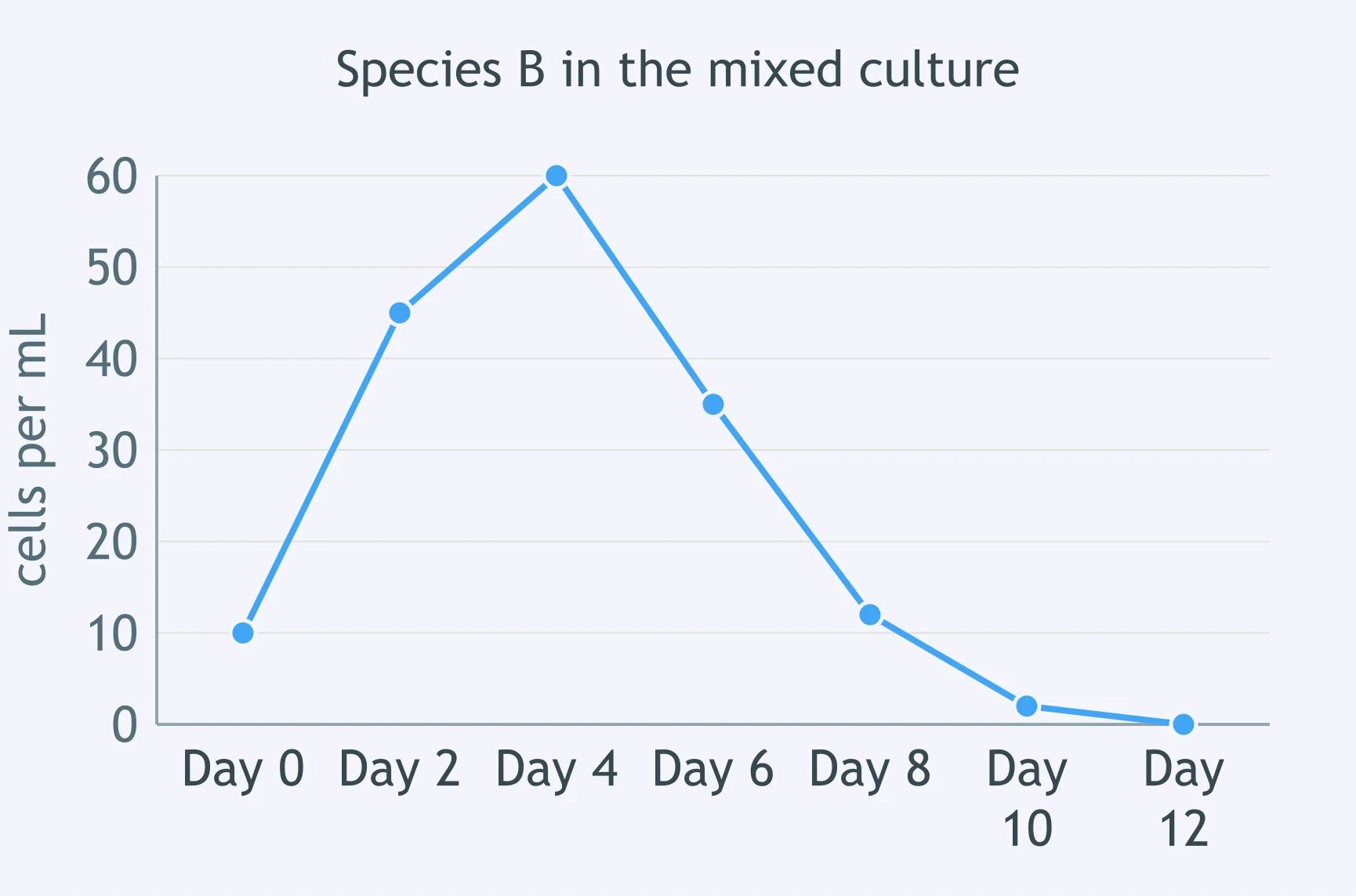
Two Paramecium species that both feed on the same bacteria were grown alone, where each reached a steady density and stayed there. The graph shows species B when the two were grown together in one flask. What has happened to species B?
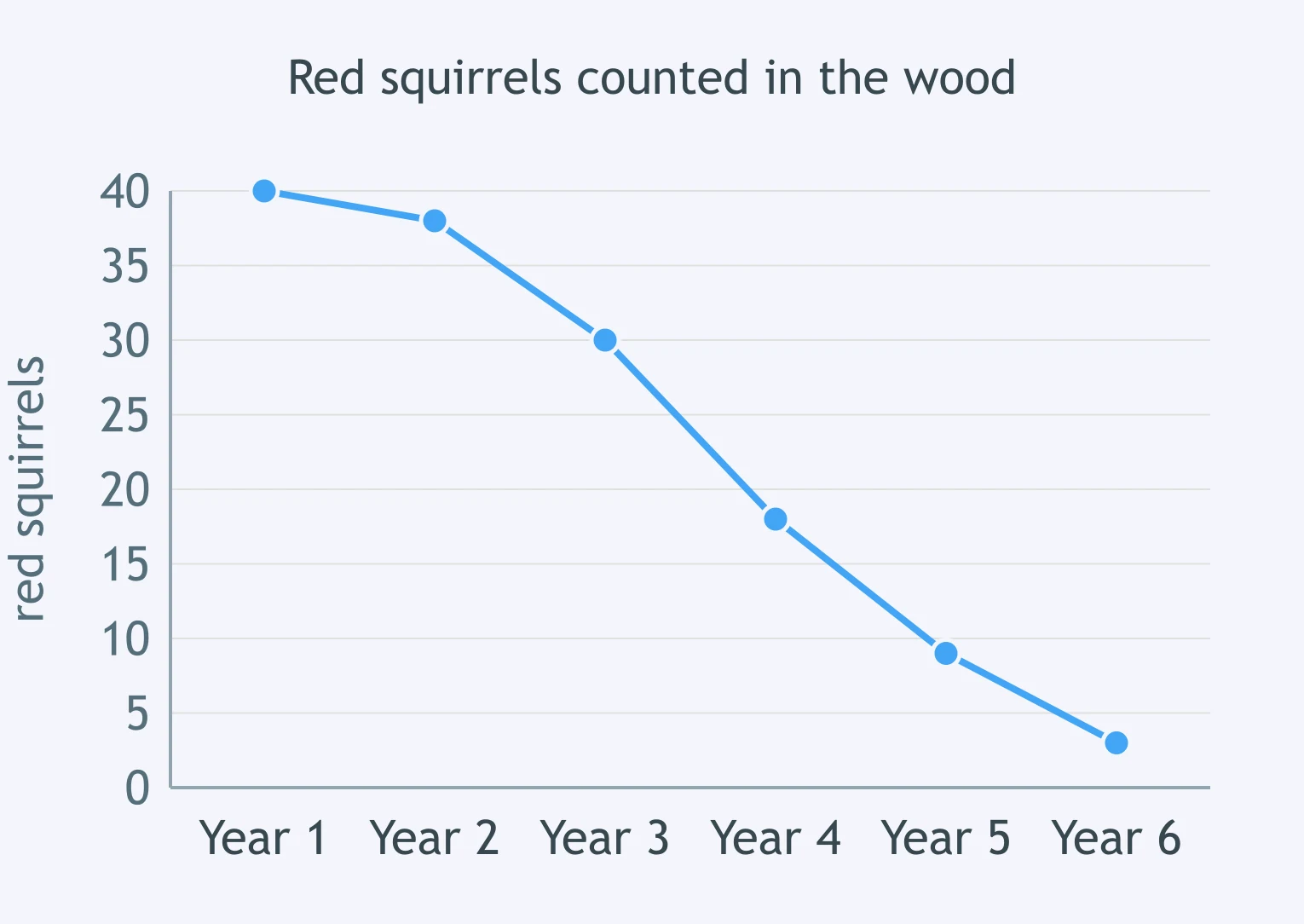
Gray squirrels are larger than red squirrels, take the same nuts and seeds, and can feed on acorns that red squirrels digest poorly. Gray squirrels reached this wood in Year 2 and increased. What best explains the red squirrel line?
Five warbler species feed in the same spruce trees. One feeds mainly at the treetop, one on the outer middle branches, one close to the trunk, and so on, and each takes insects from its own zone. What does this pattern show?
Several Anolis lizard species share one Caribbean forest, where insect food is limited. One perches on tree trunks near the ground, another on high thin twigs, another on broad branches. Which statement explains why none of them excludes the others?
During a drought on Daphne Major, large ground finches took most of the big seeds. Medium ground finches, which also depend on big seeds when the island dries out, died in large numbers. What kind of interaction is described?
Lions and spotted hyenas on the same savanna hunt the same prey species, and lions often drive hyenas away from a carcass and take it over. Which interaction does this best illustrate?
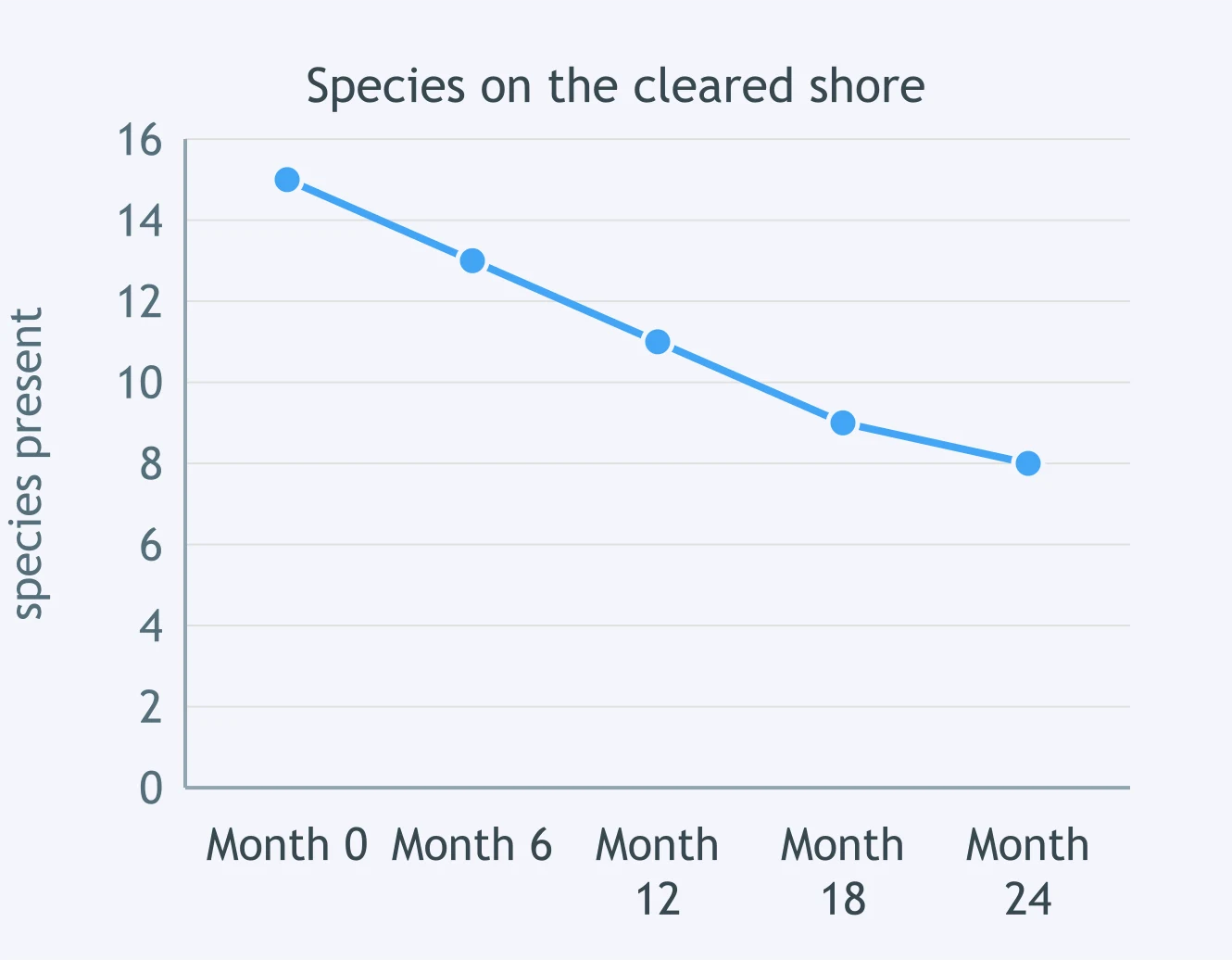
All the ochre sea stars were removed from one stretch of rocky shore at Month 0 and kept out. Sea stars there eat mussels, which grow fastest of all the species on the rock. Look at the graph. What explains the change?
Nile perch, a large fish-eating predator, were introduced into a lake holding hundreds of small native cichlid species that had never met such a predator. Within about twenty years most of those cichlids were rare or gone. What best explains this?
Coyotes disappeared from patches of chaparral as houses were built. Foxes, opossums and domestic cats then became far more common in those patches, and songbird nests were raided much more often. What best explains the songbird decline?
A disease kills nearly all the wolves on an island where moose are their only large prey and balsam fir is the moose's main winter browse. Which prediction fits the next several years best?
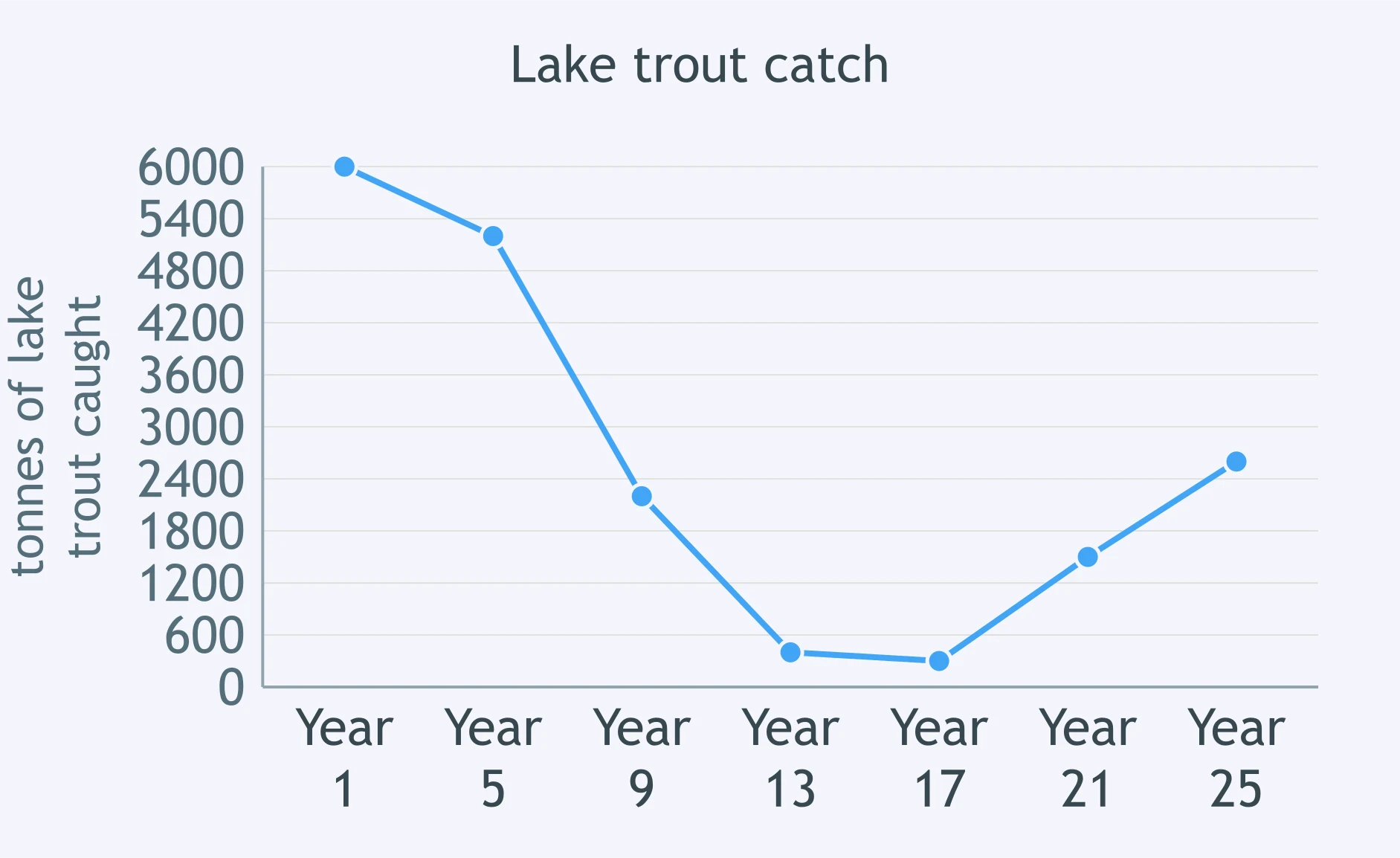
Sea lampreys, which attach to large fish and feed on their body fluids, reached this lake at about Year 4. A program that kills lamprey larvae in the streams began at Year 17. Look at the graph of the lake trout catch. What does the line show?
A rocky shore, a kelp bed and a grassland all keep more species when a top predator is present than when it has been removed. Which explanation fits all three cases?
One community has several predators that all take a range of prey. Another has a single predator that eats only one prey species. That prey species crashes in both. Which community is disturbed less, and why?
A lake holds bass, sunfish and minnows. Bass eat sunfish, and sunfish eat minnows. A disease kills nearly all the bass. What happens to the minnows, and why?
Crack the passcode before the zombies get in.
Answer, then swat bugs for bonus points.
Race through questions at your own speed.
Same question on every screen. Fastest wins.

Pick a tile, answer, hit bonuses and steals.
Ecological Succession
20 questions