Loading
by BlastRoom
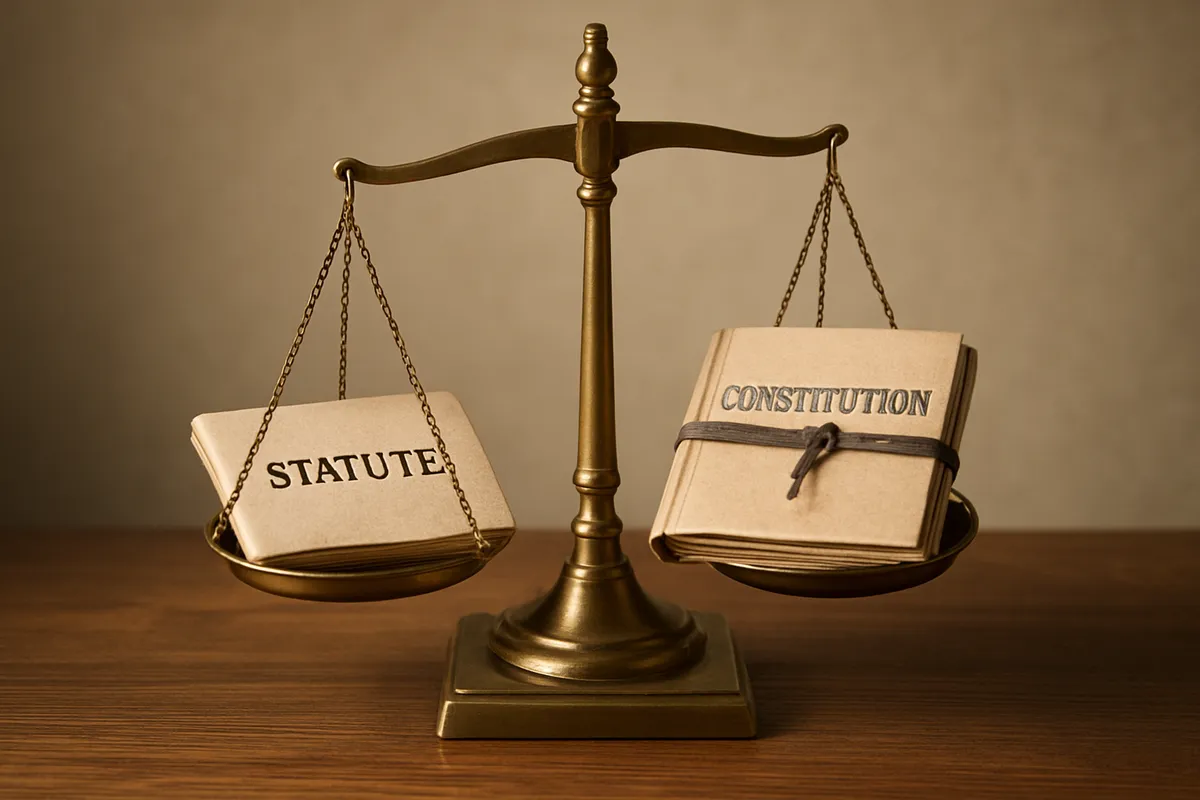
How courts gained and use the power to test government action against the Constitution.
#united_states_government
20 questions
One question set, multiple game modes. Tap any game to see it in action. Not sure which to pick?
Answer to place stones and capture territory.
Outrun the snow together.
Earn blasts, then hunt the other team.
Answer to earn energy, then climb.

The class blasts through walls together.
Bid on mystery lots. Most money wins.
Sell tours. Nice, standard, or a total scam.

Answer, restock, and serve the rush.
More correct answers pulls the rope your way.
Answer, then shoot down the alien wave.
Answer, then tap to leap the frozen ridge.
In Marbury v. Madison (1803), the Supreme Court struck down part of what federal law?
Marbury asked the Court to order James Madison to deliver a commission. What kind of court order was he seeking?
The Court said Marbury had a right to his commission but refused to order delivery. What defect made Section 13 unenforceable?
Article III gives original jurisdiction in cases involving ambassadors and states. Marbury's suit against Madison fit what category?
Chief Justice John Marshall's opinion in Marbury treated a law repugnant to the Constitution as what?
Marbury reached the Supreme Court as a case filed there first, not as an appeal. What jurisdiction was the Court being asked to exercise?
A court refuses to enforce a statute after deciding it conflicts with the Constitution. What power is the court using?
A state law bans political speech protected by the First Amendment, and a federal court declares the law void. What does this illustrate?
Congress passes a statute giving the Supreme Court new original jurisdiction beyond Article III. Under Marbury, what should a court do?
The president orders an agency to act in a way a court finds unconstitutional. Under modern judicial review, what can the court do?
A state supreme court upholds a state rule against a federal constitutional challenge. What tribunal may review that federal question?
A lawyer says a later statute should prevail over the Constitution because it was enacted more recently. Which Marbury principle defeats that claim?
A judge says, 'Even if I dislike this statute, elected lawmakers made the policy choice, and no clear constitutional violation is shown.' What approach is this?
A judge reads the Second Amendment by asking how its words were publicly understood when ratified in 1791. What approach is this?
A judge invalidates a statute after saying courts should adapt broad constitutional principles to modern social conditions. What approach is most evident?
A judge upholds a controversial law because the Constitution leaves the issue to elected branches unless a specific limit is crossed. What approach is this?
A judge writes, 'The Constitution's broad promise of liberty lets this Court create a new rule for changing conditions, despite legislative choices.' What approach is this?
A judge consults eighteenth-century dictionaries and ratification debates to define 'commerce' in Article I. What approach is this?
A judge declines to decide a constitutional issue because the case can be resolved under a narrow statute instead. What approach does that show?
A judge says, 'Courts should not wait for legislatures when constitutional values require a broader remedy than past cases allowed.' What approach is this?
Crack the passcode before the zombies get in.
Answer, then swat bugs for bonus points.
Race through questions at your own speed.
Same question on every screen. Fastest wins.

Pick a tile, answer, hit bonuses and steals.
Landmark Cases: Rights and Liberties
25 questions