Loading
by BlastRoom
Trace certiorari, briefing, argument, conference, and opinions in the Supreme Court process.
#united_states_government
25 questions
One question set, multiple game modes. Tap any game to see it in action. Not sure which to pick?
Answer to place stones and capture territory.
Outrun the snow together.
Earn blasts, then hunt the other team.
Answer to earn energy, then climb.

The class blasts through walls together.
Bid on mystery lots. Most money wins.
Sell tours. Nice, standard, or a total scam.

Answer, restock, and serve the rush.
More correct answers pulls the rope your way.
Answer, then shoot down the alien wave.
Answer, then tap to leap the frozen ridge.
A losing party asks the Supreme Court to order a lower court to send up the case record for review. What is that request called?
By the Supreme Court's long-standing practice, what is the smallest number of justices whose votes are needed to grant certiorari?
Two federal courts of appeals give opposite answers to the same important federal question. Why is that fact important at the certiorari stage?
The Court denies certiorari in a case. What does that denial mean?
The Court grants a petition for certiorari. What is the case then normally scheduled for?
A petition argues only that the trial court found the facts incorrectly, with no unsettled federal issue. Under Rule 10, what is the likely result?
The Court has granted review and both sides have filed merits briefs. What usually comes next in the Court's order of business?
Lawyers have finished oral argument in a Supreme Court case. What is the next decision-making step for the justices?
At conference, the justices finish speaking and voting on a case. What happens next if the Chief Justice is in the majority?
A group is not a party but wants to offer its legal arguments after a case is accepted. What document does it file?
The justices have circulated draft opinions, and enough justices sign on to one draft for a majority. What must happen before it is the Court's official opinion?
At Supreme Court oral argument, the petitioner may save part of its argument time. What is that saved time used for?
What writing states the Supreme Court's judgment and the reasoning that five or more of the nine justices join?
A justice agrees with the result but not the majority's reasoning, and writes separately to explain. What is that writing?
A justice disagrees with the Court's result and writes separately to explain why the case should come out differently. What is that writing?
The Court issues an unsigned opinion that does not identify an author. What type of opinion is it?
A Supreme Court decision begins with a summary prepared by the Reporter of Decisions before the opinions. What is that summary called?
A lower federal court needs the controlling reasoning from a Supreme Court case decided 6-3. Which writing should it look to first?
An individual justice writes to dispose of an application for a stay before full review. What kind of Supreme Court writing is that?
Use the process figure. A losing party starts the path toward Supreme Court review. Which action fills the blank?
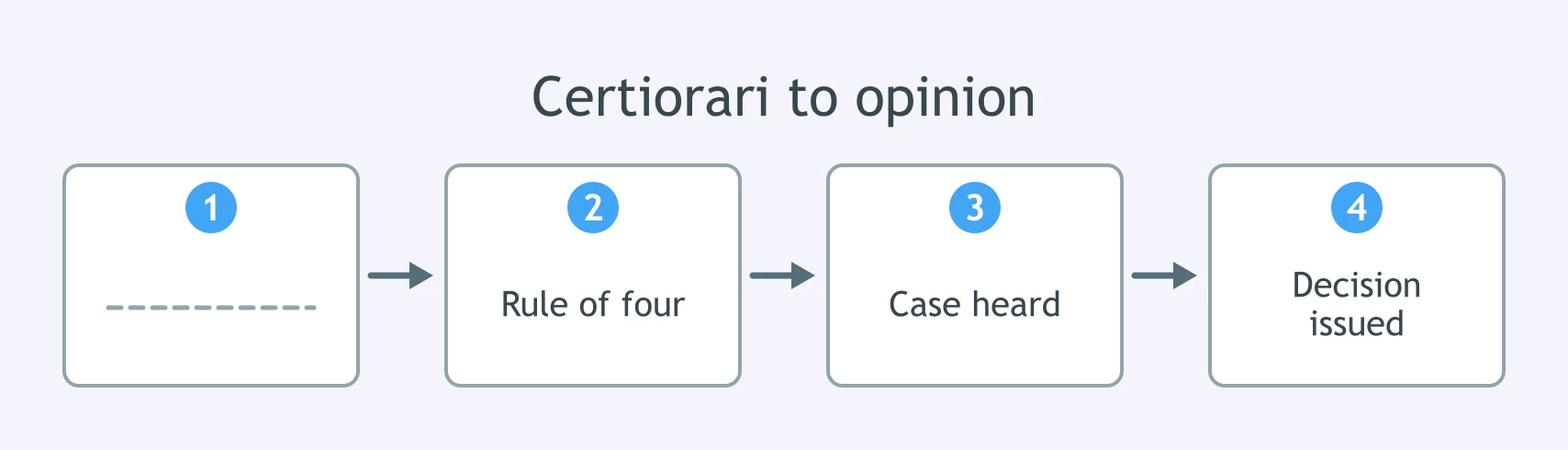
Use the process figure. The petition has been filed, but review is not granted yet. Which action fills the blank?
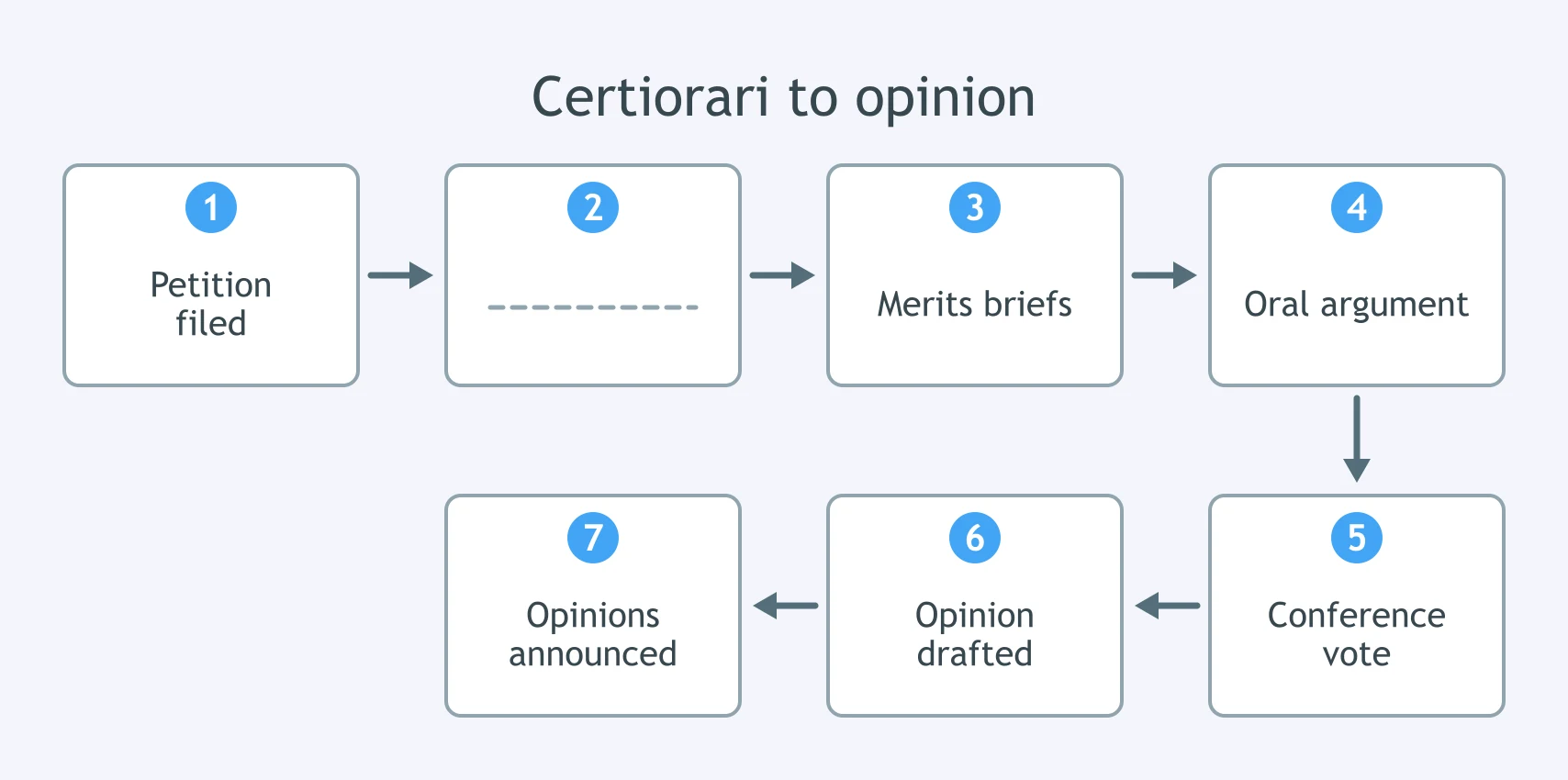
Use the process figure. Review has been granted and the case is headed toward argument. Which action fills the blank?
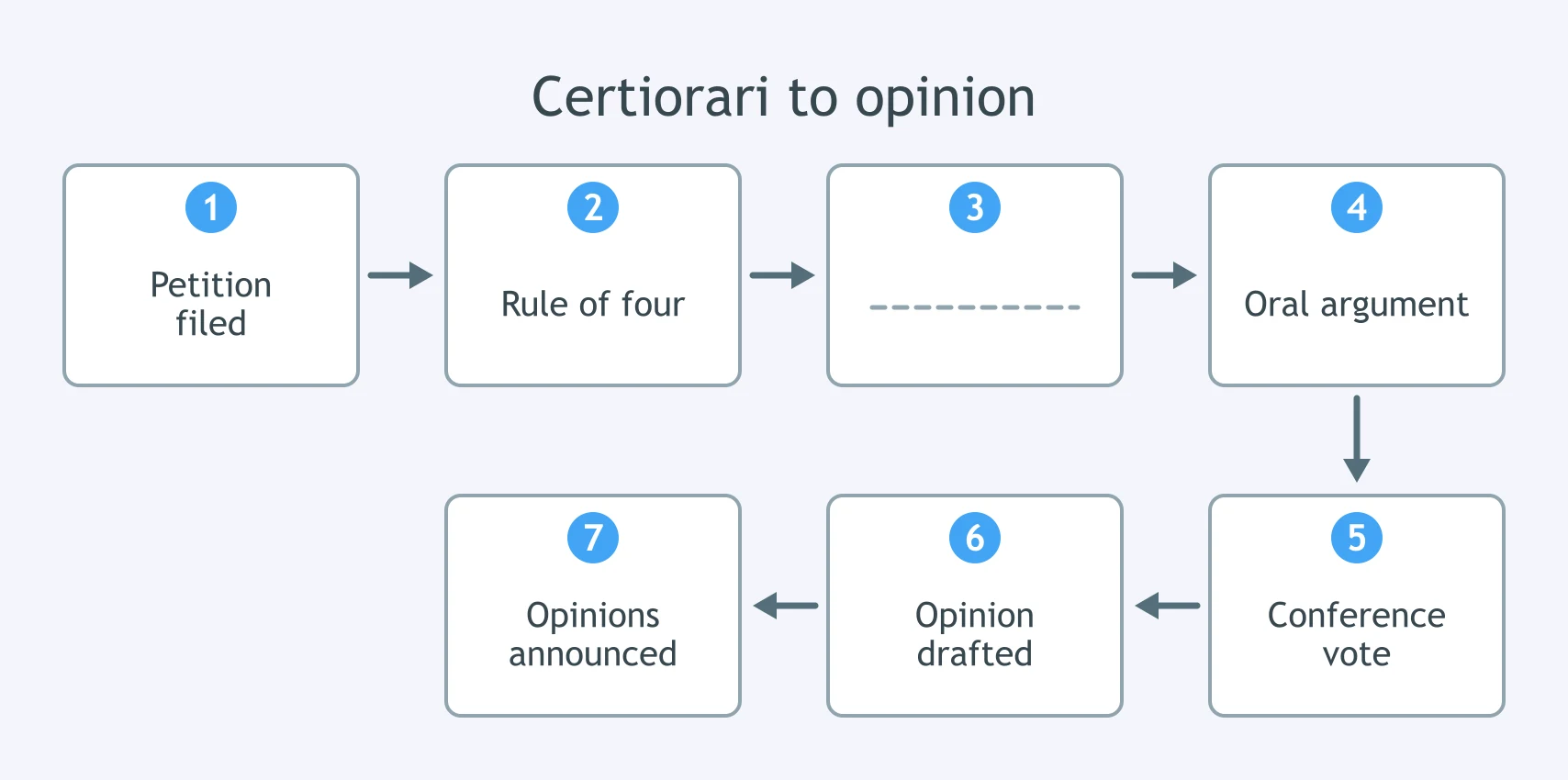
Use the process figure. Merits briefs are complete, and the justices are ready to question counsel. Which action fills the blank?
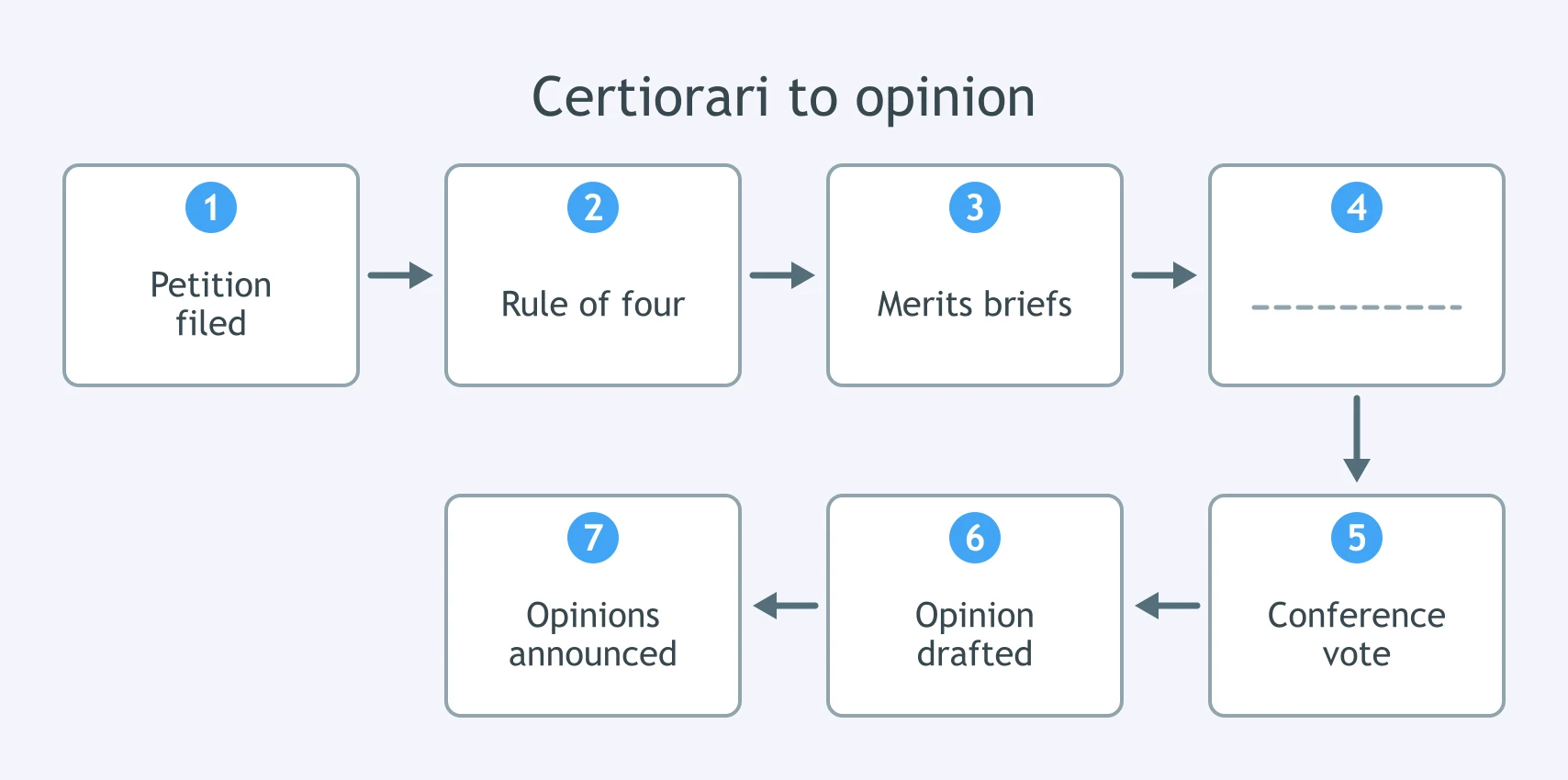
Use the process figure. Lawyers have argued the case, and now only the justices discuss and vote. Which action fills the blank?
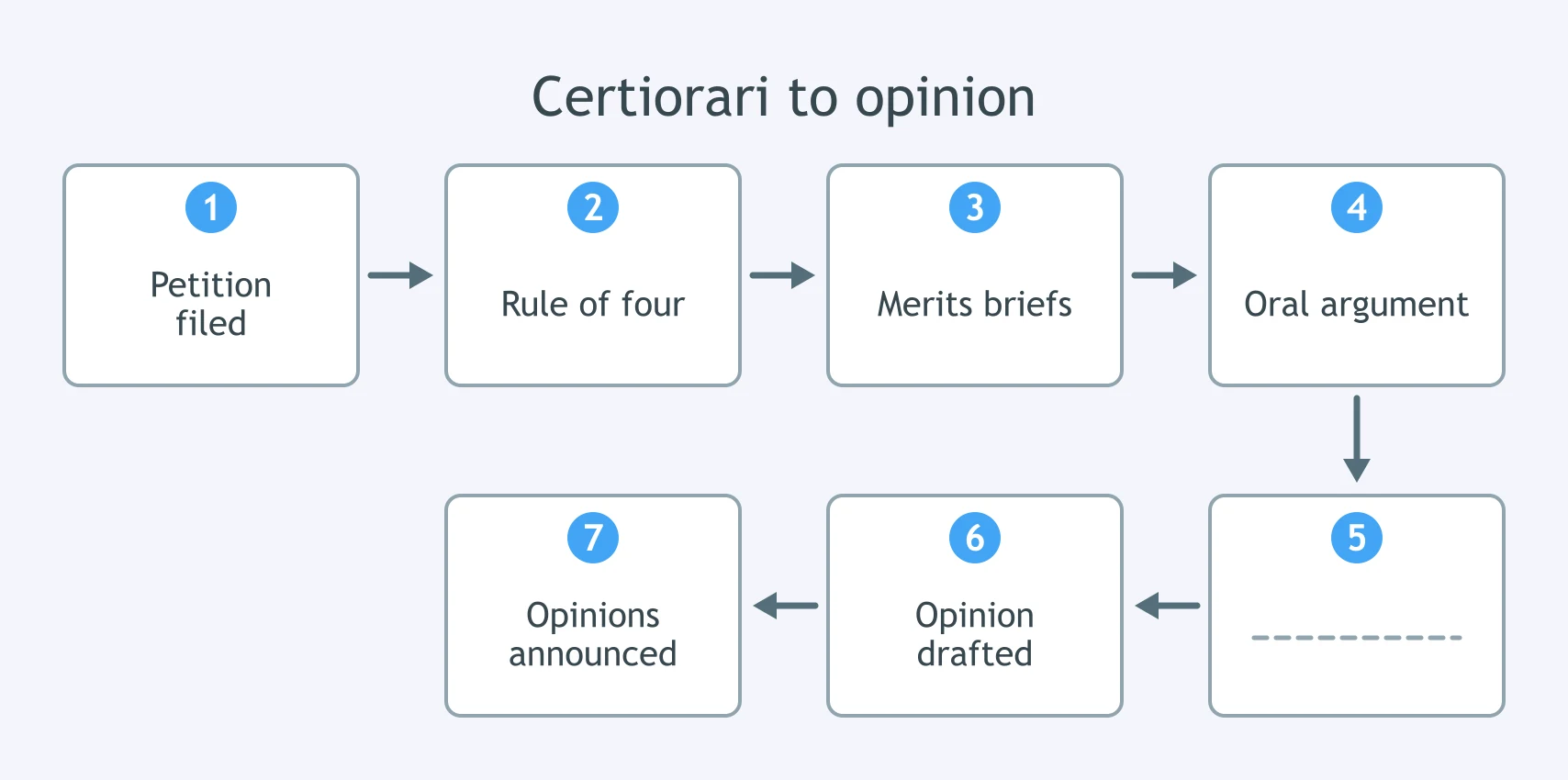
Use the process figure. A draft has secured enough support and the Court is ready to release its decision. Which action fills the blank?
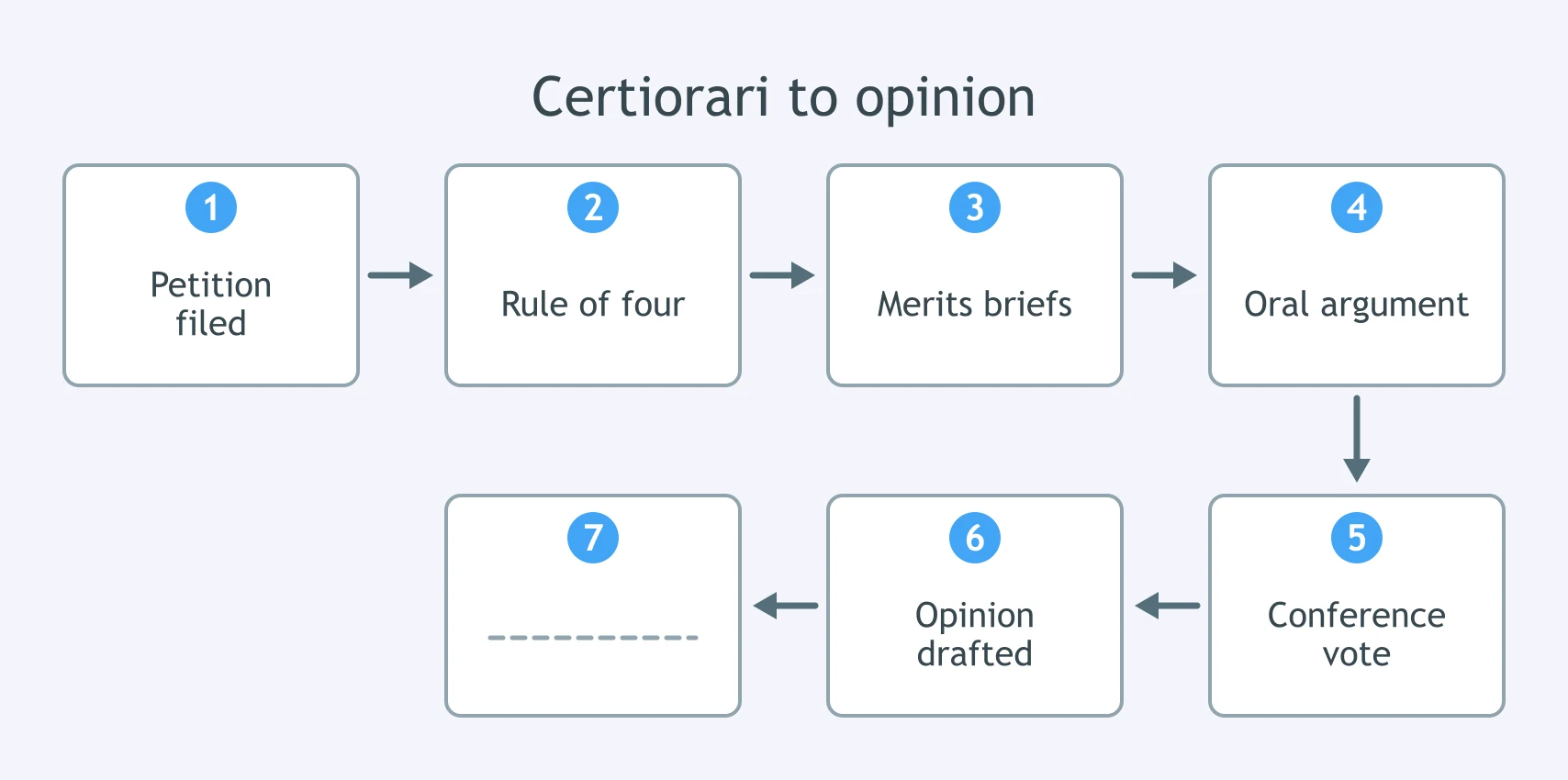
Crack the passcode before the zombies get in.
Answer, then swat bugs for bonus points.
Race through questions at your own speed.
Same question on every screen. Fastest wins.

Pick a tile, answer, hit bonuses and steals.
Criminal Law and Civil Law
20 questions