Loading
by BlastRoom
Taking growth, history and future pressure off an age-structure diagram.
#us_hs_human_geography

35 questions
One question set, multiple game modes. Tap any game to see it in action. Not sure which to pick?
Answer to place stones and capture territory.
Outrun the snow together.
Earn blasts, then hunt the other team.
Answer to earn energy, then climb.

The class blasts through walls together.
Bid on mystery lots. Most money wins.
Sell tours. Nice, standard, or a total scam.

Answer, restock, and serve the rush.
More correct answers pulls the rope your way.
Answer, then shoot down the alien wave.
Answer, then tap to leap the frozen ridge.
Use the pyramid's overall outline. What population trend does this shape most strongly indicate?
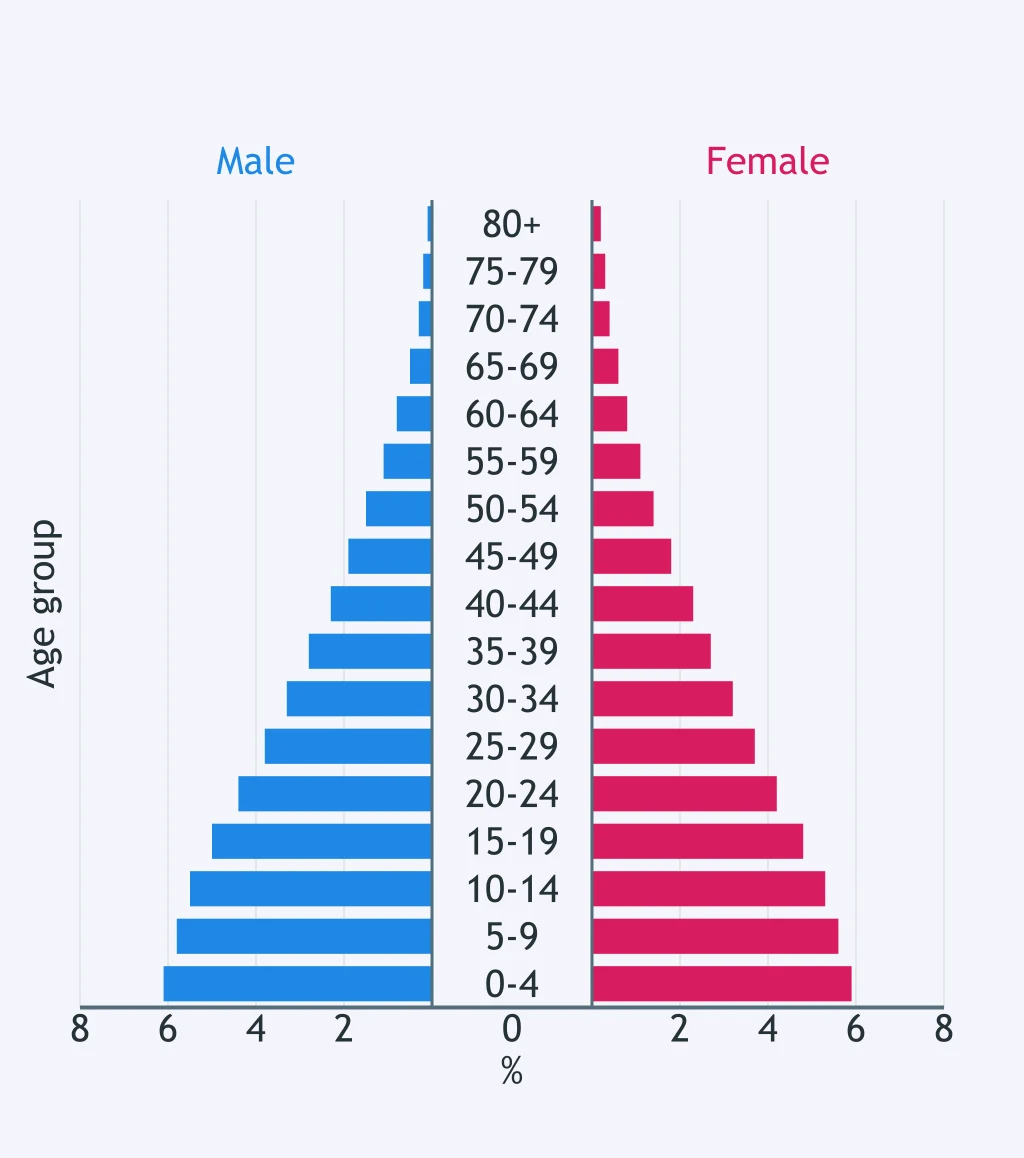
Read the base and middle of the pyramid. Which growth reading best fits the age structure?
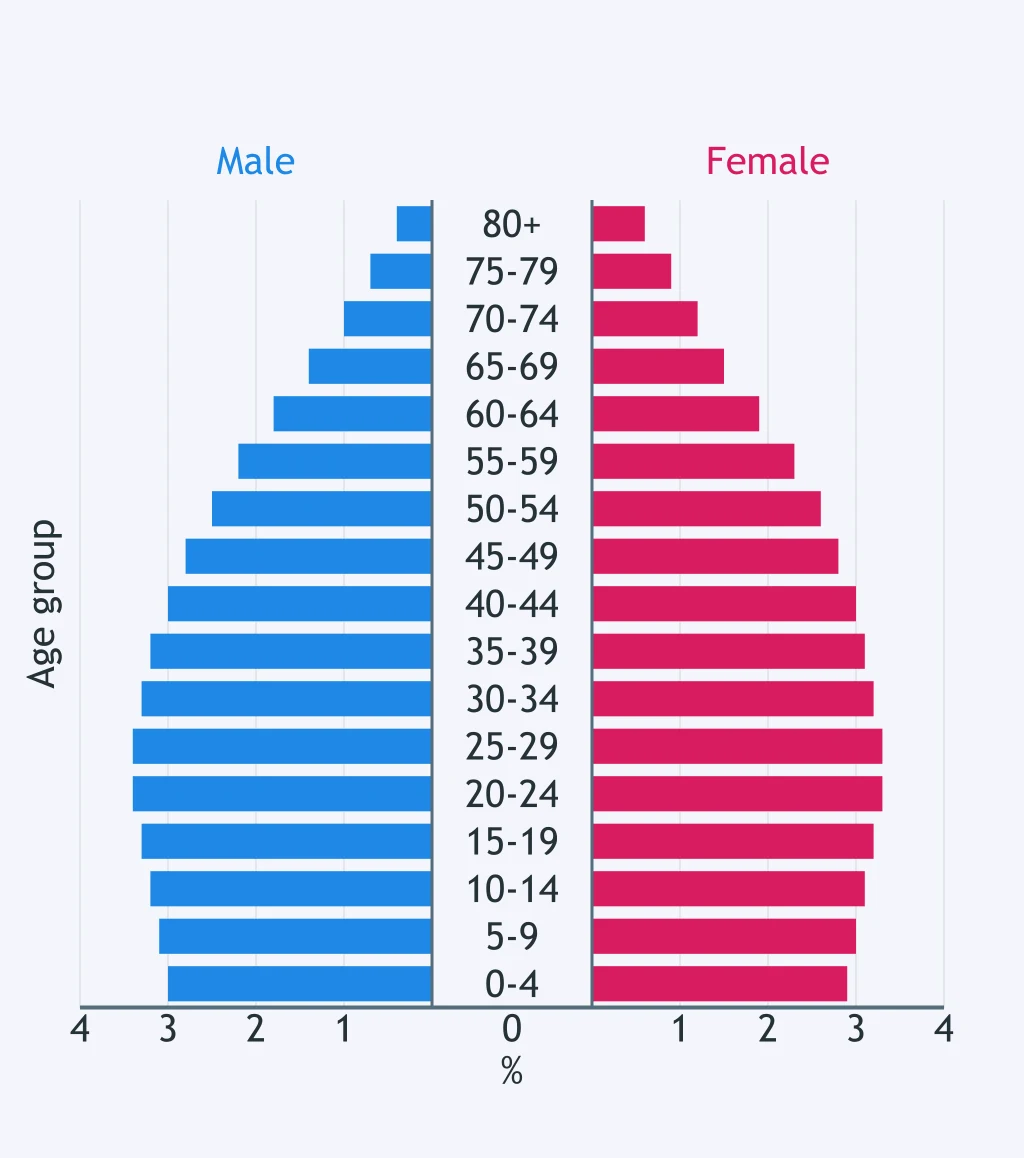
Use the pyramid. What future population trend does it suggest?
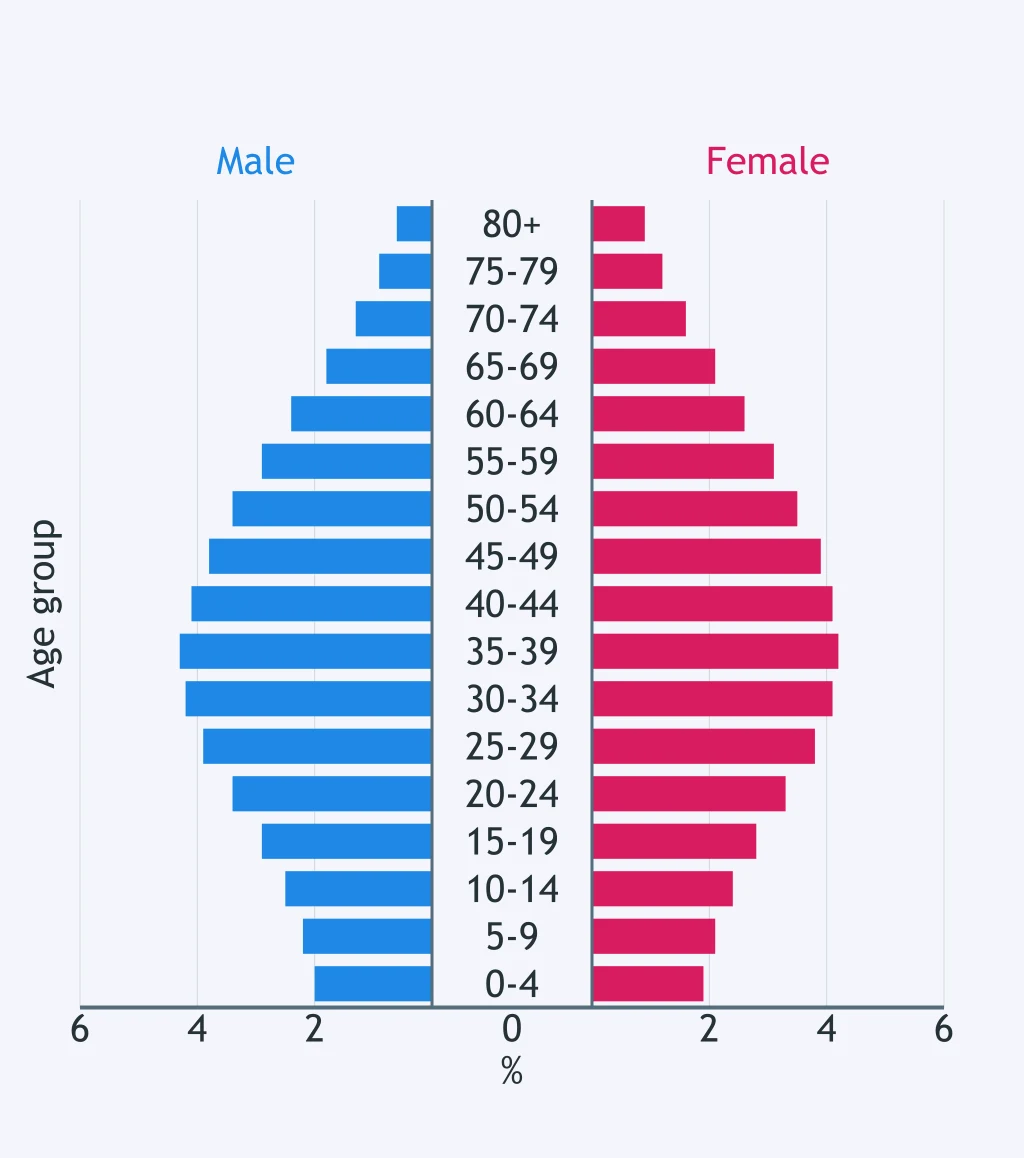
What growth pattern does this pyramid show?
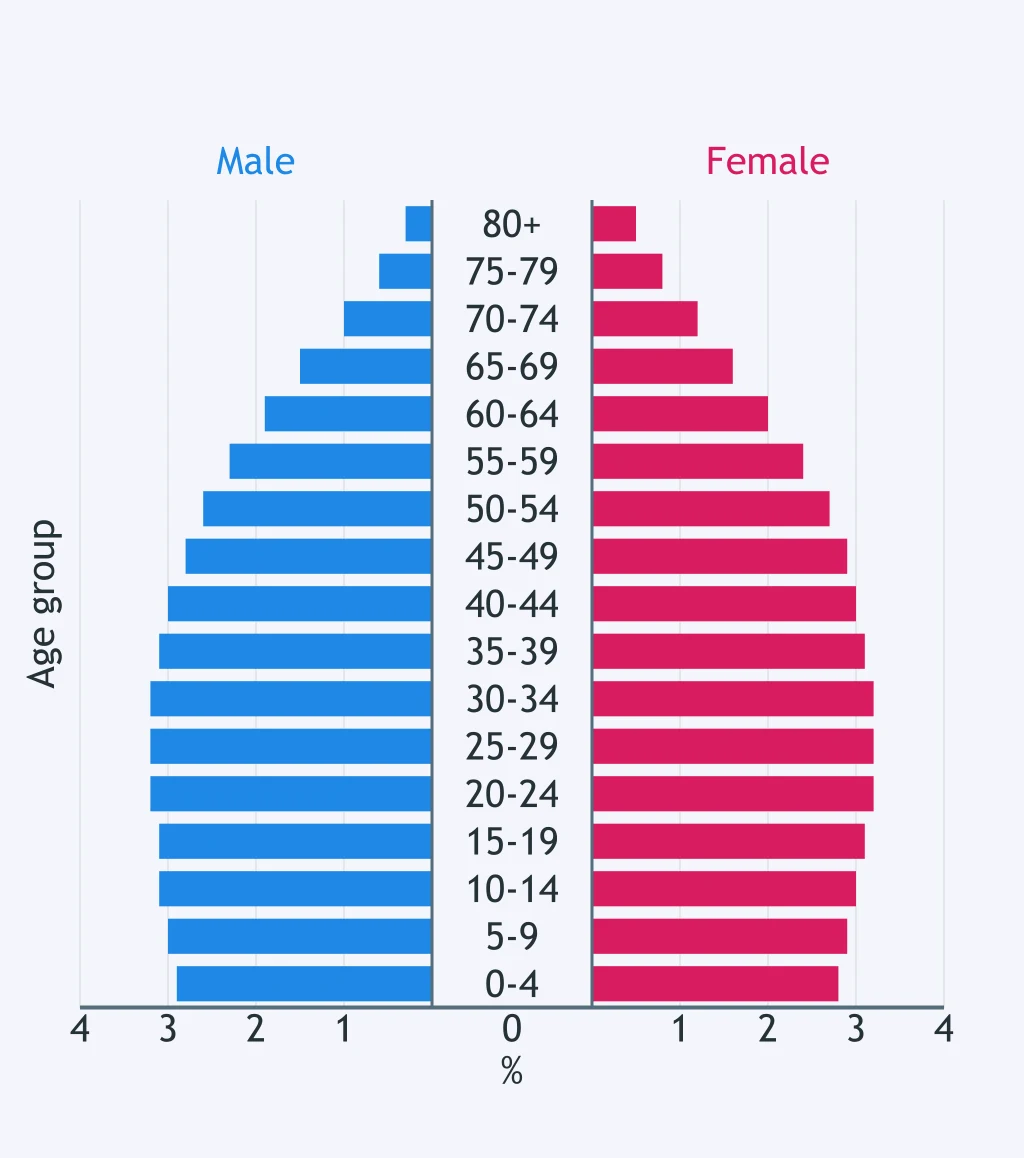
Use the pyramid. What does it suggest about population growth in the coming decades?
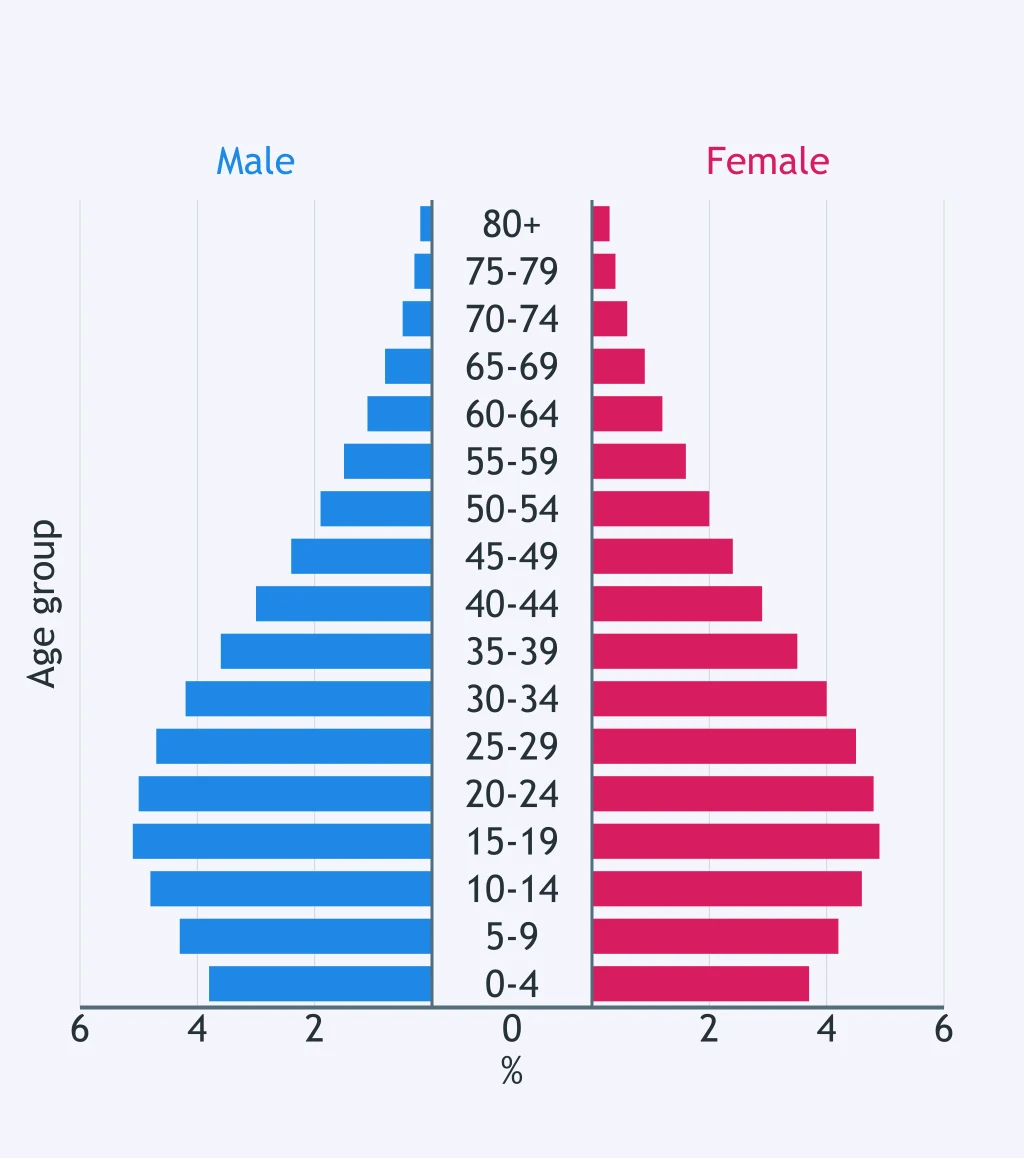
Which growth interpretation best matches this pyramid?
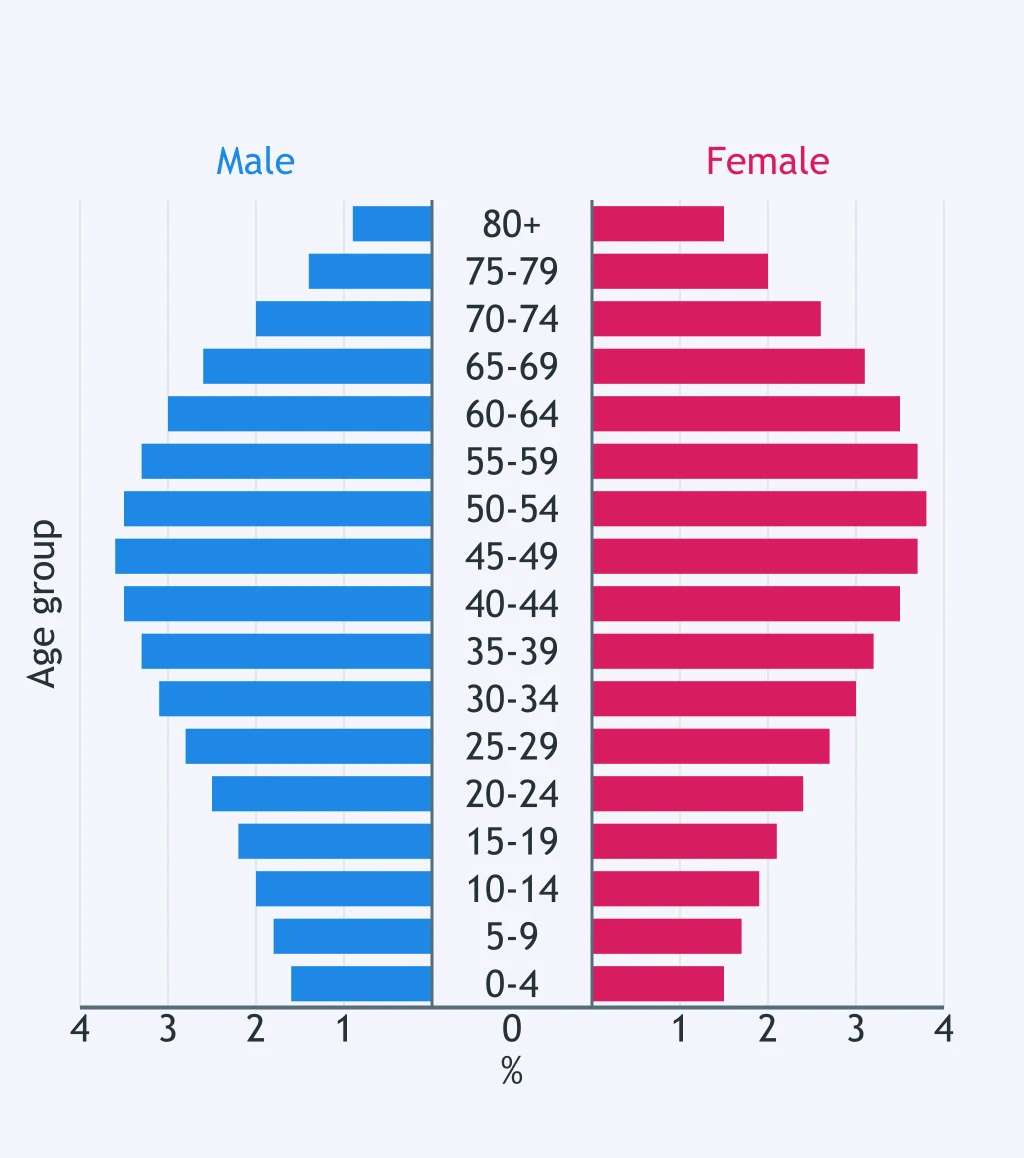
What does this pyramid indicate about natural increase?
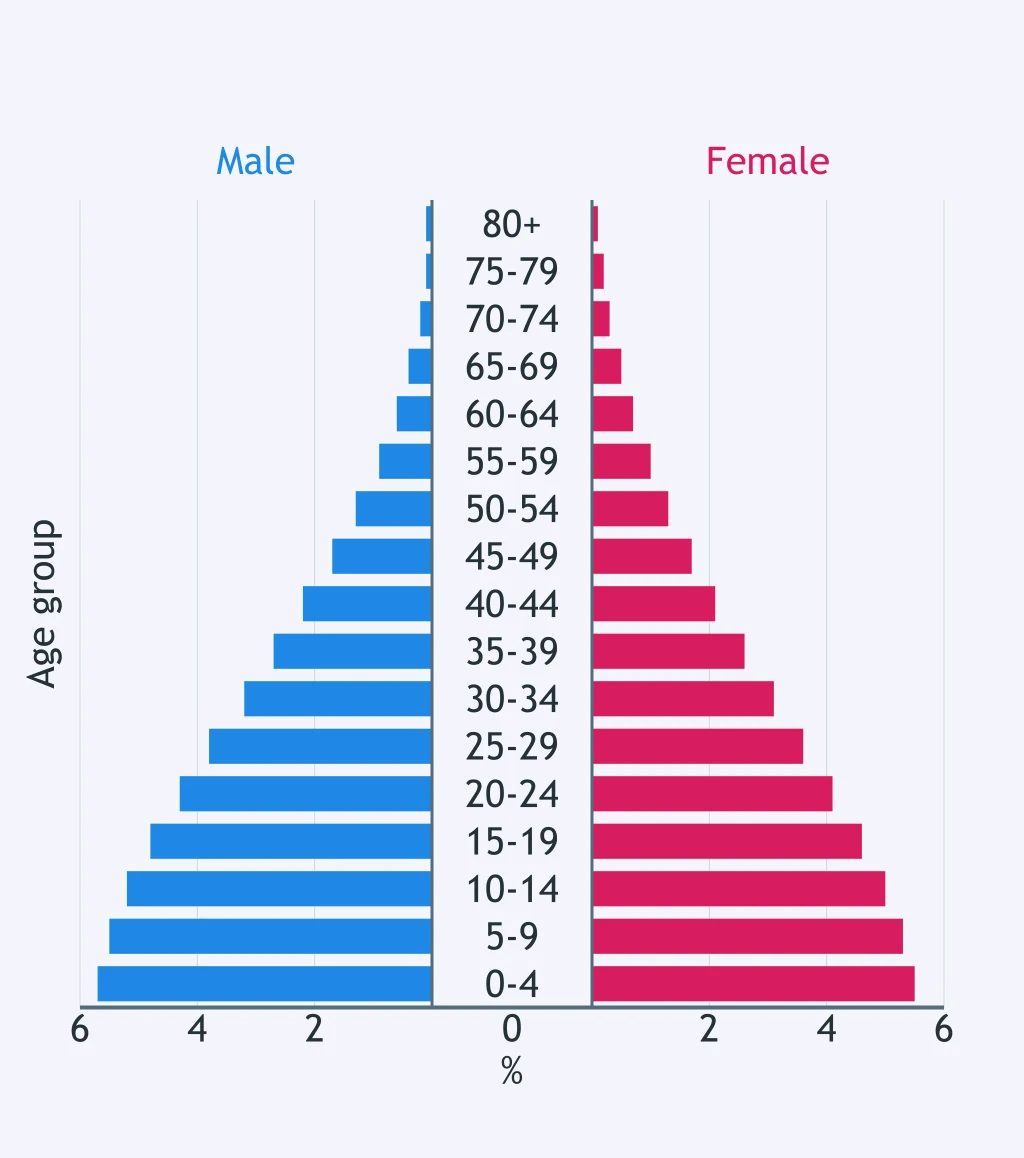
Read the lower age bands against the adult bands. Which growth reading is most supported?
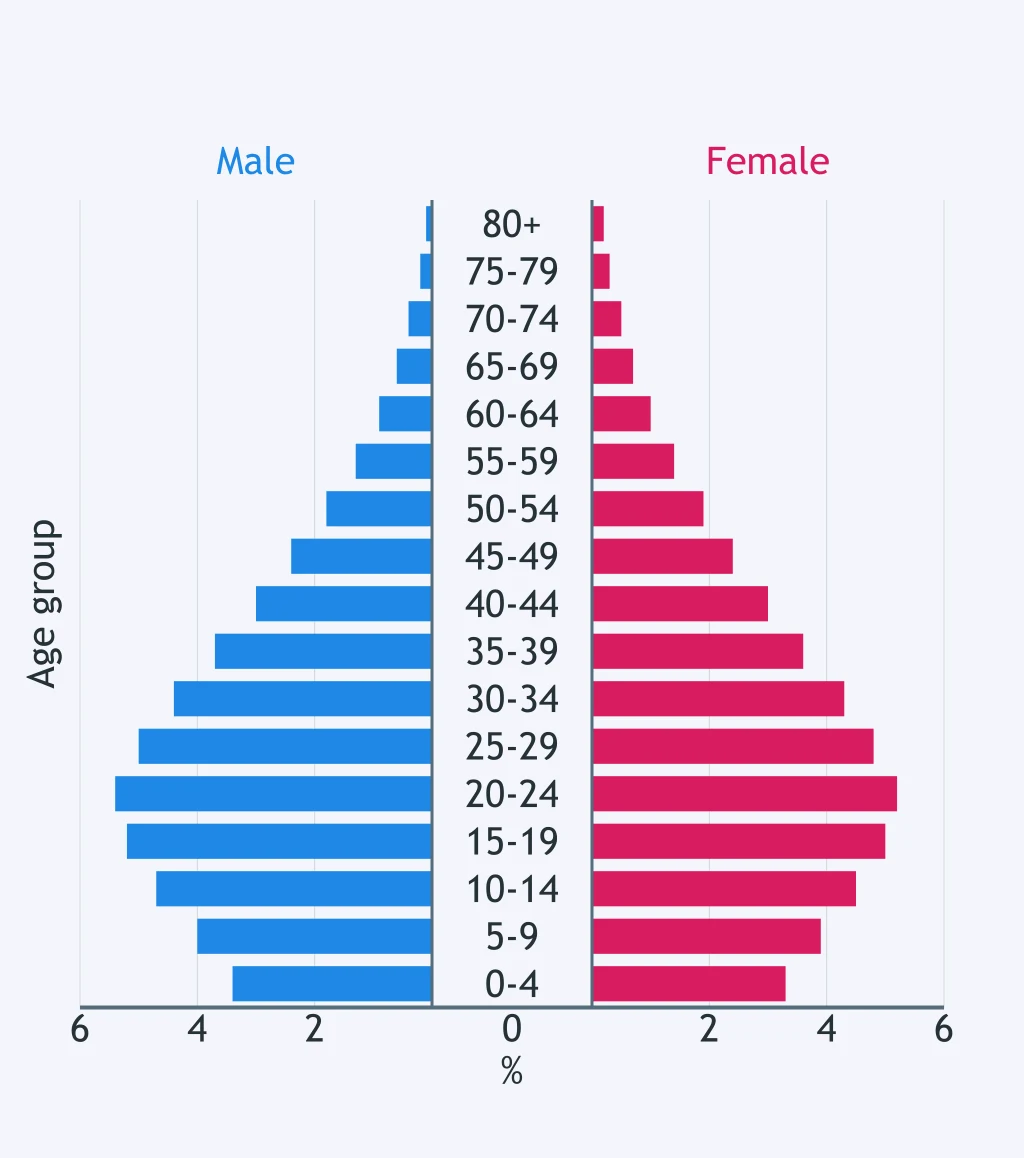
What dependency burden is most likely from the cohort widths in this pyramid?
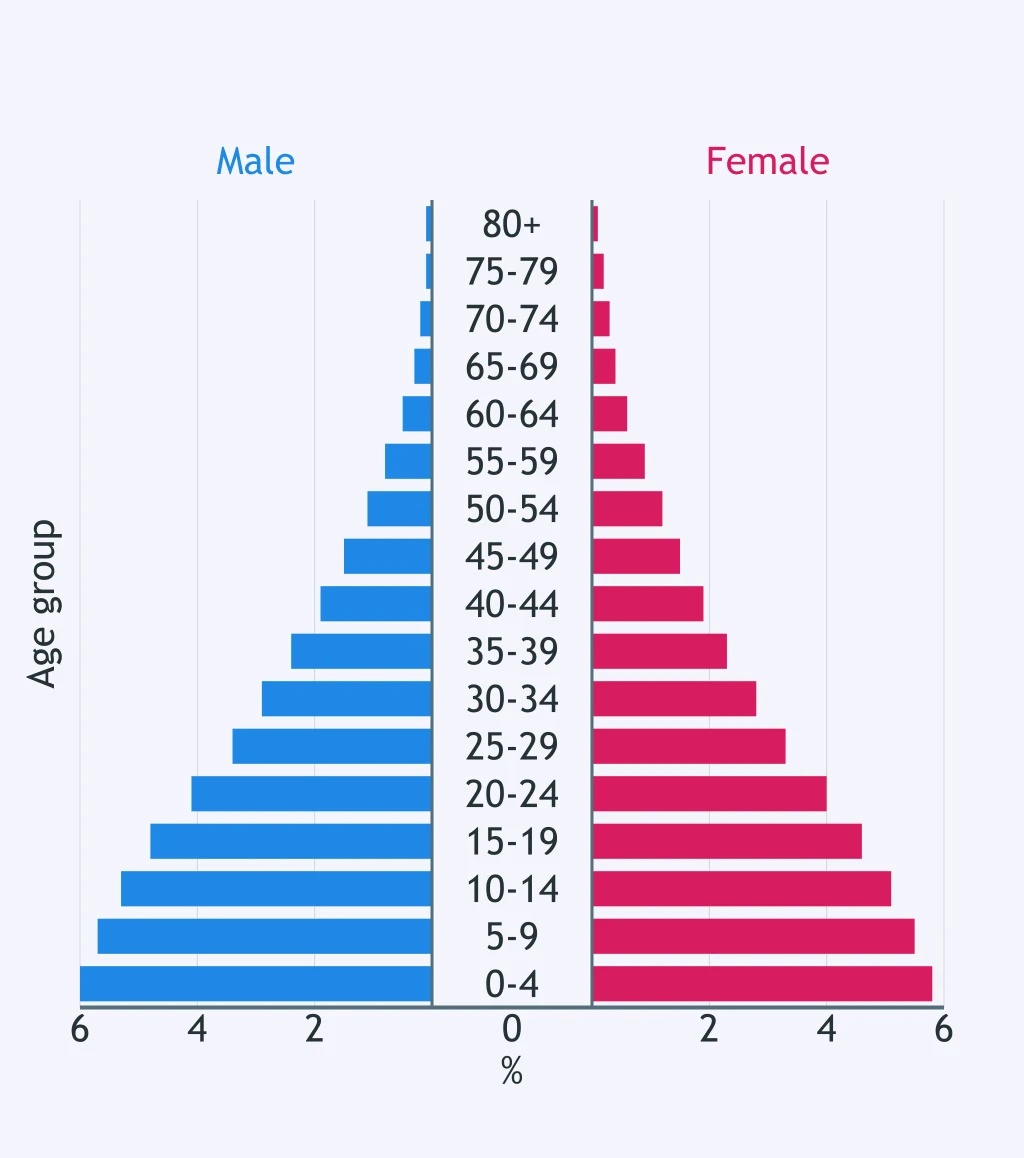
Which support pressure does this pyramid suggest?
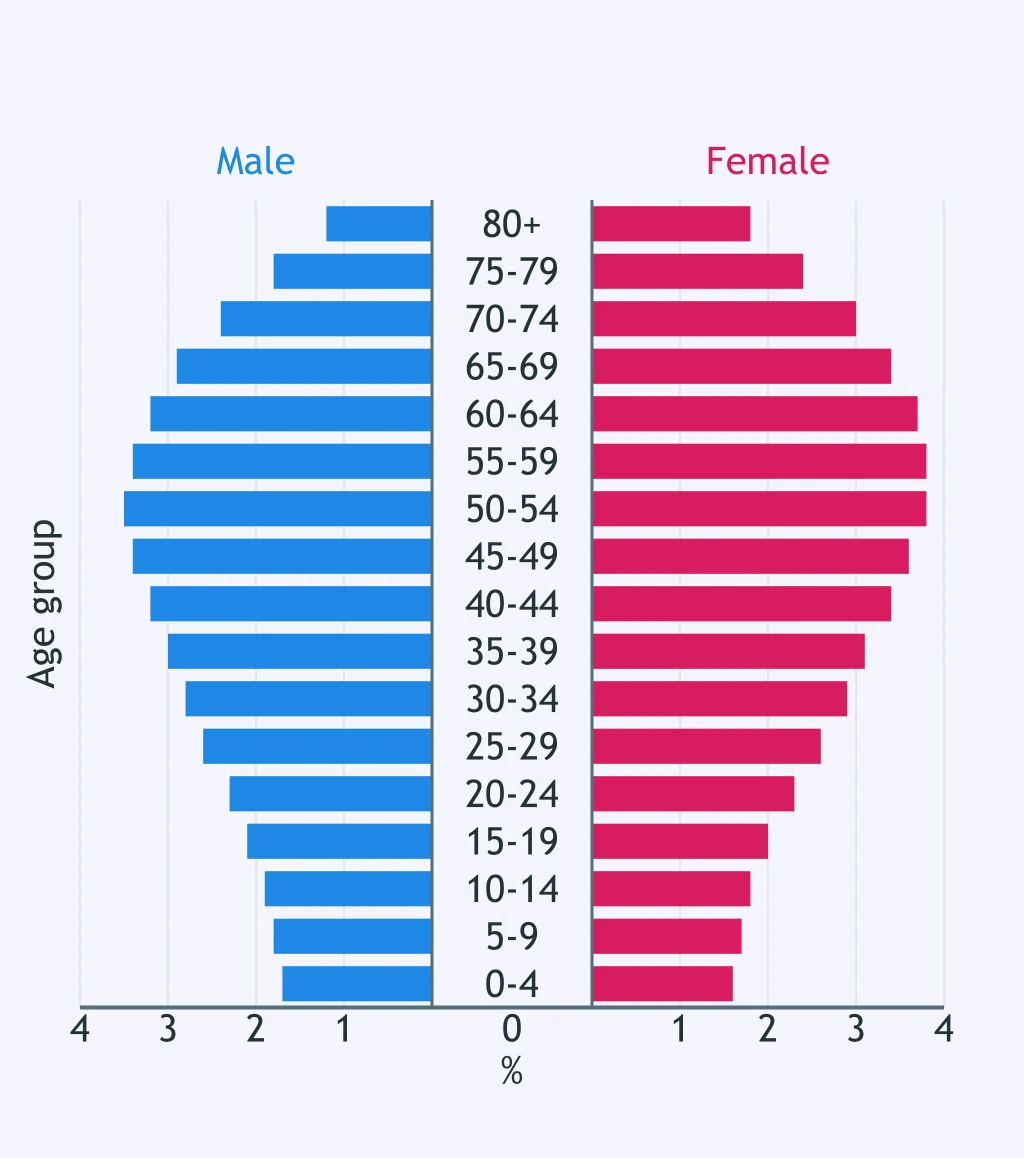
What does this pyramid suggest about the dependency ratio?
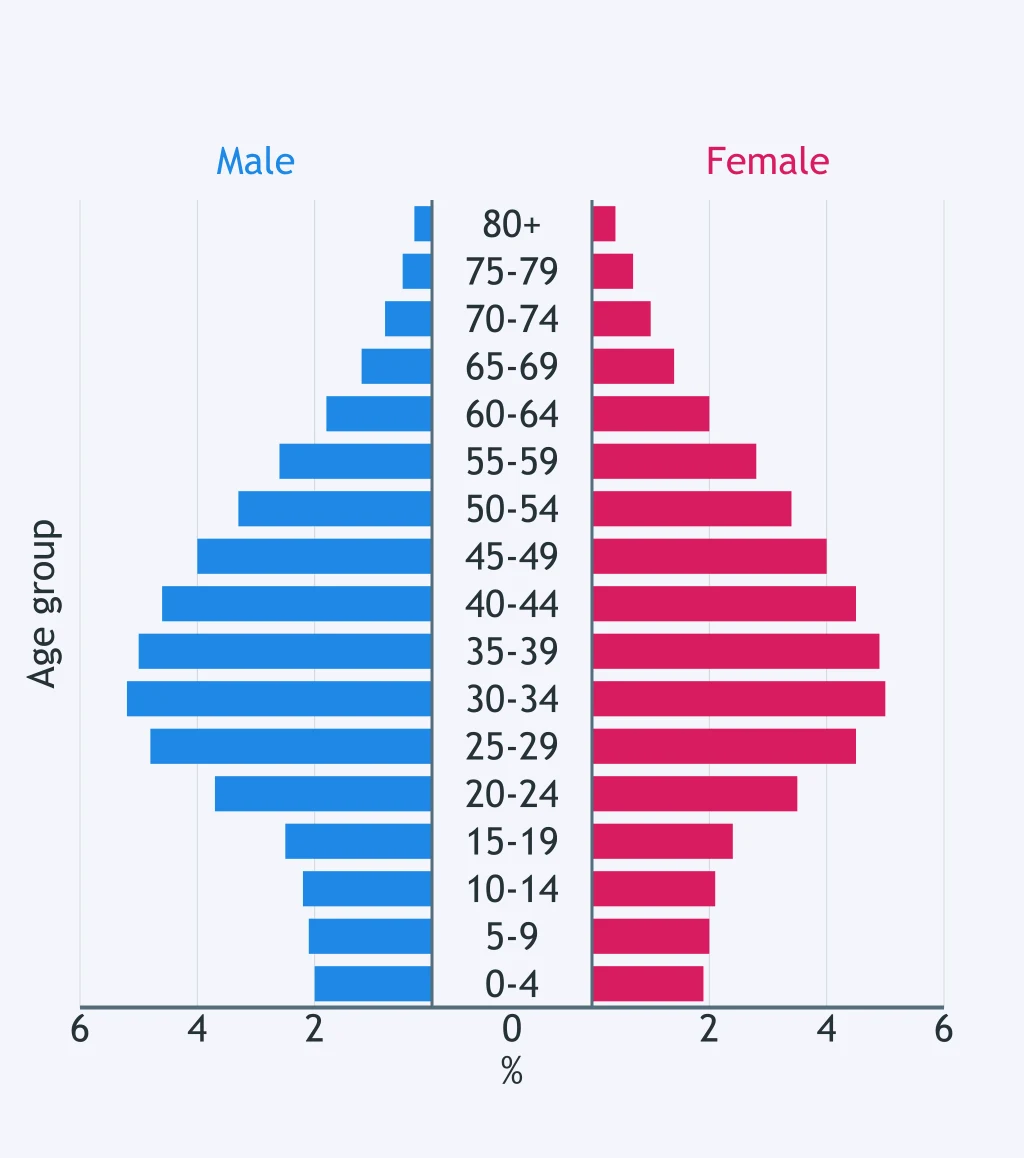
Read the dependents at both ends of the pyramid. Which burden is most likely?
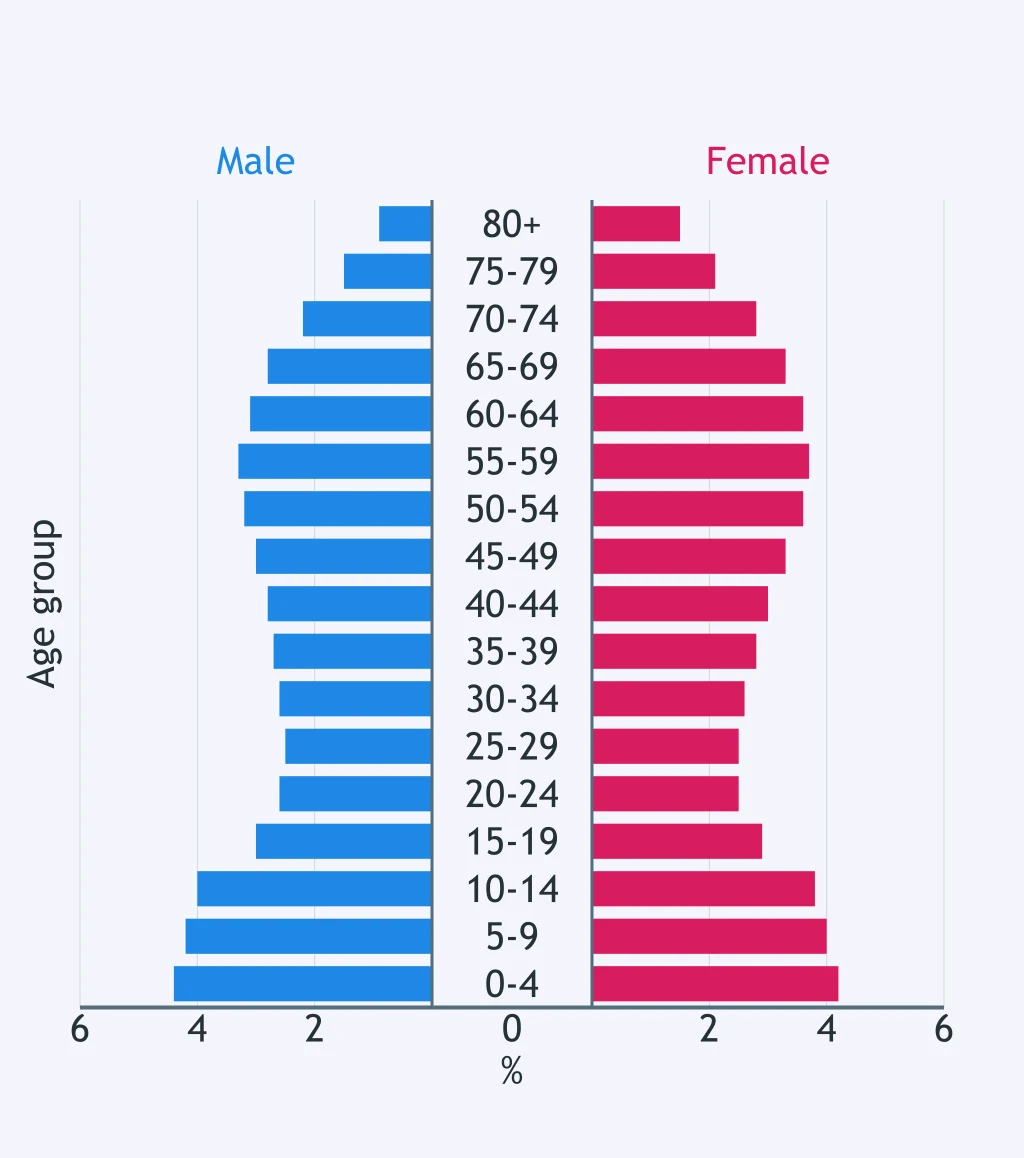
Which near-term service burden is shown by the width of the youngest cohorts?
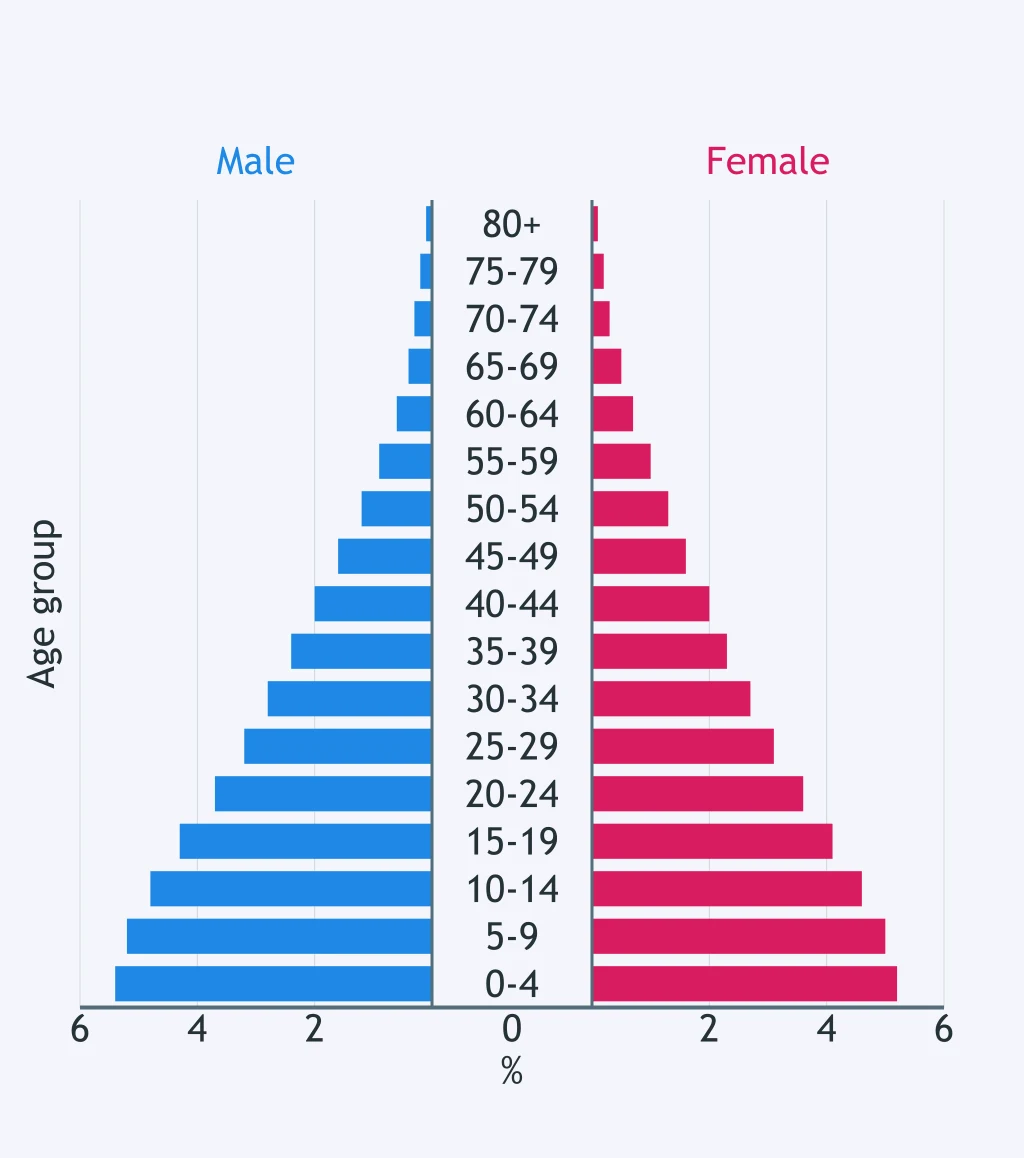
Look at the largest cohort in this pyramid. What dependency change is most likely soon?
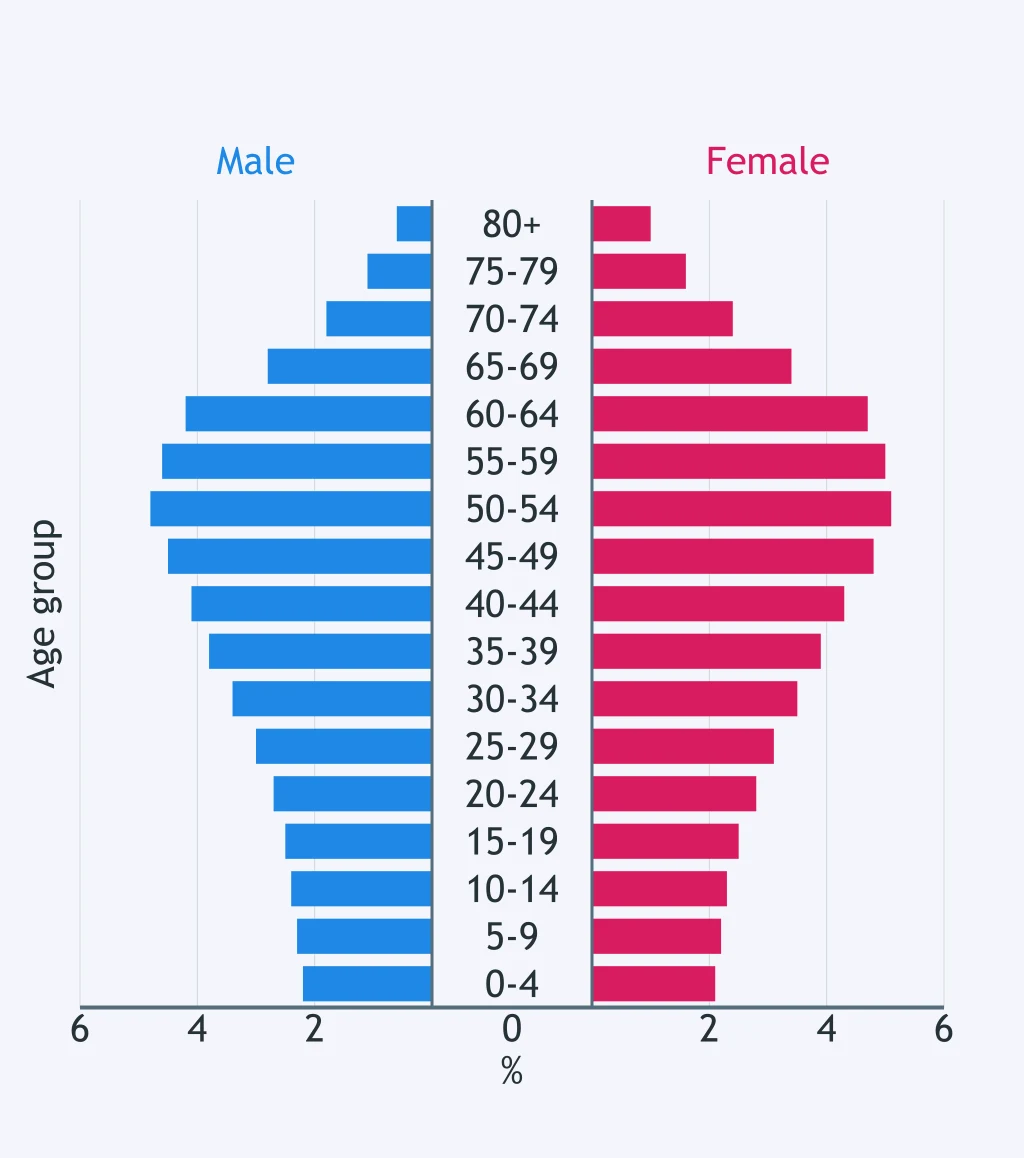
Which dependency reading does this pyramid support?
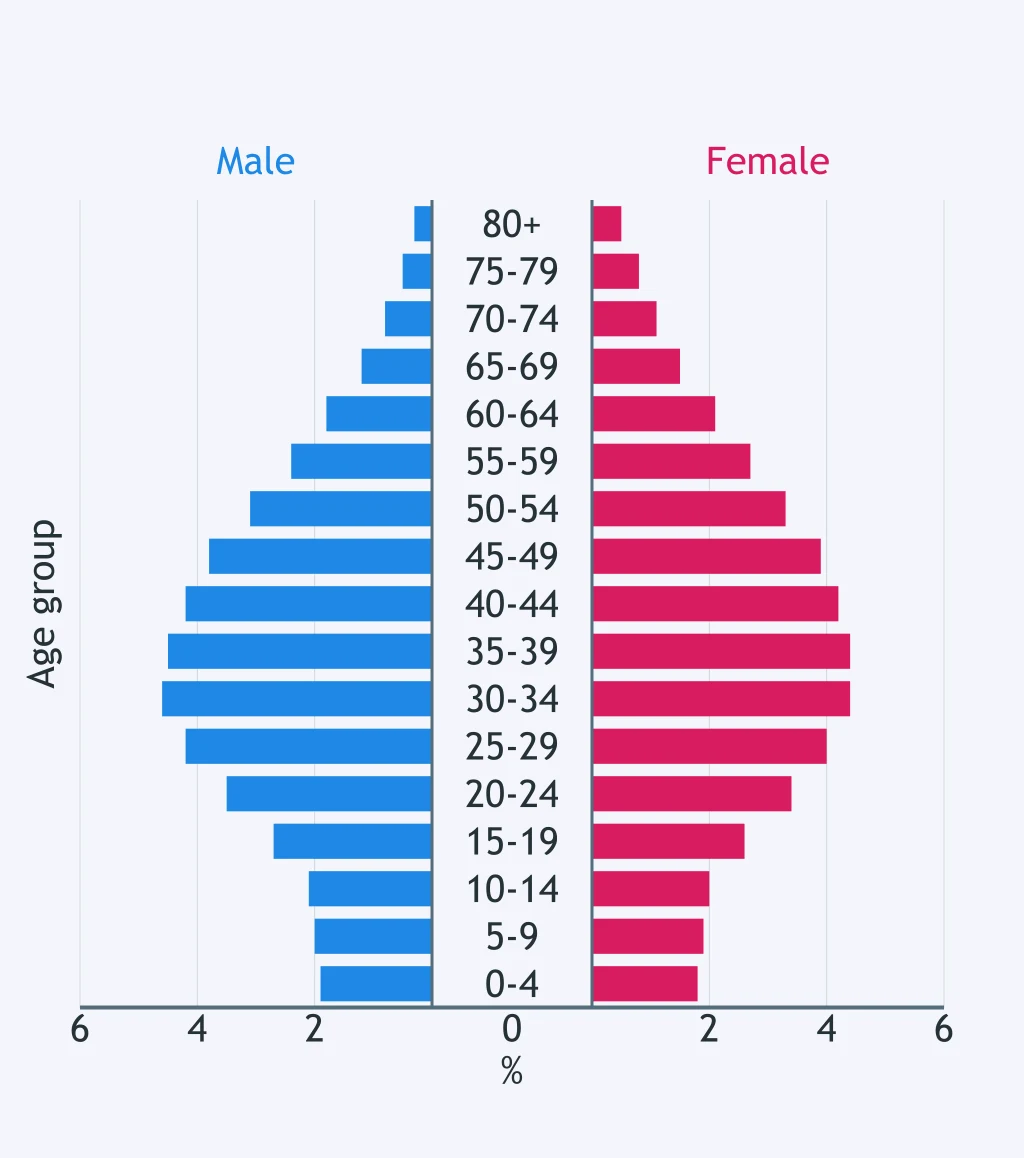
A major war occurred about 60 years ago. What does the indentation near the early older-age bands most likely record?
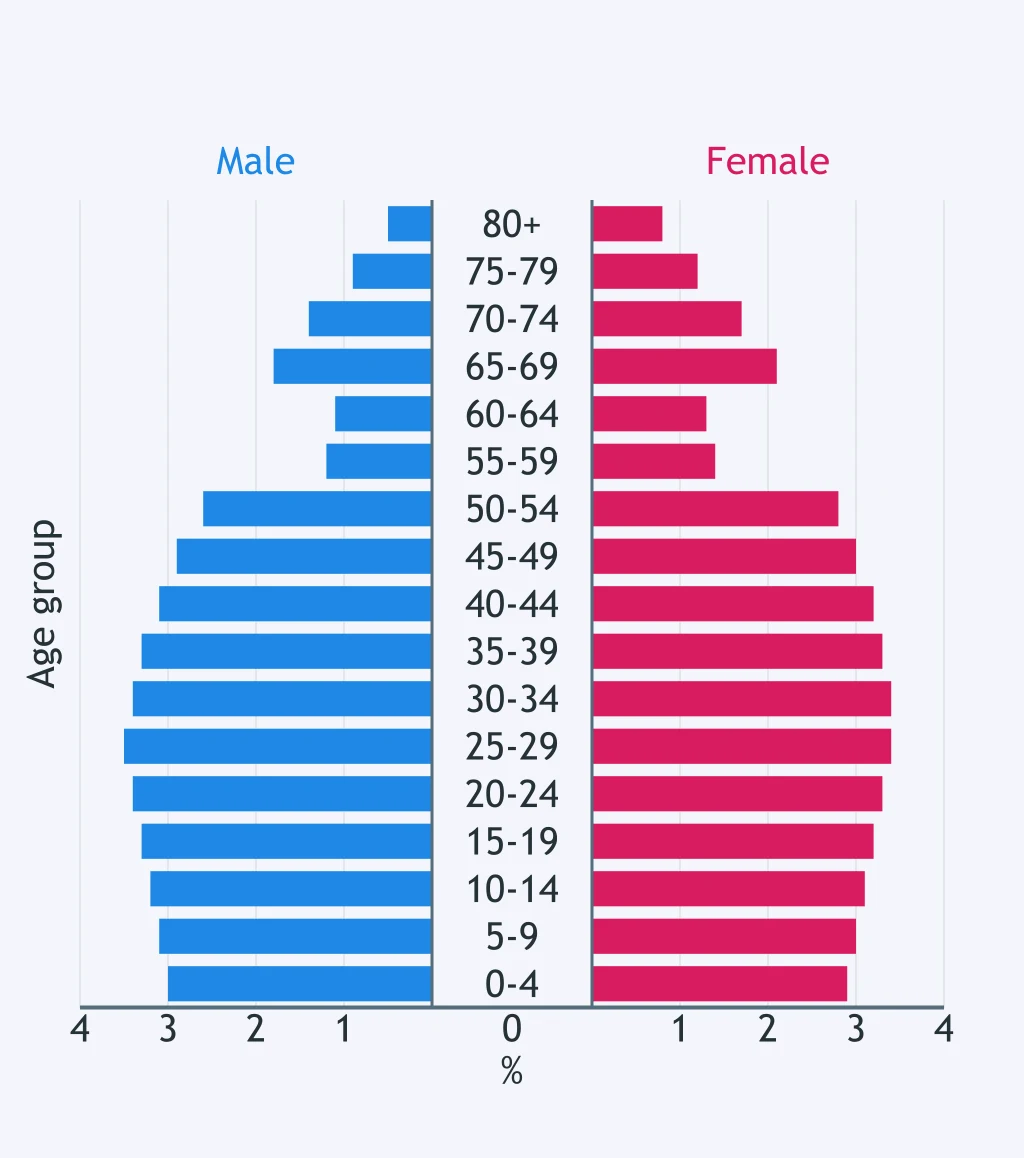
A major war ended about 60 years ago. Use the pyramid. What does its most unusual feature most likely record?
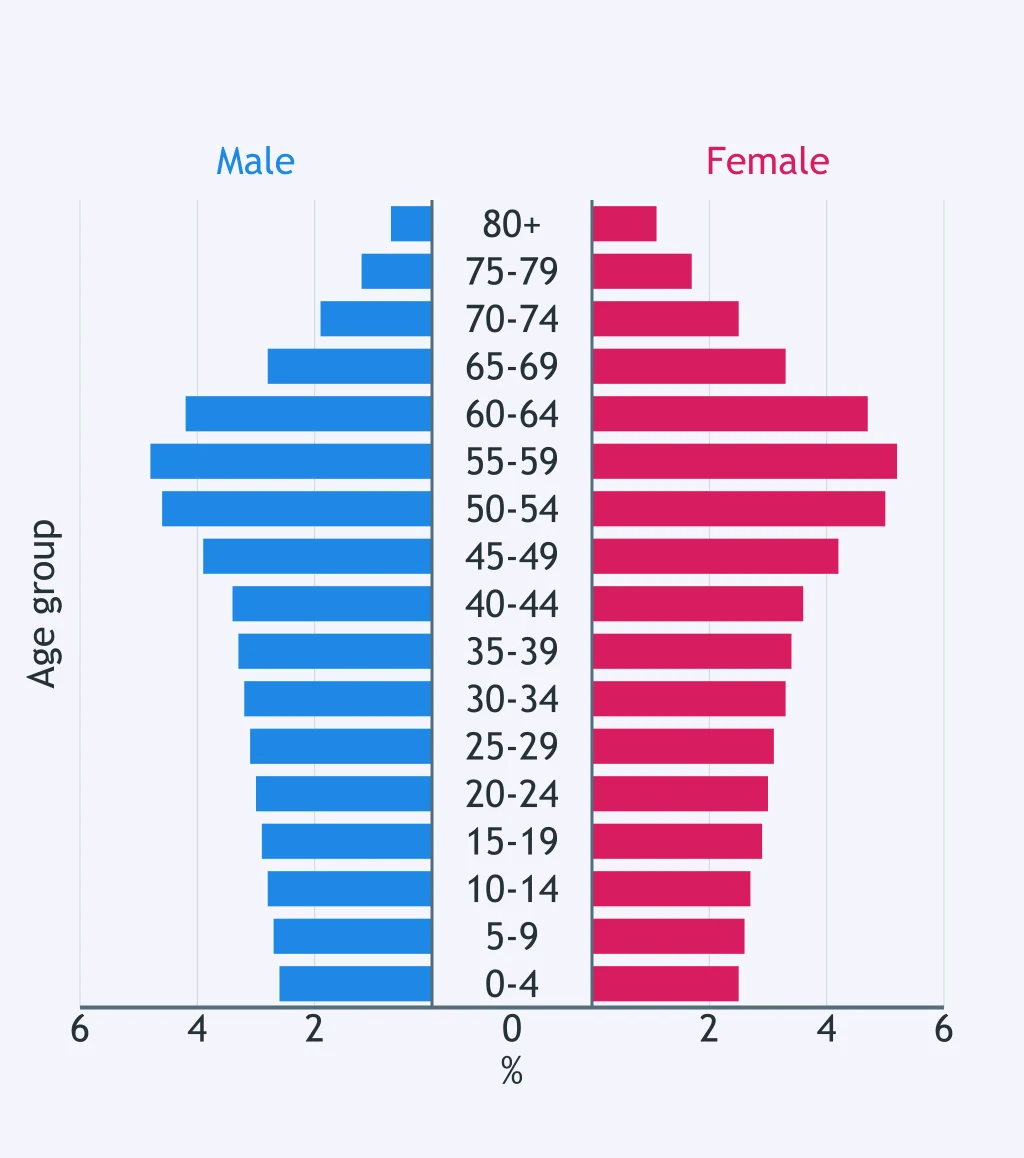
Use the pyramid. What recent history best explains its most unusual feature?
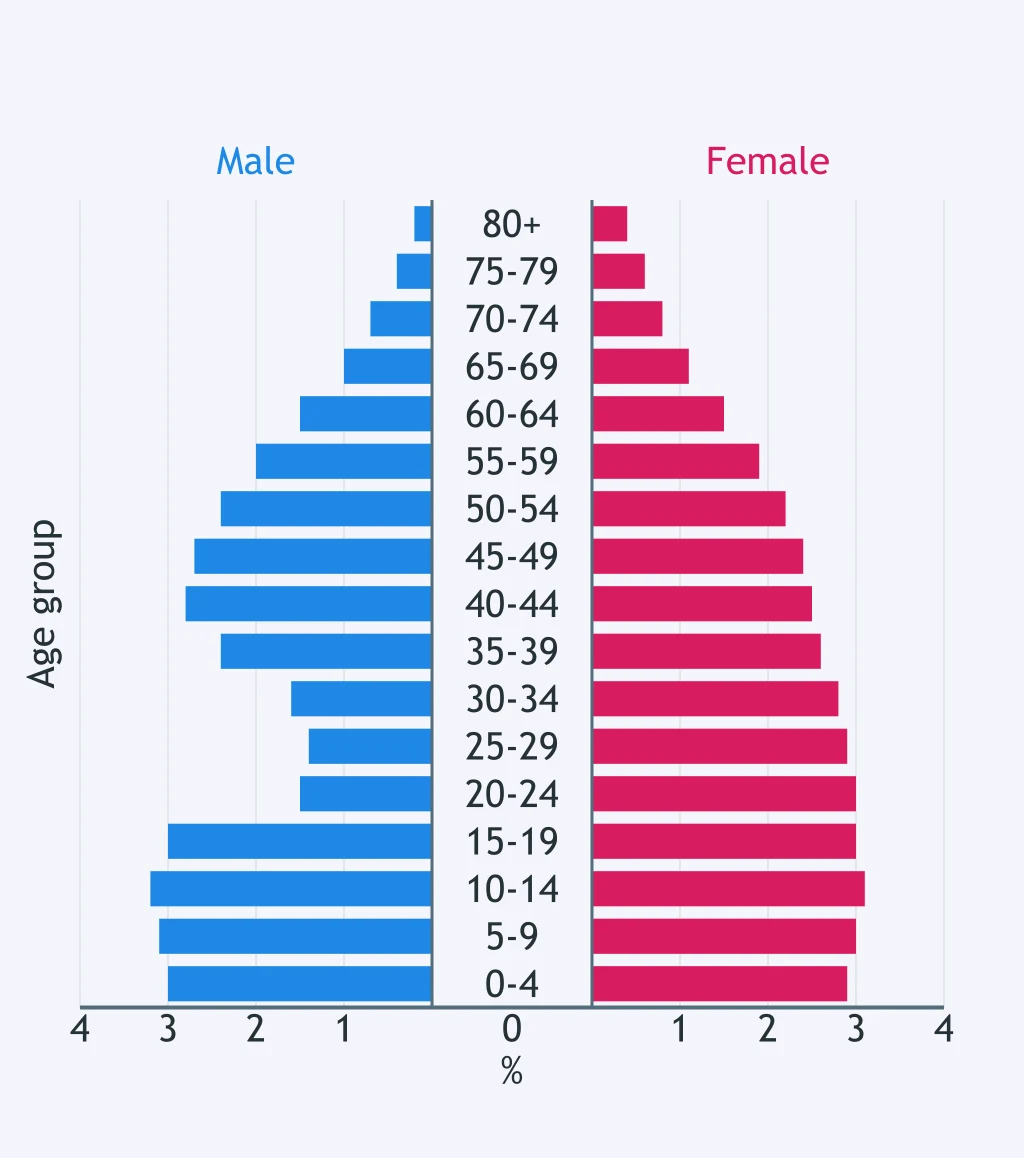
A guest-worker program expanded in the last two decades. What does the young-adult bulge most likely show?
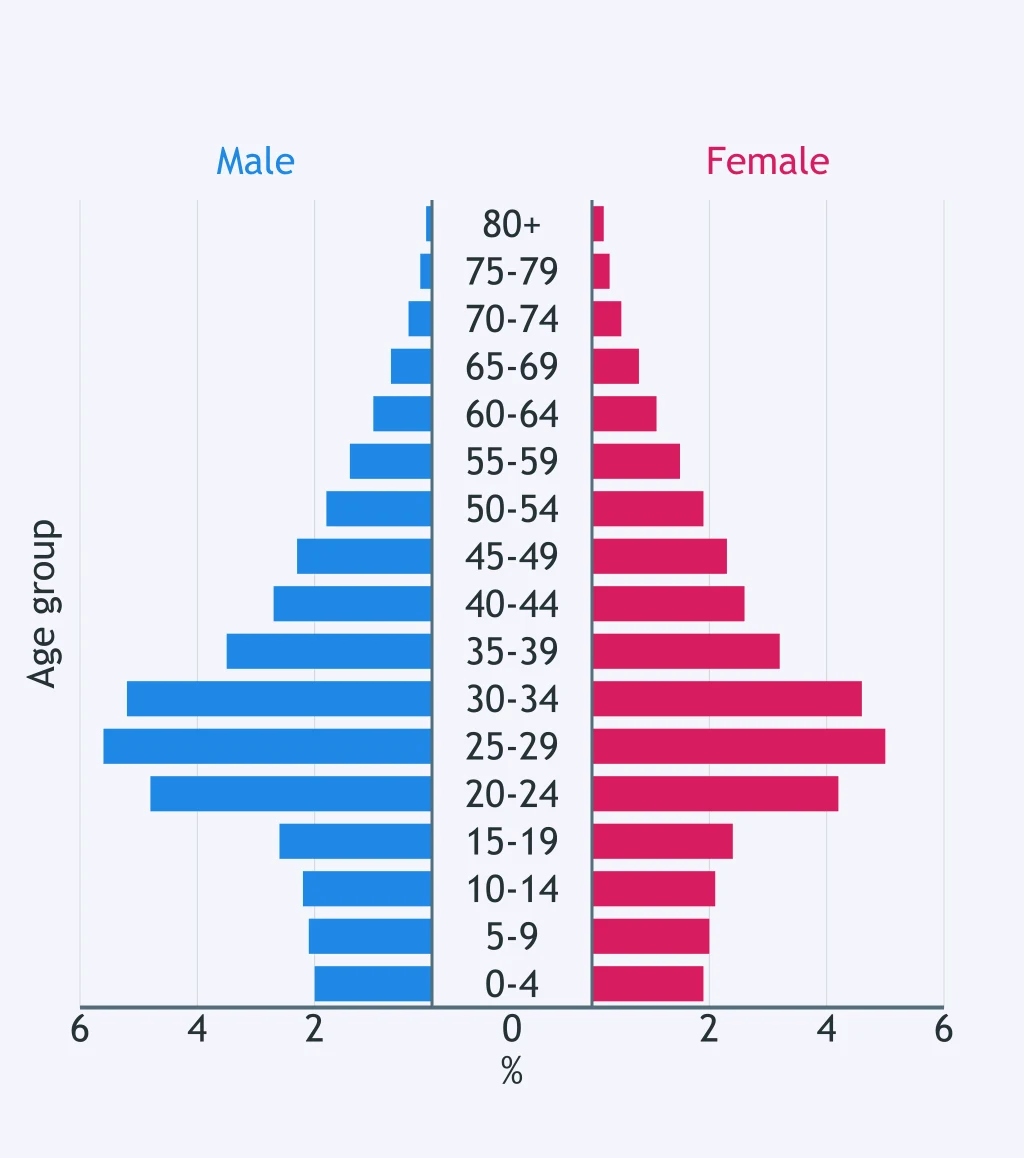
An antinatalist policy was strongest about 30 years ago. What does the notch in today's young adult cohorts most likely record?
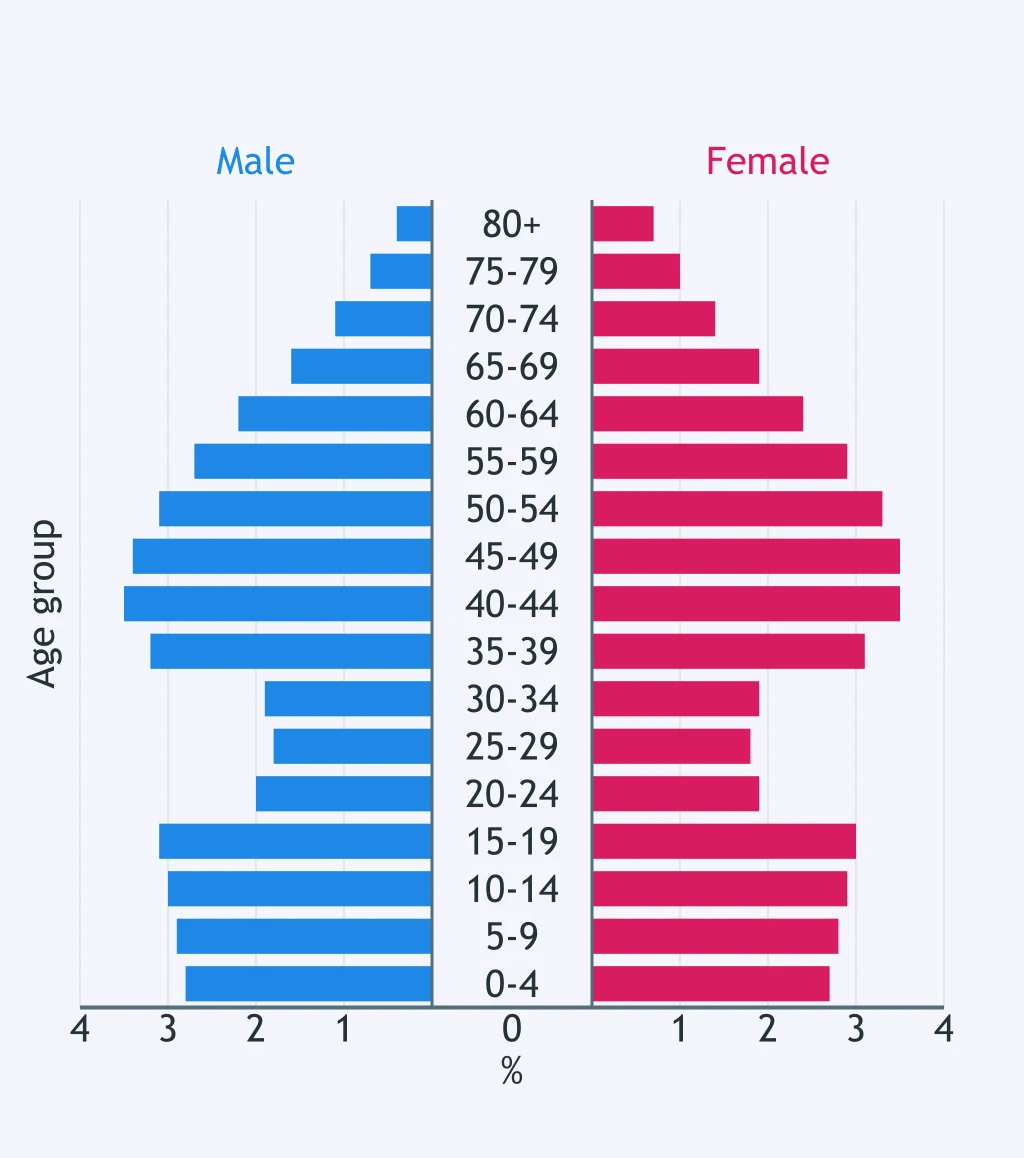
A pronatalist cash benefit began about 10 years ago. What does the wide youngest cohort group most likely show?
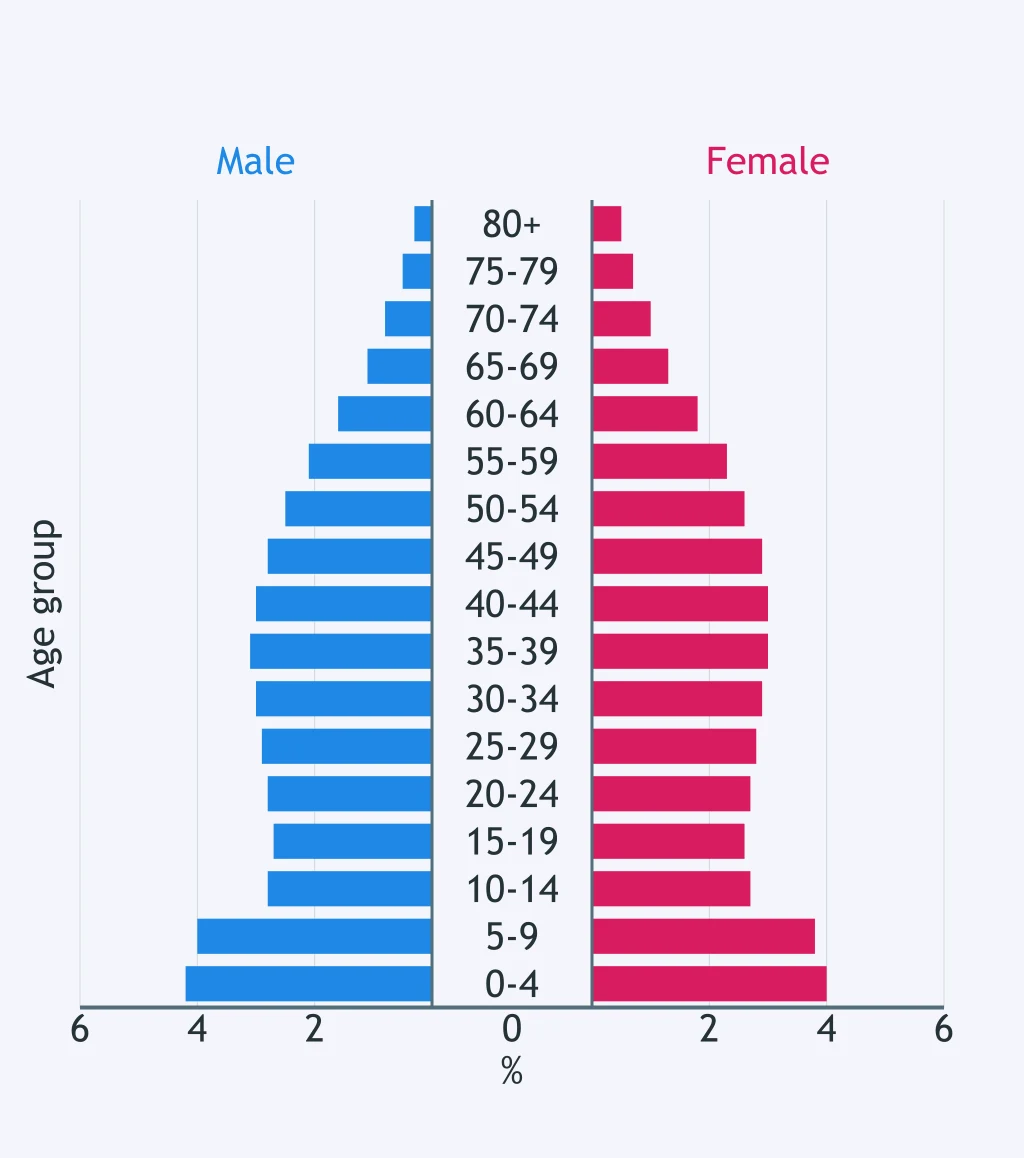
A severe famine reduced births about 40 years ago. Use the pyramid. What does the narrowest pair of midlife bands most likely represent?
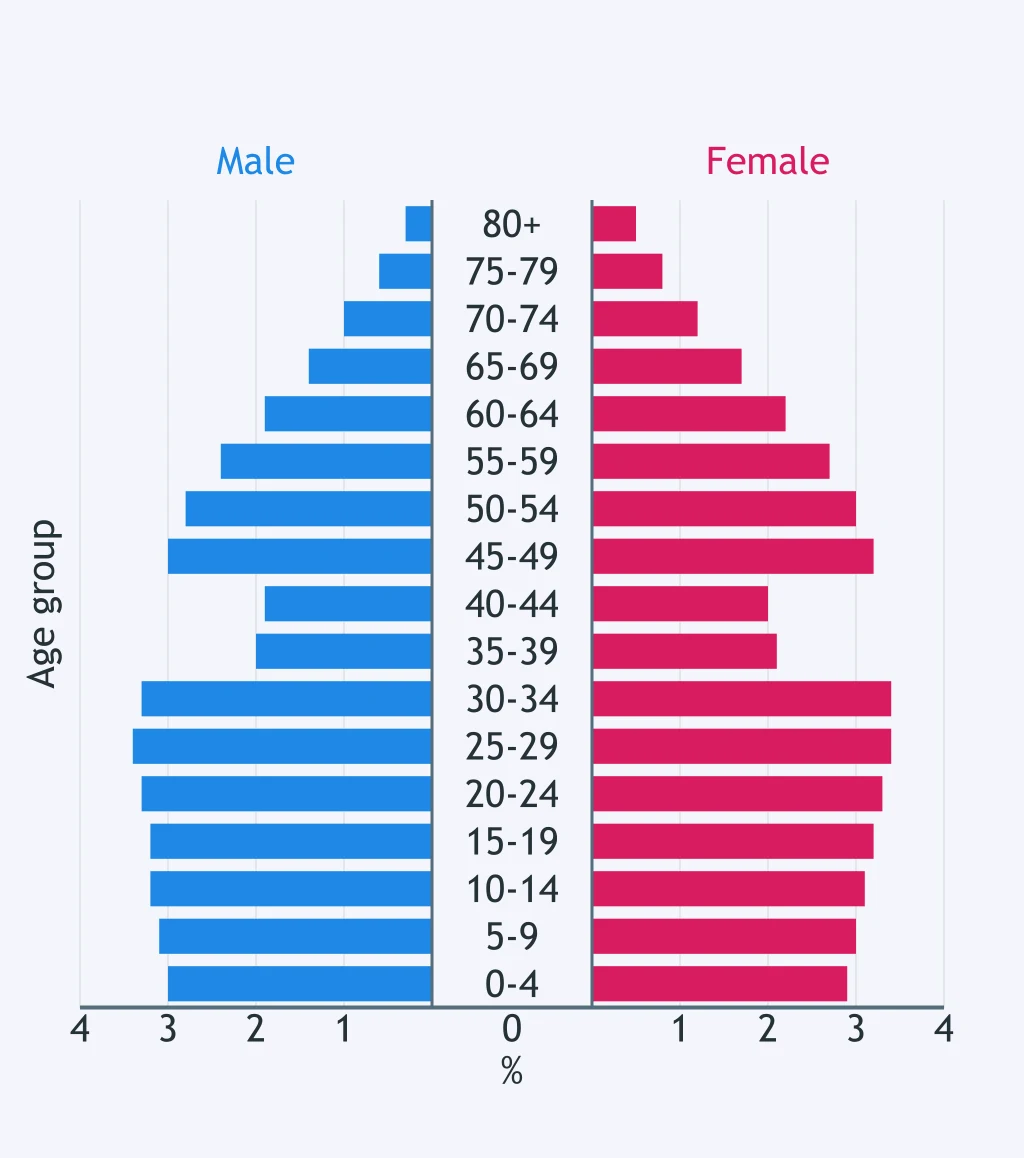
Use the pyramid. Compare the male and female sides. What does the difference between them best reflect?
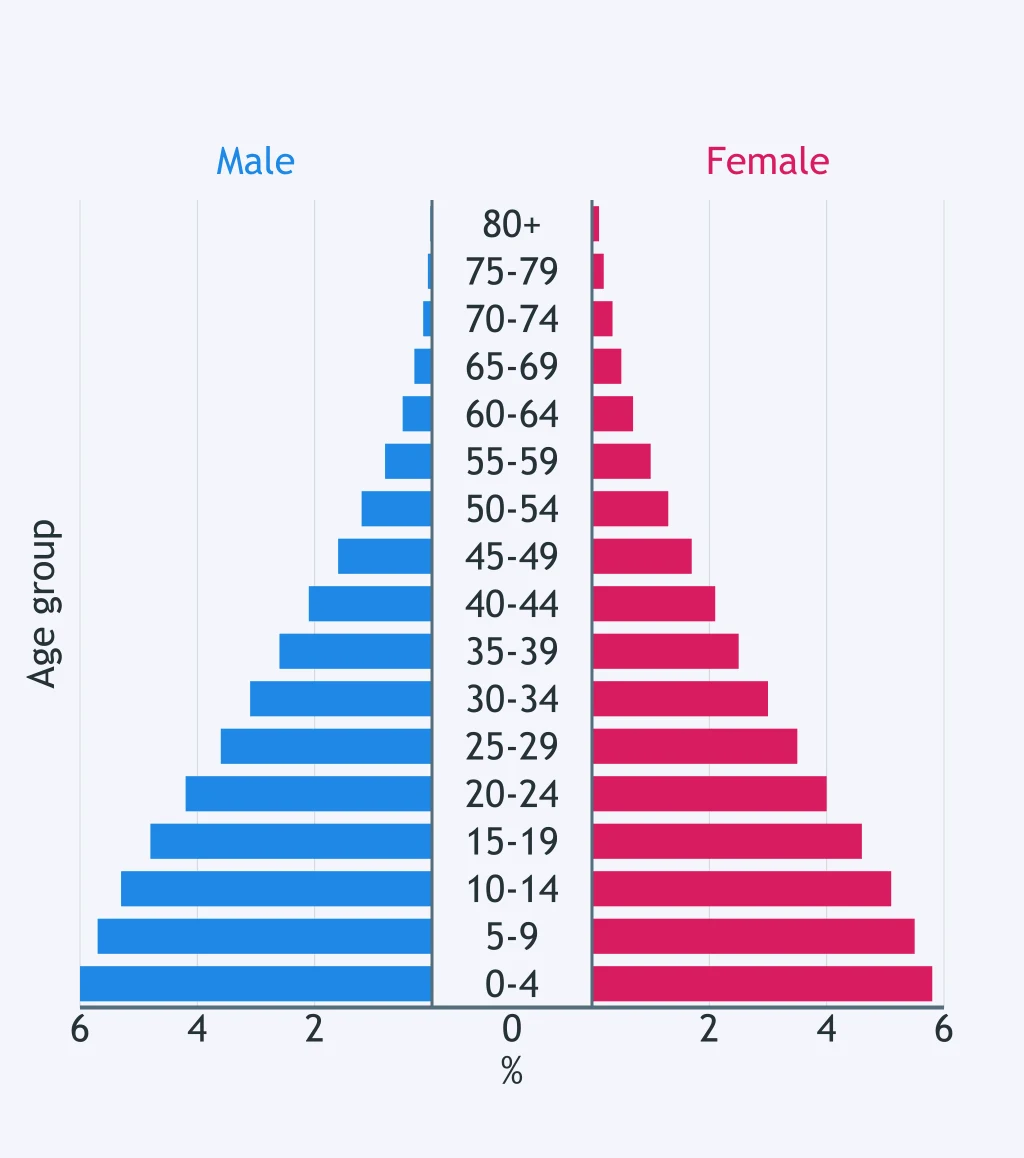
Use the pyramid. Compare the male and female sides. What does the most unusual difference between them most likely indicate?
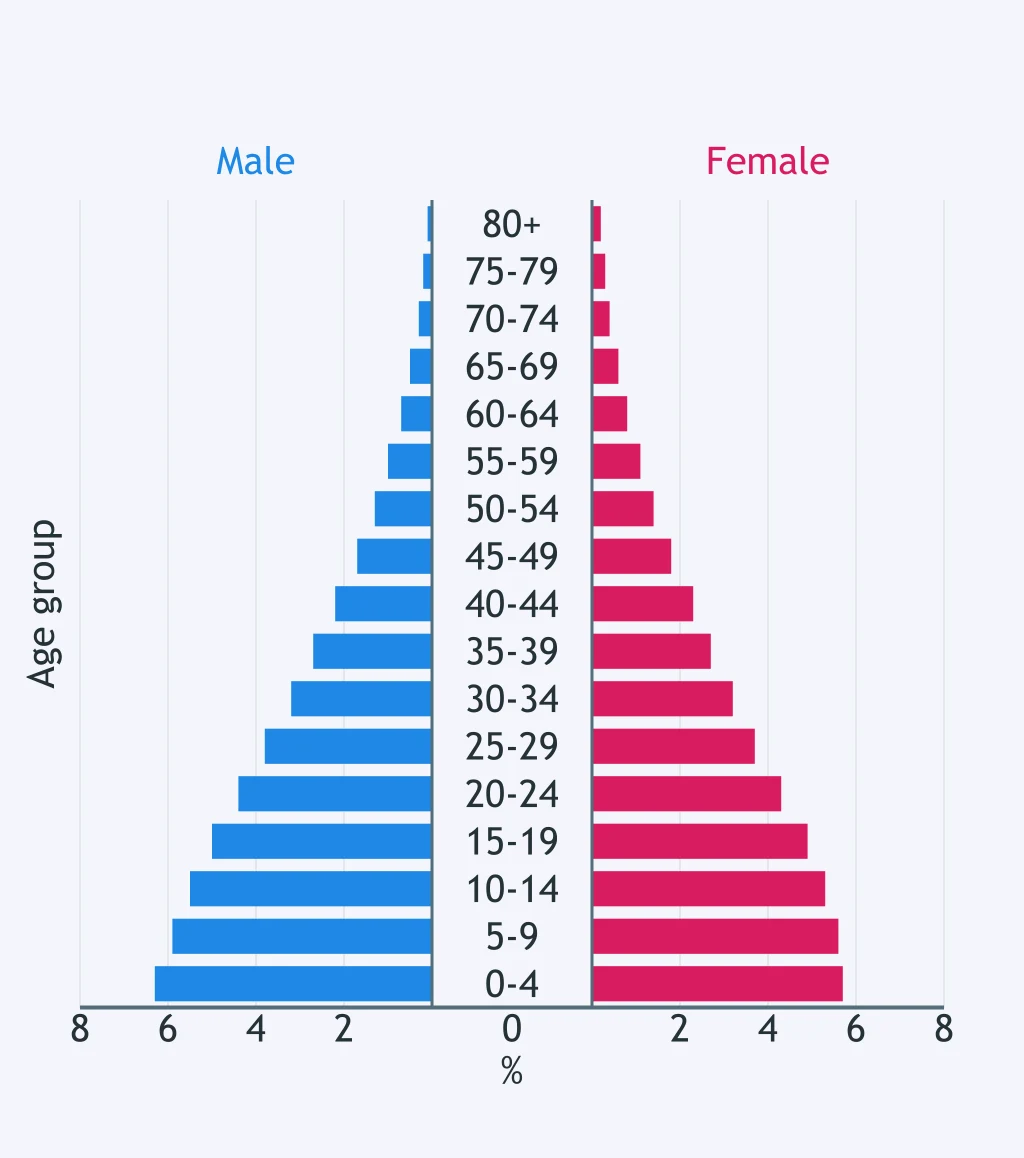
Use the pyramid. What recent history best explains its most unusual feature?
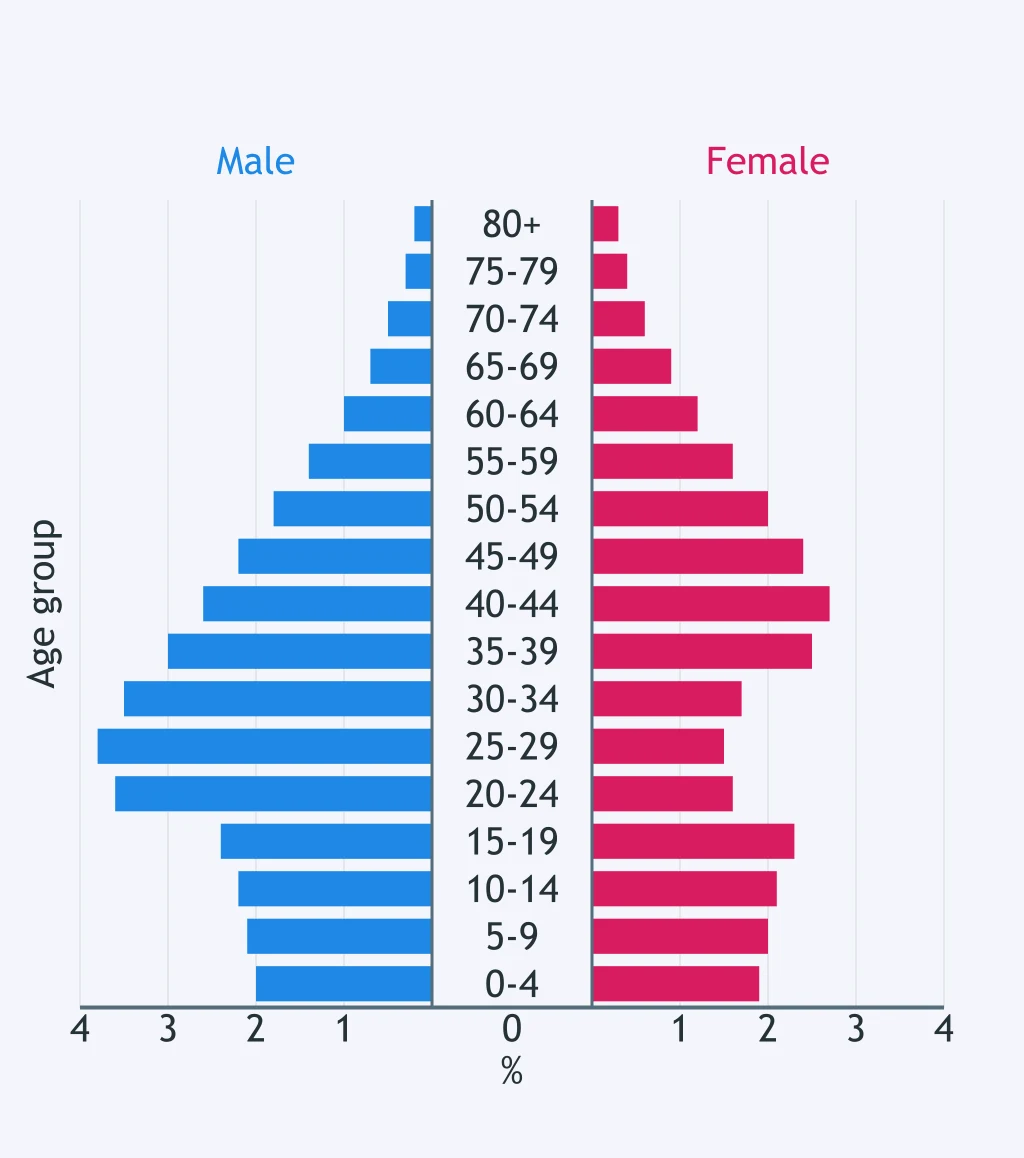
A war took place about 45 years ago. Use the pyramid. What does the narrow part of the male side most likely record?
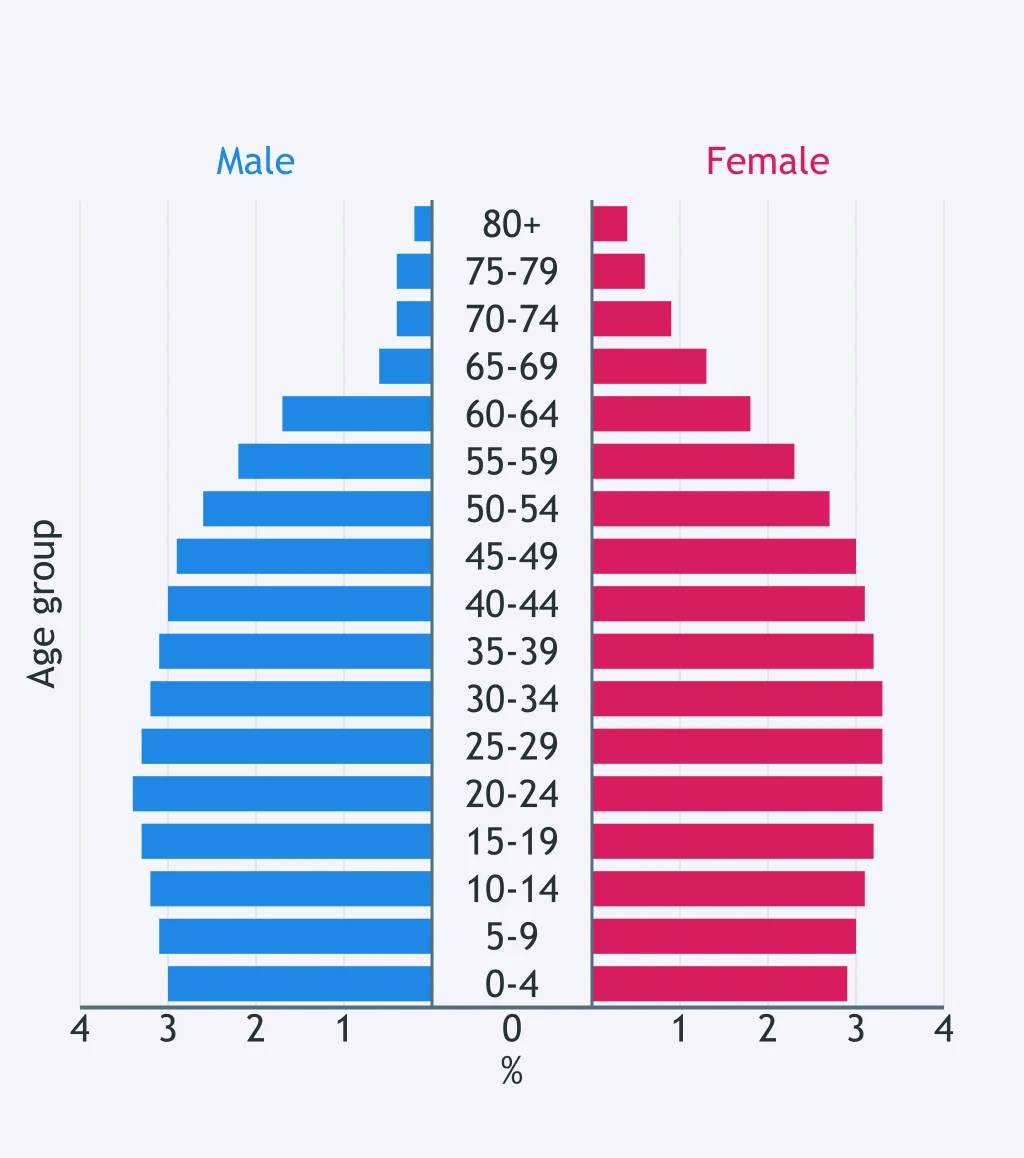
Use the pyramid. Compare the male and female sides. What does the difference between them most likely reflect?
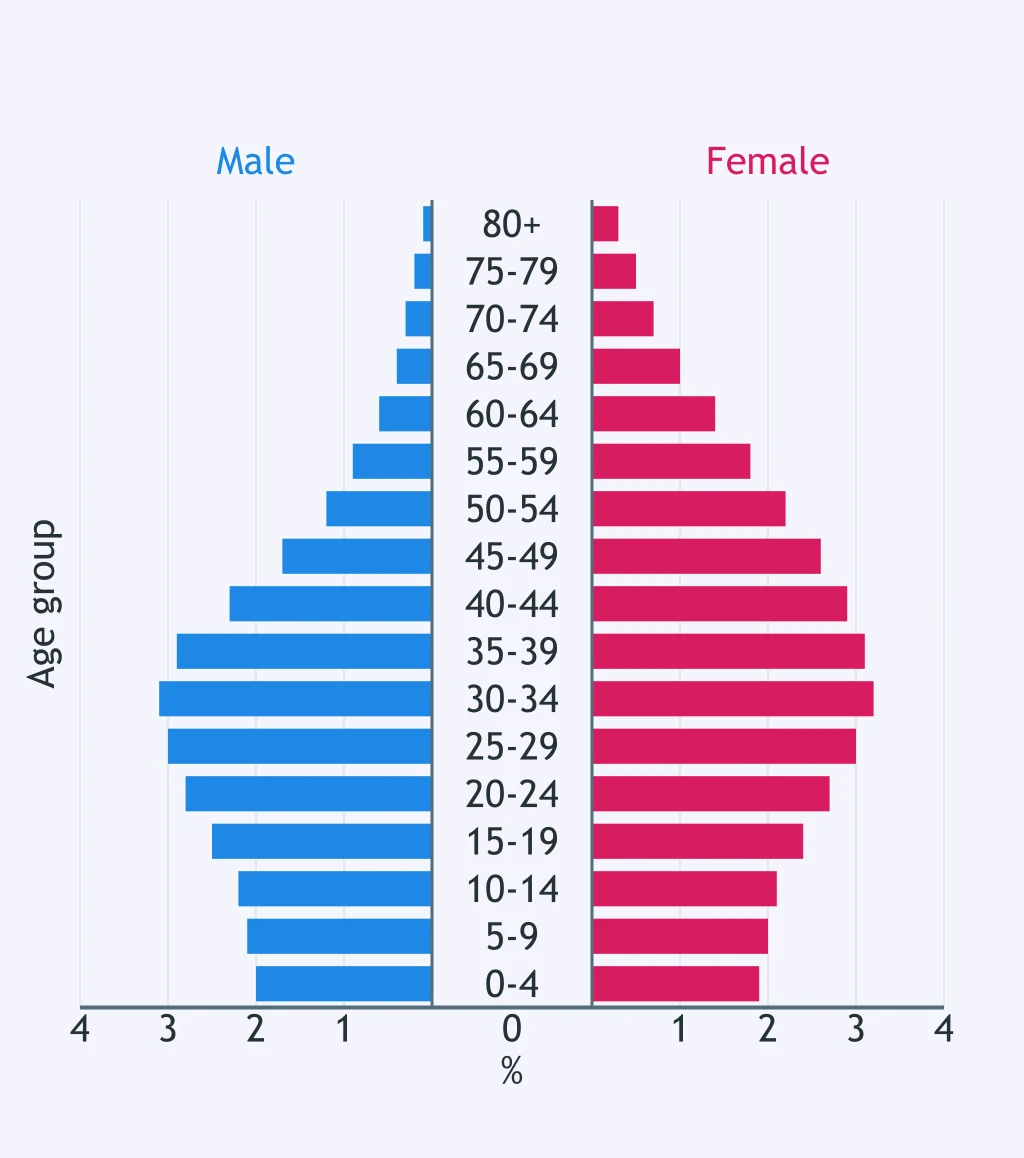
Use the pyramid. Compare the male and female sides. What does this indicate about the population's recent history?
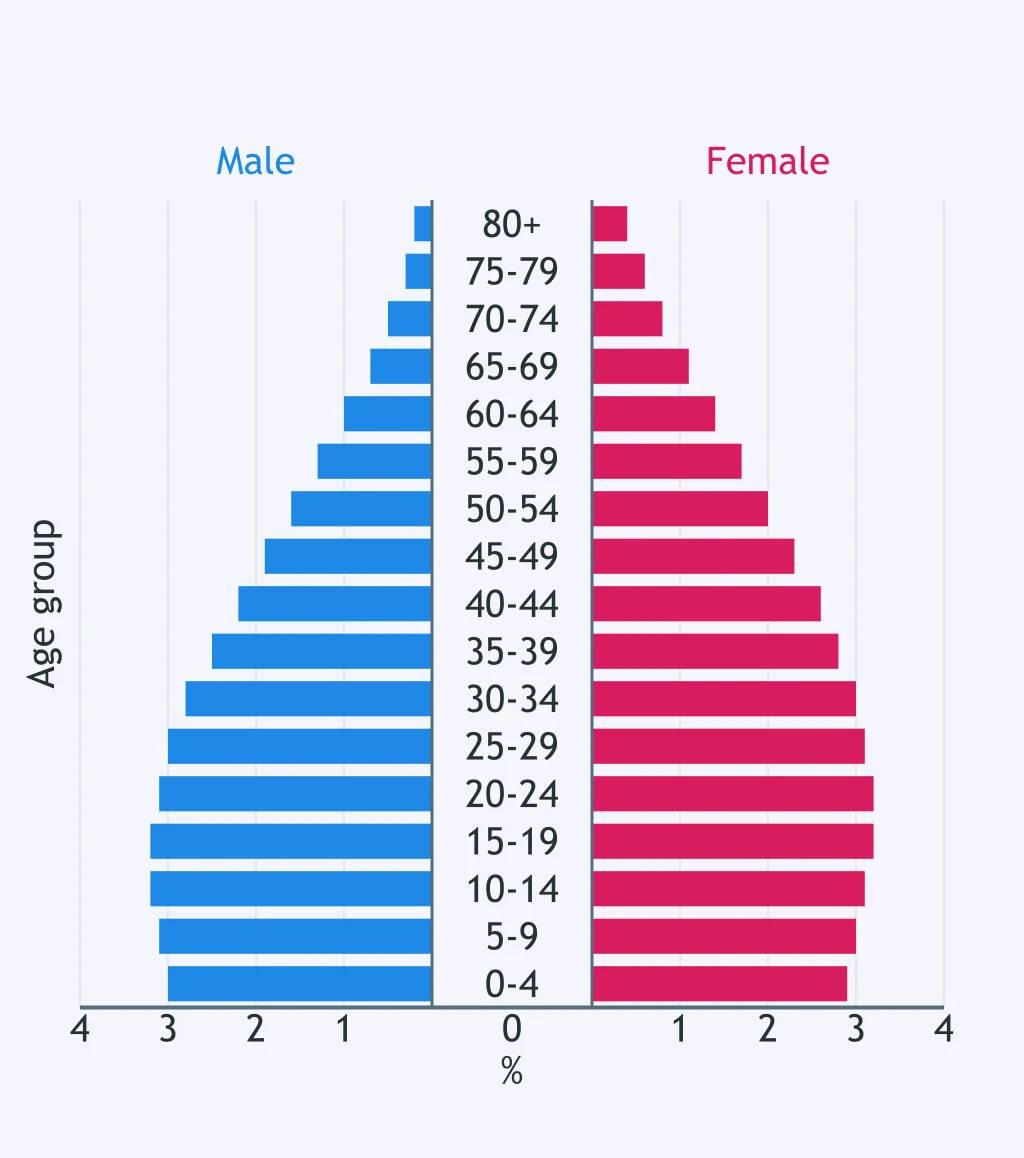
Use the pyramid. Which policy concern best fits this age structure?
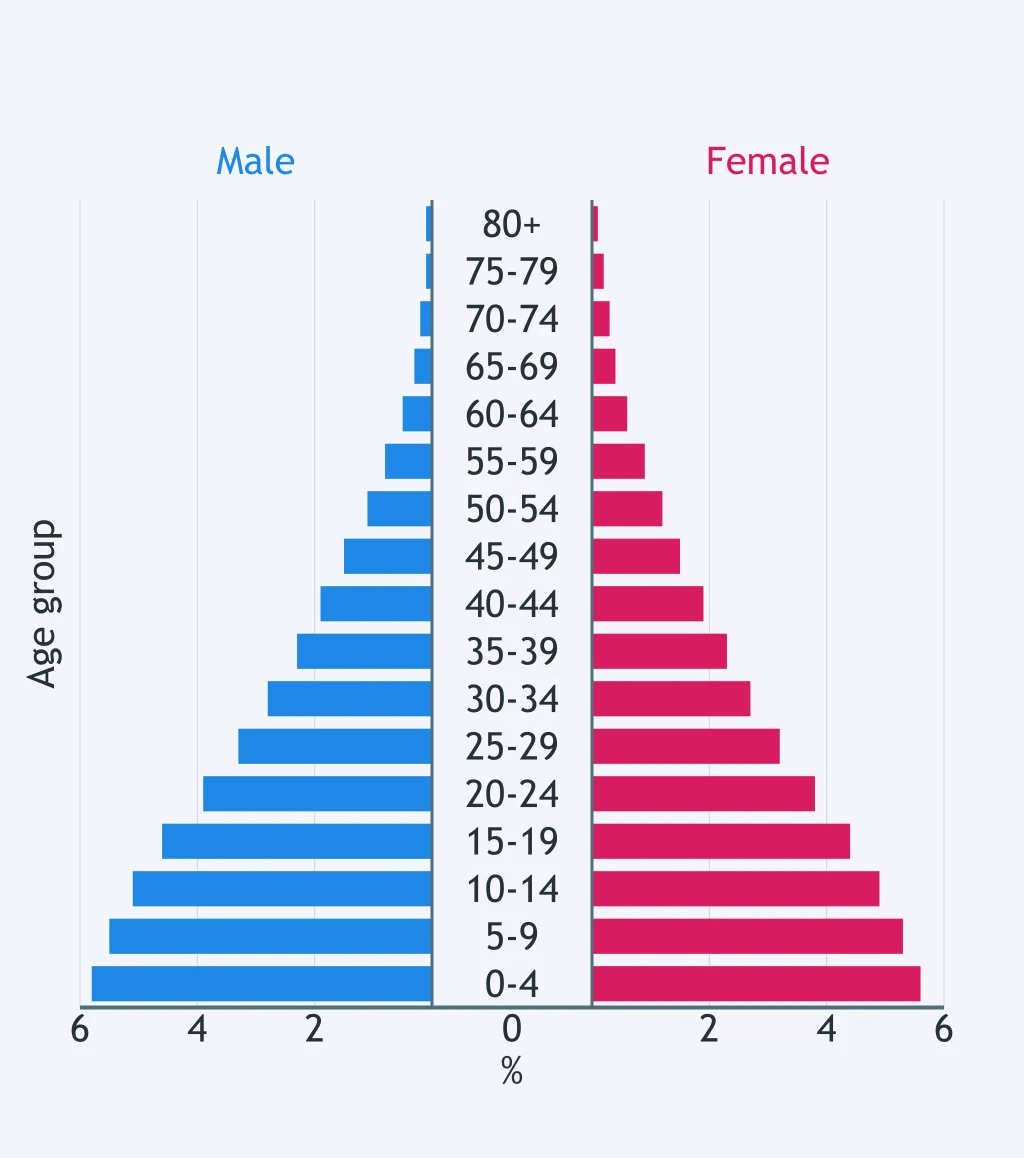
Use the pyramid. Which policy pressure is most consistent with this age structure?
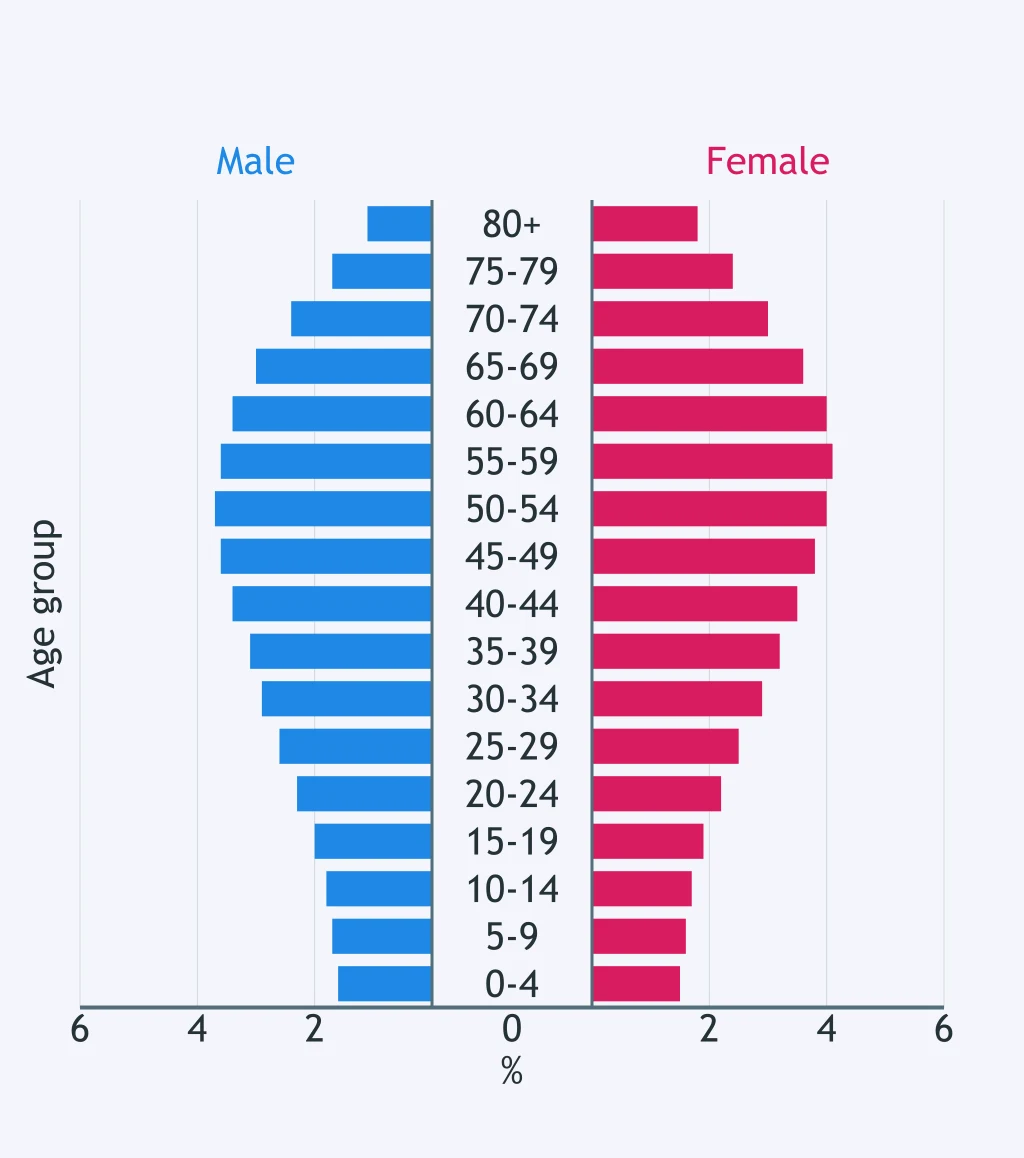
Use the pyramid. Which policy need best fits this age structure?
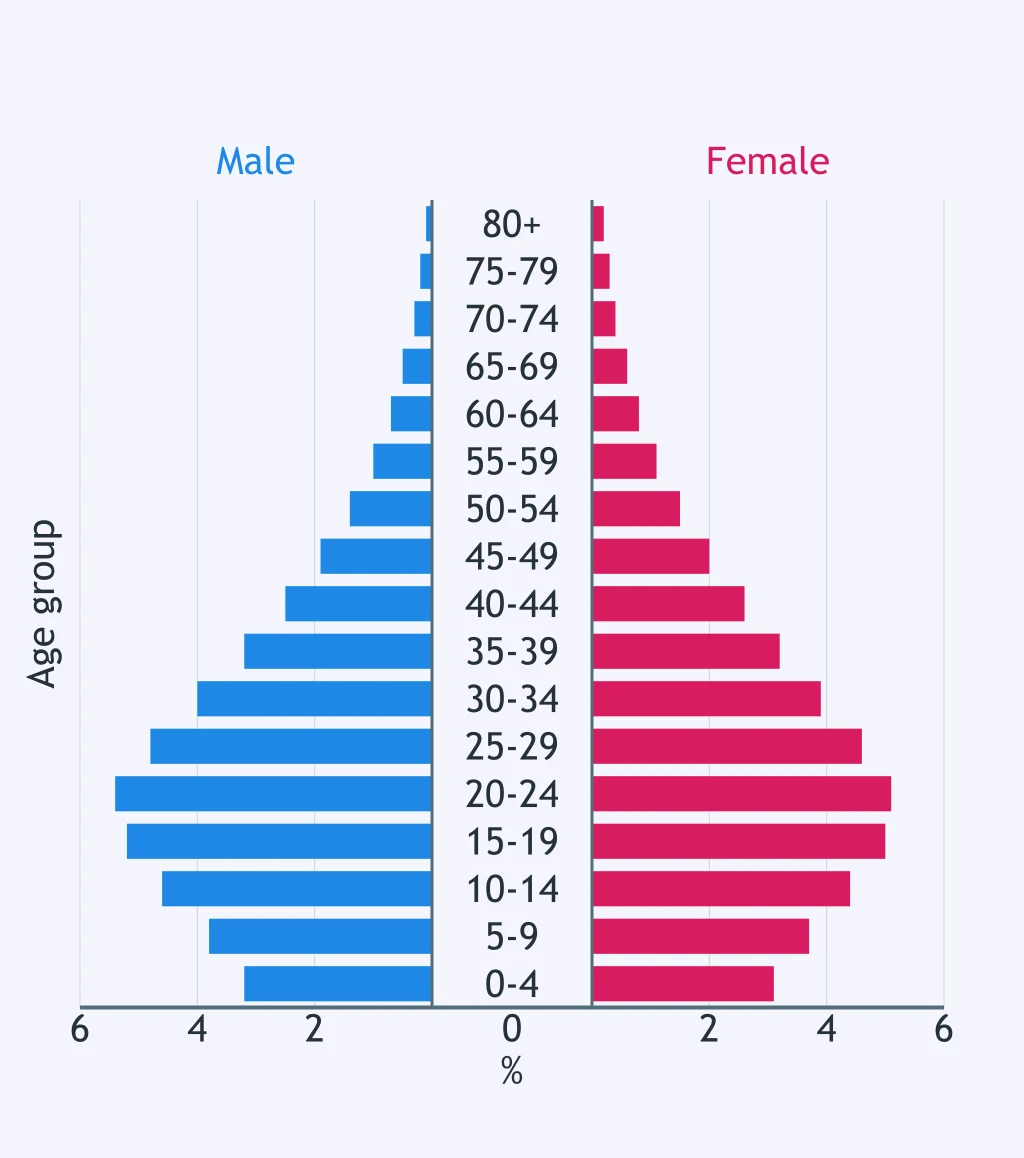
Use the pyramid. Which policy goal fits the opportunity this age structure offers?
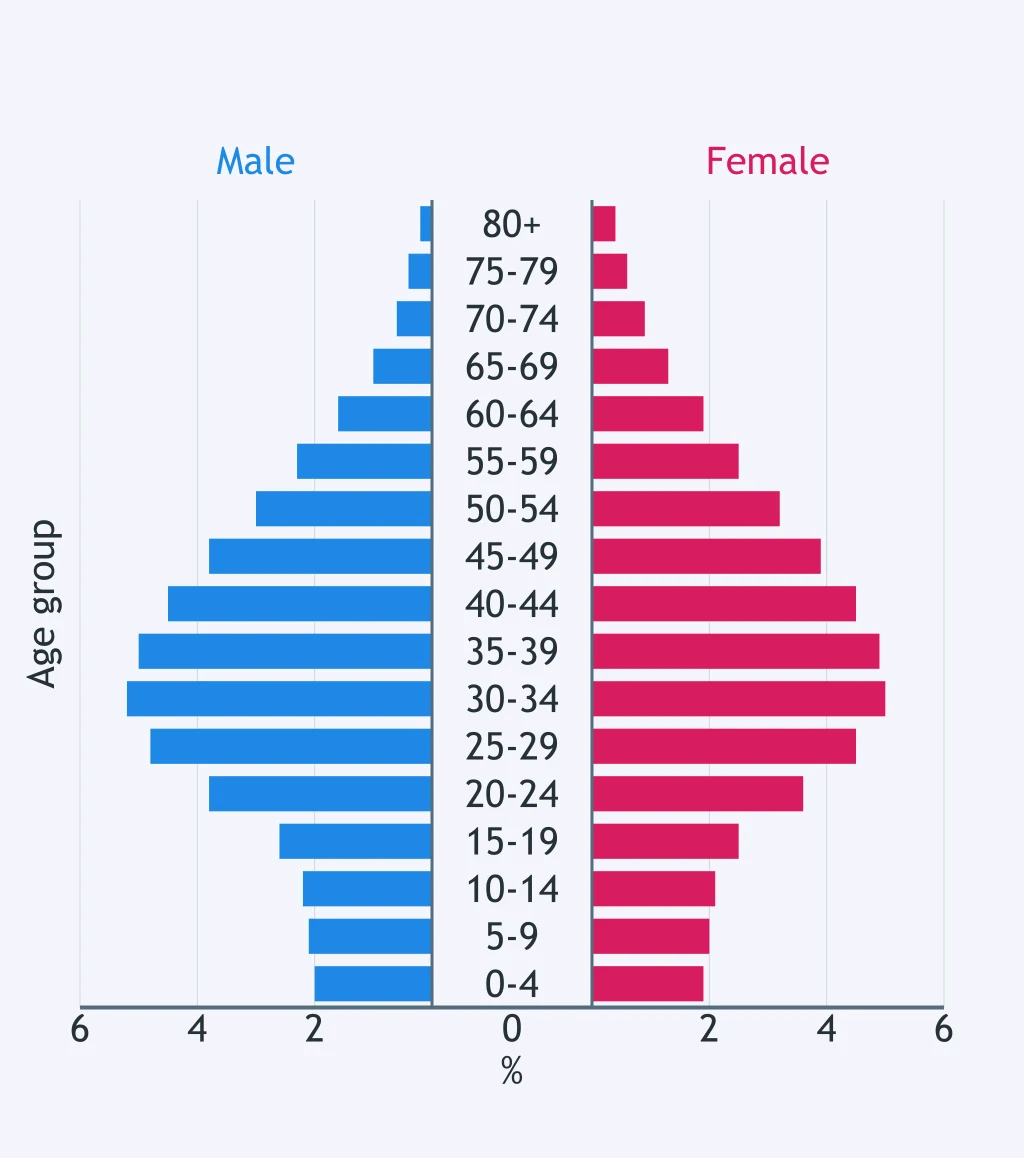
Use the pyramid. Which long-term policy concern fits this age structure?
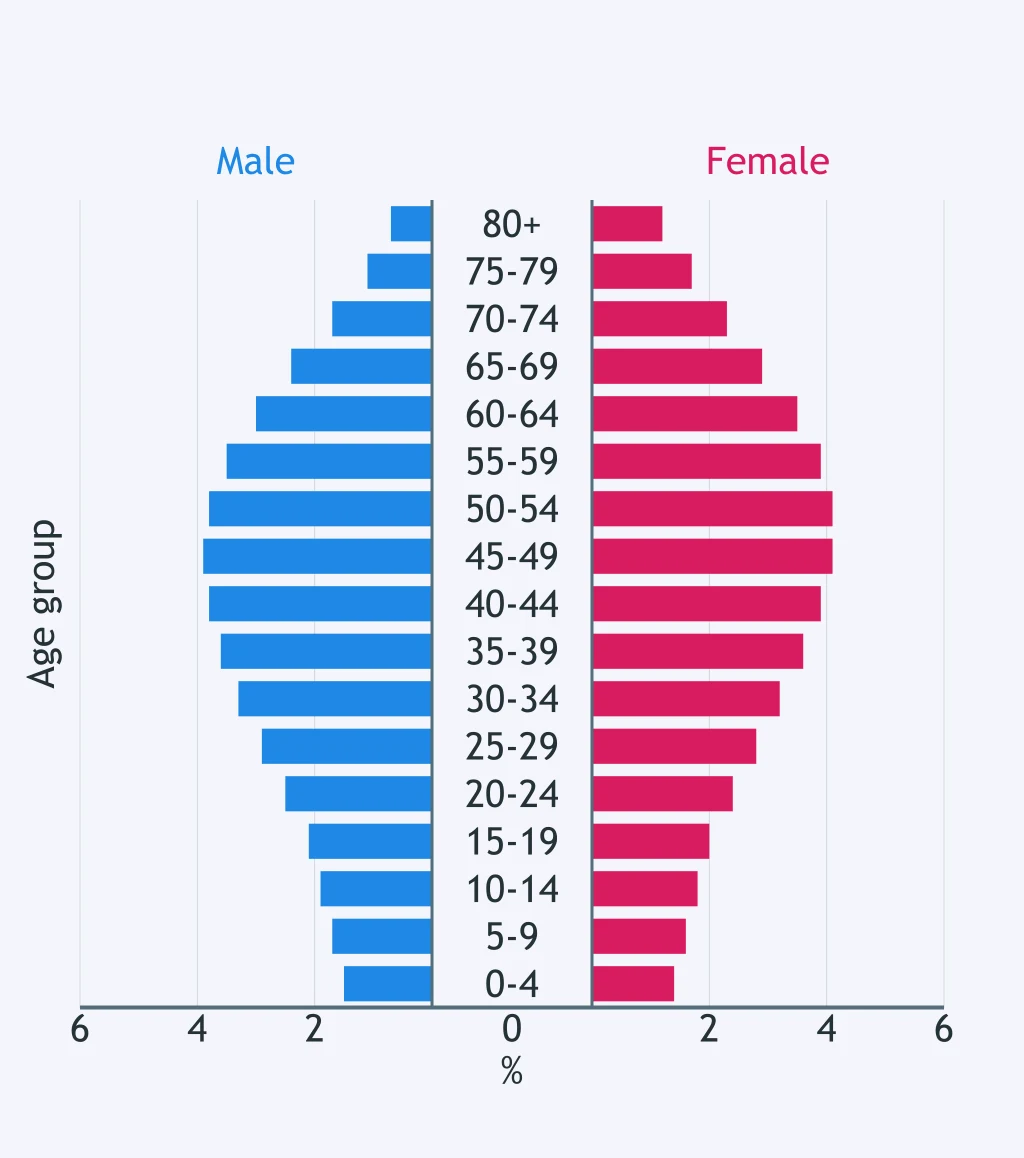
Use the pyramid. Which policy pressure is most likely?
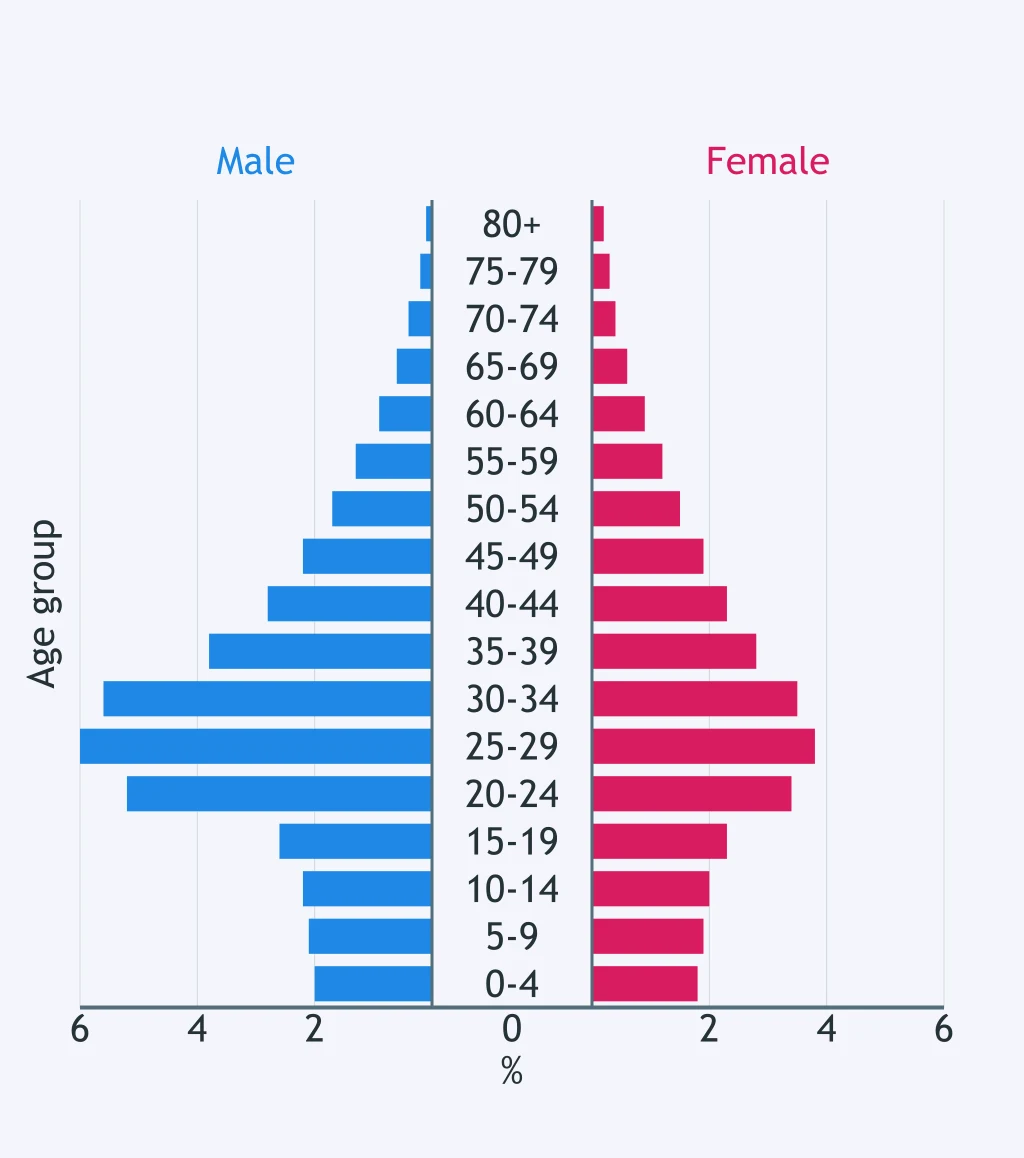
Use the pyramid. Which policy issue best fits this age structure?
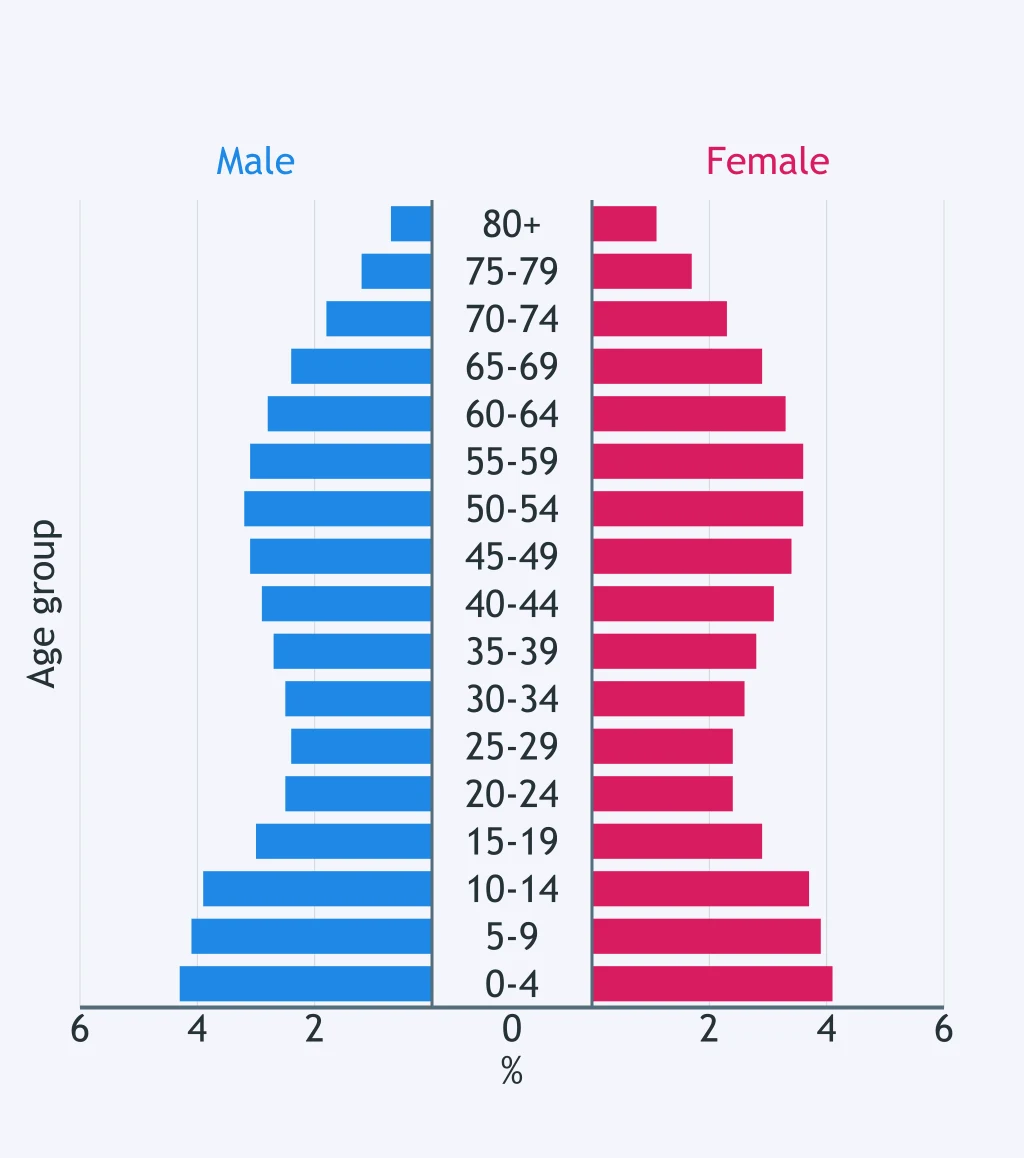

Population Distribution: Where People Live and Why
35 questions

Population Density: Arithmetic, Physiological and Agricultural
30 questions
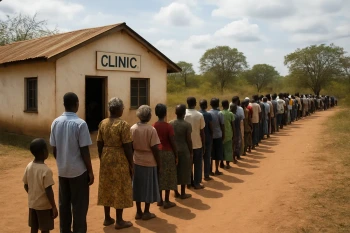
Consequences of Population Distribution and Carrying Capacity
25 questions

Population Composition: Sex Ratio, Dependency Ratio and Cohorts
30 questions

Population Dynamics: CBR, CDR, NIR, TFR and Doubling Time
35 questions
Crack the passcode before the zombies get in.
Answer, then swat bugs for bonus points.
Race through questions at your own speed.
Same question on every screen. Fastest wins.

Pick a tile, answer, hit bonuses and steals.