Loading
by BlastRoom
The rates that drive population change, and how to compute them.
#us_hs_human_geography

35 questions
One question set, multiple game modes. Tap any game to see it in action. Not sure which to pick?
Answer to place stones and capture territory.
Outrun the snow together.
Earn blasts, then hunt the other team.
Answer to earn energy, then climb.

The class blasts through walls together.
Bid on mystery lots. Most money wins.
Sell tours. Nice, standard, or a total scam.

Answer, restock, and serve the rush.
More correct answers pulls the rope your way.
Answer, then shoot down the alien wave.
Answer, then tap to leap the frozen ridge.
Use the table of crude rates. What is the rate of natural increase?
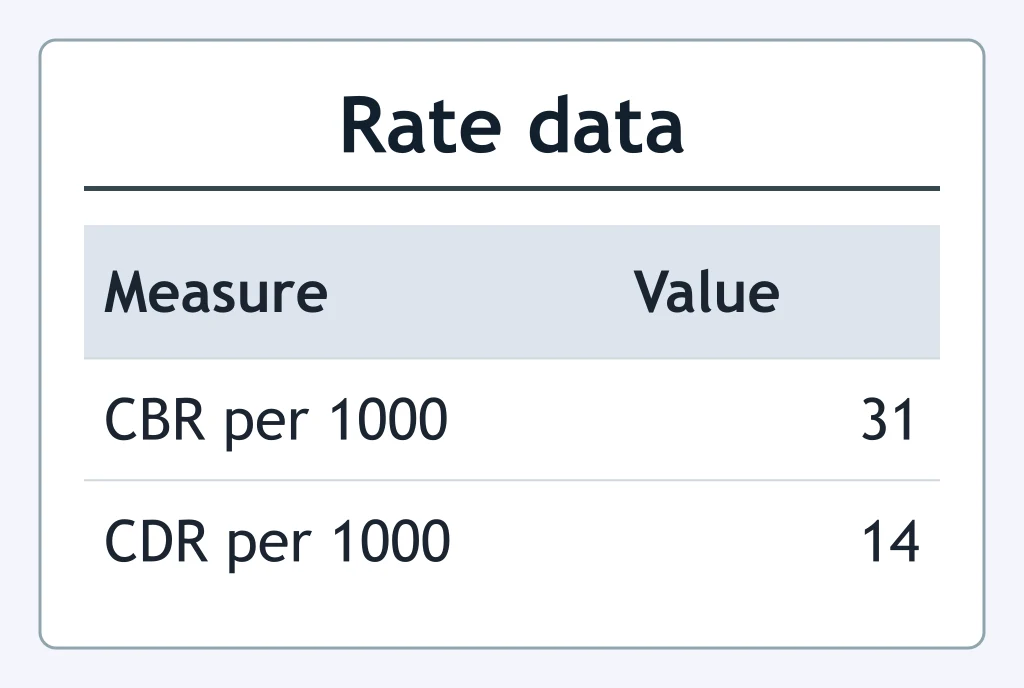
A country has a crude birth rate of 22 per 1,000 and a crude death rate of 7 per 1,000. What is its natural increase rate?
Use the table of crude rates. What is the country's natural increase rate?
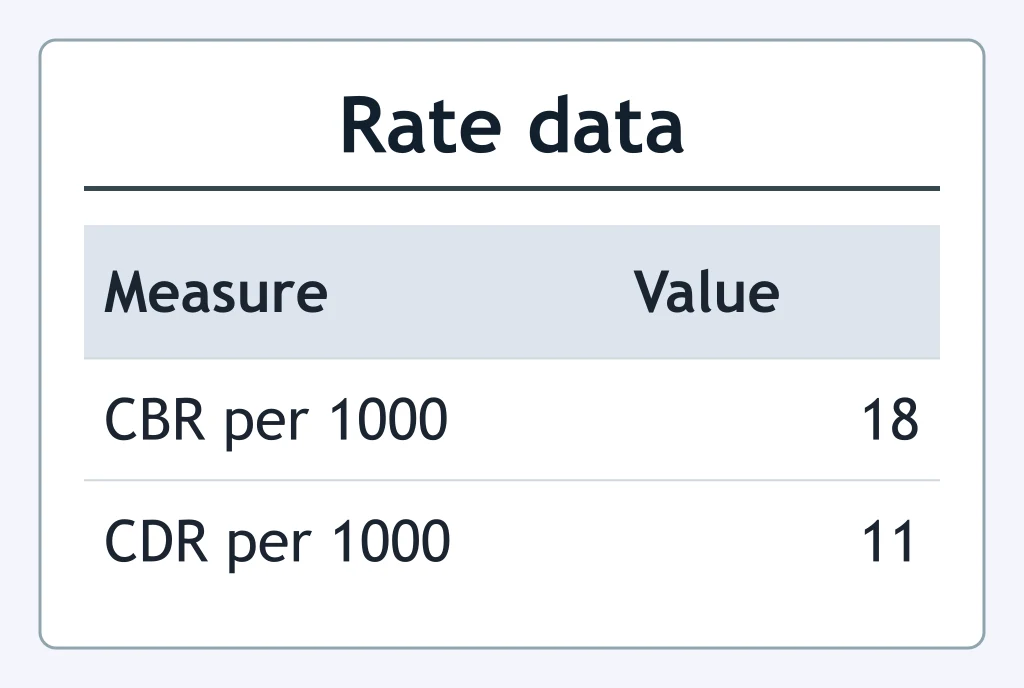
The crude birth rate is 36 per 1,000 and the crude death rate is 8 per 1,000. What is the natural increase rate?
A country records a crude birth rate of 12 per 1,000 and a crude death rate of 10 per 1,000. What is its natural increase rate?
A country's crude birth rate and crude death rate are both 15 per 1,000. What is its natural increase rate?
Use the table of crude rates. What is the natural increase rate?
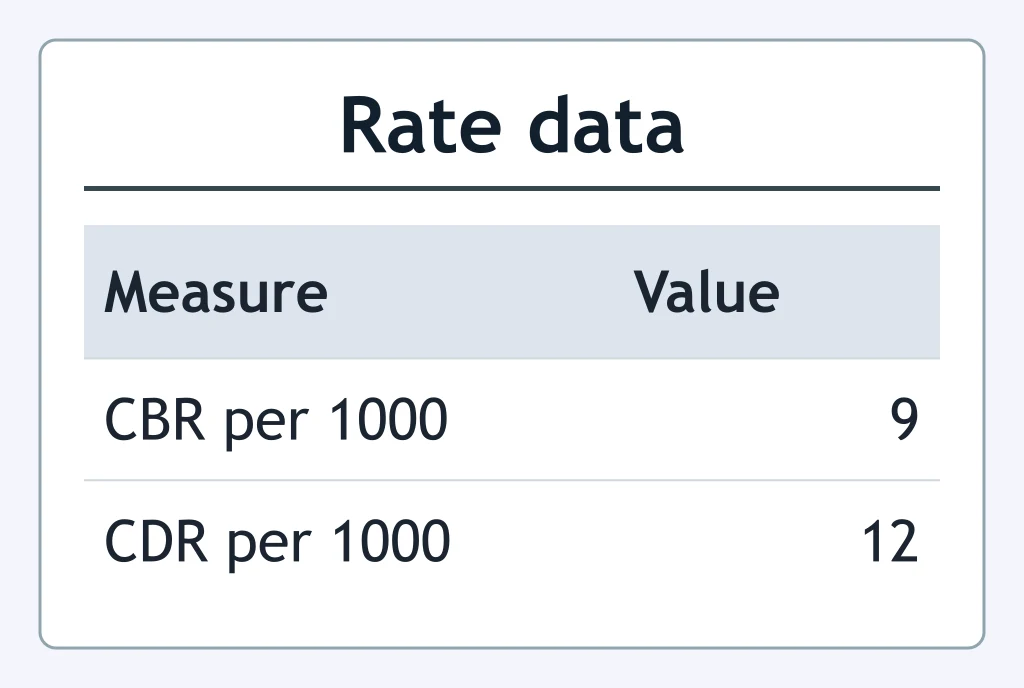
A country has a crude birth rate of 41 per 1,000 and a crude death rate of 16 per 1,000. What is its natural increase rate?
Use the line graph. At the final year shown, about how long would the population take to double if that growth rate stayed constant?
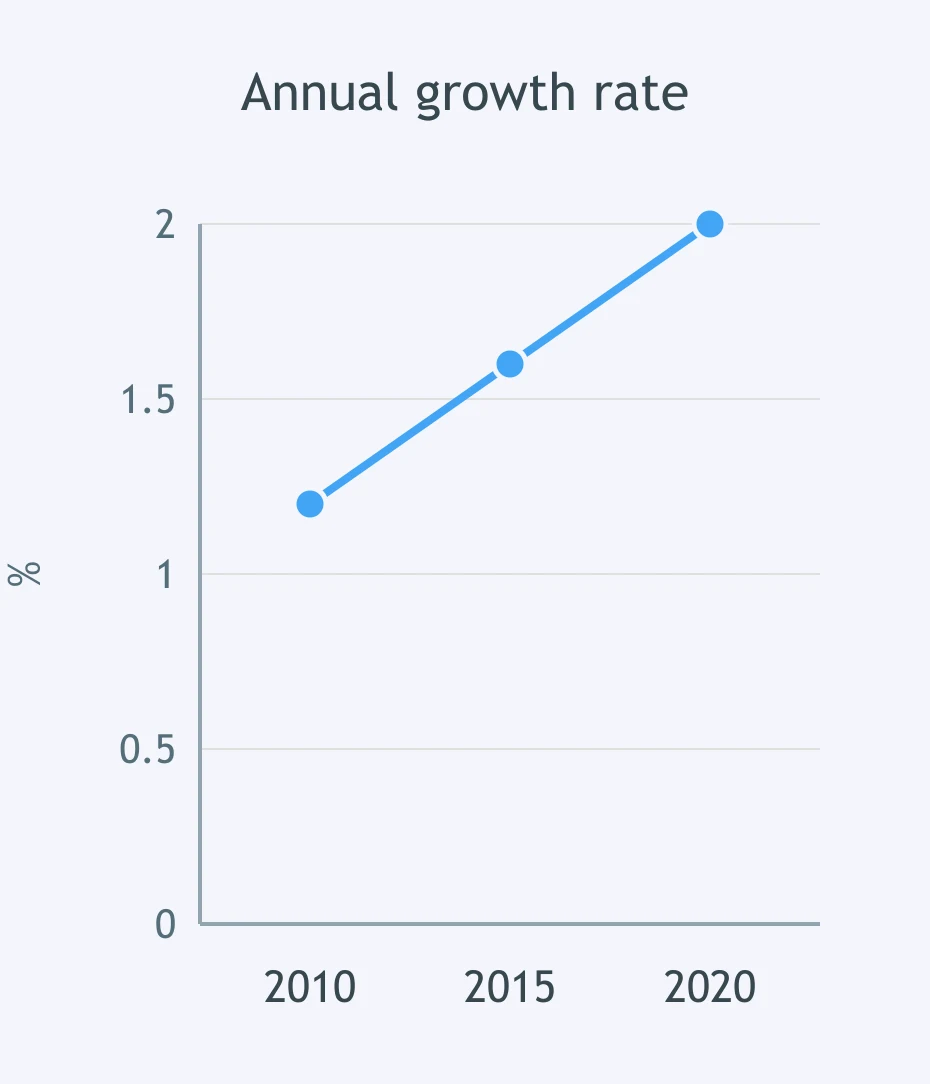
A country's population is growing at 1.4 percent per year. Using the rule of 70, what is its approximate doubling time?
Use the table. If the annual growth rate stays the same, about how long will the population take to double?
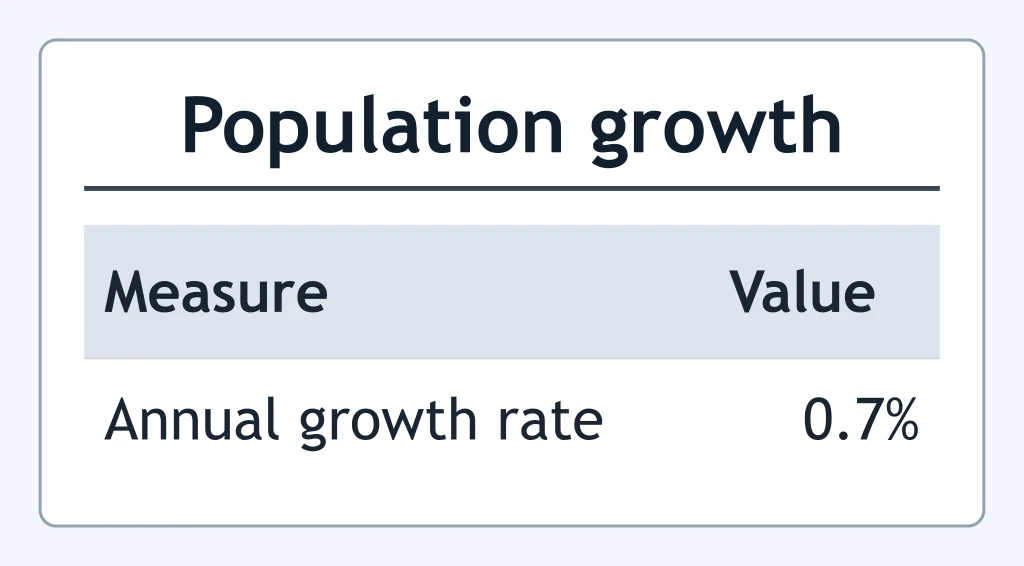
A country's population grows by 3.5 percent each year. Using the rule of 70, what is the approximate doubling time?
A country's annual population growth rate is 2.8 percent. Using the rule of 70, about how many years will it take to double?
A population grows at 0.5 percent per year. Using the rule of 70, what is the approximate doubling time?
A country has a steady annual growth rate of 1.75 percent. Using the rule of 70, about when would its population double?
Use the line graph of total fertility rate. By the final year, what long-run trend is most likely without migration?
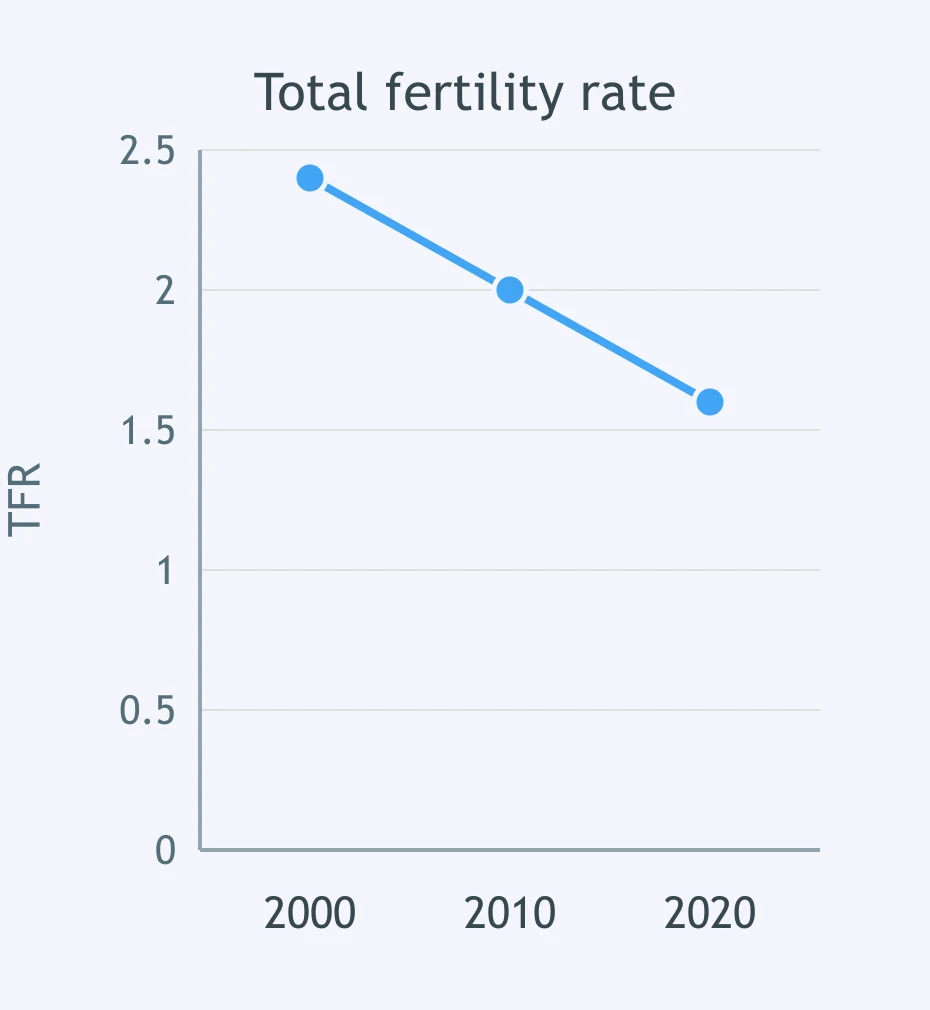
A country has a total fertility rate of 3.4 births per woman. With mortality and migration unchanged, what does that imply?
Use the table. How should the total fertility rate be interpreted?
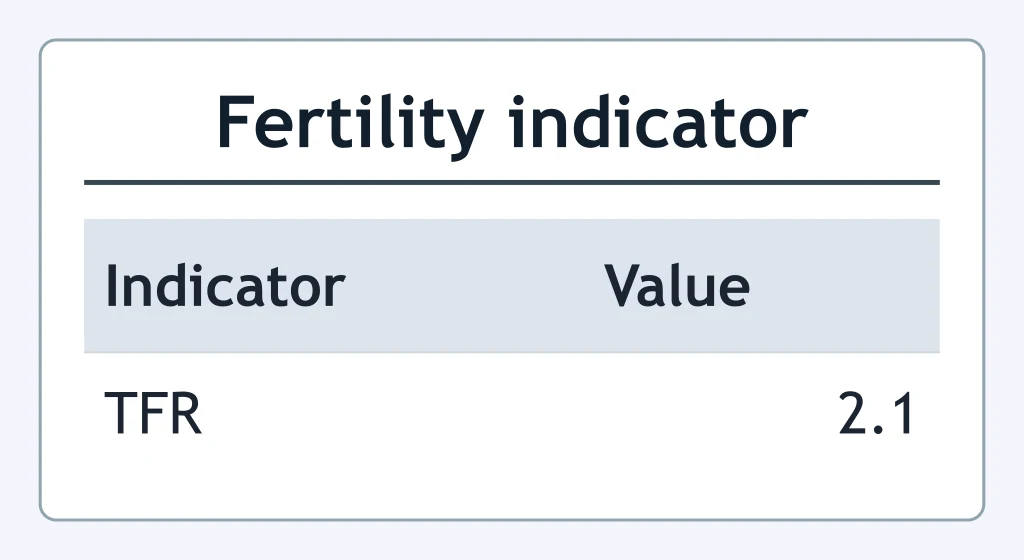
A country's total fertility rate has fallen to 1.2 births per woman. Without migration, what does this suggest over the long run?
Use the line graph of total fertility rate. By the final year, what does the rate imply relative to replacement level?
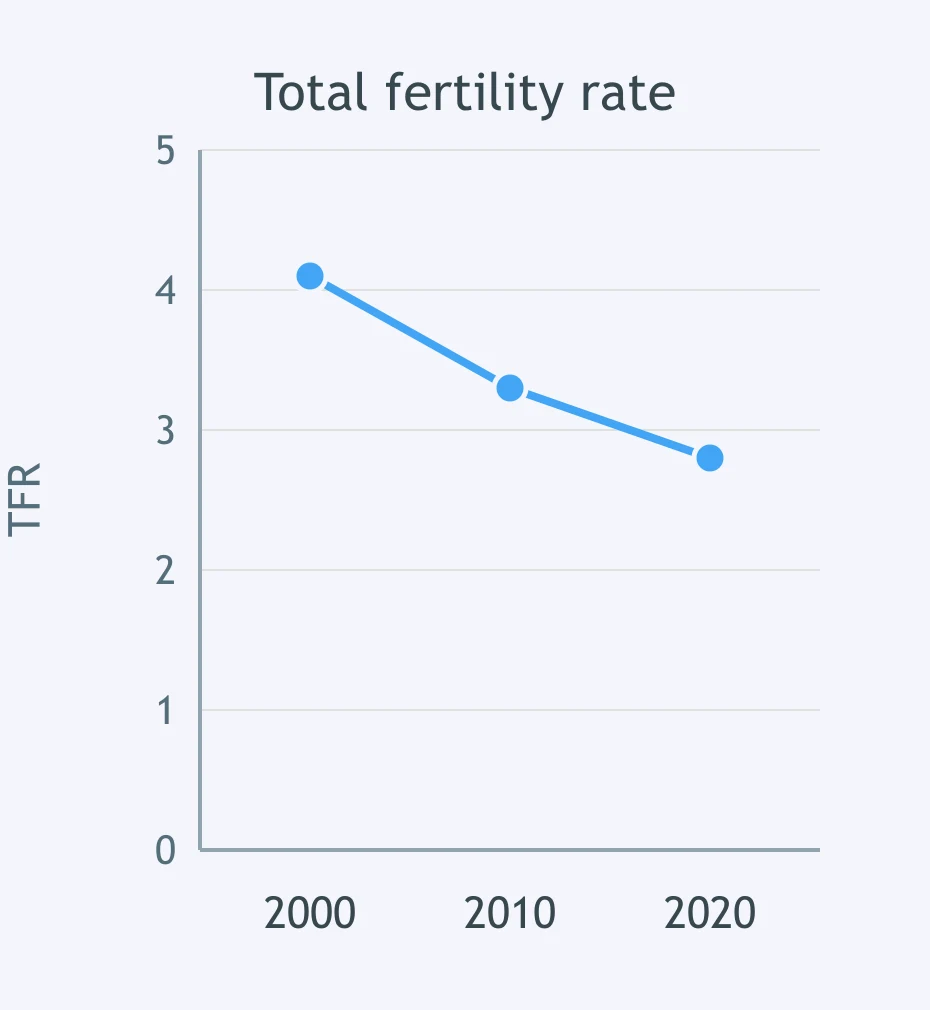
A country's TFR is 1.8, but this year's CBR is still higher than its CDR. What is the best conclusion?
A country has a TFR near 2.1, a crude birth rate of 9 per 1,000, and a crude death rate of 12 per 1,000. What do the crude rates show for this year?
Use the table of crude rates. Which country has the highest natural increase rate?
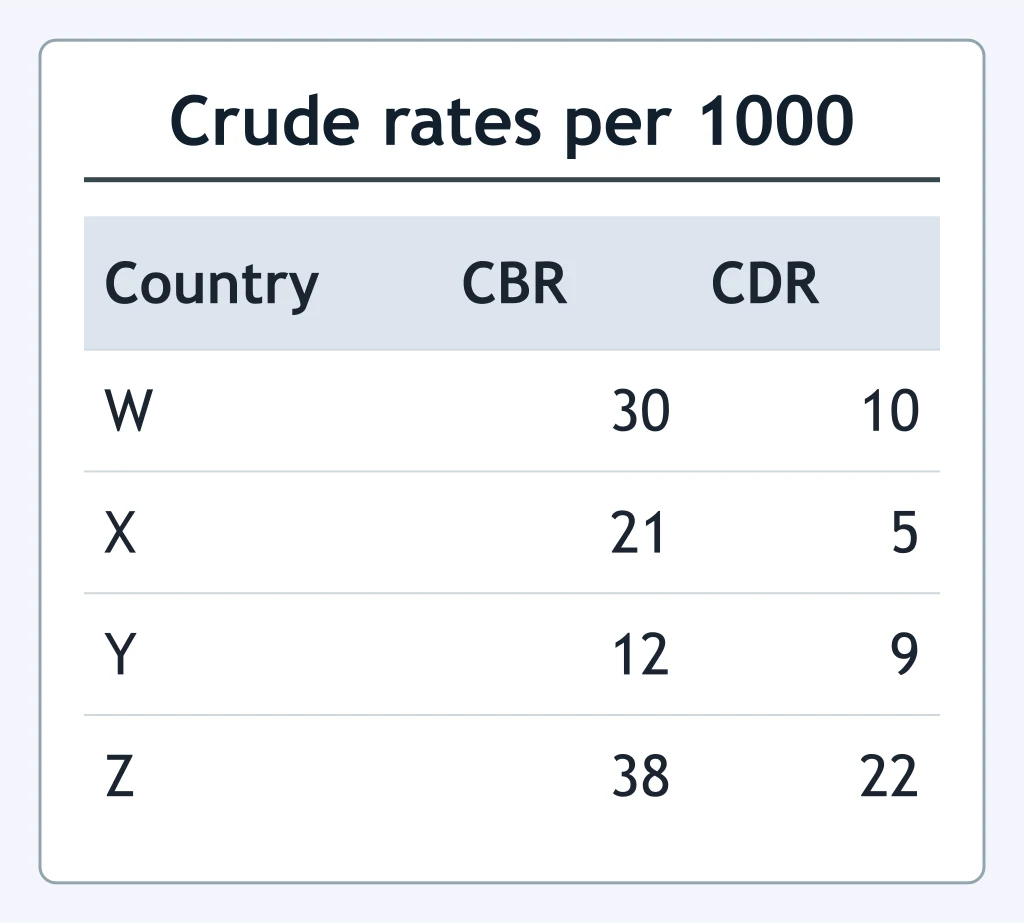
Use the table of crude rates. Which country is experiencing natural decrease?
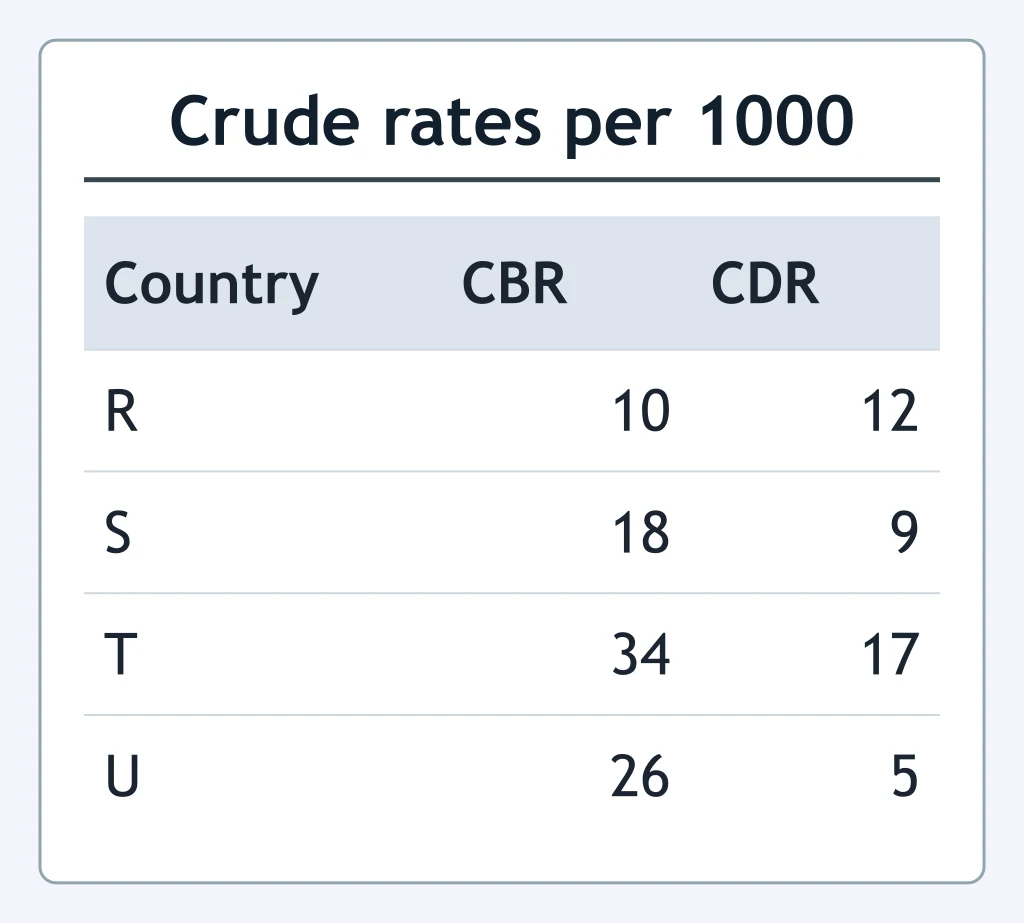
Use the table of total fertility rates. Which country is farthest above replacement level?
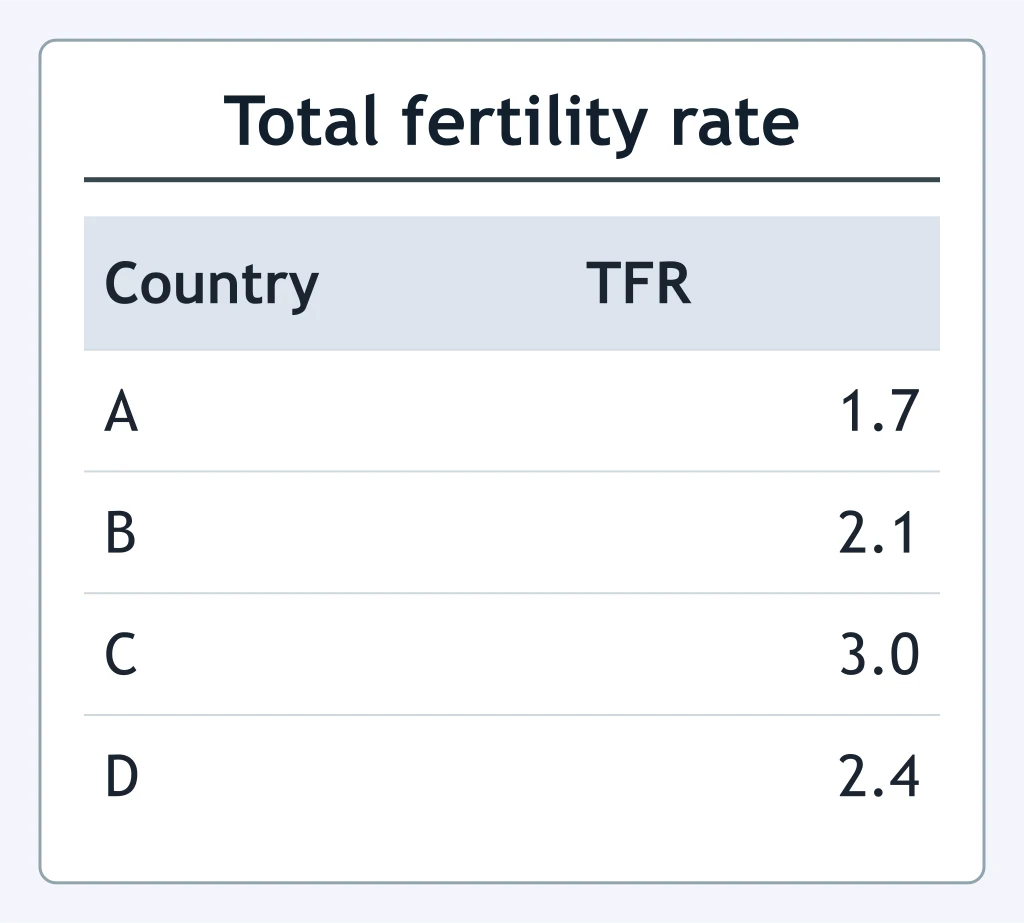
Use the table of crude rates. Which country has the slowest natural increase?
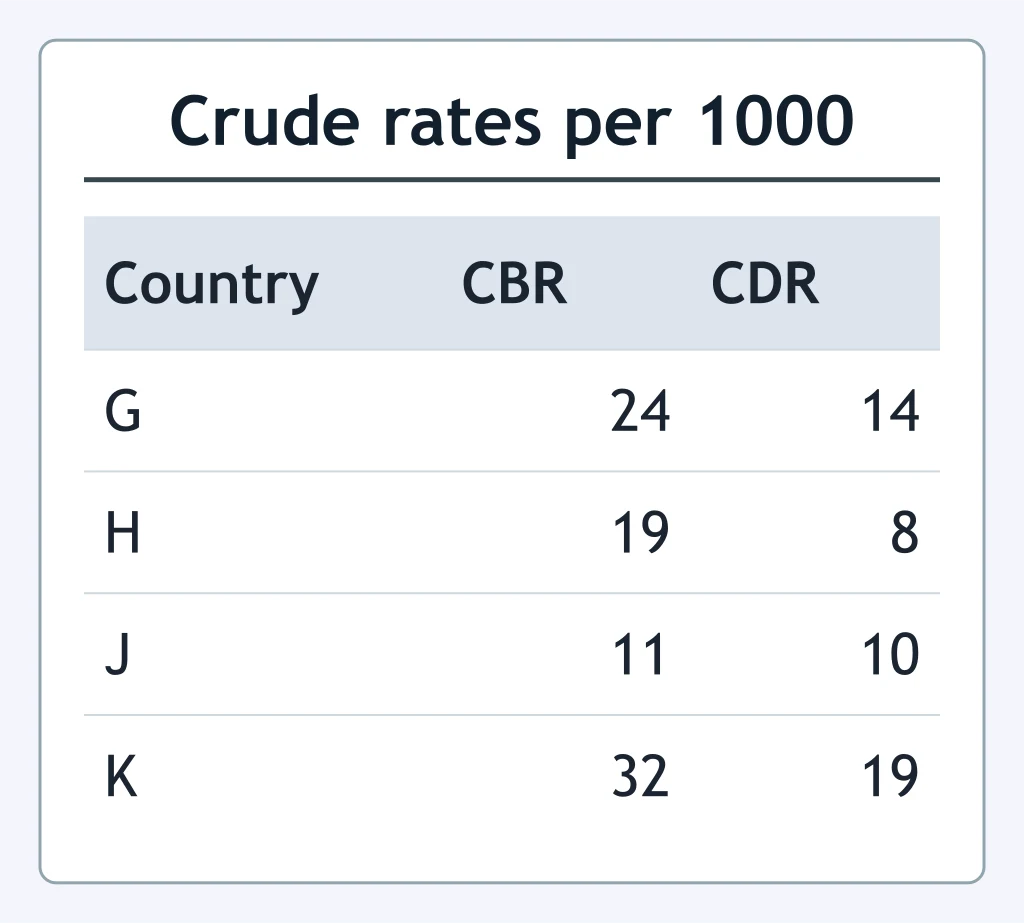
Use the table of annual growth rates. Which country is growing fastest by the rate shown?
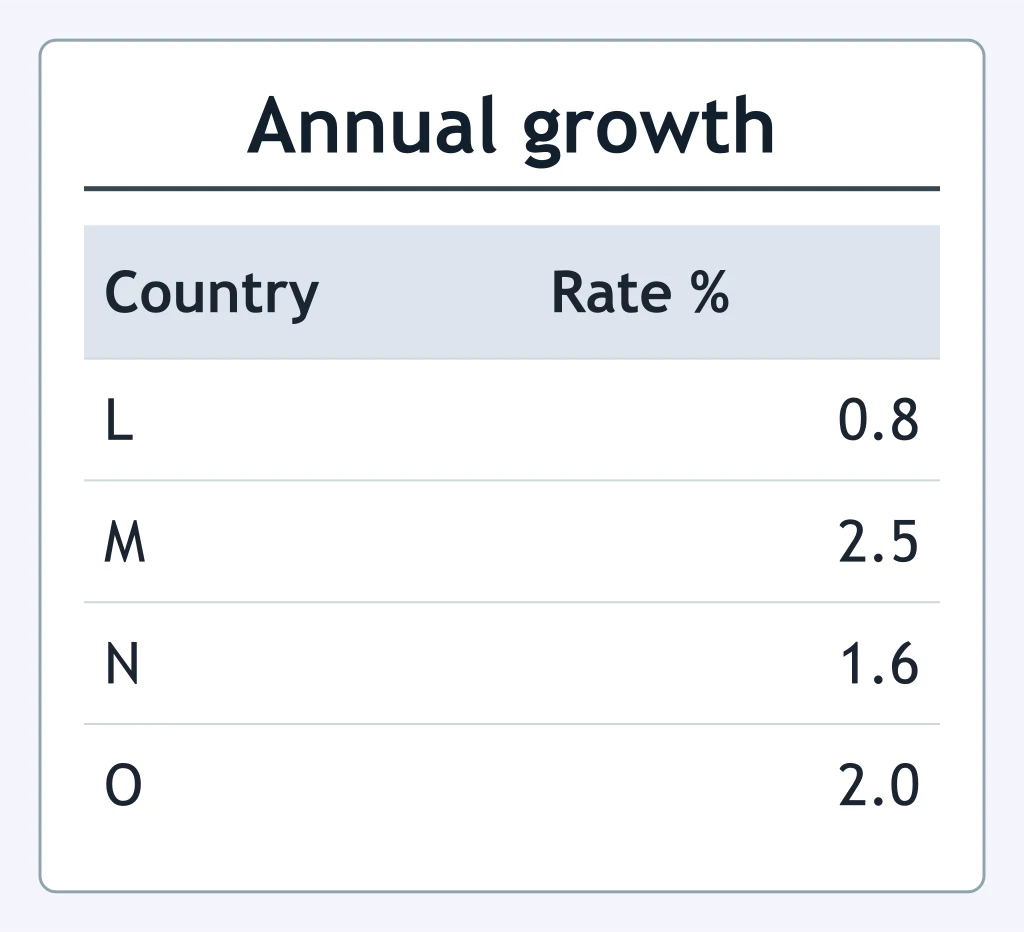
Use the crude-rate table. From natural increase alone, which country would have the shortest doubling time?
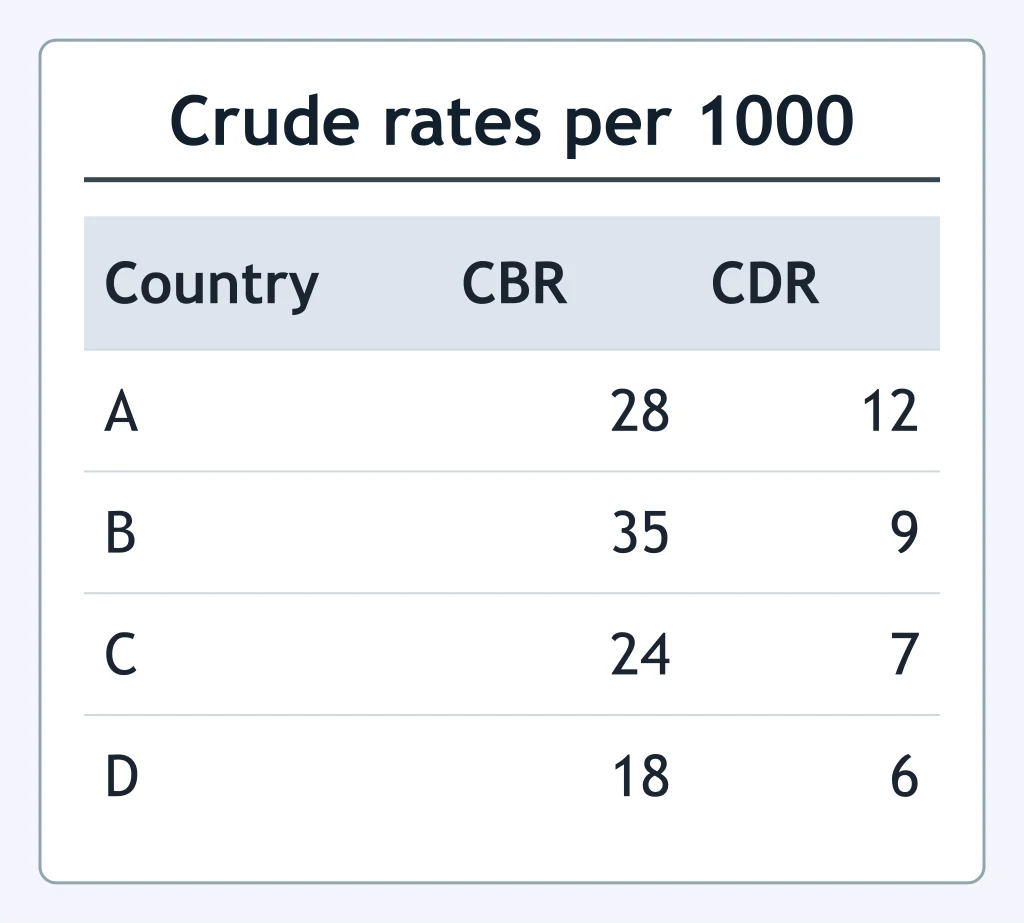
Use the table of total fertility rates. Which country is farthest below replacement level?
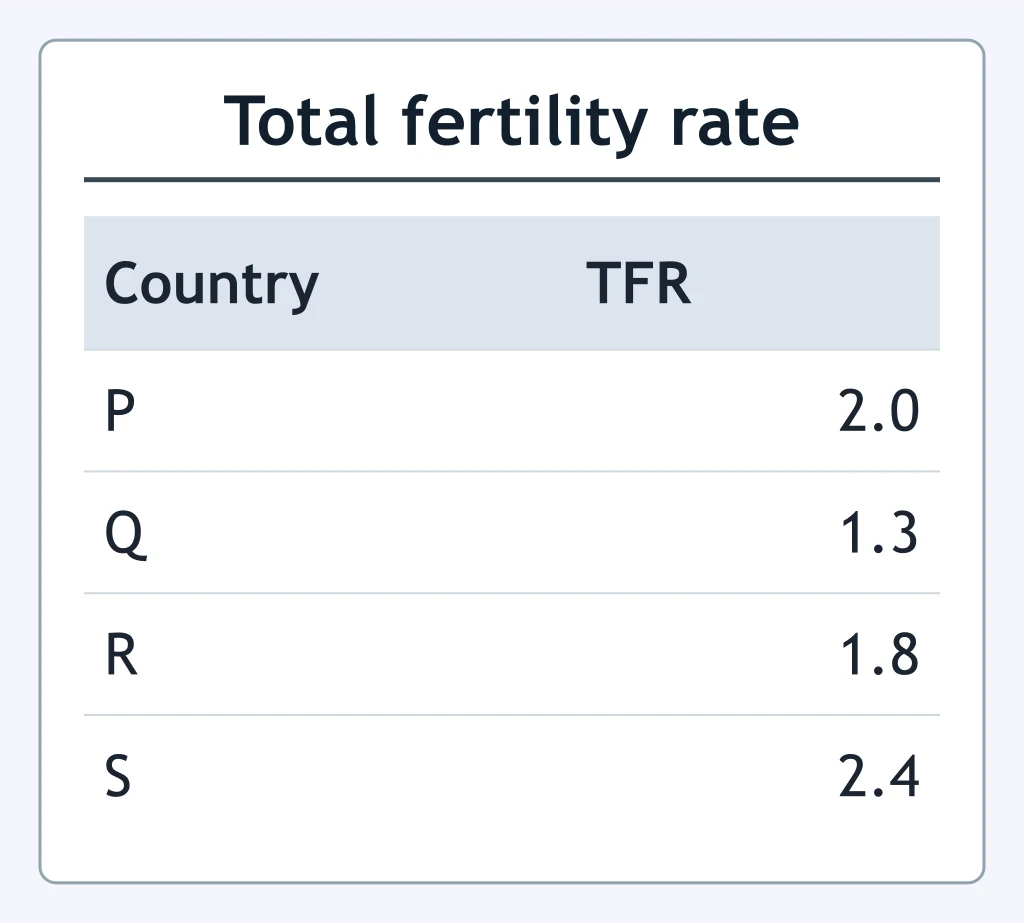
A country's crude birth rate equals its crude death rate, but the population grew by 0.6 percent last year. What explains the growth?
A country has a natural increase rate of 1.2 percent, but its total population growth is only 0.4 percent. What must be happening?
A country has natural decrease of 0.4 percent, yet its total population grew by 0.2 percent. What accounts for the difference?
A country's CBR exceeds its CDR by 10 per 1,000, and its total population growth is 1.0 percent. What is net migration's contribution?
A country reports total population growth of 2.5 percent and natural increase of 1.8 percent. What is the net migration contribution?
A country has a CBR of 20 per 1,000, a CDR of 8 per 1,000, and net migration of -0.5 percent. What is its total population growth rate?
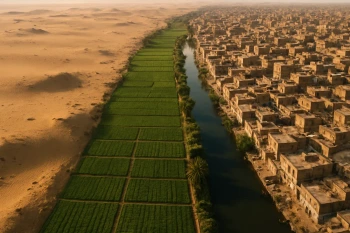
Population Density: Arithmetic, Physiological and Agricultural
30 questions
Consequences of Population Distribution and Carrying Capacity
25 questions

Population Composition: Sex Ratio, Dependency Ratio and Cohorts
30 questions

Reading Population Pyramids
35 questions

The Demographic Transition Model
40 questions
Crack the passcode before the zombies get in.
Answer, then swat bugs for bonus points.
Race through questions at your own speed.
Same question on every screen. Fastest wins.

Pick a tile, answer, hit bonuses and steals.