Loading
by BlastRoom
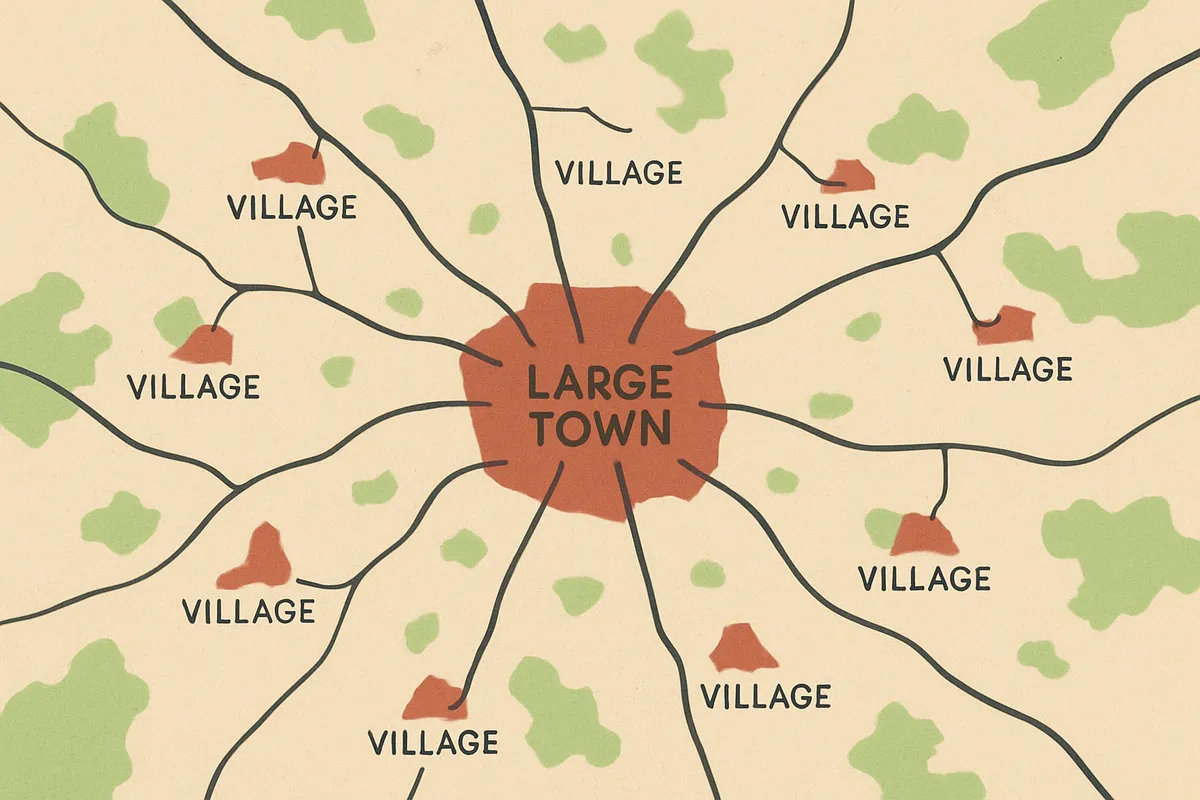
Why cities come in a predictable range of sizes, spaced a predictable distance apart.
#us_hs_human_geography
45 questions
One question set, multiple game modes. Tap any game to see it in action. Not sure which to pick?
Answer to place stones and capture territory.
Outrun the snow together.
Earn blasts, then hunt the other team.
Answer to earn energy, then climb.

The class blasts through walls together.
Bid on mystery lots. Most money wins.
Sell tours. Nice, standard, or a total scam.

Answer, restock, and serve the rush.
More correct answers pulls the rope your way.
Answer, then shoot down the alien wave.
Answer, then tap to leap the frozen ridge.
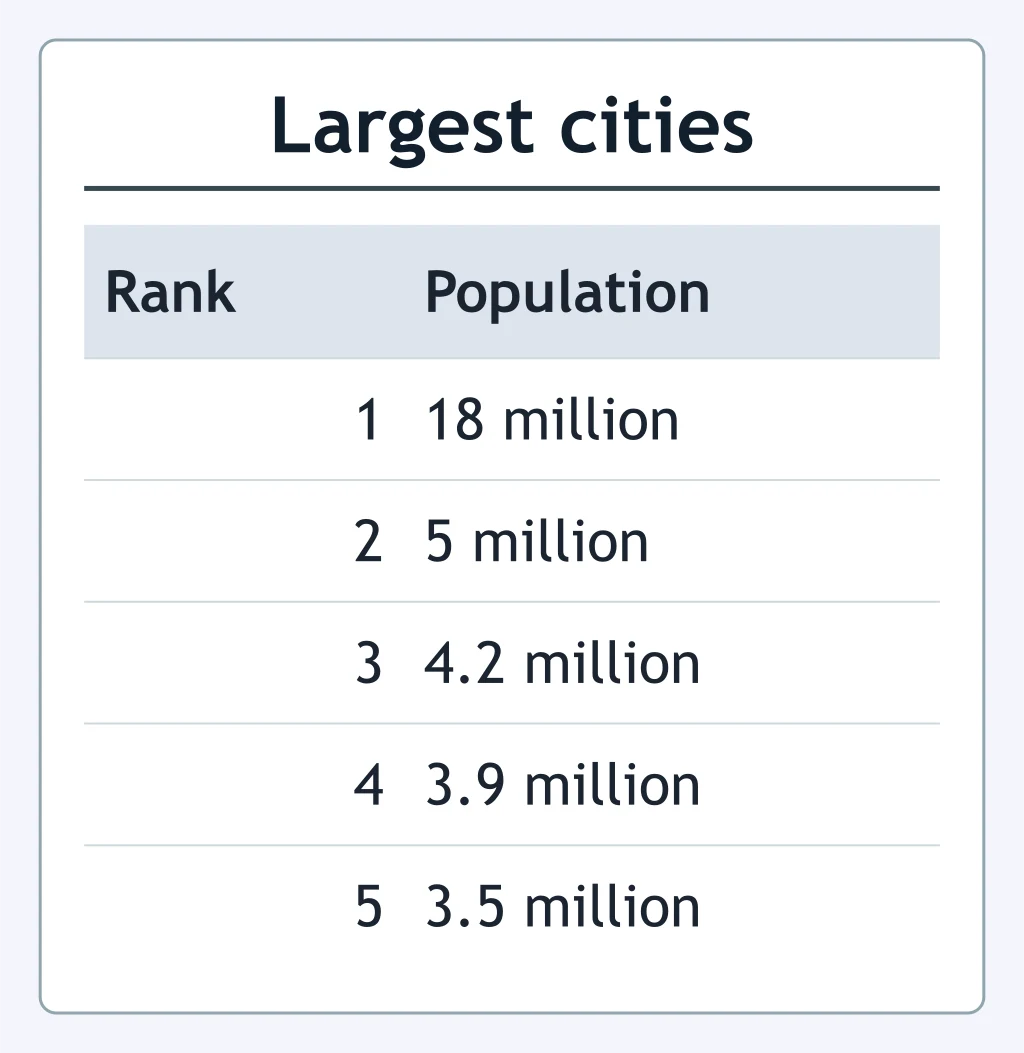
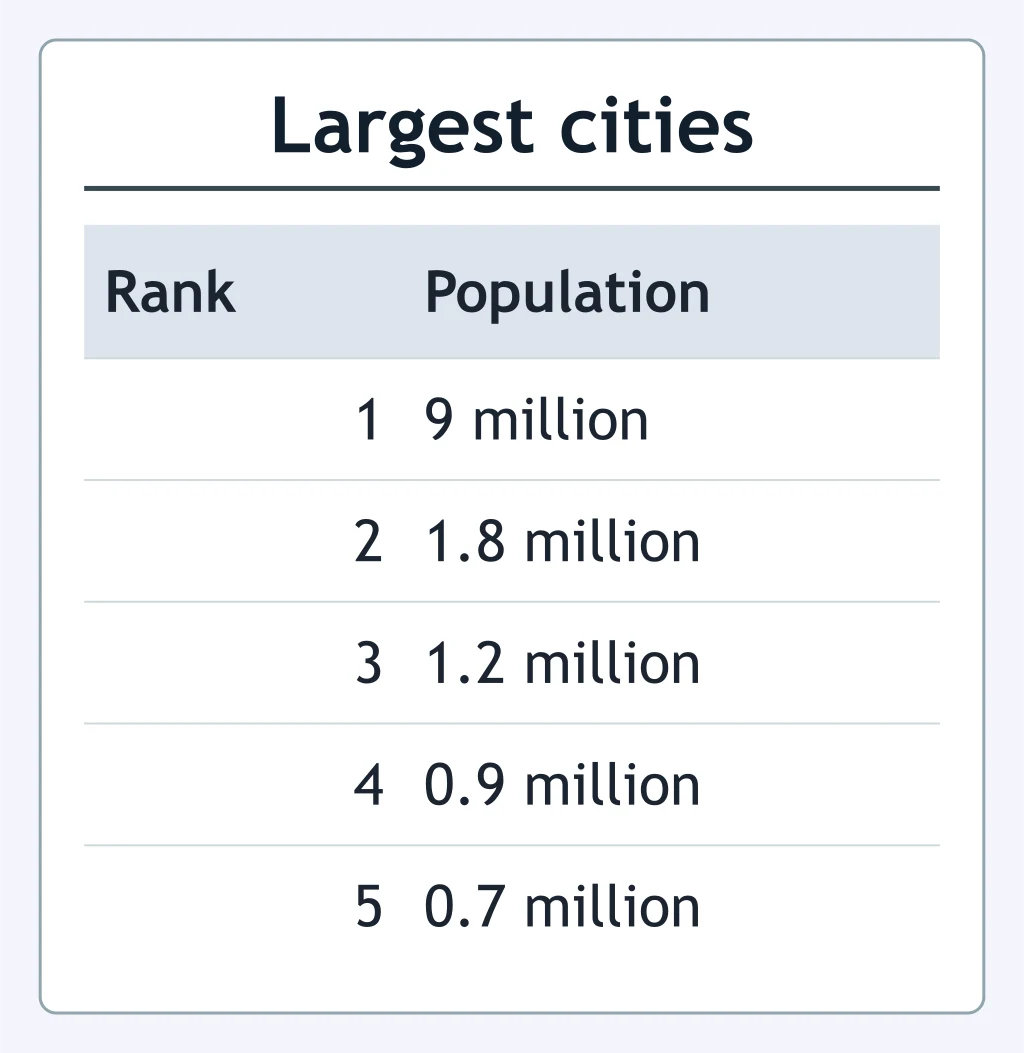
Use the table. If this urban system follows the rank-size rule, what population is predicted for the fourth-largest city?
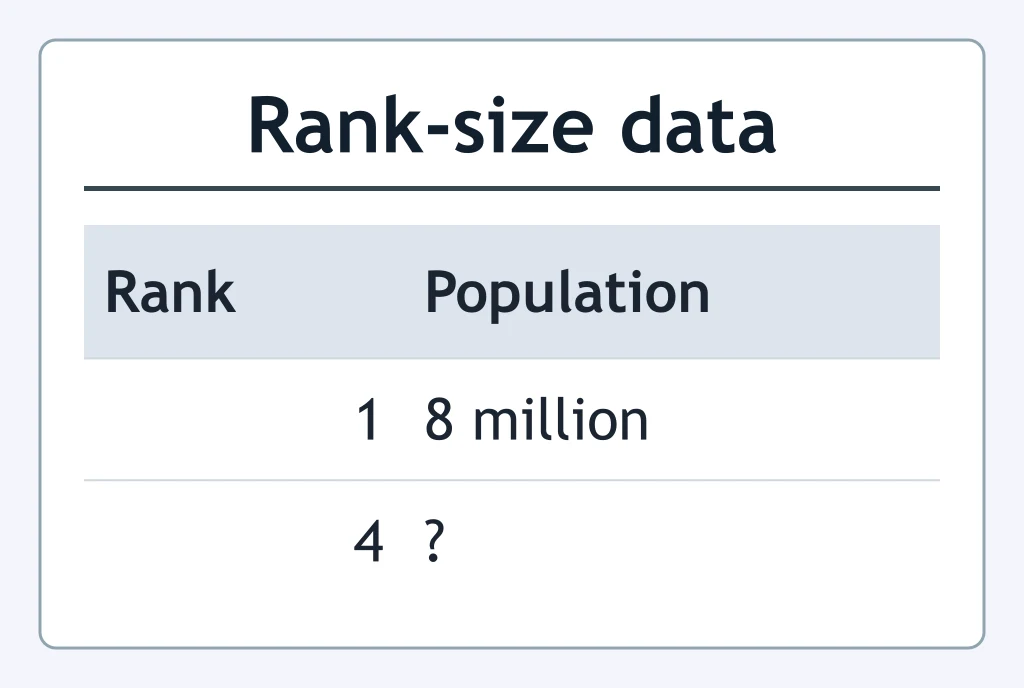
Use the table. A country follows the rank-size rule. What population should its third-largest city have?
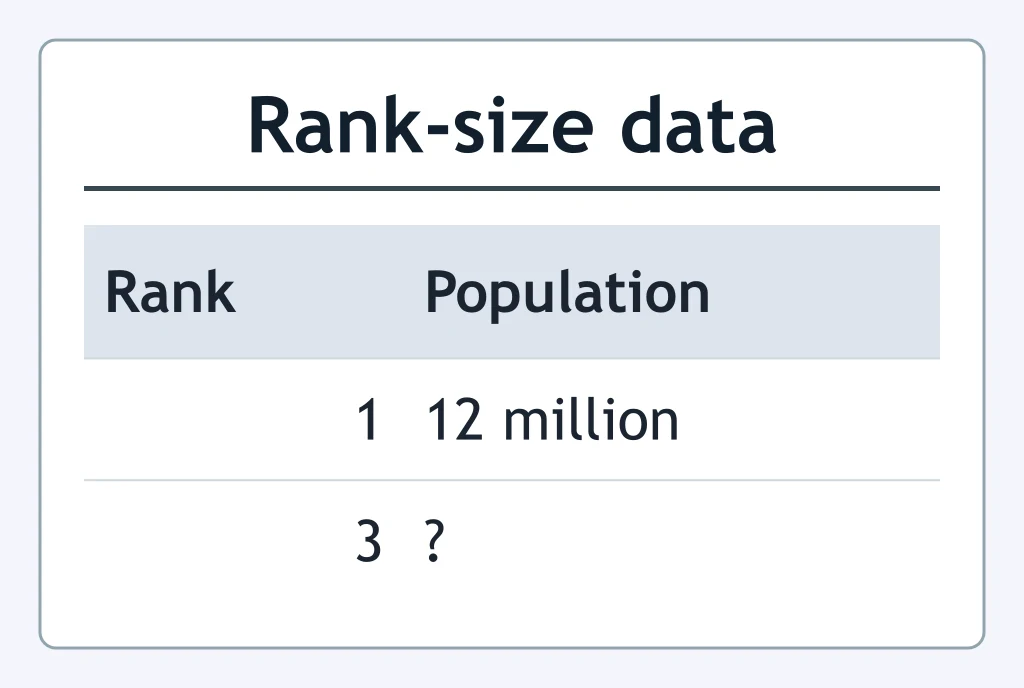
Use the table. If the rank-size rule applies, what population is predicted for the second-largest city?
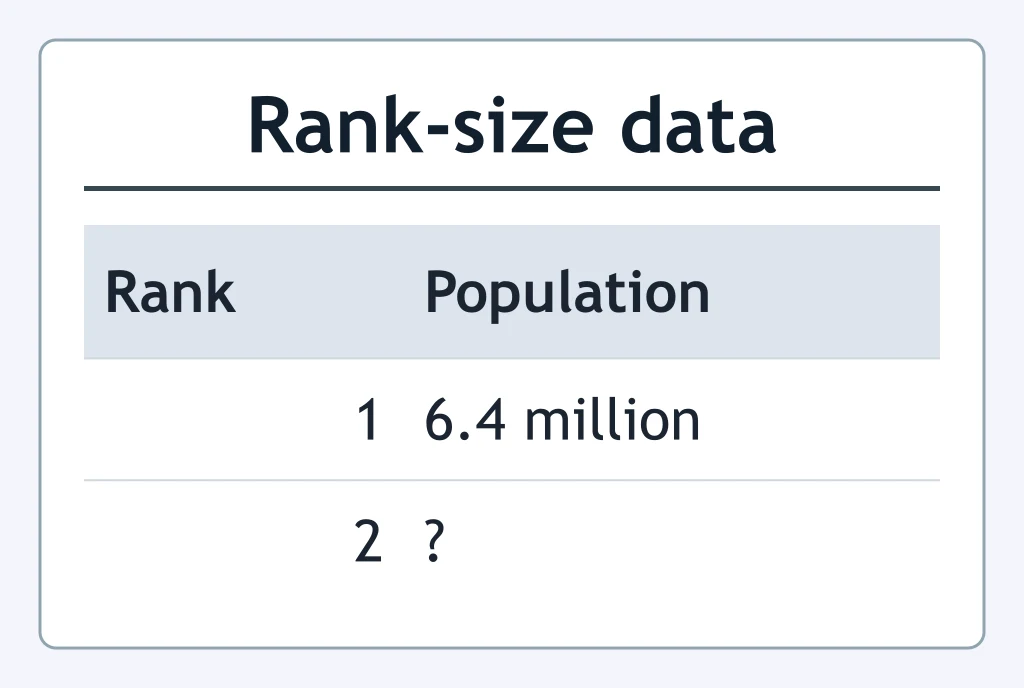
Use the table. In a rank-size urban system, what population is expected for the fifth-largest city?
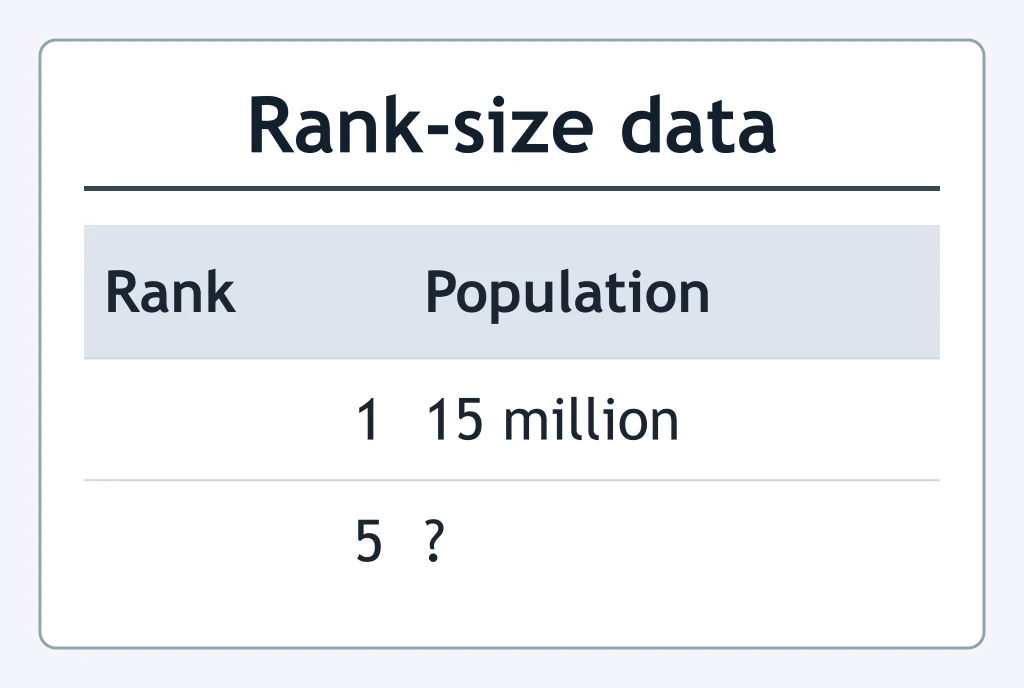
Use the table. If the country follows the rank-size rule, what population should the sixth-largest city have?
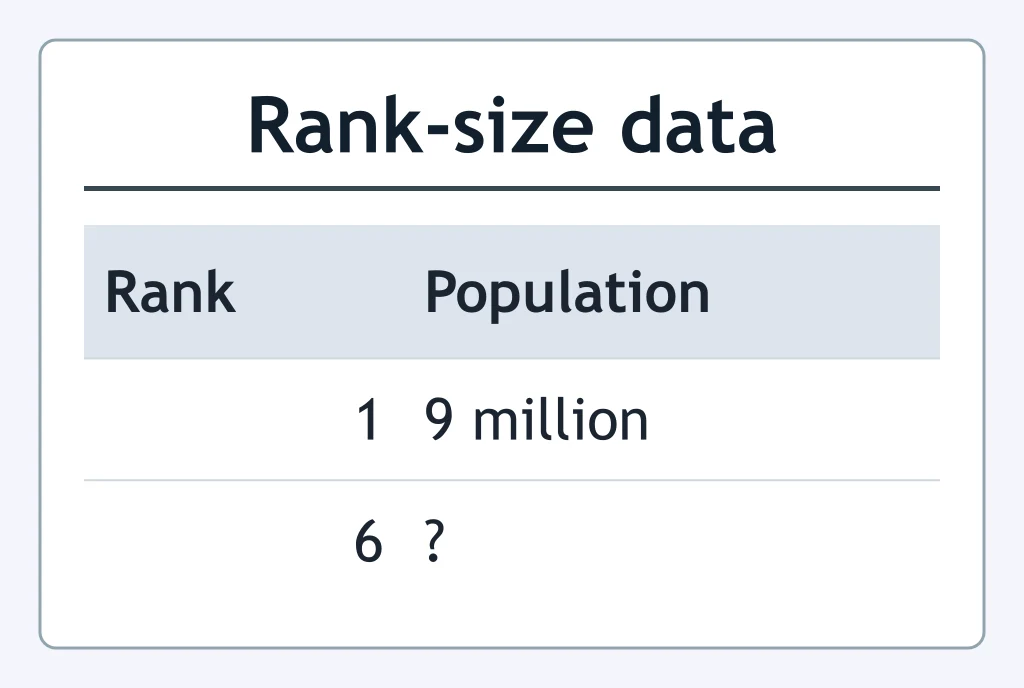
Use the table. A planner applies the rank-size rule. What population is predicted for the fourth-ranked city?
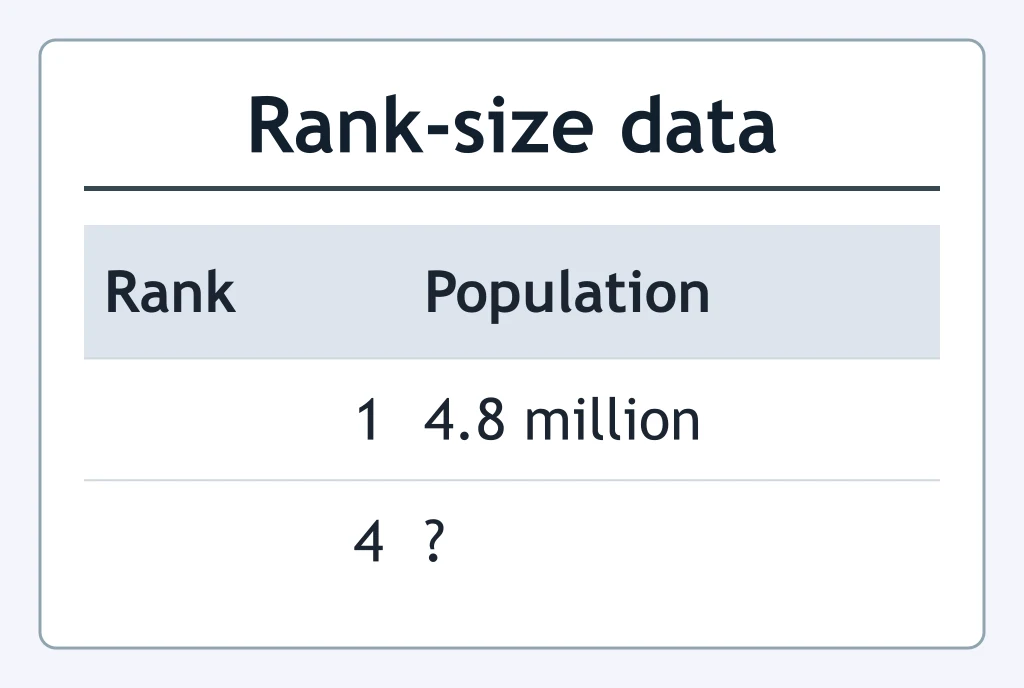
Use the table. If the rank-size rule holds, what is the predicted population of the second-ranked city?
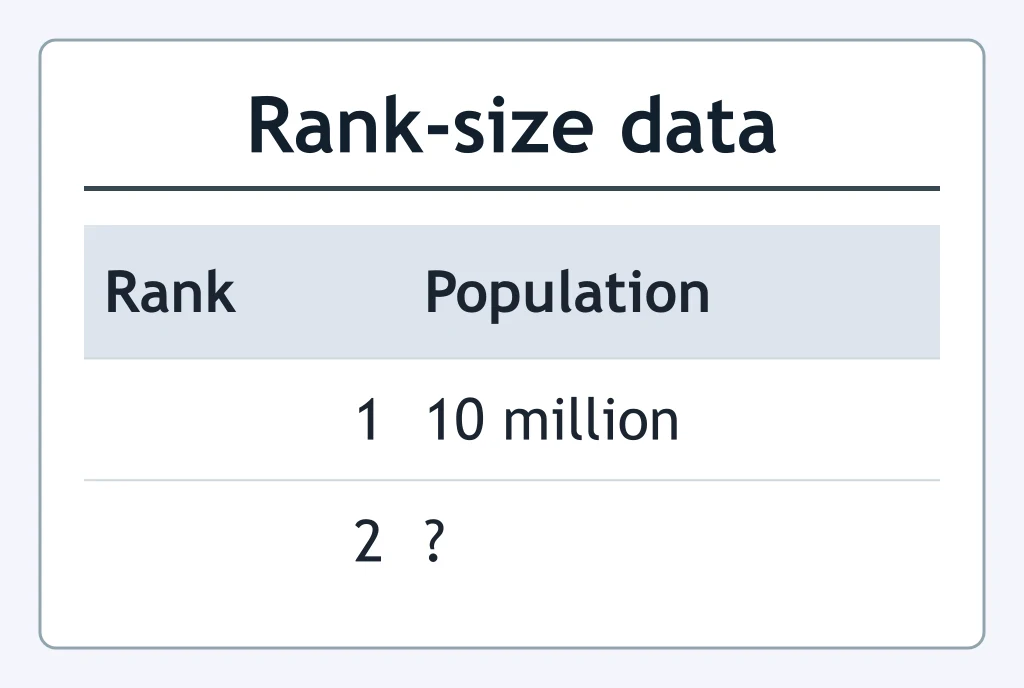
Use the table. For a country that follows the rank-size rule, what population is predicted for the third-largest city?
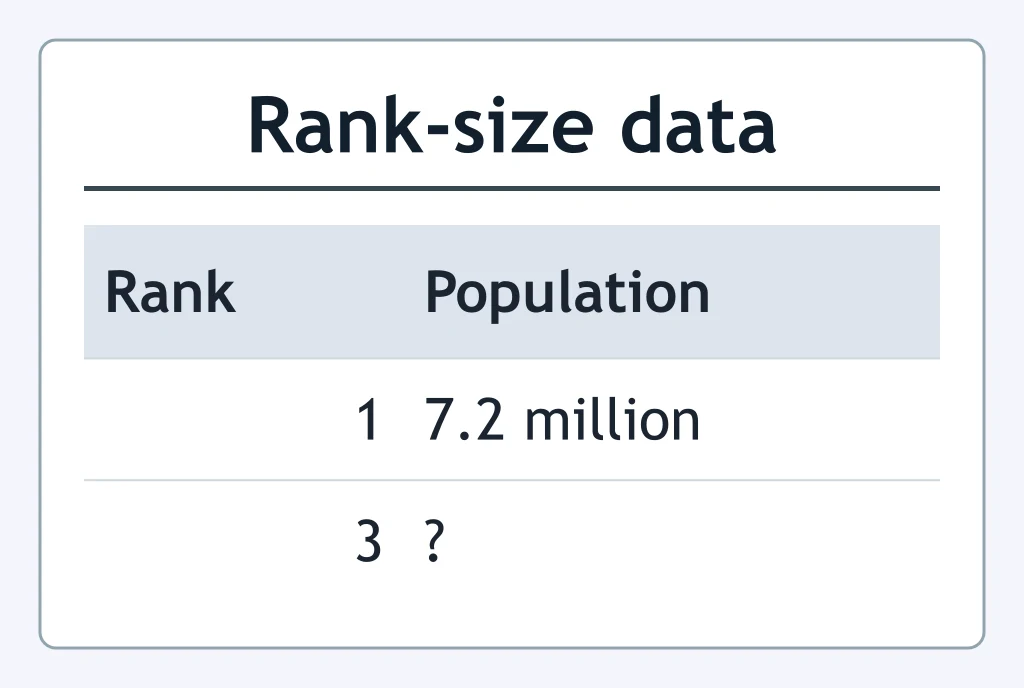
Use the table to describe this country's urban system.
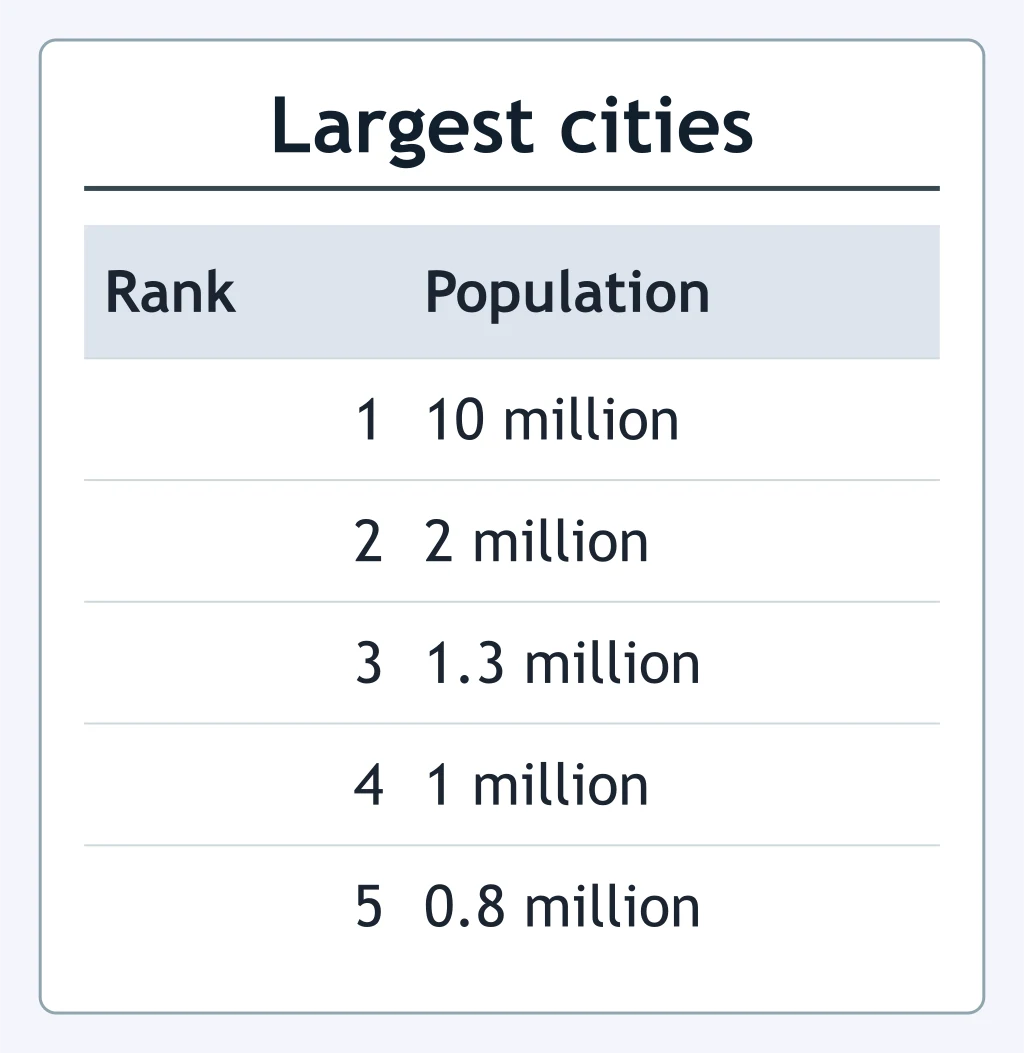
Use the line graph. The pattern of city populations best matches what urban-system idea?
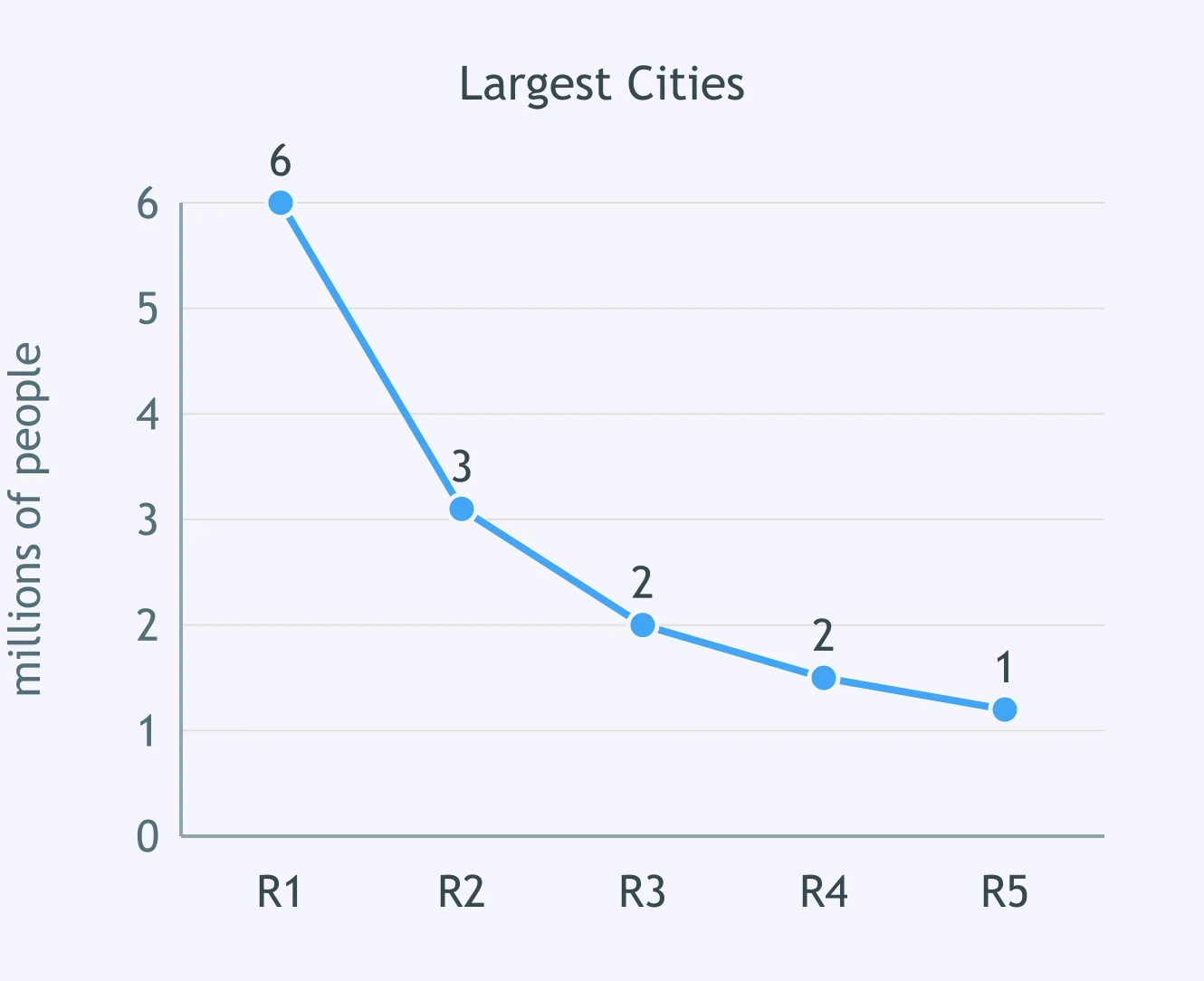
Use the table. The gap between the first city and the other cities indicates what pattern?
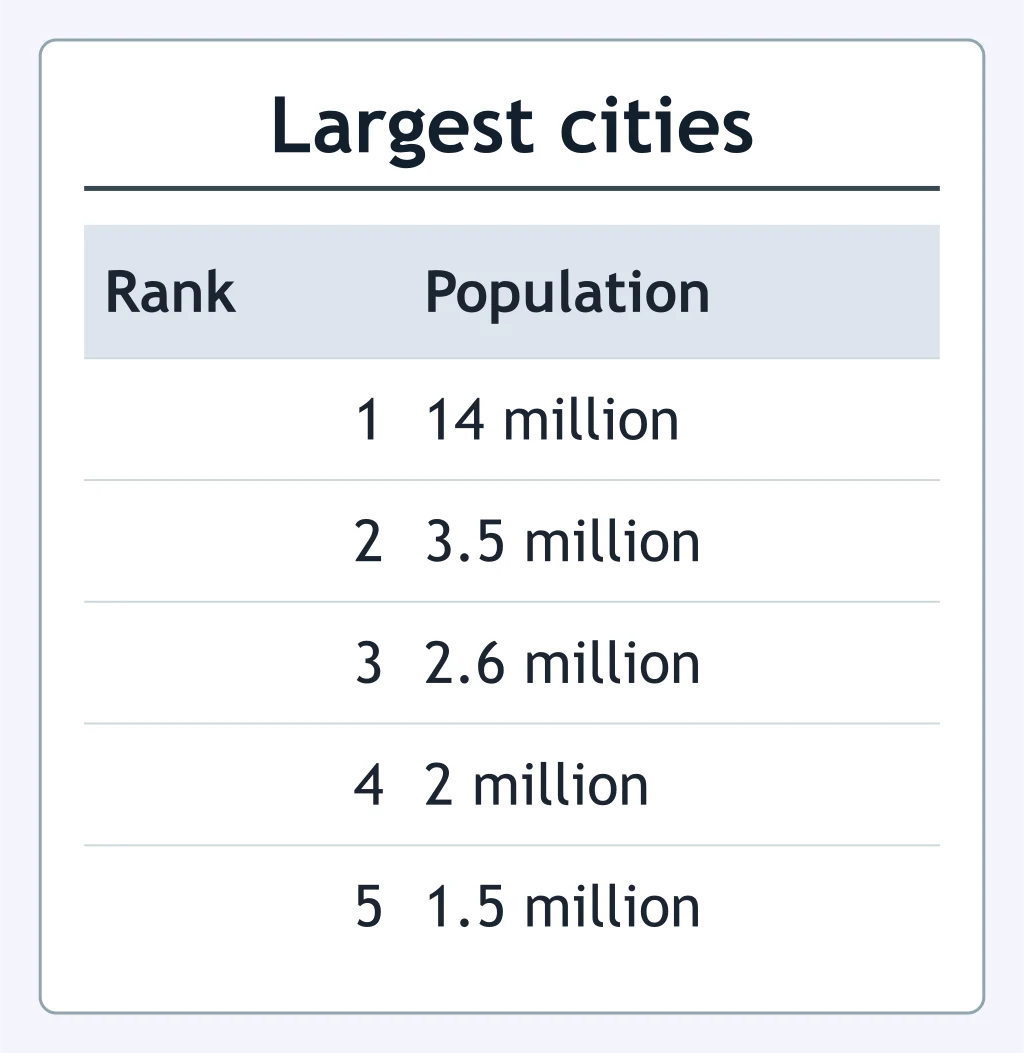
Use the line graph. A geographer would most likely classify the distribution as what kind of pattern?
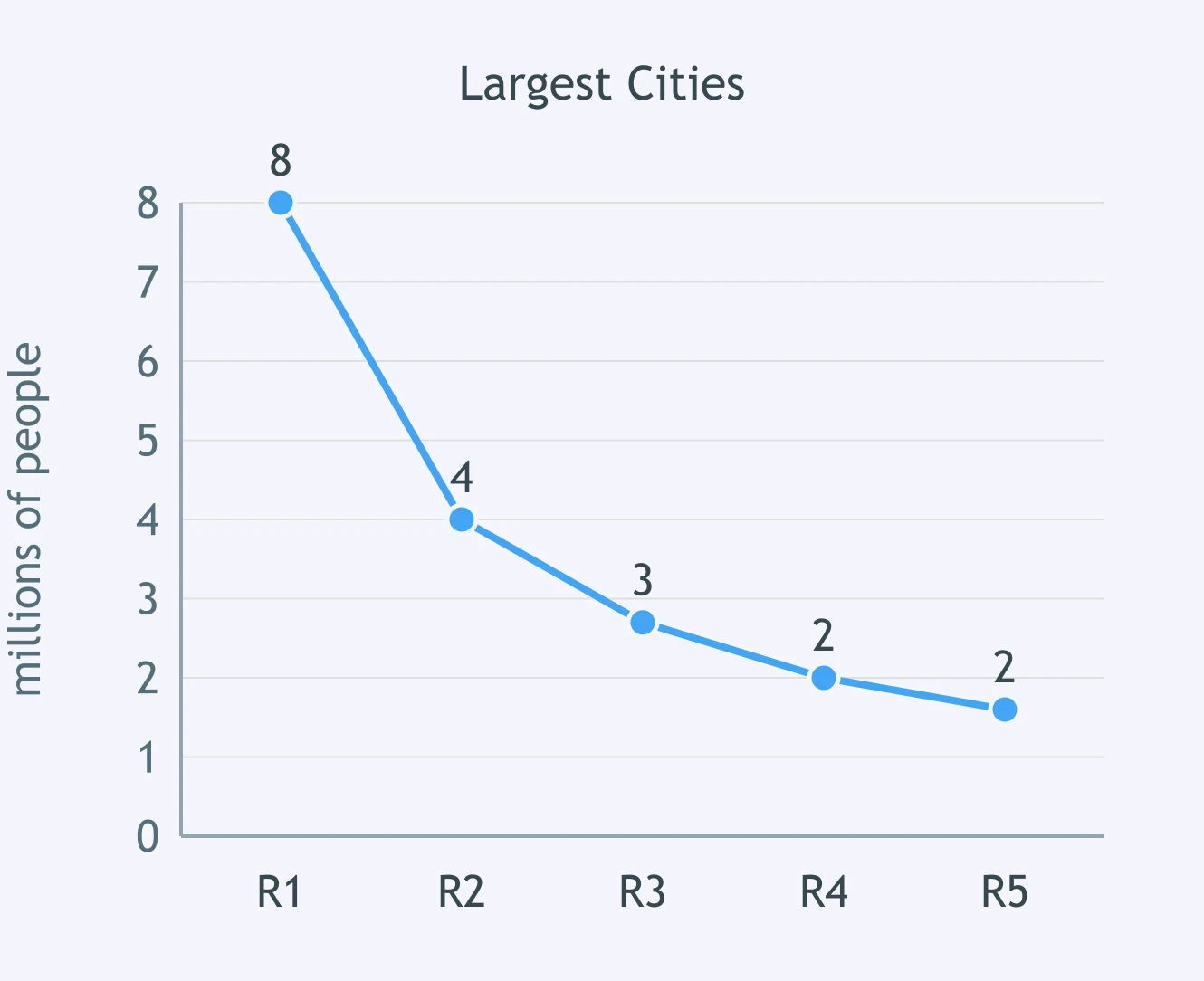
Use the table. What conclusion about the largest city is best supported by the data?
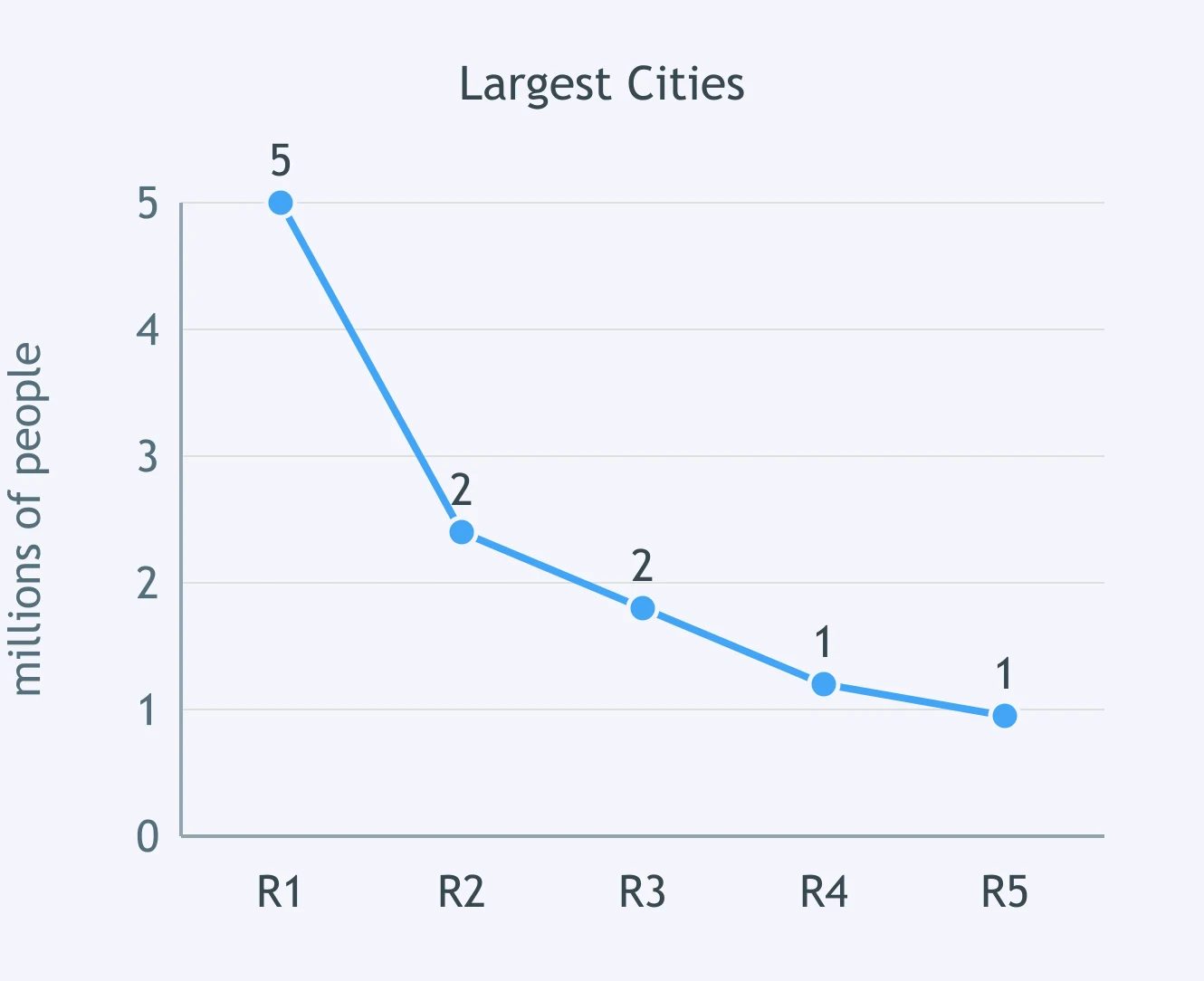
Use the line graph. The urban hierarchy shown most nearly fits which description?
Use the table. Compared with a rank-size pattern, this distribution most strongly suggests what?
A regional hospital must draw at least 120,000 people to stay open, and patients will travel up to 60 miles to reach it. The 120,000 people are the...
Residents usually drive no more than 5 miles for a convenience store before choosing a closer one. The 5-mile limit is the store's...
A town's population falls from 15,000 to 8,000, and its only pharmacy closes even though the remaining residents still live close by. What central place requirement does the pharmacy no longer meet?
Gas prices double, and shoppers who once drove 30 miles to a regional mall now drive only 15 miles. Which central place concept for the mall has shrunk?
A bakery and a car dealership both open in a village of 3,000 people. The bakery does well, but the dealership closes within a year. The village was too small to meet the dealership's...
A furniture store survives only with 50,000 households in its trade area, and shoppers will drive up to 70 miles. What does 70 miles measure?
A bakery needs 4,000 regular customers. A second bakery opens two blocks away, and each now gets only about 2,500 customers. Competition has pushed each bakery below its...
A passport office serves people who will make a long trip for a rarely needed document. That willingness to make a long trip describes the service's...
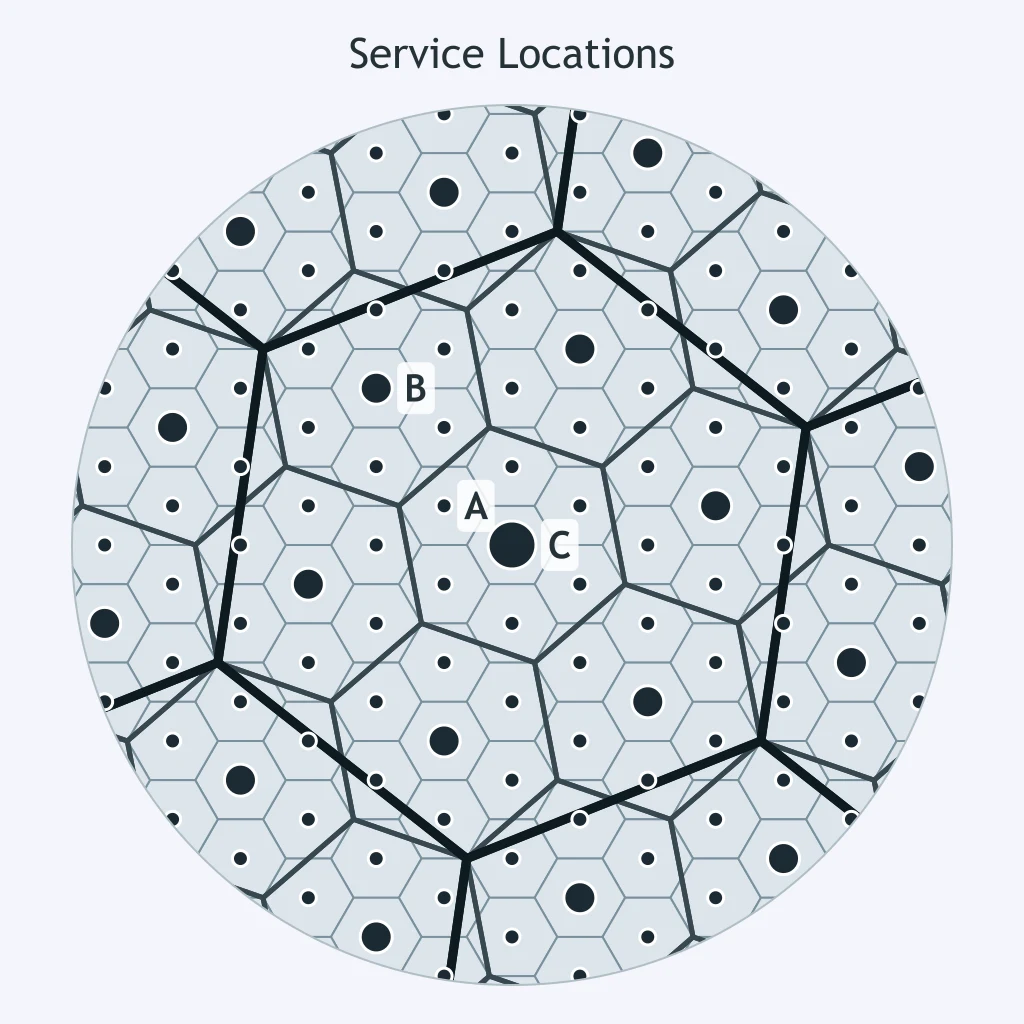
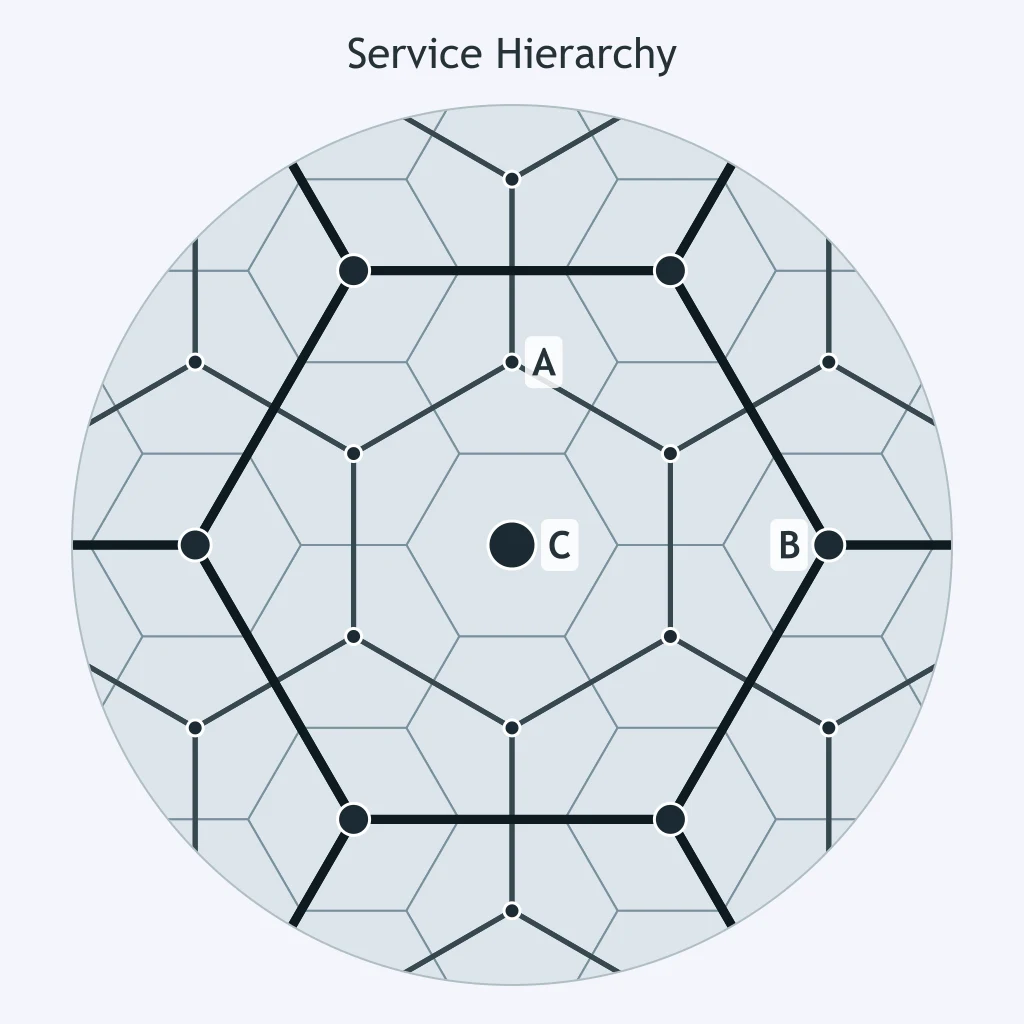
Use the diagram. Settlements at the centers of the largest market areas would most likely offer what kinds of services?
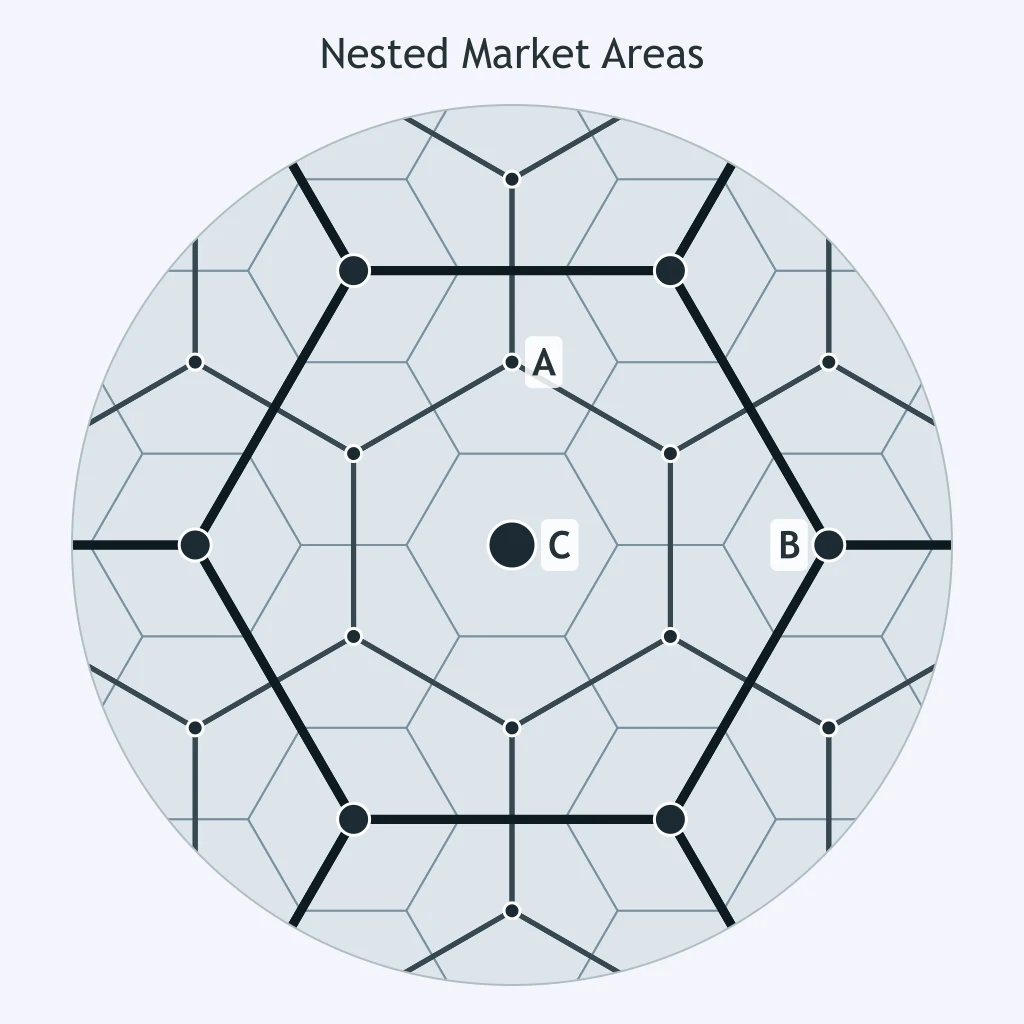
Use the diagram. The smallest hexagons most likely represent markets for what kind of good?
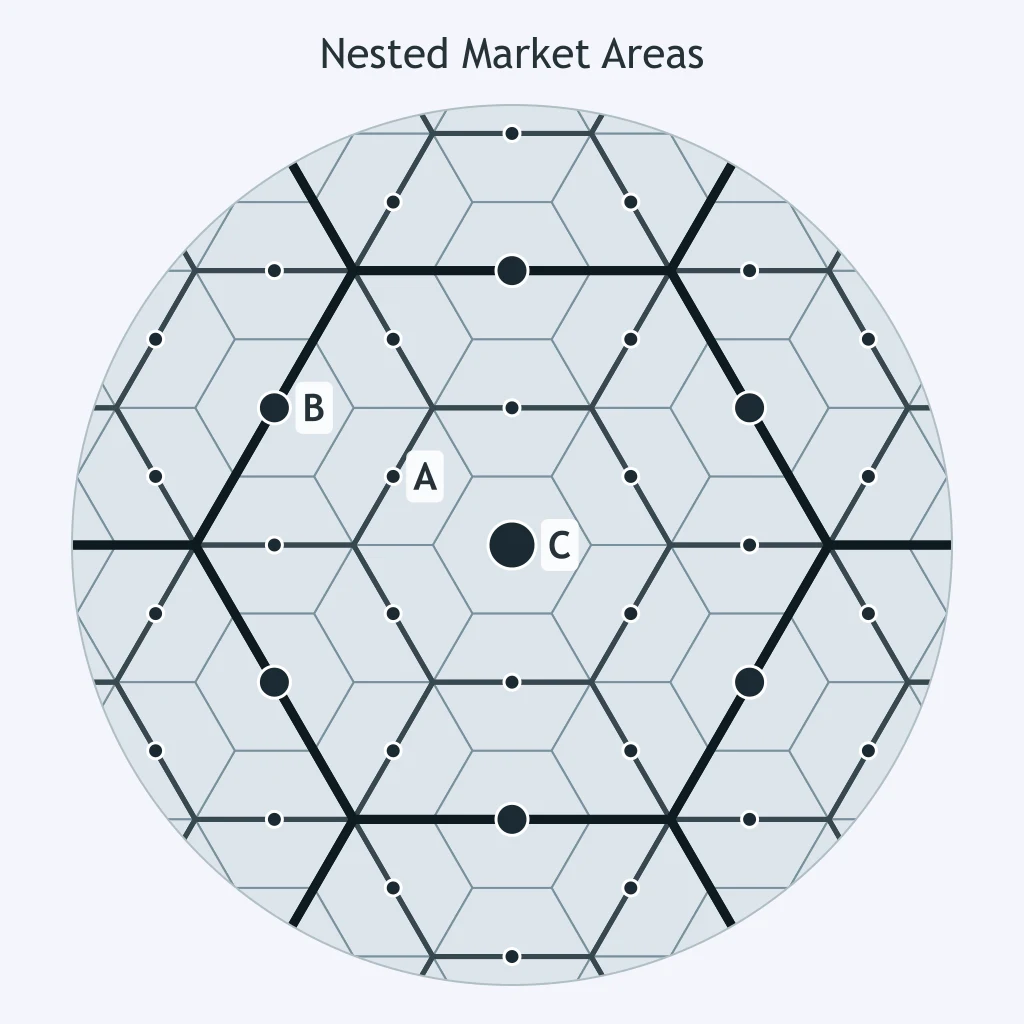
Use the diagram. A settlement at the center of a middle-sized hexagon would most likely provide what level of services?
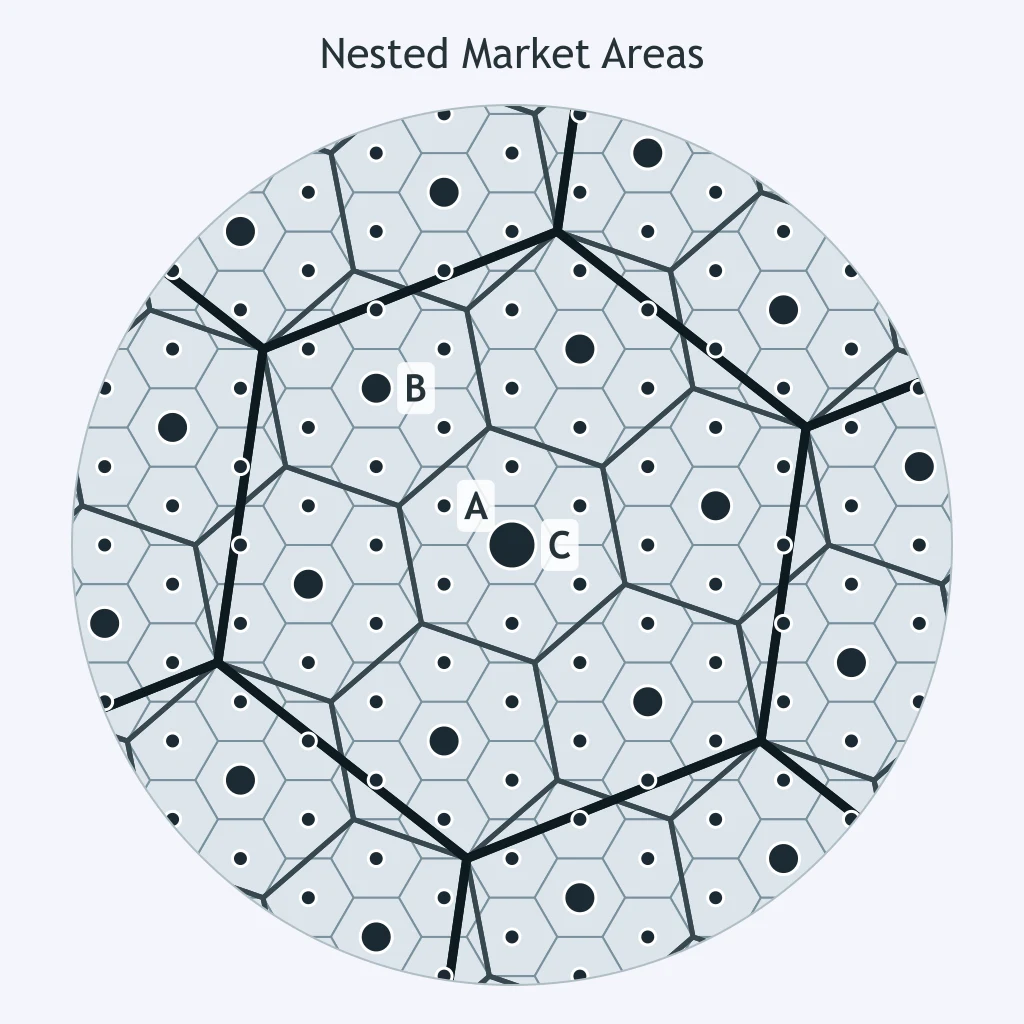
Use the diagram. What does the nesting of small market areas inside larger ones show about higher-order centers?
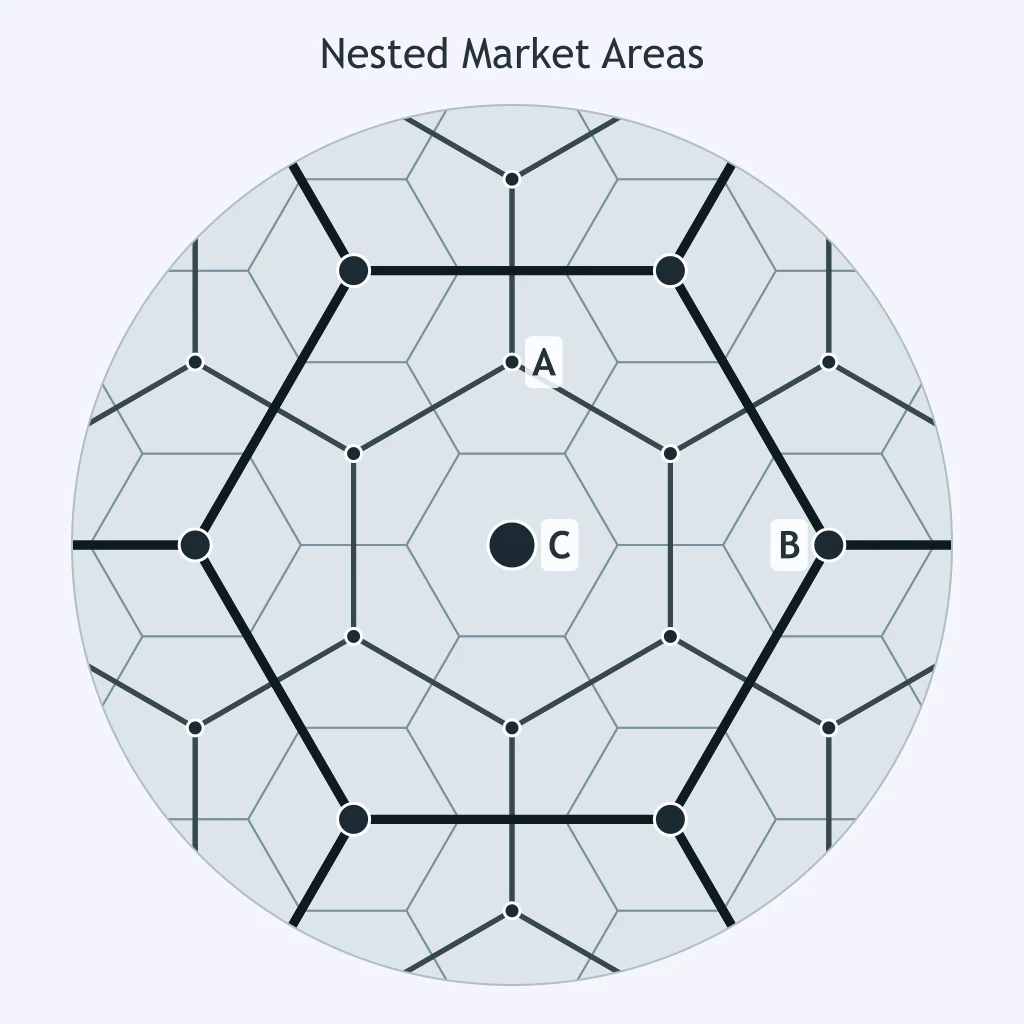
Use the diagram. The largest dots are farthest apart because those settlements usually have what trait?
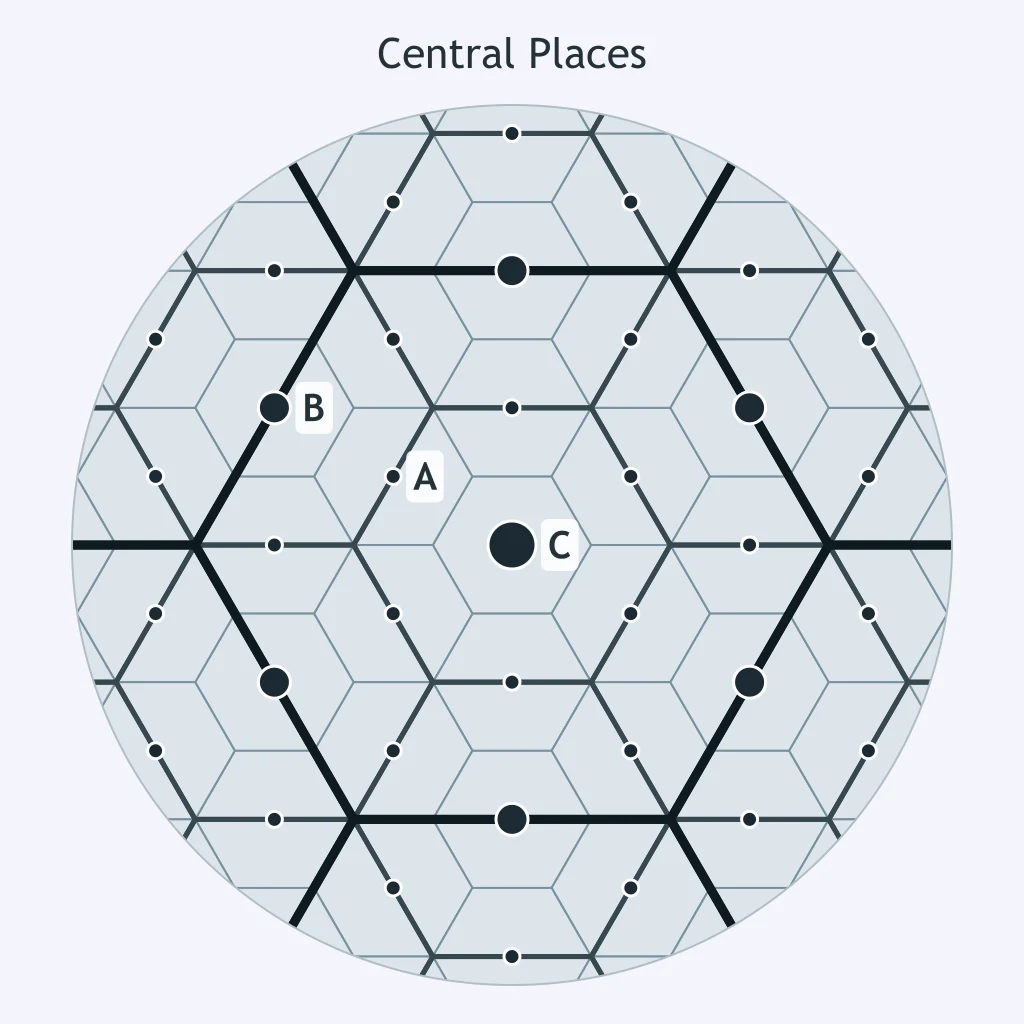
Use the diagram. A daily grocery store would most likely belong in which part of the hierarchy?
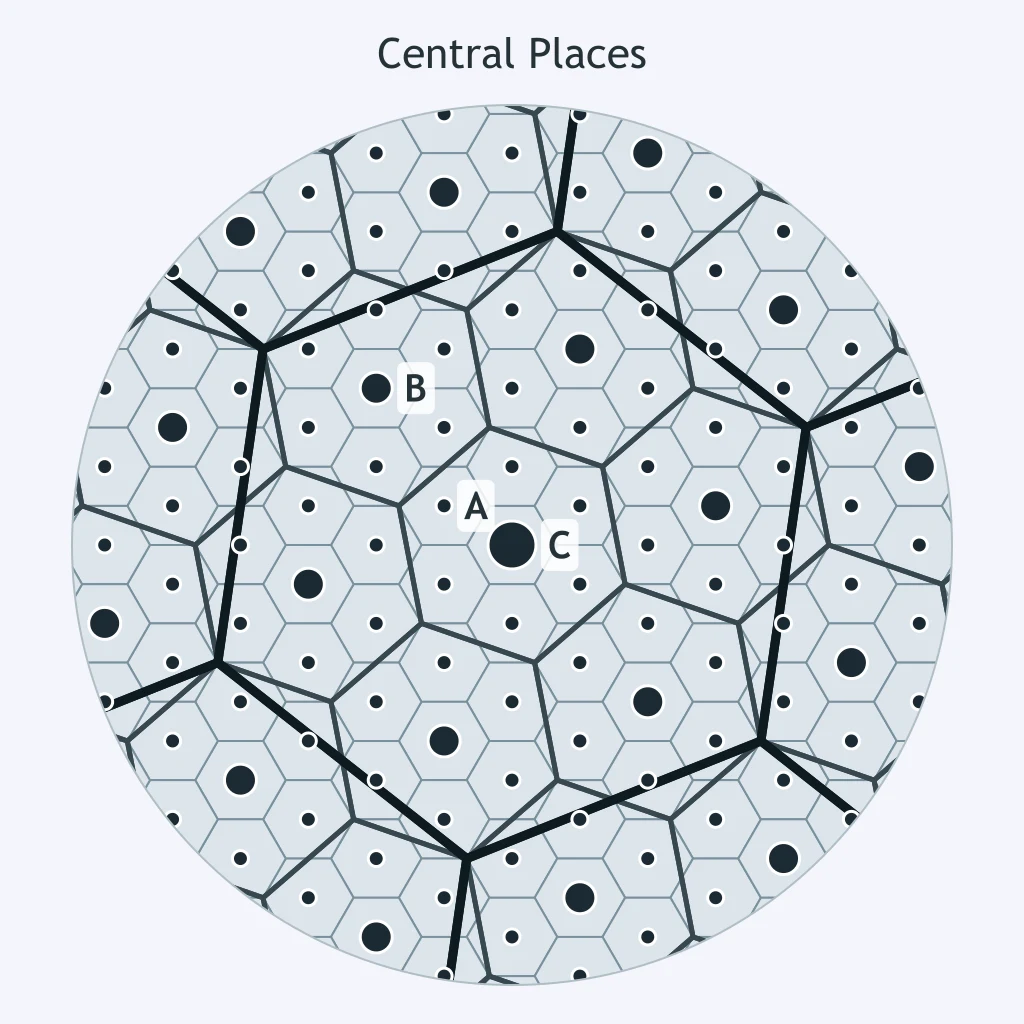
Use the diagram. If a service has the longest range shown, where should it be located?
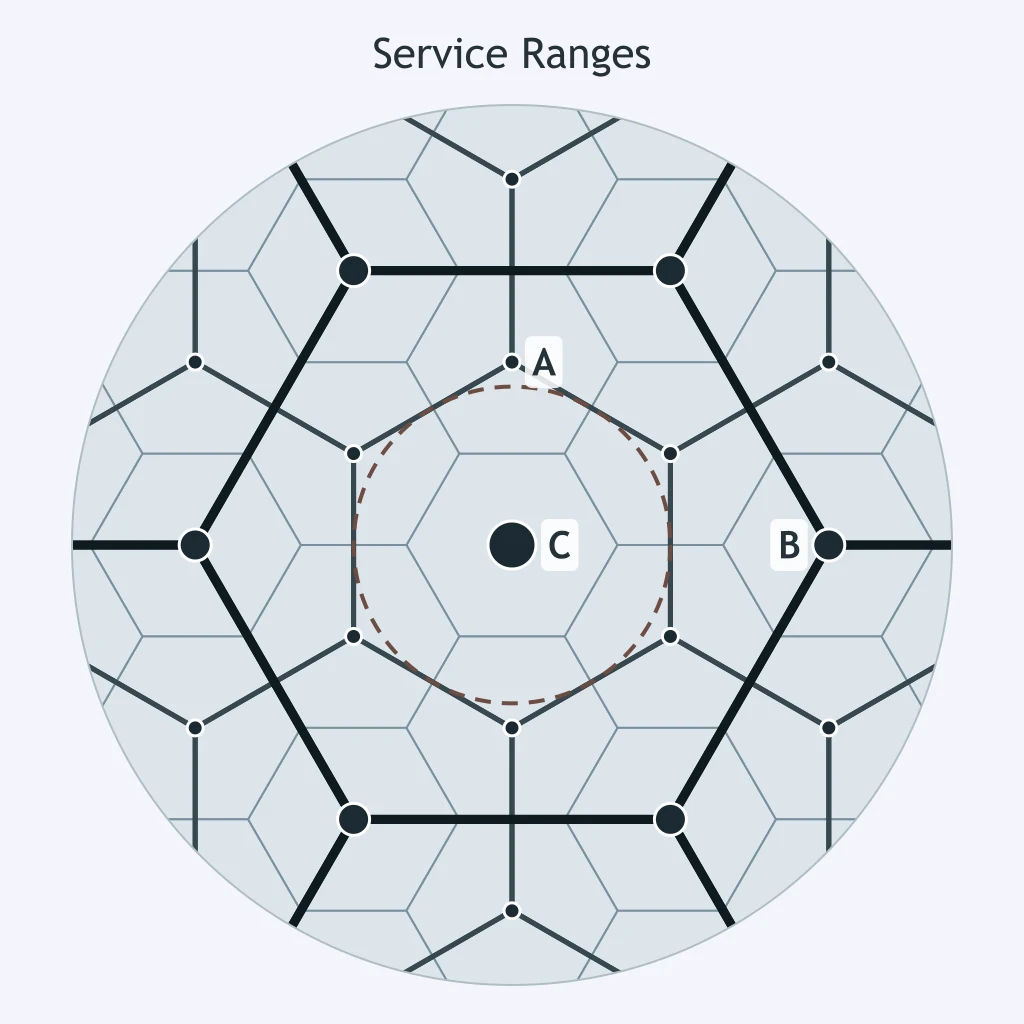
Use the diagram. Compared with low-order settlements, high-order settlements should be spaced how?
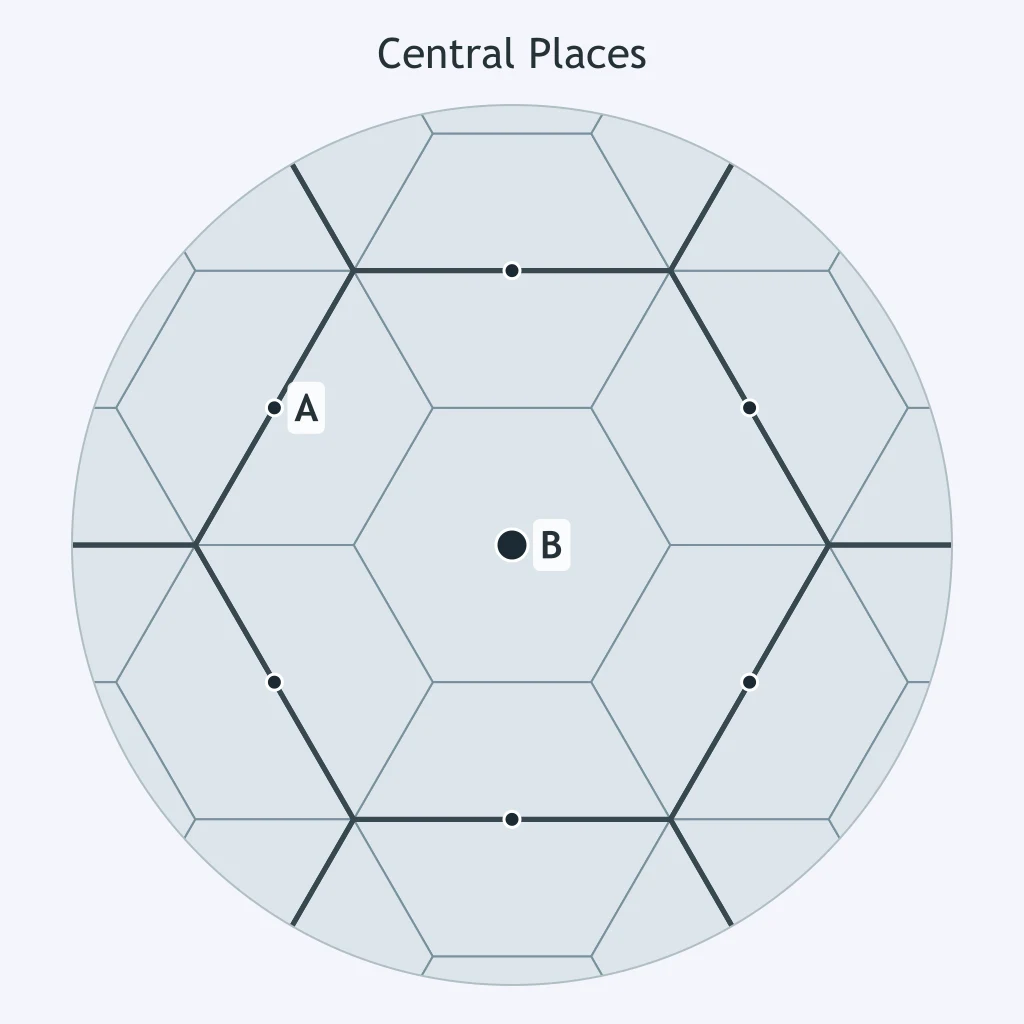
A wedding-dress boutique and a milk-and-bread shop are choosing locations in a region with one large city and many small towns. Where should they locate?
In a poor rural region, a traveling merchant sets up in a different village each day of the week. Central place theory explains this as a way to...
Use the diagram. A rare-instrument store and a dry cleaner both choose among the settlement types shown. Where is each most likely to locate?
A county seat grows from 20,000 to 90,000 people over several decades. What change does central place theory predict for the town?
A region has one international airport but about 200 laundromats. What central place idea best explains the difference in numbers?
Use the diagram. A passport office and convenience stores are choosing sites. What pattern best fits the hierarchy shown?
A luxury furniture showroom needs 200,000 customers, and shoppers will drive up to 40 miles for it. Which site fits central place theory best?
Central place theory begins with what set of simplifying assumptions?
In a mountain region, towns line up close together along a valley floor, with almost none on the steep slopes. What best explains the departure from the central place model?
A town at the only highway interchange grows larger than nearby towns even though the surrounding farmland is similar. Why can this happen?
Two towns have the same population, but one has much higher household income and supports more specialty shops. What model assumption is being violated?
Online shopping lets some consumers buy specialty goods without visiting the nearest large city. How does that affect central place predictions?
In Christaller's model, why are hexagons used instead of circles for market areas?
A mining town forms far from the evenly spaced service centers predicted by a model. What is the best explanation?
Crack the passcode before the zombies get in.
Answer, then swat bugs for bonus points.
Race through questions at your own speed.
Same question on every screen. Fastest wins.

Pick a tile, answer, hit bonuses and steals.
North American Urban Models: Concentric Zone, Sector, Multiple Nuclei and Galactic
35 questions