Loading
by BlastRoom
Trace continuity and change in Greek sculpture through pose, proportion, function, and drama.
#us_hs_art_history
35 questions
One question set, multiple game modes. Tap any game to see it in action. Not sure which to pick?
Answer to place stones and capture territory.
Outrun the snow together.
Earn blasts, then hunt the other team.
Answer to earn energy, then climb.

The class blasts through walls together.
Bid on mystery lots. Most money wins.
Sell tours. Nice, standard, or a total scam.

Answer, restock, and serve the rush.
More correct answers pulls the rope your way.
Answer, then shoot down the alien wave.
Answer, then tap to leap the frozen ridge.
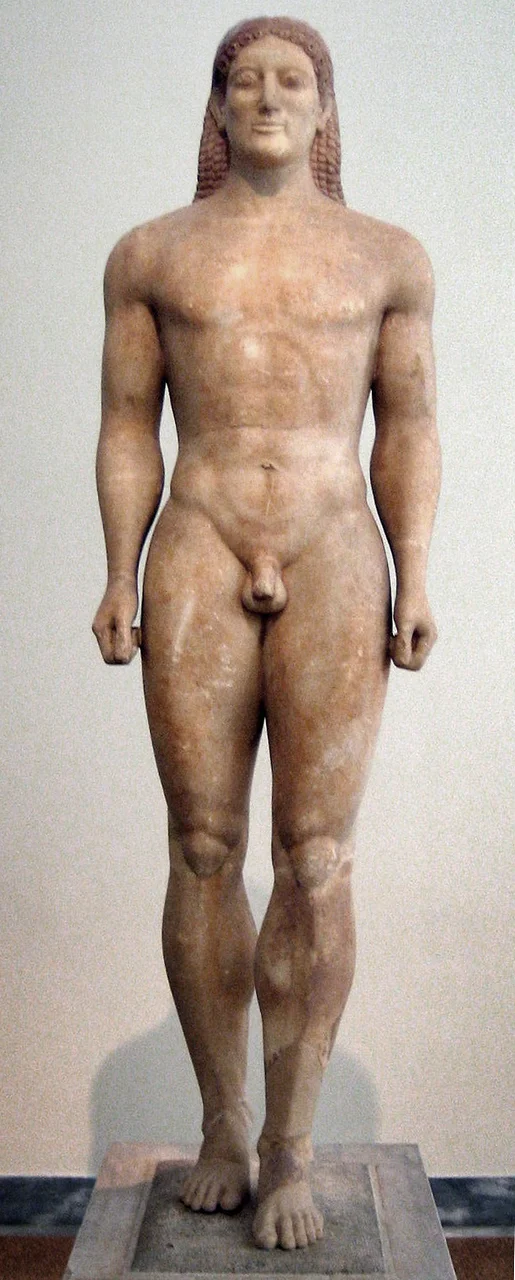
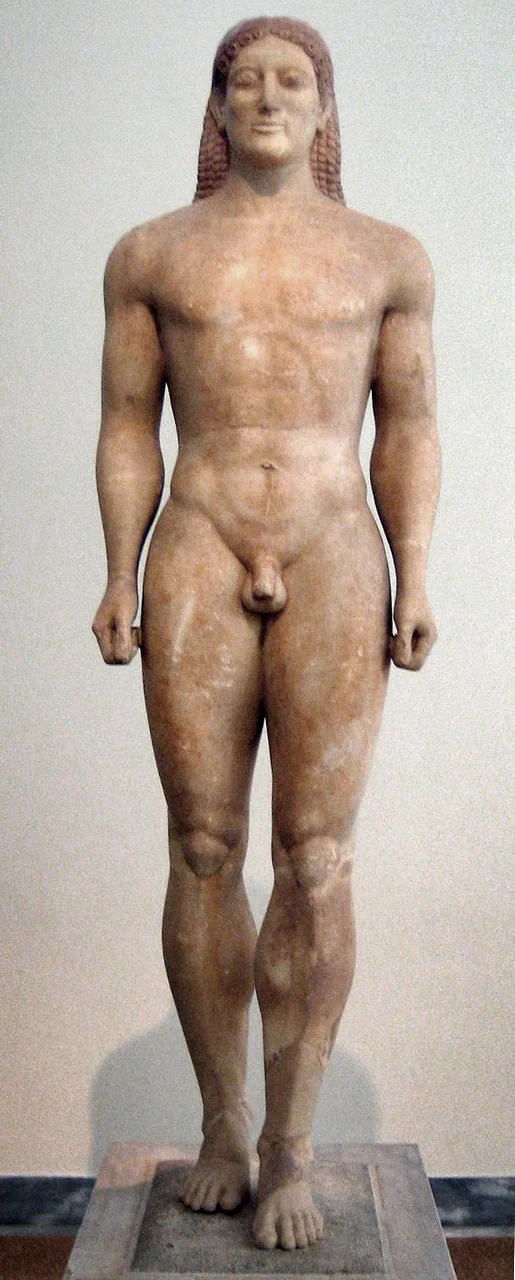
A marble nude youth stands rigidly frontal, with one foot advanced, arms at his sides, braided hair, and a slight upward smile. Which phase best fits these visible features?
A marble statue of a clothed young woman has a frontal stance, patterned drapery, and a stylized smile. In which phase were korai such as this especially common?
A nude youth shifts weight onto one leg, causing the hips and shoulders to tilt in opposite directions. Which phase does this transition figure represent?
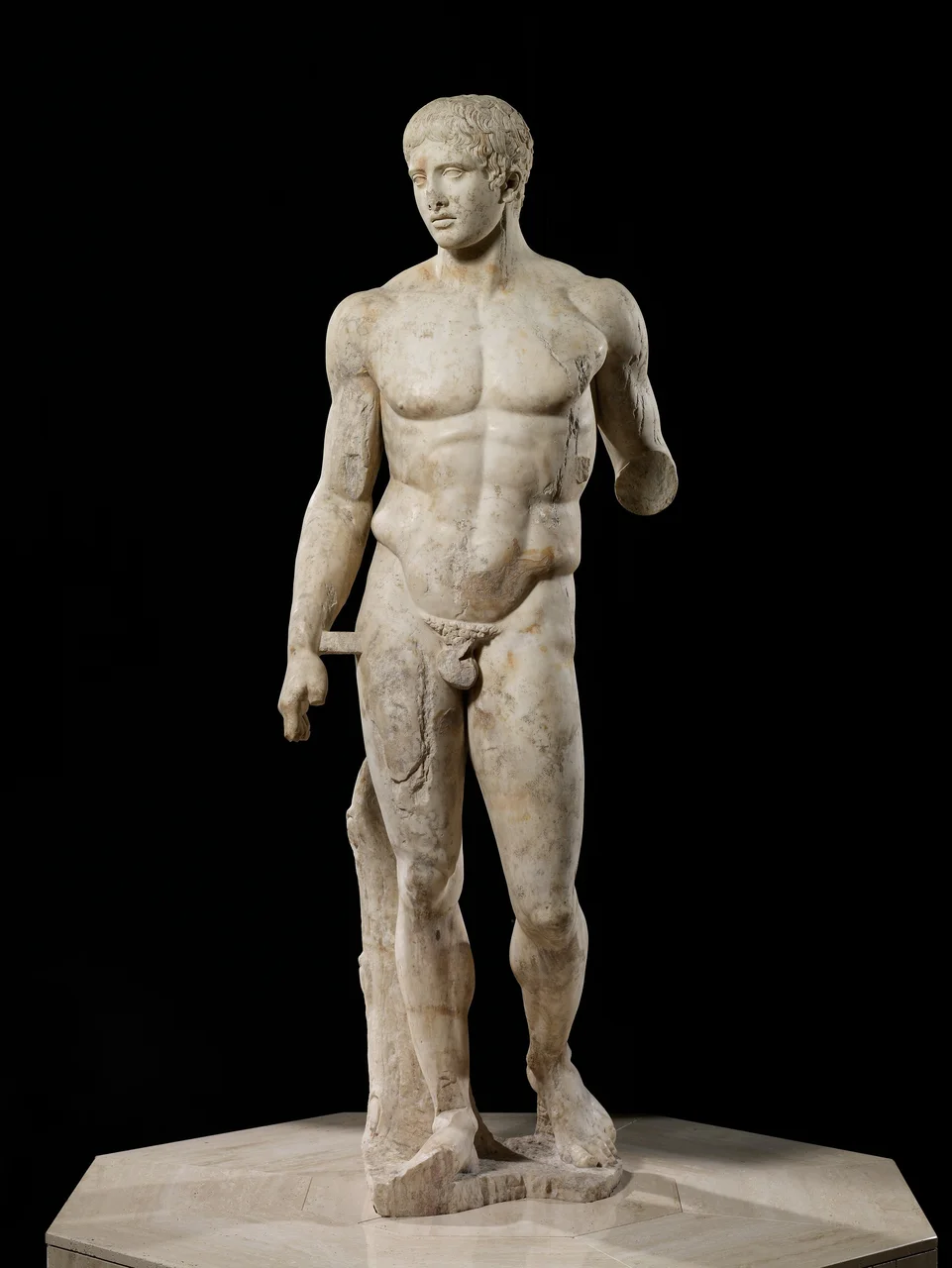
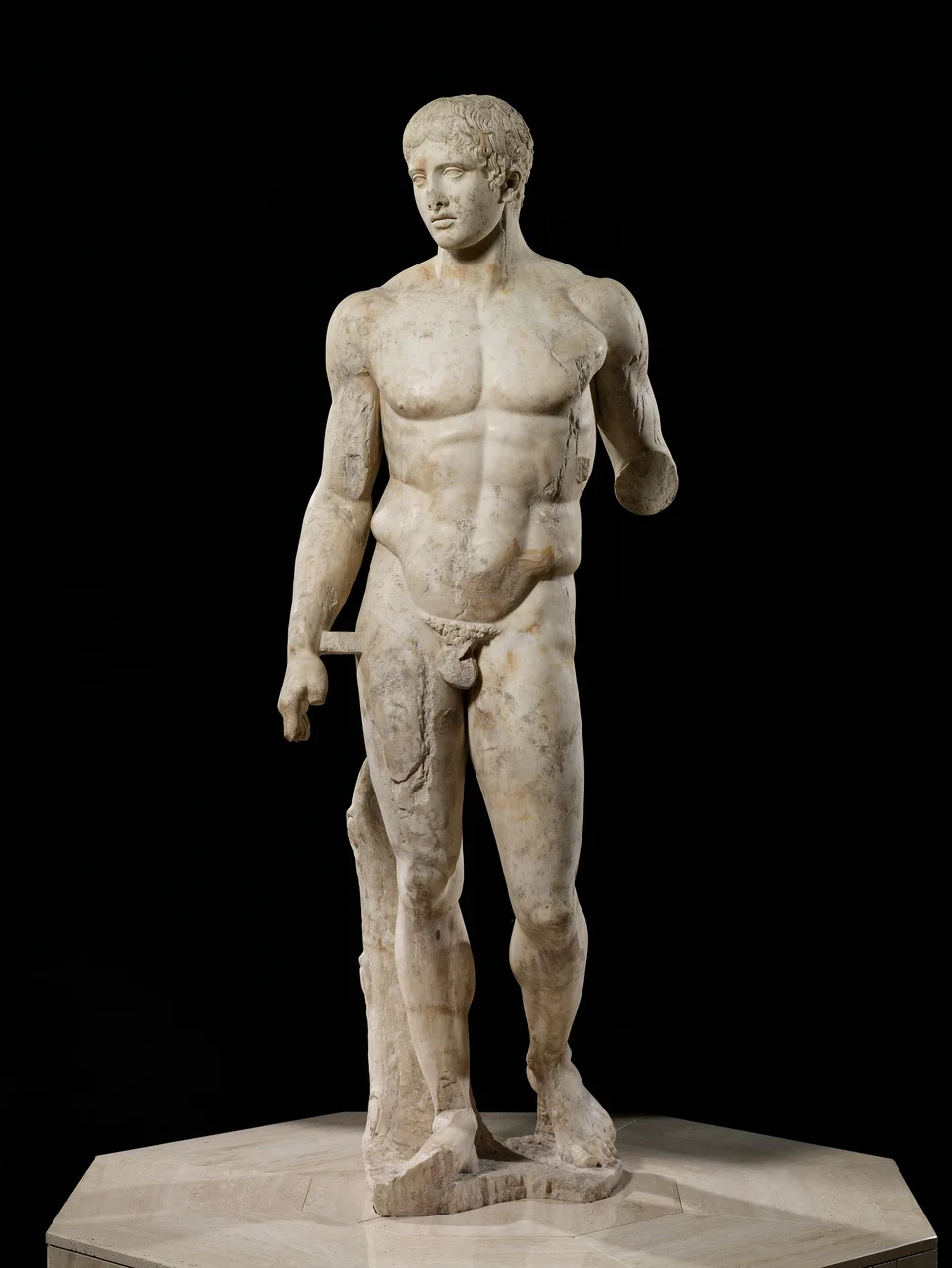
A spear-bearing athlete balances a relaxed leg against a weight-bearing leg and presents an idealized, controlled body. Which phase most closely fits this pursuit of harmonious proportion?
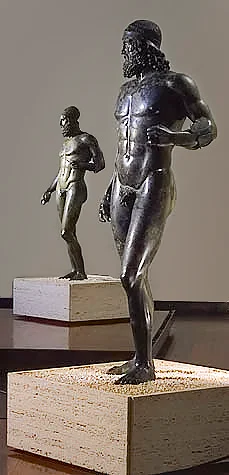
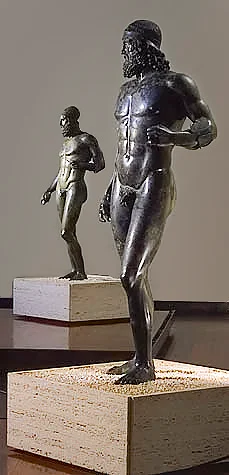
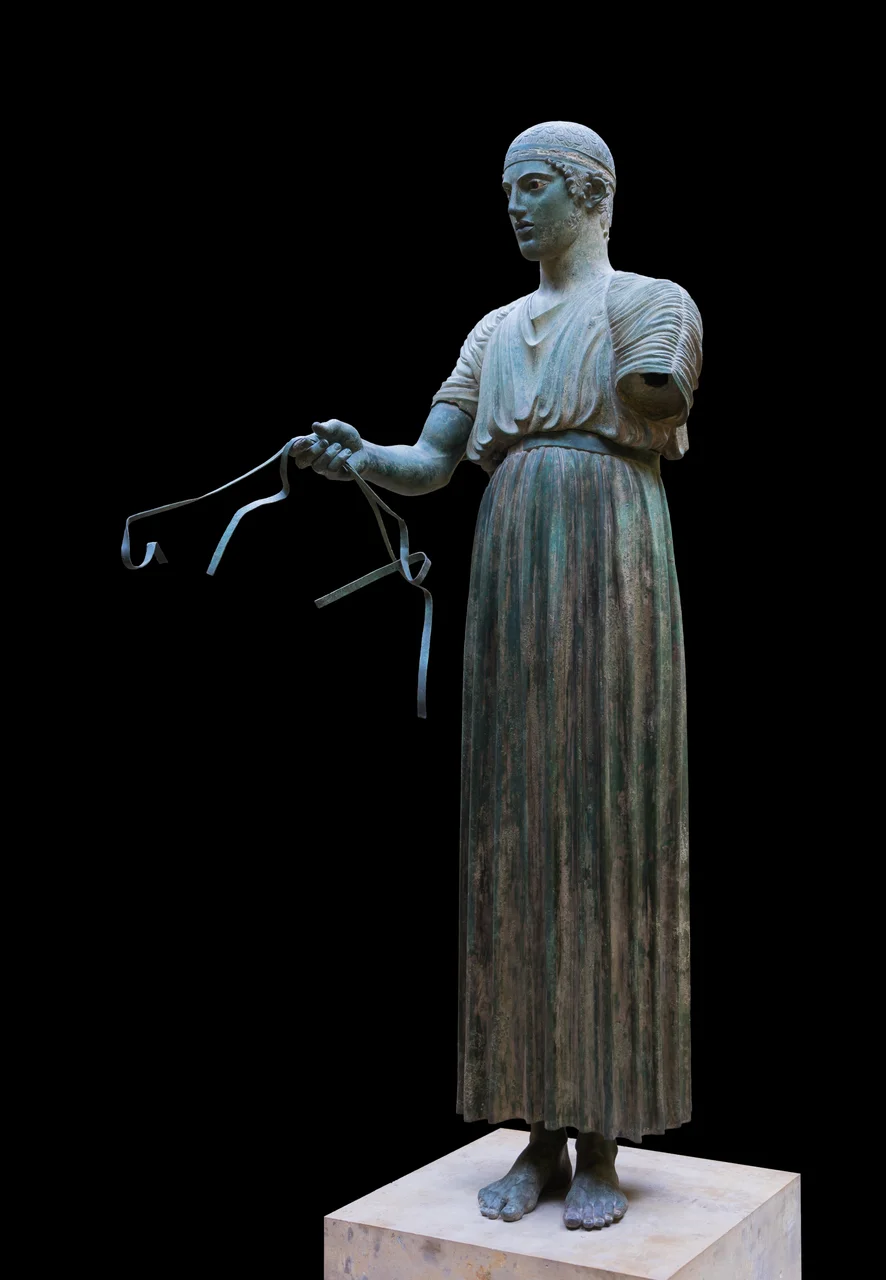
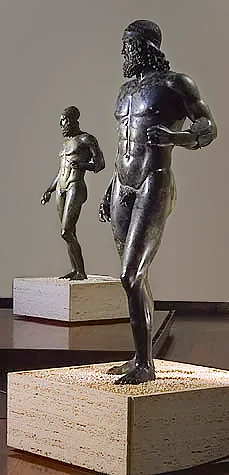
The shown bronze warrior has a bent weight-bearing leg, a relaxed leg, and a head turned aside. Which phase best fits this move beyond the rigid kouros stance?
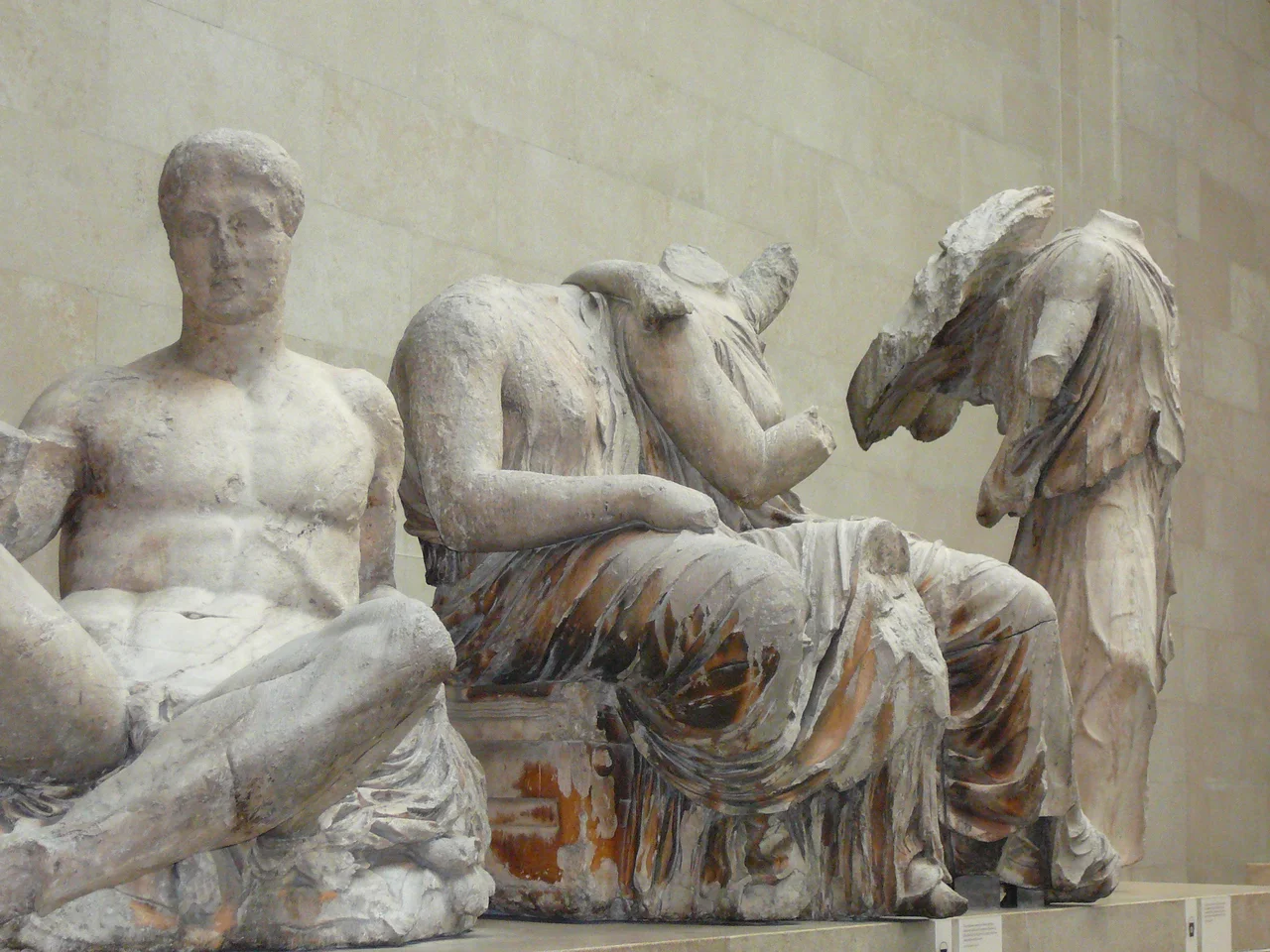
The marble figures from an Athenian temple show idealized anatomy, balanced poses, and controlled drapery. They belong most closely to which phase?
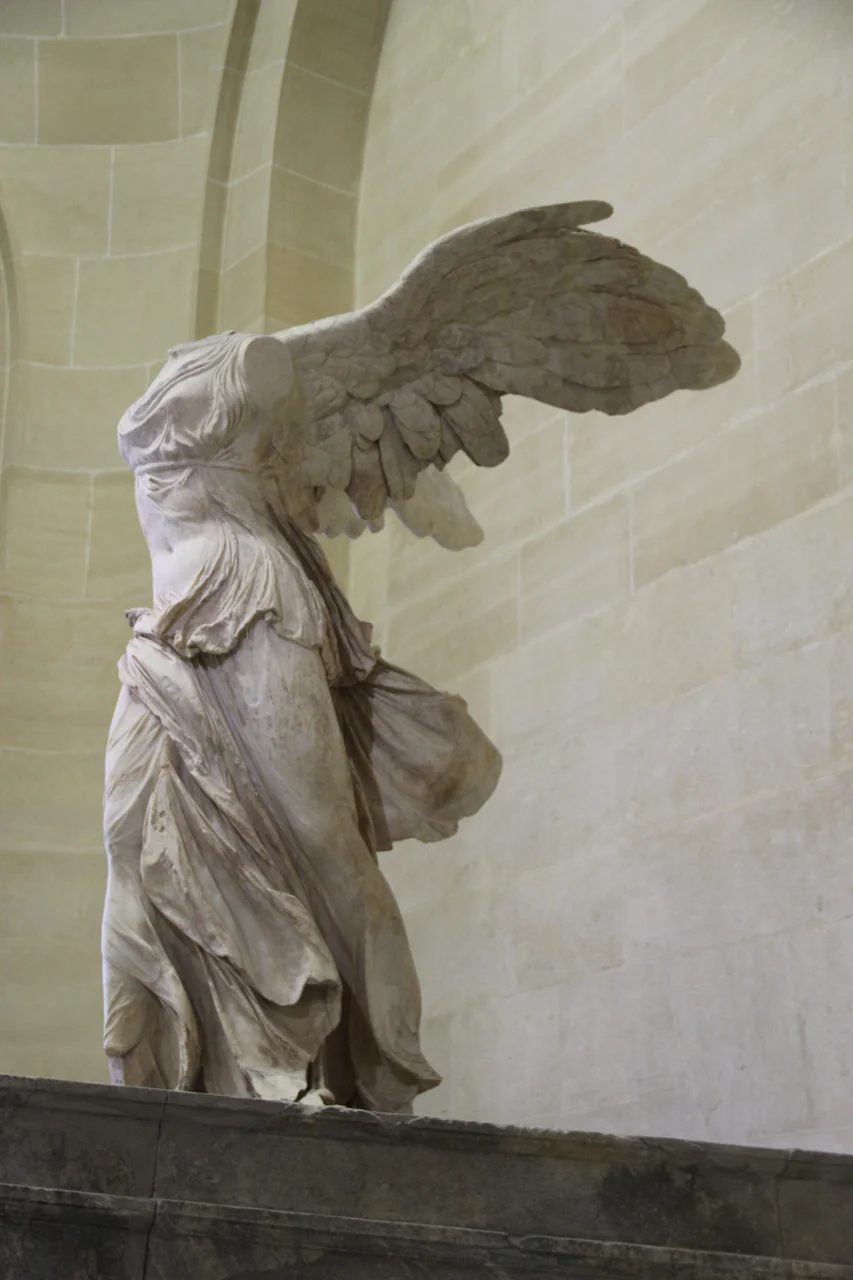
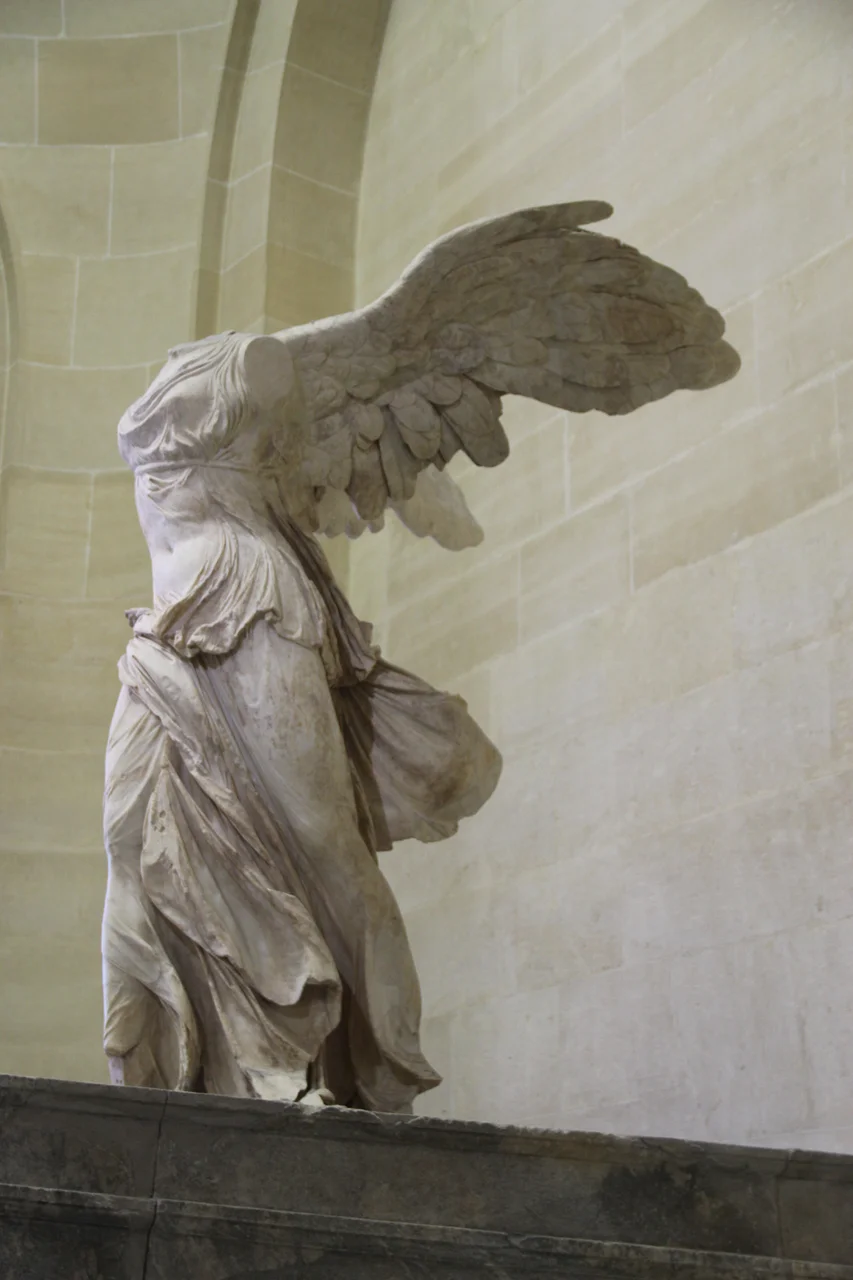
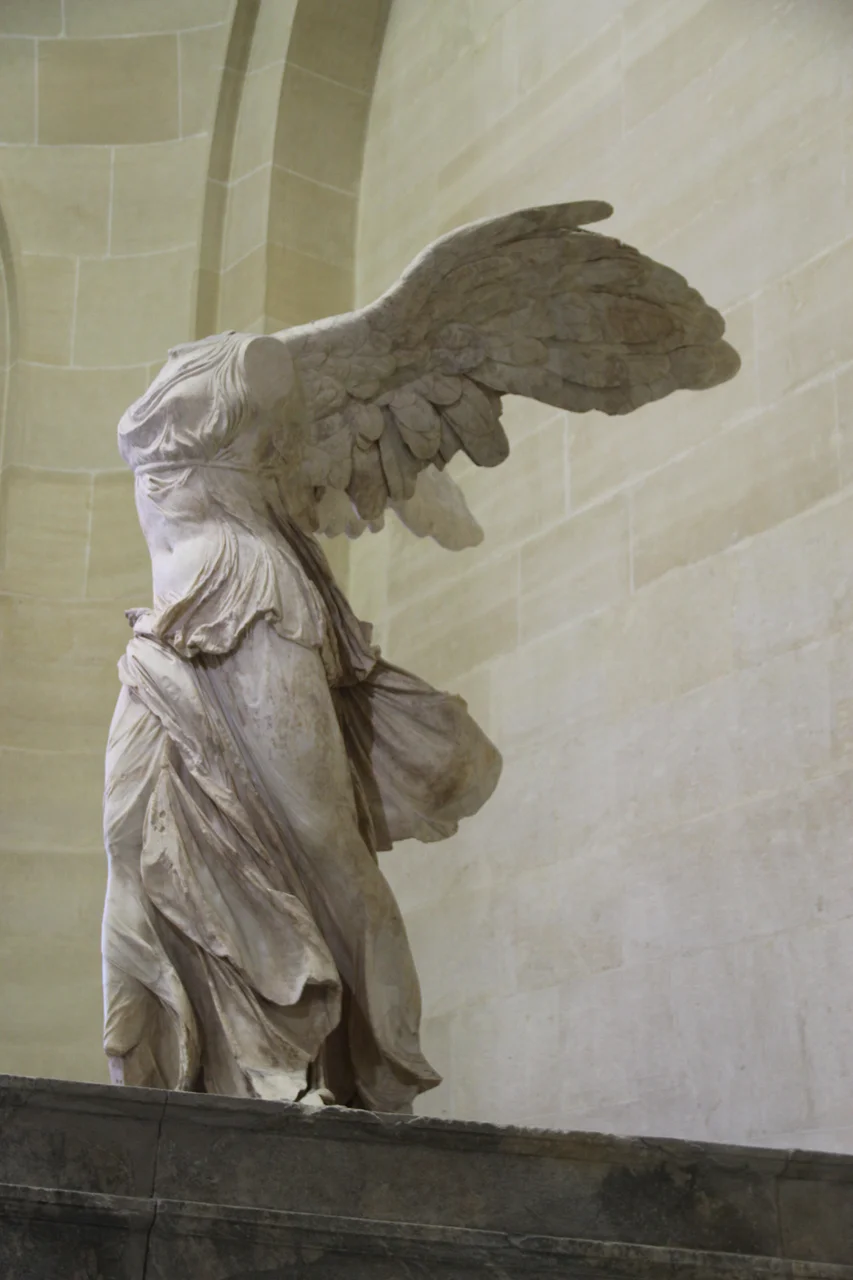
A winged figure appears to land on a ship's prow as wind presses drapery against the body and sends fabric streaming behind. Which phase is marked by this theatrical movement?
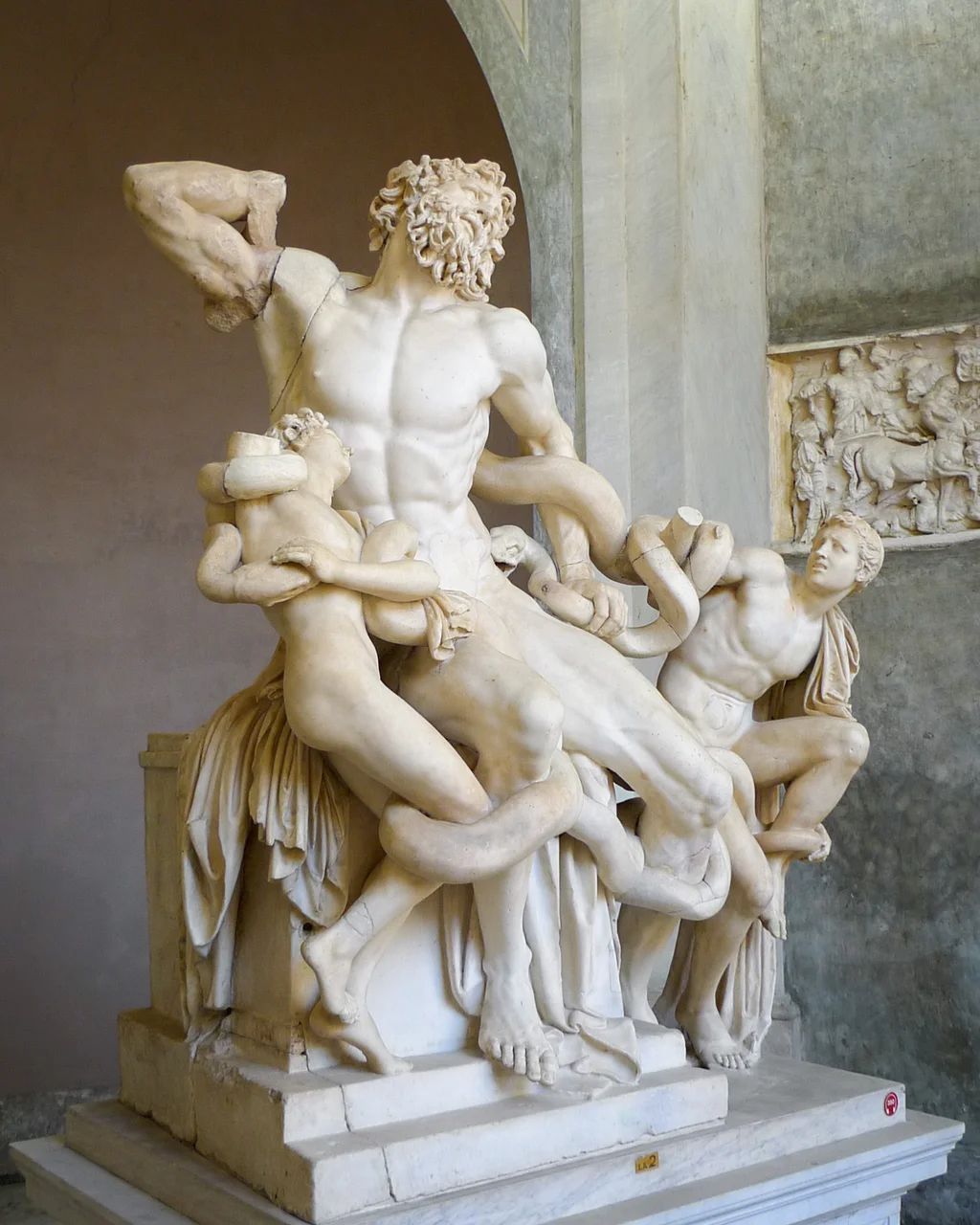
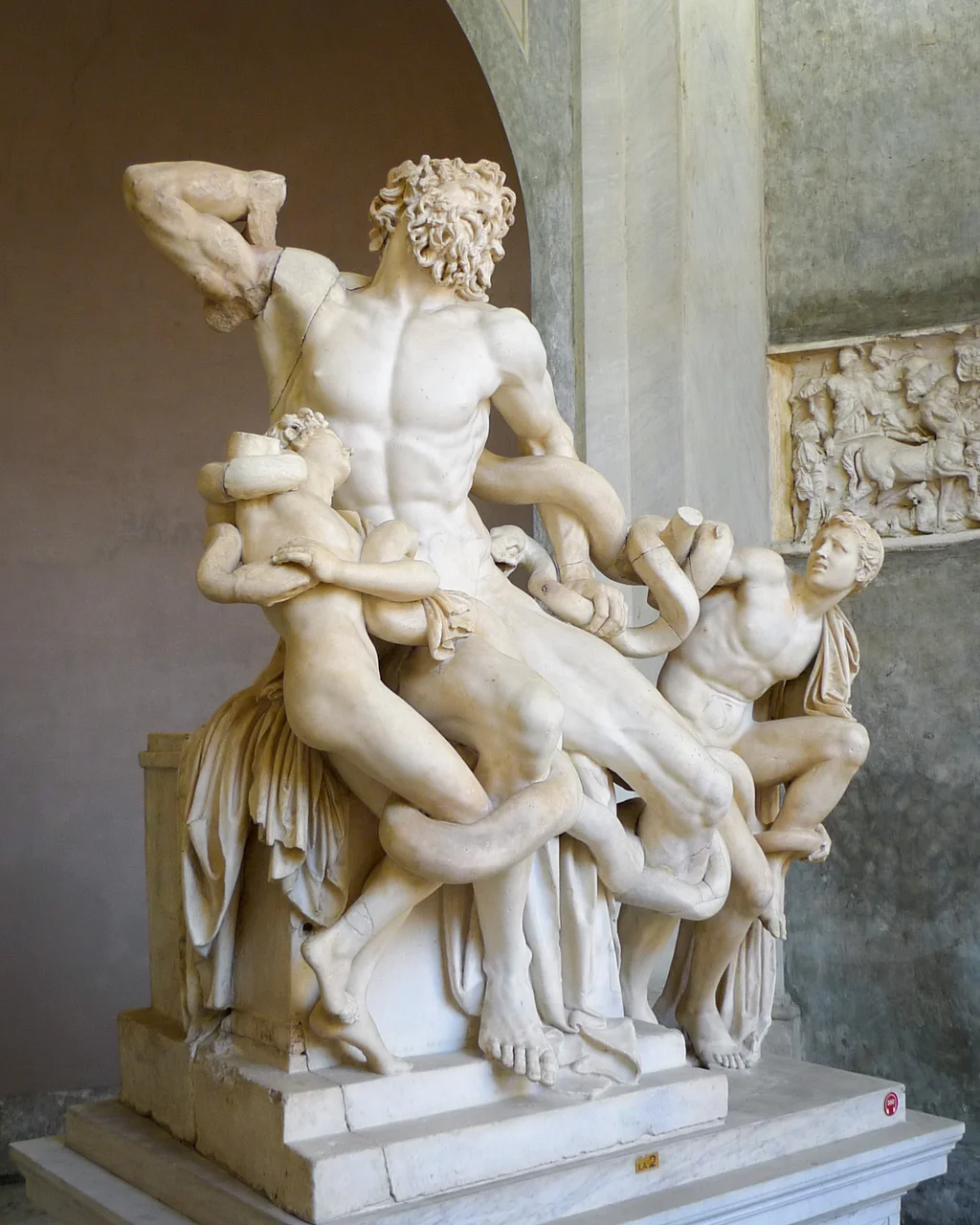
A group twists through space as serpents attack an older man and two sons; faces and muscles register extreme strain. Which phase does this emotional treatment indicate?
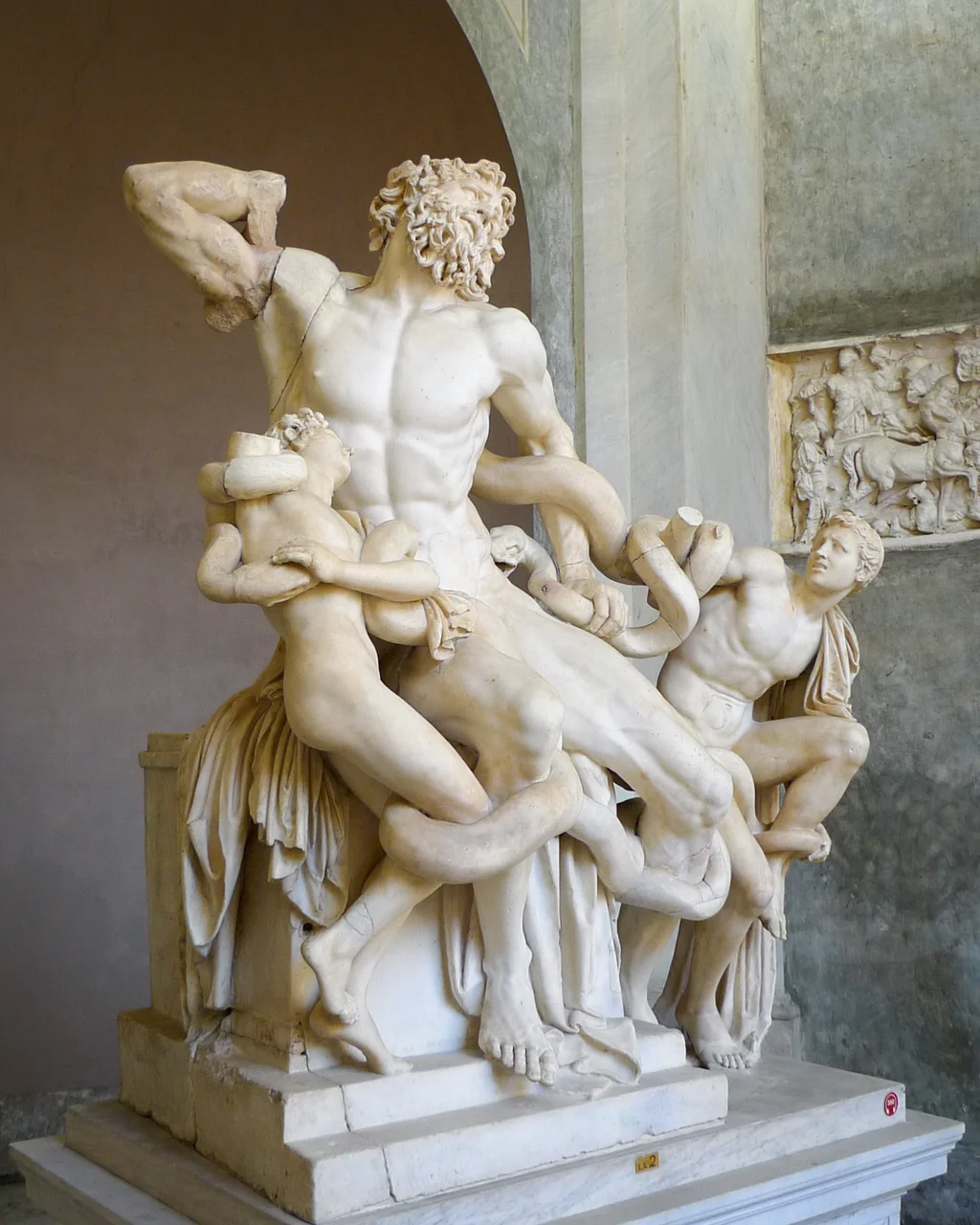
An Archaic kouros stands with one foot forward, fists clenched, and arms held stiffly at its sides. Which earlier tradition did Greek sculptors borrow this pose from?
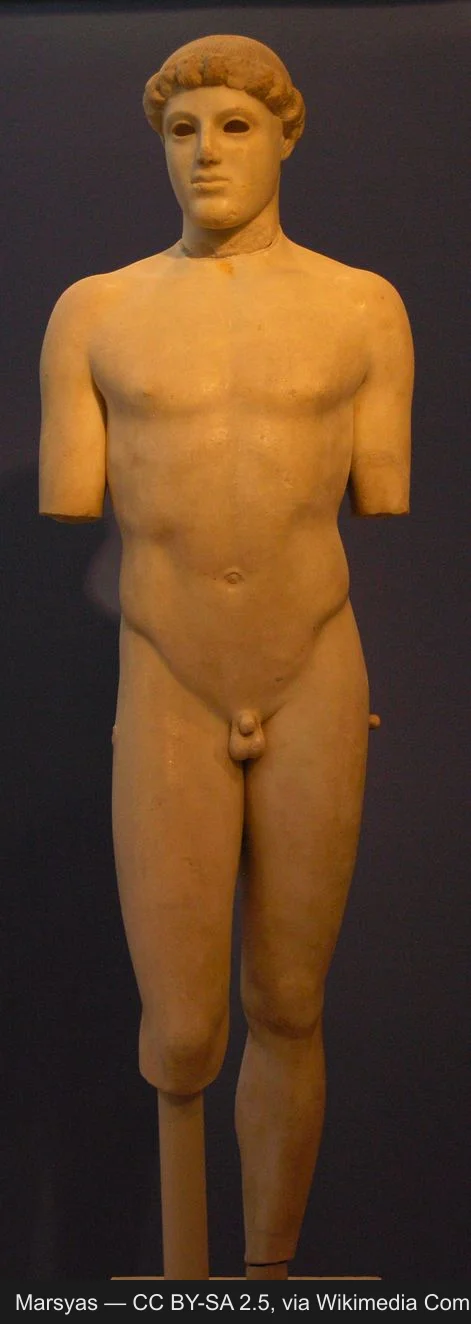
When the Kritios Boy is compared with the Anavysos Kouros, what visible change most strongly signals the later work?
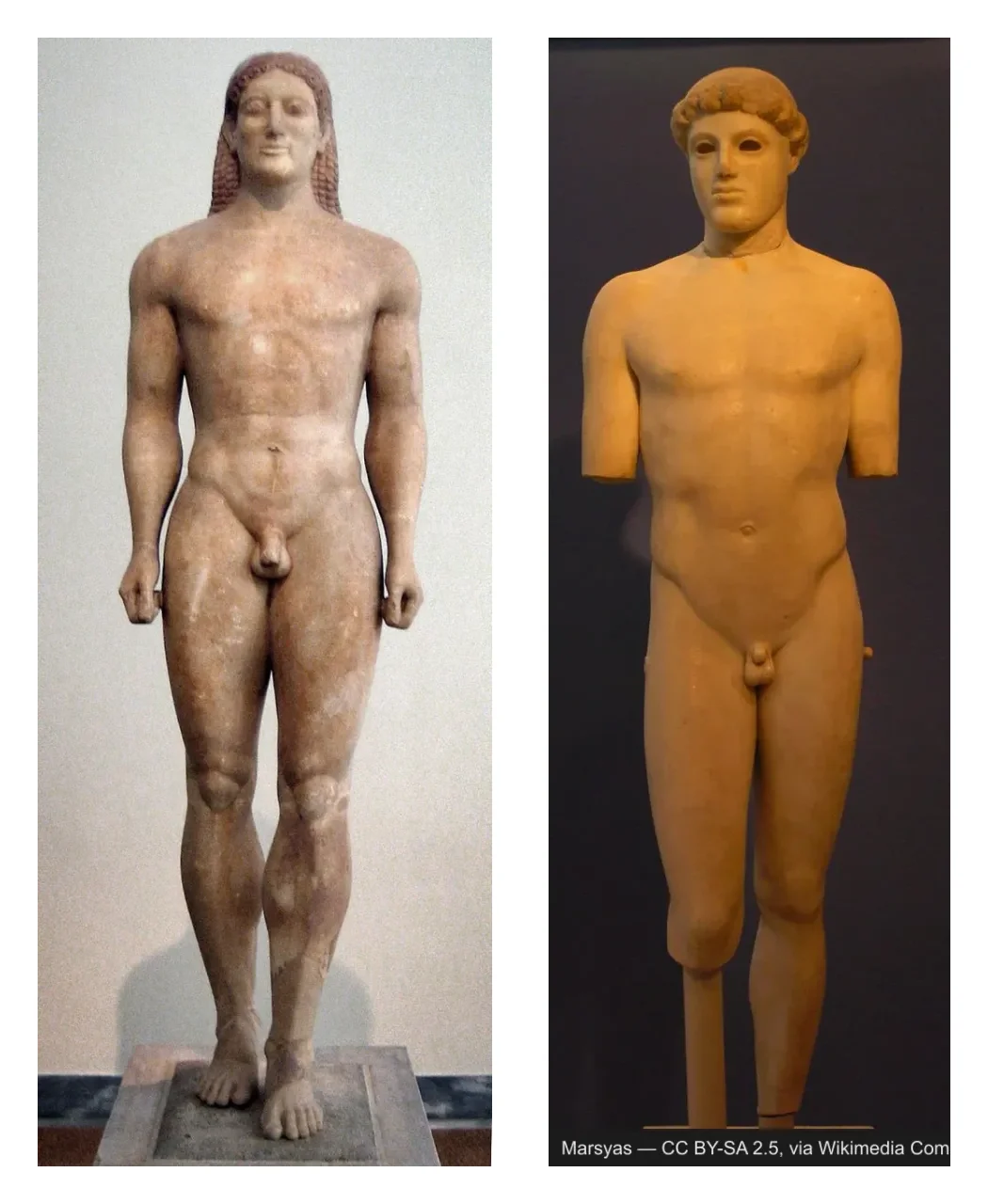
The Peplos Kore and later Classical temple figures both use marble, but what changed in the later figures' treatment of drapery?
The Riace Warriors retain idealized bodies, yet their stance differs from an Archaic kouros. What continuity remains across both phases?
Compared with the calm balance of Doryphoros, Nike of Samothrace seems to enter the viewer's space. Which visual strategy creates that difference?
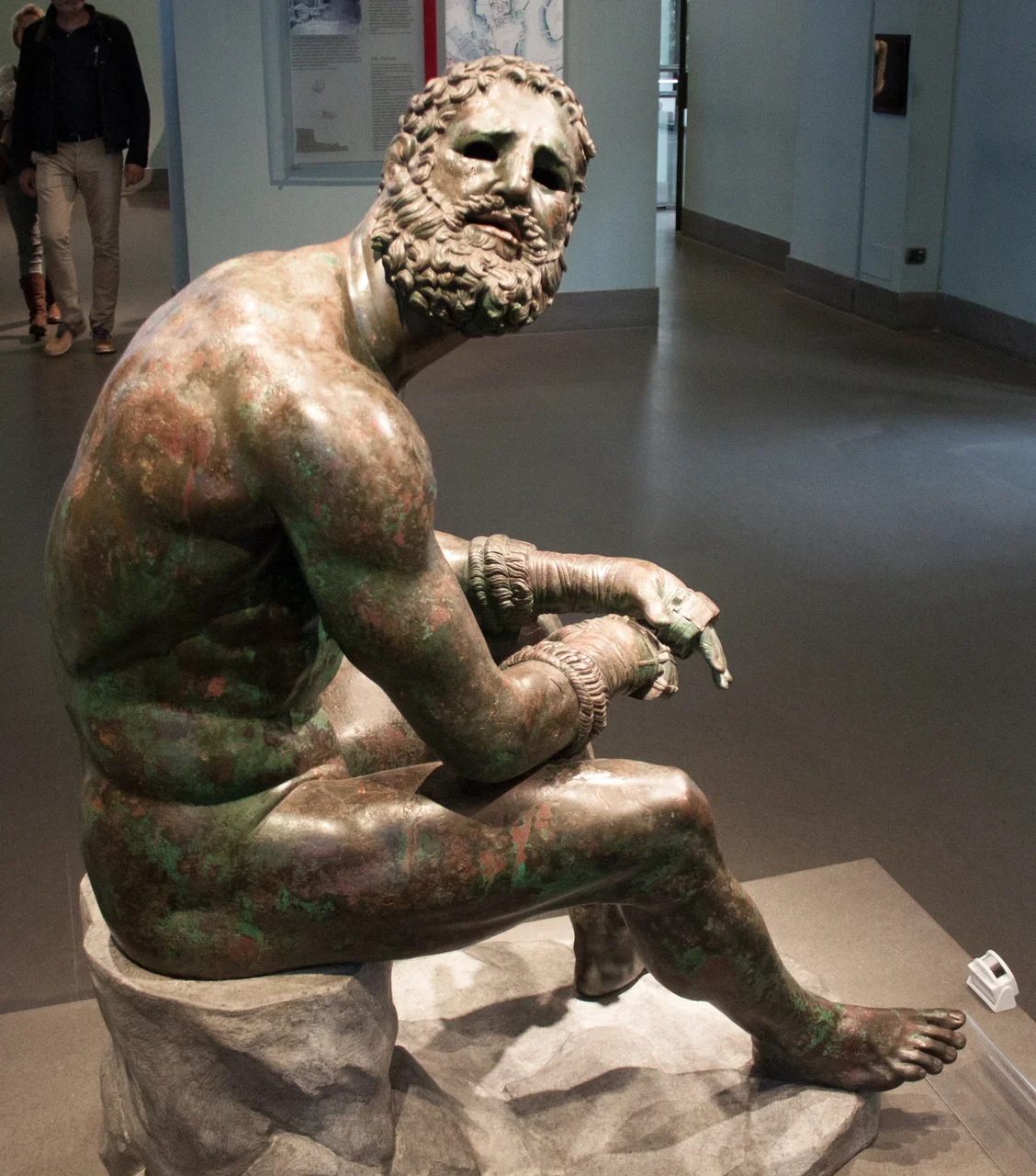
A Classical athlete and a Hellenistic boxer are both nude, but the boxer has swollen ears, a broken nose, and a slumped pose. What changed?
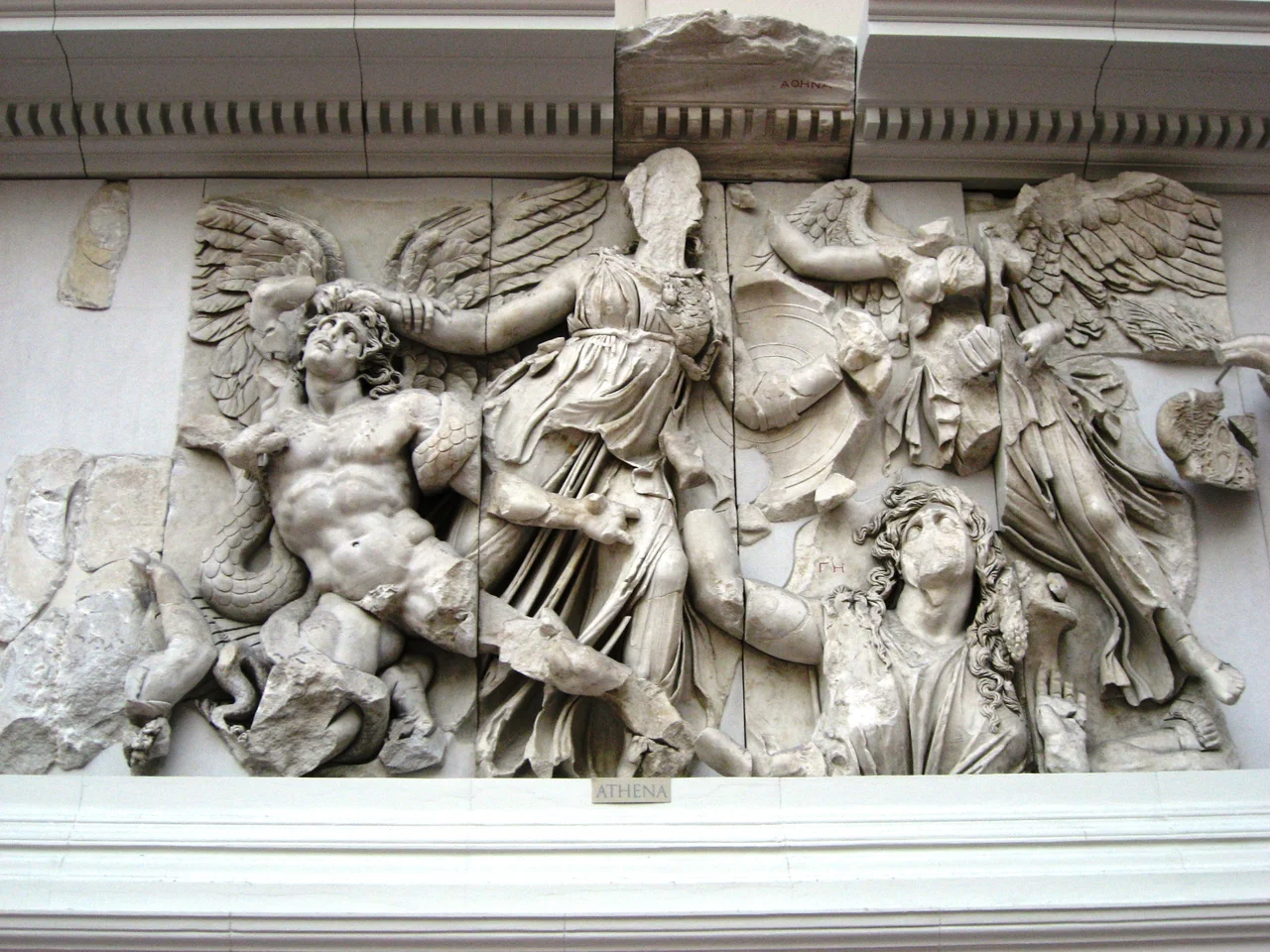
The Parthenon sculptures and the Great Altar at Pergamon both use relief narrative. How does the Pergamon frieze depart from Classical restraint?
A work moves from the Archaic smile to the Severe Style's serious expression. What does this change primarily signal?
An inscription asks passersby to grieve for Kroisos, who died fighting in the front rank. What was the Anavysos Kouros designed to serve as?
The Peplos Kore was found on the Athenian Acropolis among many similar figures. What was the most likely purpose of such a kore?
Why would a fifth-century Greek city place a sculptural program on the Parthenon as well as build the temple itself?
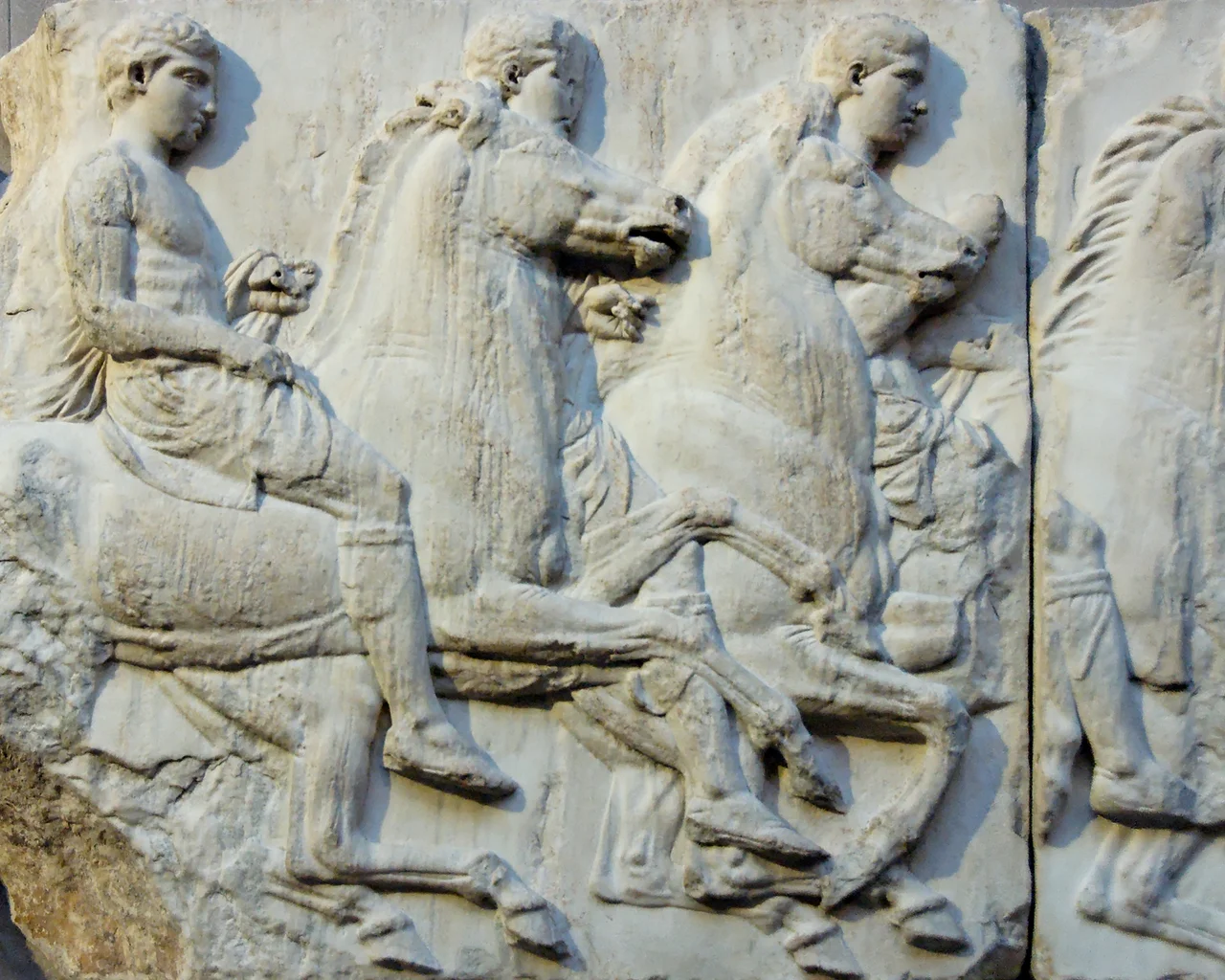
The inner frieze of the Parthenon shows a procession associated with Athens's major festival. What does this subject connect the temple to?
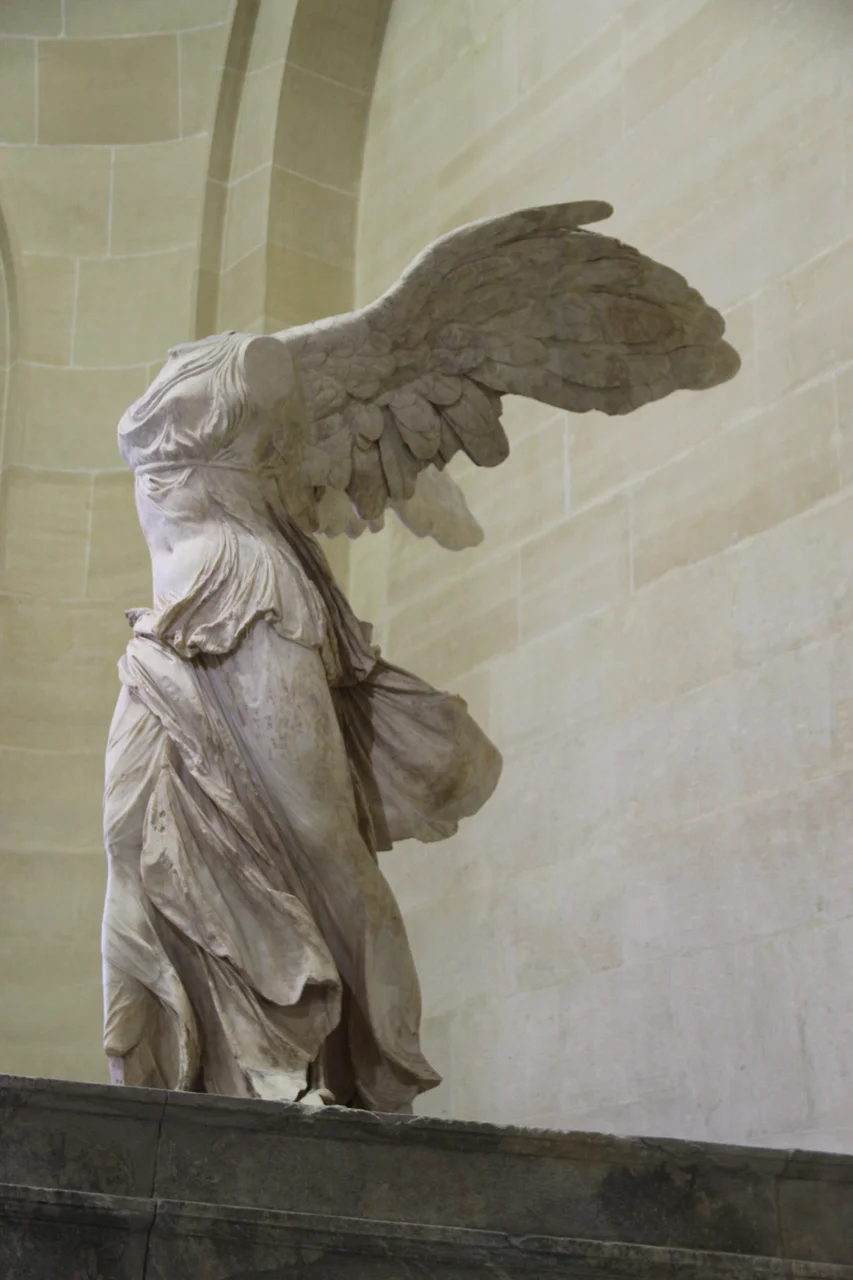
Nike of Samothrace stood in a sanctuary and was placed on a stone ship's prow. What did this setting most likely commemorate?
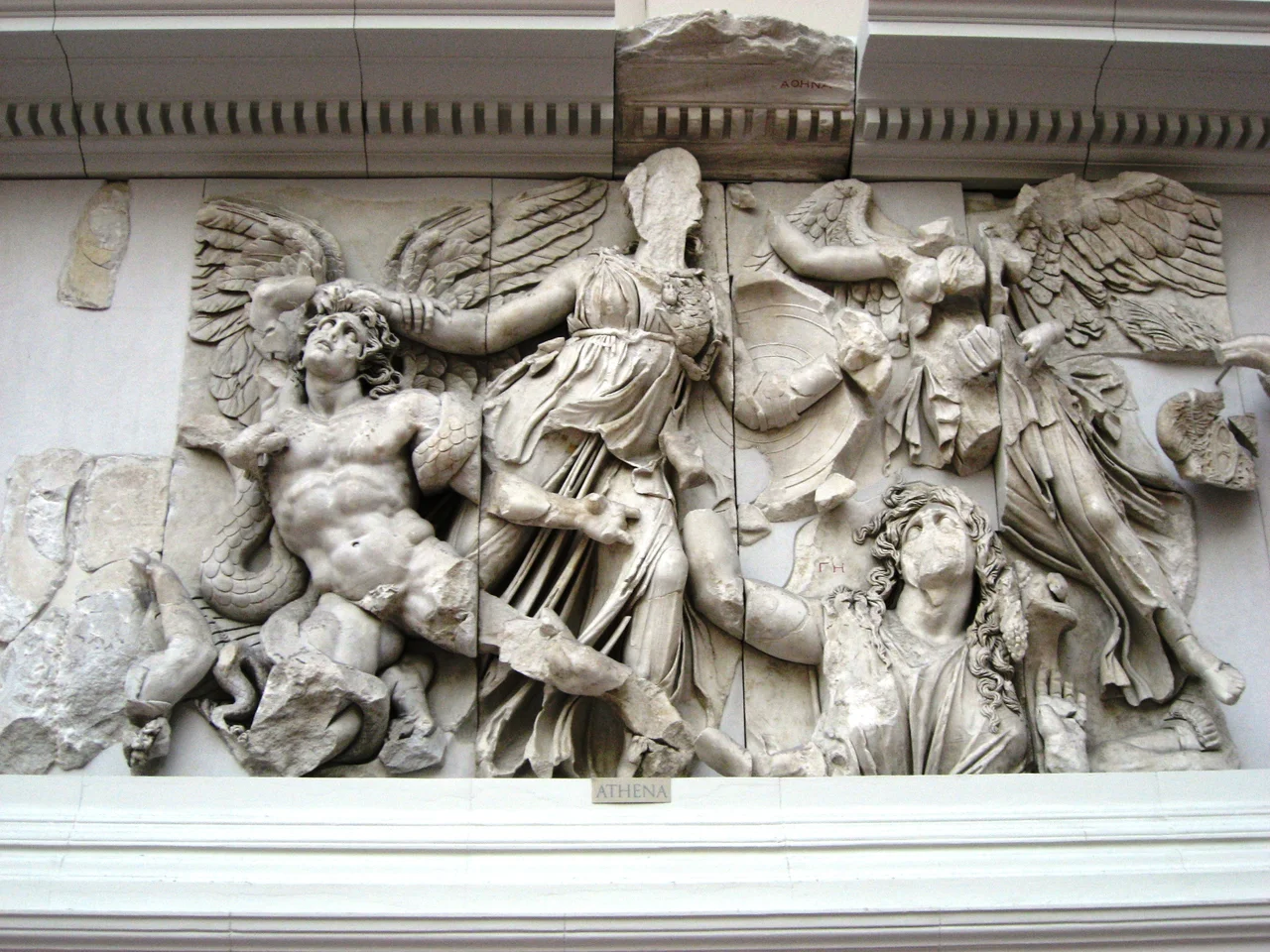
The Great Altar at Pergamon includes a frieze of gods battling giants. Why was this myth especially useful for a royal monument?
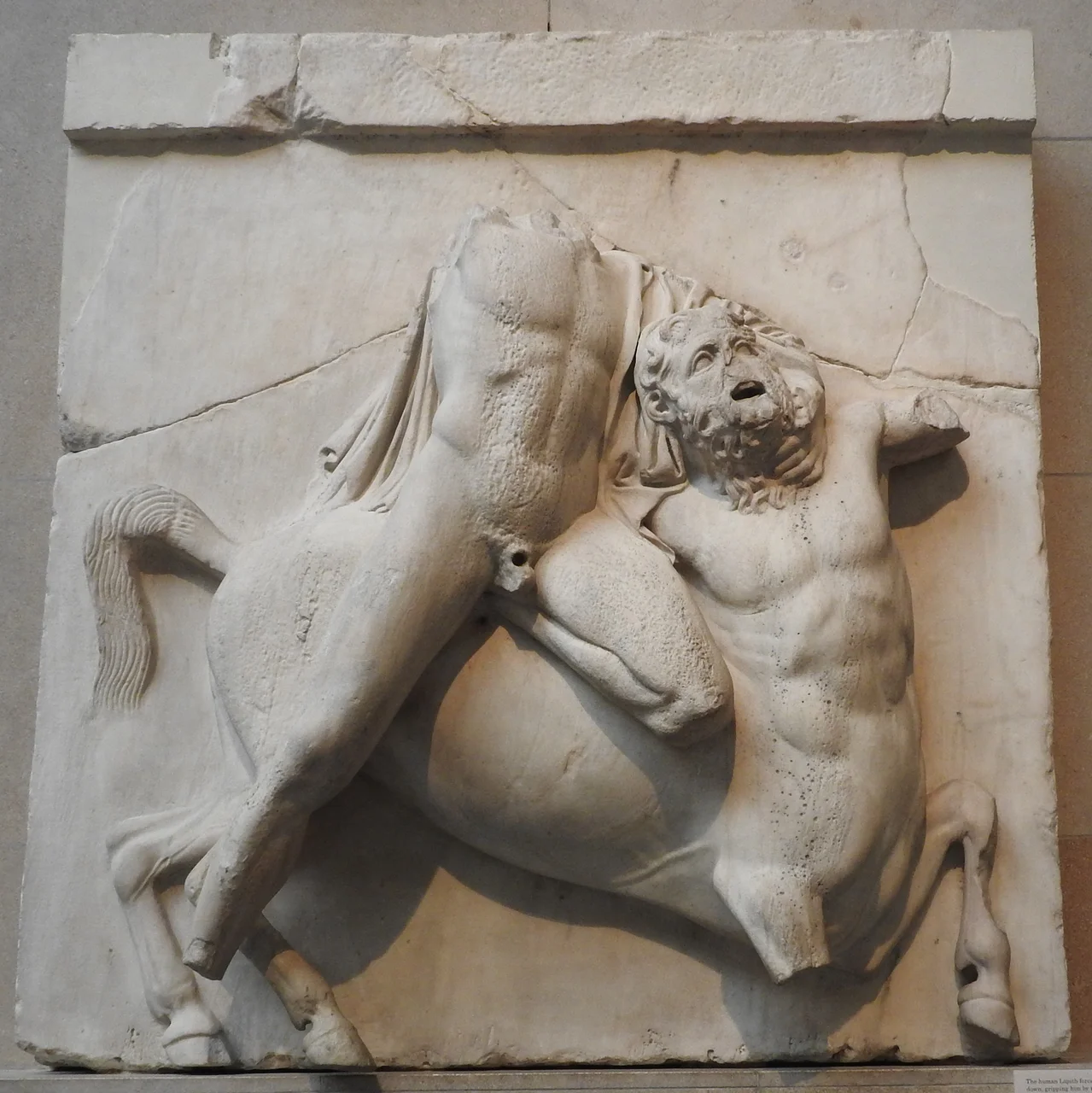
The Laocoon group spreads its twisting figures across a broad, shallow front. From where was it mainly designed to be viewed?
Why did Greek sculptors use hollow lost-wax casting for large bronze statues?
What evidence on the Riace Warriors shows that Greek bronze sculpture could include materials beyond the main bronze body?
Many Greek bronze originals are now known mainly through Roman marble versions. What most directly explains this imbalance?
A sculptor wants an arm to extend far from a figure's torso with less risk of a stone support breaking. Which material is especially advantageous?
A museum label identifies Doryphoros as a Roman marble copy after a Greek bronze by Polykleitos. What does the label imply about the Greek original?
Polykleitos's Doryphoros balances a tense, weight-bearing leg with a relaxed leg and uses measured bodily relationships. What idea does this balance embody?
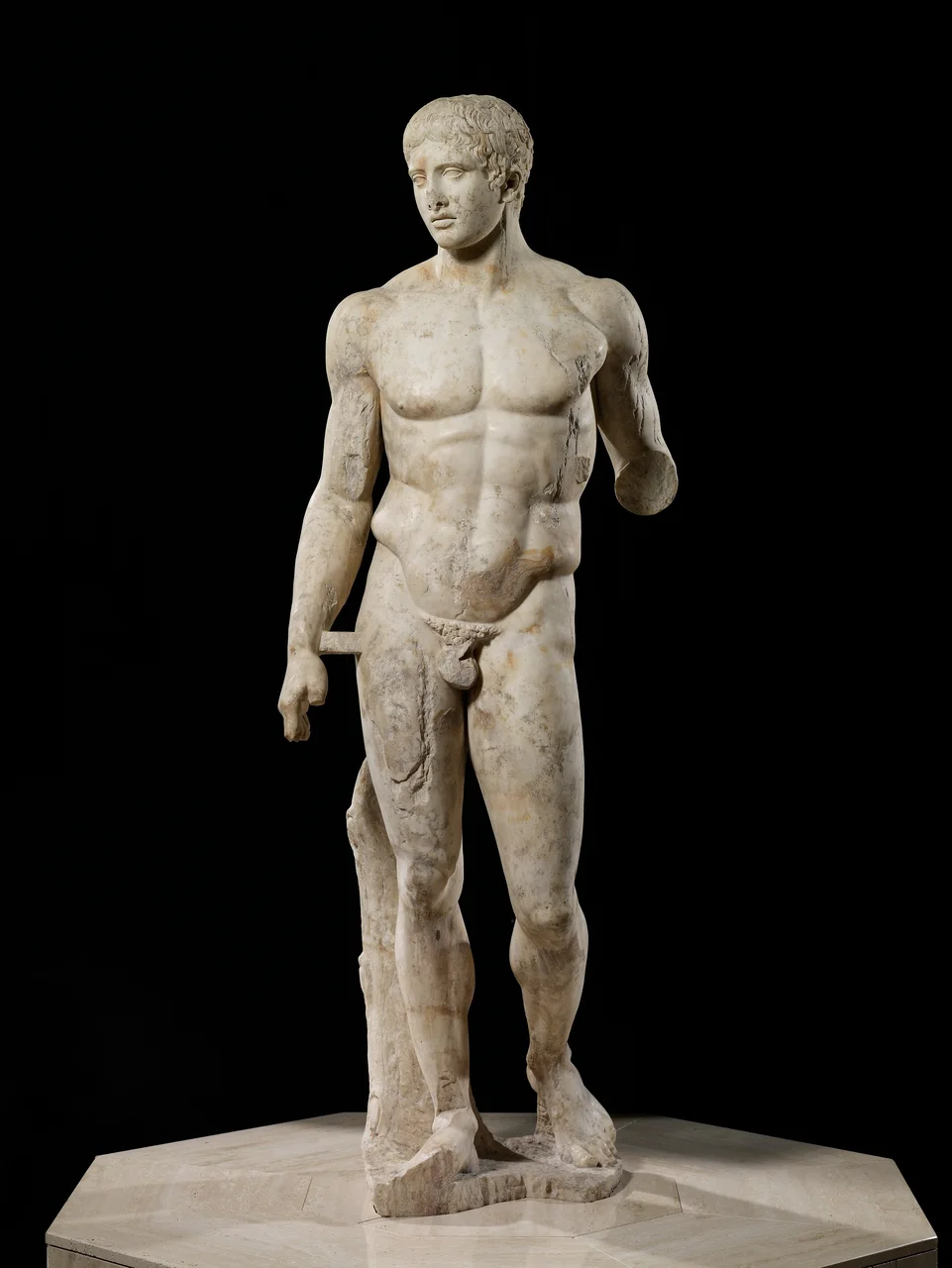
In contrapposto, a figure's weight rests mainly on one leg. What should happen to the hips and shoulders?
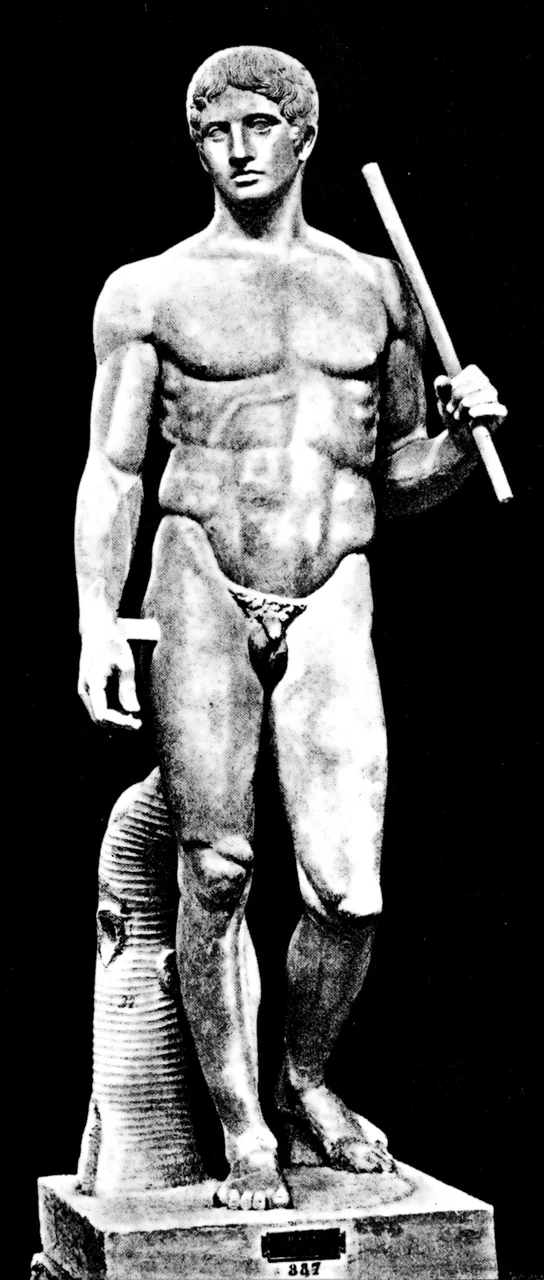
A student calls the Doryphoros a portrait because its anatomy is carefully observed. What correction best reflects the Canon?
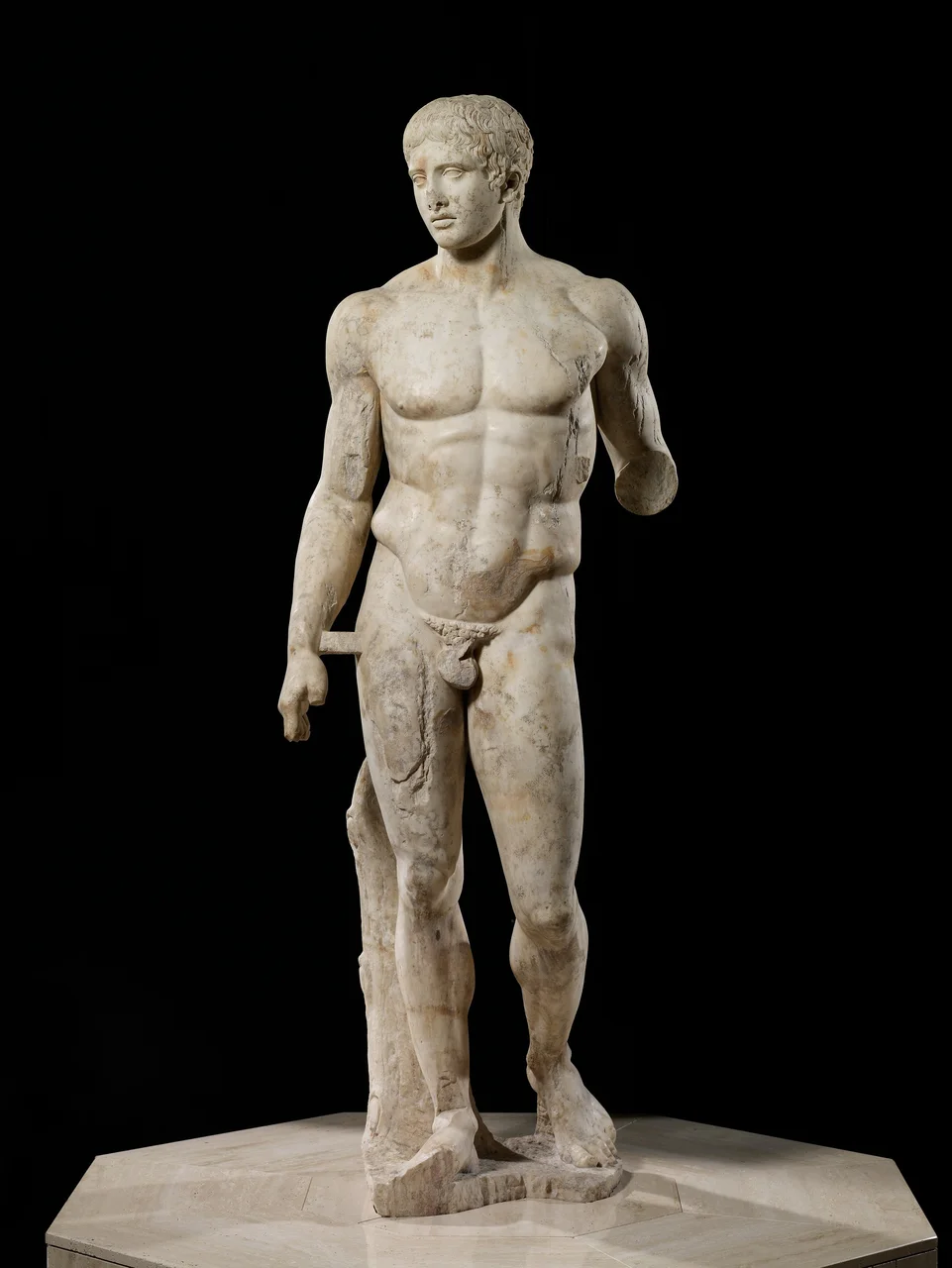
How did contrapposto help Greek sculptors move beyond the Archaic kouros formula?
Polykleitos made a statue to show his Canon of ideal proportions in practice. Which statue, shown here, was it?
Nike of Samothrace was designed to be seen from a three-quarter view, with wings, ship base, and drapery activating the surrounding space. What Hellenistic innovation is most evident?
Laocoon's strained faces, twisting torsos, and attacking serpents make viewers feel the crisis. What did Hellenistic sculptors add most strongly here?
Crack the passcode before the zombies get in.
Answer, then swat bugs for bonus points.
Race through questions at your own speed.
Same question on every screen. Fastest wins.

Pick a tile, answer, hit bonuses and steals.
Etruscan Art
20 questions