Loading
by BlastRoom
Greek vessel functions, vase-painting techniques, firing, and workshop practice.
#us_hs_art_history
25 questions
One question set, multiple game modes. Tap any game to see it in action. Not sure which to pick?
Answer to place stones and capture territory.
Outrun the snow together.
Earn blasts, then hunt the other team.
Answer to earn energy, then climb.

The class blasts through walls together.
Bid on mystery lots. Most money wins.
Sell tours. Nice, standard, or a total scam.

Answer, restock, and serve the rush.
More correct answers pulls the rope your way.
Answer, then shoot down the alien wave.
Answer, then tap to leap the frozen ridge.
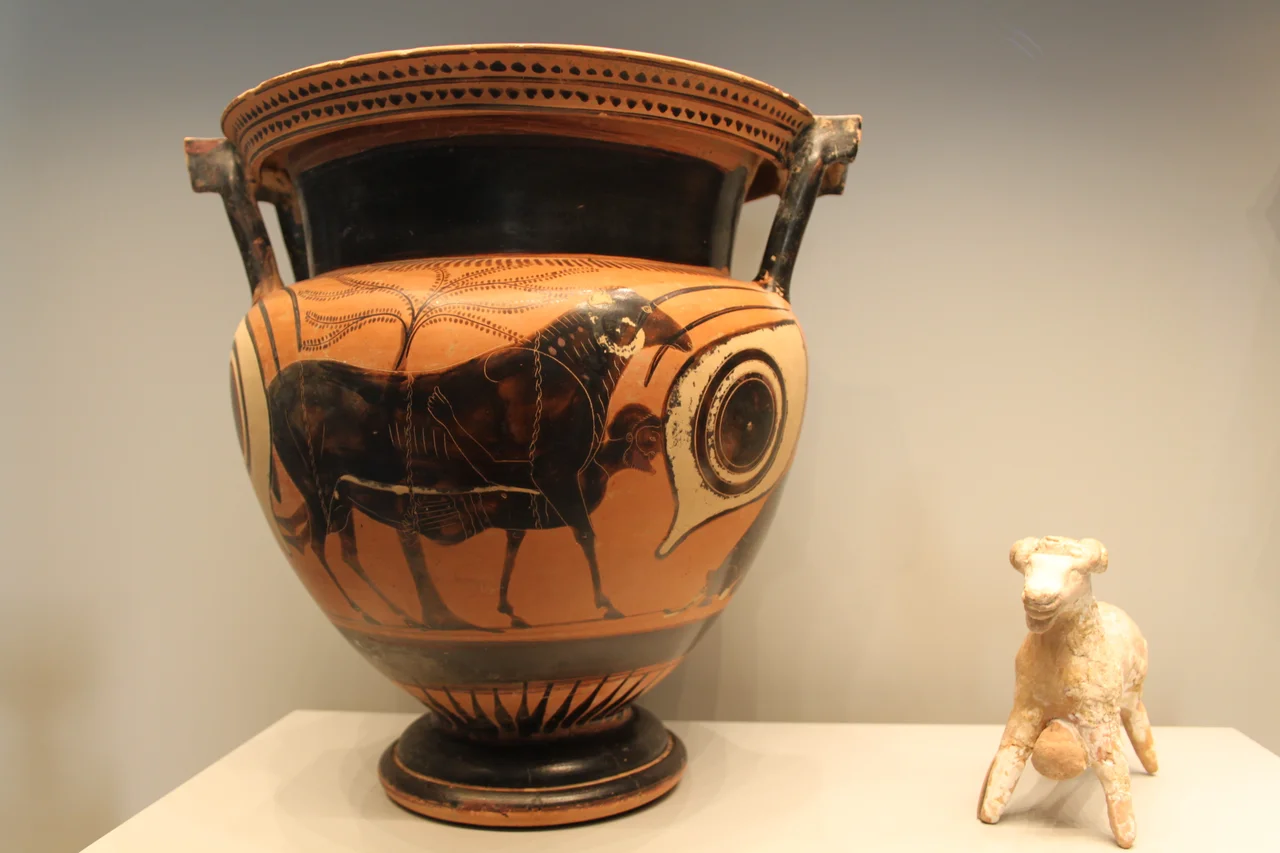
The shown wide, deep bowl stood at the center of a symposium, where wine was mixed with water before serving. What vessel shape is it?
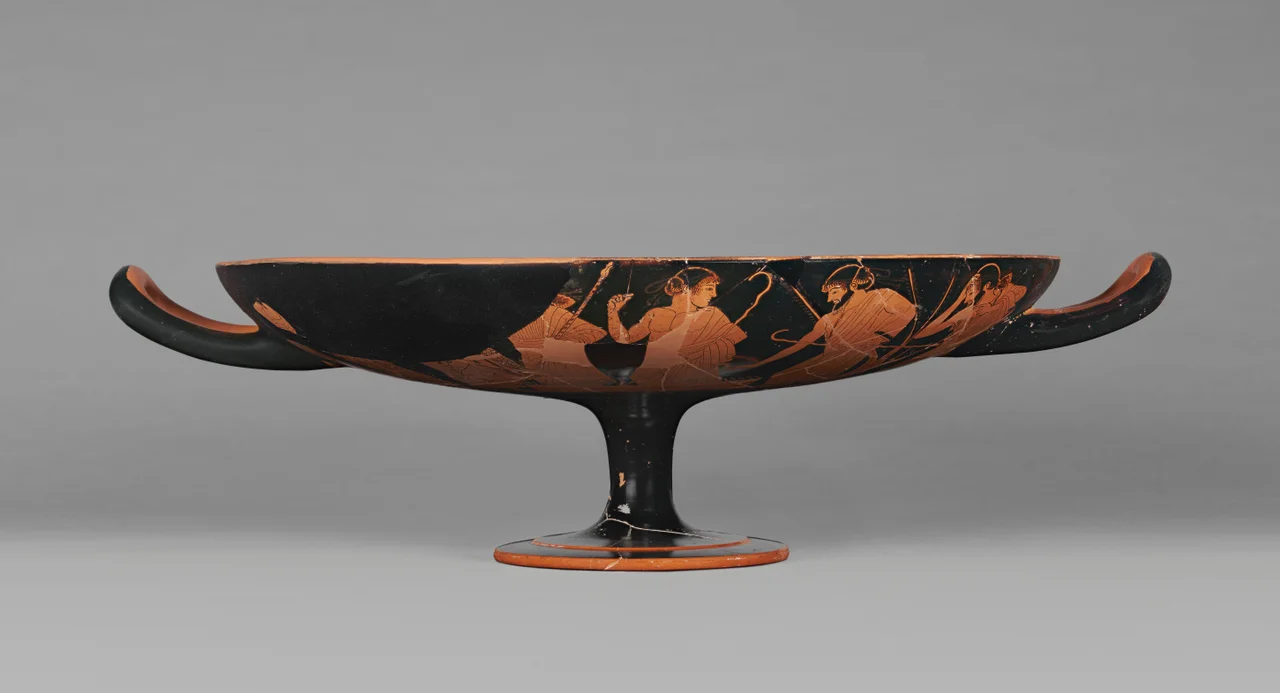
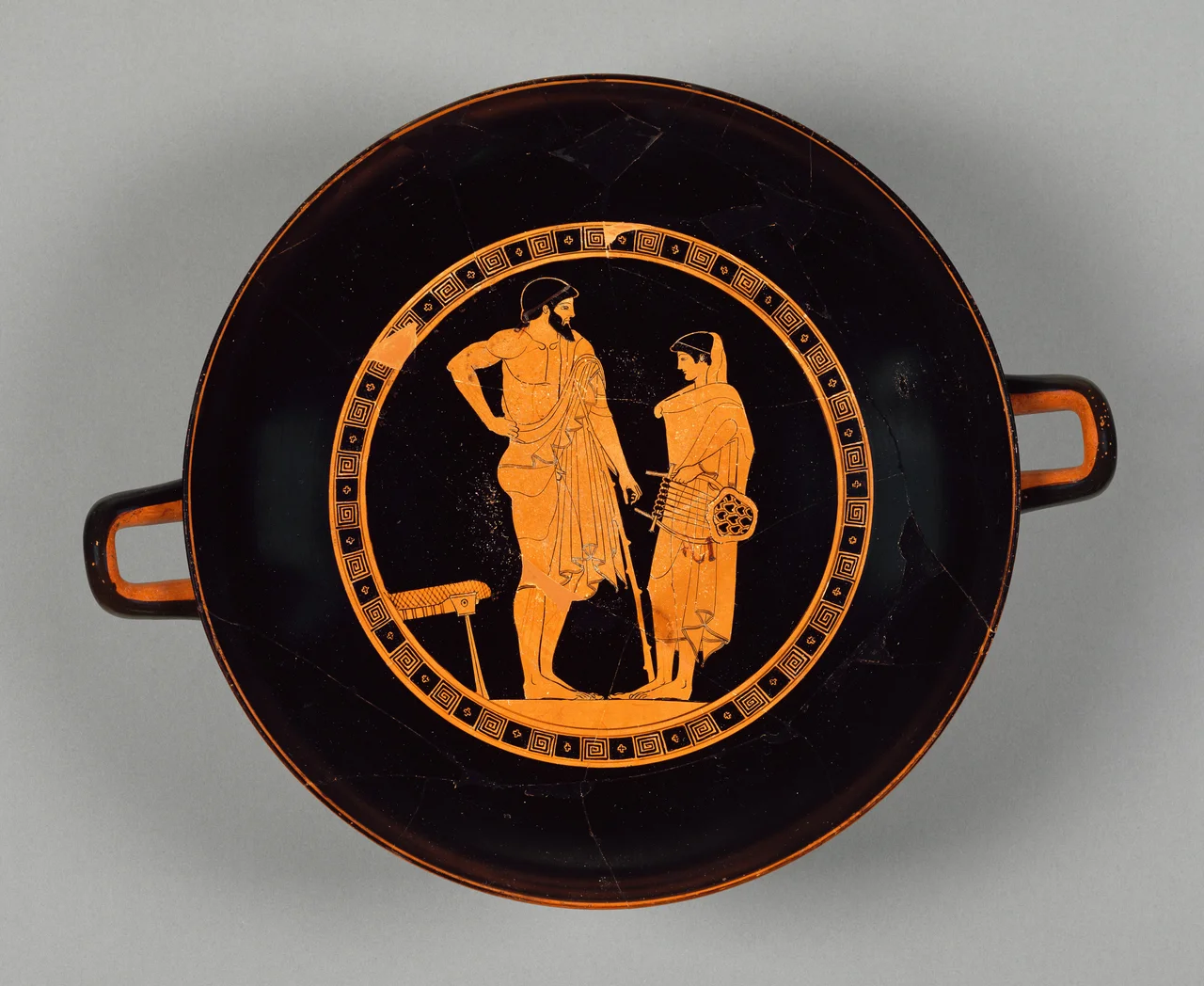
The shown shallow, broad drinking cup has horizontal handles and a stemmed foot. Which vessel would a guest use to drink wine at a symposium?
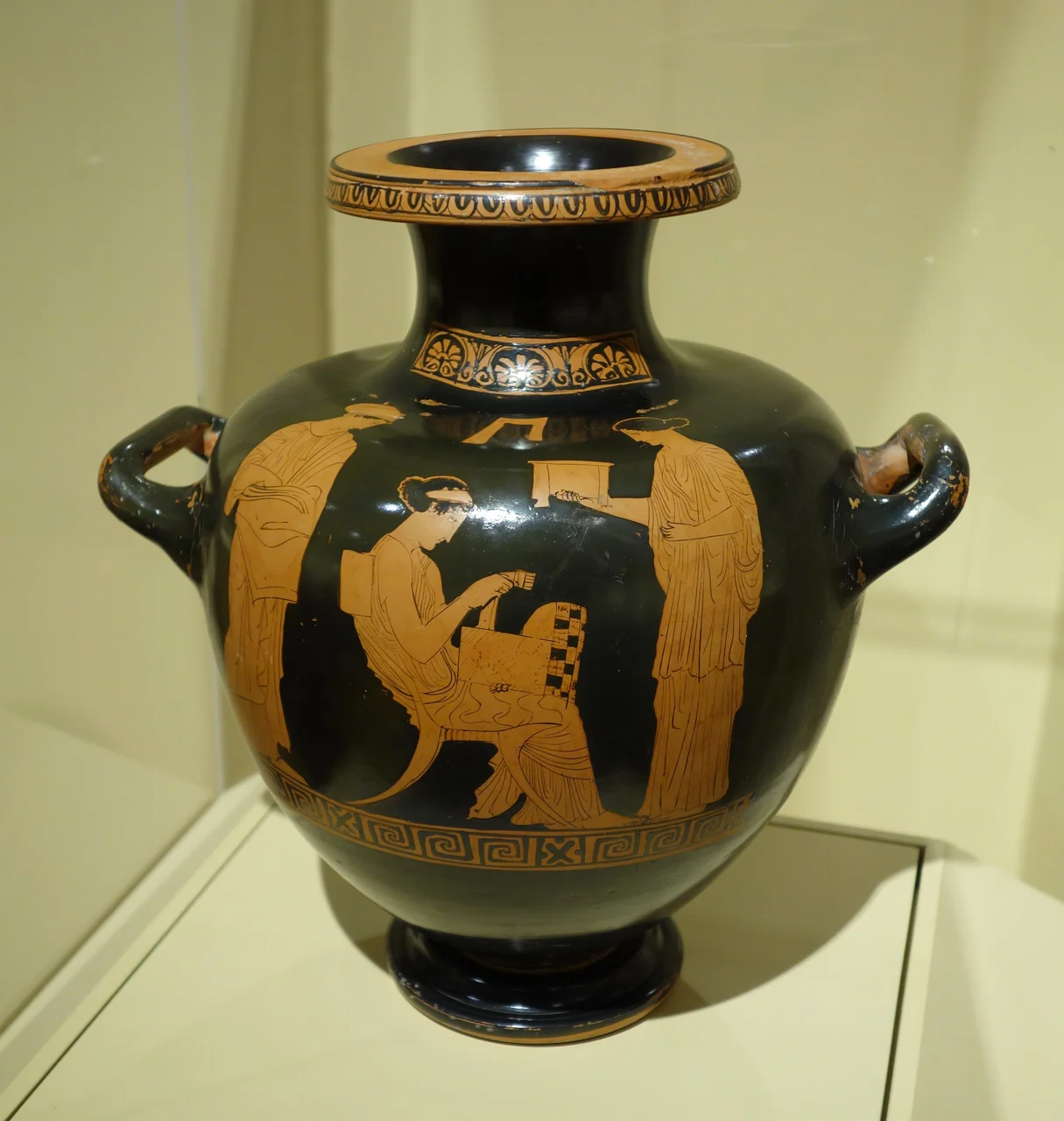
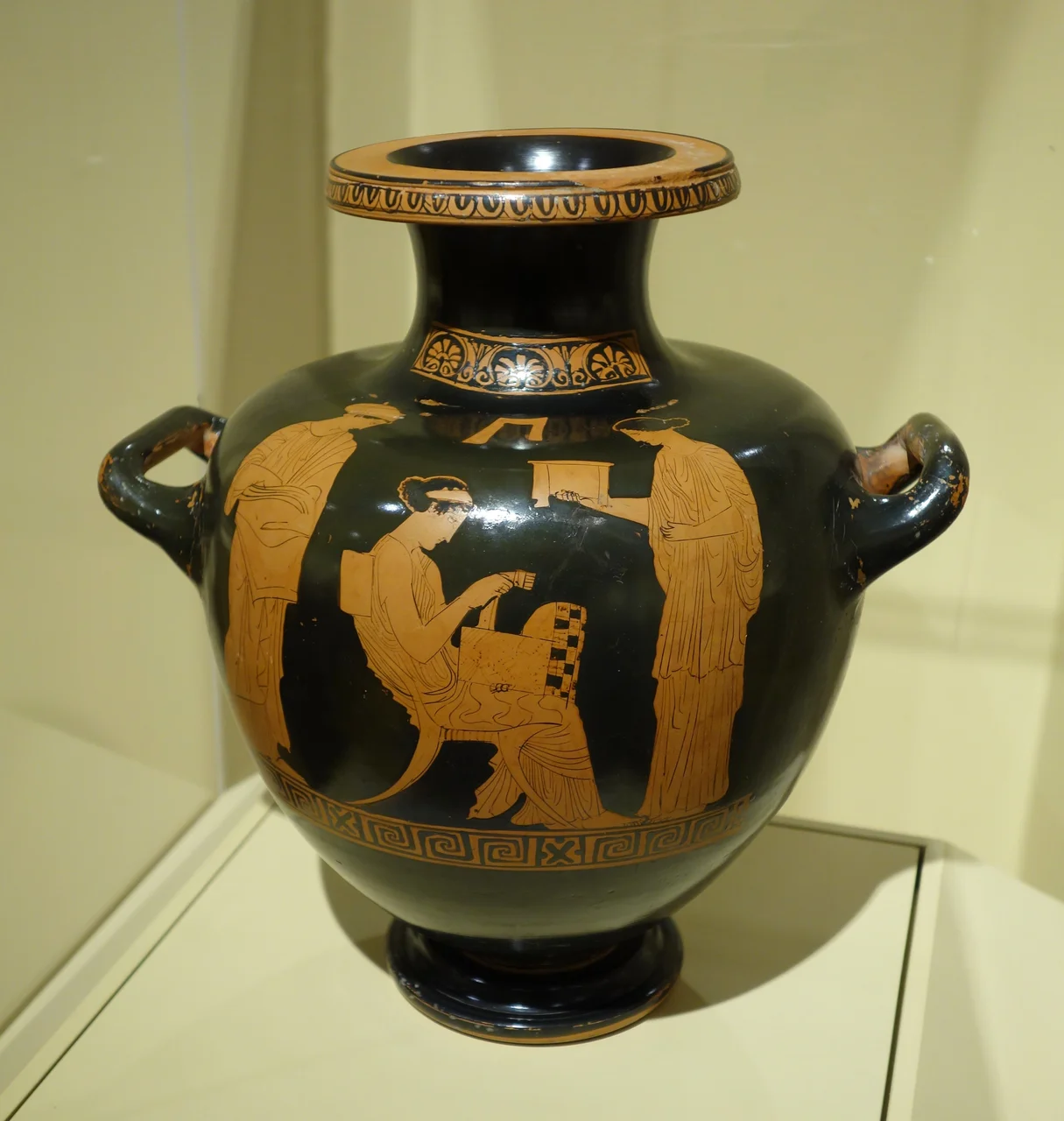
A household needs a vessel for fetching water from a fountain. The shown jar has two side handles for lifting and a rear vertical handle for pouring. What shape best fits this task?
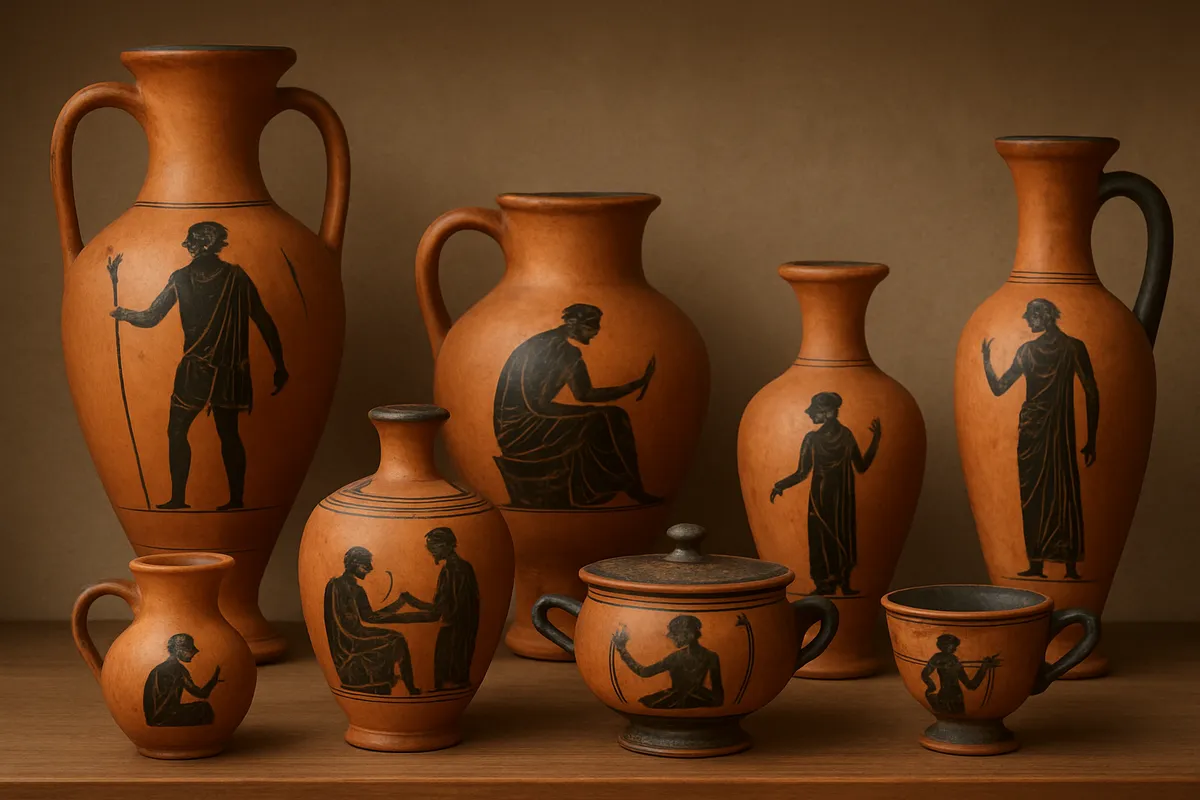
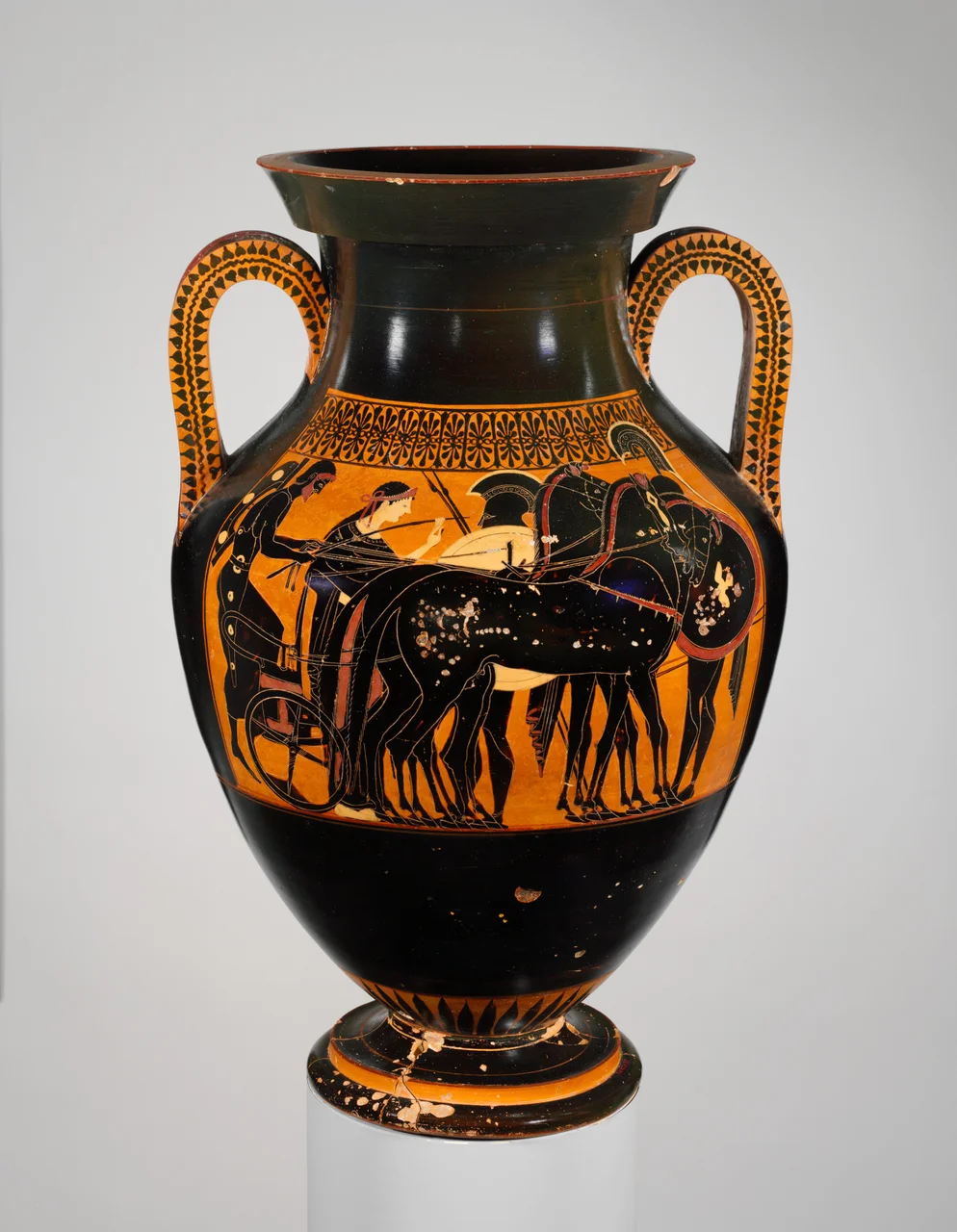
The shown tall two-handled storage jar could hold and transport wine or oil. What is this vessel shape called?
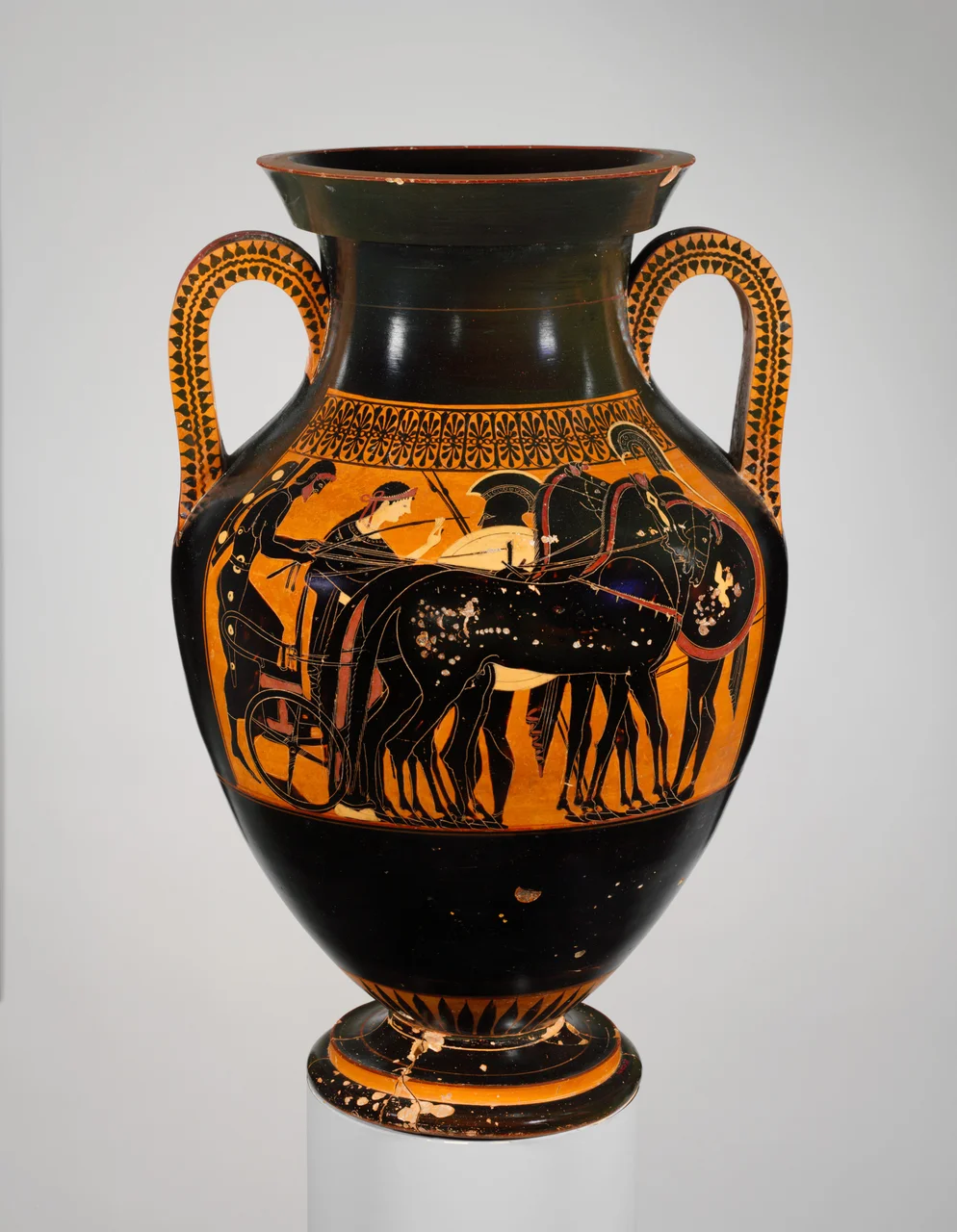
Why would an amphora's tall neck, enclosed body, and paired handles suit a household or trading context?
On the shown water jar, what practical advantage comes from having two side handles plus one vertical rear handle?
The painted scene inside the shown shallow cup stayed hidden under liquid until the cup was nearly empty. What was the vessel's primary function?
A Greek vase has black silhouettes on orange clay with incised details. What technique does it use?
A Greek vase reserves its figures in the clay color against a black ground. What technique does it use?
The technique of Vase B was invented in Athens around which date?
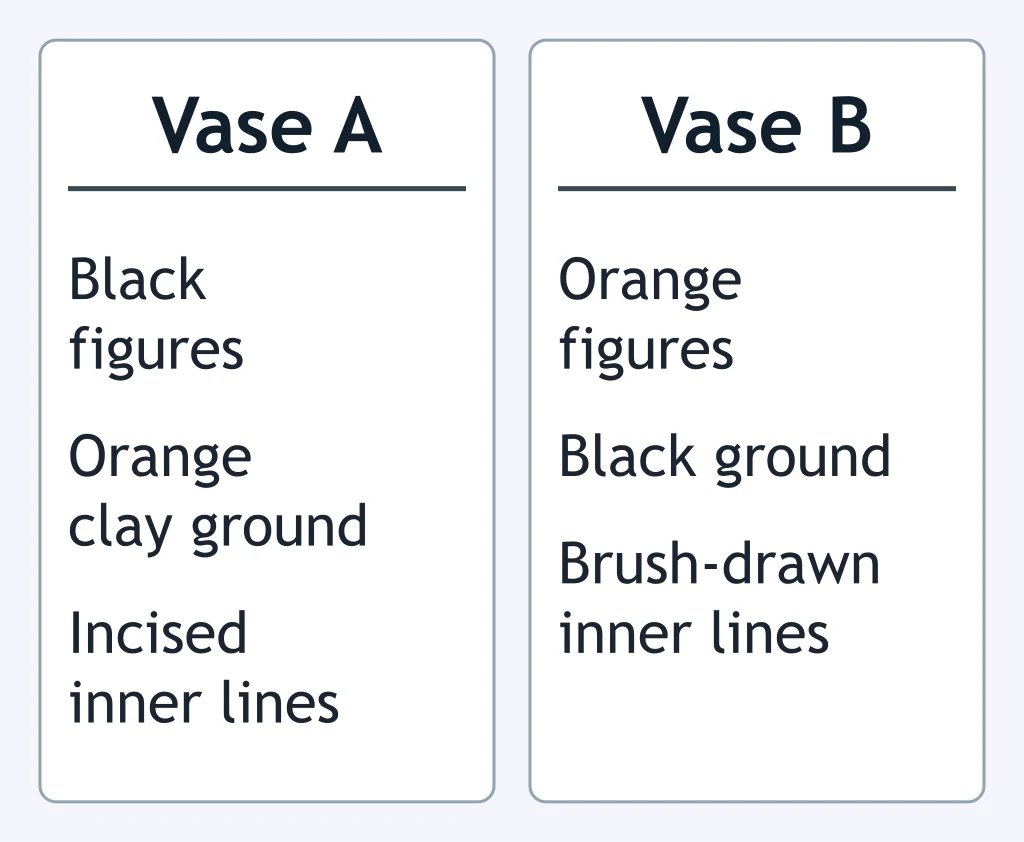
Black-figure painters scratched inner details through the black slip with a sharp tool. What is this technique called?
Which visible arrangement identifies the later technique in the comparison image?
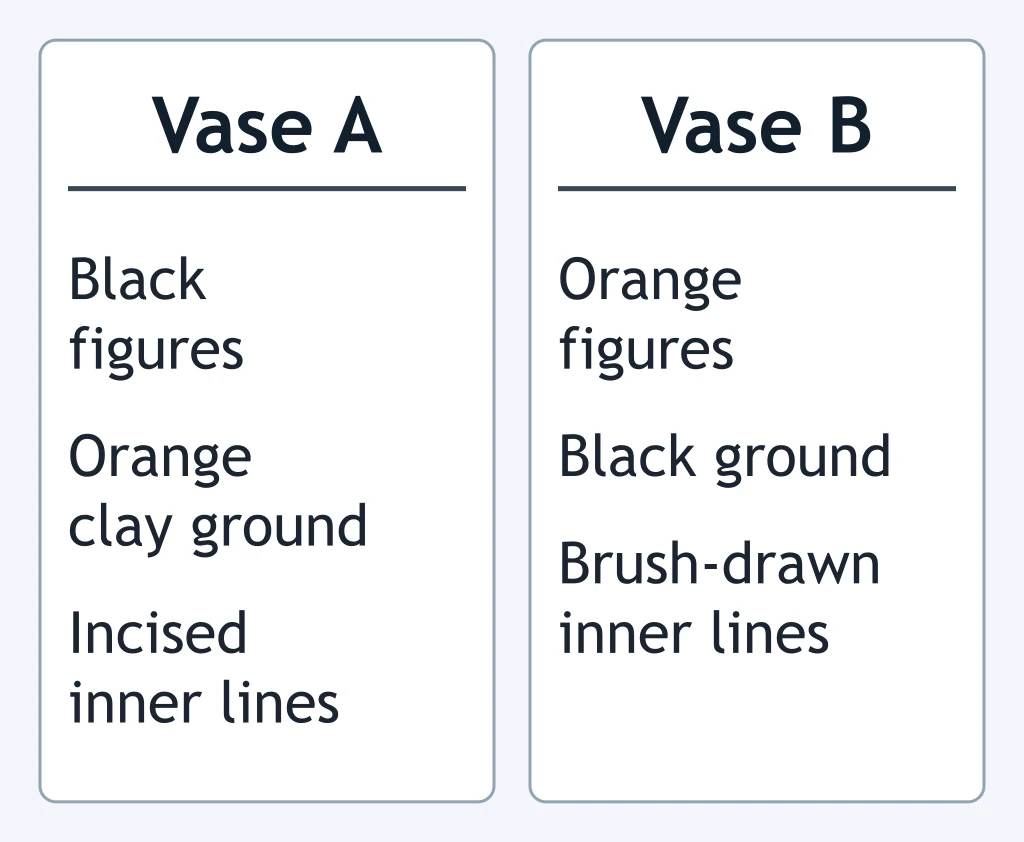
A painter wants to show a bent torso, overlapping limbs, and detailed clothing with brush lines. Which technique best supports that goal?
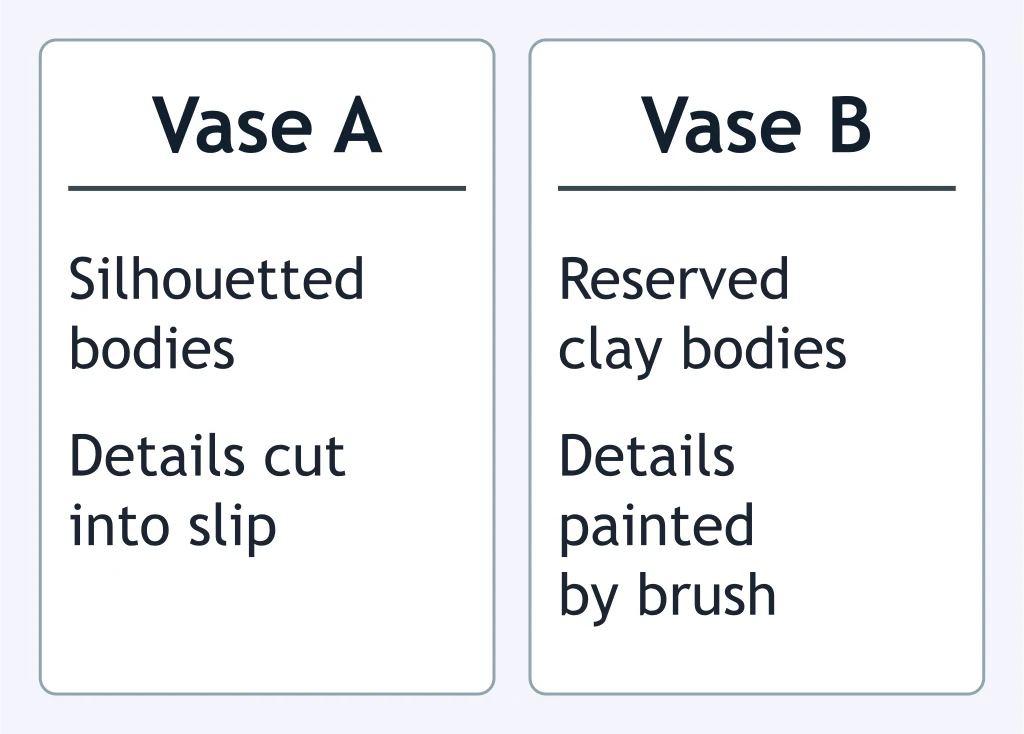
Some early Athenian vases, such as ones by the Andokides Painter, show a scene in black-figure on one side and red-figure on the other. What are these vases called?
Athenian vase firing had three stages: air enters the kiln, then a smoky low-oxygen stage, then air returns. What happened to the vessel during the smoky stage?
In the first stage of Athenian vase firing, air enters the kiln. What color does the whole vase become at that point?
After the smoky, low-oxygen stage in Greek vase firing, what must happen next for reserved clay areas to become orange again?
Why did glossed areas remain black after air returned to the kiln?
On the Niobides Krater, figures stand at different heights among uneven ground instead of forming one horizontal frieze. What earlier art form does this arrangement appear to emulate?
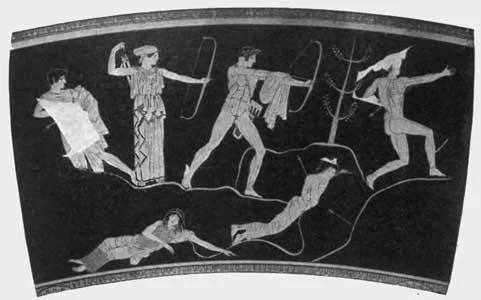
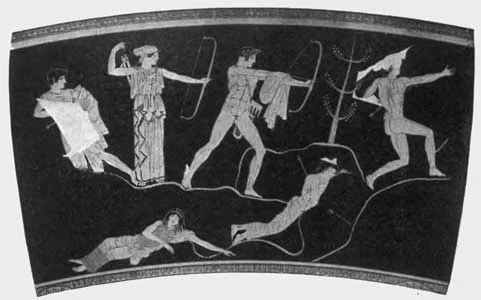
The shown side of the Niobides Krater has Apollo and Artemis shooting arrows at Niobe's children. Why are the gods punishing them?
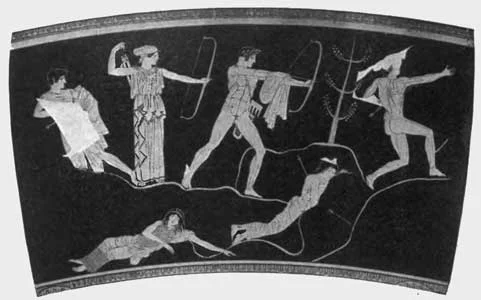
On the reverse of the Niobides Krater, a central hero is identified by a club and lion skin. Who is this figure?
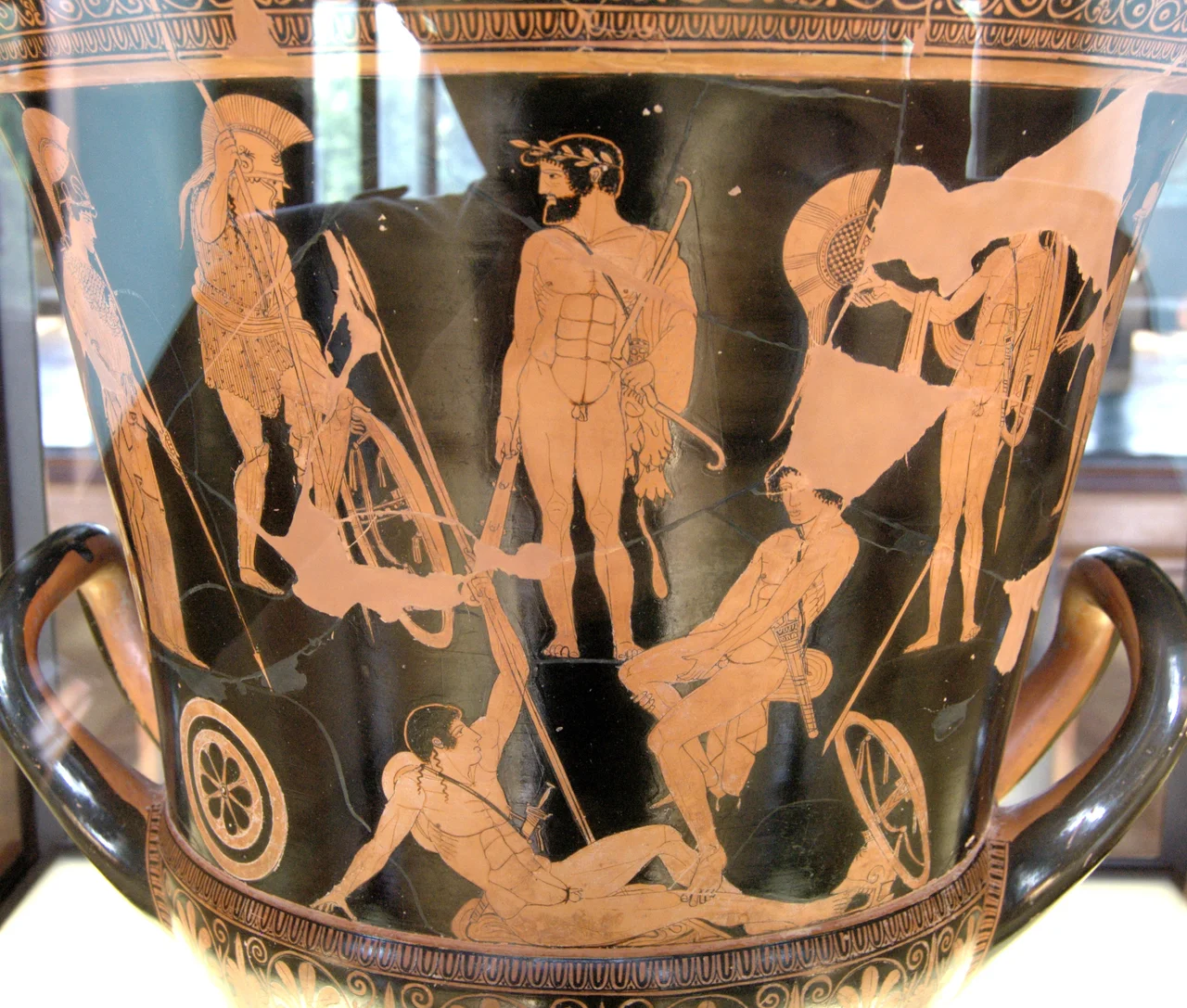
The Niobides Krater places similarly sized figures on several ground levels. What spatial effect is the painter pursuing?
An Attic vase inscription gives a name followed by the word egrapsen. What role does the named person claim?
A vase bears the inscription "Nikosthenes epoiesen." Which part of production does this signature identify?
A single name appears with both epoiesen and egrapsen on the same vase. What does this double signature record?
Crack the passcode before the zombies get in.
Answer, then swat bugs for bonus points.
Race through questions at your own speed.
Same question on every screen. Fastest wins.

Pick a tile, answer, hit bonuses and steals.
Roman Architecture and Engineering
35 questions