Loading
by BlastRoom
From nose to alveoli: how air moves and where gas exchange actually happens.
#biology

20 questions
One question set, multiple game modes. Tap any game to see it in action. Not sure which to pick?
Answer to place stones and capture territory.
Outrun the snow together.
Earn blasts, then hunt the other team.
Answer to earn energy, then climb.

The class blasts through walls together.
Bid on mystery lots. Most money wins.
Sell tours. Nice, standard, or a total scam.

Answer, restock, and serve the rush.
More correct answers pulls the rope your way.
Answer, then shoot down the alien wave.
Answer, then tap to leap the frozen ridge.
On its way in, air has just passed through the trachea and is heading toward the air sacs. Which structure does it pass through next?
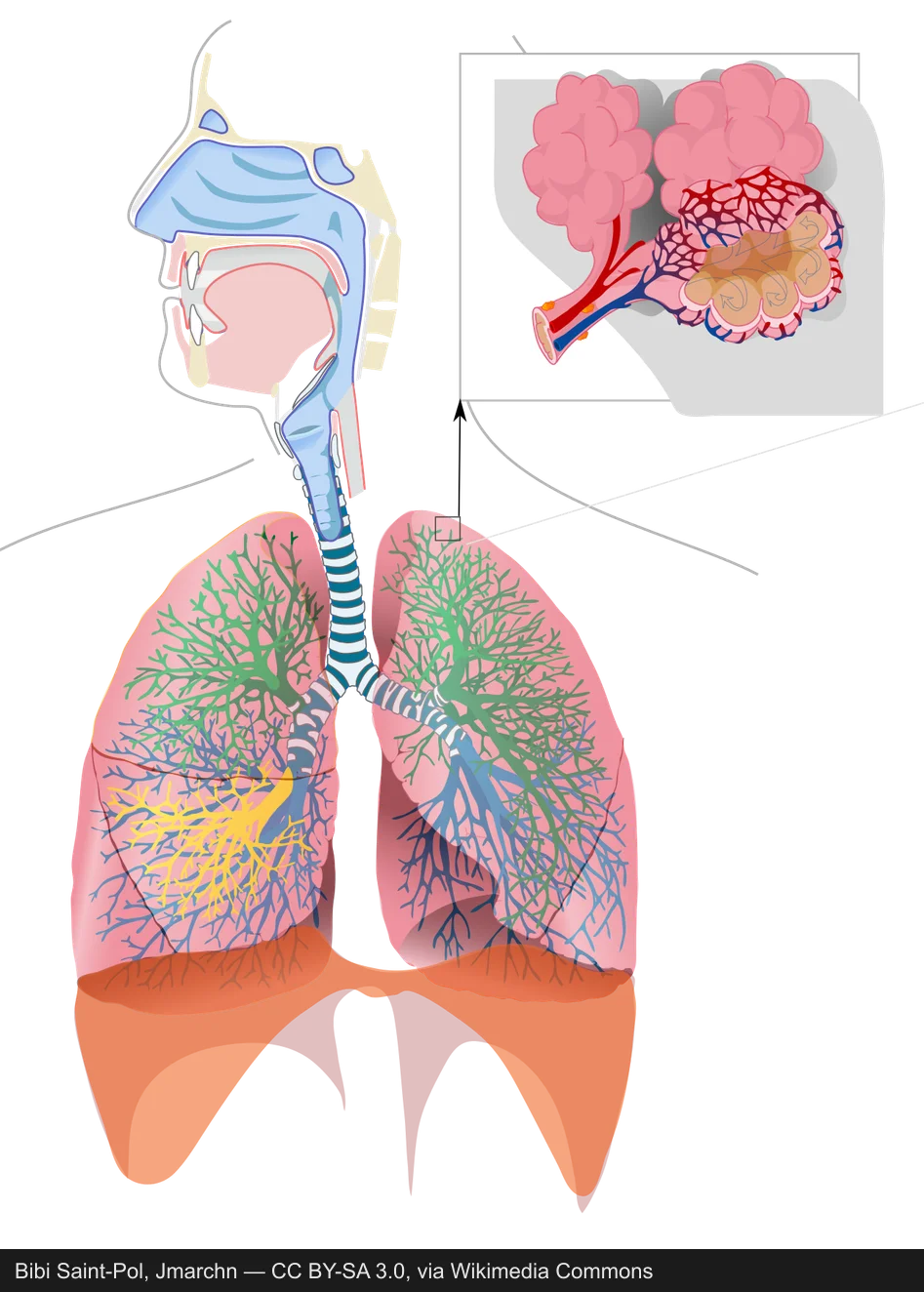
A student traces an inhaled oxygen molecule from the larynx down to the alveoli. Which of these does the molecule reach first?
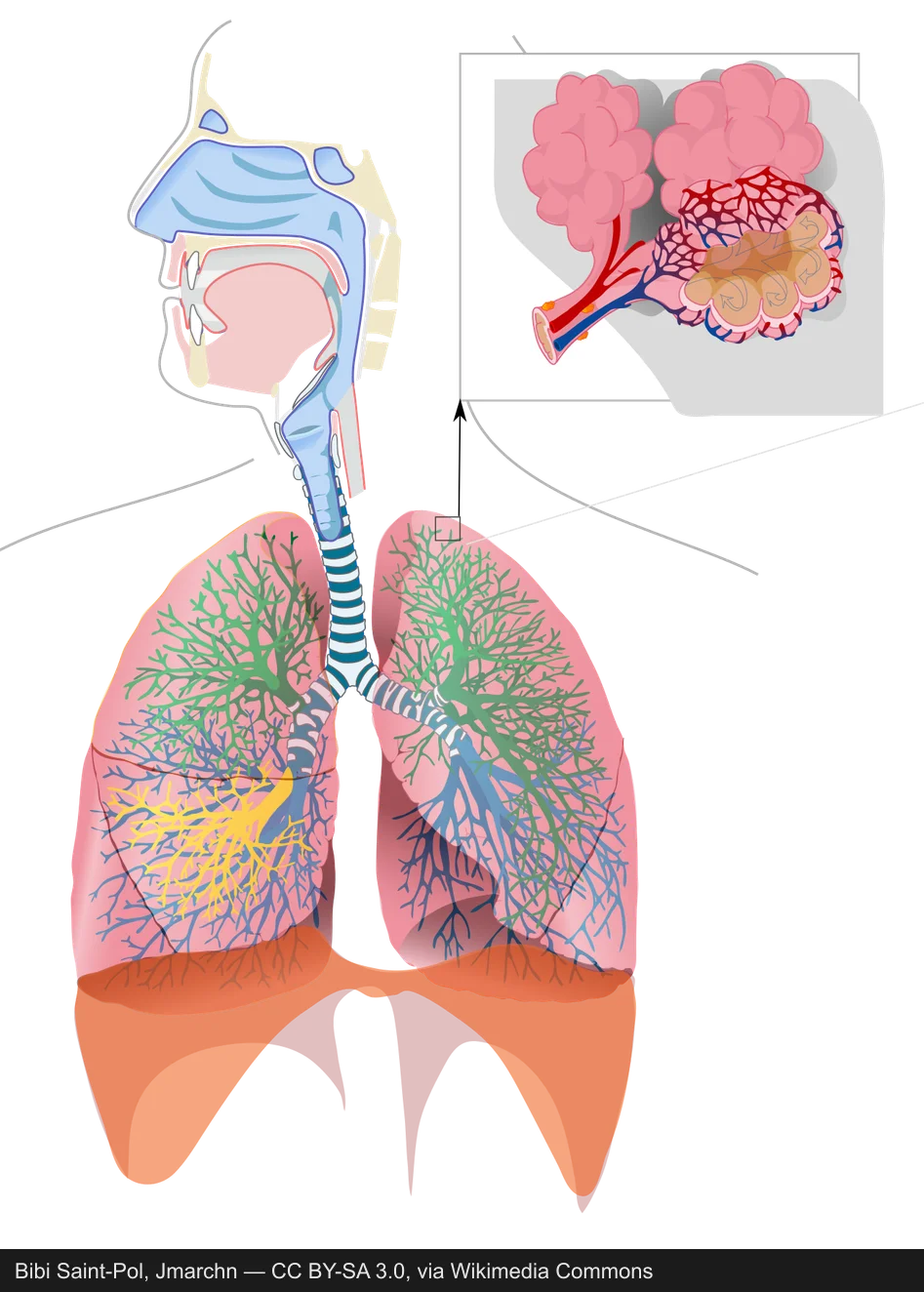
Inside the chest, the bronchi divide again and again into narrower tubes. Which structure does air travel through immediately before it reaches a bronchus?
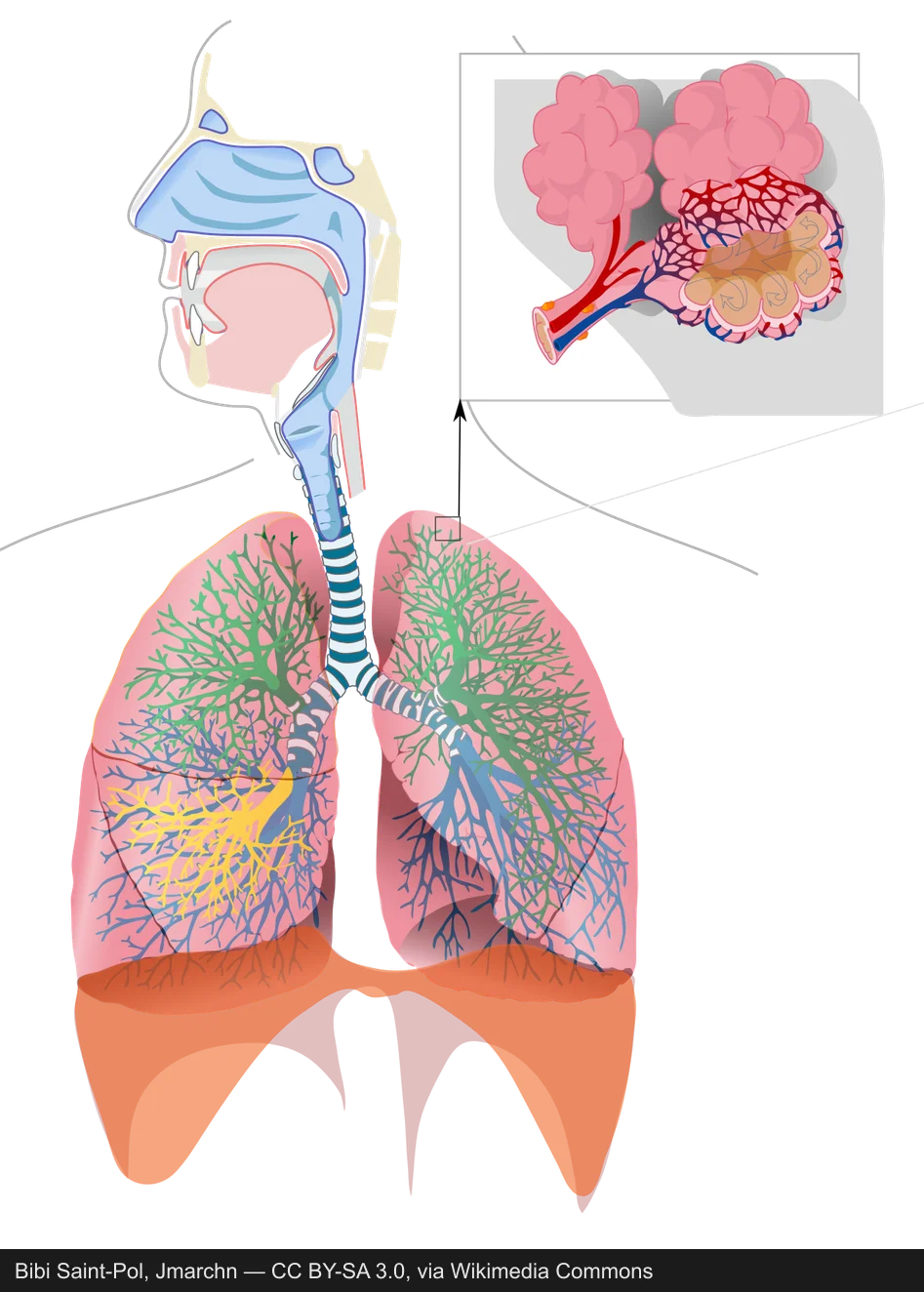
A doctor follows an inhaled peanut fragment that has just left the pharynx. Which structure does the fragment pass through next?
Bronchioles branch off a bronchus and get narrower and narrower as they run deeper into the lung. What do the smallest bronchioles finally open into?
Which muscle, lying below the lungs, contracts to enlarge the chest cavity during a normal breath?
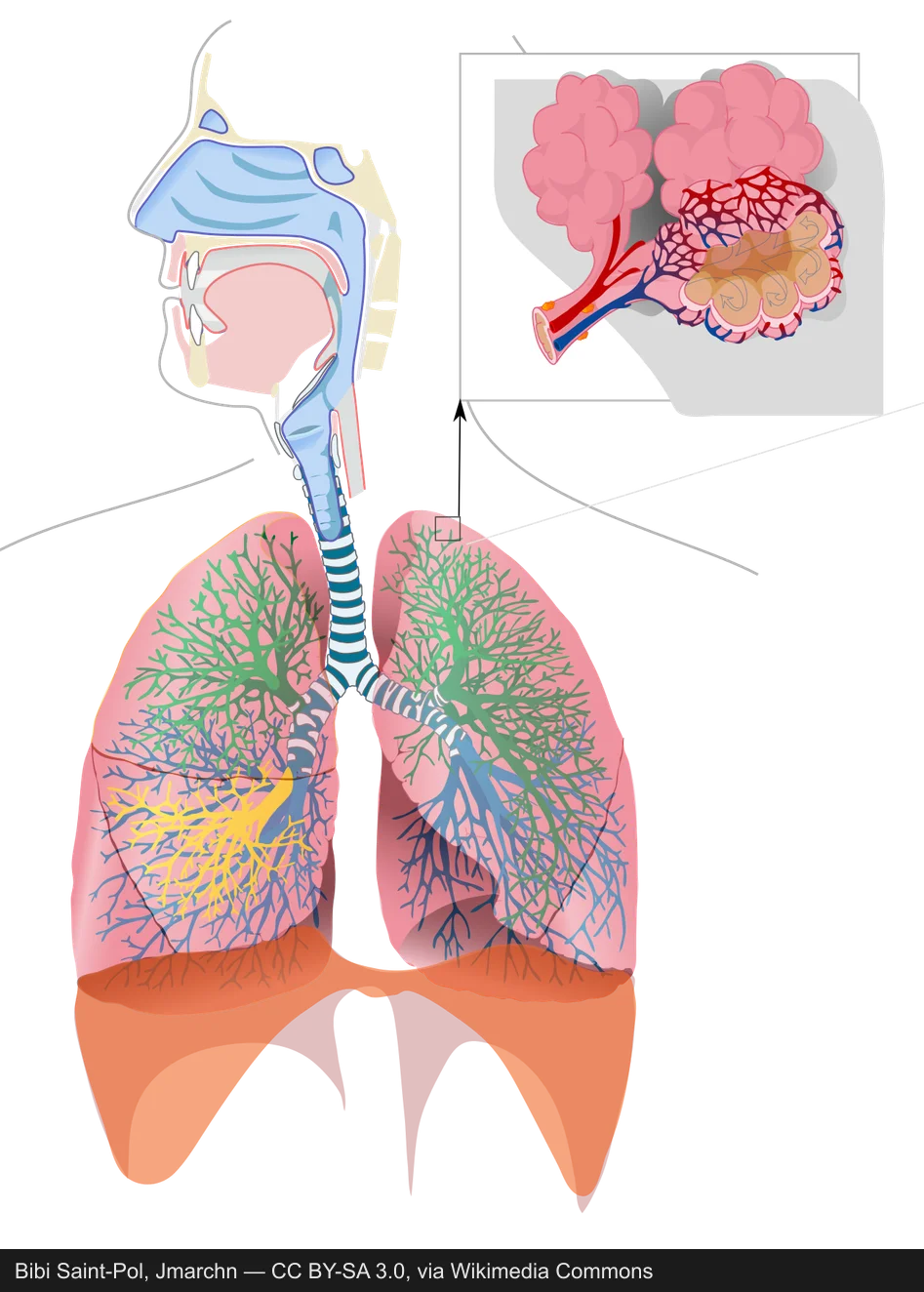
Which tube in the neck is reinforced by C-shaped rings of cartilage that stop it from collapsing as air rushes through it?
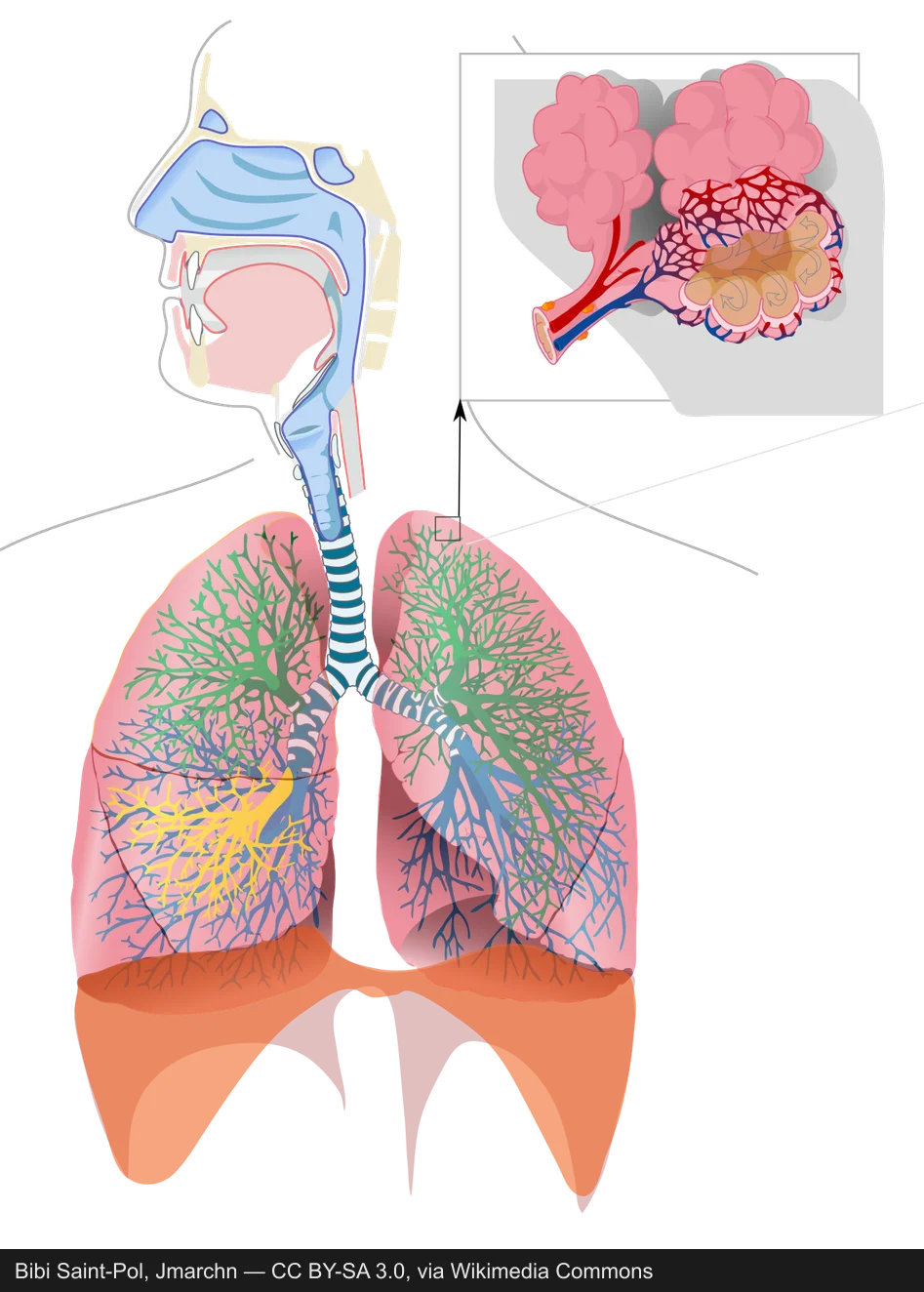
Hundreds of millions of alveoli are packed inside which structure?
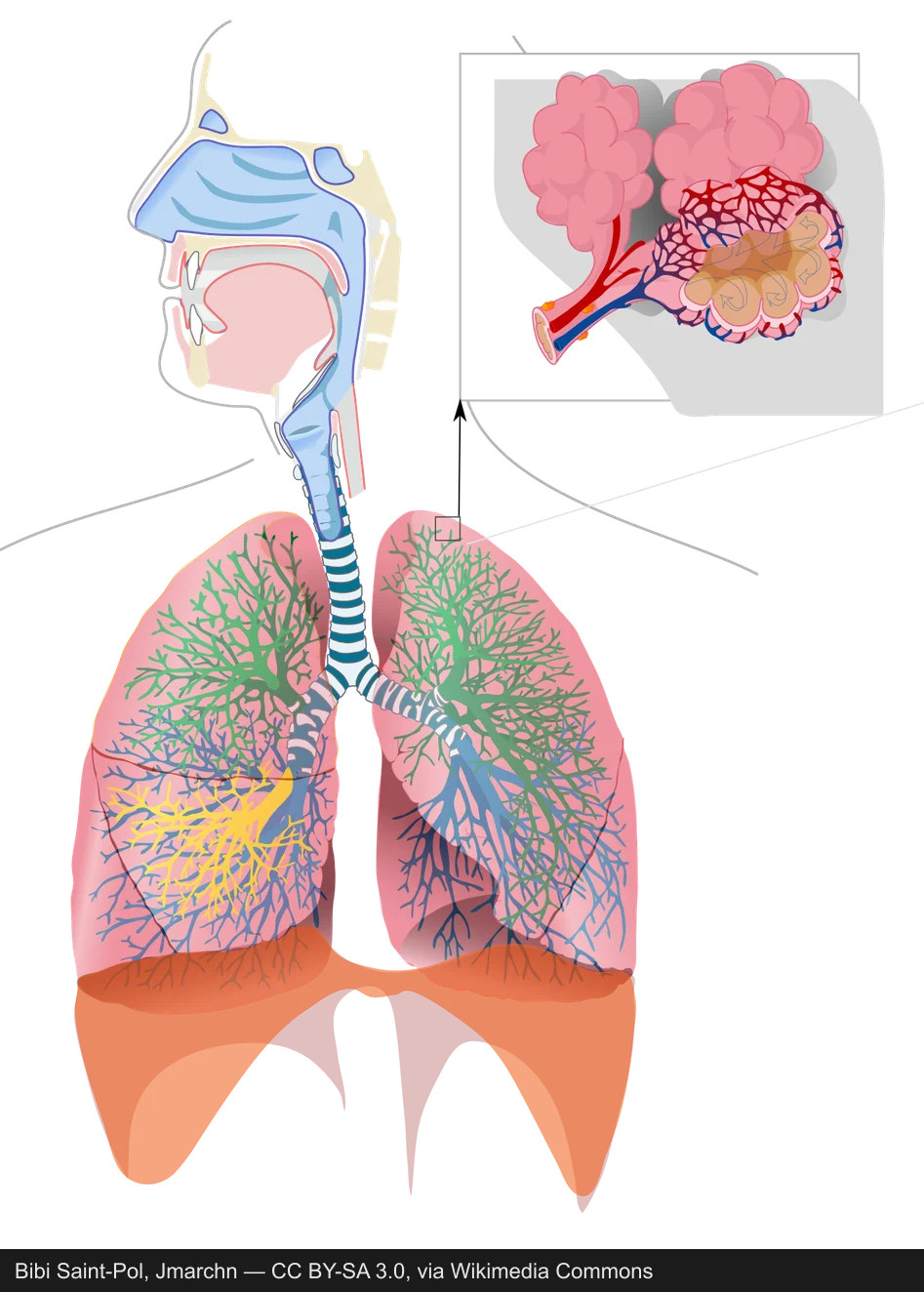
The wall of an alveolus is one cell thick, and the capillary wall pressed against it is also one cell thick. How does this thinness help gas exchange?
The cells lining the trachea produce mucus and carry tiny hair-like cilia. What job do the cilia do?
Oxygen crosses from air into blood inside which structure, and why there?
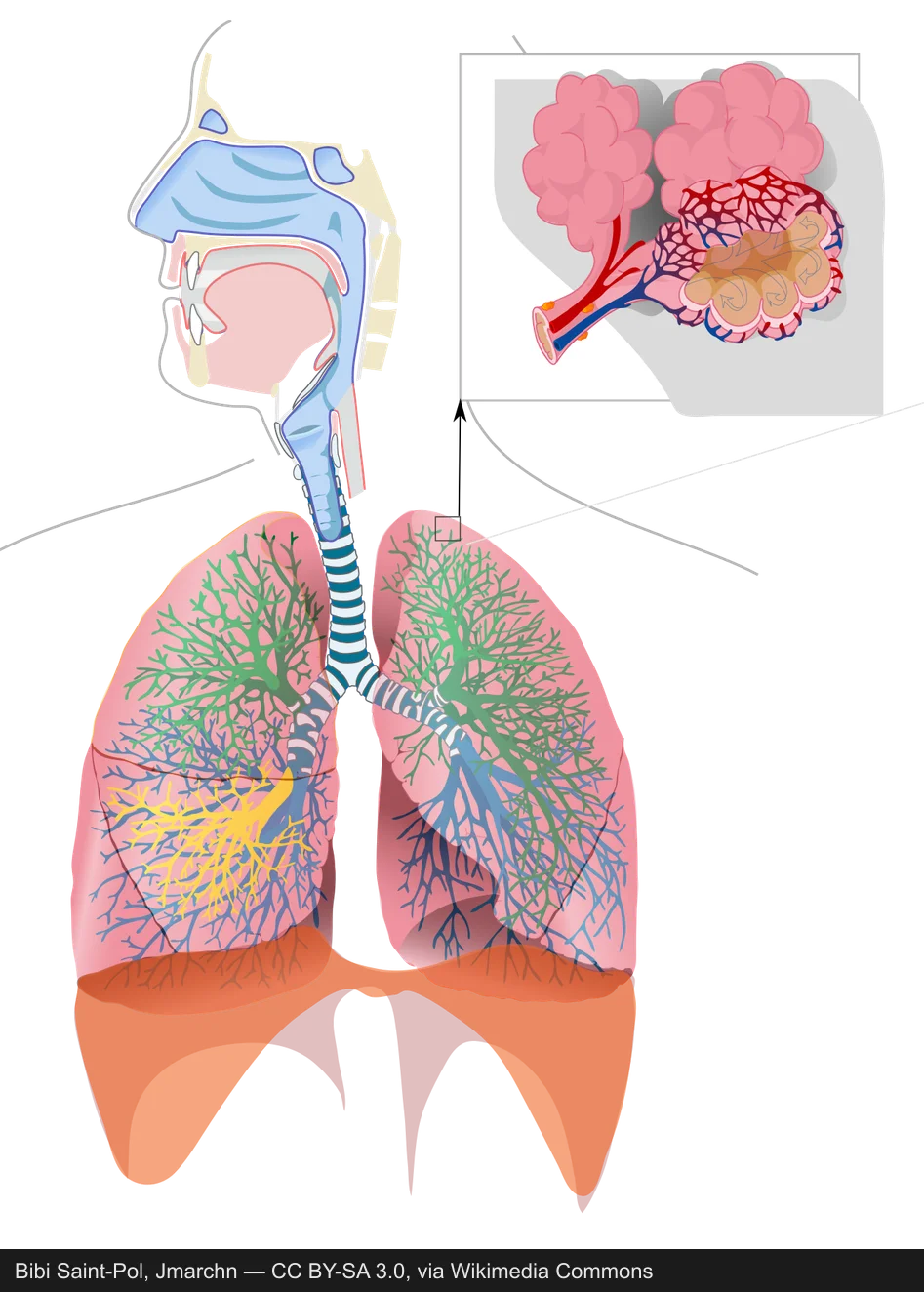
The air inside an alveolus holds a higher concentration of oxygen than the blood arriving in the capillary around it. What happens to that oxygen, and why?
Blood returning from hard-working leg muscles reaches the lungs carrying a high concentration of carbon dioxide. Where does that carbon dioxide go, and why?
Inhaled air is about 21% oxygen and 0.04% carbon dioxide. Exhaled air is about 16% oxygen and 4% carbon dioxide. What do these numbers show about what happened in the lungs?
Gas exchange between an alveolus and the capillary beside it costs the body no ATP at all. Why not?
The diaphragm contracts and flattens downward. What happens in the chest as a result?
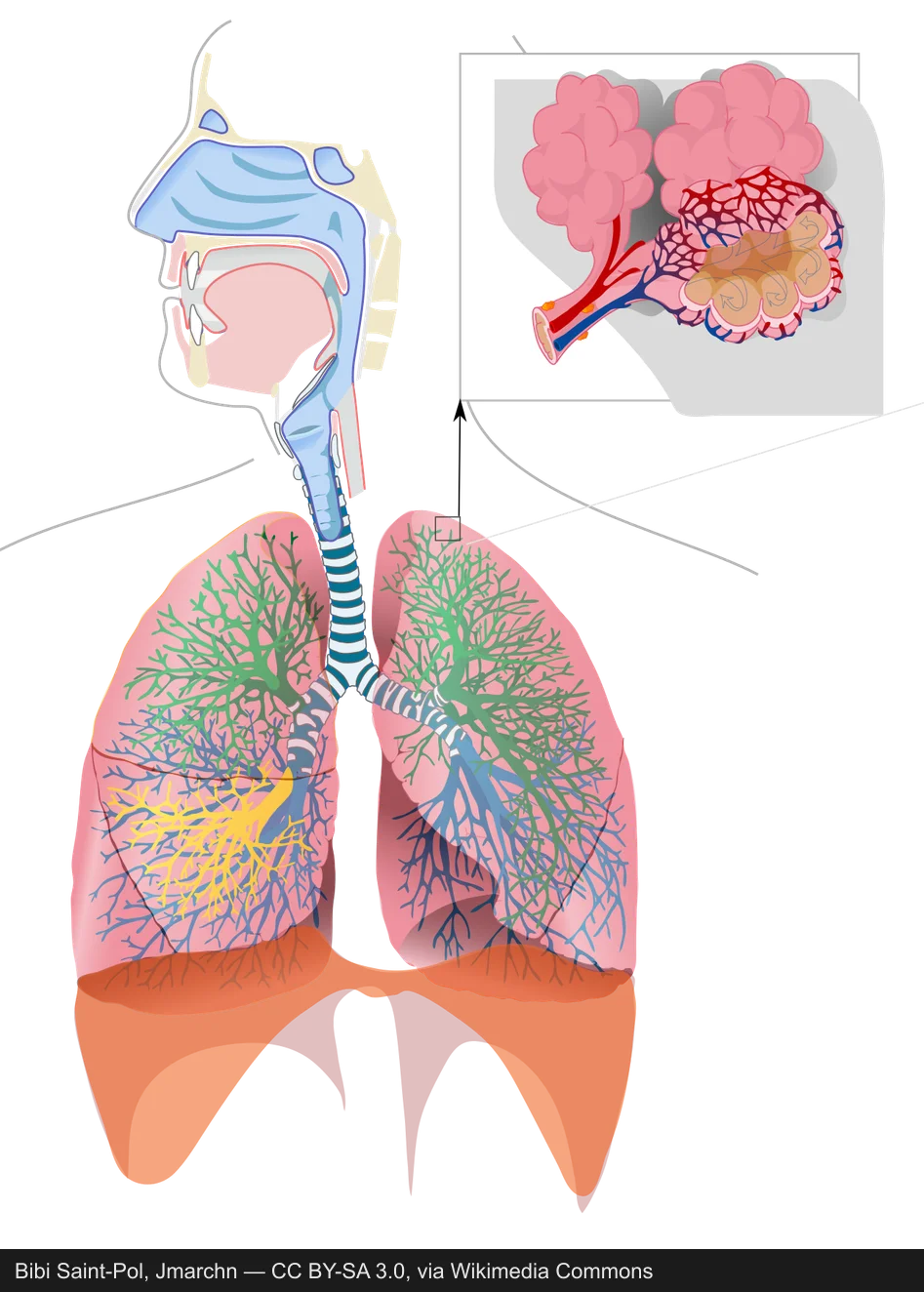
During a quiet exhalation, which structure relaxes and rises back into a dome shape?
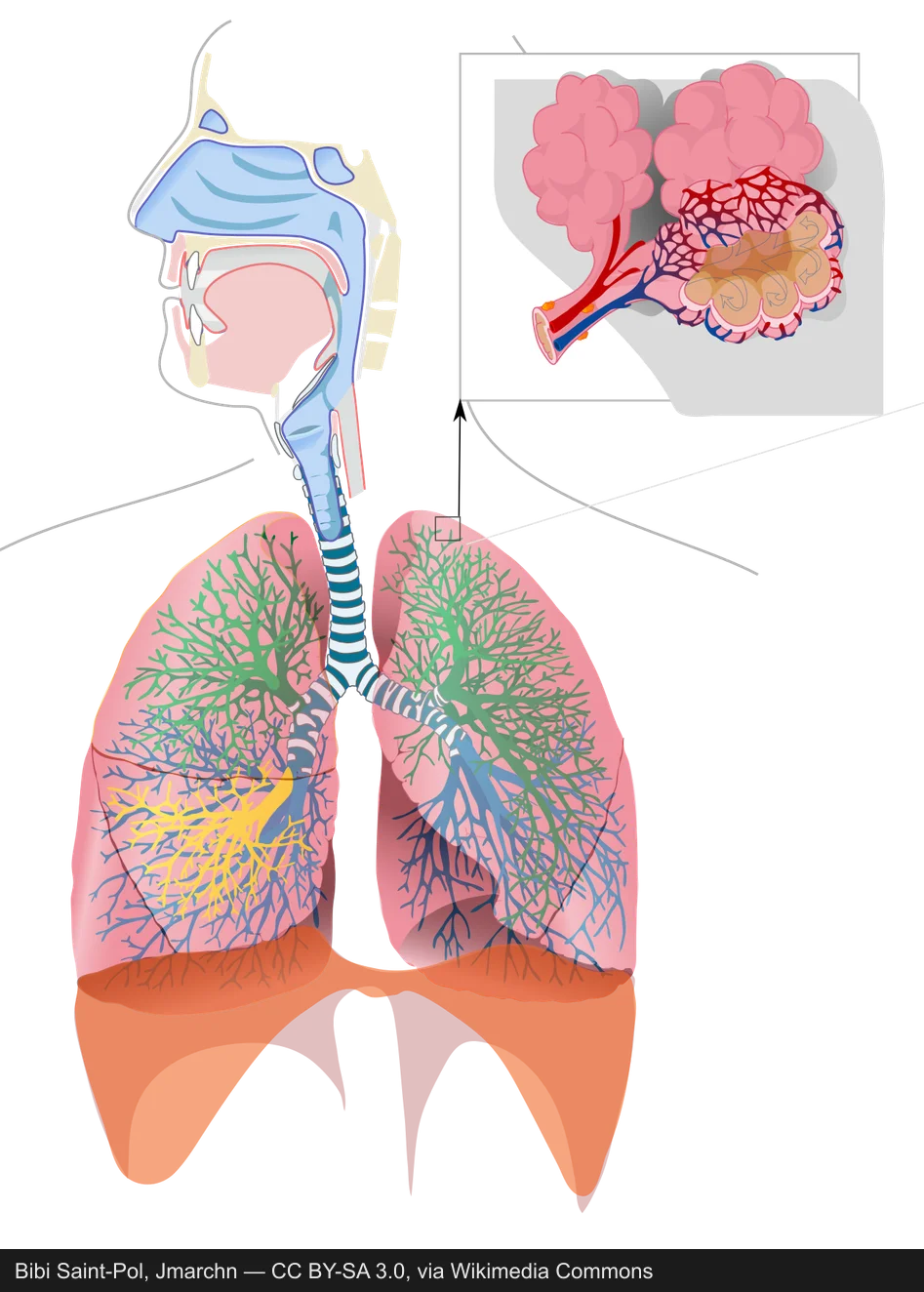
A patient whose diaphragm is paralyzed is fitted with a device that stimulates the nerve running to it. Why is that device needed for breathing?
A tumor grows in the wall of the right main bronchus and blocks that tube completely. What is the immediate effect?
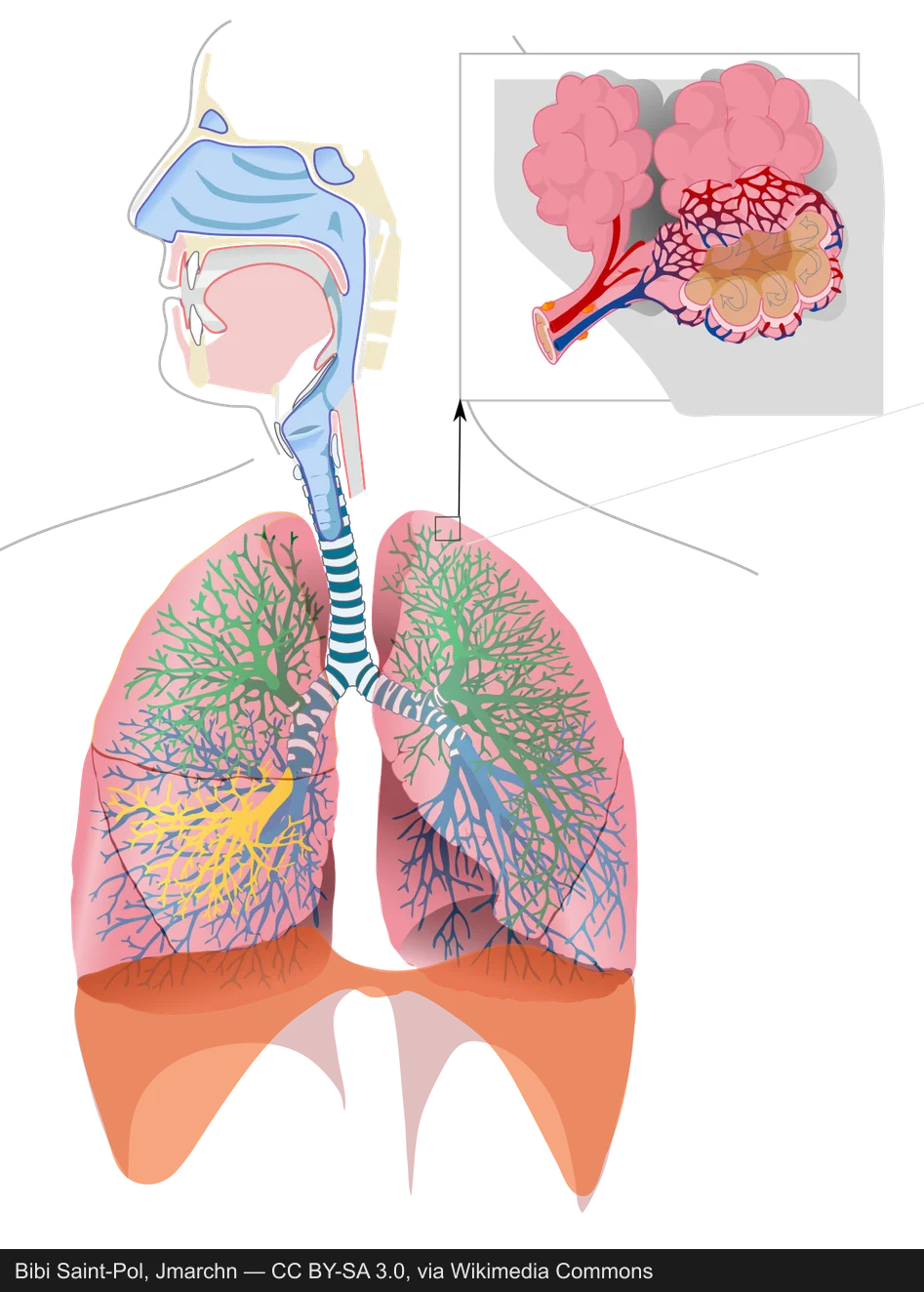
In cystic fibrosis, unusually thick sticky mucus builds up in the airways and plugs many small bronchioles. What is the effect on gas exchange?
Crack the passcode before the zombies get in.
Answer, then swat bugs for bonus points.
Race through questions at your own speed.
Same question on every screen. Fastest wins.

Pick a tile, answer, hit bonuses and steals.
The Nervous System and the Brain
40 questions