Loading
by BlastRoom
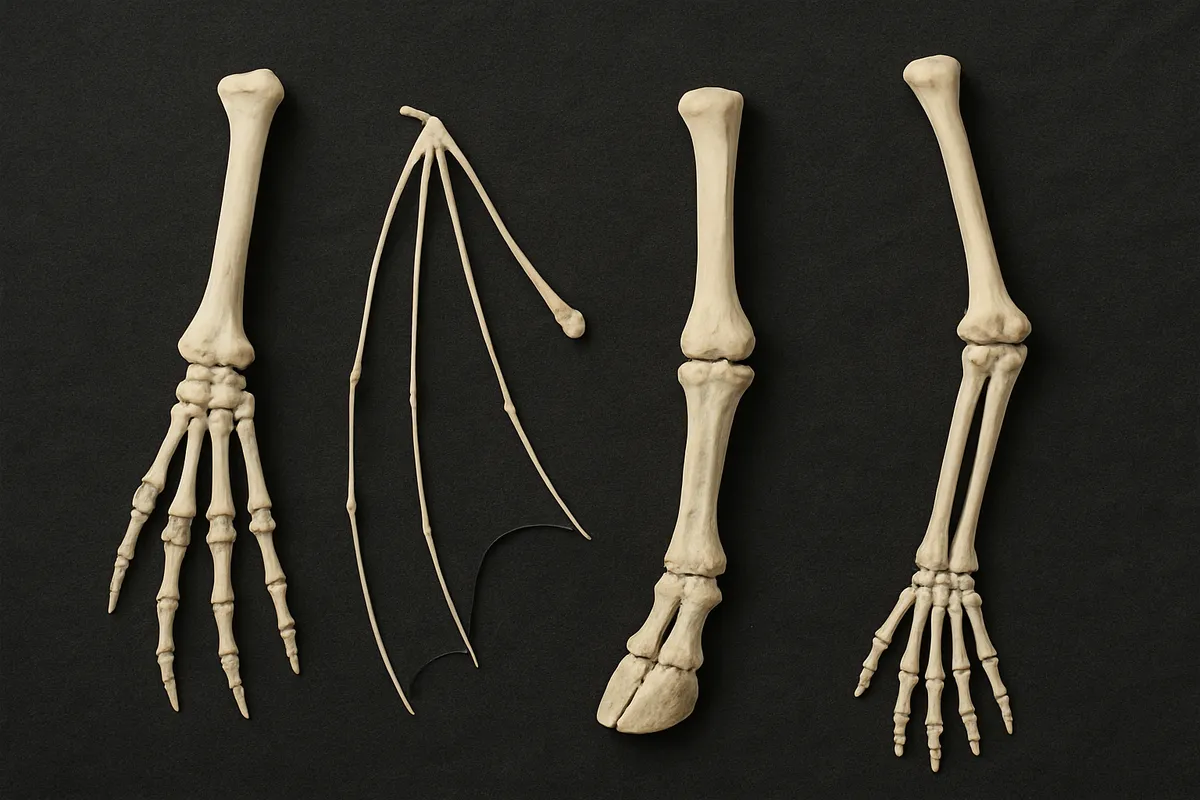
Compare limbs and wings across species and decide what each similarity is evidence of.
#biology
40 questions
One question set, multiple game modes. Tap any game to see it in action. Not sure which to pick?
Answer to place stones and capture territory.
Outrun the snow together.
Earn blasts, then hunt the other team.
Answer to earn energy, then climb.

The class blasts through walls together.
Bid on mystery lots. Most money wins.
Sell tours. Nice, standard, or a total scam.

Answer, restock, and serve the rush.
More correct answers pulls the rope your way.
Answer, then shoot down the alien wave.
Answer, then tap to leap the frozen ridge.
A human arm and a whale's flipper each hold one upper bone, two lower bones, a block of wrist bones and five digits, in that order. One lifts and grips on land; the other steers through open ocean. What kind of structures are these?
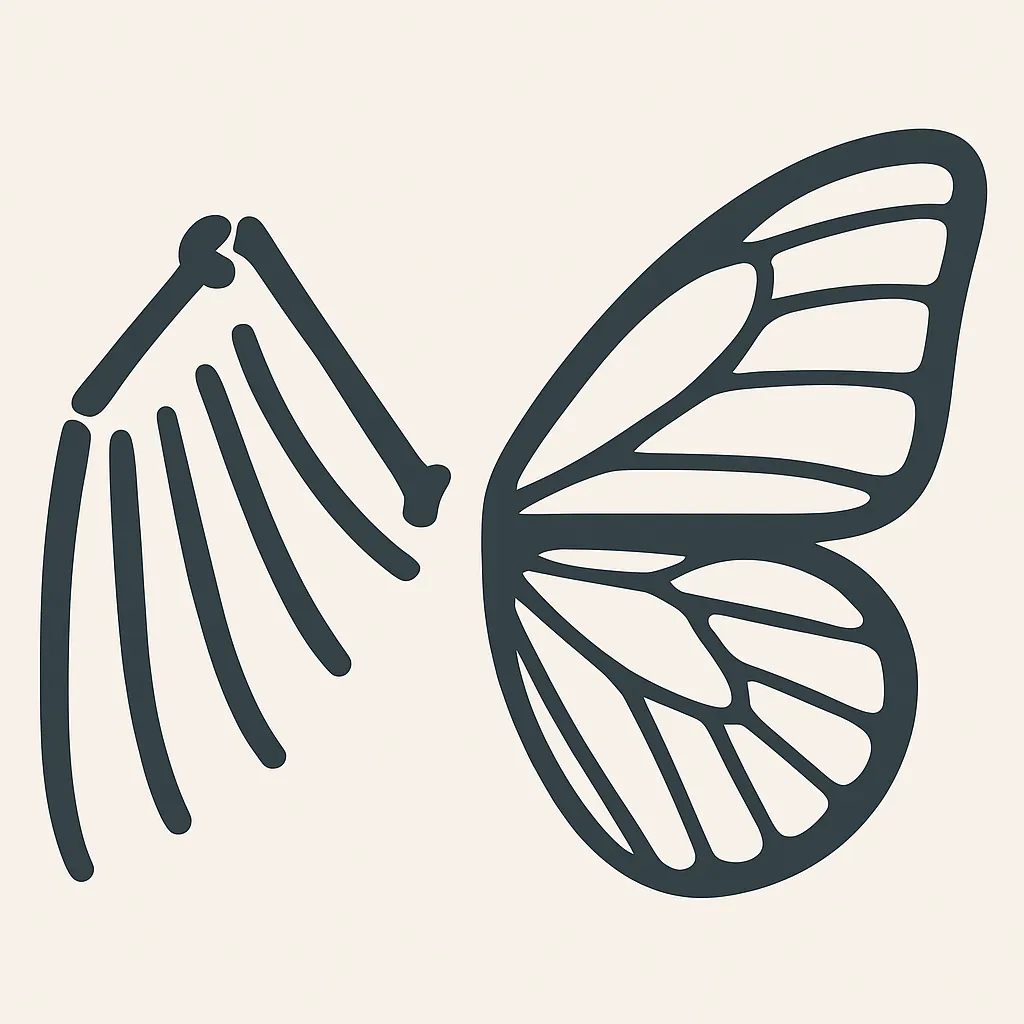
A bird's wing is carried on jointed internal bones and covered in feathers. A butterfly's wing is a thin sheet of chitin growing from the thorax, with no bone inside it at all. Both are beaten for powered flight. How should this pair be classified?
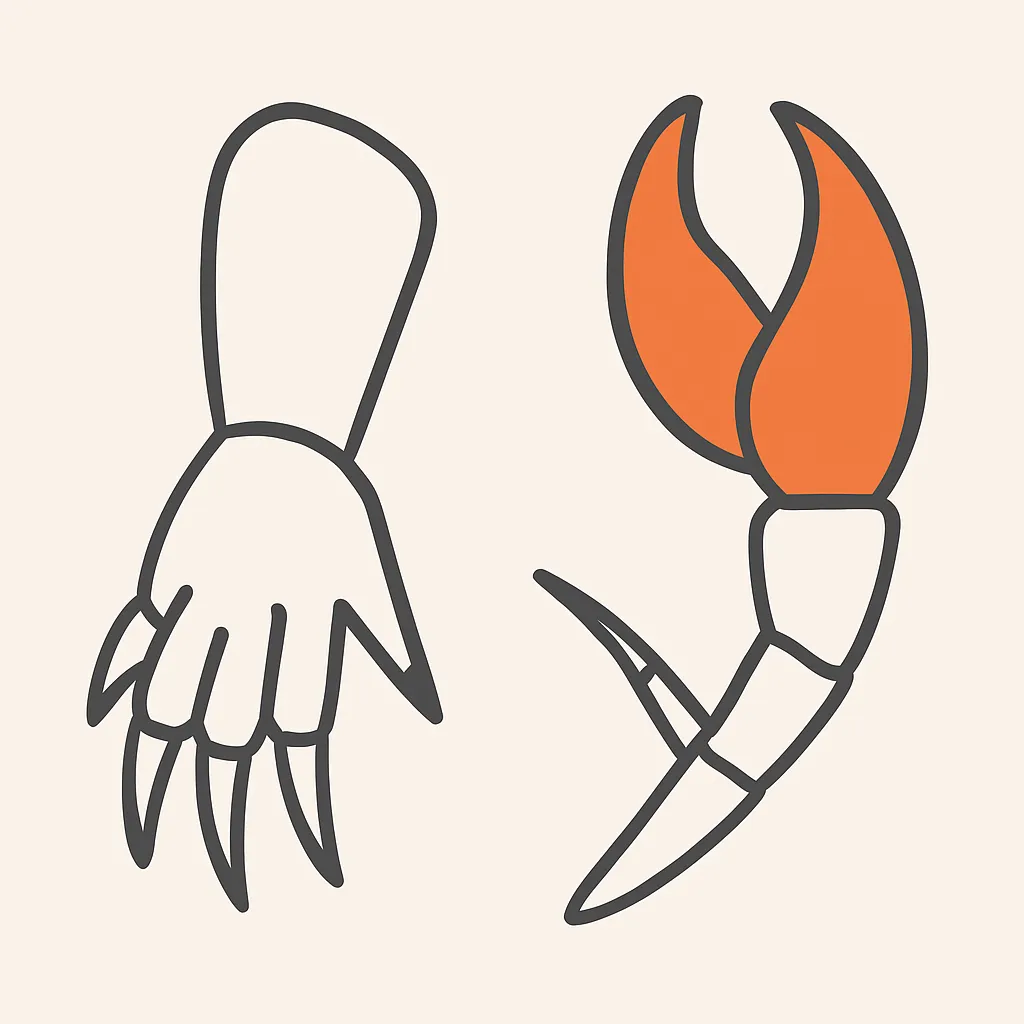
A mole's front limb has an upper bone, two lower bones and five clawed digits inside a broad paddle of flesh. A mole cricket's front leg is a toothed, jointed section of its outer skeleton with no bone inside. Both shovel soil. Which label fits this pair?
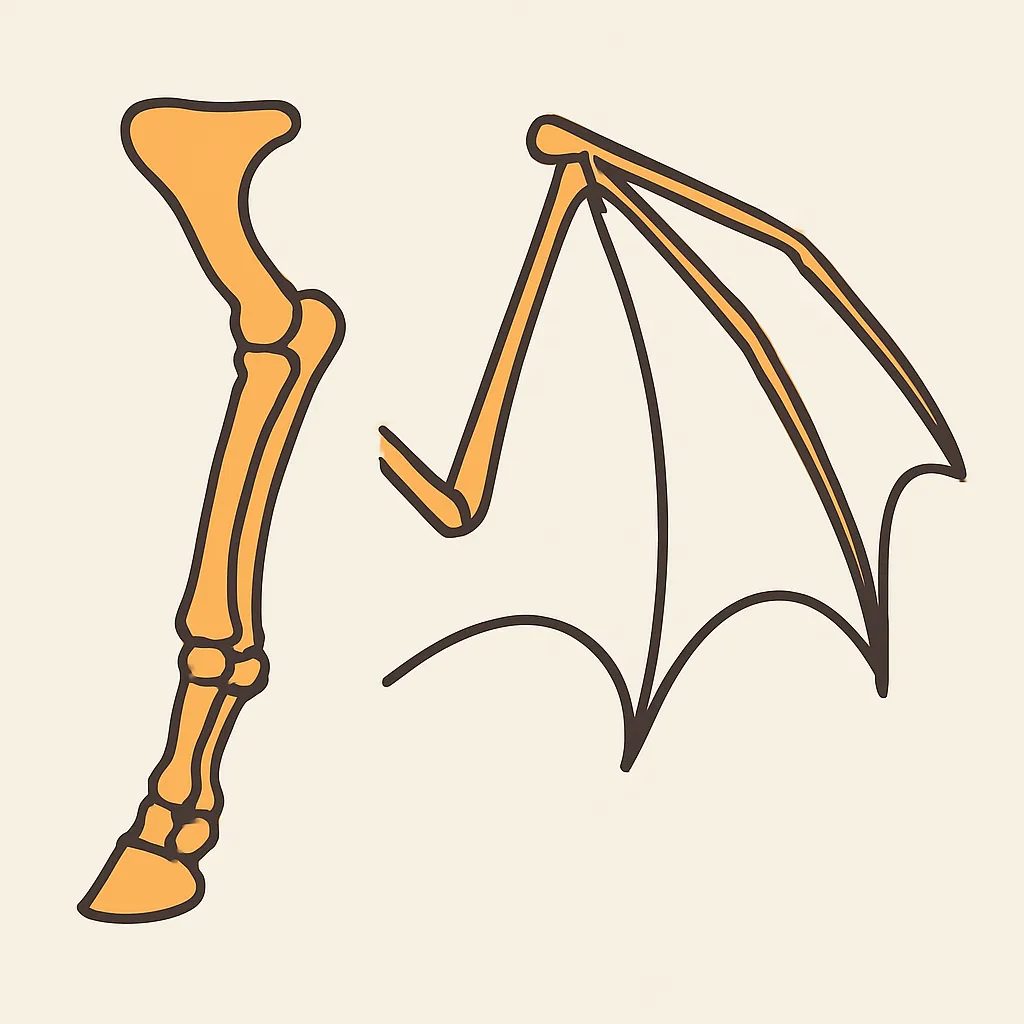
A horse's front leg and a bat's wing both begin with one upper bone, then two lower bones, then wrist bones, then digits. The horse's digits are reduced to one weight-bearing toe; the bat's are long struts holding a skin membrane. These are:
A cat's front leg and a seal's front flipper each contain one upper bone, two lower bones, a wrist and five digits in the same order. The cat's limb carries it across ground; the seal's is a short steering paddle. These structures are:
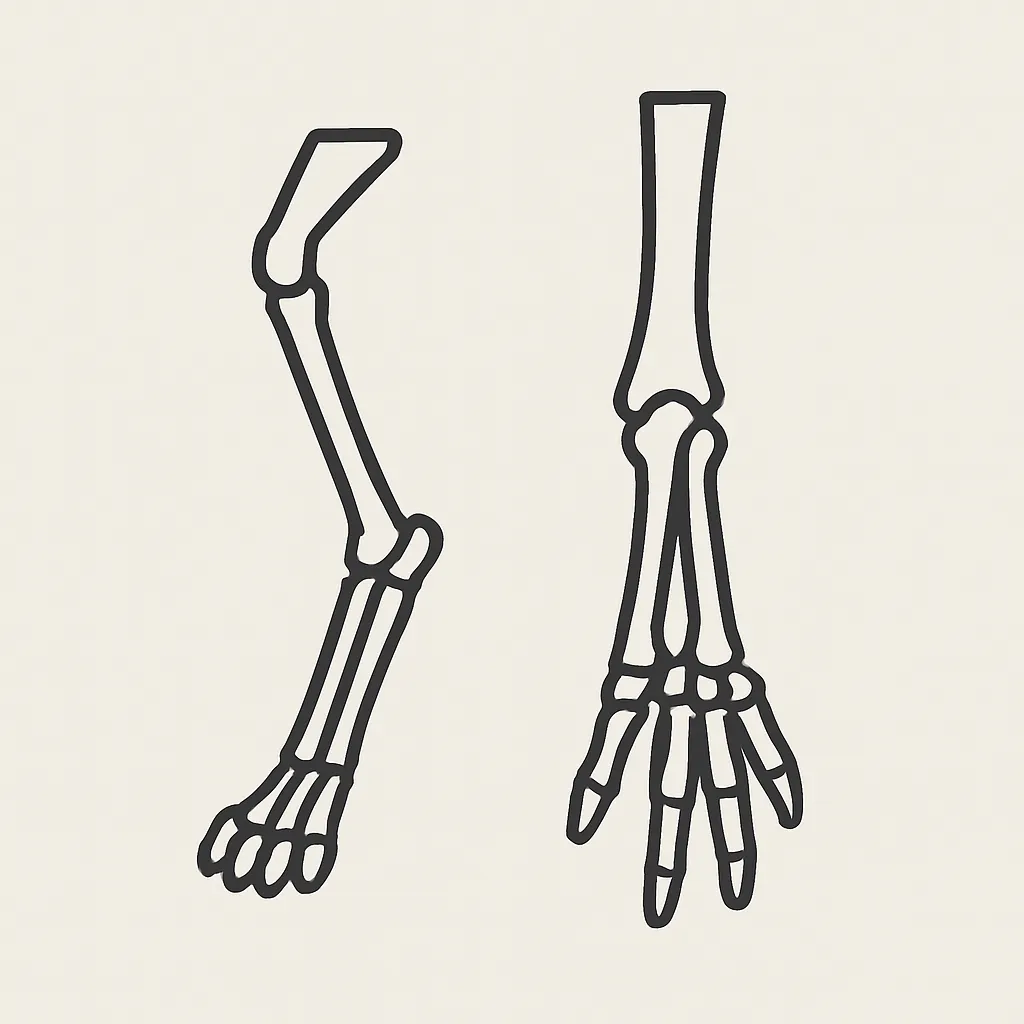
A dolphin's flipper has an upper bone, two lower bones, wrist bones and five digits under the skin. A tuna's pectoral fin is a fan of slender rays with none of those bones. Both steer the animal while swimming. This pair is best described as:
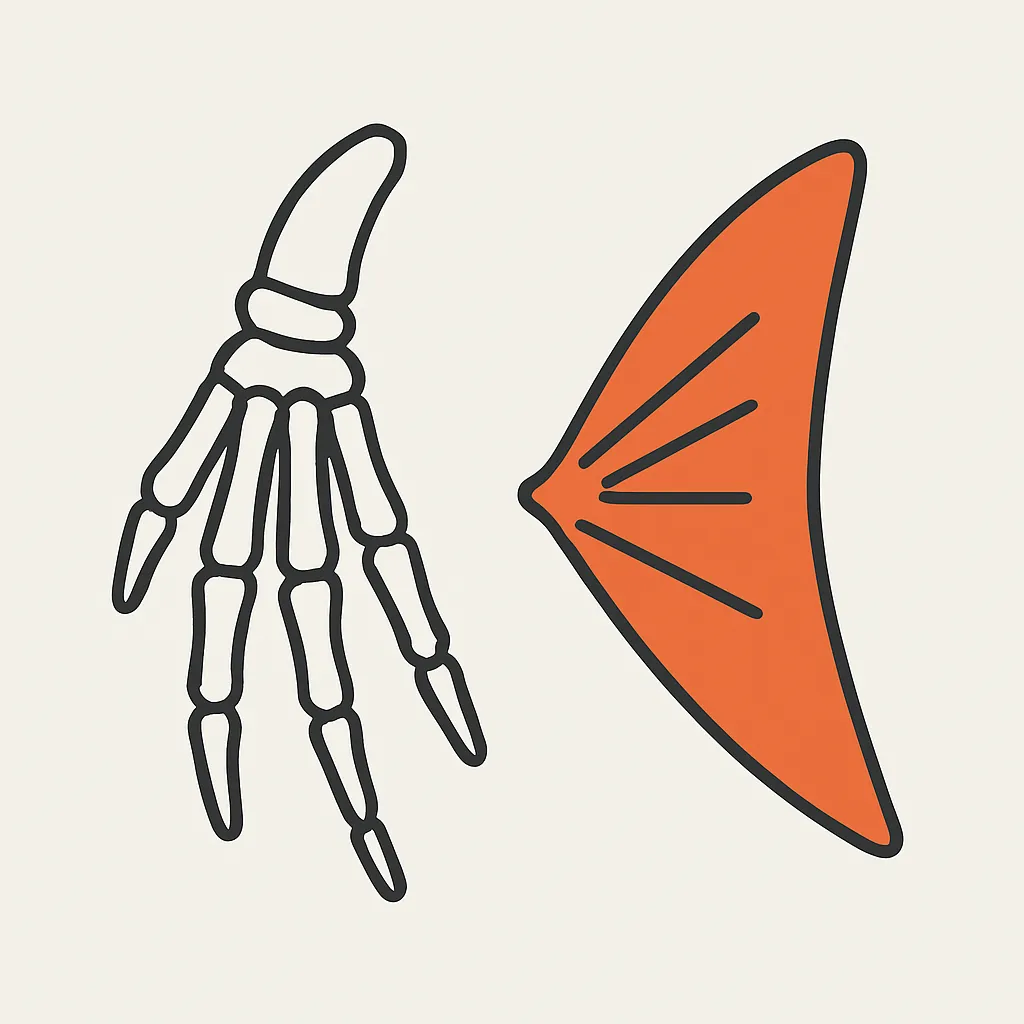
A flying squirrel in North America and a sugar glider in Australia each glide on a sheet of skin stretched between the front and hind limbs. The squirrel is a placental mammal; the glider is a pouched marsupial. The two skin sheets are:
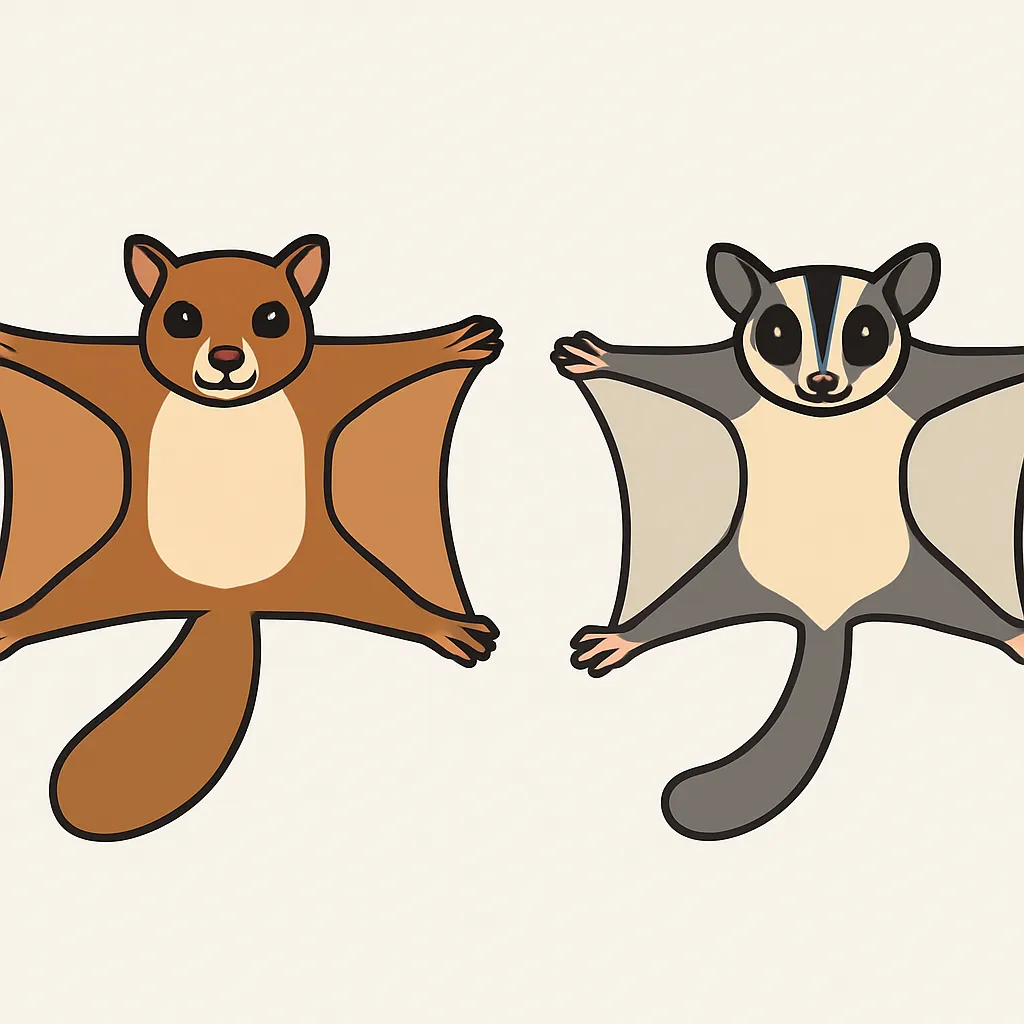
A frog's front limb has one upper bone, a single fused lower bone, wrist bones and digits. A bird's wing has one upper bone, two lower bones, fused wrist bones and reduced digits. One cushions a landing hop; one is flapped in flight. These are:
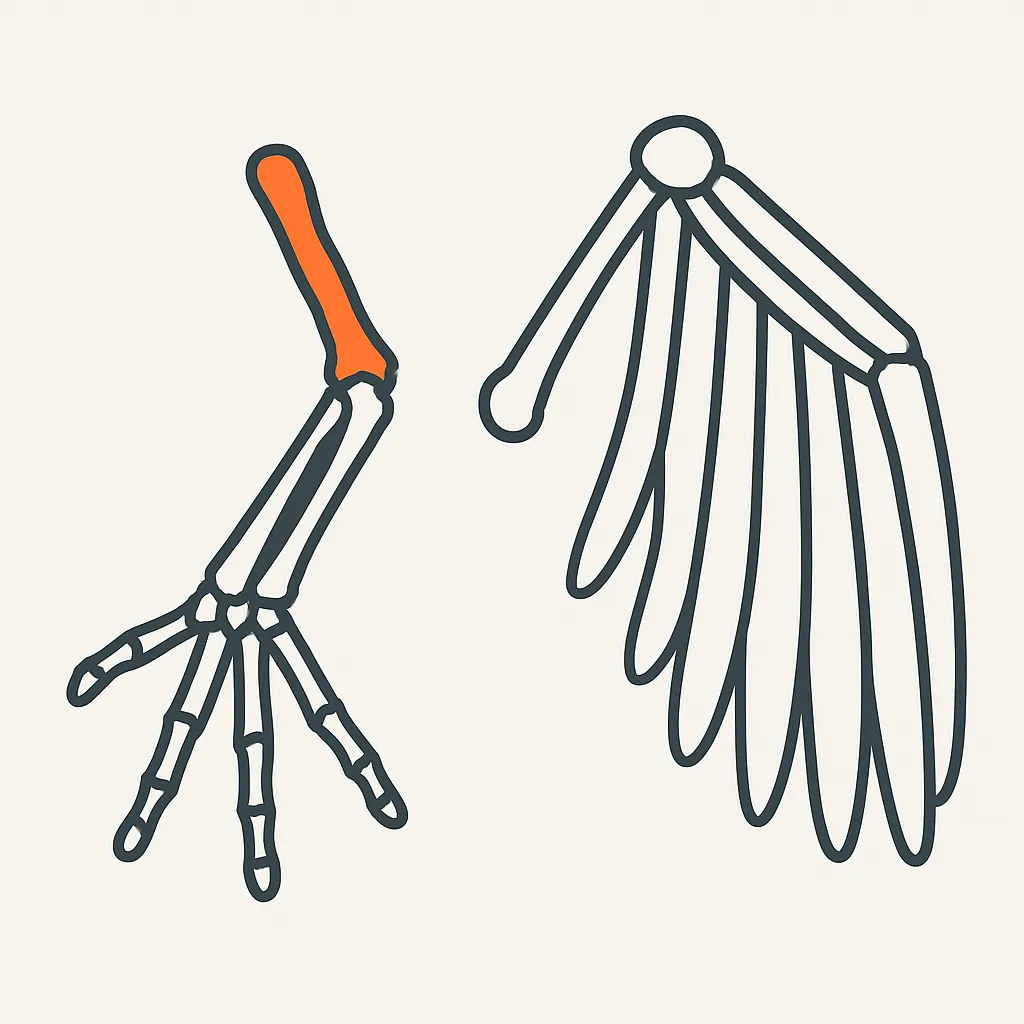
A penguin's flipper is stiffened by an upper arm bone and two flattened lower arm bones. A shark's pectoral fin is stiffened by parallel cartilage rods with no arm bones. Both are held out to steer underwater. What kind of structures are these?
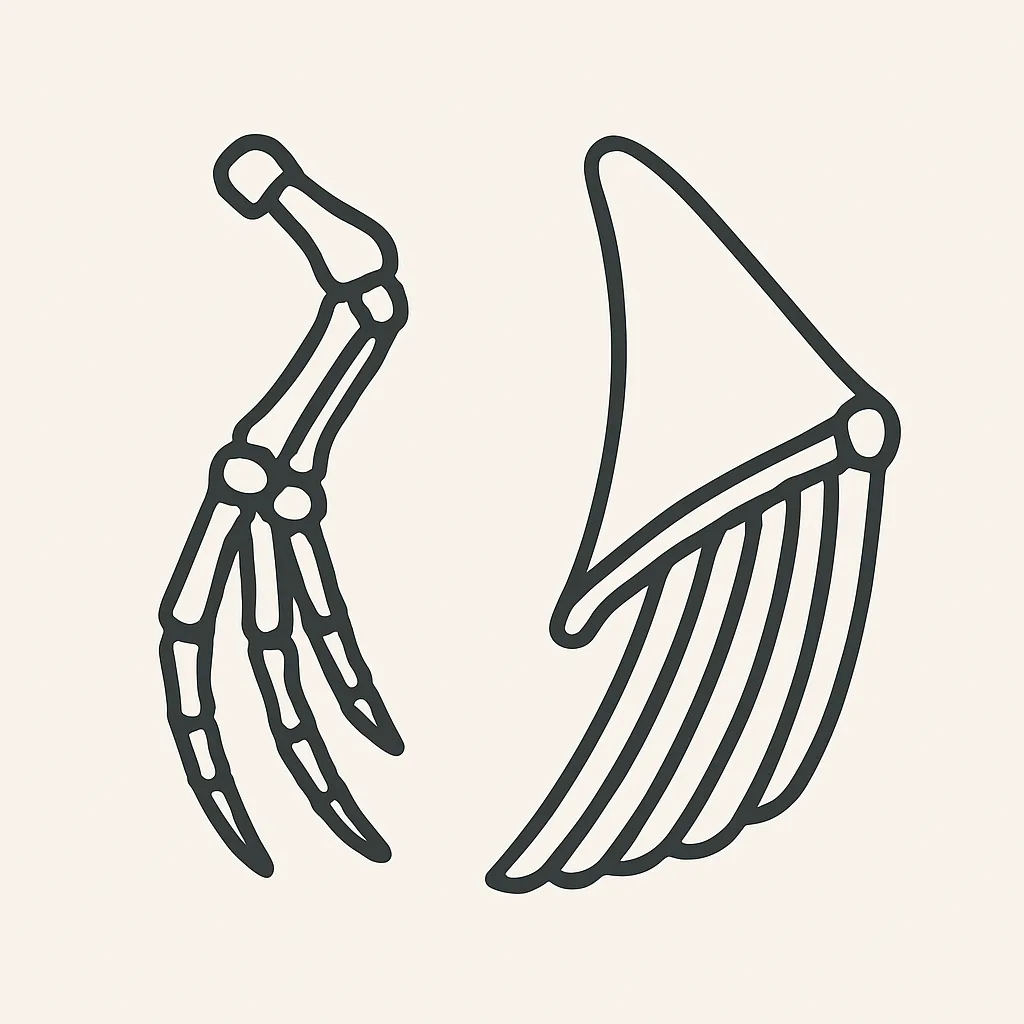
Drawn side by side are a monkey's tail vertebrae and the small block of fused vertebrae at the base of the human spine. The human block supports no tail and has no role in balance or grasping. The human structure is best classified as:
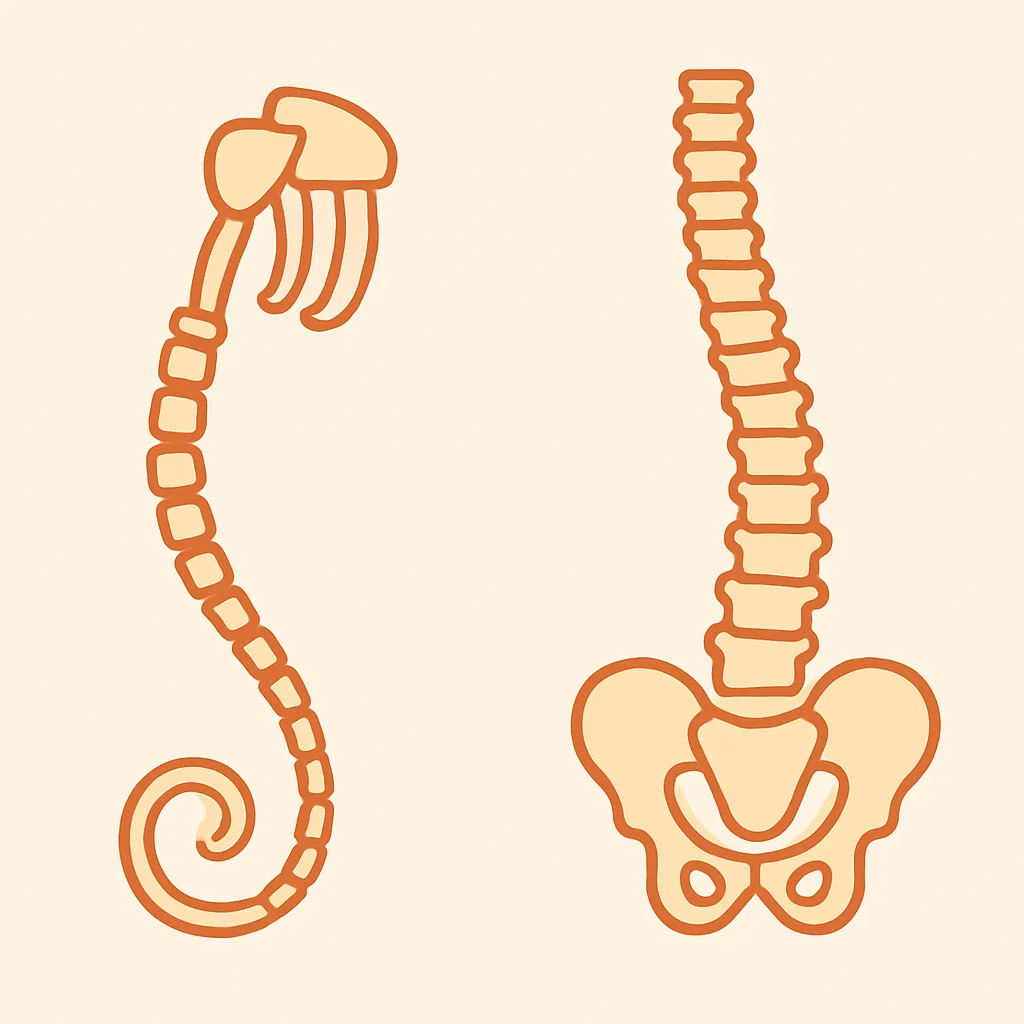
The flightless cormorant of the Galapagos has short, ragged wings far too small to lift it, while its mainland relatives have long wings that carry them over the sea. Both wings hold the same forelimb bones. The island bird's wing is:
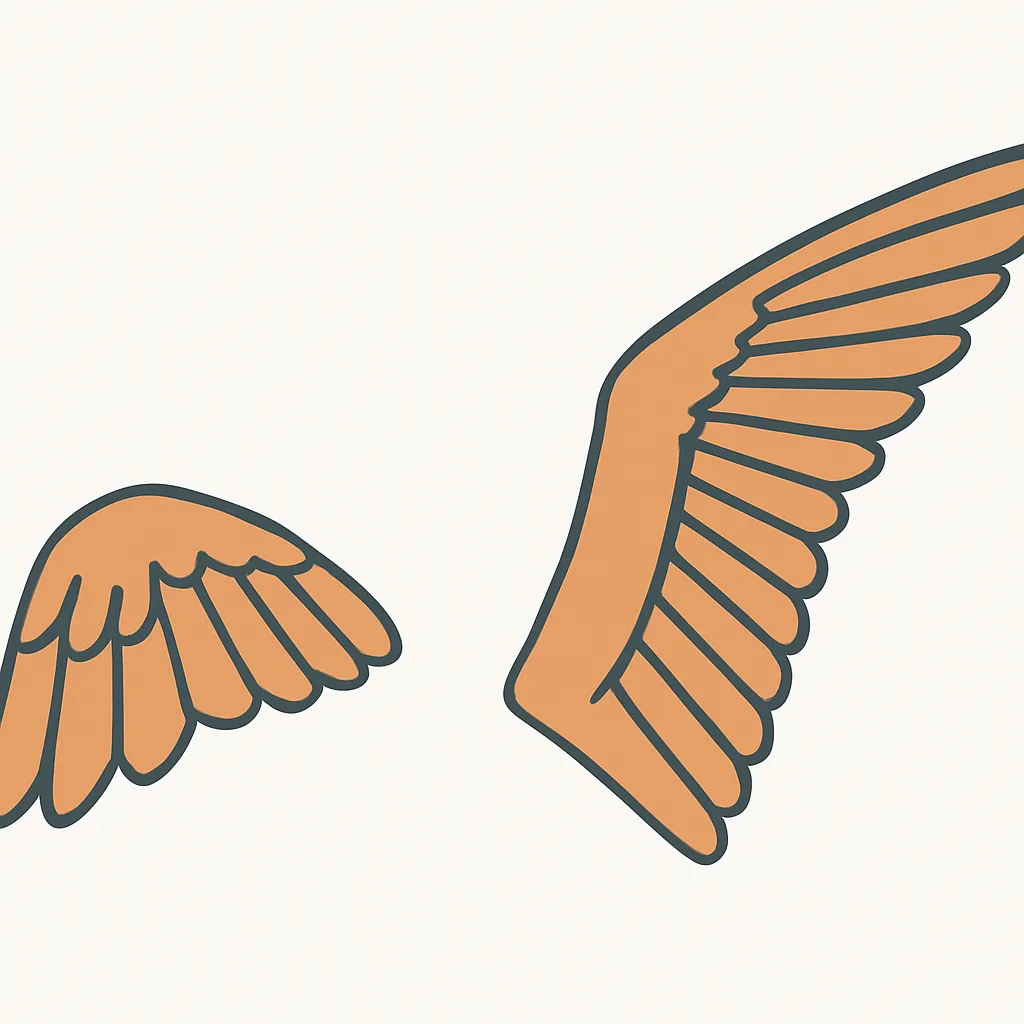
A crocodile's front limb and a bird's wing each begin with one upper bone and two lower bones, followed by wrist bones and digits, though the crocodile keeps five digits and the bird has three. One walks and one flies. This pair is:
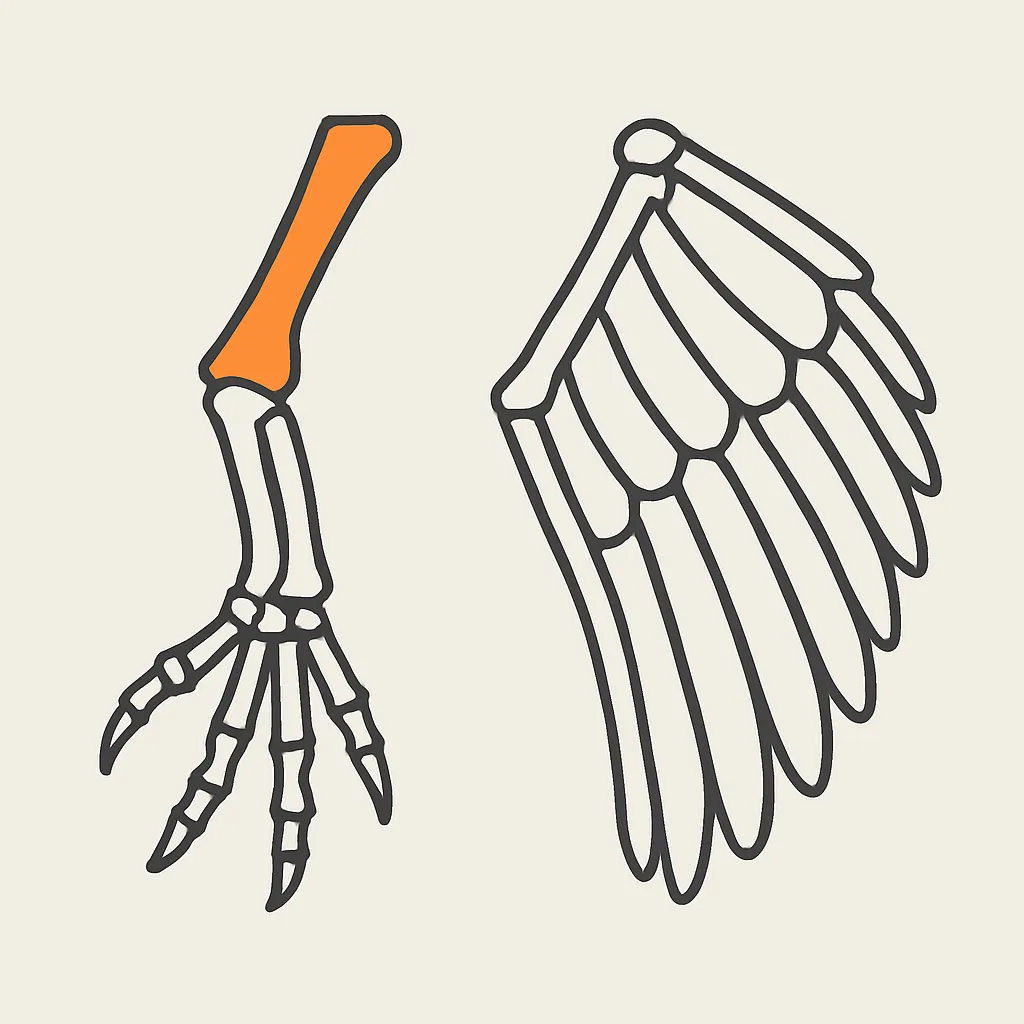
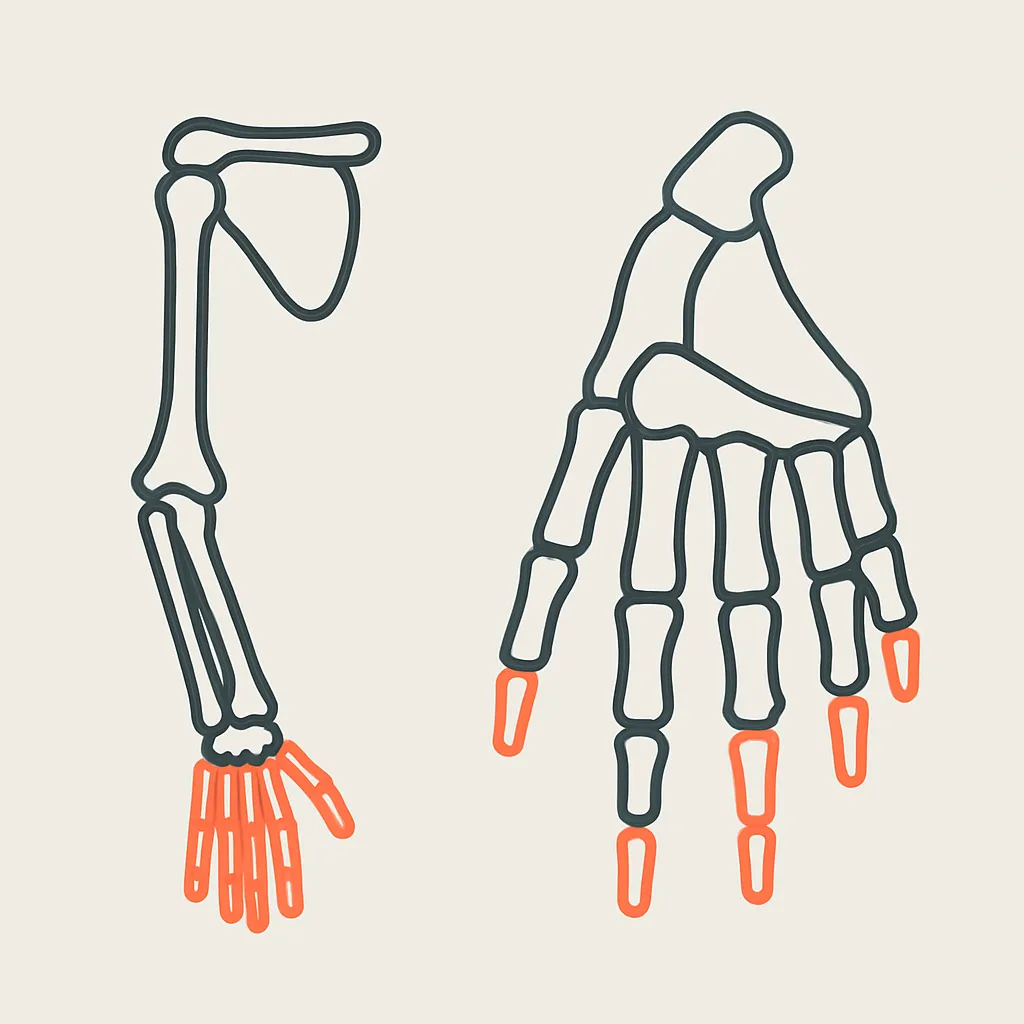
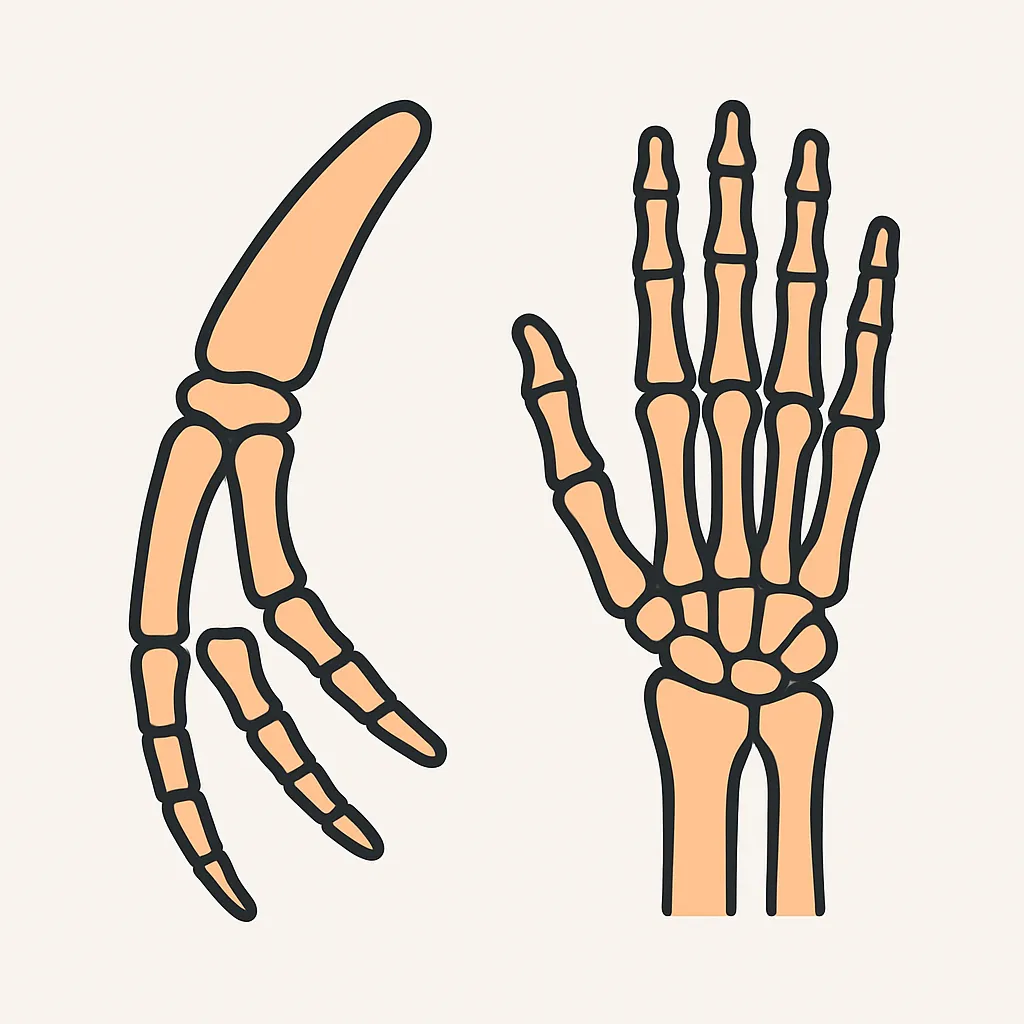
A dolphin's flipper and a human hand are drawn beside each other. Both contain one upper bone, two lower bones, a wrist and five digits in the same order, though one holds a pencil and one drives an animal through water. What does this similarity indicate?
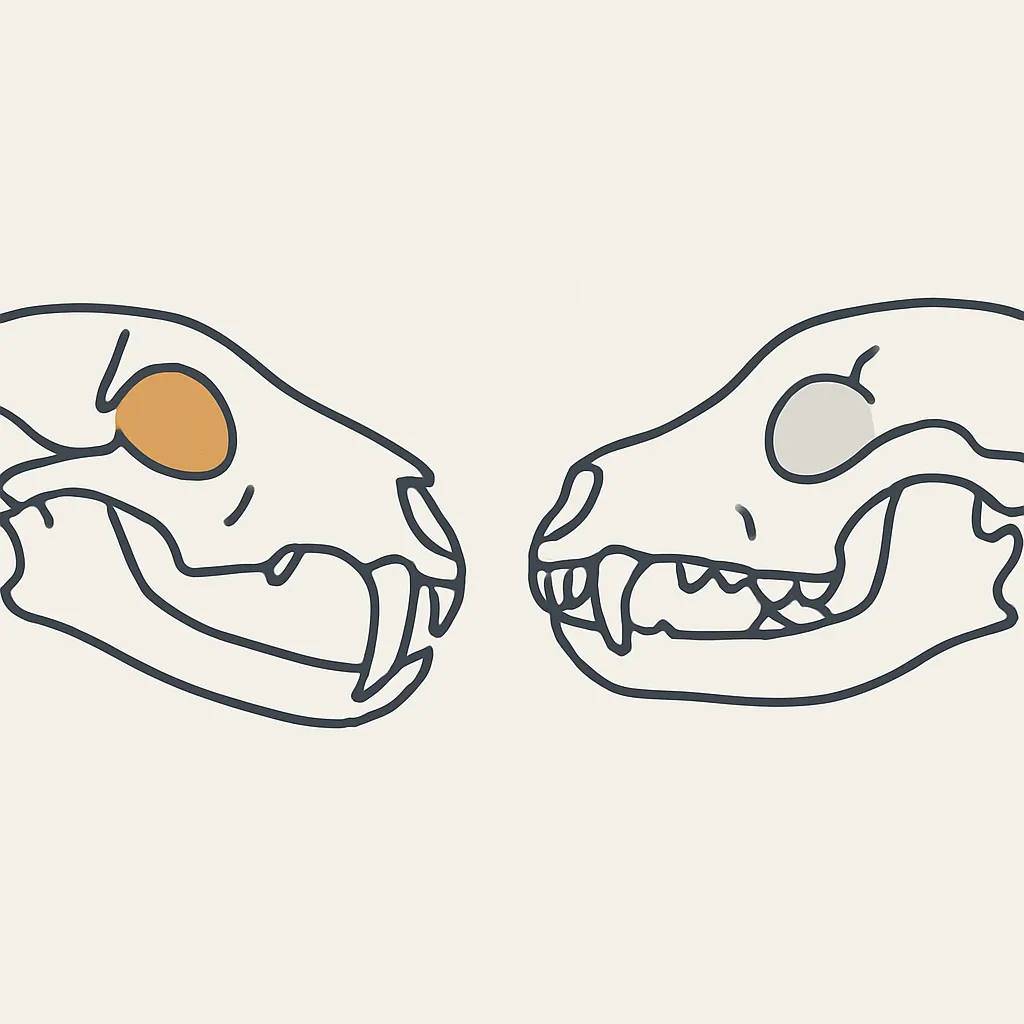
The thylacine, an Australian marsupial, had a long narrow skull with large stabbing canines that closely resembles the skull of the gray wolf, a placental mammal. The two lineages split long before either skull appeared. This shows that:
In the embryo, a whale's flipper and a bat's wing both grow from a limb bud that lays down one upper bone, then two lower bones, then wrist bones, then digits, in that order. The adult limbs then serve very different jobs. What is this best evidence of?
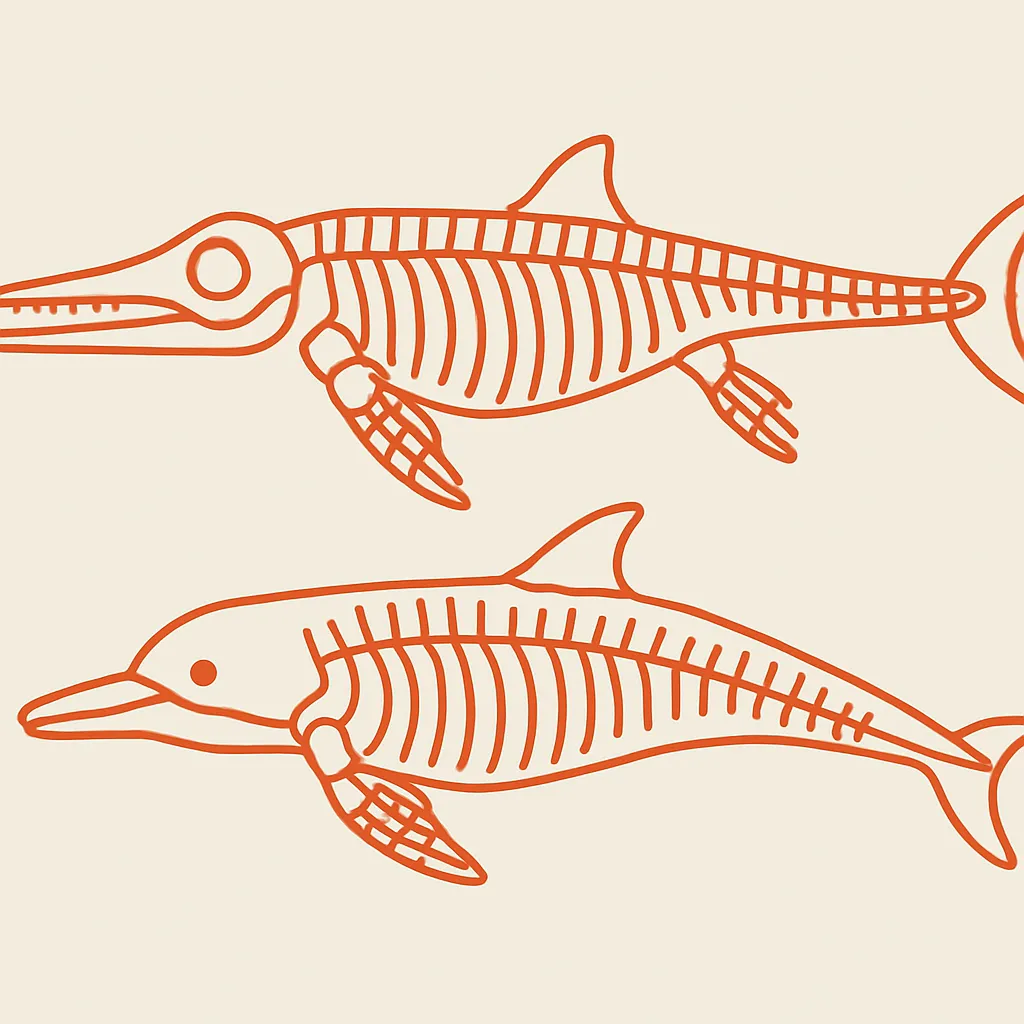
The ichthyosaur was a marine reptile; the dolphin is a mammal. Both have a torpedo-shaped body, a dorsal fin and paddle-shaped forelimbs, and each descended from a separate lineage of land-living, four-limbed ancestors. What does the resemblance indicate?
Mammals, birds, reptiles and amphibians all build the front limb the same way: one upper bone, two lower bones, a set of wrist bones, then digits. The limb is used for walking, flying, swimming, digging and grasping. What is this pattern best evidence of?
An octopus eye and a human eye each focus light through a lens onto light-sensitive cells. Octopus nerve fibers run behind those cells, but human fibers run in front. Their last shared ancestor had no such eye. What does this show?
Two species can end up with body parts that do the same job and look alike from the outside, even though the most recent ancestor they share had no such body part.
The aardvark of Africa and the giant anteater of South America each have a long tapered snout, a sticky tongue and heavy digging claws for opening ant nests. They sit in different mammal orders. This resemblance shows that:
Four forelimbs are recorded. A: one upper bone, two lower bones, five digits. B: the same, two digits tiny. C: the same, one hoofed digit. D: a paddle of cartilage rods, no jointed bones. Which is least closely related to the rest?
A protein is compared with the human version. Species W differs at 2 positions, species X at 14, species Y at 31, species Z at 45. Which species shares the most recent common ancestor with humans?
Early embryos of a fish, a chicken, a pig and a human all show a tail behind the anus and a set of pouches in the neck region, even though only the fish keeps those pouches as gill slits. What does this shared stage indicate?
Four species are scored. 1: bony forelimb with digits, lives in water. 2: bony forelimb with digits, lives on land. 3: bony forelimb with digits, flies. 4: finned forelimb of cartilage rods, lives in water. Which of these pairs is most closely related?
Fossil horses are compared. The oldest has four small toes per front foot, all touching the ground. A later one has three toes with the middle enlarged. The modern horse has one hoofed toe and two thin bone slivers beside it. This sequence shows:
A student lists three animals. The bat and the whale both have a bony forelimb with five digits. The whale and the shark both have a streamlined body and a fin-shaped forelimb. Which comparison is better evidence of shared ancestry, and why?
A cladogram is built from skeletal data. Species P, Q and R all have one upper arm bone, two lower arm bones and digits; only Q and R also have a shoulder joint that allows the arm to swing overhead. Which grouping does the data support?
Two island lizards both have long climbing toes. Lizard 1's skull and hip bones match a mainland ground species; lizard 2's match a different mainland climbing species. What do the skull and hip data say about the long toes?
Boas and pythons carry a pair of small claw-like spurs beside the vent, attached to reduced hip bones and a short thigh bone buried in the body wall. These take no part in slithering, and most snakes have no such bones at all. What do the spurs indicate?
The Mexican tetra has cave and river populations of one species. In cave fish an eye starts to form in the embryo, then breaks down and is covered by skin. River fish of the same species see well. What does the cave fish eye indicate?
Humans have three small muscles attached to each outer ear. Most people cannot move the ear with them at all. In cats, horses and rabbits the matching muscles swivel the ear toward a sound. What do the human muscles indicate?
A kiwi has a wing about three centimeters long, hidden completely under its shaggy feathers. The wing holds the same forelimb bones as a flying bird's wing but cannot lift the animal. What does the kiwi's wing indicate?
A modern horse walks on a single hoofed toe. Alongside the main foot bone are two thin bone slivers that end partway down the leg and touch nothing. What are these slivers best evidence of?
The small hip bones buried in the body wall of a whale are joined to its backbone and help drive it forward when it swims.
Sea turtles are reptiles and penguins are birds, and each descended from a separate line of land animals with walking legs. Both now push through water with a stiff, flattened forelimb. Which statement best explains the resemblance of the two paddles?
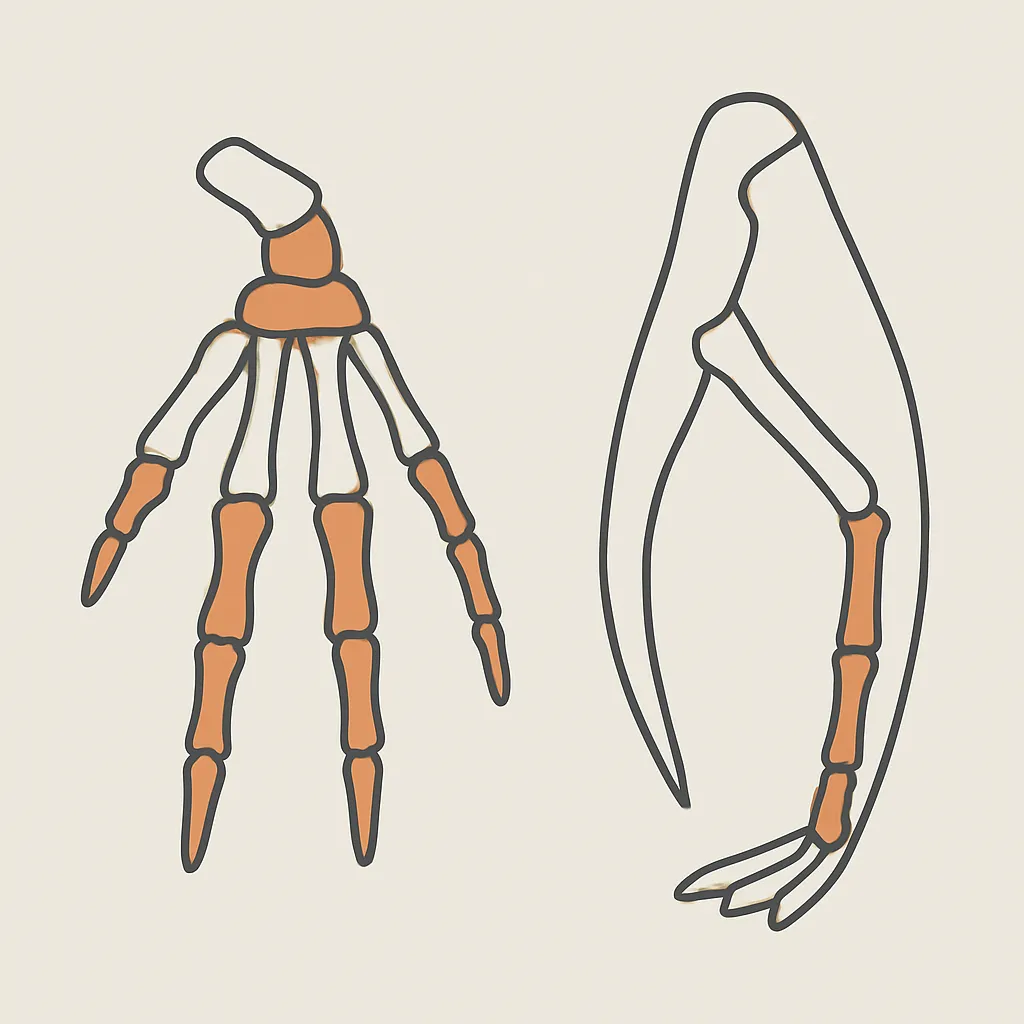
The marsupial mole of Australia and the golden mole of Africa both burrow in loose sand. Each has a barrel-shaped body, tiny hidden eyes and short, broad clawed front limbs. They come from different mammal groups. What should we expect?
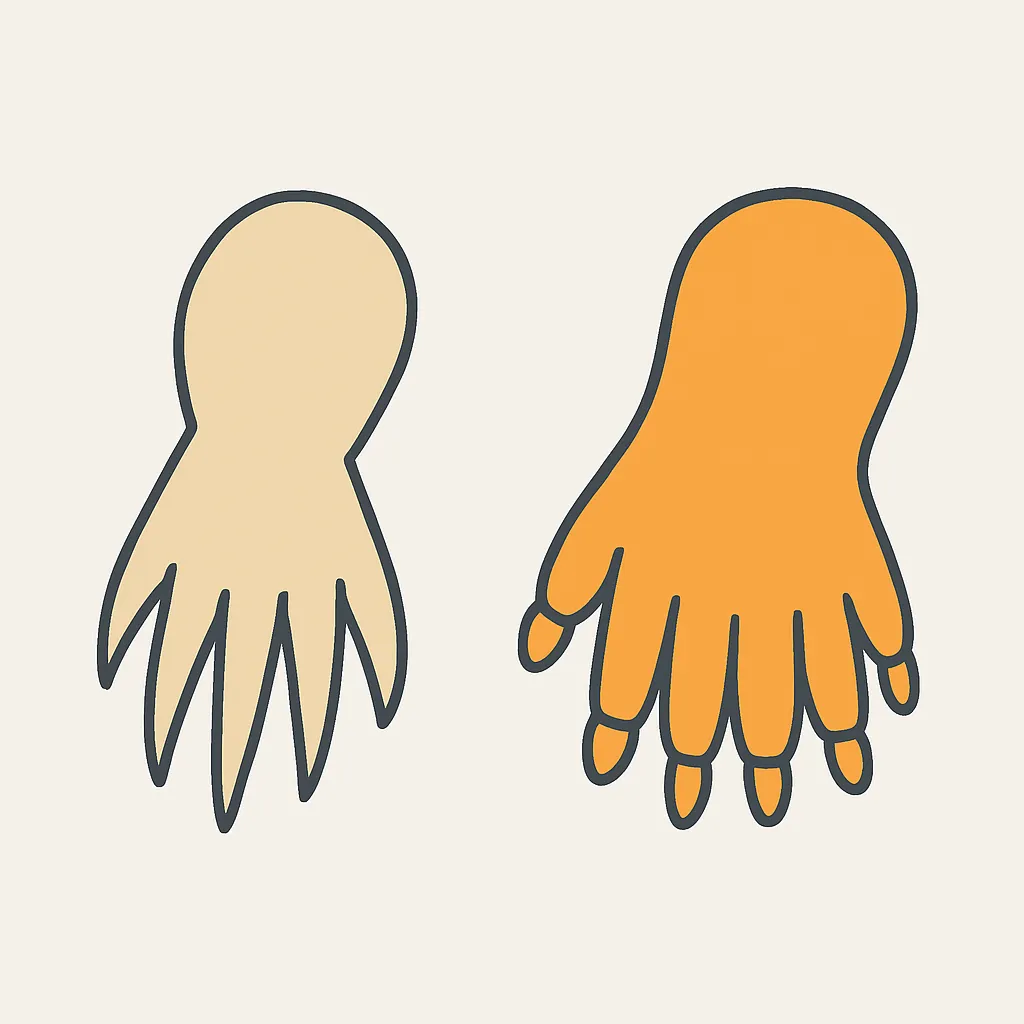
A hummingbird and a hawk moth both hover in front of the same flowers at dusk, wings beating in a blur. One is a bird and one is an insect. Given how far apart the two groups are, what should we expect to find inside the two wings?
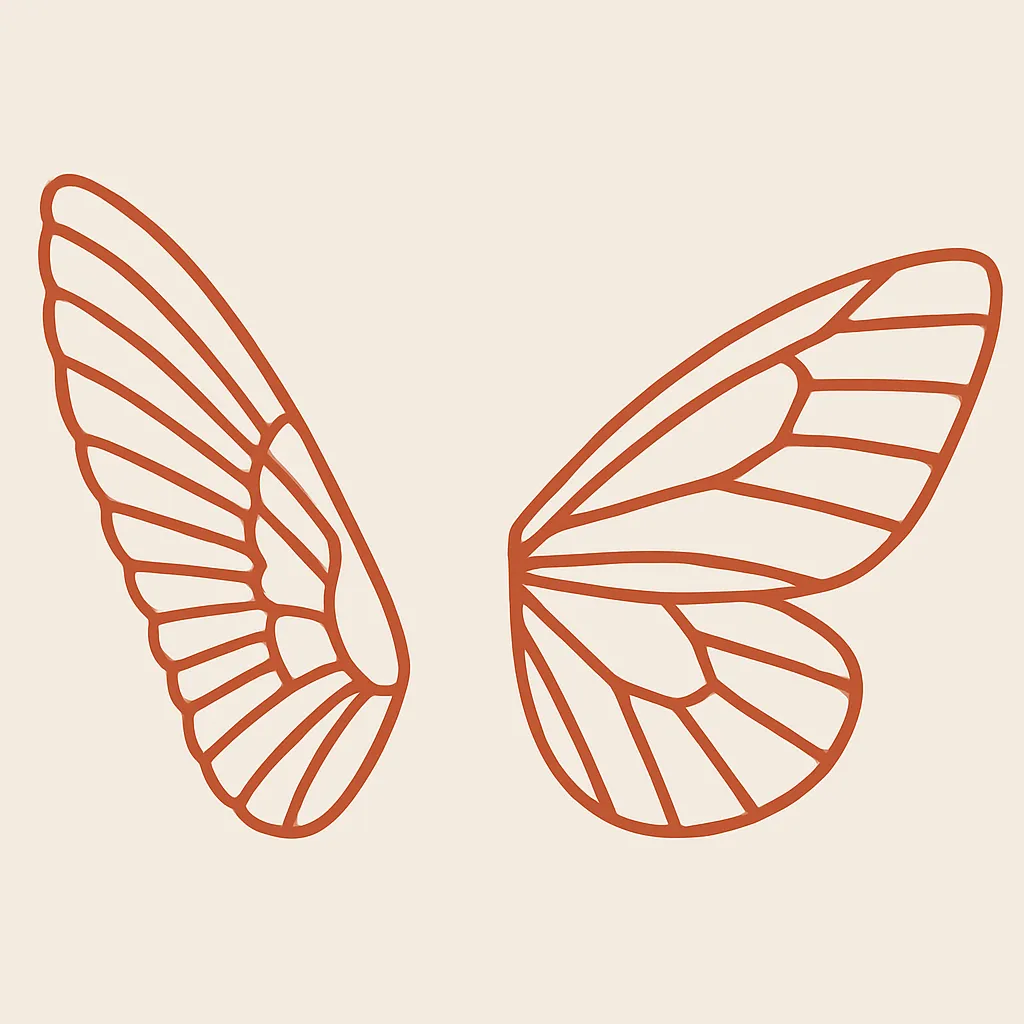
Seals are mammals and penguins are birds, but both chase fish underwater with a torpedo-shaped body and short flipper-like forelimbs. Their most recent common ancestor was a land animal with ordinary legs. What best explains this resemblance?
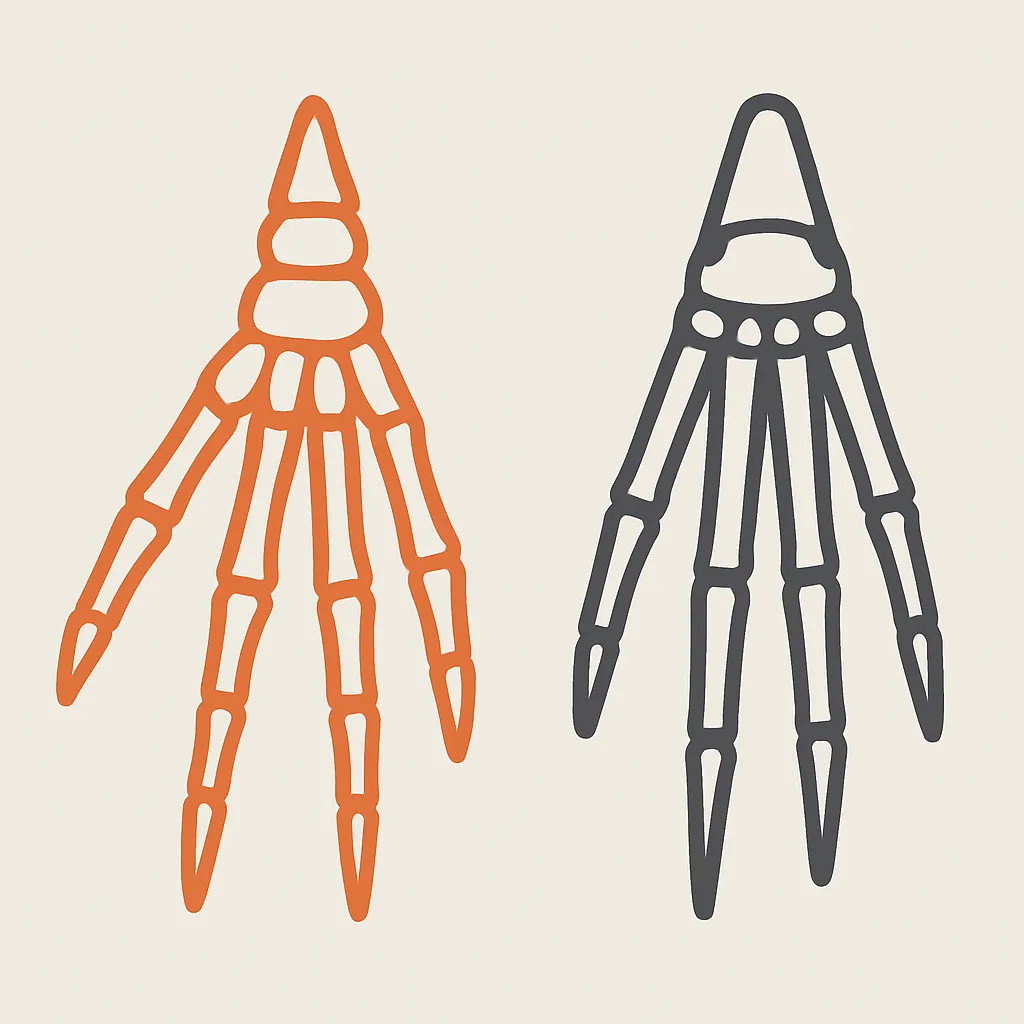
A cave salamander and a cave beetle live in the same lightless cave. Both have pale bodies, reduced eyes covered by skin or cuticle, and long touch-sensitive feelers. One is a vertebrate and one is an insect. What pattern of similarity should we expect?
A land mammal lineage moves into the sea over millions of years. If it stays a mammal and does not start over, which pattern should we expect in the skeleton of its modern descendants?
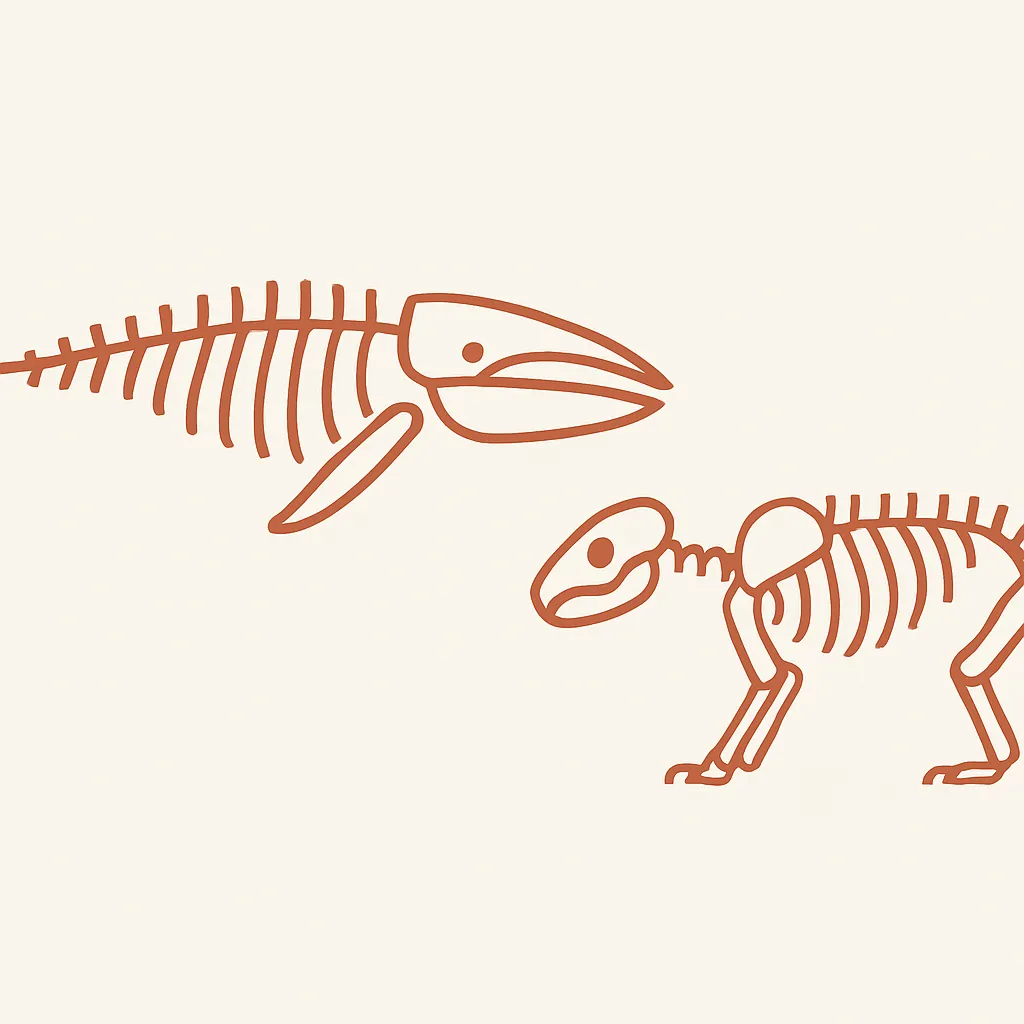
Crack the passcode before the zombies get in.
Answer, then swat bugs for bonus points.
Race through questions at your own speed.
Same question on every screen. Fastest wins.

Pick a tile, answer, hit bonuses and steals.
Biogeography
20 questions