Loading
by BlastRoom
Read gels, relate fragment size to distance traveled, and compare DNA profiles lane by lane.
#biology
20 questions
One question set, multiple game modes. Tap any game to see it in action. Not sure which to pick?
Answer to place stones and capture territory.
Outrun the snow together.
Earn blasts, then hunt the other team.
Answer to earn energy, then climb.

The class blasts through walls together.
Bid on mystery lots. Most money wins.
Sell tours. Nice, standard, or a total scam.

Answer, restock, and serve the rush.
More correct answers pulls the rope your way.
Answer, then shoot down the alien wave.
Answer, then tap to leap the frozen ridge.
DNA fragments are loaded into wells at one end of an agarose gel and a voltage is applied across it. The fragments move away from the wells. What property of DNA makes it move in the electric field?
Two DNA fragments are run on the same agarose gel for the same length of time. Why does the shorter fragment end up farther from the well than the longer one?
A single lane is loaded with three fragments of 500, 3000 and 12,000 base pairs, and the gel is run for 40 minutes. Which fragment sits nearest the wells when the run ends?
In gel electrophoresis, larger DNA fragments travel farther from the wells than smaller fragments do.
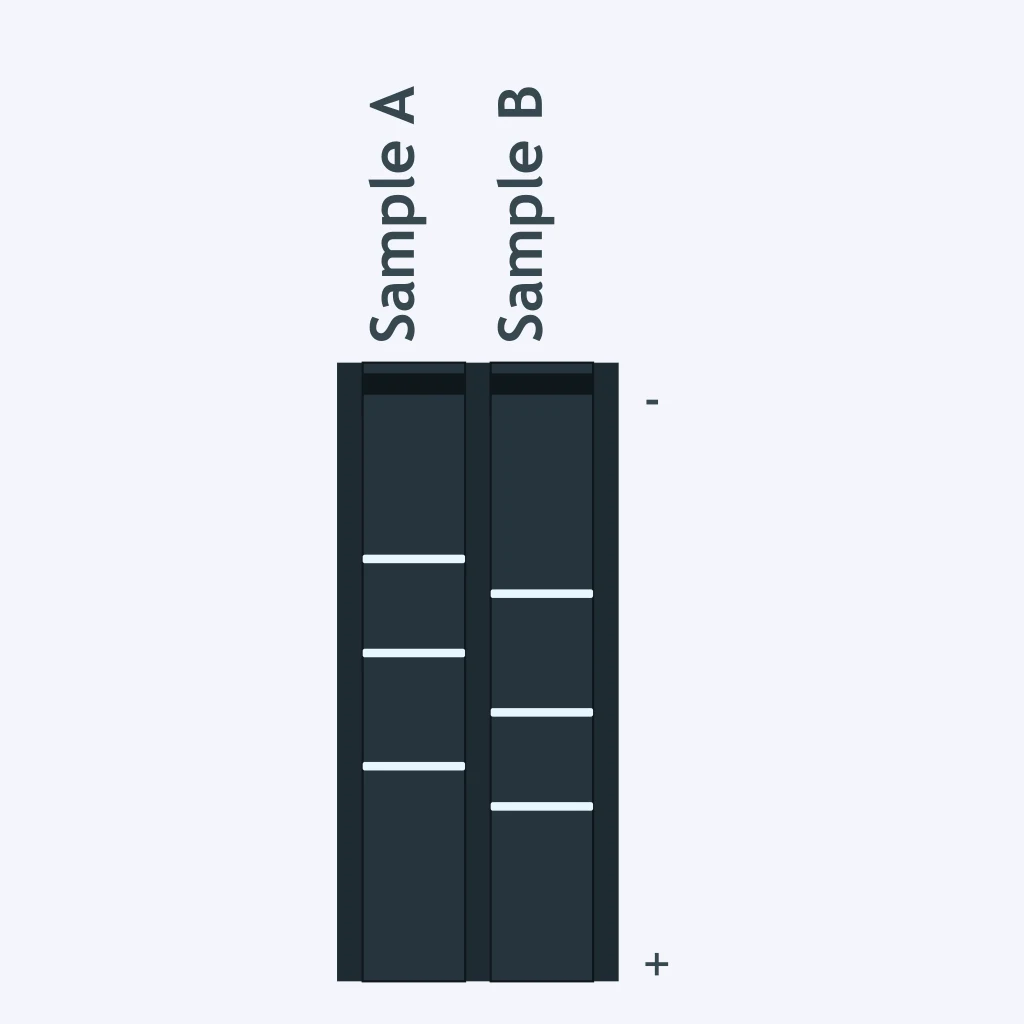
Look at the gel. Sample A and Sample B were loaded in separate wells and run for the same length of time. Which sample has a fragment that traveled farther from the wells than any fragment in the other sample?
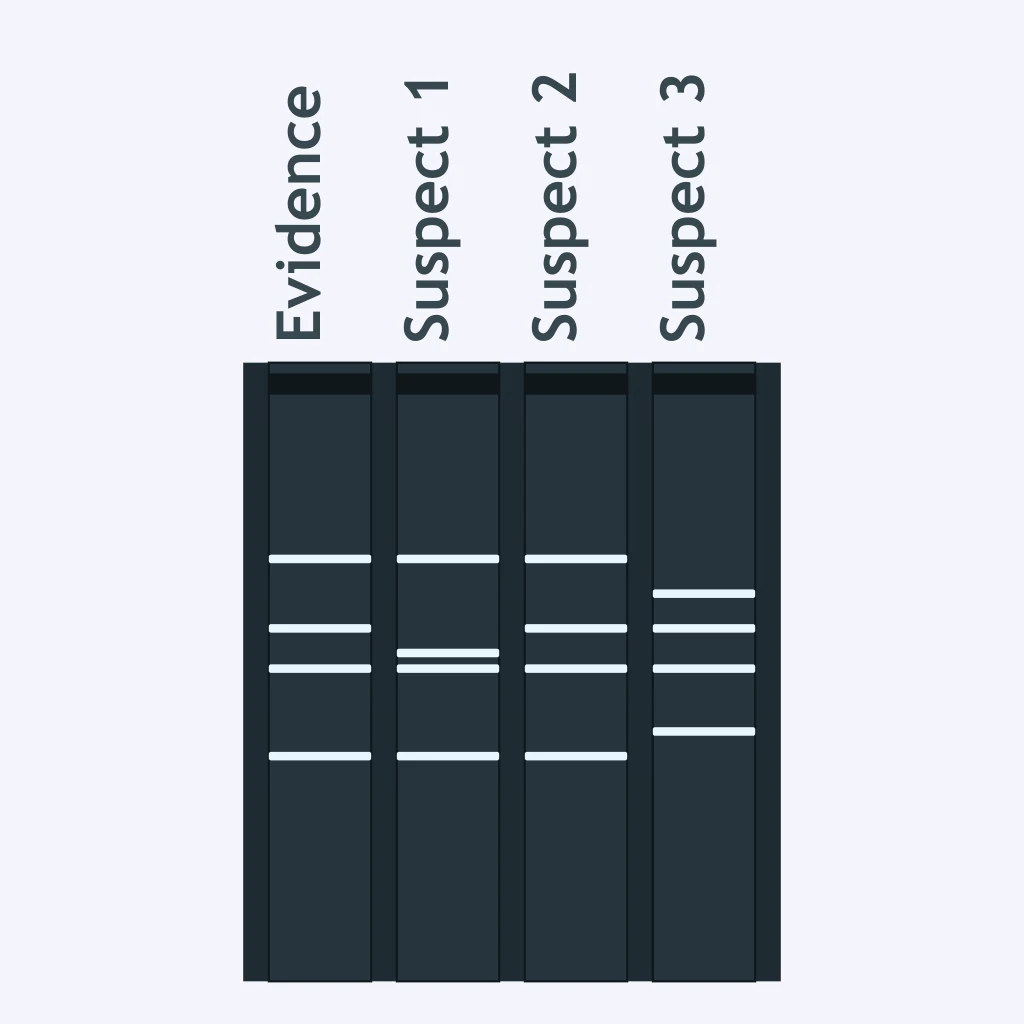
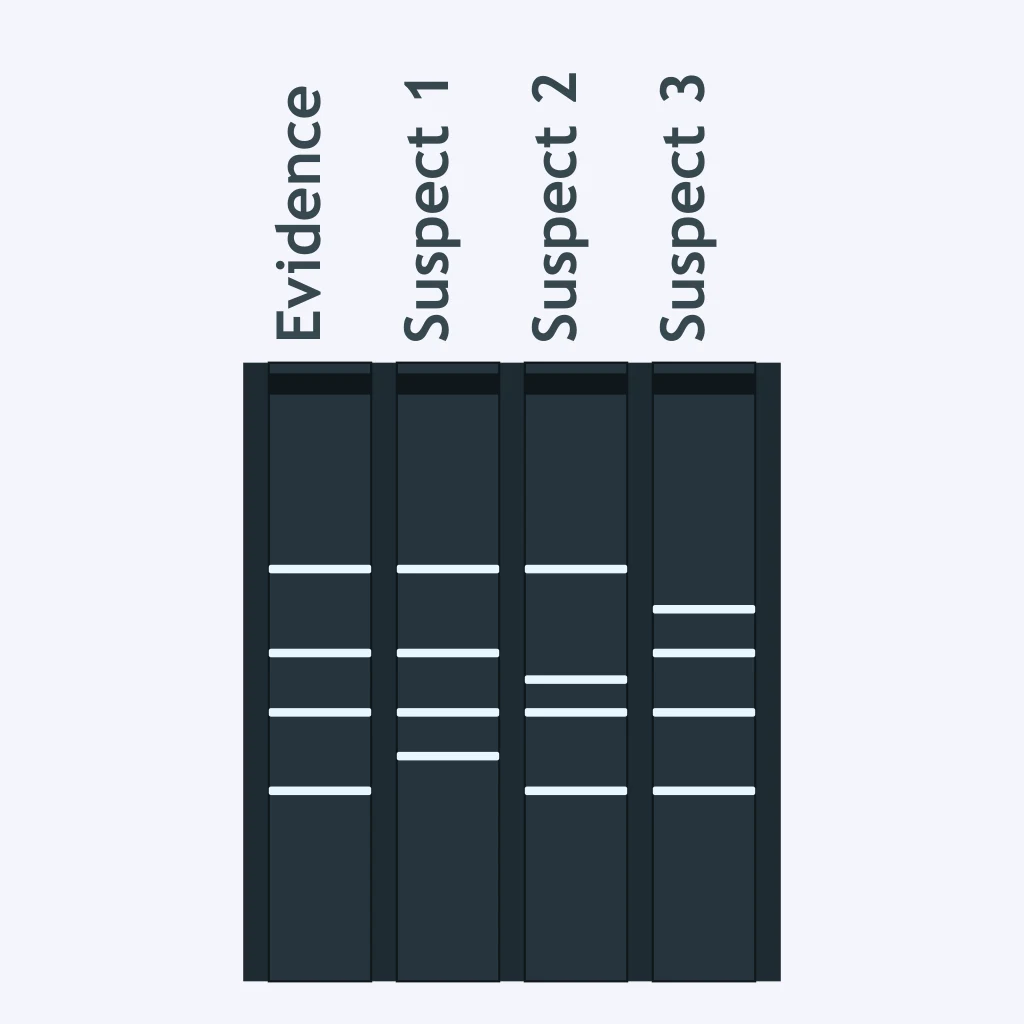
Look at the gel. An evidence sample and samples from three suspects were cut with the same restriction enzyme and run side by side. Whose profile matches the evidence?
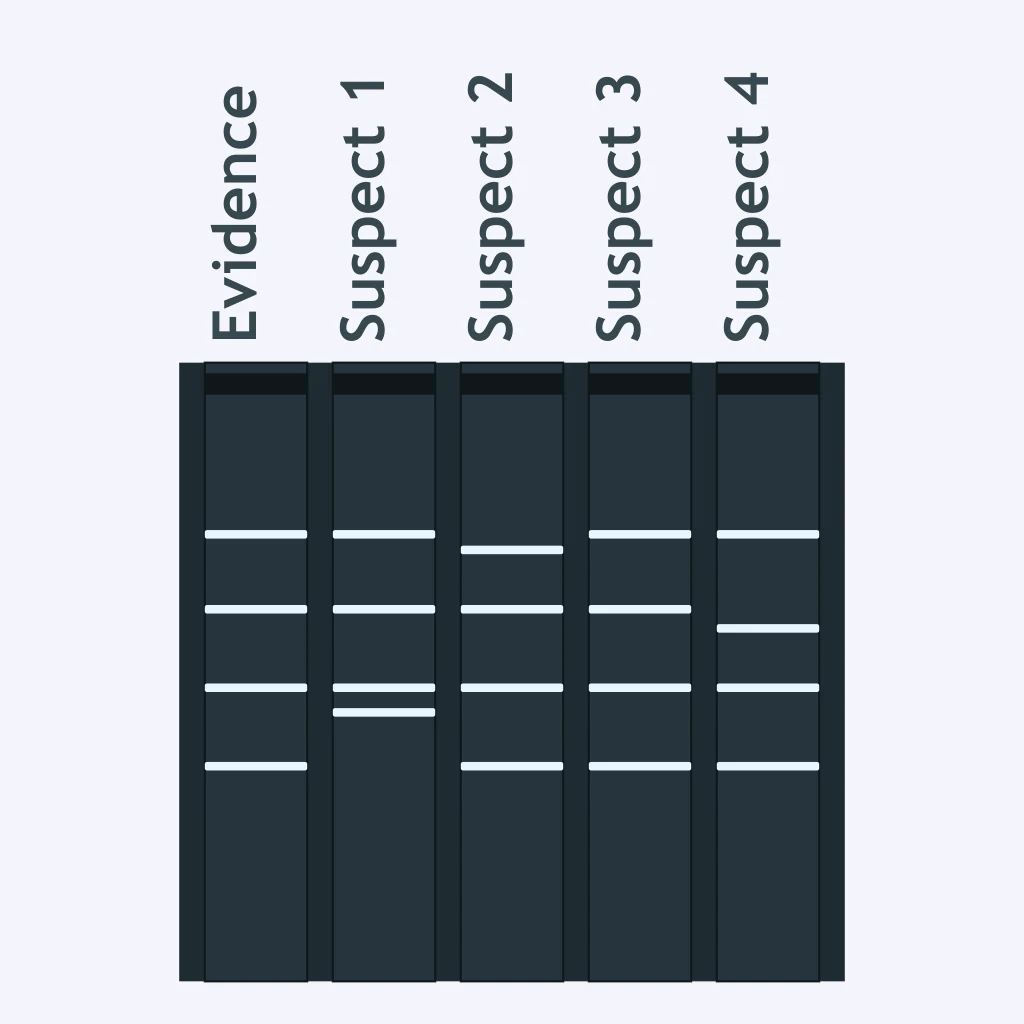
Look at the gel. Four suspects were compared with an evidence sample on one gel. Which suspect's DNA profile matches the evidence lane band for band?
Look at the gel. An evidence sample was run beside samples from three suspects. Whose profile matches the evidence?
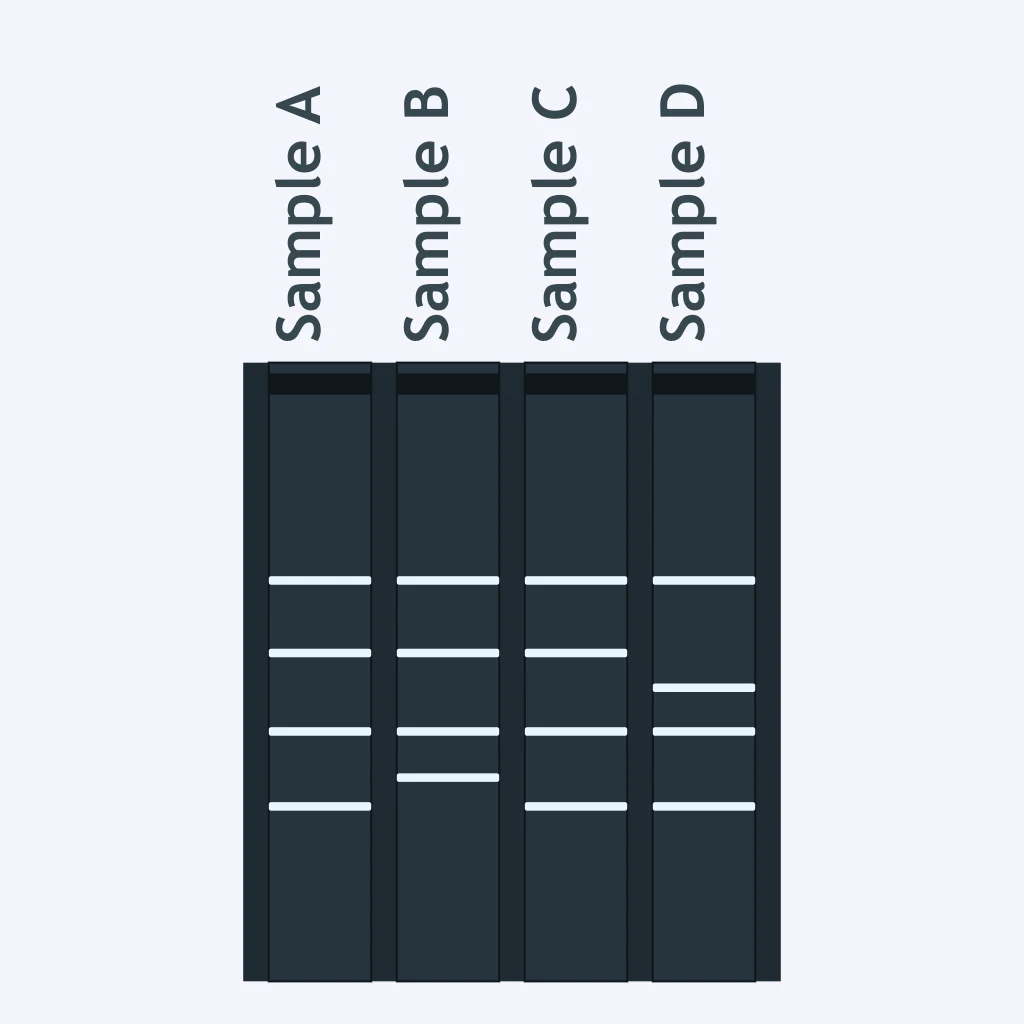
Look at the gel. Four tissue samples were cut with the same restriction enzyme and run side by side. Which two samples have the same DNA profile?
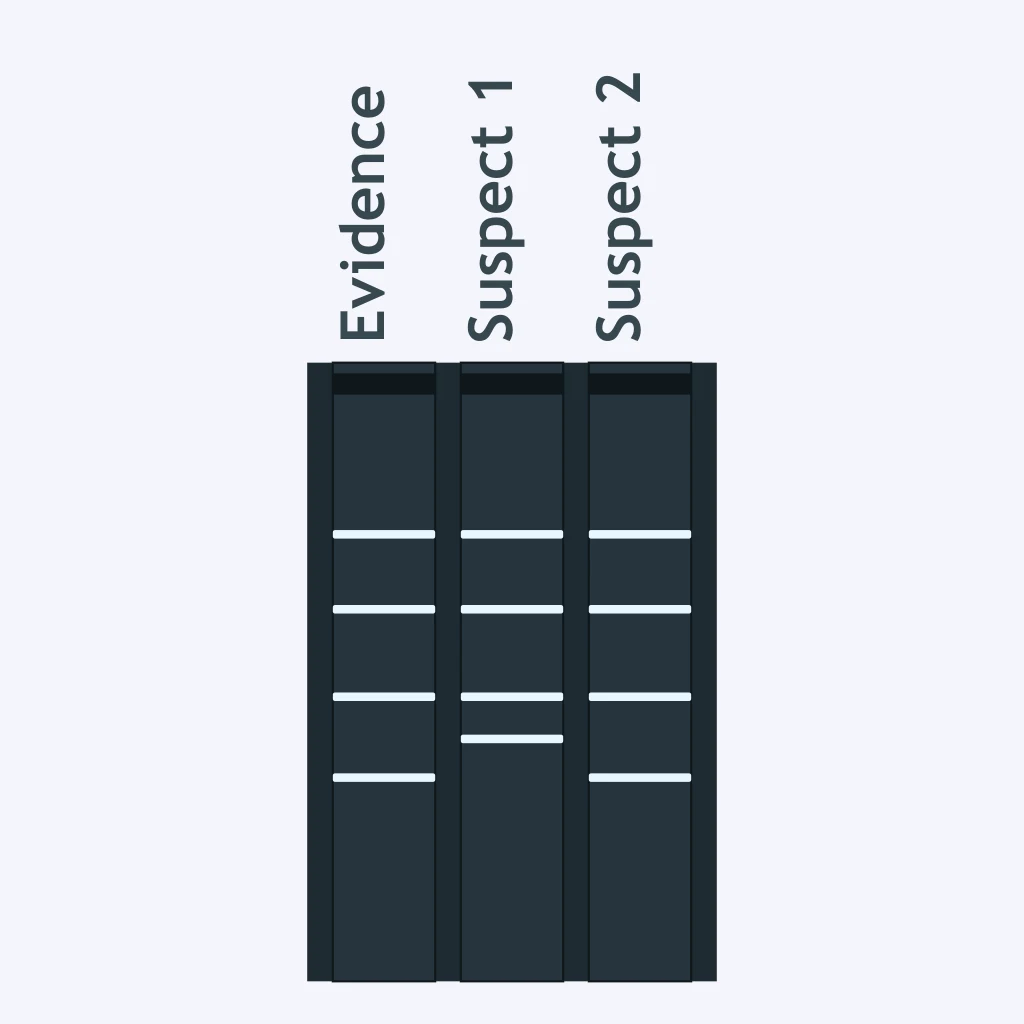
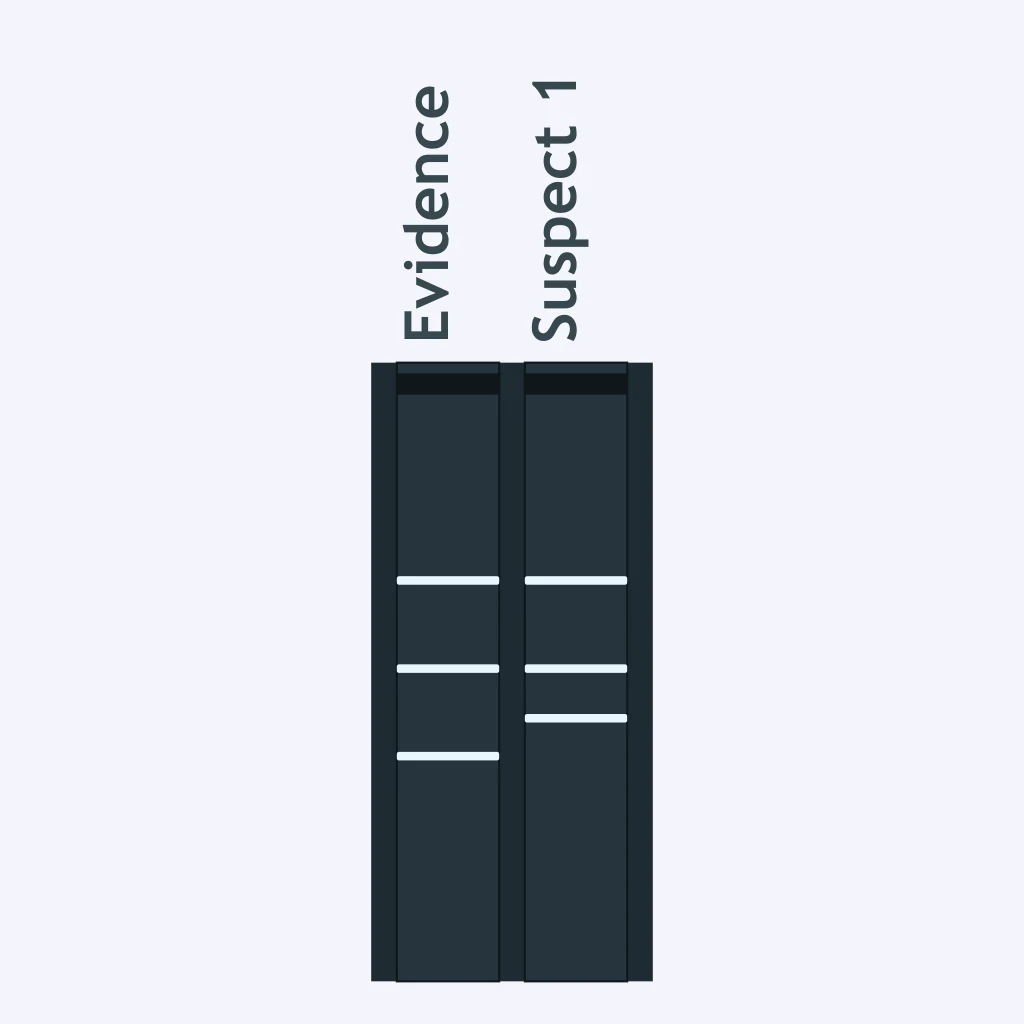
Look at the gel. How many of the four bands in the evidence lane also appear at the same height in Suspect 1's lane?
Look at the gel. The size marker lane is the only lane whose fragment sizes are printed. About how large is the fragment in the Sample A lane?
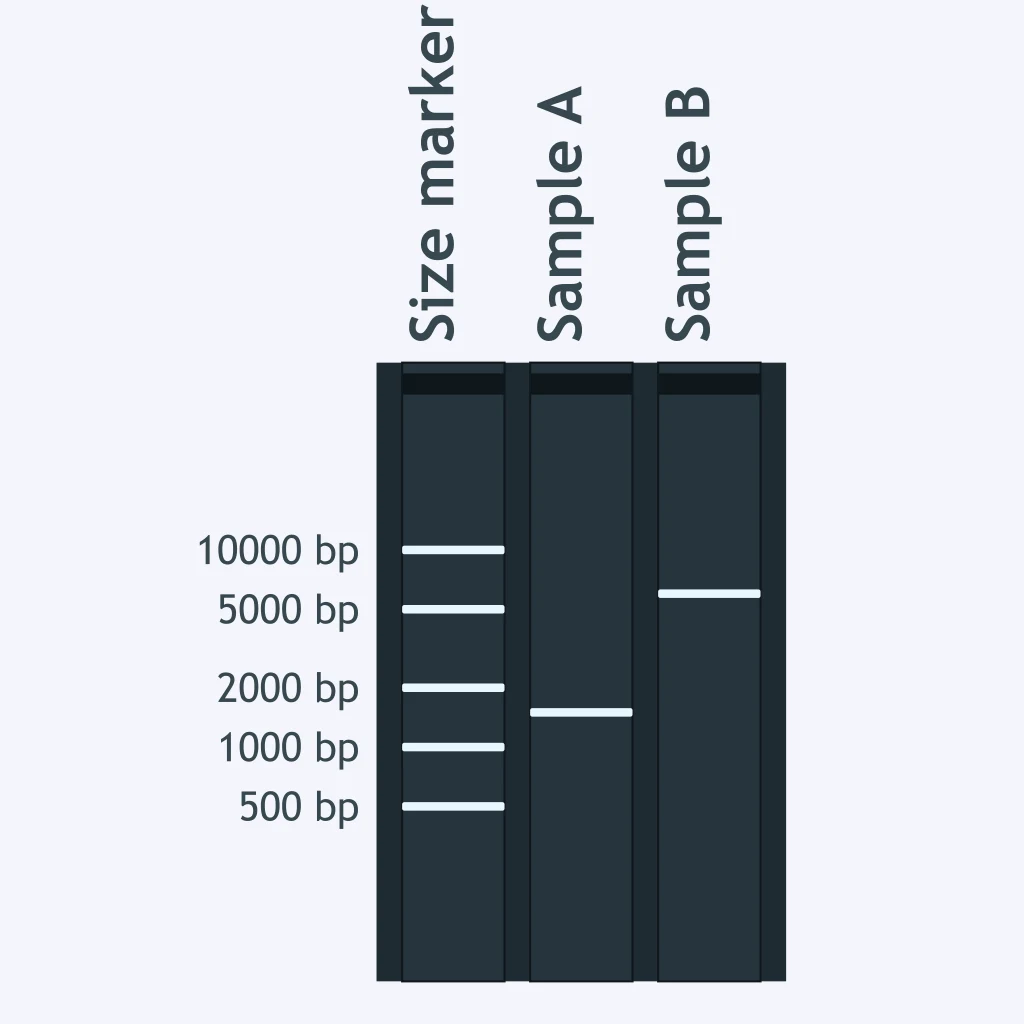
Look at the gel. Using the size marker lane, what are the approximate sizes of the two bands in the Sample A lane?
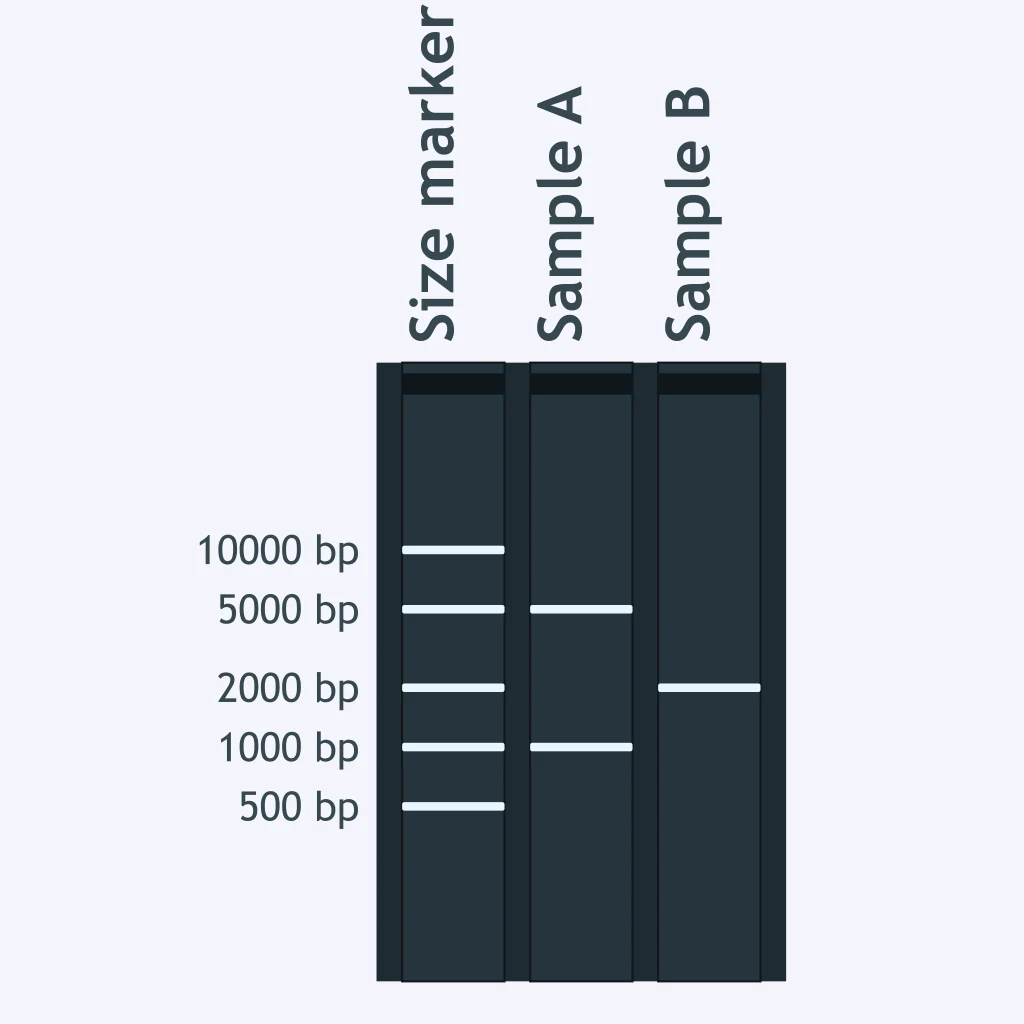
Look at the gel. Which band in the Sample A lane traveled the shortest distance from its well, and why?
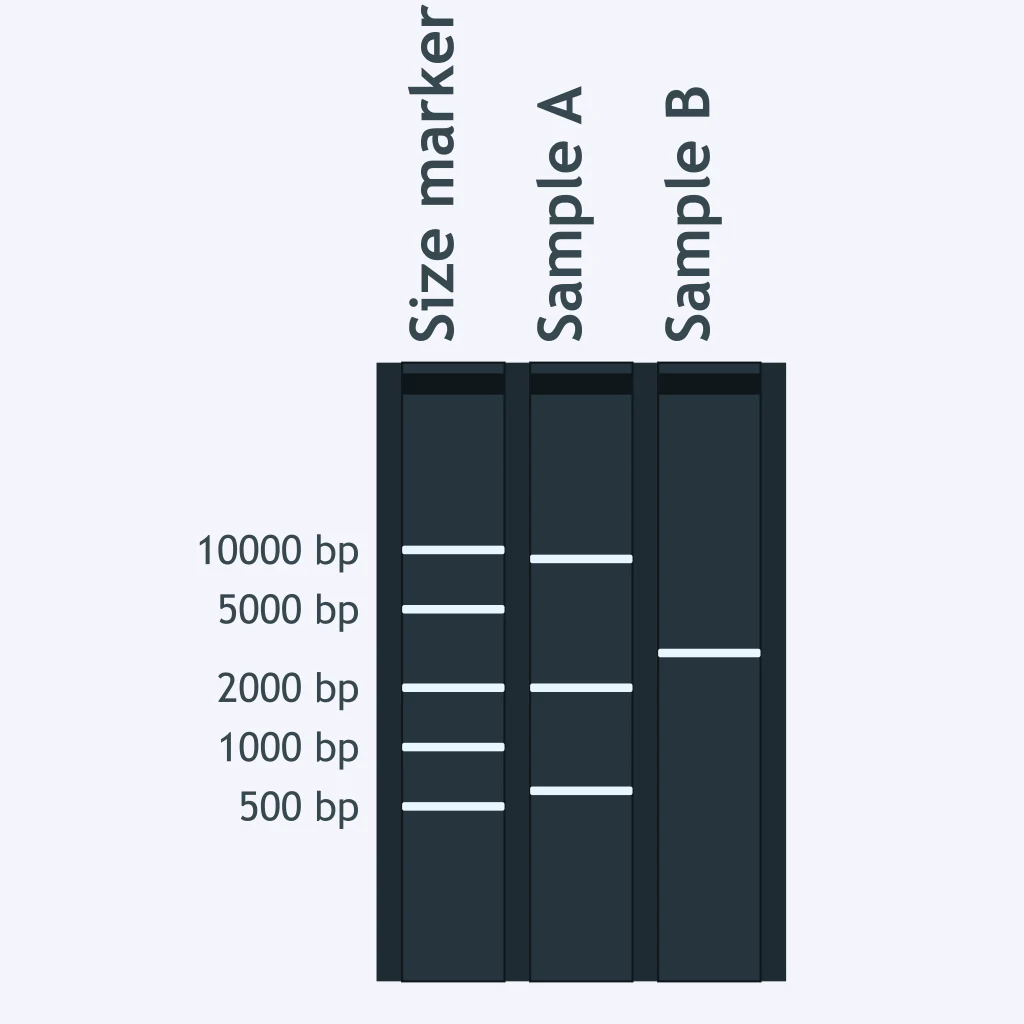
Look at the gel. The band in the Sample A lane sits below every band in the size marker lane. What can be said about that fragment?
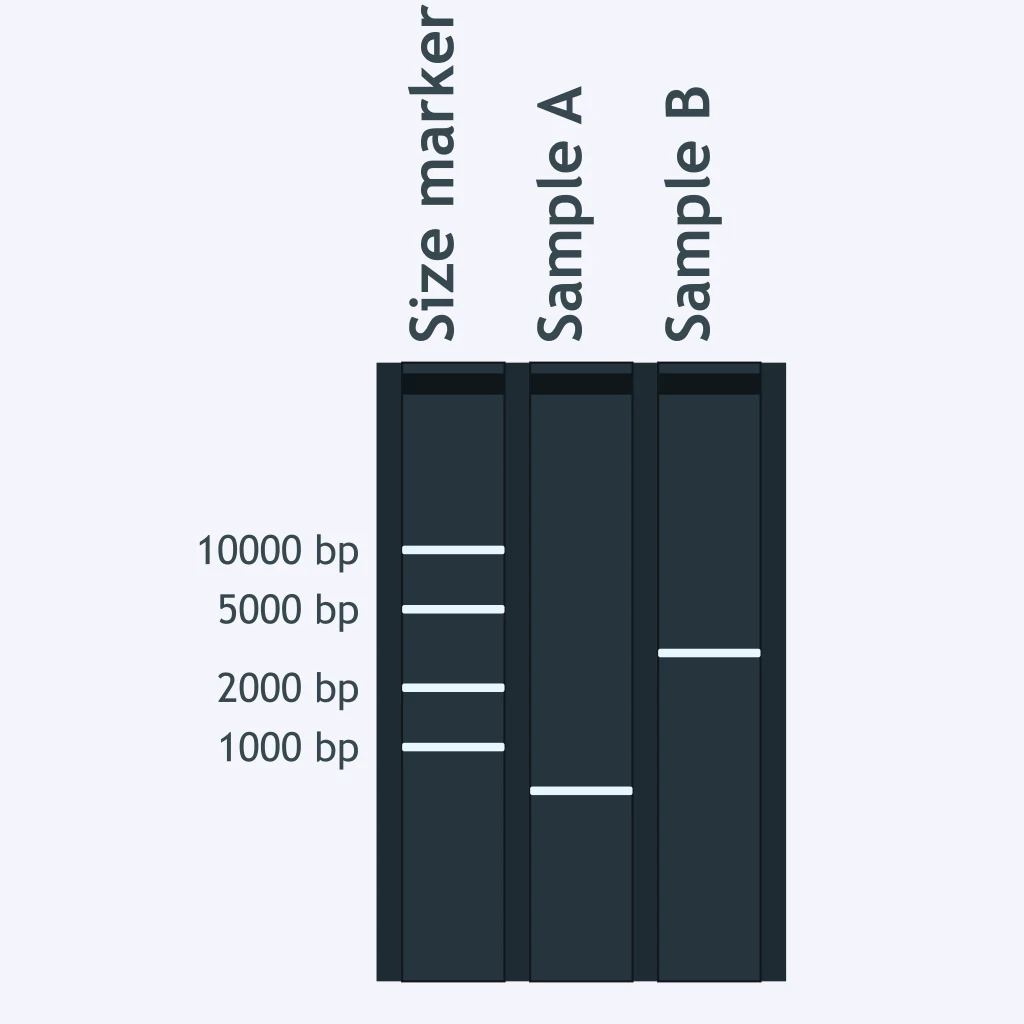
Look at the gel. Compare the single band in the Sample A lane with the single band in the Sample B lane. Which statement is accurate?
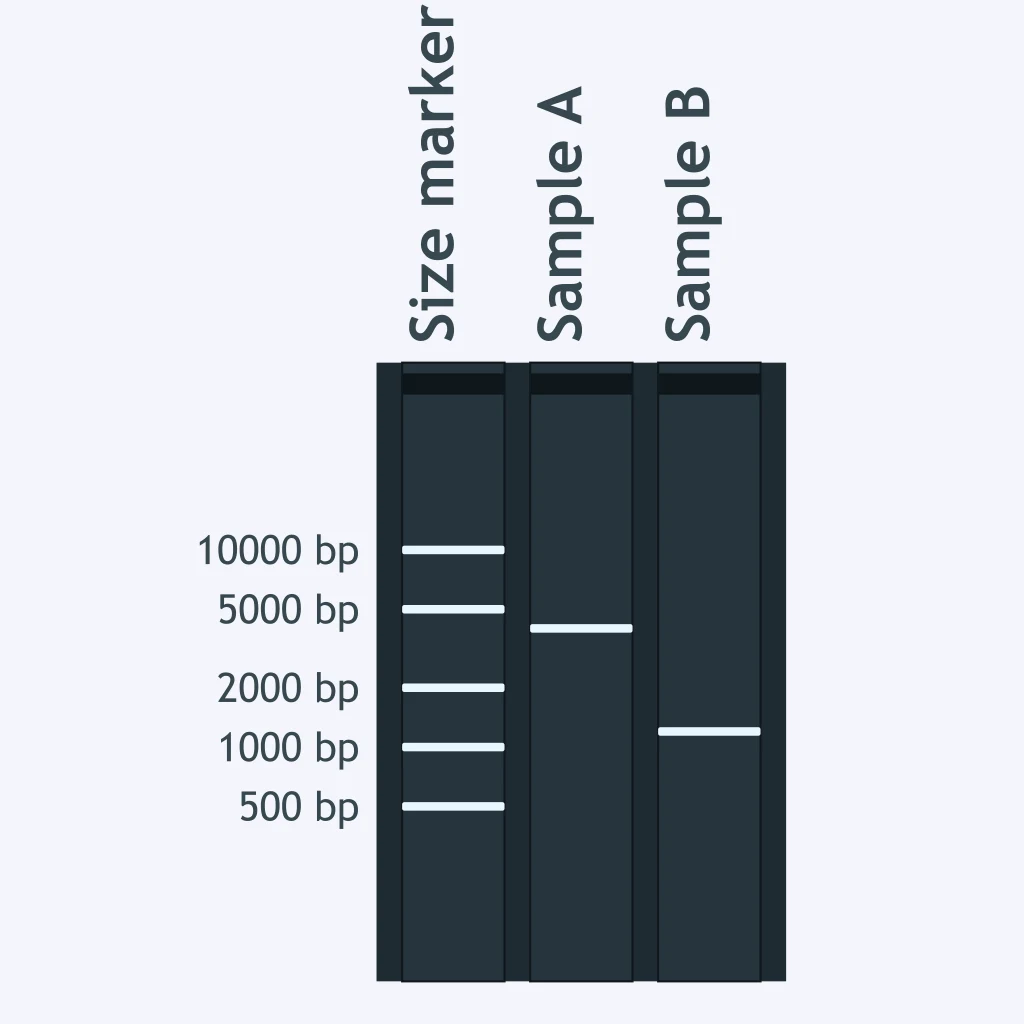
A crime-scene sample and a sample from one person are cut with the same restriction enzyme and run on one gel. Every band in one lane lines up with a band in the other. Which conclusion does this result support?
Three of a suspect's four bands line up with the evidence bands, but where the evidence has a band at 2500 base pairs the suspect has one at 4000 base pairs. Which conclusion is best supported?
A DNA profile that does not match the profile from an evidence sample rules that person out as the person the evidence sample came from.
Forensic laboratories compare several different regions of DNA rather than a single region when they build a profile. Why?
Look at the gel. Compare Suspect 1's lane with the evidence lane. What does this result establish?
Crack the passcode before the zombies get in.
Answer, then swat bugs for bonus points.
Race through questions at your own speed.
Same question on every screen. Fastest wins.

Pick a tile, answer, hit bonuses and steals.
Impacts of Biotechnology
20 questions