Loading
by BlastRoom
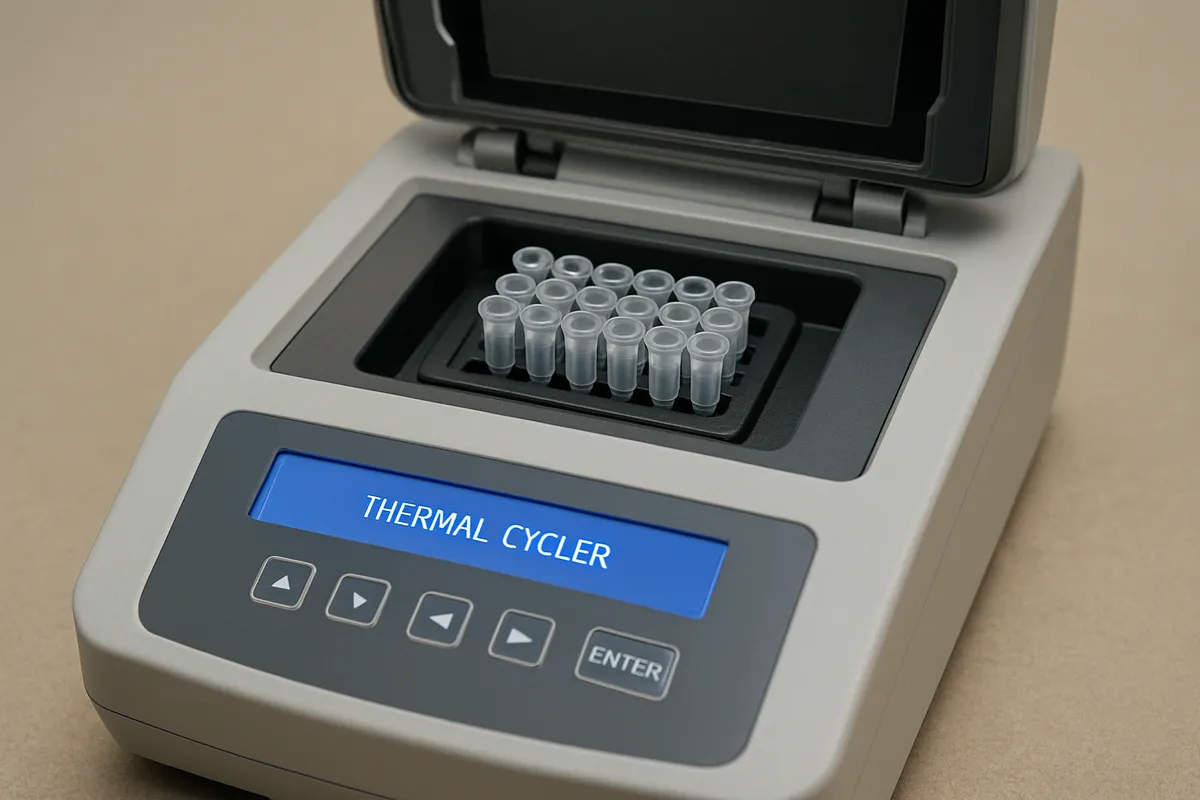
Copying DNA with PCR, cutting it with restriction enzymes, and moving a gene into another organism.
#biology
20 questions
One question set, multiple game modes. Tap any game to see it in action. Not sure which to pick?
Answer to place stones and capture territory.
Outrun the snow together.
Earn blasts, then hunt the other team.
Answer to earn energy, then climb.

The class blasts through walls together.
Bid on mystery lots. Most money wins.
Sell tours. Nice, standard, or a total scam.

Answer, restock, and serve the rush.
More correct answers pulls the rope your way.
Answer, then shoot down the alien wave.
Answer, then tap to leap the frozen ridge.
In the first stage of each PCR cycle the mixture is heated to 95 degrees Celsius. What does this heat do to the DNA?
After the strands have separated, the PCR mixture is cooled to about 55 degrees Celsius. What happens to the DNA during this cooling step?
The final stage of each PCR cycle is held at 72 degrees Celsius. Why is the reaction held at that temperature?
PCR uses a DNA polymerase taken from a bacterium that lives in hot springs instead of a human DNA polymerase. What is the advantage of using this bacterial enzyme?
A PCR tube starts with one double-stranded copy of a target region, and every complete cycle doubles the number of copies. How many copies of that region are present after 4 complete cycles?
A forensic laboratory runs the three PCR temperature stages 30 times over on one small sample. Why is the cycle repeated so many times instead of being run once?
The restriction enzyme EcoRI cuts double-stranded DNA between the G and the A wherever the sequence GAATTC appears. Which stretch of DNA below would EcoRI cut?
A researcher cuts a human gene out of a chromosome with EcoRI and then cuts open the plasmid that will carry the gene with EcoRI as well. Why use the same enzyme on both pieces of DNA?
A circular plasmid carries exactly two recognition sequences for one restriction enzyme. The enzyme cuts the plasmid at both sites. How many separate pieces of DNA result?
SmaI cuts straight across the sequence CCCGGG and leaves blunt ends with no overhang, while EcoRI leaves single-stranded overhangs. What difference do the blunt ends make when two fragments are joined?
Restriction enzymes were first discovered in bacteria, which make them all the time. What do these enzymes do for the bacterium that produces them?
A laboratory wants bacteria to make a human protein. Available steps: 1 cut the human gene and the plasmid with the same enzyme; 2 let bacteria take up the plasmid; 3 seal the gene into the plasmid with ligase; 4 grow cells on selective medium. Order?
In building a recombinant plasmid, a cut human gene and a cut-open plasmid have just been mixed so that their matching overhangs pair up. What is done next?
Bacteria are mixed with recombinant plasmids that carry an antibiotic-resistance gene, then spread on a medium containing that antibiotic. What does growing them on this medium achieve?
Why is a human gene put into a plasmid before it is given to bacteria, rather than the bare gene being put into the cells on its own?
A student lists the steps for making a transgenic bacterium: cut the gene and the plasmid with the same restriction enzyme, then seal the gene into the plasmid with DNA ligase, then grow the bacteria on selective medium. Which step has been left out?
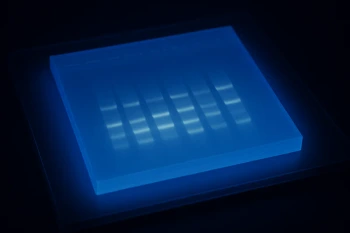
DNA fragments are loaded into wells at one end of a slab of gel and a current is passed through it. After half an hour the fragments have spread out into bands, with the smallest ones furthest from the wells. What technique is this?
The nucleus of an adult sheep's udder cell was placed into a sheep egg cell whose own nucleus had been removed, and the egg grew into a lamb with the same nuclear DNA as the adult that donated the nucleus. What technique is this?
A patient's cells cannot make a working form of one protein. Doctors load a working copy of the gene into a harmless modified virus and use it to deliver that gene into the patient's own cells. What is this called?
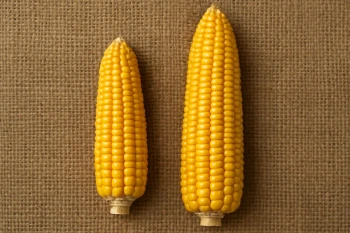
Over thousands of years, farmers kept seed only from the corn plants with the largest ears and planted it the next season. Modern corn has far larger ears than its wild ancestor. What produced this change?
Crack the passcode before the zombies get in.
Answer, then swat bugs for bonus points.
Race through questions at your own speed.
Same question on every screen. Fastest wins.

Pick a tile, answer, hit bonuses and steals.
The Fossil Record
20 questions