Loading
by BlastRoom
Read real distribution patterns and choose the explanation the evidence supports.
#biology
20 questions
One question set, multiple game modes. Tap any game to see it in action. Not sure which to pick?
Answer to place stones and capture territory.
Outrun the snow together.
Earn blasts, then hunt the other team.
Answer to earn energy, then climb.

The class blasts through walls together.
Bid on mystery lots. Most money wins.
Sell tours. Nice, standard, or a total scam.

Answer, restock, and serve the rush.
More correct answers pulls the rope your way.
Answer, then shoot down the alien wave.
Answer, then tap to leap the frozen ridge.
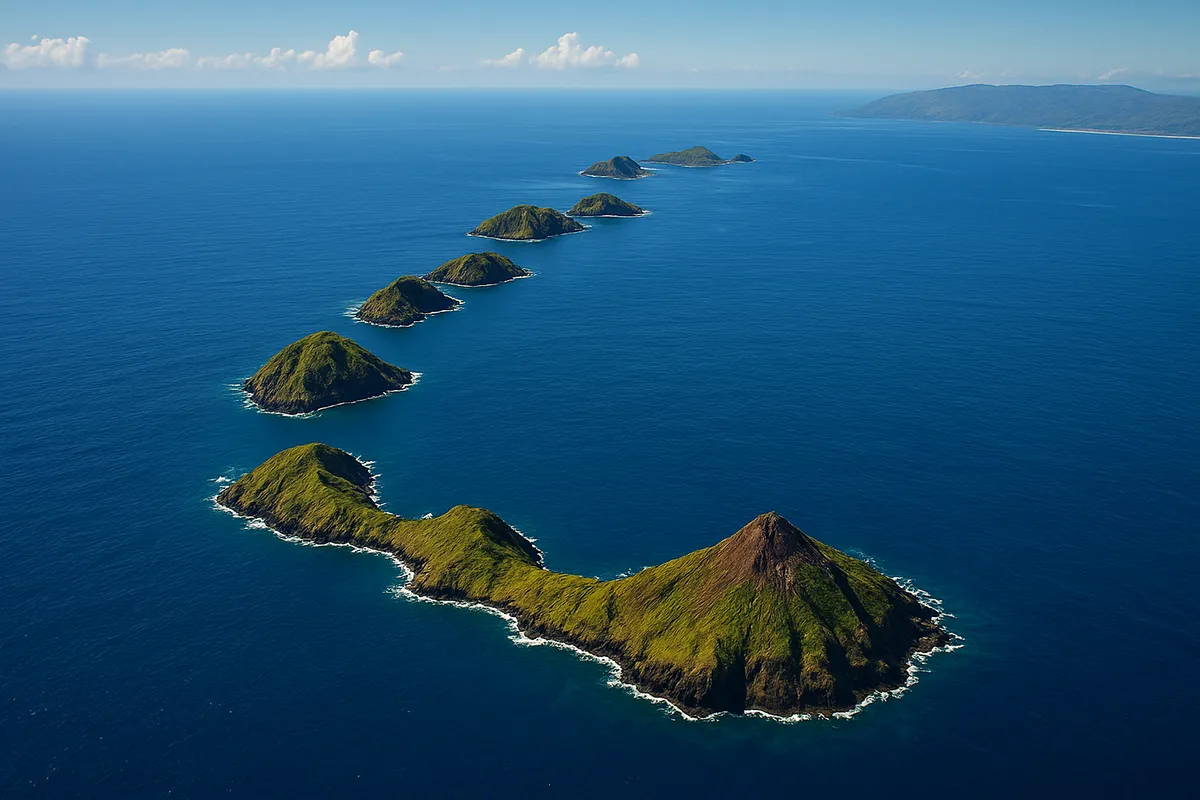
The Galapagos Islands are volcanic, rose from the sea floor, and have never been joined to a continent. Their finches, mockingbirds and tortoises most closely resemble species living in South America, about 1,000 km east. What does this indicate?
Darwin noted that the Cape Verde Islands and the Galapagos Islands are both dry volcanic islands, yet Cape Verde's species resemble African species while Galapagos species resemble South American ones. What does this comparison show?
The Canary Islands are volcanic and lie about 100 km off Morocco. Their giant Gallotia lizards live nowhere else, and their closest living relatives are lizards of northwest Africa. Which explanation does this support?
Giant tortoises live only on the Galapagos Islands. DNA shows their closest living relative is the small Chaco tortoise of mainland South America, and tortoises can float and survive for weeks at sea. Which explanation best fits?
The Azores are volcanic islands about 1,400 km west of Portugal and about 1,900 km southeast of Newfoundland in North America. Almost all of their native land birds and plants are most similar to European species. What does this pattern indicate?
Mesosaurus was a small freshwater reptile that lived about 280 million years ago. Its fossils are found only in eastern South America and southern Africa, in rocks of the same age. Which explanation does this distribution support?
Fossils of Lystrosaurus, a stocky land reptile from about 250 million years ago, occur in rocks of the same age in South Africa, India and Antarctica. Lystrosaurus walked and could not cross an ocean. What does this show?
Southern beech trees (Nothofagus) grow natively in southern South America, New Zealand, Australia and New Guinea, and fossil Nothofagus pollen occurs in Antarctica. Their seeds do not survive long in seawater. Best explanation?
Marsupials live natively in the Americas and Australia. Fossil marsupials about 40 to 50 million years old have been found on Seymour Island, Antarctica, which lies between the two regions. Which explanation does this support?
Camel fossils are common in North America from about 40 million years ago, but no camels live there now. Today camels live in Asia and Africa, and llamas and guanacos live in South America. What does this suggest?
American deserts hold cacti with thick water-storing stems and spines. African deserts hold Euphorbia plants that look almost the same but have very different flowers and are not closely related. Which explanation fits best?
Australia's sugar glider is a marsupial and North America's northern flying squirrel is a placental mammal. Both glide on a skin flap between their limbs, and the closest relatives of each are not gliders. What does this similarity show?
Madagascar separated from other land more than 80 million years ago and lies about 400 km off Africa. It has around 100 lemur species and no native monkeys or apes, and lemur DNA points to a single African ancestor. Best explanation?
Before people arrived, New Zealand had no native land mammals except bats. Birds such as the kiwi, kakapo and the extinct moa were flightless and fed on the ground, filling roles that mammals fill elsewhere. Which explanation best accounts for this?
Lake Victoria holds hundreds of cichlid fish species found nowhere else. They differ mainly in jaw shape and diet, and DNA shows they are all closely related to a small number of river cichlids from the same region. What explanation fits?
Cane toads now live across northeastern Australia, but the species is native to Central and South America. Records show that about 100 toads were released in Queensland in 1935 to attack cane beetles. What does this distribution support?
The Hawaiian islands rose one after another over a volcanic hot spot far from any continent. More than 50 honeycreeper species, all found only in Hawaii, differ in bill shape, and DNA shows all descend from one finch-like ancestor. What does this show?
Bali and Lombok lie about 35 km apart, but the strait between them is deep and has never dried out. Bali has woodpeckers and barbets typical of Asia, while Lombok has cockatoos and honeyeaters typical of Australia. Why?
About 3 million years ago the Isthmus of Panama rose and separated the Caribbean Sea from the eastern Pacific. Many pairs of closely related snapping shrimp species now live on opposite sides and no longer interbreed. What does this show?
Hawaii lies about 3,800 km from the nearest continent. Before people arrived it had many native birds, insects and flowering plants, one native land mammal (a bat) and no native amphibians. Which explanation best fits?
Crack the passcode before the zombies get in.
Answer, then swat bugs for bonus points.
Race through questions at your own speed.
Same question on every screen. Fastest wins.

Pick a tile, answer, hit bonuses and steals.
Conditions for Natural Selection
20 questions