Loading
by BlastRoom
Natural selection you can watch happen: why a treatment stops working and what makes it happen faster.
#biology
20 questions
One question set, multiple game modes. Tap any game to see it in action. Not sure which to pick?
Answer to place stones and capture territory.
Outrun the snow together.
Earn blasts, then hunt the other team.
Answer to earn energy, then climb.

The class blasts through walls together.
Bid on mystery lots. Most money wins.
Sell tours. Nice, standard, or a total scam.

Answer, restock, and serve the rush.
More correct answers pulls the rope your way.
Answer, then shoot down the alien wave.
Answer, then tap to leap the frozen ridge.
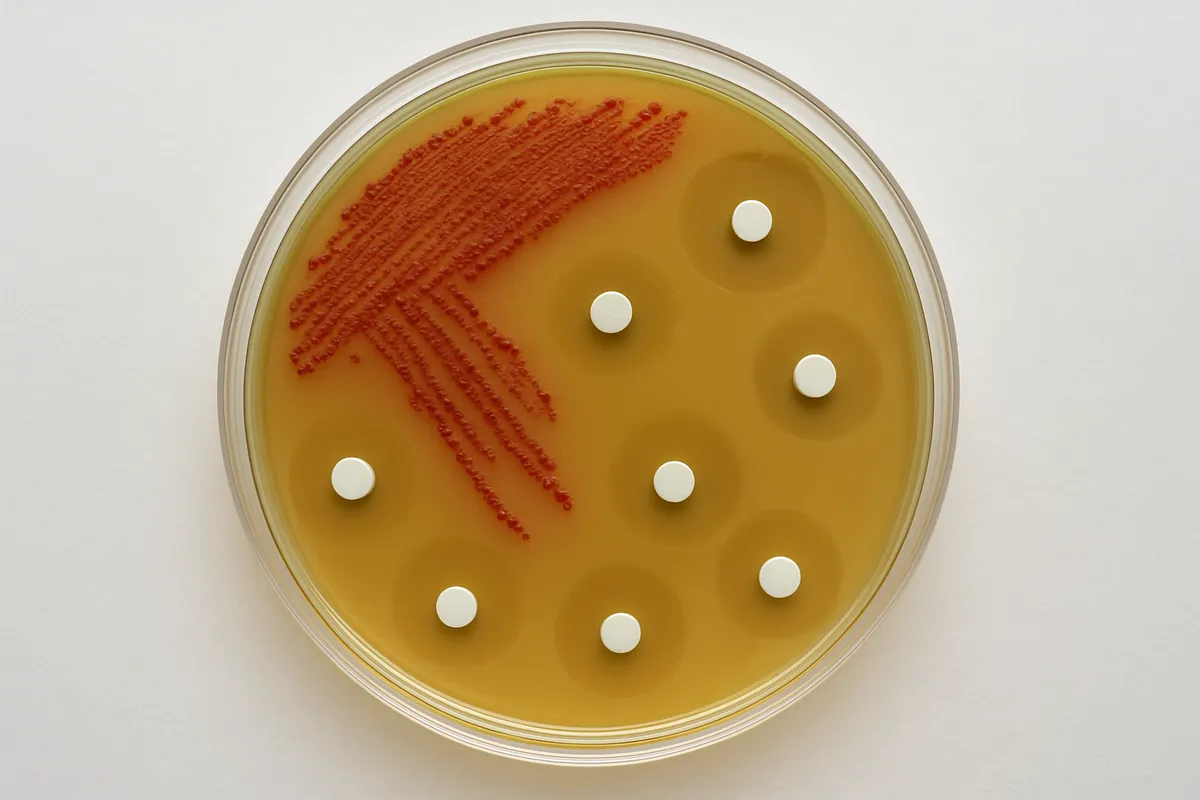
A large population of bacteria is spread on a plate, and ampicillin is added. Nearly all of the cells die, but a few colonies grow into visible clumps. Where did those surviving cells' ability to withstand the ampicillin come from?
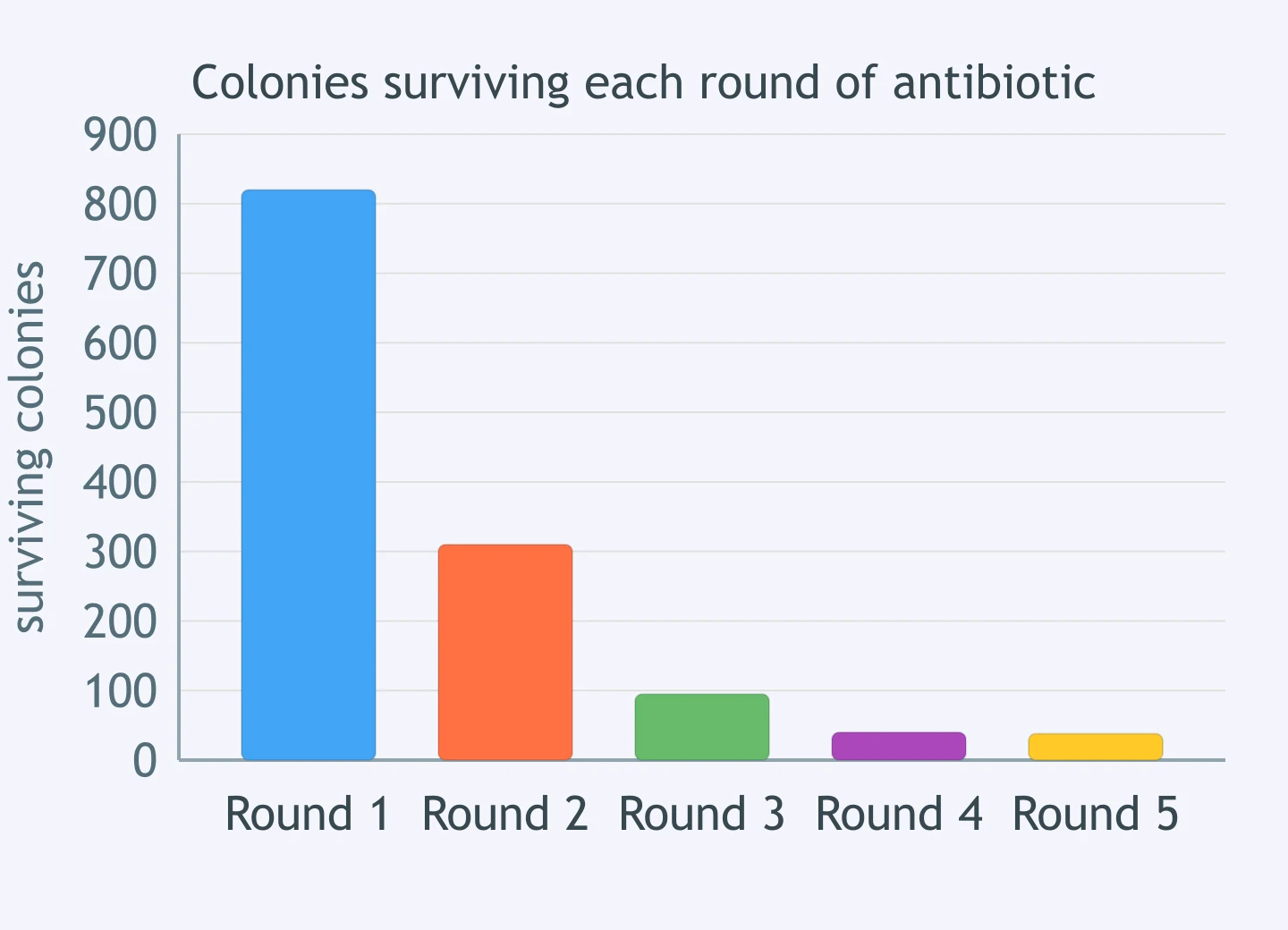
One bacterial culture is treated with the same antibiotic five times in a row, and the surviving colonies are counted after each round. Look at the graph. What best explains the colonies still alive after round 5?
A bacterium that carries a resistance gene can pass that gene directly to another living bacterium, even one of a different species.
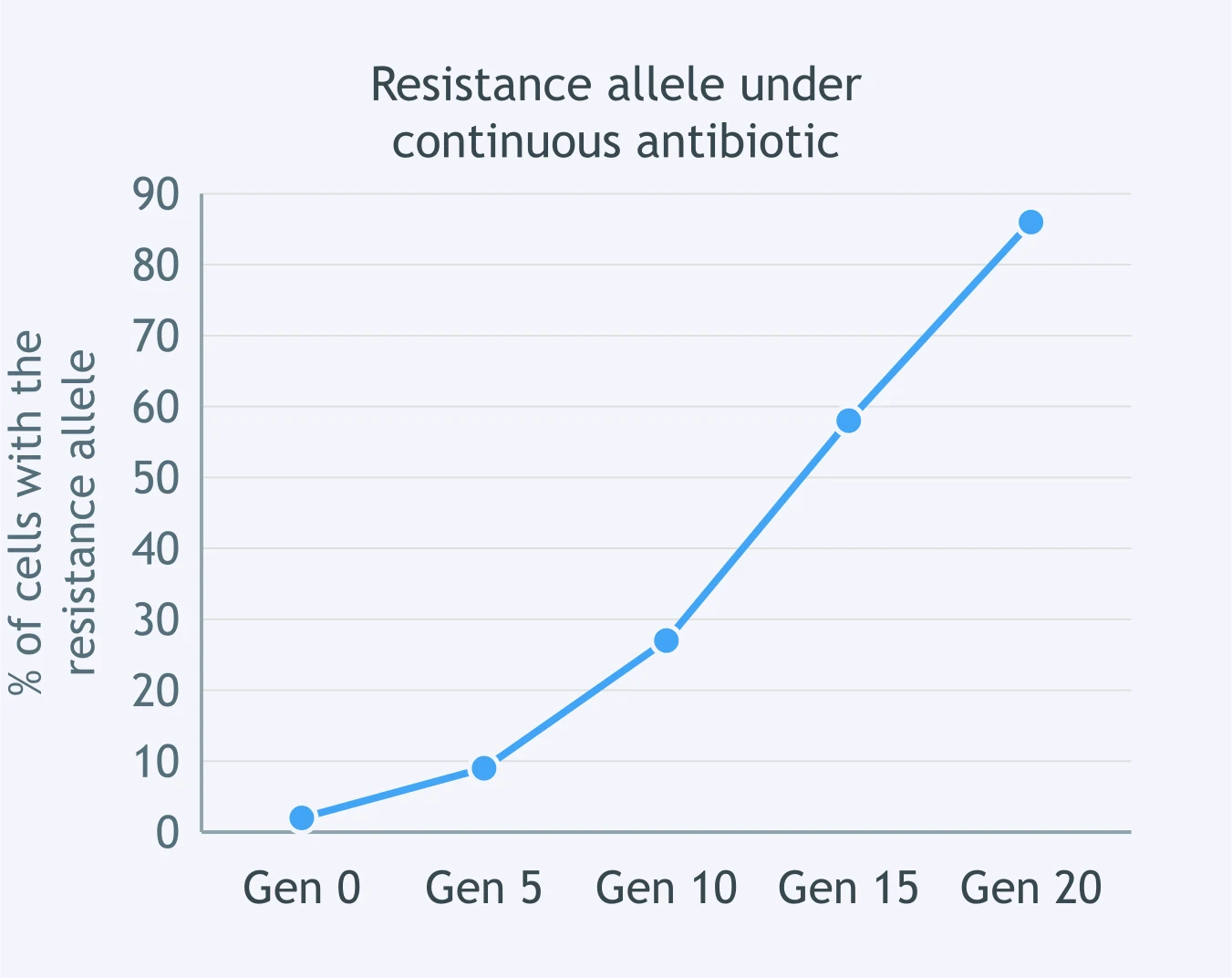
A bacterial population is grown with a low dose of antibiotic and sampled every five generations. The graph tracks the percentage of cells carrying the resistance allele. Look at the graph. What does the value at generation 0 tell you?
Two flasks hold the same bacterial strain. Flask A grows with no antibiotic for 30 generations and is then plated on antibiotic; flask B is plated on antibiotic straight away. Both give a few resistant colonies. What does this support?
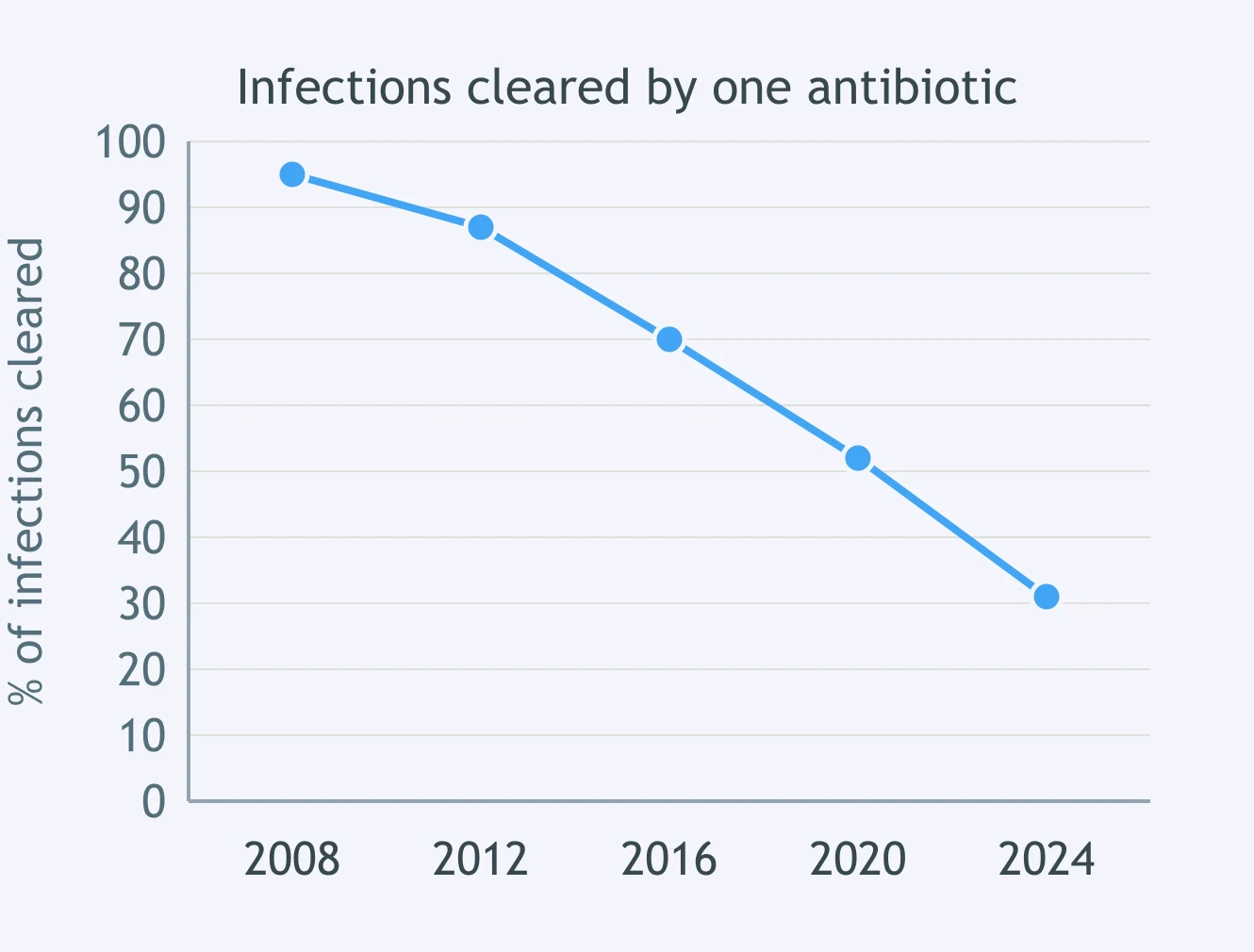
A hospital records the percentage of infections by one bacterial species that a single antibiotic clears. Look at the graph. What has changed in the bacterial population over this period?
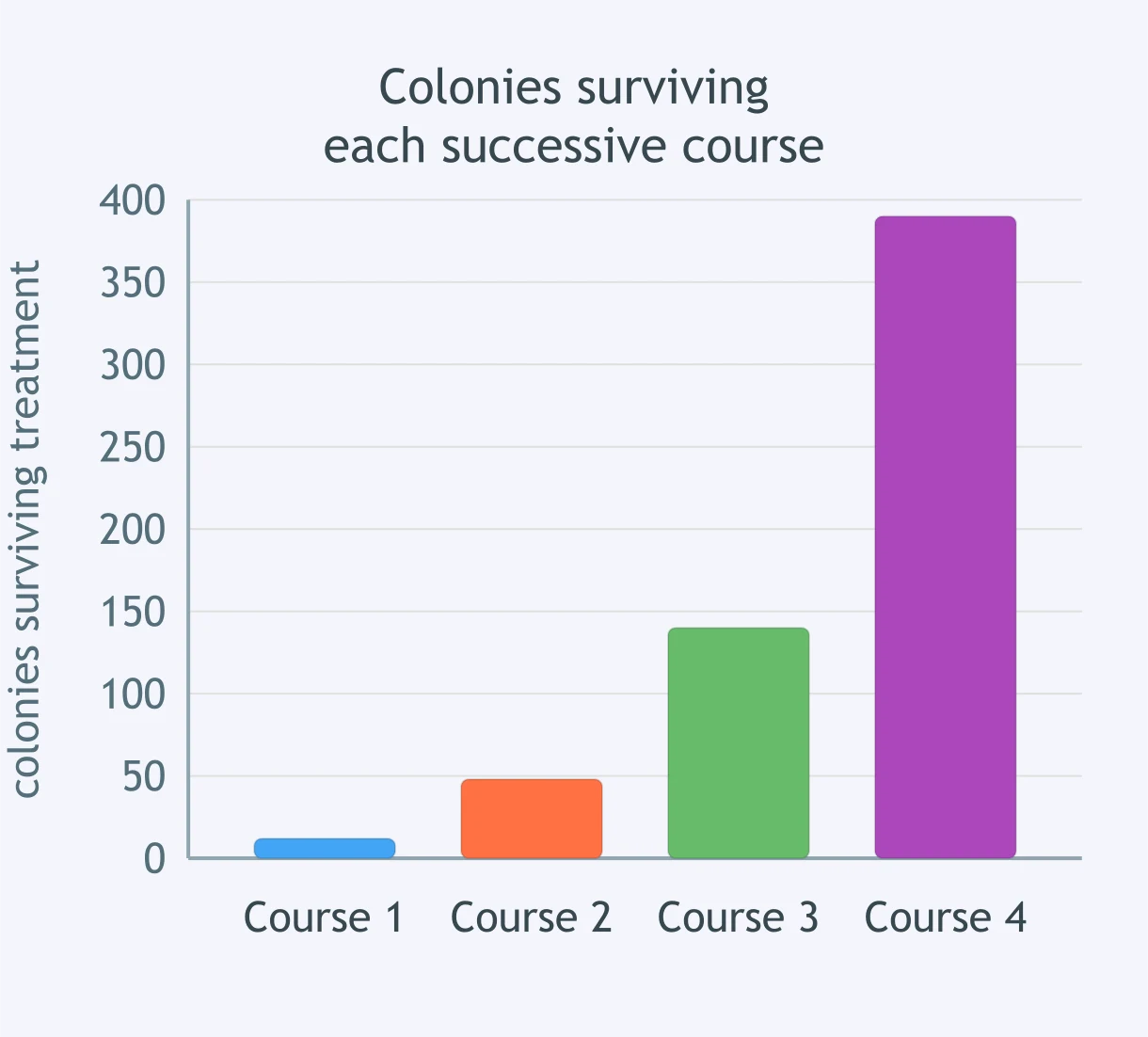
A patient takes four courses of the same antibiotic over two years, and the laboratory counts the colonies surviving each course. Look at the graph. Which statement is supported by the data?
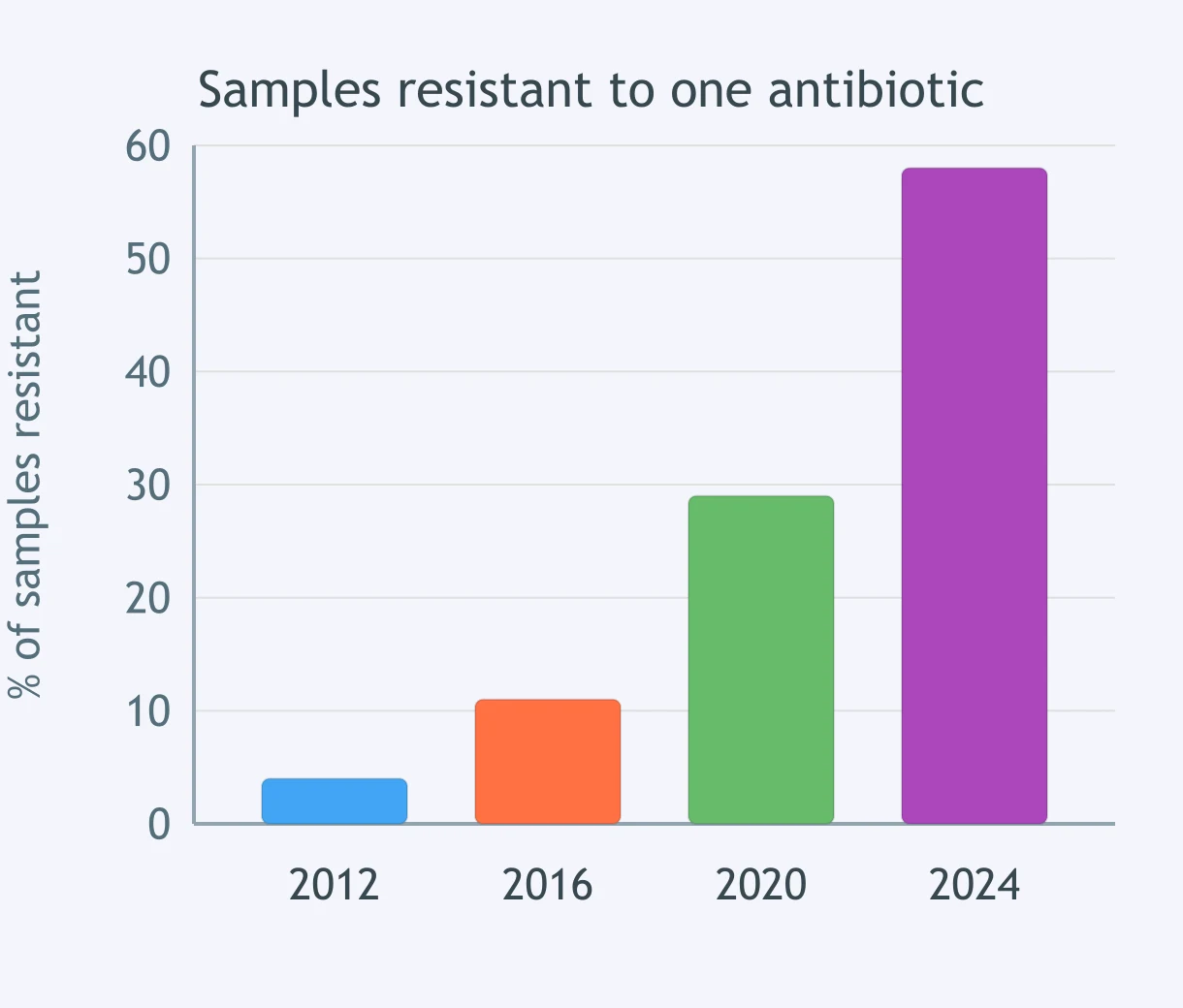
Look at the graph, which shows the percentage of samples of one bacterial species that survive a standard dose of an antibiotic. Between which two sampled years did the resistant percentage first pass one quarter of the samples?
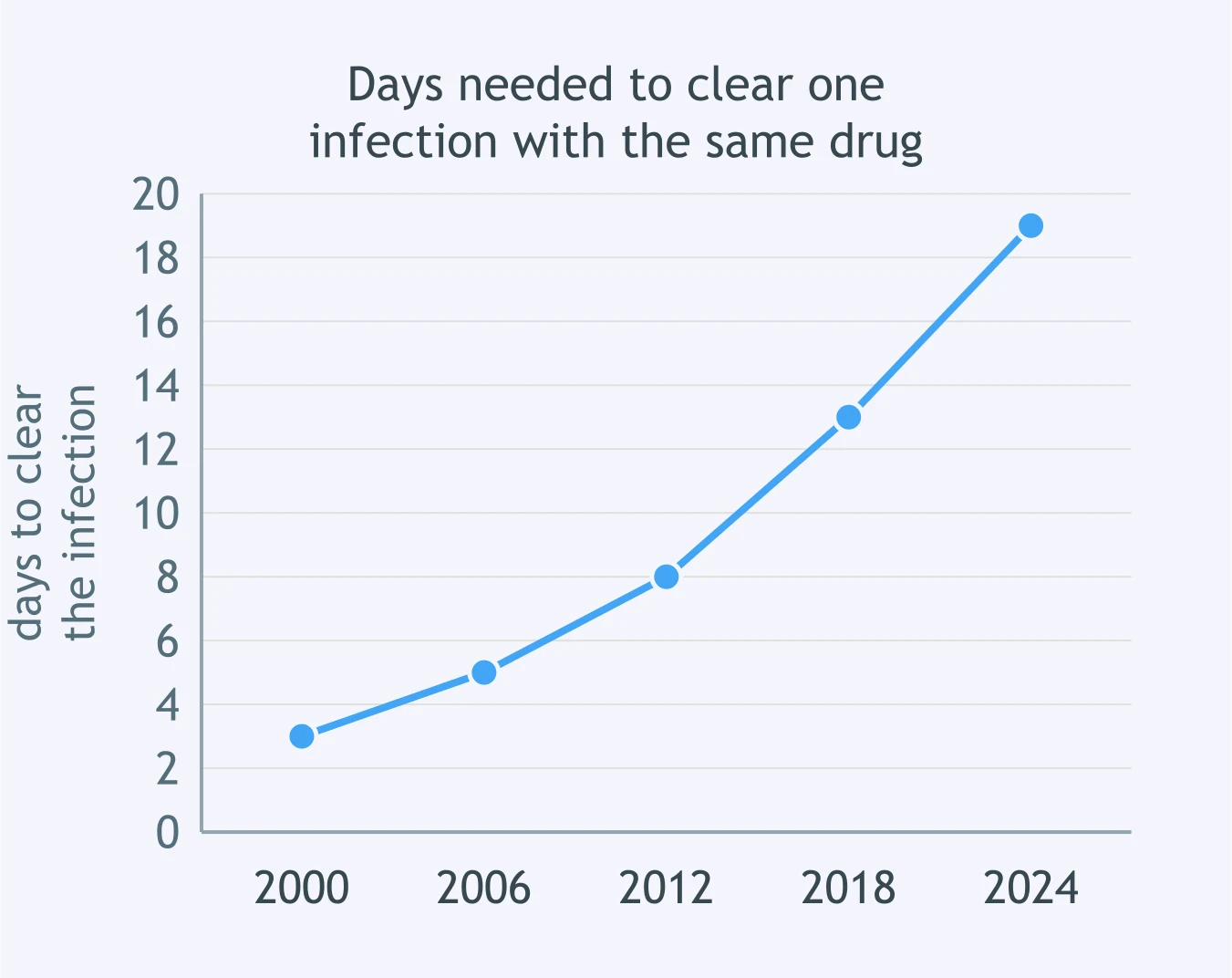
Look at the graph. It shows the average number of days one antibiotic needs to clear the same type of infection. What is the most likely reason for the pattern?
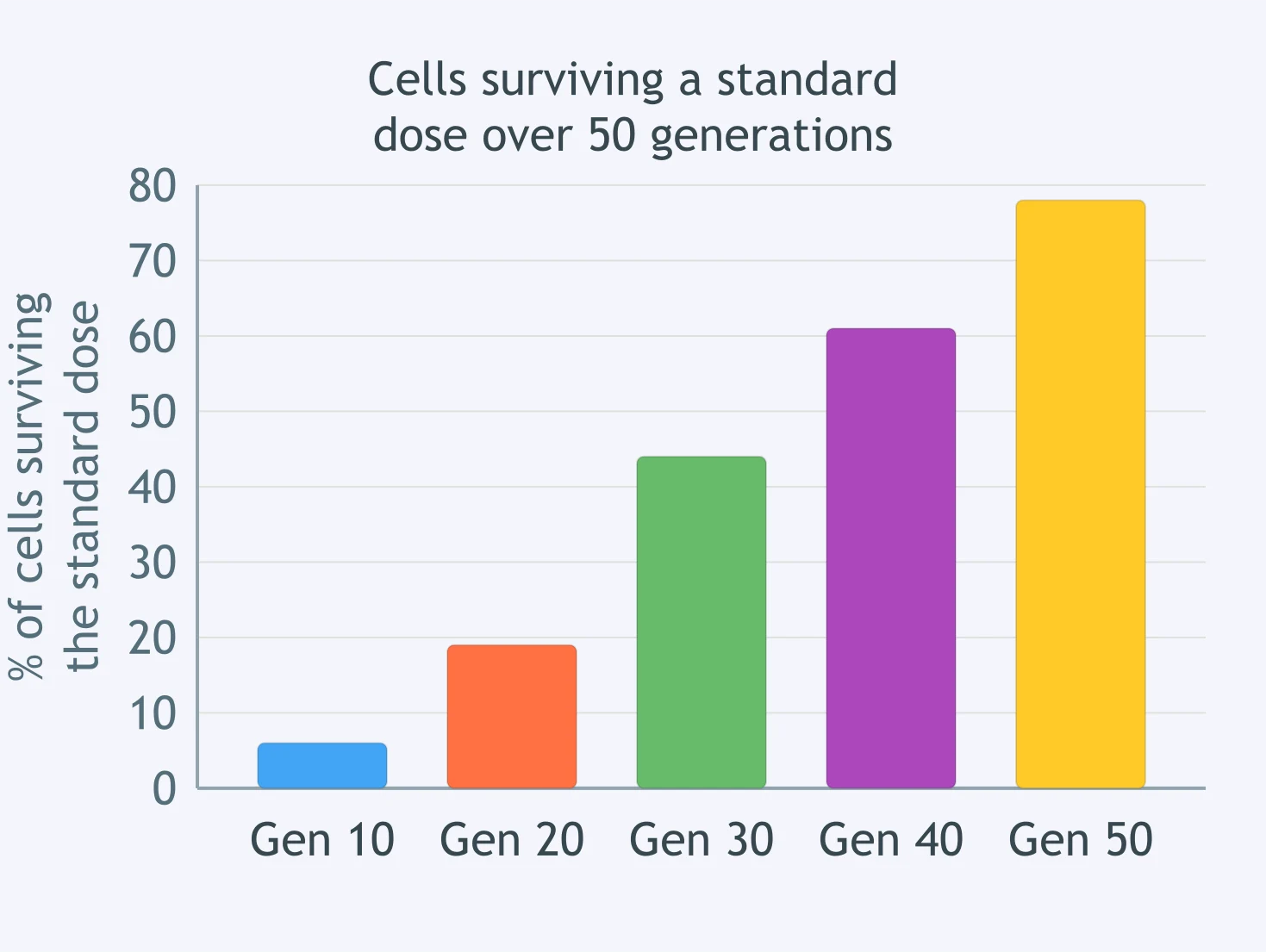
A culture is kept under the same dose of an antibiotic and sampled every ten generations. Look at the graph. Between which two samples did the percentage of surviving cells increase the most?
A patient is told to take an antibiotic for 10 days but stops on day 4 once the fever has gone. Why does stopping early tend to raise the resistant share of the bacteria left in the patient?
Three identical bacterial cultures were treated in different ways and then all given the same later dose of the antibiotic. Look at the graph of the cells surviving that later dose. Which conclusion is supported?
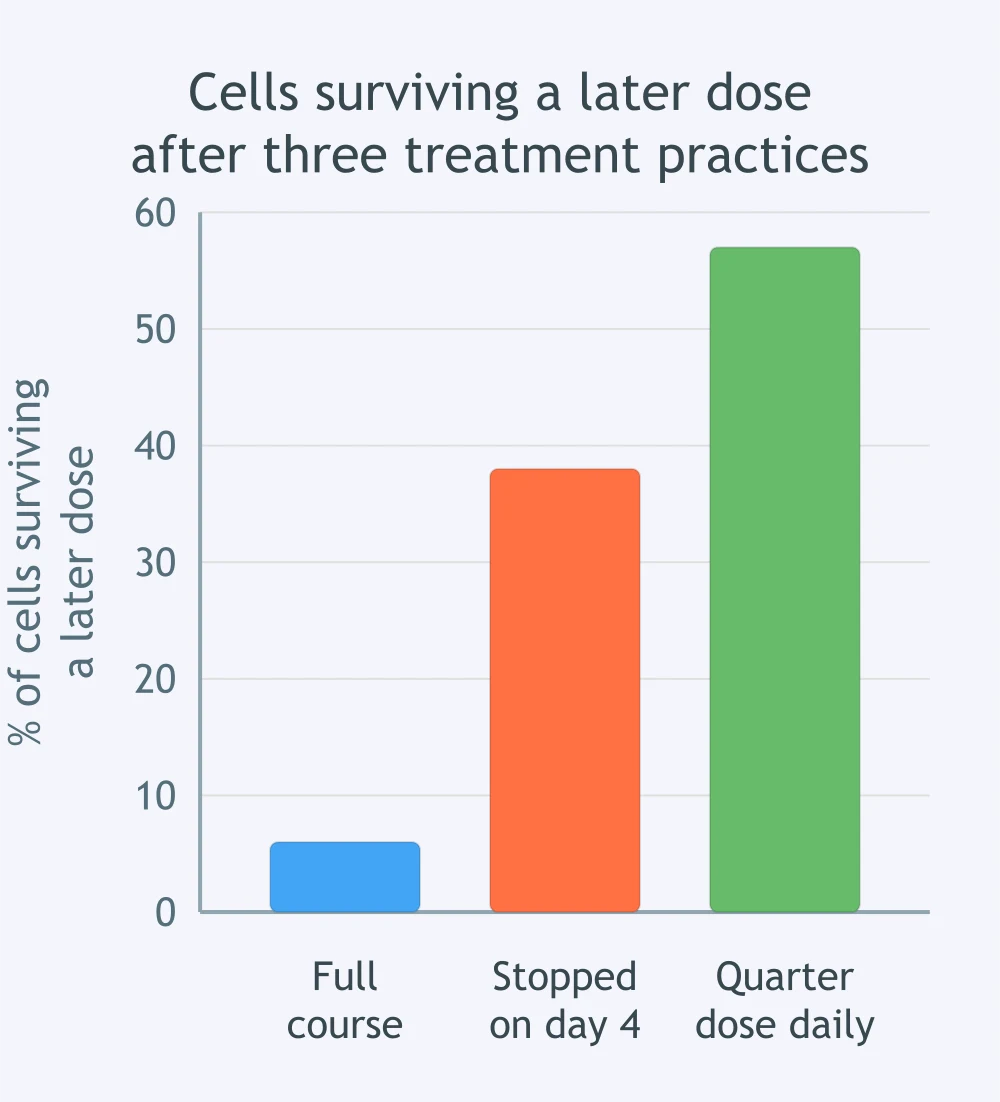
A low dose of an antibiotic is mixed into livestock feed every day for months to speed growth. What does this do to the bacterial population living in those animals?
A hospital sharply reduced its use of one antibiotic in 2018. Look at the graph of resistant infections. What does the pattern after 2018 show?
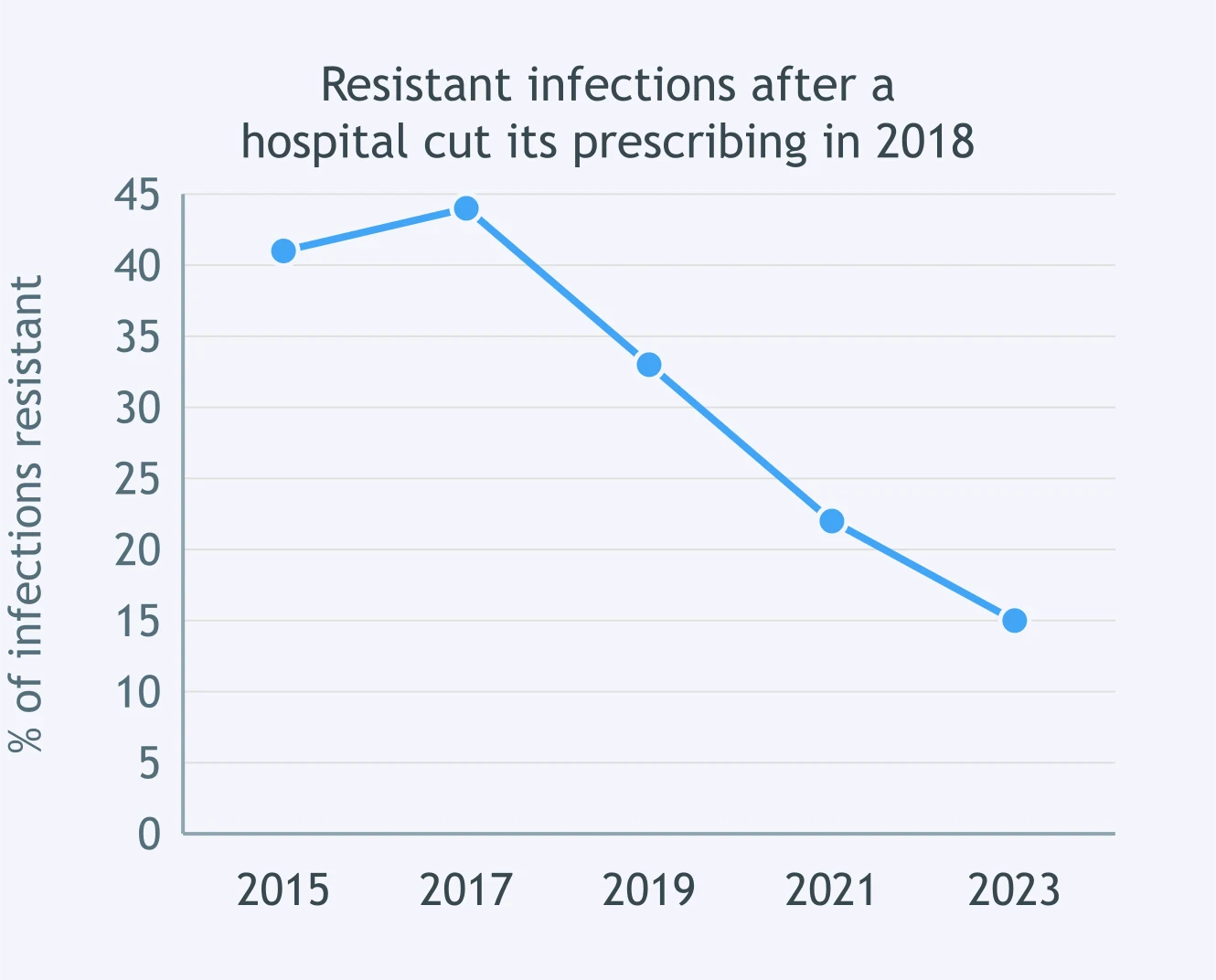
Tuberculosis is treated with several antibiotics at once rather than one after another. Why does this slow the appearance of a resistant bacterial population?
Taking an antibiotic for a viral illness such as a cold does nothing for the patient, but it still selects for resistance among the bacteria already living in the body.
A farmer sprays the same insecticide on one field each season. It kills nearly all the target beetles for six years; by year twelve it kills fewer than a third. A neighbor says the beetles grew immune from being sprayed. What correction is needed?
One herbicide has been sprayed on the same fields every year. Look at the graph of the percentage of weeds it kills. What is happening in the weed population?
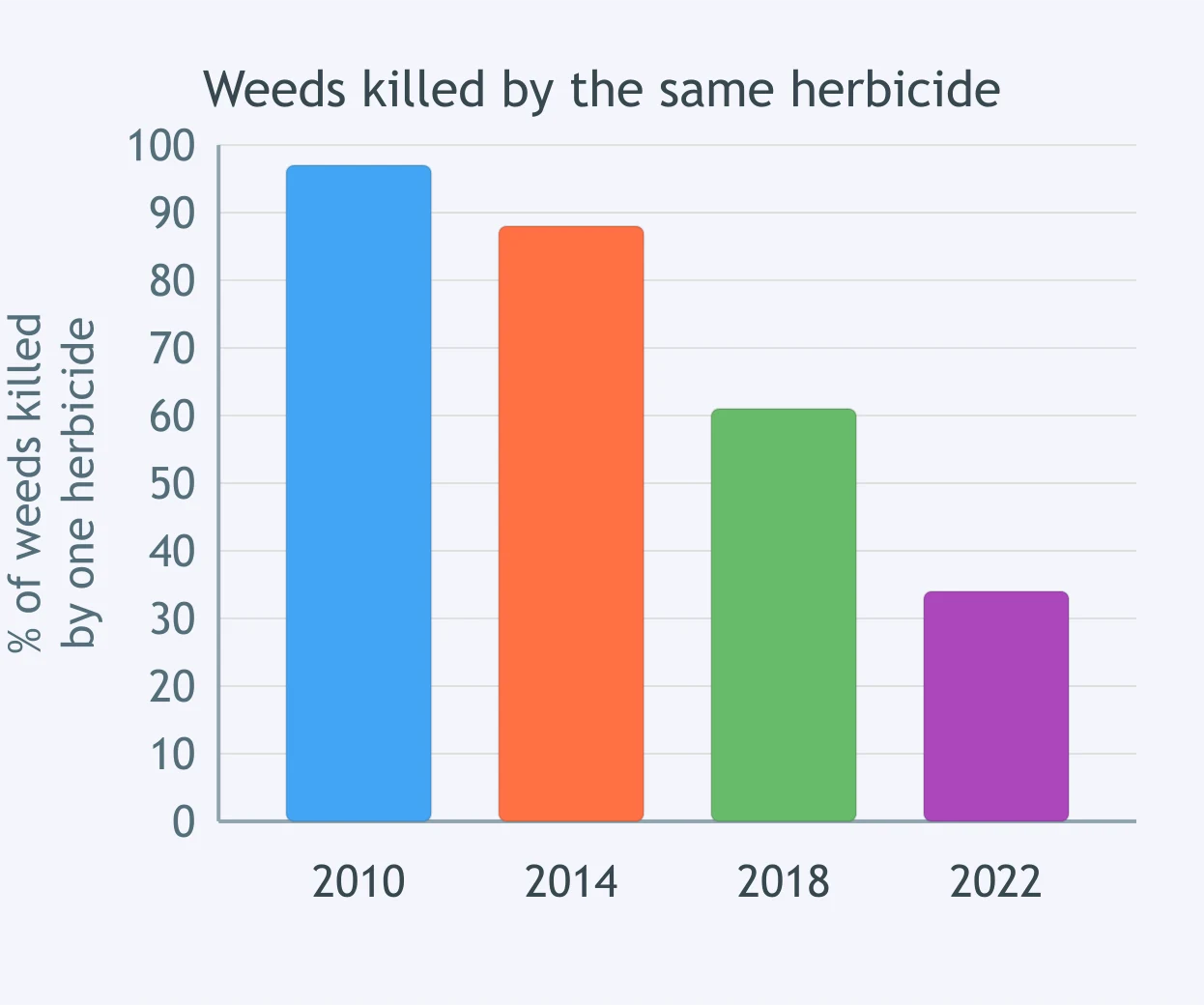
Bt corn is planted beside a block of ordinary corn, called a refuge, which the Bt toxin does not protect. How does the refuge slow the spread of resistance in the pest population?
Orchard A sprays the same insecticide every moth generation. Orchard B rotates three insecticides with different modes of action and leaves some trees unsprayed. In which orchard does resistance to any one insecticide spread faster, and why?
Crack the passcode before the zombies get in.
Answer, then swat bugs for bonus points.
Race through questions at your own speed.
Same question on every screen. Fastest wins.

Pick a tile, answer, hit bonuses and steals.
Speciation and Isolation
20 questions