Loading
by BlastRoom
Fisheries and Overfishing for high school Environmental Science, on-level and AP. Covers AP Environmental Science Unit 5: Land and Water Use.
#environmental_science
30 questions
One question set, multiple game modes. Tap any game to see it in action. Not sure which to pick?
Answer to place stones and capture territory.
Outrun the snow together.
Earn blasts, then hunt the other team.
Answer to earn energy, then climb.

The class blasts through walls together.
Bid on mystery lots. Most money wins.
Sell tours. Nice, standard, or a total scam.

Answer, restock, and serve the rush.
More correct answers pulls the rope your way.
Answer, then shoot down the alien wave.
Answer, then tap to leap the frozen ridge.
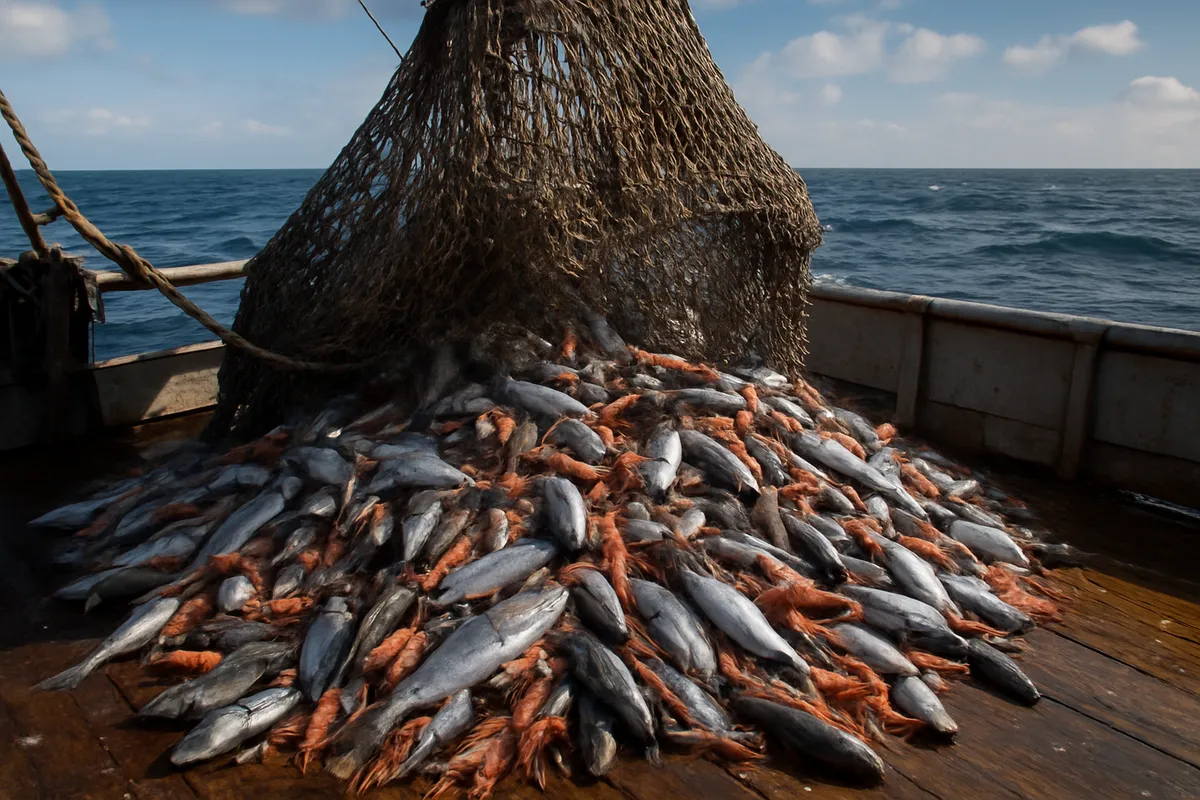
A net is towed along the seafloor, sweeping up groundfish as well as corals and sponges. Which fishing method is being used?
A vertical wall of mesh hangs in the water, and fish become caught when their gills snag as they try to back out. What gear is this?
A vessel sets a horizontal mainline with hundreds of baited branch hooks for tuna. Sea turtles sometimes swallow the hooks. Which method is this?
Fishers circle a school of tuna with a large net, then pull a line to close the net underneath. What method is this?
A shrimp trawler installs a turtle excluder device in its net. What bycatch outcome is the device designed to produce?
A gillnet is lost at sea. For months it keeps drifting and entangling turtles, seabirds, and fish, with no one fishing it. What is this lost fishing gear called?
A bottom-trawl fishery wants to reduce accidental capture of groundfish while continuing to tow its net. Which gear change fits that goal?
Seabirds dive for bait as a longline is set and become hooked. Which modification directly reduces this longline bycatch?
A fishery's landings stay near 900 metric tons for five years, but boats must fish twice as many hours to make that catch. What does this pattern indicate?
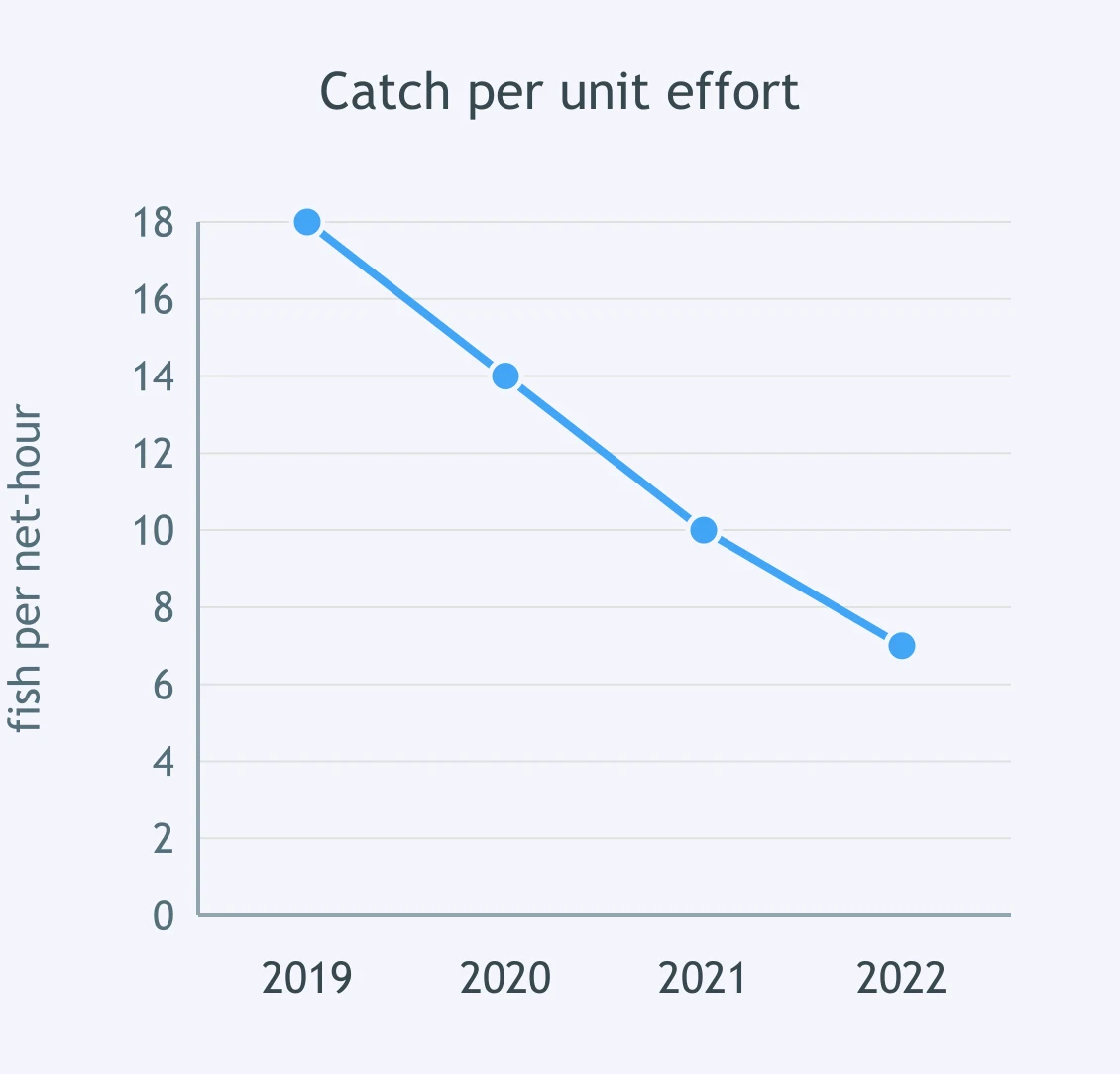
Use the graph of catch per unit effort. What does the trend most strongly suggest about the fish stock?
A fleet increases from 100 to 200 boats, yet total annual landings remain 1,200 metric tons. What happened to the average catch per boat?
A stock survey finds fewer large adults and many more small fish than it did 10 years ago. Fishers have selectively kept the largest fish. What does this age pattern warn of?
A stock adds about 4,000 metric tons of biomass each year, but the fleet removes 7,000 metric tons annually. If this continues, what is most likely?
Landings remain constant after managers allow fishers to expand into previously unfished grounds. Why can the constant landings still mask overfishing?
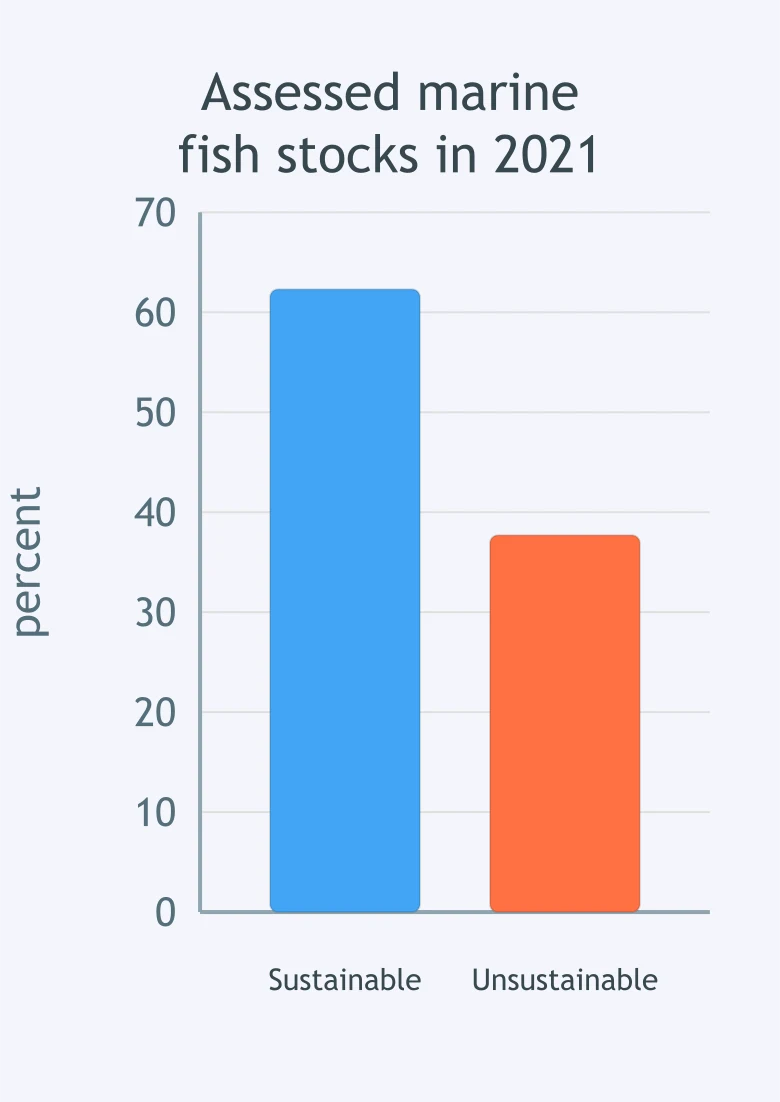
Use the bar graph of assessed marine fish stocks. Which statement is supported by the data?
According to FAO's 2024 report, what production milestone occurred in 2022?
A stock of 40,000 metric tons adds about 6,000 metric tons of biomass per year at its current size. What annual catch could it replace at that size?
A sardine stock has been fished at 2,500 metric tons per year, and its total biomass has stayed the same for several years. About how much new biomass does the stock produce each year?
A stock's annual production is 12,000 metric tons, but the proposed catch is 18,000 metric tons. By how much would catch exceed replacement in one year?
With no fishing for one year, a fish stock grows from 30,000 to 31,500 metric tons. If conditions stay the same, what annual catch could the stock replace at about this size?
A fish stock contains 80,000 metric tons and grows by 5% in a year at its present size. What catch equals that year's growth?
A fishery's stock production falls from 6,000 to 4,000 metric tons per year after a marine heat wave. To match the new replacement rate, what should happen to a 6,000-metric-ton quota?
A stock assessment estimates maximum sustainable yield at 9,000 metric tons per year, while the current catch is 10,500 metric tons. Which change aligns catch with the estimate?
Why is maximum sustainable yield expressed as a long-term average rather than a guaranteed catch every year?
The northern cod fishery off Newfoundland collapsed and a moratorium began in 1992. What did later assessments show about recovery during the following years?
A fishery removes many mature adults before they spawn. What direct change makes a stock collapse more likely?
A fishery repeatedly catches the largest, oldest fish in a population. Which population change is most likely before a collapse?
After a predator fishery collapses, its prey species becomes much more abundant. Which ecological explanation best fits?
A fishery closes after decades of excessive harvest, but the depleted stock does not rebound quickly. Which condition can delay recovery?
A coastal community depends on one fishery for jobs and protein. The stock collapses after harvest exceeds replenishment for years. What is the most direct human consequence?
Crack the passcode before the zombies get in.
Answer, then swat bugs for bonus points.
Race through questions at your own speed.
Same question on every screen. Fastest wins.

Pick a tile, answer, hit bonuses and steals.
Mineral Resources and Their Uses
25 questions