Loading
by BlastRoom
The GI Bill, the baby boom, the interstates and the new suburbs of 1945-1960.
#united_states_history
30 questions
One question set, multiple game modes. Tap any game to see it in action. Not sure which to pick?
Answer to place stones and capture territory.
Outrun the snow together.
Earn blasts, then hunt the other team.
Answer to earn energy, then climb.

The class blasts through walls together.
Bid on mystery lots. Most money wins.
Sell tours. Nice, standard, or a total scam.

Answer, restock, and serve the rush.
More correct answers pulls the rope your way.
Answer, then shoot down the alien wave.
Answer, then tap to leap the frozen ridge.
A 1944 federal law gave returning veterans payments for tuition and living costs, a federal guarantee behind a home or business loan, and weekly unemployment pay while they looked for work. Which law was that?
In 1956 Congress authorized a 41,000-mile network of limited-access roads and committed the federal government to ninety percent of the construction cost. Which law did that?
A 1949 law declared the national goal of a decent home and a suitable living environment for every American family, paid cities to clear districts they called slums, and authorized 810,000 units of public housing. Name it.
How did Congress arrange to pay for building the interstate system in 1956?
A 1946 law made it declared federal policy to promote maximum employment, production and purchasing power, required the president to report yearly on the economy, and created a council of three economists to advise him. Which law?
A family took a new refrigerator home after putting a small sum down and signing to pay a fixed amount every month, with interest, until the price was cleared. What was this way of buying called?
By 1960 millions of Americans had moved to the warm-weather states running from Florida across Texas to southern California, where new defense plants and air conditioning had arrived. What name is given to that band of states?
On one Long Island tract a builder broke house construction into 26 steps and sent a specialized crew through to perform each step, working from cut-to-size parts delivered to every lot. What was he applying?
From 1946 through 1964 about 76 million children were added to the American population, far more each year than in the 1930s. What is that surge called?
Through the late 1950s and 1960s, towns sitting at the exits of the new limited-access roads filled with tract housing, motels and gas stations, while towns twenty miles away from those exits did not grow. What best explains that?
Between 1952 and 1958 school districts across the country ran double sessions, hired teachers in a hurry and put up elementary schools faster than at any time in their history. What caused the sudden pressure?
Houston, Phoenix and San Diego grew faster in the 1950s than any northern industrial city. Which best explains their growth?
New housing construction jumped from about 140,000 units in 1944 to roughly a million a year by 1946. What best explains the jump?
By the late 1950s downtown department stores were losing sales to clusters of stores built on cheap land at the edge of town, each with a large free parking lot. What most directly caused that shift?
In 1946 Americans married at a rate of 16.4 per thousand people, about 2.3 million weddings and the highest rate the country has ever recorded. What most directly caused that peak?
American plants built no cars for civilians between February 1942 and late 1945, yet from 1946 dealers could not keep up with orders. What most directly explains the rush of buyers?
Between 1950 and 1960 many large cities held roughly steady in population while the metropolitan areas around them grew by about a quarter. What most directly produced that pattern?
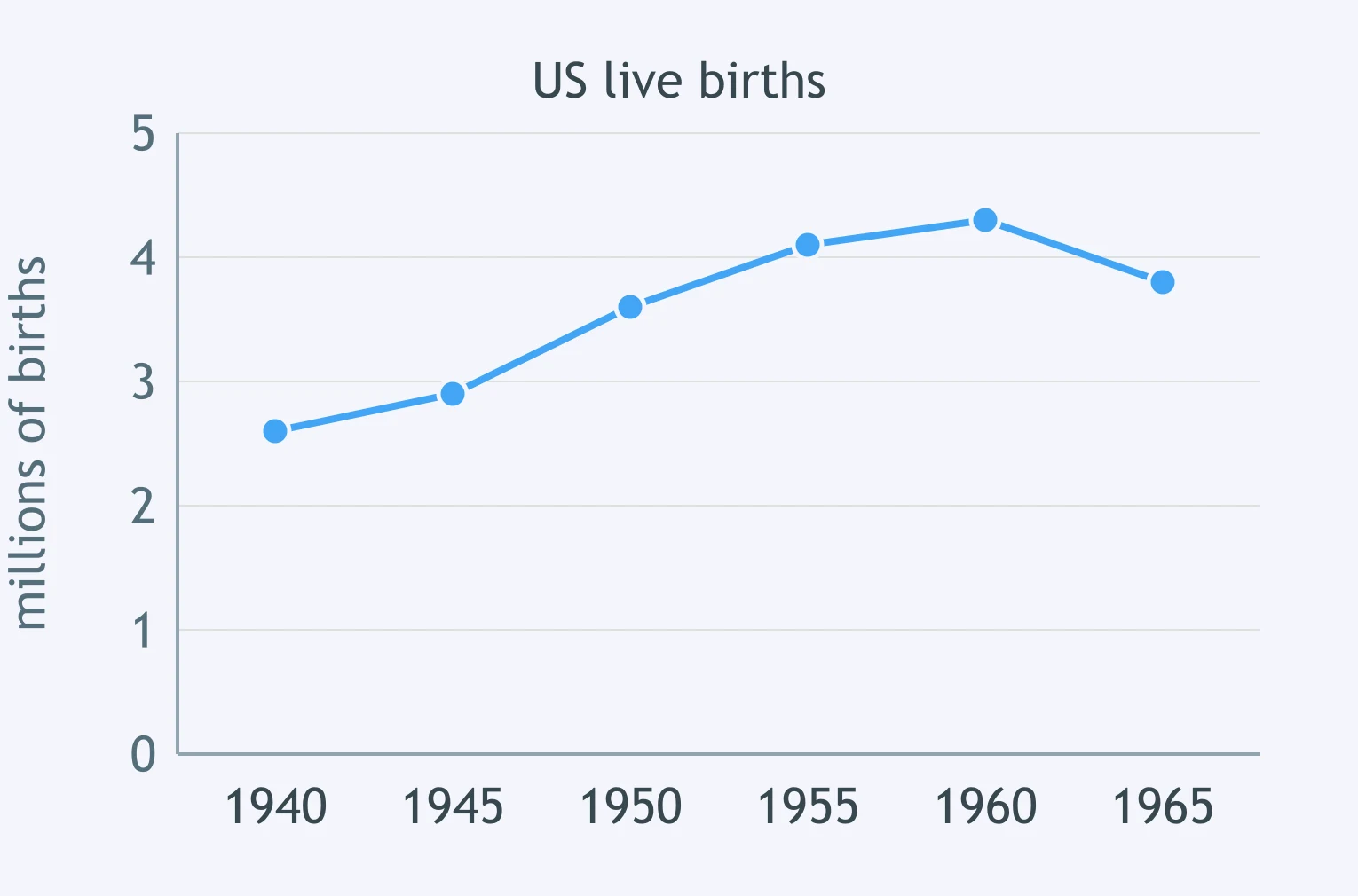
Look at the graph of live births in the United States. In which period did the yearly number of births rise most sharply?
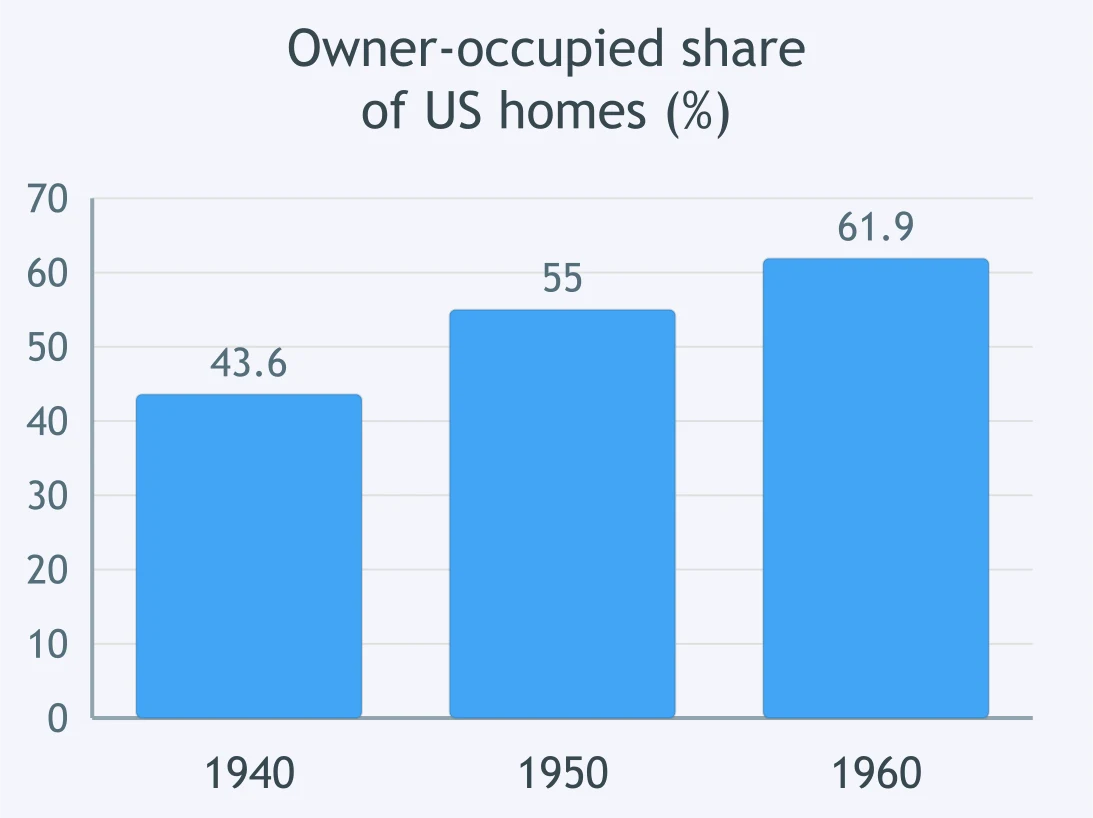
The bar graph gives the share of American homes lived in by their owners at three censuses. In which decade did that share rise more?
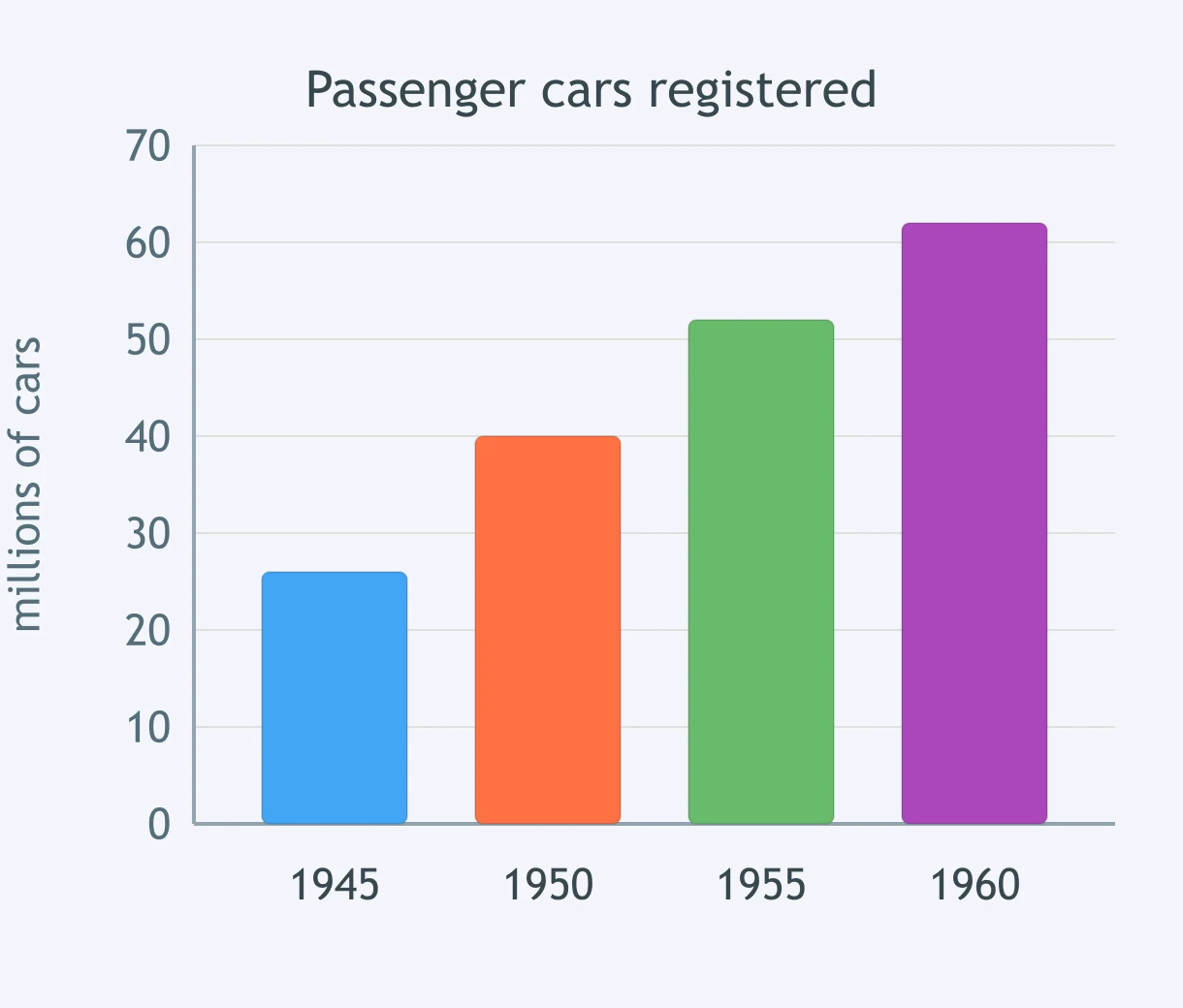
Use the bar graph of passenger cars registered in the United States. About how many more were registered in 1960 than in 1945?
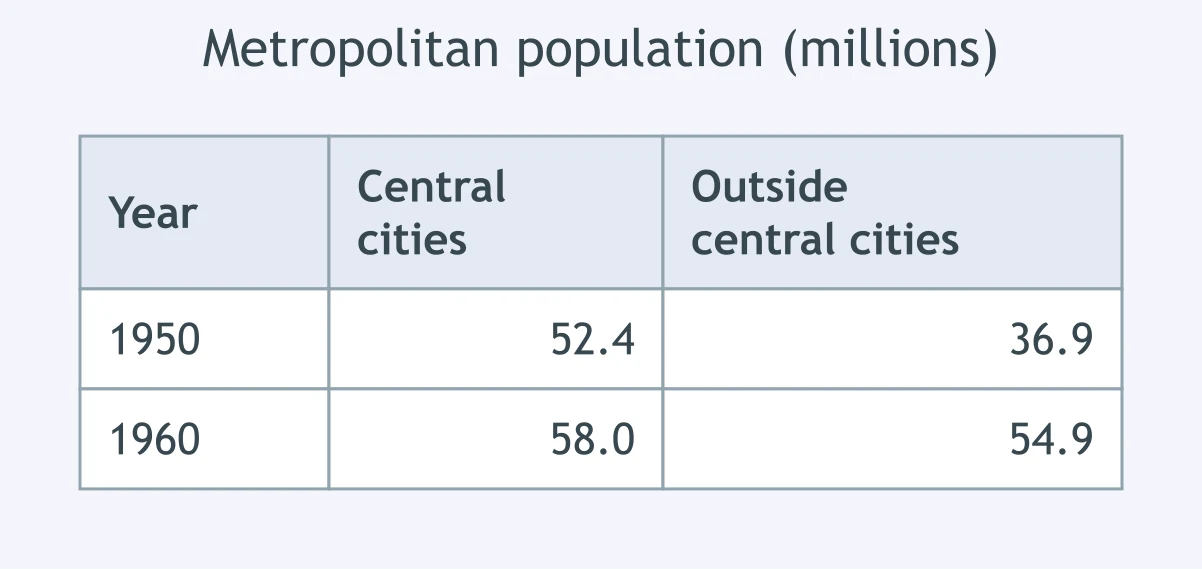
The table gives the population of United States metropolitan areas, split between the central cities and the ring outside them. About how many people did the ring outside the central cities gain between 1950 and 1960?
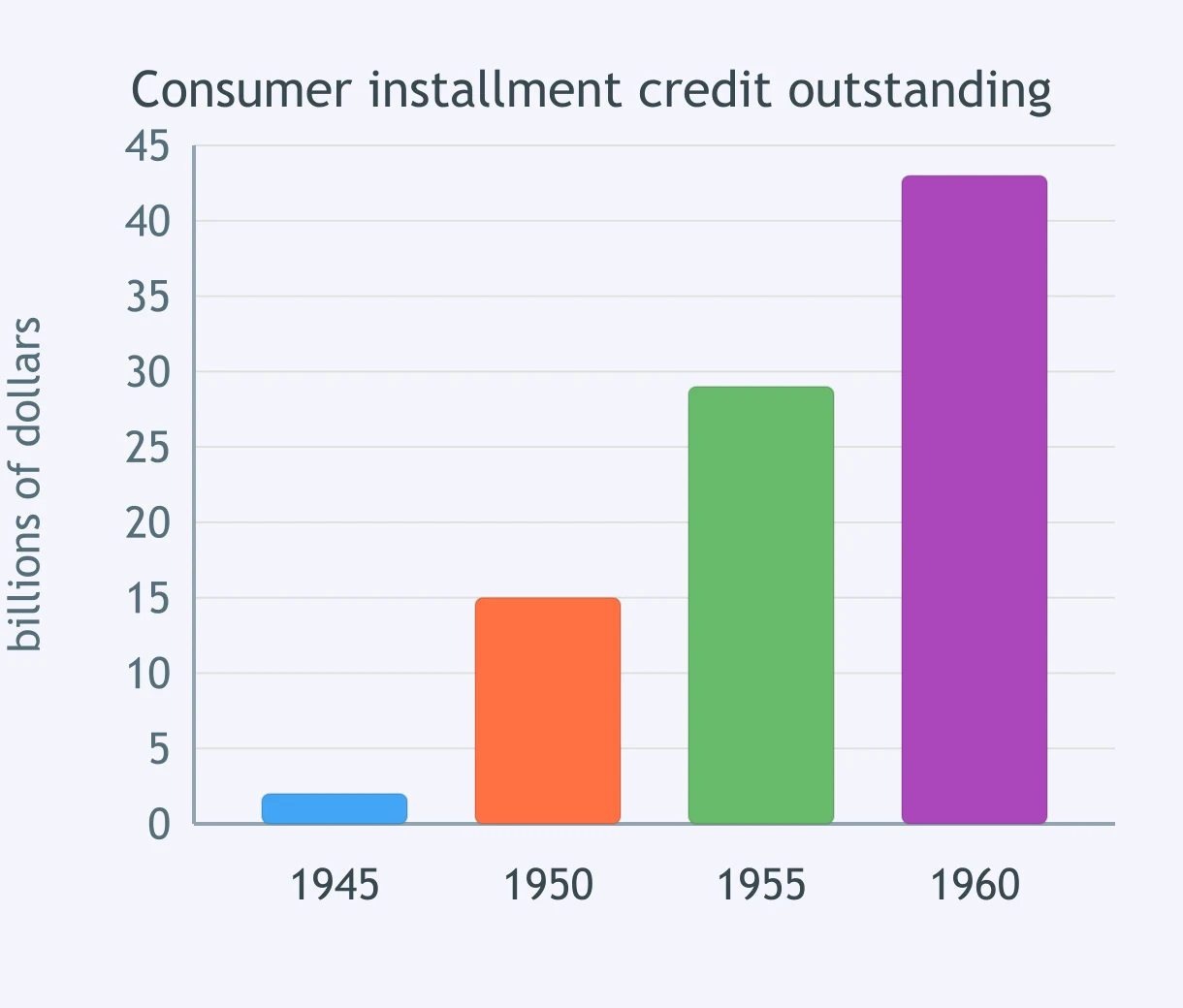
Use the bar graph of consumer installment credit owed by American households. Roughly how much larger was the amount owed in 1960 than in 1950?
Federal appraisal maps graded city neighborhoods by lending risk and colored the lowest grade red; lenders then refused mortgages inside those lines, which enclosed most of the districts where Black families lived. What was the practice called?
Deeds in many subdivisions carried a clause barring the owner from ever selling to a buyer who was not white. In Shelley v. Kraemer (1948) the Supreme Court ruled on those clauses. What did it hold?
In 1953 the Levitt company's Long Island development held about 70,000 people and not one Black resident. A clause in its standard lease and deed produced that result. What did the clause say?
Agents told white owners on a block that Black families were moving in and prices would collapse, bought the houses cheap in the panic that followed, and resold them to Black buyers at inflated prices. What was that called?
Under the federal program begun in 1949, cities used federal money to buy and demolish districts they labeled blighted and sold the cleared land to private developers. What did that cost the people who had lived there?
Place these three developments in the order they happened. 1. The law authorizing the interstate highway system 2. The Supreme Court's ruling in Shelley v. Kraemer 3. The act declaring a decent home a national goal and funding slum clearance
Place these three in the order they happened. 1. Congress guarantees home loans and tuition for returning veterans 2. The postwar birth surge begins 3. Congress raises the gasoline tax to build a national road network
Between 1940 and 1960 the share of American families who owned their homes rose steeply. For Black families looking to buy in the new subdivisions, what largely stayed the same across those years?
Crack the passcode before the zombies get in.
Answer, then swat bugs for bonus points.
Race through questions at your own speed.
Same question on every screen. Fastest wins.

Pick a tile, answer, hit bonuses and steals.
The Civil Rights Movement: Brown to the Civil Rights Act
35 questions