Loading
by BlastRoom
Détente, the arms treaties, reform in Moscow and the wall coming down.
#united_states_history
25 questions
One question set, multiple game modes. Tap any game to see it in action. Not sure which to pick?
Answer to place stones and capture territory.
Outrun the snow together.
Earn blasts, then hunt the other team.
Answer to earn energy, then climb.

The class blasts through walls together.
Bid on mystery lots. Most money wins.
Sell tours. Nice, standard, or a total scam.

Answer, restock, and serve the rush.
More correct answers pulls the rope your way.
Answer, then shoot down the alien wave.
Answer, then tap to leap the frozen ridge.
Nixon and Brezhnev signed two arms agreements in Moscow in May 1972. Which one placed a five-year freeze on the number of intercontinental ballistic missile launchers each side could keep?
In February 1972 Richard Nixon became the first sitting American president to visit which communist country, a trip that opened contact after more than twenty years of hostility?
Which arms limitation agreement did Jimmy Carter and Leonid Brezhnev sign in Vienna in June 1979?
Which term names the easing of tensions between the United States and the Soviet Union in the early 1970s, the period of summit meetings, trade deals and arms talks?
Which Soviet leader signed the SALT I agreements with Nixon in 1972 and SALT II with Carter in 1979?
Which 1972 treaty held the United States and the Soviet Union to two antiballistic missile deployment sites each, so neither could build a nationwide shield against the other's missiles?
Soviet troops entered Afghanistan in December 1979. Along with an embargo on grain sales to the Soviet Union, what did Carter do in response?
At Helsinki in 1975, thirty-five nations including the United States and the Soviet Union accepted Europe's postwar borders and, in a separate section, pledged to respect human rights. Why did that pledge matter inside the Soviet bloc?
The 1972 SALT I agreement capped the number of missile launchers each side already had, but said nothing about how many warheads a single missile could carry. What did that leave both sides free to do?
Carter pulled SALT II back from Senate consideration in January 1980 and it was never ratified, yet the United States and the Soviet Union both kept within its limits for years afterward.
At Reykjavik in October 1986, Reagan and Gorbachev came close to agreeing on sweeping cuts to their nuclear arsenals, but the meeting broke up with nothing signed. What issue stopped them?
Speaking at the United Nations in December 1988, Gorbachev announced that the Soviet Union would cut its armed forces by 500,000 and pull tank divisions out of Eastern Europe. What was unusual about the announcement?
Which treaty, signed in Washington in December 1987 by Reagan and Gorbachev, wiped out an entire class of weapons by destroying every American and Soviet ground-launched missile of intermediate range?
In March 1983 Reagan announced research into a system meant to destroy incoming Soviet missiles in flight, a program critics nicknamed 'Star Wars'. What was its official name?
Reagan and Gorbachev met face to face for the first time in November 1985. Where did that first summit take place?
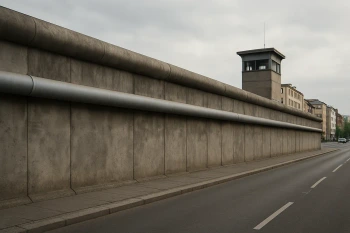
At the Brandenburg Gate in June 1987 Reagan said: 'General Secretary Gorbachev, if you seek peace... come here to this gate. Mr. Gorbachev, tear down this wall!' What did the wall he pointed to divide?
Which two leaders met at a shipboard summit off Malta in December 1989, weeks after the Berlin Wall was opened, and said afterward that the Cold War was ending?
Which treaty signed in Moscow in July 1991 went beyond capping arsenals and required the United States and the Soviet Union to cut their long-range nuclear forces?
Gorbachev's policy of glasnost, or openness, let newspapers, writers and ordinary citizens criticize the government and argue about parts of the Soviet past that had been closed to discussion. What did it do to the stability of the bloc?
Which Russian word names Gorbachev's restructuring of the Soviet economy, which loosened central planning and allowed limited private business?
Poland held partly free parliamentary elections in June 1989. What was the result?
East German officials opened the Berlin Wall in November 1989 and crowds began pulling it apart. What happened to Germany within a year?
The Soviet Union formally went out of existence at the end of December 1991. What took its place on the map?
Put these four events in the order they happened: the Soviet invasion of Afghanistan; the signing of SALT I; the opening of the Berlin Wall; the signing of the INF Treaty.
Communist hardliners seized Gorbachev and tried to take control of the Soviet government in August 1991, but the attempt fell apart in three days. What followed over the next four months?
Crack the passcode before the zombies get in.
Answer, then swat bugs for bonus points.
Race through questions at your own speed.
Same question on every screen. Fastest wins.

Pick a tile, answer, hit bonuses and steals.
Popular Culture of the 1950s
25 questions