Loading
by BlastRoom
Work out what the classic transformation, phage and X-ray experiments showed about the genetic material, and what they did not.
#biology
20 questions
One question set, multiple game modes. Tap any game to see it in action. Not sure which to pick?
Answer to place stones and capture territory.
Outrun the snow together.
Earn blasts, then hunt the other team.
Answer to earn energy, then climb.

The class blasts through walls together.
Bid on mystery lots. Most money wins.
Sell tours. Nice, standard, or a total scam.

Answer, restock, and serve the rush.
More correct answers pulls the rope your way.
Answer, then shoot down the alien wave.
Answer, then tap to leap the frozen ridge.
An extract from heat-killed disease-causing bacteria turned harmless bacteria into disease-causing ones. It still worked after protein-destroying and RNA-destroying enzymes, but not after a DNA-destroying enzyme. What does this show?
Bacteria were infected with viruses whose DNA carried phosphorus-32, then blended and spun; the radioactivity was inside the packed bacteria. With viruses whose coats carried sulfur-35, the radioactivity stayed in the liquid. What does this show?
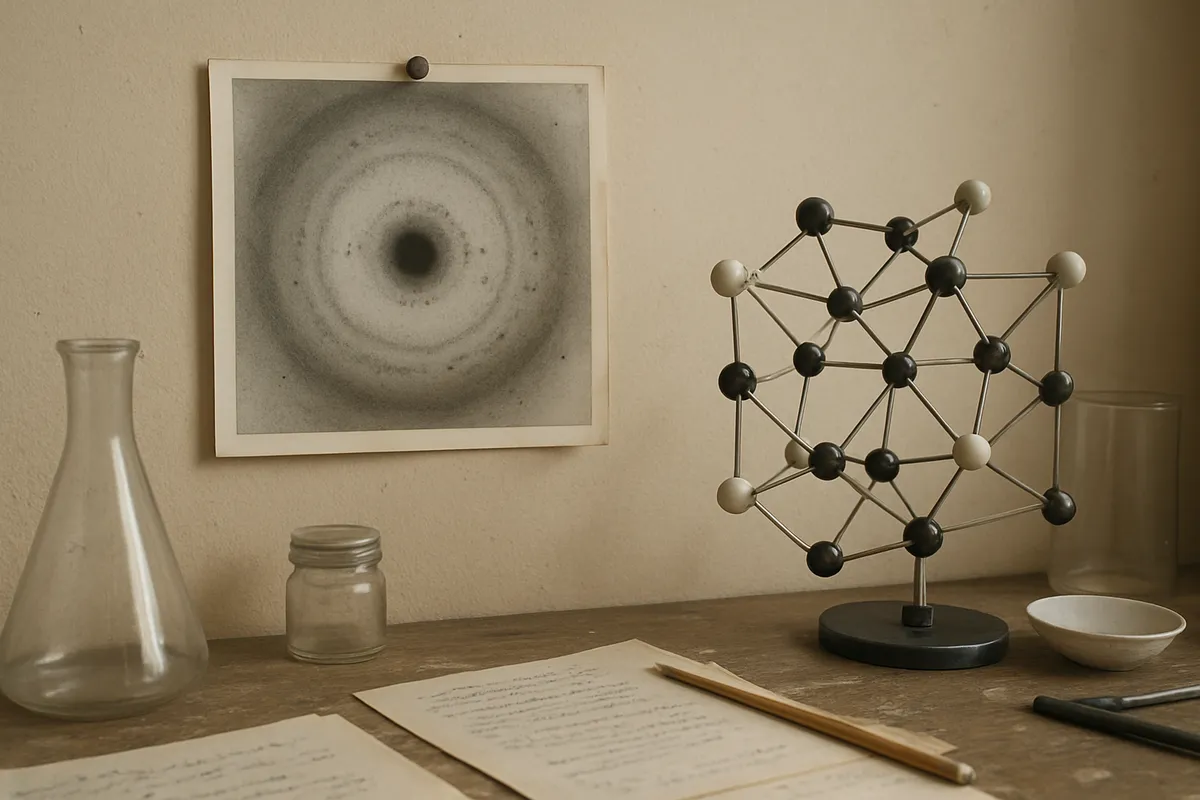
An X-ray photograph of DNA fibers showed a cross of spots with evenly spaced layer lines, giving a repeat of 3.4 nm along the fiber and a width of about 2 nm. What does that pattern show about DNA?
In the 1928 mouse work, living disease-causing bacteria taken from the dead mice were grown on, and their descendants were disease-causing too. What does the behavior of those descendants show?
In DNA from many species, adenine and thymine were present in about equal amounts, and guanine and cytosine in about equal amounts, but the proportion of A+T to G+C differed between species. What does this show?
When infected bacteria burst, the new virus particles carried about a third of the phosphorus-32 from the parent viruses' DNA but under 1% of the sulfur-35 from their coats. What does this show?
X-ray work showed DNA keeps the same width of about 2 nm all along. Adenine and guanine are large double-ring bases; thymine and cytosine are small single-ring bases. What does the constant width show about the rungs?
An X-ray diffraction photograph of a DNA fiber, sharp enough for the molecule's width and the spacing of its repeat to be measured, was taken at King's College London in 1952. Whose laboratory work produced it?
Mice given a mixture of heat-killed disease-causing pneumonia bacteria and living harmless ones died, and living disease-causing bacteria were recovered from them. Who reported this in 1928?
Who purified the transforming substance from heat-killed pneumonia bacteria and tested it, in 1944, with enzymes that destroy protein, RNA and DNA in turn?
Who used a kitchen blender and a centrifuge in 1952 to strip radioactively labeled virus coats off infected bacteria?
In April 1953 a short paper in Nature proposed that DNA is a double helix whose two chains are held together by paired bases. Which pair of workers wrote it?
In the 1952 phage work, one batch of viruses was grown with radioactive sulfur and another with radioactive phosphorus. Why were those two elements chosen?
After the labeled viruses had attached to the bacteria, the mixture was whirled in a kitchen blender. What was the blending for?
In the 1944 purification, the extract was treated separately with an enzyme that destroys protein, one that destroys RNA and one that destroys DNA. Why treat it with all three?
In the 1928 mouse work, some mice were given only heat-killed disease-causing bacteria and others only living harmless bacteria, and both groups lived. Why were those two groups needed?
The 1928 mouse experiment showed that something from heat-killed bacteria changed living harmless bacteria permanently. What did it fail to establish?
The 1953 double-helix model was proposed by two workers who ran no experiments on DNA themselves. What was their model built from?
Some biologists doubted the 1944 conclusion because the purified transforming extract was not quite 100% DNA. Why did that matter?
The 1953 double-helix model suggested how DNA could be copied, with each chain acting as a pattern for a new partner chain. What did the model itself not do?
Crack the passcode before the zombies get in.
Answer, then swat bugs for bonus points.
Race through questions at your own speed.
Same question on every screen. Fastest wins.

Pick a tile, answer, hit bonuses and steals.
Translation
20 questions