Loading
by BlastRoom
Identify and compare solar system objects by their properties, locations, and movements.
#us_grade_7_science
40 questions
One question set, multiple game modes. Tap any game to see it in action. Not sure which to pick?
Answer to place stones and capture territory.
Outrun the snow together.
Earn blasts, then hunt the other team.
Answer to earn energy, then climb.

The class blasts through walls together.
Bid on mystery lots. Most money wins.
Sell tours. Nice, standard, or a total scam.

Answer, restock, and serve the rush.
More correct answers pulls the rope your way.
Answer, then shoot down the alien wave.
Answer, then tap to leap the frozen ridge.
A huge object at the center of the solar system gives off light and heat, and planets orbit it. What solar system object is described?
An object orbits a planet, is much smaller than that planet, and reflects sunlight instead of making its own light. What kind of object is it?
A large, nearly round body travels around the Sun and has cleared most smaller objects from its orbital path. What type of object is it?
An icy object from the outer solar system grows a glowing coma and tail when it gets close to the Sun. What is it?

A rocky object hundreds of kilometers wide orbits the Sun in the main belt between Mars and Jupiter. What is it?
A planet is almost Earth-sized, has a thick carbon dioxide atmosphere, and has the hottest surface of any planet. What planet is it?
A planet is the largest in the solar system, is mostly hydrogen and helium, and has the Great Red Spot storm. What planet is it?
A gas giant is sixth from the Sun and is famous for broad, bright rings made mostly of ice particles. What planet is it?
A blue-green ice giant has methane in its atmosphere and orbits beyond Saturn. Its axis is tilted so far that it spins almost sideways. What planet is it?
A planet has liquid water on its surface, an oxygen-rich atmosphere, and conditions known to support life. What planet is it?
A tiny rocky planet has almost no atmosphere and follows the closest orbit to the Sun. What planet is it?
A gray, cratered body goes through a full cycle of phases in our night sky about once a month as sunlight lights different parts of the side we see. What is it?
Mercury orbits closest to the Sun, while Neptune orbits farthest among the planets. What comparison is supported by their locations?
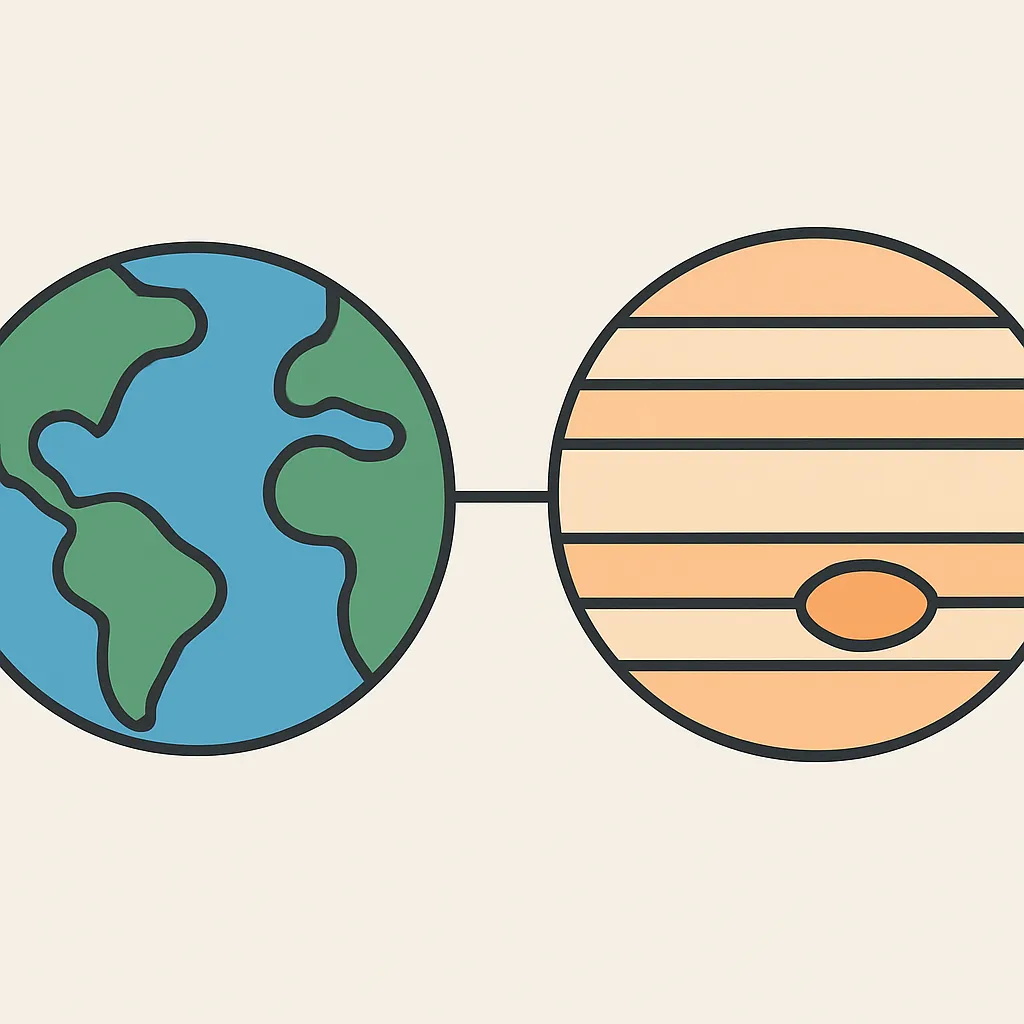
This picture shows Earth and Jupiter, not to scale. Which statement correctly compares the two planets?
Mars and Venus both have atmospheres made mostly of carbon dioxide. Which statement correctly compares the two planets?
A model sorts Mercury, Venus, Earth, and Mars into one group and Jupiter, Saturn, Uranus, and Neptune into another. What comparison explains this grouping?
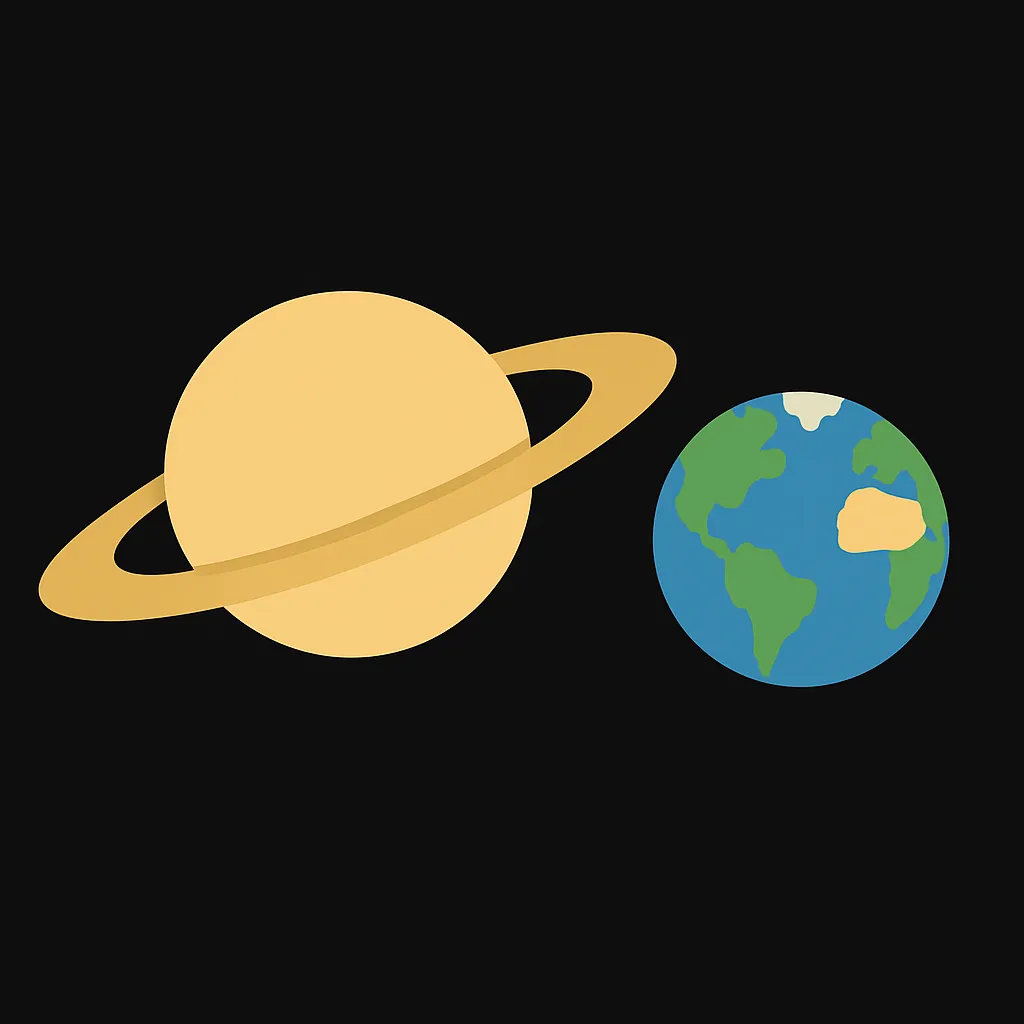
A student compares Saturn with Earth. What comparison is accurate?
A composition model separates Jupiter and Saturn from Uranus and Neptune. What comparison about the outer planets is supported?
Mars is smaller than Earth, farther from the Sun, and has a thinner atmosphere. What comparison is supported by these observations?
Venus orbits farther from the Sun than Mercury, but Venus has a much hotter surface. What best explains this?
A spacecraft passes Mars, crosses the asteroid belt, and then reaches Jupiter. What comparison of those planets is correct?
Uranus orbits the Sun at about 19 times Earth's distance, and Neptune orbits at about 30 times Earth's distance. Which comparison of their orbits is correct?
A pebble-sized rock travels through space before it enters Earth's atmosphere. What is it called at that stage?
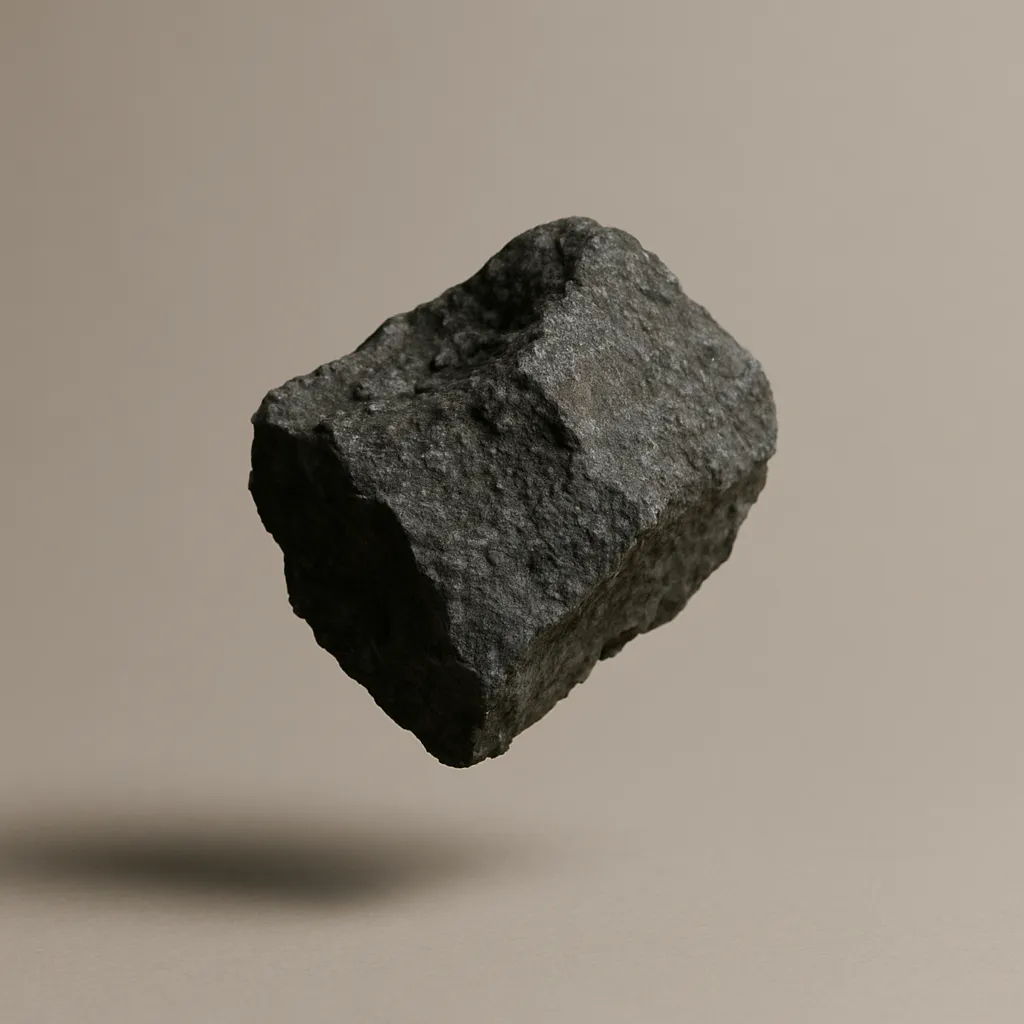
A small rocky object enters Earth's atmosphere and makes a bright streak across the night sky. What is it called while streaking?
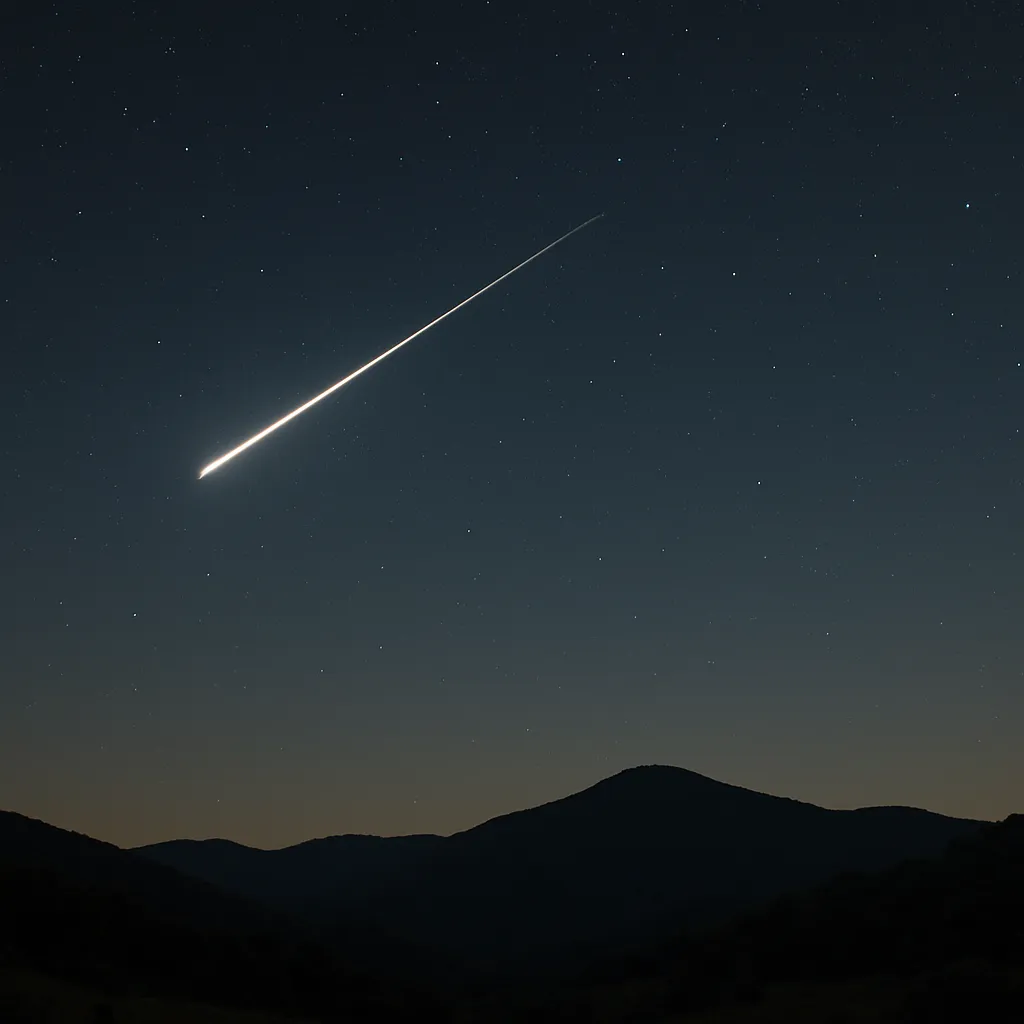
A space rock survives its fall through Earth's atmosphere and lands on the ground. What is the rock called after landing?
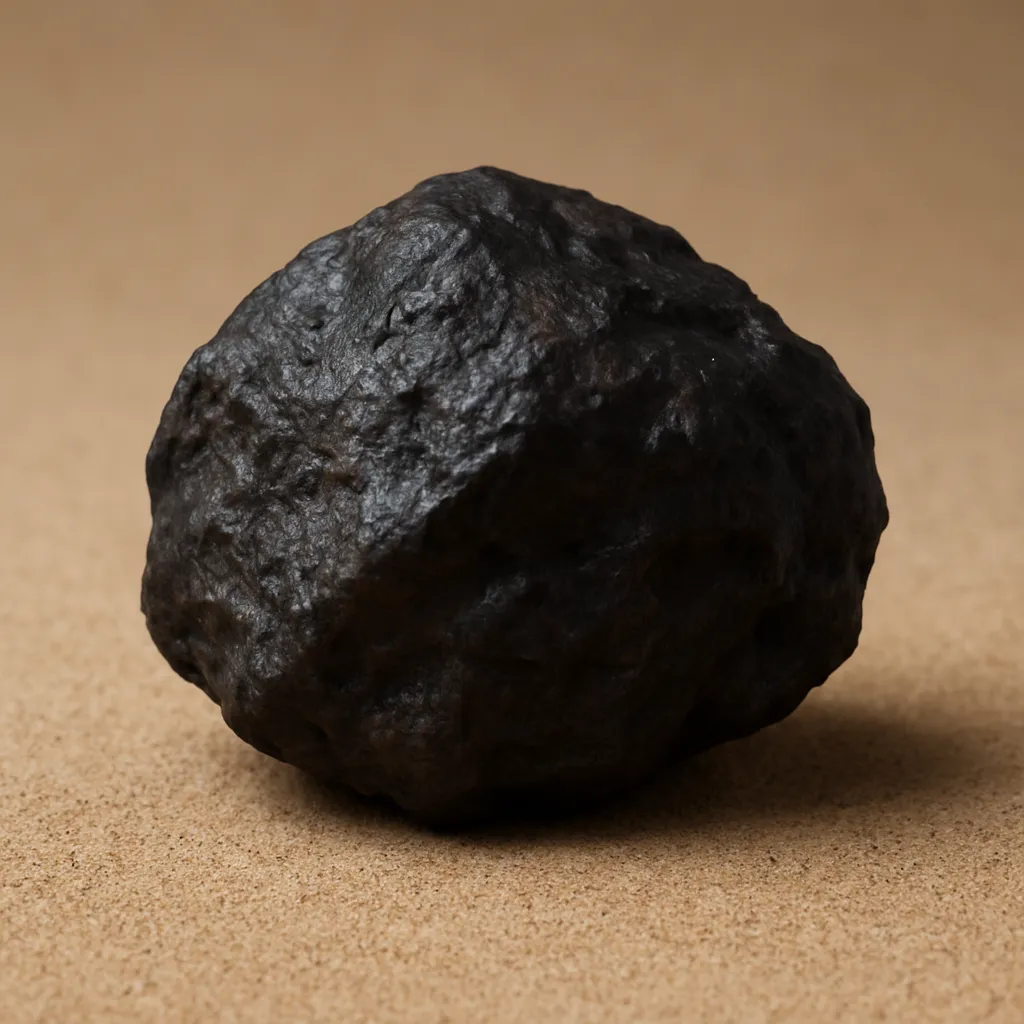
Asteroids and comets are both small bodies that orbit the Sun. What is the main difference between them?
A comet grows a long tail only when it comes close to the Sun. What causes the tail to form?

During a meteor shower, tiny particles from a comet enter Earth's atmosphere and flash as they burn. What are the flashes called?
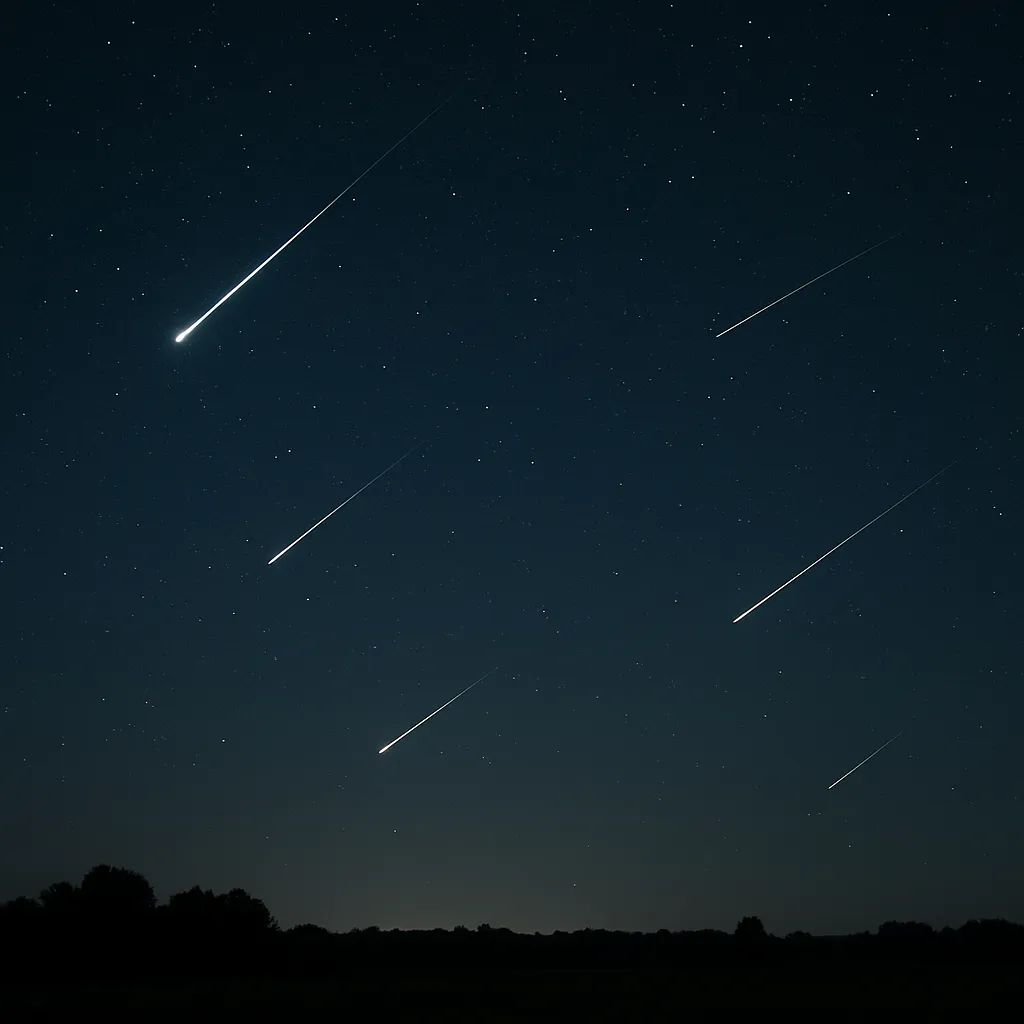
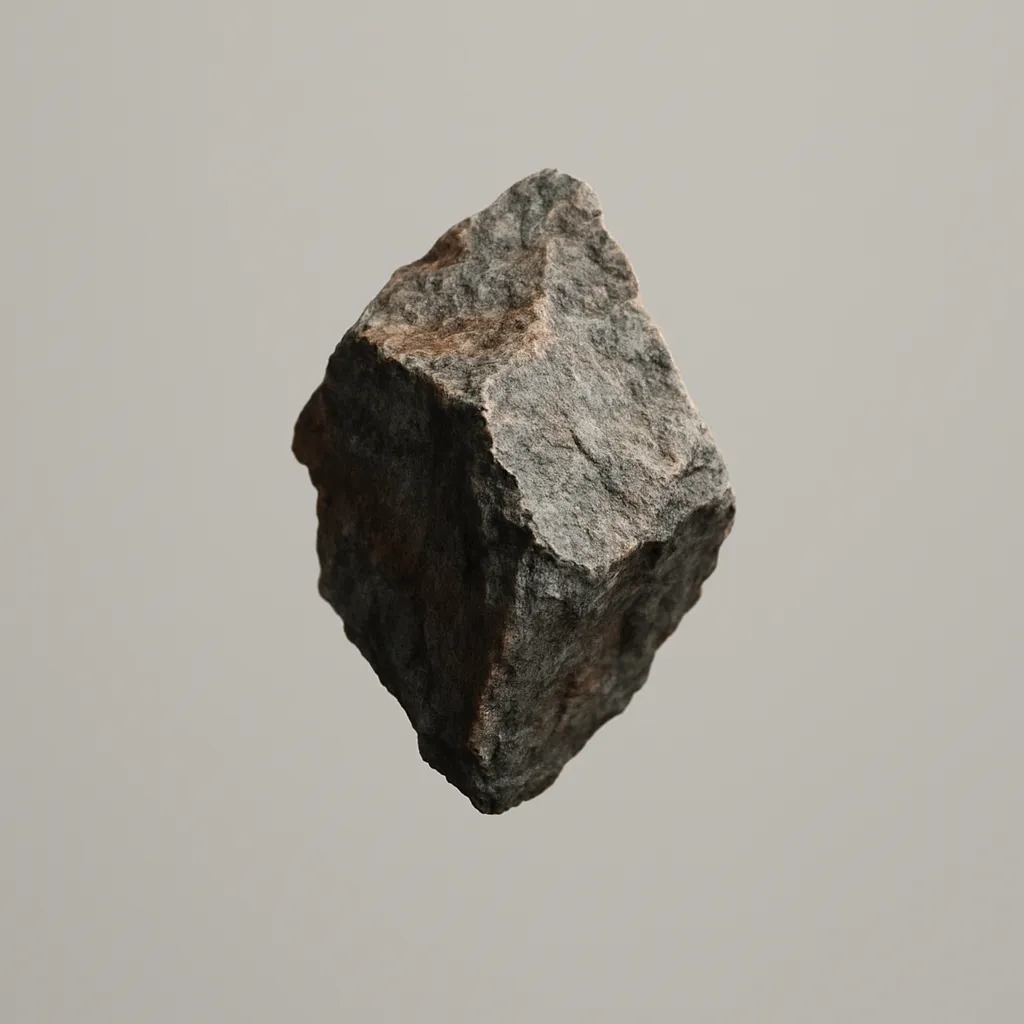
A scientist finds a black, crusty rock in a desert and tests show it came from space. What name fits the object on the ground?
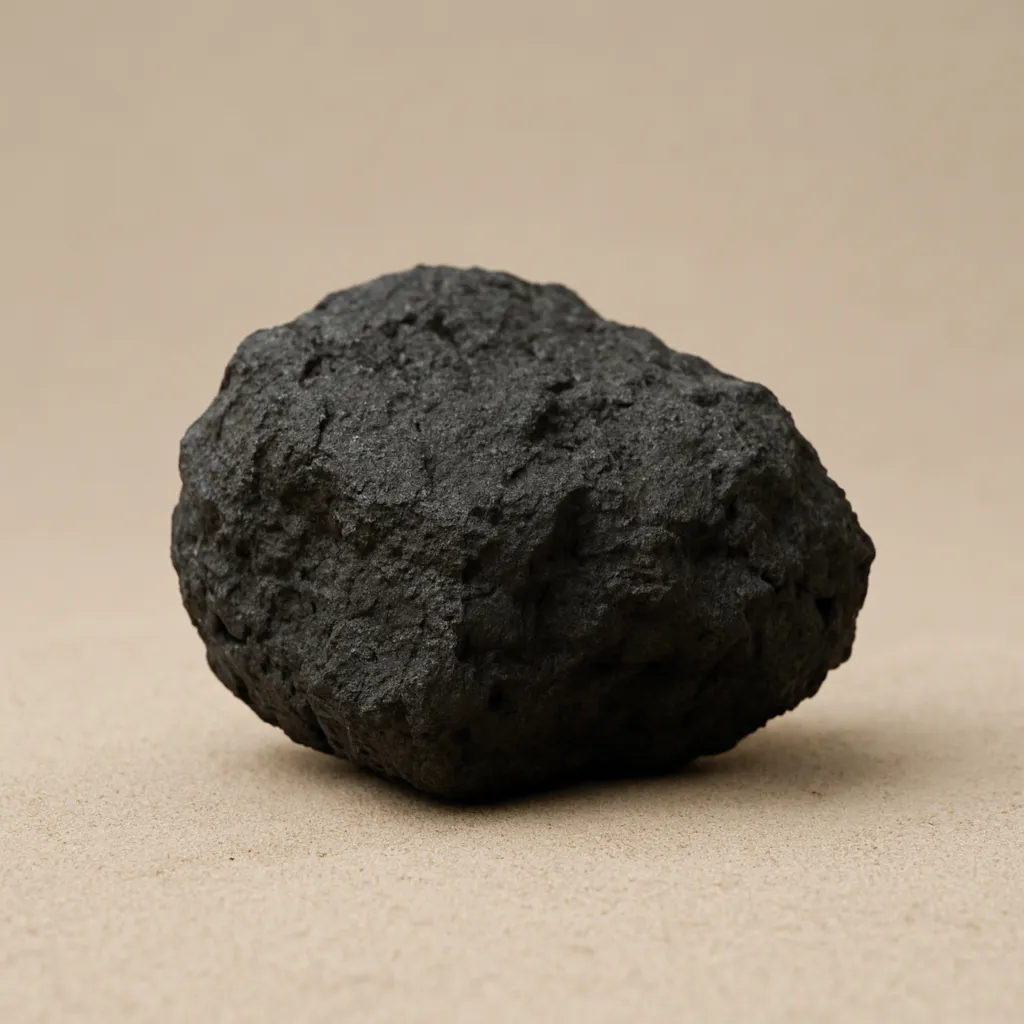
A tiny fragment chipped from an asteroid is moving through space toward Earth but has not reached the atmosphere. What is it?
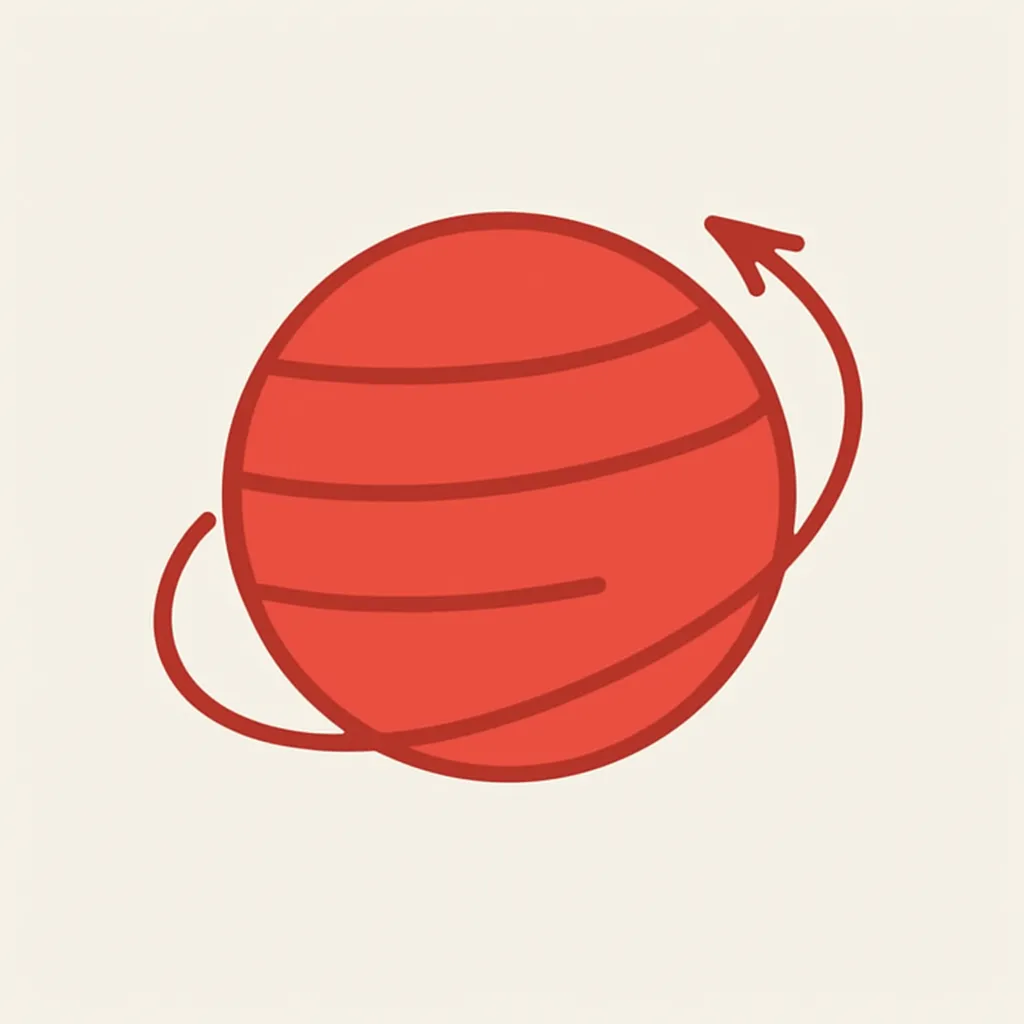
Earth completes one spin on its axis in about 24 hours, producing day and night. What movement is described?

Earth completes one trip around the Sun in about 365 days. What movement is described?
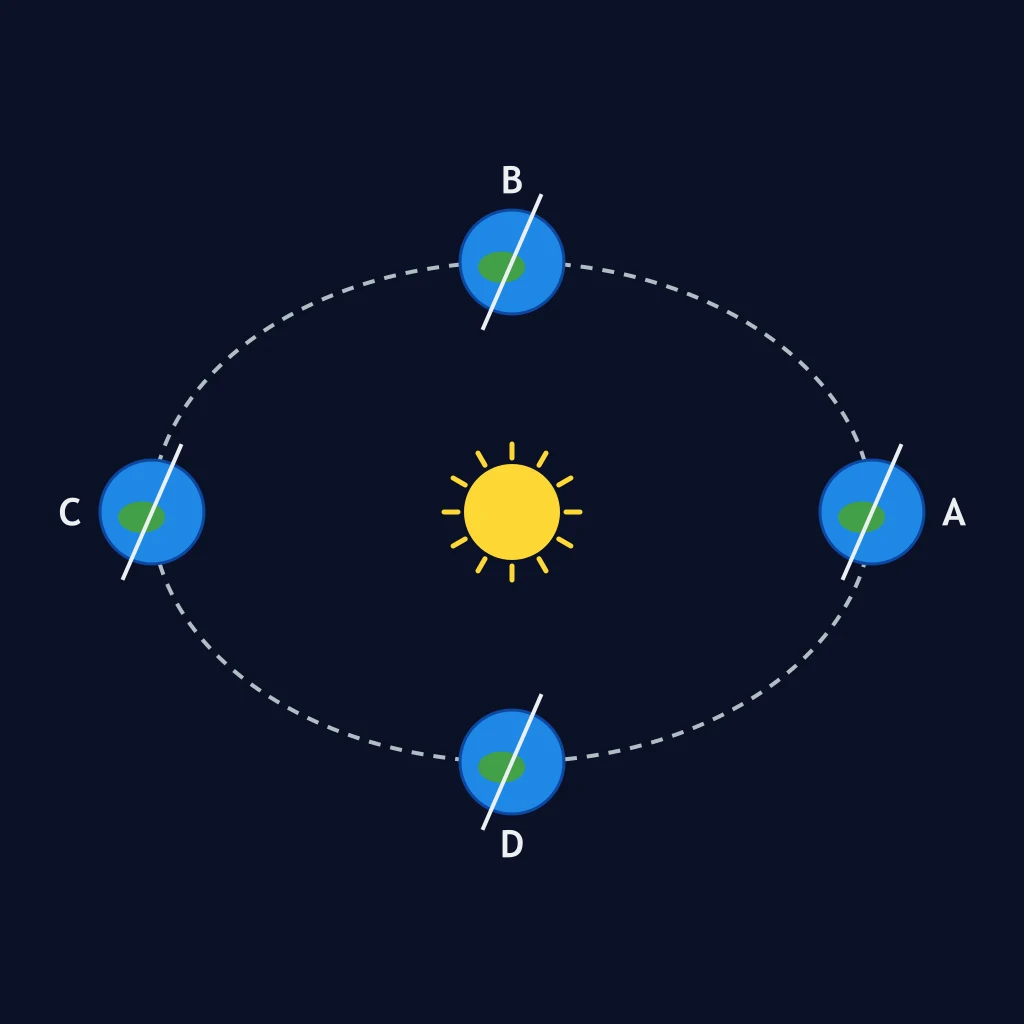
The Moon's position among the stars shifts a little each night and returns to the same place about once a month. What motion causes this?

A planet keeps moving forward while the Sun's gravity pulls it inward, so it follows a curved path instead of flying away. What path is produced?

Mars turns once on its axis in about 24.6 hours, making a Martian day. What type of motion is this?
A comet travels around the Sun in a long oval path, taking many years to return. What motion is described?

In a classroom model of the solar system, which planet should be placed in the orbit just outside Earth's orbit?
A model shows a broad band of rocky bodies between the orbits of Mars and Jupiter. What solar system region is being modeled?

In a model, a small gray sphere stands for the Moon circling Earth. What keeps the Moon moving in a curved path around Earth?

A model shows an icy comet whose long oval orbit starts in a band of icy bodies just beyond Neptune's orbit. What is that band called?

Crack the passcode before the zombies get in.
Answer, then swat bugs for bonus points.
Race through questions at your own speed.
Same question on every screen. Fastest wins.

Pick a tile, answer, hit bonuses and steals.
Gravity, Orbits and Why Earth Supports Life
20 questions