Loading
by BlastRoom
How Invasive Species Spread for high school Environmental Science, on-level and AP. Covers AP Environmental Science Units 2 and 9: Biodiversity and Global Change.
#environmental_science
30 questions
One question set, multiple game modes. Tap any game to see it in action. Not sure which to pick?
Answer to place stones and capture territory.
Outrun the snow together.
Earn blasts, then hunt the other team.
Answer to earn energy, then climb.

The class blasts through walls together.
Bid on mystery lots. Most money wins.
Sell tours. Nice, standard, or a total scam.

Answer, restock, and serve the rush.
More correct answers pulls the rope your way.
Answer, then shoot down the alien wave.
Answer, then tap to leap the frozen ridge.
A grass was brought from another continent, spreads through a prairie, and displaces native plants. How should the grass be classified in this prairie?
A nonnative tree was planted in a city arboretum and has remained there for 40 years without spreading or causing documented harm. What is its status there?
A shrub native to a region becomes common after wildfire but has not been moved there by people. Which term best describes the shrub in that region?
A nonnative flowering plant is imported for gardens, reproduces only in those gardens, and has no documented harm. Why is it classified as introduced but not invasive?
Seeds from a nearby native forest blow into a restored field and establish there. Why are these plants not introduced species?
A pet fish released into a pond establishes a population, spreads to connected streams, and reduces native fish numbers. Which label fits it?
A crop from another continent is grown each year in fenced fields but has not escaped or established wild populations. What is the most accurate classification outside its native range?
An ornamental vine planted near a woodland escapes gardens, spreads through the forest, and smothers native shrubs. What evidence makes it invasive rather than merely introduced?
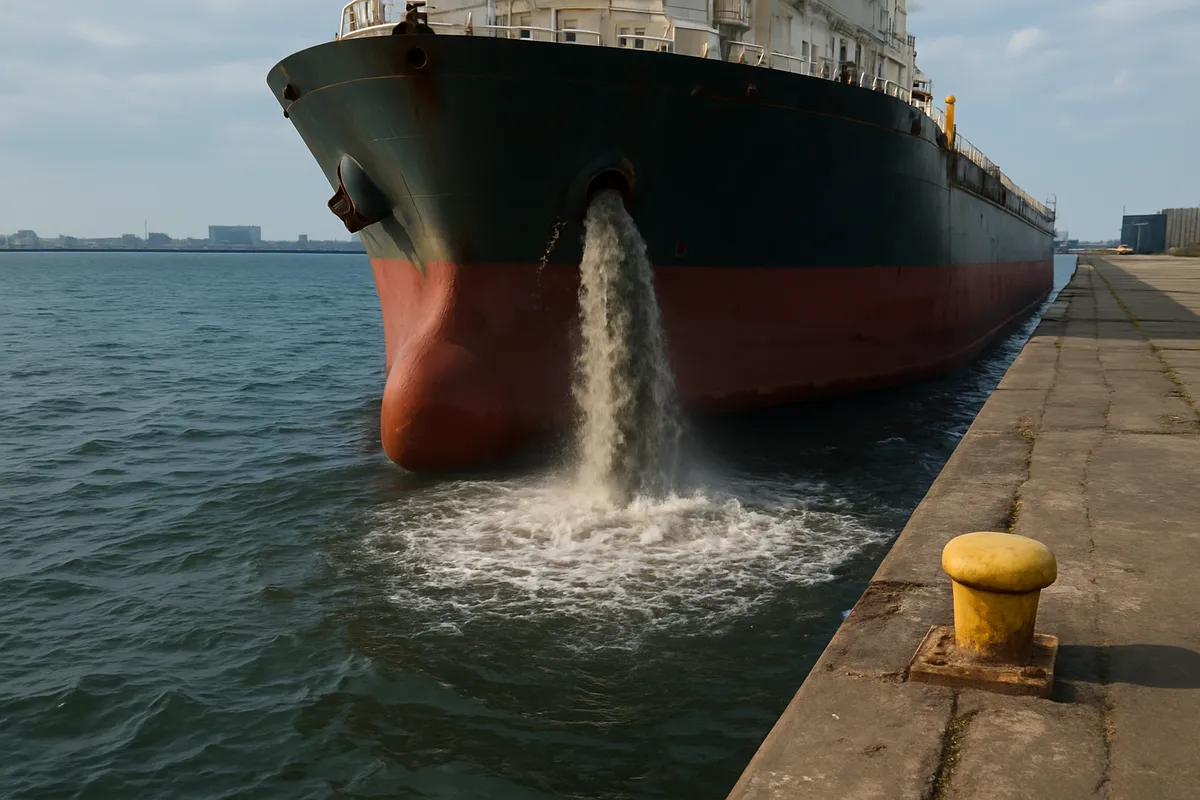
Organisms are taken up with water in one port and released with that water in a distant port. What pathway is described?
Small aquatic organisms attached to a cargo ship's submerged exterior arrive in a new harbor. Which pathway moved them?
A person cleans out a home fish tank and dumps the unwanted plants into a local stream, where they establish and spread. Which introduction pathway occurred?
A plant grown for landscaping produces seeds that move beyond property boundaries and establish in a nearby preserve. Which pathway is responsible?
After a hiking event, a new weed appears along trails used by visitors from an infested area. Seeds were found in boot treads. What pathway best explains its arrival?
At the end of a fishing trip, anglers dump their leftover minnows into a lake, and the minnow species later establishes a breeding population. Which pathway introduced it?
Fish raised in coastal net pens get out through storm-damaged netting and establish in nearby waters. What pathway is this?
A government agency releases a nonnative insect specifically to reduce a damaging invasive weed. Which pathway introduced the insect?
Which combination of traits most increases an introduced animal's chance of becoming invasive in a new ecosystem?
An insect grows slowly in its native range, where many wasps parasitize it. After it is introduced to a new region with no such wasps, its population grows rapidly. Which condition best explains this?
A nonnative plant survives drought, flooding, shade, and full sun. Which trait does this show?
A plant produces lightweight seeds that travel long distances on wind and colonize disturbed roadsides. Which trait most directly aids its spread?
An introduced rodent matures quickly and produces several large litters each year. What invasion advantage do these life-history traits provide?
A nonnative aquatic plant can regrow from small fragments carried by watercraft. Why does this trait complicate management?
An introduced insect feeds on the single crop planted across thousands of hectares of monoculture. What feature of the landscape most helps its population expand?
A newly introduced mussel survives in both fresh and slightly salty water and tolerates a wide temperature range. What does this flexibility allow?
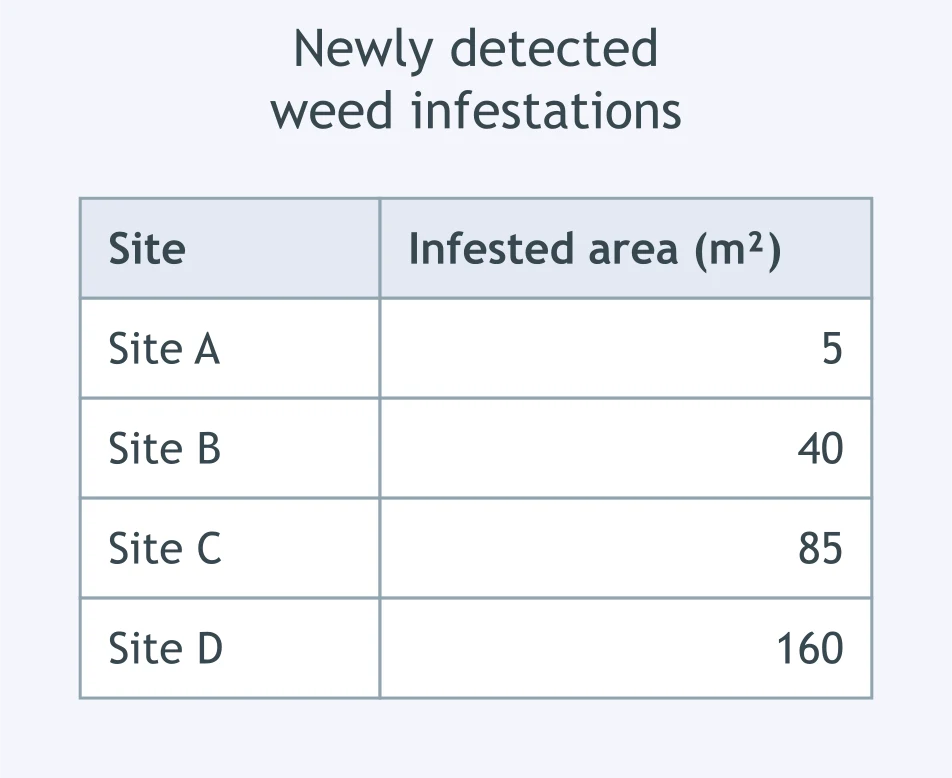
Managers surveyed four newly detected weed infestations. To attempt the quickest initial eradication, they will visit the smallest mapped area first. Which site should they visit?
Before moving a boat from an infested lake to an uninfested lake, which action best reduces transport of aquatic invaders?
Managers consider releasing a predator from an invader's home range to control the invader. What risk must they evaluate before release?
A few invasive shrubs are found in an isolated plot before they produce seeds. Which direct control method is most appropriate for removing these plants?
An invasive weed covers a small roadside patch, and managers apply an approved herbicide only to the invader while avoiding nearby native plants. What method are they using?
A fence is installed around an invaded wetland to keep an invasive animal from reaching an adjacent marsh. What management goal does the fence serve?
Crack the passcode before the zombies get in.
Answer, then swat bugs for bonus points.
Race through questions at your own speed.
Same question on every screen. Fastest wins.

Pick a tile, answer, hit bonuses and steals.
Land Use and Public Lands
25 questions