Loading
by BlastRoom
Relate potential difference, current, and resistance for a single circuit element.
#physics
40 questions
One question set, multiple game modes. Tap any game to see it in action. Not sure which to pick?
Answer to place stones and capture territory.
Outrun the snow together.
Earn blasts, then hunt the other team.
Answer to earn energy, then climb.

The class blasts through walls together.
Bid on mystery lots. Most money wins.
Sell tours. Nice, standard, or a total scam.

Answer, restock, and serve the rush.
More correct answers pulls the rope your way.
Answer, then shoot down the alien wave.
Answer, then tap to leap the frozen ridge.
A 24 Ω resistor is connected across a 12 V supply. What is the current in the resistor?
A current of 0.30 A flows through a 40 Ω resistor. What potential difference is across the resistor?
A resistor has 9.0 V across it and a current of 0.60 A through it. What is its resistance?
A 150 Ω resistor is connected across a 6.0 V supply. What current flows through it?
A current of 2.0 A passes through an 8.0 Ω resistor. What is the potential difference across it?
A circuit element has 18 V across it when the current through it is 3.0 A. What is its resistance?
A 200 Ω resistor is connected to a 10 V supply. What current flows through the resistor?
A current of 25 mA flows through a 120 Ω resistor. What potential difference is across it?
A component has 2.4 V across it and carries a current of 0.20 A. What is its resistance?
A resistor carries 0.080 A of current and has a resistance of 75 Ω. What potential difference is across it?
A 2.5 Ω resistor is connected across a 5.0 V supply. What is the current through the resistor?
A single resistor has 120 V across it and carries a current of 0.50 A. What is its resistance?
A 1500 Ω resistor carries a current of 4.0 mA. What potential difference is across it?
A circuit element has 24 V across it and a current of 75 mA through it. What is its resistance?
A 3.0 Ω resistor is connected across a 1.5 V cell. What current flows through it?
A resistor carries 0.25 A when 7.5 V is across it. What is the resistance of the resistor?
Use the circuit figure. The cell label gives the potential difference across the single resistor, and the ammeter gives the current. What is R?
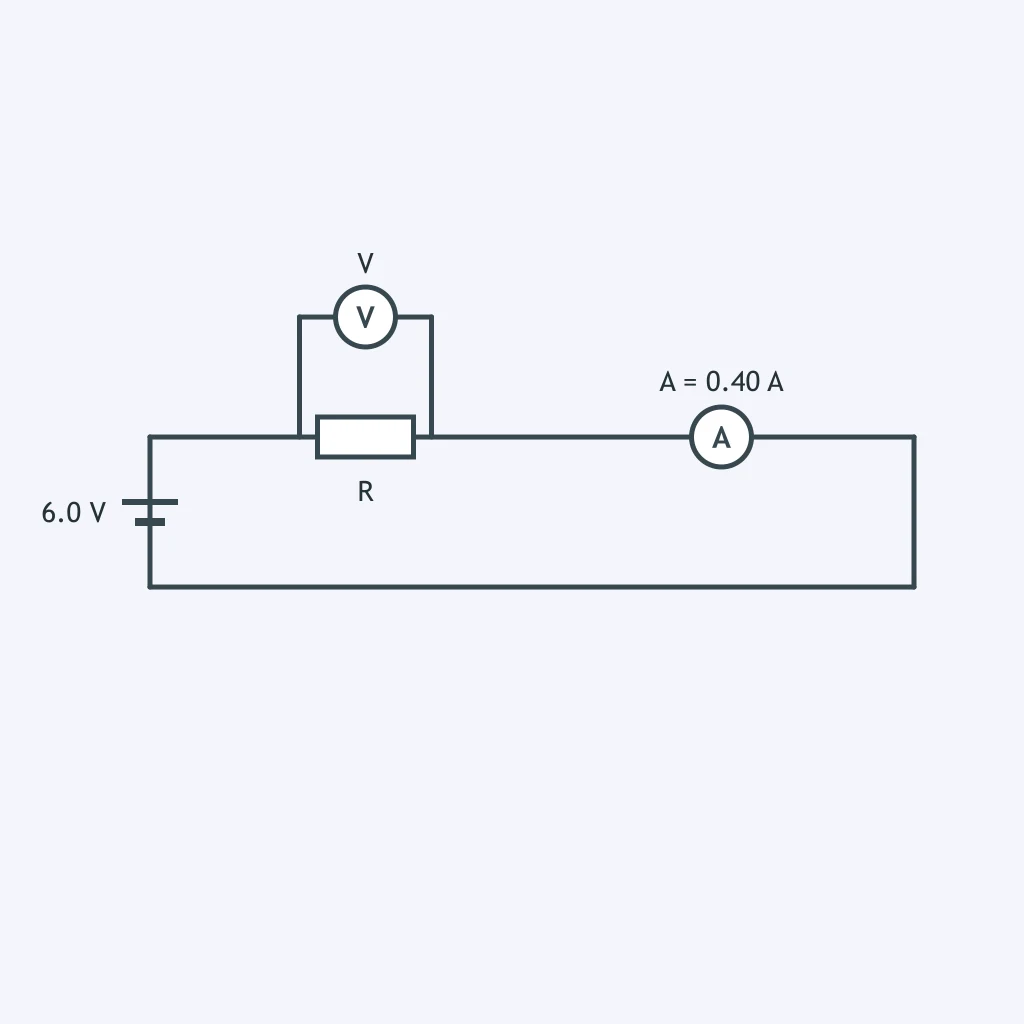
Read the cell label and ammeter in the single-resistor circuit. What is the resistance of R?
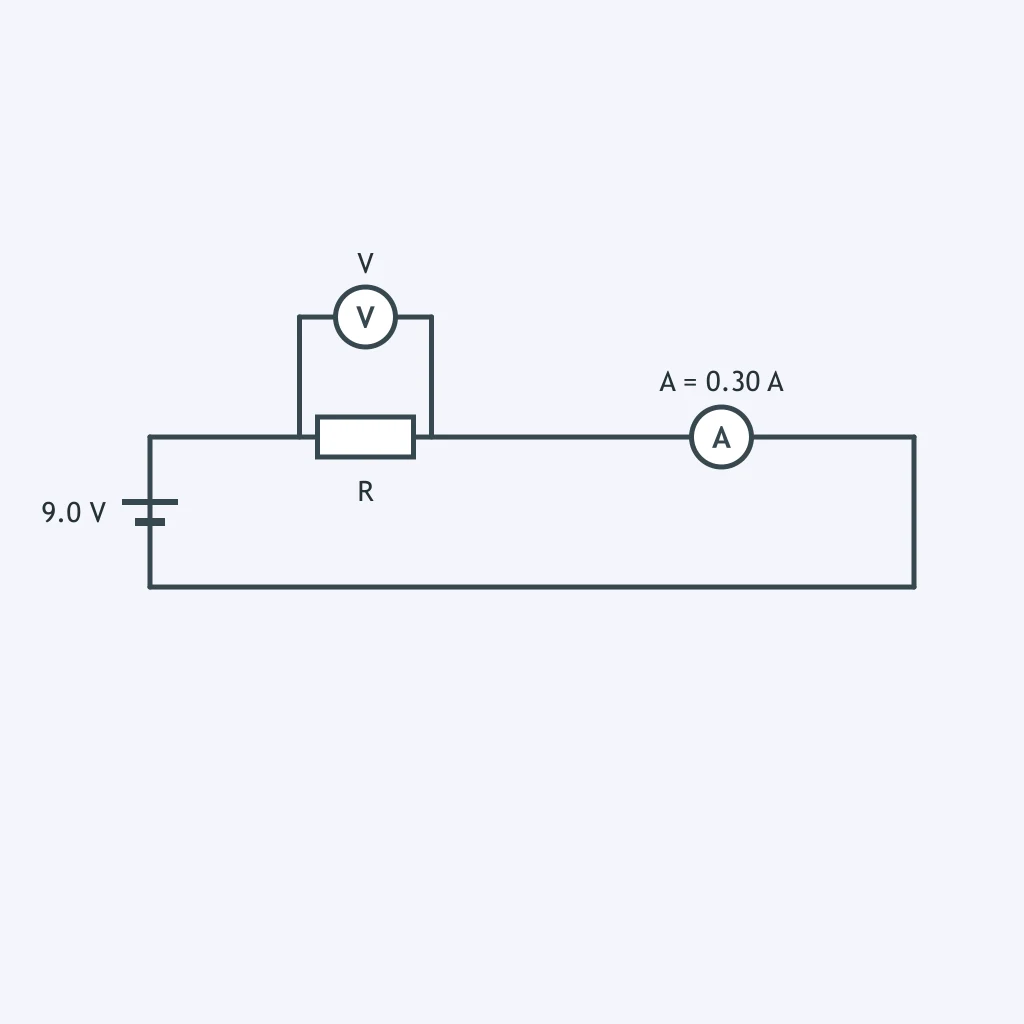
The figure shows one resistor in a circuit. From the cell label and ammeter reading, what is R?
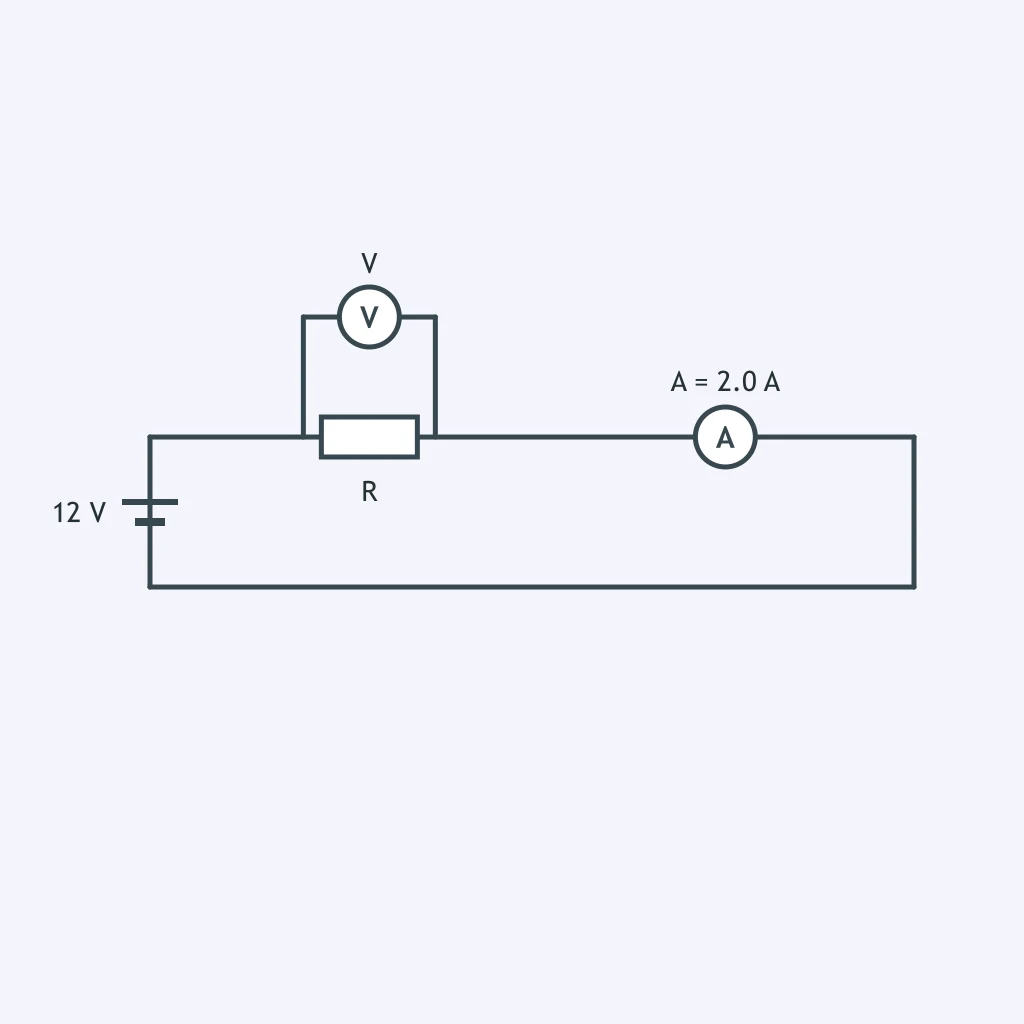
In the figure, the resistor label and ammeter reading are given for one circuit element. What potential difference must the cell supply?
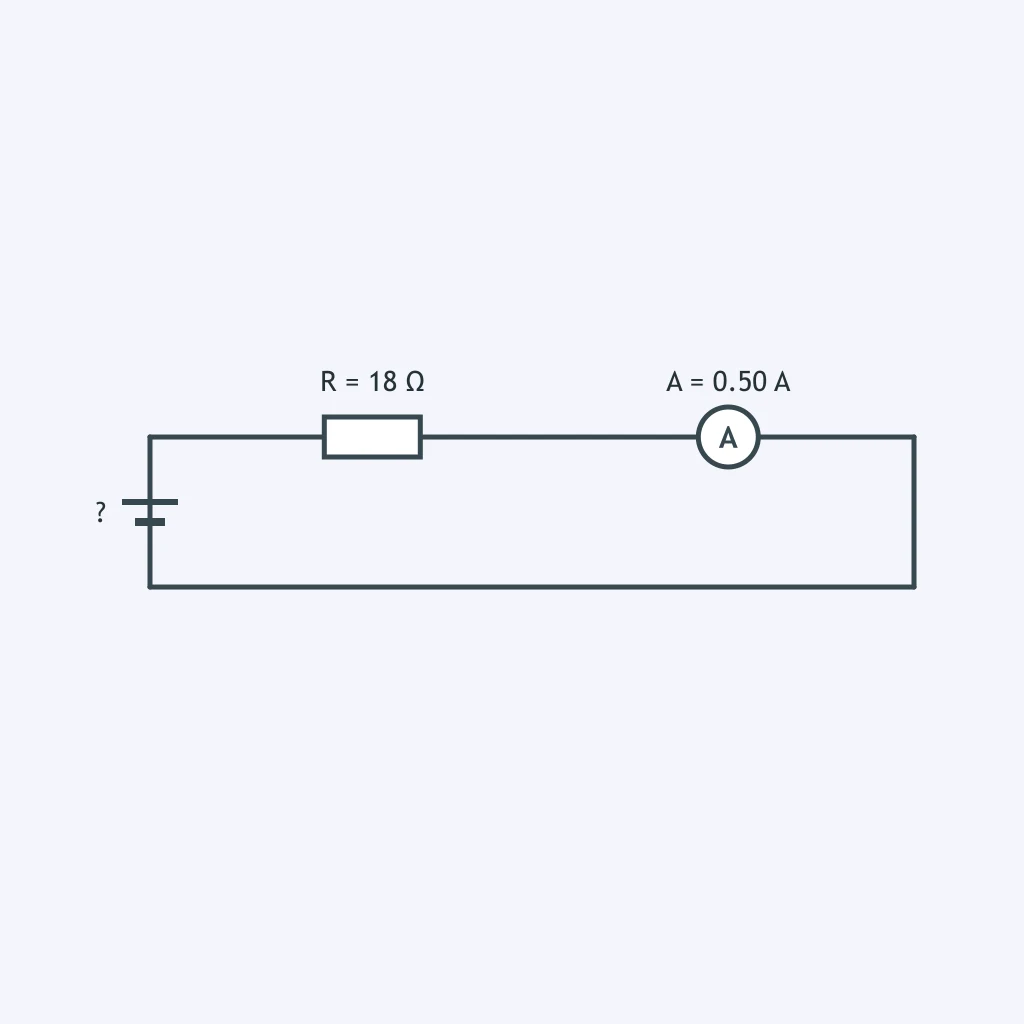
Use the circuit figure. The cell label gives the potential difference across R, and R is labeled. What is the ammeter current?
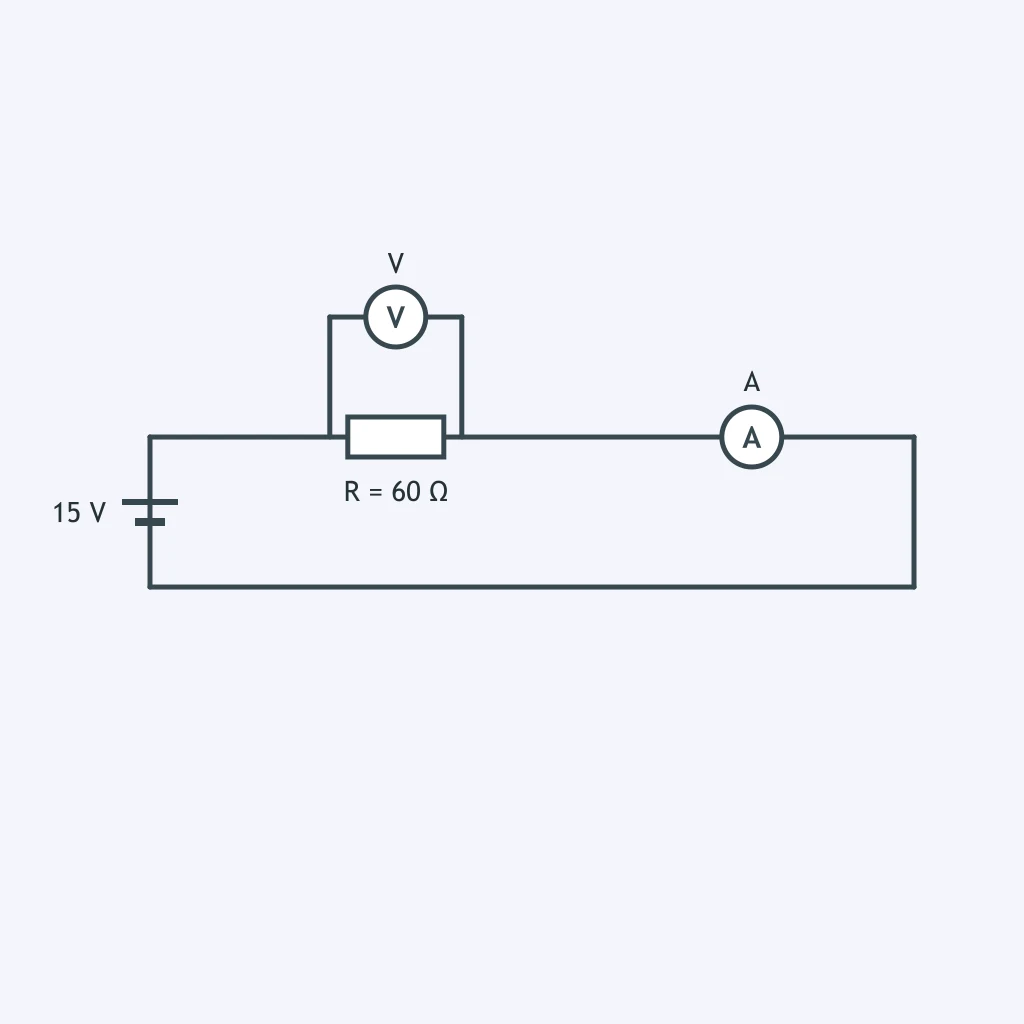
Read the cell label and ammeter in the figure. What resistance does the single circuit element have?
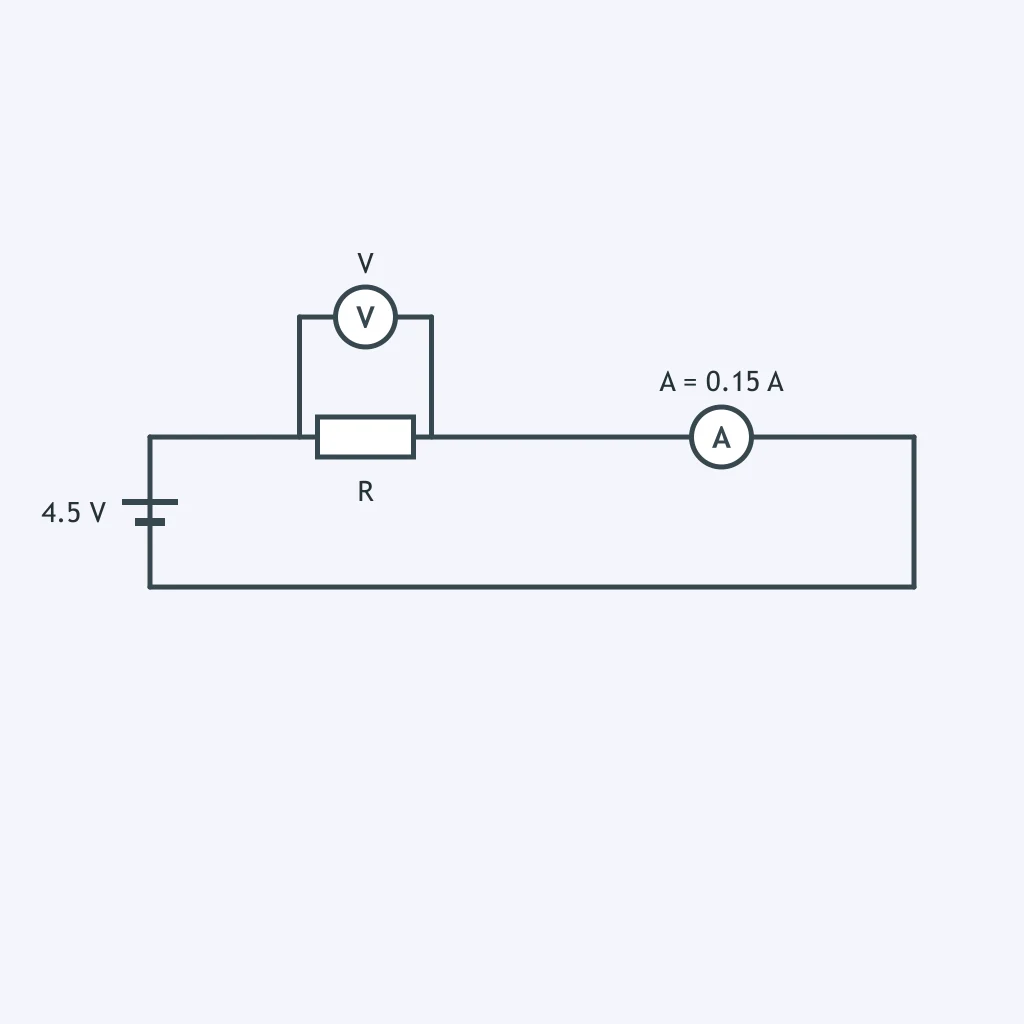
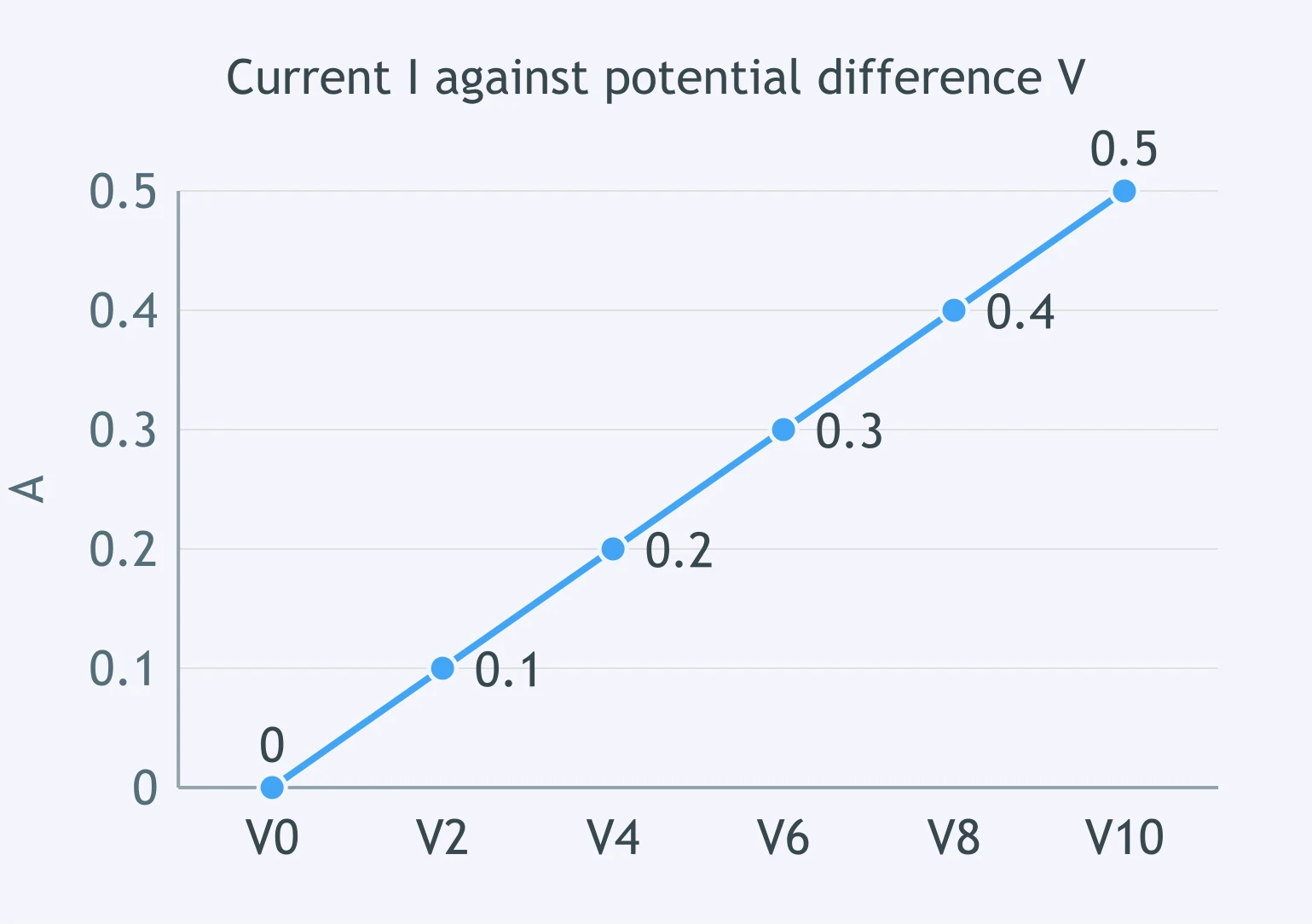
Use the current-against-potential-difference graph. What resistance is shown by the point at 6.0 V?
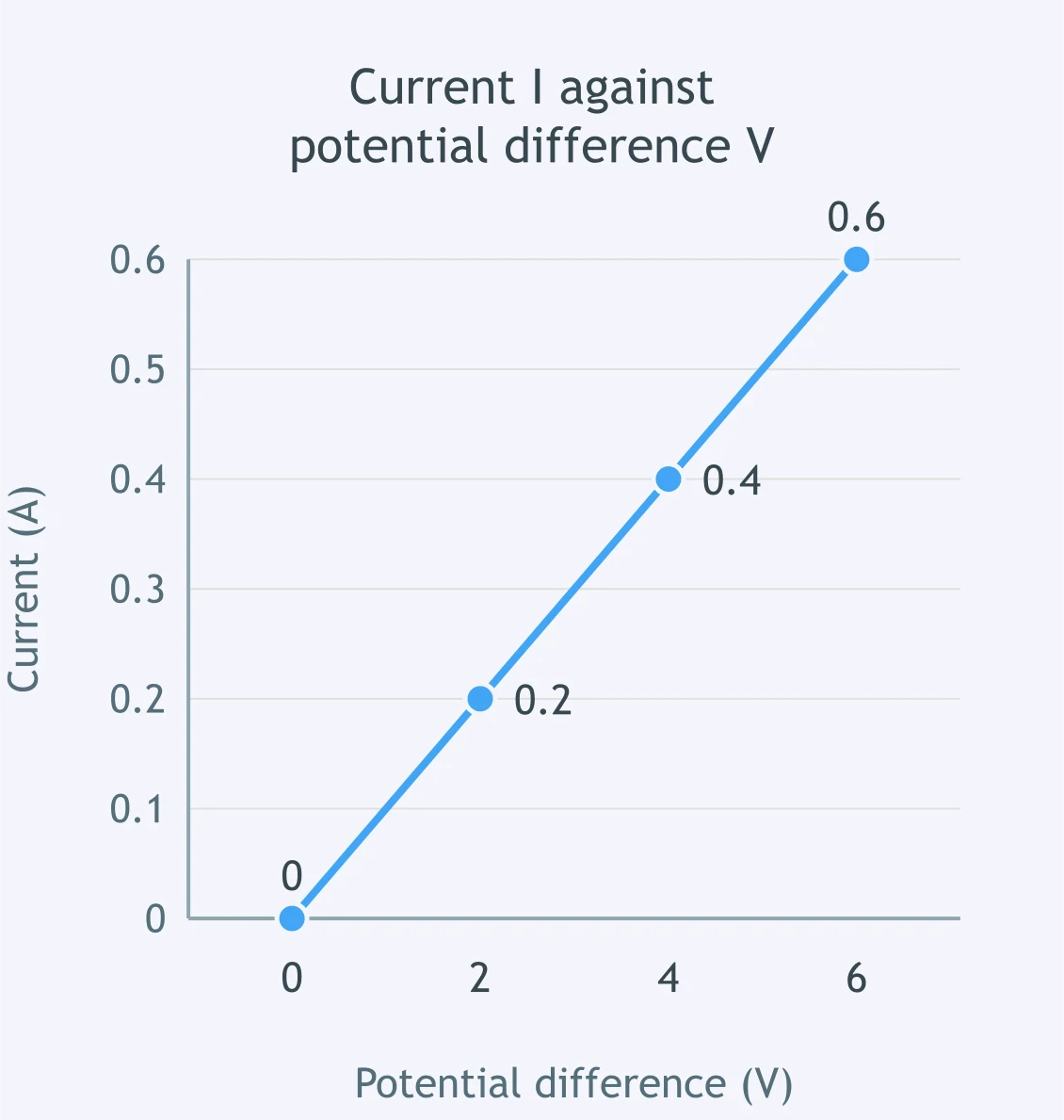
On the graph, the horizontal labels V2, V4, and so on mean volts. What resistance is shown by the plotted point at V10?
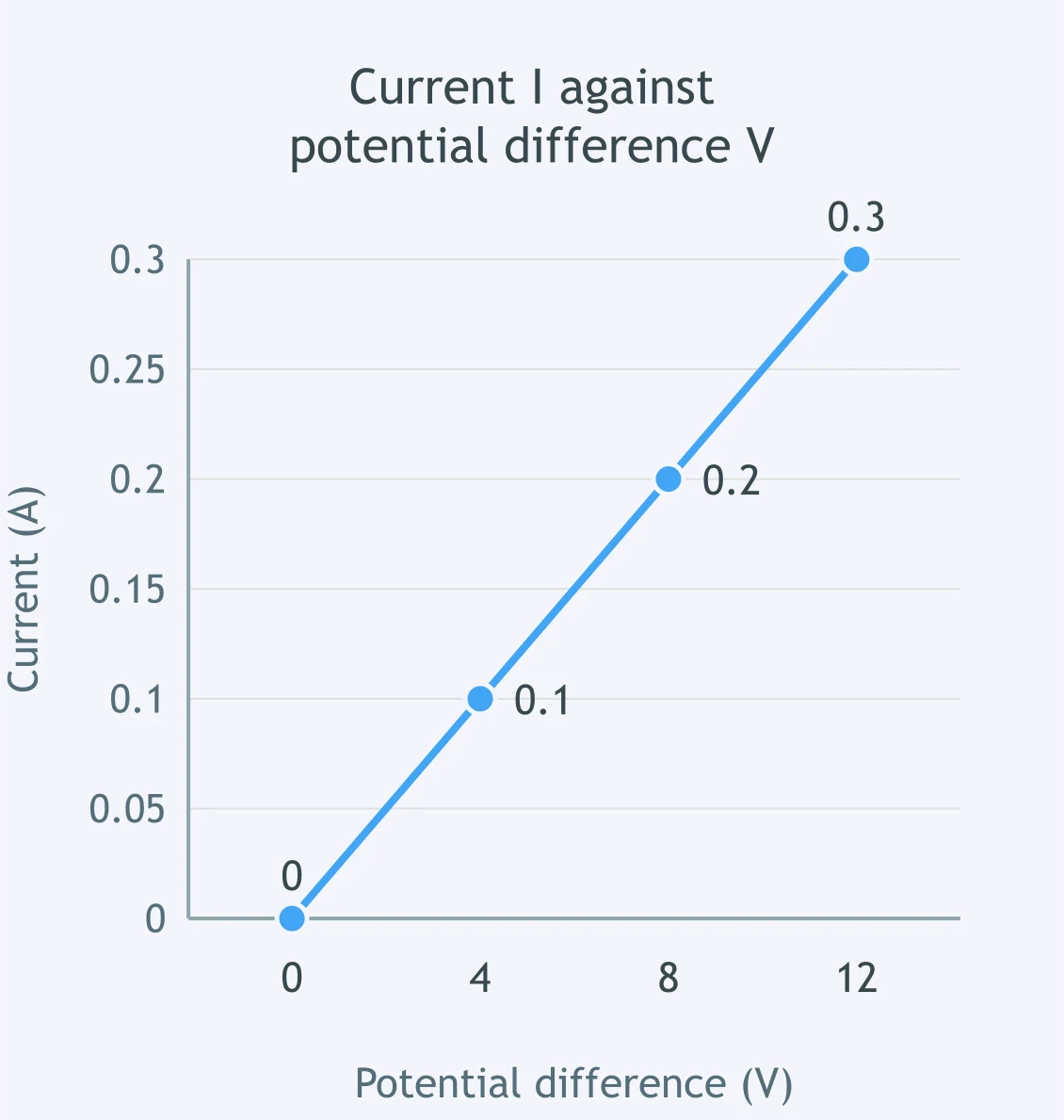
Use the current-against-potential-difference graph. What resistance is shown by the point at 12 V?
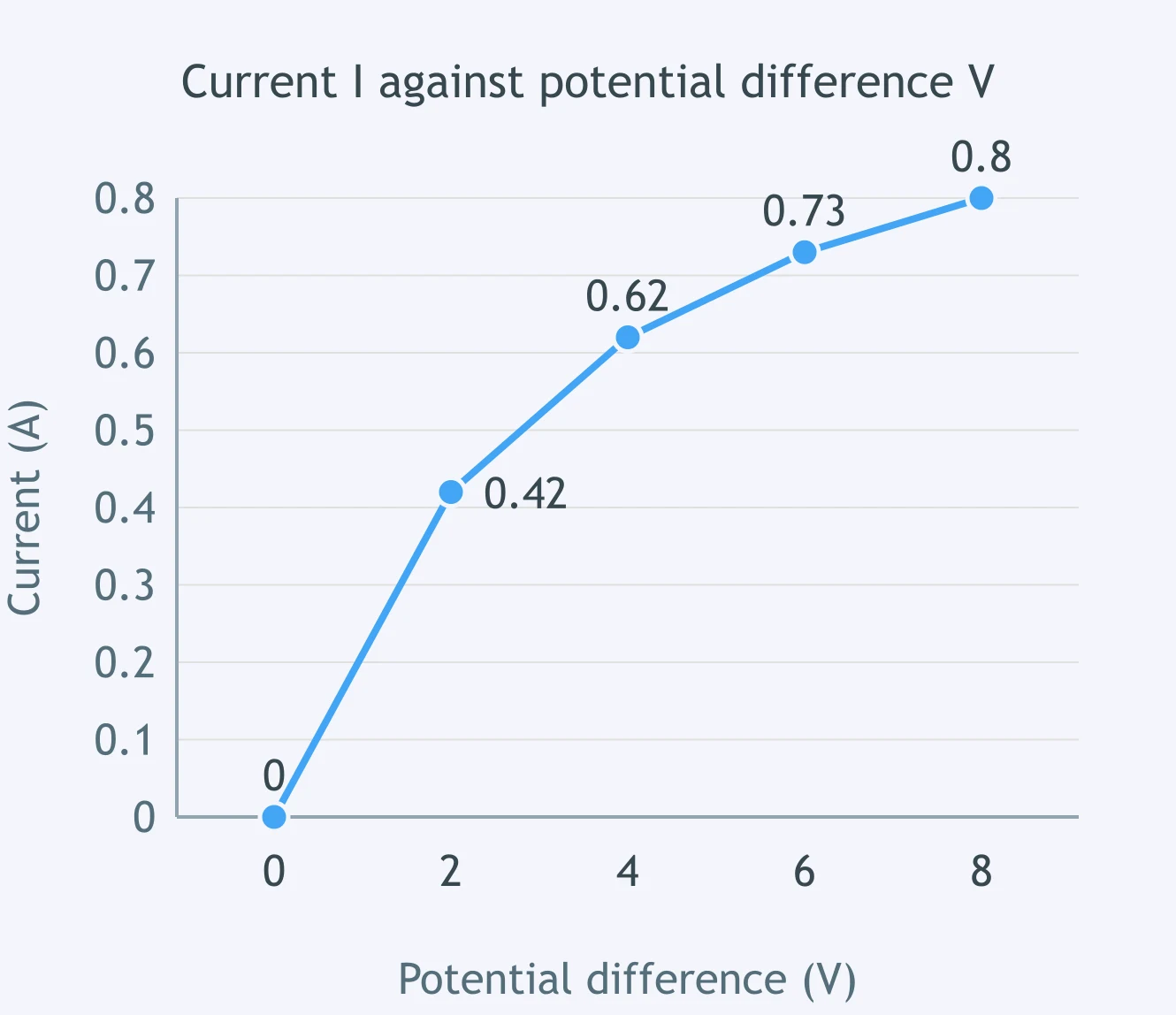
The graph bends over as current is plotted against potential difference. What is the resistance of the component at 8.0 V?
For a resistor with constant resistance, the potential difference is increased from 4.0 V to 12 V. What happens to the current?
An ohmic resistor carries 0.20 A at one voltage. The voltage is raised by a factor of 2.5 with the resistance unchanged. What is the new current?
A fixed potential difference is applied to a resistor. If the resistance is doubled, what happens to the current?
A 12 V supply is kept across a circuit element. If its resistance is changed from 8 Ω to 4 Ω, how does the current change?
Two single resistors are connected one at a time to the same 6.0 V supply: one is 10 Ω and one is 20 Ω. Which current comparison is correct?
A resistor keeps the same resistance. Its supply is changed from 9.0 V to 3.0 V. What happens to the current?
An ohmic conductor is tested over a safe range. The potential difference across it doubles. What happens to its resistance?
A resistor has 12 V across it and carries 3.0 A. To make the current 1.5 A while keeping 12 V, how must the resistance change?
Which equation states Ohm's law for potential difference V, current I, and resistance R?
Which rearrangement of Ohm's law should be used to find current from potential difference and resistance?
One ohm is equivalent to which combination of units?
A current-against-potential-difference graph for a component is a straight line through the origin. What does that show?
On a graph with current on the vertical axis and potential difference on the horizontal axis, what does the slope of an ohmic line equal?
A filament lamp's current-voltage graph starts nearly straight and then bends toward the potential-difference axis as the filament heats. What is happening?
Crack the passcode before the zombies get in.
Answer, then swat bugs for bonus points.
Race through questions at your own speed.
Same question on every screen. Fastest wins.

Pick a tile, answer, hit bonuses and steals.
Reading and Drawing Circuit Schematics
50 questions