Loading
by BlastRoom
Explain how objects become charged and where charge moves in common electrostatic processes.
#physics

40 questions
One question set, multiple game modes. Tap any game to see it in action. Not sure which to pick?
Answer to place stones and capture territory.
Outrun the snow together.
Earn blasts, then hunt the other team.
Answer to earn energy, then climb.

The class blasts through walls together.
Bid on mystery lots. Most money wins.
Sell tours. Nice, standard, or a total scam.

Answer, restock, and serve the rush.
More correct answers pulls the rope your way.
Answer, then shoot down the alien wave.
Answer, then tap to leap the frozen ridge.
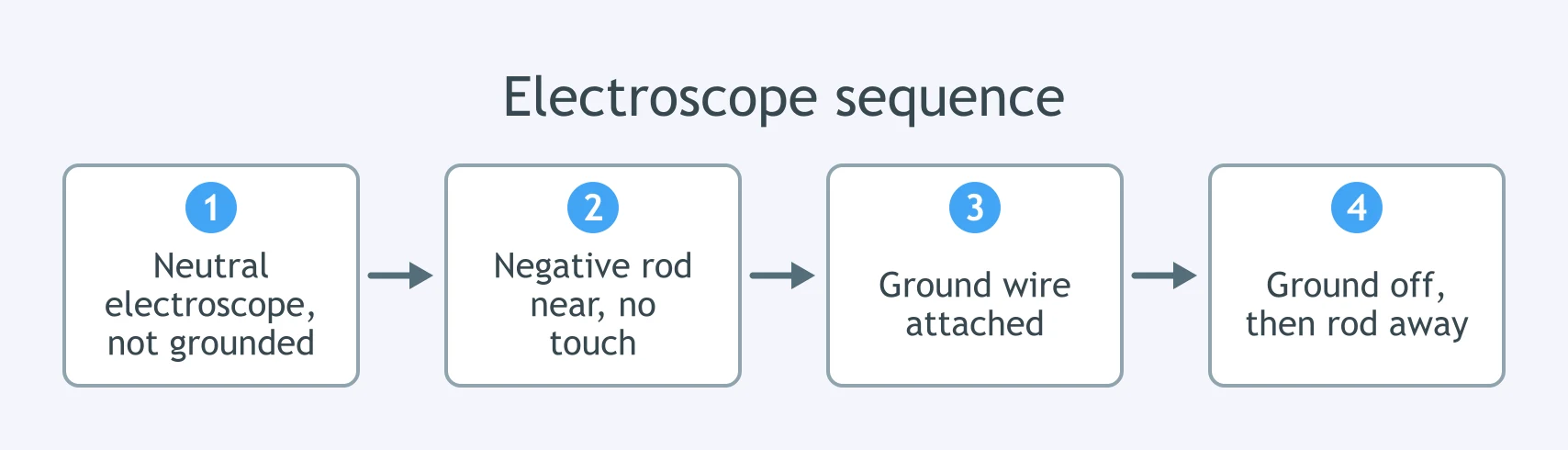
Use the figure. What charge is on the electroscope after Stage 4?
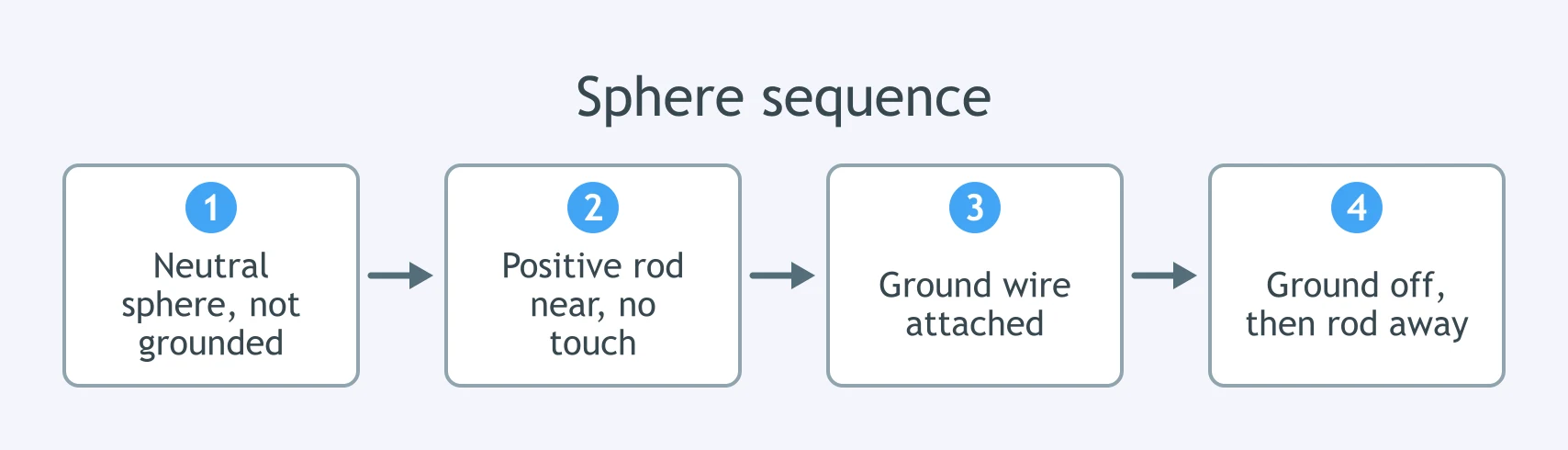
Use the figure. What charge remains on the metal sphere after Stage 4?
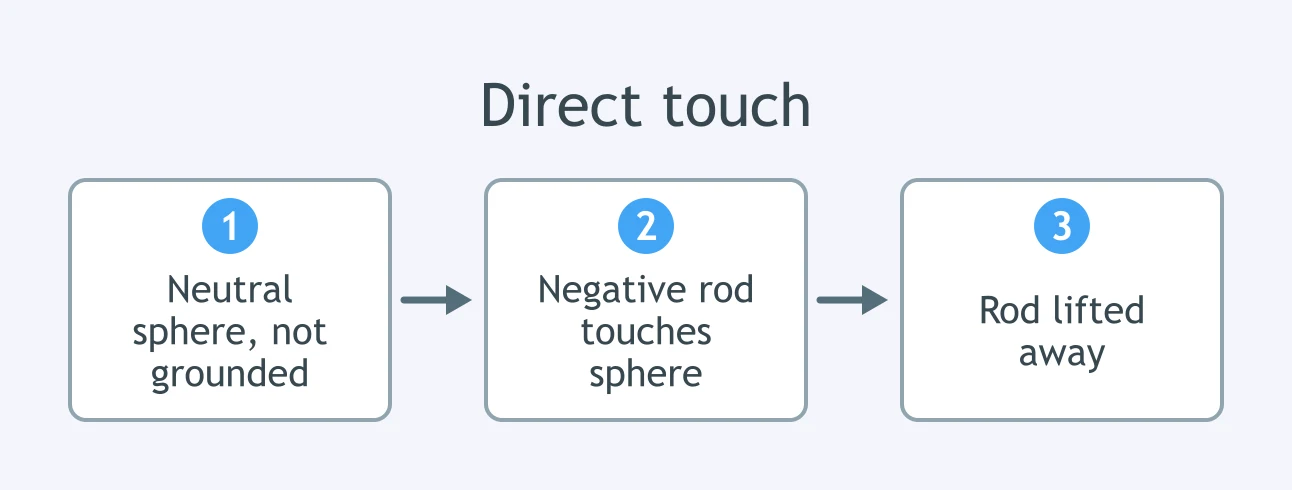
Use the figure. What charge is on the sphere after Stage 3?
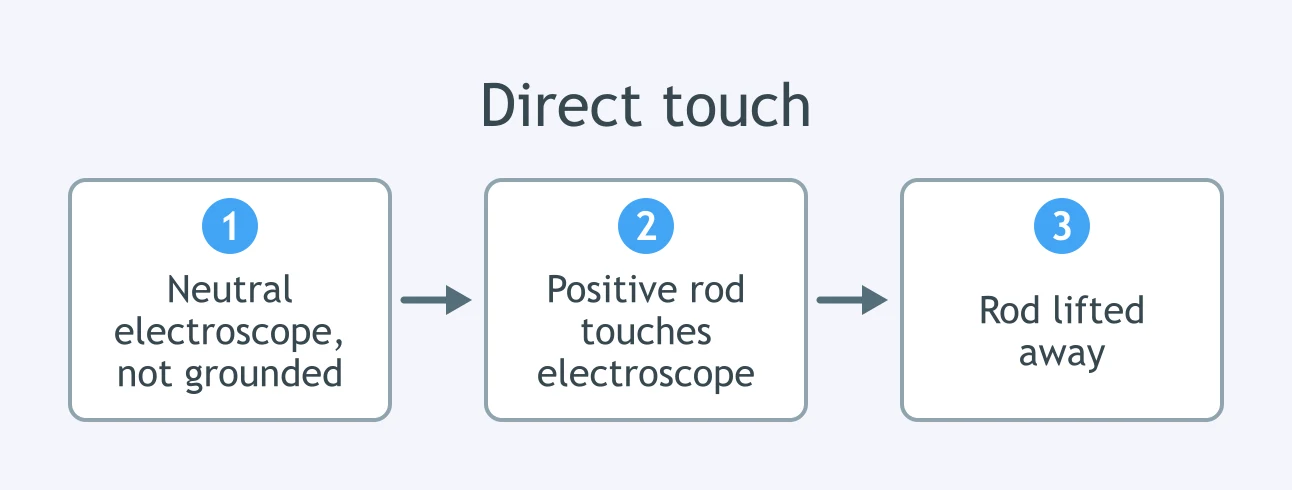
Use the figure. What charge is on the electroscope after Stage 3?
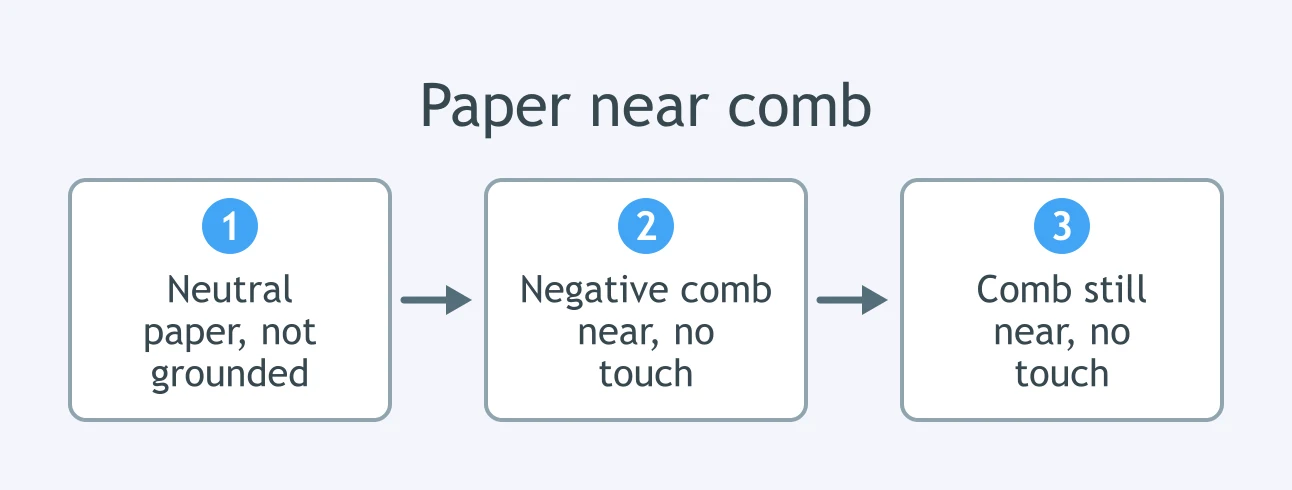
Use the figure. Which statement describes the paper at Stage 3?
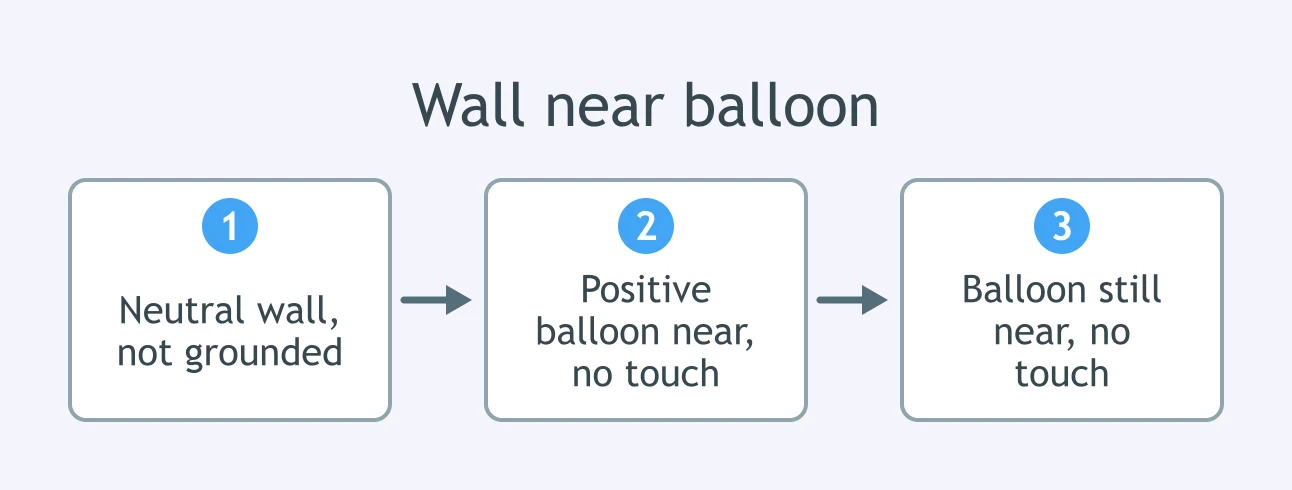
Use the figure. What is the net charge of the wall at Stage 3?
Use the figure. After the last step, what charge is on the sphere?
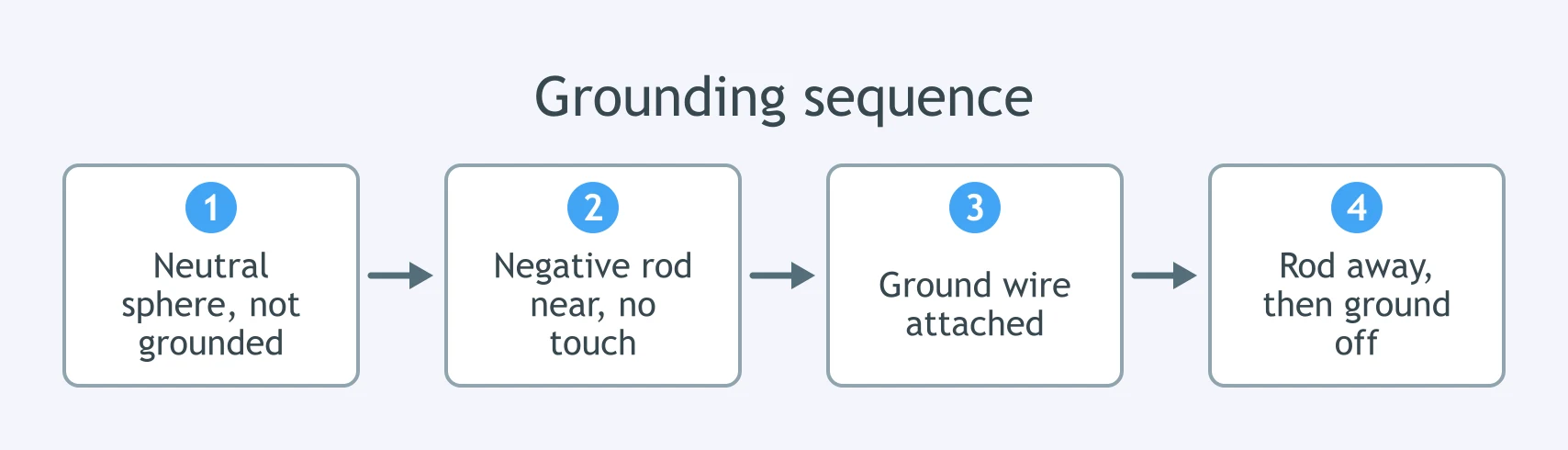
Use the figure. What charge remains on the sphere after Stage 4?
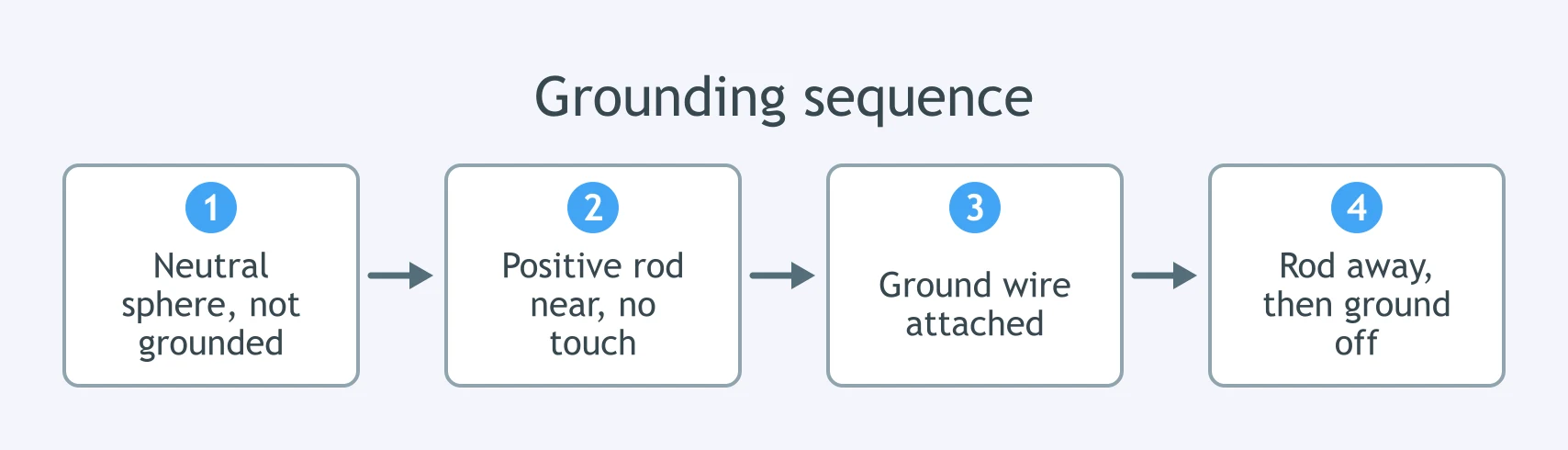
Use the comparison figure. Which charges are on scopes A and B after the rods are gone?
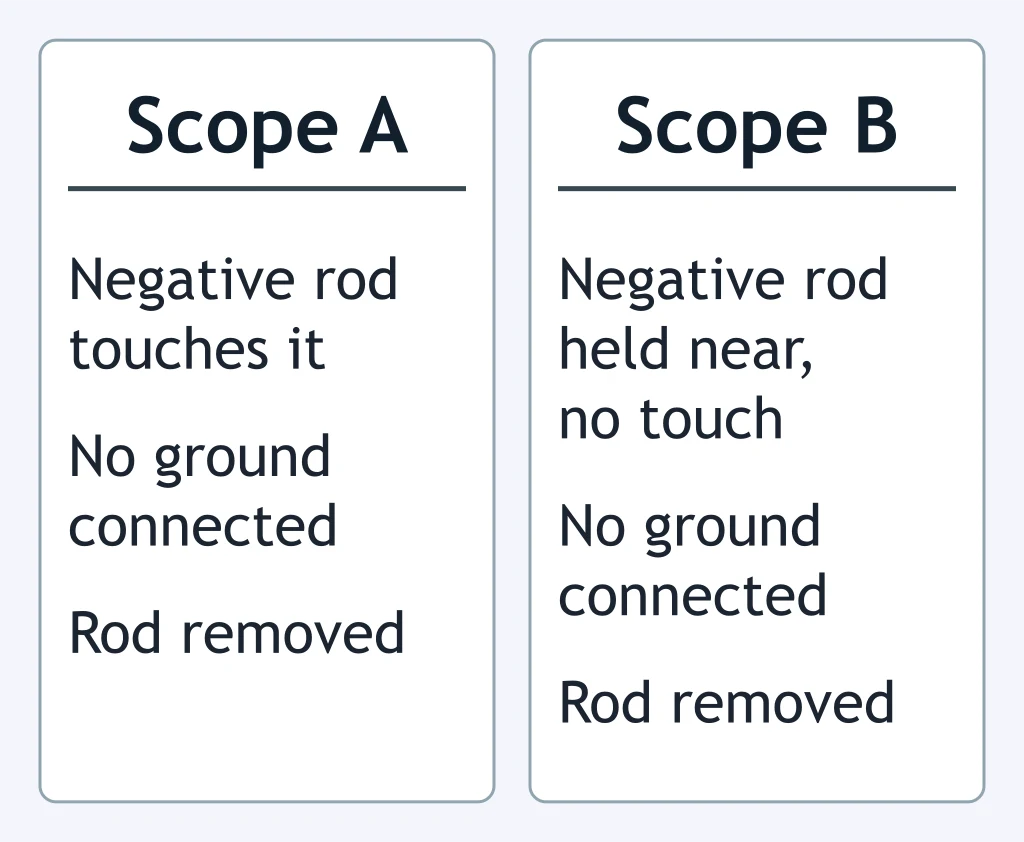
Use the comparison figure. What charges remain on spheres A and B after the rods are gone?
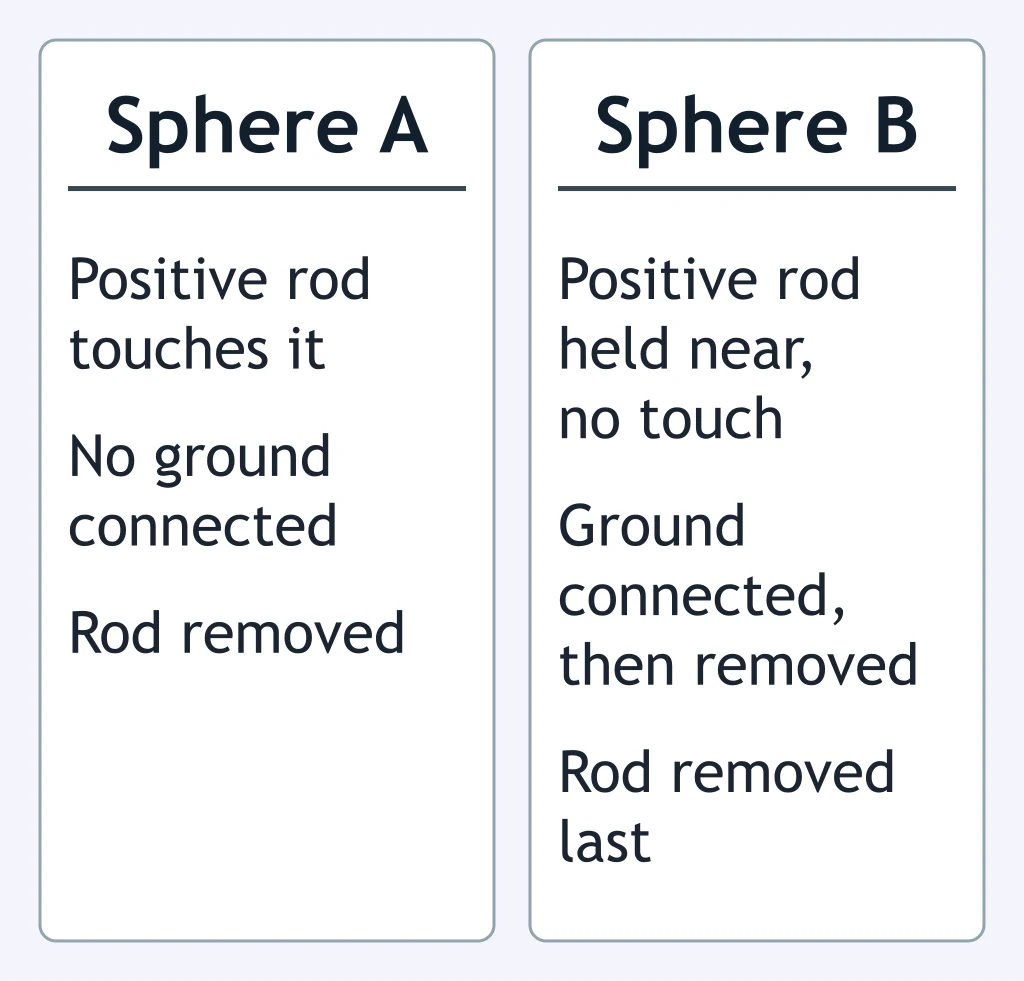
Use the figure. What charge is on the left ball after Stage 4?
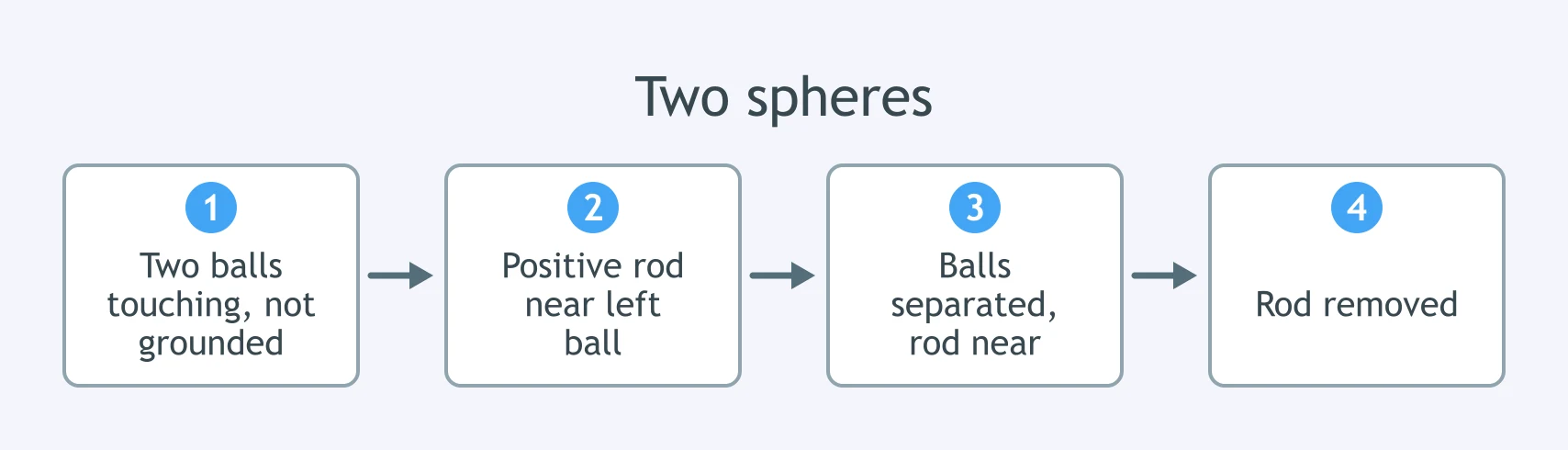
Use the figure. What charge is on the left ball after Stage 4?
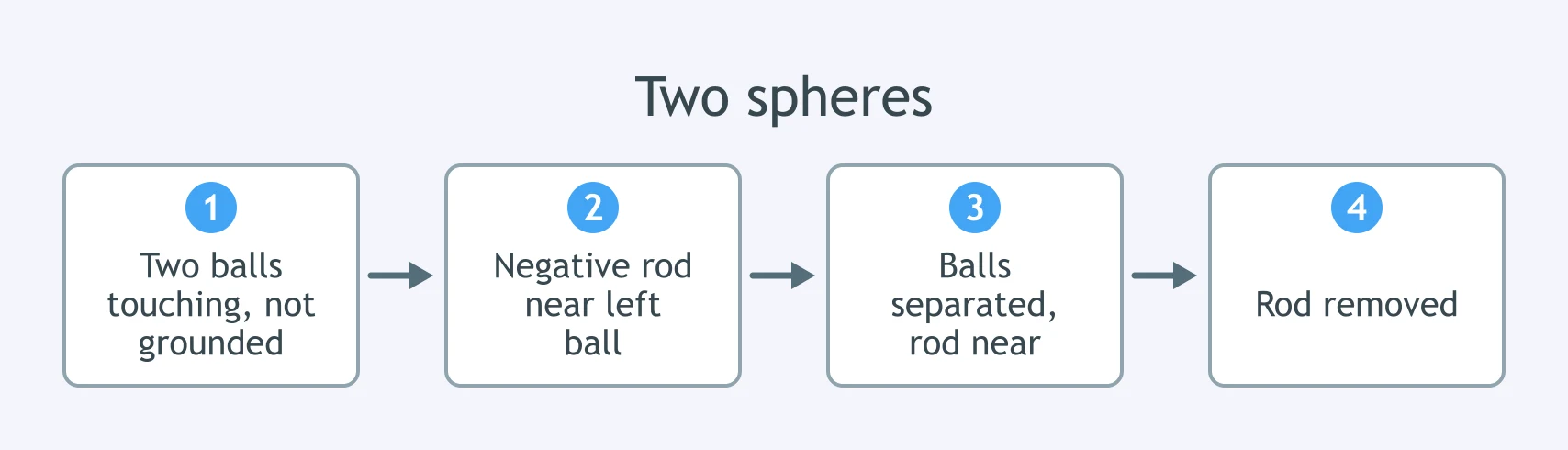
Use the figure. At Stage 3, what is on the side of the can nearest the rod?
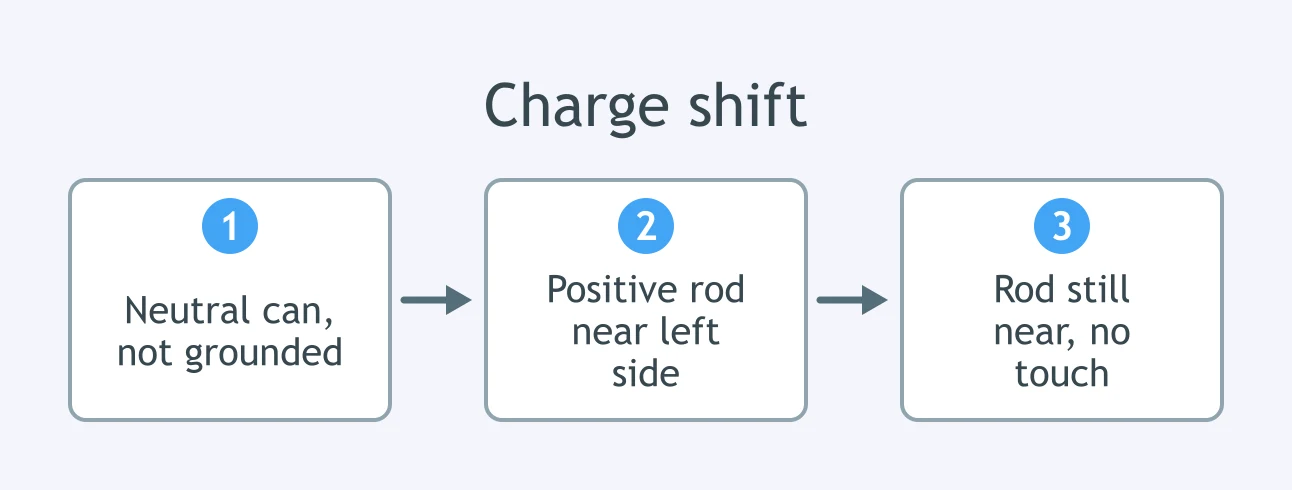
Use the figure. At Stage 3, what is on the side of the can nearest the rod?
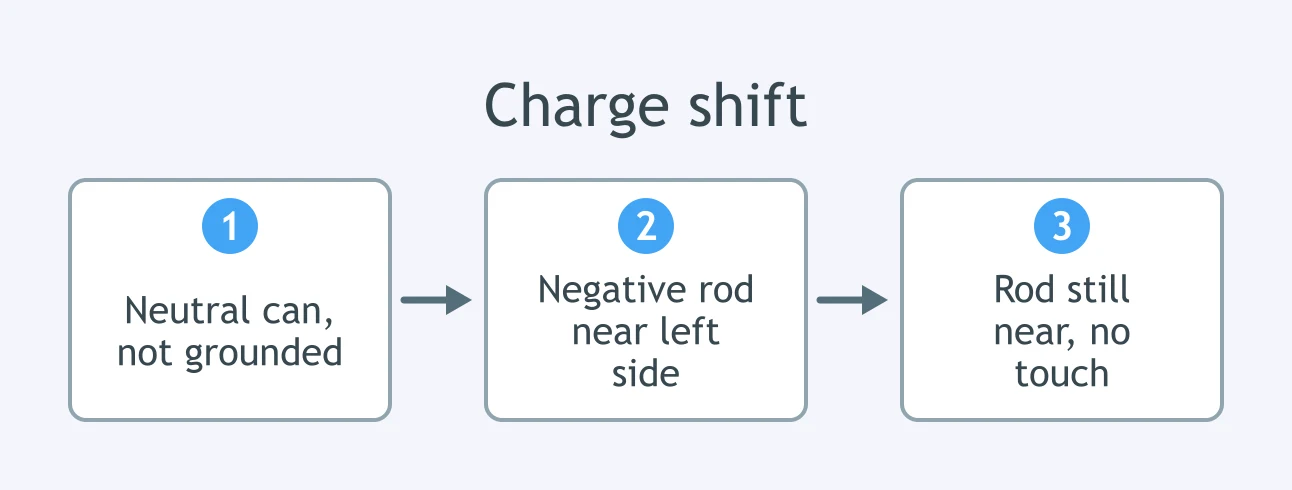
Use the figure. What charge is on the originally neutral ball after Stage 3?
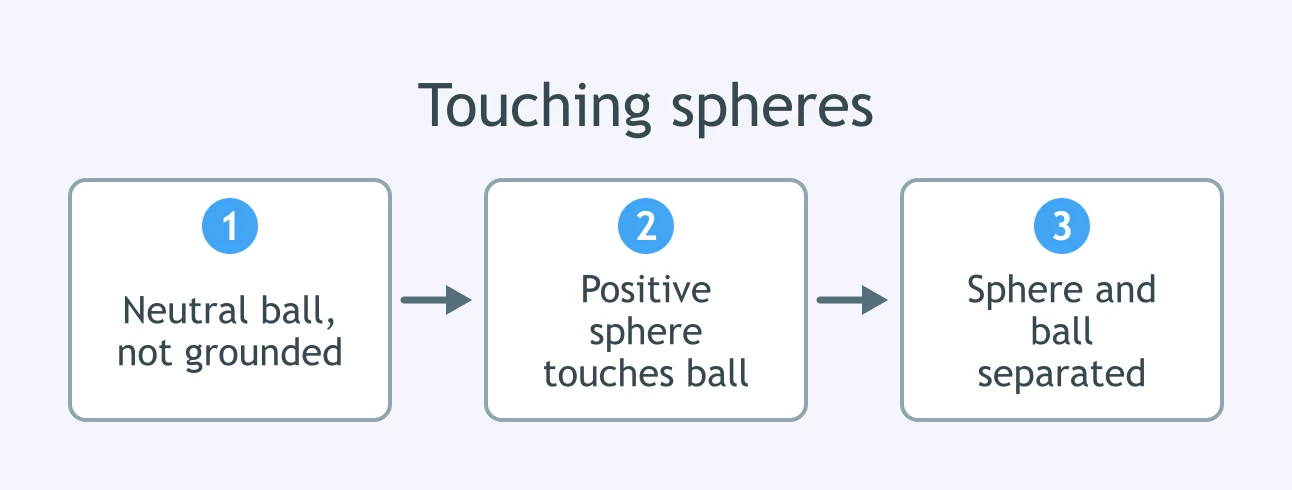
Use the figure. What charge is on the originally neutral ball after Stage 3?
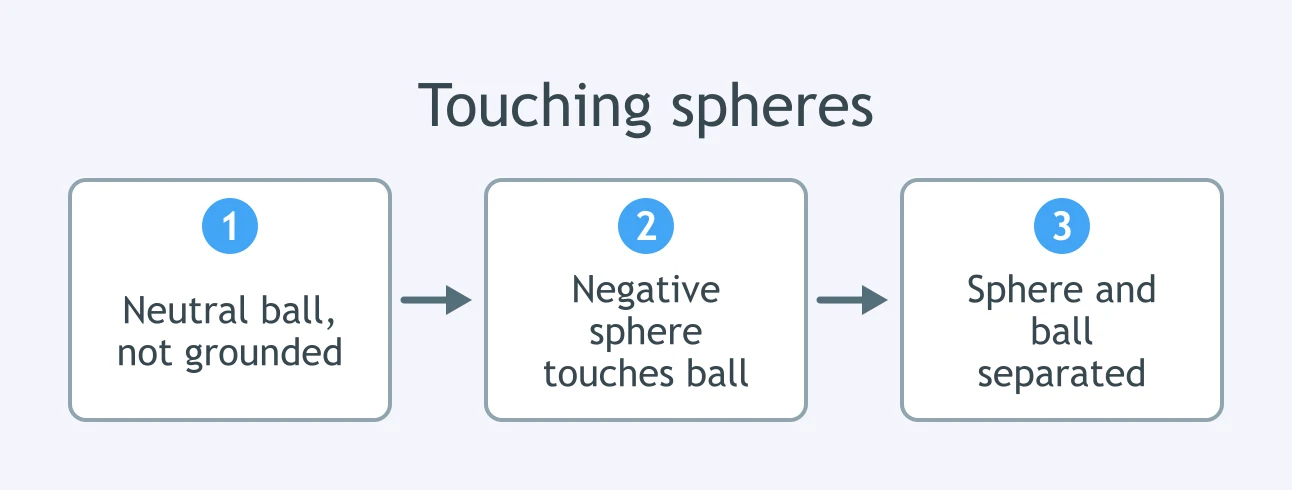
A negatively charged rod is touched directly to the metal plate of a neutral electroscope and then removed; no ground wire is used. Which charging method was used?
A positive rod is brought near a neutral metal sphere without touching it; a ground wire is attached, the wire is removed while the rod is still near, and then the rod is removed. Which method was used?
A charged balloon is held near a neutral wall without touching it, and charges in the wall shift slightly while the wall stays neutral overall. Which process is this?
A charged metal sphere is touched to an uncharged metal sphere on an insulating stand, and the spheres are then separated with the same sign of charge. Which method was used?
Two neutral metal balls are touching; a charged rod is brought near one ball without touching either, and the balls are separated while the rod remains nearby. Which method was used?
A charged comb is held near dry bits of paper without touching them, and the side of each bit nearer the comb becomes opposite in sign while each bit stays neutral overall. Which process is this?
A positively charged rod touches the knob of a neutral electroscope and is then lifted away; no ground connection is made. The electroscope remains charged. Which method was used?
A negative tube is held near an electroscope knob without touching it; a finger touches the knob, the finger is lifted first, and then the tube is removed. Which method was used?
A charged plastic strip is placed near a thin stream of water without touching it, and polar water molecules rotate slightly so the stream bends. Which process is this?
A charged metal ball touches a neutral pith ball; after they separate, the pith ball has the same sign as the metal ball. Which method was used?
A neutral scrap of paper jumps toward a negatively charged comb even though the comb has not touched it. What best explains the attraction?
A neutral electroscope is touched by a negatively charged rod and then the rod is removed. Why do the leaves stay apart afterward?
In charging a metal sphere with a nearby negative rod and a ground wire, why must the ground wire be removed before the rod is moved away?
A neutral insulator is polarized by a nearby charged rod. Which statement about the insulator is correct?
A negative rod is held near a neutral metal sphere while the far side of the sphere is grounded. Which way do electrons move during grounding?
A positive rod is held near a neutral metal sphere while the far side is grounded. If the ground is removed first, what charge will the sphere have after the rod is removed?
In a metal conductor, which charged particles move through the material during ordinary electrostatic charging?
A charged sphere touches a neutral identical sphere and then they separate. Why do the two spheres end with the same sign of charge?
Two neutral objects are rubbed together and one ends up negative while the other ends up positive. What happened to total charge for the two-object system?
A negative rod is brought near an electroscope without touching it and with no ground connection; the leaves spread, then fall together when the rod is removed. Why?
Two identical metal spheres on insulating stands carry +8.0 nC and -2.0 nC. They touch briefly and are separated. What charge is on each sphere afterward?
Two identical metal spheres carry -12.0 nC and +4.0 nC. After they are touched together and separated, what is the charge on each sphere?
Two identical metal spheres each carry +6.0 nC. They touch and are separated. What charge is on each sphere afterward?
Two identical metal spheres carry -3.0 nC and +9.0 nC. They are touched together and then separated. What charge is on each sphere afterward?
Crack the passcode before the zombies get in.
Answer, then swat bugs for bonus points.
Race through questions at your own speed.
Same question on every screen. Fastest wins.

Pick a tile, answer, hit bonuses and steals.
Electric Fields
30 questions