Loading
by BlastRoom
Practice the kinds, conservation, and quantization of electric charge.
#physics
40 questions
One question set, multiple game modes. Tap any game to see it in action. Not sure which to pick?
Answer to place stones and capture territory.
Outrun the snow together.
Earn blasts, then hunt the other team.
Answer to earn energy, then climb.

The class blasts through walls together.
Bid on mystery lots. Most money wins.
Sell tours. Nice, standard, or a total scam.

Answer, restock, and serve the rush.
More correct answers pulls the rope your way.
Answer, then shoot down the alien wave.
Answer, then tap to leap the frozen ridge.
Every isolated object that has been measured carries charge in whole-number multiples of C. Which property does that evidence show?
Two identical balloons are rubbed with the same wool sweater and then push away from each other. What does that show about their charges?
A neutral metal sphere contains equal amounts of positive and negative charge. Which statement about the sphere is correct?
In SI units, which unit is used for electric charge?
A student says an object has a charge of +3e. What does the plus sign mean?
Which observation is evidence that there are two kinds of electric charge?
A glass rod rubbed with silk is found to be positive. Which particle transfer best explains the rod's charge?
Which statement correctly describes the elementary charge e?
Which charge is allowed by quantization if C?
When a plastic rod becomes negatively charged, what is true about its electrons and protons?
What does conservation of charge mean for an isolated system?
A charged object attracts a neutral paper scrap. Which explanation is consistent with charge behavior without changing the scrap's total net charge?
A plastic rod gains excess electrons. Use C. What is the rod's net charge?
A metal sphere loses electrons. Use C. What net charge is left on the sphere?
A tape strip has excess electrons. With C, what is its net charge?
An electroscope knob has a net charge of C. Use C. How many electrons were removed?
A small bead carries -3.2 nC. Use C and . How many excess electrons are on the bead?
A droplet gains electrons. If C, what is the droplet's net charge?
A metal cap is charged to C. Use C. How many electrons must have been removed?
A foam cup receives extra electrons. With C, what net charge does the cup have?
A sphere has a net charge of C. Use C. How many excess electrons does it have?
A lab sphere loses electrons. Use C. What is the sphere's net charge?
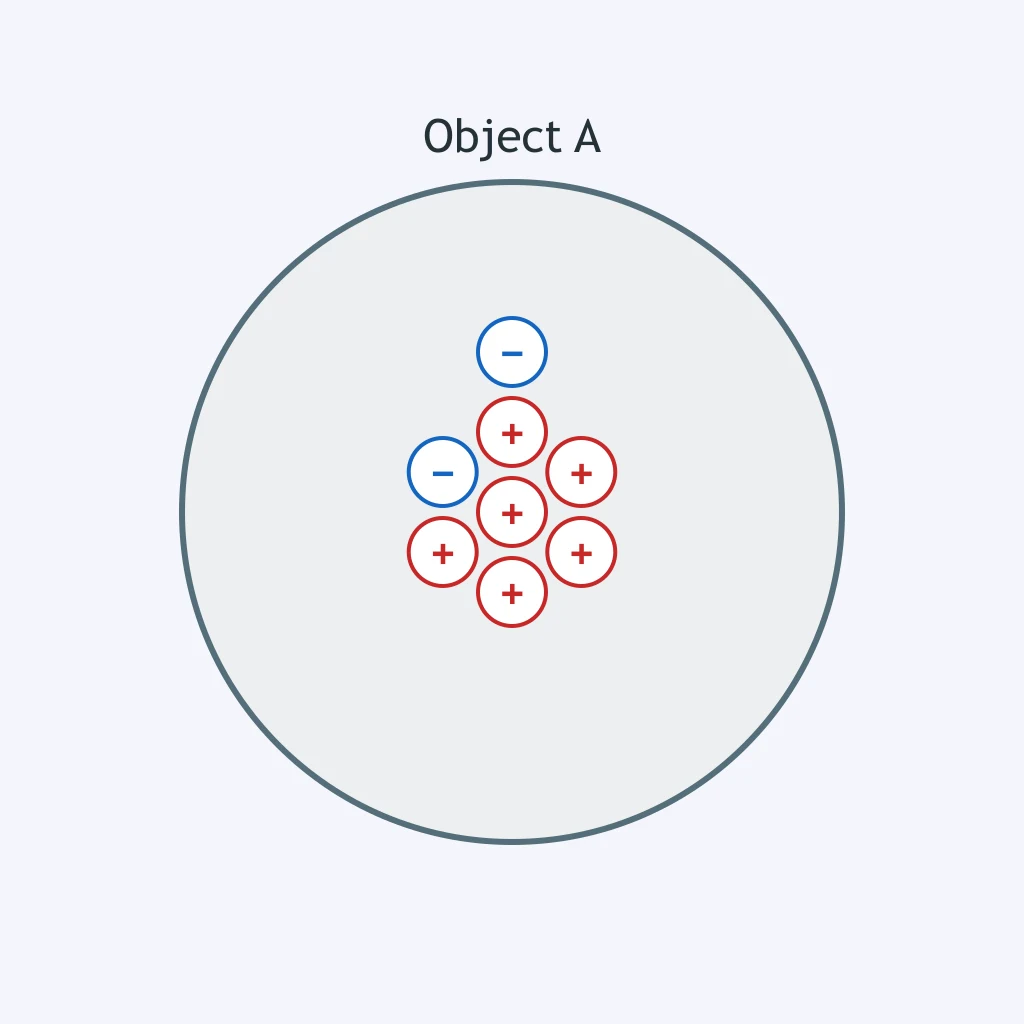
Use the figure and C. What is the net charge on object A?
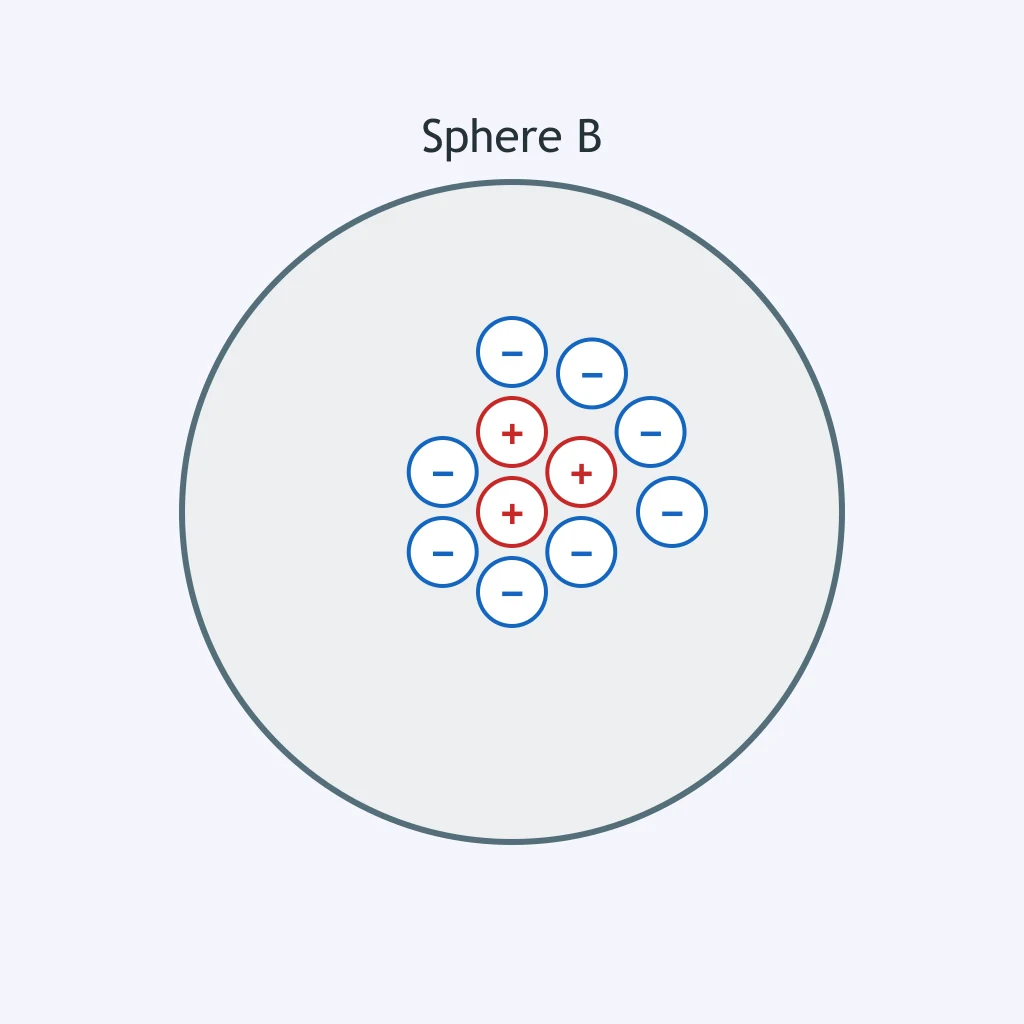
Use the figure and C. What is the net charge on sphere B?
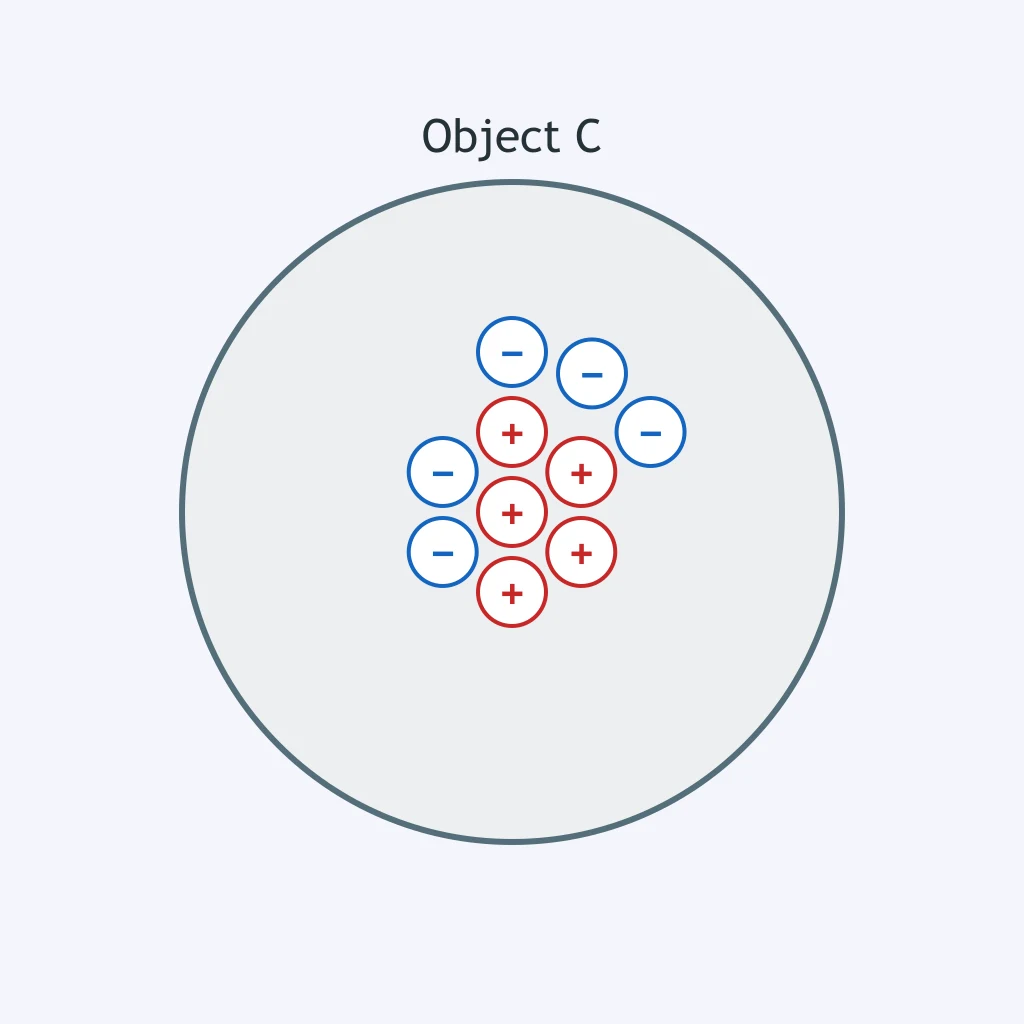
Use the figure and C. What is the net charge on object C?
Use the figure and C. What is the net charge on bead D?
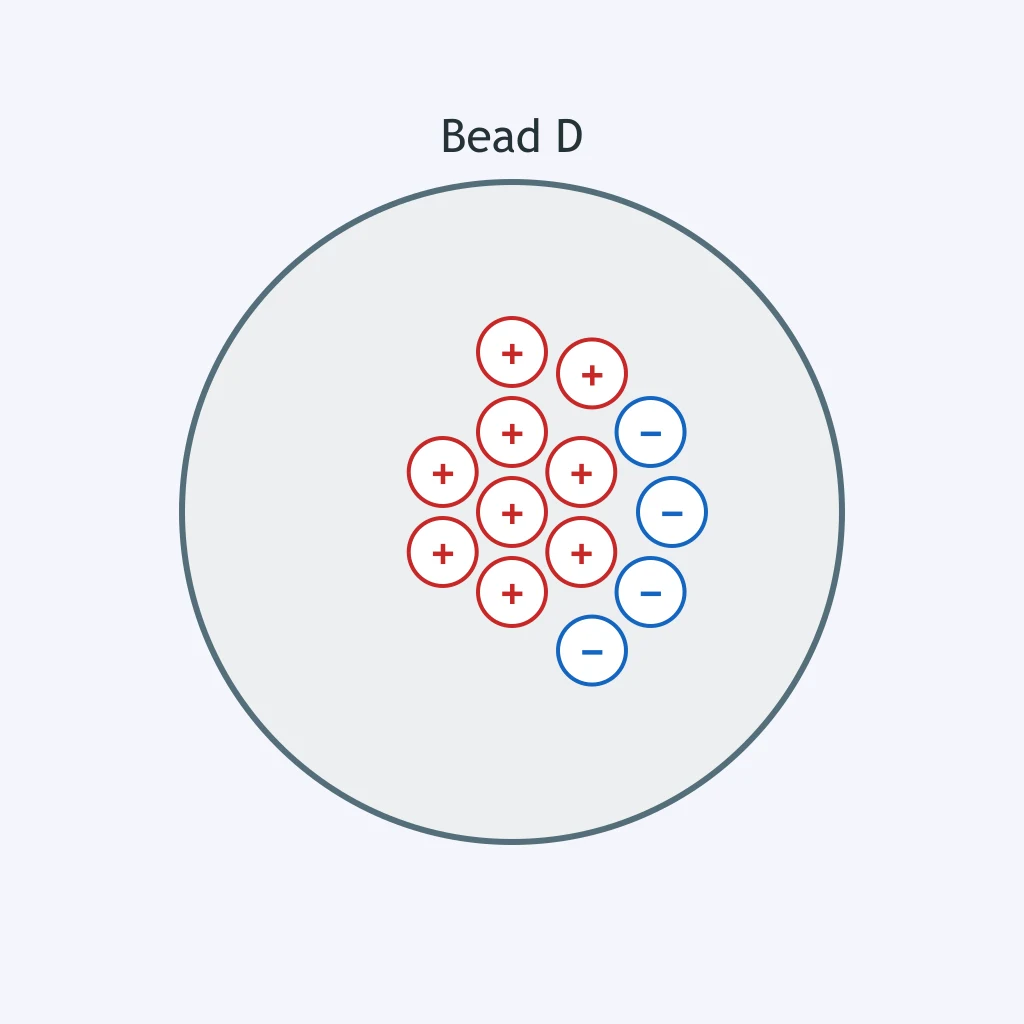
Use the figure and C. What is the net charge on plate E?
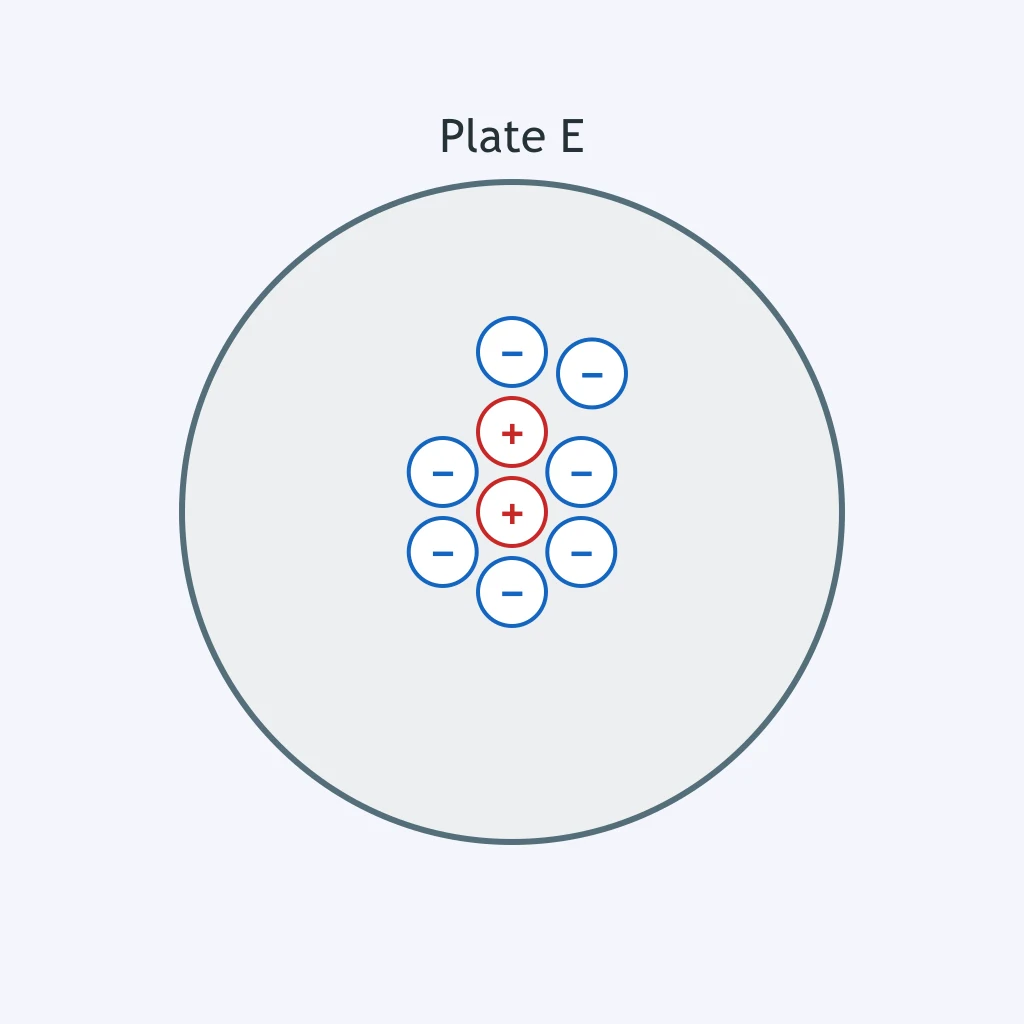
Use the figure and C. What is the net charge on object F?
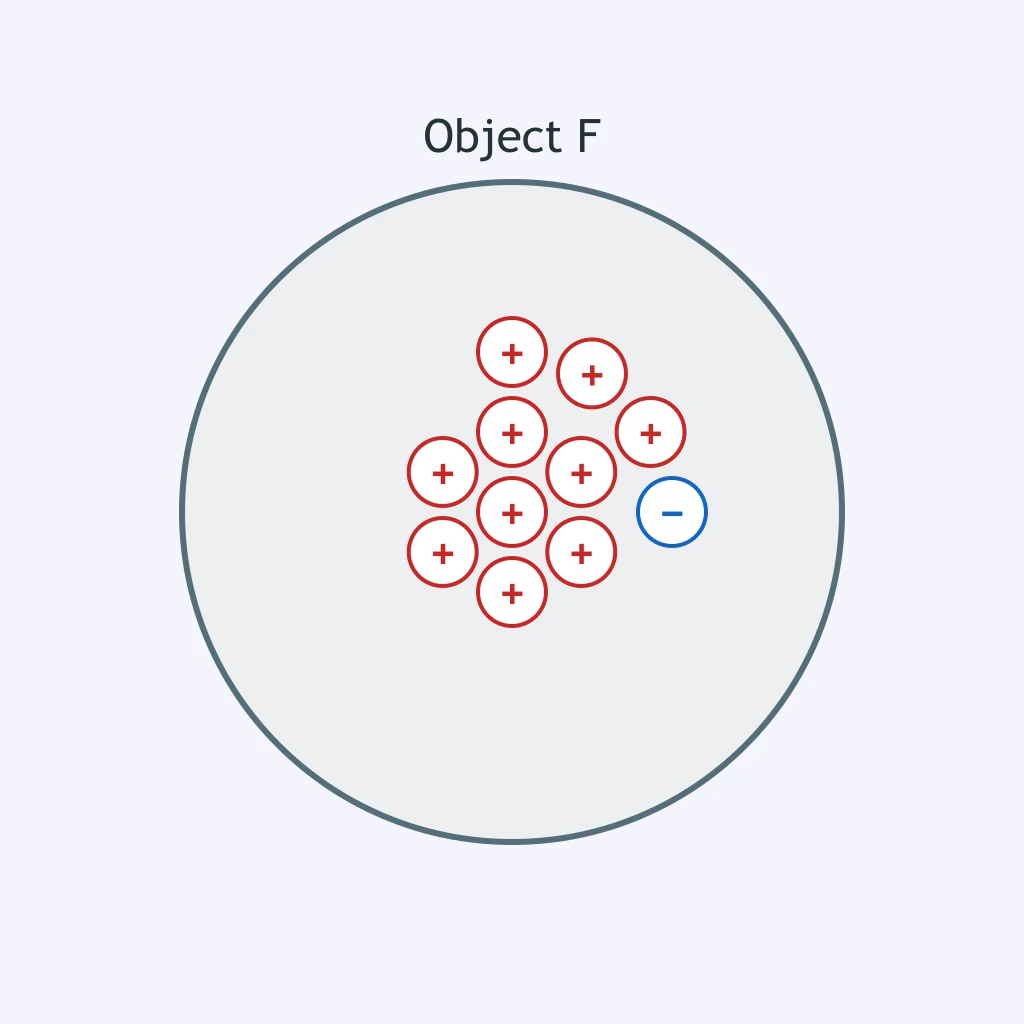
Use the figure and C. What is the net charge on sphere G?
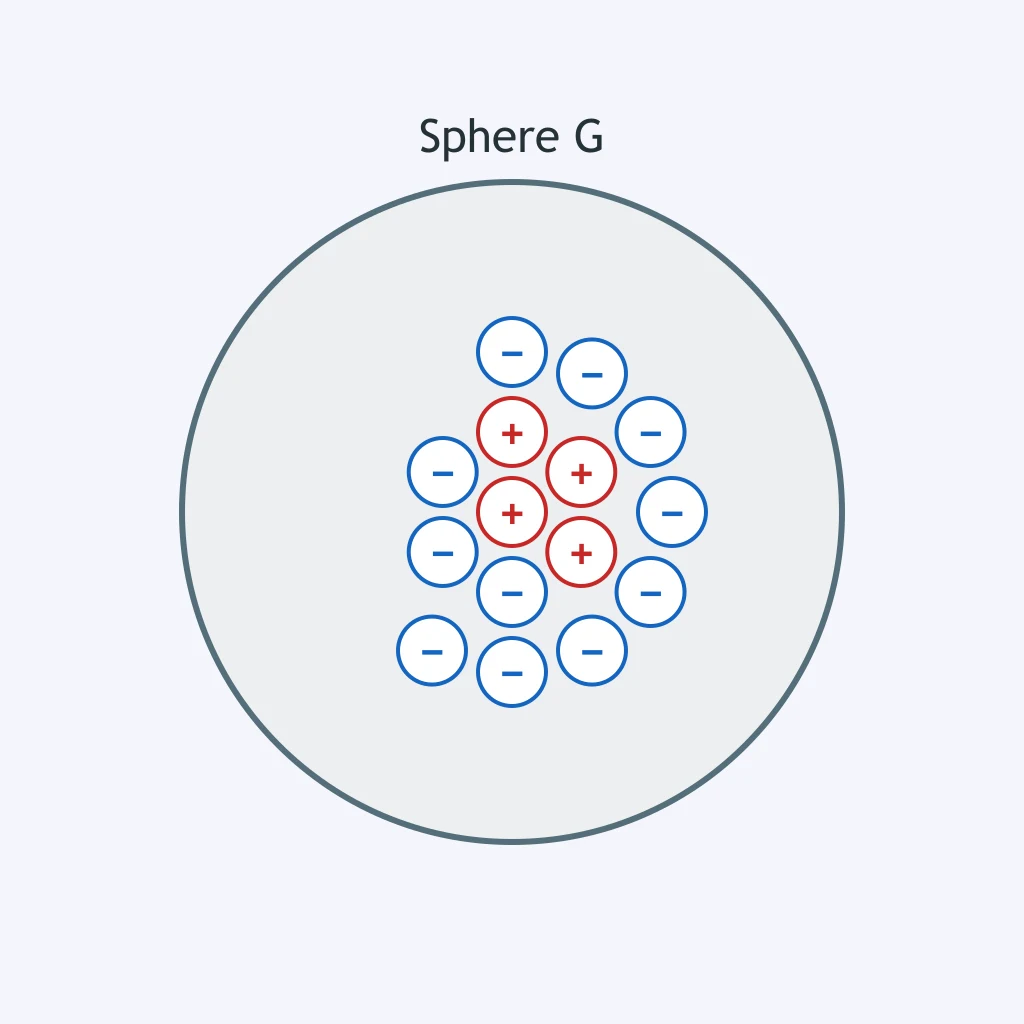
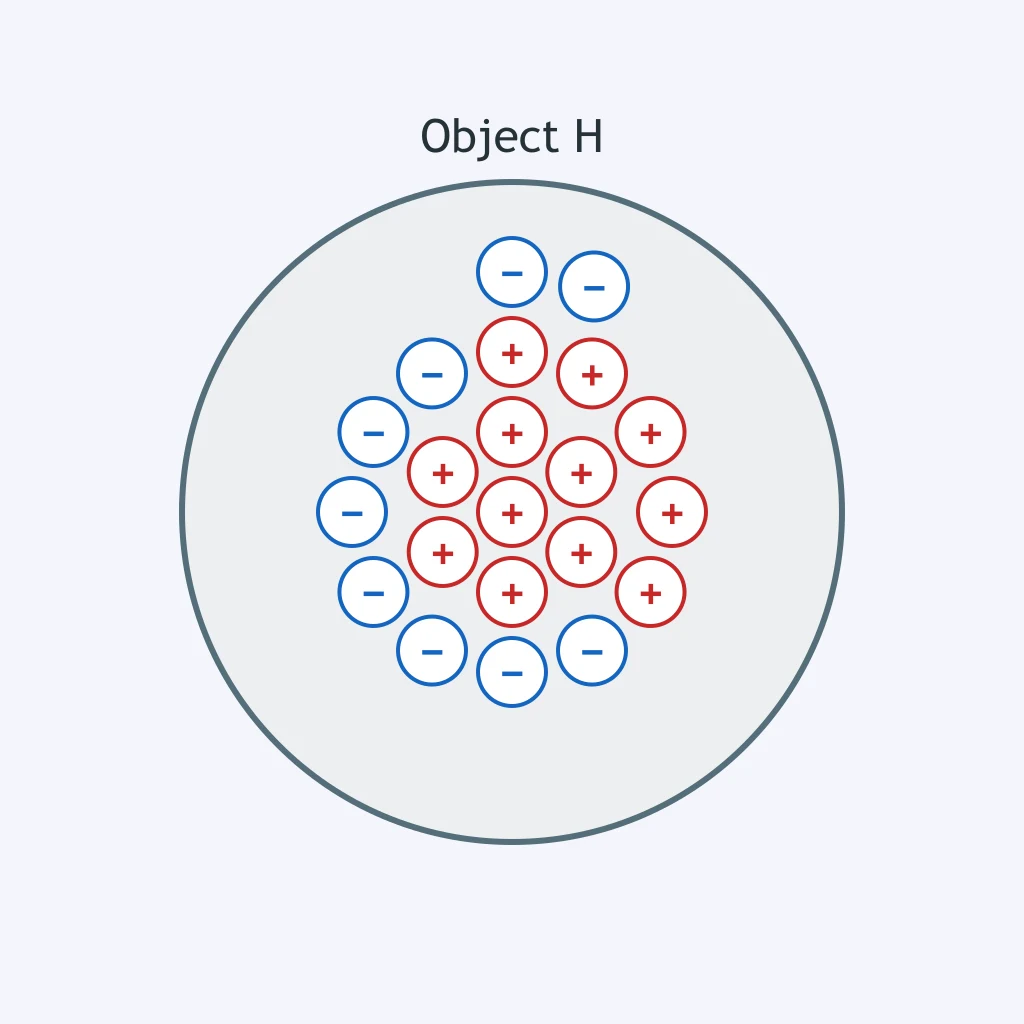
Use the figure and C. What is the net charge on object H?
A rubber rod and fur start neutral. After rubbing, the rod has C. If nothing else touches them, what is the fur's charge?
Two isolated objects are touched. Before contact, object X is +12 nC and object Y is -5 nC. Afterward, X is +4 nC. What is Y's charge afterward?
A neutral acrylic rod is rubbed with cloth and ends at C. What happened to the cloth if the rod-cloth system stayed isolated?
Object A is -8 nC and object B is +2 nC before they touch. Later A is -3 nC. What charge is on B then?
A balloon becomes C after rubbing on hair. The balloon and hair were initially neutral and isolated. What is the hair's charge?
Two identical conducting spheres share charge after touching. Their total charge before touching is +10 nC. After separation one sphere has +5 nC. What is on the other?
A neutral silk cloth and neutral glass rod are rubbed. The silk ends at C. What charge is on the rod?
Object P starts at +18 nC and object Q starts at -6 nC. They are isolated together. If P later has +10 nC, what must Q have?
A foam block and wool pad begin neutral. After contact and separation, the foam block is C. Which statement must be true?
A charged sphere at +7 nC touches a neutral sphere in an isolated system. Afterward the first sphere has +4 nC. What is the neutral sphere's final charge?
Crack the passcode before the zombies get in.
Answer, then swat bugs for bonus points.
Race through questions at your own speed.
Same question on every screen. Fastest wins.

Pick a tile, answer, hit bonuses and steals.
Conduction, Induction and Polarization
40 questions