Loading
by BlastRoom
Practice adding wave displacements and identifying nodes, antinodes, harmonics, wavelengths, and frequencies in standing waves.
#physics
30 questions
One question set, multiple game modes. Tap any game to see it in action. Not sure which to pick?
Answer to place stones and capture territory.
Outrun the snow together.
Earn blasts, then hunt the other team.
Answer to earn energy, then climb.

The class blasts through walls together.
Bid on mystery lots. Most money wins.
Sell tours. Nice, standard, or a total scam.

Answer, restock, and serve the rush.
More correct answers pulls the rope your way.
Answer, then shoot down the alien wave.
Answer, then tap to leap the frozen ridge.
In the standing-wave figure, which labeled point is the interior node?
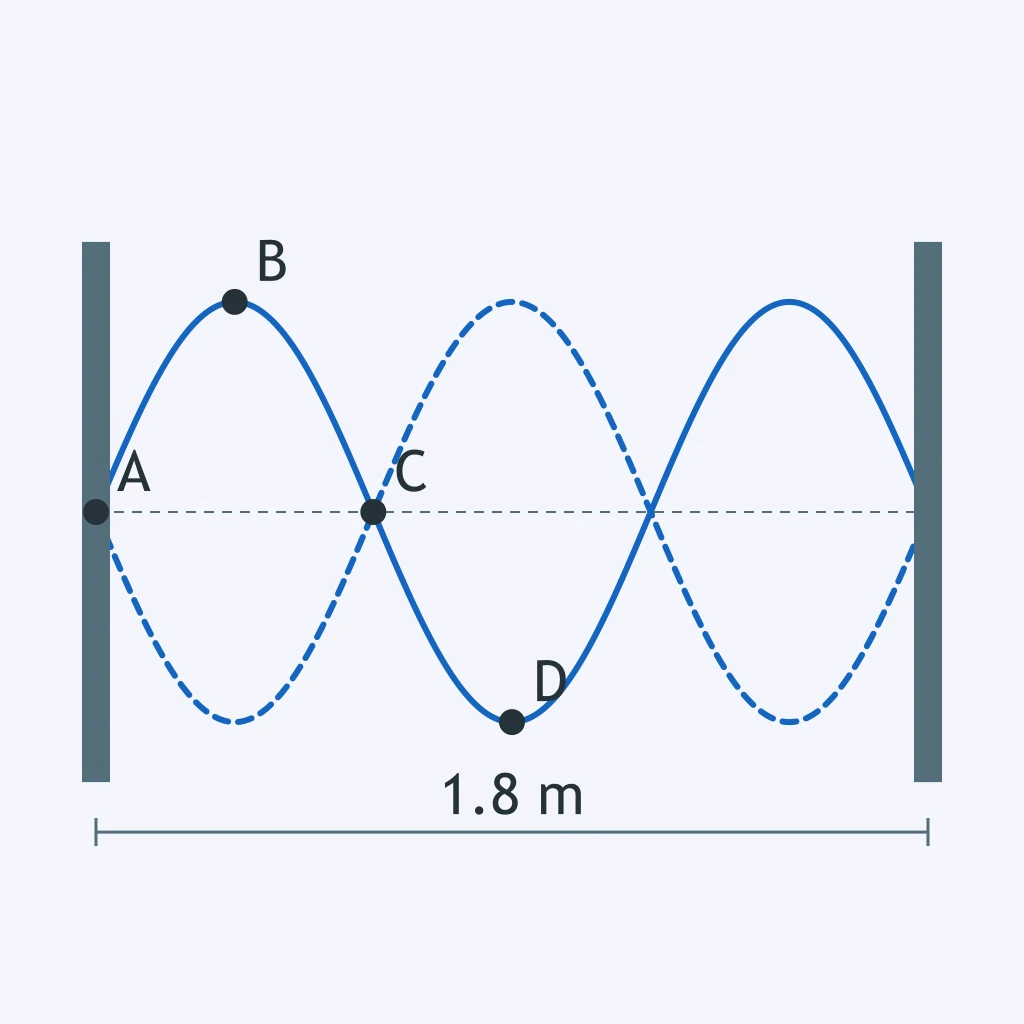
The standing-wave figure shows a string fixed at both ends. Which labeled point is an antinode?
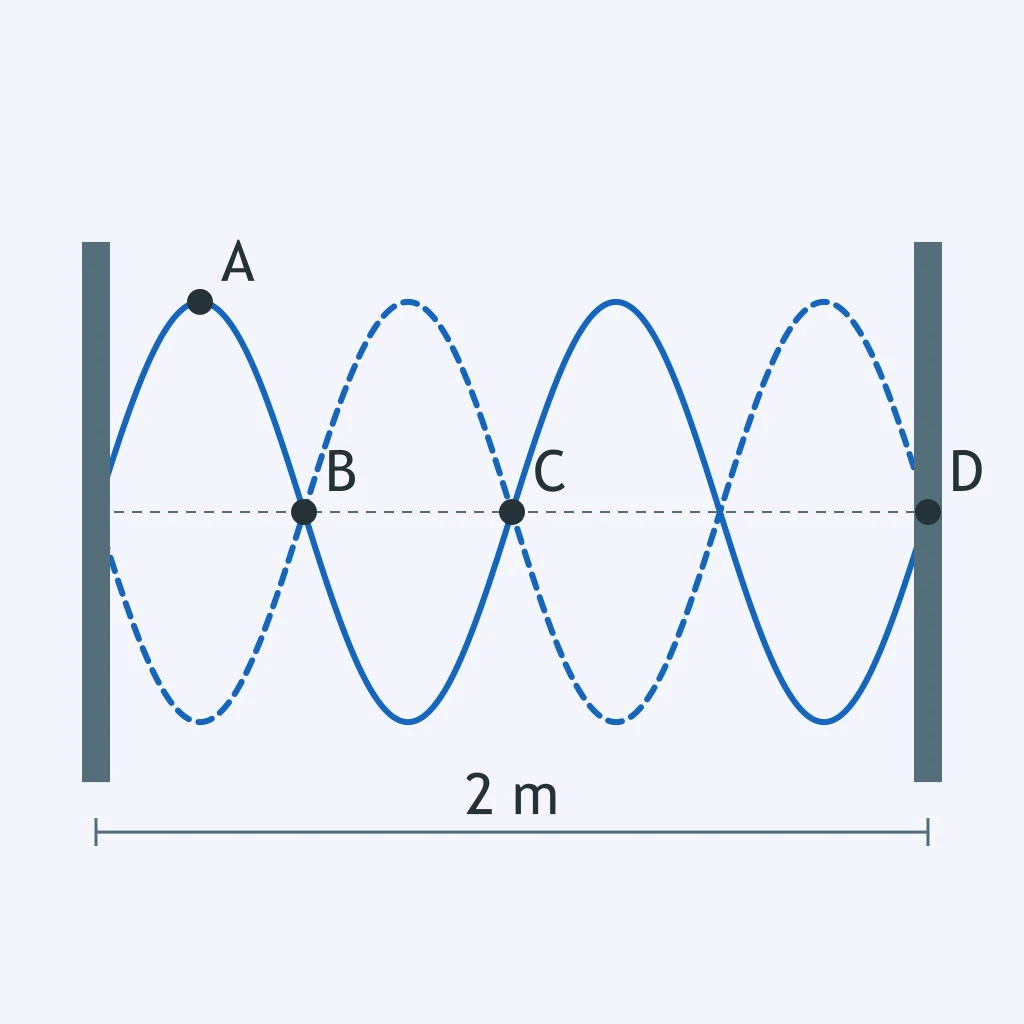
The figure shows a standing wave on a string. Which labeled point is the interior node?
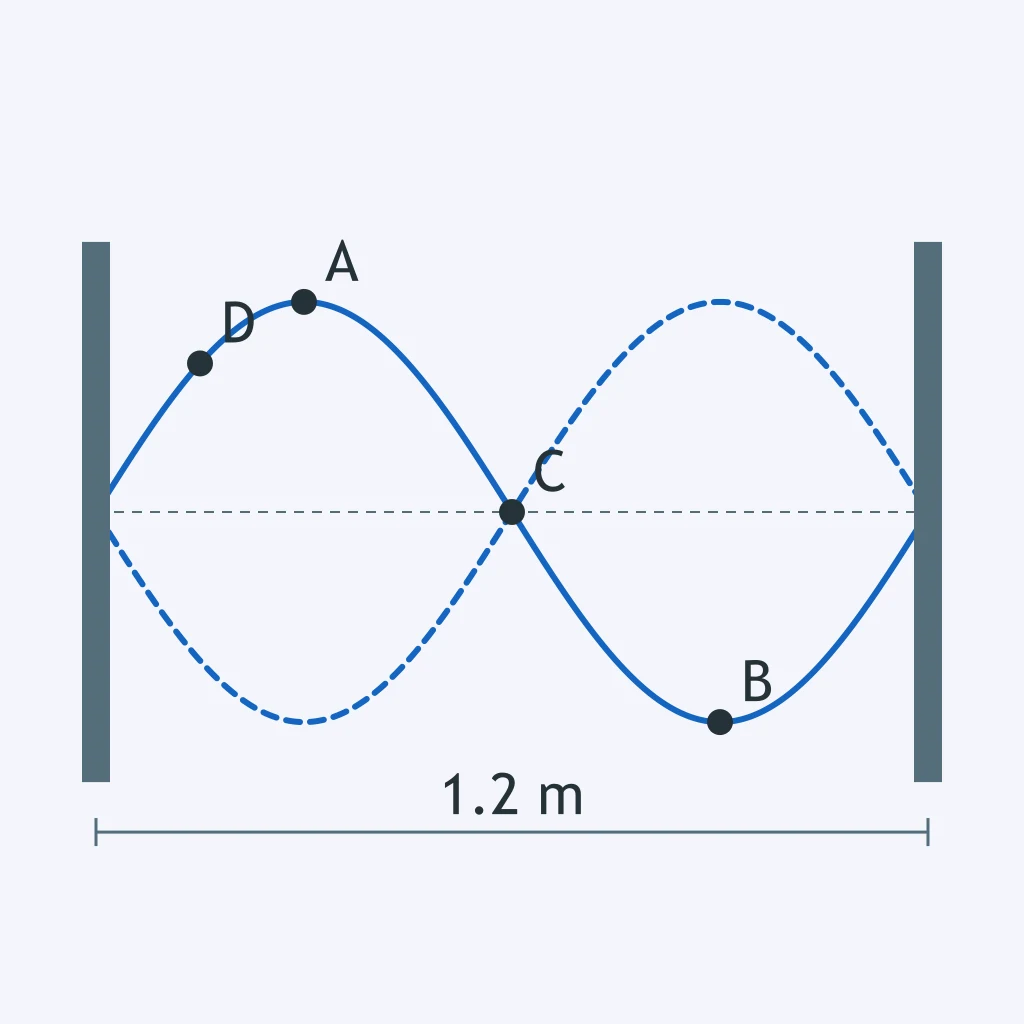
On the standing-wave figure, which labeled point has the greatest possible displacement from equilibrium?
The figure shows the fundamental standing wave on a string fixed at both ends. Which labeled point is an antinode?
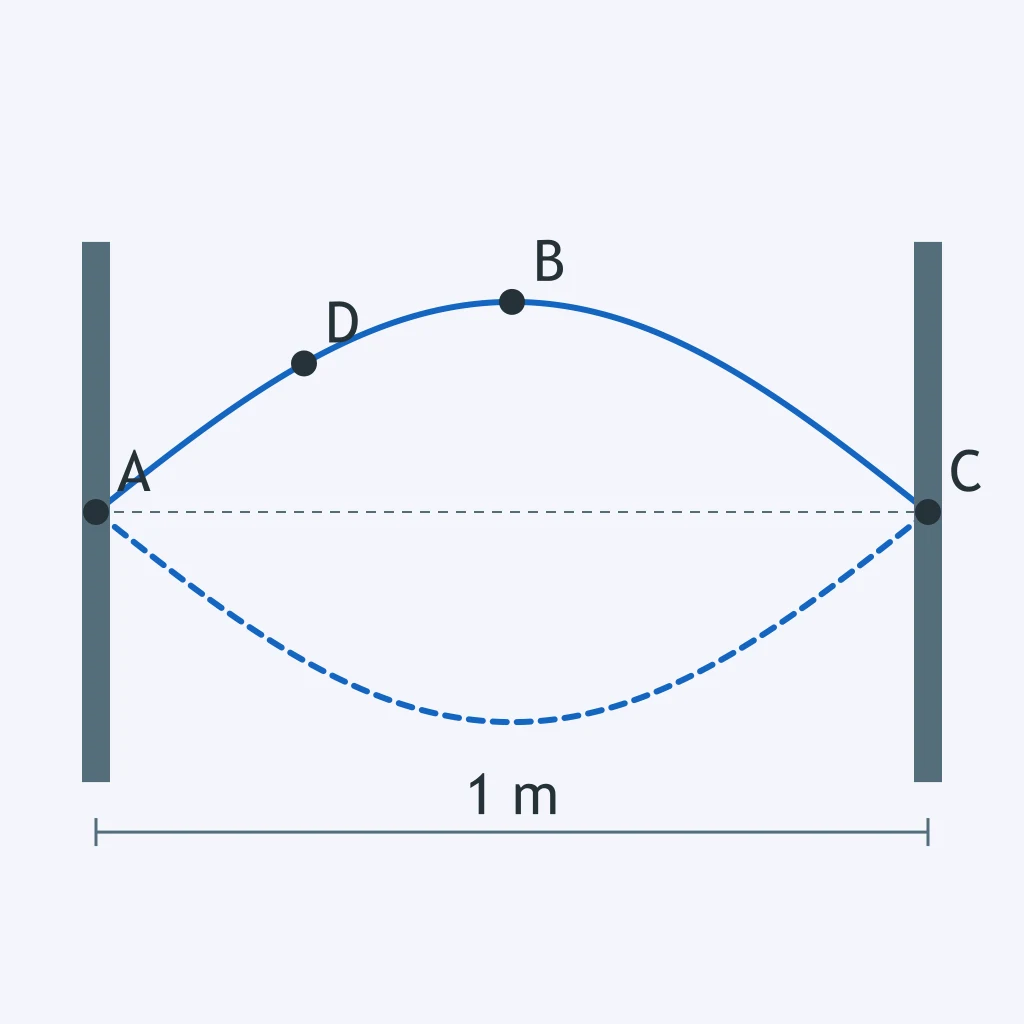
In the standing-wave figure, which point is the node between the first and second loops?
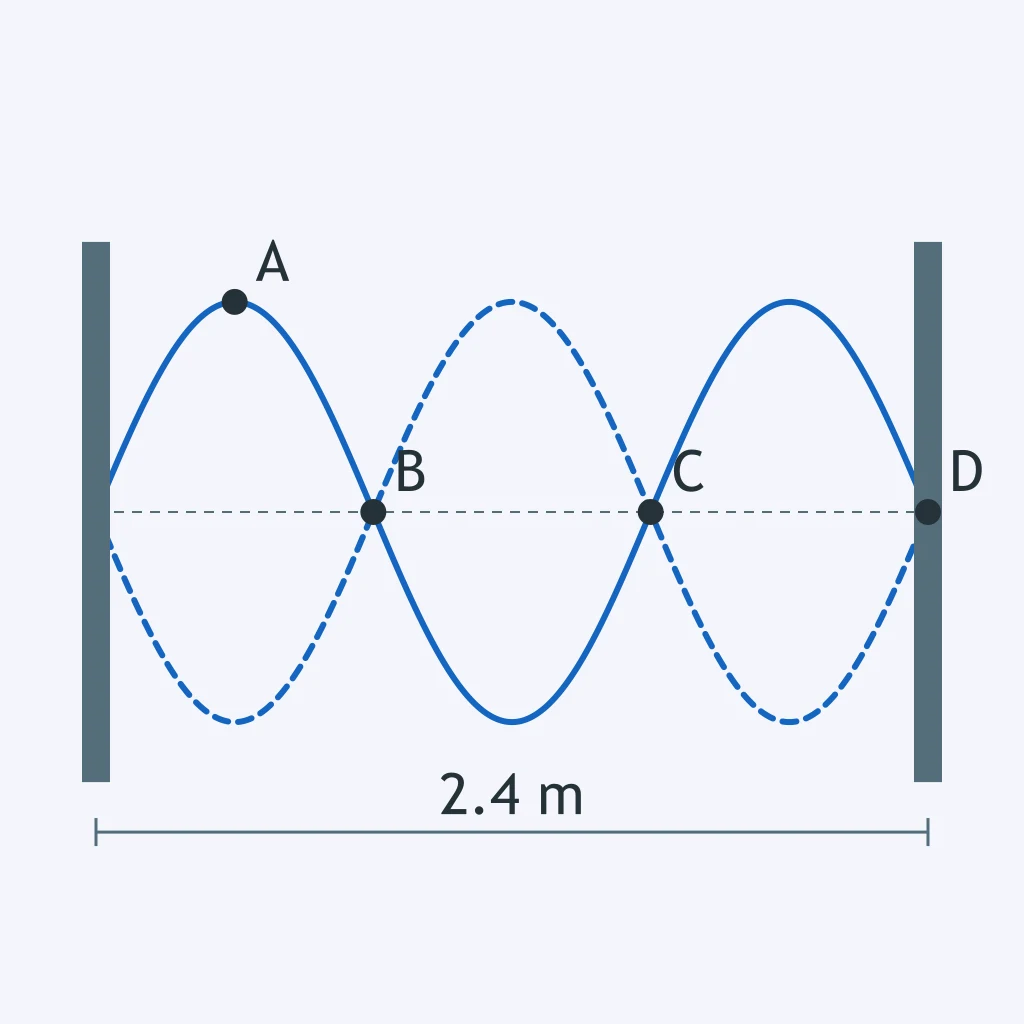
Use the standing-wave figure. Which labeled point is a node rather than an antinode?
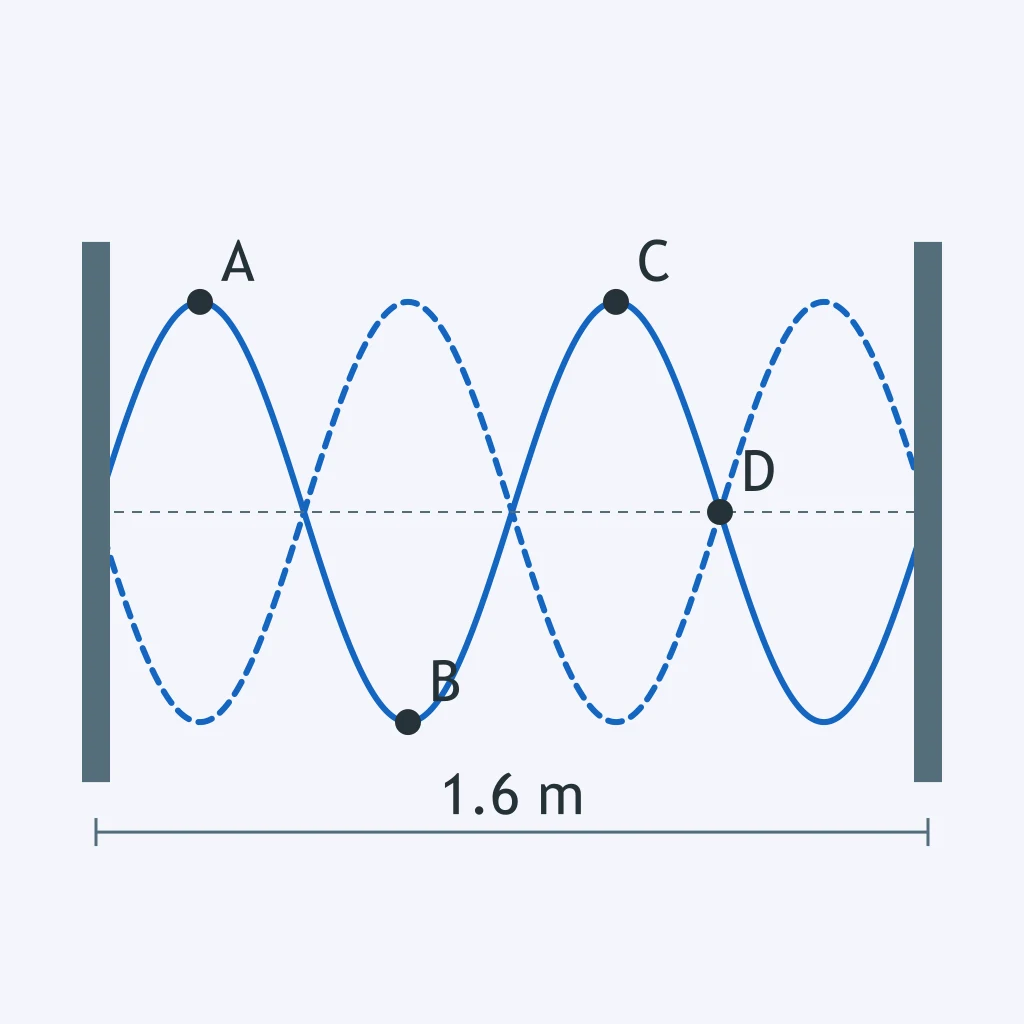
The figure shows a 1.6 m string fixed at both ends. For a fixed-end string, λ = 2L/n. Which harmonic and wavelength are shown?
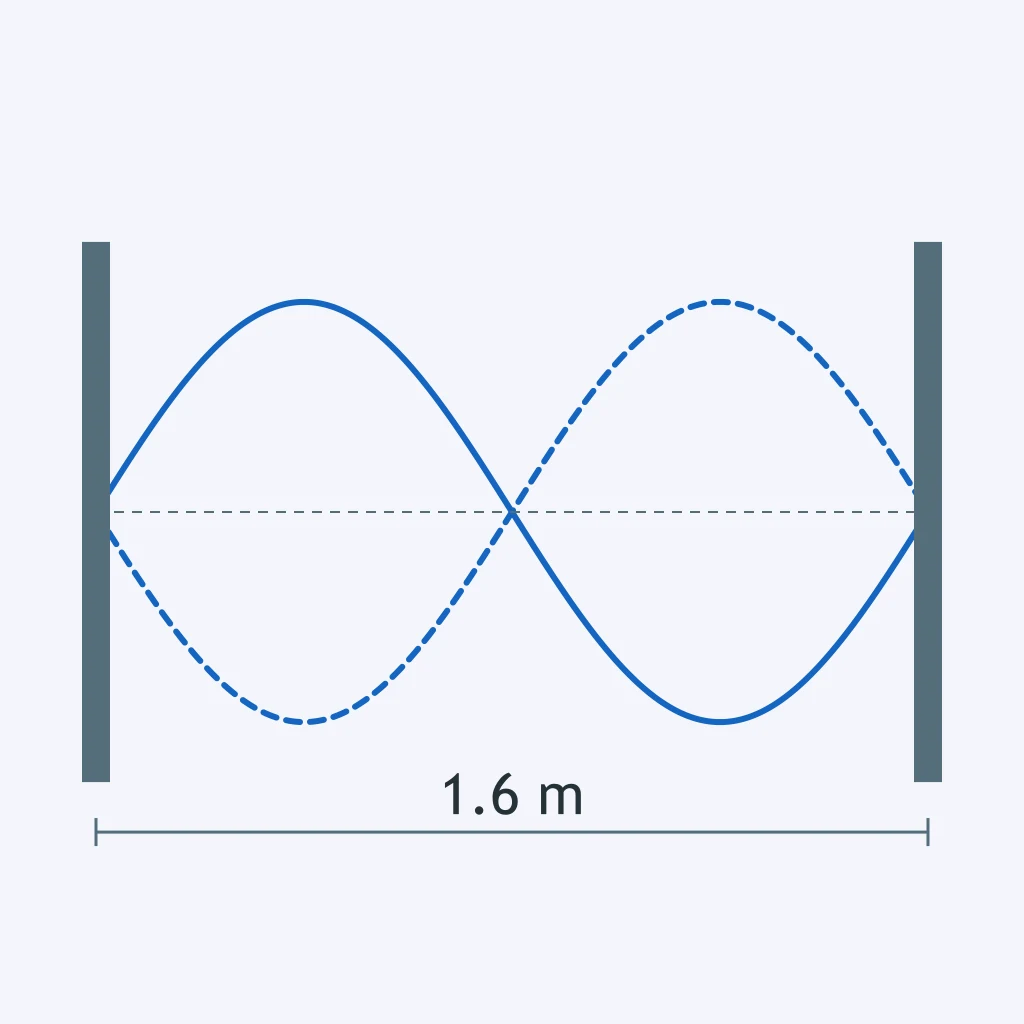
The figure shows a 2.4 m string fixed at both ends. For a fixed-end string, λ = 2L/n. Which harmonic and wavelength are shown?
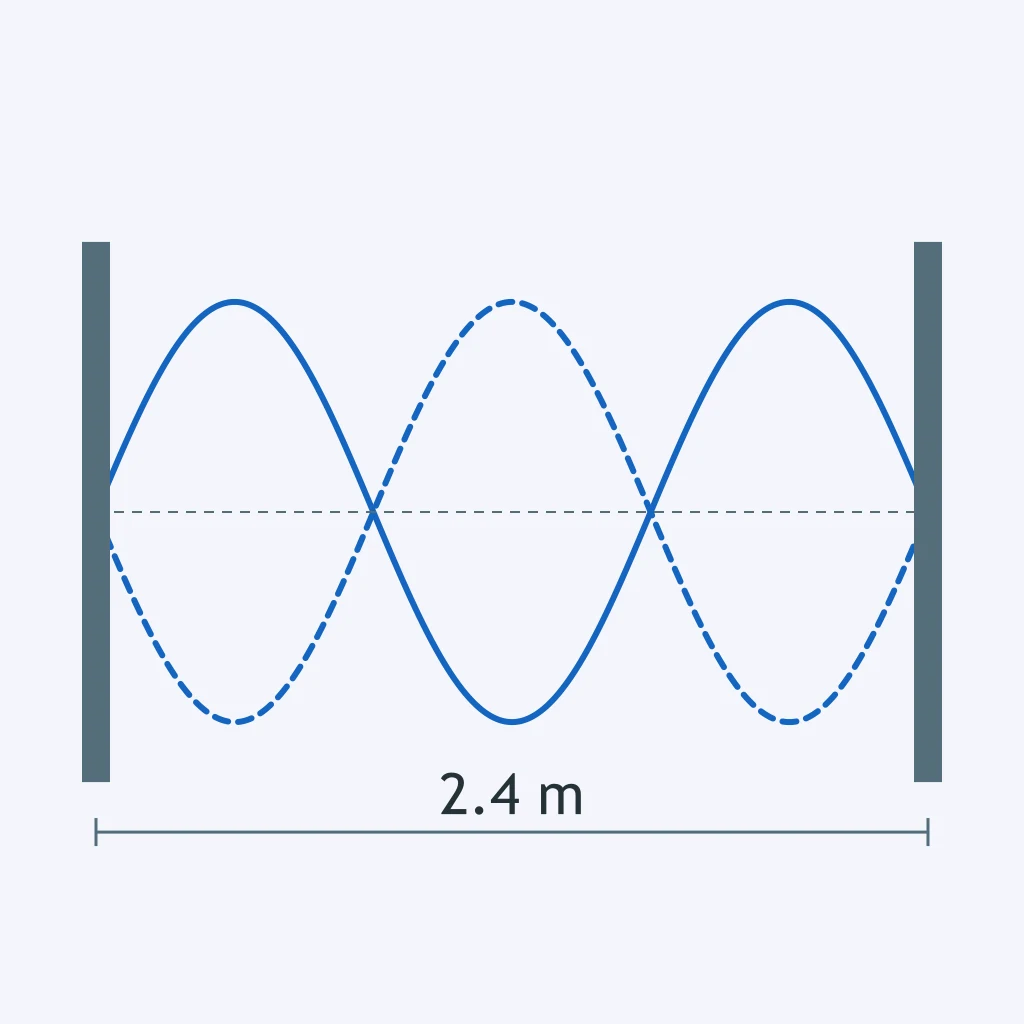
A 2.0 m string fixed at both ends shows the pattern in the figure. For this string, λ = 2L/n. Which harmonic and wavelength are shown?
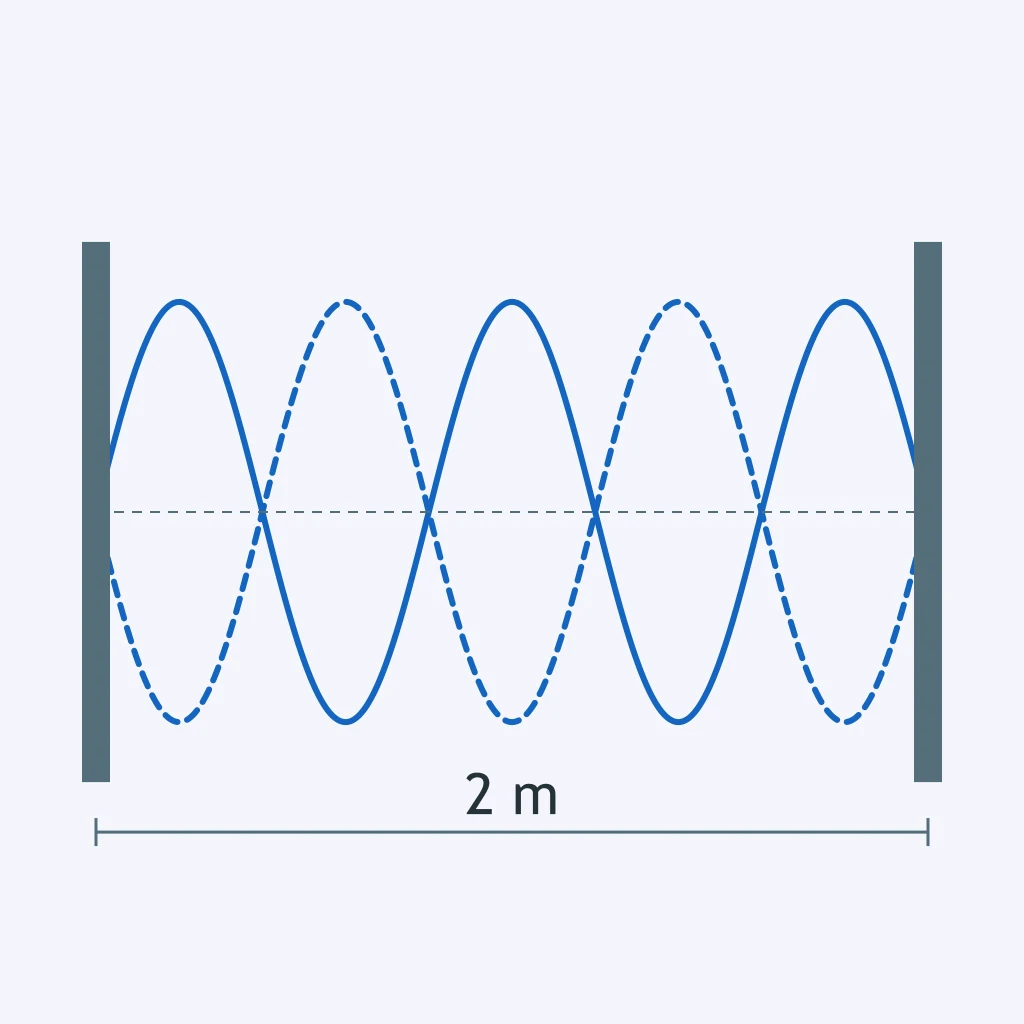
The figure shows a 0.75 m string fixed at both ends. For a fixed-end string, λ = 2L/n. Which harmonic and wavelength are shown?
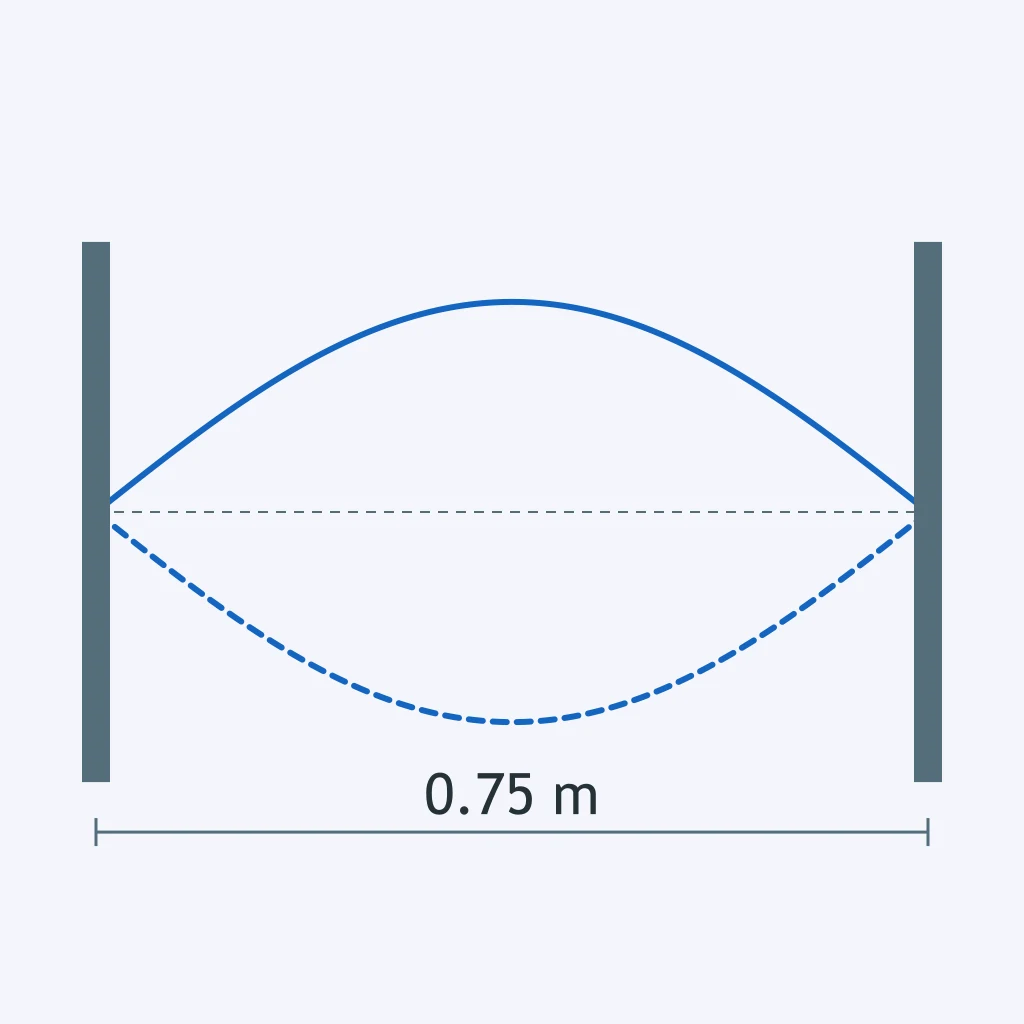
A 3.0 m string fixed at both ends vibrates as shown. For a fixed-end string, λ = 2L/n. Which harmonic and wavelength are shown?
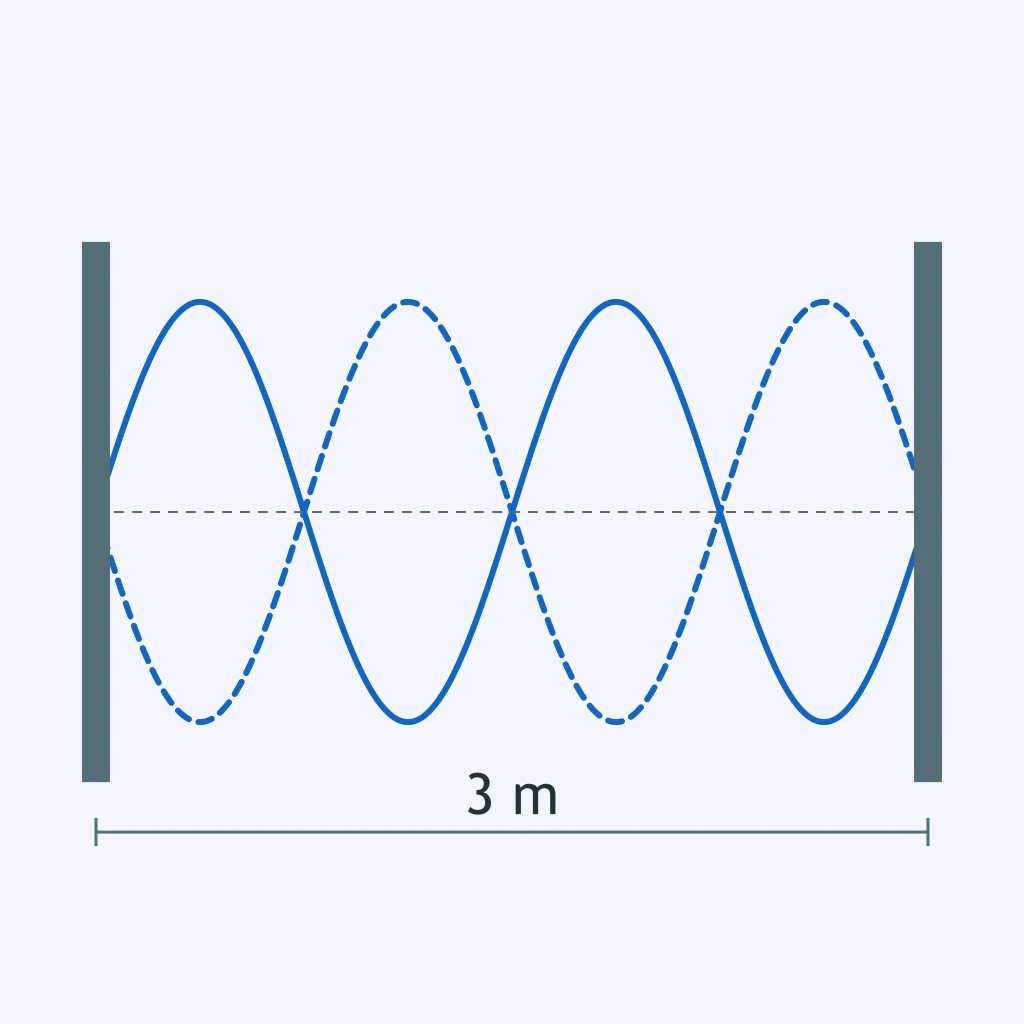
The figure shows a 1.8 m string fixed at both ends. For a fixed-end string, λ = 2L/n. Which harmonic and wavelength are shown?
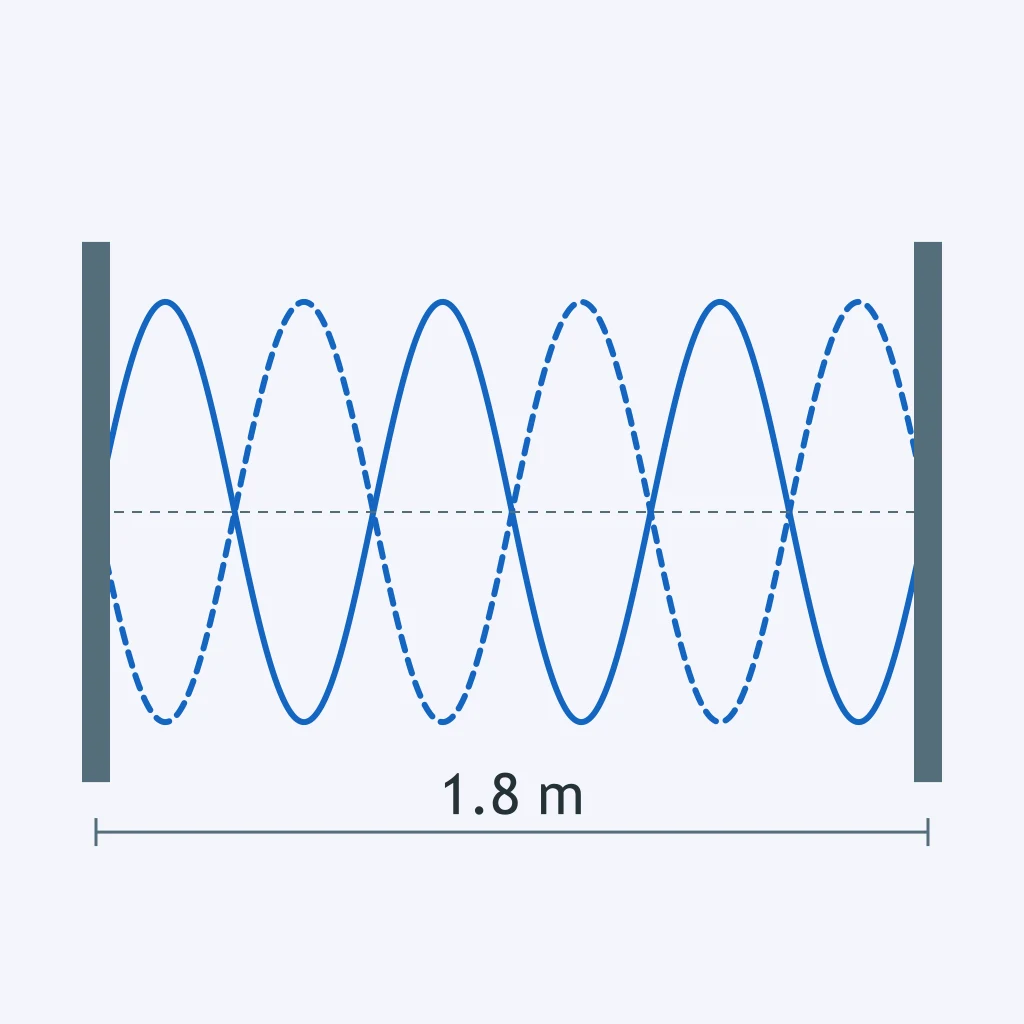
The figure shows a 2.0 m string fixed at both ends, and wave speed is 40 m/s. For this string, λ = 2L/n and f = v/λ. What is the frequency?
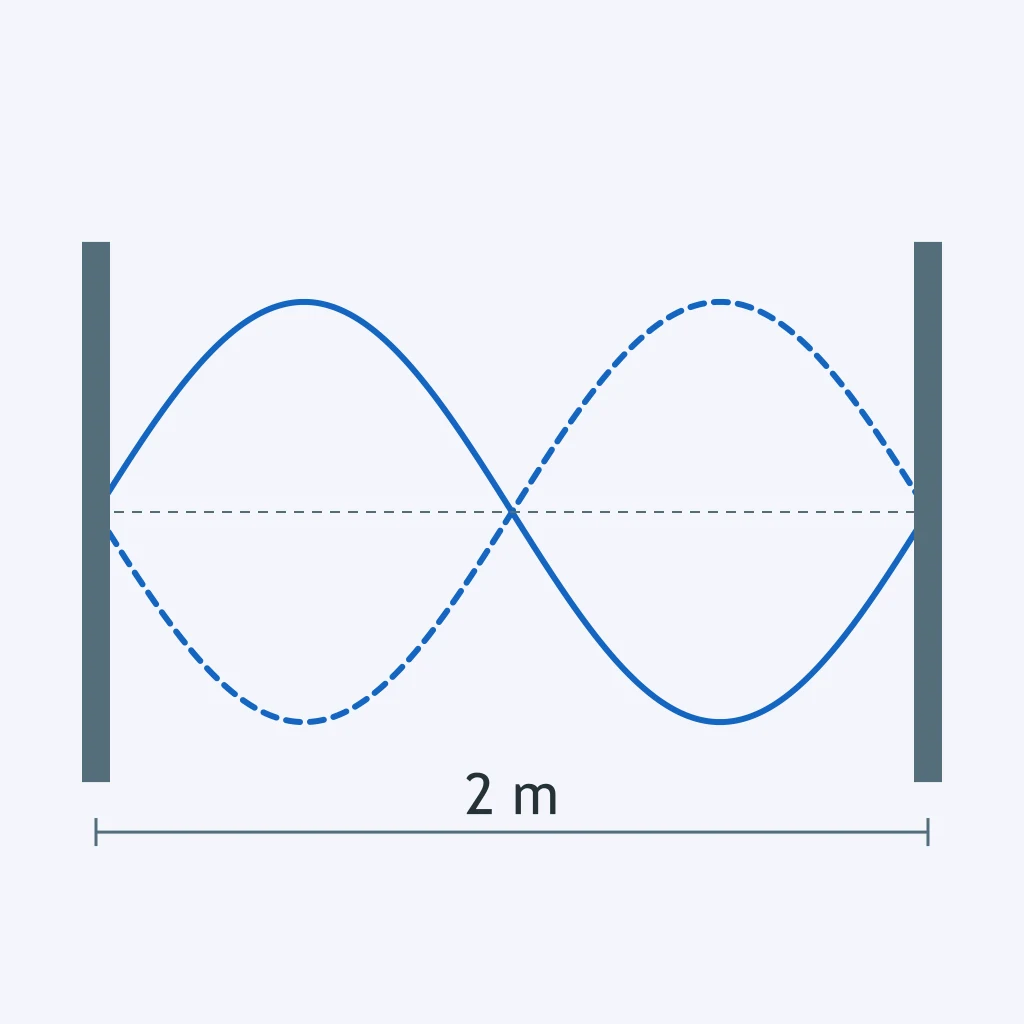
A 1.5 m fixed-end string shows the pattern in the figure. Wave speed is 60 m/s. Using λ = 2L/n and f = v/λ, what is the frequency?
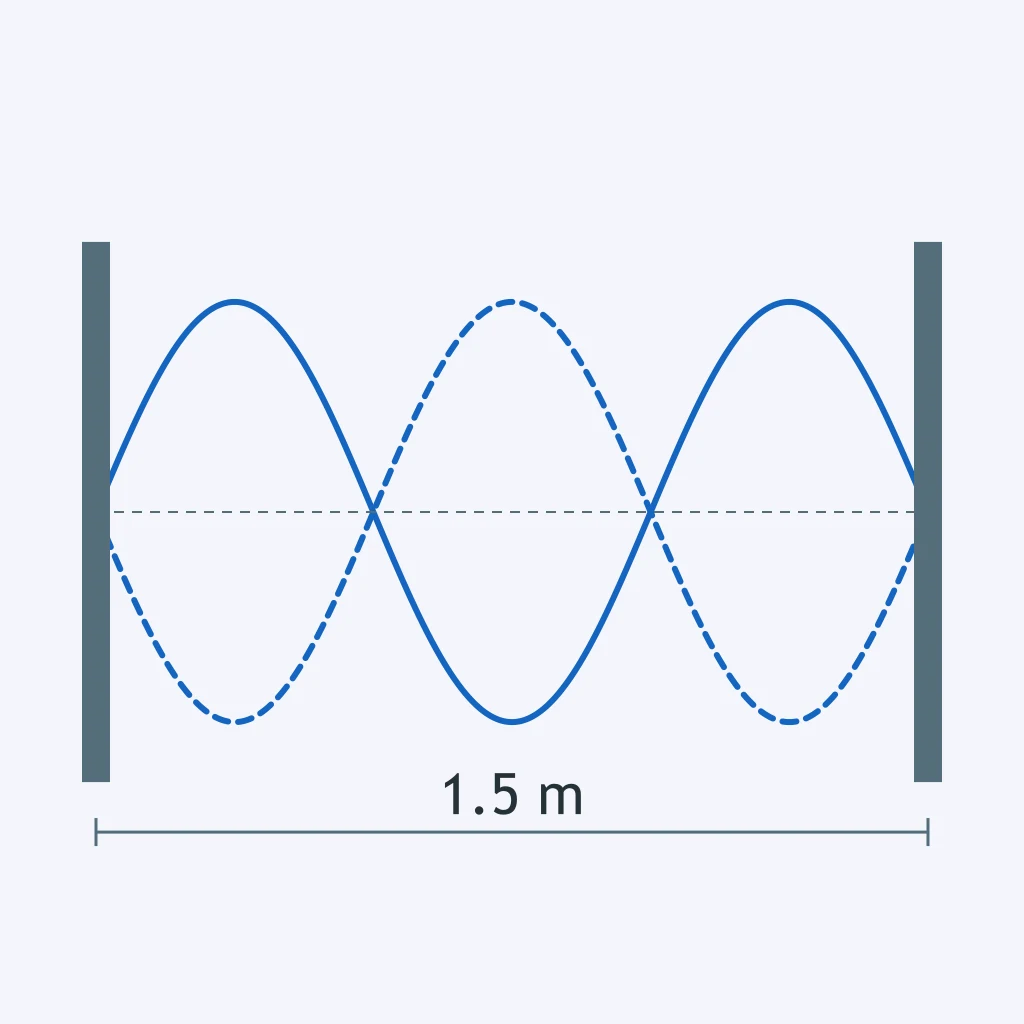
The figure shows a 2.4 m string fixed at both ends. If wave speed is 48 m/s, use λ = 2L/n and f = v/λ to find the frequency.
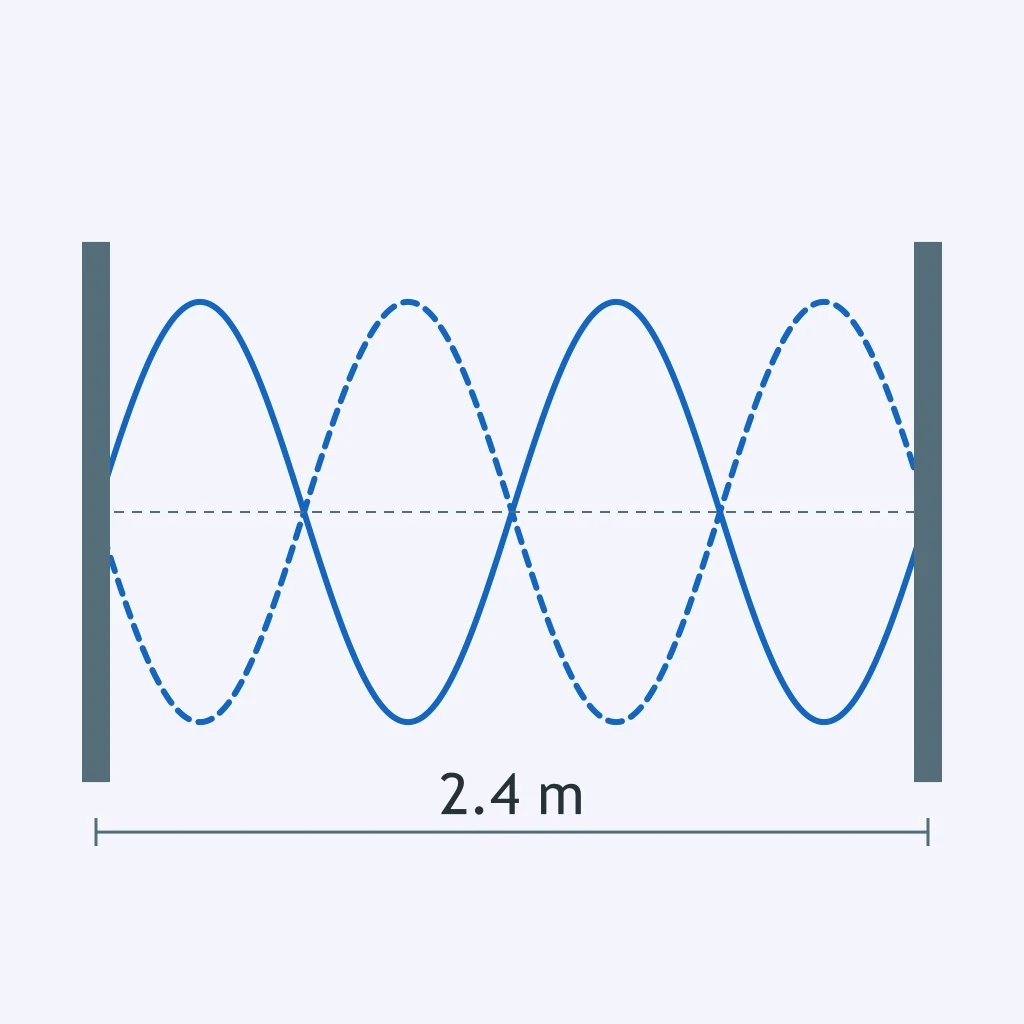
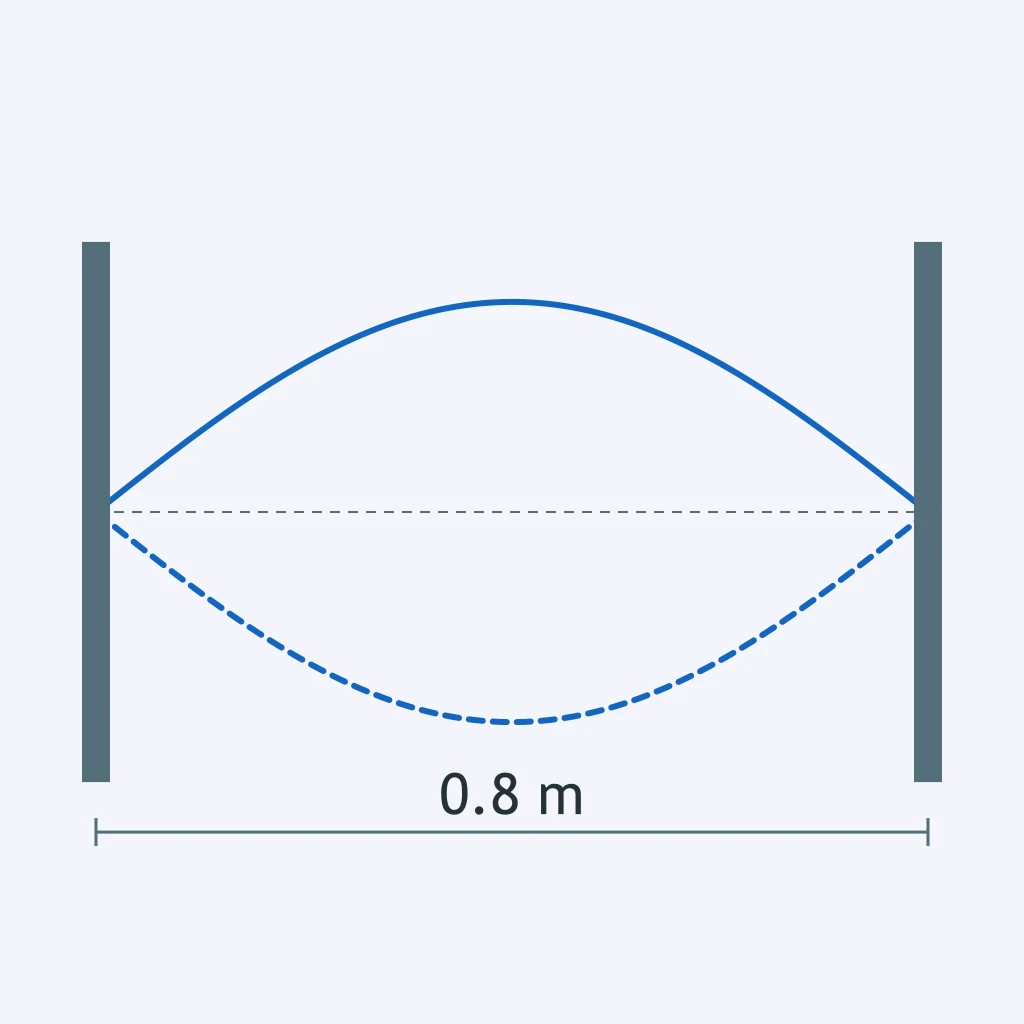
A fixed-end string is 0.80 m long and has the standing wave shown. Wave speed is 32 m/s. With λ = 2L/n and f = v/λ, what is f?
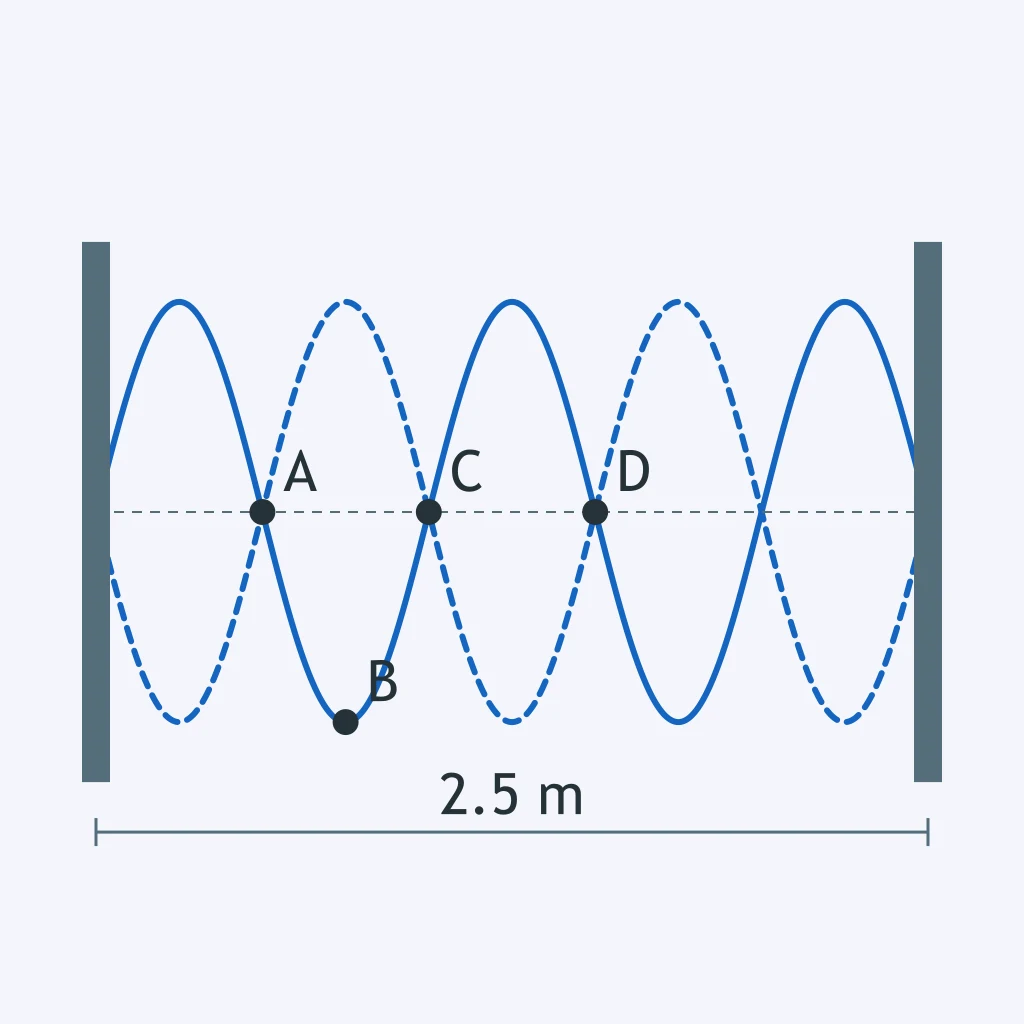
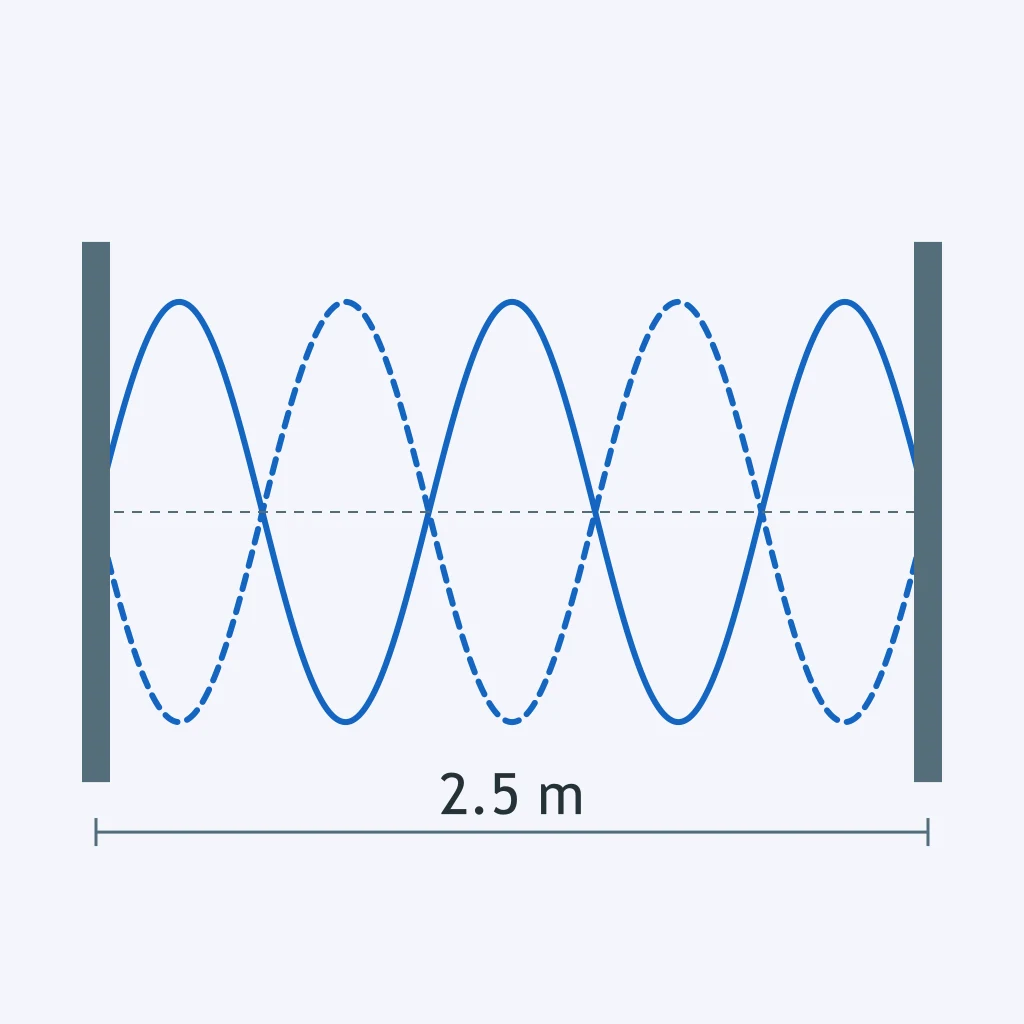
The figure shows a 2.5 m string fixed at both ends. Wave speed is 50 m/s. Using λ = 2L/n and f = v/λ, what frequency matches the pattern?
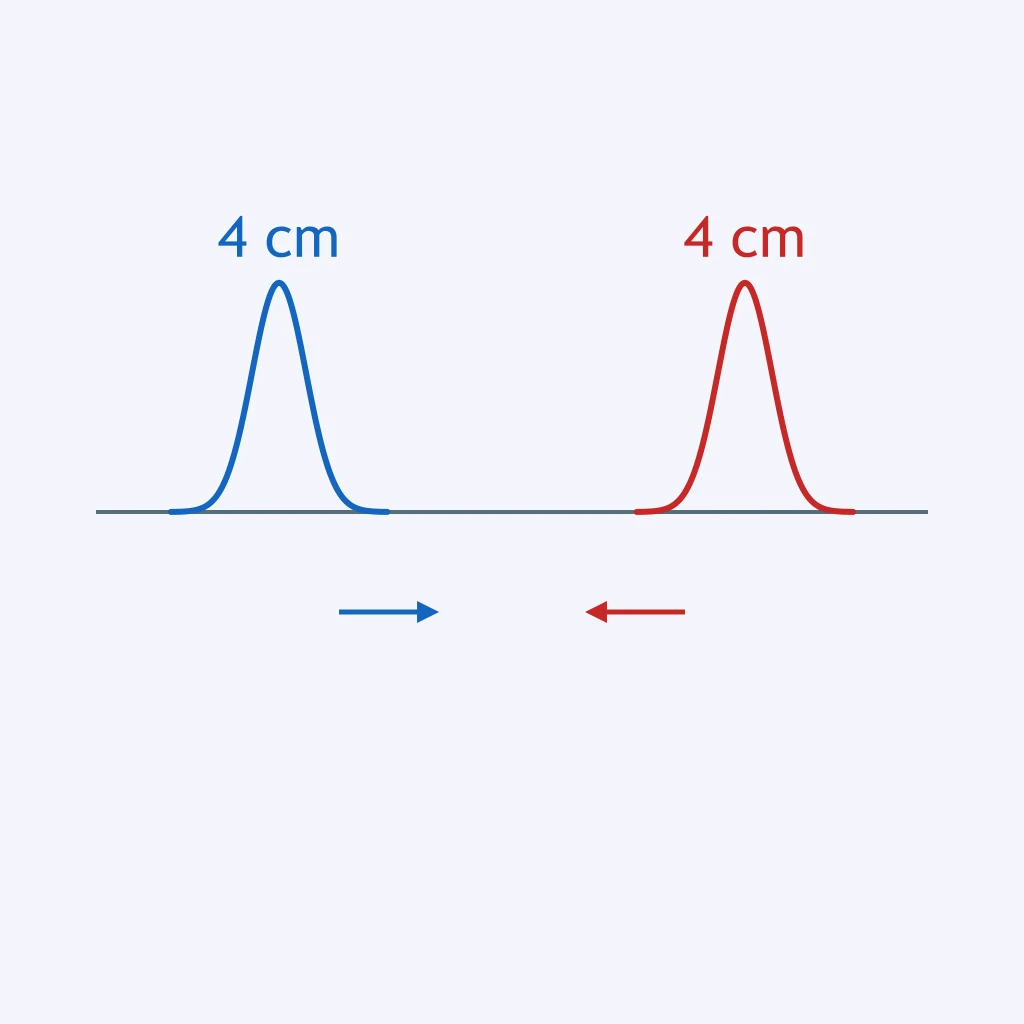
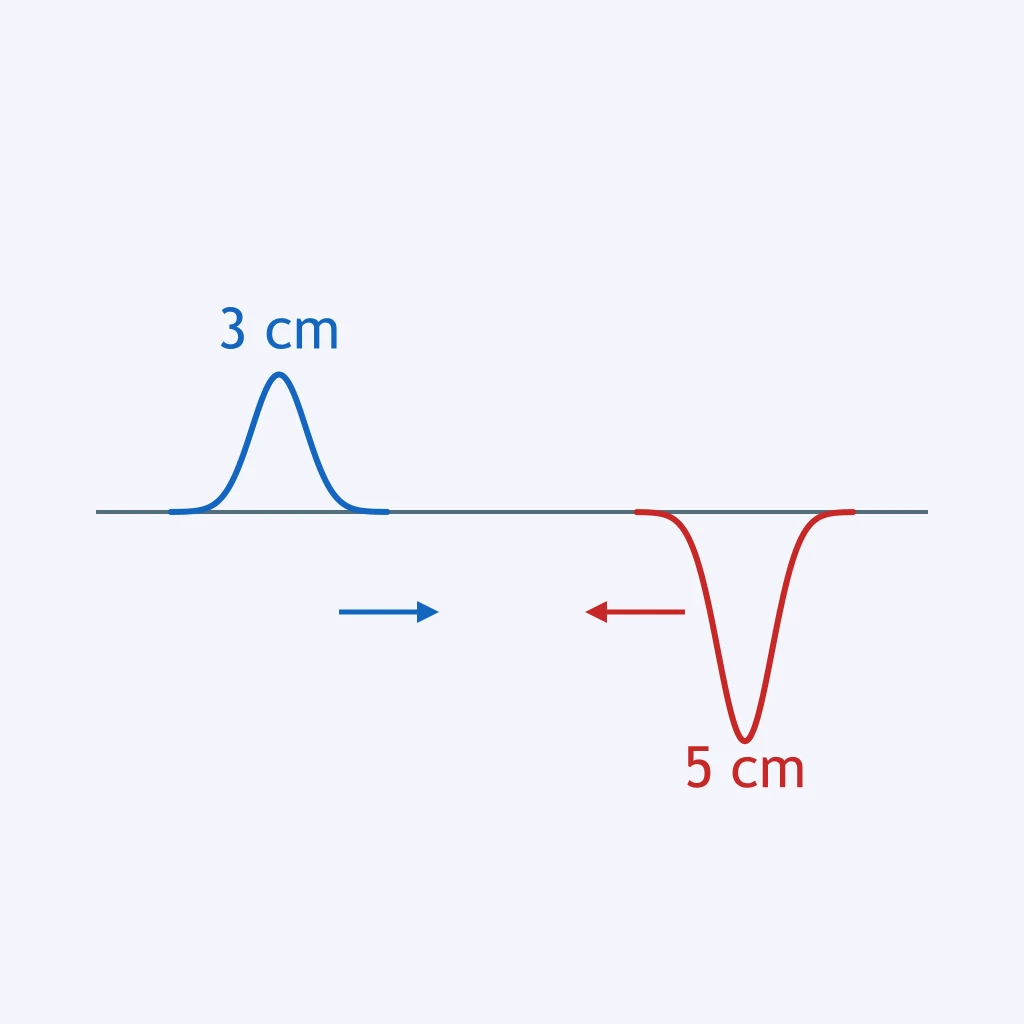
Two same-width pulses on a rope travel toward each other as shown. What is the rope's displacement when they exactly overlap?
The figure shows two same-width pulses traveling toward each other. Upward is positive. What is the displacement at exact overlap?
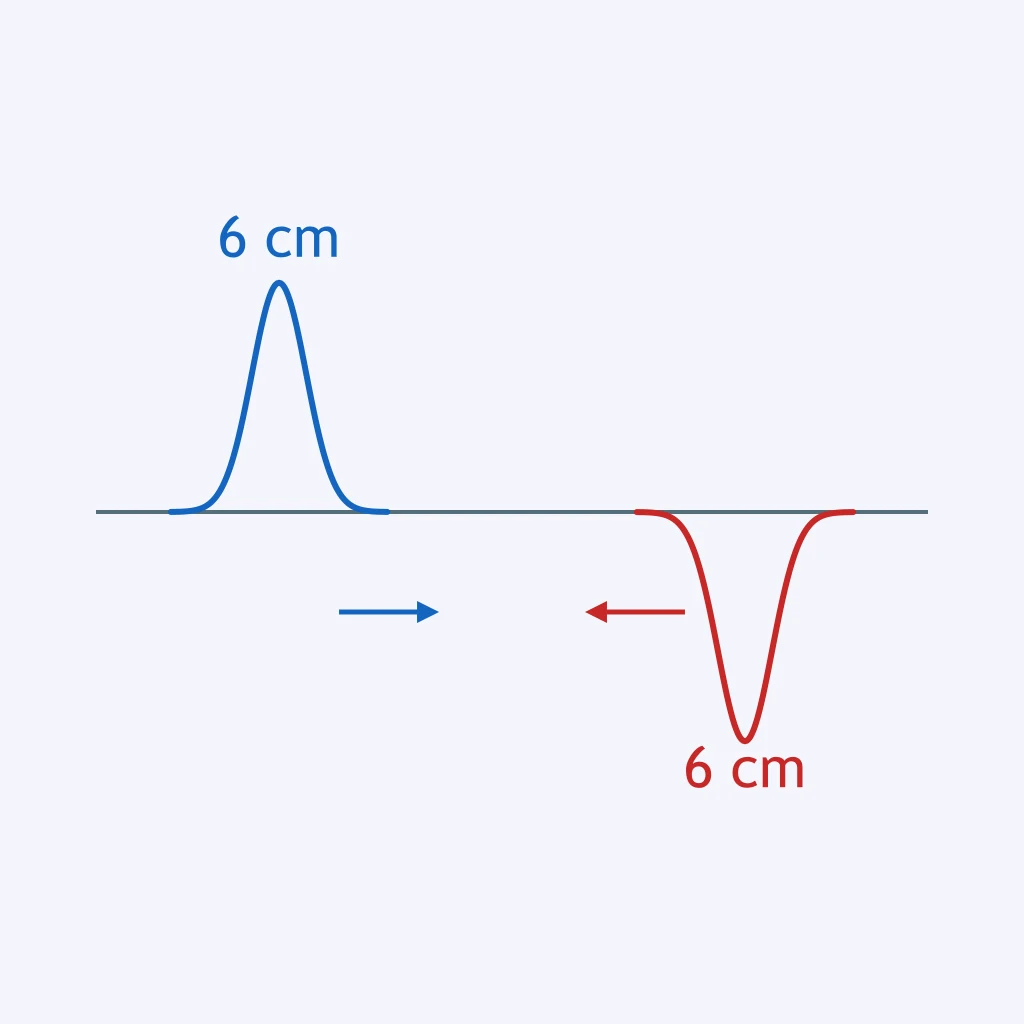
Two pulses on the same rope meet as shown. Upward is positive. What is the resultant displacement when the pulses exactly overlap?
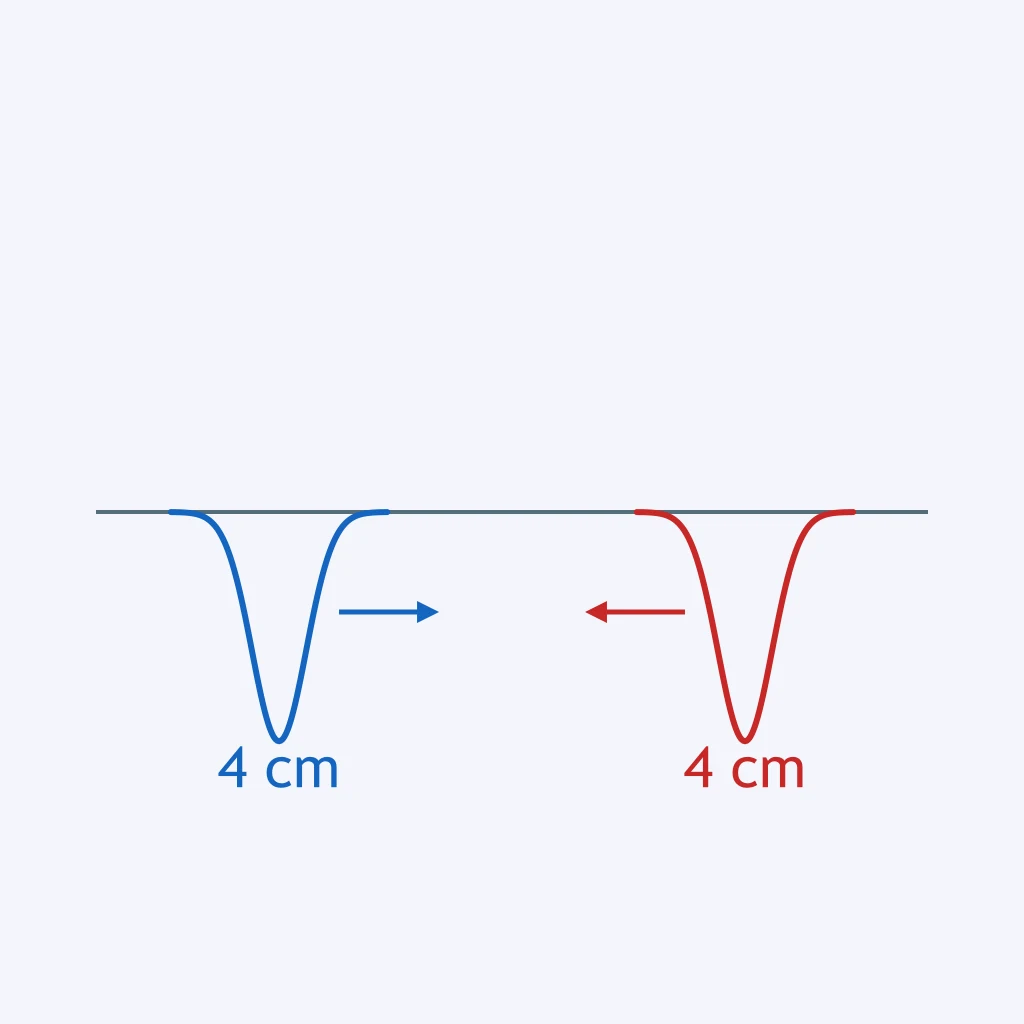
The figure shows two downward pulses of the same width traveling toward each other. What is the displacement at exact overlap?
Which statement best describes the superposition of waves?
Which condition can produce a standing wave on one string?
In a standing wave, what is a node?
In a standing wave, what is an antinode?
When two identical pulses meet in phase on a rope, what kind of interference occurs?
When a crest and an equal trough overlap on the same rope, what is the result at that instant?
For a string fixed at both ends, what must be true at each fixed end during a standing wave?
What is the fundamental frequency of a standing wave system?
Crack the passcode before the zombies get in.
Answer, then swat bugs for bonus points.
Race through questions at your own speed.
Same question on every screen. Fastest wins.

Pick a tile, answer, hit bonuses and steals.
The Doppler Effect
30 questions