Loading
by BlastRoom
Predict how relative motion changes the observed frequency of sound.
#physics

30 questions
One question set, multiple game modes. Tap any game to see it in action. Not sure which to pick?
Answer to place stones and capture territory.
Outrun the snow together.
Earn blasts, then hunt the other team.
Answer to earn energy, then climb.

The class blasts through walls together.
Bid on mystery lots. Most money wins.
Sell tours. Nice, standard, or a total scam.

Answer, restock, and serve the rush.
More correct answers pulls the rope your way.
Answer, then shoot down the alien wave.
Answer, then tap to leap the frozen ridge.
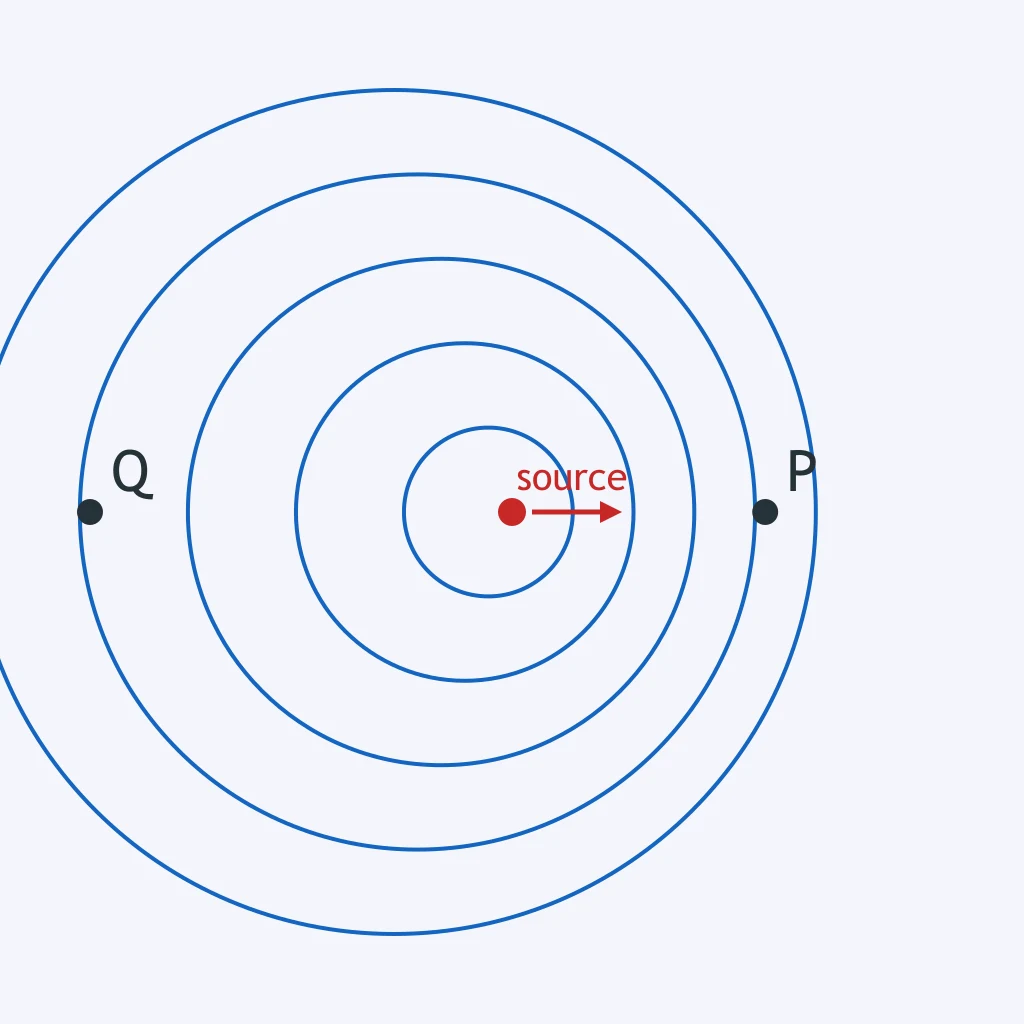
The figure shows wavefronts from a buzzer moving steadily to the right. Observer P is ahead of the buzzer, and observer Q is behind it. Compared with the emitted frequency, what does each receive?
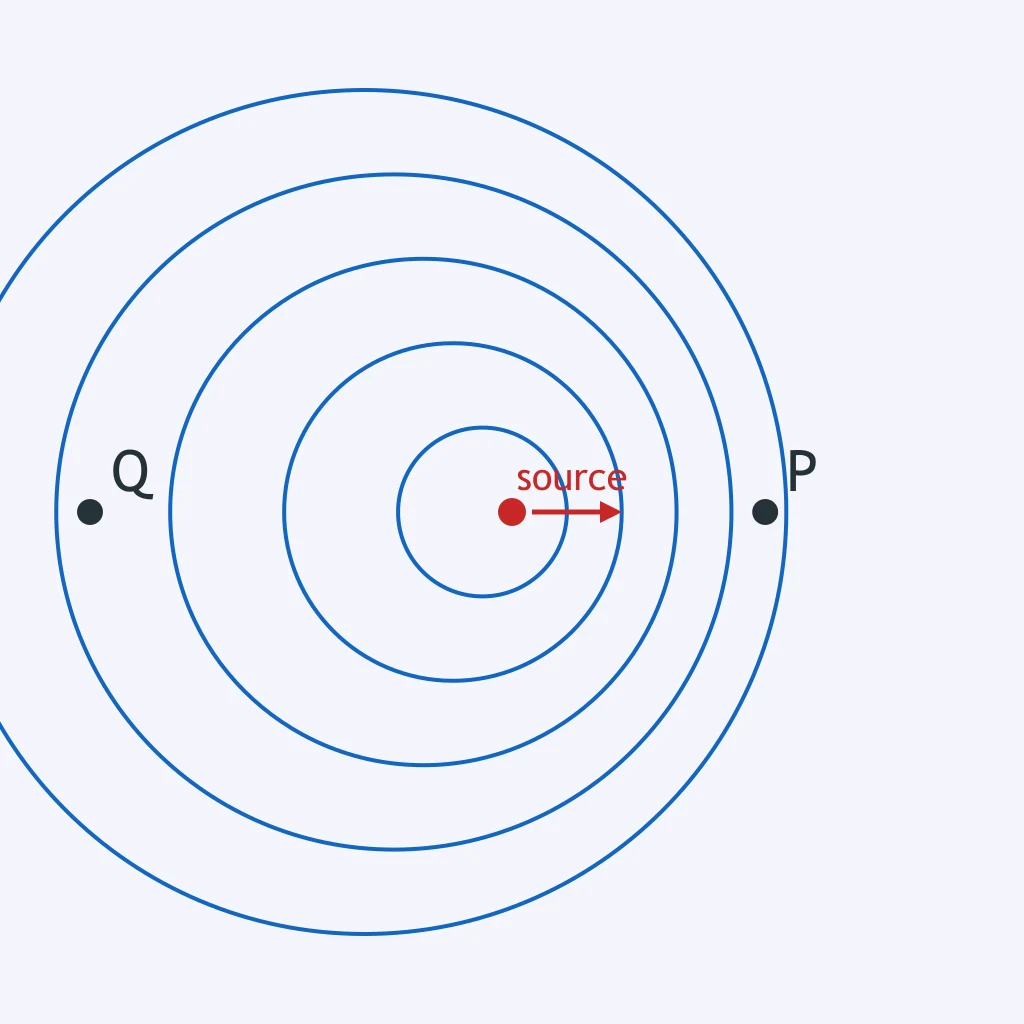
Use the moving-source wavefront figure. How do the wavelengths received by observers P and Q compare?
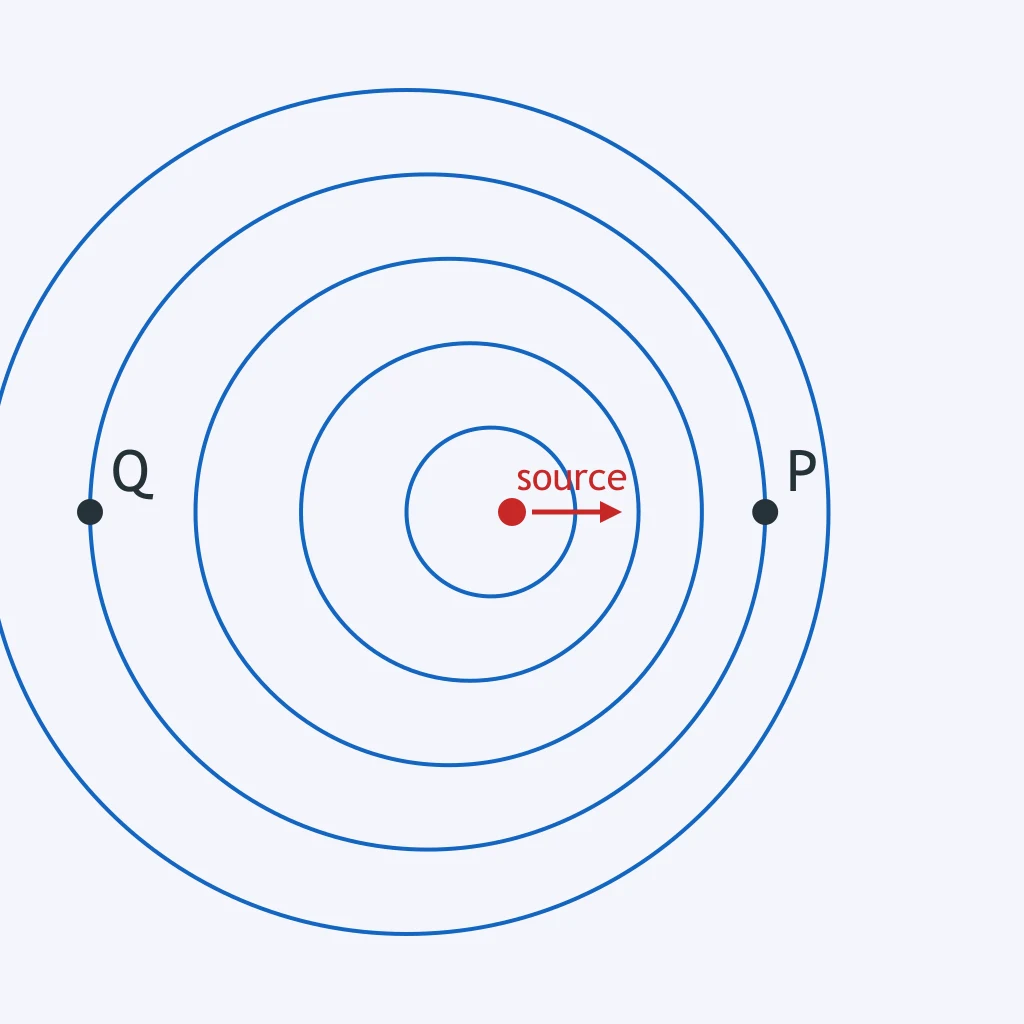
The figure shows wavefronts from a moving siren, with observers P and Q on opposite sides. Which observer hears the higher pitch?
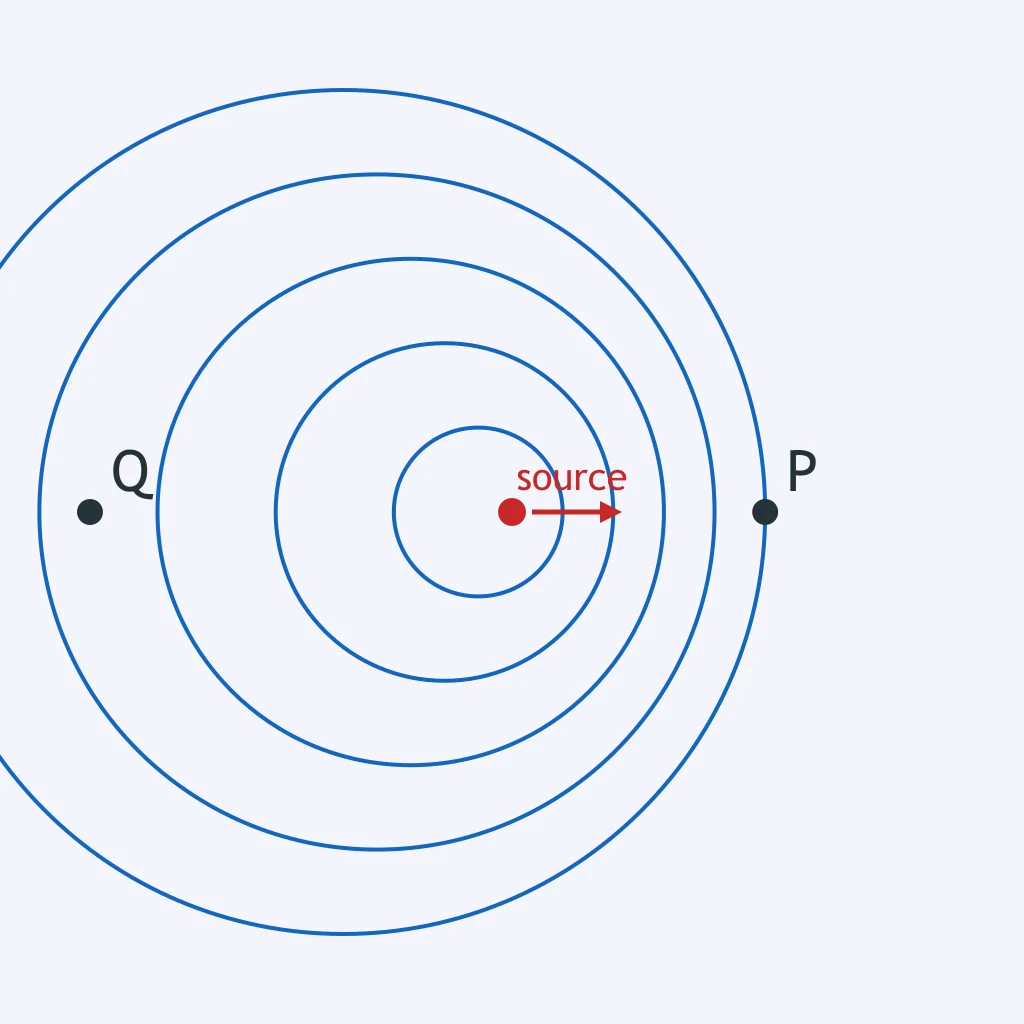
In the wavefront diagram, a whistle moves to the right at constant speed. P stands in front of the whistle and Q stands behind it. Which statement describes the periods they observe?
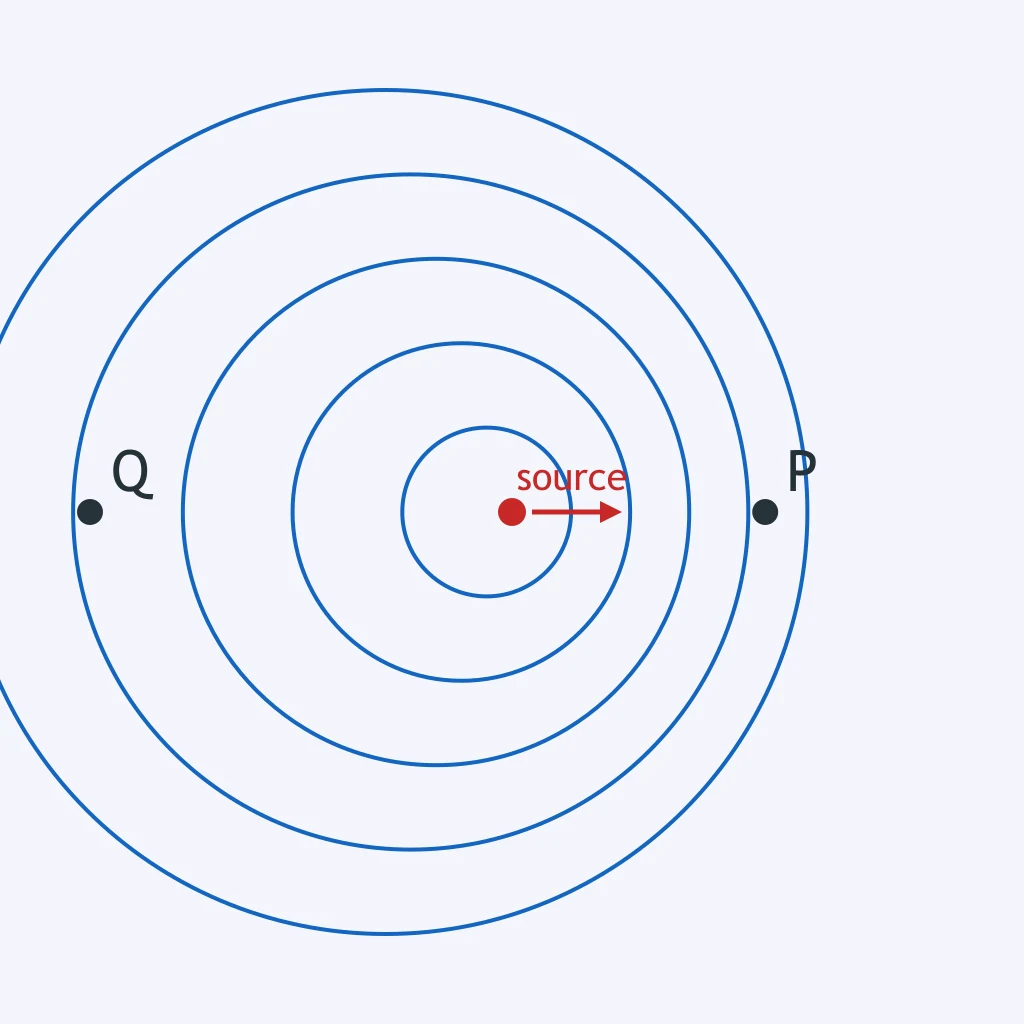
The figure shows a source moving right through still air. P is ahead of it and Q is behind it. Which comparison of observed frequency is correct?
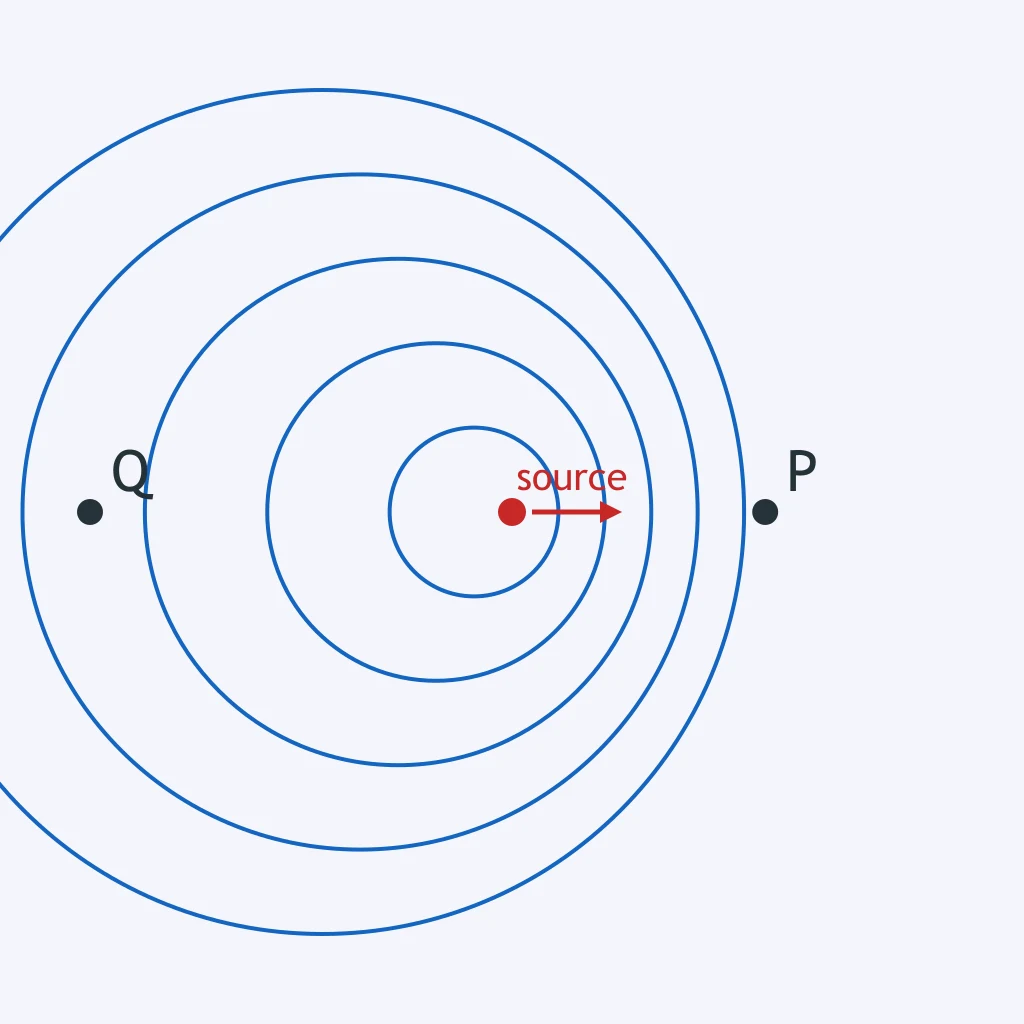
A cart carries a speaker to the right while emitting a steady tone. In the wavefront figure, P is in front of the cart and Q is behind it. What is true about the sound speed in the air?
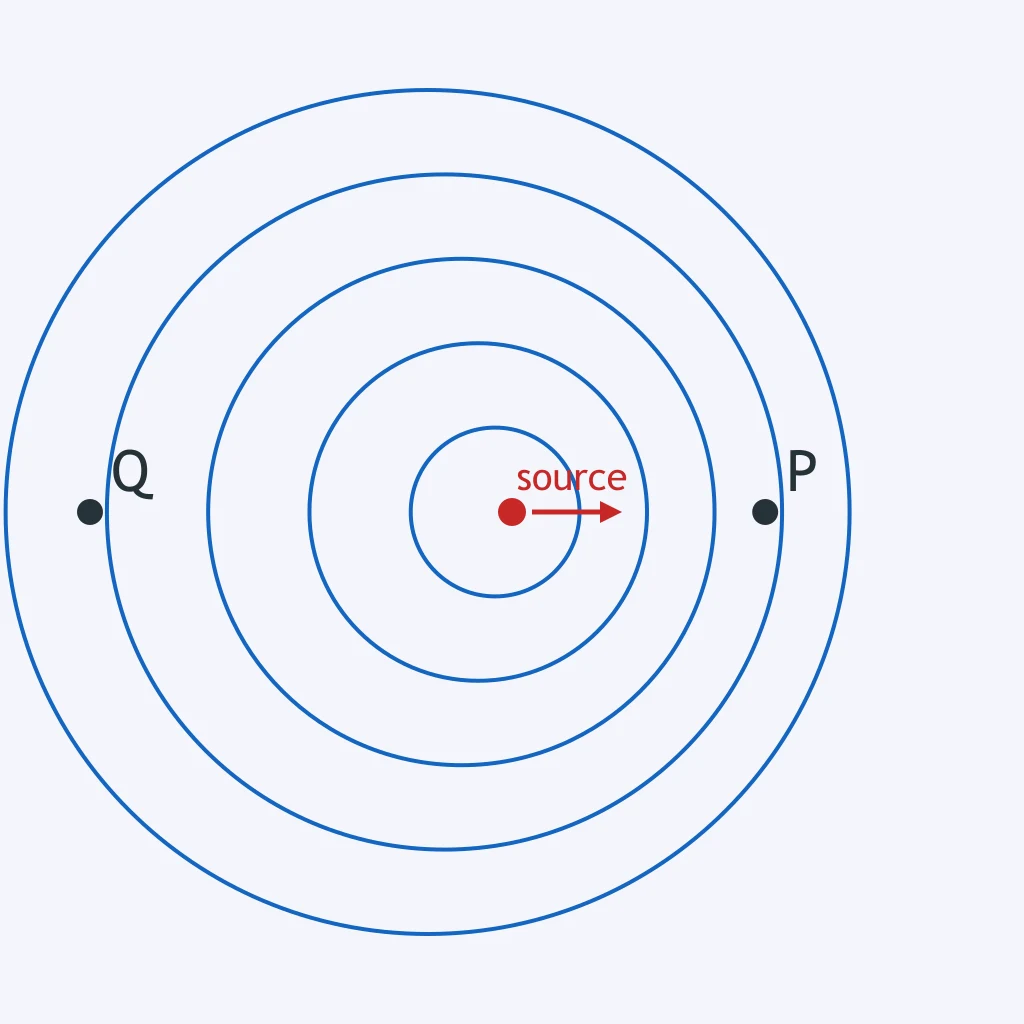
Look at the moving-source wavefront diagram. Which observer, P or Q, receives the lower frequency?
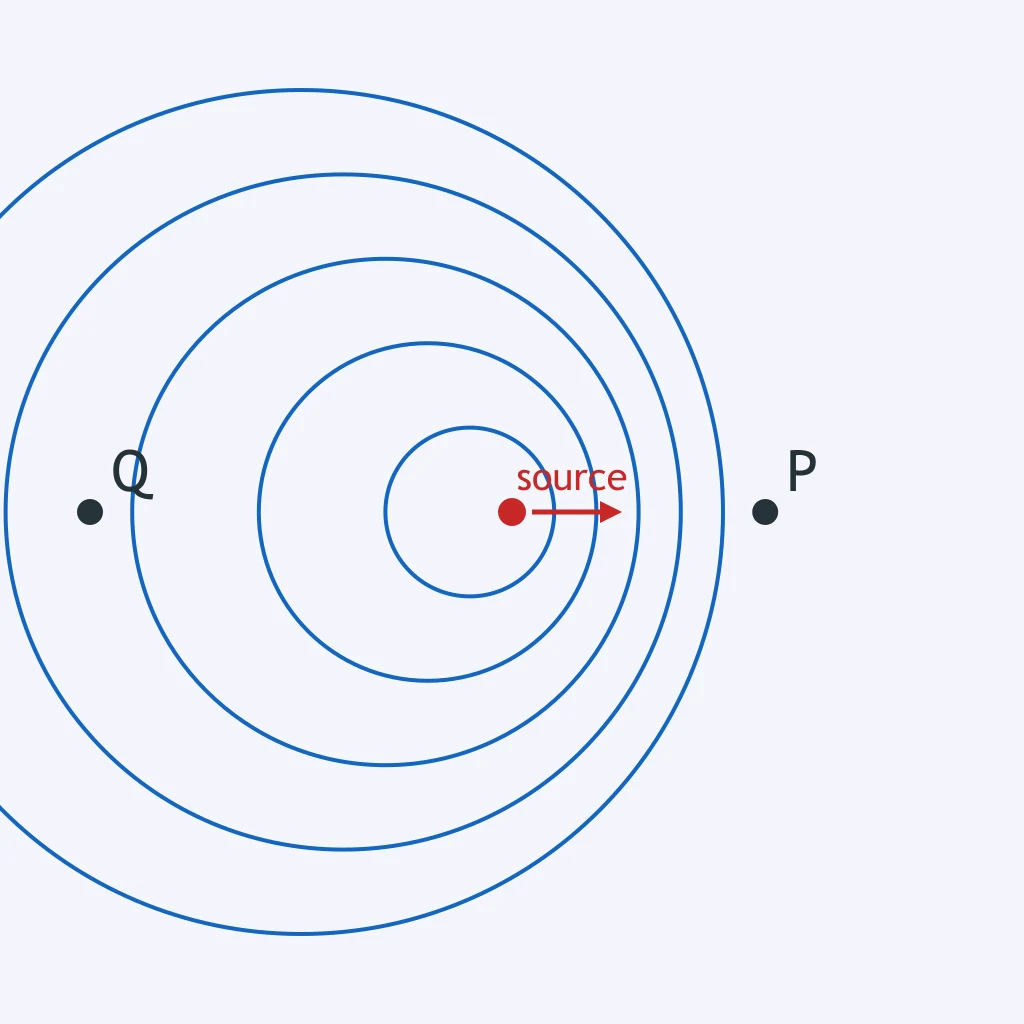
In the diagram, a horn moves right while emitting a constant frequency. P is ahead on the right, and Q is behind on the left. Which statement best matches the wavefront spacing?
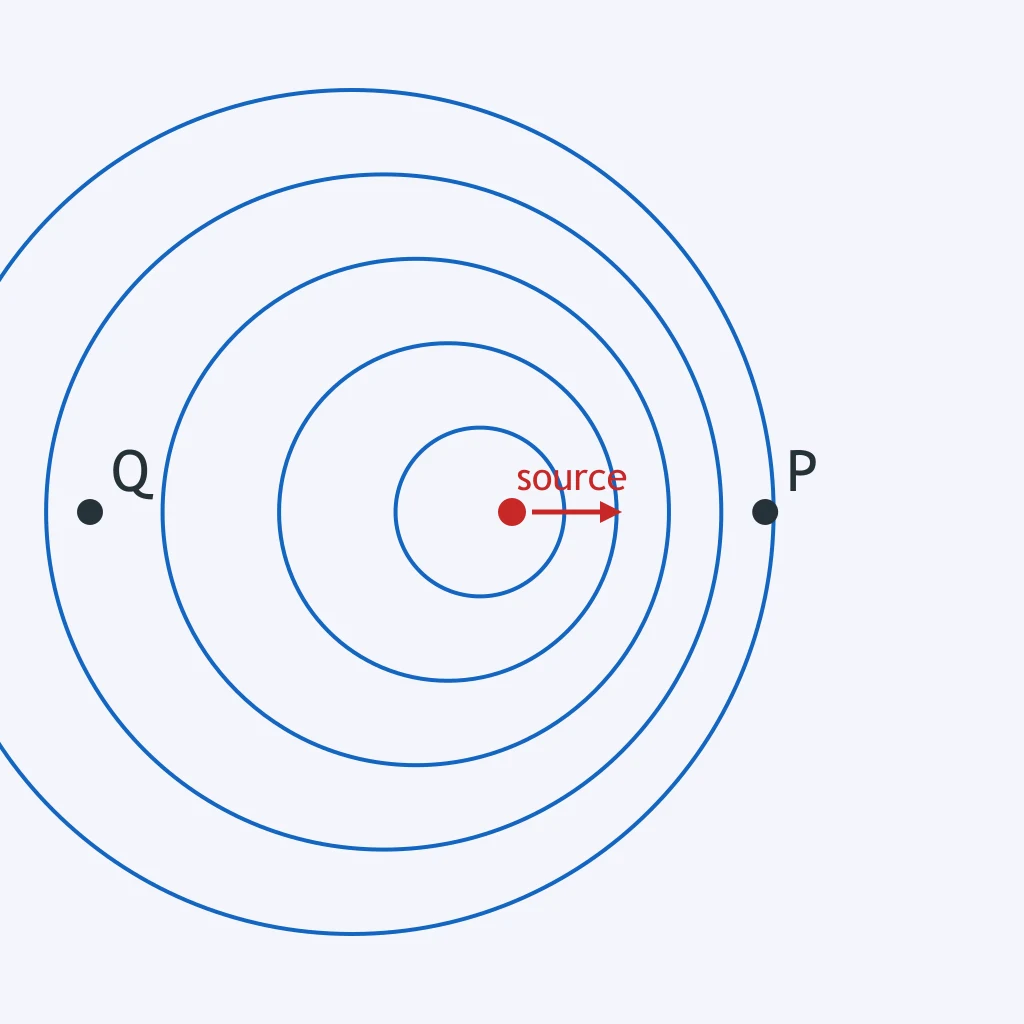
A moving buzzer's wavefronts are drawn around successive source positions. P is in front of the moving buzzer and Q is behind it. What does Q hear compared with P?
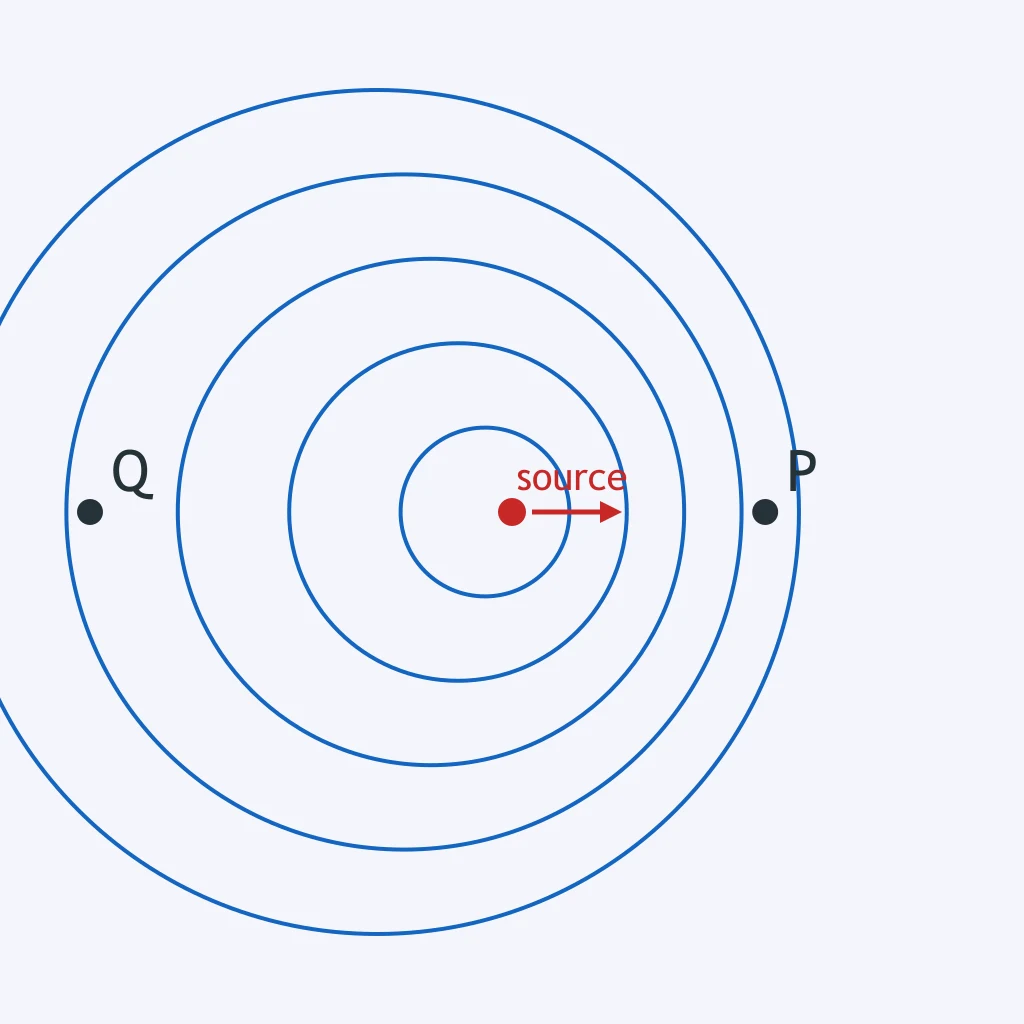
In the figure, a sound source moves right at constant speed. P stands ahead and Q behind. If the source emits 600 Hz, which qualitative result is correct?
A fire truck siren emits a steady 700 Hz tone while the truck drives directly toward a stationary listener at constant speed. What does the listener hear while the truck approaches?
A train horn emits a constant 300 Hz tone as the train moves directly away from a stationary student. Which description of the observed sound is correct?
A runner moves straight toward a stationary loudspeaker that emits a steady 500 Hz tone in still air. Which sound does the runner hear?
A skateboarder rolls straight away from a stationary speaker playing a steady 440 Hz tone. What happens to the frequency the skateboarder observes?
A police car with a steady siren is parked, and a cyclist rides directly toward it at constant speed. Which explanation correctly predicts the cyclist's pitch?
A whistle on a cart moves directly away from a stationary listener while emitting a steady tone. Which statement is correct?
A listener walks directly away from a stationary tuning fork vibrating at a steady 256 Hz. What frequency comparison is correct?
A drone carries a buzzer straight toward a motionless observer while the buzzer emits a constant 900 Hz tone. Which option describes the Doppler shift?
A student stands still while an alarm clock on a rolling cart moves directly past and away at constant speed after passing. What happens to the observed frequency after it has passed?
A kayaker paddles straight toward a stationary foghorn that emits a steady tone. Which statement correctly separates the observer effect from a source effect?
A loudspeaker at rest in still air sounds a steady tone, and a cyclist rides at constant speed straight toward it. Which quantity is the same for the cyclist as for a person standing still at that place?
A siren source moves through still air toward a stationary observer while emitting a constant tone. Which quantity is not changed by the source's motion?
A stationary buzzer emits a steady tone, and a jogger moves directly away from it. Which quantity in the air stays the same as it would be if the jogger stopped?
A whistle moves away from a stationary listener through still air. Which quantity remains the same as when the whistle was at rest in the same air?
A passenger on a train moves toward a stationary horn in still air. Compared with a person standing still nearby, which quantity is larger for the passenger?
A sound source moves steadily through still air while emitting a constant tone. Why are the wavefronts closer together ahead of the source?
An ambulance siren emits 660 Hz and approaches a stationary observer at 30.0 m/s. The speed of sound is 340 m/s. For an approaching source, f' = f × v/(v − vs). What frequency is heard?
A train horn emits 500 Hz as the train moves away from a stationary observer at 20.0 m/s. The speed of sound is 340 m/s. For a receding source, f' = f × v/(v + vs). What frequency is heard?
A stationary speaker emits 440 Hz, and an observer runs toward it at 15.0 m/s. The speed of sound is 340 m/s. For an approaching observer, f' = f × (v + vo)/v. What frequency is heard?
A stationary alarm emits 1000 Hz while an observer moves directly away at 25.0 m/s. The speed of sound is 340 m/s. For a receding observer, f' = f × (v − vo)/v. What frequency is heard?
Crack the passcode before the zombies get in.
Answer, then swat bugs for bonus points.
Race through questions at your own speed.
Same question on every screen. Fastest wins.

Pick a tile, answer, hit bonuses and steals.
Waves and Sound: Mixed Practice
30 questions