Loading
by BlastRoom
Use characteristic properties to identify unknown substances.
#us_grade_7_science
40 questions
One question set, multiple game modes. Tap any game to see it in action. Not sure which to pick?
Answer to place stones and capture territory.
Outrun the snow together.
Earn blasts, then hunt the other team.
Answer to earn energy, then climb.

The class blasts through walls together.
Bid on mystery lots. Most money wins.
Sell tours. Nice, standard, or a total scam.

Answer, restock, and serve the rush.
More correct answers pulls the rope your way.
Answer, then shoot down the alien wave.
Answer, then tap to leap the frozen ridge.
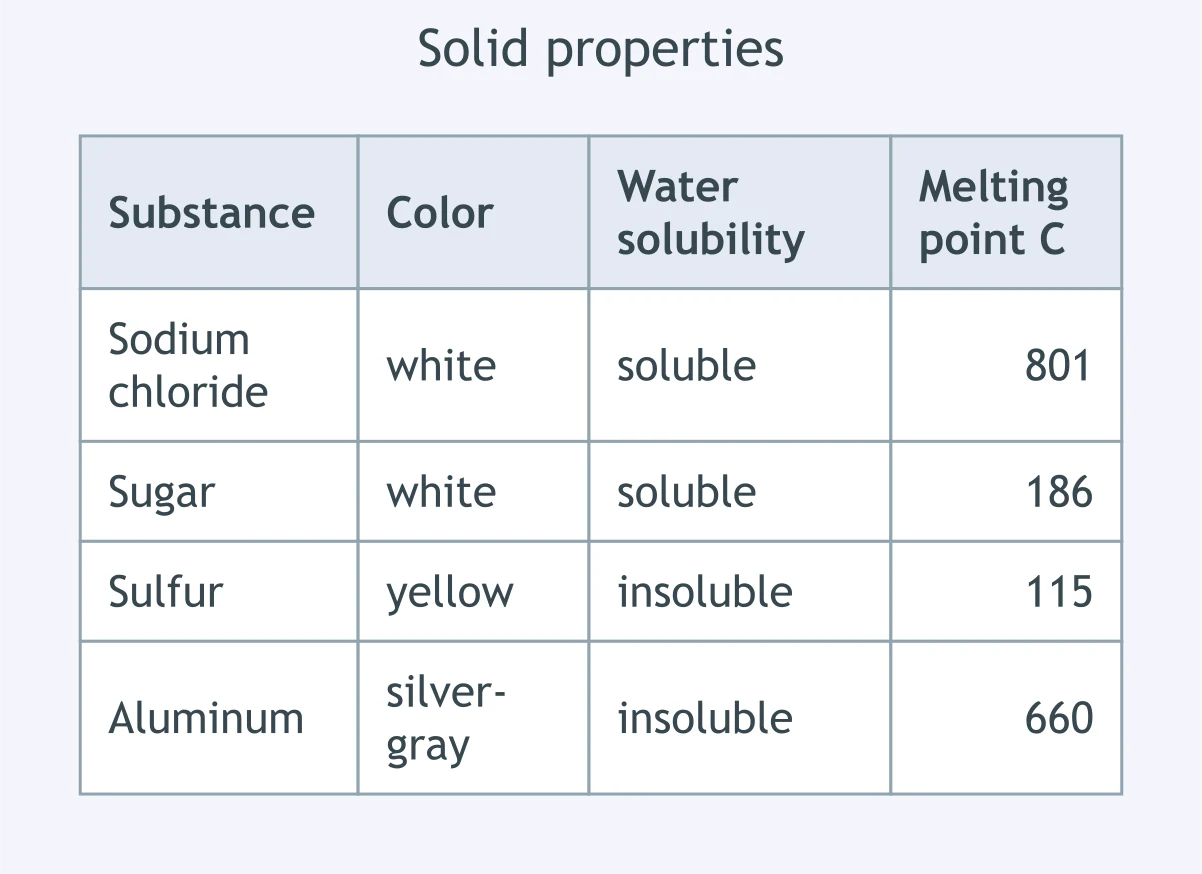
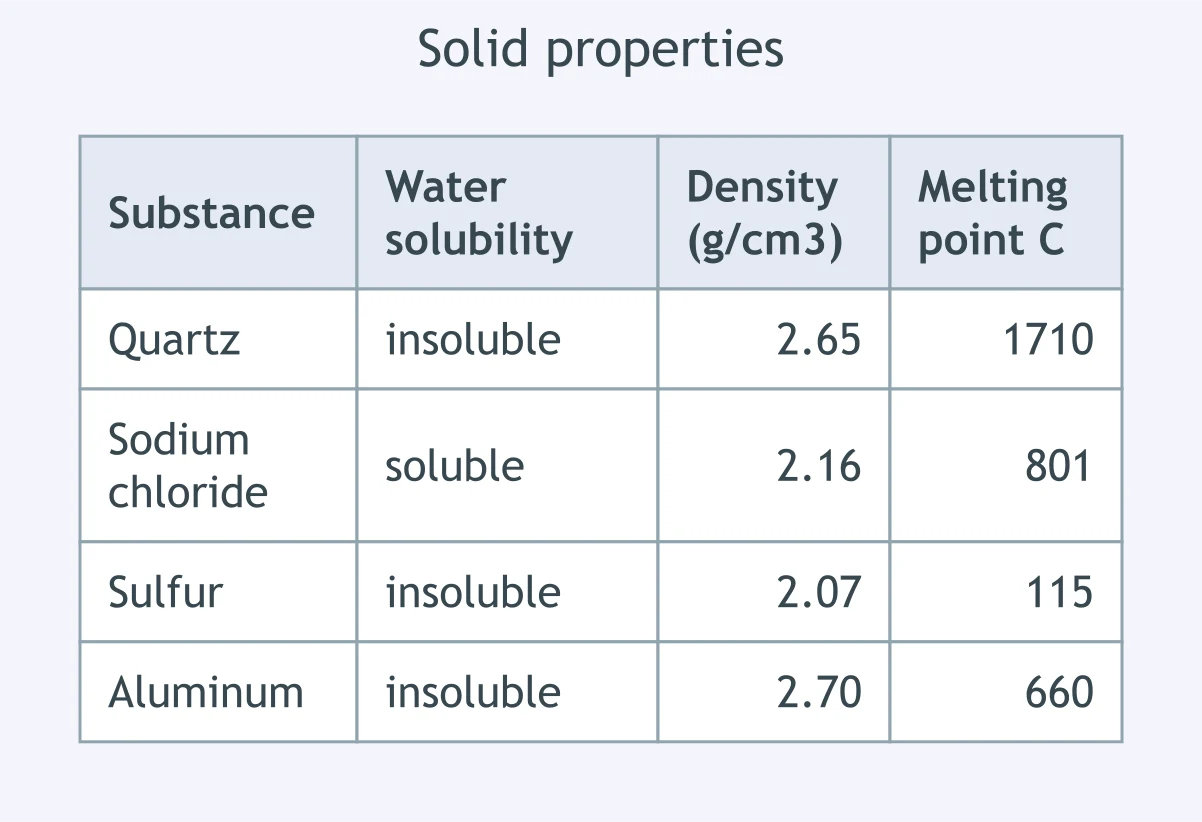
An unknown solid is white, dissolves in water, and has density 2.16 g/cm3. Use the table to identify it.
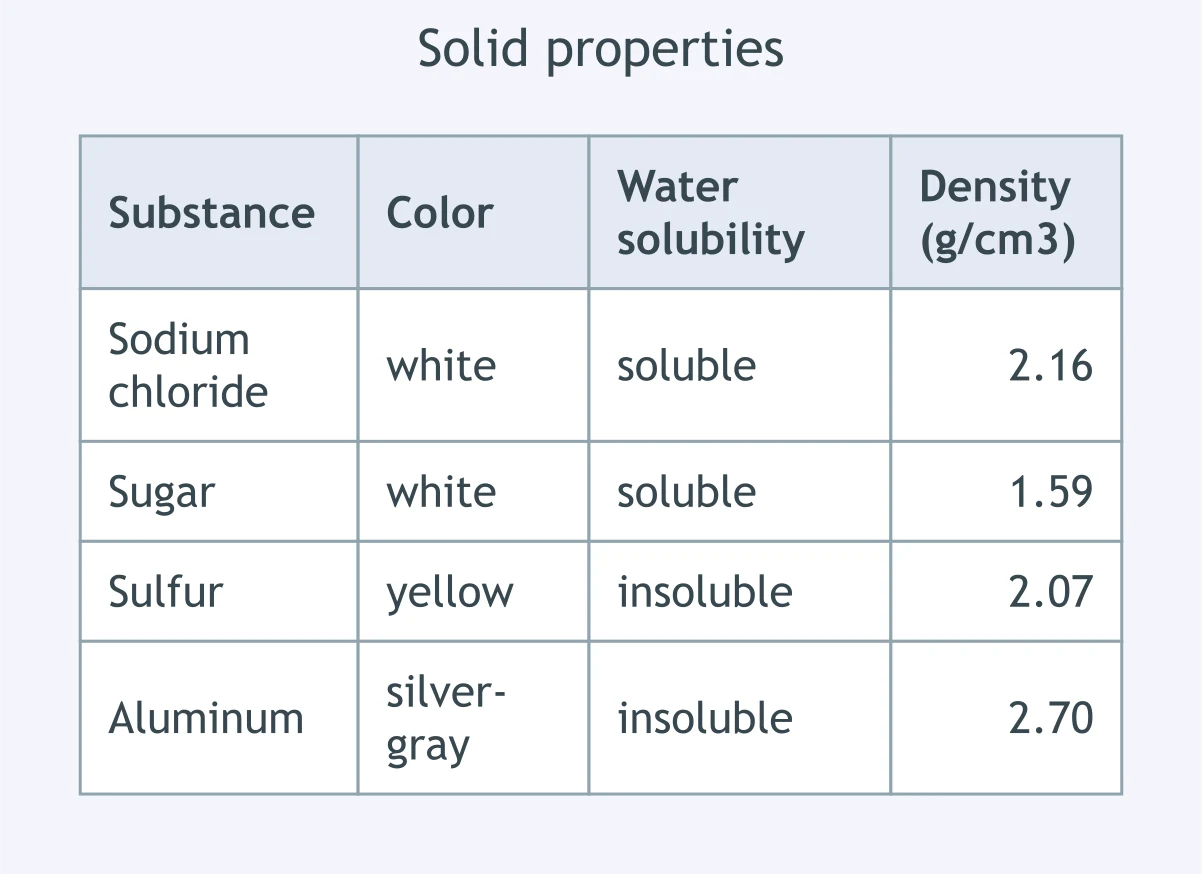
A mystery solid is yellow, does not dissolve in water, and melts near 115°C. Which table substance matches those observations?
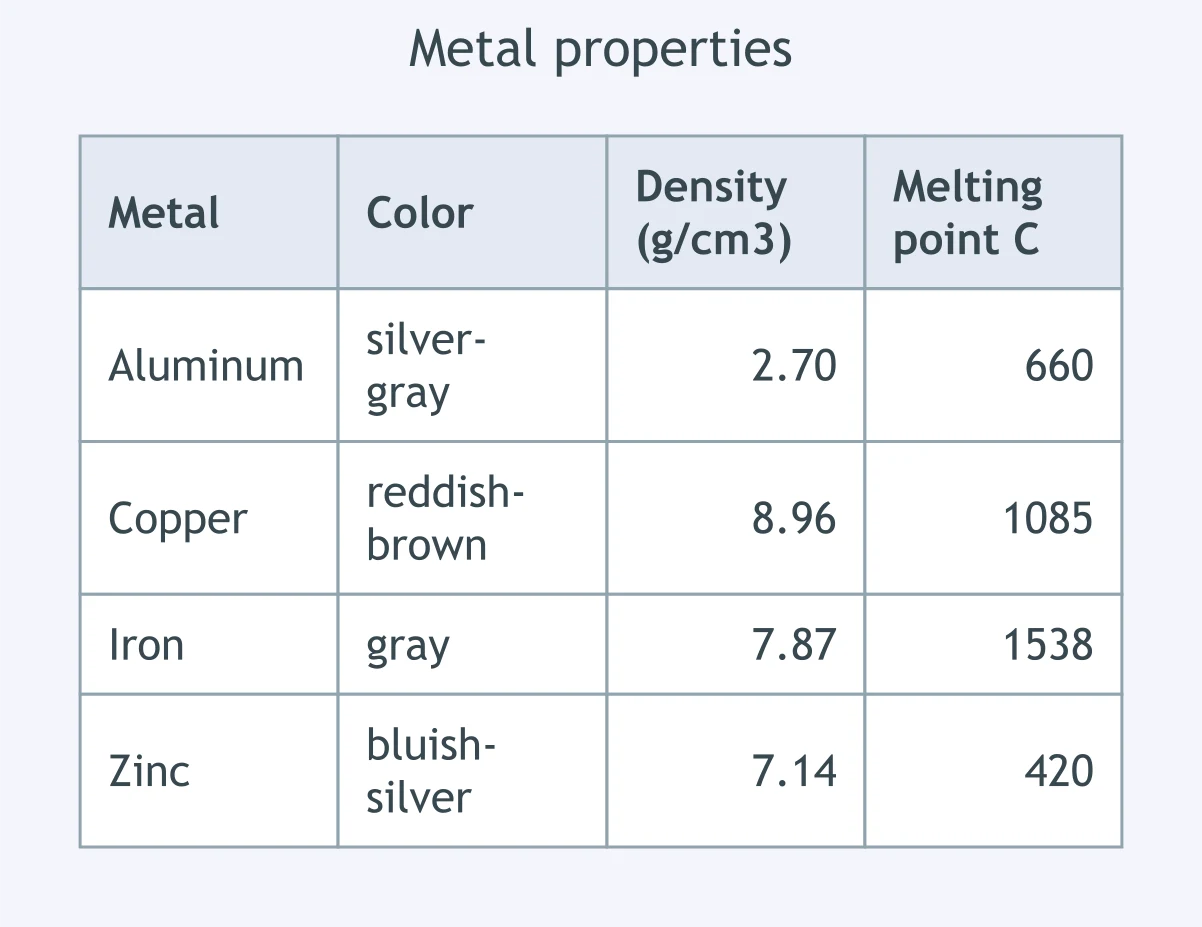
A metal sample is silver-gray, has density 2.70 g/cm3, and melts at 660°C. Use the table to name it.
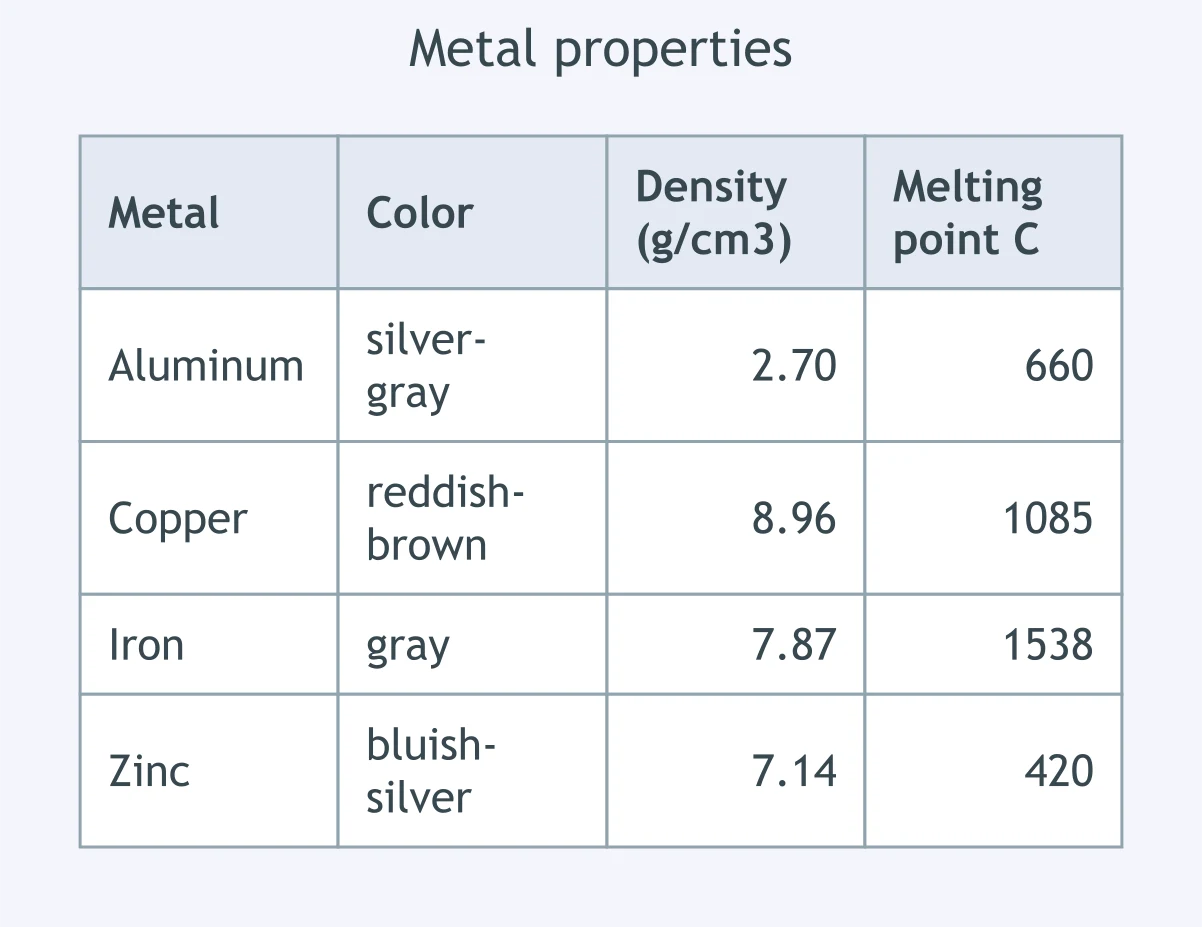
A metal is reddish-brown, has density 8.96 g/cm3, and melts at 1085°C. Which table entry identifies it?
A liquid mixes with water, has density 1.26 g/mL, and boils near 290°C. Which liquid is shown by the table?
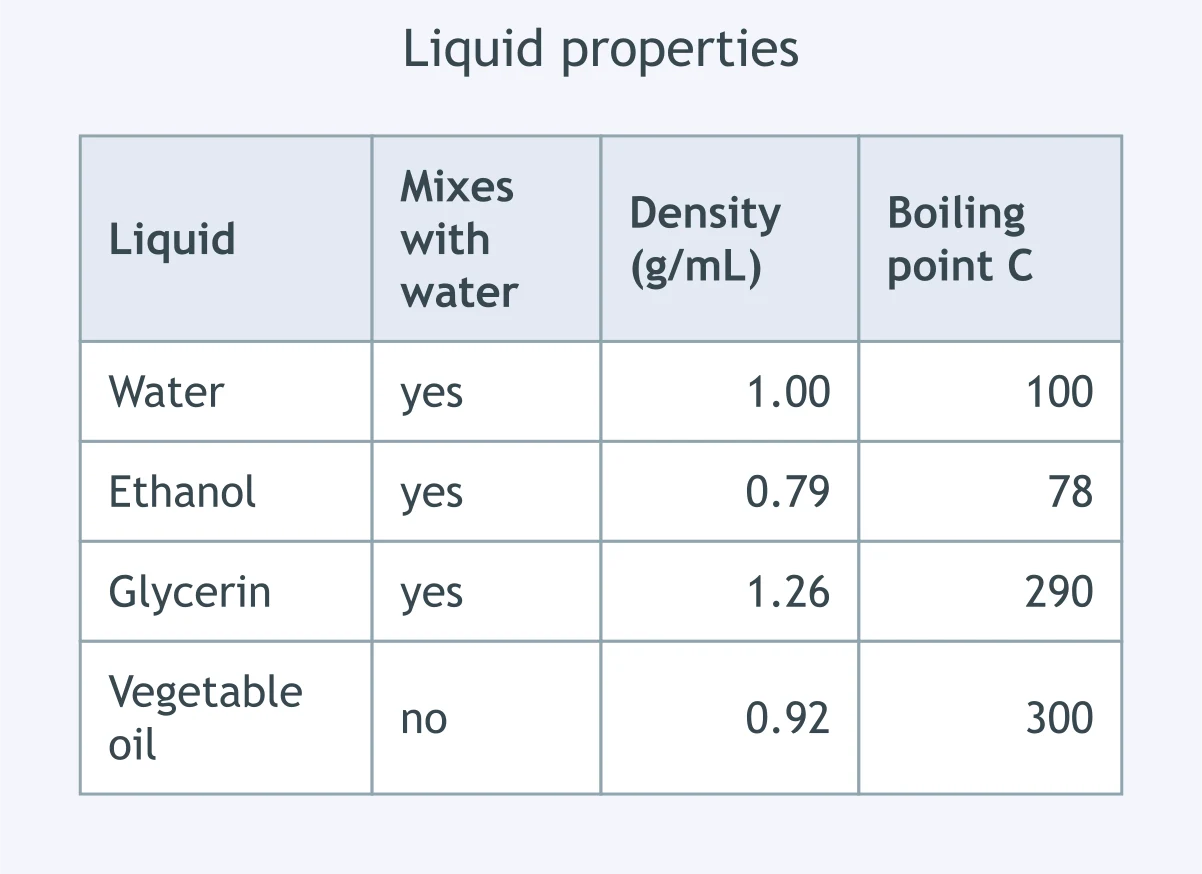
A liquid mixes with water, smells sharp, and boils at 56°C. Use the table to identify the liquid.
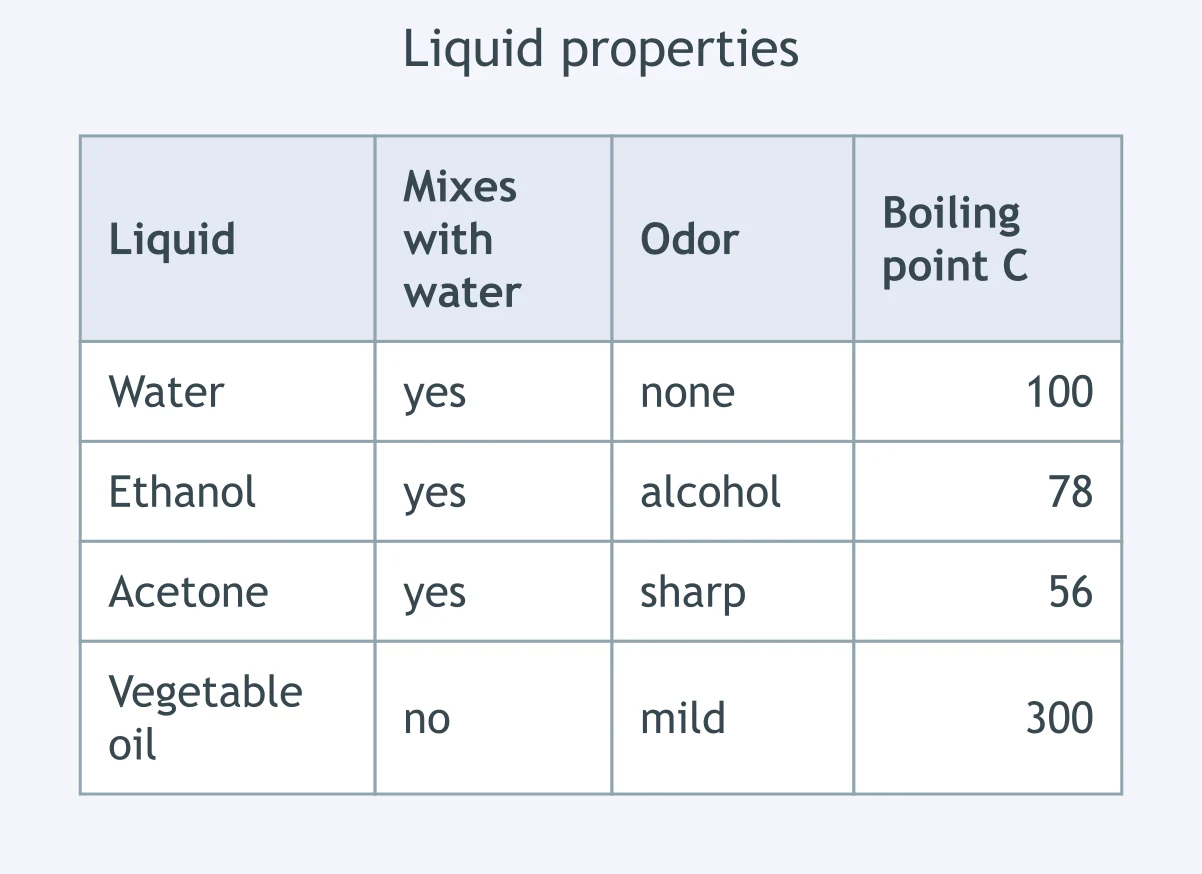
The table shows four white soluble solids. An unknown solid has density 1.98 g/cm3 and melts at 770°C. Which table substance is it?
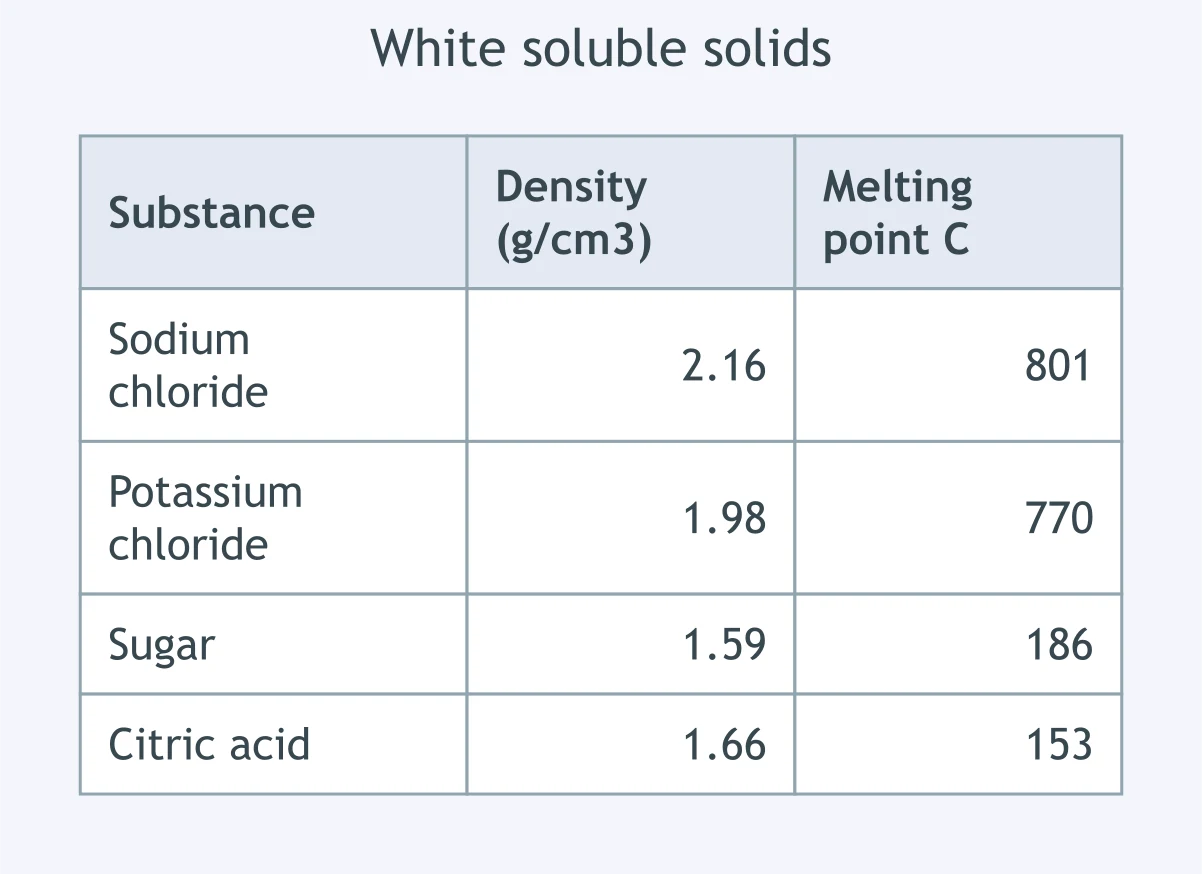
A white solid has a strong mothball odor and melts near 80°C. Which table substance matches?
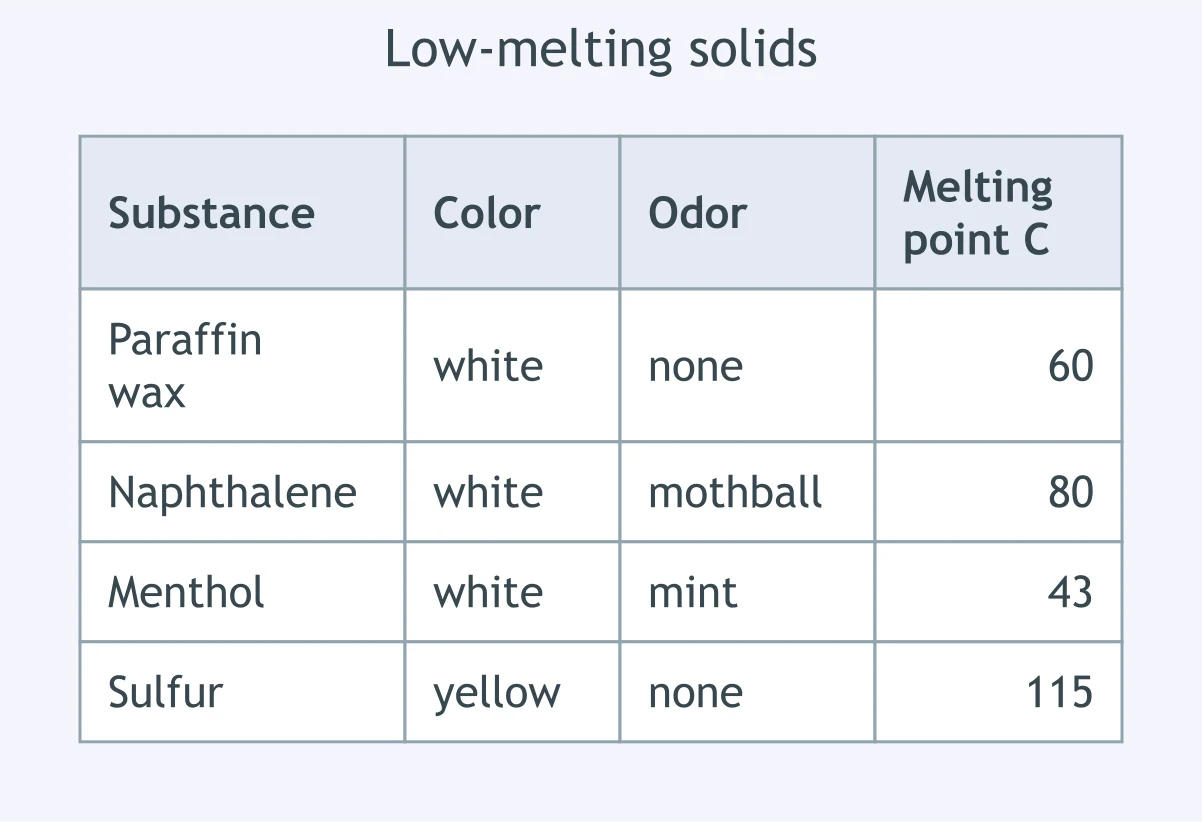
A metal sample is yellow, has density 19.3 g/cm3, and melts at 1064°C. Use the table to identify it.
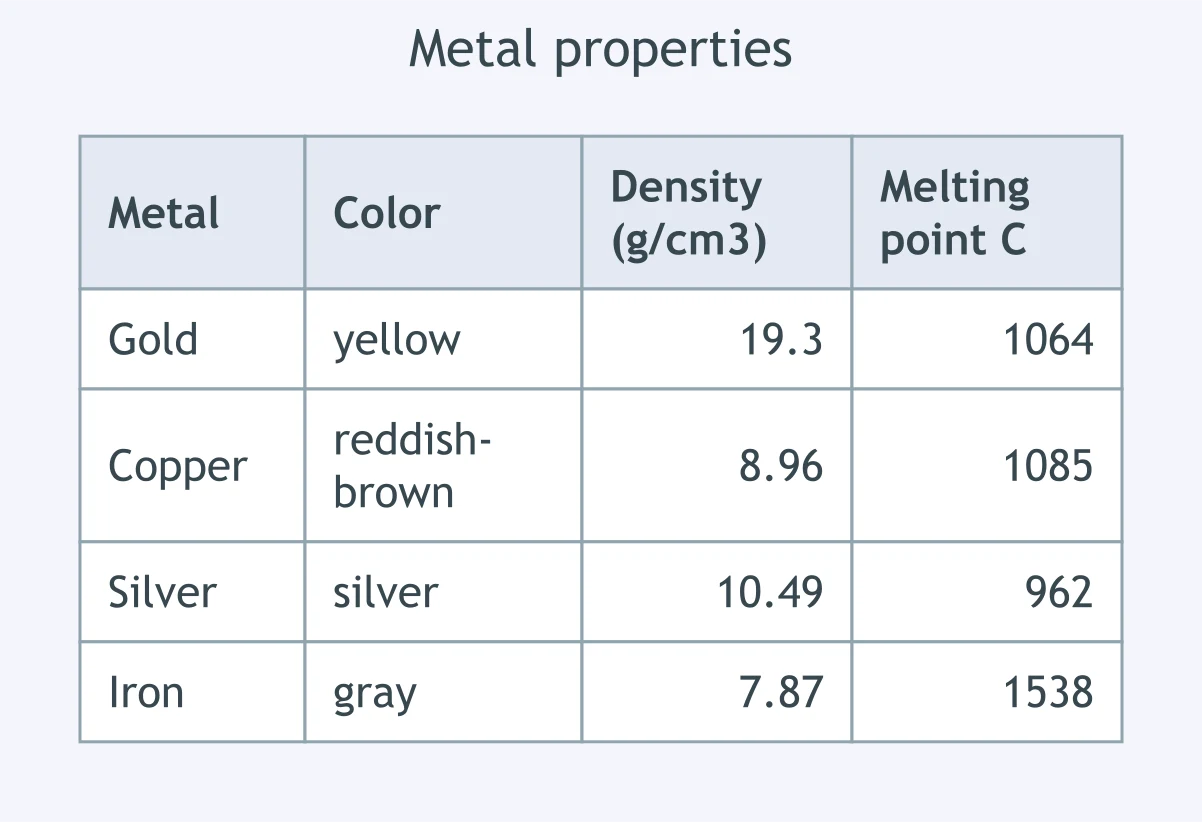
A silvery metal has density 1.74 g/cm3 and melts near 650°C. Which metal in the table is the sample?
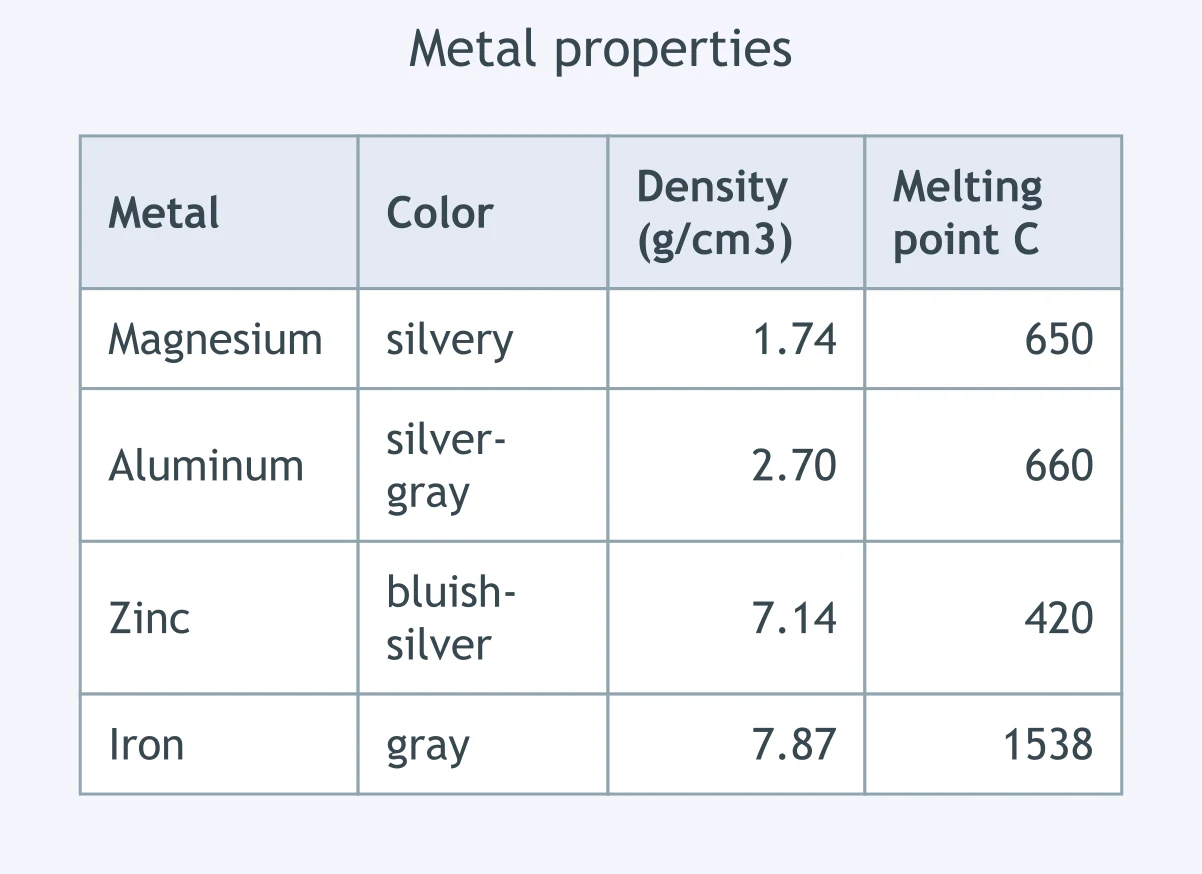
A mineral is insoluble in water, has density 2.65 g/cm3, and melts near 1710°C. Which table substance is it?
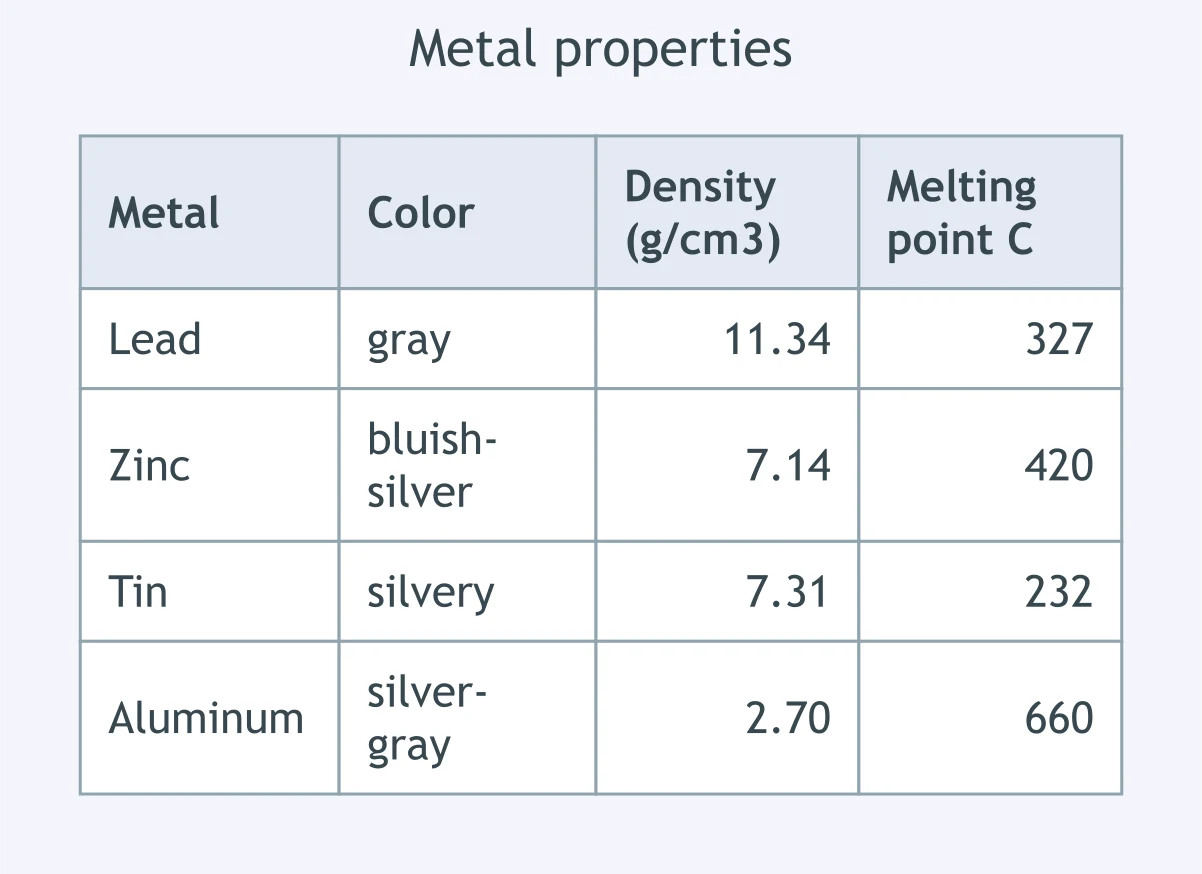
A gray metal has density 11.34 g/cm3 and melts at 327°C. Which table metal matches those properties?
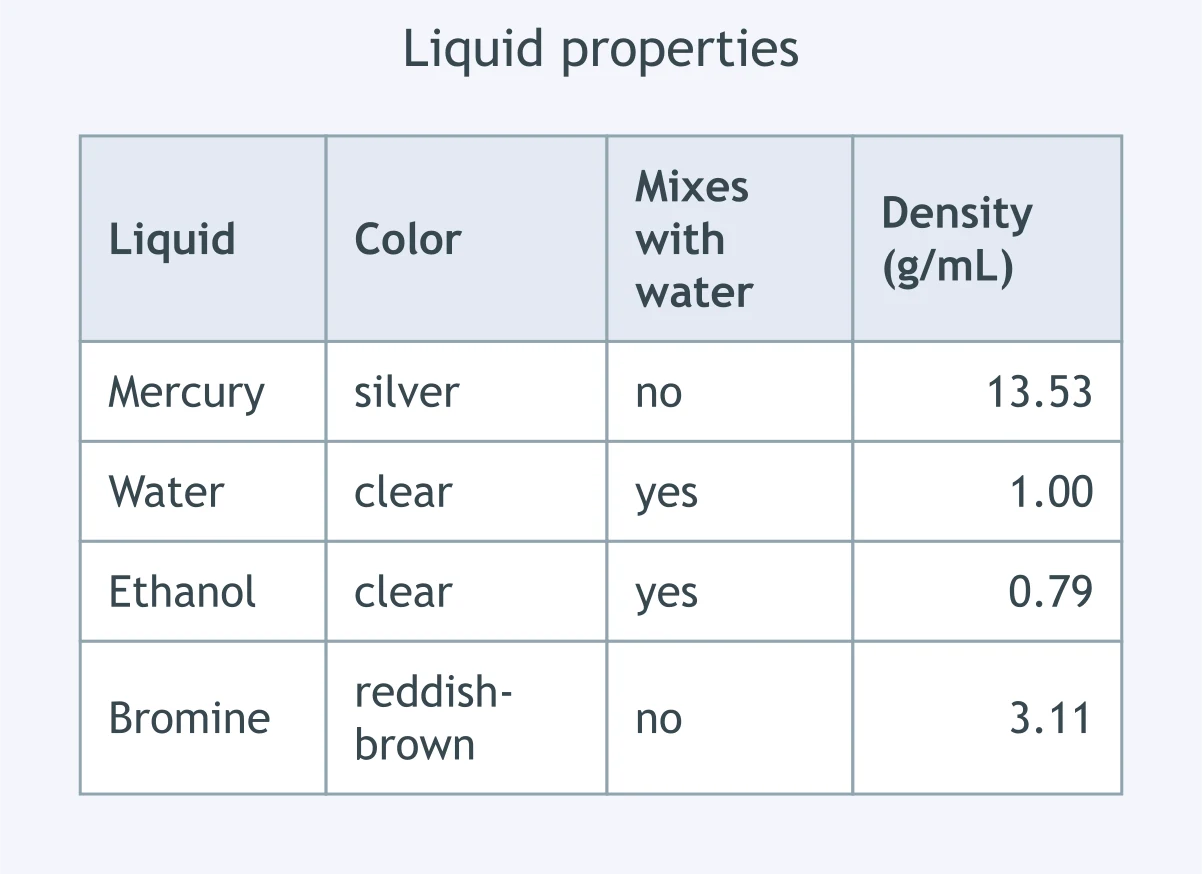
A shiny silver liquid has density 13.53 g/mL and does not mix with water. Which liquid in the table is it?
An unknown white powder dissolves in water and has density 2.20 g/cm3. Use the powder table to identify it.
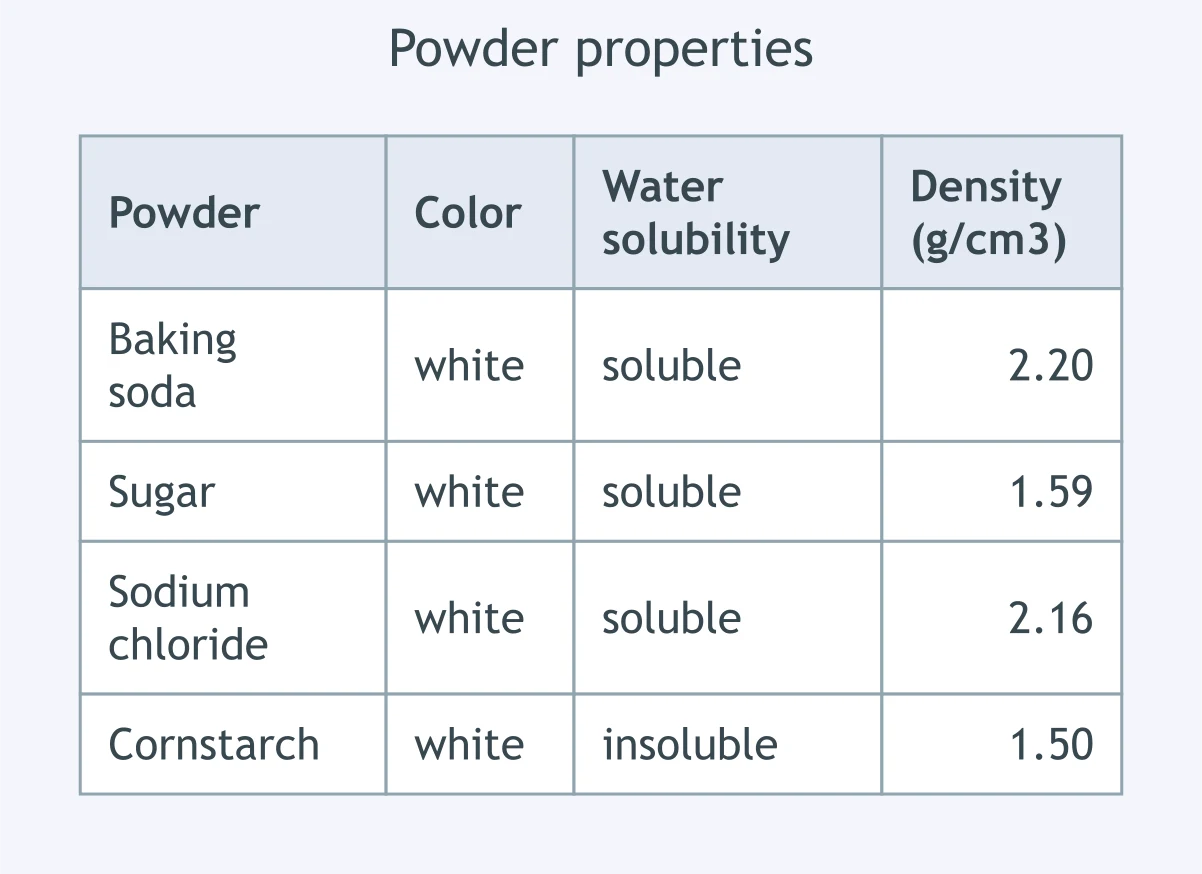
A lab card lists sodium chloride: white, soluble, 2.16 g/cm3; calcium carbonate: white, insoluble, 2.71; sulfur: yellow, insoluble, 2.07. Unknown: white, insoluble, 2.71. Identify it.
A liquid card lists ethanol: clear, mixes, 0.79 g/mL; water: clear, mixes, 1.00; glycerin: clear, mixes, 1.26; oil: pale yellow, does not mix, 0.92. Unknown: clear, mixes, 0.79. Identify it.
A metal card lists copper: reddish-brown, 8.96 g/cm3; iron: gray, 7.87; zinc: bluish-silver, 7.14; silver: silver, 10.49. Unknown: bluish-silver, 7.14. Identify it.
A solid card lists menthol: white, mint odor, 43°C; wax: white, no odor, 60°C; naphthalene: white, mothball odor, 80°C. Unknown: white, mint odor, 43°C. Identify it.
A metal cube has mass 54 g and volume 20 cm3. Densities are aluminum 2.7, iron 7.9, copper 8.9, and zinc 7.1 g/cm3. Which metal is it?
A cube has mass 158 g and volume 20 cm3. Densities are aluminum 2.7, iron 7.9, copper 8.9, and zinc 7.1 g/cm3. Which metal is it?
A metal block has mass 178 g and volume 20 cm3. Densities are aluminum 2.7, iron 7.9, copper 8.9, and zinc 7.1 g/cm3. Which metal is it?
A sample has mass 142 g and volume 20 cm3. Densities are aluminum 2.7, iron 7.9, copper 8.9, and zinc 7.1 g/cm3. Which metal is it?
A liquid sample has mass 126 g and volume 100 mL. Densities are glycerin 1.26, water 1.00, ethanol 0.79, and oil 0.92 g/mL. Which liquid is it?
A clear liquid has mass 79 g and volume 100 mL. Densities are ethanol 0.79, water 1.00, oil 0.92, and glycerin 1.26 g/mL. Which liquid is it?
A solid block has mass 45 g and volume 50 cm3. Densities are paraffin wax 0.90, sugar 1.59, sulfur 2.07, and salt 2.16 g/cm3. Which solid is it?
A dense liquid has mass 135.3 g and volume 10.0 mL. Densities are mercury 13.53, bromine 3.11, glycerin 1.26, and water 1.00 g/mL. Which liquid is it?
A metal nugget has mass 193 g and volume 10 cm3. Densities are gold 19.3, silver 10.49, copper 8.96, and lead 11.34 g/cm3. Which metal is it?
A mineral chip has mass 53 g and volume 20 cm3. Densities are quartz 2.65, halite 2.16, calcite 2.71, and sulfur 2.07 g/cm3. Which mineral is it?
A student has ethanol and water in two unlabeled beakers. Which property could the student measure to tell them apart?
A white powder is either table salt (sodium chloride) or fine white sand. Which property should a student test to find out which it is?
A student has same-sized strips of copper and iron. Without any tools, which property would tell them apart?
Naphthalene (used in mothballs) and sodium chloride are both white crystals. Without heating, weighing, or adding water, which property would quickly tell them apart?
Which property would best tell an aluminum block from an iron block of the same size?
Which property would best tell a small piece of white candle wax from a small piece of table salt?
A student dissolves sugar in one cup of water and table salt in another. Without tasting, which test could tell the two solutions apart?
Sulfur burns with a blue flame, but sodium chloride does not burn. What kind of property is flammability?
Vegetable oil and water poured into a jar form two layers, with the oil on top. Which property explains the layering?
Acetone boils at 56°C. A student heats 10 mL of acetone and then 200 mL of acetone. At what temperature will the larger sample boil?
A magnesium block (1.74 g/cm3) and an aluminum block (2.70 g/cm3) each have a mass of 54 g. Which block is larger?
An unknown dark gray crystal has a density of 2.07 g/cm3, the same as sulfur. Sulfur crystals are yellow. What is the best conclusion?
Crack the passcode before the zombies get in.
Answer, then swat bugs for bonus points.
Race through questions at your own speed.
Same question on every screen. Fastest wins.

Pick a tile, answer, hit bonuses and steals.
What Changes the Rate of Dissolving
20 questions