Loading
by BlastRoom
Students trace major slavery compromises and explain why they failed to settle sectional conflict.
#us_history#us_grade_7_social_studies
30 questions
One question set, multiple game modes. Tap any game to see it in action. Not sure which to pick?
In 1820, Congress admitted Maine as a free state and paired it with a new slave state, keeping the Senate balanced. Which agreement did this?
A law required people in free states to help capture people who had escaped slavery. Which 1850 measure included this rule?
Congress admitted California as a free state and let Utah and New Mexico voters decide slavery by popular sovereignty. Which compromise was this?
An 1854 act organized two new territories and let settlers vote on slavery, undoing the Missouri line. Which act was it?
Congress banned slavery north of 36°30' in most of the Louisiana Purchase, except in one new state. Which agreement set that line?
One part of a compromise ended the slave trade, but not slavery, in Washington, D.C. Which agreement included it?
Texas gave up boundary claims in return for federal payment of its debt. Which agreement contained this settlement?
A law said federal commissioners could send people accused of escaping slavery back without a jury trial. Which measure gave them that power?
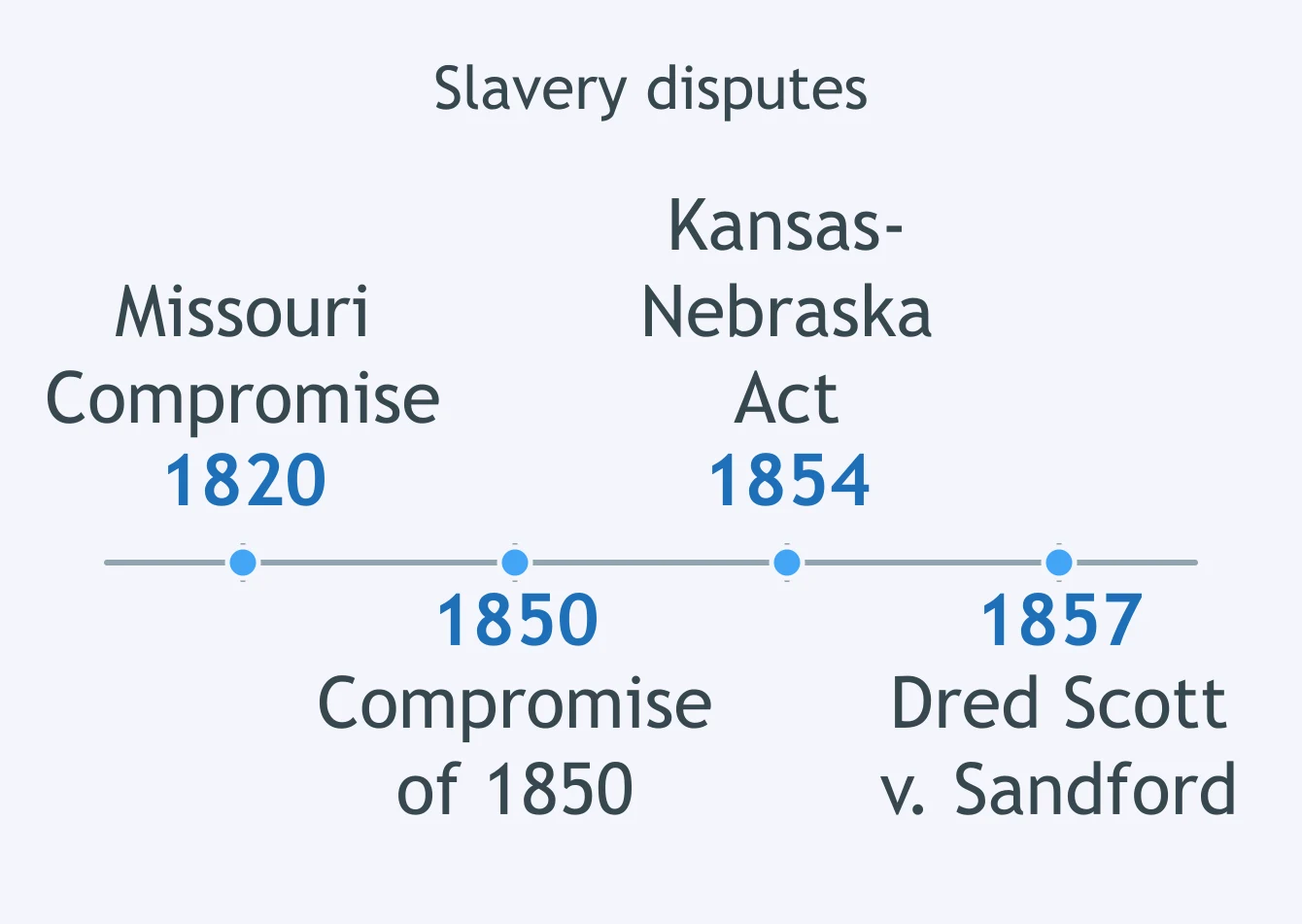
Use the timeline. Which event came first in the national fight over slavery in western territories?
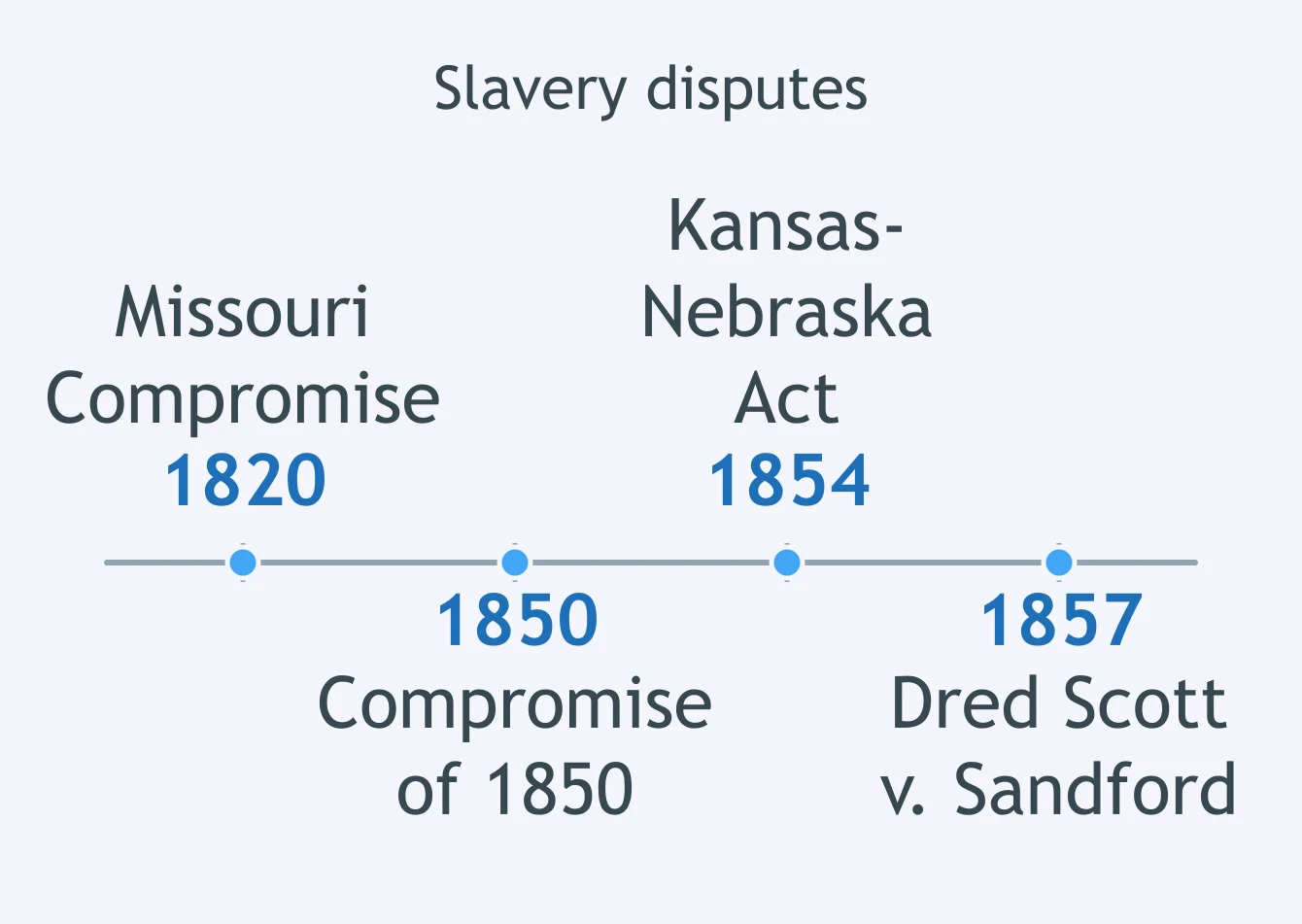
Use the timeline. Which measure came after the Missouri Compromise but before the Kansas-Nebraska Act?
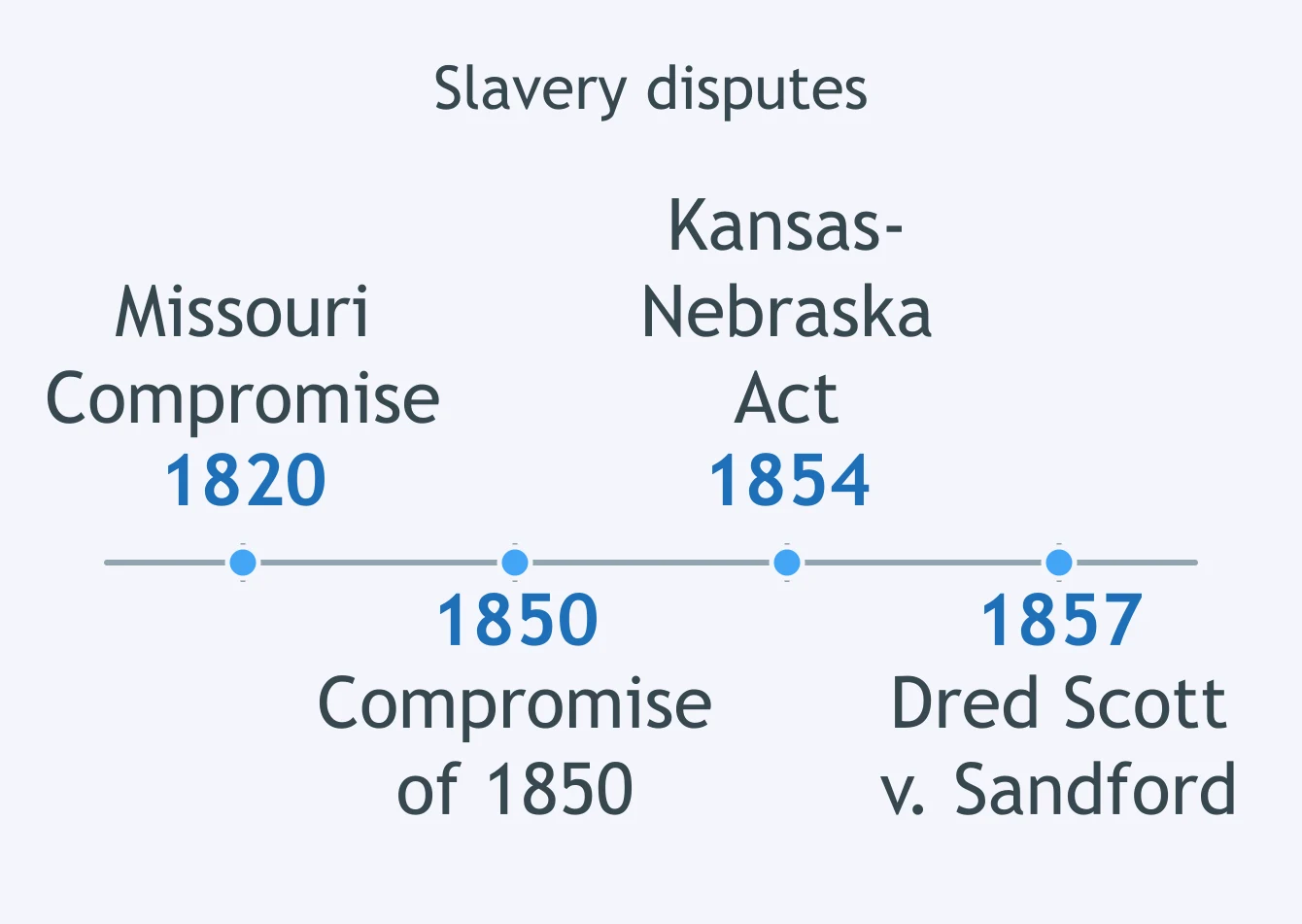
Use the timeline. Congress allowed popular sovereignty in Kansas and Nebraska before which 1857 event?
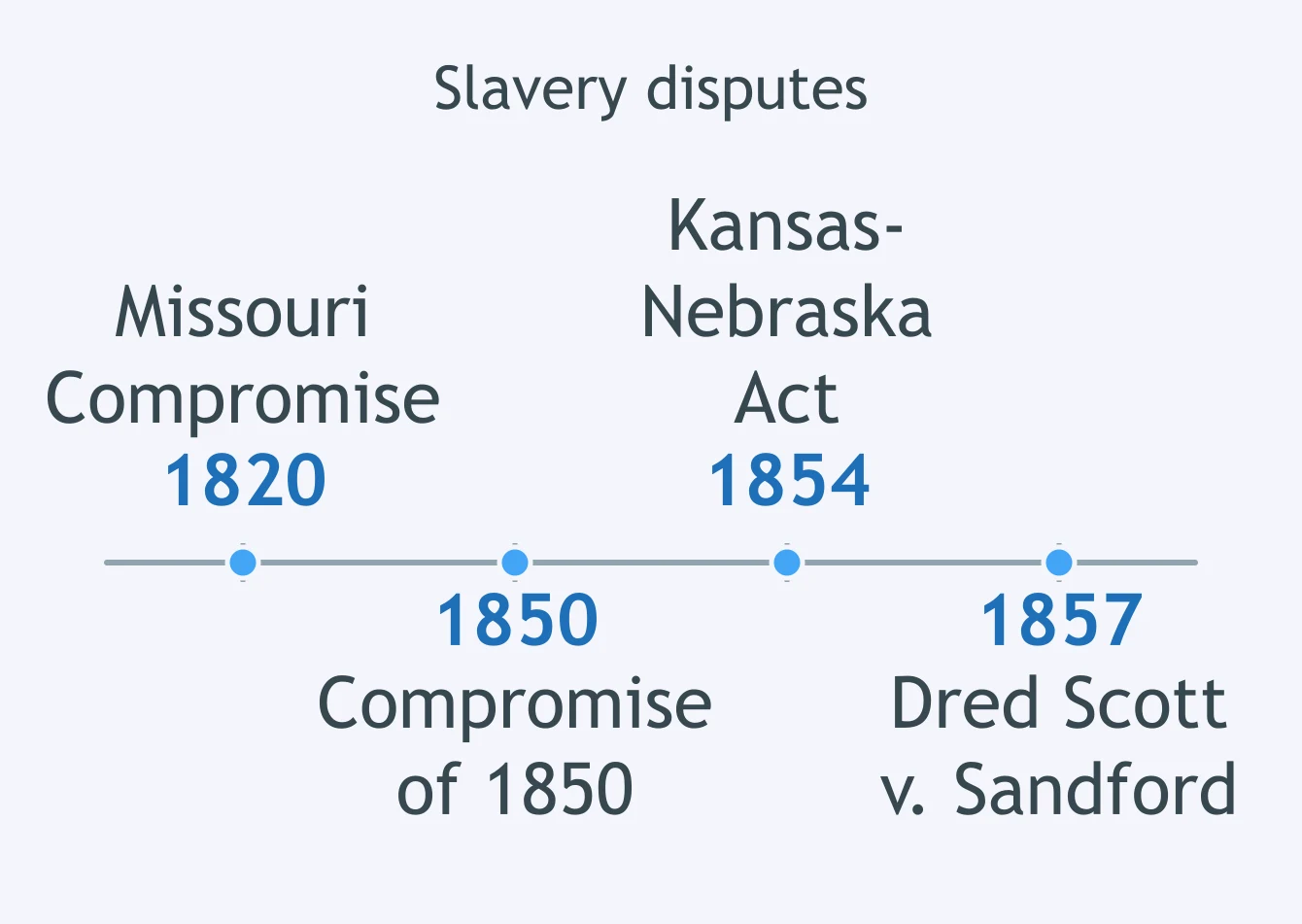
Use the timeline. Which law was passed four years after the Compromise of 1850?
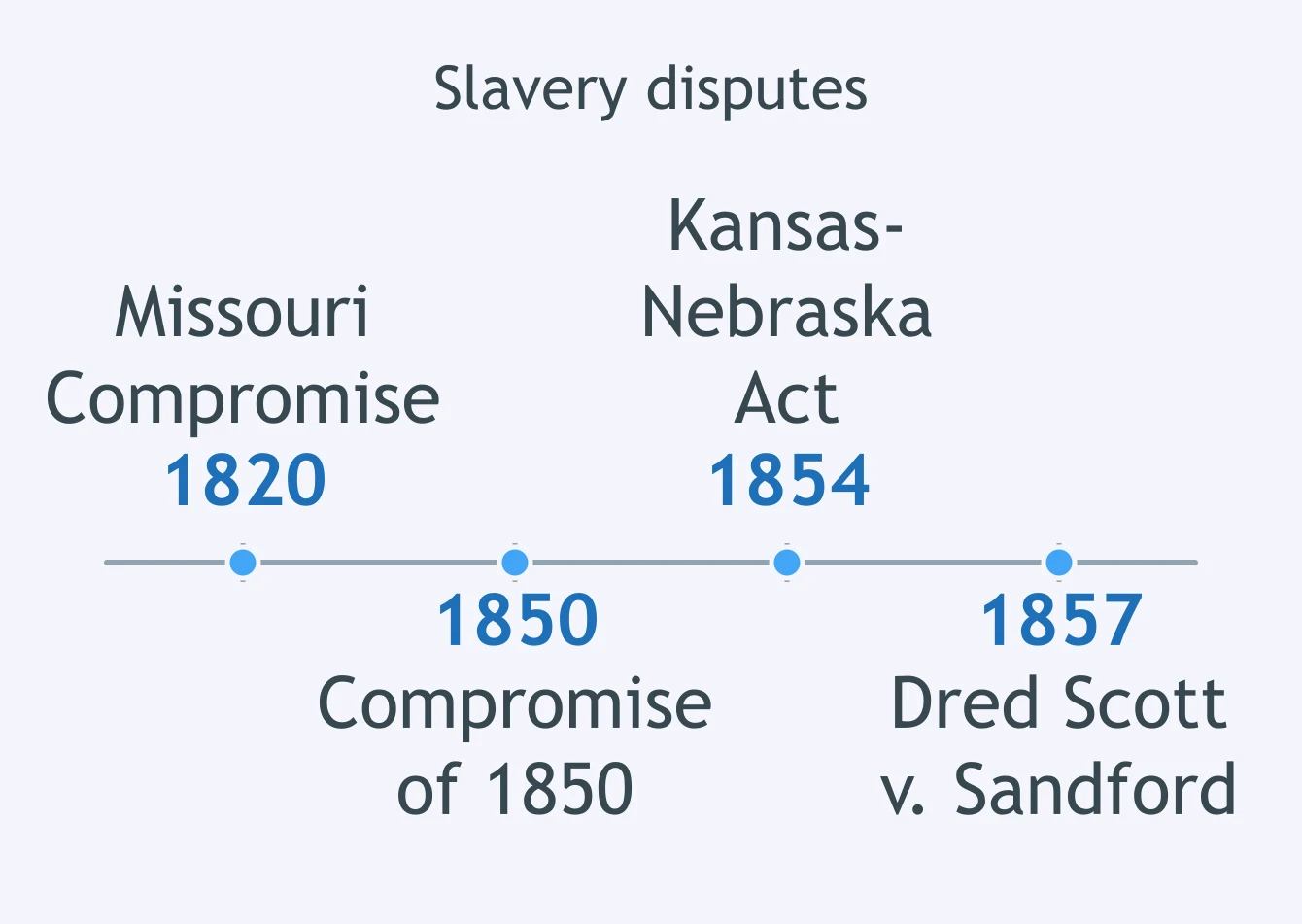
Use the timeline. Which event came immediately before the Dred Scott decision?
In 1846, a congressman proposed banning slavery in any land won from Mexico. The House passed it, but the Senate did not. What was the proposal?
The Mexican Cession of 1848 set off a new fight over slavery even though the Missouri Compromise line already existed. Why?
John Brown fought in Bleeding Kansas. In 1859, he led a raid on a federal armory, hoping to start an uprising against slavery. Where was the raid?
Settlers and outside groups flooded Kansas to influence a slavery vote, and violence followed. What weakness of popular sovereignty did this reveal?
The Fugitive Slave Act of 1850 angered many Northerners. Which 1852 novel, written partly in response, turned even more Northerners against slavery?
The Kansas-Nebraska Act repealed the Missouri Compromise's slavery limit. Why did this weaken earlier compromises?
The Dred Scott decision said Congress could not ban slavery in territories. How did it affect compromise efforts?
New territories kept raising the same sectional question after each compromise. What issue remained unresolved?
Northern personal liberty laws resisted enforcement of the Fugitive Slave Act. What did that response show?
In 1855, thousands of proslavery Missourians crossed into Kansas to vote illegally in its territorial election. What were they called?
Which chief justice wrote the Supreme Court's majority opinion in Dred Scott v. Sandford?
In 1857, the Supreme Court said African Americans were not U.S. citizens for federal court purposes. Which case stated this?
Dred Scott had lived in free territory before suing for freedom. What did the Supreme Court rule about that claim?
What earlier slavery restriction did Dred Scott v. Sandford declare unconstitutional?
Why did the Dred Scott decision alarm many opponents of slavery's expansion?
Which Supreme Court decision strengthened slaveholders' claims by treating enslaved people as property protected in territories?
How did many Northerners react politically to the Dred Scott decision?
Crack the passcode before the zombies get in.

Pick a tile, answer, hit bonuses and steals.
The Fall of the Western Roman Empire
20 questions