Loading
by BlastRoom
Read temperature-time curves to identify phases, phase changes, and heat transfer.
#physics
50 questions
One question set, multiple game modes. Tap any game to see it in action. Not sure which to pick?
Answer to place stones and capture territory.
Outrun the snow together.
Earn blasts, then hunt the other team.
Answer to earn energy, then climb.

The class blasts through walls together.
Bid on mystery lots. Most money wins.
Sell tours. Nice, standard, or a total scam.

Answer, restock, and serve the rush.
More correct answers pulls the rope your way.
Answer, then shoot down the alien wave.
Answer, then tap to leap the frozen ridge.
Use the heating curve. The intervals between adjacent points are segments A-E from left to right. During which segment is the sample entirely liquid?
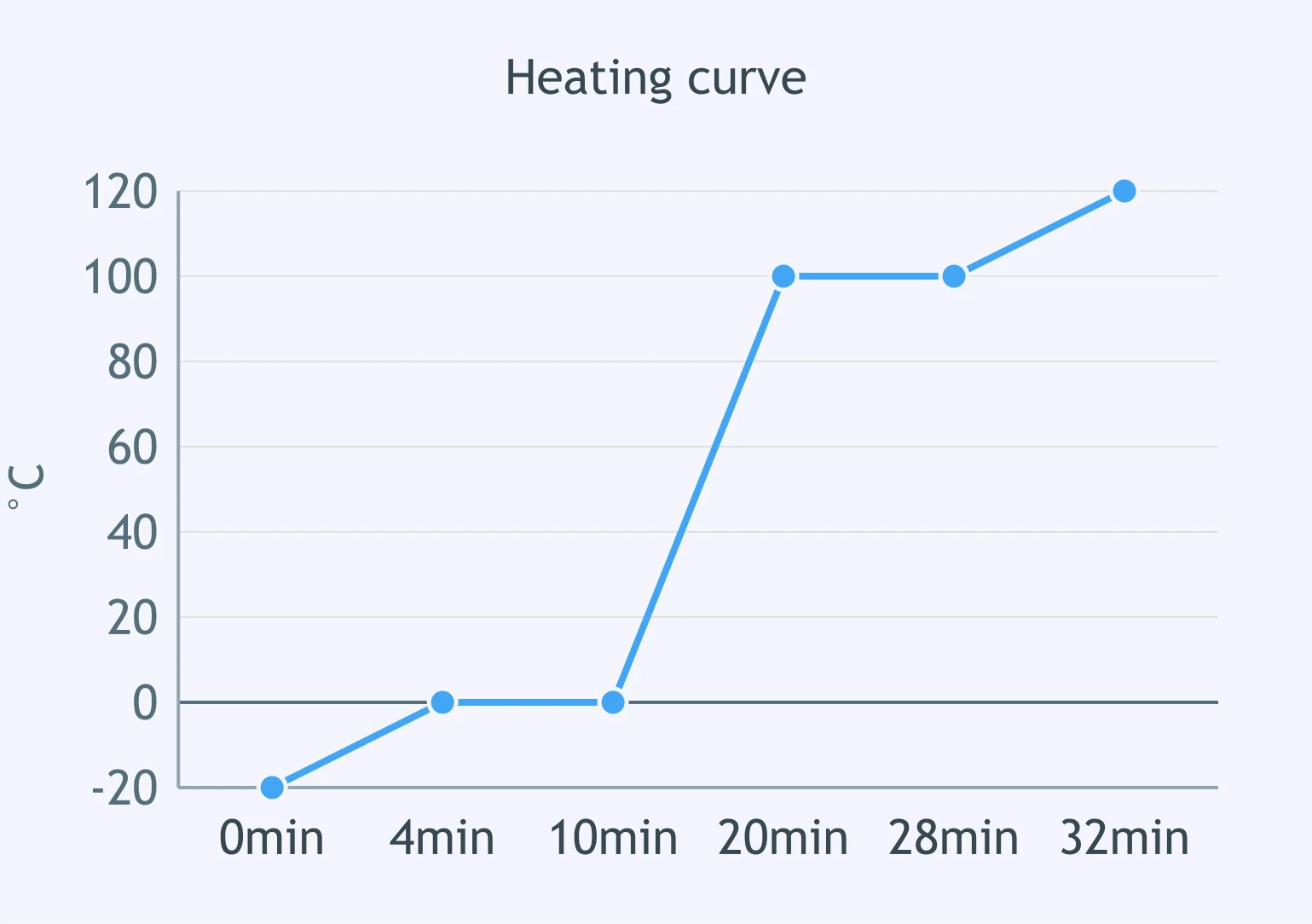
Use the heating curve with segments A-E from left to right. Which segment shows a mixture of solid and liquid?
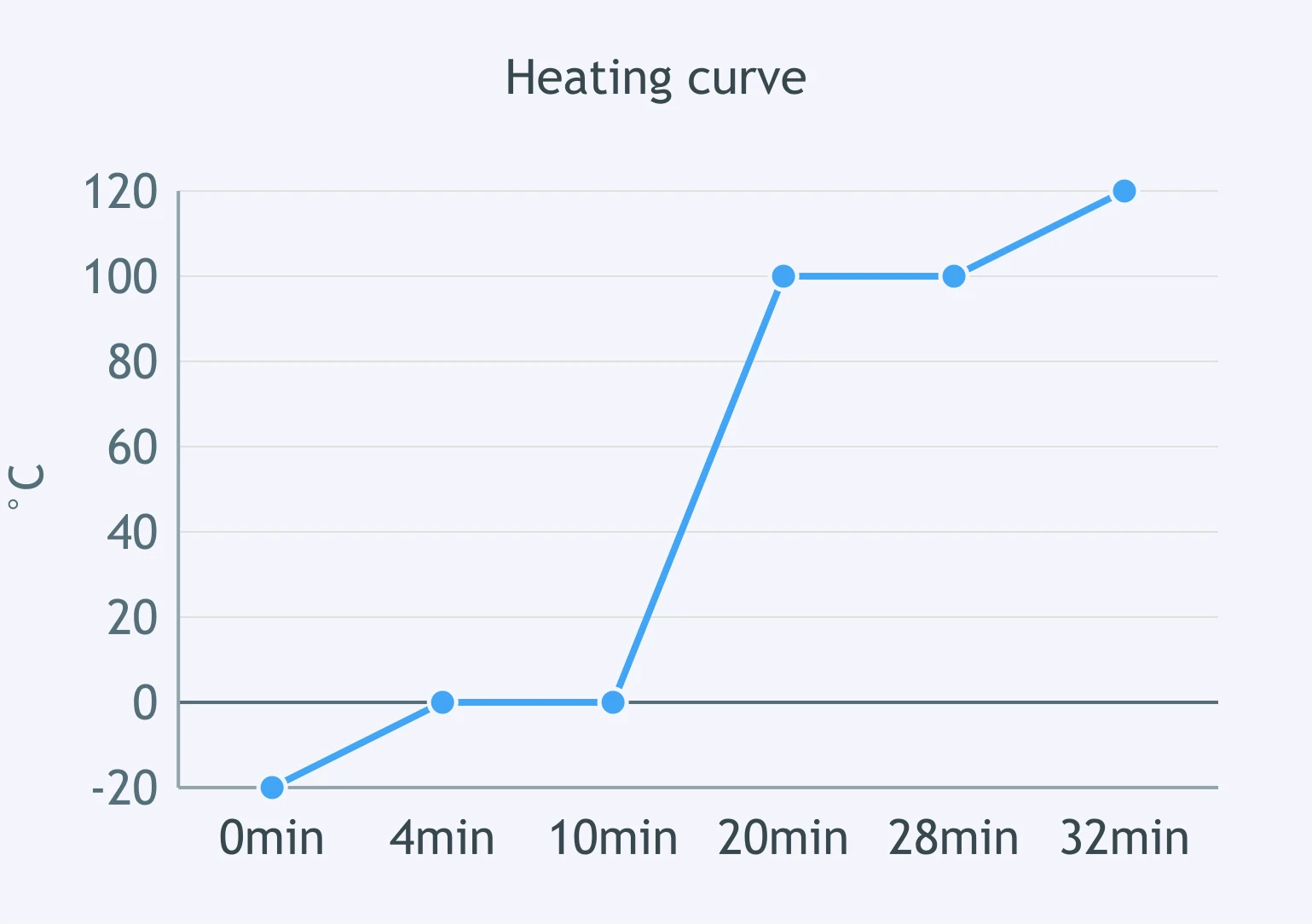
On this heating curve, segments A-E run left to right. During which segment is the sample a gas only?
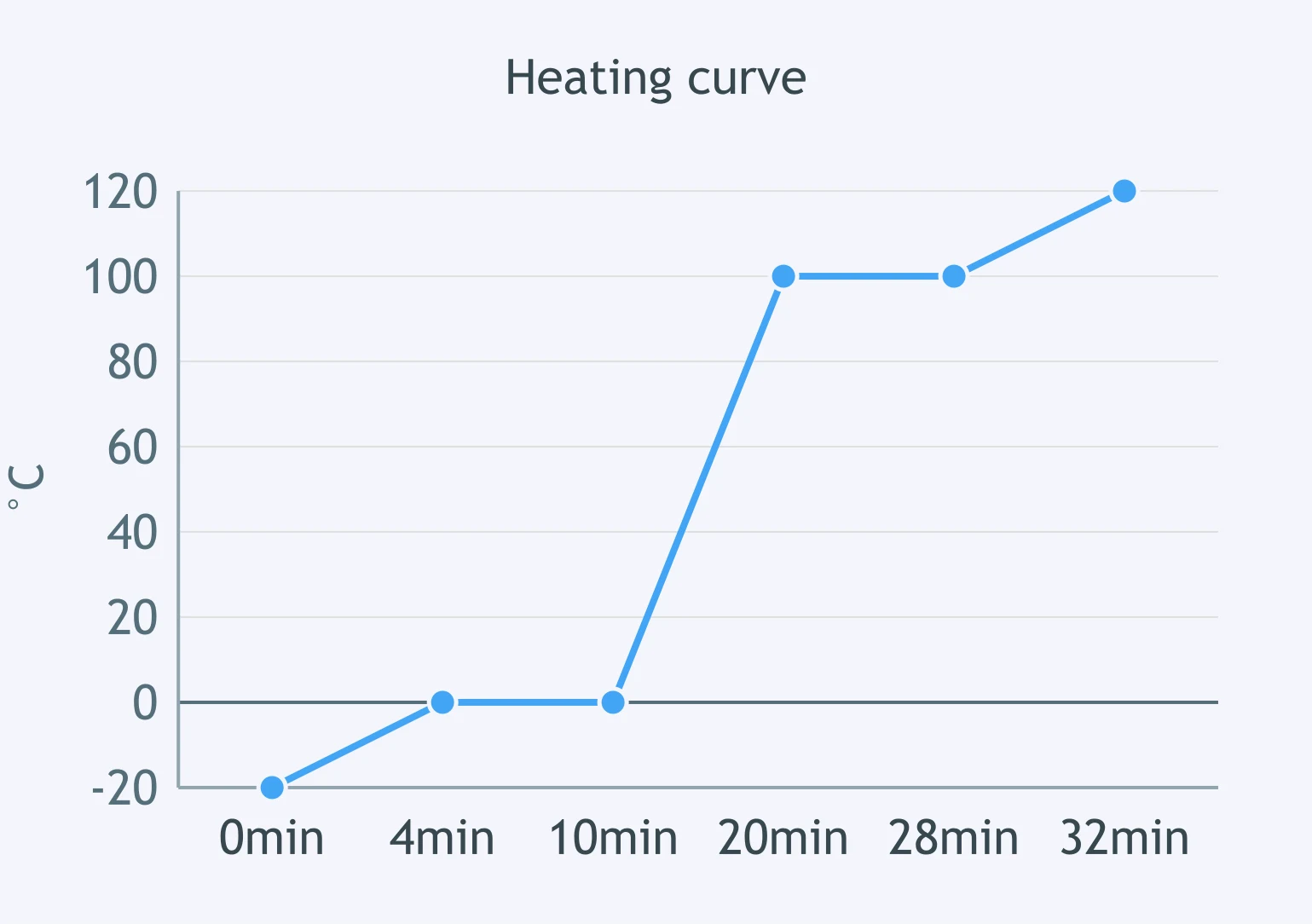
The heating curve's five intervals are segments A-E from left to right. Which segment shows the sample entirely solid?
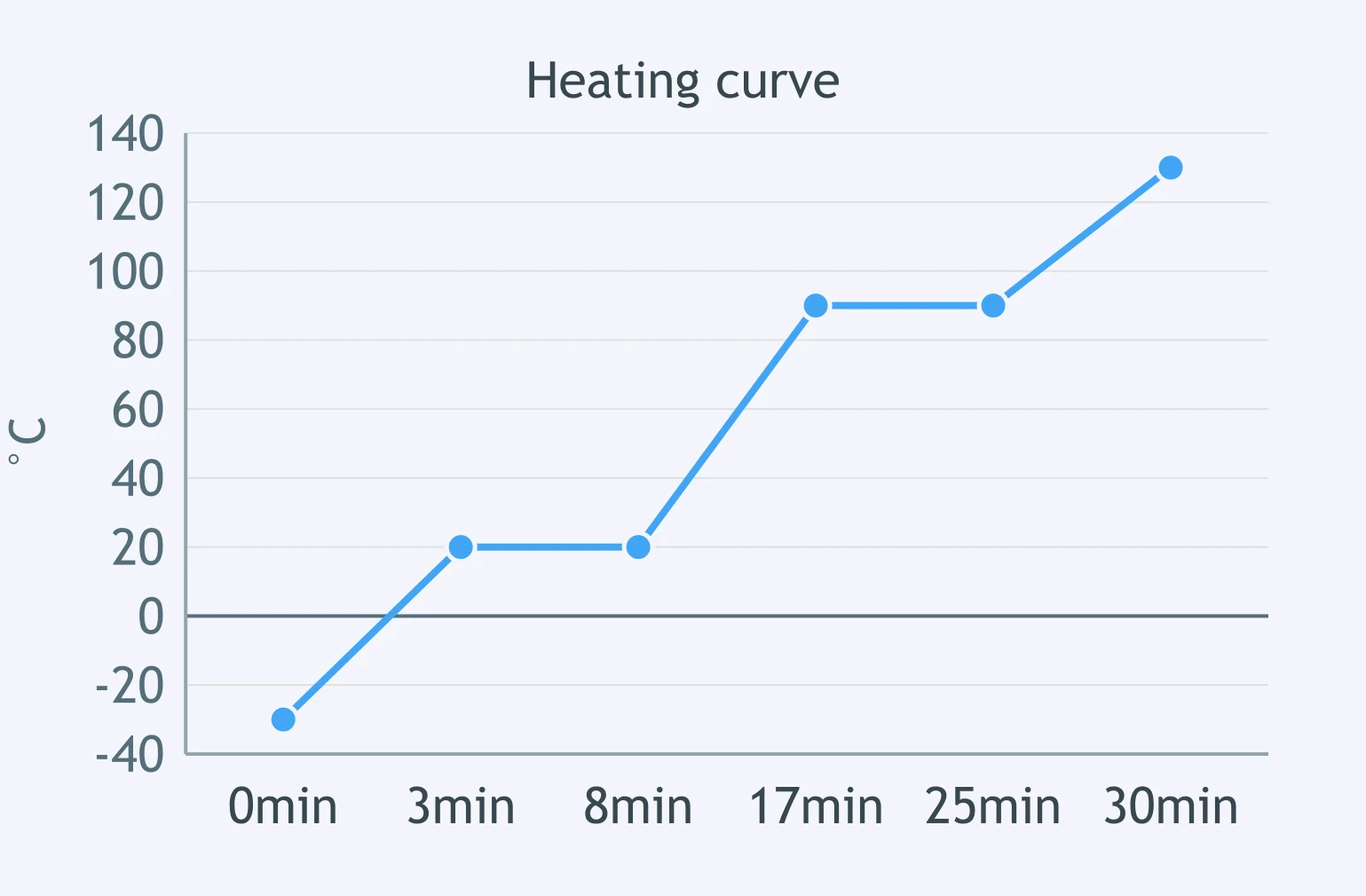
Use the heating curve. Segments A-E run left to right. Which segment contains both liquid and gas?
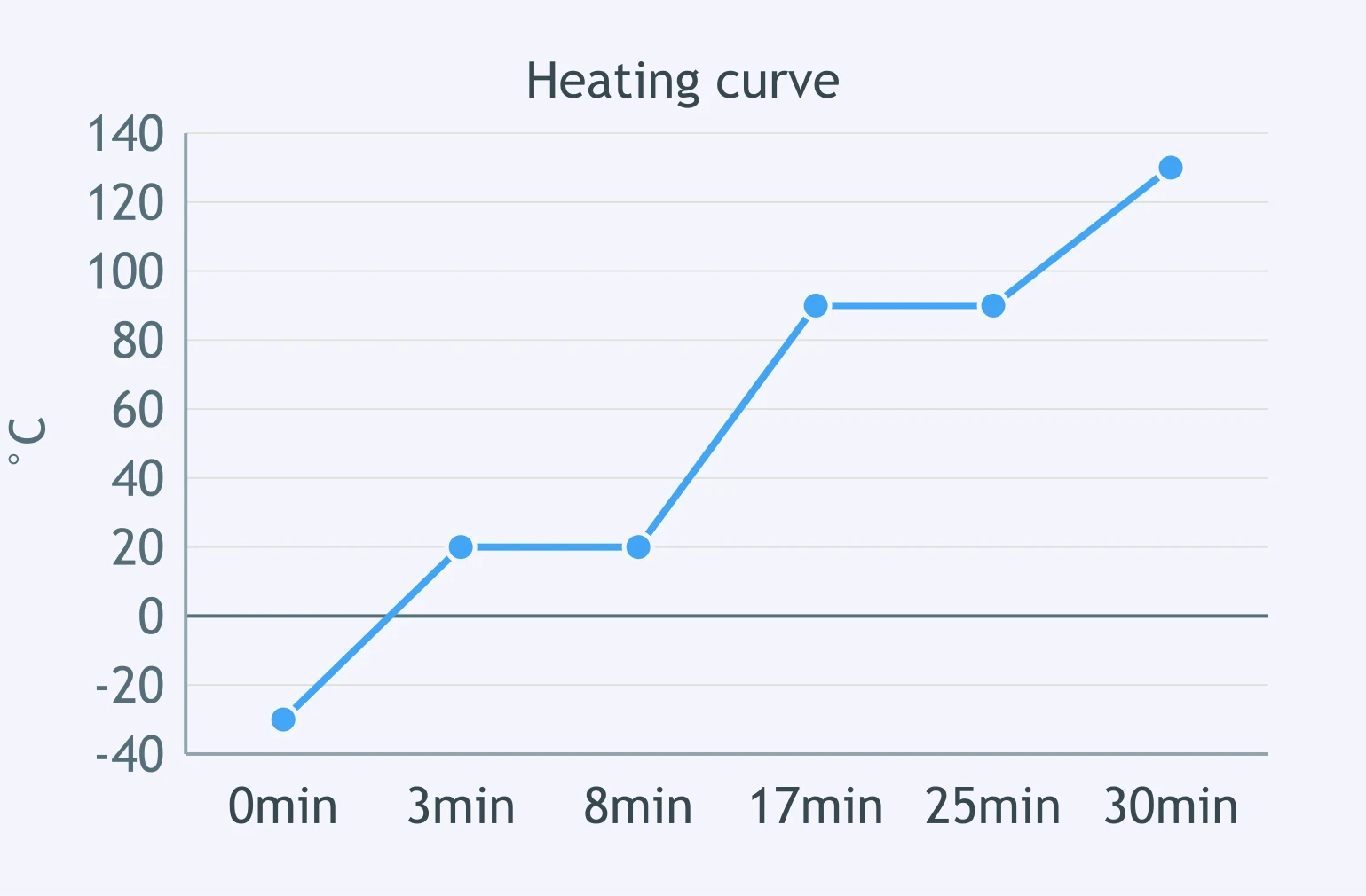
On the heating curve, intervals A-E run from left to right. Which segment shows liquid warming with no phase change?
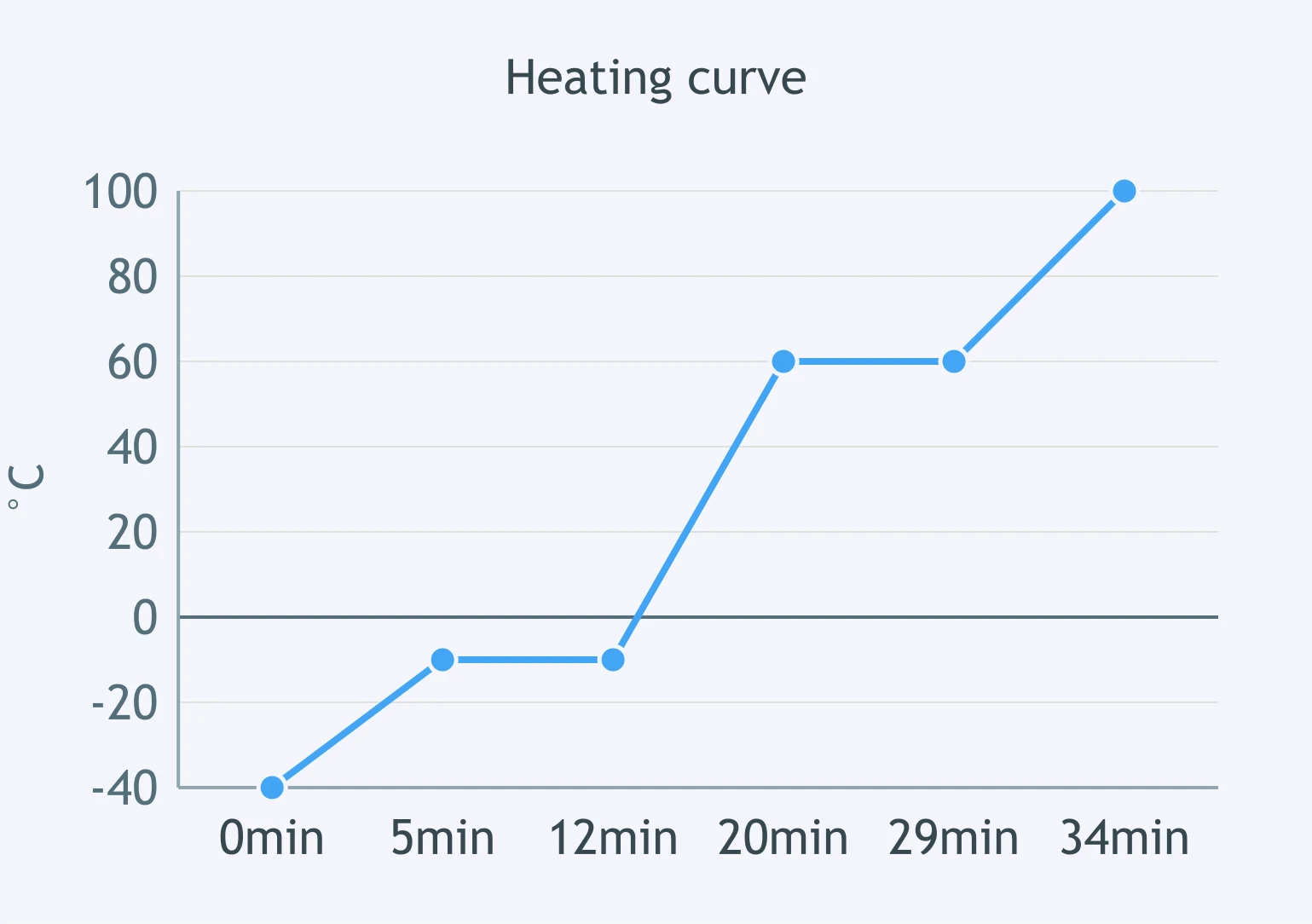
Use the heating curve with segments A-E from left to right. Which segment is the melting interval?
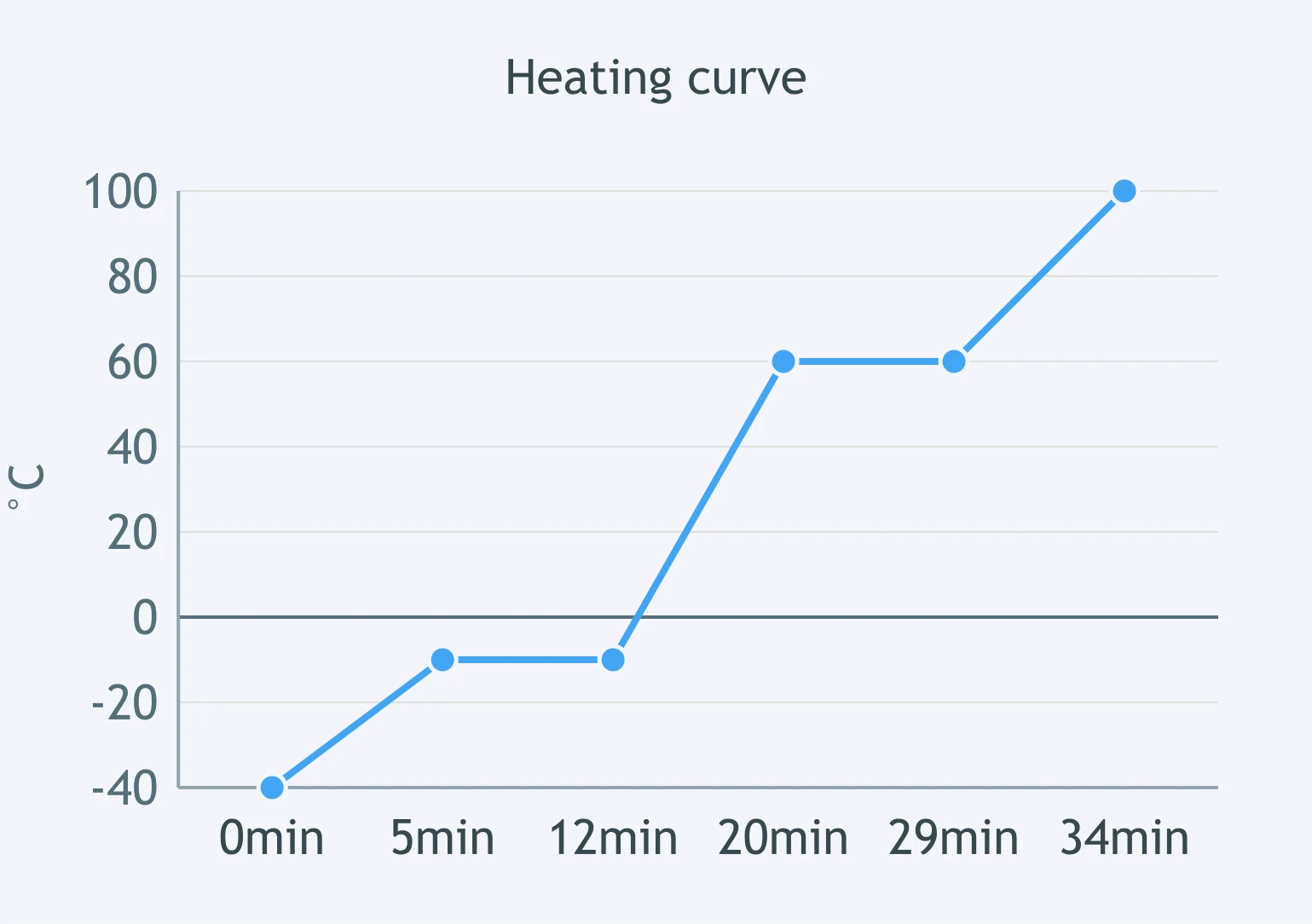
On this heating curve, segments A-E run left to right. Which segment shows gas warming after boiling is complete?
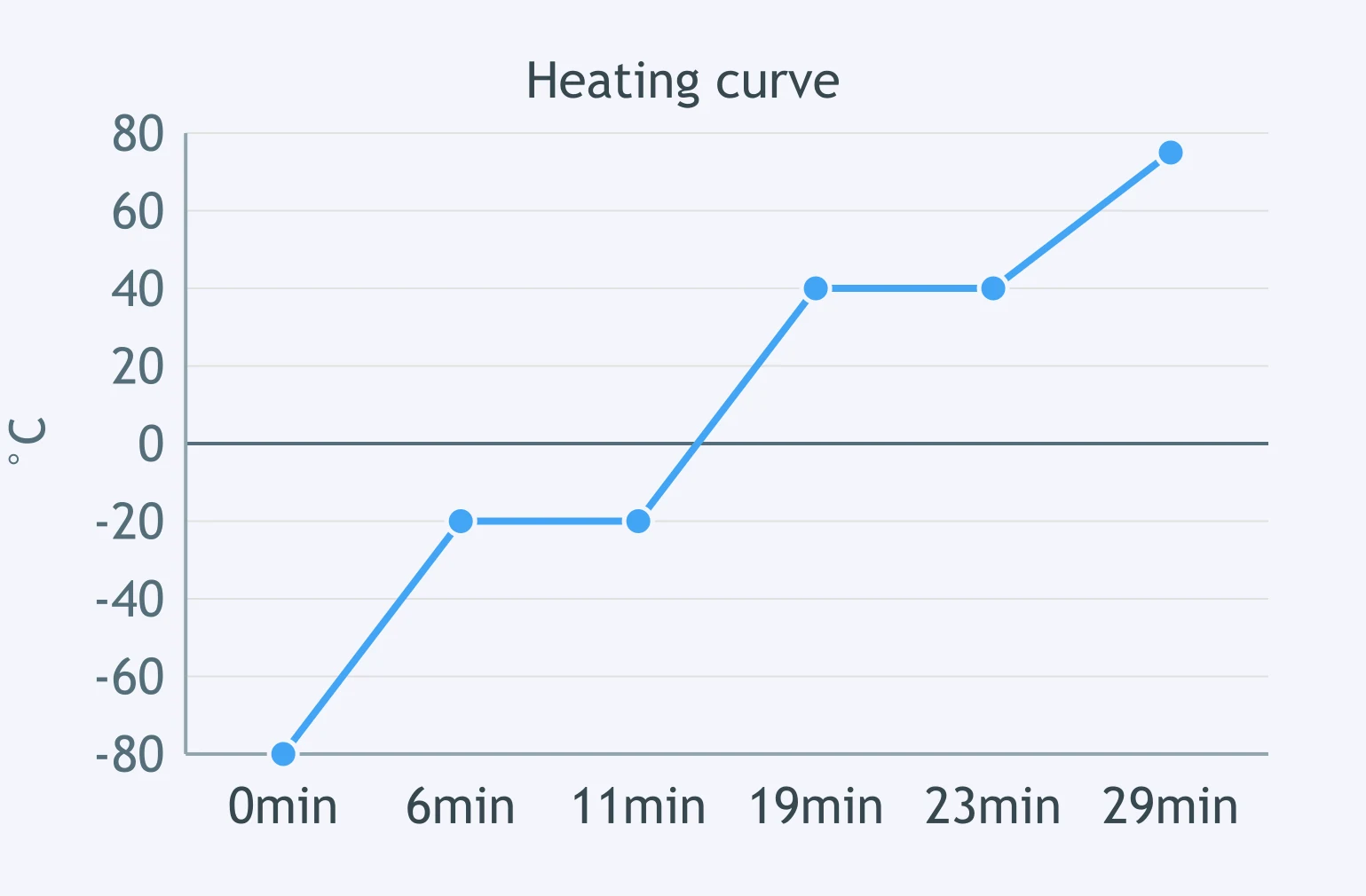
Use the heating curve. Segments A-E are the intervals from left to right. Which segment contains both liquid and gas?
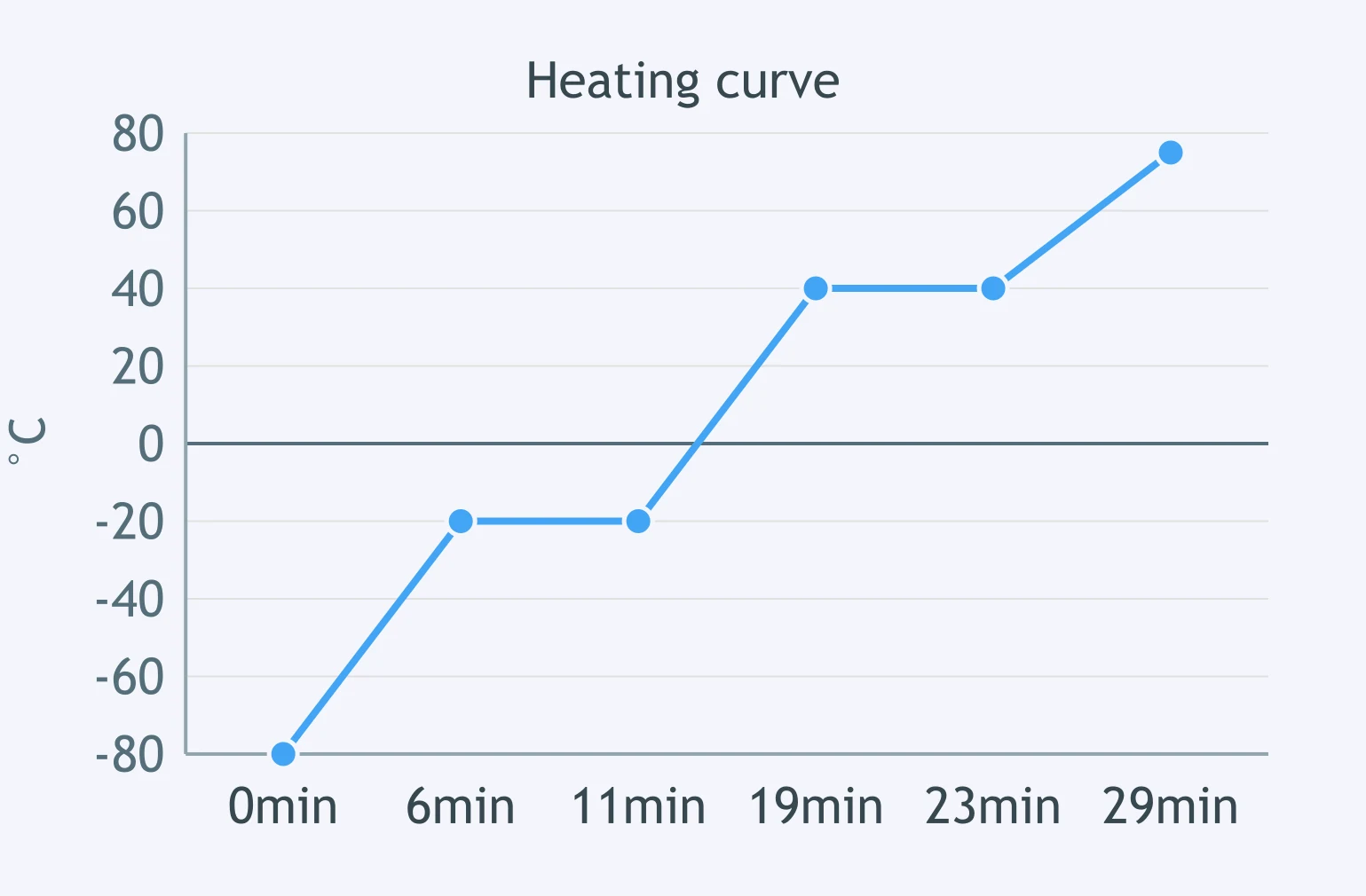
On the heating curve, intervals A-E run left to right. Where is the substance entirely liquid?
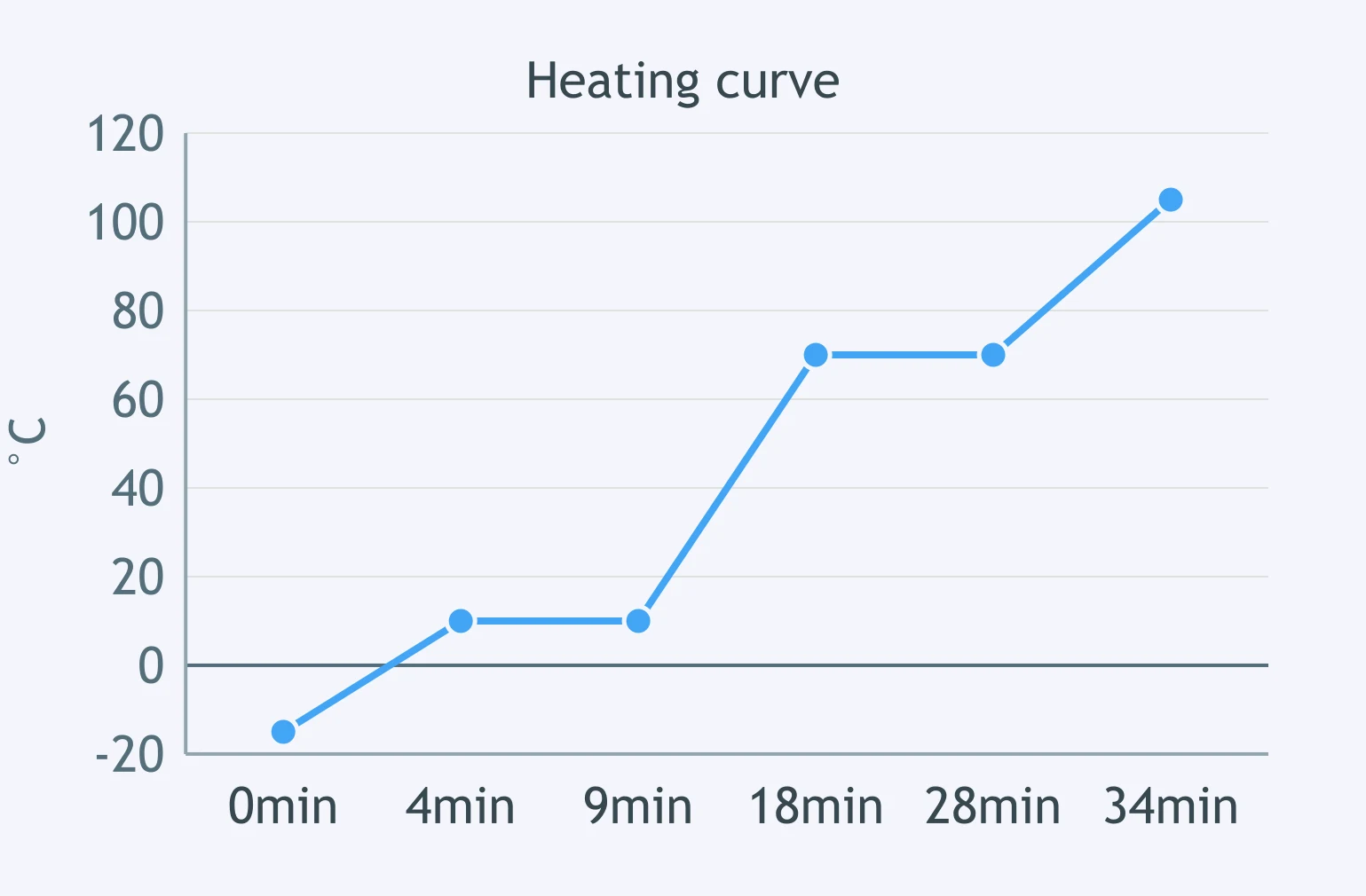
Use the heating curve with segments A-E from left to right. Which segment shows a solid sample before melting starts?
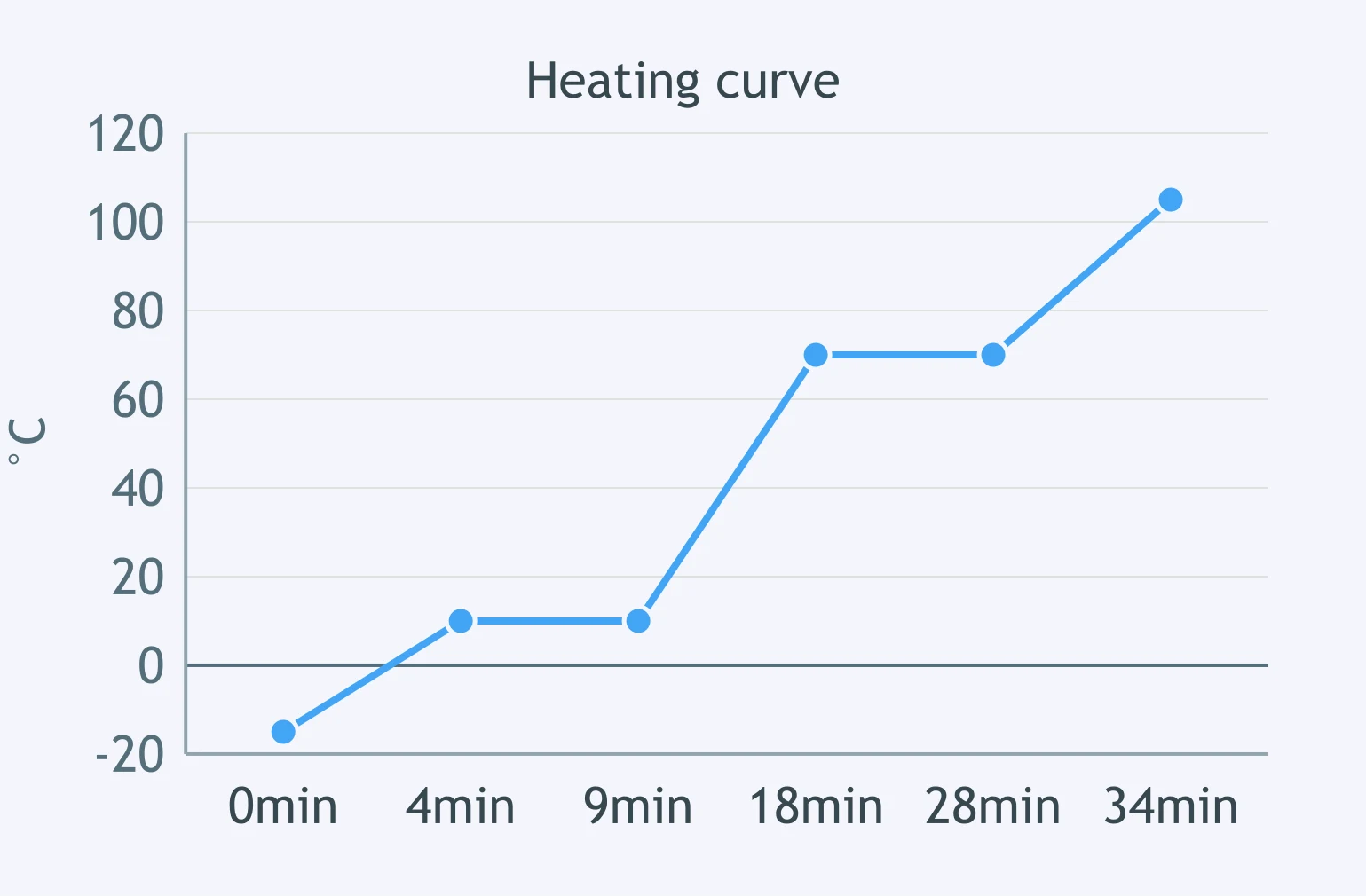
On this heating curve, segments A-E run left to right. Which segment shows only liquid particles, not solid or gas?
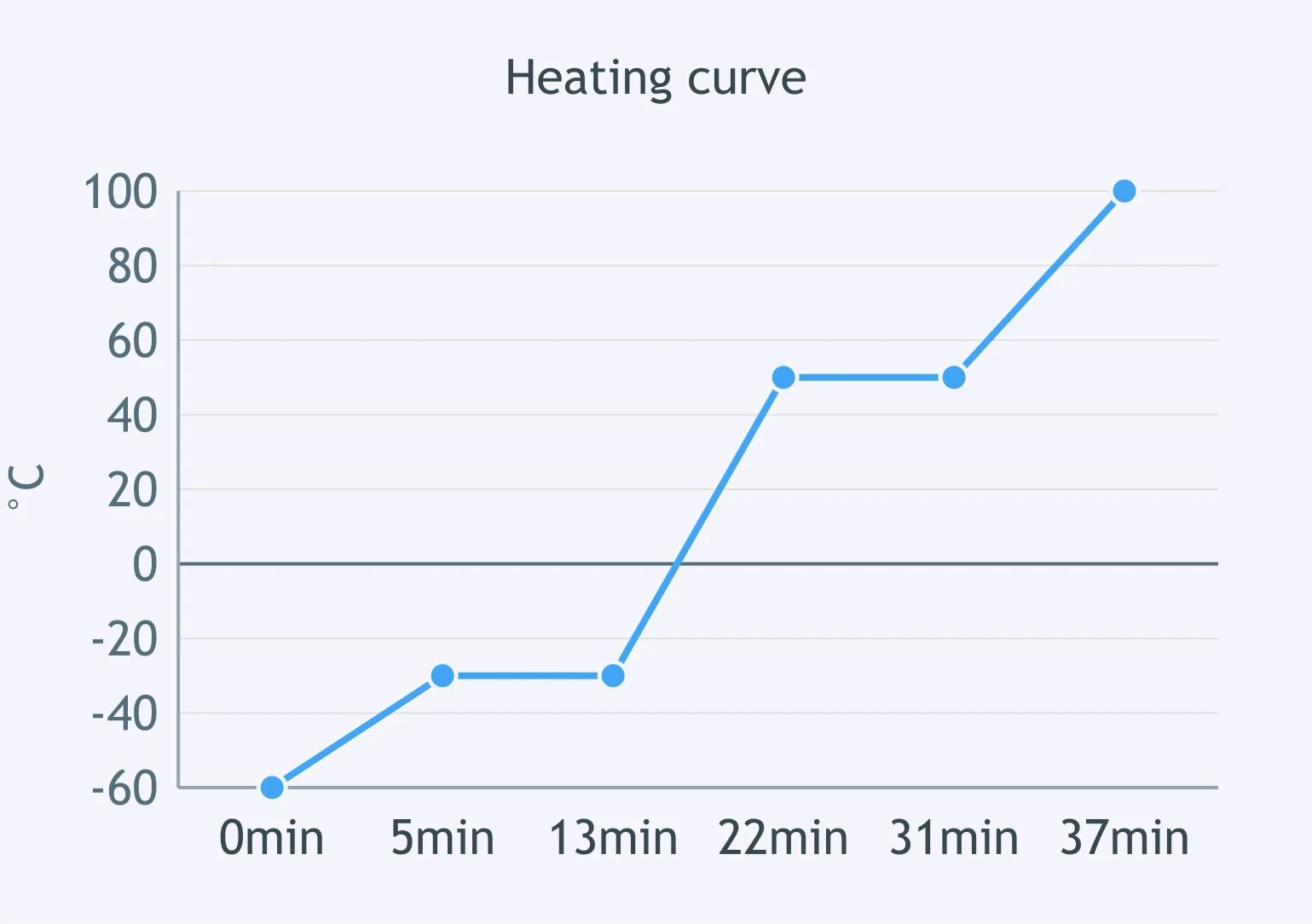
Use the heating curve. Segments A-E run from left to right. Which segment is a solid-liquid mixture?
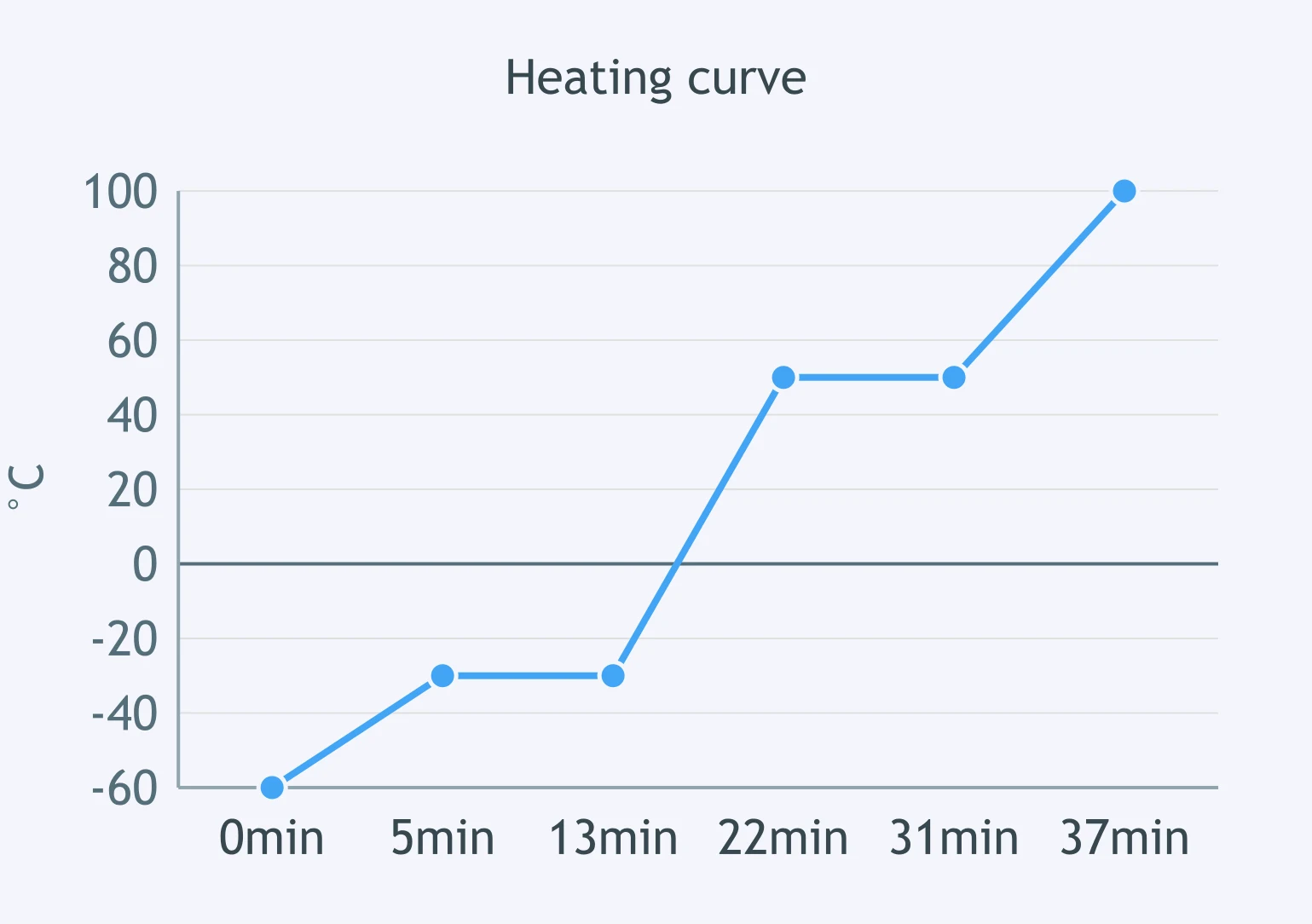
On the heating curve, intervals A-E run left to right. In which segment is the sample vapor with no liquid present?
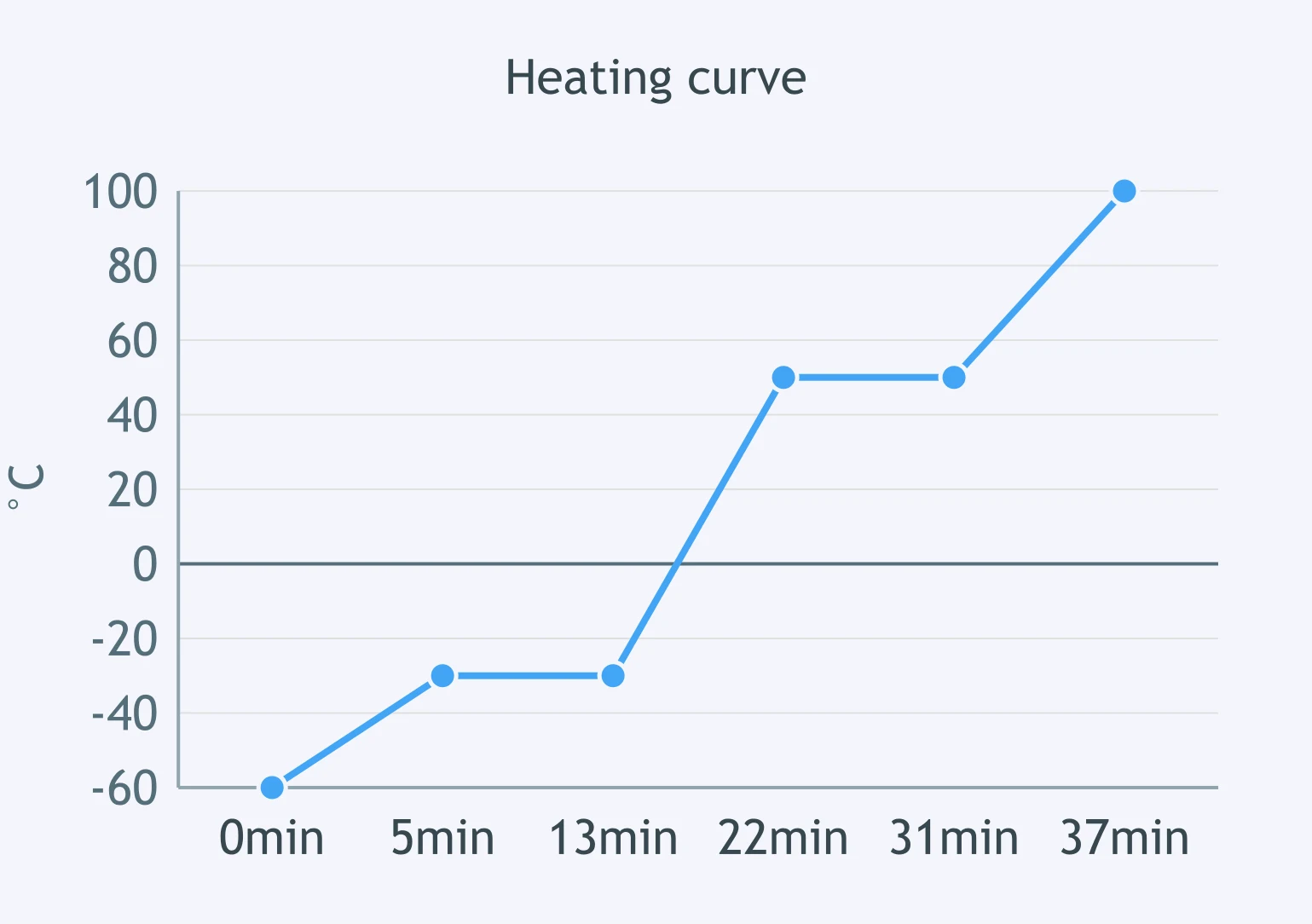
Use the heating curve. Segments A-E run left to right. During segment B, what happens to the energy delivered by the heater?
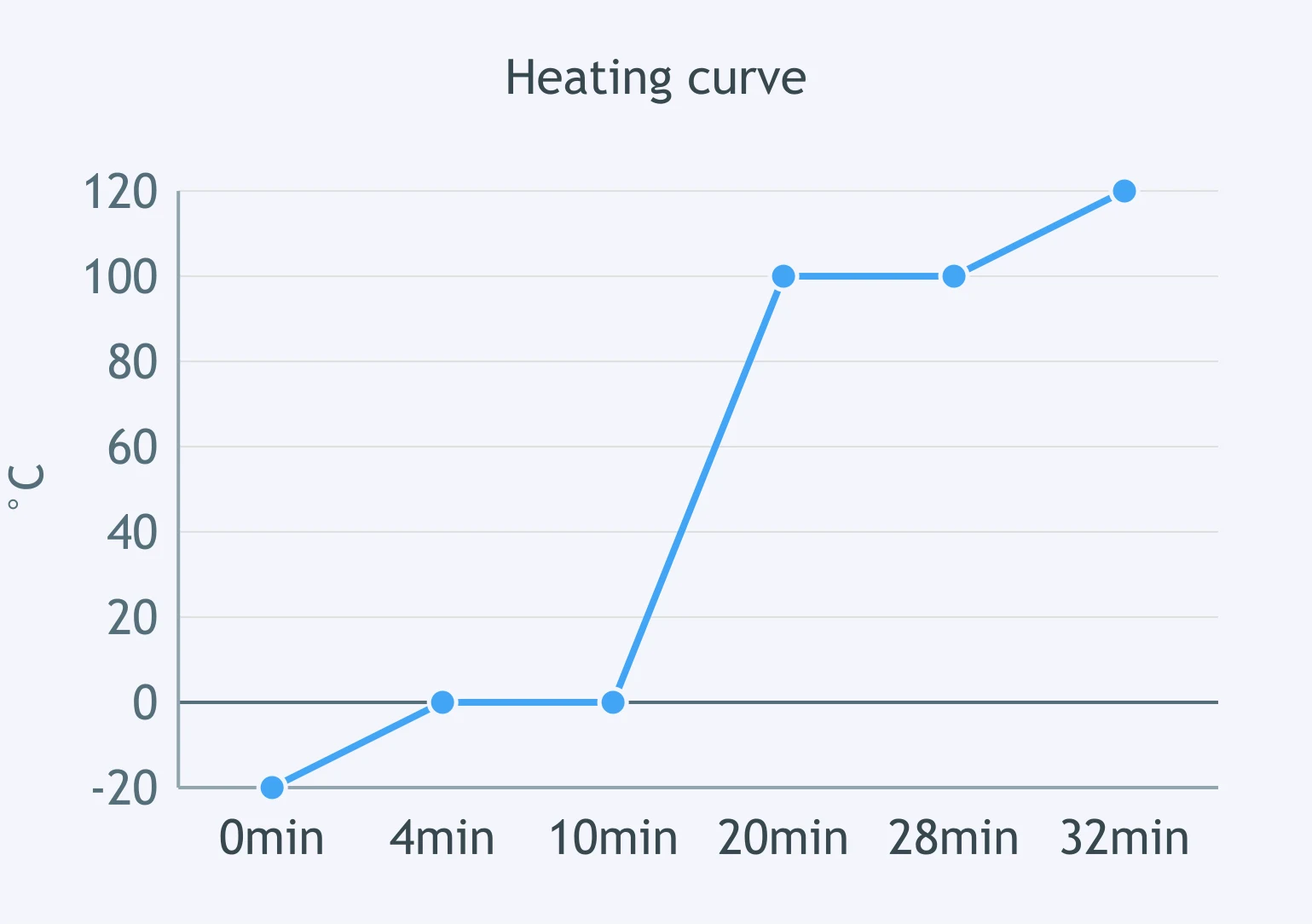
On the heating curve, segment D is the upper plateau. Which statement best describes the sample during segment D?
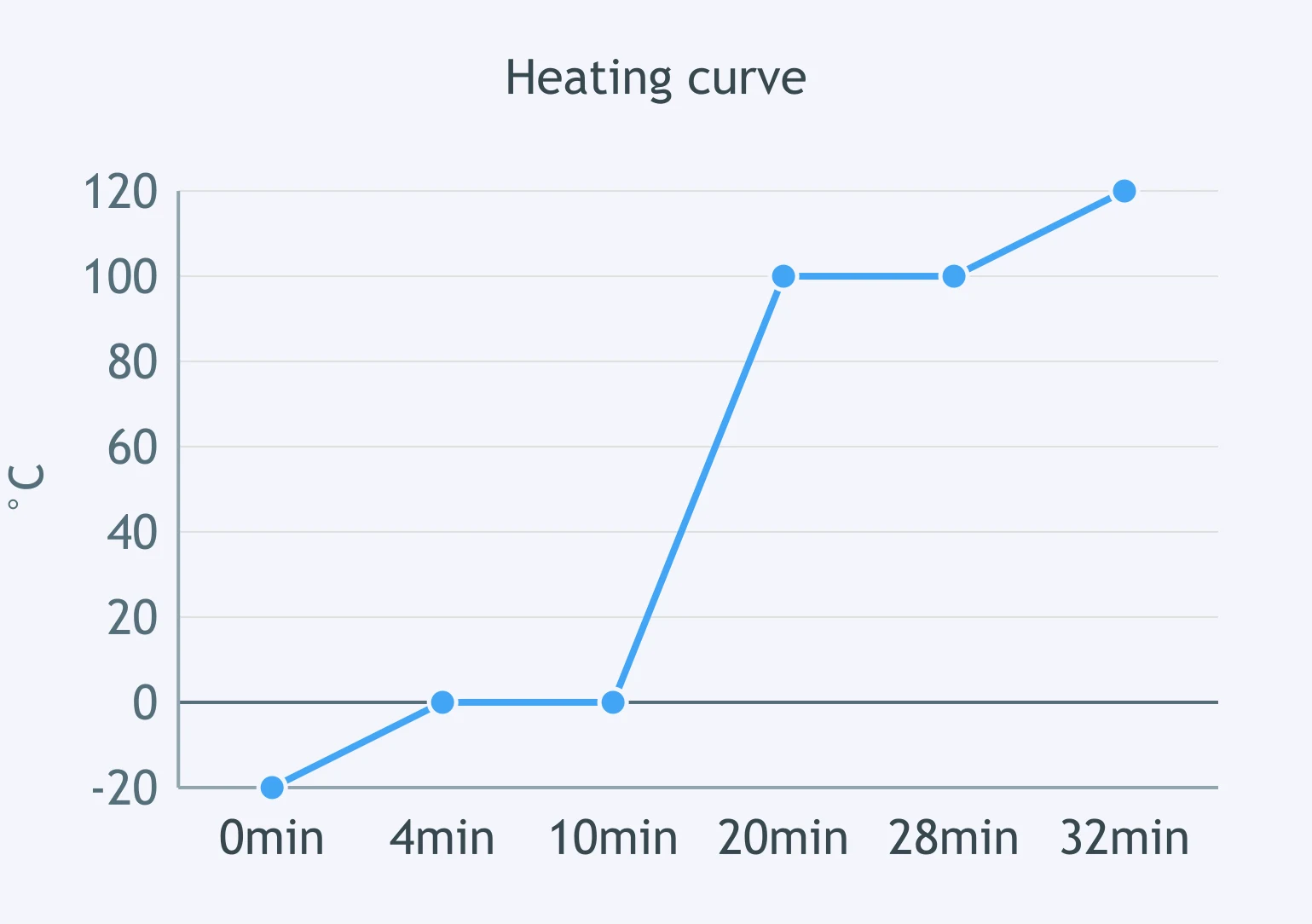
Use the cooling curve. Segments A-E run left to right. What is happening during segment B?
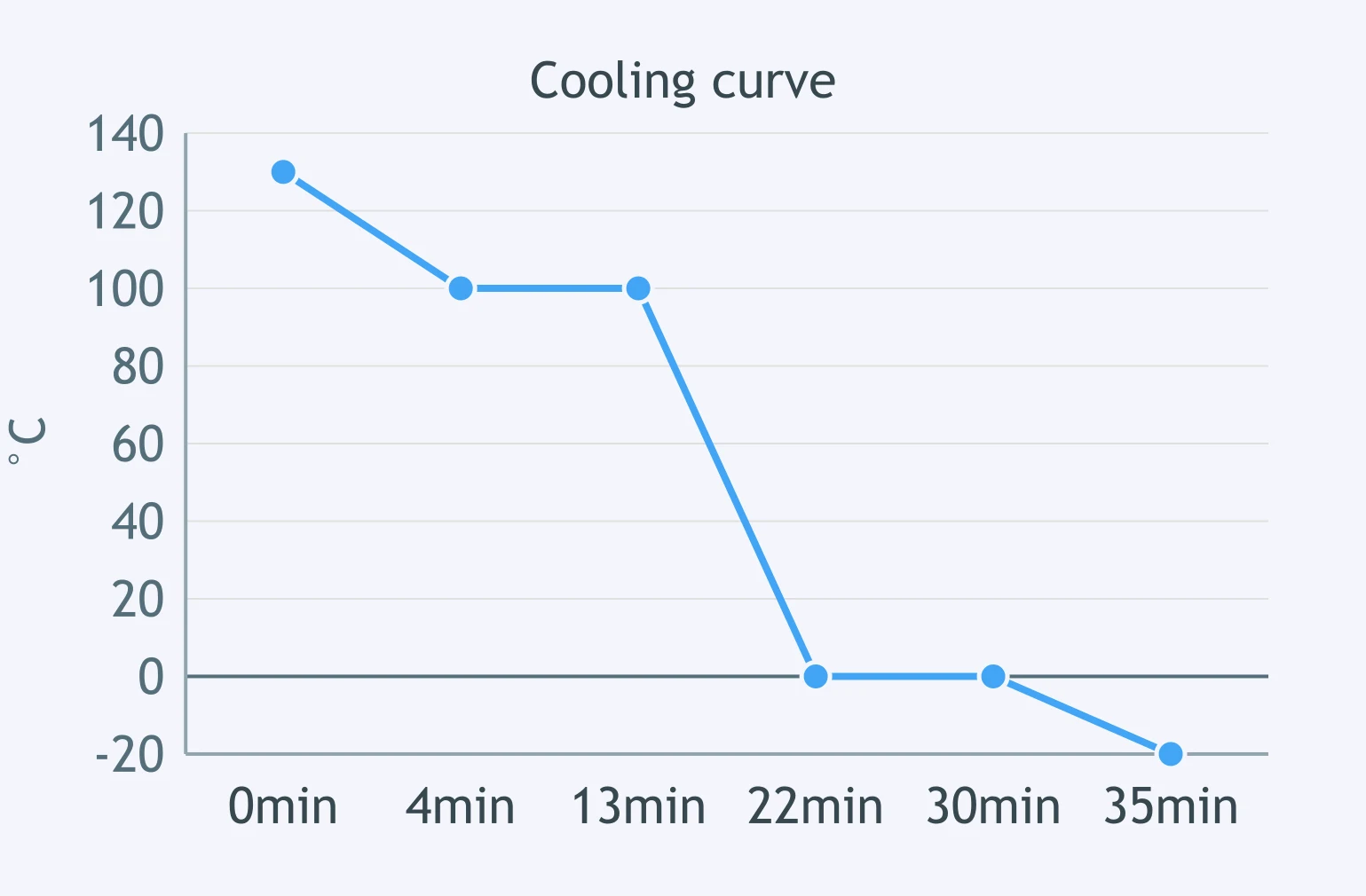
On this cooling curve, segments A-E run left to right. During segment D, which energy change is occurring?
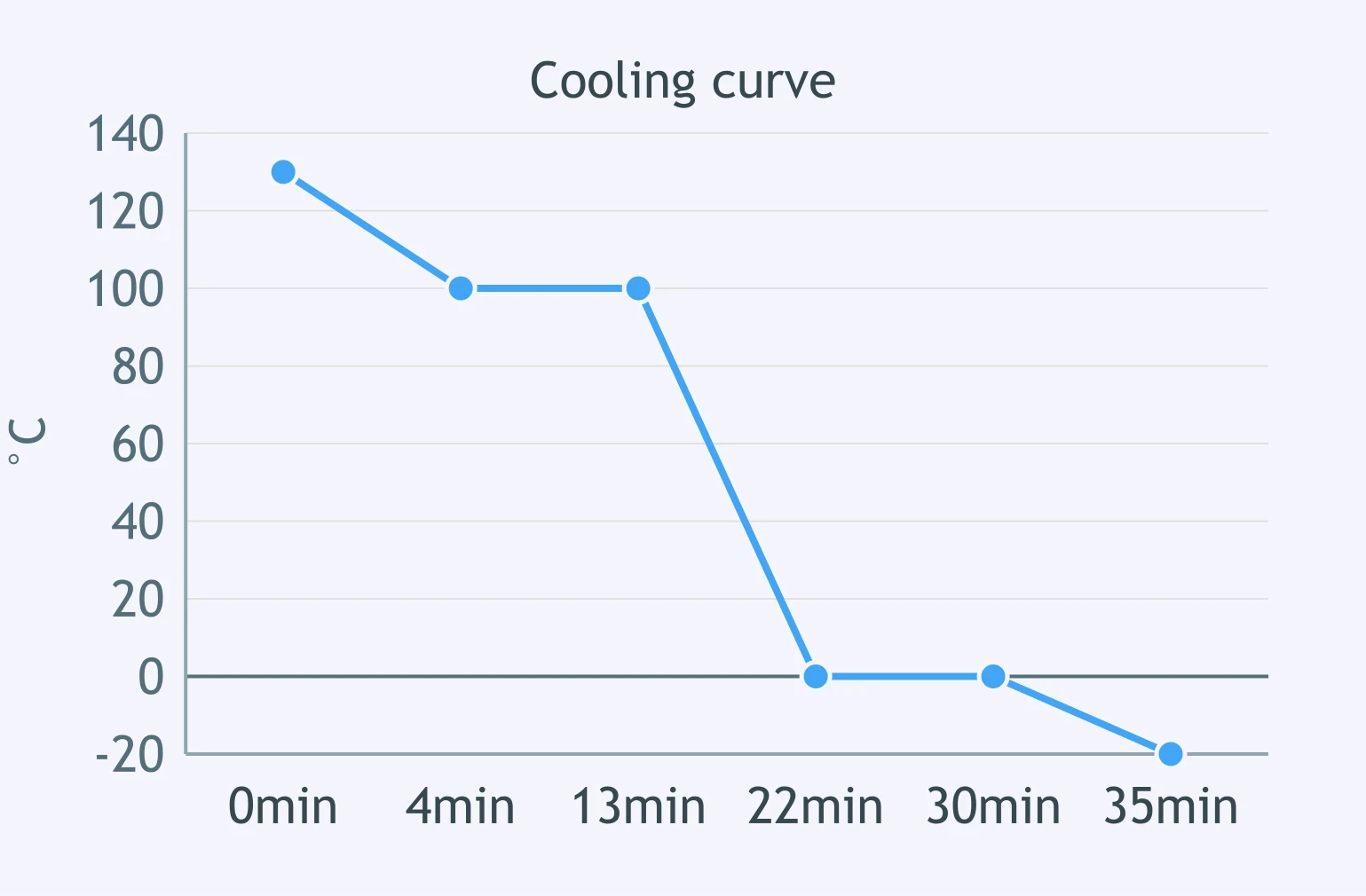
Use the heating curve with segments A-E from left to right. Which segment is the lower-temperature phase change?
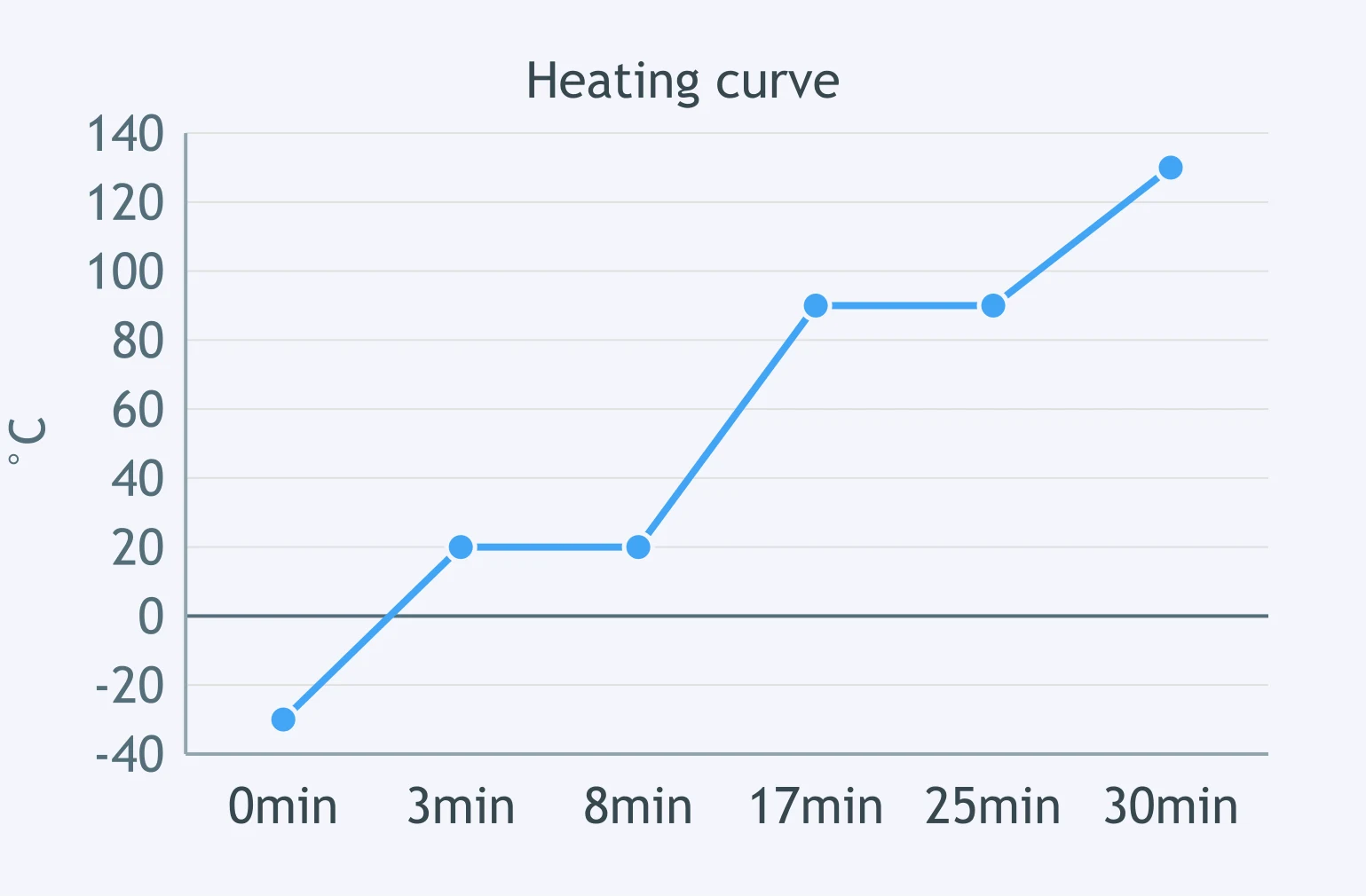
On the heating curve, segments A-E run left to right. Which phase change occurs during segment D?
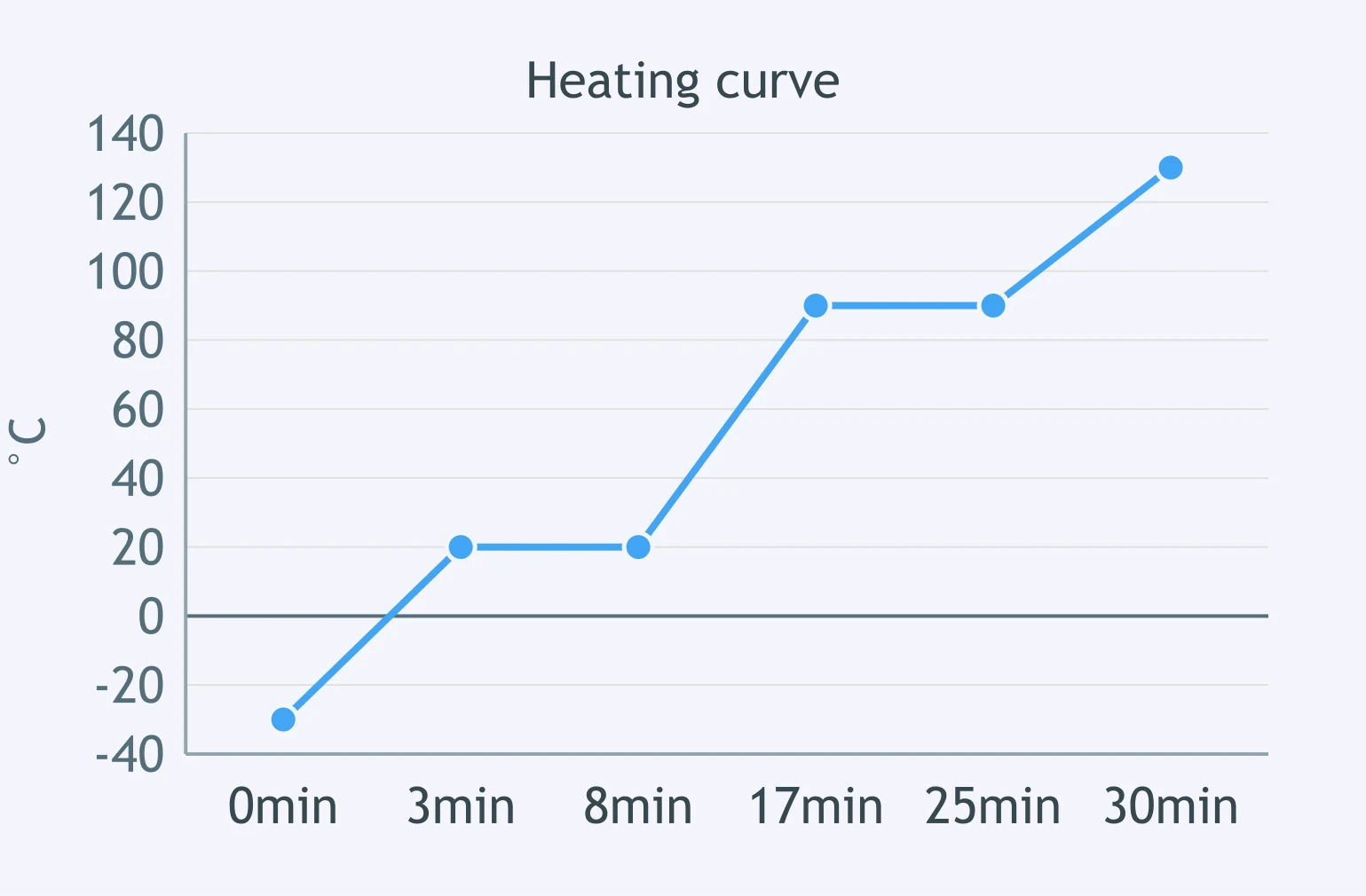
Use the heating curve. Segment B is flat while the heater keeps delivering energy. Which statement is correct?
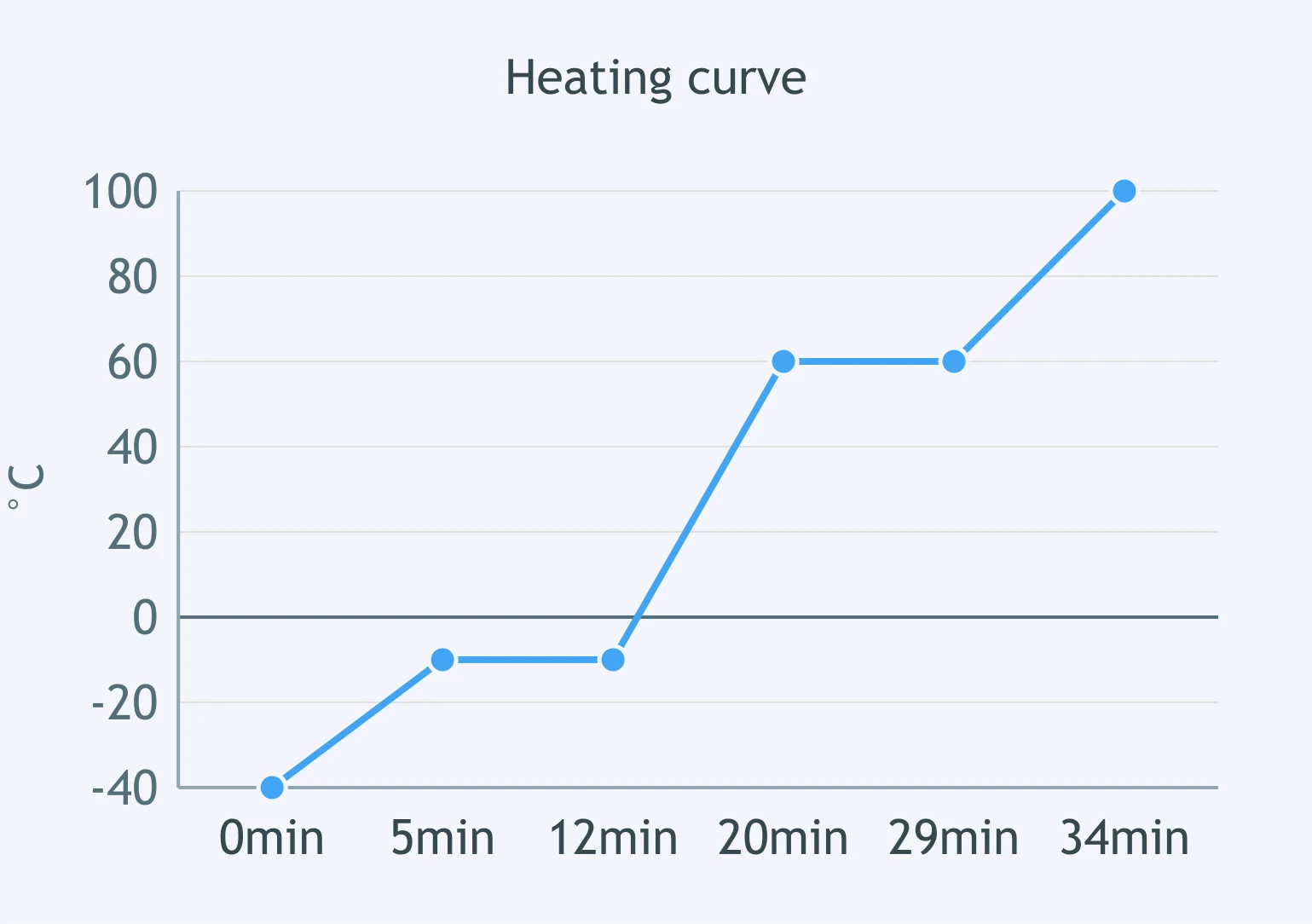
On the heating curve, segments A-E run left to right. Which segment is a phase change at -20 °C?
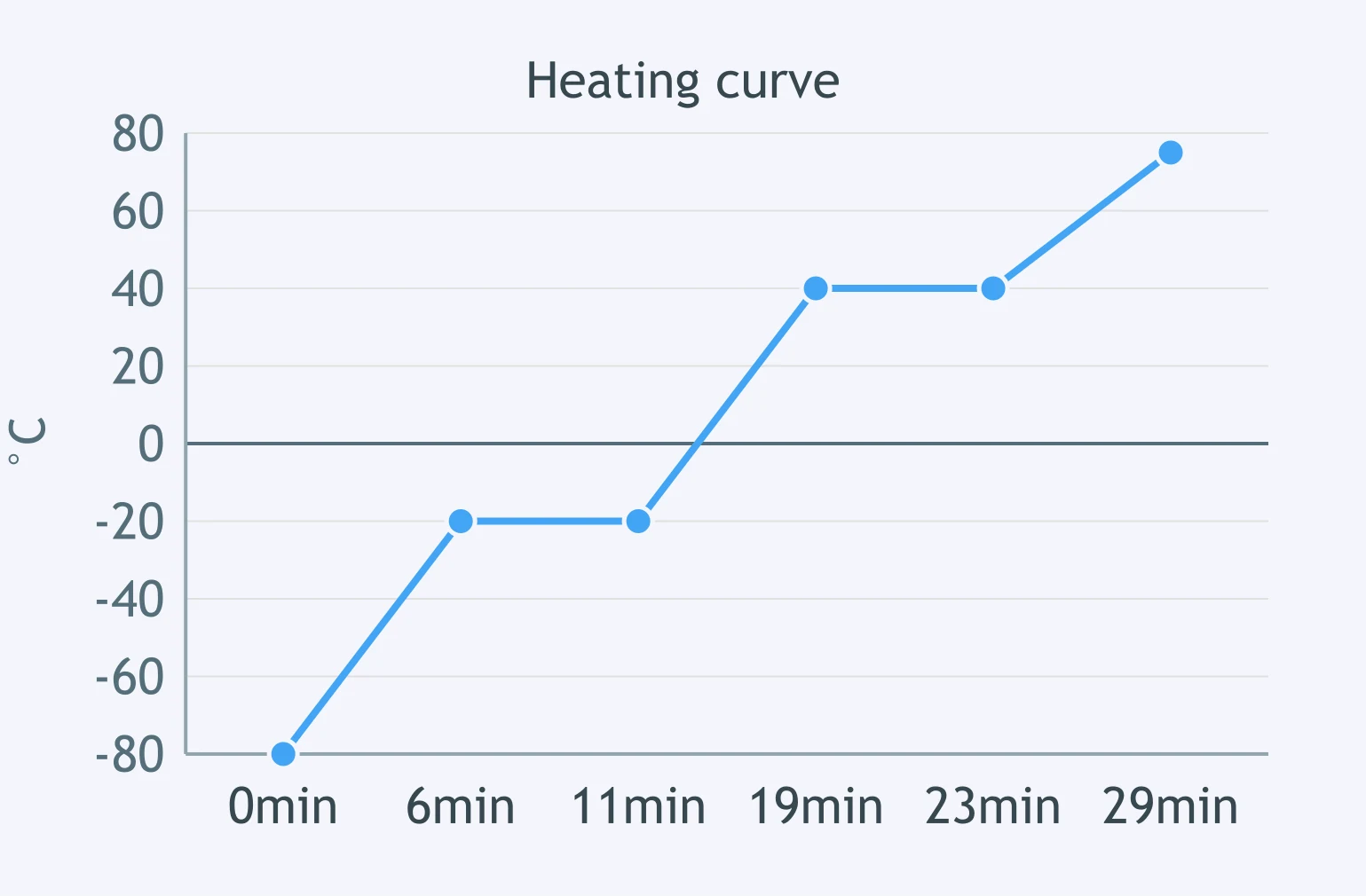
Use the heating curve with segments A-E left to right. What happens during segment D?
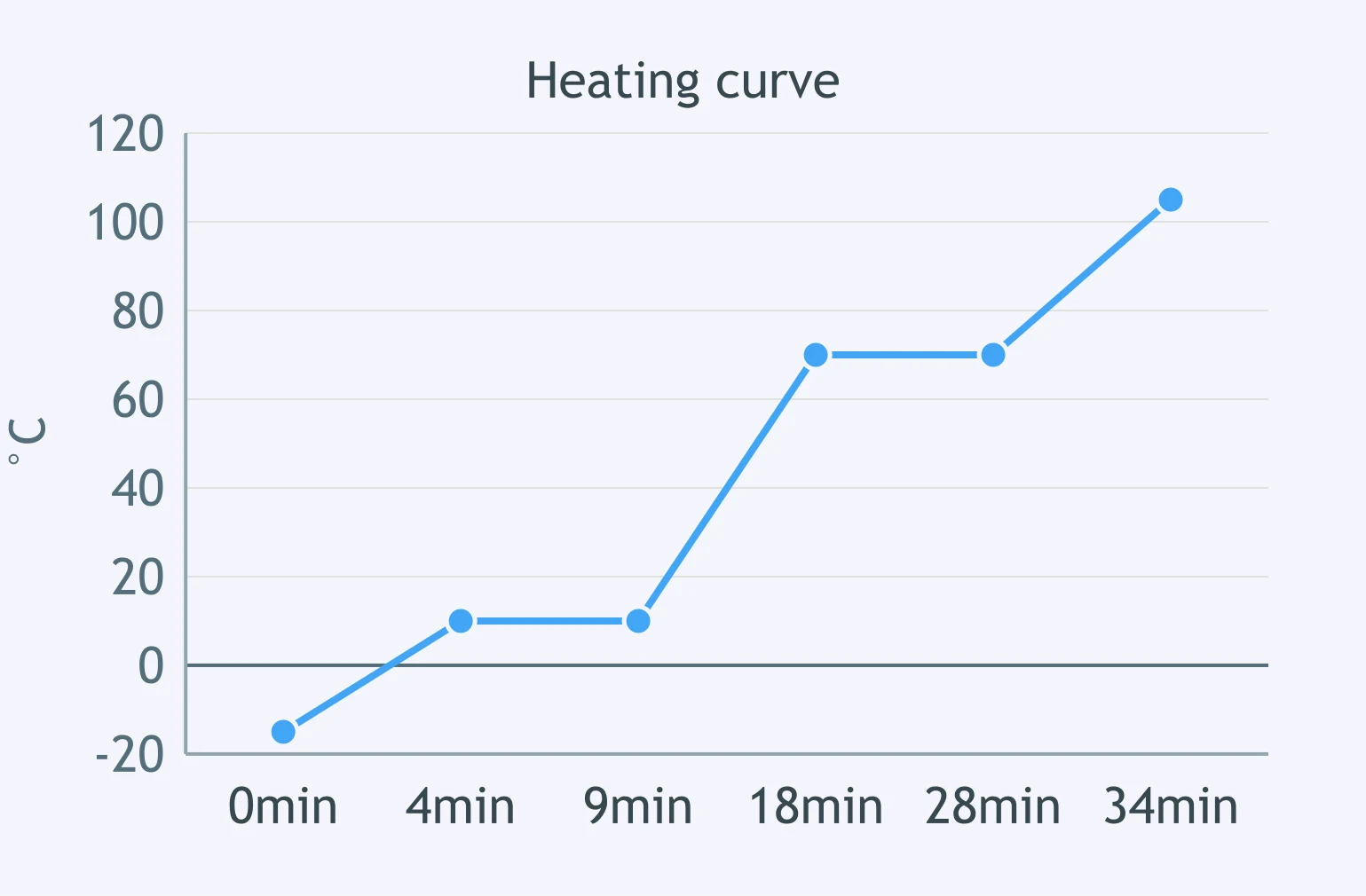
Use the cooling curve. Segments A-E run left to right. What is true during segment D?
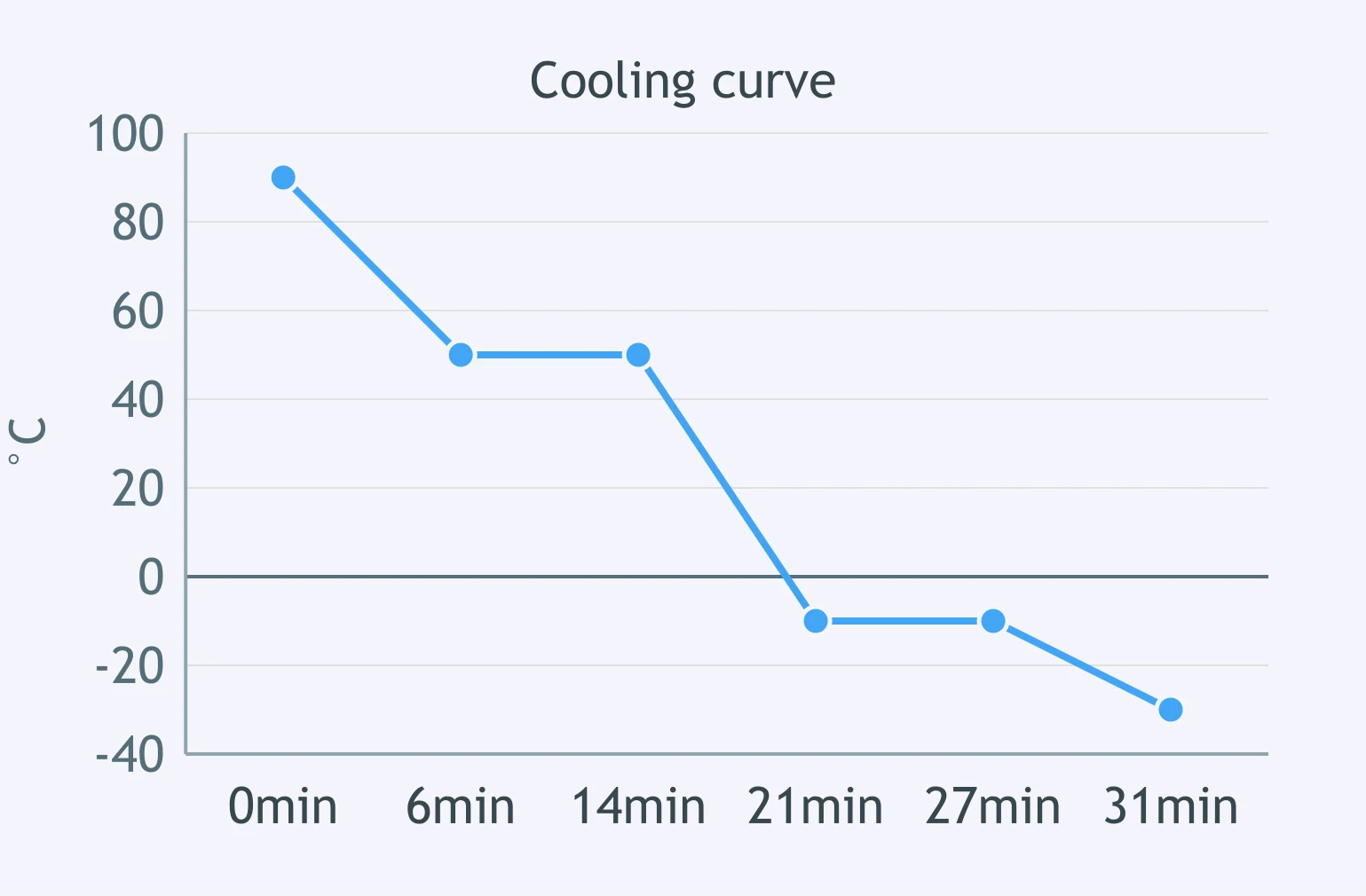
Use the cooling curve with segments A-E left to right. Which segments are phase changes?
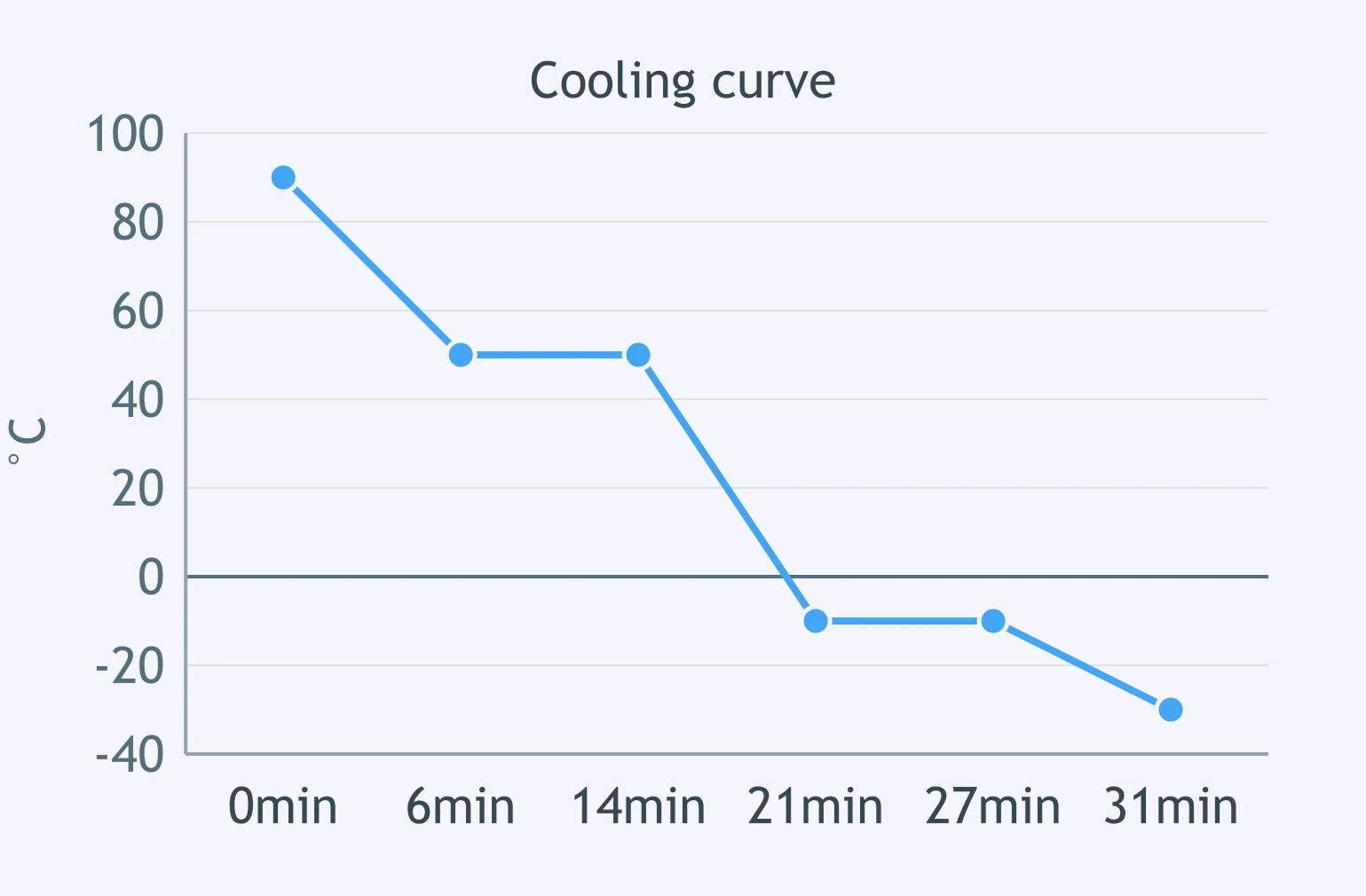
On the heating curve, segment D is flat while heat is added. Which statement best distinguishes heat from temperature?
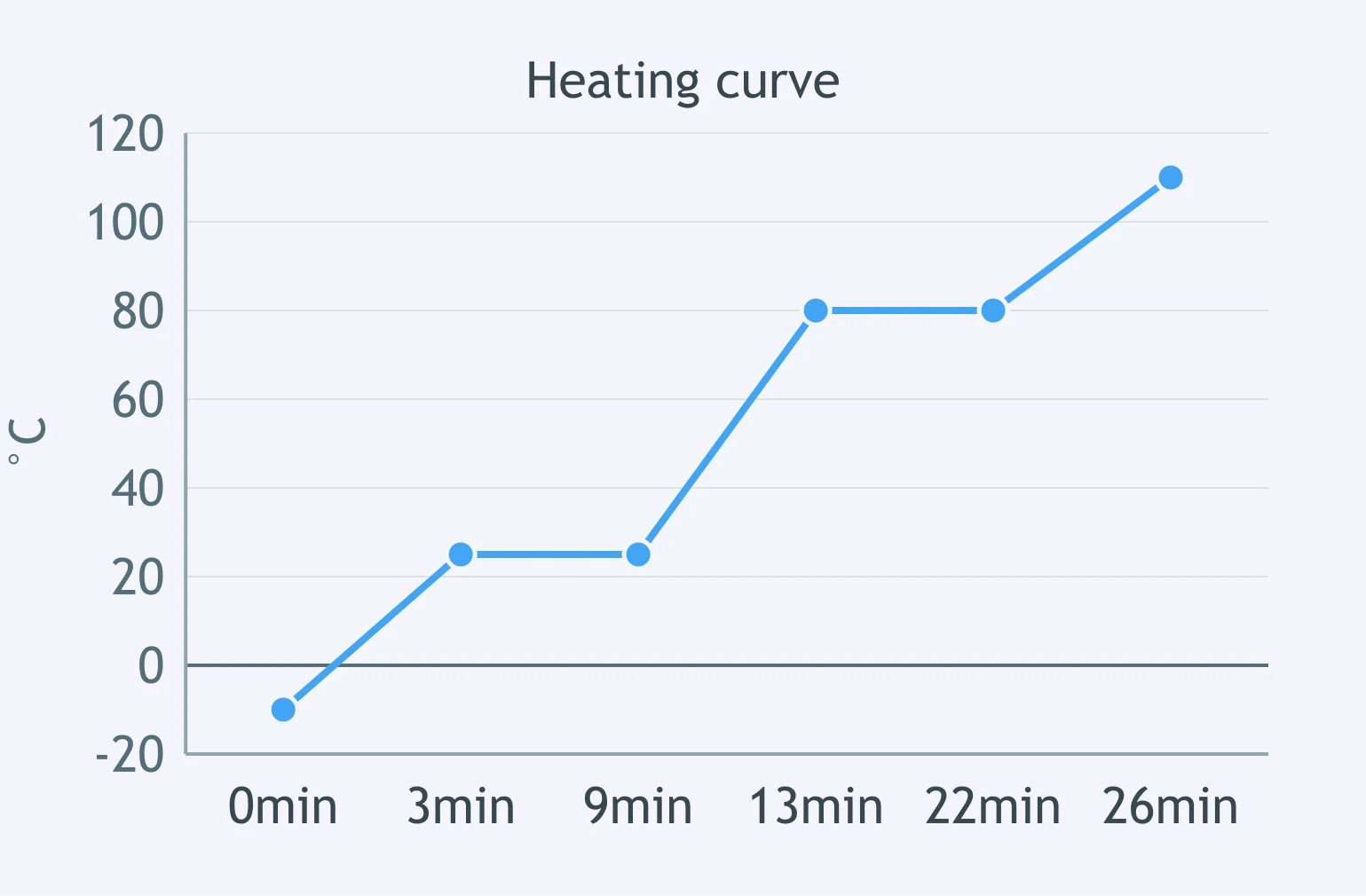
Use the graph; intervals A-E run left to right. A 0.50 kg sample has c = 800 J/(kg·°C). How much energy is absorbed in segment A?
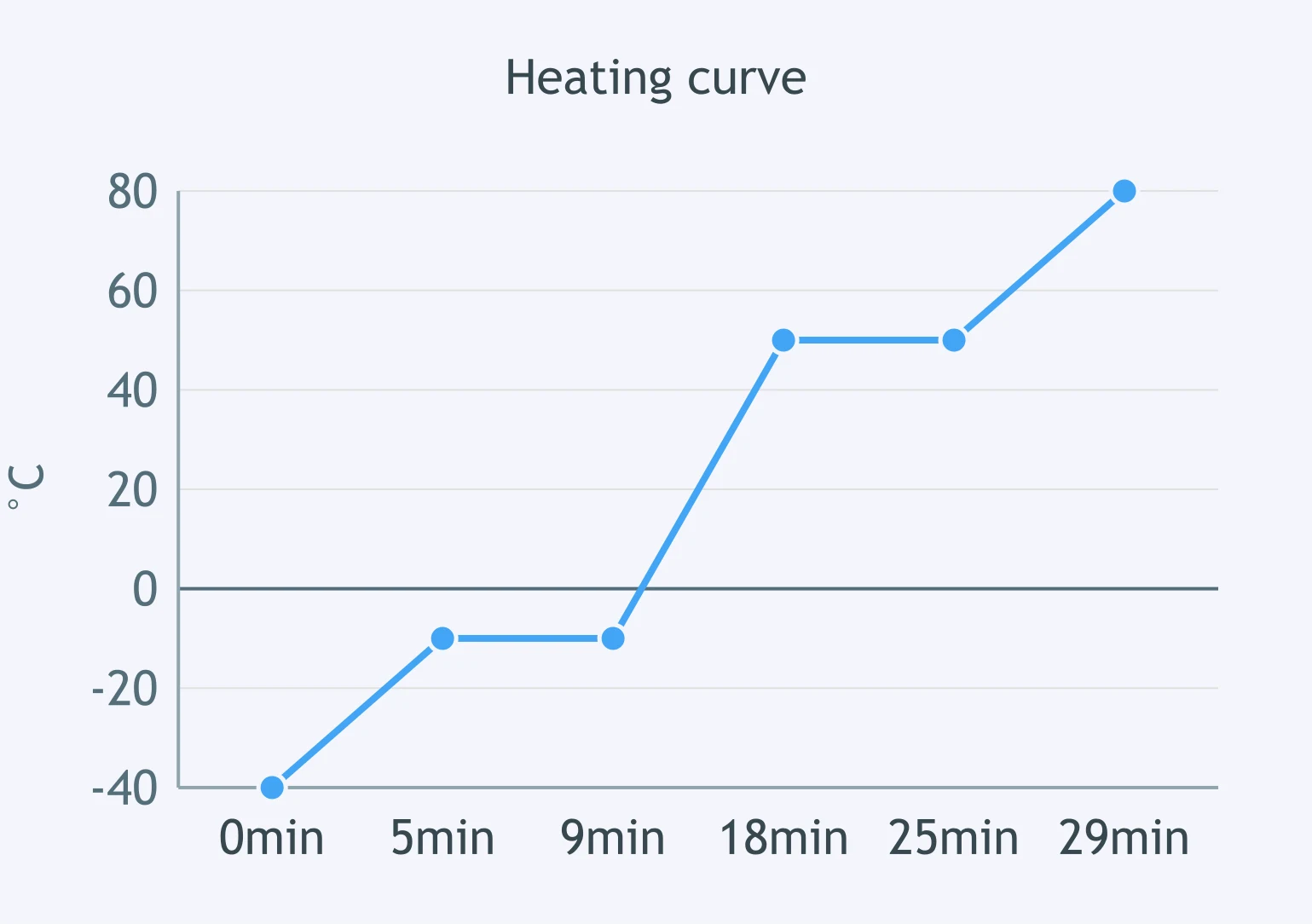
Use the graph; segments A-E run left to right. A 0.50 kg liquid has c = 2400 J/(kg·°C). Find the heat absorbed in segment C.
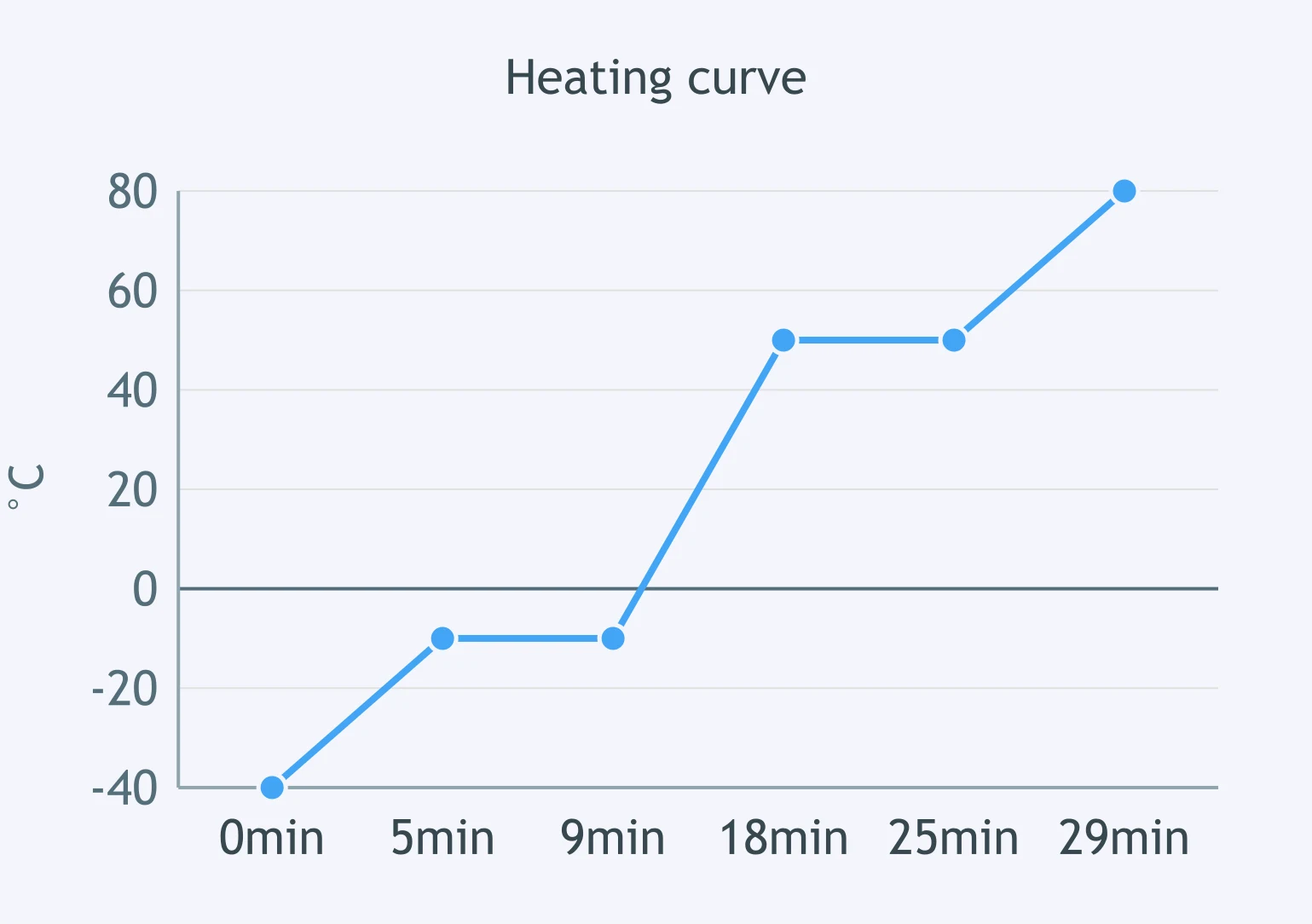
Use the graph; intervals A-E run left to right. For a 0.20 kg solid with c = 900 J/(kg·°C), what heat is absorbed in segment A?
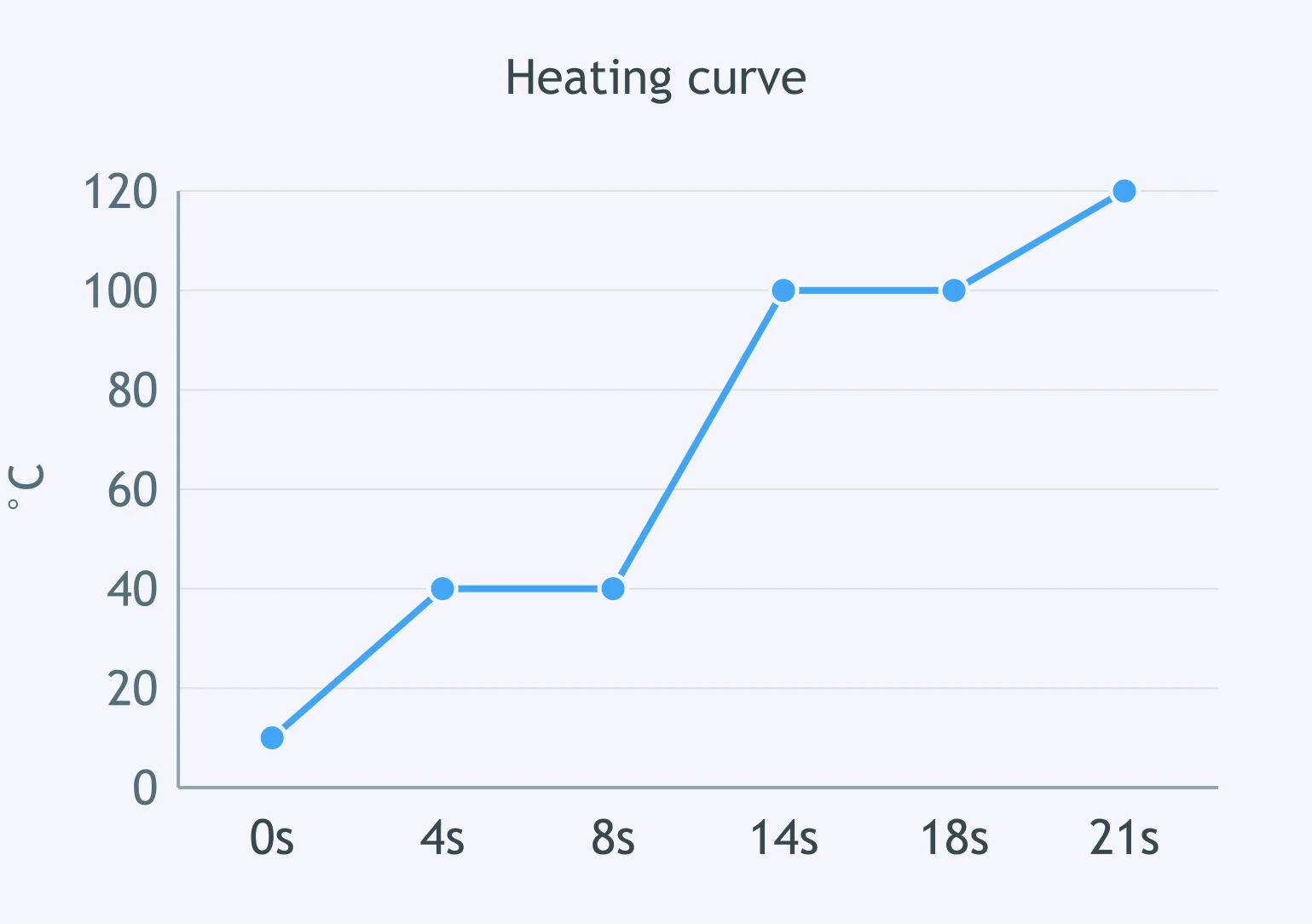
Use the graph; segments A-E run left to right. A 0.20 kg gas has c = 2000 J/(kg·°C). How much heat is absorbed in segment E?
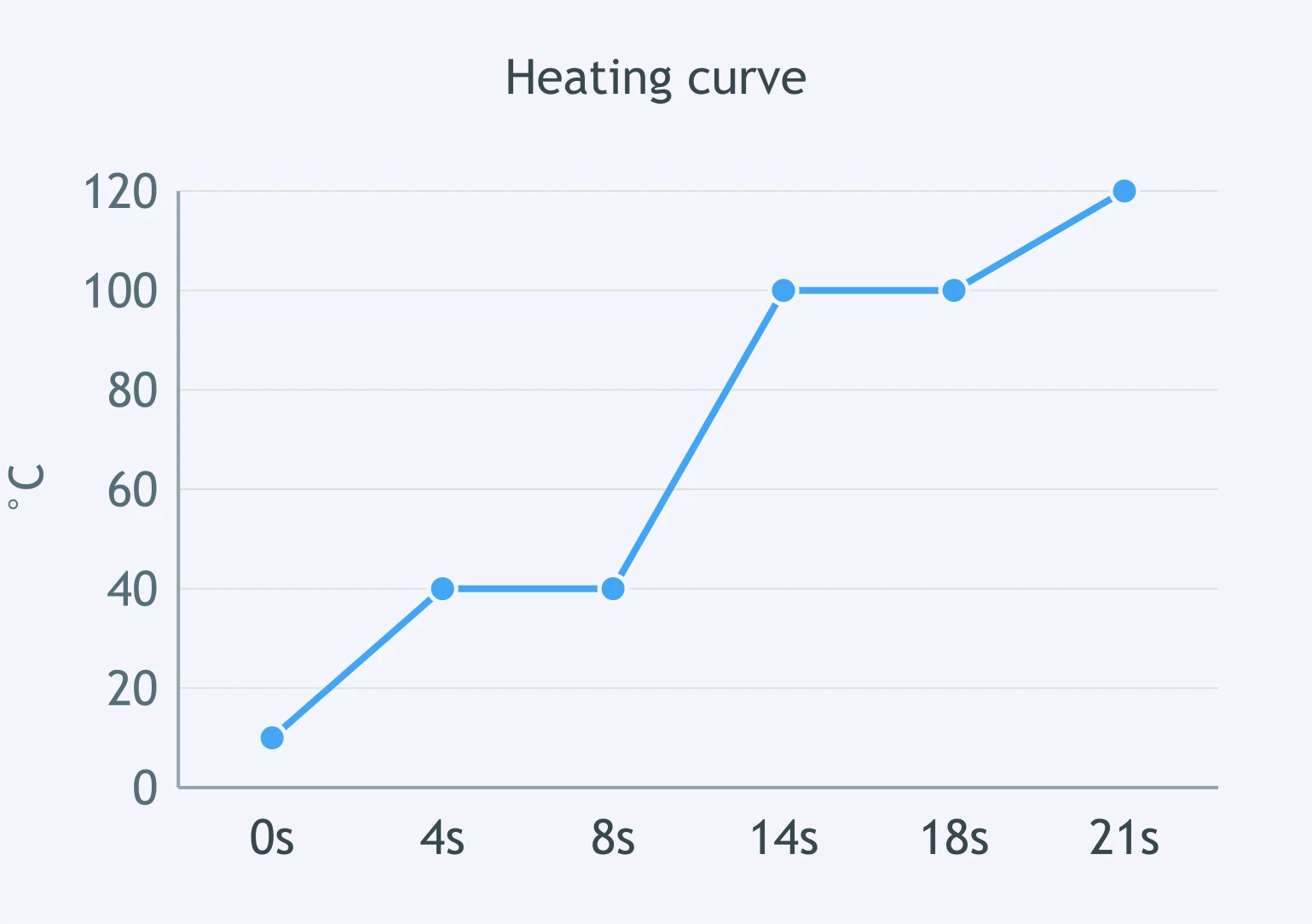
Use the graph; intervals A-E run left to right. A 0.15 kg liquid has c = 1000 J/(kg·°C). What energy is absorbed in segment C?
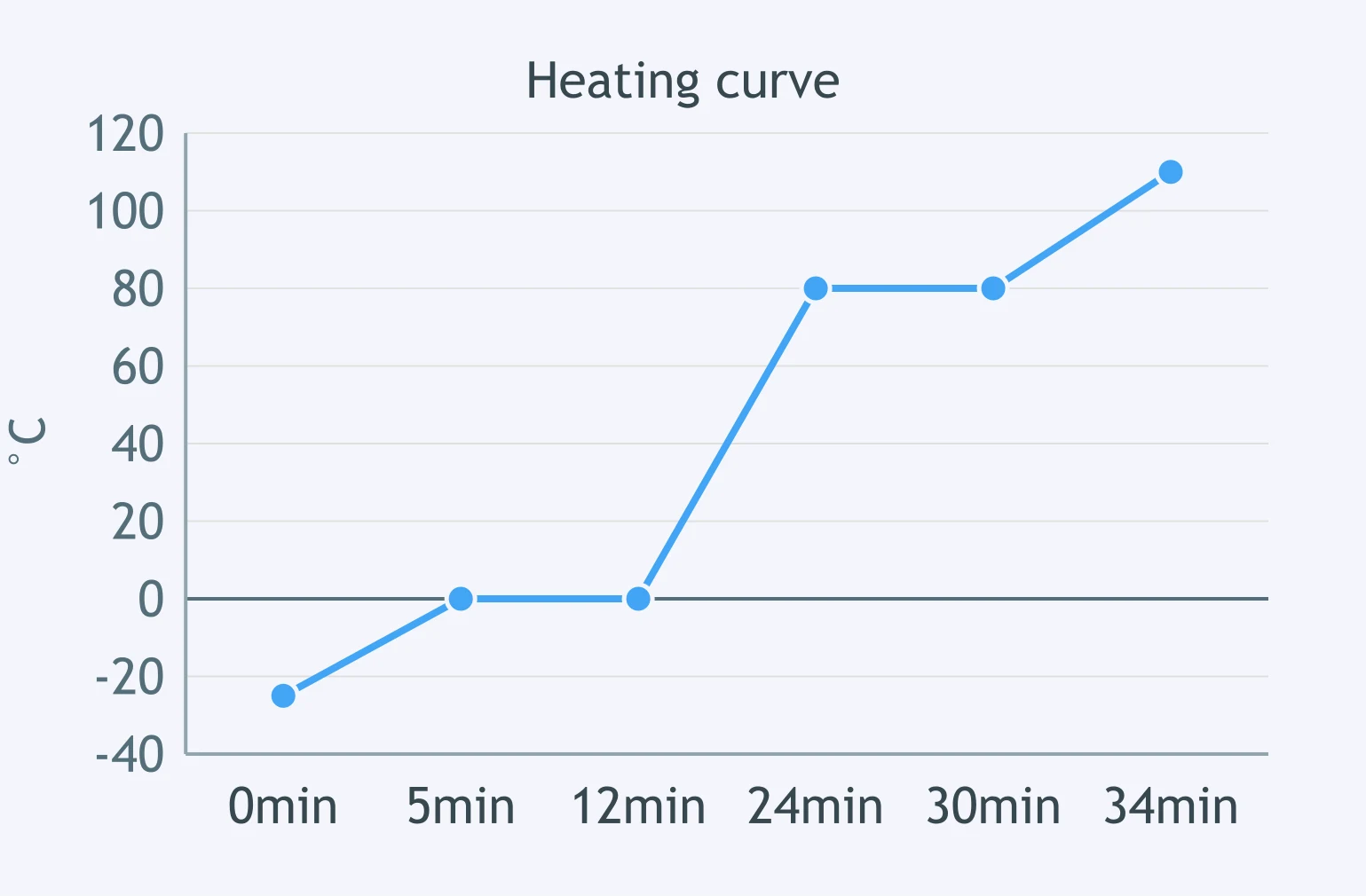
Use the graph; segments A-E run left to right. A 0.15 kg solid has c = 2000 J/(kg·°C). How much heat is absorbed in segment A?
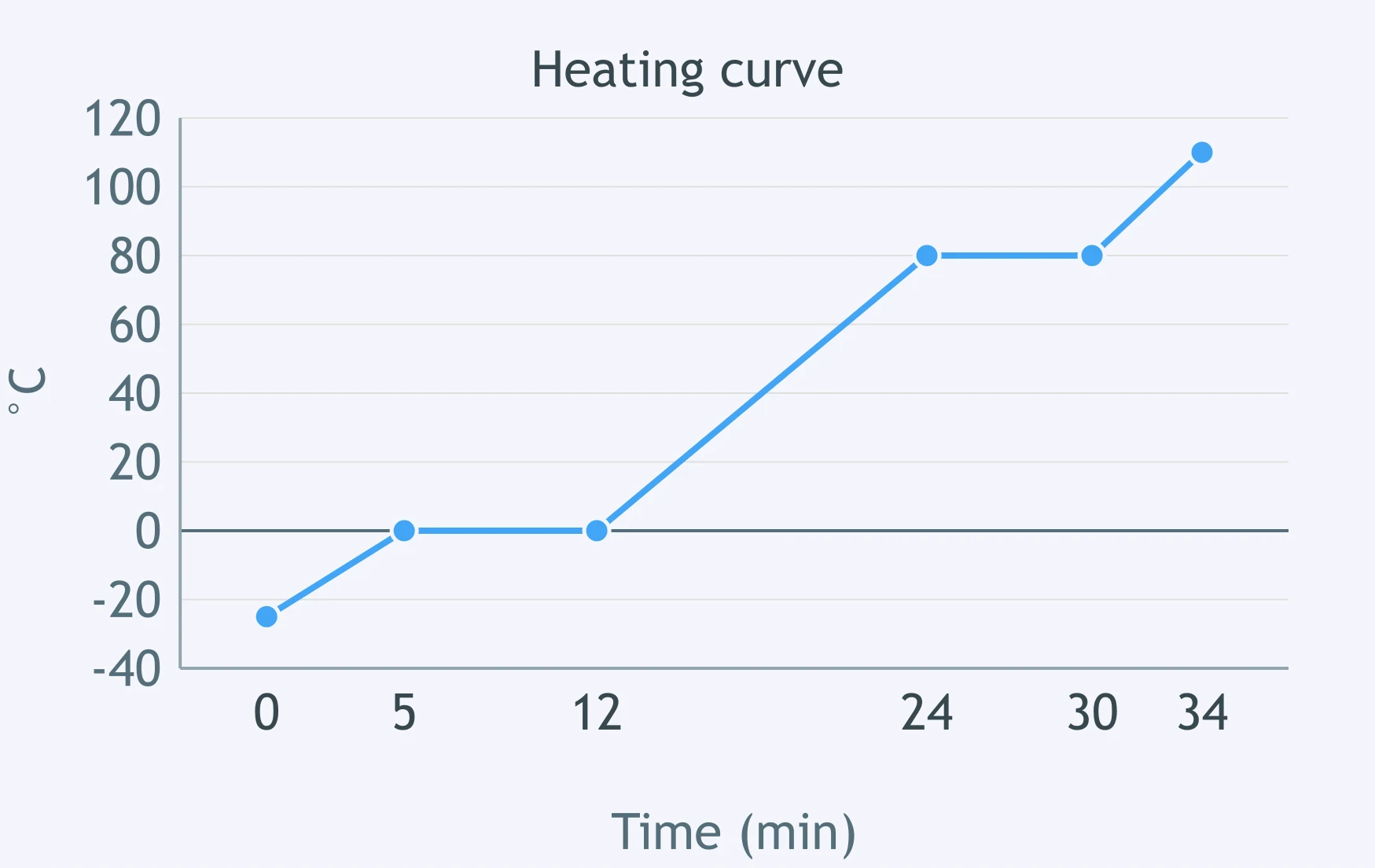
Use the graph; intervals A-E run left to right. A 0.40 kg liquid has c = 500 J/(kg·°C). Find the heat absorbed during segment C.
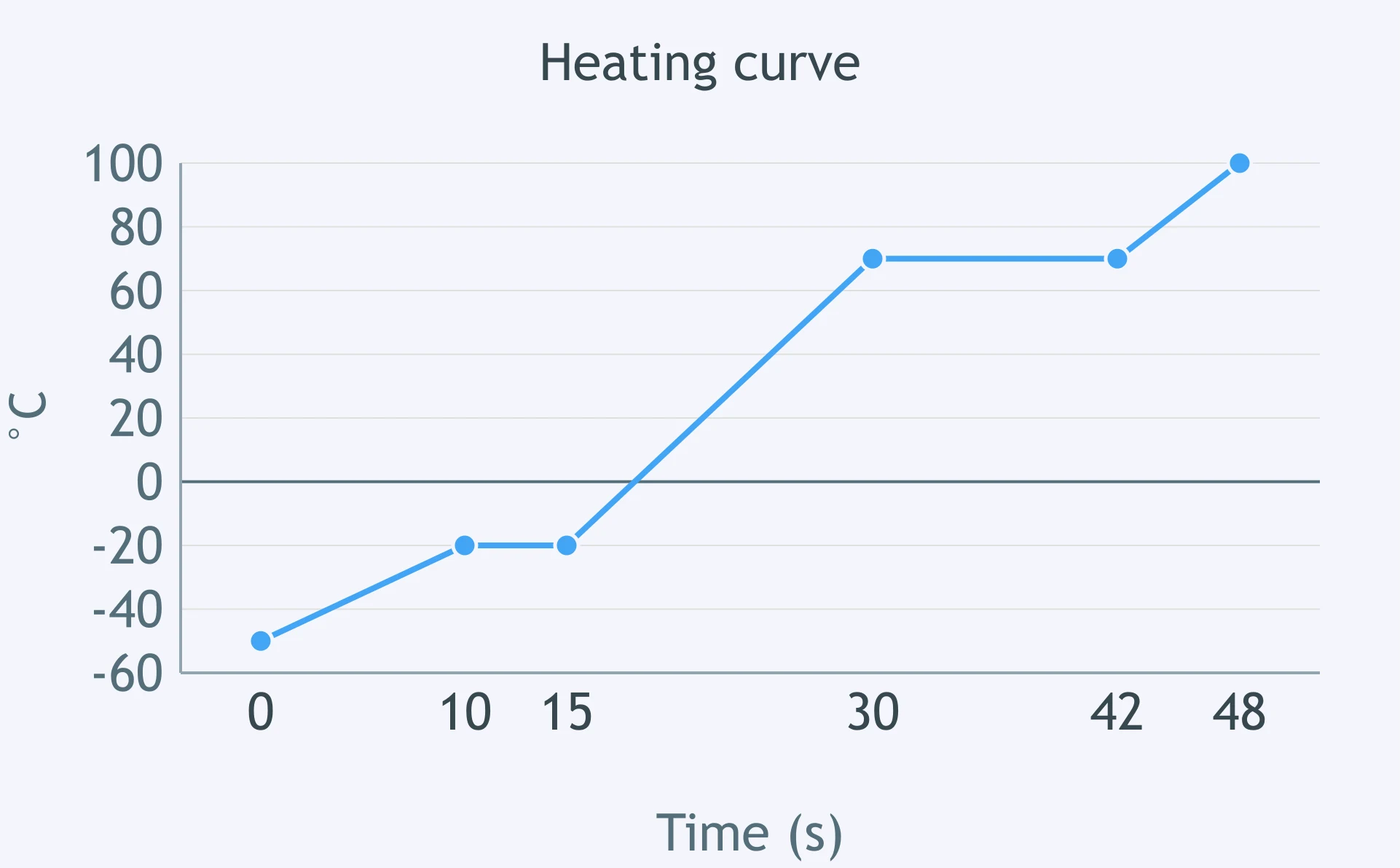
Use the graph; segments A-E run left to right. A 0.40 kg gas has c = 750 J/(kg·°C). What heat is absorbed in segment E?
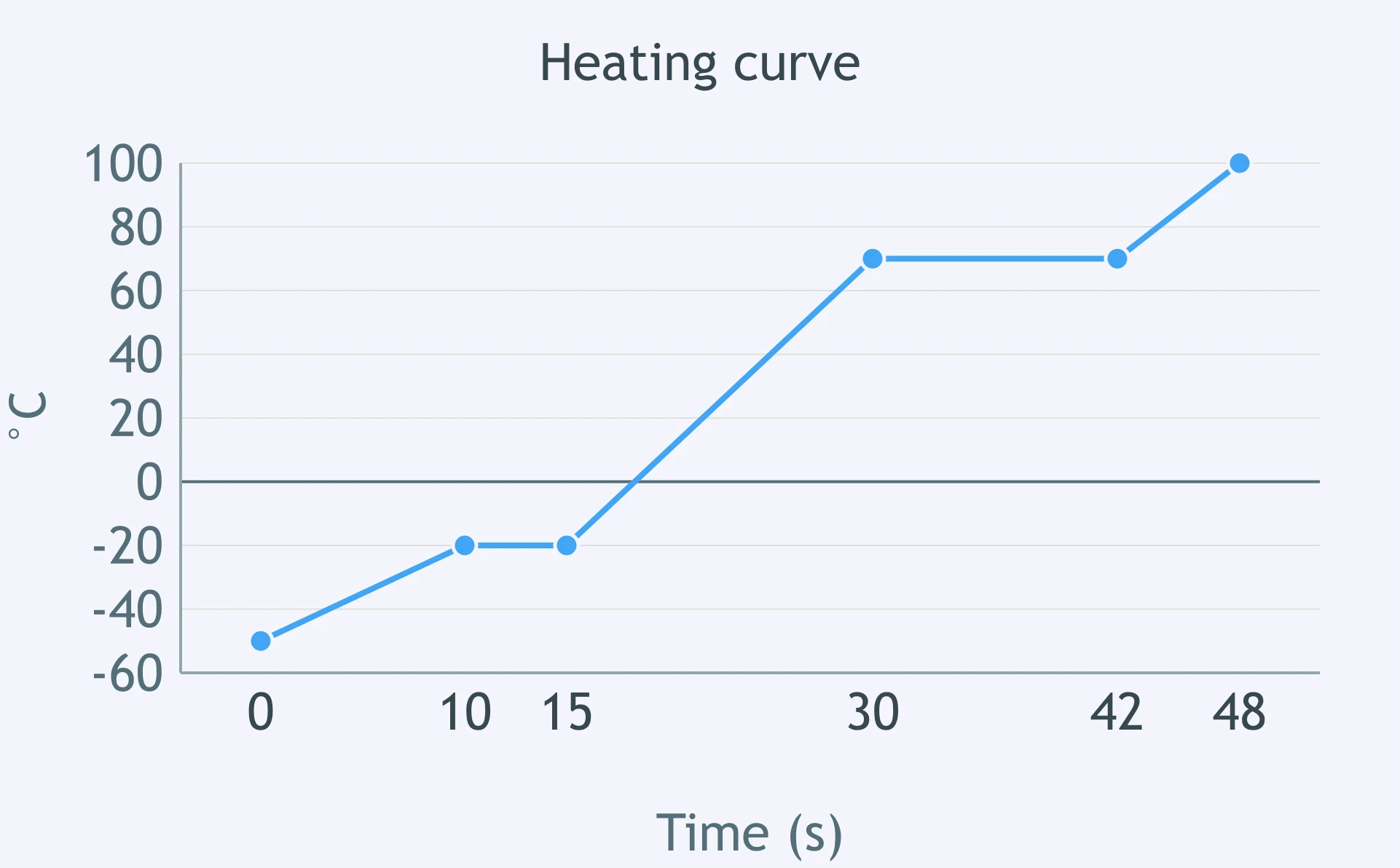
Use the graph; intervals A-E run left to right. For a 0.25 kg sample with c = 4200 J/(kg·°C), how much heat is absorbed in segment A?
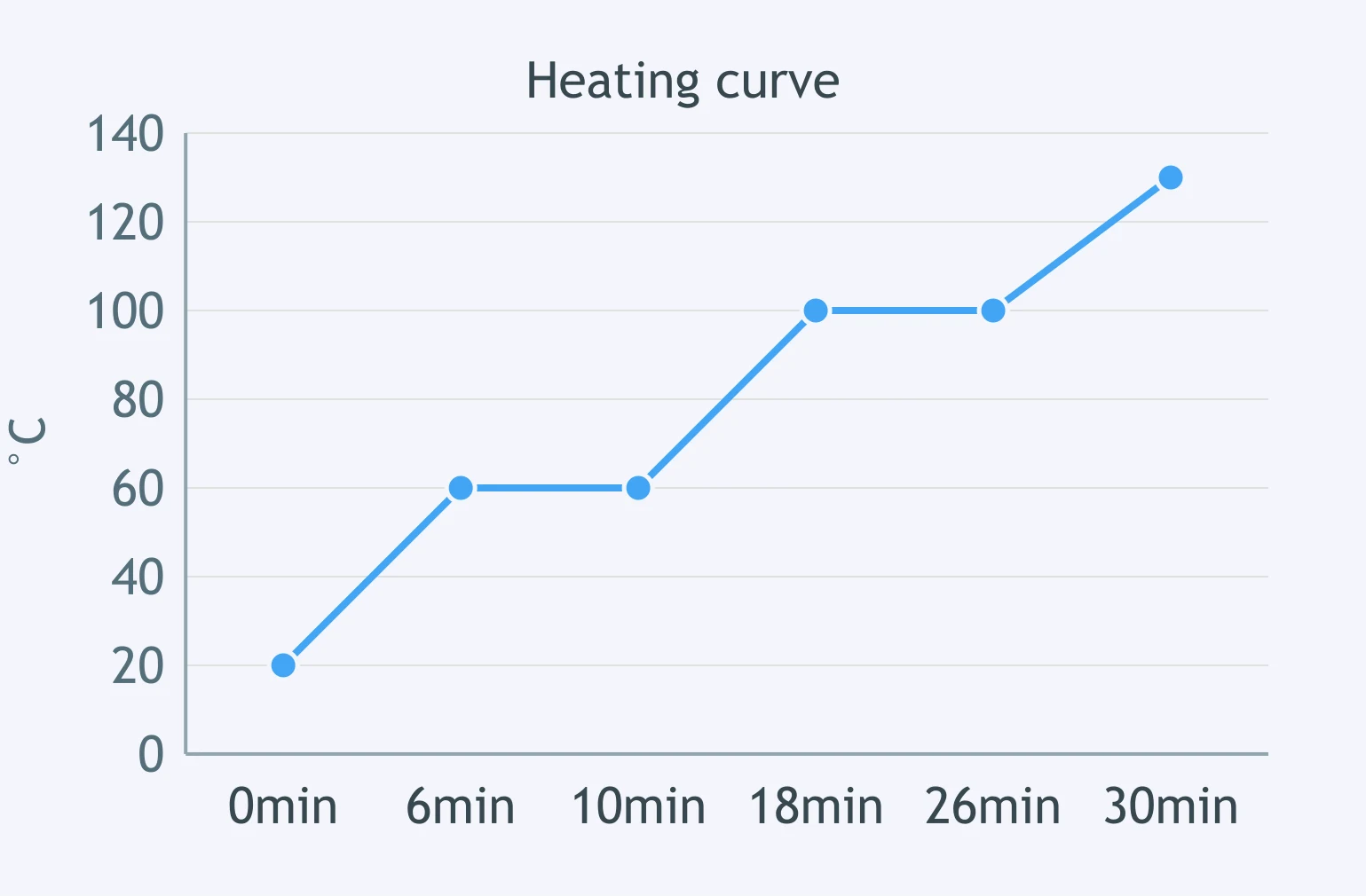
Use the graph; segments A-E run left to right. A 0.25 kg liquid has c = 1800 J/(kg·°C). Find the heat absorbed in segment C.
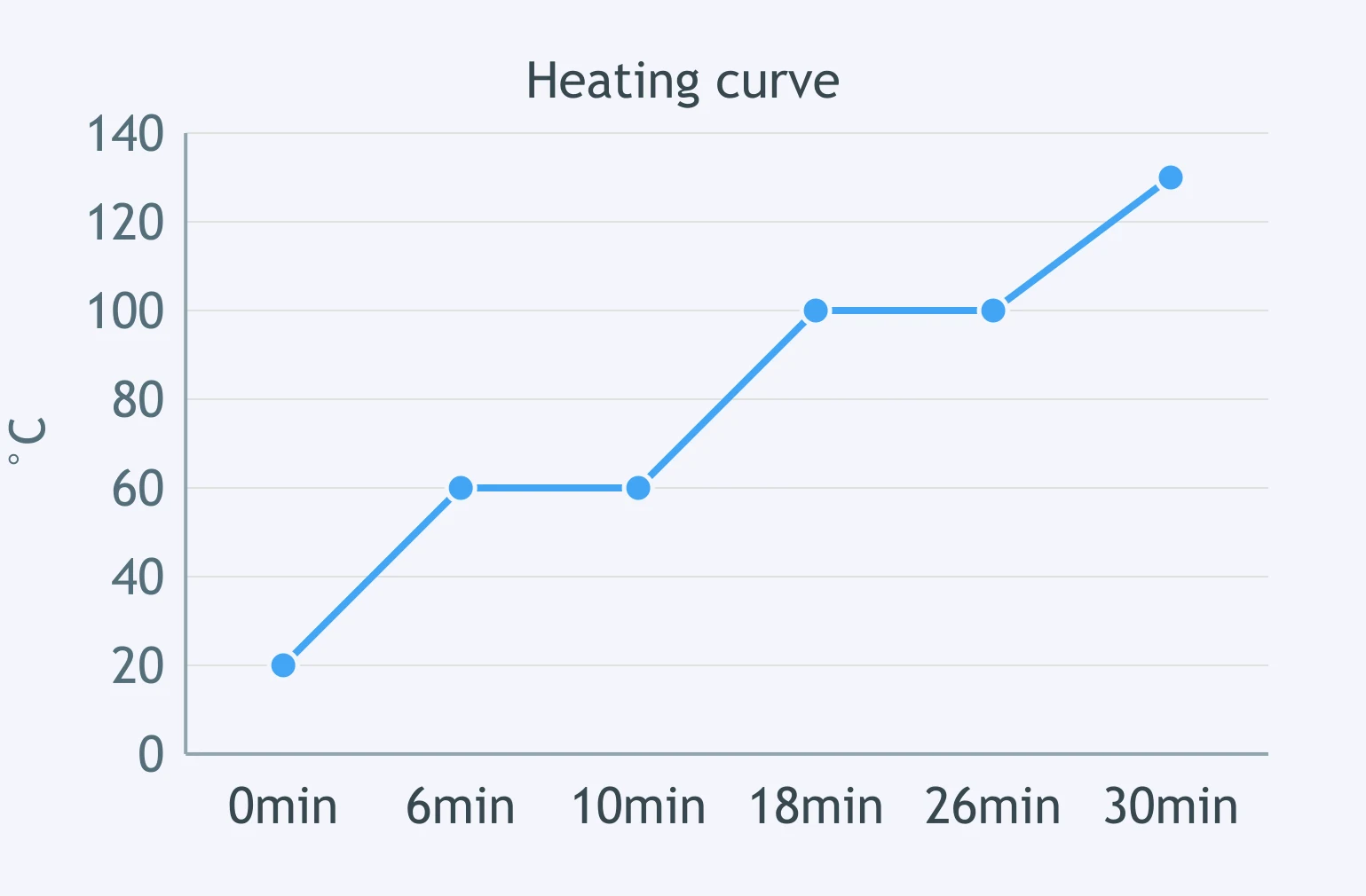
Use the heating curve. Its segments A-E run left to right. At constant heater power, what do the slopes of segments A and C show?
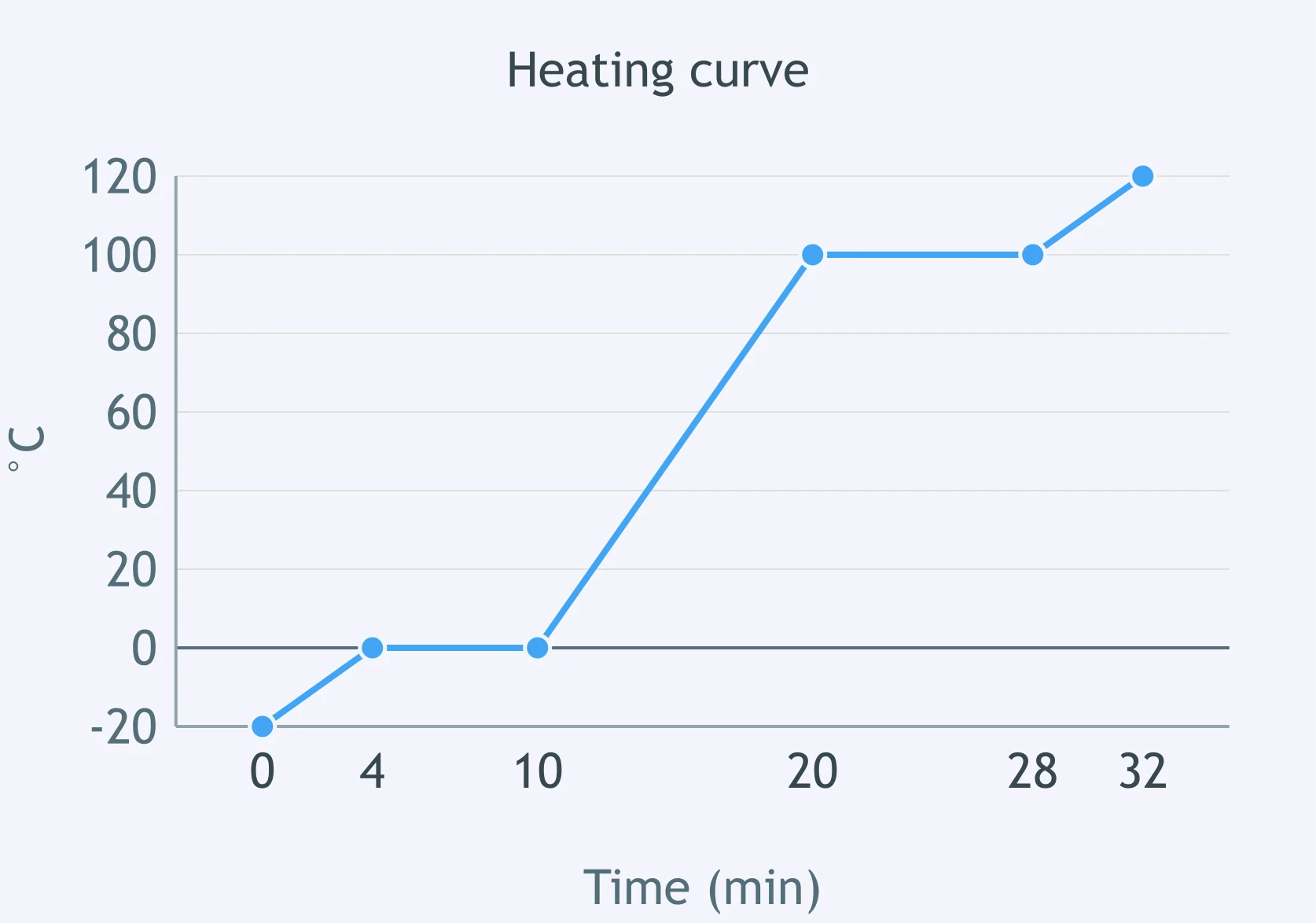
Use the heating curve. Its segments A-E run left to right. At constant heater power, comparing segments C and E, which phase has the greater specific heat capacity?
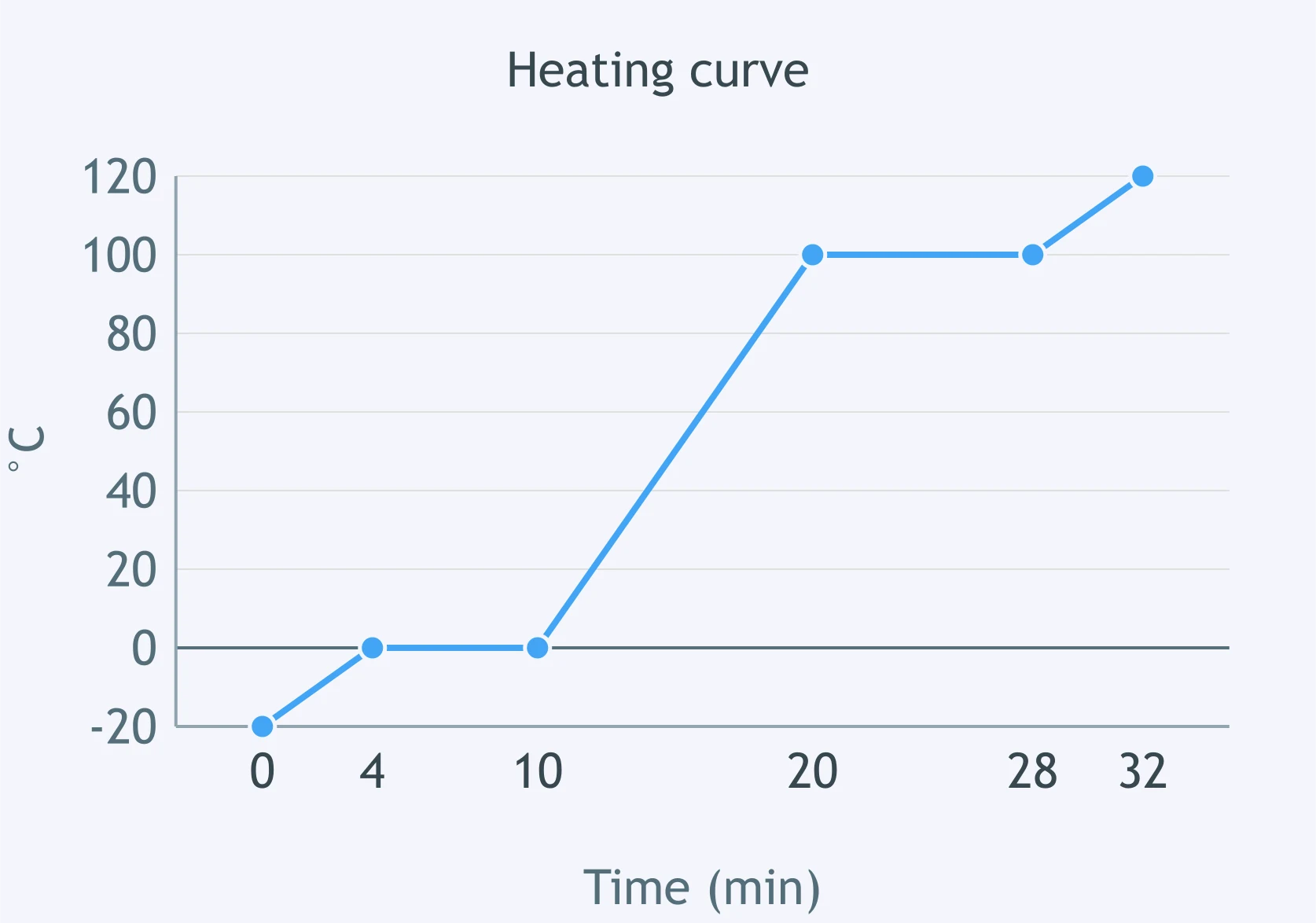
Use the heating curve. Its segments A-E run left to right. At constant power, which segment shows the greater specific heat capacity, A or C?
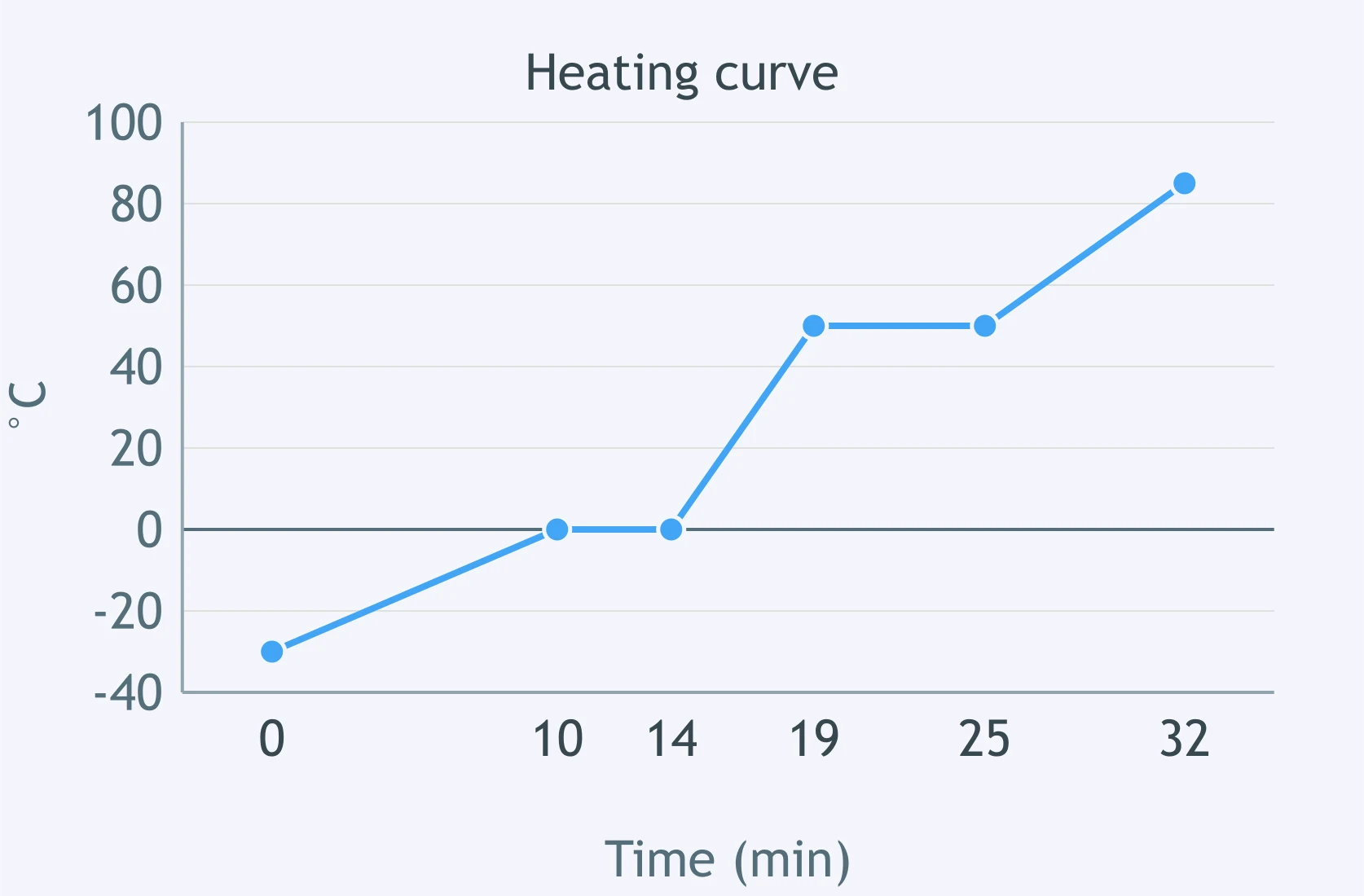
Use the heating curve. Its segments A-E run left to right. If heater power is constant, what does the longer plateau mean?
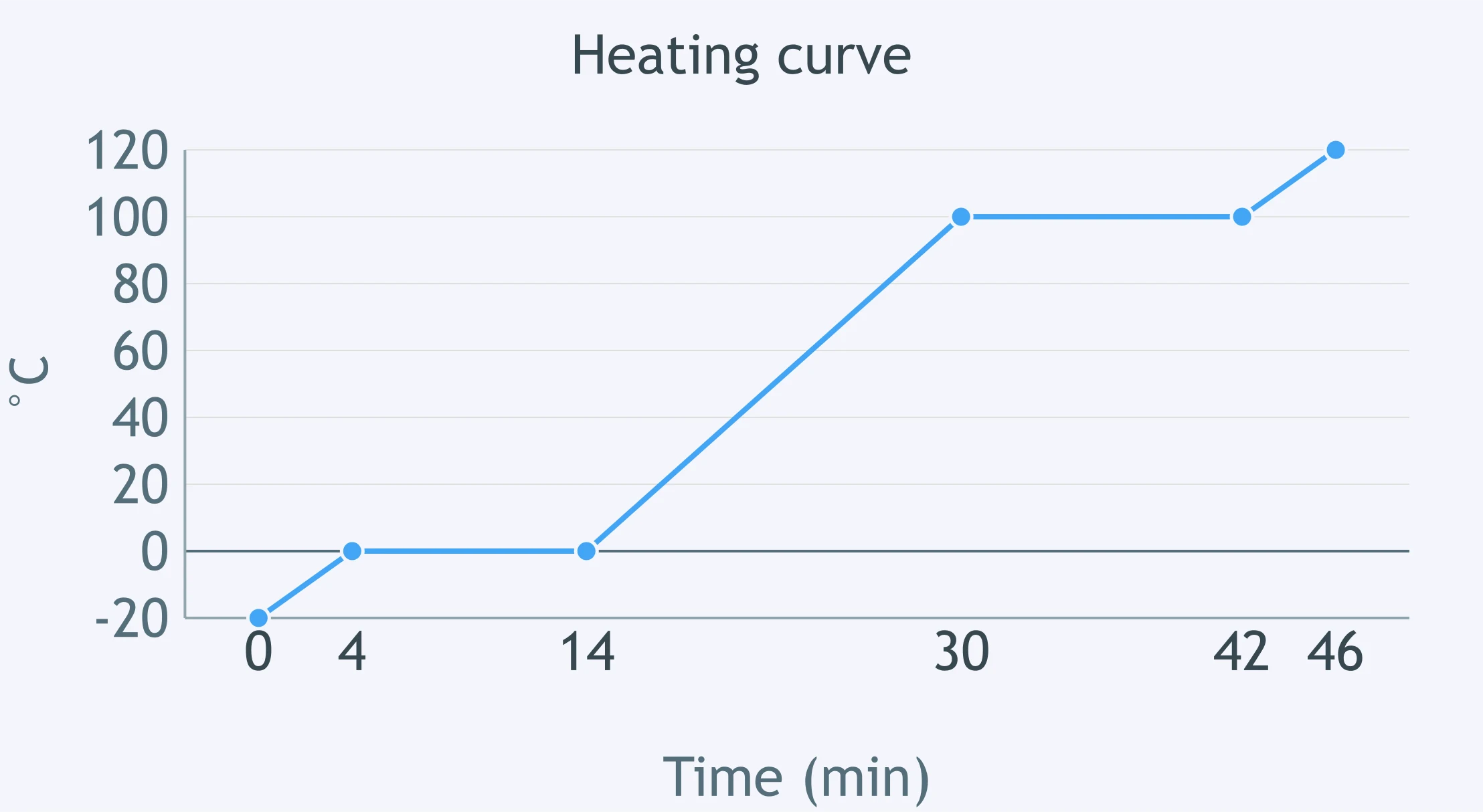
Use the heating curve. Its segments A-E run left to right. Which phase change takes more energy at the same heater power?
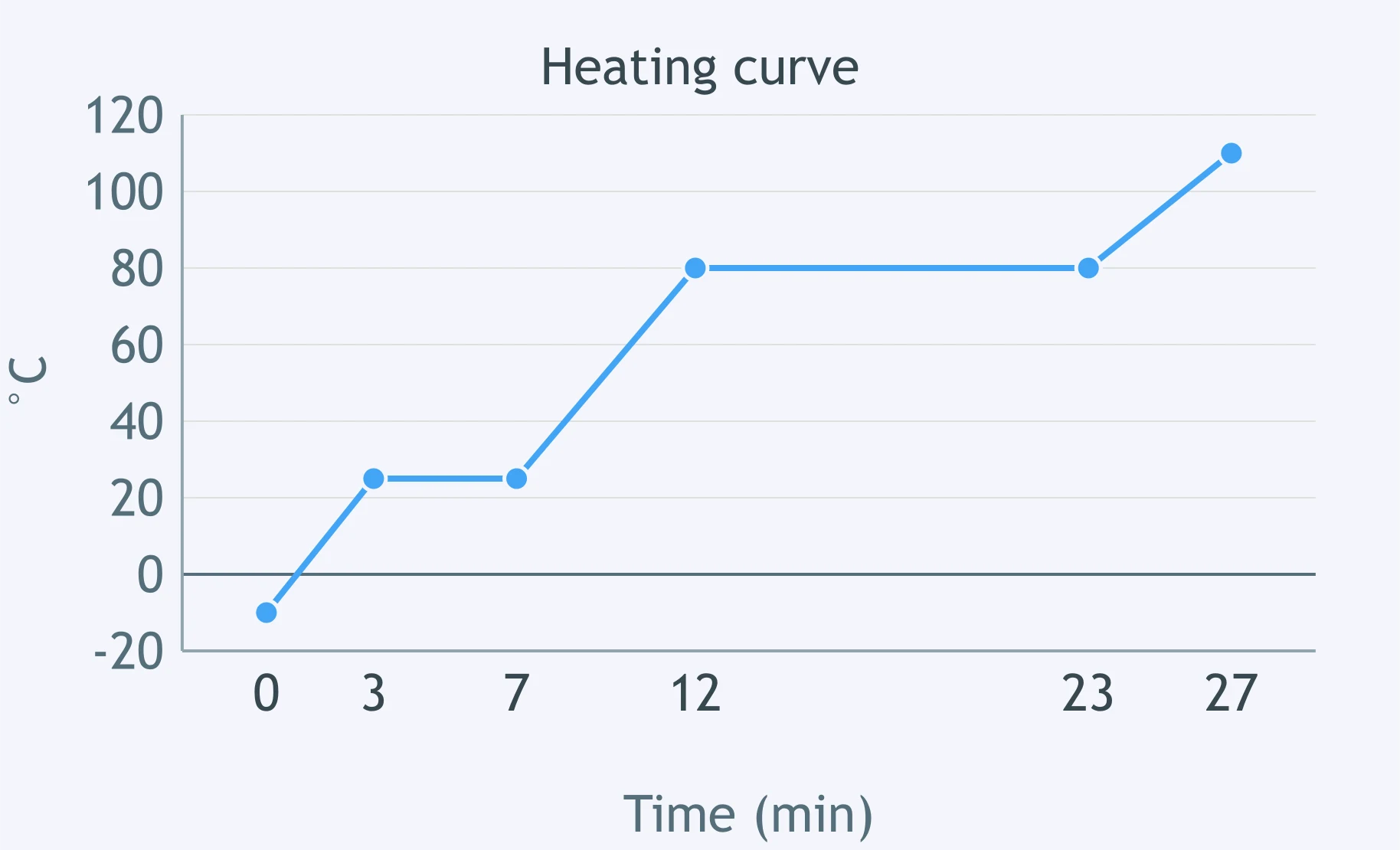
Use the cooling curve. Its segments A-E run left to right. With the same cooling power, which phase has greater c, the gas in segment A or the liquid in segment C?
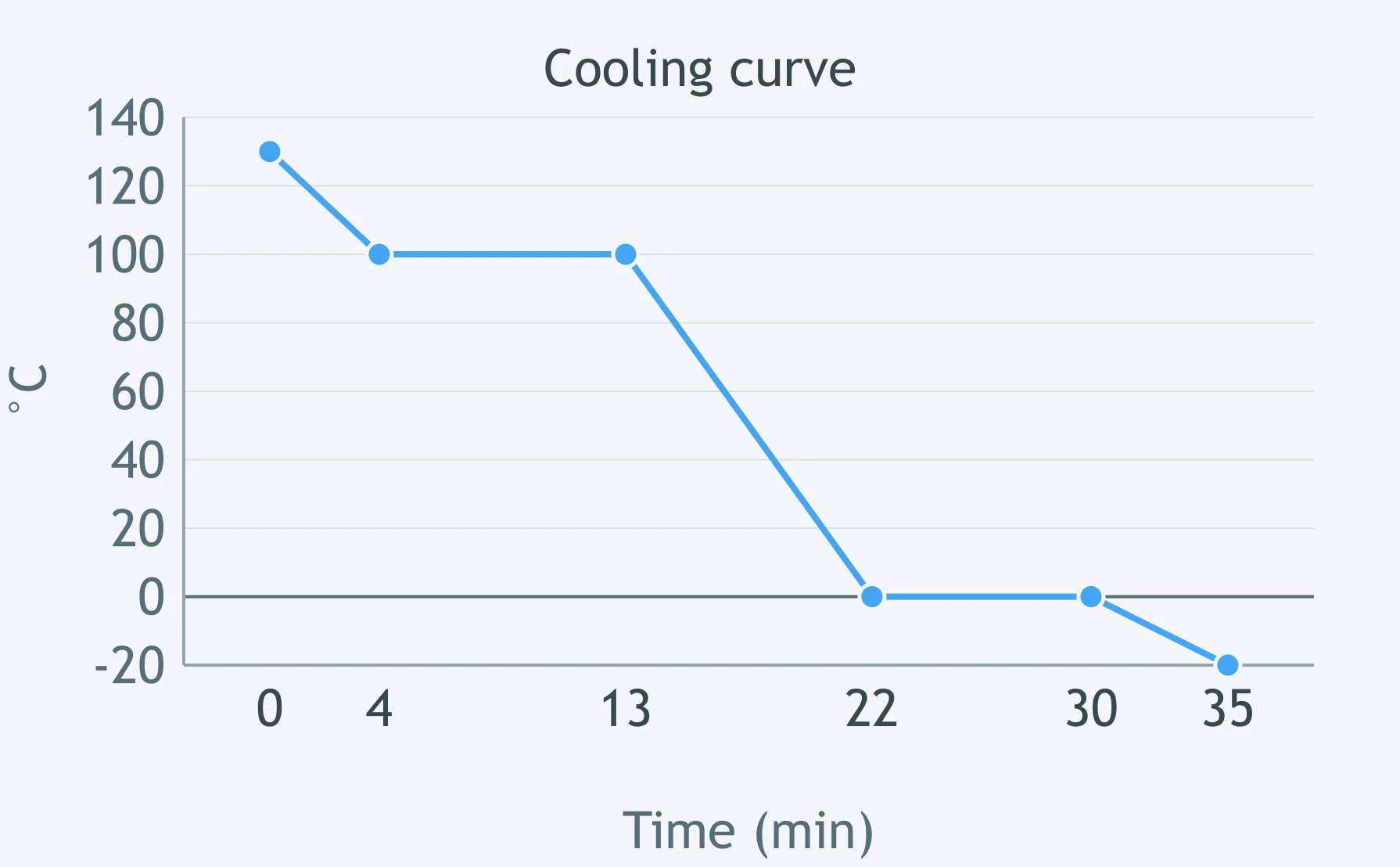
Use the cooling curve. Segment C drops 70 °C in 12 min, and segment E drops 20 °C in 4 min. Which segment shows the greater specific heat capacity?
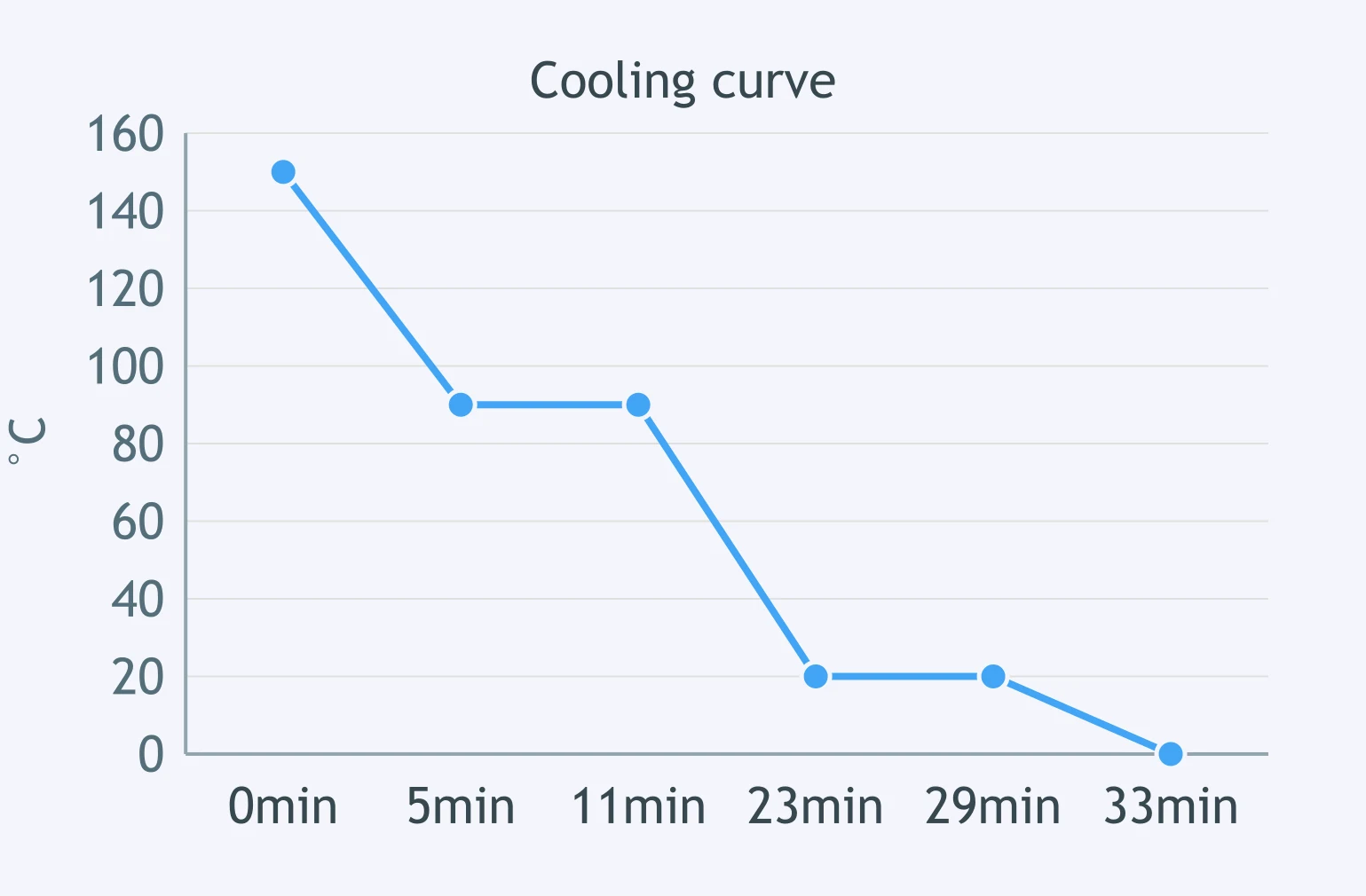
Use the heating curve. Its segments A-E run left to right. At constant heater power, which phase needs more energy per kg per °C, the solid in segment A or the liquid in segment C?
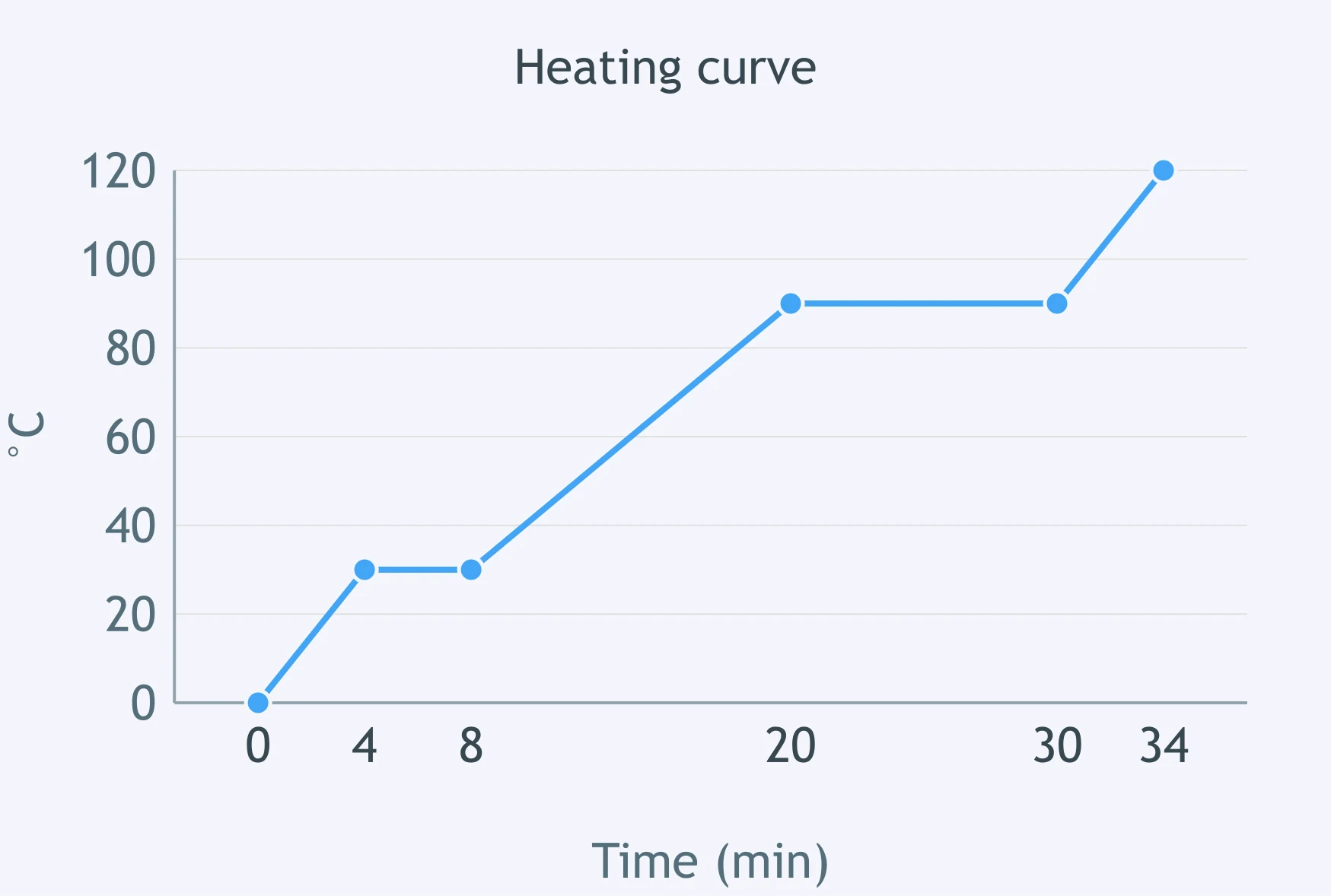
On a heating curve for a pure substance, what does a horizontal plateau represent?
During a heating plateau, which particle quantity stays constant?
What happens to a pure substance on a cooling-curve plateau?
When should Q = mcΔT be used for a heating or cooling curve?
Which statement correctly distinguishes heat from temperature?
At equal mass and equal heater power, a phase with a larger specific heat capacity will show what on a temperature-time graph?
Crack the passcode before the zombies get in.
Answer, then swat bugs for bonus points.
Race through questions at your own speed.
Same question on every screen. Fastest wins.

Pick a tile, answer, hit bonuses and steals.
The Gas Laws
30 questions