Loading
by BlastRoom
Total cost of car ownership, leasing against buying, the lease and deposit on a rental, renting against buying a home, mortgages and closing costs, and depreciation.
#us_hs_personal_finance
40 questions
One question set, multiple game modes. Tap any game to see it in action. Not sure which to pick?
Answer to place stones and capture territory.
Outrun the snow together.
Earn blasts, then hunt the other team.
Answer to earn energy, then climb.

The class blasts through walls together.
Bid on mystery lots. Most money wins.
Sell tours. Nice, standard, or a total scam.

Answer, restock, and serve the rush.
More correct answers pulls the rope your way.
Answer, then shoot down the alien wave.
Answer, then tap to leap the frozen ridge.
Use the car-cost table. What is the total listed cost for one year?
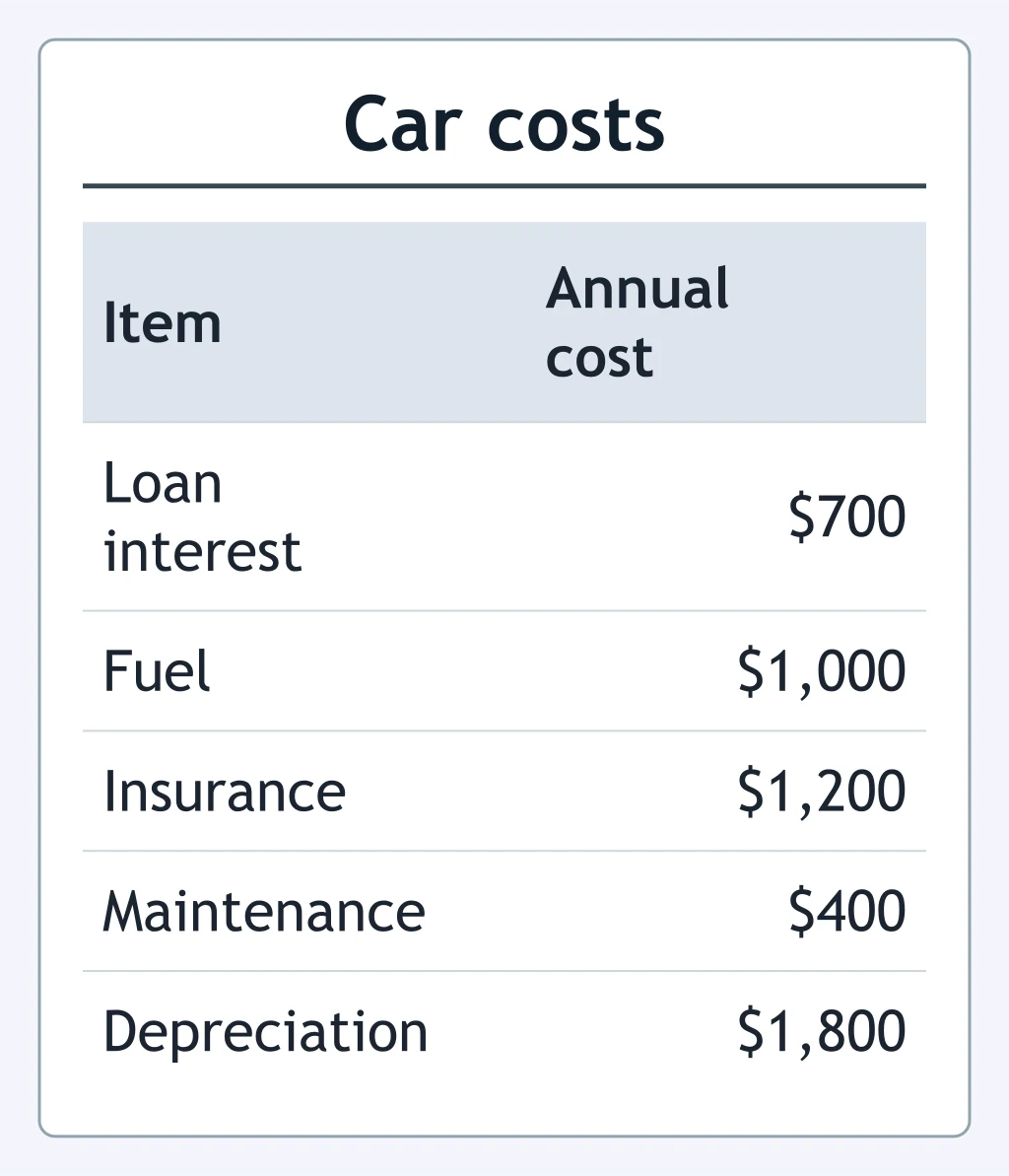
Use the car-cost table. What is the total listed cost for one year?
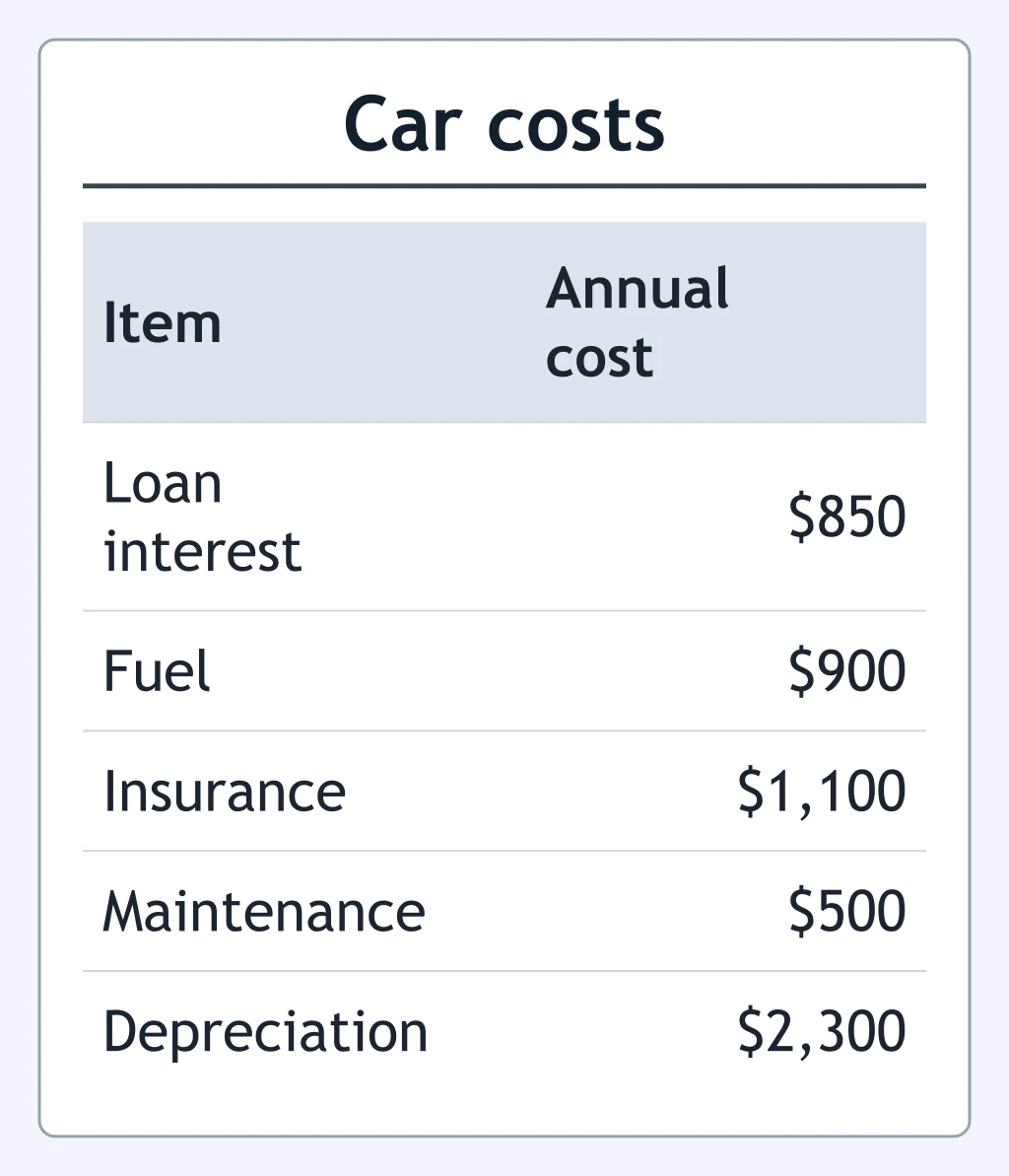
Use the car-cost table. What is the total listed annual cost?
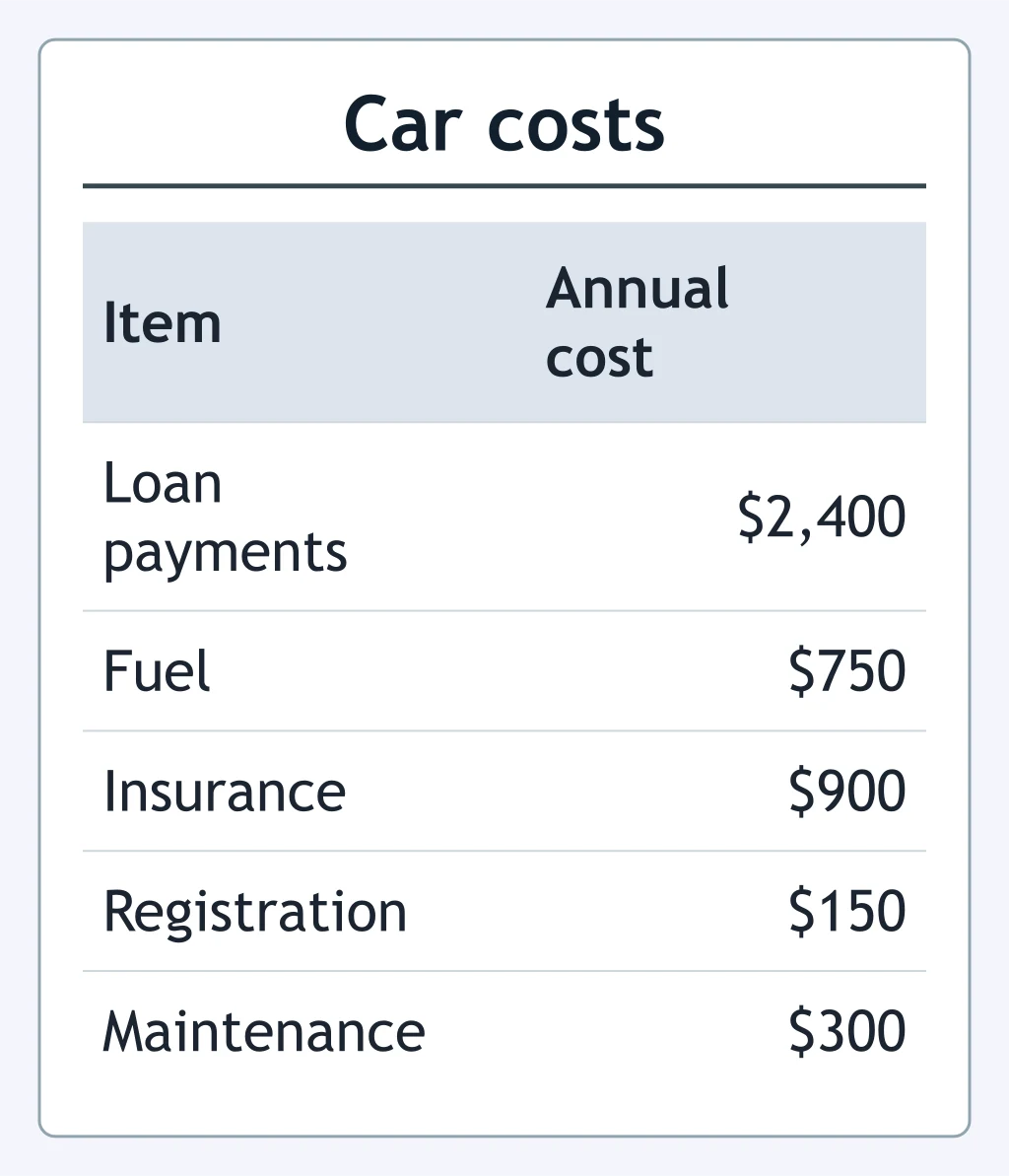
Use the car-cost table. What is the total listed cost for one year?
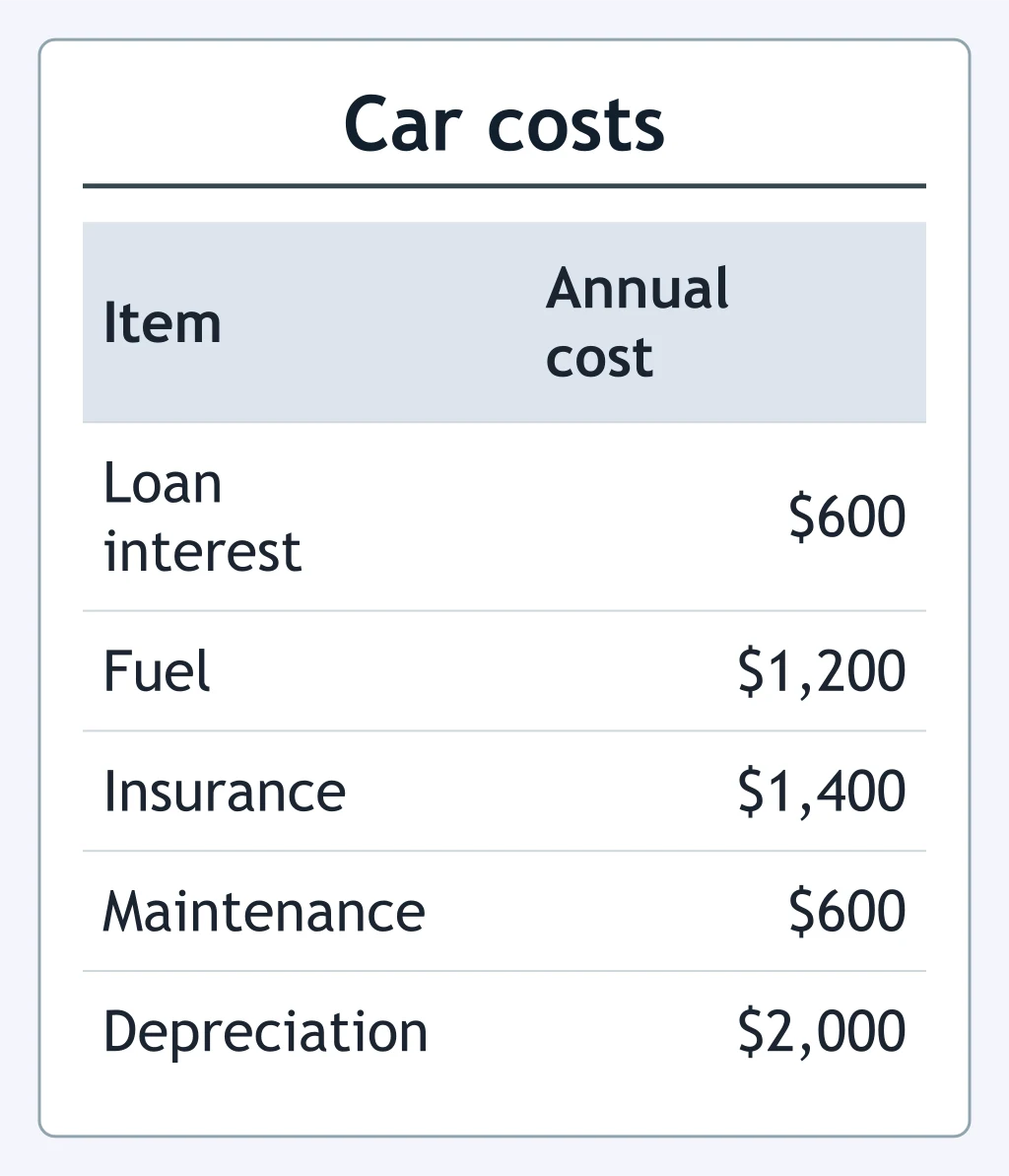
Use the car-cost table. What is the total listed cost for one year?
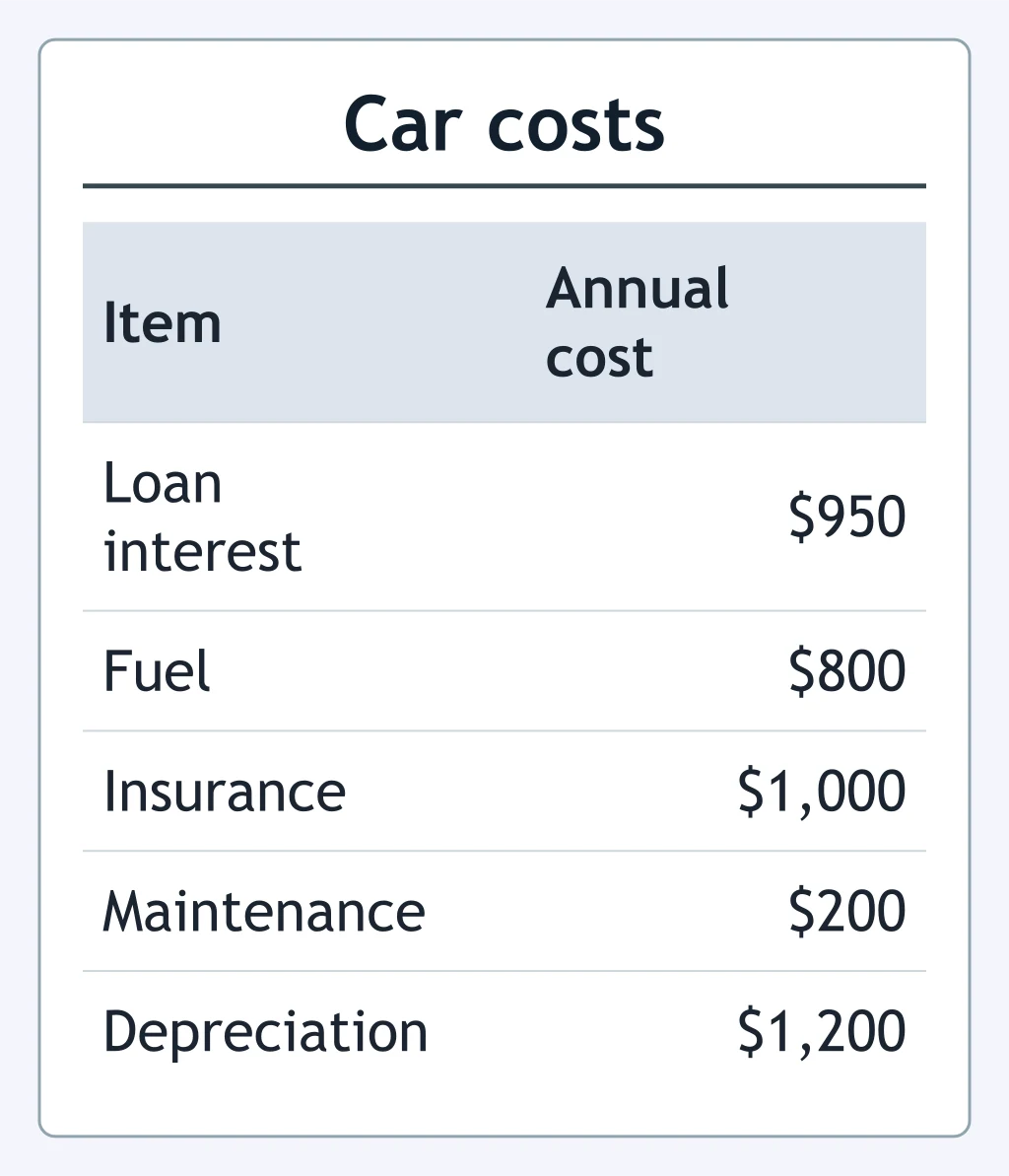
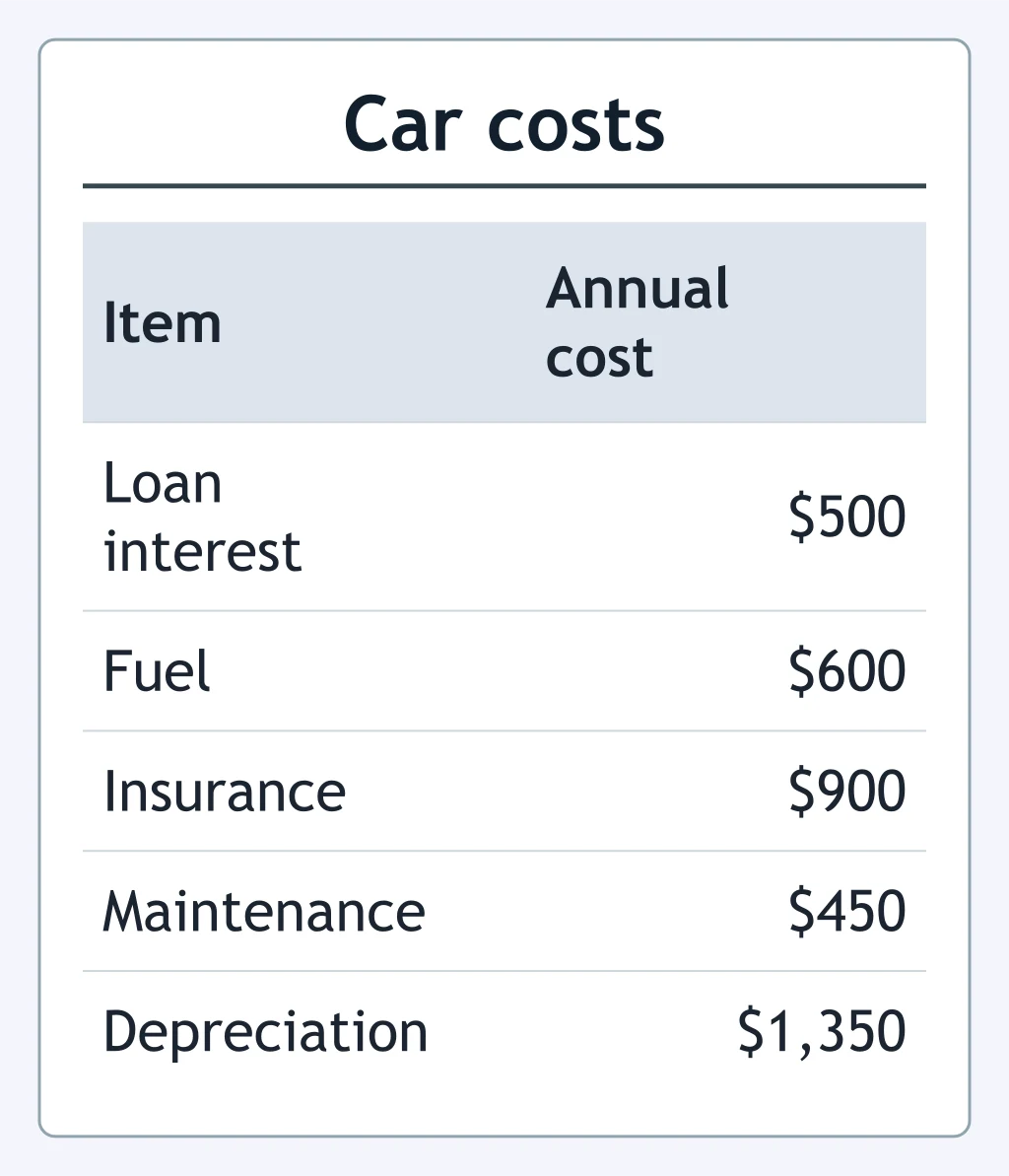
Use the car-cost table. What is the total listed cost for one year?
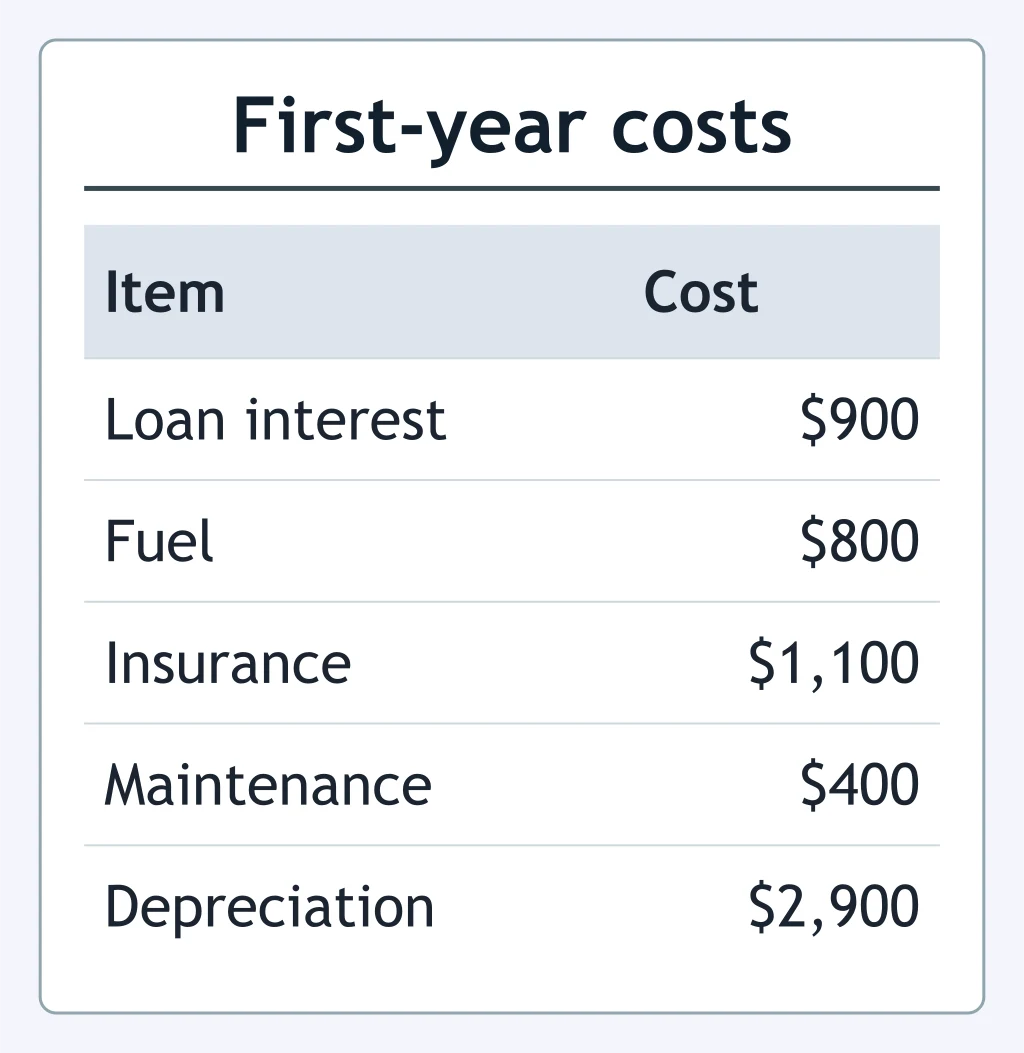
Use the first-year car-cost table. What is the total listed cost for the first year?
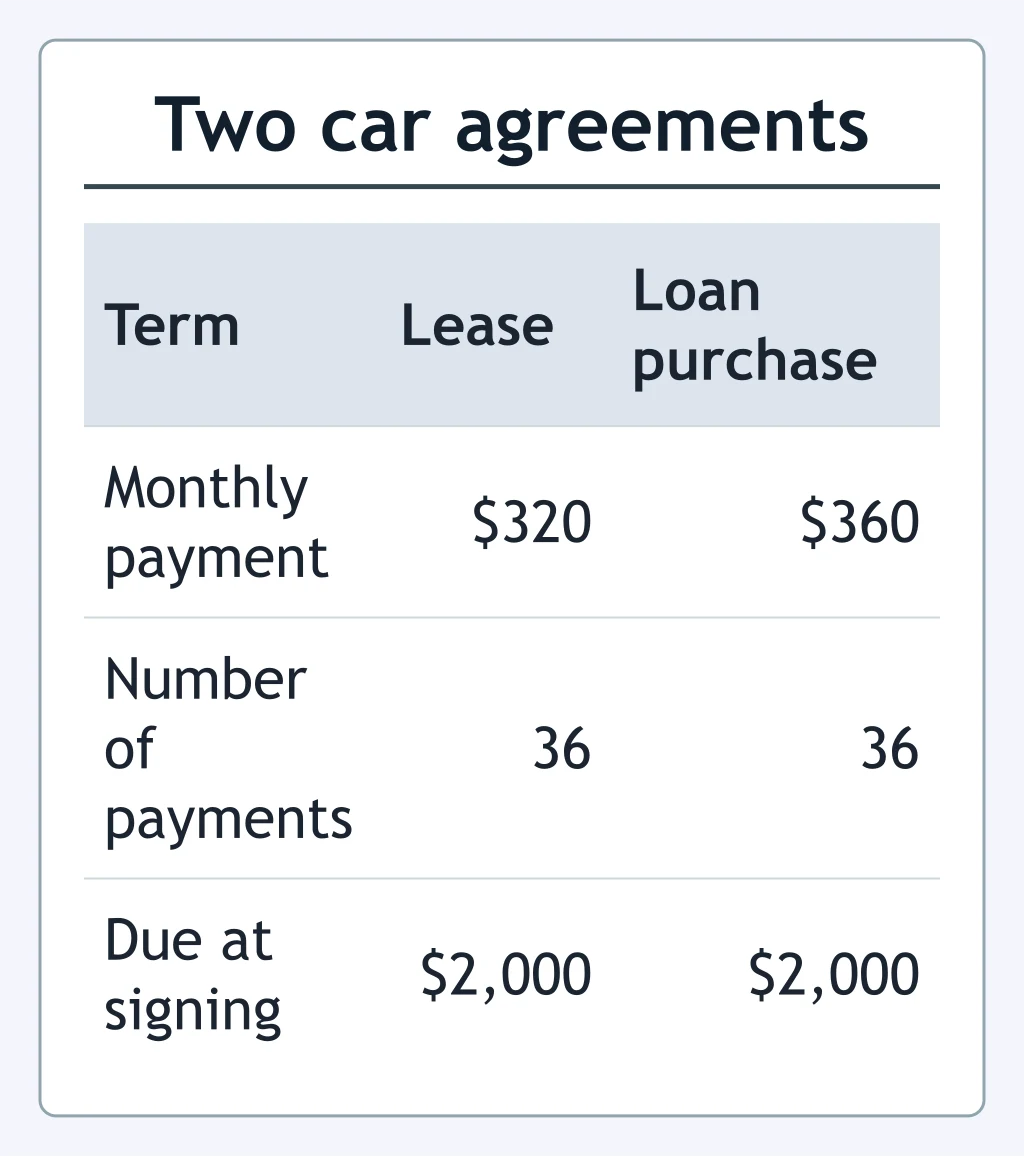
Two drivers sign the agreements in the table. After all 36 payments are made, which driver has a car that can be sold?
Use the comparison. What does the lease driver hold after returning the vehicle?
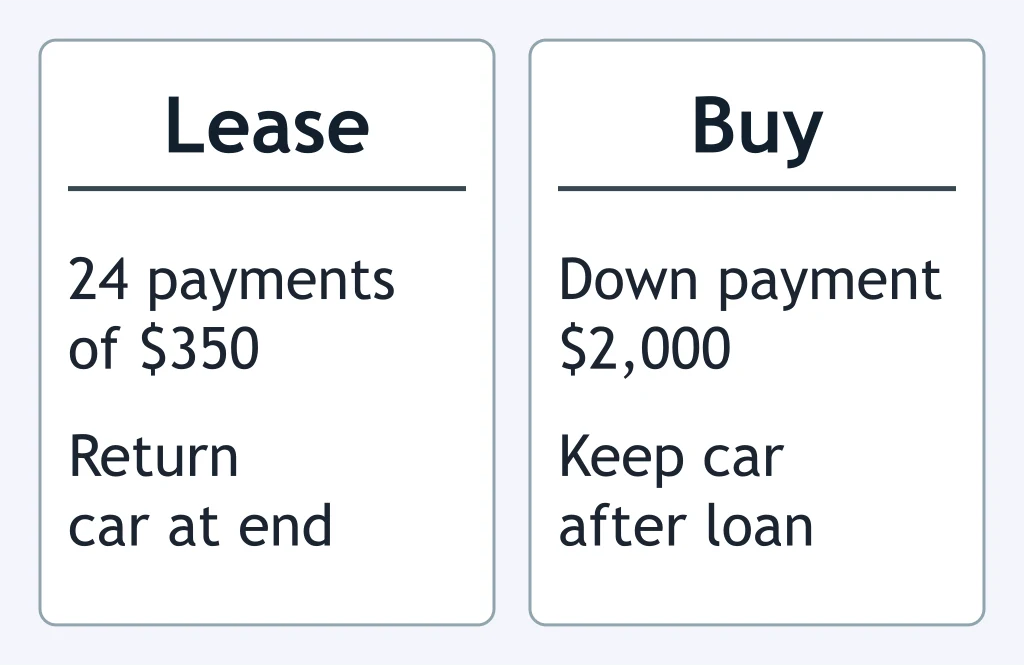
Use the comparison. What term names the $13,000 amount that could buy the leased car at the end?
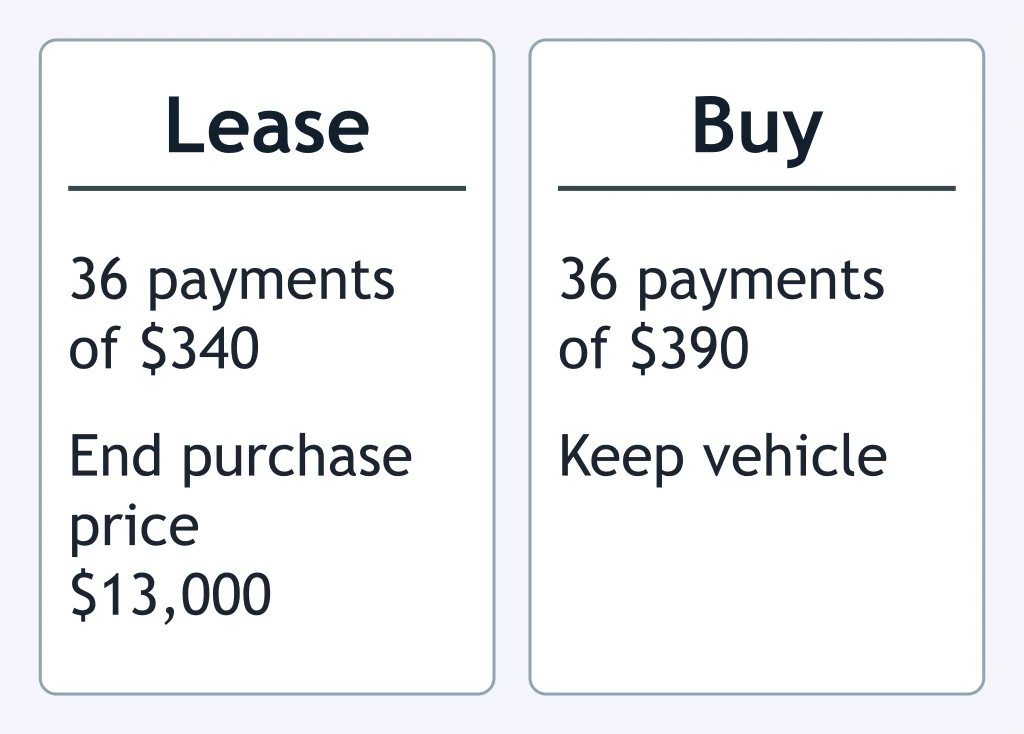
After Priya finishes paying her auto loan, she owns a car worth $8,000. What does she hold?
A lease allows 12,000 miles a year. What generally happens if the driver goes over that limit?
A car is worth $7,000, but its loan balance is $9,000. If the owner sells it for its value, what remains?
A lease allows 12,000 miles and charges $0.20 per extra mile. Devon drives 13,500 miles. What excess-mileage charge applies?
A car is worth $14,000 and has a $10,000 loan balance. What is the owner's equity in the car?
Use the housing comparison. Which choice has the lower stated upfront cost, and by how much?
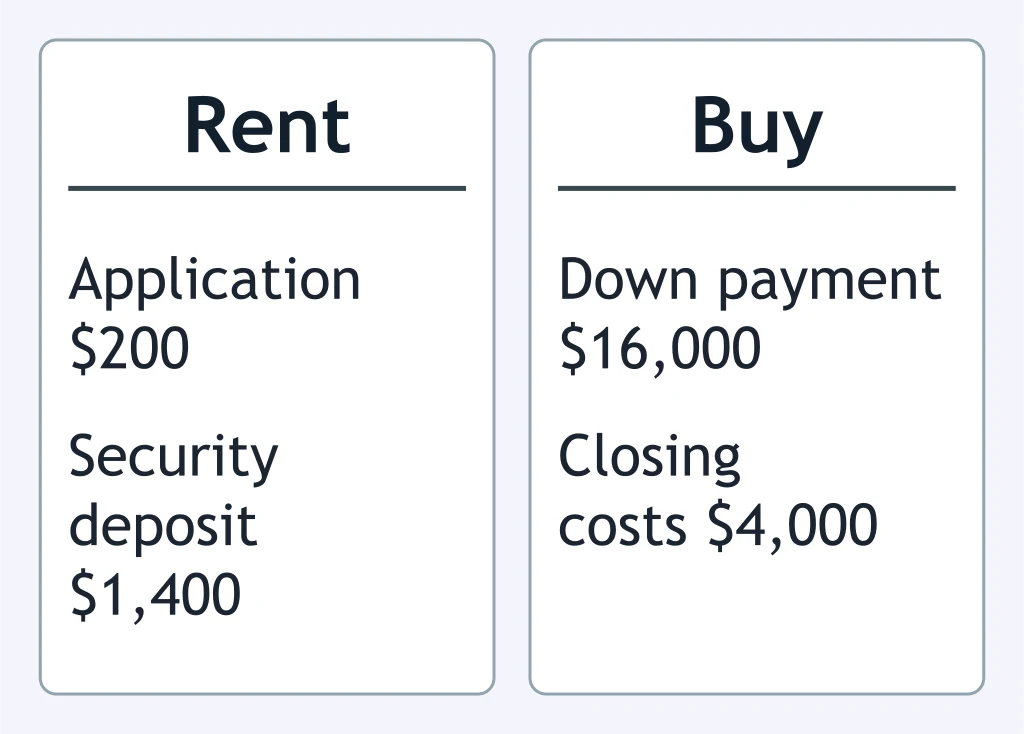
Use the housing comparison. Which choice has the lower monthly cost, and by how much?
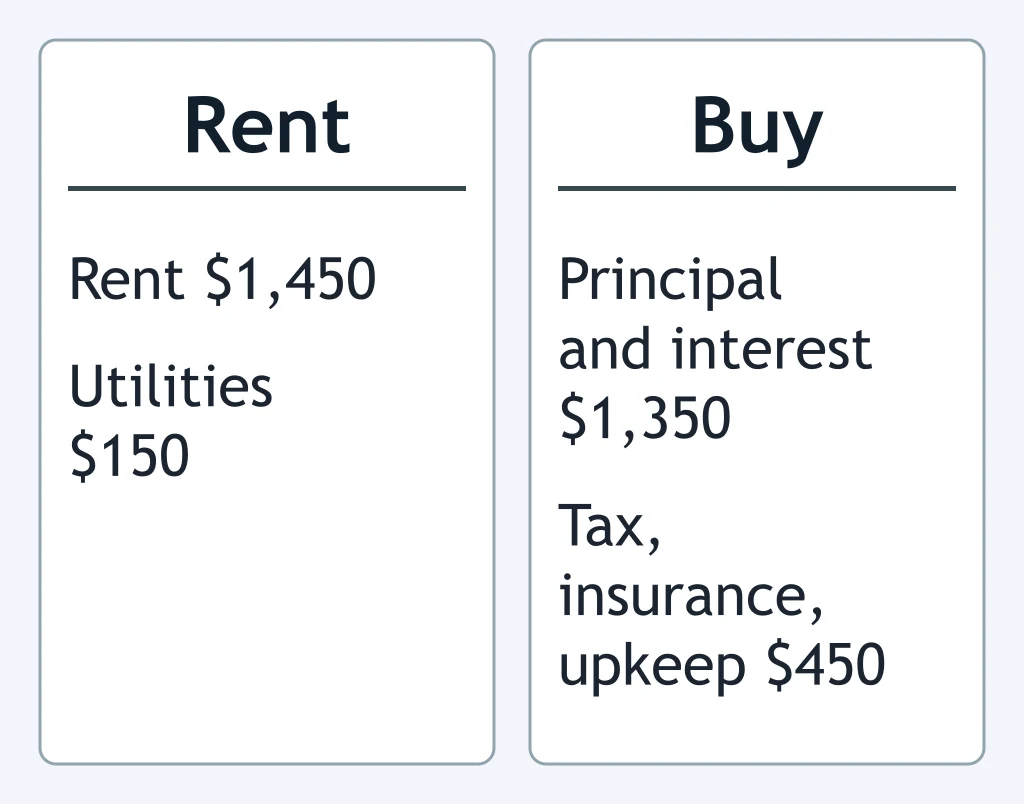
Use the housing comparison. After 24 months, which choice gives the resident home equity, and how much?
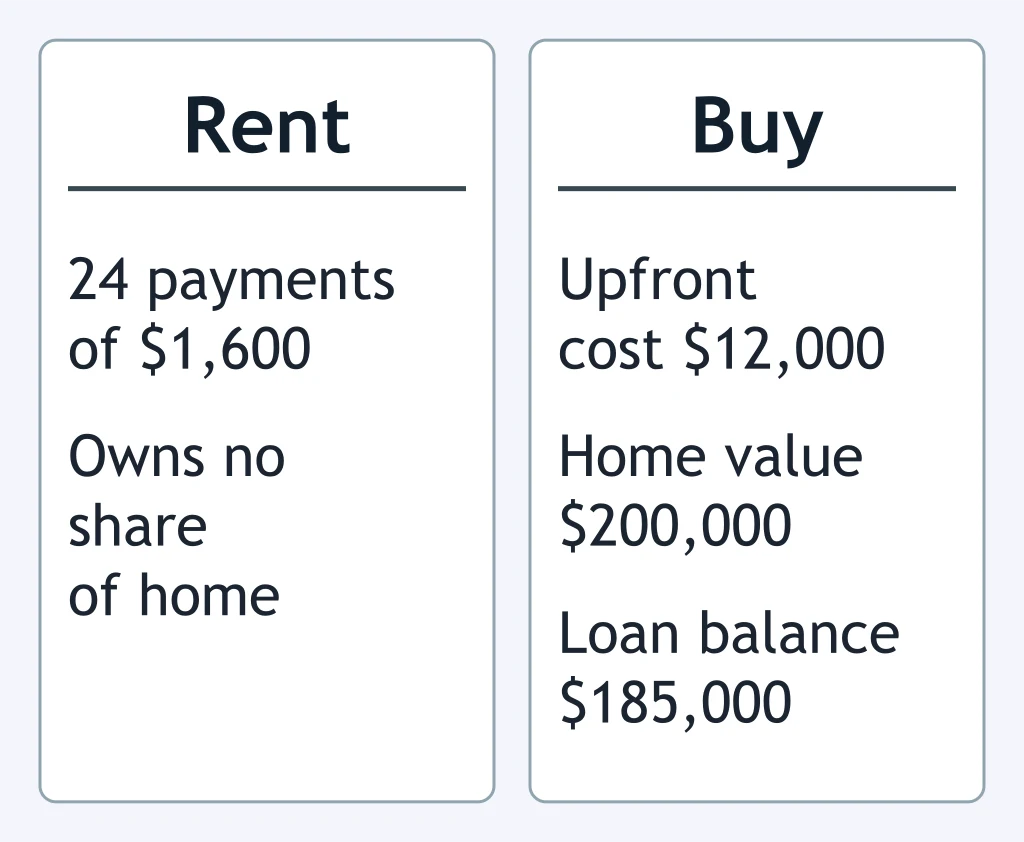
When a tenant meets the lease terms and leaves no damage beyond normal wear, which upfront payment may be returned?
A $240,000 home is bought with a $24,000 down payment. Immediately after purchase, before any value or loan changes, what equity does the buyer have?
Rent is $1,600 monthly. Buying costs $1,450 for principal and interest, $200 for taxes, and $100 for insurance monthly. Which has the lower monthly cost?
A home is worth $260,000 and the mortgage balance is $210,000. What is the homeowner's equity?
Renting requires $1,400 first-month rent and a $1,400 deposit. Buying requires a $15,000 down payment and $4,000 closing costs. Which has lower upfront cash?
Use the mortgage table. Which listed costs are property-related charges besides principal and interest?
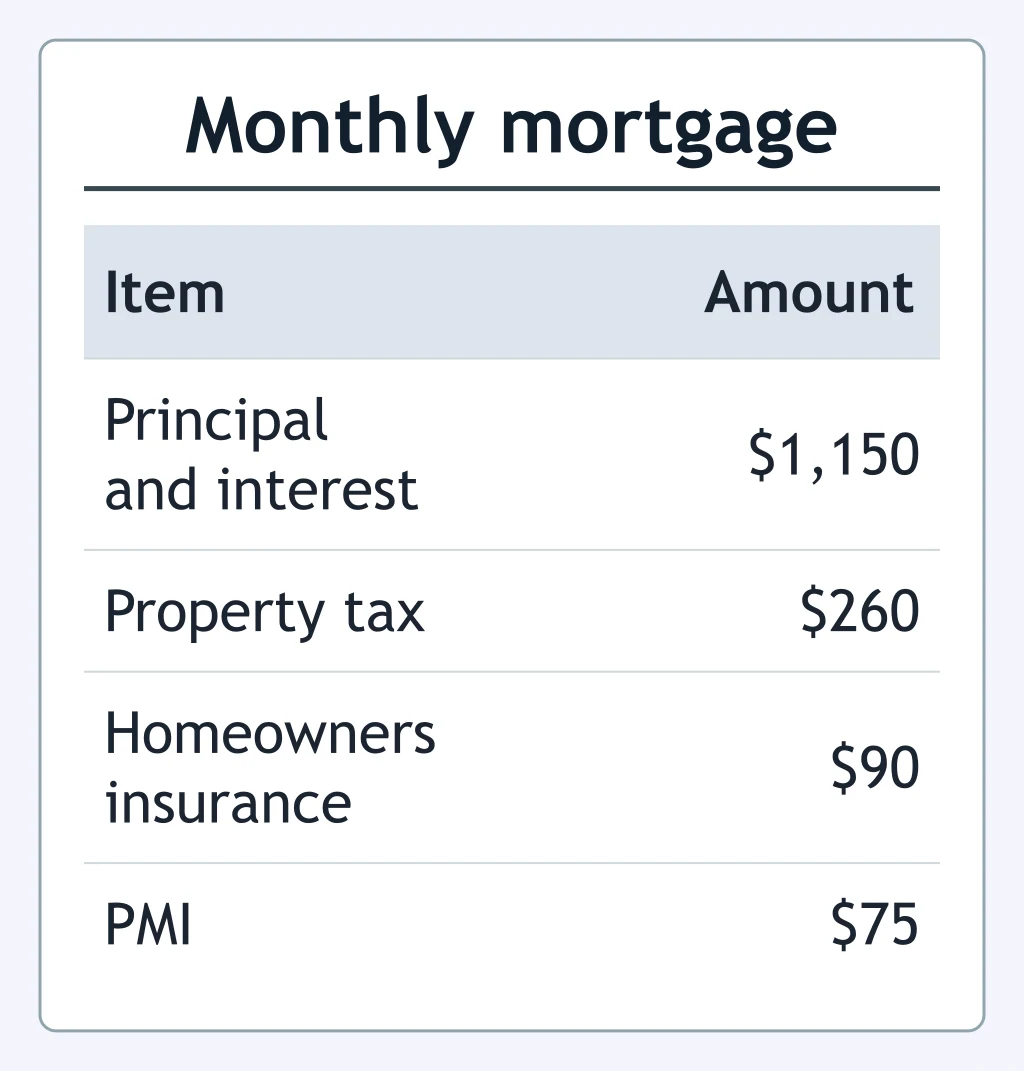
A mortgage servicer collects $280 each month in an escrow account along with the loan payment. What is that escrow money usually used for?
A monthly mortgage statement lists $1,200 principal and interest, $350 escrow, and $100 PMI. What is the total monthly payment?
A buyer puts 10% down on a $250,000 home and pays $5,000 in closing costs. How much cash is needed for the down payment and closing costs?
What is private mortgage insurance (PMI)?
A mortgage has principal-and-interest payments of $900 monthly for 120 months. What total principal-and-interest payments are scheduled over the term?
A fixed-rate loan lists $1,100 monthly principal and interest. An adjustable-rate loan starts at $900 but says its rate may adjust. Which claim is supported?
Car A costs $18,000 after financing and $1,800 yearly to run. Car B costs $16,000 after financing and $2,600 yearly to run. Over 3 years, which costs less?
A lease costs $2,000 due at signing plus 24 payments of $350, then the car is returned. Buying costs $3,000 down plus 24 payments of $400 and leaves a car worth $4,500. Which has lower net cost?
For one year, rent is $1,500 monthly. Buying requires $10,000 upfront plus monthly costs of $1,200 principal and interest, $200 tax, and $100 insurance. Ignoring equity, which uses less cash?
An older used car costs $12,000 and has $4,800 yearly operating costs. A newer car costs $20,000 and has $1,500 yearly operating costs. Over 2 years, which costs less?
A renter pays $1,800 for 24 months and builds no equity. A buyer pays $20,000 upfront plus $1,900 for 24 months and has $25,000 equity. After subtracting stated equity, which has lower net cost?
A certified pre-owned car costs $17,000 and $2,000 yearly to operate. An older car costs $12,000 and $4,800 yearly to operate. Over 2 years, which costs less?
For the first year, Option A needs $20,000 down, $4,000 closing costs, and 12 payments of $1,500. Option B needs $10,000 down, $8,000 closing costs, and 12 payments of $1,600. Which uses less cash?
A lease costs $1,000 due at signing plus 36 payments of $300 and an expected $600 mileage charge. Buying costs $2,000 down plus 36 payments of $350 and leaves a car worth $4,000. Which has lower net cost?
Rent is $1,250 monthly. Buying has monthly costs of $900 principal and interest plus $250 tax and insurance, with $5,000 upfront. During the first year, which uses less cash?
Car X costs $15,000 and has yearly fuel, insurance, and maintenance totaling $2,400. Car Y costs $18,000 and has those yearly costs totaling $1,200. Over 3 years, which costs less?
Crack the passcode before the zombies get in.
Answer, then swat bugs for bonus points.
Race through questions at your own speed.
Same question on every screen. Fastest wins.

Pick a tile, answer, hit bonuses and steals.
Consumer Skills, Fraud and Protection Review
35 questions