Loading
by BlastRoom
What banks do, choosing a checking account, overdraft and fees, savings accounts and CDs, compound interest, APR and APY, the emergency fund, account security, and the FDIC.
#us_hs_personal_finance
50 questions
One question set, multiple game modes. Tap any game to see it in action. Not sure which to pick?
Answer to place stones and capture territory.
Outrun the snow together.
Earn blasts, then hunt the other team.
Answer to earn energy, then climb.

The class blasts through walls together.
Bid on mystery lots. Most money wins.
Sell tours. Nice, standard, or a total scam.

Answer, restock, and serve the rush.
More correct answers pulls the rope your way.
Answer, then shoot down the alien wave.
Answer, then tap to leap the frozen ridge.
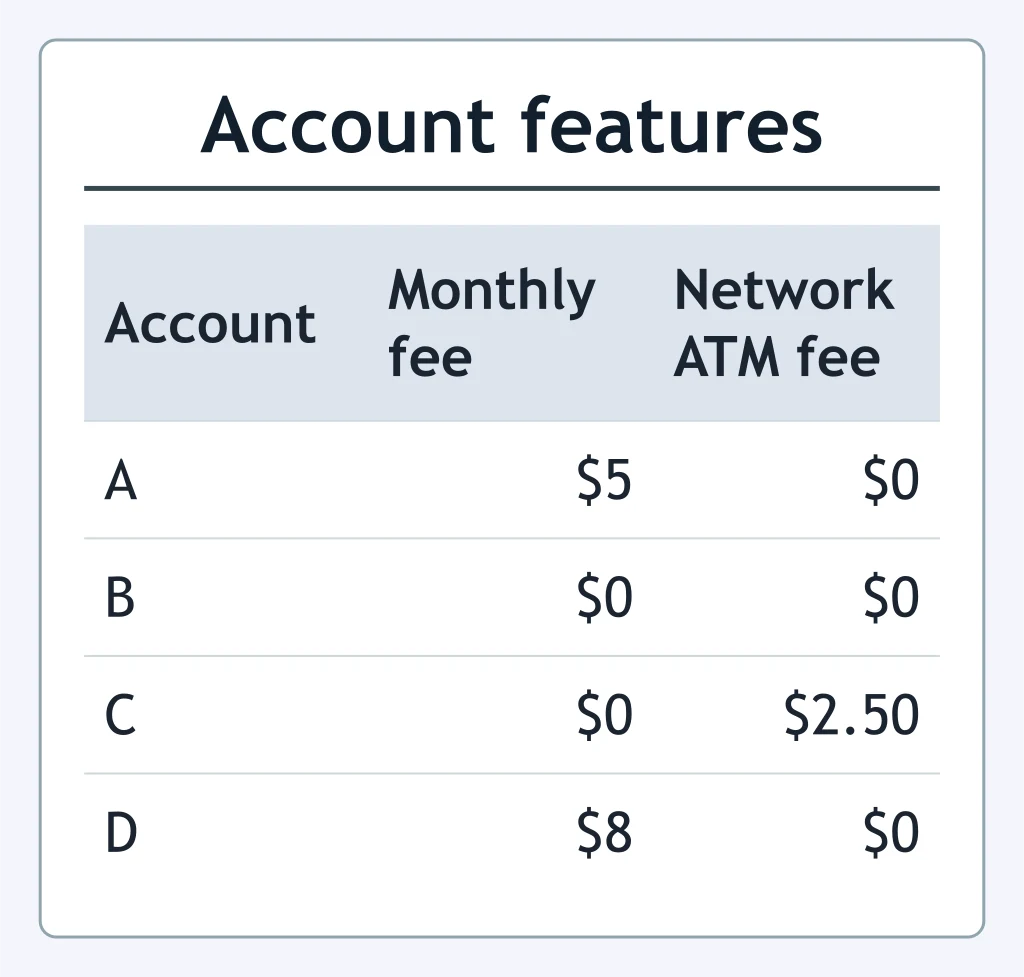
Use the register shown. What is the ending balance?
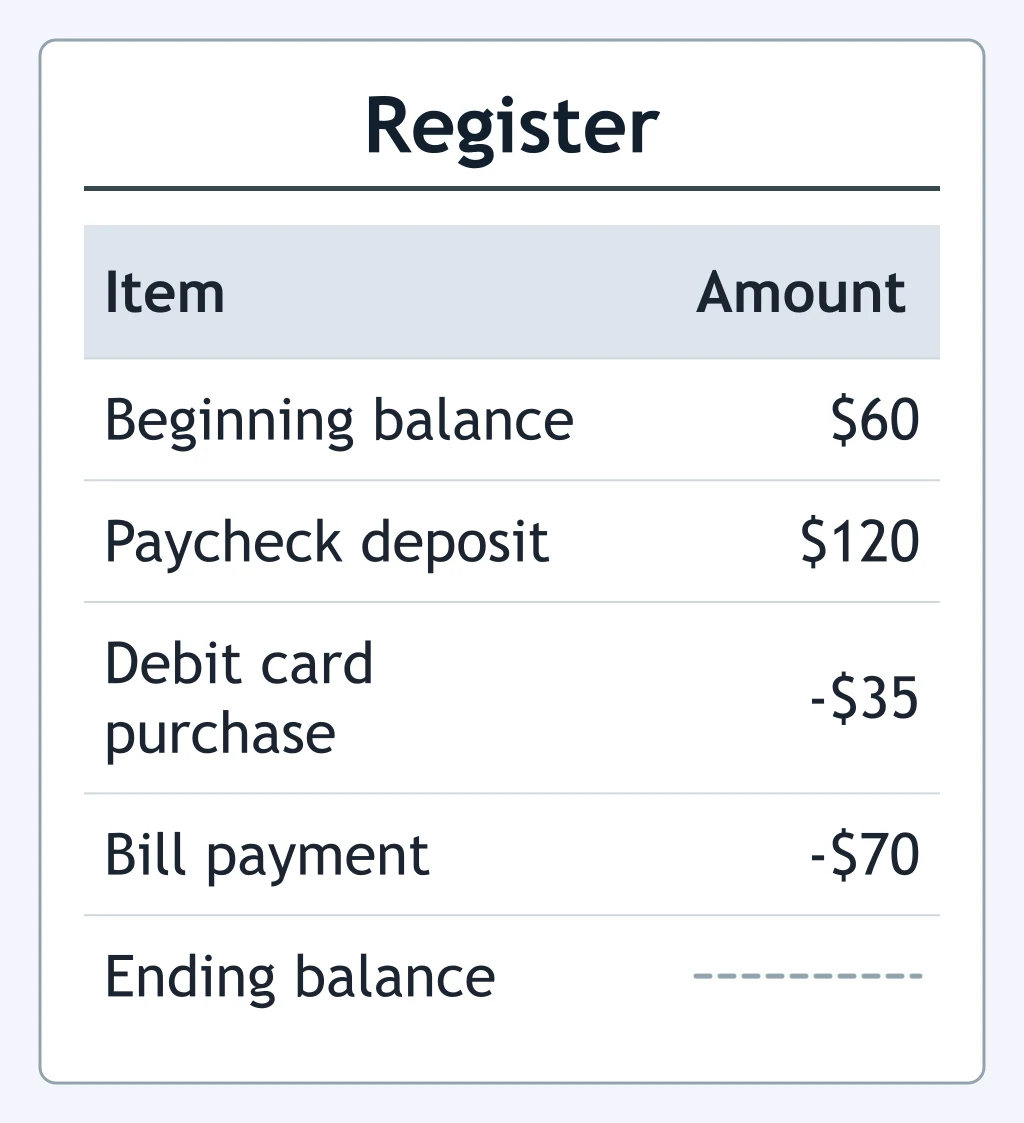
Use the account features table. A student needs free ATM access at the account's network and does not want a monthly fee. Which account fits?
What is an overdraft fee?
The statement balance is $435 and the register includes a pending debit-card payment of $45. After it posts, what should the statement balance be?
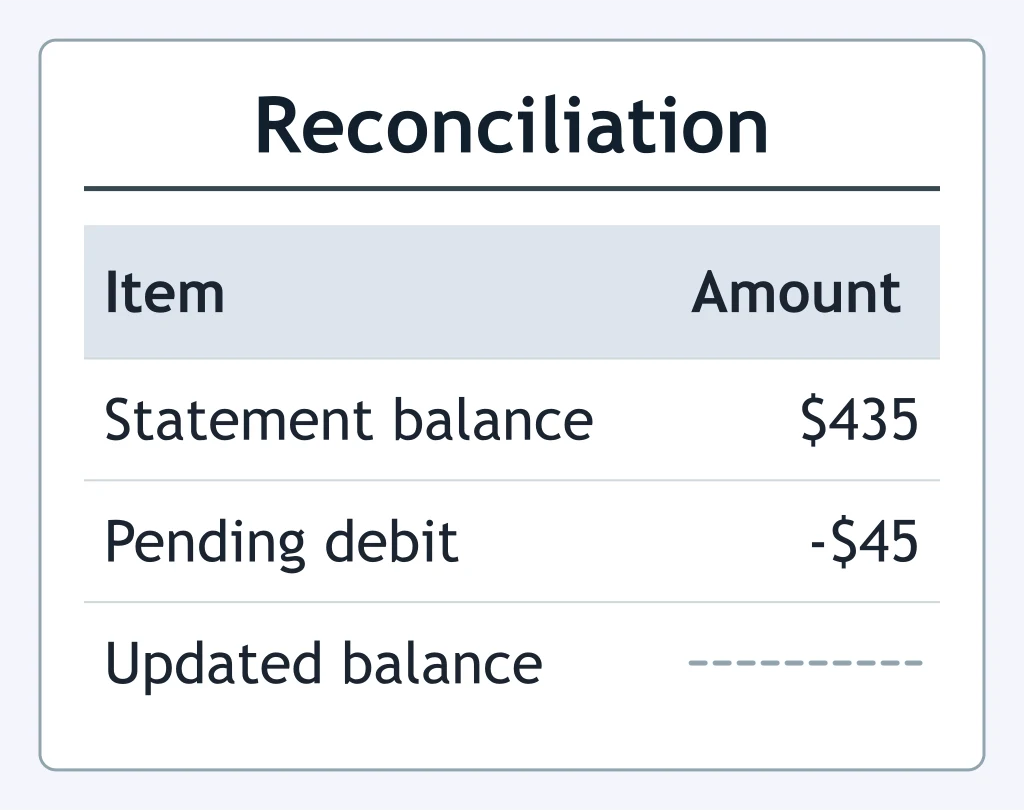
Kai keeps an average checking balance of $80 and receives direct deposit. Which feature best helps avoid a monthly maintenance fee?
Use the account comparison. For a student with a $100 average balance who uses peer-to-peer payments, which account is the better fit?
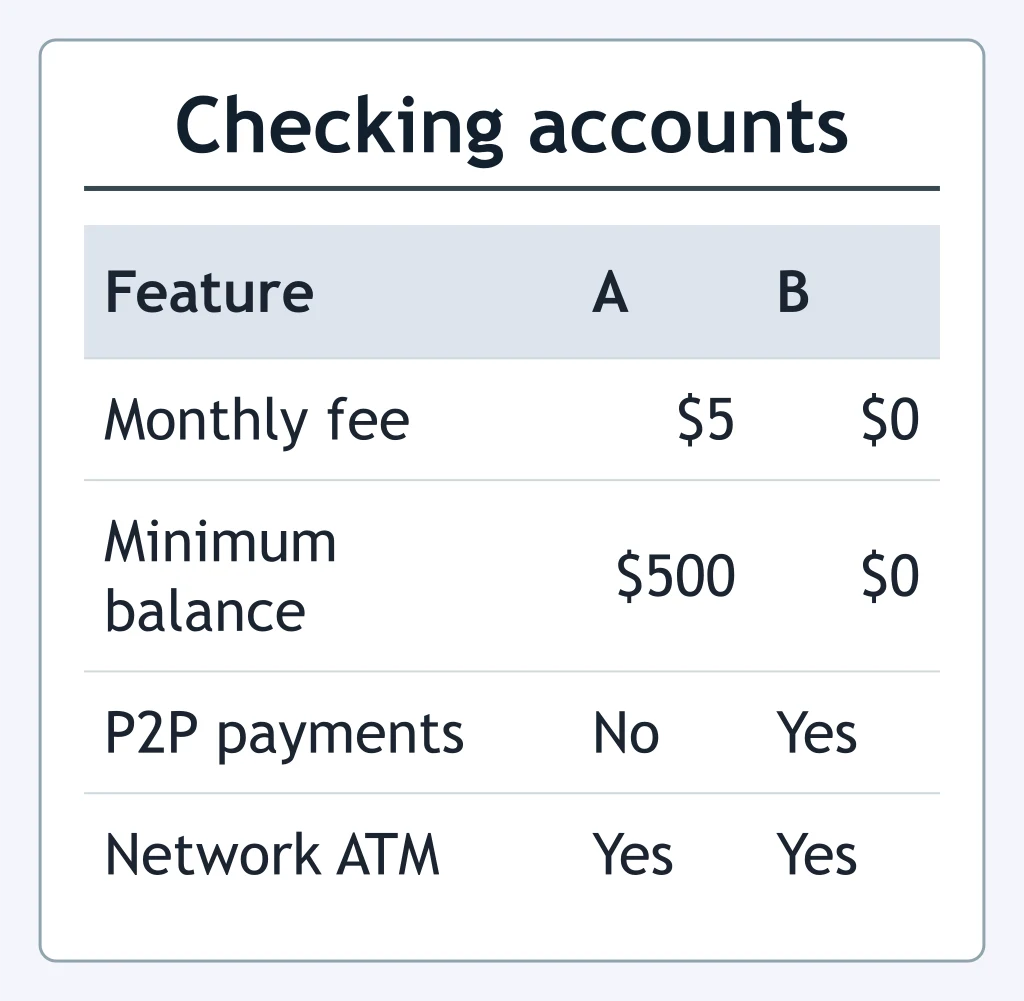
What is direct deposit?
Use the register shown. What balance belongs in the blank?
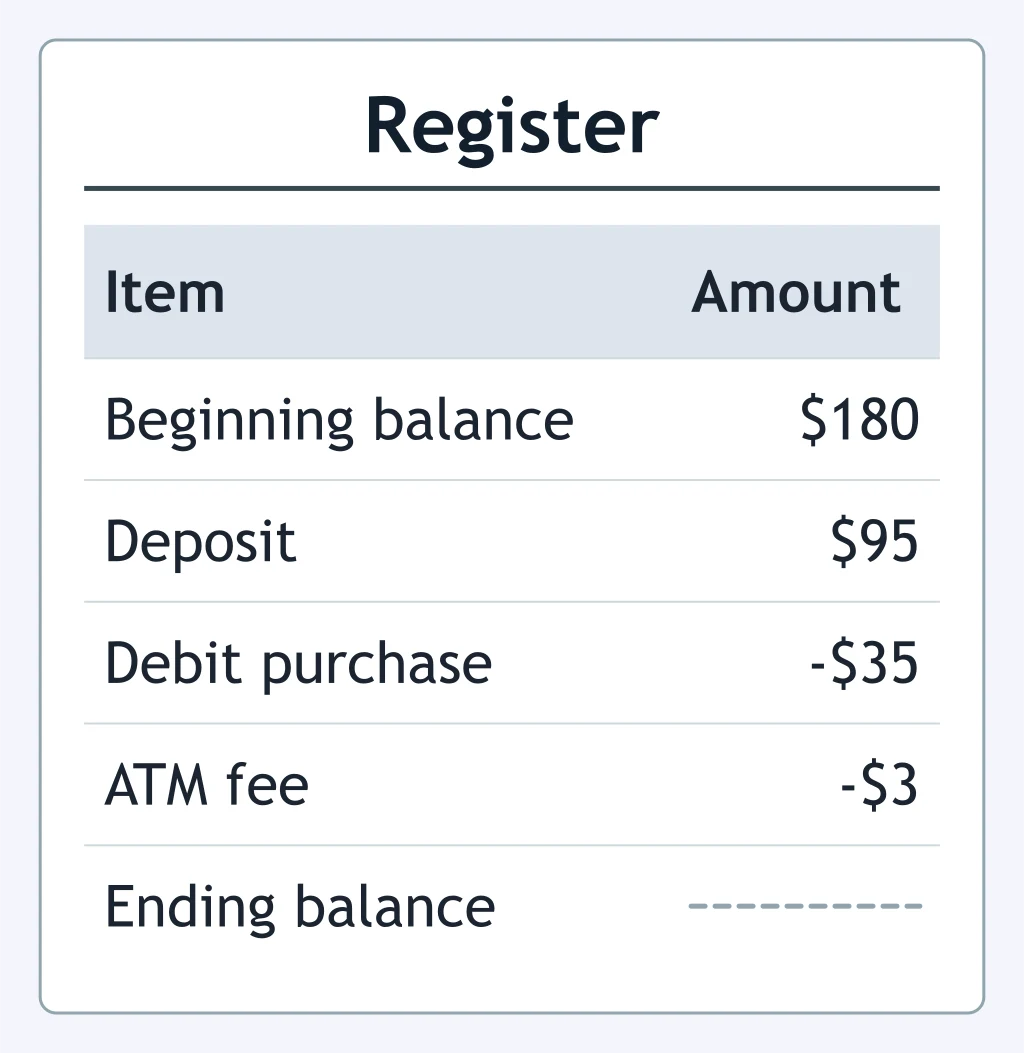
A text says, "Your account will freeze today. Send your password now." What is the safest response?
Use the comparison. A student gets direct deposit, uses ATMs often, and keeps about $300 in checking. Which account costs less each month?
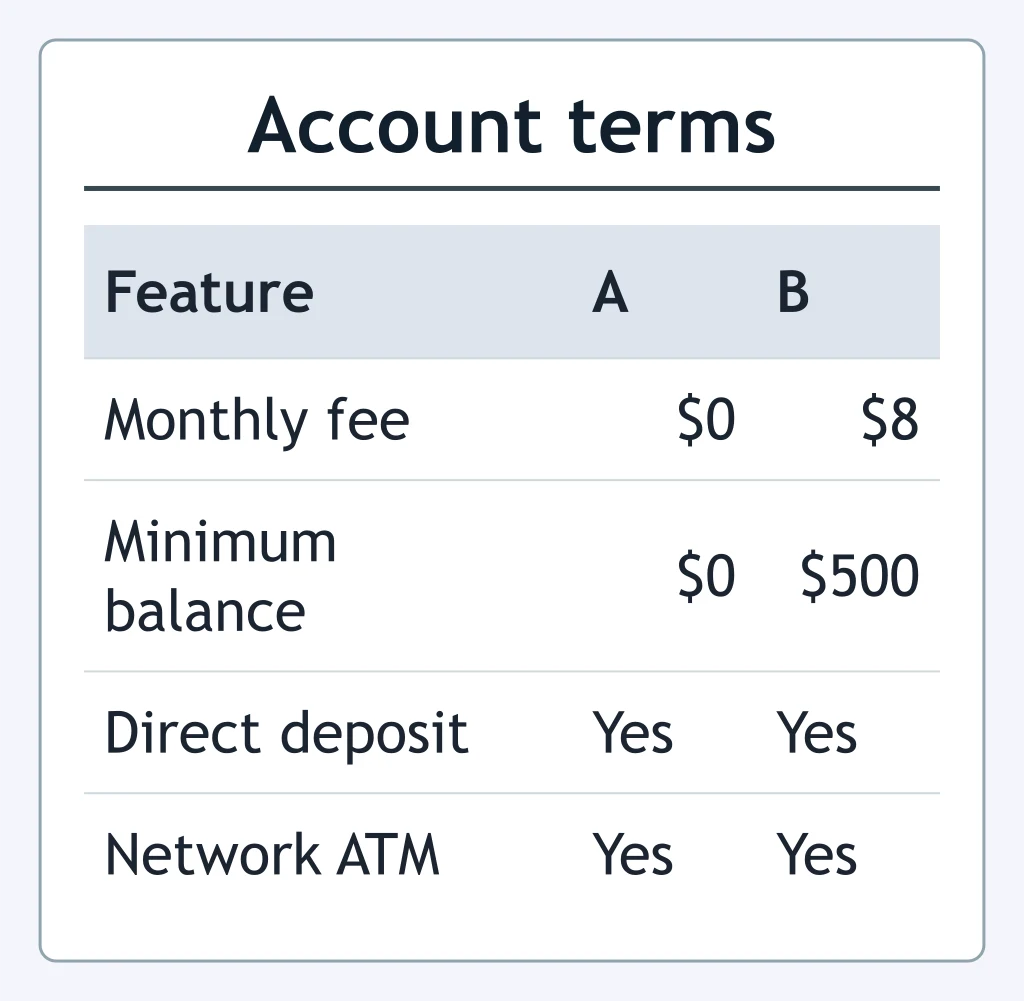
Which savings vehicle is usually most liquid for an emergency fund?
Use the emergency-fund table. How much more must Jada save to cover three months of essentials?
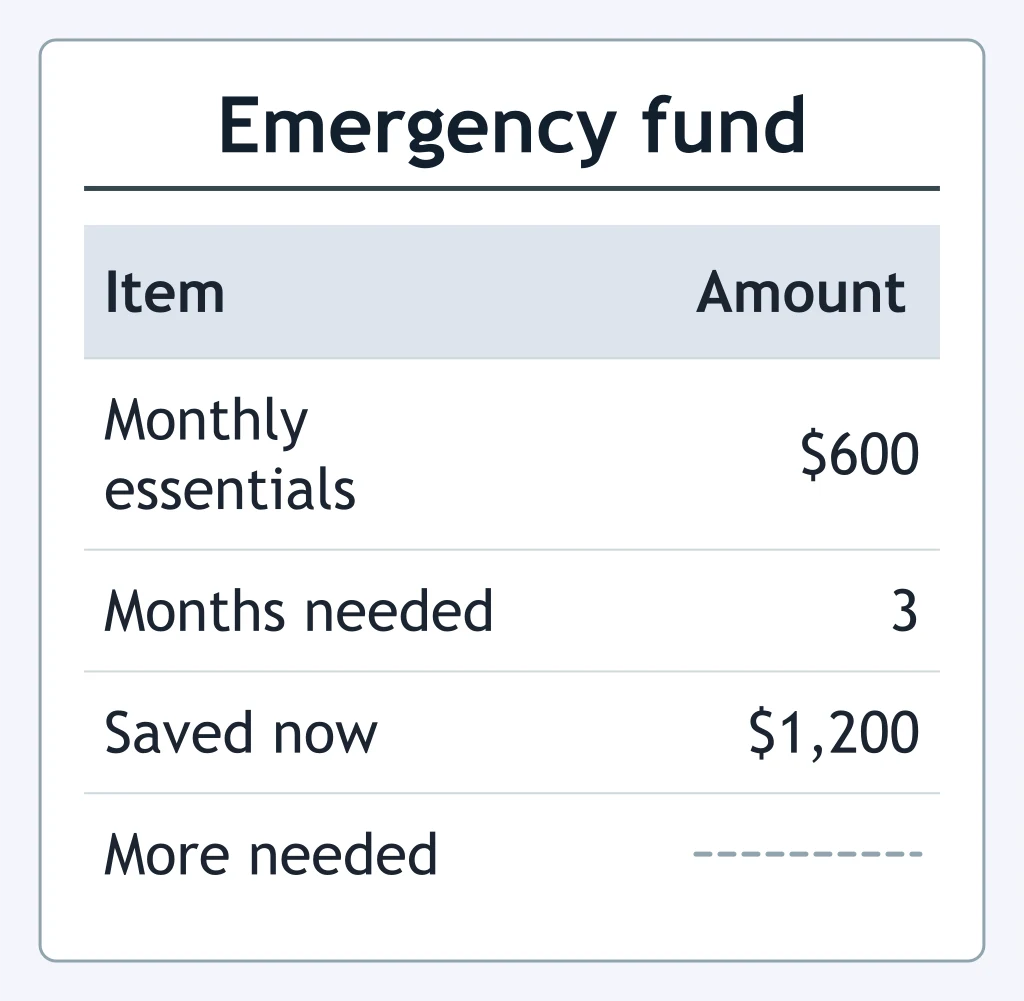
Which savings vehicle typically has a fixed term and may charge an early withdrawal penalty?
Nora wants to keep her emergency fund in a stock fund instead of a savings account. What is the main problem with that plan?
Use the comparison. Eli needs his emergency money available tomorrow and wants no early withdrawal penalty. Which option fits?
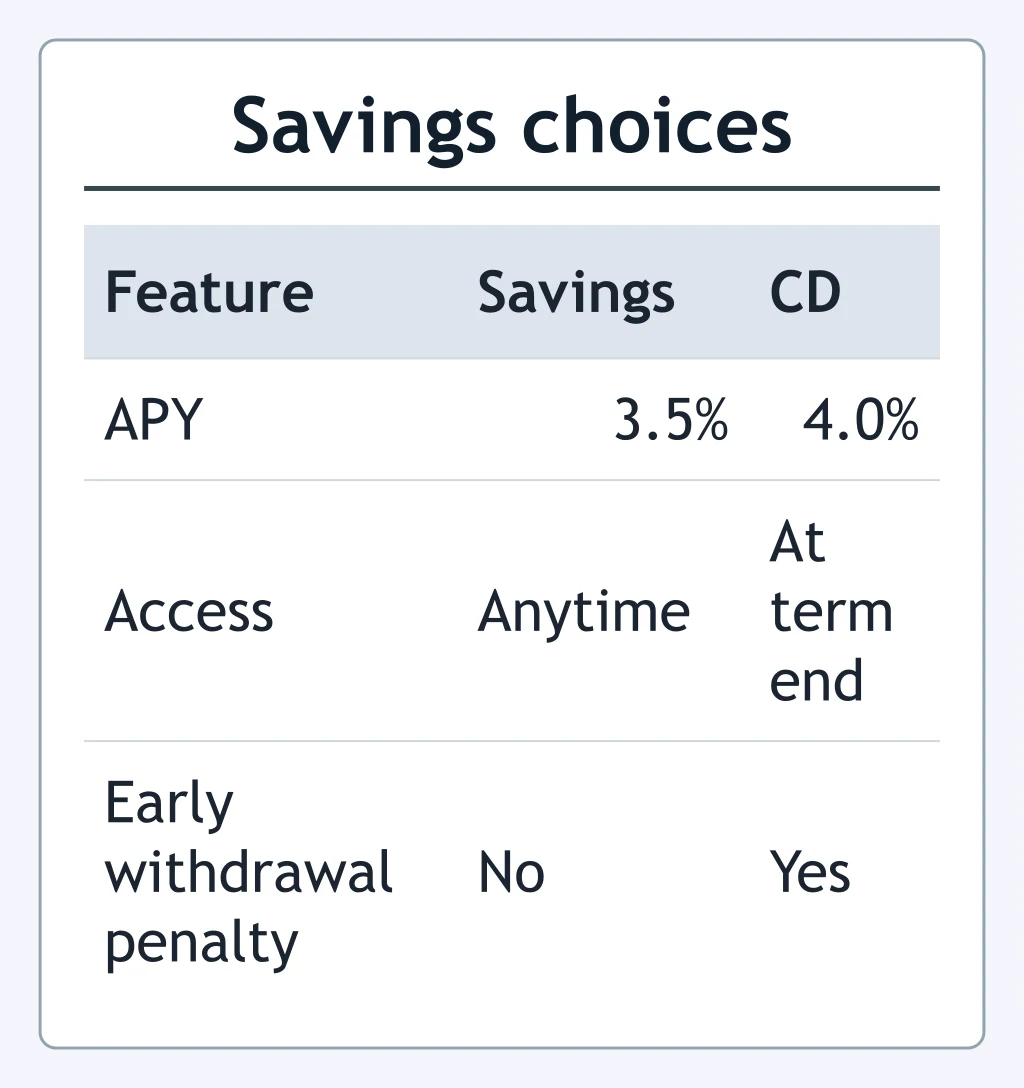
Morgan's essential expenses are $750 each month. For a four-month emergency fund, what target should Morgan set?
A money market account is best described as which type of product?
Rae is choosing between a bank and a credit union. How is a credit union different from a bank?
A $500 deposit earns 4% simple interest for 2 years. How much interest does it earn?
The growth curve shows a balance rising by a larger dollar amount each year. What best explains this pattern?
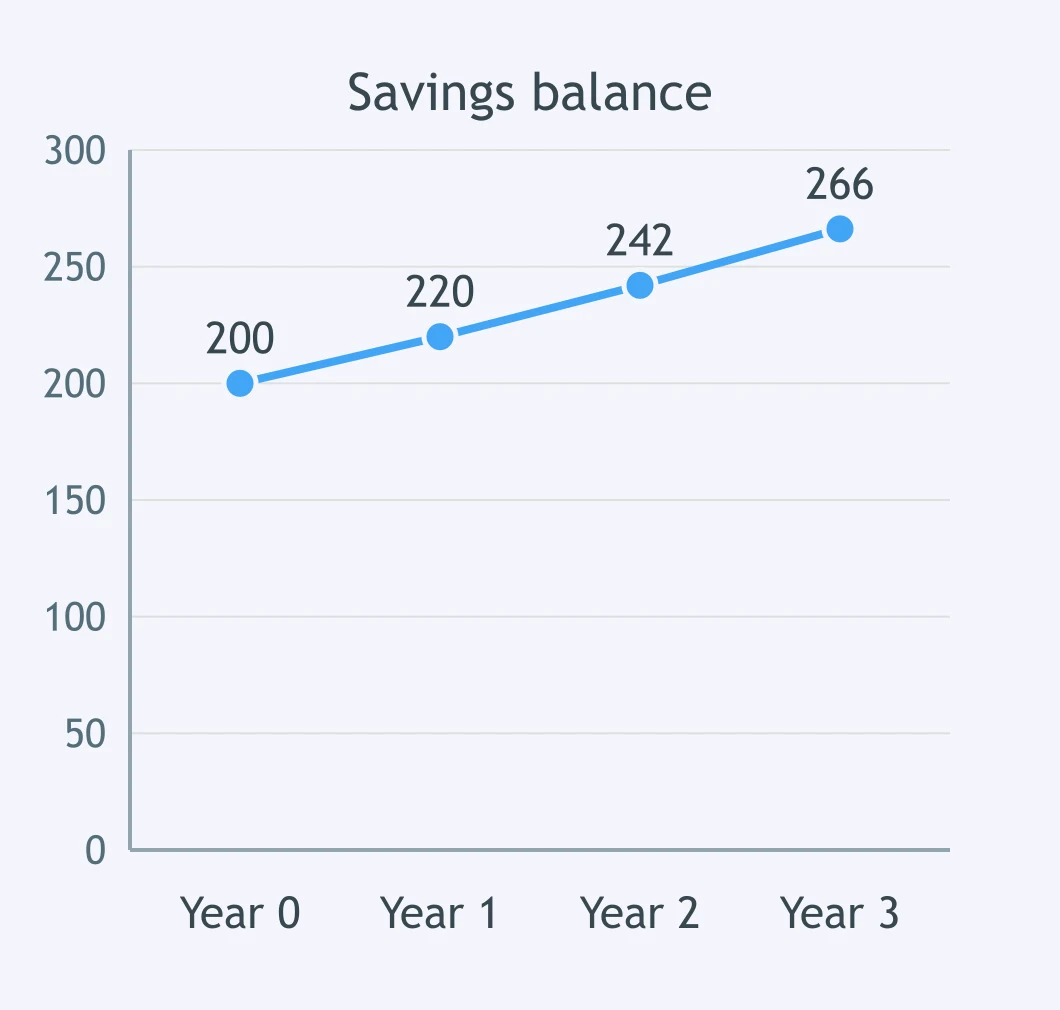
Use the table. How much more does compound interest produce than simple interest after three years?
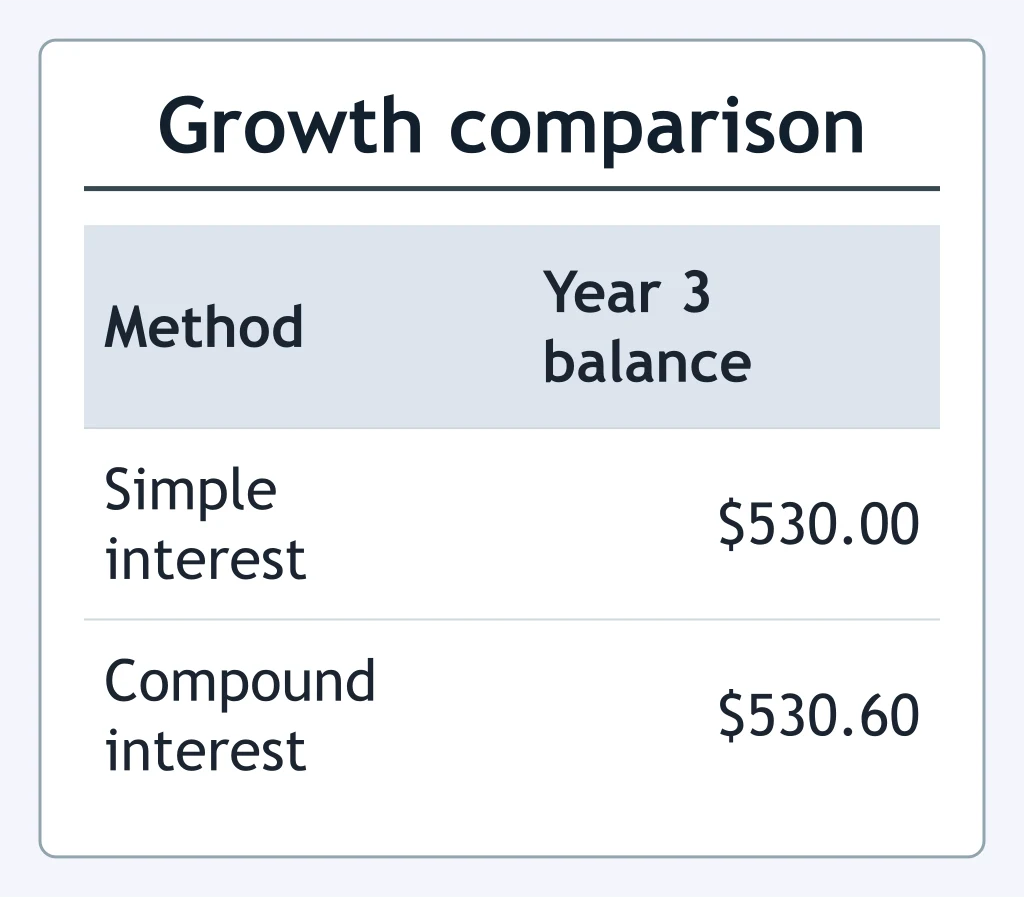
A $1,000 deposit earns 10% compound interest annually for 2 years. What is the ending balance?
Use the table. At 5% annual compounding, what belongs in the blank for Year 2?
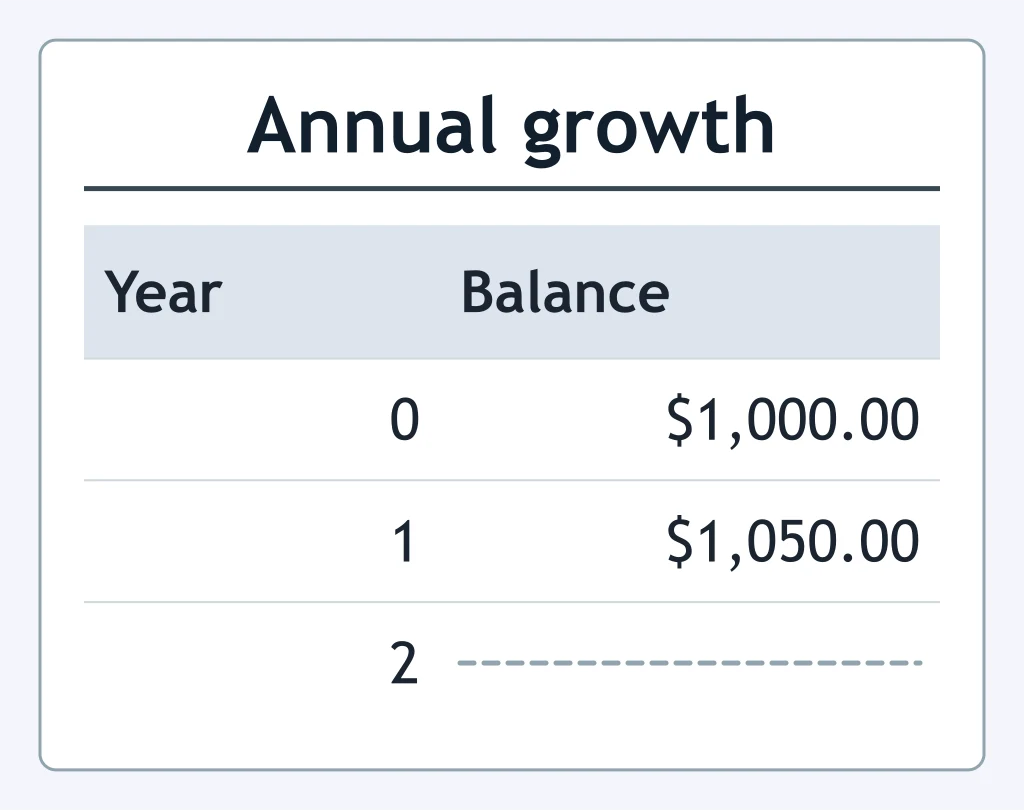
Which deposit earns more simple interest? Account A: $500 at 6% for 3 years; Account B: $1,500 at 2% for 1 year.
The Rule of 72 is used to estimate what?
Use the annual compound growth curve. Why is the later increase shown larger than the first increase?
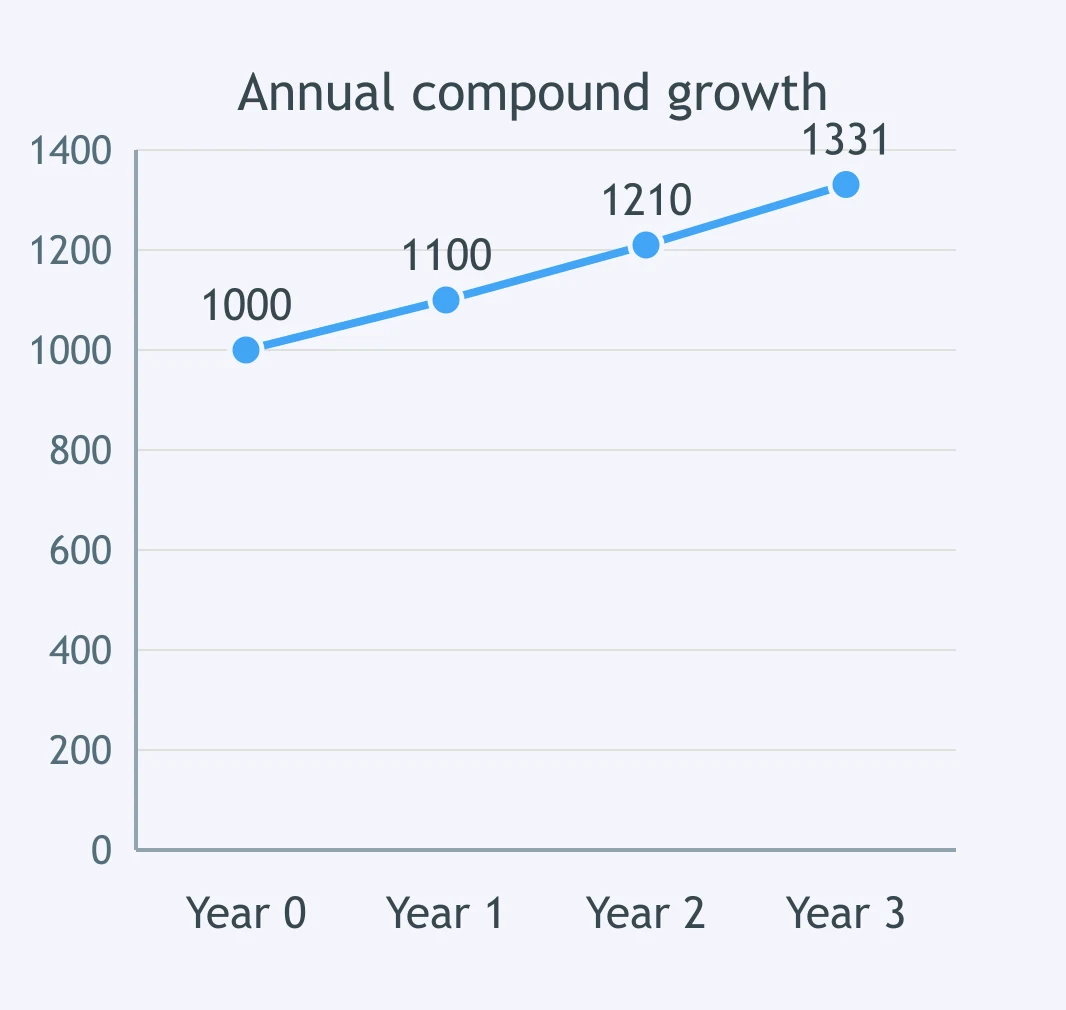
A deposit of $800 earns 5% simple interest for 3 years. What is the ending balance?
Use the comparison. Which account has the larger balance after one year?
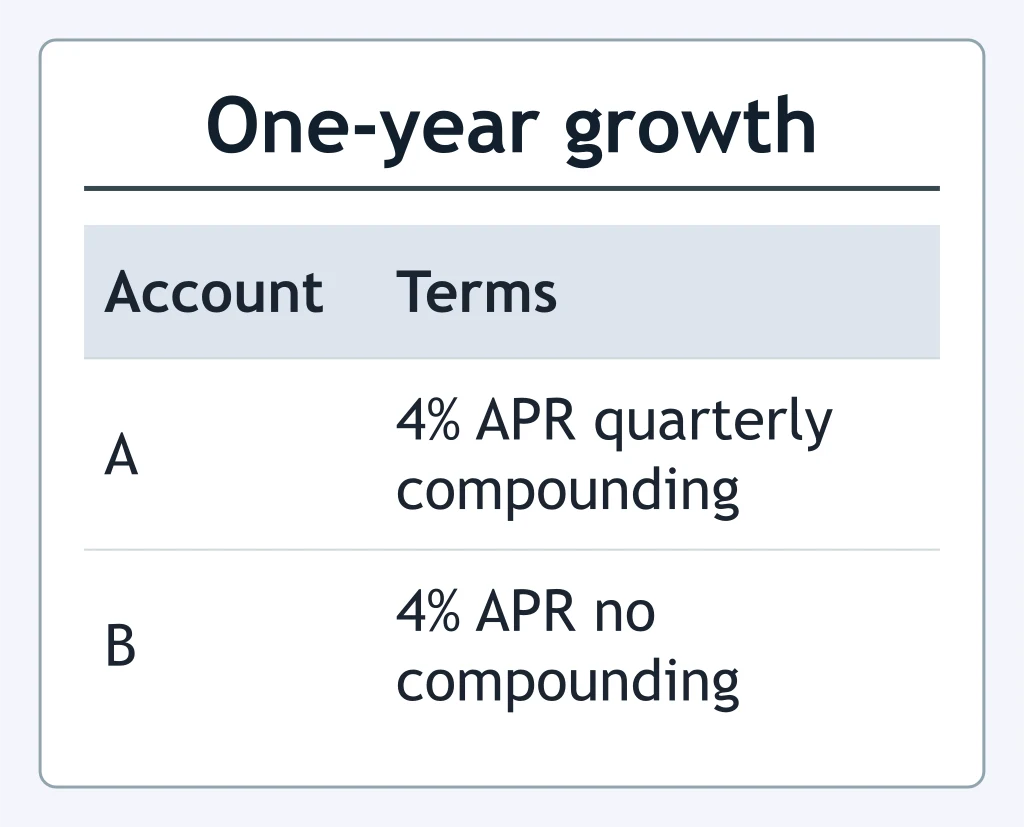
Which deposit earns more simple interest? Account A: $600 at 4% for 5 years; Account B: $1,200 at 4% for 1 year.
Use the table. How much compound interest has the $600 deposit earned after two years?
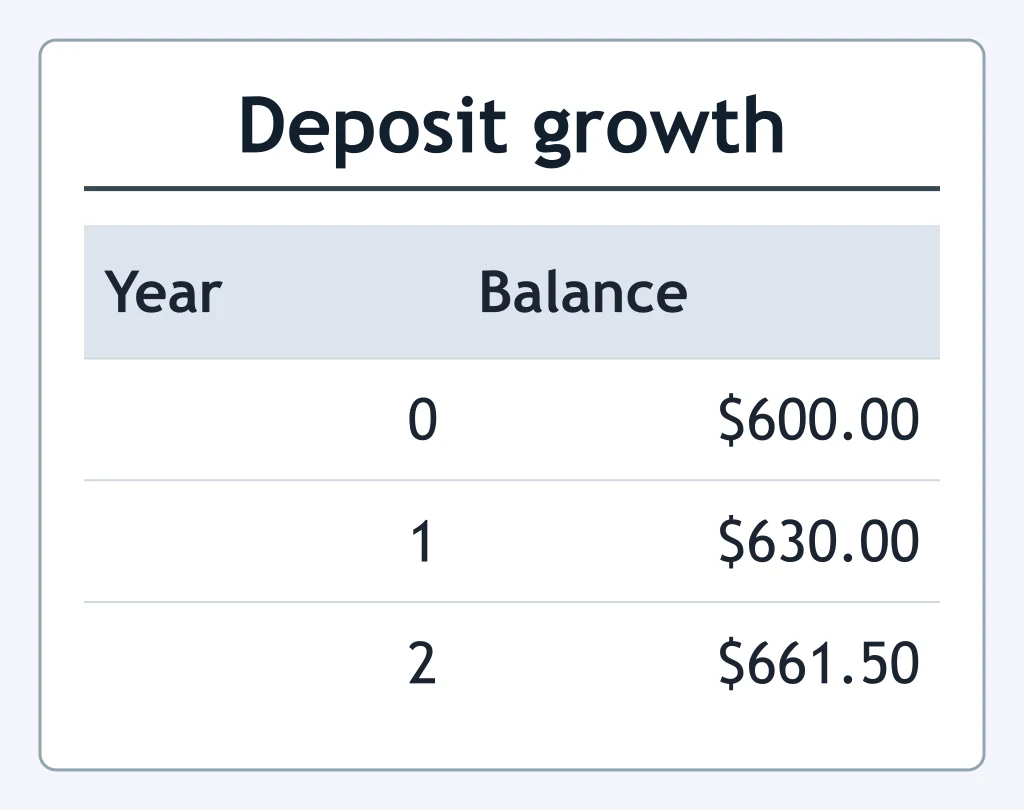
What does APY show for a deposit account?
Use the disclosure. On the same deposit for one year, which account earns more interest?
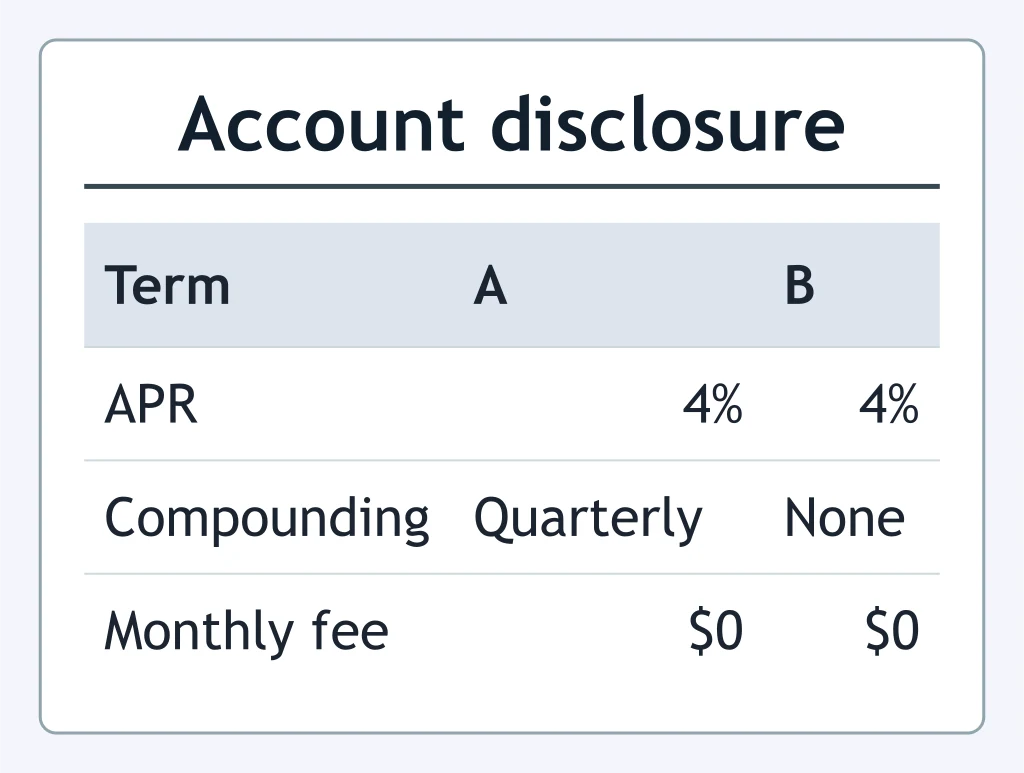
For a loan, what does APR represent?
Using the stated one-year estimates, which $1,000 loan costs less? Loan A: $60 interest and no fee. Loan B: $50 interest and a $25 fee.
Use the disclosure. Which account has the higher annual yield?
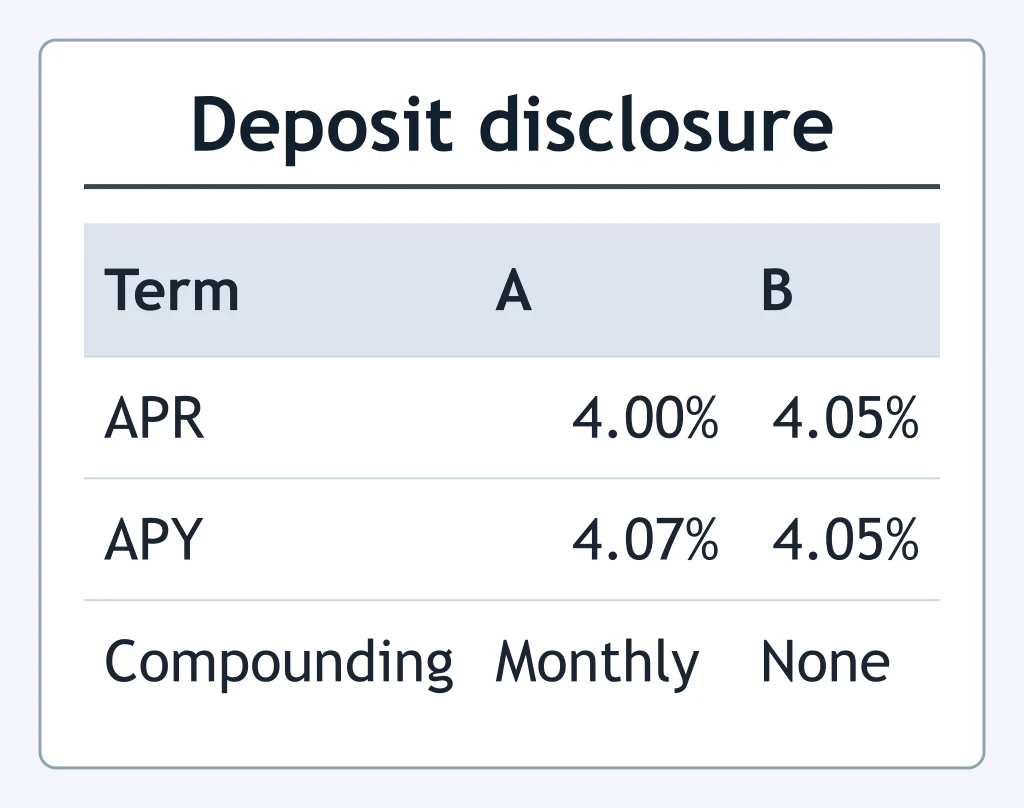
An account pays 4% APR compounded twice a year, so 2% is added every six months. What is its APY?
For a one-year comparison, Loan A has 8% interest on $800 plus a $20 fee. Loan B has 9% interest on $800 and no fee. Which costs less?
Use the loan table. Which offer has the lower total of scheduled payments?
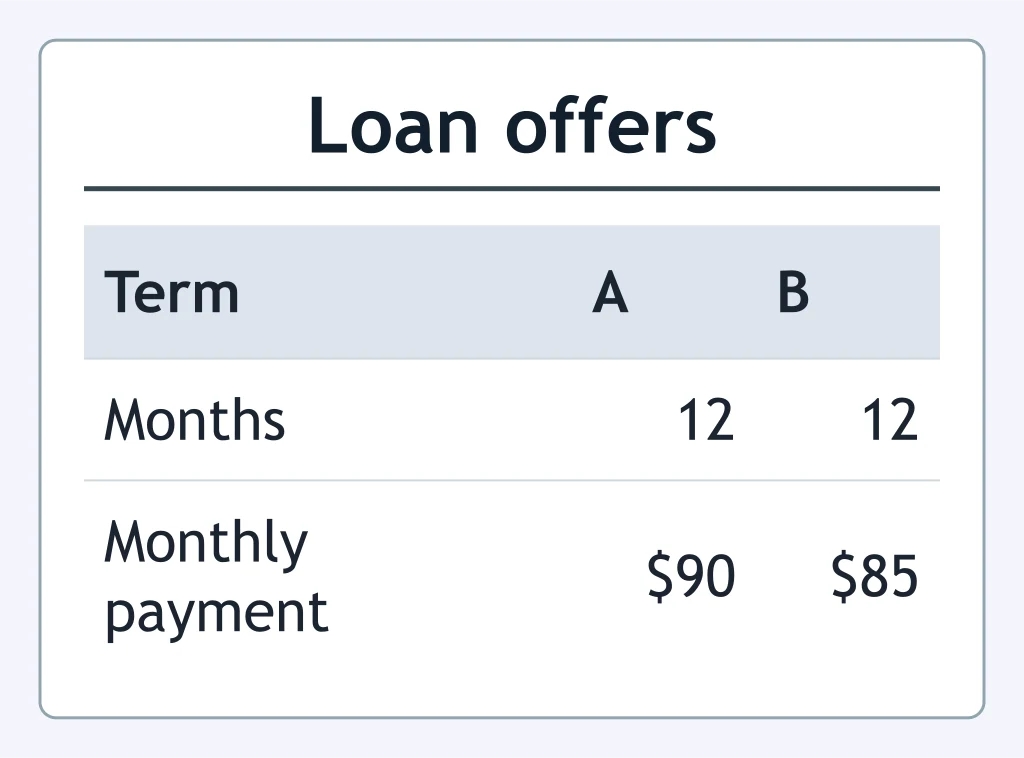
An account lists 6% APR with monthly compounding. On a $1,000 balance, how much interest is added at the end of the first month?
Account A lists 4% APY. Account B lists 4% APR compounded monthly and a disclosed 4.07% APY. On $500 for one year, which earns more?
A checking account begins at $300. After a $900 direct deposit, $620 in bills, and a $100 transfer to savings, what remains in checking?
Zoe needs frequent debit-card and ATM access, while keeping emergency savings available tomorrow. Which combination best fits both needs?
After using a public Wi-Fi network, Devon receives an unexpected request for a two-factor authentication code. What should Devon do?
Use the table. Sam receives direct deposit, wants no checking fee, and needs $400 accessible for an emergency tomorrow. Which pairing is best?
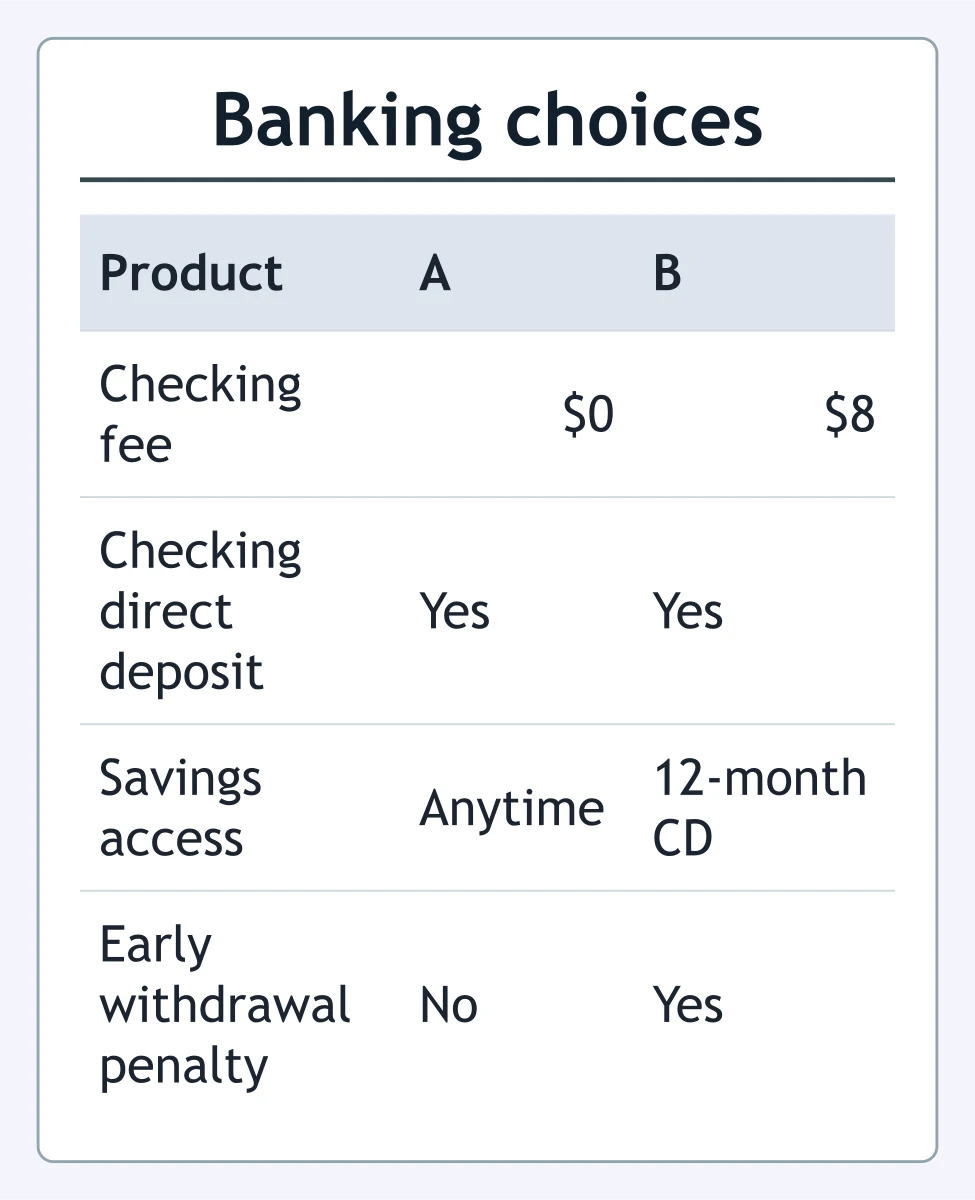
A friend asks Lee to send $40 through a peer-to-peer app. Before sending, what is the most important step?
A $1,000 emergency fund earns 3% APY for one year. Ignoring deposits and withdrawals, how much interest does it earn?
Jamal keeps his checking and savings at an FDIC-insured bank. What is the standard FDIC insurance limit per depositor, per bank, for each ownership category?
Leo's bank balance shows $45, but a $50 debit-card payment he made has not posted yet. Before making another $20 purchase, what is the safest action?
A student has a fully funded emergency fund and will not need $2,000 for 12 months. Which choice best balances a stated term with a potentially higher return?
Mina has $140 in checking and must pay a $120 bill today. She also has $800 in savings for emergencies. What is the best banking action?
Crack the passcode before the zombies get in.
Answer, then swat bugs for bonus points.
Race through questions at your own speed.
Same question on every screen. Fastest wins.

Pick a tile, answer, hit bonuses and steals.

Career and Income Review
30 questions