Loading
by BlastRoom
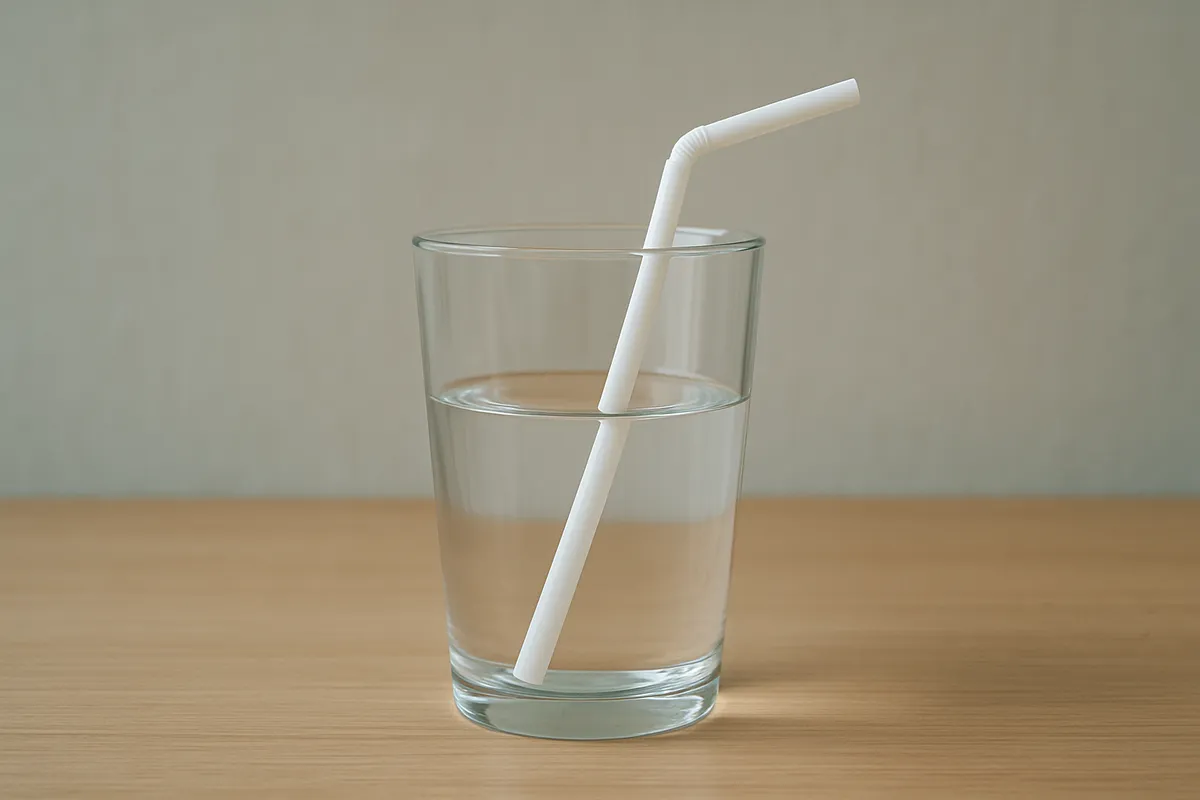
Predict how light bends at a boundary and calculate refracted angles with Snell's law.
#physics
30 questions
One question set, multiple game modes. Tap any game to see it in action. Not sure which to pick?
Answer to place stones and capture territory.
Outrun the snow together.
Earn blasts, then hunt the other team.
Answer to earn energy, then climb.

The class blasts through walls together.
Bid on mystery lots. Most money wins.
Sell tours. Nice, standard, or a total scam.

Answer, restock, and serve the rush.
More correct answers pulls the rope your way.
Answer, then shoot down the alien wave.
Answer, then tap to leap the frozen ridge.
The ray diagram shows a ray entering a second medium at the labeled incident angle. What is the refracted angle?
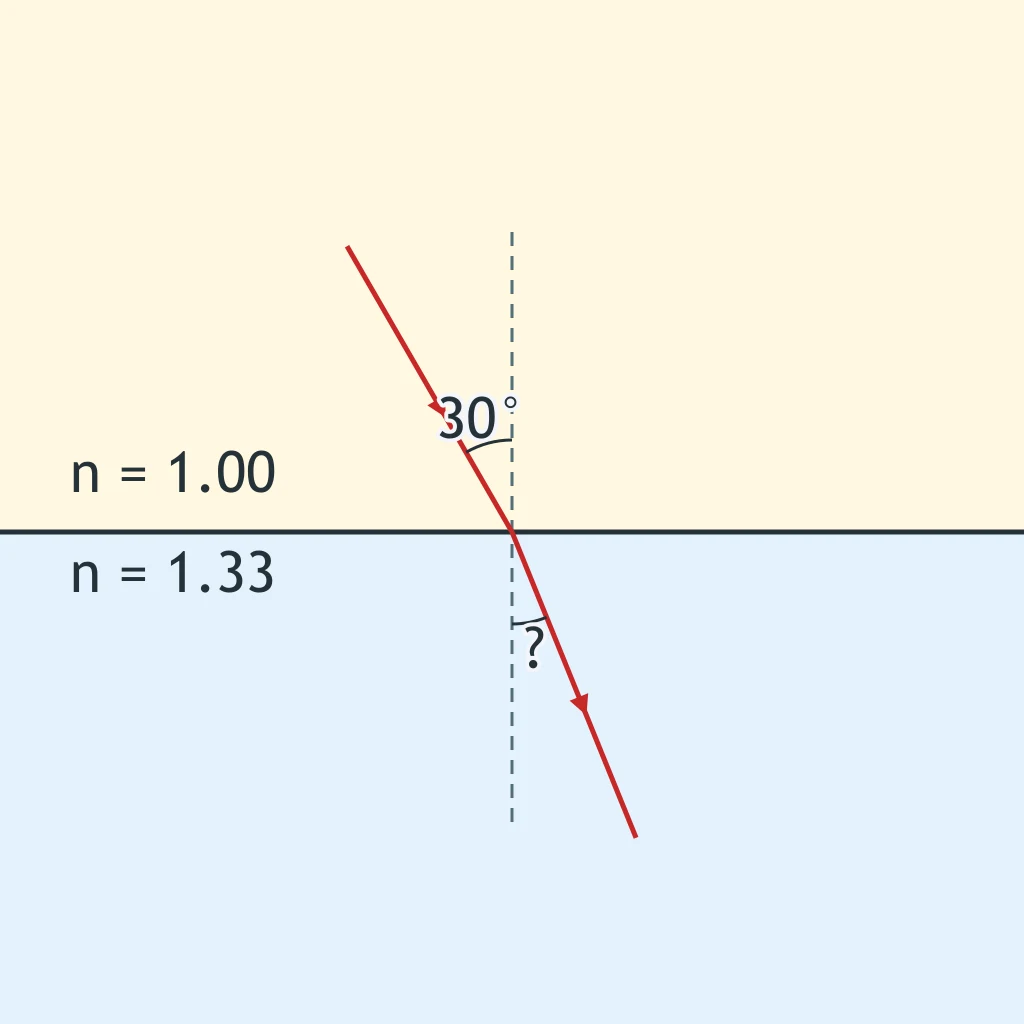
The ray diagram shows a ray traveling from air into glass at the labeled angle from the normal. What is theta2?
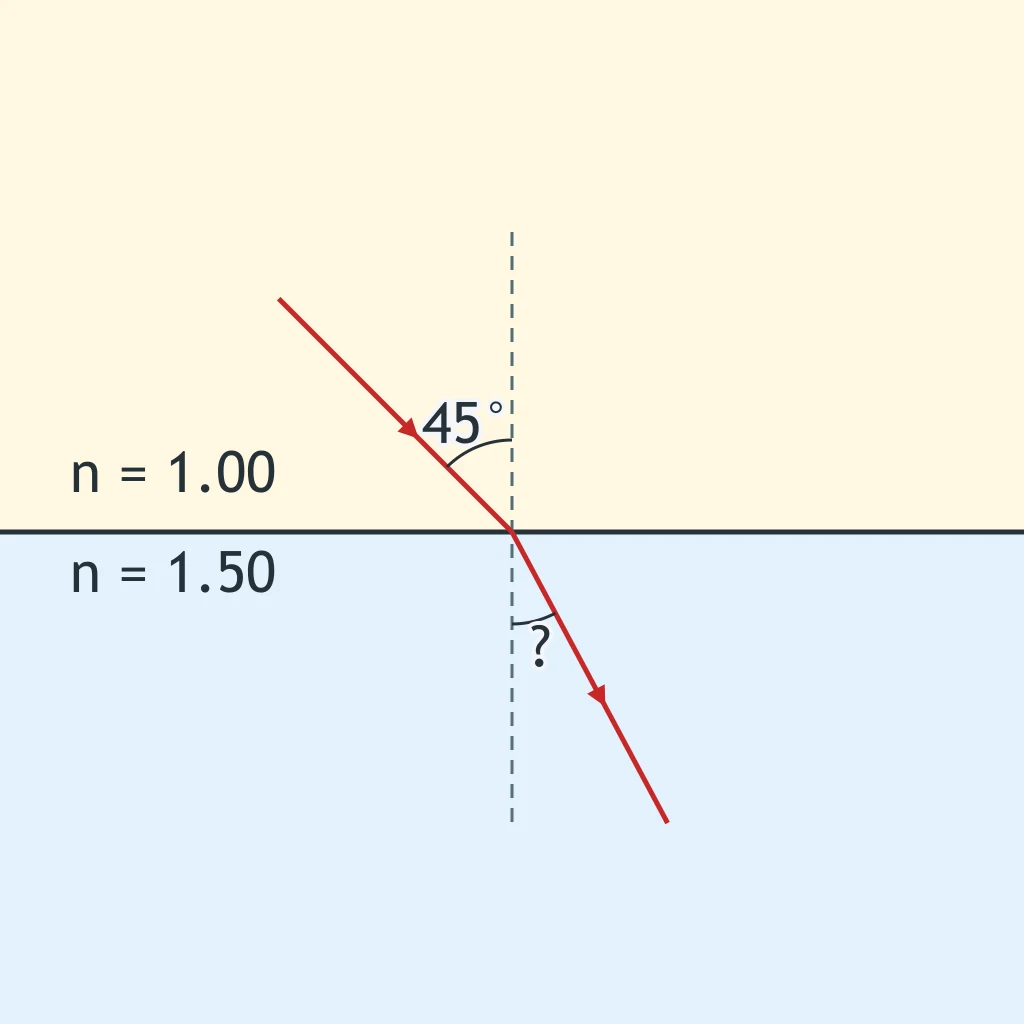
The ray diagram shows light passing from water into air. What is the angle in the air?
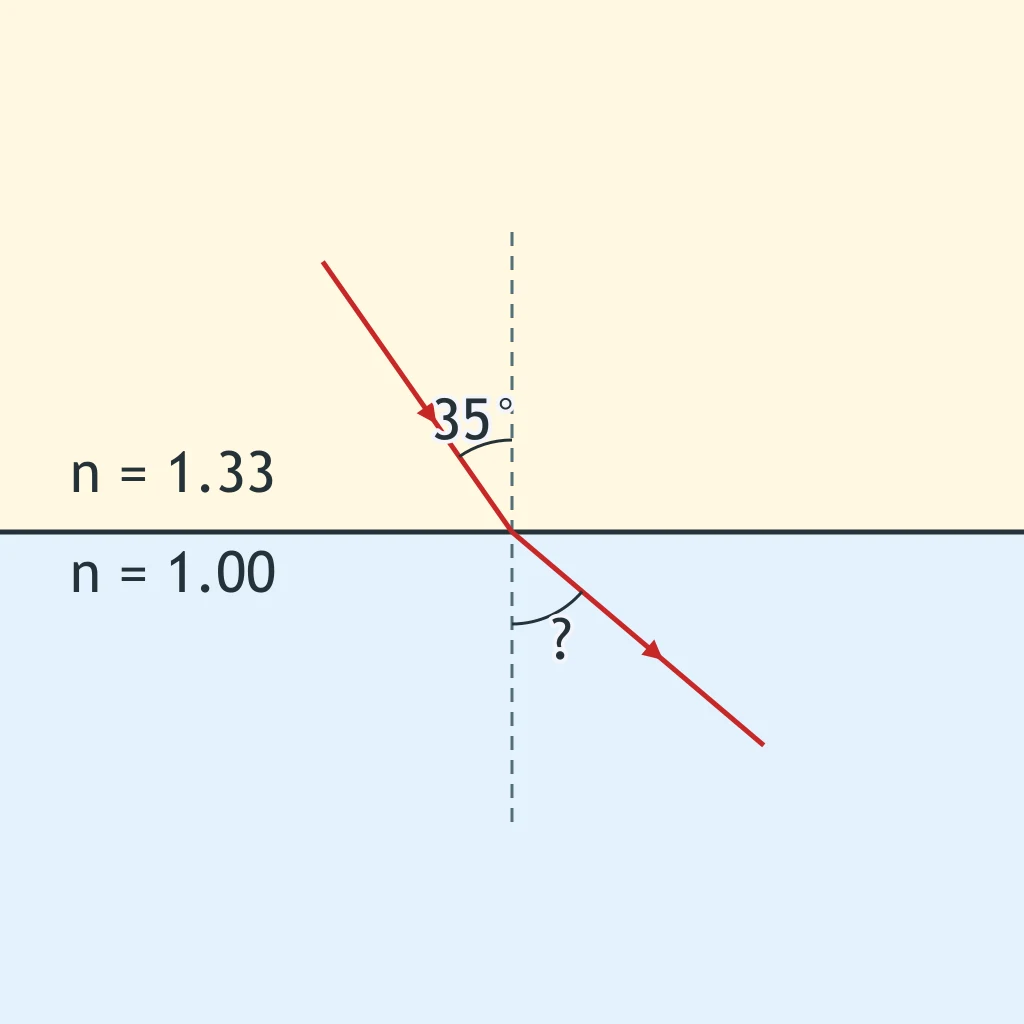
The ray diagram shows a ray going from glass into air at the angle marked from the normal. What is theta2?
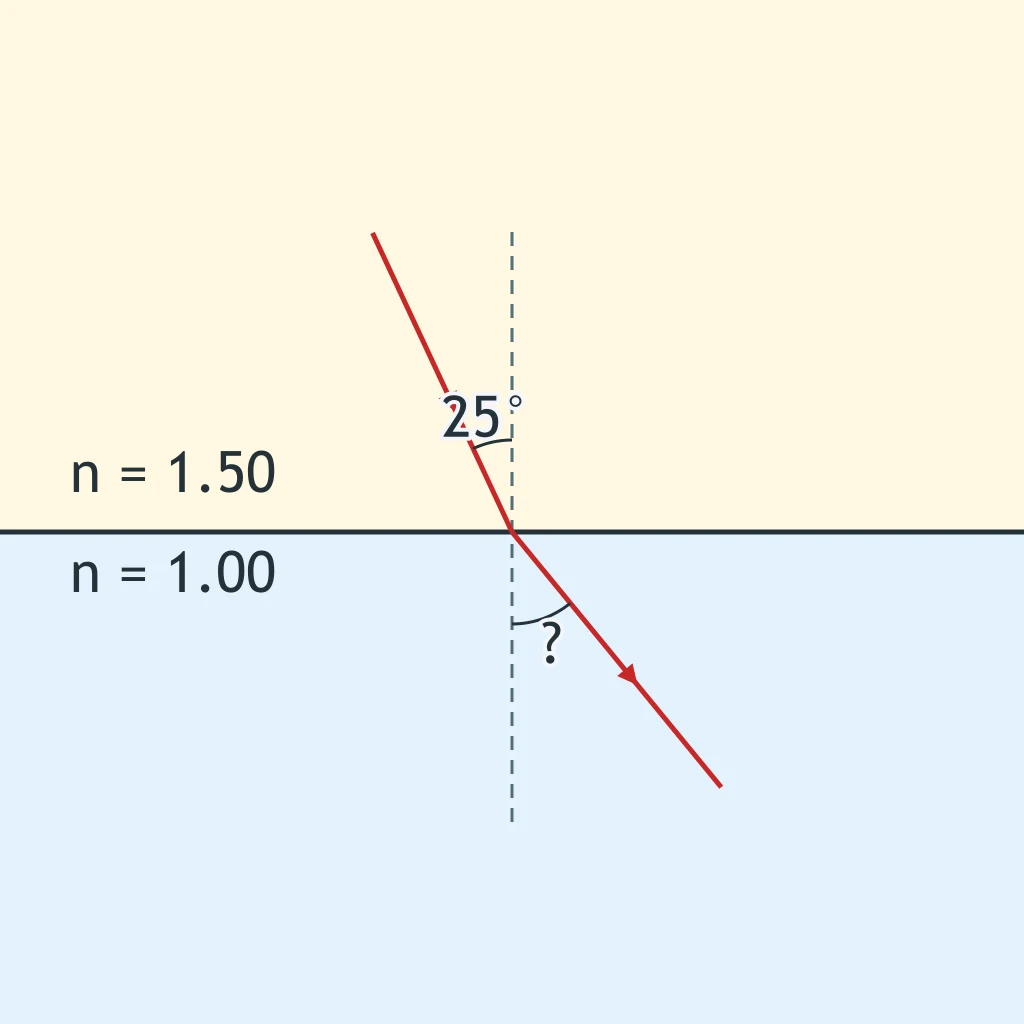
The ray diagram shows a ray crossing from water into glass with the incident angle labeled. What is the refracted angle?
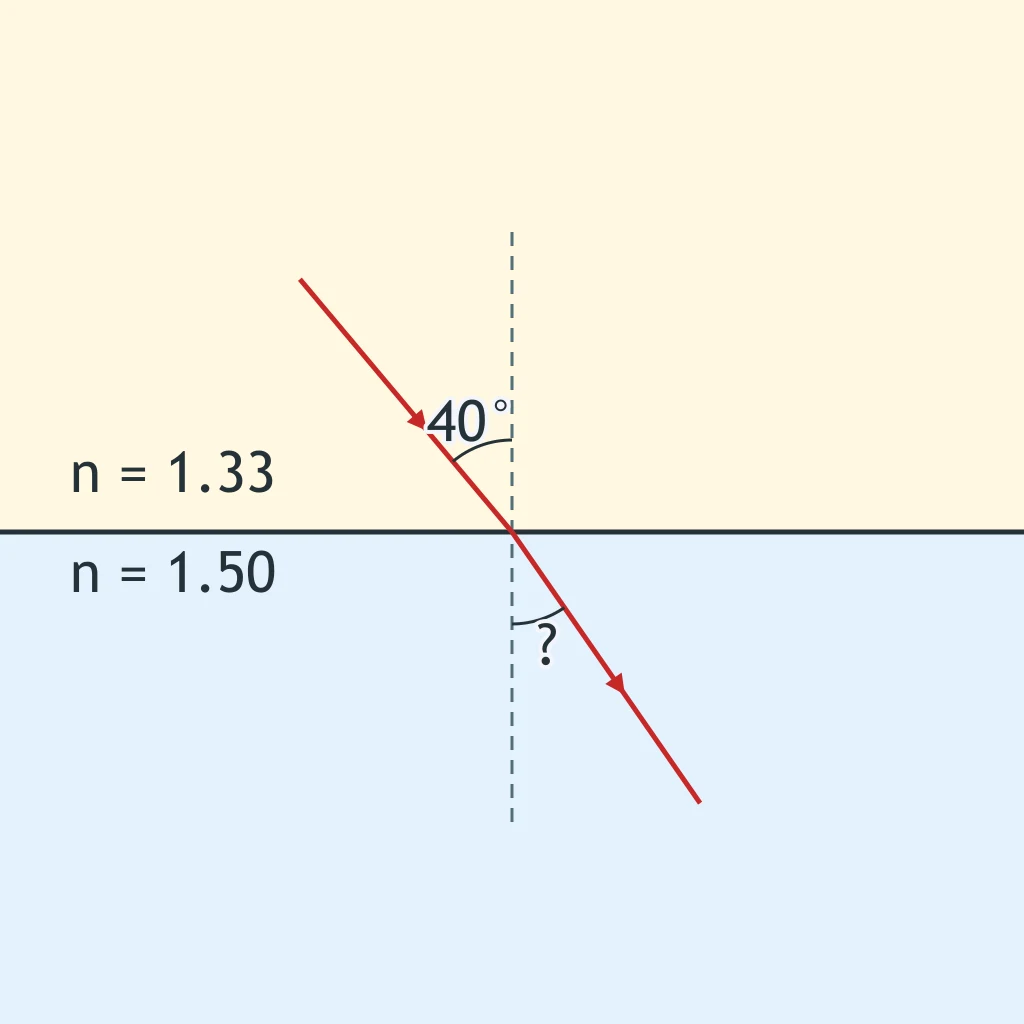
The ray diagram shows light traveling from glass into water at the labeled angle from the normal. What is theta2?
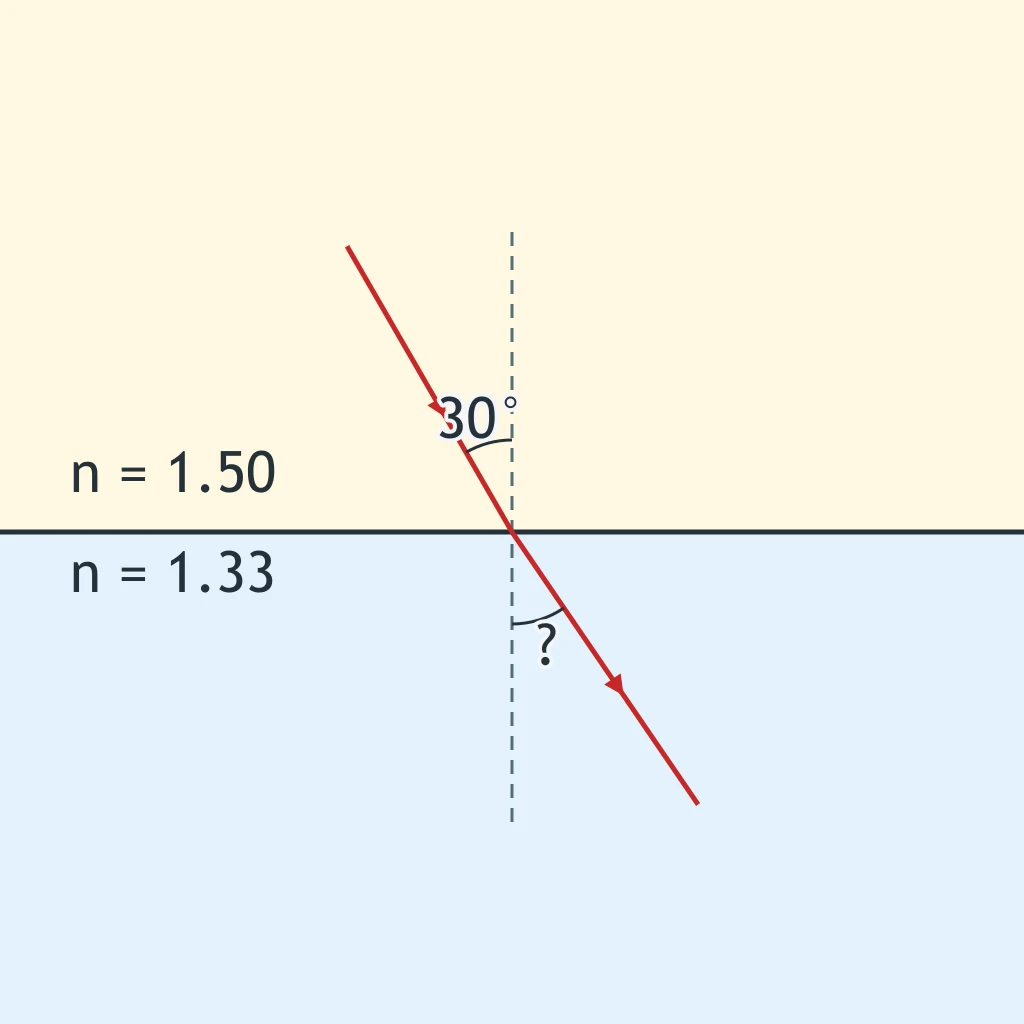
The ray diagram shows a ray entering diamond from air at the labeled angle. What is the angle inside the diamond?
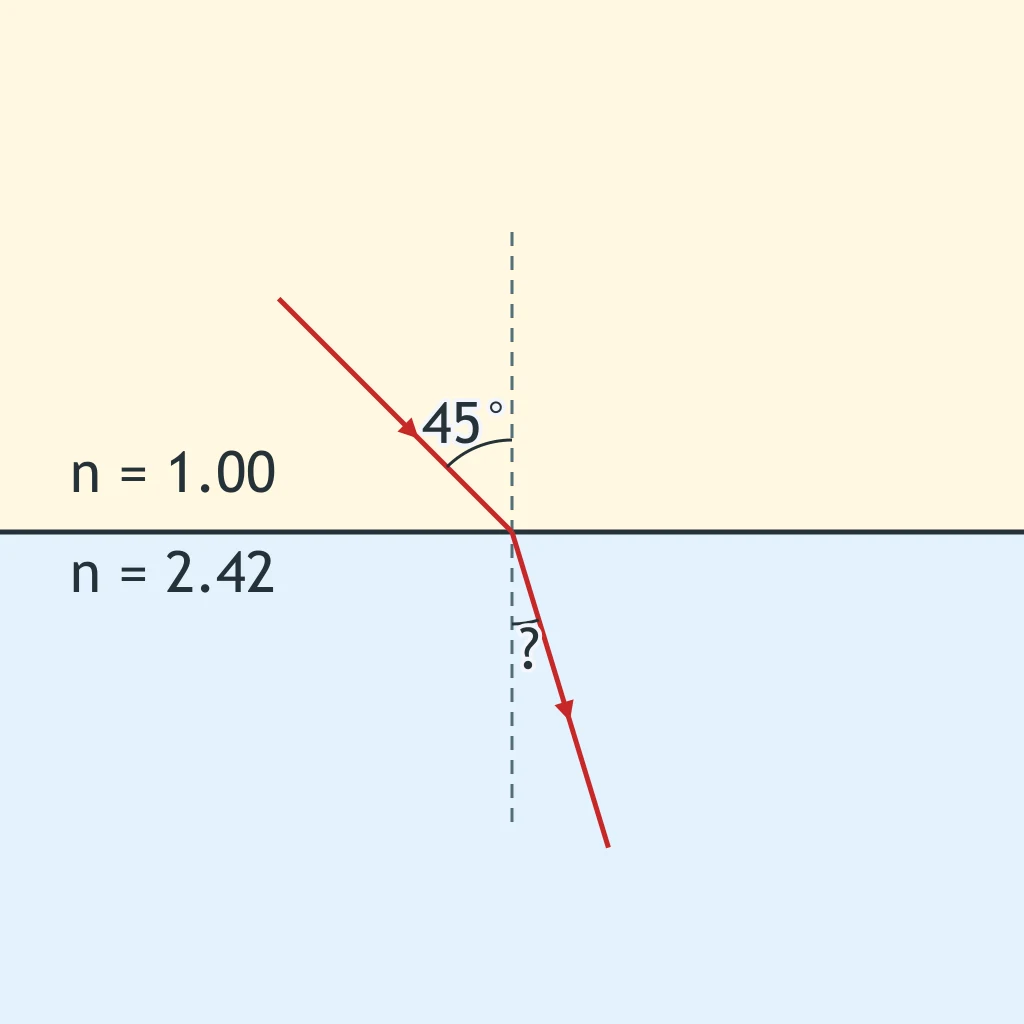
The ray diagram shows a ray traveling from diamond into glass. What is the refracted angle in the glass?
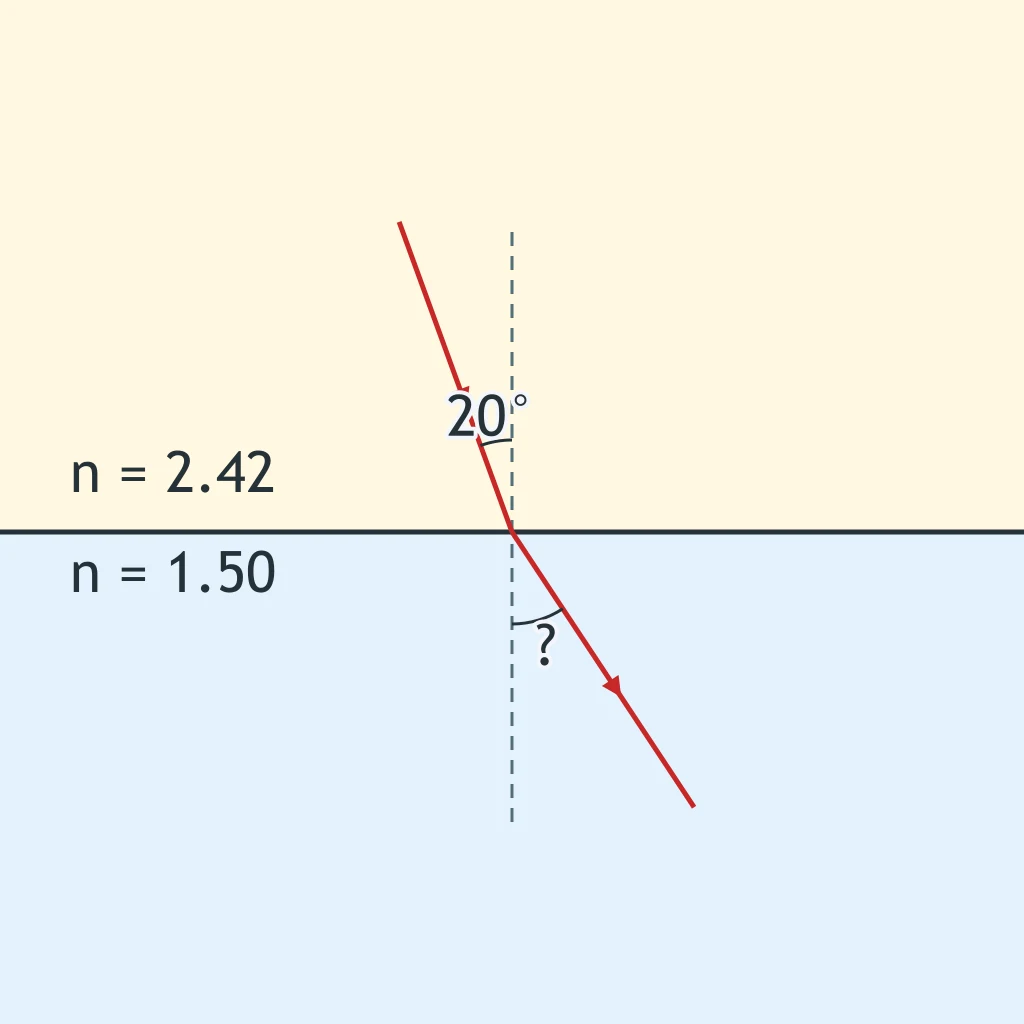
The ray diagram shows light going from glass into diamond with the incident angle labeled. What is theta2?
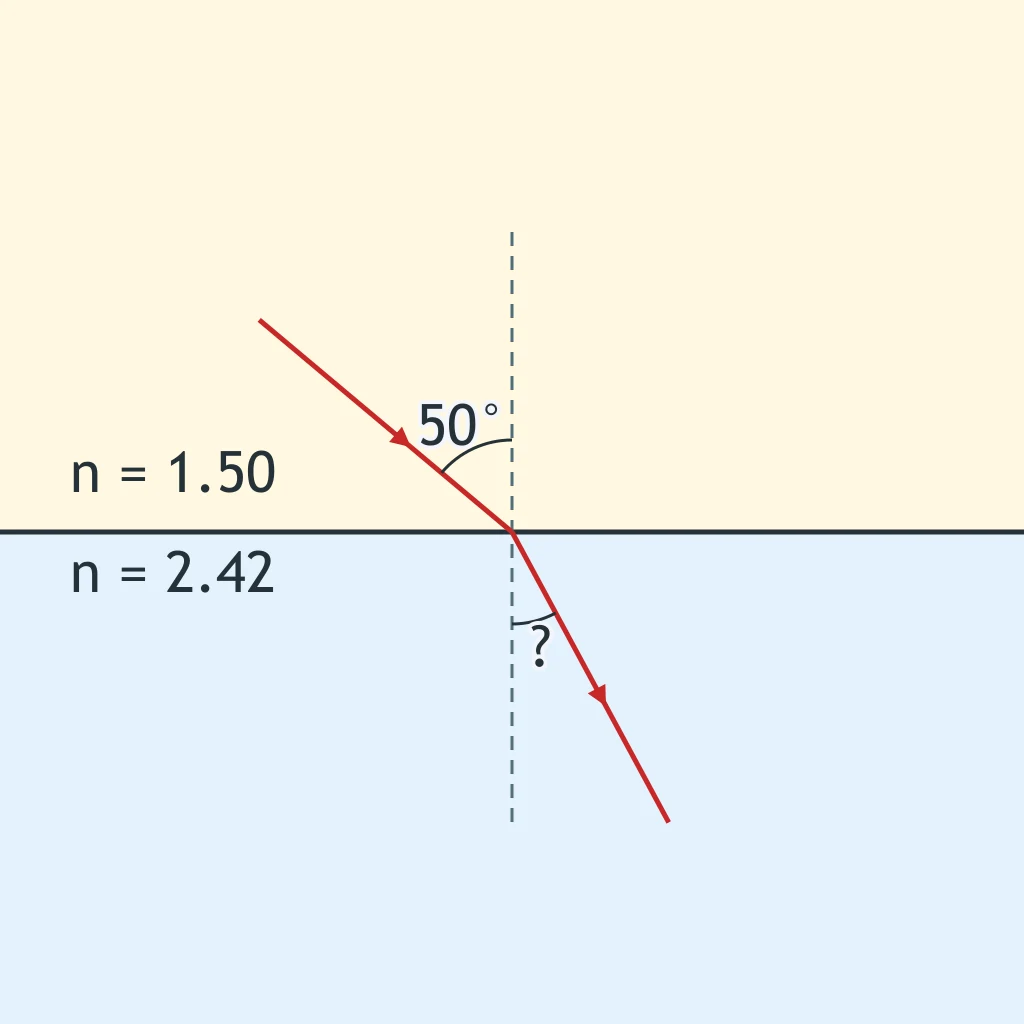
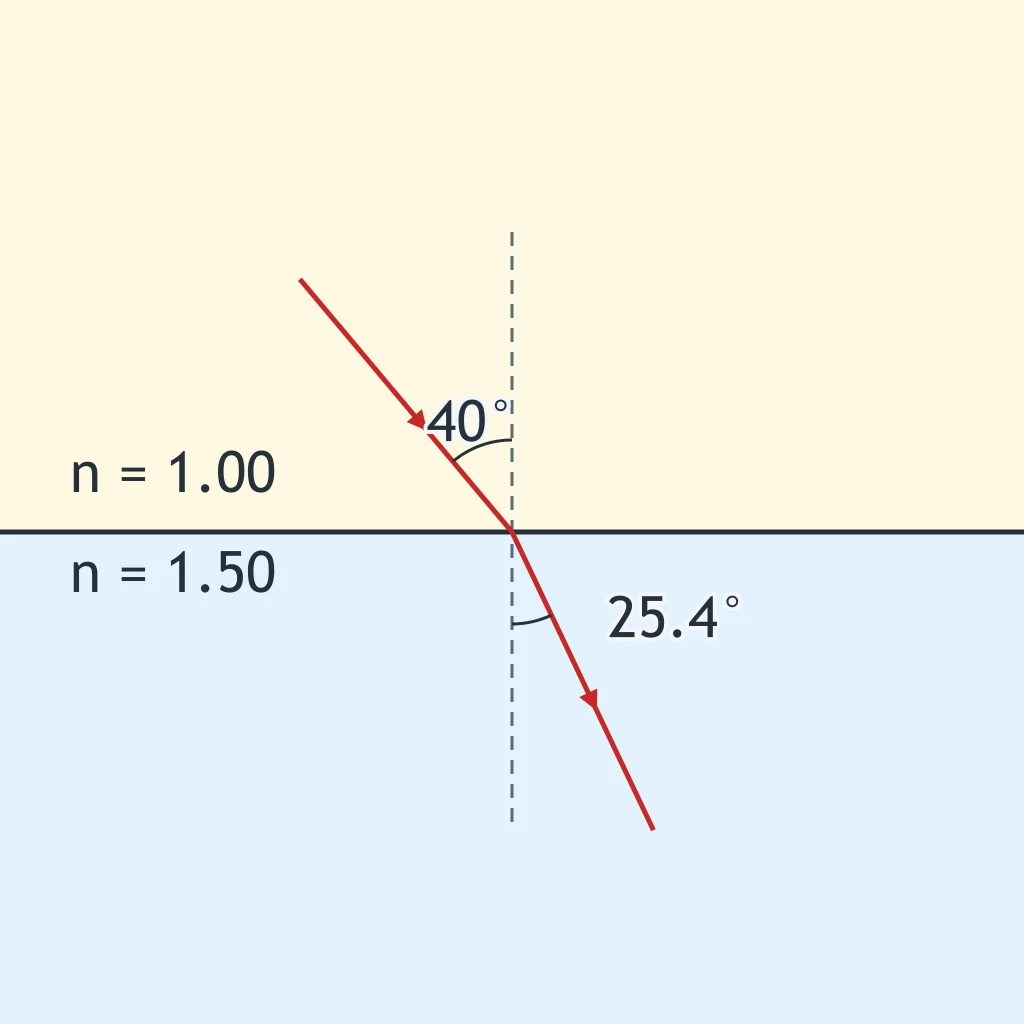
Use the ray diagram. The ray crosses from n = 1.00 into n = 1.50. Which statement describes the bending?
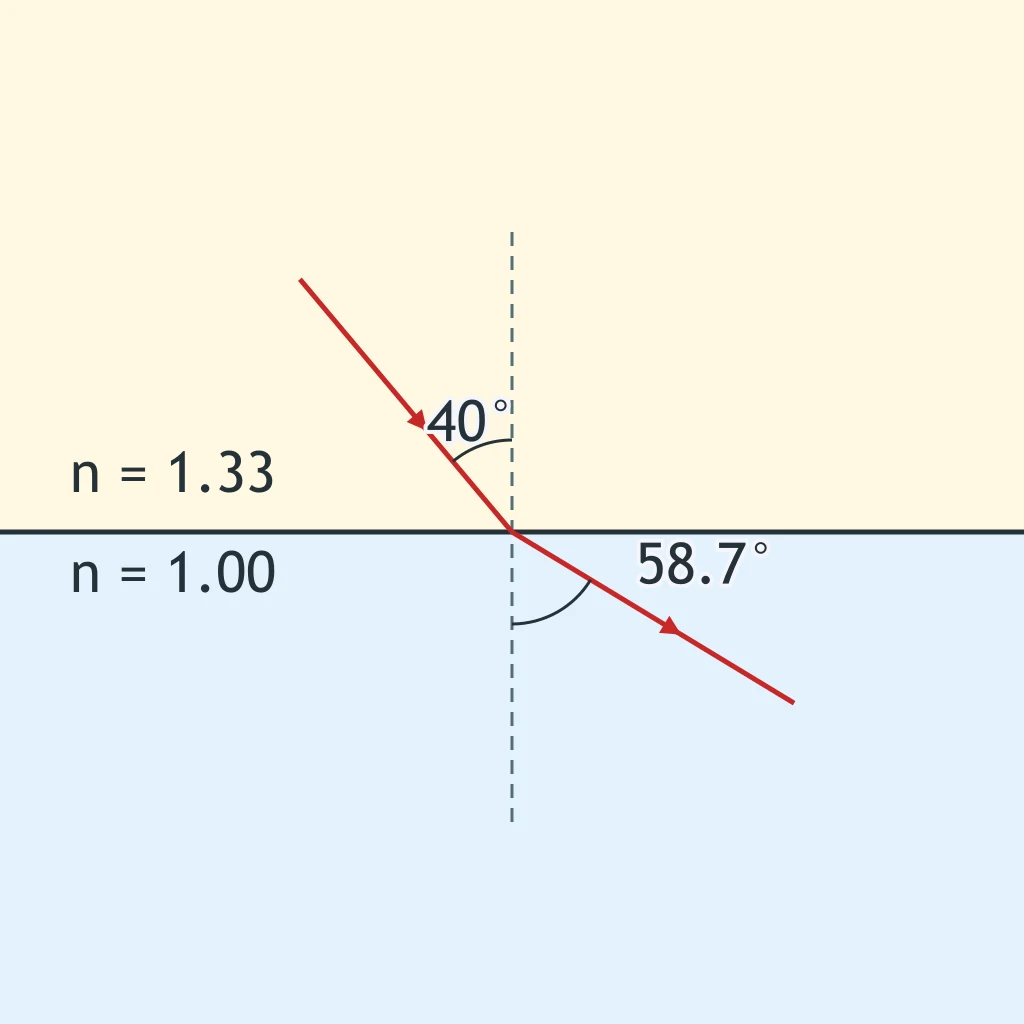
Use the ray diagram. Light crosses from water, n = 1.33, into air, n = 1.00. How does the refracted ray bend?
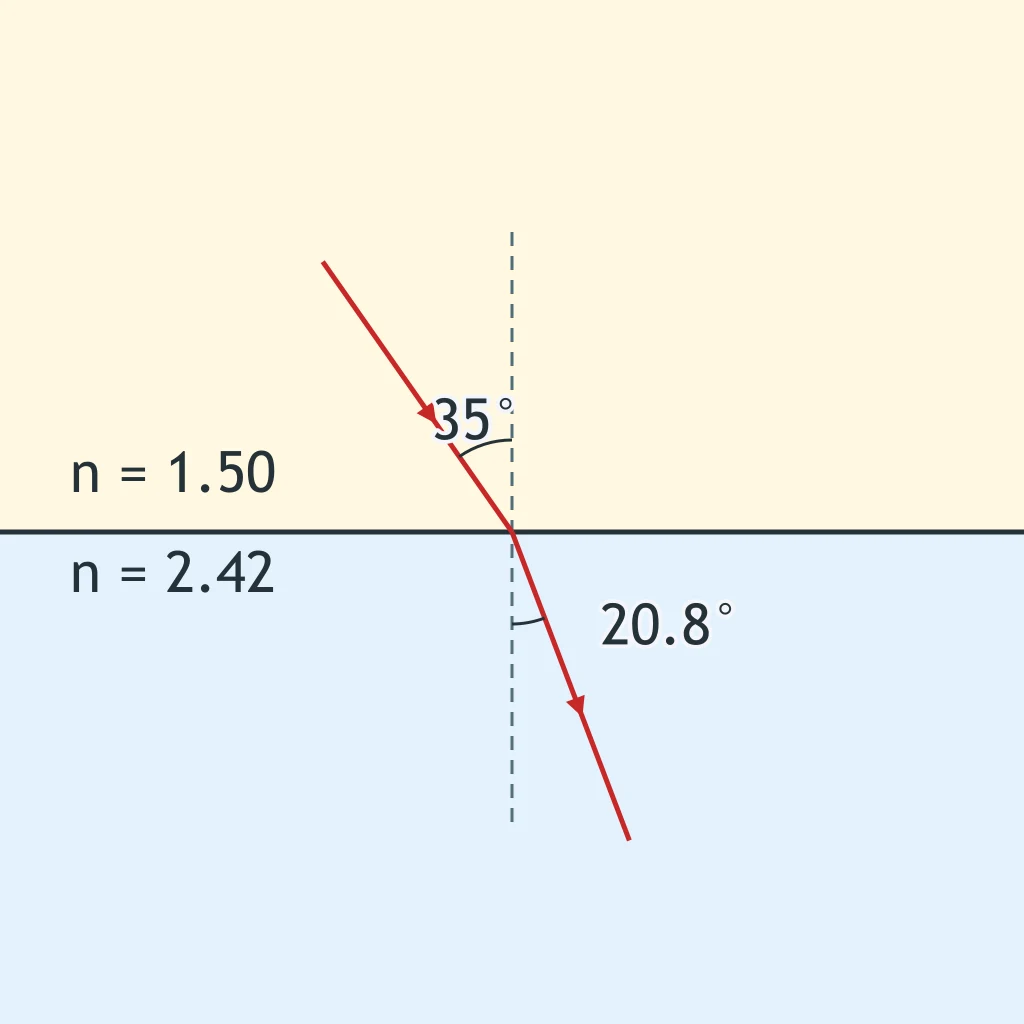
Use the ray diagram. The ray goes from glass, n = 1.50, into diamond, n = 2.42. What does the smaller refracted angle show?
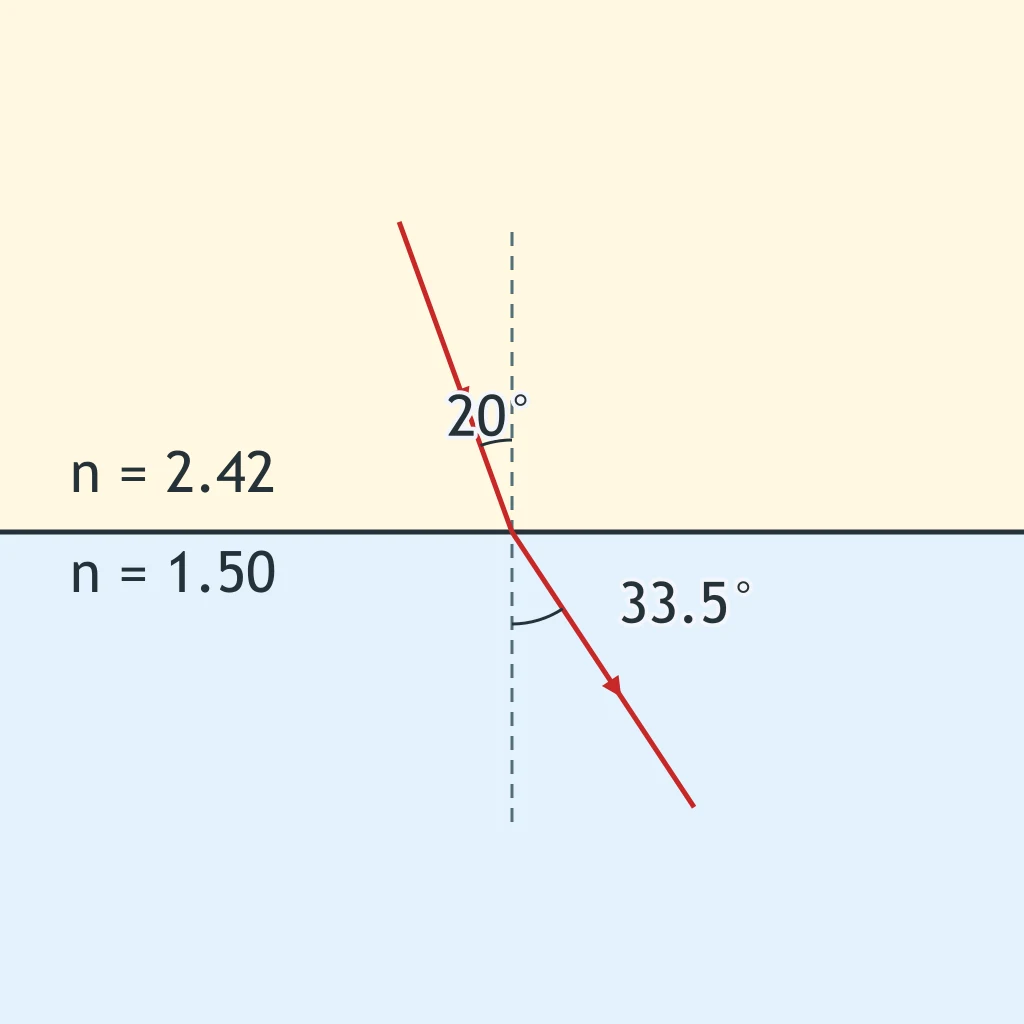
Use the ray diagram. The incident medium is diamond, n = 2.42, and the second medium is glass, n = 1.50. Which comparison is correct?
Use the ray diagram. A ray enters water, n = 1.33, from air, n = 1.00. Which speed comparison is shown?
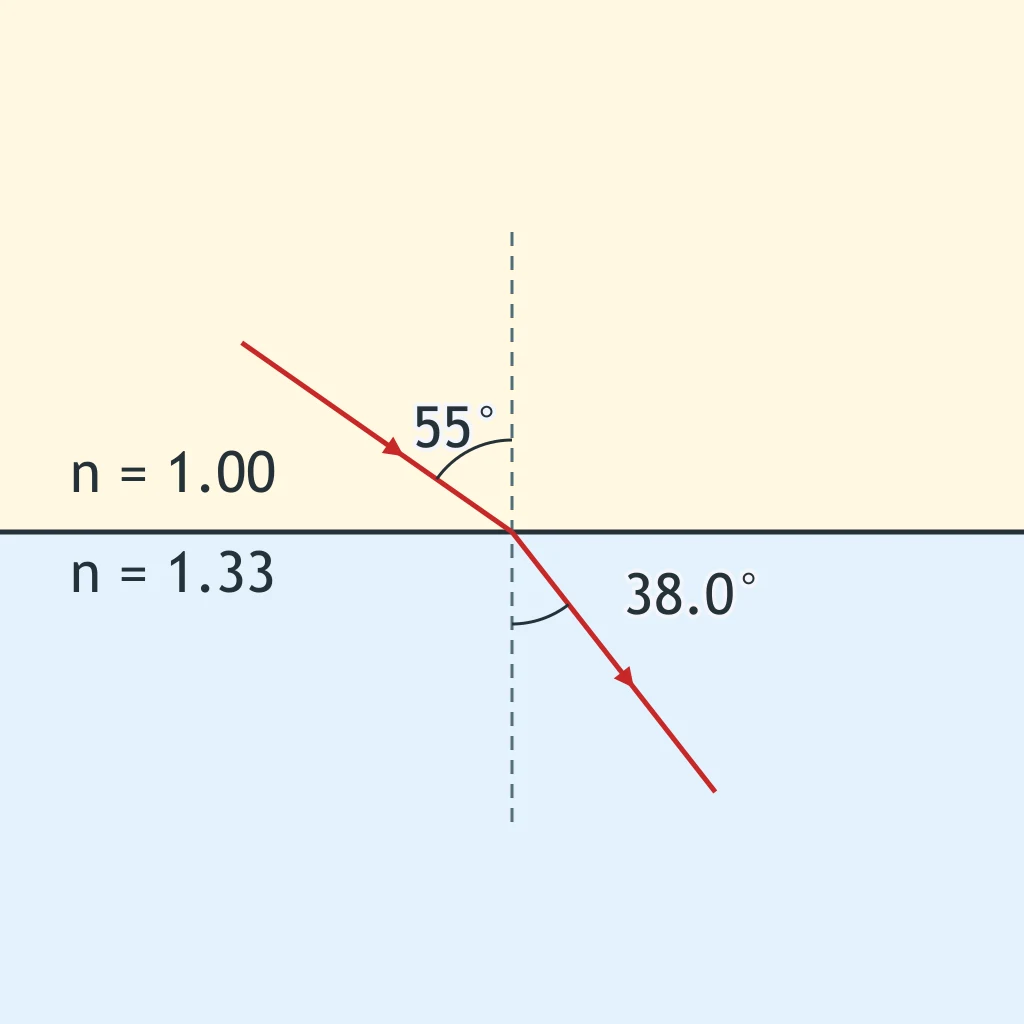
Use the ray diagram. A ray of light passes from medium 1 into medium 2. Which medium has the larger index of refraction?
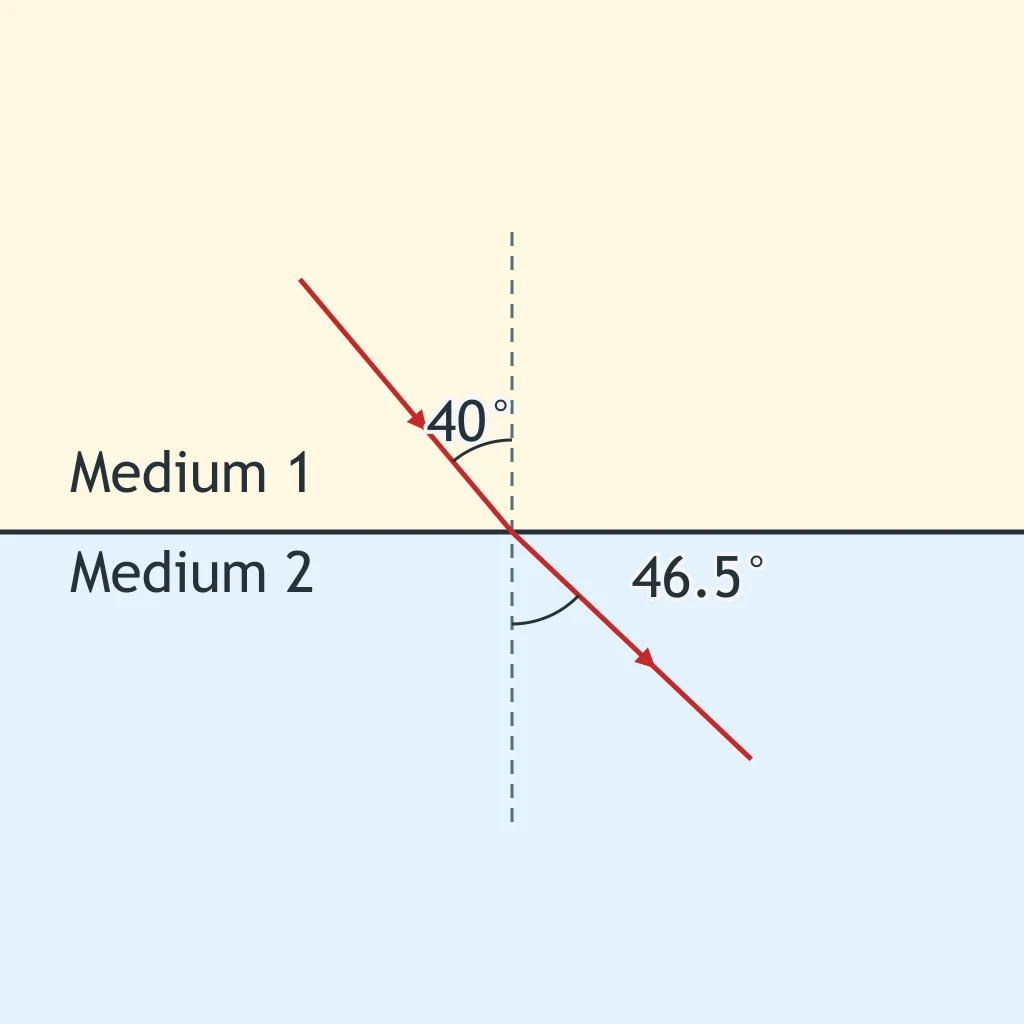
Use the ray diagram. Light moves from water, n = 1.33, into glass, n = 1.50. Which statement matches the path?
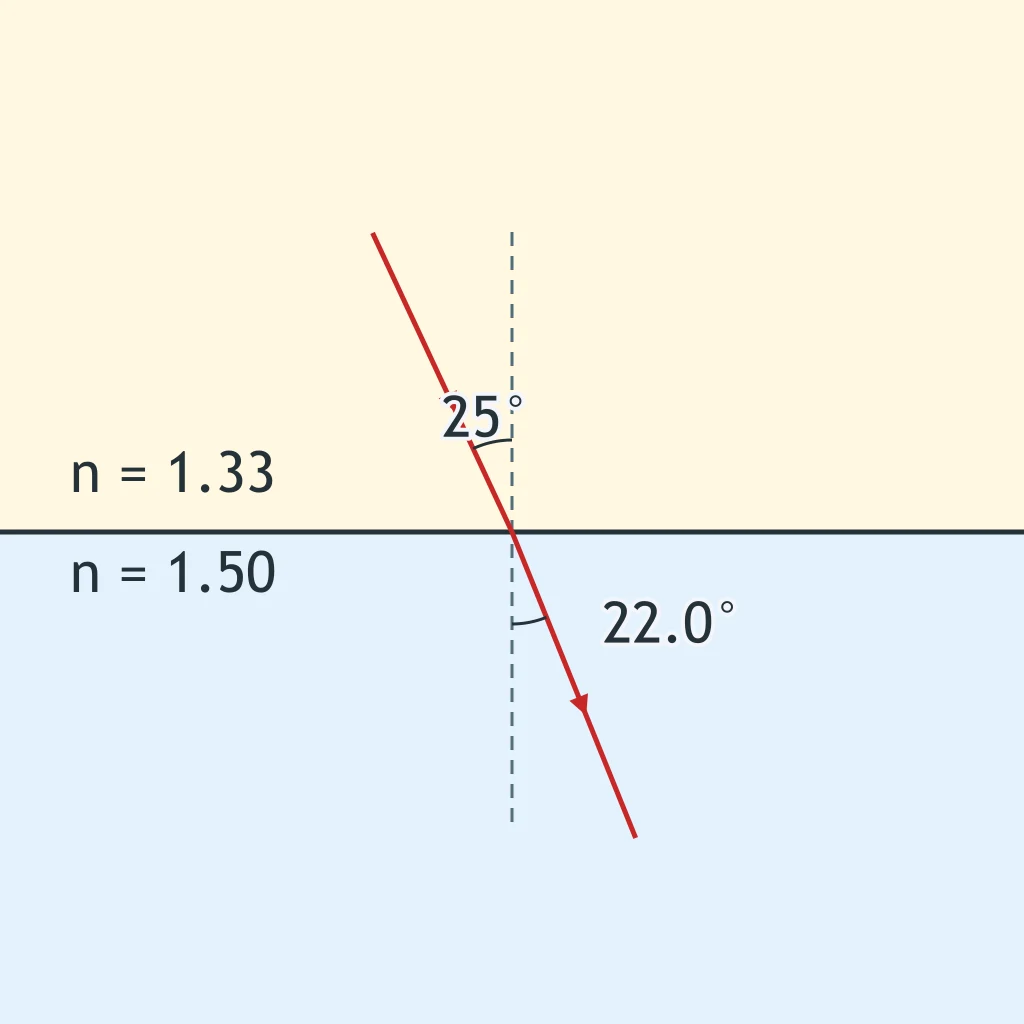
Use the ray diagram. Which quantity is the angle of incidence?
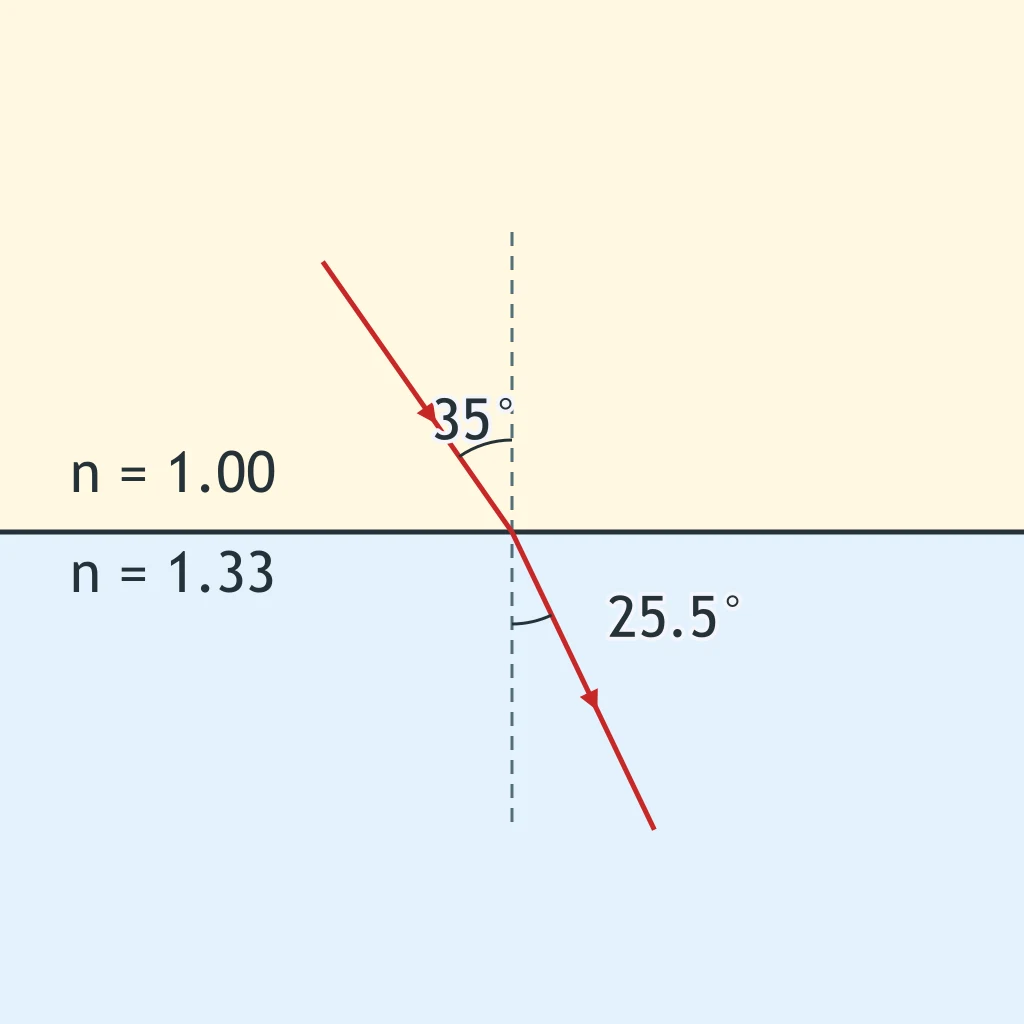
Use the ray diagram. Which quantity is the angle of refraction?
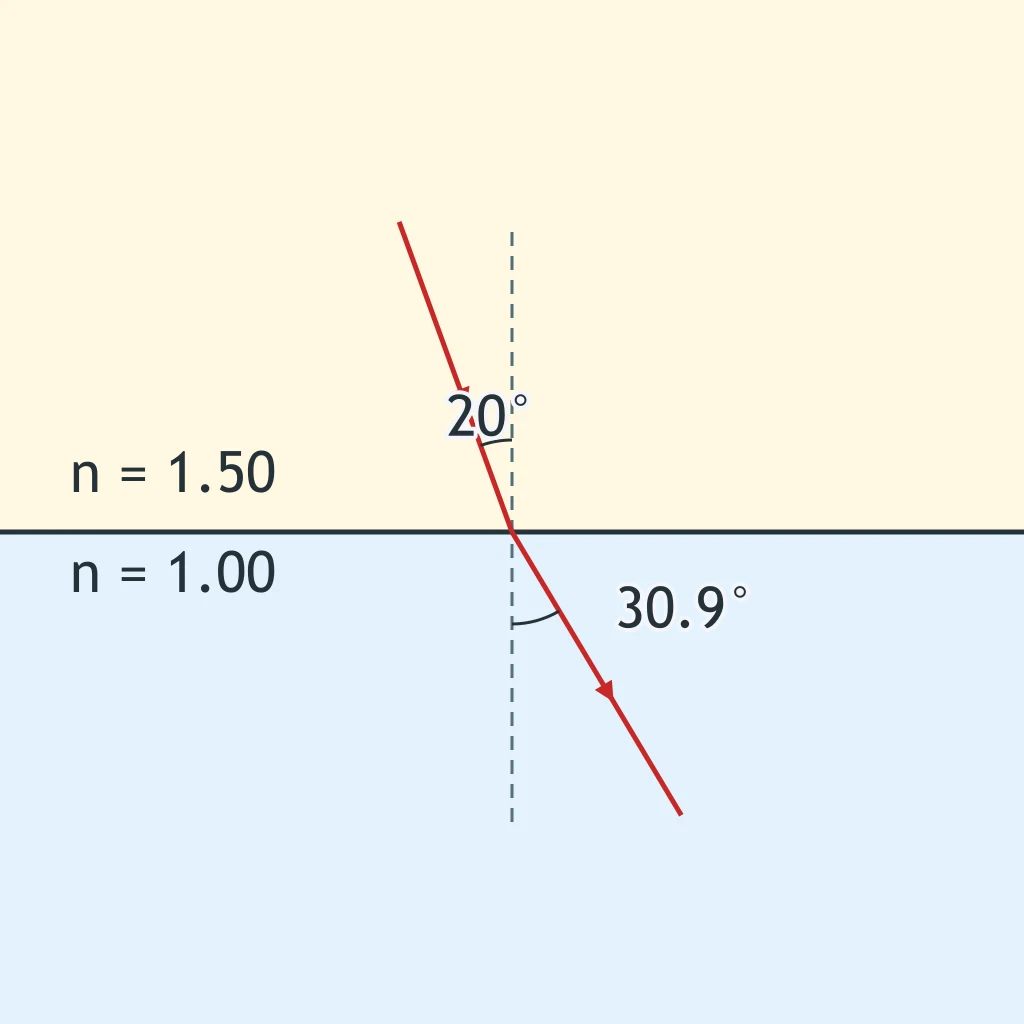
Use the ray diagram. What does the dashed line at the boundary represent?
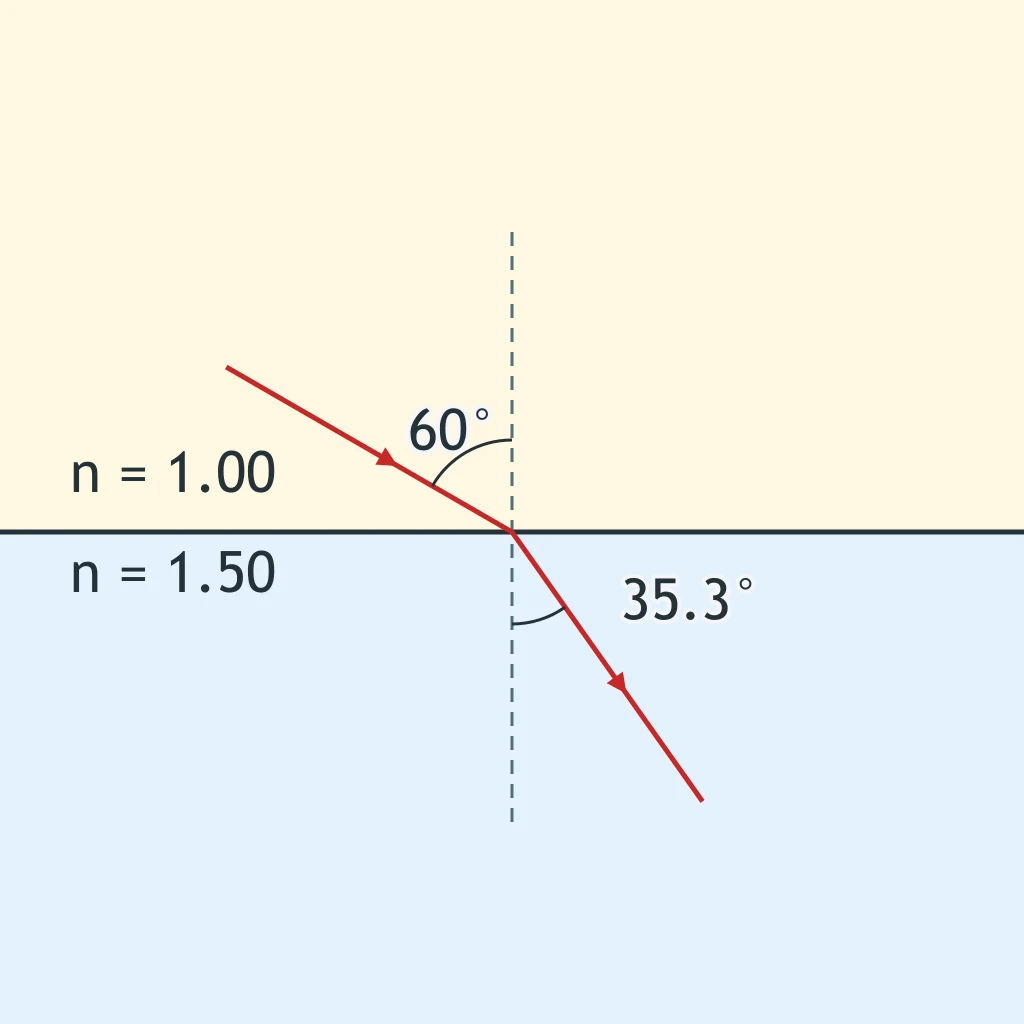
Use the ray diagram. In Snell's law for the pictured ray, theta1 is measured from which line?
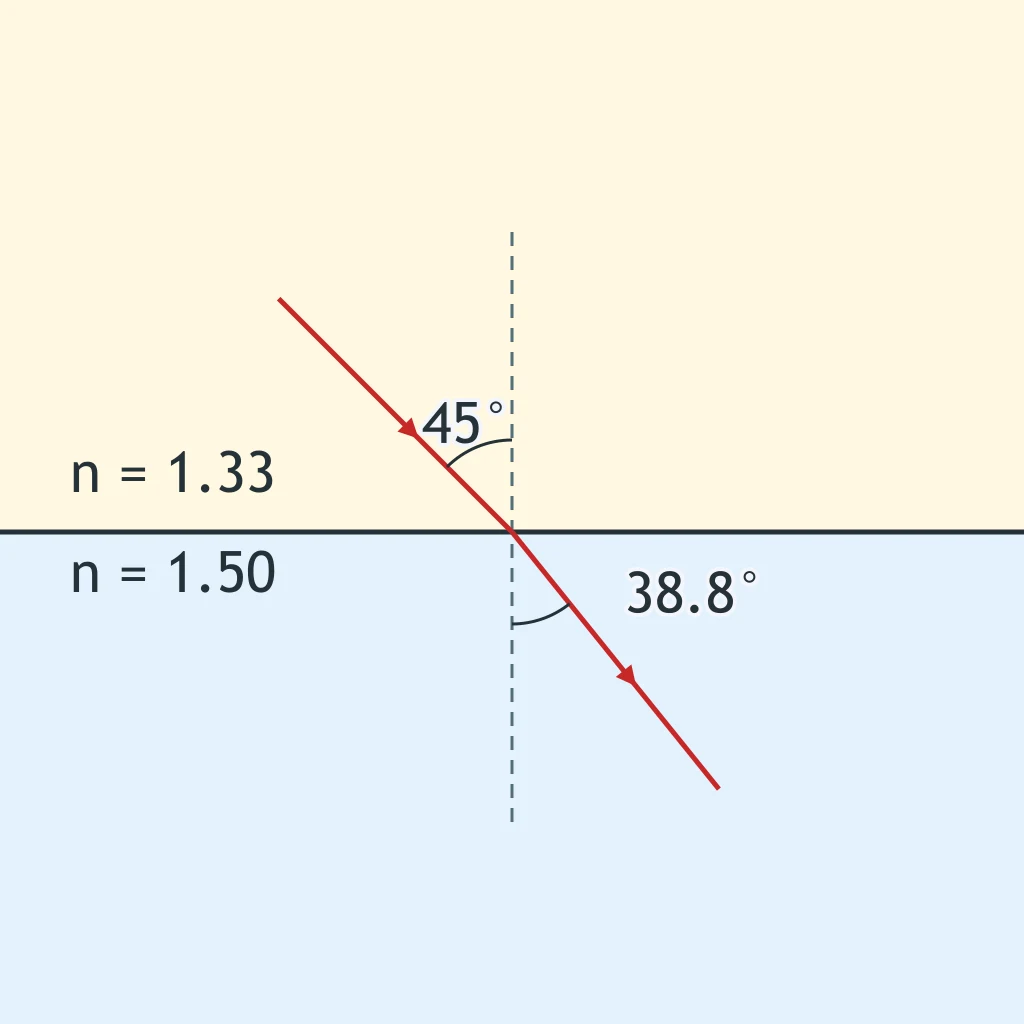
The speed of light in a vacuum is m/s. What is the speed of light in water with n = 1.33?
Light travels through a transparent material at m/s. Using m/s, what is the material's index of refraction?
Light with wavelength m in a vacuum enters glass with n = 1.50. What is its wavelength in the glass?
A ray in air, n = 1.00, enters water, n = 1.33, at 60.0 degrees from the normal. What is the refracted angle?
Light goes from water, n = 1.33, into glass, n = 1.50, at 25.0 degrees from the normal. What angle does it make in the glass?
A light wave has frequency Hz and enters glass with n = 1.50. Using m/s, what is its wavelength in the glass?
A beam of yellow light passes from air into glass and bends toward the normal. Which quantity is unchanged in the glass?
A ray enters a medium with a larger index of refraction. Which set of changes is correct?
A glass block bends a ray more than air does. Which explanation uses the physics of refraction?
A ray in glass, n = 1.50, reaches a glass-air boundary at 50.0 degrees from the normal. The critical angle is 41.8 degrees. What happens?
Crack the passcode before the zombies get in.
Answer, then swat bugs for bonus points.
Race through questions at your own speed.
Same question on every screen. Fastest wins.

Pick a tile, answer, hit bonuses and steals.
Concave and Convex Mirrors
30 questions