Loading
by BlastRoom
Soil Erosion and Conservation for high school Environmental Science, on-level and AP. Covers AP Environmental Science Units 4 and 5: Earth Systems, Land and Water Use.
#environmental_science
30 questions
One question set, multiple game modes. Tap any game to see it in action. Not sure which to pick?
Answer to place stones and capture territory.
Outrun the snow together.
Earn blasts, then hunt the other team.
Answer to earn energy, then climb.

The class blasts through walls together.
Bid on mystery lots. Most money wins.
Sell tours. Nice, standard, or a total scam.

Answer, restock, and serve the rush.
More correct answers pulls the rope your way.
Answer, then shoot down the alien wave.
Answer, then tap to leap the frozen ridge.
After intense rain, a bare field has lost a thin, fairly uniform layer of topsoil across its surface. What erosion process occurred?
Rainwater running down a recently tilled slope cuts many small, shallow channels that can be smoothed by normal tillage. What process is occurring?
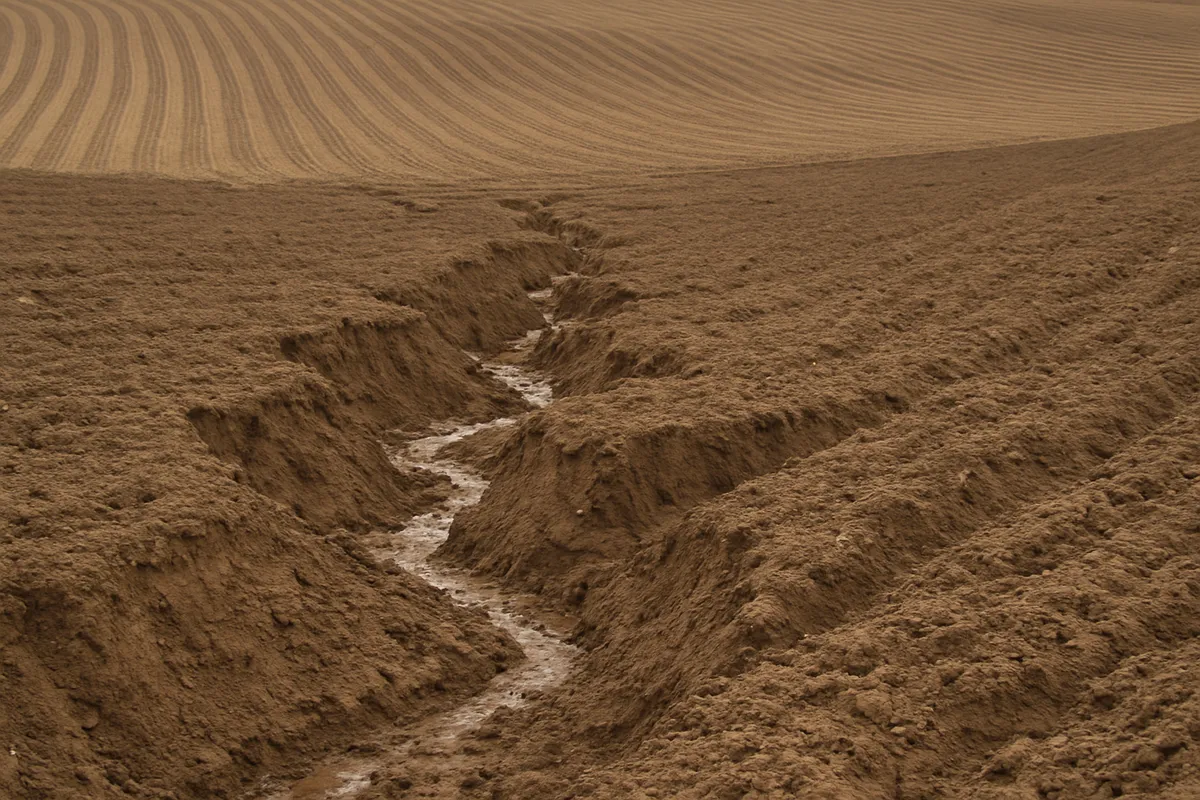
Runoff has carved a channel through a hillside field that is too deep to remove with normal tillage. What type of erosion is this?
A heavily irrigated field in an arid region develops a white surface crust as water evaporates, and crop yields fall. Which degradation process best explains this?
During a drought, strong winds lift loose particles from a flat, bare sandy field and deposit them along a fence line. What process is occurring?
Repeated passes by heavy machinery leave soil dense, with poor pore space and slow water infiltration. Which form of soil degradation has occurred?
In a dry region, overgrazing removes protective vegetation, and the soil becomes less productive and increasingly barren over many years. What land-degradation process is this?
A farmer grows the same crop for many years and removes each harvest without replacing essential minerals. Yield declines even though erosion is limited. What degradation problem is most direct?
A farmer wants to slow runoff on a gently sloping field without building earthworks. Which practice best fits this problem?
A steep hillside is being farmed, and runoff gains speed over the long slope. Which practice divides the slope into shorter, flatter sections?
A dry, open field regularly loses soil during high-wind events. Which practice most directly reduces wind speed across the field?
Runoff repeatedly concentrates in one natural drainage path through a crop field and begins cutting a gully. Which practice best protects that path?
After corn harvest, a farmer wants soil covered through the rainy winter before spring planting. Which practice best addresses this erosion risk?
A producer wants to plant the next crop while preserving last season's residue and minimizing disturbance of soil aggregates. Which practice should be used?
A sloping field needs alternating bands of a row crop and dense grass or legumes to interrupt runoff. Which conservation practice is designed for this?
An irrigated farm is accumulating salts because excess water evaporates from the surface. Which change most directly reduces this salinization risk?
A pasture has bare patches because livestock graze the same area continuously. Which management practice best allows vegetation to recover and protect the soil?
A farm field will be bare between two cash crops during a season of heavy rain. Why does planting a cover crop reduce erosion?
Why can no-till reduce soil erosion compared with conventional plowing?
Rows planted along a hill's contour reduce erosion primarily because they do what to water flowing downhill?
How do terraces reduce erosion on steep farmland?
A row of trees is planted perpendicular to prevailing winds beside a field. How does this windbreak protect soil?
Why does vegetation in a grassed waterway help prevent a gully from enlarging?
A farmer rotates corn with a legume and a small grain instead of planting corn every year. How can this reduce soil degradation?
Two equal fields receive the same storm. Field A is bare and freshly tilled, while Field B has undisturbed residue cover. Which field should lose more soil to runoff?
Two fields have the same soil and crop cover. One has a 2% slope and the other a 12% slope during the same intense rainstorm. Where is water erosion more likely to be greater?
A dry, sandy field is left bare after harvest just before a season of strong winds. What is the most likely result without conservation measures?
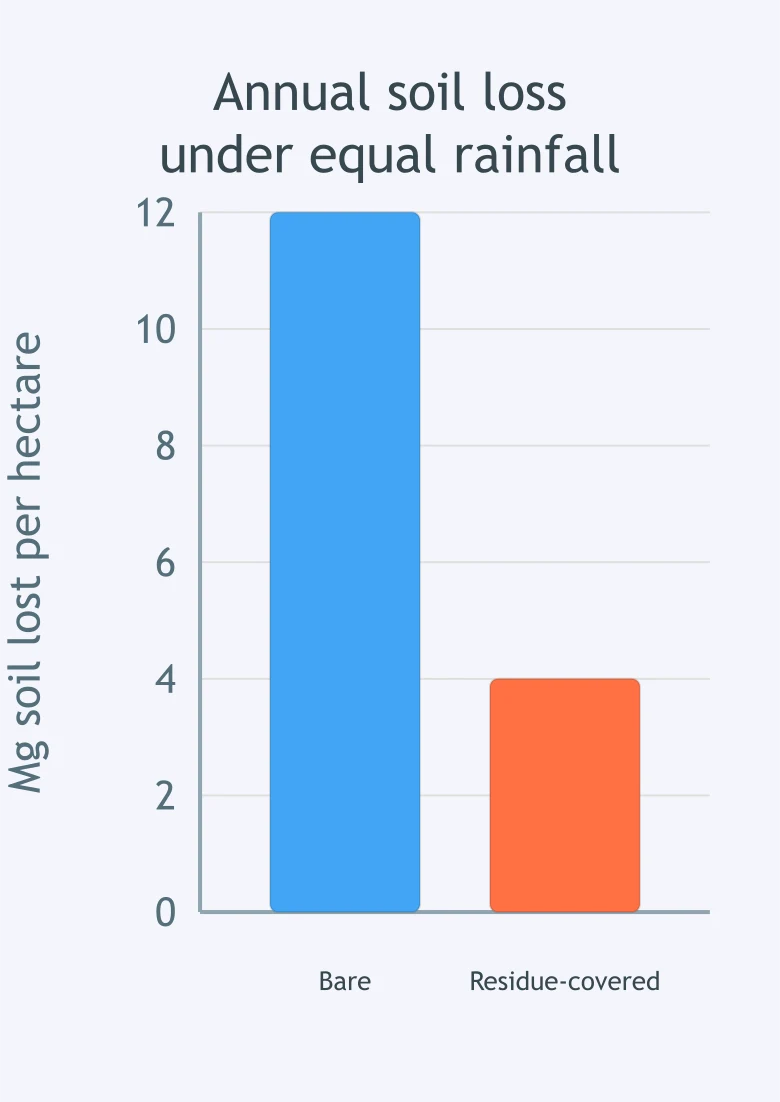
Use the bar graph. Under equal rainfall, which field lost less soil during the year?
An irrigated field has adequate drainage, while an otherwise similar field has poor drainage and frequent surface evaporation. Which field has the greater long-term risk of salinization?
A farmer replaces fall plowing with a fall cover crop and spring no-till planting. After heavy spring rain, what change is most likely compared with fall plowing and bare soil?
Crack the passcode before the zombies get in.
Answer, then swat bugs for bonus points.
Race through questions at your own speed.
Same question on every screen. Fastest wins.

Pick a tile, answer, hit bonuses and steals.

The Green Revolution and GMOs
25 questions