Loading
by BlastRoom
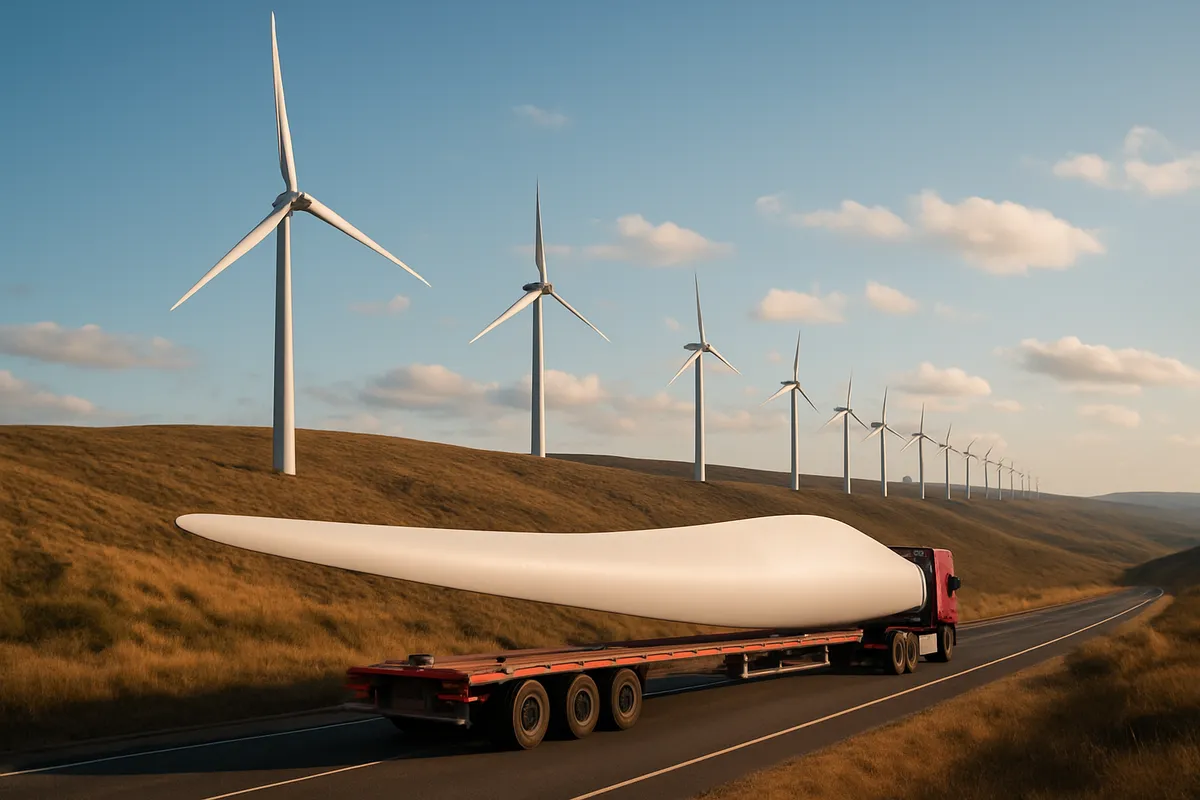
Wind Energy for high school Environmental Science, on-level and AP. Covers AP Environmental Science Unit 6: Energy Resources and Consumption.
#environmental_science
25 questions
One question set, multiple game modes. Tap any game to see it in action. Not sure which to pick?
Answer to place stones and capture territory.
Outrun the snow together.
Earn blasts, then hunt the other team.
Answer to earn energy, then climb.

The class blasts through walls together.
Bid on mystery lots. Most money wins.
Sell tours. Nice, standard, or a total scam.

Answer, restock, and serve the rush.
More correct answers pulls the rope your way.
Answer, then shoot down the alien wave.
Answer, then tap to leap the frozen ridge.
Wind turns a turbine’s blades and rotor. Which component converts that mechanical rotation into electrical energy?
As wind flows across a turbine blade, a pressure difference forms on its two sides. Which force primarily makes the rotor spin?
In a geared wind turbine, what is the gearbox’s main job before the generator produces electricity?
Why do utility-scale wind turbines use very long blades?
A student says a wind turbine must burn fuel to spin its rotor. What is the accurate energy conversion?
During dangerously high winds, which turbine component can stop the rotor to help prevent damage?
Site A averages 6 m/s wind at hub height and Site B averages 7.5 m/s. If wind power is proportional to wind speed cubed, B can produce roughly how much power compared with A?
Why are turbine rotors commonly mounted high above the ground?
A turbine is placed directly downwind of another turbine. What effect is most likely on the downwind turbine?
Studies at a wind farm find that most bat deaths happen on low-wind nights in late summer. Which change would most reduce these deaths?
Among sites with equal transmission access and wildlife constraints, which measurement most directly helps predict a turbine’s electricity production?
A preliminary assessment finds potentially at-risk bats at a proposed wind site. What is an appropriate next siting step?
A remote ridge has excellent wind but is far from the grid. What additional infrastructure may be needed to deliver its electricity to population centers?
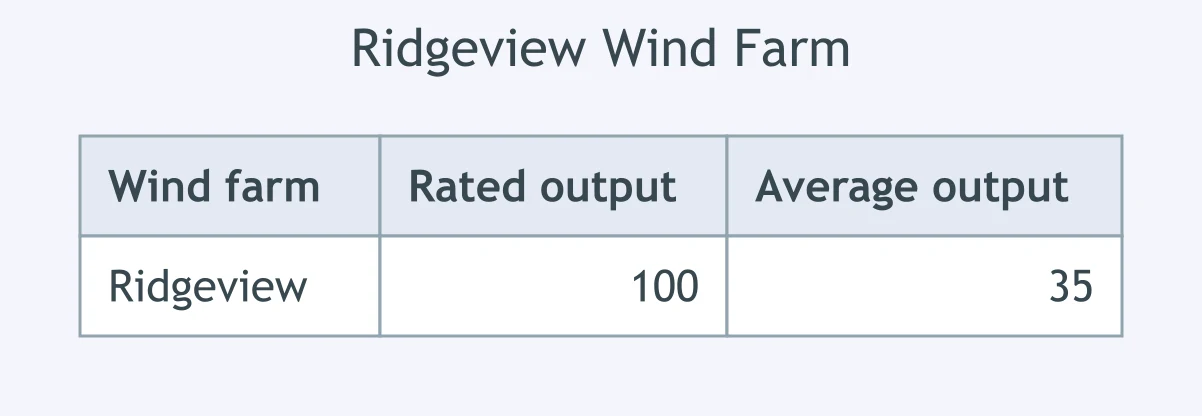
Use the table. What is Ridgeview’s capacity factor?
A turbine has a nameplate rating of 4 MW. What does that rating describe?
Use the line graph of one turbine’s output. At which shown time was its output 0 MW?
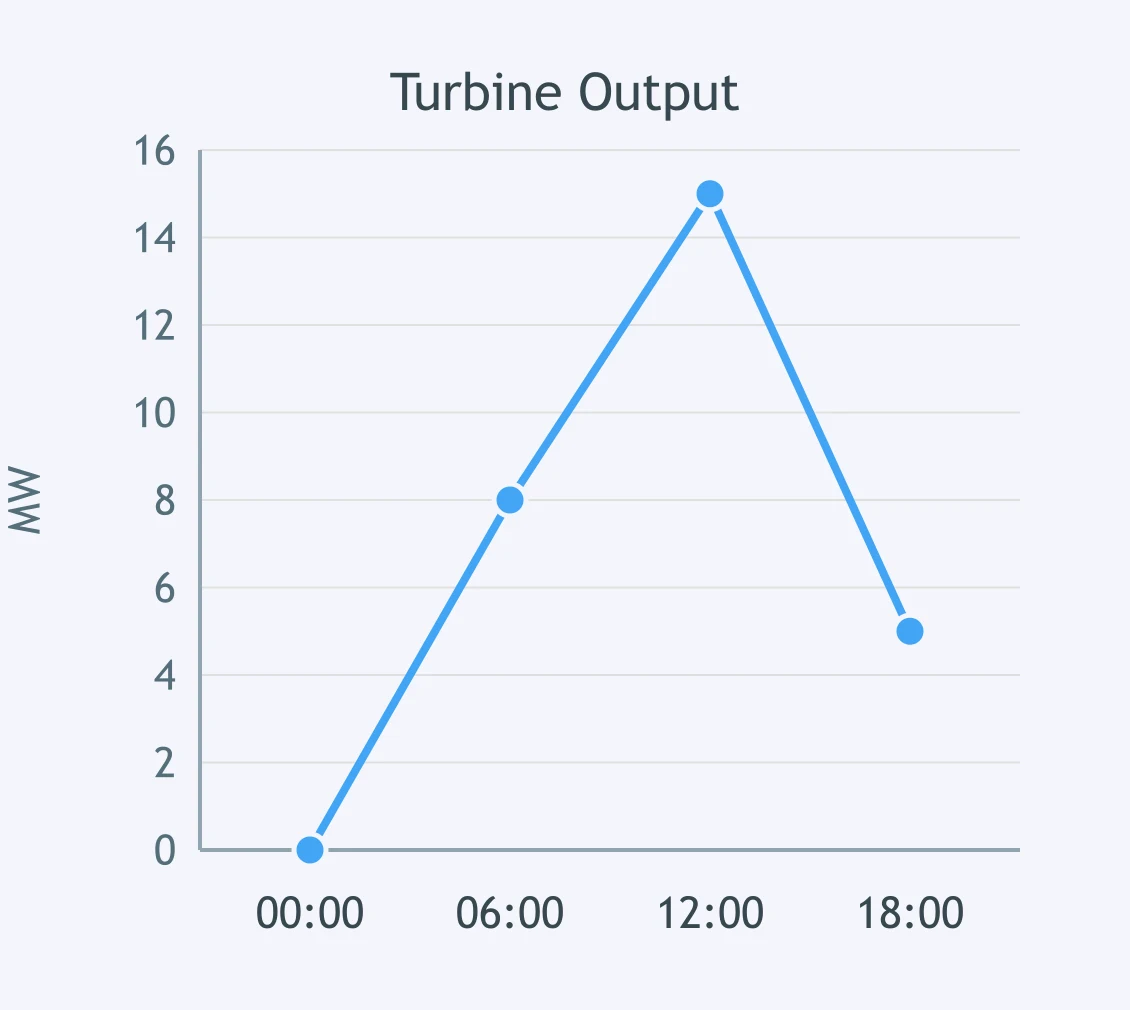
A wind farm has 20 MW of installed capacity and a 25% capacity factor over a year. What was its average power output?
A 50 MW wind farm could produce 438,000 MWh in a year at full output, but it produces 109,500 MWh. What is its capacity factor?
Wind at a turbine site falls to zero for several hours. What happens to electricity production from that turbine while the wind is absent?
What term describes wind generation’s changing output as wind speed varies over time?
Which wildlife impact is a well-documented concern at wind energy facilities?
Besides direct collisions, how can a wind project affect wildlife in previously undisturbed habitat?
Why might biologists monitor bat activity before constructing turbines near a forested migration route?
What is shadow flicker near a wind turbine?
Why do wind siting plans often include setbacks from nearby homes?
Crack the passcode before the zombies get in.
Answer, then swat bugs for bonus points.
Race through questions at your own speed.
Same question on every screen. Fastest wins.

Pick a tile, answer, hit bonuses and steals.
Geothermal Energy
20 questions