Loading
by BlastRoom
Read energy and biomass figures for each trophic level, calculate what passes on, and explain where the rest of the energy went.
#biology

20 questions
One question set, multiple game modes. Tap any game to see it in action. Not sure which to pick?
Answer to place stones and capture territory.
Outrun the snow together.
Earn blasts, then hunt the other team.
Answer to earn energy, then climb.

The class blasts through walls together.
Bid on mystery lots. Most money wins.
Sell tours. Nice, standard, or a total scam.

Answer, restock, and serve the rush.
More correct answers pulls the rope your way.
Answer, then shoot down the alien wave.
Answer, then tap to leap the frozen ridge.
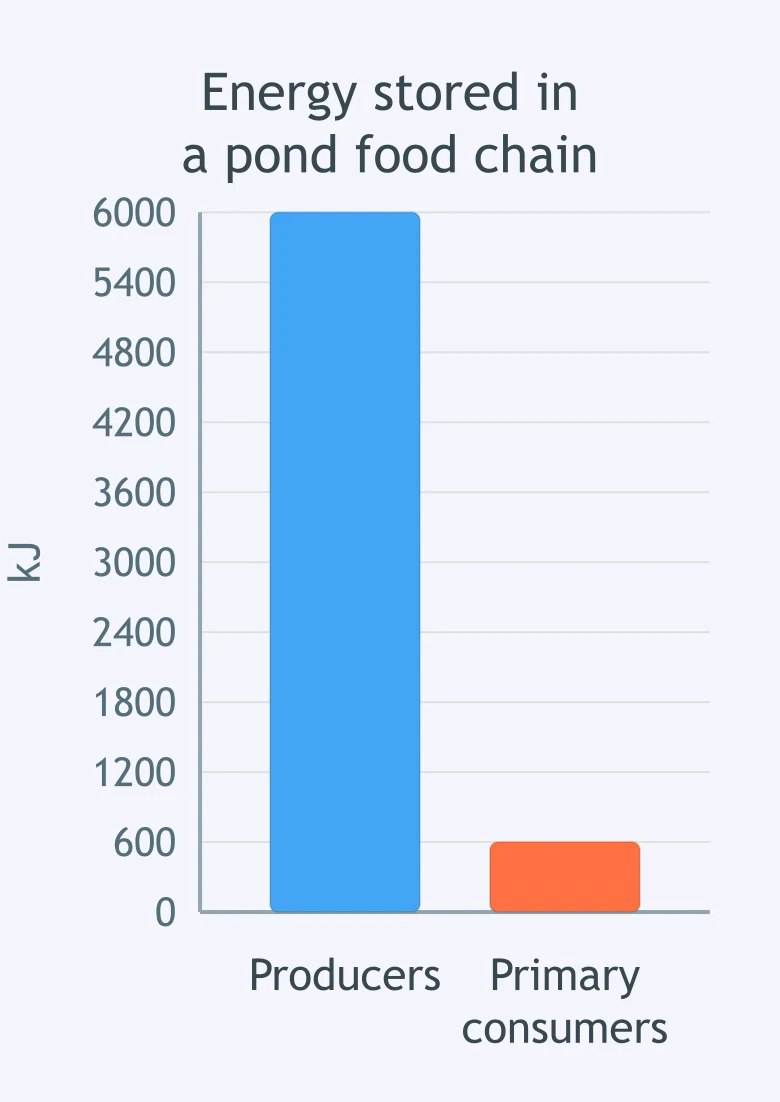
The bar graph shows the energy stored at the first two trophic levels of a pond food chain. About how much of that energy is available to the secondary consumers, the fish that eat the zooplankton?
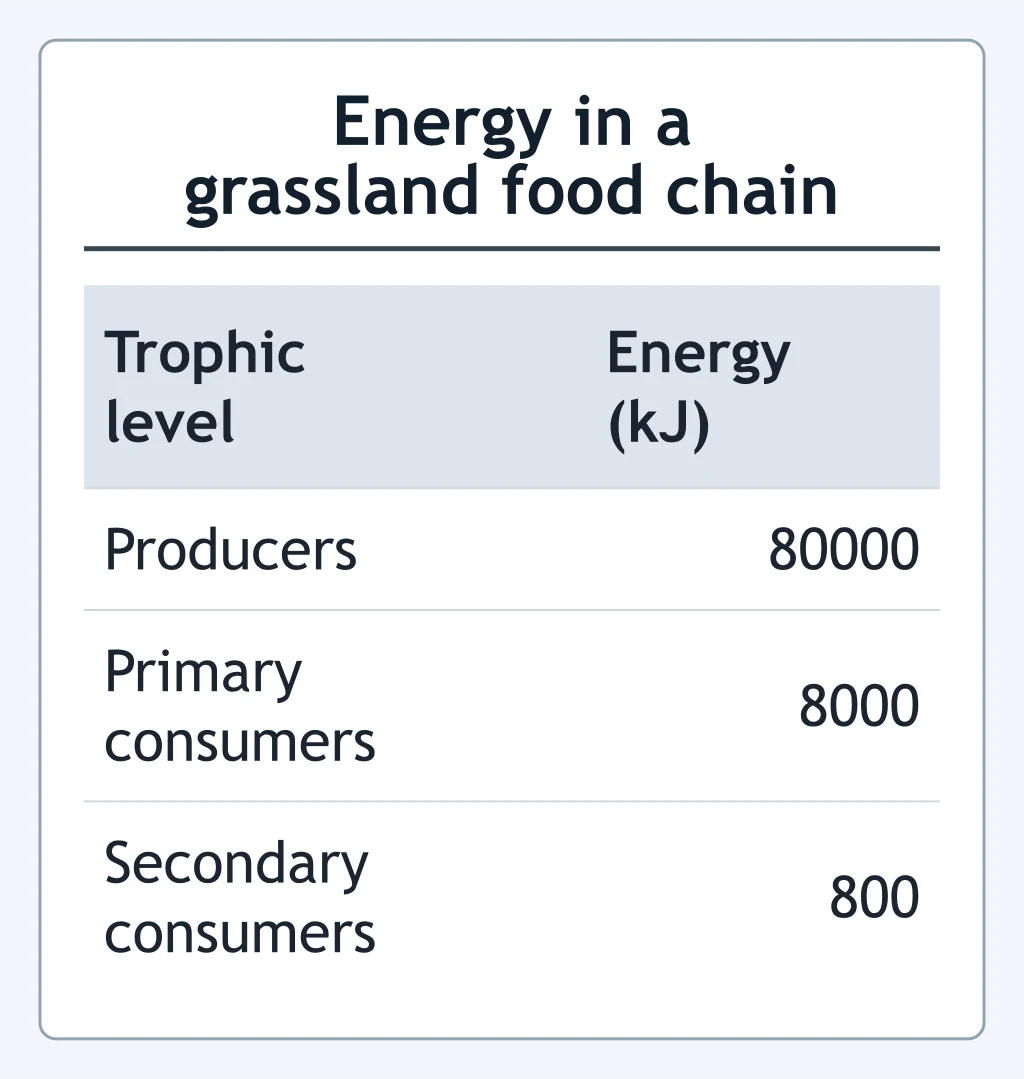
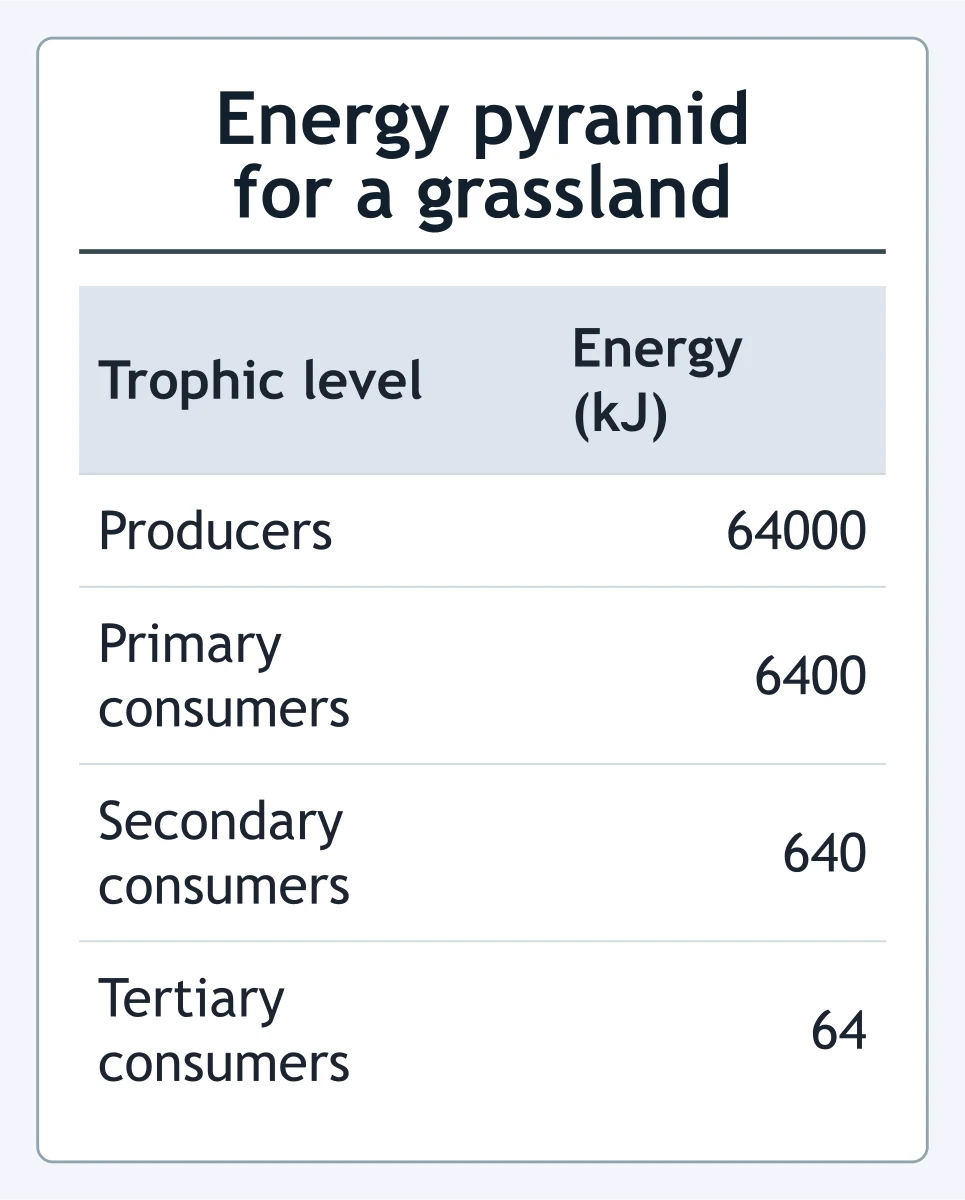
The table gives the energy stored at three levels of a grassland food chain. About how much energy is available to the tertiary consumers, the hawks that eat the snakes?
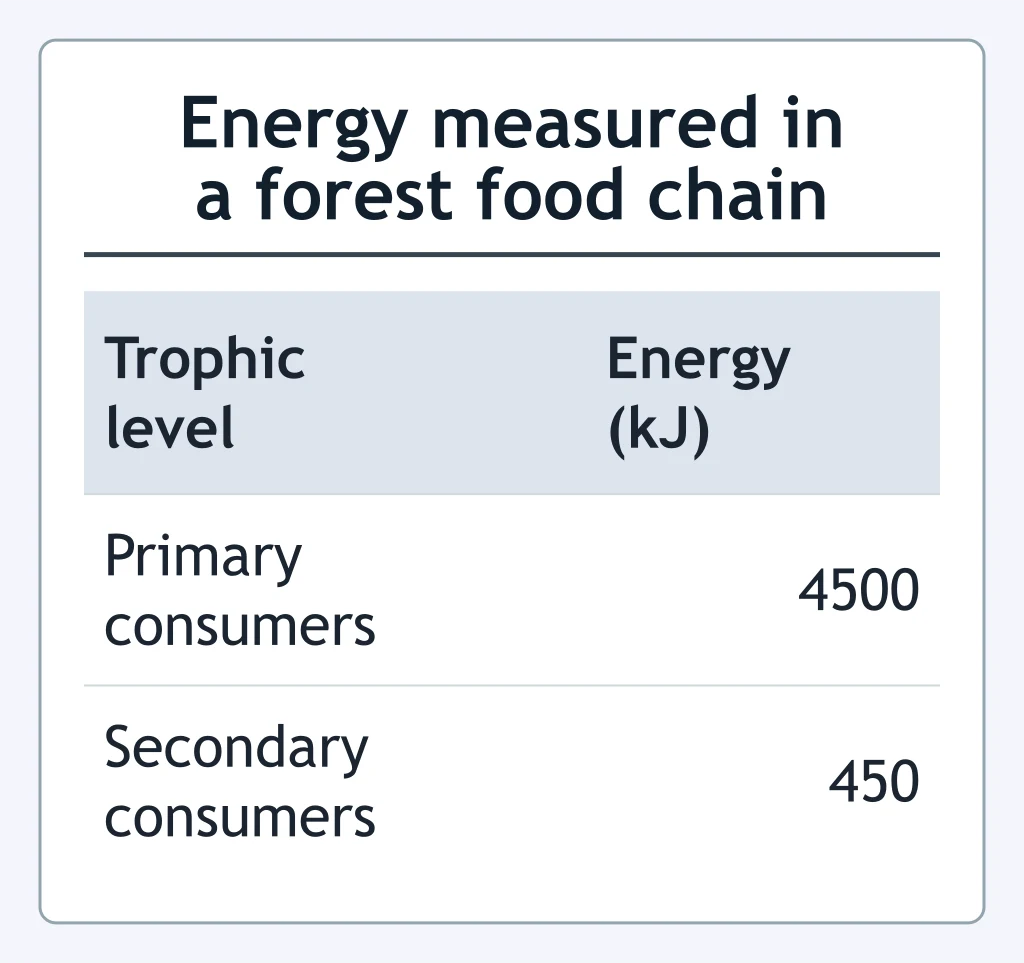
Ecologists measured the energy stored at two levels of a forest food chain but could not measure the producers directly. Using the table, about how much energy did the producers store?
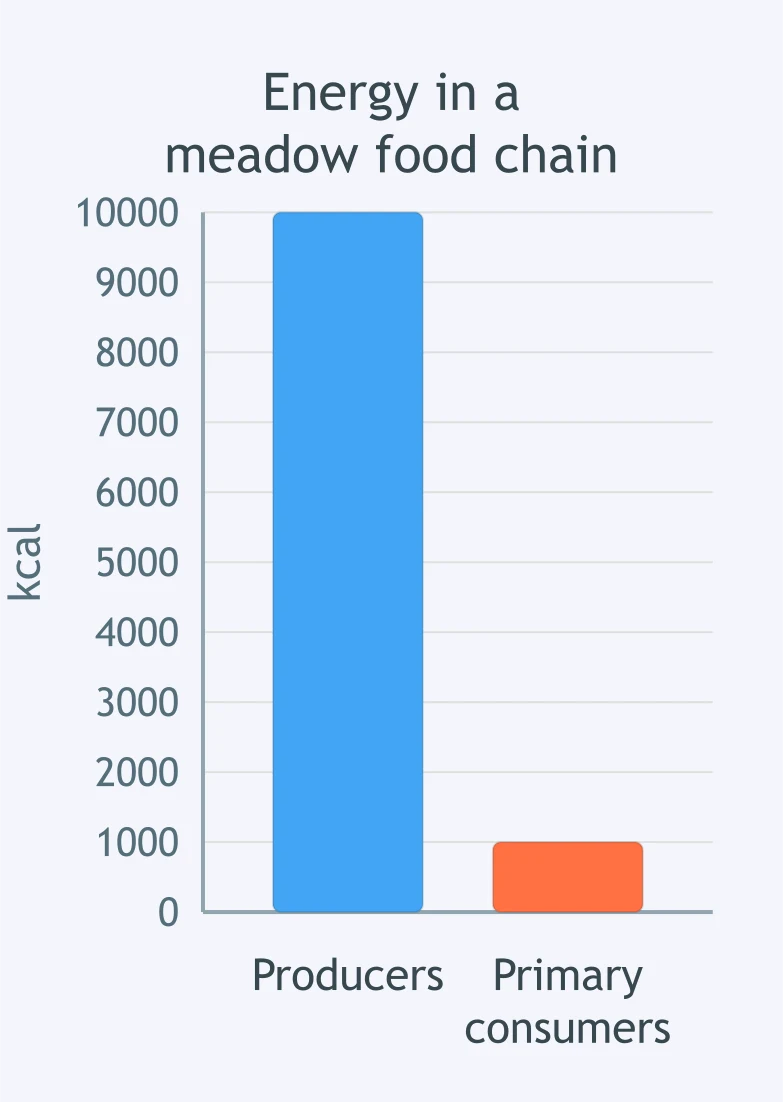
The bar graph shows the energy stored by a meadow's producers and by the primary consumers that eat them. A hawk in this meadow is a tertiary consumer. About how much energy is available to the hawks' trophic level?
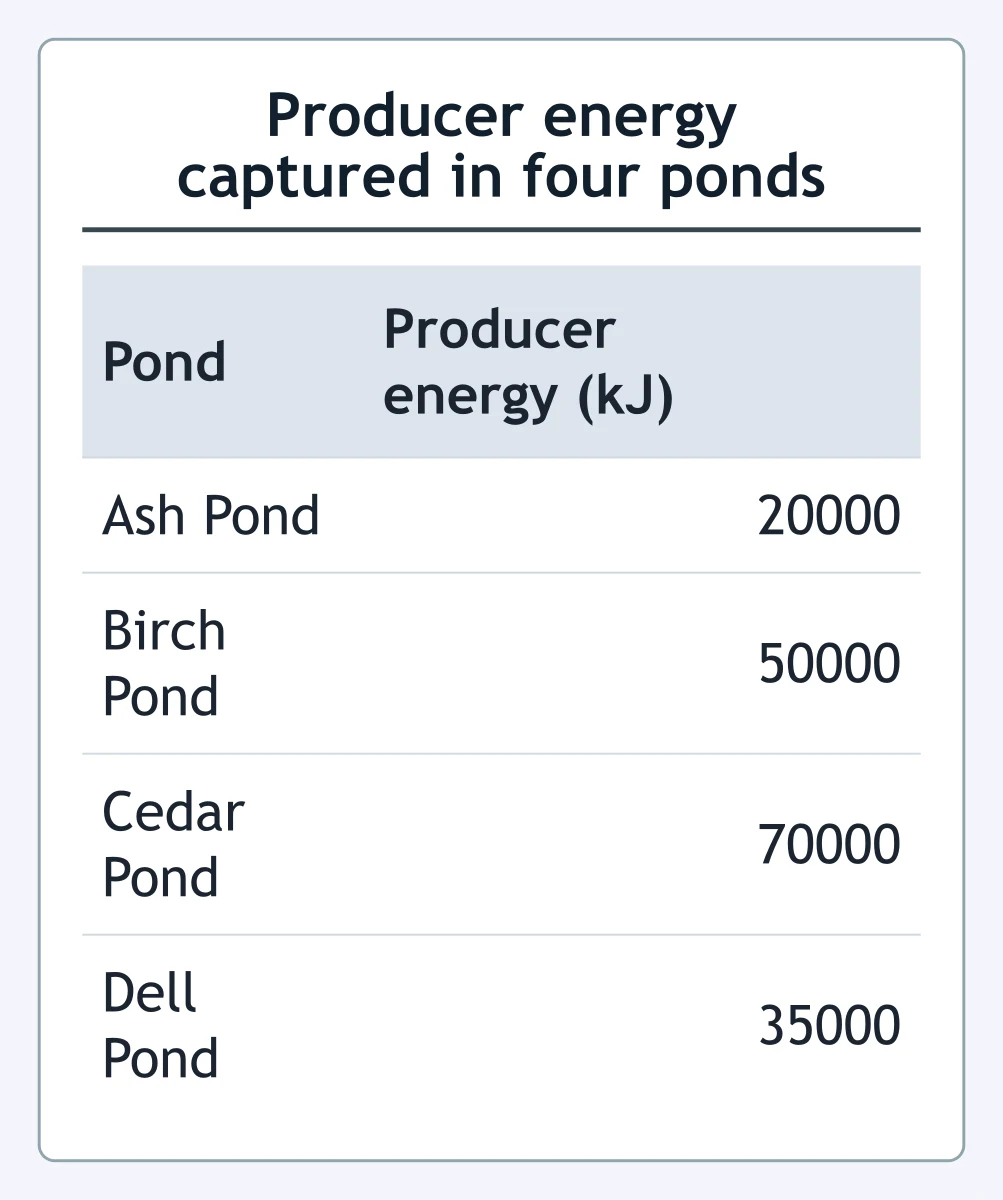
Four ponds each hold the same simple food chain: algae, then insects that graze on the algae, then fish that eat the insects. Using the table, in which pond would the insects have about 5,000 kJ available to them?
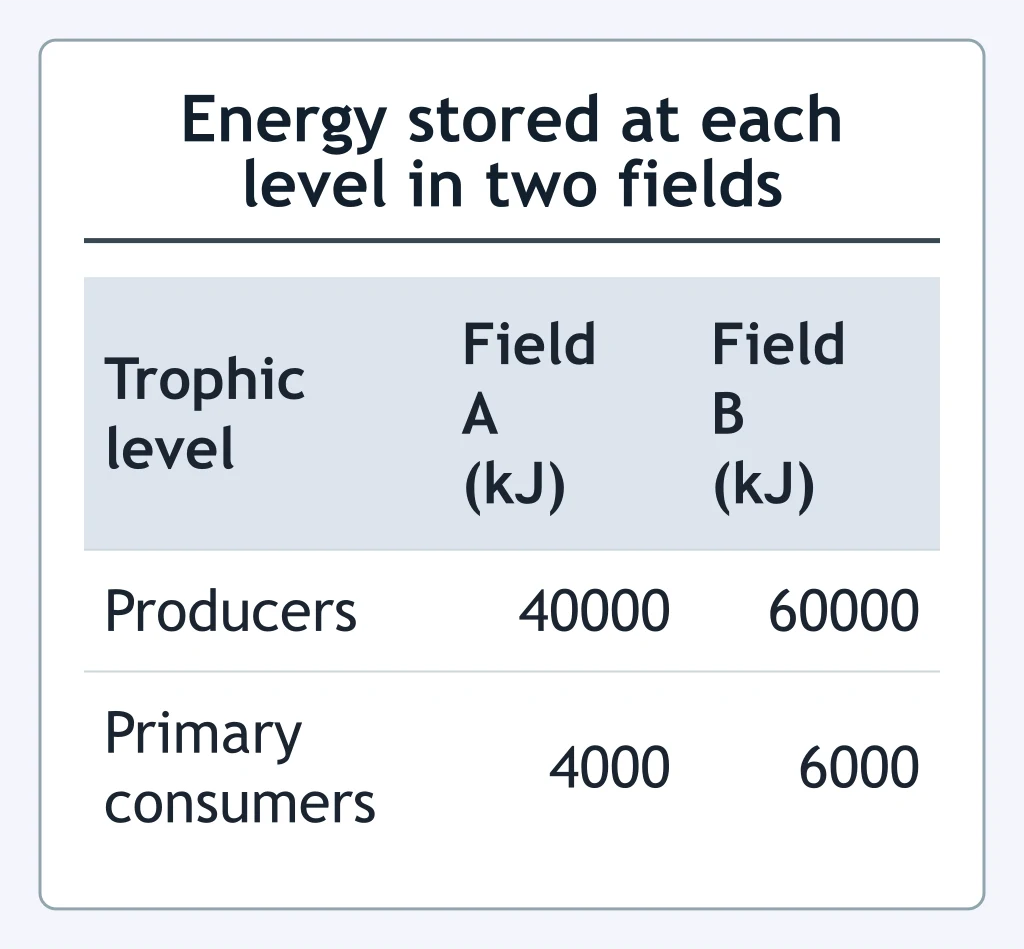
Two fields were studied in the same summer. Using the table, about how much more energy is available to the secondary consumers in Field B than to the secondary consumers in Field A?
A field of grass captures 32,000 kJ of energy over a growing season. Mice eat the grass, and hawks eat the mice. About how much of that captured energy ends up stored in the hawks?
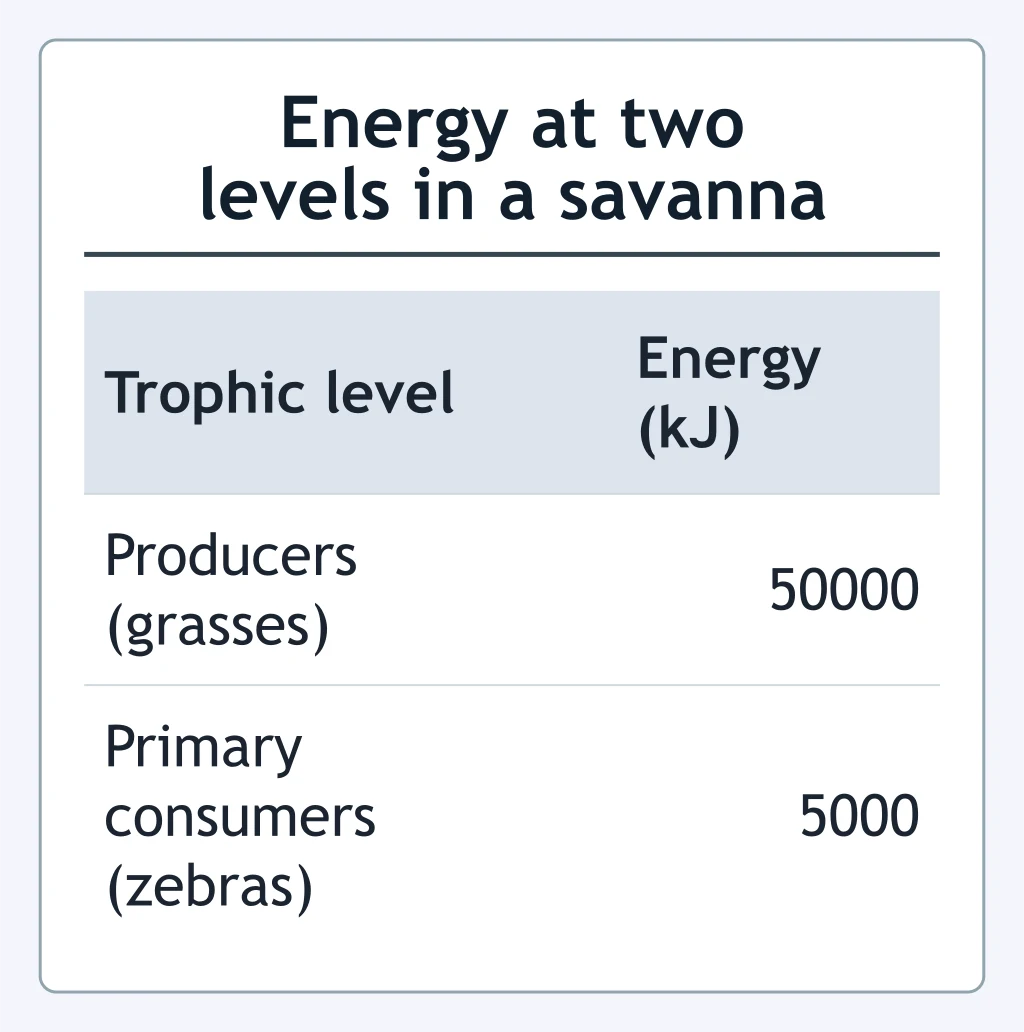
The table shows the energy stored by savanna grasses and by the zebras that graze on them. Which statement best accounts for the energy the grasses stored that never ended up in the zebras?
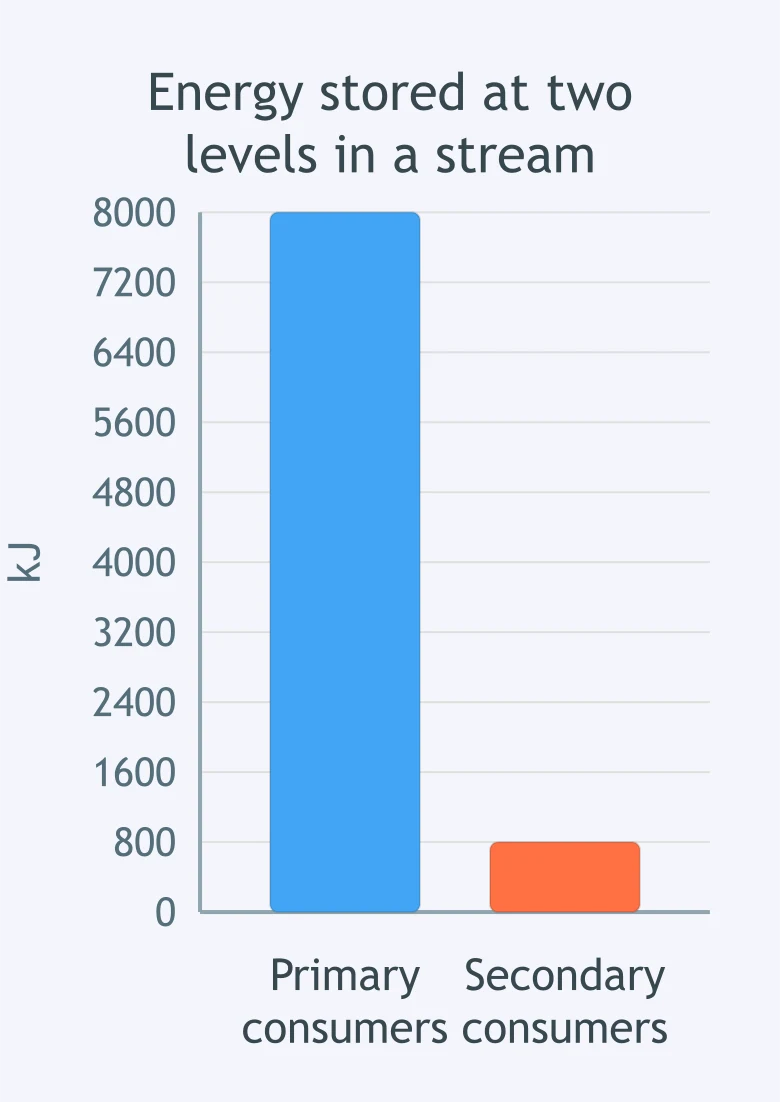
The bar graph shows the energy stored by the mayfly larvae in a stream and by the trout that eat them. How much energy did not pass from the larvae to the trout, and where did most of it go?
A caterpillar population takes in 3,000 kJ of energy from leaves in a month, but only about 300 kJ becomes available to the birds that eat the caterpillars. What happened to the other 2,700 kJ?
Most of the energy at one trophic level never reaches the level above it. Which process removes the largest share of that energy from the food chain?
Look at the table for this grassland. Which trophic level holds the most energy, and why?
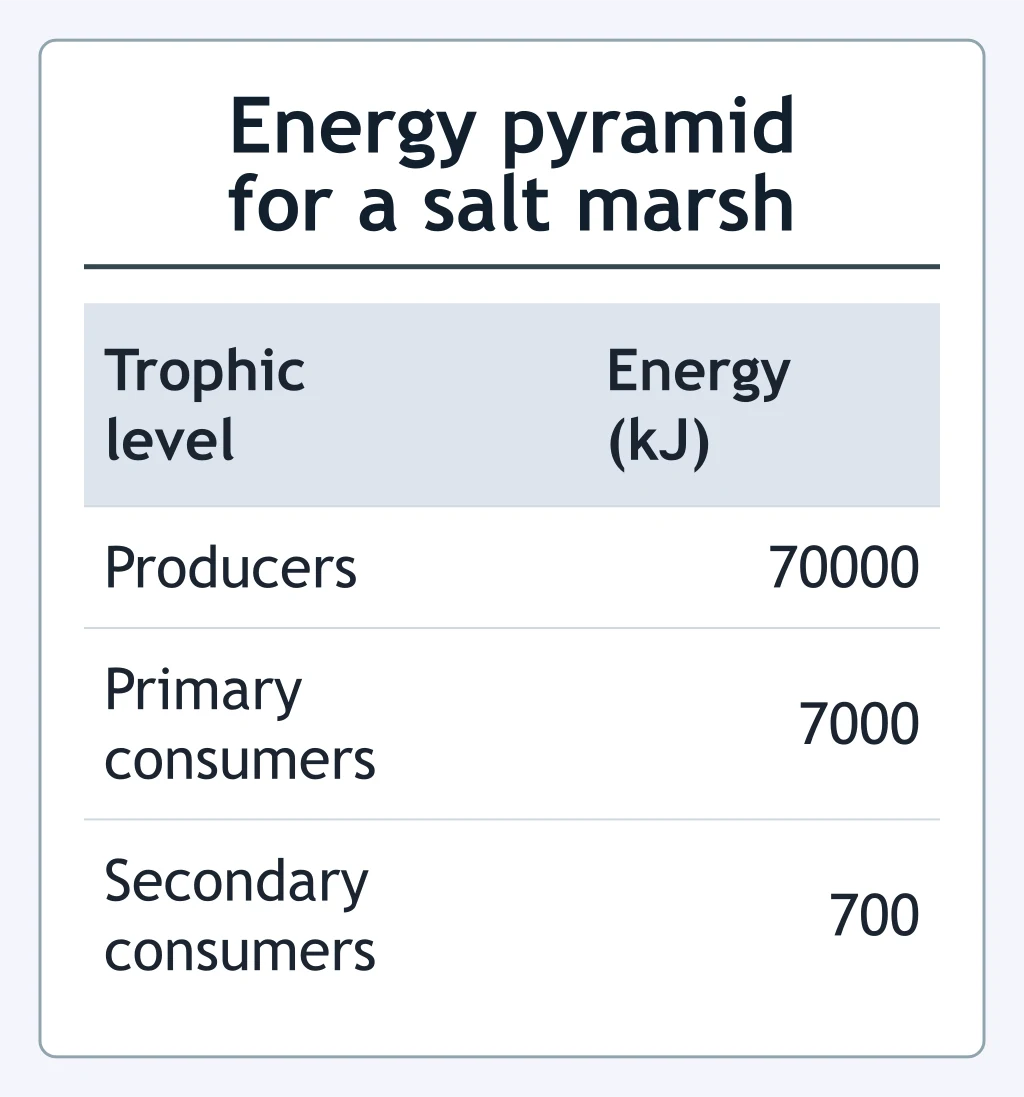
The table gives the energy at three levels of a salt marsh. Why is each level so much smaller than the one below it?
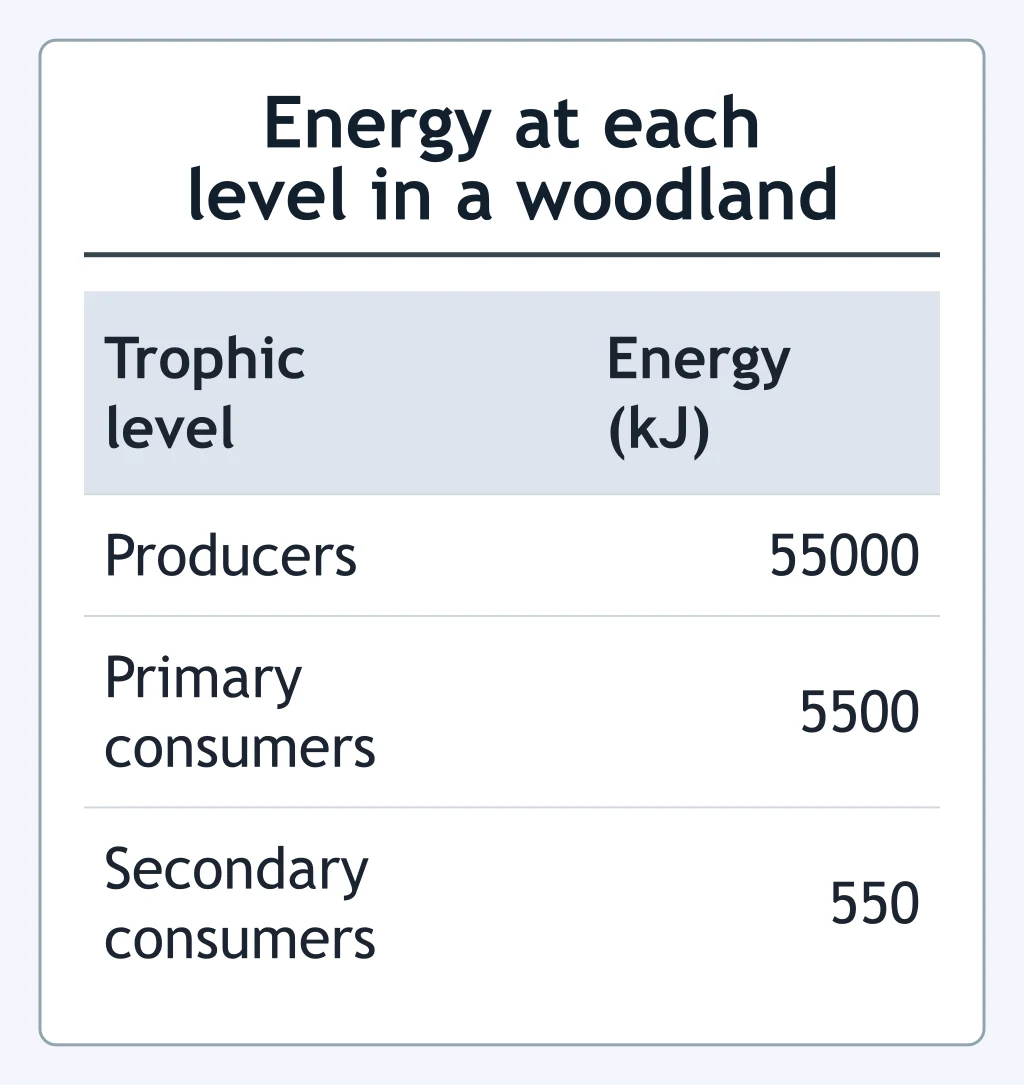
According to the table, the primary consumers in this woodland store more energy than the producers do.
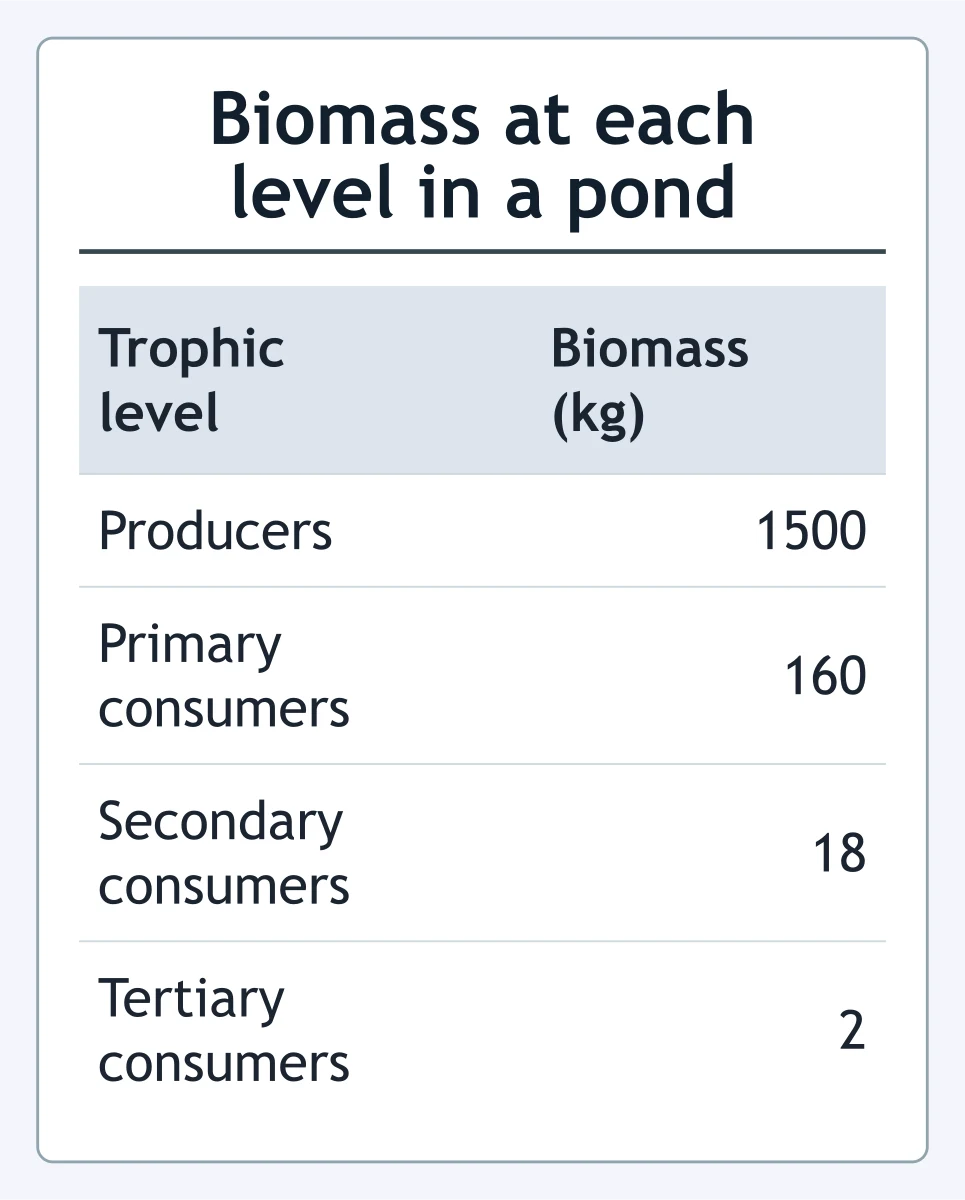
The table shows the dry biomass measured at each level of a pond. Which statement is best supported by these data?
Drawn to scale, an energy pyramid has a very wide base and a very narrow tip. What does the narrow tip stand for?
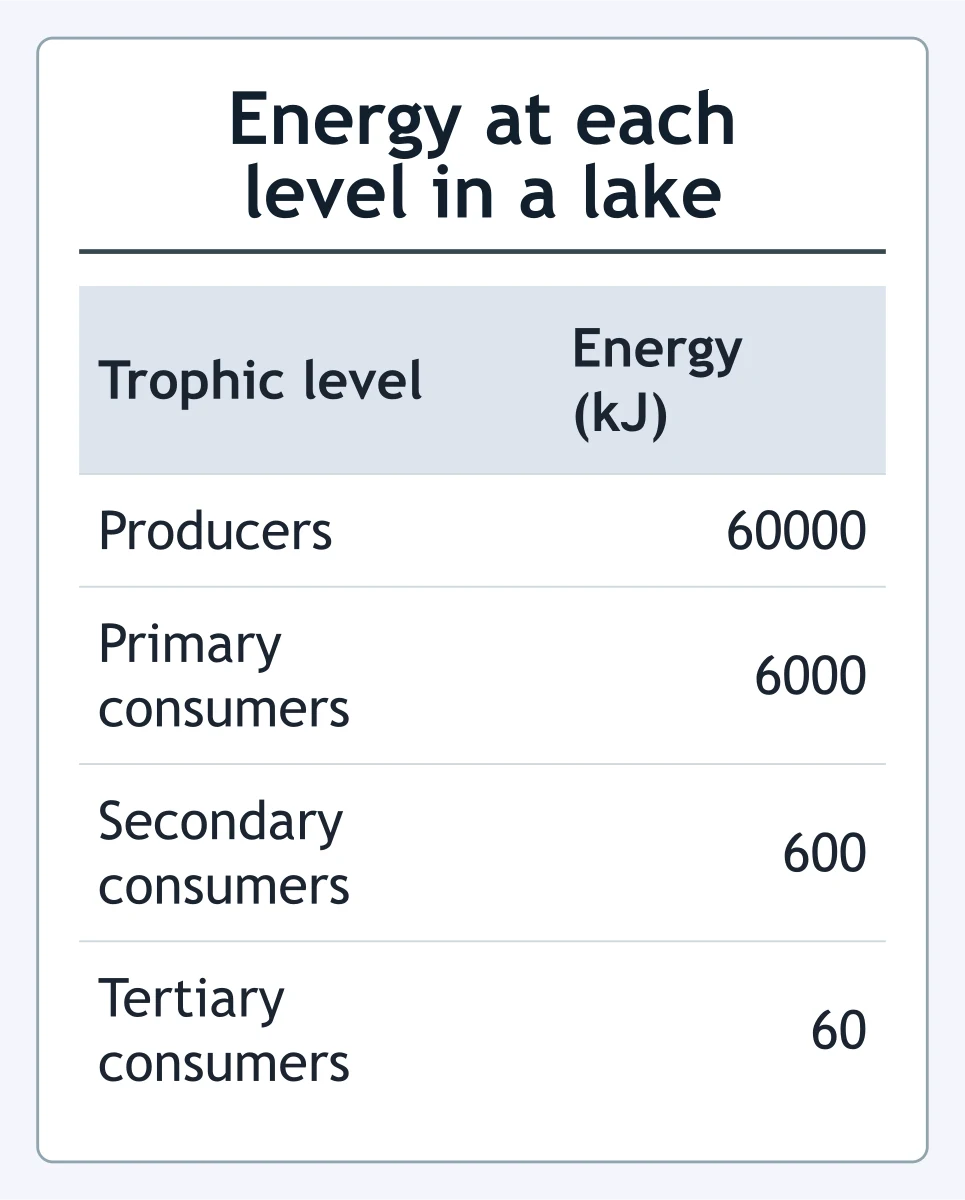
A fisheries biologist asks whether this lake could support a fifth trophic level made up of large predatory fish. Using the table, what should she predict?
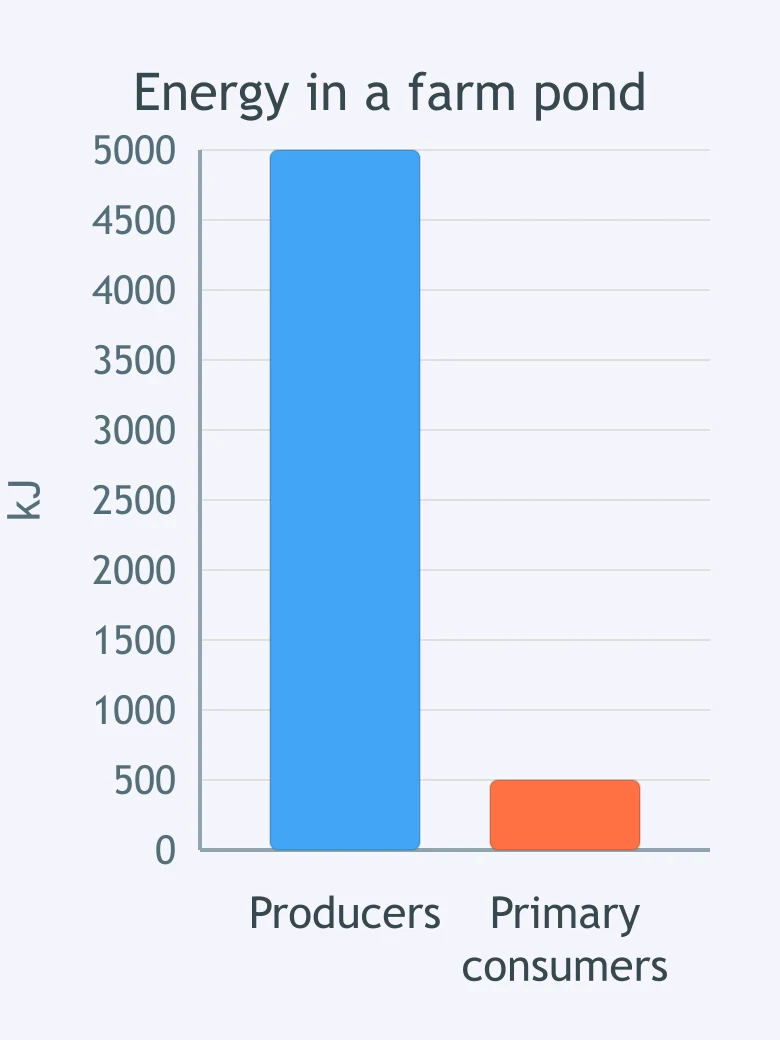
The bar graph shows the energy stored by a farm pond's plants and by the fish that graze on them. The farmer could harvest either those plant-eating fish or the larger fish that prey on them. Which prediction does the graph support?
A hectare of land can feed more people if they eat the grain grown on it than if the grain is fed to cattle that the people then eat.
A wildlife park wants to keep a population of lions, which are tertiary consumers. Which prediction about the park is best supported by the way energy moves between trophic levels?
Crack the passcode before the zombies get in.
Answer, then swat bugs for bonus points.
Race through questions at your own speed.
Same question on every screen. Fastest wins.

Pick a tile, answer, hit bonuses and steals.
The Nitrogen and Water Cycles
20 questions