Loading
by BlastRoom
How an urban art market shaped Dutch Golden Age painting and its major genres.
#us_hs_art_history
35 questions
One question set, multiple game modes. Tap any game to see it in action. Not sure which to pick?
Answer to place stones and capture territory.
Outrun the snow together.
Earn blasts, then hunt the other team.
Answer to earn energy, then climb.

The class blasts through walls together.
Bid on mystery lots. Most money wins.
Sell tours. Nice, standard, or a total scam.

Answer, restock, and serve the rush.
More correct answers pulls the rope your way.
Answer, then shoot down the alien wave.
Answer, then tap to leap the frozen ridge.
Academic theory ranked the types of painting from most to least important, even though Dutch buyers mostly purchased lower-ranked subjects. Which type did it place highest?
A dealer in 1650s Amsterdam displays many small finished paintings that were not made for any named patron. Who most commonly bought such works?
Why did secular subjects such as interiors, landscapes, and still lifes have such a large place in the Dutch Republic?
A painter completes canvases before meeting any particular customer and sends them to a dealer. What sales system is this?
An Amsterdam merchant wants pictures for several rooms at home. Which subject would fit the Dutch Golden Age market especially well?
What market condition most encouraged Dutch painters to make many paintings in a recognizable specialty?
A painter repeatedly depicts ships and rough water rather than portraits or biblical scenes. In the Dutch market, this narrow focus most likely helped the painter by
A buyer asks for an image of sunlight on bare whitewashed walls and tall stone columns, with tiny visitors far below. Which Dutch specialist is the buyer seeking?
Besides attracting buyers, how did repeating one specialty help a Dutch painter in the studio?
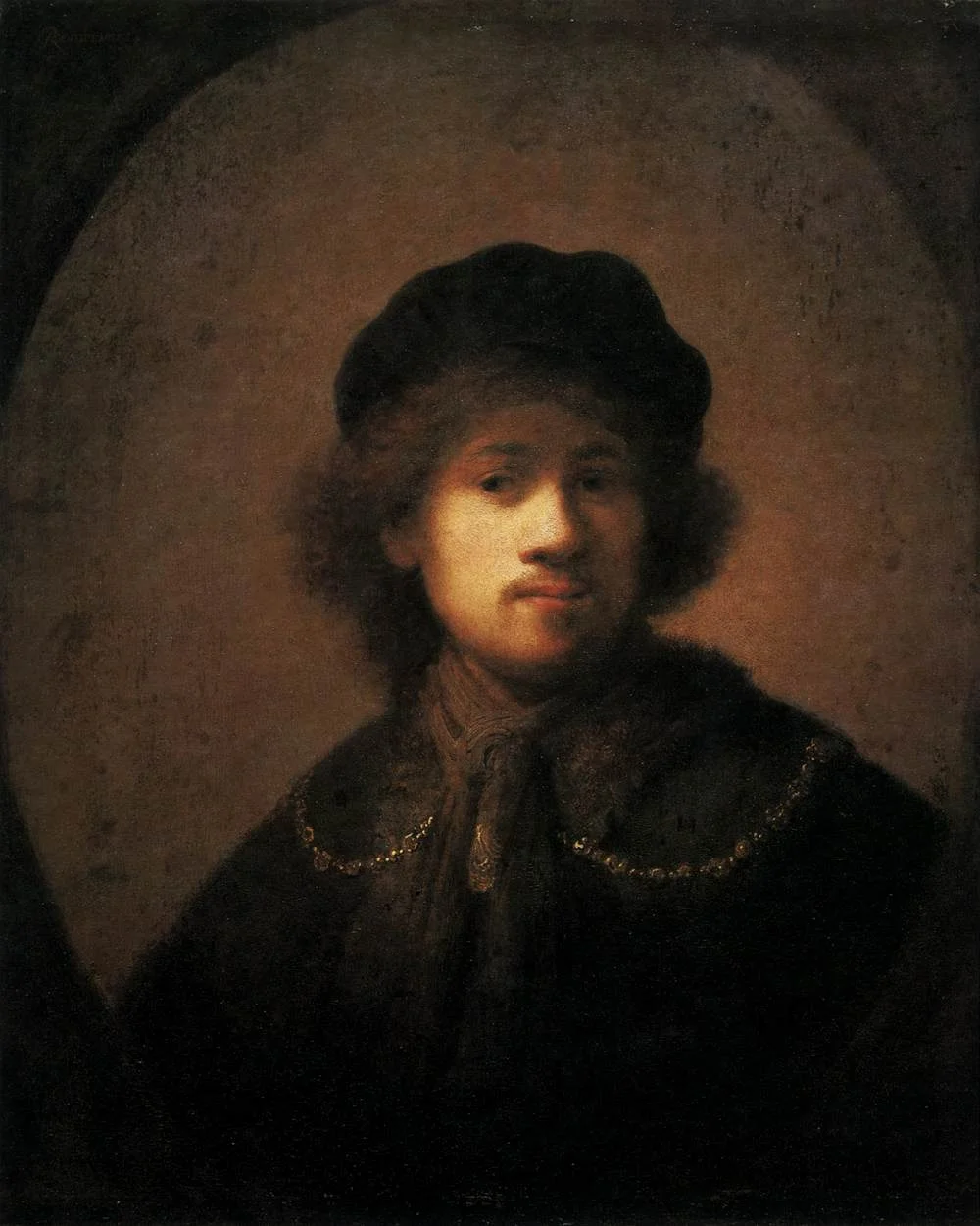
In this Rembrandt self-portrait, the artist studies his own face, costume, and expression rather than presenting a patron. What does such repeated self-study allow?
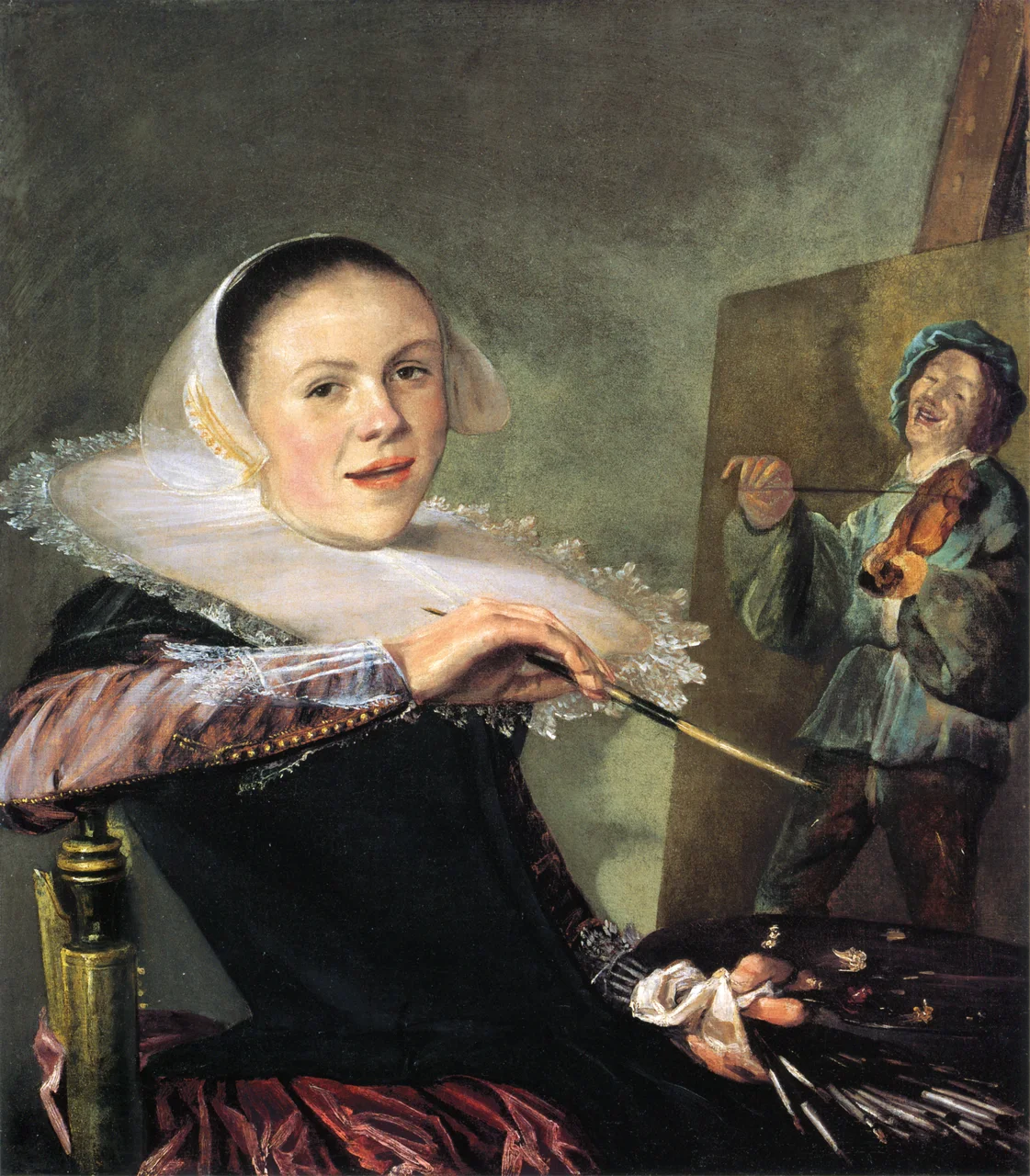
Judith Leyster shows herself at an easel with a palette and many brushes in her Self-Portrait. What claim does the image make?
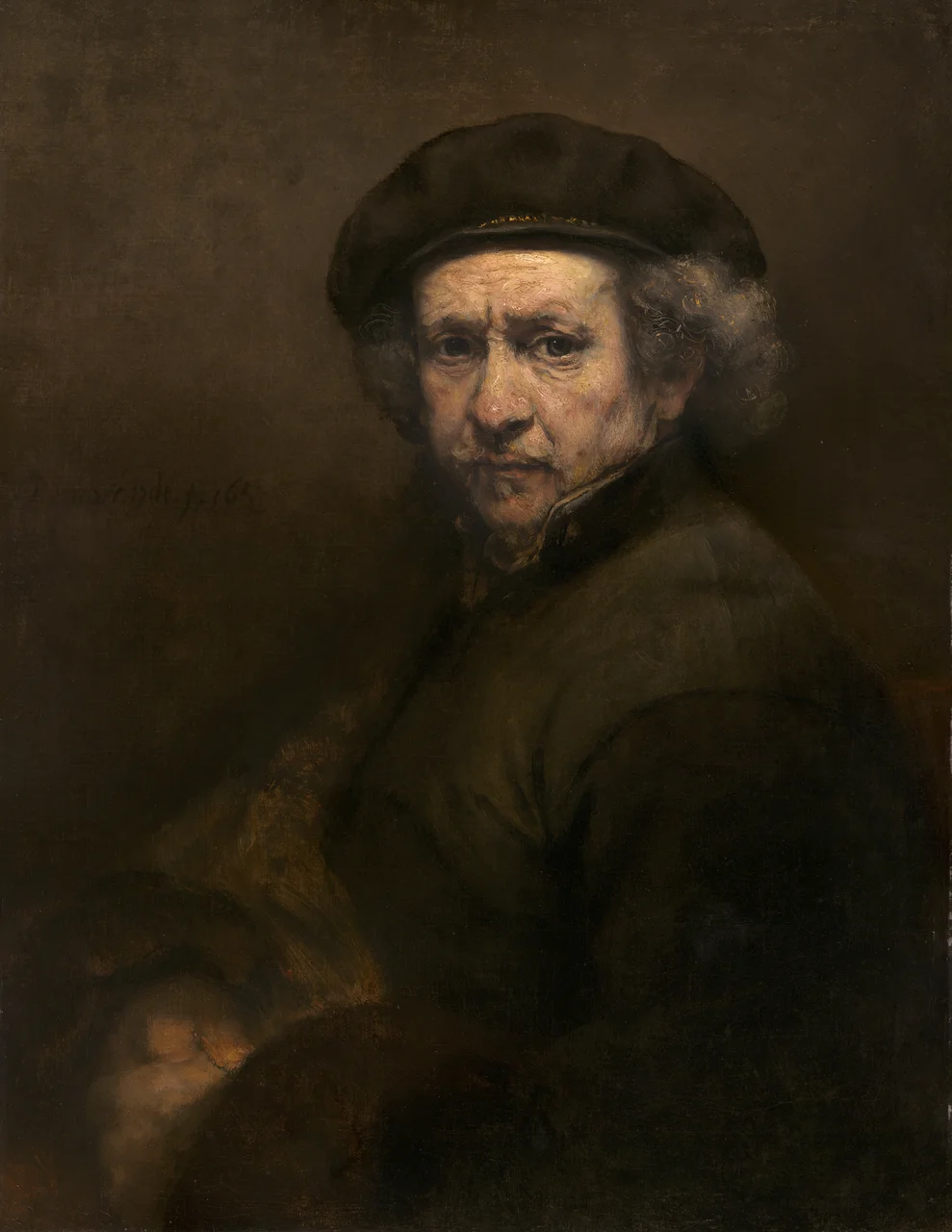
Raised, visibly textured paint catches the light in this Rembrandt self-portrait. Which term names this thick application of paint?
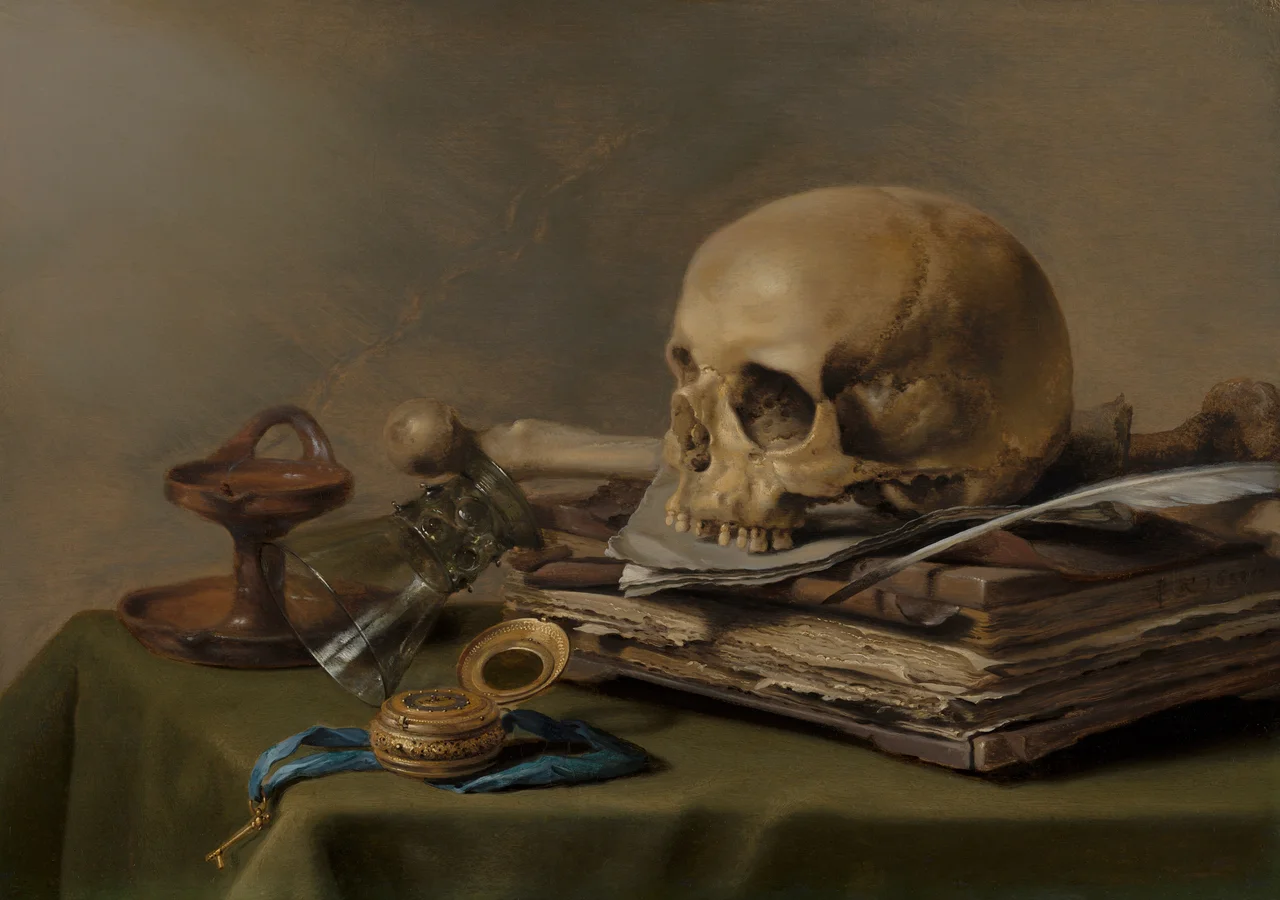
In Pieter Claesz's Still Life with a Skull and a Writing Quill, the skull and writing tools are arranged as objects for contemplation. What central message does this still life convey?
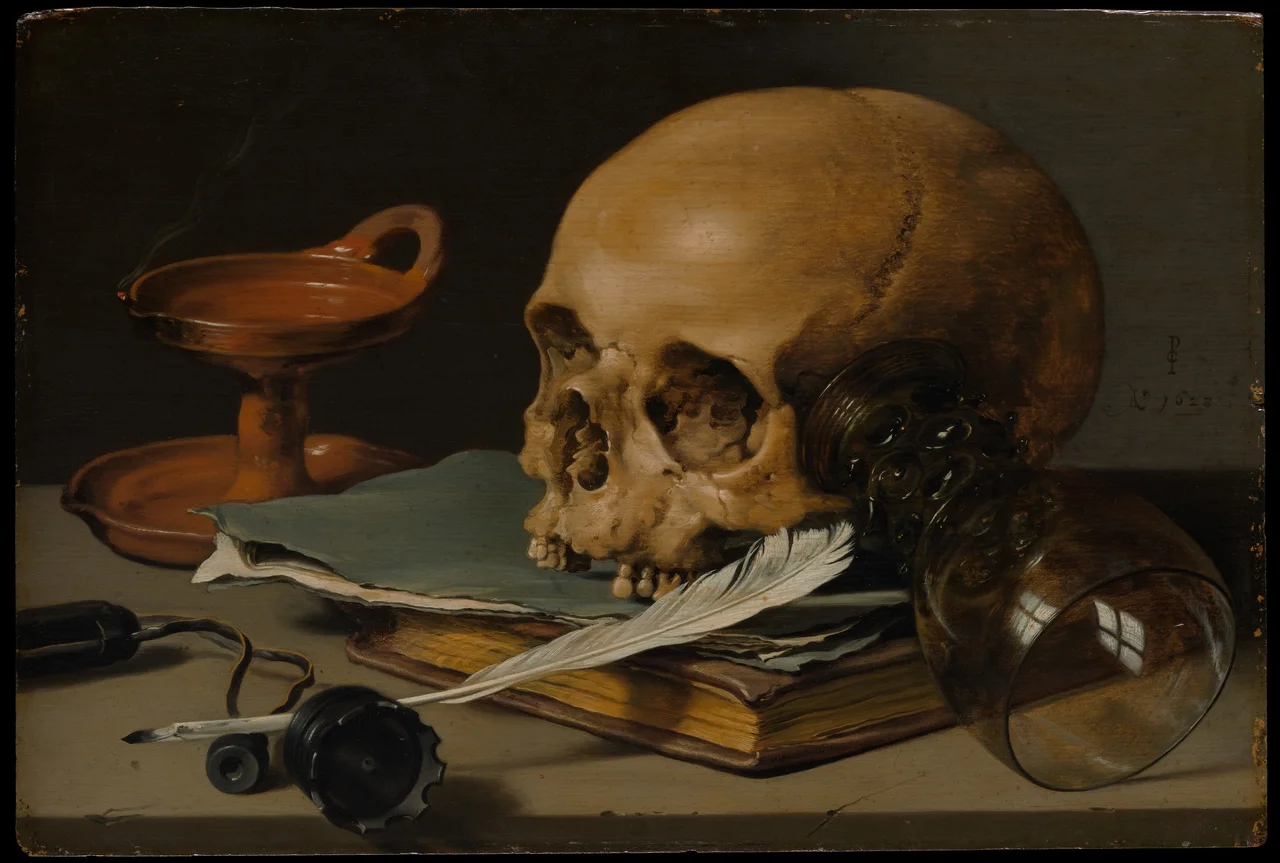
What does the term vanitas identify in a Dutch still life?
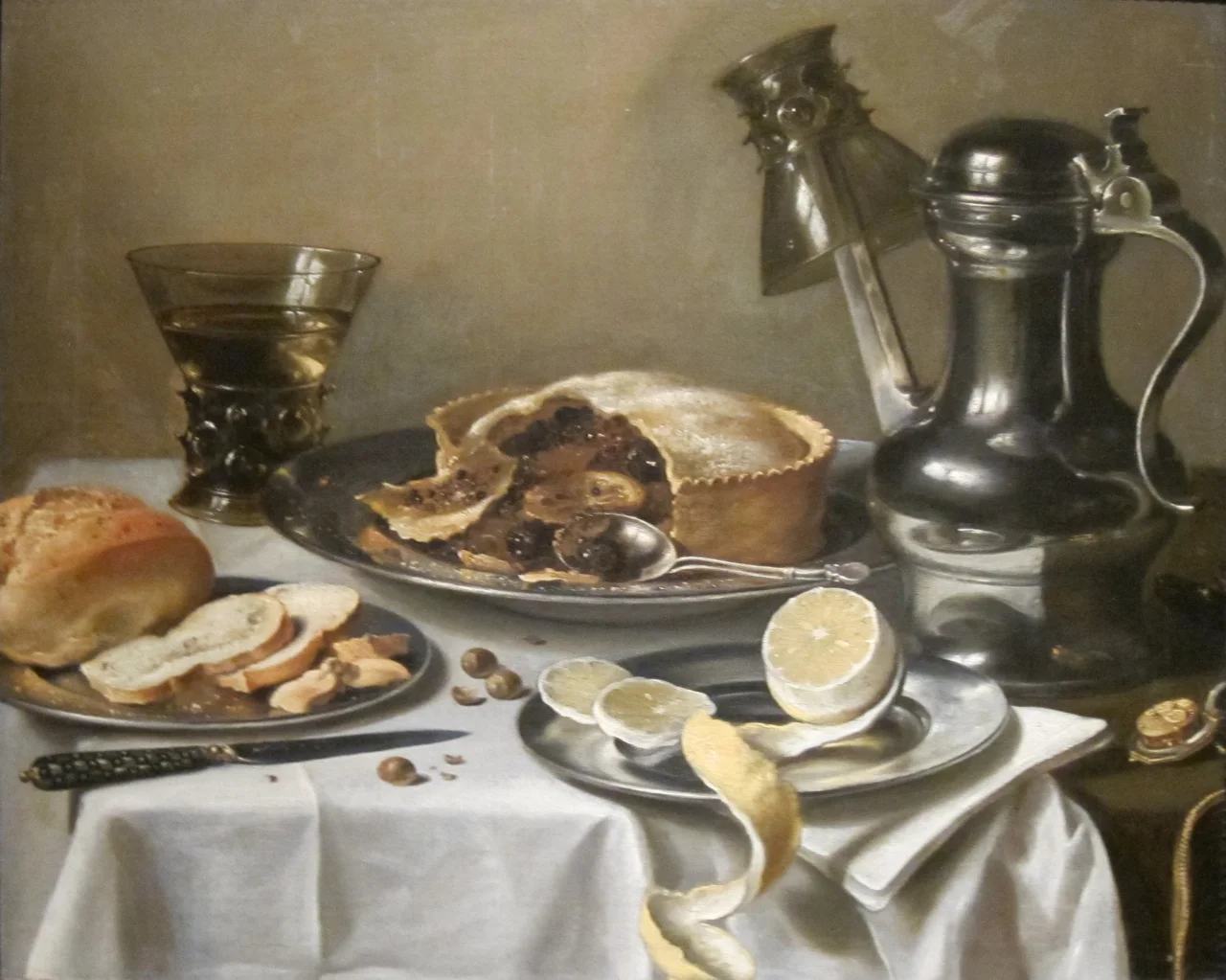
A Claesz tabletop picture carefully depicts a lemon, glassware, silver, and a partly eaten meal but no people. Which genre is it?
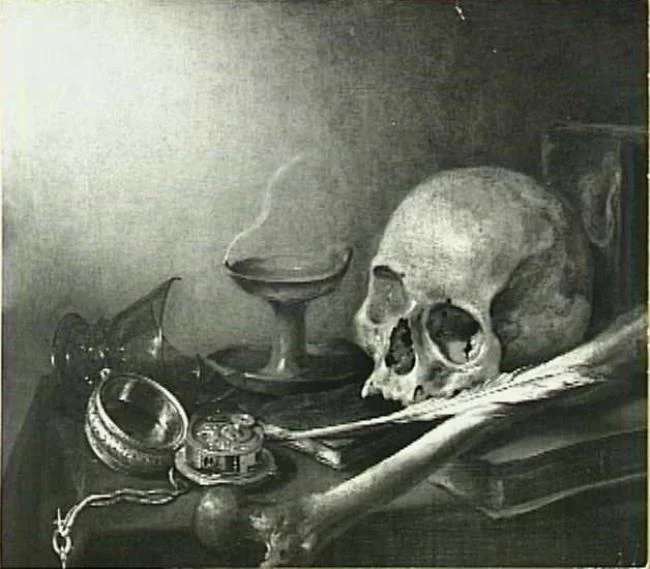
In this vanitas still life by Pieter Claesz, which object most directly stands for time running out?
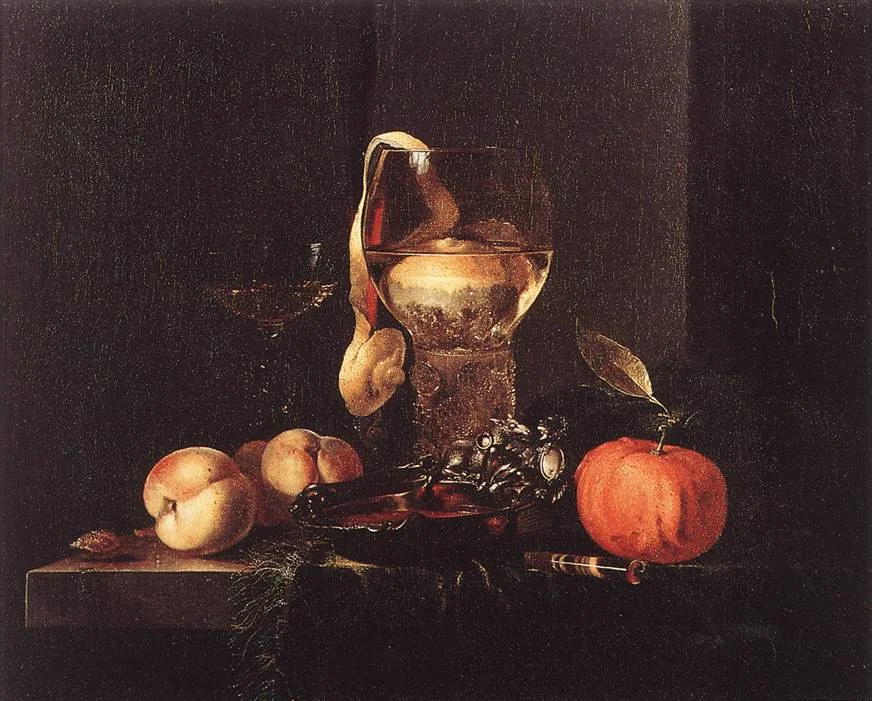
Willem Kalf's still life displays costly glassware, fruit, and imported porcelain. What subtype of still life emphasizes this luxurious display?
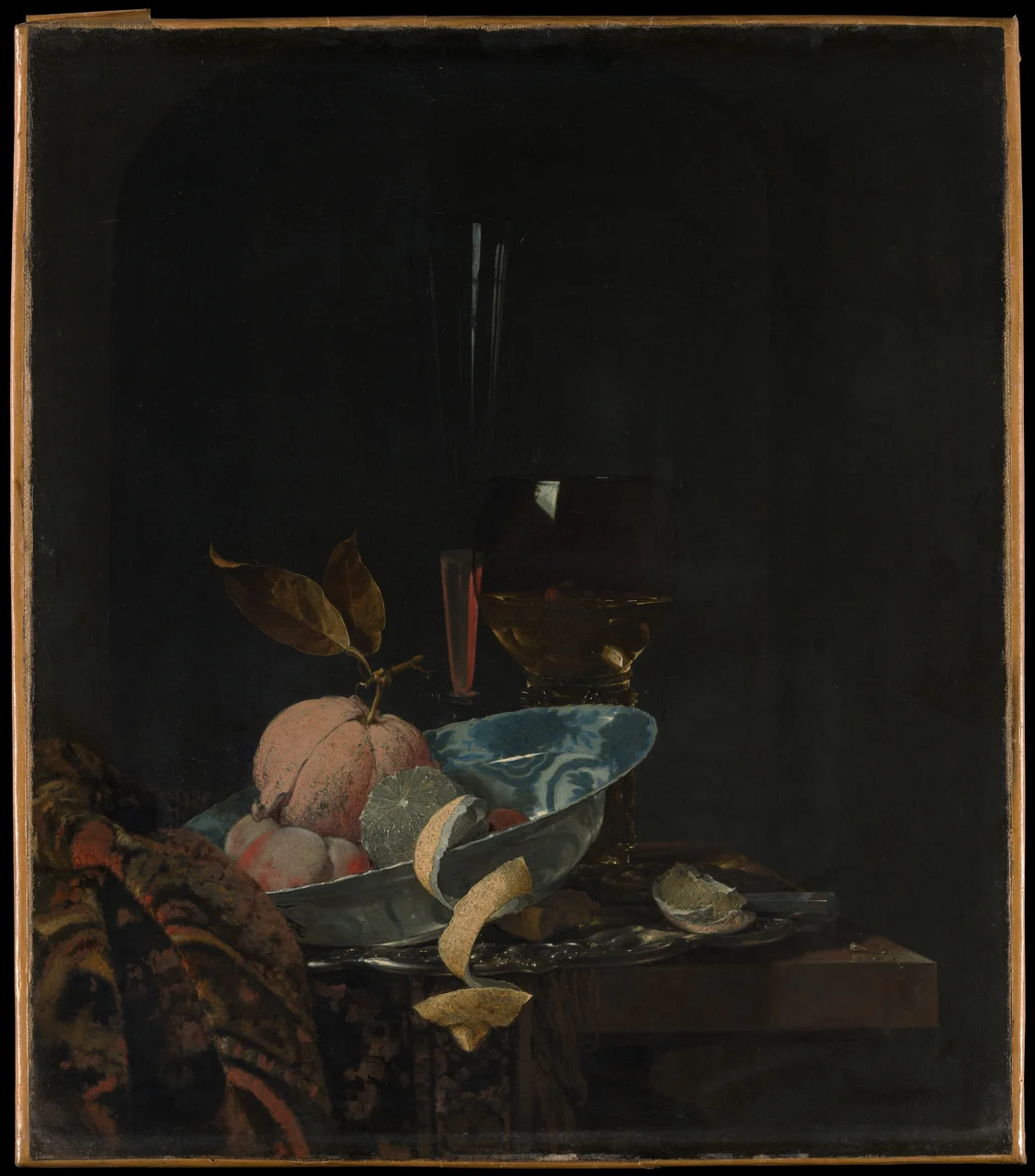
Why would a Dutch buyer value Kalf's precise reflections on glass and metal in a still life?
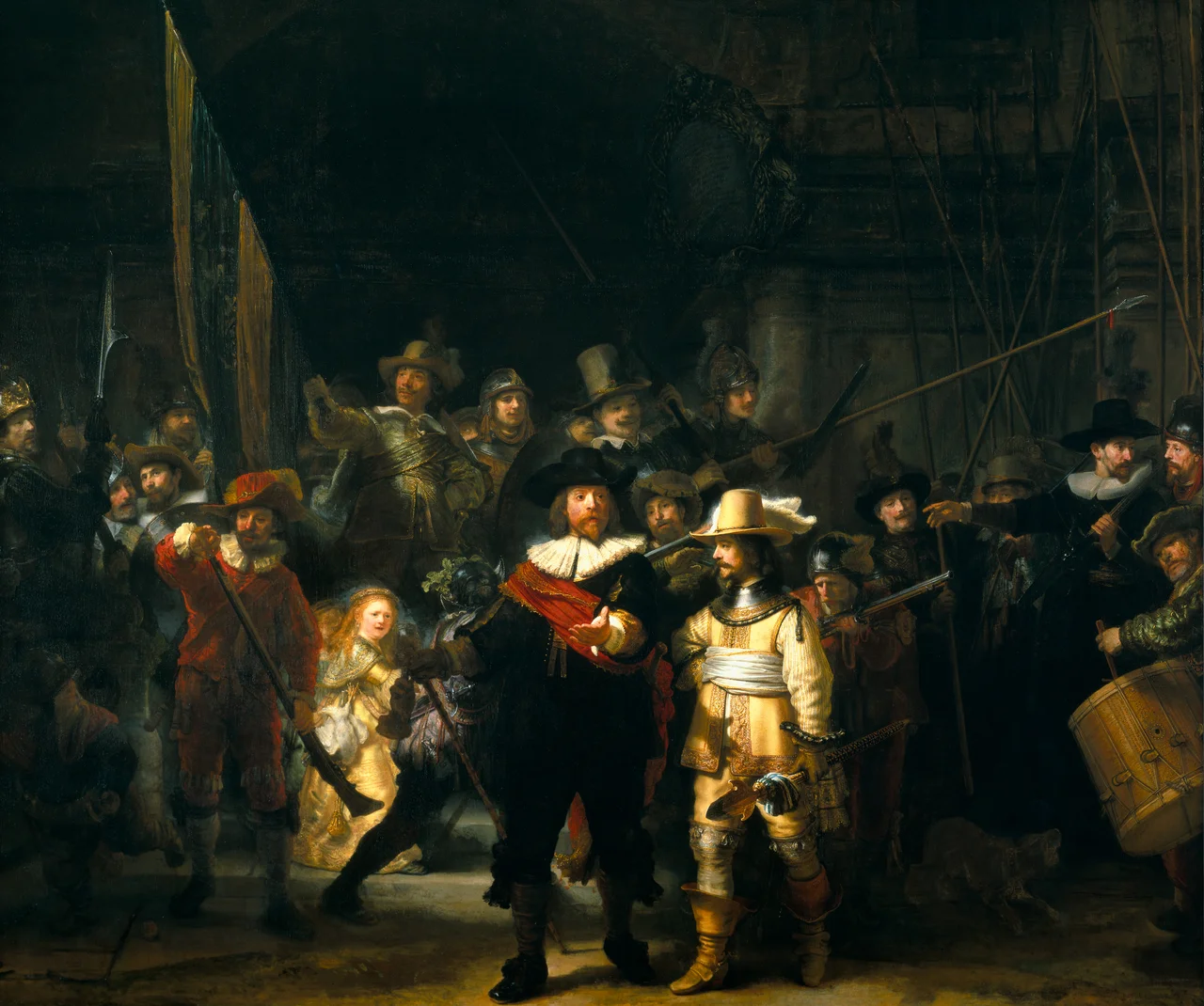
Rembrandt's The Night Watch was made for the Arquebusiers' guild hall. What kind of image is it?
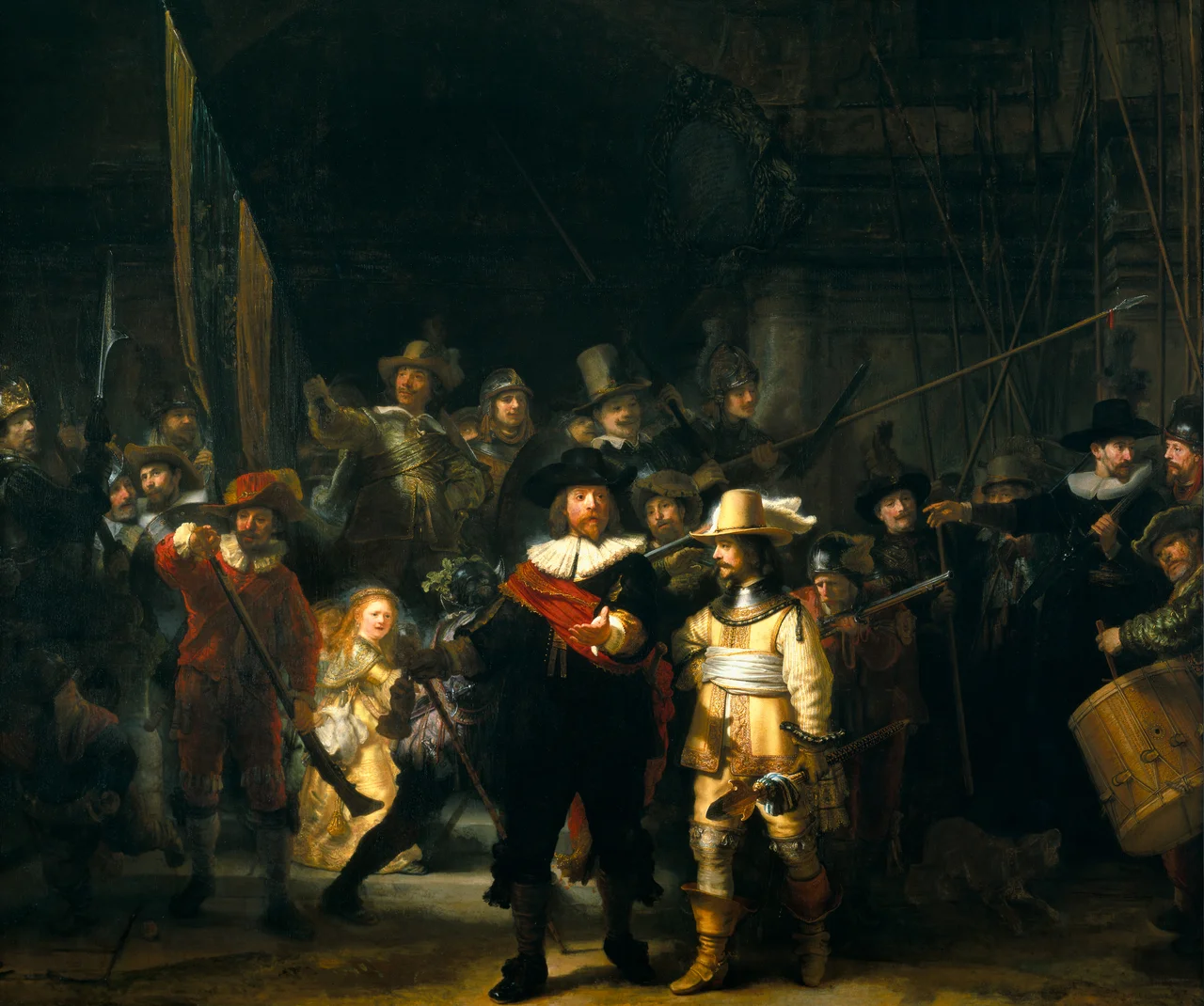
In The Night Watch, Rembrandt breaks with the usual neat rows of posed guardsmen. What did he gain by this design?
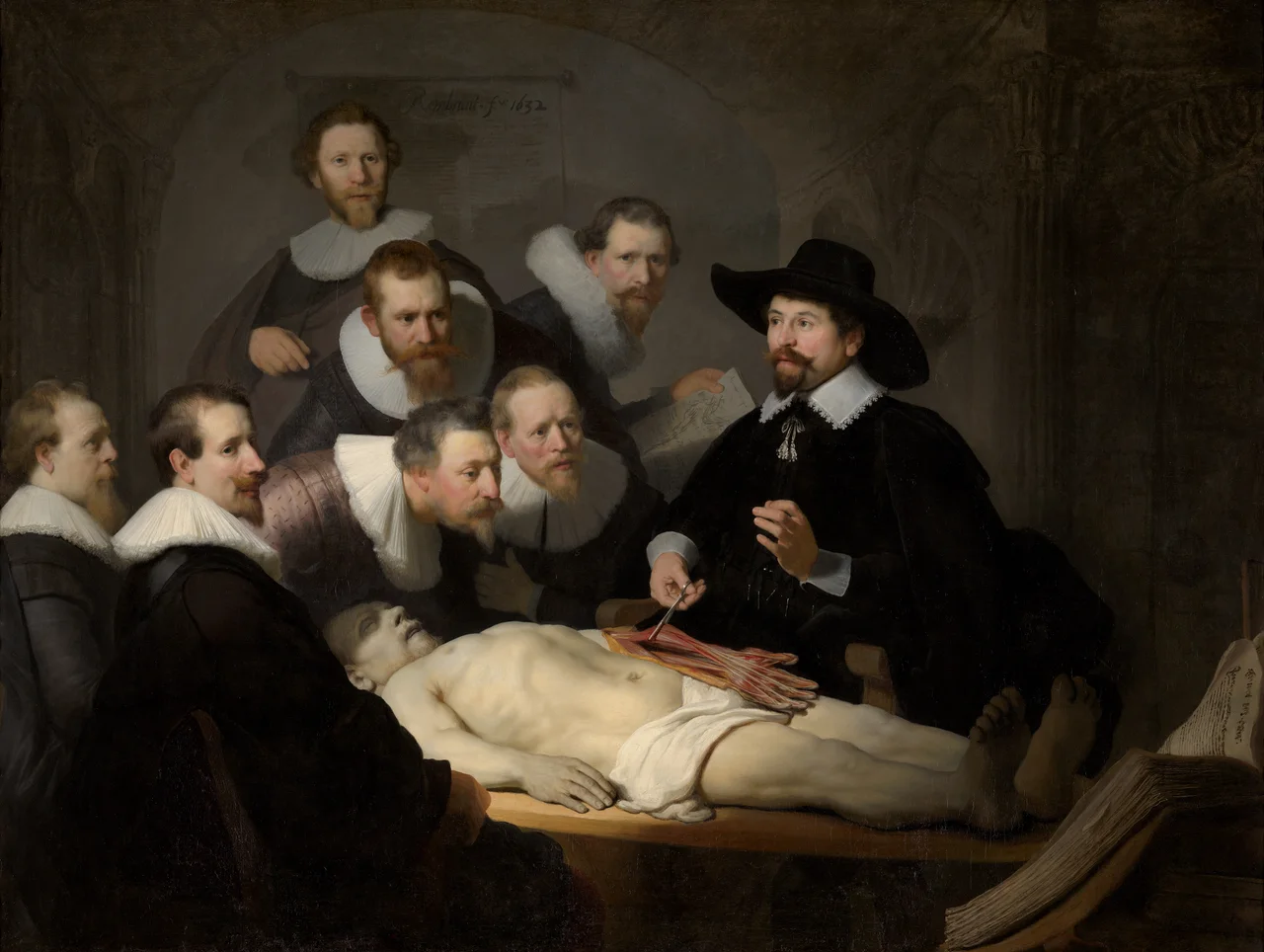
The Anatomy Lesson of Dr. Nicolaes Tulp shows surgeons assembled around a demonstration. Beyond recording a lesson, what civic purpose did such a group portrait serve?
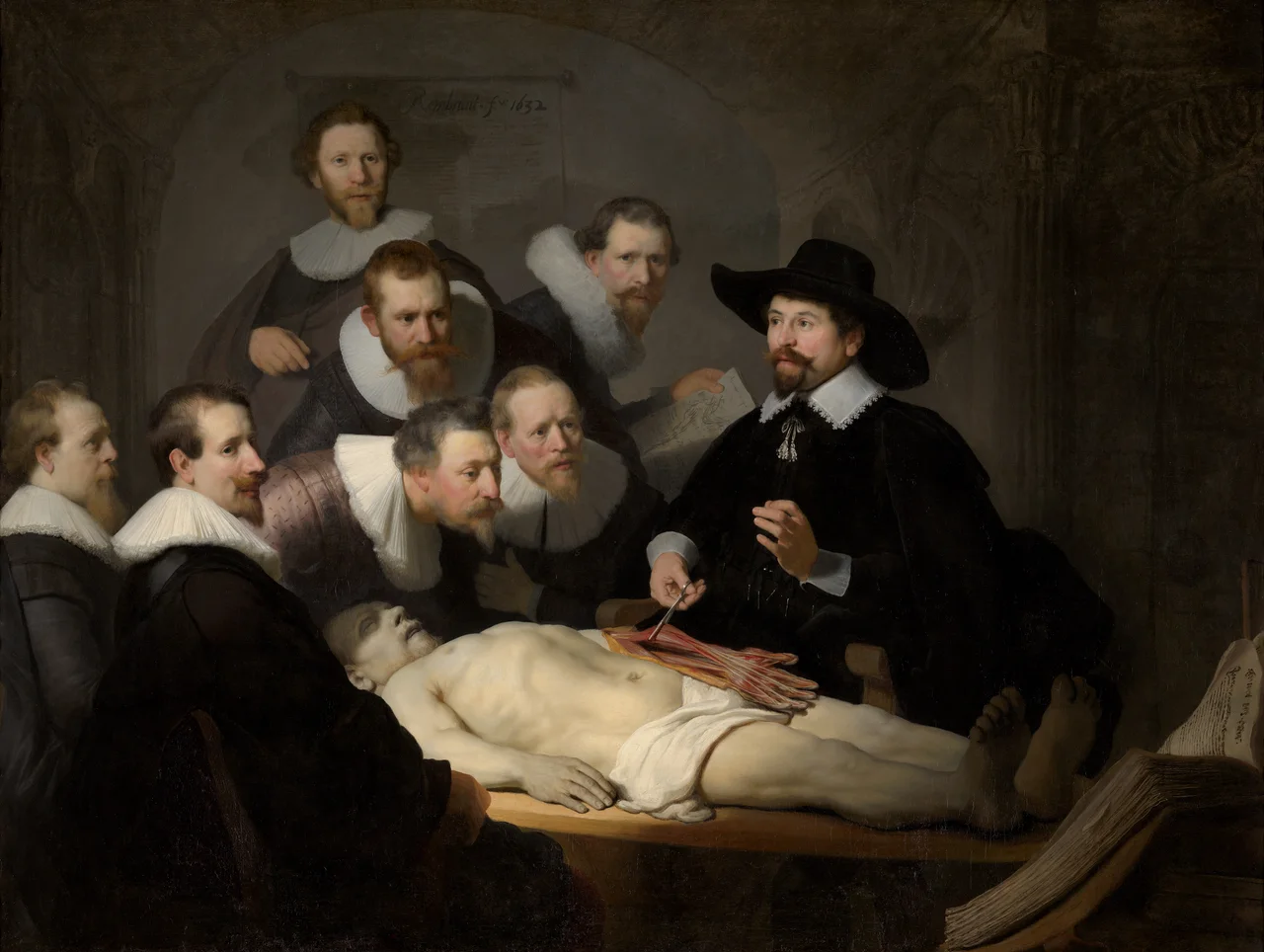
In The Anatomy Lesson of Dr. Nicolaes Tulp, Dr. Tulp sits apart in a broad hat while the other men crowd together bareheaded. What does this placement signal?
If members of a civic company each contribute to a shared portrait, what compositional problem does the painter face?
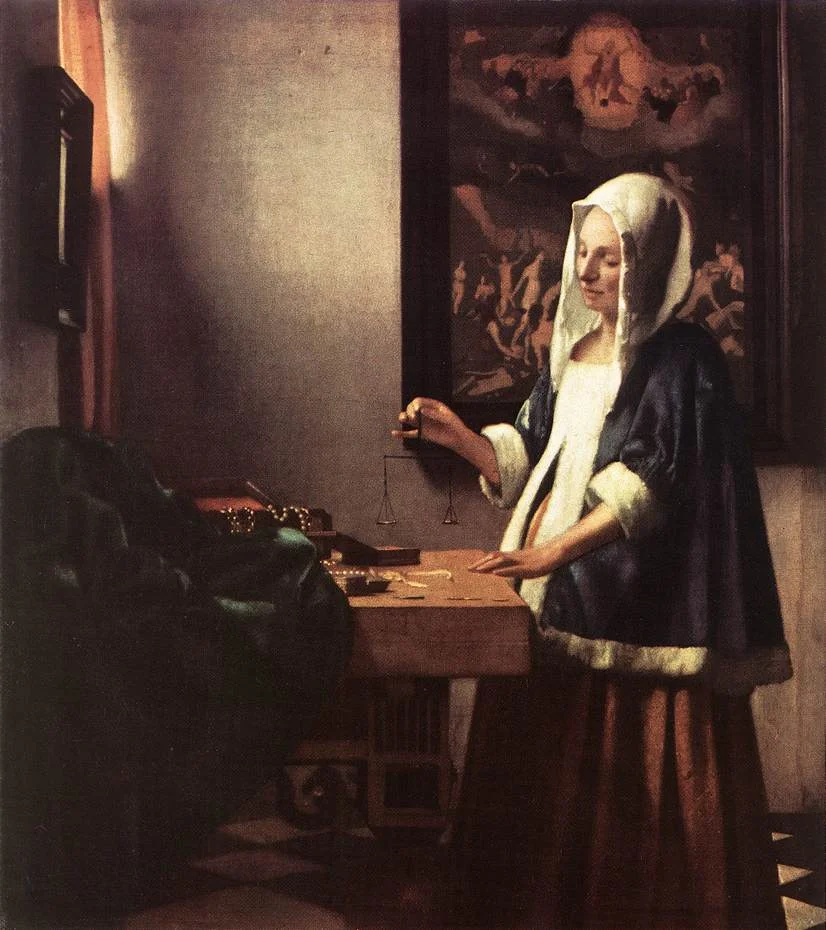
In Vermeer's Woman Holding a Balance, a quiet woman holds empty scales near jewelry, while a Last Judgment painting hangs behind her. What idea links these elements?
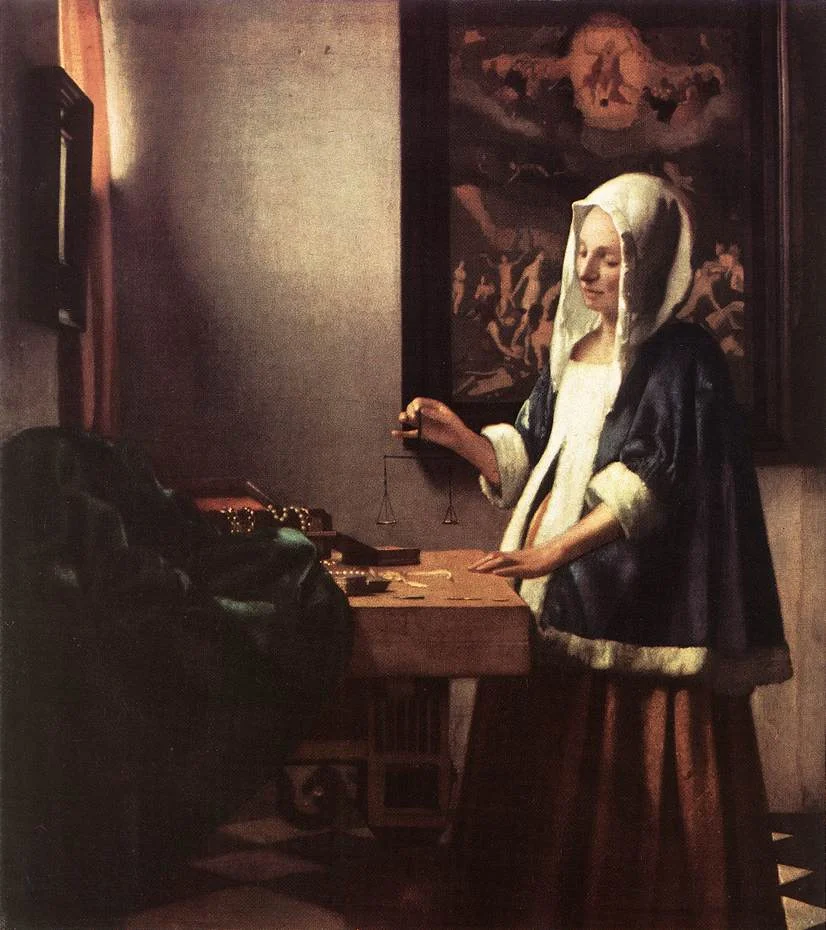
Vermeer's Woman Holding a Balance presents an ordinary-looking room, one figure, and a moment of daily activity. Which genre does this most closely use?
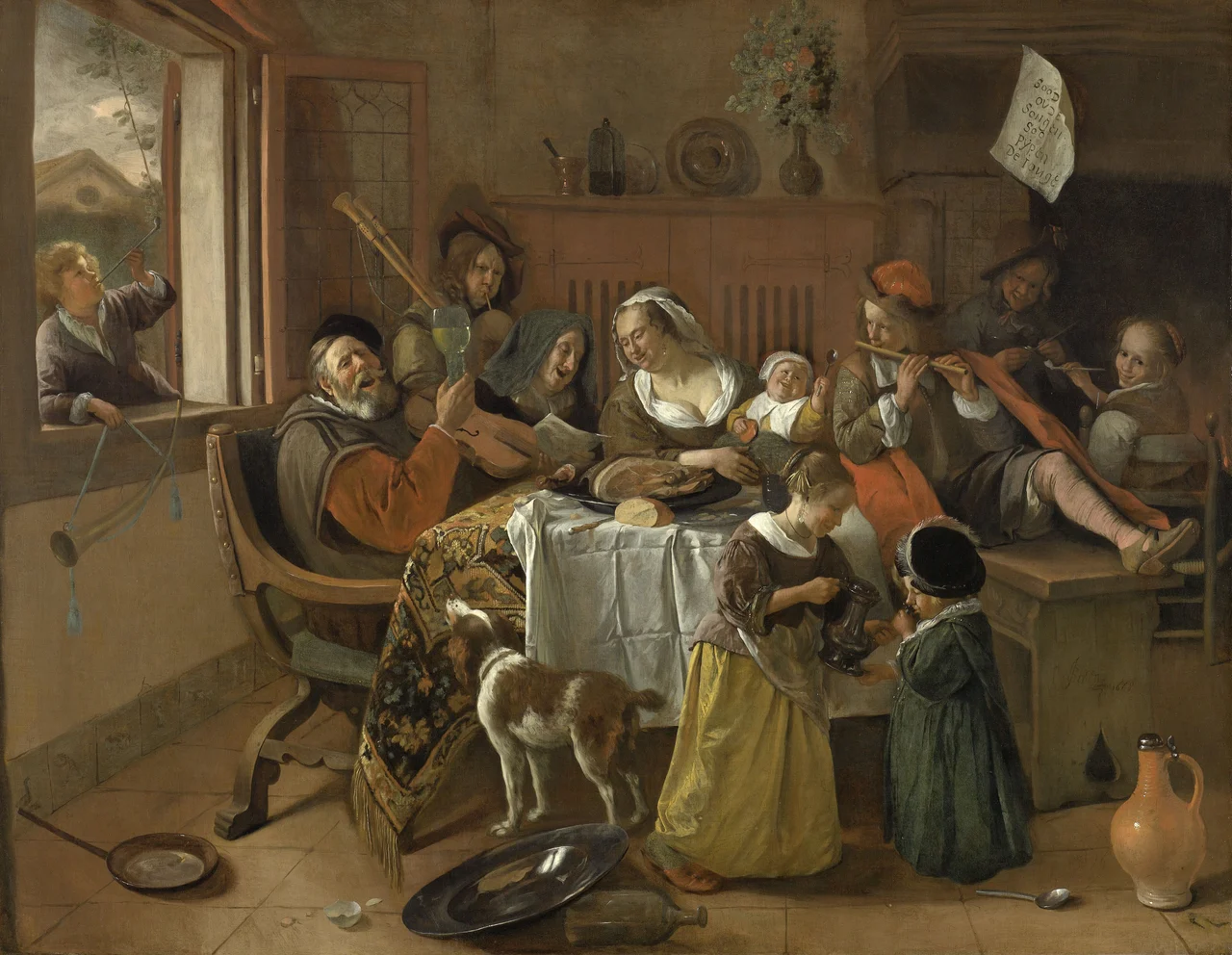
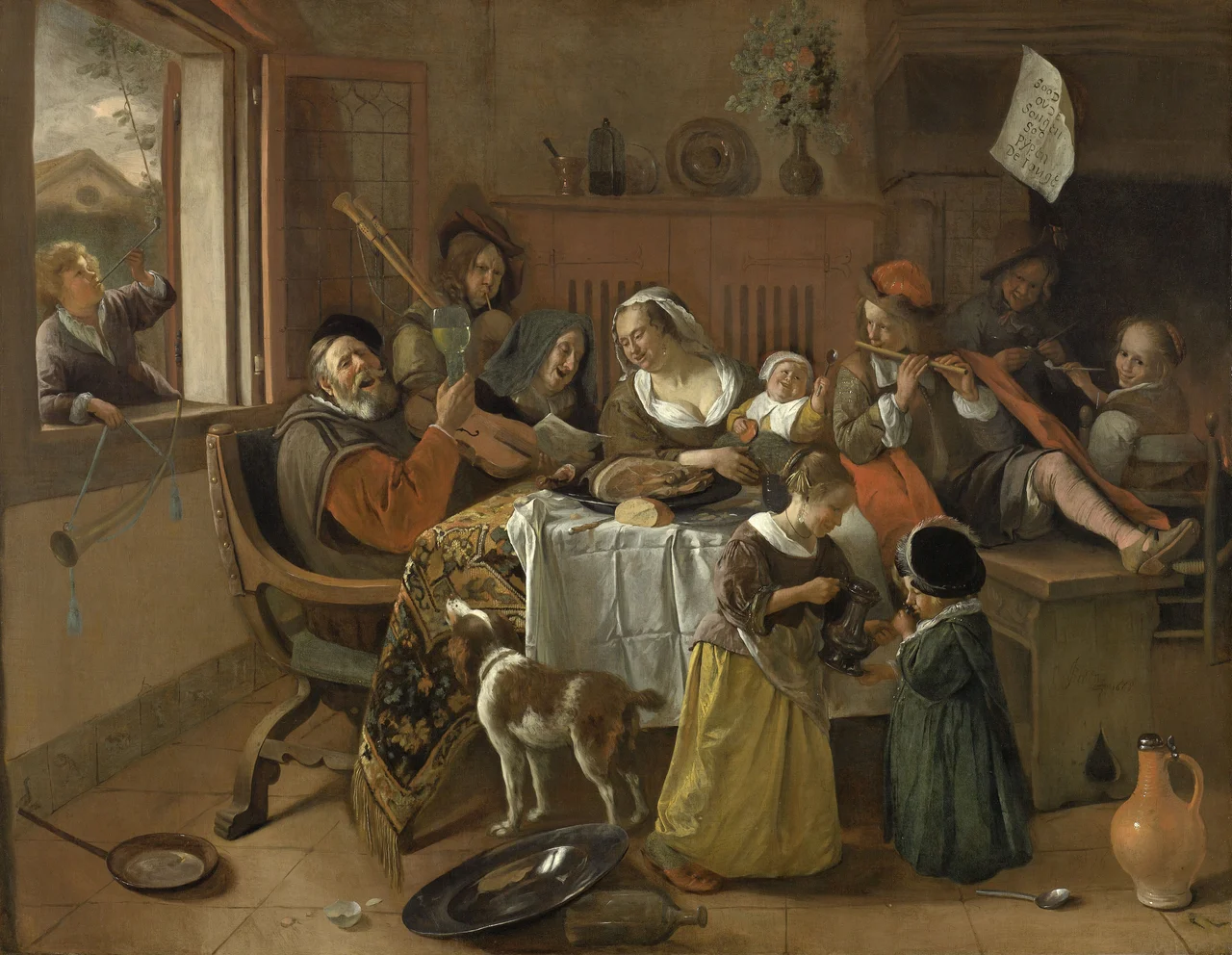
Jan Steen's The Merry Family shows adults drinking and smoking as children imitate them. What is the likely purpose of this disorderly household scene?
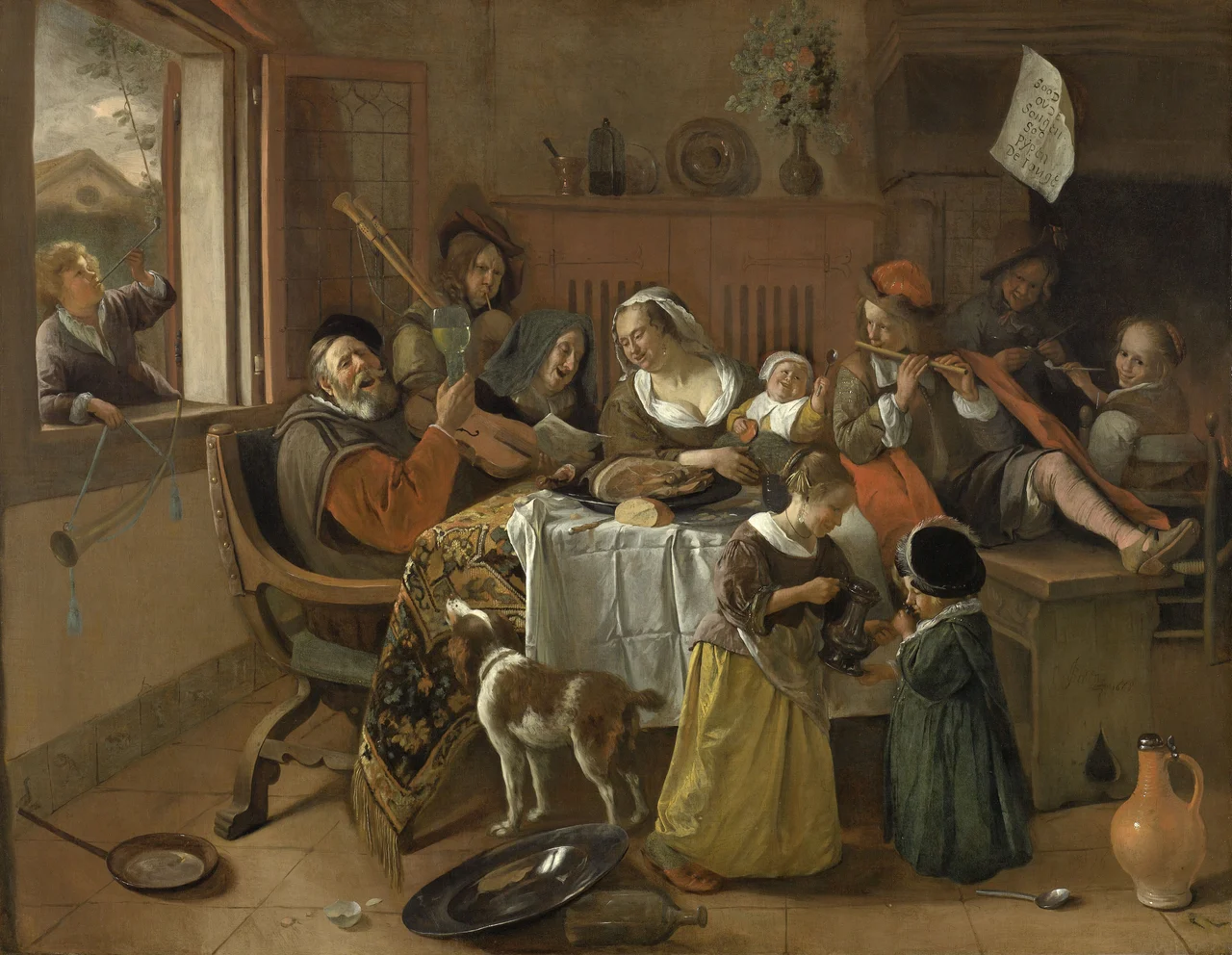
Why does the jumble of figures, diagonal movement, drinking, and music in Jan Steen's The Merry Family matter to its meaning?
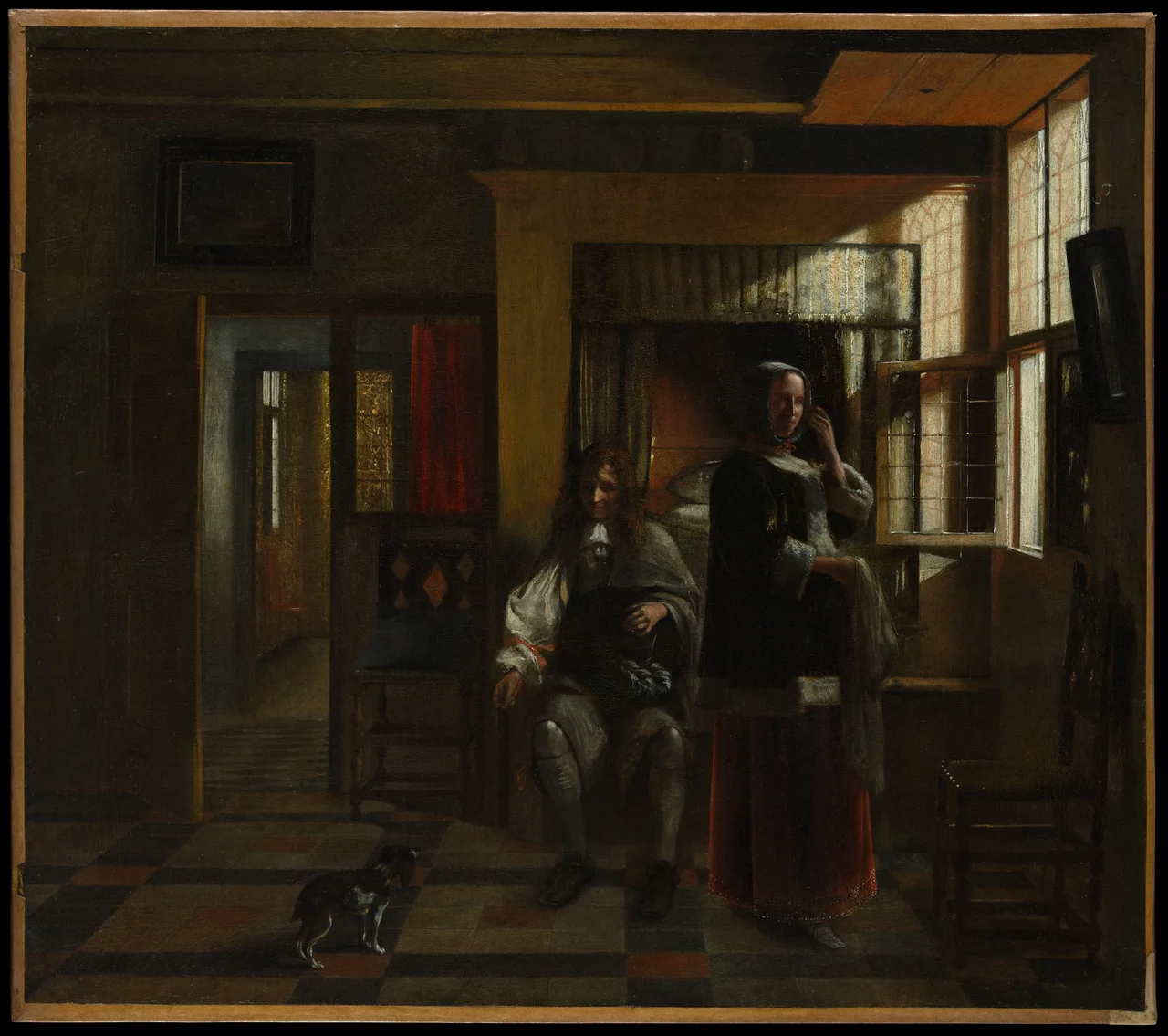
Pieter de Hooch's Interior with a Young Couple uses doorways, window light, and interlocking rectangular spaces. What does this careful setting foreground?
Jan Steen's rowdy home scenes, like the one pictured, were so well known that a Dutch saying still uses his name. What does "a Jan Steen household" describe?
A painter shows a woman sewing beside a window, with orderly rooms receding through open doors. Why could this quiet subject appeal to a Dutch household buyer?
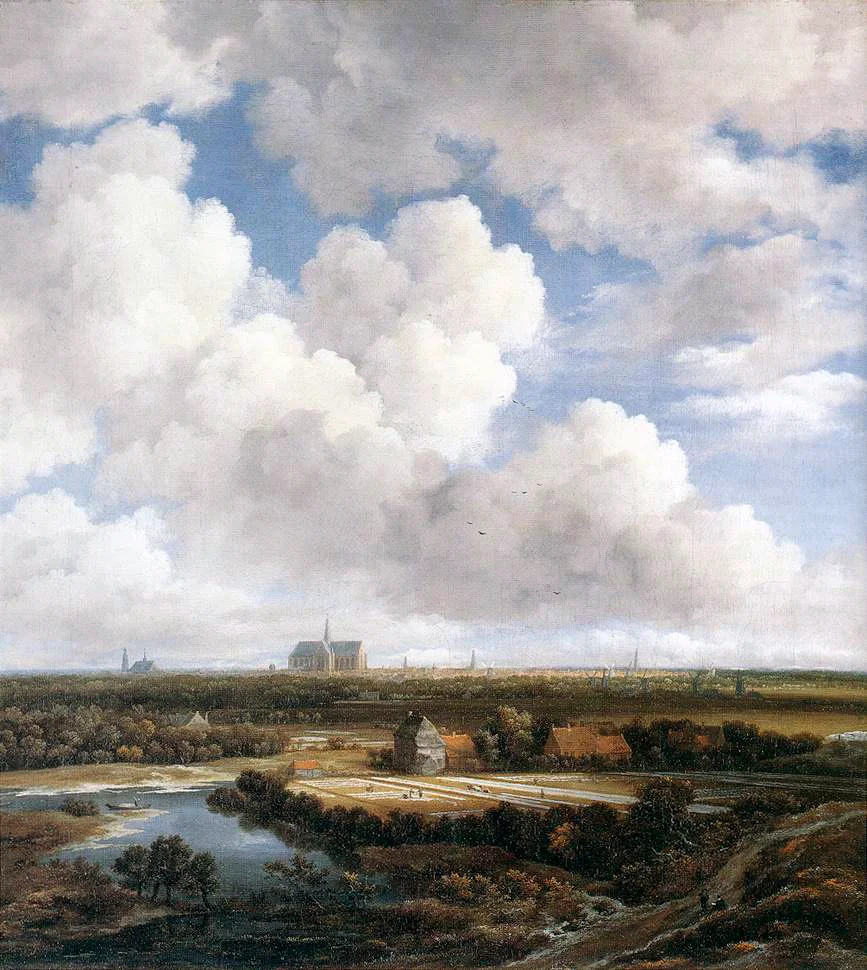
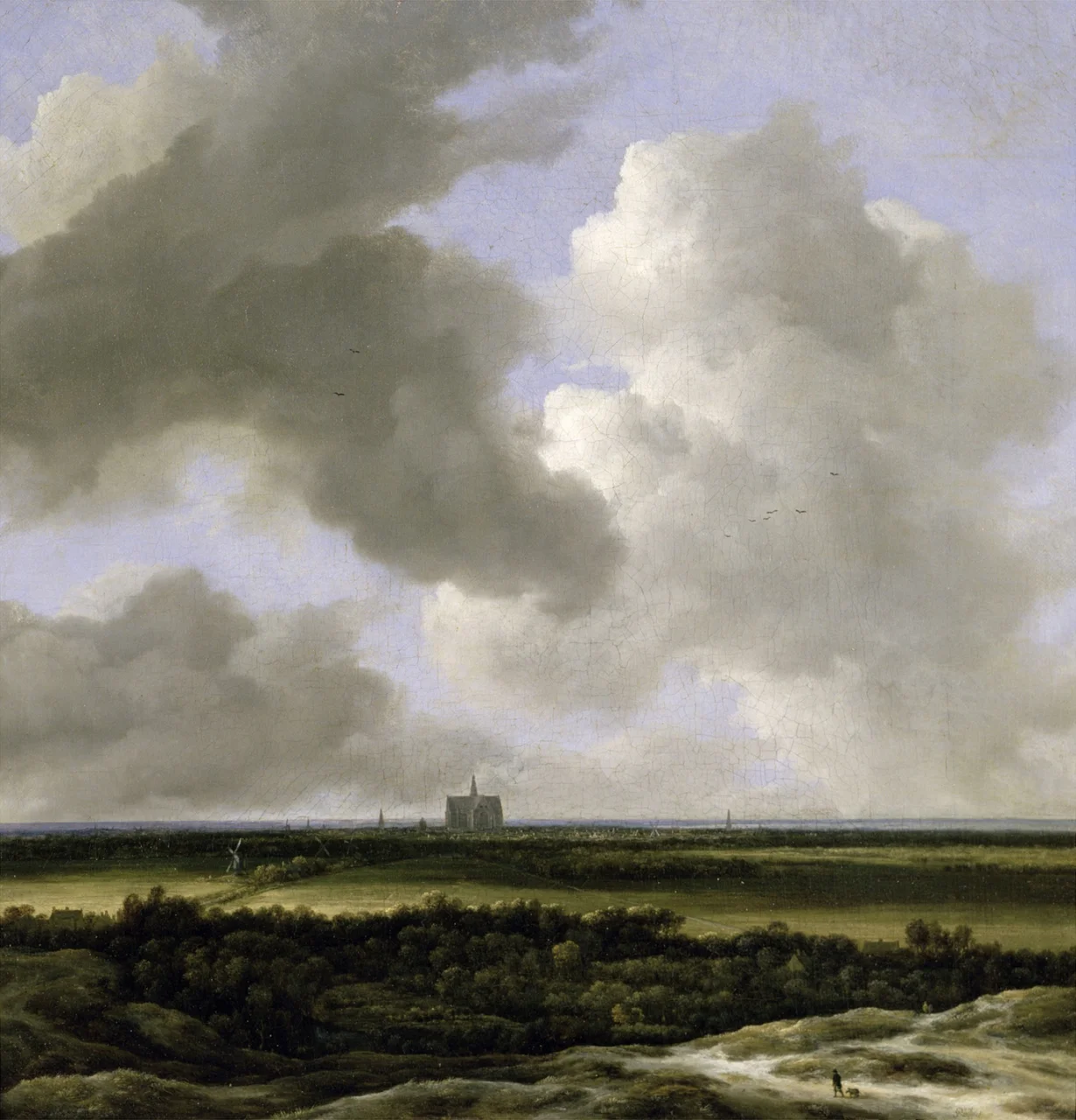
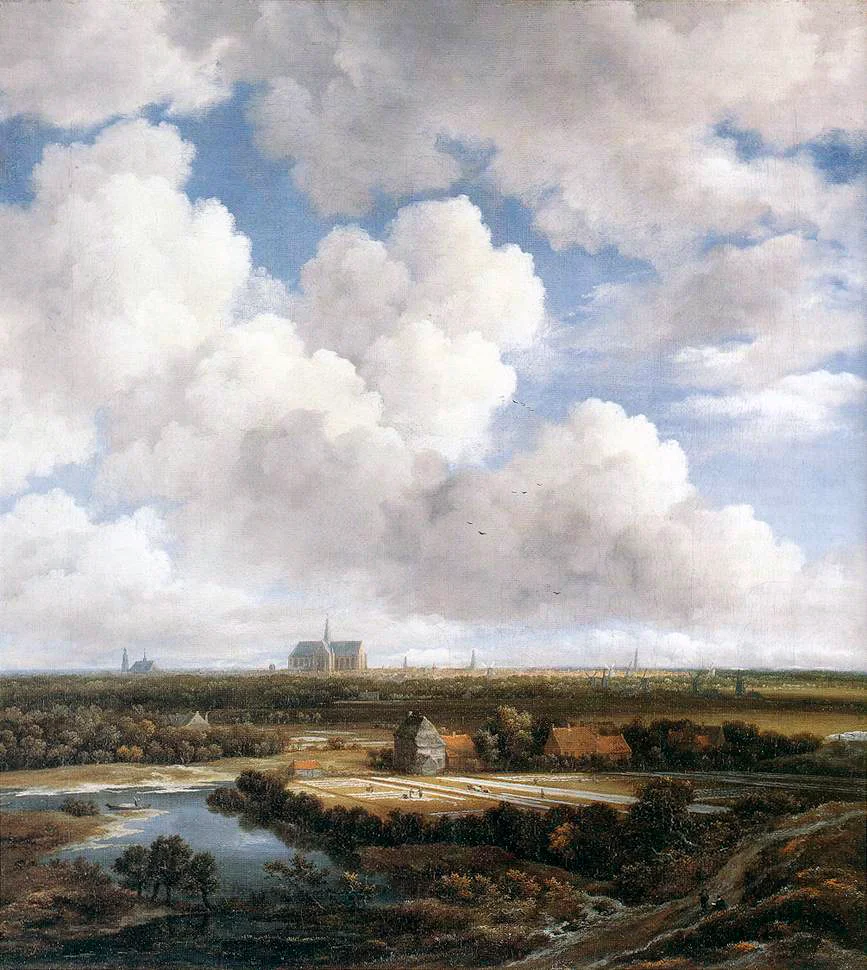
In a Ruisdael view of Haarlem, the horizon sits low while clouds and changing light fill most of the canvas. What becomes the main subject?
Girl with a Pearl Earring depicts an idealized head in exotic costume rather than a sitter identified by name. What Dutch term best fits this kind of image?
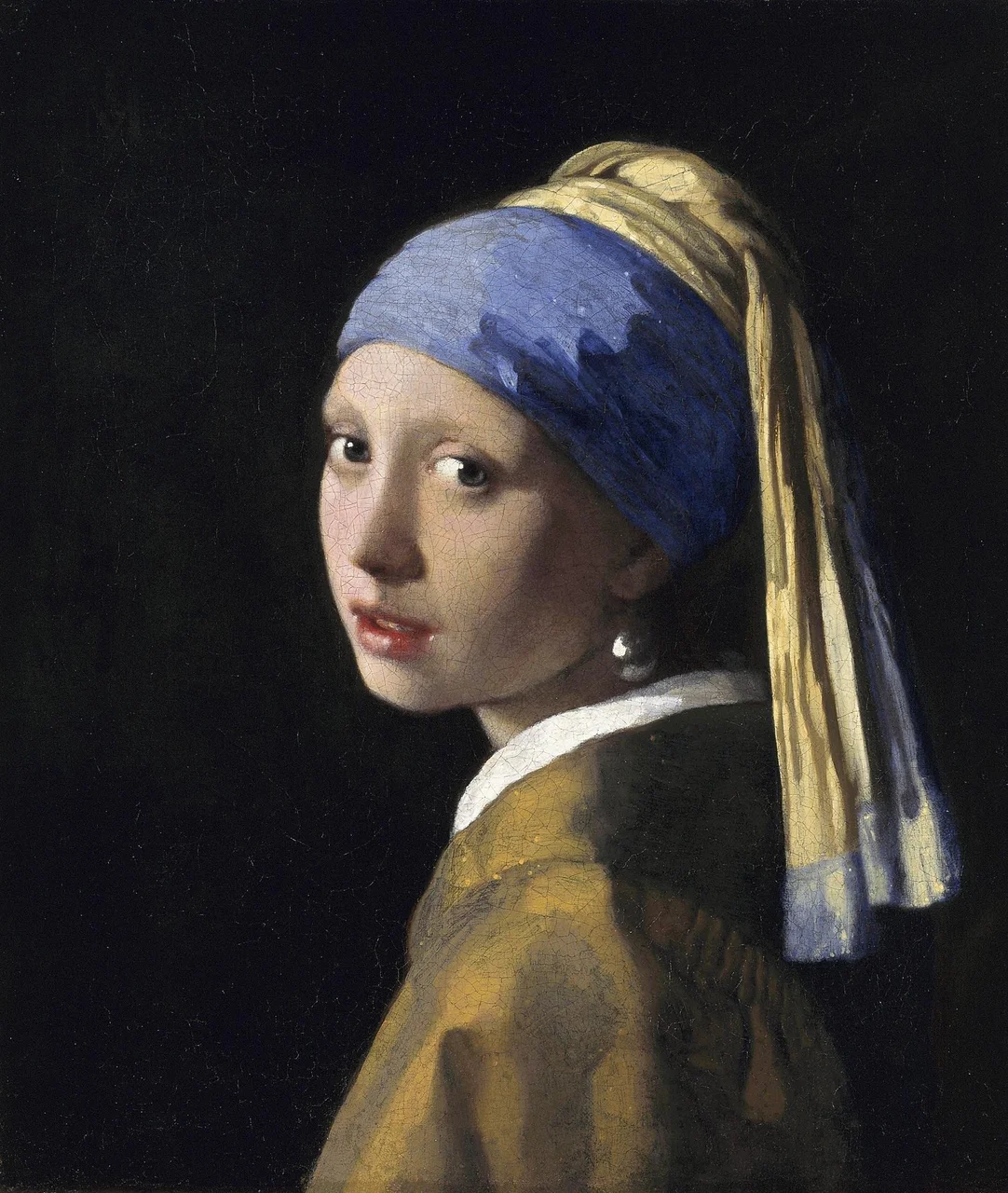
In Girl with a Pearl Earring, Vermeer places a bright highlight on the earring against the dark background. What is the visual role of that highlight?
Ruisdael's panoramic landscapes can include tiny human figures but devote their scale to land, cloud, and light. What does this choice show?
In Ruisdael's view of Haarlem, long white strips lie across the fields in the middle ground. What do these bleaching grounds show?
Crack the passcode before the zombies get in.
Answer, then swat bugs for bonus points.
Race through questions at your own speed.
Same question on every screen. Fastest wins.

Pick a tile, answer, hit bonuses and steals.
30 questions