Loading
by BlastRoom
Name the parts of a compound light microscope, calculate total magnification, and fix an image that has gone wrong.
#biology
40 questions
One question set, multiple game modes. Tap any game to see it in action. Not sure which to pick?
Answer to place stones and capture territory.
Outrun the snow together.
Earn blasts, then hunt the other team.
Answer to earn energy, then climb.

The class blasts through walls together.
Bid on mystery lots. Most money wins.
Sell tours. Nice, standard, or a total scam.

Answer, restock, and serve the rush.
More correct answers pulls the rope your way.
Answer, then shoot down the alien wave.
Answer, then tap to leap the frozen ridge.
A student viewing a stained slide wants to change how much light passes up through the specimen without moving the slide or the lenses. Which part should be adjusted?
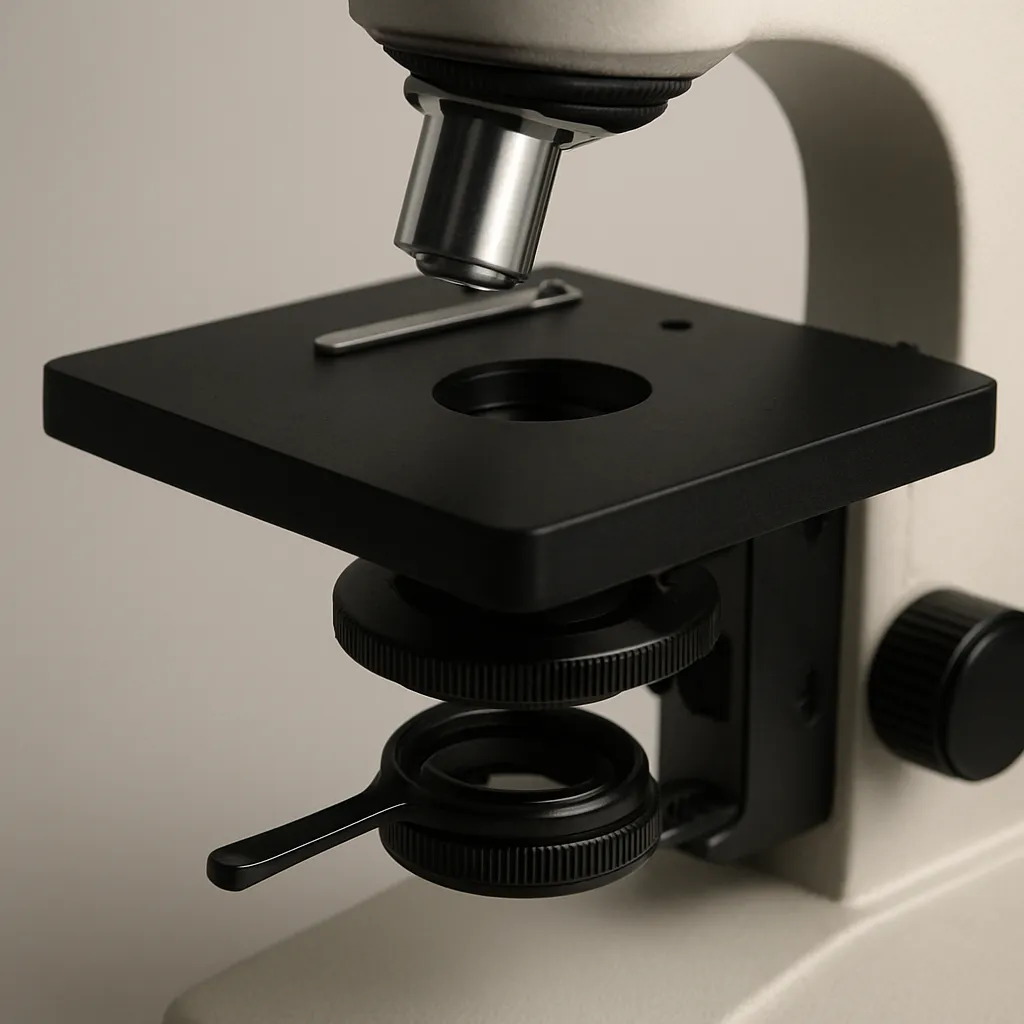
After finding a cell on the 10x objective, a student needs the 40x objective in the light path. Which part is rotated to bring it there?
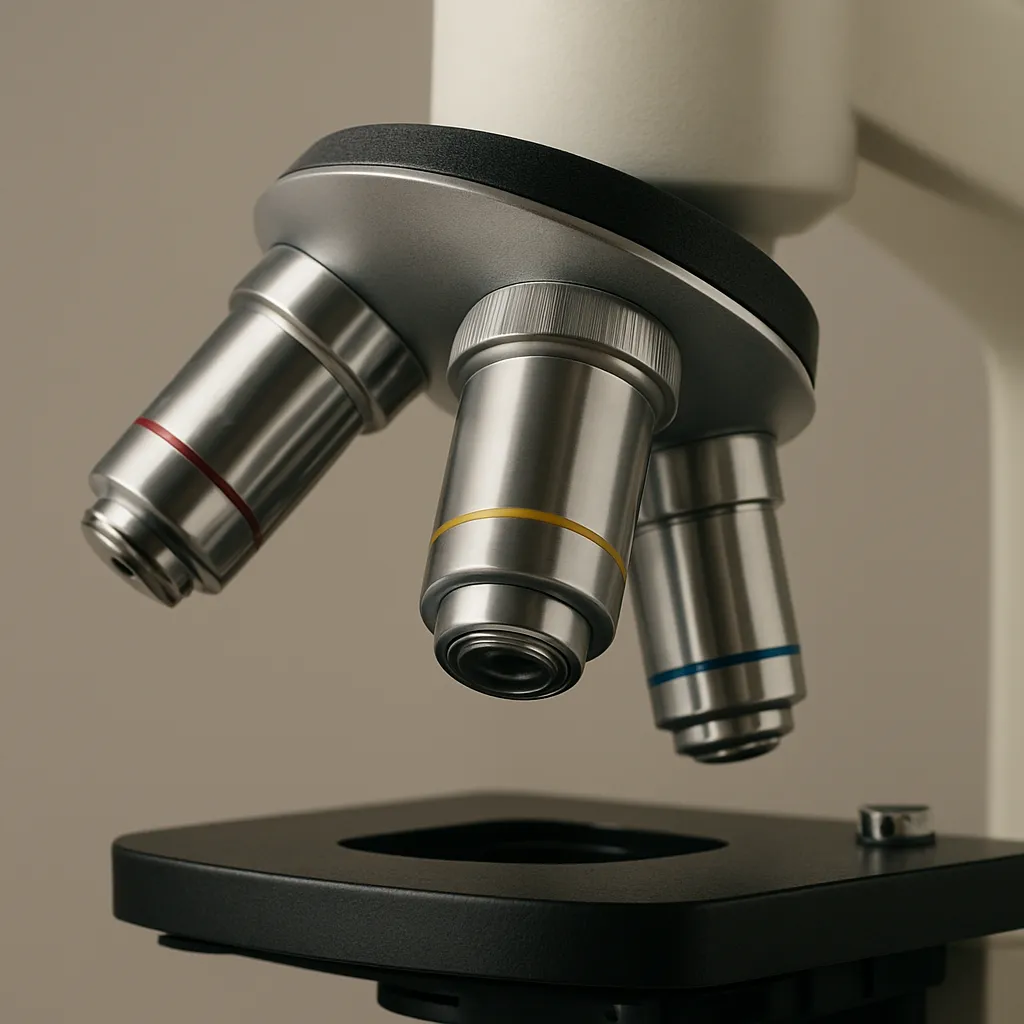
Which part of a compound light microscope is the lens the student's eye looks into, and on most classroom instruments carries a power of 10x?
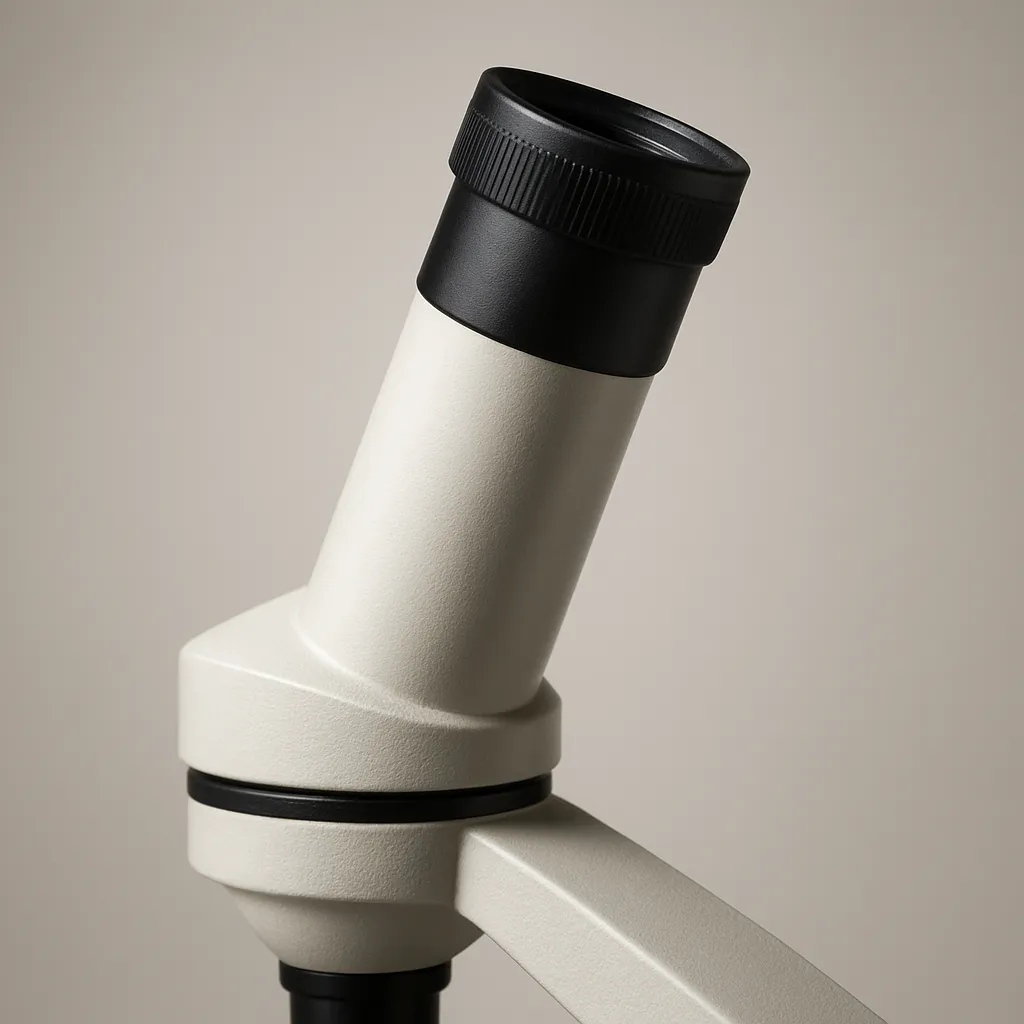
Which part connects the body tube to the base and is the part one hand grips when a microscope is moved from the cabinet to the bench?
One part sits between the light source and the stage and gathers the light into a cone focused on the specimen. Which part does this?
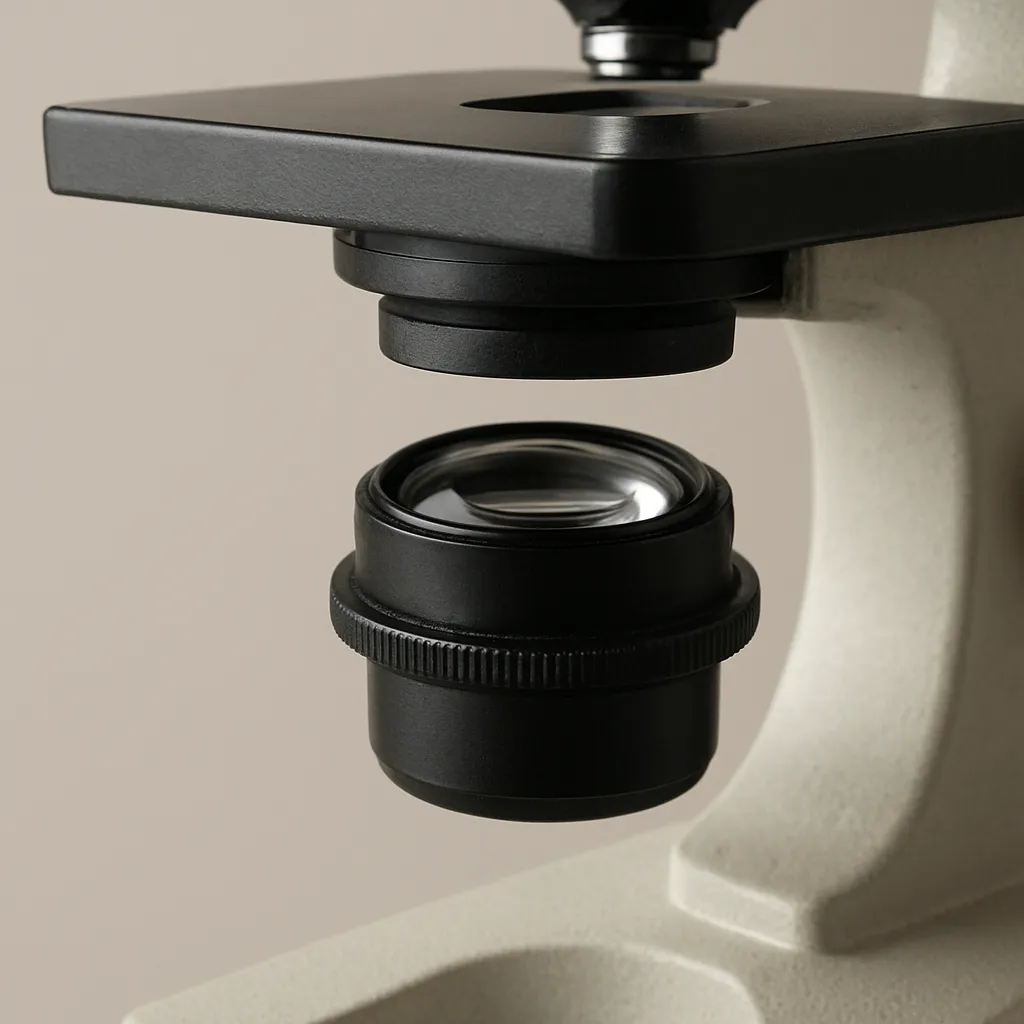
A specimen is roughly in view at 400x total magnification and now needs sharpening. Which knob should be used, and why is the other one left alone at this power?
Which part stops a slide from shifting on the stage while the student pushes it across the light path?
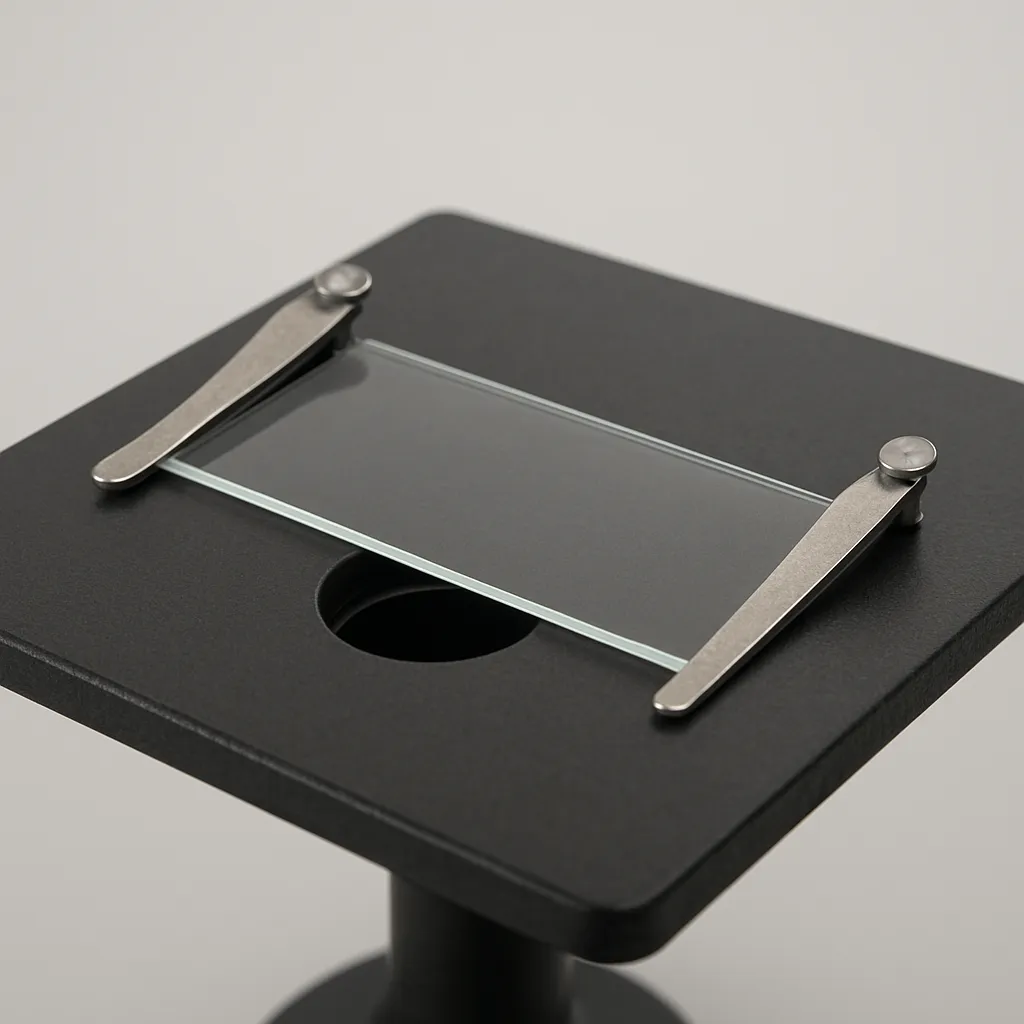
Which lens sits closest to the specimen, and has its own power engraved on its barrel?
A student has just placed a new slide on the stage under the 4x objective and needs to bring it into view quickly. Which knob is turned for this first, large movement?
Which flat part carries the slide and has an opening in its center that the light travels through on its way to the specimen?
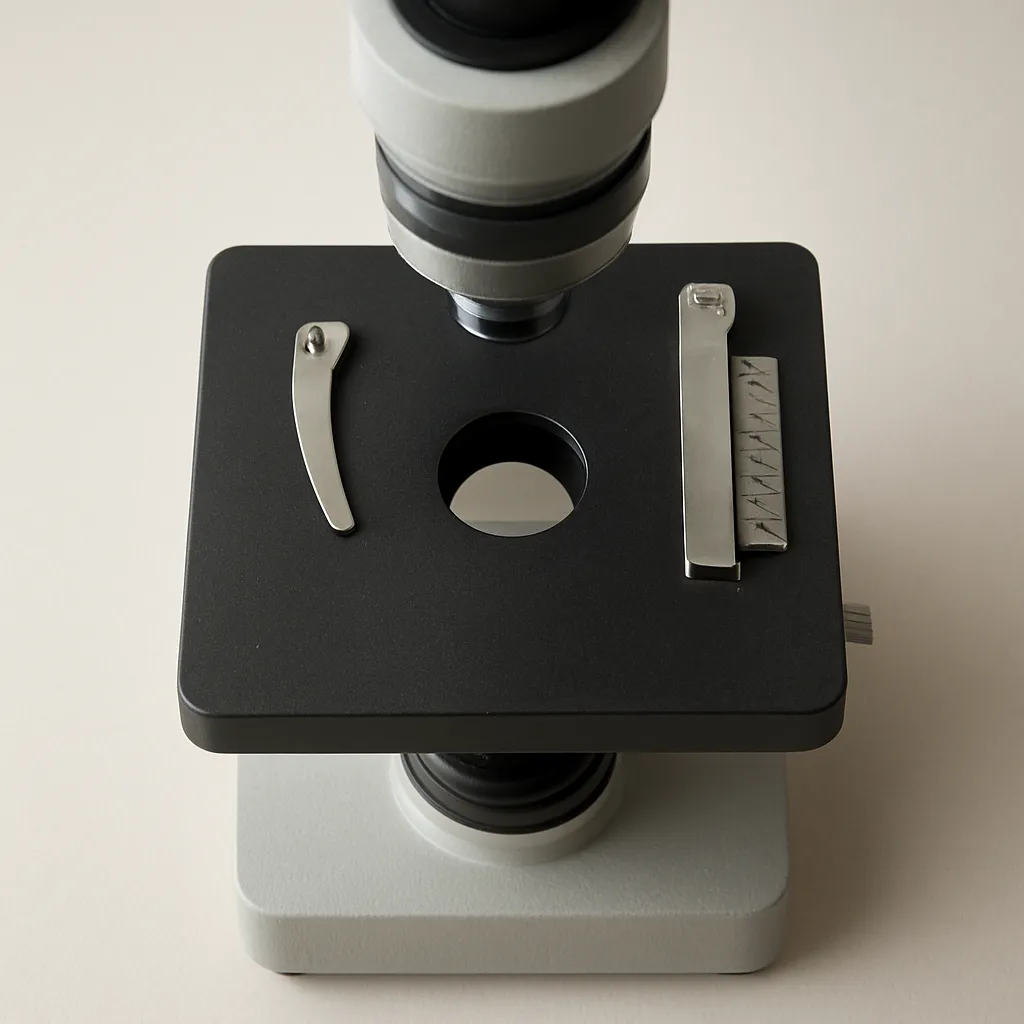
Which part is the tube that holds the ocular lens at a fixed distance above the objective in place, keeping the two lenses aligned?
On a compound light microscope, which part actually produces the light that travels up through the specimen?
A microscope has a 10x ocular lens and objectives of 4x, 10x and 40x. A student views a slide of onion epidermis through the 4x objective. What is the total magnification?
A microscope carries a 10x ocular lens and a 100x oil immersion objective. What total magnification does a student get through that objective?
A research microscope is fitted with a 15x ocular lens. A student swings the 40x objective into place. What is the total magnification of the image?
A student records a total magnification of 100x while looking through a 10x ocular lens. Which objective must be clicked into place?
A lab microscope gives a total magnification of 60x when the 4x objective is in place. What is the power of its ocular lens?
Four lens pairings are available in a lab. Which pairing gives the greatest total magnification?
Microscope A pairs a 10x ocular with a 40x objective. Microscope B pairs a 20x ocular with a 20x objective. How do the two total magnifications compare?
A microscope is set up with a 10x ocular and a 10x objective. Which single change to the lenses raises the total magnification the most?
A student focuses stained cheek cells clearly on 10x, then clicks the 40x objective into place. The field is still in focus but is now evenly dim and no detail can be made out. What should the student do?
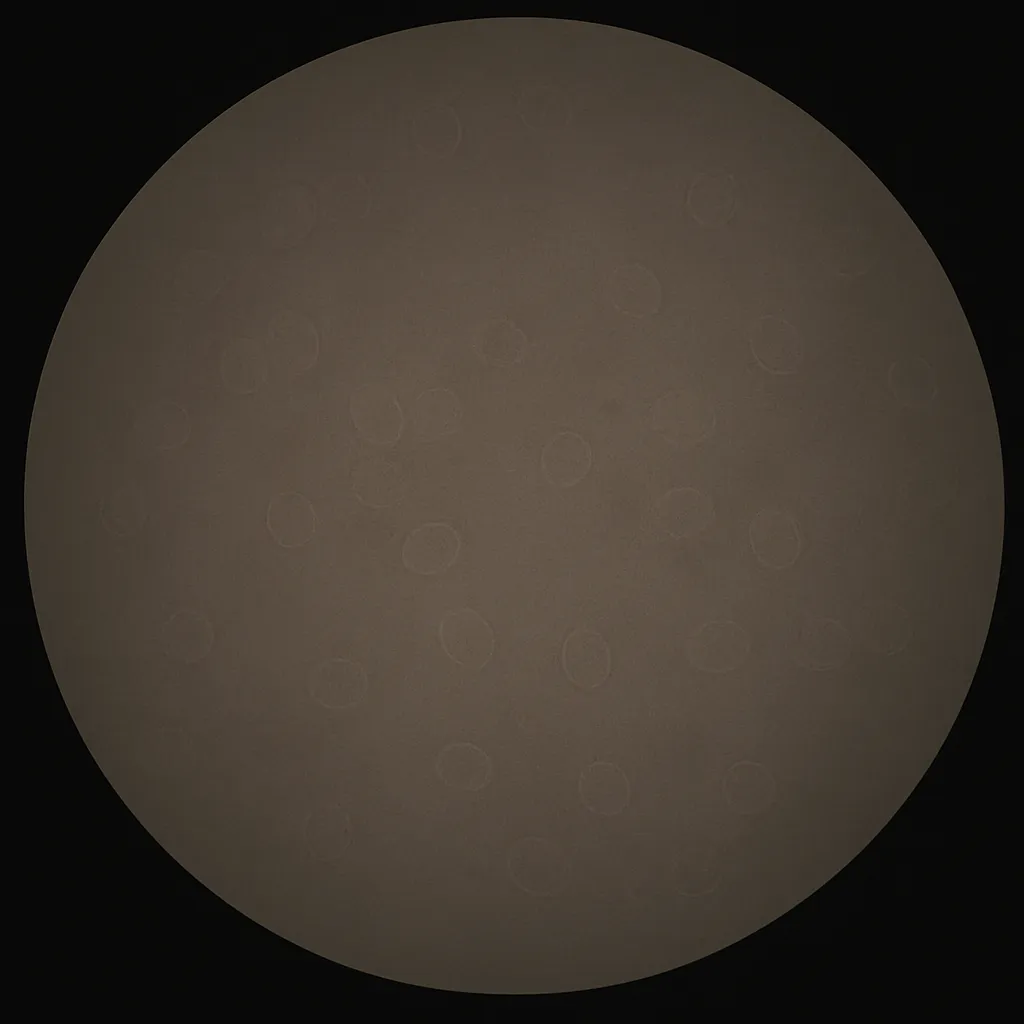
Onion cells were sharp under the 10x objective. After the 40x objective is clicked in, the outlines are soft and slightly blurred. What is the correct next move?
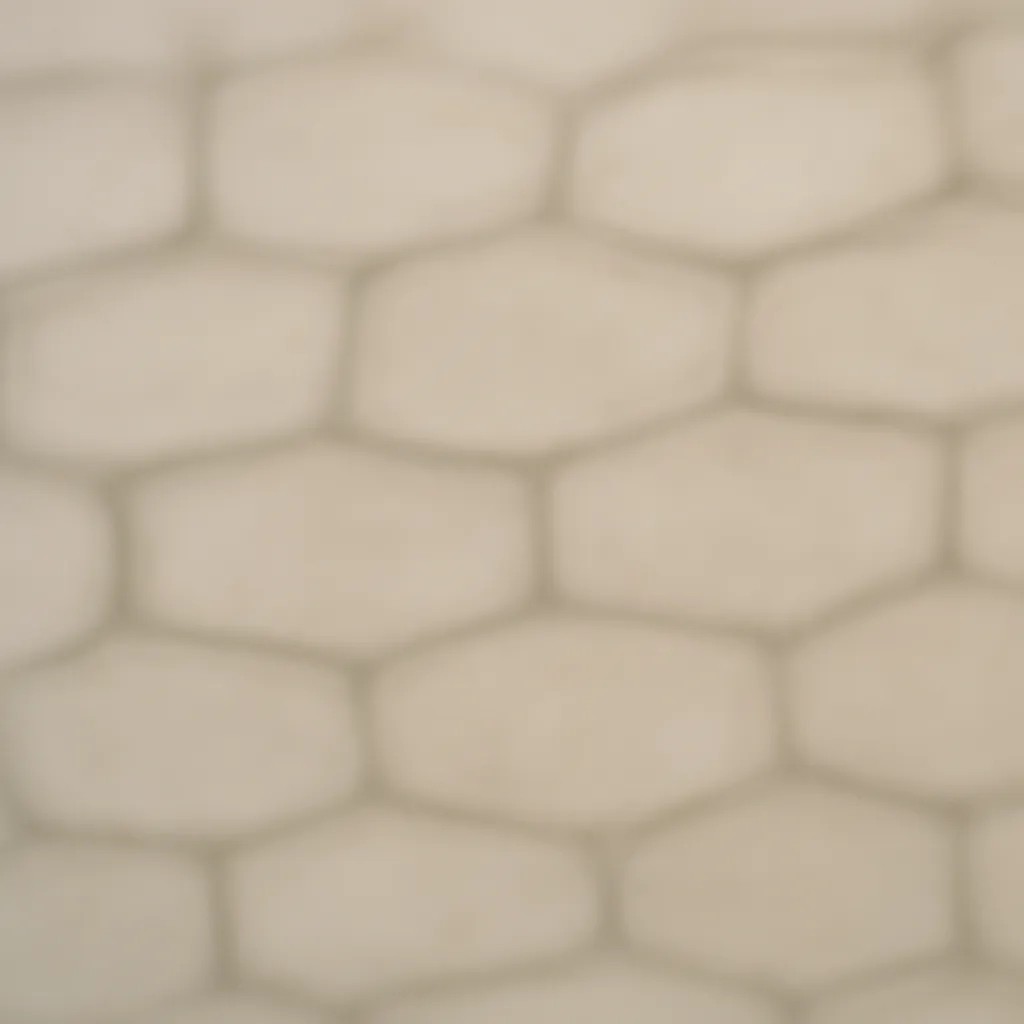
A student leaves a stained cell near the edge of the field on 10x, then rotates in the 40x objective. The cell is nowhere to be seen, although the field is lit and in focus. What went wrong?
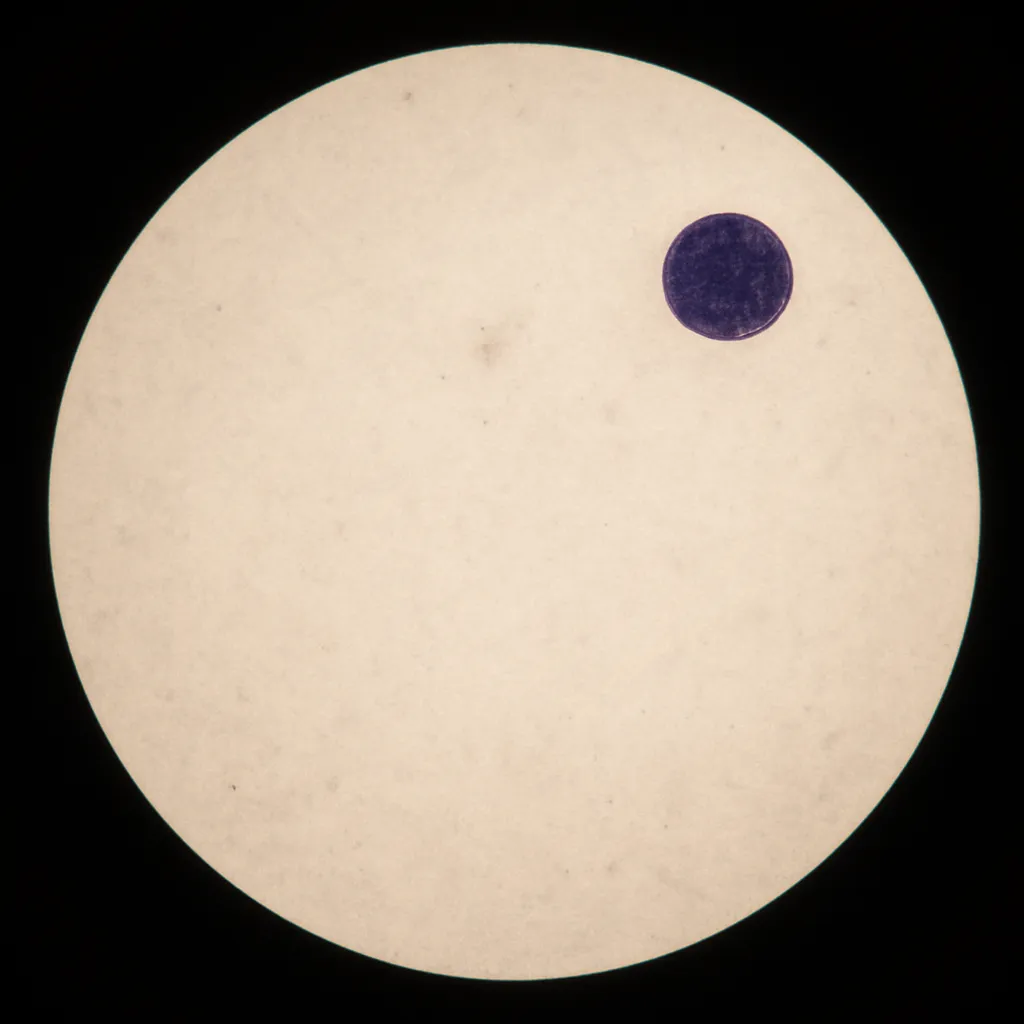
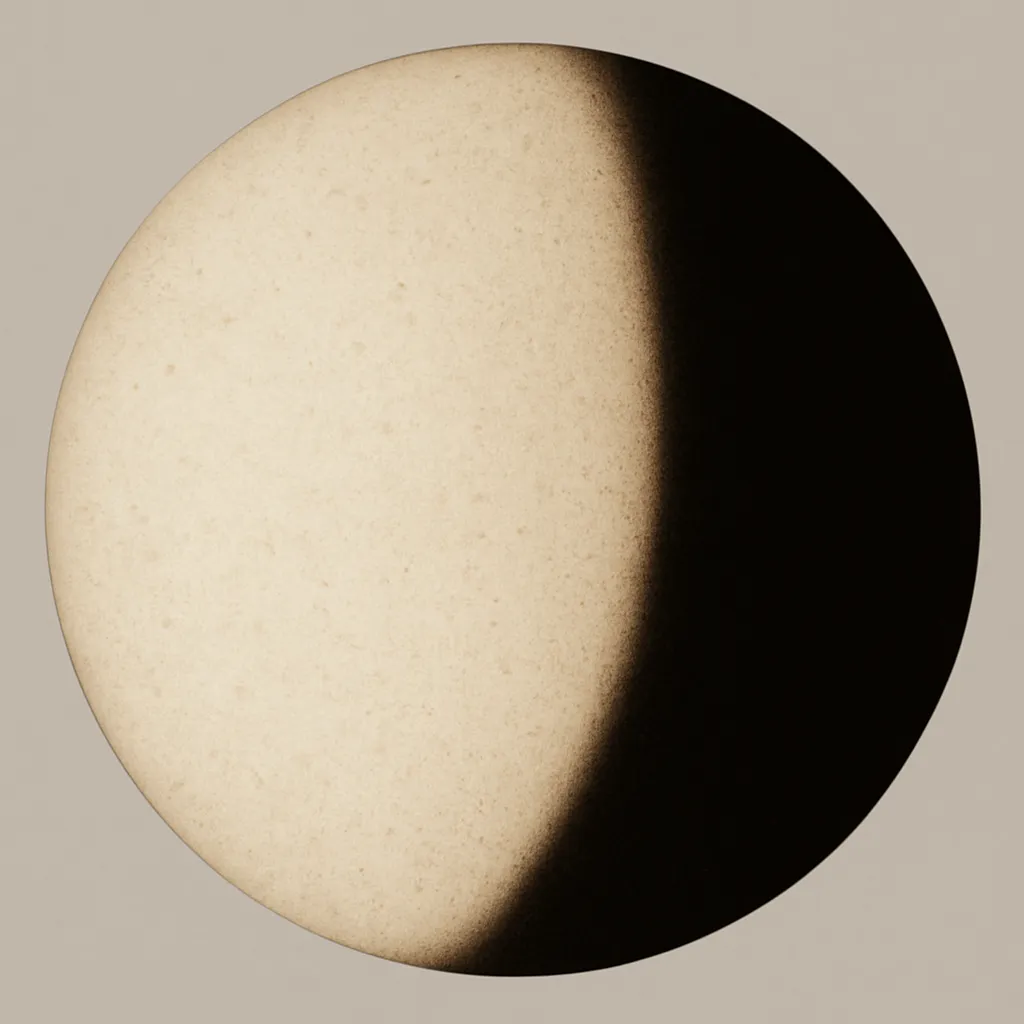
Looking into the eyepiece, a student sees a bright field on one side and a dark crescent covering the rest of it. The slide is centered and the specimen is in focus. What is the most likely cause?
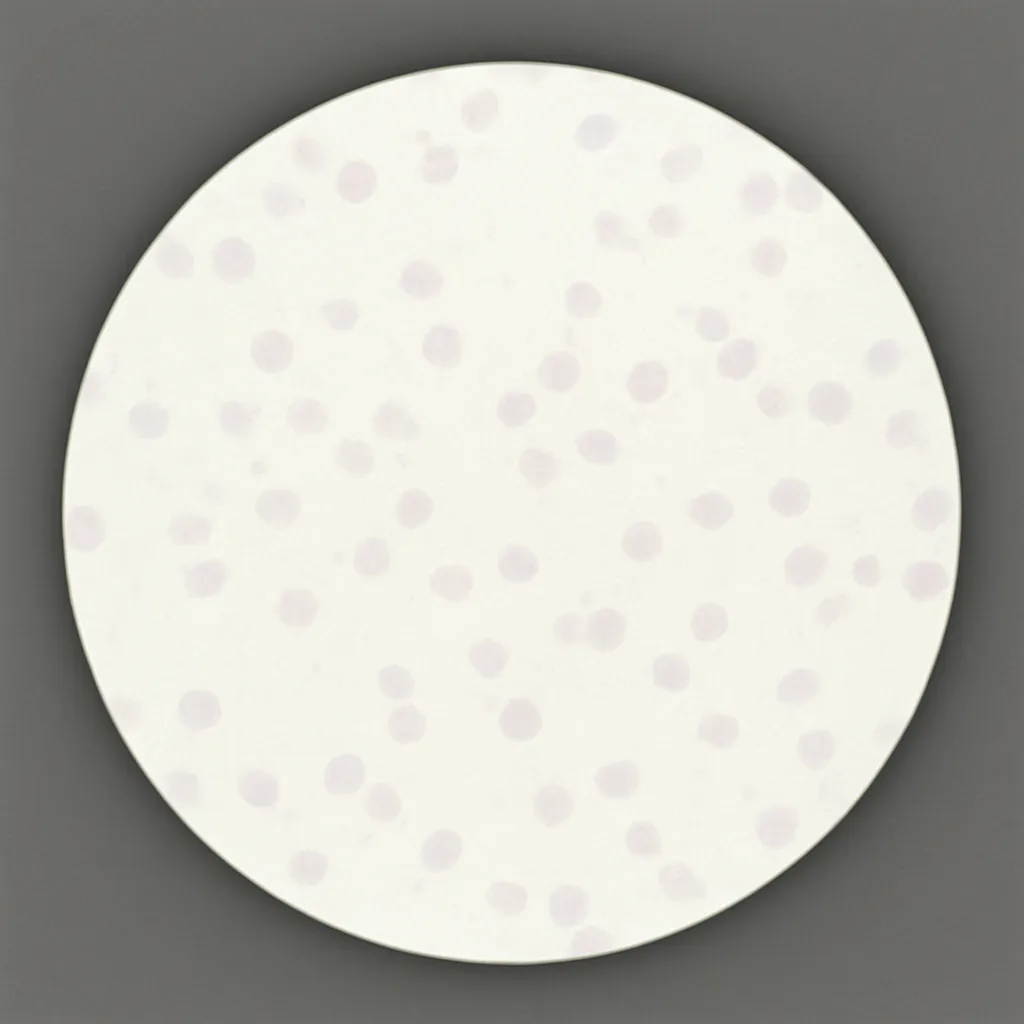
Dark specks sit in the field of view. They stay put when the slide is moved across the stage, but they turn when the student rotates the eyepiece in its tube. Where is the dirt?
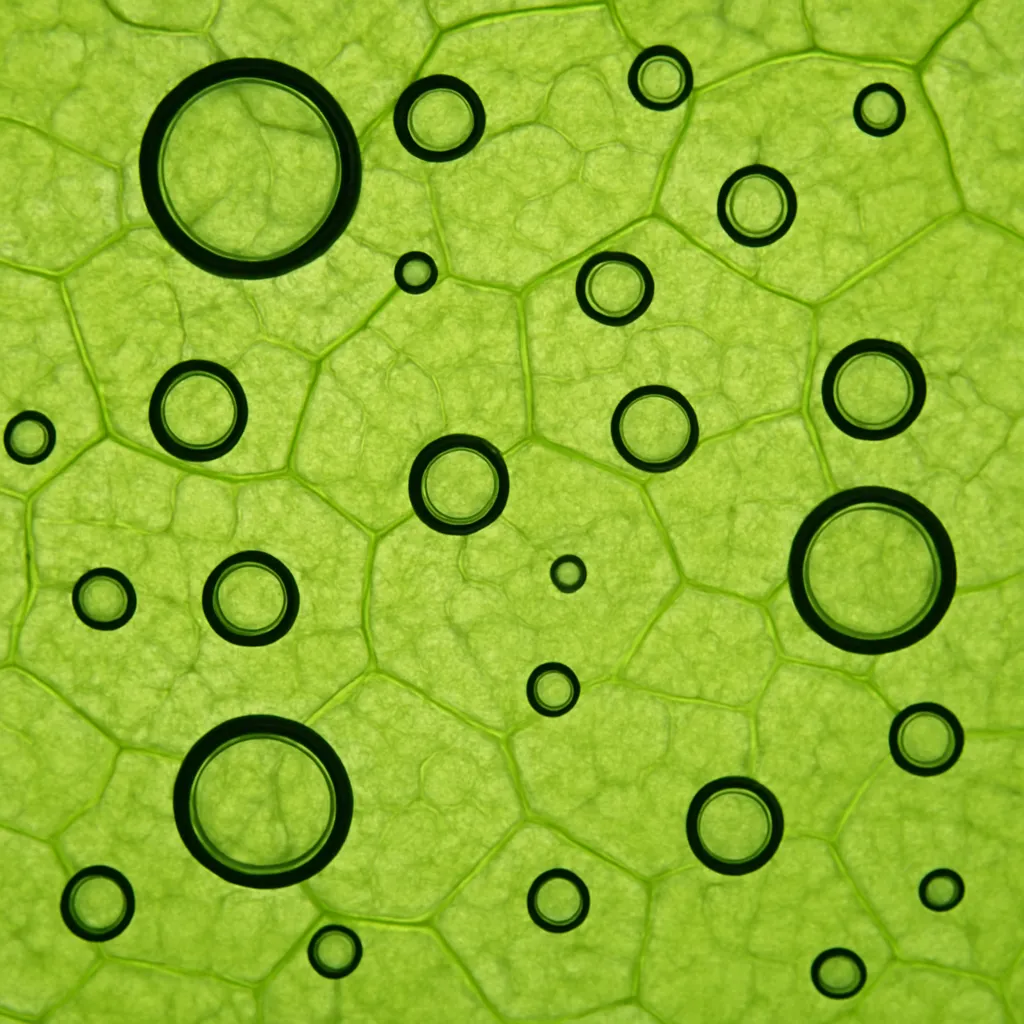
A wet mount of elodea shows several large circles with thick dark rims and bright centers lying over the cells. The circles were not on the slide before the coverslip went on. What are they?
While focusing at 400x, a student hears a crack and finds the coverslip broken and the slide scratched. Which mistake explains this?
A student puts a prepared slide on the stage with the coverslip facing down. On the 40x objective the image will not come into focus at any setting of the knobs. Why not?
A student views a stained onion slide with the diaphragm wide open. The field glares white and the purple cell walls look pale and washed out, though the image is sharp. What should be done?
At 400x, only part of a pond organism is ever crisp at one time. As the student turns the fine adjustment, one layer sharpens while another goes soft. What explains this?
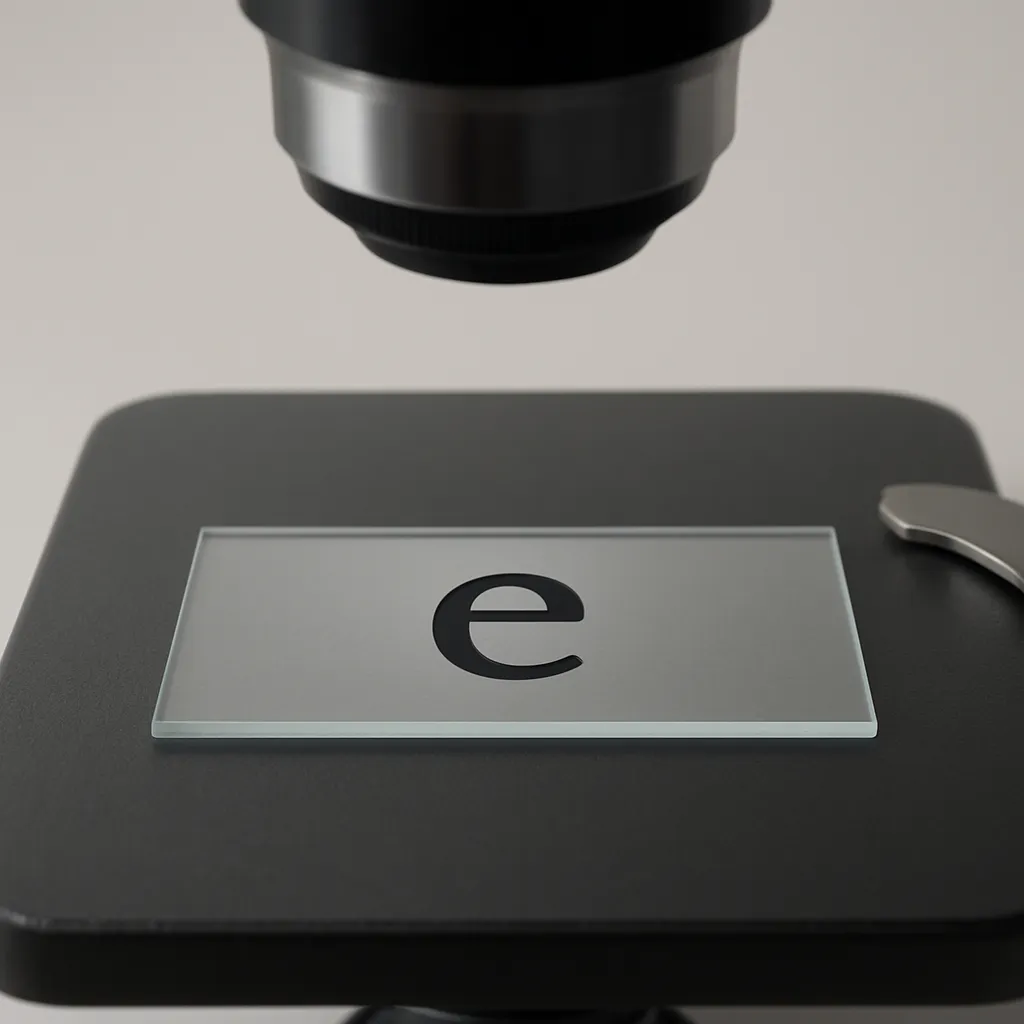
A slide carrying a printed lowercase letter e is set on the stage the right way up and viewed on low power. How does the letter appear in the field?
A field of many onion cells is in view on the 4x objective. The student rotates to the 40x objective without changing anything else. Predict what happens.
A student is viewing living, unstained protists that are almost invisible against the bright background. The student closes the diaphragm partway. Predict the result.

A student changes from the 10x objective to the 40x objective on a parfocal microscope. What happens to the space between the front of the objective and the coverslip?
A student watching a cell in the center of the field pushes the slide away, toward the back of the stage. Which way does the cell appear to travel?
A thick pond-water organism is focused at its upper surface on high power. The student then turns the fine adjustment slowly in one direction. Predict what is seen.
A student sets a new prepared slide on the stage. Which objective should be in the light path when focusing begins, and which knob is used first?
A microscope has to be carried from the storage cabinet to a lab bench. How should the student hold it?
A fingerprint is smudging the ocular lens. What should the student clean it with?
A class is putting microscopes away at the end of a lab. Which objective should be left in position over the stage, and why?
Crack the passcode before the zombies get in.
Answer, then swat bugs for bonus points.
Race through questions at your own speed.
Same question on every screen. Fastest wins.

Pick a tile, answer, hit bonuses and steals.
Water and Life
20 questions